XR-C8100R - Car stereo SONY - Free user manual and instructions
Find the device manual for free XR-C8100R SONY in PDF.



User questions about XR-C8100R SONY
0 question about this device. Answer the ones you know or ask your own.
Ask a new question about this device
Download the instructions for your Car stereo in PDF format for free! Find your manual XR-C8100R - SONY and take your electronic device back in hand. On this page are published all the documents necessary for the use of your device. XR-C8100R by SONY.
USER MANUAL XR-C8100R SONY
FM/MW/LW Cassette Car Stereo
Operating Instructions ____ EN
For installation and connections, see the supplied installation/connections manual.
Thank you for purchasing the Sony Cassette Player. This unit lets you enjoy a variety of features by using either a supplied rotary commander or a wireless remote.
In addition to the Cassette playback and radio operations, you can expand your system by connecting an optional CD/MD unit ^1 . If you operate this unit or connect an optional CD unit with the CD TEXT function, the CD TEXT information will appear in the display when you play back a CD TEXT disc ^2 .
*1 You can connect to a CD changer or an MD changer.
*2 A CD TEXT disc is an audio CD that includes information such as the disc name, artist name and track names.
This information is recorded on the disc.
Voice guide for safe driving
This unit has a voice guide function*. When the voice guide function is on, the unit gives vocalized comments on functions corresponding to the relevant button pushed.
* Some optional power amplifiers may cause a break at the beginning of vocalized comments. When you connect an optional MD changer, the sound from the first MD may continue for a short time even after the vocalized comments about the second MD are announced.
Table of Contents
This Unit Only
Location of controls 4
Getting Started
Resetting the unit 6
Detaching the front panel 6
Preparing the rotary commander .... 7
Setting the clock 7
Cassette Player
Listening to a tape 8
Playing a tape in various modes 9
Radio
Memorising stations automatically — Best Tuning Memory (BTM) ...... 10
Memorising only the desired stations.... 11
Receiving the memorised stations 11
RDS
Overview of the RDS function 12
Displaying the station name 12
Re-tuning the same programme automatically — Alternative Frequencies (AF) ...... 12
Listening to traffic announcements .... 14
Presetting the RDS stations with the AF and TA data 15
Recording the traffic announcements —Traffic Information Replay (TIR) ...... 15
Locating a station by programme type ...... 17
Setting the clock automatically 18
Other Functions
Using the rotary commander 18
Adjusting the sound characteristics ...... 20
Attenuating the sound 20
Changing the sound and display settings ..... 20
Adjusting the frequency of the subwoofer(s) 21
With Optional Equipment
CD/MD Unit
Playing a CD or MD 21
Scanning the tracks — Intro Scan .... 22
Playing tracks repeatedly — Repeat Play .... 23
Playing tracks in random order — Shuffle Play .... 23
Creating a programme — Programme Memory .... 23
Labeling a CD — Disc Memo .... 26
Locating a disc by name — List-up .... 27
Selecting specific tracks for playback — Bank .... 28
Additional Information
Precautions 29
Maintenance 30
Dismounting the unit 30
Specifications 31
Troubleshooting guide 32
Location of controls
text_image
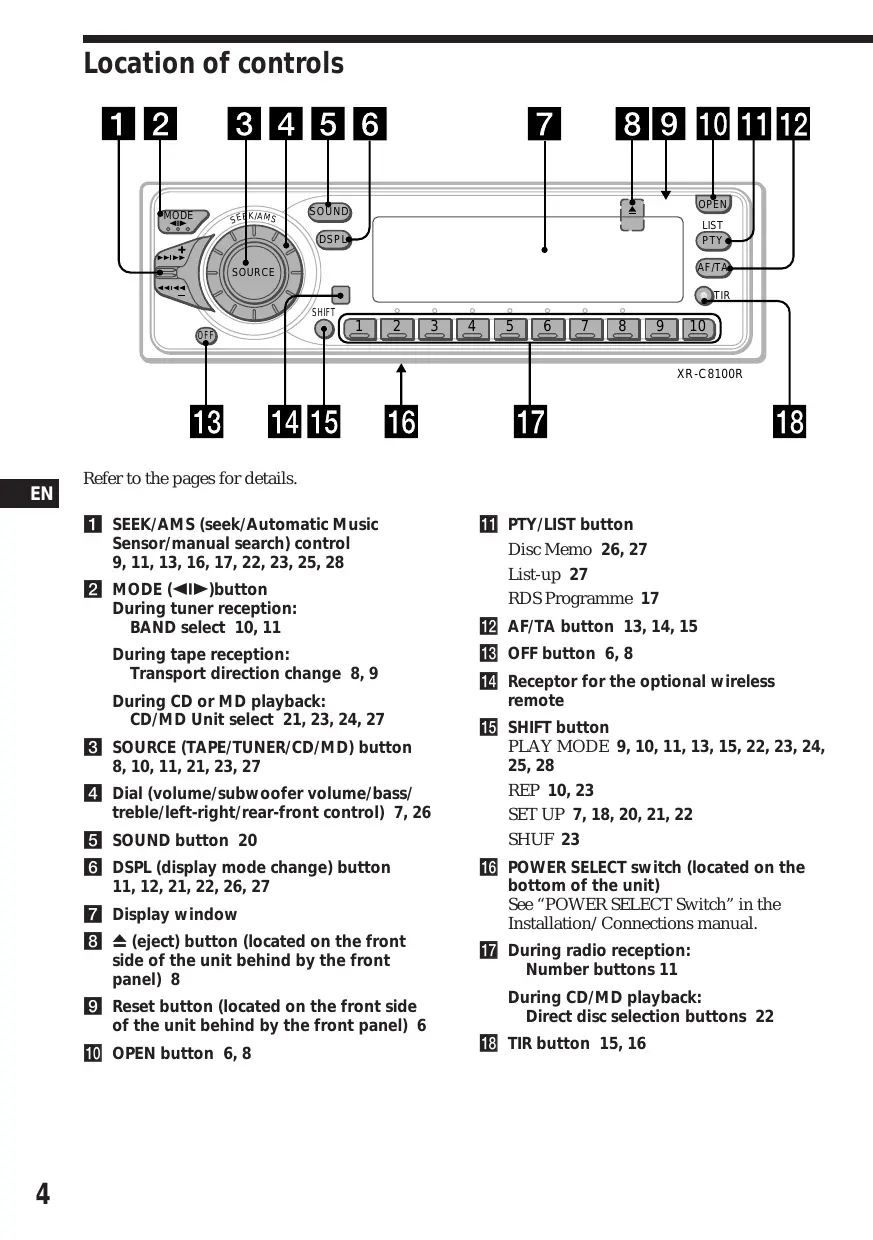
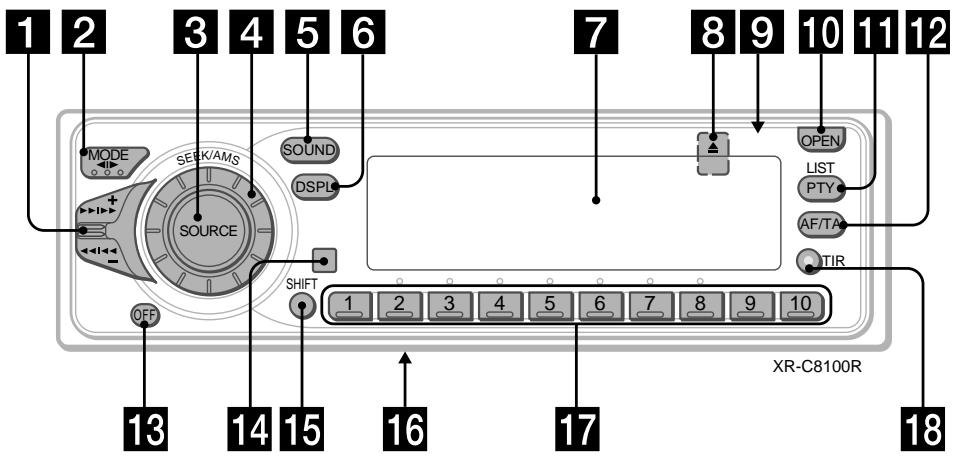
1 2 3 4 5 6 MODE SEEK/AMS SOURCE SOUND DSPL SHIFT OFF 1 2 3 4 5 6 7 8 9 10 13 14 15 16 17 7 8 9 OPEN LIST PTY AF/TA TIR XR-C8100R 18Refer to the pages for details.
1 SEEK/AMS (seek/Automatic Music Sensor/manual search) control 9, 11, 13, 16, 17, 22, 23, 25, 28
2 MODE (◄►)button
During tuner reception:
BAND select 10, 11
During tape reception: Transport direction change 8, 9
During CD or MD playback: CD/MD Unit select 21, 23, 24, 27
3 SOURCE (TAPE/TUNER/CD/MD) button 8, 10, 11, 21, 23, 27
4 Dial (volume/subwoofer volume/bass/treble/left-right/rear-front control) 7, 26
5 SOUND button 20
6 DSPL (display mode change) button 11, 12, 21, 22, 26, 27
7 Display window
8 ▲ (eject) button (located on the front side of the unit behind by the front panel) 8
9 Reset button (located on the front side of the unit behind by the front panel) 6
10 OPEN button 6, 8
11 PTY/LIST button Disc Memo 26, 27
List-up 27
RDS Programme 17
12 AF/TA button 13, 14, 15
13 OFF button 6, 8
14 Receptor for the optional wireless remote
15 SHIFT button
PLAY MODE 9, 10, 11, 13, 15, 22, 23, 24,
25, 28
REP 10, 23
SET UP 7, 18, 20, 21, 22
SHUF 23
16 POWER SELECT switch (located on the bottom of the unit)
See “POWER SELECT Switch” in the Installation/Connections manual.
17 During radio reception: Number buttons 11
During CD/MD playback: Direct disc selection buttons 22
18 TIR button 15, 16
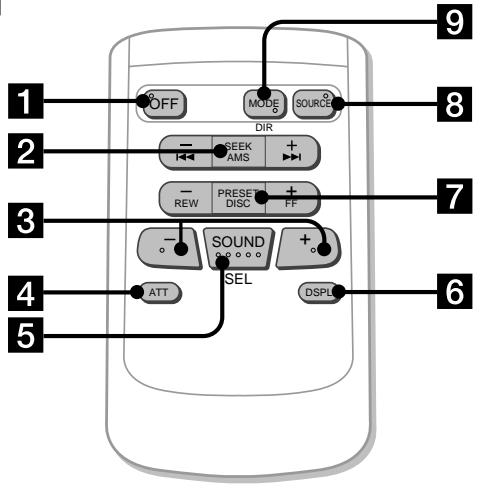
Optional wireless remote (RM-X47)
flowchart
graph TD
    A["OFF"] --> B["SUEK AMS"]
    C["MODE"] --> D["SEEK"]
    E["SOURCE"] --> F["PRESEN DISC"]
    G["ATT"] --> H["SOUND"]
    I["DSPL"] --> J["SEL"]
    K["1"] --> L["DIR"]
    M["2"] --> N["1"]
    O["3"] --> P["1"]
    Q["4"] --> R["1"]
    S["5"] --> T["1"]
    U["6"] --> V["1"]
    W["7"] --> X["1"]
    Y["8"] --> Z["1"]
    AA["9"] --> AB["1"]
The buttons of the wireless remote work the same functions as those on this unit.
1 OFF button
2 SEEK/AMS button
3 - + buttons
4 ATT button
5 SOUND/SEL button
6 DSPL button
7 PRESET/DISC button
You cannot do manual search and manual tuning with the remote.
8 SOURCE button
9 MODE/DIR button
MODE controls the same function on this unit.
When the POWER SELECT switch is set to the B position, the unit cannot be operated with the wireless remote unless SOURCE on the unit is pressed or a cassette is inserted to activate the unit first.
Getting Started
Resetting the unit
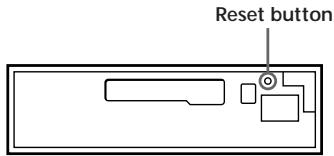
Before operating the unit for the first time or after replacing the car battery, you must reset the unit.
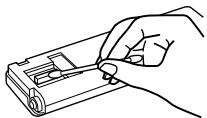
Press the reset button with a pointed object, such as a ballpoint pen.
text_image
Reset buttonNote
Pressing the reset button will erase the clock and some memorised functions.
Detaching the front panel
You can detach the front panel of this unit to prevent the unit from being stolen.
1 Press OFF.
2 Press OPEN to open up the front panel, then slide the front panel to the right side, and pull out the left side of the front panel.

text_image
Diagram showing a hand pressing a device into a rack, with numbered arrows indicating motion direction.Notes
- Do not put anything on the inner surface of the front panel.
- Be sure not to drop the panel when detaching it from the unit.
- If you detach the panel while the unit is still on, the power will turn off automatically to prevent the speakers from being damaged.
- When you carry the front panel with you, put it in the supplied front panel case.
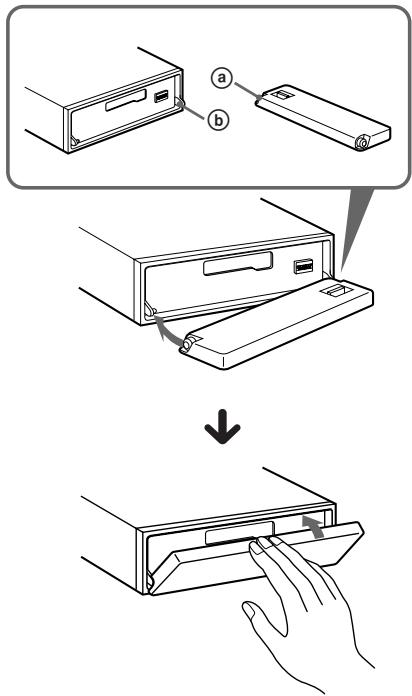
Attaching the front panel
Plase the hole ⓐ in the front panel onto the spindle ⓑ on the unit as illustrated, then push the left side in.
text_image
Diagram illustrating a device lock operation with labeled steps and hand gestureNotes
- Be sure not to attach the front panel upside down.
- Do not press the front panel hard against the unit when attaching it. Press it lightly against the unit.
- Do not press hard or put excessive pressure on the display windows of the front panel.
- Do not expose the front panel to direct sunlight, heat sources such as hot air ducts, and do not leave it in a humid place. Never leave it on the dashboard of a car parked in direct sunlight where there may be a considerable rise in temperature.
Caution alarm
If you turn the ignition key switch to the OFF position without removing the front panel, the caution alarm will beep for a few seconds (only when the POWER SELECT switch on the bottom of the unit is set to the Ⓐ position).
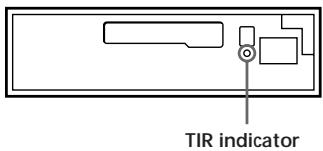
TIR indicator
If you pull out the ignition key while the TIR function is on, the TIR indicator flashes a few times. (only when the POWER SELECT switch on the bottom of the unit is set to the Ⓐ position).
text_image
TIR indicatorFor more information on the TIR function, refer to “Recording the traffic announcements” (page 16).
Preparing the rotary commander
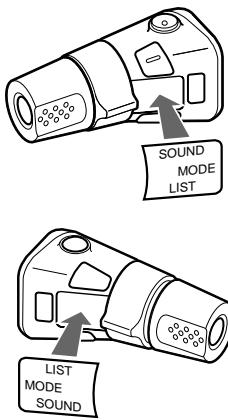
When you mount the rotary commander, attach the label in the illustration below.
text_image
SOUND MODE LIST LIST MODE SOUNDSetting the clock
The clock uses a 24-hour digital indication.
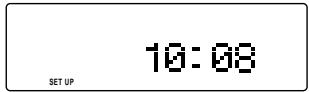
Example: Set the clock to 10:08
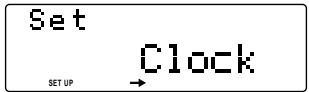
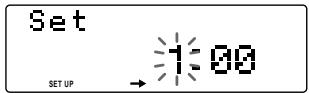
1 Press SHIFT, then press ③ (SET UP).
text_image
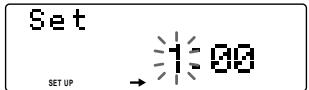
Set SET UP Clock① Press ⑤ (→).
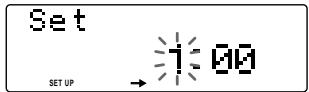
text_image
Set SET UP → 1:00The hour digit flashes.
② Set the hour.
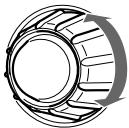
to go backward
to go forward
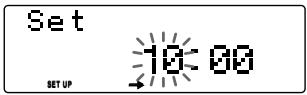
text_image
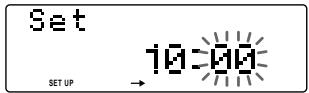
Set SET UP 10-00③ Press ⑤ (→).
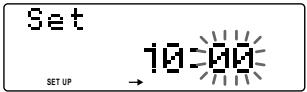
text_image
Set 10:00 SET UP →The minute digits flash.
4 Set the minute.
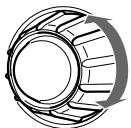
to go backward
to go forward
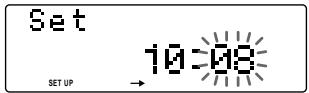
text_image
Set 10:08 SET UP →2 Press SHIFT.
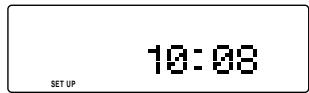
text_image
10:08 SET UPThe clock starts.
continue to next page →
3 Press SHIFT.
After the mode setting is complete, the display goes back to normal playback mode.
Note
If the POWER SELECT switch on the bottom of the unit is set to the Ⓑ position, turn the power on first, then set the clock.
Cassette Player
Listening to a tape
1 Press Ⓗ OPEN and insert a cassette.
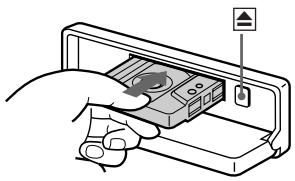
natural_image
Illustration of a hand inserting a CD into a device (no text or symbols visible)2 Close the front panel.
Playback starts automatically.
If a cassette is already inserted, press SOURCE repeatedly until "FWD" or "REV" appears to start playback.
The side facing up is being playback.
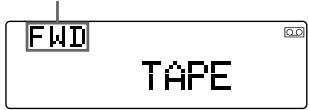
text_image
FWD TAPEThe side facing down is being playback.
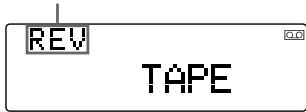
text_image
REV TAPETips
- To change the tape transport direction, press MODE (◀▶).
- "Metal" appears in the display when you insert a metal or CrO_2 tape (Auto Metal function).
| To | Press |
| Stop playback | OFF |
| Eject the cassette | OPEN then ▲ |
Fast-winding the tape
During playback, push the SEEK/AMS control up or down and hold.
Fast-forward
Rewind
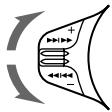
To start playback during fast-forwarding or rewinding, press MODE.
Locating a specific track
— Automatic Music Sensor (AMS)
You can skip up to nine tracks at one time.
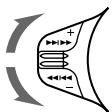
During playback, push the SEEK/AMS control up or down momentarily.
To locate succeeding tracks
To locate preceding tracks
Note
The AMS function may not work when:
— the blancks between tracks are shorter than four seconds
— there is noise between tracks
— there are long sections of low volume or quiet sections.
Changing the display item
Each time you press DSPL, the item changes as follows:

flowchart
graph LR
    A["Tape playback"] --> B["Clock"]
    B --> C["Frequency*1"]
    D["MOTION DISPLAY*2"] <-- E
*1 While the AF/TA function is activated.
*2 All the items above are scrolled in the display one by one in order.
Playing a tape in various modes
You can play the tape in various modes:
- Intro (Intro Scan) lets you play the first 10 seconds of all the tracks.
- NR (Dolby NR) lets you select the Dolby* NR B system.
- B. Skip (Blank Skip) skips blanks longer than eight seconds.
- ATA (Automatic Tuner Activation) turns on the tuner automatically while fast-winding the tape.
- Repeat (Repeat Play) repeats the current track.
* Dolby noise reduction manufactured under license from Dolby Laboratories Licensing Corporation. "DOLBY" and the double-D symbol a are trademarks of Dolby Laboratories Licensing Corporation.
Searching for the desired track
— Intro scan
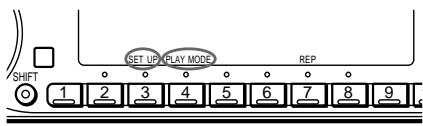
1 Press SHIFT.
Every time you press ⒽSHIFT, only the items you can select light up.
text_image
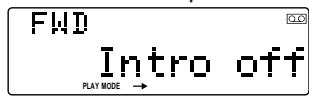
SET UP PLAY MODE REP SHIFT 1 2 3 4 5 6 7 8 92 Press ④ (PLAY MODE) repeatedly until "Intro" appears.
Each time you press ④ (PLAY MODE), the item changes as follows:
Intro → NR → B. Skip → ATA
text_image
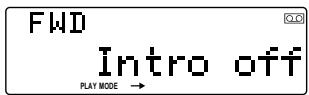
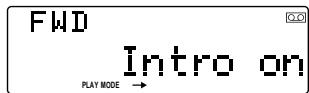
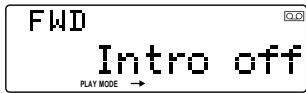
FWD Intro off PLAY MODE →3 Press ⑤ (→) to select "Intro on."
text_image
FWD Intro on PLAY MODE →Intro Scan starts.
4 Press SHIFT.
To go back to normal playback mode, select "Intro off" in step 3 above.
Playing tracks repeatedly
— Repeat Play
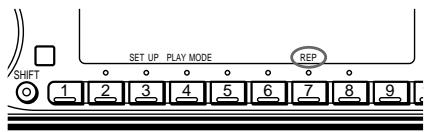
1 During playback, press SHIFT.
2 Press ⑦ (REP) repeatedly until "Repeat" appears.
text_image
SET UP PLAY MODE REP SHIFT 1 2 3 4 5 6 7 8 9Repeat Play starts.
3 Press SHIFT.
To go back to normal playback mode, select "Repeat off" in step 2 above.
Radio
Memorising stations automatically
— Best Tuning Memory (BTM)
The unit selects the stations with the strongest signals and memorises them in the order of their frequencies. You can store up to 10 stations on each band (FM1, FM2, MW and LW).
Caution
When tuning in stations while driving, use Best Tuning Memory to prevent accidents.
1 Press SOURCE repeatedly to select the tuner.
Each time you press SOURCE, the source changes as follows:
TAPE ↔ TUNER
2 Press MODE repeatedly to select the band.
Each time you press Ⓜ, the band changes as follows:

flowchart
graph LR
    A["FM1"] --> B["FM2"]
    B --> C["MW"]
    C --> D["LW"]
3 Press SHIFT, then press ④ (PLAY MODE) repeatedly until "B.T.M" appears.
4 Press ⑤ (→).
The unit stores stations in the order of their frequencies on the number buttons.
A beep sound and the setting is stored.
5 Press SHIFT.
Notes
- The unit does not store stations with weak signals. If only a few stations are received, some number buttons will retain heir former setting.
- When a number is indicated in the display, the unit starts storing stations from the one currently displayed.
Memorising only the desired stations
You can store up to 10 stations on each band (20 for FM1 and FM2, 10 for each MW and LW) in the order of your choice.
1 Press SOURCE repeatedly to select the tuner.
2 Press MODE repeatedly to select the band (FM1, FM2, MW or LW).
3 Push the SEEK/AMS control up or down to tune in the station you want to store on the number button.
4 Press and hold the desired number button (① to ⑩) until "MEM" appears.
The number button indication appears in the display.
Note
If you try to store another station on the same number button, the previously stored station will be erased.
Receiving the memorised stations
1 Press SOURCE repeatedly to select the tuner.
2 Press MODE repeatedly to select the band (FM1, FM2, MW or LW).
3 Press the number button (1 to 10) momentarily where the desired station is stored.
If you cannot tune in a preset station
Push the SEEK/AMS control up or down momentarily to search for the station (automatic tuning).
Scanning stops when the unit receives a station. Push the SEEK/AMS control up or down repeatedly until the desired station is received.
Note
If the automatic tuning stops too frequently, press ⓊSHIFT), then press Ⓐ (PLAY MODE) repeatedly until “Local” (local seek mode) is displayed. Then press ⒕ (→) to select “Local on.” Press ⓊSHIFT). Only the stations with relatively strong signals will be tuned in.
Tip
If you know the frequency of the station you want to listen to push the SEEK/AMS control up or down and hold until the desired frequency appears (manual tuning).
If FM stereo reception is poor
— Monaural Mode
1 Press SHIFT, then press ④ (PLAY MODE) repeatedly until "Mono" appears.
2 Press ⑤ (→) repeatedly until "Mono on" appears.
The sound improves, but becomes monaural (“ST” disappears).
3 Press SHIFT.
To go back to normal mode, select “Mono off” in step 2 above.
Changing the displayed items
Each time you press DSPL, the item changes as follows:

flowchart
graph LR
    A["→ Frequency (Station Name)*1"] --> B["→ Clock"]
    C["MOTION DISPLAY*2"] --> D["←"]
*1 When you tune in an FM station that transmits RDS data, the station name appears.
^*2 All the itmes above are scrolled in the display one by one in order.
Overview of the RDS function
Radio Data System (RDS) is a broadcasting service that allows FM stations to send additional digital information along with the regular radio programme signal. Your car stereo offers you a variety of services. Here are just a few: re-tuning the same programme automatically, listening to traffic announcements and locating a station by programme type.
Notes
- Depending on the country or region, not all of the RDS functions are available.
- RDS may not work properly if the signal strength is weak or if the station you are tuned to is not transmitting RDS data.
Displaying the station name
The name of the current station lights up in the display.
Select an FM station (page 10). When you tune in an FM station that transmits RDS data, the station name appears in the display.
FM1
BBC R1
Note
The “*” indication means that an RDS station is being received.
Changing the displayed item
Each time you press DSPL, the item changes as follows:
→ Station Name/Frequency → Clock
MOTION DISPLAY*
* All the itmes above are scrolled in the display one by one in order.
Note
"NO Name" appears if the received station does not transmit RDS data.
Re-tuning the same programme automatically
— Alternative Frequencies (AF)
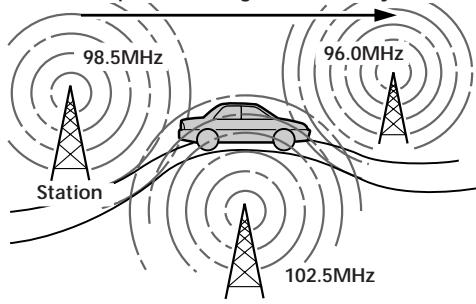
The Alternative Frequencies (AF) function automatically selects and re-tunes the station with the strongest signal in a network. By using this function, you can continuously listen to the same programme during a long-distance drive without having to re-tune the station manually.
Frequencies change automatically.
text_image
98.5MHz 96.0MHz Station 102.5MHz1 Select an FM station.
2 Press AF/TA repeatedly until "AF on" appears.
The unit starts searching for an alternative station with a stronger signal in the same network.
Note
When there is no alternative station in the area and you do not need to search for an alternative station, turn the AF function off by pressing AF/TA repeatedly until "AF TA off" appears.
Changing the displayed item
Each time you press AF/TA, the item changes as follows:

flowchart
graph LR
    A["AF on"] --> B["TA on"]
    B --> C["AF TA on*"]
    C --> D["AF TA off"]
    D --> E["Next Step"]
* Select this to turn on both the AF and TA functions.
Notes
- "NO AF" and the station name flash alternately, if the unit cannot find an alternative station in the network.
- If the station name starts flashing after selecting a station with the AF function on, this indicates that no alternative frequency is available. Push the SEEK/AMS control up or down while the station name is flashing (within eight seconds). The unit starts searching for another frequency with the same PI (Programme Identification) data ("PI seek" appears and no sound is heard). If the unit cannot find another frequency, "NO PI" appears, and the unit returns to the originally selected frequency.
Listening to a regional programme
The “REG on” (regional on) function lets you stay tuned to a regional programme without being switched to another regional station. (Note that you must turn the AF function on.) The unit is factory preset to “REG on,” but if you want to turn off the function, do the following.
1 Press SHIFT, then press 4 (PLAY MODE) repeatedly until "REG" appears.
2 Press ⑤ (→) repeatedly until "REG off" appears.
3 Press SHIFT.
Note that selecting “REG off” might cause the unit to switch to another regional station within the same network.
To go back to regional on, select “REG on” in step 2 above.
Note
This function does not work in the United Kingdom and in some other areas.
Local link function (United Kingdom only)
The Local Link function lets you select other local stations in the area, even though they are not stored on your number buttons.
1 Press a number button that has a local station stored on it.
2 Within five seconds, press the number button of the local station again.
3 Repeat this procedure until the desired local station is received.
Listening to traffic announcements
The Traffic Announcement (TA) and Traffic Programme (TP) data let you automatically tune in an FM station that is broadcasting traffic announcements even though you are listening to other programme sources.
Press AF/TA repeatedly until "TA on" or "AF TA on" appears.
The unit starts searching for traffic information stations. “TP” appears in the display when the unit finds a station broadcasting traffic announcements. When the traffic announcement starts, “TA” flashes. The flashing stops when the traffic announcement is over.
Tip
If the traffic announcement starts while you are listening to another programme source, the unit automatically switches to the announcement and goes back to the original source when the announcement is over.
Notes
- "NO TP" flashes for five seconds if the received station does not broadcast traffic announcements. Then, the unit starts searching for a station that broadcasts traffic announcements.
- When “EON” appears with “TP” in the display, the current station makes use of broadcast traffic announcements by other stations in the same network.
To cancel the current traffic announcement
Press AF/TA or SOURCE momentarily. To cancel all traffic announcements, turn off the function by pressing AF/TA until “AF TA off” appears.
Presetting the volume of traffic announcements
You can preset the volume level of the traffic announcements beforehand so you won't miss the announcement. When a traffic announcement starts, the volume will be automatically adjusted to the preset level.
1 Select the desired volume level.
2 Press AF/TA for two seconds. "TA" appears and the setting is stored.
Receiving emergency announcements
If an emergency announcement comes in while you are listening to the radio, the programme will automatically switch to the announcement. If you are listening to a source other than the radio, the emergency announcements will be heard if you set AF or TA to on. The unit will then automatically switch to these announcements no matter what you are listening to at the time.
Presetting the RDS stations with the AF and TA data
When you preset RDS stations, the unit stores each station's data as well as its frequency, so you don't have to turn on the AF or TA function every time you tune in the preset station. You can select a different setting (AF, TA, or both) for individual preset station, or the same setting for all preset stations.
Presetting the same setting for all preset stations
1 Select an FM band (page 10).
2 Press AF/TA repeatedly to select either "AF on," "TA on" or "AF TA on" (for both AF and TA functions).
Note that selecting "AF TA off" stores not only RDS stations, but also non-RDS stations.
3 Press SHIFT, then press ④ (PLAY MODE) repeatedly until "B.T.M" appears.
4 Press ⑤ (→) until "B.T.M" flashes.
5 Press SHIFT.
Presetting different settings for each preset station
1 Select an FM band, and tune in the desired station.
2 Press AF/TA repeatedly to select either "AF on," "TA on" or "AF TA on" (for both AF and TA functions).
3 Press the desired number button and hold until "MEM" appears.
Repeat from step 1 for presetting other stations.
Tip
If you want to change the preset AF and/or TA setting after you tune in the preset station, you can do so by turning the AF or TA function on or off.
Recording the traffic announcements
—Traffic Information Replay (TIR)
You can listen to the latest traffic announcements by recording them. The unit automatically records and stores up to eight traffic announcements. If the recording exceeds four minutes, the recorded announcements are updated, so you can always hear the latest information. The TIR function turns on the unit automatically and records the traffic announcements for up to two hours before and after a preset time.
Presetting the time and the station
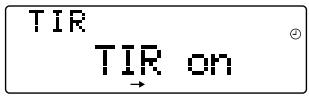
1 Press and hold TIR until "TIR" lights up in the display.
2 Press ⑤ (→) repeatedly until "TIR on" appears.
text_image
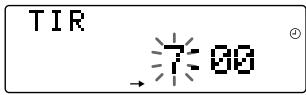
TIR TIR on3 Press TIR repeatedly until the time indication appears.
text_image
TIR 7:00① Set the hour by rotating the dial.
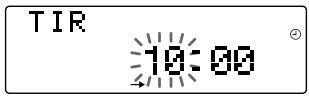
text_image
TIR 10:00② Press ⑤ (→) until the minute digits flash.
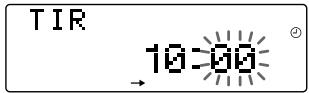
text_image
TIR 10:00③ Set the minute by rotating the dial.
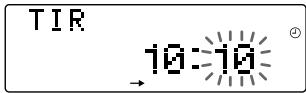
text_image
TIR 10:104 Press TIR.
5 Select the desired station by pressing the preset number button or pushing the SEEK/AMS control up or down.
6 Press TIR for two seconds to return to the original display. ④ lights up.
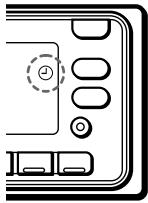
natural_image
Pure diagram of a device casing with no text, numbers, or symbolsThe unit turns on automatically and stands by for traffic announcements for four hours (two hours before and after the preset time).
If the preset station does not broadcast the traffic announcement while searching, the unit starts searching for other traffic programme (TP) stations.
To cancel the TIR function
Select "TIR off" in step 2 above.
Tips
- While the unit is recording the traffic announcement, ⏻ and "TA" flash.
- If the unit still cannot find a TP station, it starts a new search every five minutes until it finds one.
- If you pull out the ignition key while the TIR function is on, "TIR on" and ⏻ flash a few times.
Notes
- The unit also stands by for traffic announcements for two hours after you turn off the engine, as long as the TIR function is on.
- If you have a power aerial, it automatically extends every time the unit searches for a traffic programme station. If you have a manual aerial, make sure that the aerial is fully extended.
- If you do not use your car for about ten days, the TIR function will turn off automatically to avoid battery wear, even if the TIR function is on.
Playing back the recorded traffic announcements
When there are recorded traffic announcements you have not listened to yet, ⏻ flashes.
1 Press TIR.
The latest traffic announcement is played back. To listen to the previous ones, press TIR or push the SEEK/AMS control up. To replay the announcements, push the SEEK/AMS control down.
“NO Data” appears if no traffic announcements were recorded.
2 Press TIR to go back to the original programme.
Locating a station by programme type
You can locate the station you want by selecting one of the programme types shown below.
| Programme types | Display |
| News | News |
| Current Affairs | Affairs |
| Information | Info |
| Sports | Sport |
| Education | Educate |
| Drama | Drama |
| Culture | Culture |
| Science | Science |
| Varied | Varied |
| Popular Music | Pop M |
| Rock Music | Rock M |
| Middle of the Road Music | M. o. R. M |
| Light Classical | Light M |
| Classical | Classics |
| Other Music Type | Other M |
| Weather | Weather |
| Finance | Finance |
| Children’s programmes | Children |
| Social Affairs | Social A |
| Religion | Religion |
| Phone In | Phone In |
| Travel | Travel |
| Leisure | Leisure |
| Jazz Music | Jazz |
| Country Music | Country |
| National Music | Nation M |
| Oldies Music | Oldies |
| Folk Music | Folk M |
| Documentary | Document |
| Not specified | None |
Note
You cannot use this function in some countries where no PTY (Programme Type selection) data is available.
1 Press PTY/LIST during FM reception until "PTY" appears.
PTY
Info
The current programme type name appears if the station is transmitting the PTY data. “----” appears if the received station is not an RDS station, or if the RDS data has not been received.
2 Press PTY/LIST repeatedly until the desired programme type appears.
The programme types appear in the order shown in the above table. Note that you cannot select “None” (Not specified) for searching.
PTY
Sport
3 Push the SEEK/AMS control up or down. The unit starts searching for a station broadcasting the selected programme type. When the unit finds the programme, the programme type appears again for five seconds.
“NO” and the programme type appear alternately for five seconds if the unit cannot find the programme type. It then returns to the previous station.
Setting the clock automatically
The CT (Clock Time) data from the RDS transmission sets the clock automatically.
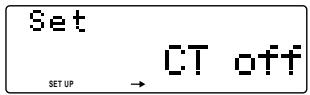
1 Press SHIFT, then press ③ (SET UP) repeatedly until "CT" appears.
text_image
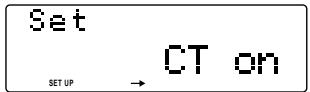
Set SET UP → CT off2 Press ⑤ (→ repeatedly until "CT on" appears. The clock is set.
text_image
Set SET UP → CT on3 Press SHIFT to return to the normal display.
To cancel the CT function
Select "CT off" in step 2 above.
Notes
- The CT function may not work even though an RDS station is being received.
- There might be a difference between the time set by the CT function and the actual time.
Other Functions
Using the rotary commander
The rotary commander works by pressing buttons and/or rotating controls. You can control an optional CD or MD unit with the rotary commander.
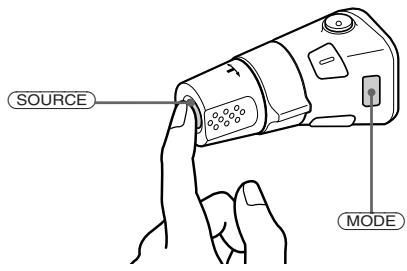
By pressing buttons (the SOURCE and MODE buttons)
text_image
SOURCE MODEEach time you press SOURCE, the source changes as follows:
$$ \mathrm{TAPE} \rightarrow \text { T U N E R } \rightarrow \mathrm{CD} \rightarrow \mathrm{MD} $$
Pressing MODE changes the operation in the following ways;
- Tape transport direction
- Tuner: FM1 → FM2 → MW → LW
- CD unit : CD1 → CD2 → ...
- MD unit : MD1 → MD2 → ...
Tip
When the POWER SELECT switch is set to position B you can turn on this unit by pressing SOURCE on the rotary commander.
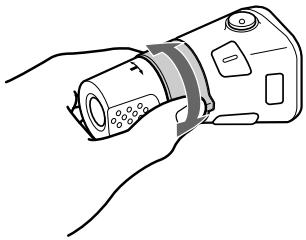
By rotating the control (the SEEK/AMS control)
natural_image
Line drawing of a handheld device with a handle and control knob (no text or symbols)Rotate the control momentarily and release it to:
- Locate the beginnings of the tracks on the tape. Rotate and hold the control, and release it to fast-wind the tape. To playback, rotate and hold the control again, and release it.
- Locate a specific track on a disc. Rotate and hold the control until you lacate the specific point in a track, then release it to start playback.
- Tune in stations automatically. Rotate and hold the control to tune in a specific station.
By pushing in and rotating the control (the PRESET/DISC control)
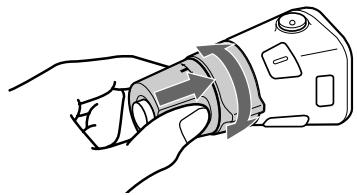
natural_image
Line drawing of a hand holding a handheld device with a scroll wheel (no text or symbols)Push in and rotate the control to:
- Receive the stations memorised on the number buttons.
- Change the disc.
Other operations
Rotate the VOL control to adjust the volume.
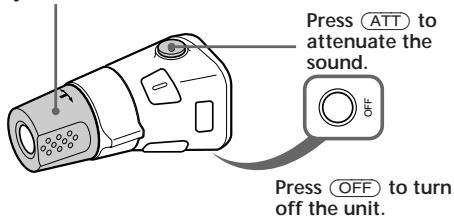
text_image
Press ATT to attenuate the sound. Press OFF to turn off the unit.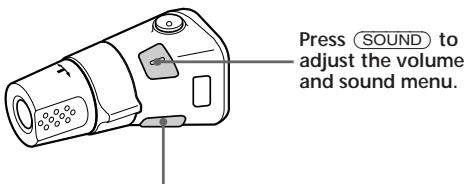
text_image
Press SOUND to adjust the volume and sound menu.Press LIST to:
- Display the memorised names.
- Display the programme type.
Changing the operative direction
The operative direction of controls is factory-set as in the illustration below.
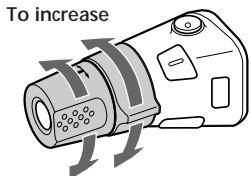
text_image
To increaseTo decrease
If you need to mount the rotary commander on the right side of the steering column, you can reverse the operative direction.
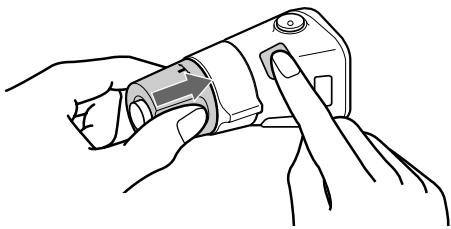
natural_image
Illustration of hands using a handheld device to interact with a button (no text or symbols visible)Press SOUND for two seconds while pushing the VOL control.
Tip
You can control the operative direction of controls with the unit (page 20).
Adjusting the sound characteristics
You can adjust the bass, treble, balance and fader.
Each source can store the bass and treble levels respectively.
1 Select the item you want to adjust by pressing SOUND repeatedly.
VOL (volume) →SUB (subwoofer volume)
→BAS (bass) →TRE (treble)
→BAL (left-right) →FAD (front-rear)
2 Adjust the selected item by rotating the dial.
Adjust within three seconds after selecting the item. (After three seconds, the dial functions as the volume control.)
Attenuating the sound
Press ATT on the rotary commander or wireless remote.
“ATT on” flashes momentarily.
To restore the previous volume level, press ATT again.
Tip
The unit decreases the volume automatically when a telephone call comes in (Telephone ATT function).
Changing the sound and display settings
You can set:
- Clock (page 7).
• CT (Clock Time) (page 18). - D.Info (Dual Information) to display the clock and the play mode at the same time (ON) or to display the information alternately (OFF).
- Amber/Green to change the illumination colour to amber or green.
- Dimmer to change the brightness of the display.
— Select “Auto” to dim the display only when you turn the lights on.
— Select “on” to dim the display.
- Contrast to adjust the contrast if the indications in the display are not recognizable because of the unit's installed position.
• Voice guide function for vocalized comments. - Beep to turn on or off the beeps.
- RM (Rotary Commander) to change the operative direction of the controls of the rotary commander.
— Select “norm” to use the rotary commander as the factory-set position.
— Select “rev” when you mount the rotary commander on the right side of the steering column.
- Loud (Loudness) to enjoy bass and treble even at low volume. The bass and treble will be reinforced.
- LPF (Low Pass Filter).
• A. Scrl (Auto Scroll) (page 22).
1 Press SHIFT.
2 Press ③ (SET UP) repeatedly until the desired item appears.
Each time you press ③ (SET UP), the item changes as follows:
Clock → CT → D.Info* → Amber/Green → Dimmer → Contrast → Voice* → Beep → RM → Loud* → LPF* → A.ScrI*
* When the radio is off, or when there is no tape, CD, or MD being played, these items will not appears
Note
The displayed item will differ depending on the source.
3 Press ⑤ (→to select the desired setting (for example: on or off). For the “Contrast” setting, pressing ⑤ (→makes the contrast higher, and pressing ② (←) makes the contrast lower.
4 Press SHIFT. After the mode setting is complete, the display goes back to normal playback mode.
Adjusting the frequency of the subwoofer(s)
To match the characteristics of the connected subwoofer(s), you can cut out the unwanted high and middle frequency signals entering the subwoofer(s). By setting the cut-off frequency, the subwoofer(s) will output only low frequency signals so you can get a clearer sound image.
1 Press SOURCE to select a source (radio, tape, CD, or MD).
2 Press SHIFT, then press ③ (SET UP) repeatedly until "LPF" appears.
3 Press ⑤ (→ or ② (←) repeatedly to select desired setting.
Set
LPF120Hz
Each time you press ⑤ (→ or ② (←), the cut-off frequency in the display changes as follows:
LPF 120 Hz ↔ LPF 80 Hz ↔ LPF off
4 Press SHIFT. When the frequency setting is complete, the display goes back to the normal playback mode.
With Optional Equipment CD/MD Unit
You can control up to 7 CD and MD units with this unit.
If you connect an optional CD unit with the CD TEXT function, the CD TEXT information will appear in the display when you play back a CD TEXT disc.
Playing a CD or MD
1 Press SOURCE repeatedly to select the CD or MD.
2 Press MODE until the desired unit appears.
CD/MD playback starts.
When a CD/MD unit is connected, all the tracks play from the beginning.
Changing the displayed item
Each time you press DSPL during CD, CD TEXT or MD playback, the item changes as follows:
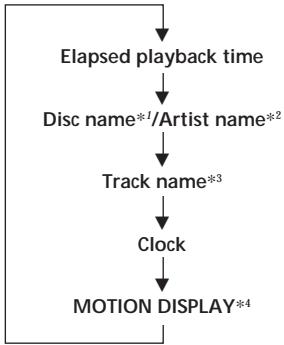
flowchart
graph TD
    A["Elapsed playback time"] --> B["Disc name*1/Artist name*2"]
    B --> C["Track name*3"]
    C --> D["Clock"]
    D --> E["MOTION DISPLAY*4"]
*1 If you have not labeled the disc or there is no disc name prerecorded on the MD, "NO D.Name" appears in the display.
*2 If you play a CD TEXT disc, the artist name appears in the display after the disc name. (Only for CD TEXT discs with the artist name.)
*3 If the track name of a CD TEXT disc or MD is not prerecorded, "NO T.Name" appears in the display.
*4 All the items above are scrolled in the display one by one in order.
You can label CD and CD TEXT discs with a personalized name using the disc memo function, refer to “Labeling a CD” (page 26). However, if you use personalized labels, they will always take priority over the original CD TEXT information when such information is displayed.
Tip
If the name of the MD or CD TEXT disc is too long, you can scroll it across the display by pressing ⓊSHIFT, then ② (←).
Automatically scrolling a disc name
— Auto Scroll
If the disc name/artist name or track name on a CD TEXT disc or MD exceeds 10 characters and the Auto Scroll function is on, automatically scrolls on the display as follows:
- The disc name appears when the disc has changed (if the disc name is selected).
- The track name appears when the track has changed (if the track name is selected).
If you press DSPL to change the display item, the disc or track name of the MD or CD TEXT disc is scrolled automatically whether you set the function on or off.
1 During playback, press SHIFT.
2 Press ③ (SET UP) repeatedly until "A.Scrl" appears.
3 Press ⑤ (→to select "A.Scrl on."
4 Press SHIFT
To cancel Auto Scroll, select "A.Scrl off" in step 2 above.
Note
For some CD TEXT discs with extremely many characters, the following cases may happen: — Some of the characters are not displayed — Auto Scroll does not work.
Locating a specific track
— Automatic Music Sensor (AMS)
During playback, push the SEEK/AMS control up or down once for each track you want to skip.
To locate succeeding tracks
To locate preceding tracks
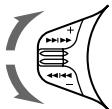
Locating a specific point in a track
— Manual Search
During playback, push the SEEK/AMS control up or down and hold. Release when you have found the desired point.
To search forward
To search backward
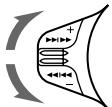
Locating a disc by disc number
— Direct Disc Selection
Press the number button that corresponds with the desired disc number.
The desired disc in the current changer begins playback.
Scanning the tracks
— Intro Scan
You can play the first 10 seconds of all the tracks on the current disc.
1 During playback, press SHIFT, then press ④ (PLAY MODE) repeatedly until "Intro" appears.
2 Press ⑤ (→to select "Intro on." Intro Scan starts.
3 Press SHIFT.
To go back to normal playback mode, select "Intro off" in step 2 above.
Playing tracks repeatedly
— Repeat Play
You can select:
- Repeat 1 to repeat a track.
- Repeat 2 to repeat a disc.
1 During playback, press SHIFT.
2 Press ⑦ (REP) repeatedly until the desired setting appears.

flowchart
graph LR
    A["Repeat 1"] --> B["Repeat 2"]
    B --> C["Repeat off"]
Repeat Play starts.
3 Press SHIFT.
To go back to normal playback mode, select "Repeat off" in step 2 above.
Playing tracks in random order — Shuffle Play
You can select:
- Shuf 1 to play the tracks on the current disc in random order.
- Shuf All to play all the tracks in random order.
1 During playback, press SHIFT.
2 Press ⑧ (SHUF) repeatedly until the desired setting appears.

flowchart
graph LR
    A["Shuf 1"] --> B["Shuf All"]
    B --> C["Shuf off"]
    C --> D["Shuf Off"]
Shuffle Play starts.
3 Press SHIFT.
To go back to normal playback mode, select "Shuf off" in step 2 above.
Creating a programme
— Programme Memory (CD/MD unit with the programme memory function)
You can play tracks in the order you want by making your own programme. You can make two programmes: Programme 1 and Programme 2. You can select up to 12 tracks for each programme. You can store the programmes in memory.
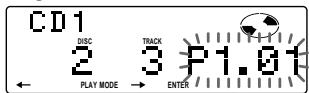
1 Press SHIFT, then press ④ (PLAY MODE) for two seconds.
Programme edit mode
text_image
CD1 DISC 2 TRACK P1.01 PLAY MODE → ENTER"P 1" shows Programme 1 is selected.
If you have labelled the disc, the bank edit mode appears. Press ④ (PLAY MODE) to display "P 1" above.
To select Programme 2, press ⑤ (→ repeatedly until “P 2” appears.
2 Select the track you want.
① Press SOURCE repeatedly to select CD or MD.
② Press MODE repeatedly to select the unit.
③ Press SHIFT, then press the number button to select the disc.
4 Press SHIFT.
⑤ Push the SEEK/AMS control up or down to select the track.
3 Press ⑥ (ENTER) momentarily.
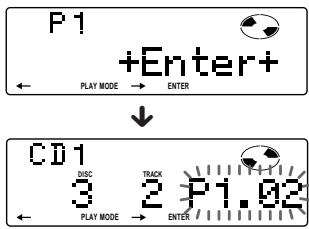
text_image
P1 +Enter+ ← PLAY MODE → ENTER ↓ CD1 3 2 P1.02 ← PLAY MODE → ENTER4 To continue entering tracks, repeat steps 2 and 3.
5 When you finish entering tracks, press ④ (PLAY MODE) for two seconds.
6 Press SHIFT.
Notes
- “**Wait**” appears in the display while the unit is reading the data, or when a disc has not been put into the unit.
- “*Mem Full*” appears in the display when you try to enter more than 12 tracks into a programme.
Playing the stored programme
Changing the disc order in the unit will not affect programme memory play.
You can select:
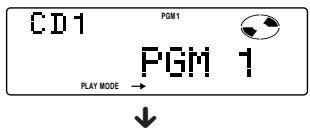
•PGM 1 to play Programme 1.
• PGM 2 to play Programme 2.
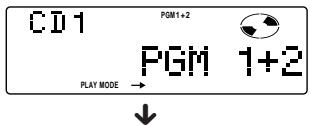
- PGM 1+2 to play Programmes 1 and 2.
1 Press SHIFT.
2 Press ④ (PLAY MODE) repeatedly until "PGM" appears.
3 Press ⑤ (→repeatedly until the desired programme appears.
Programme 1 playback
text_image
CD1 PGM1 PGM 1 PLAY MODE → ↓Programme 2 playback
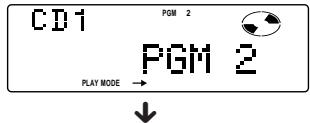
text_image
CD1 PGM 2 PGM 2 PLAY MODE → ↓Programmes 1 and 2 playback
text_image
CD1 POM1+2 PGM 1+2 PLAY MODE → ↓Normal playback
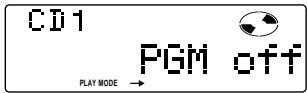
text_image
CD1 PGM off PLAY MODE →Programme Play starts.
4 Press SHIFT.
Notes
- If you press a number button during programme memory play, programme memory play is interrupted, and playback of the selected disc starts.
- "NO Data" appears in the display if no track is stored in the programme.
- If a track stored into the programme memory is not in the disc magazine, the track will be skipped.
- When the disc magazine contains no tracks stored into the programme memory, or when the programme information has not been loaded yet, "Not ready" appears.
Erasing an entire programme
1 Press SHIFT, then press ④ (PLAY MODE) for two seconds.
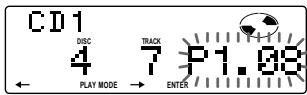
text_image
CD1 DISC 4 TRACK 7 P1.08 PLAY MODE → ENTER"P 1" shows Programme 1 is selected.
If you have labelled the disc, the bank edit mode appears. Press ④ (PLAY MODE) to display "P 1" above.
2 Press ② ( ) repeatedly until "DEL" appears.
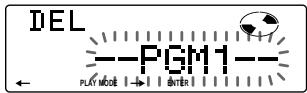
text_image
DEL --PGM1-- PLAY MODE |→ | Enter |To erase Programme 2, press ⑤ (→ repeatedly until “PGM 2” appears.
3 Press ⑥ (ENTER) for two seconds.
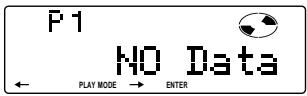
text_image
P1 NO Data ← PLAY MODE → ENTERThe entire programme is erased.
4 When you finish erasing programmes, press ④ (PLAY MODE) for two seconds.
5 Press SHIFT.
Adding tracks to a programme
1 Press SHIFT, then press ④ (PLAY MODE) for two seconds.
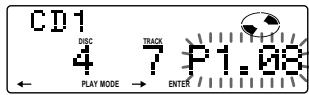
text_image
CD1 DISC 4 TRACK 7 P1.08 PLAY MODE → ENTER"P 1" shows Programme 1 is selected.
If you have labelled the disc, the bank edit mode appears. Press ④ (PLAY MODE) to display "P 1" above.
To select Programme 2, press ⑤ (→ repeatedly until “P 2” appears.
2 Press ② (←) or ⑤ (→ to select the track slot number where you want to insert a track.
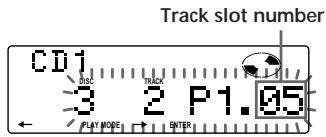
text_image
Track slot number CD1 disc 3 2 P1.05 PLAY MODE ENTER3 Push the SEEK/AMS control up or down to select the track you want to insert.
4 Press ⑥ (ENTER) momentarily to enter the track.
The current track in that slot number and the succeeding tracks shift down.
To continue inserting tracks, repeat steps 2 through 4.
Note
Once all 12 slots have been filled,
"*Mem Full*" appears in the display, and you cannot insert tracks.
5 When you finish inserting tracks, press ④ (PLAY MODE) for two seconds.
6 Press SHIFT.
Erasing tracks in a programme
1 Press SHIFT, then press ④ (PLAY MODE) for two seconds.

text_image
CD1 DISC 3 TRACK 2 P1.07 PLAY MODE → ENTER"P 1" shows Programme 1 is selected.
If you have labelled the disc, the bank edit mode appears. Press ④ (PLAY MODE) to display “P 1” above.
To select Programme 2, press ⑤ (→ repeatedly until “P 2” appears.
2 Press ② (←) or ⑤ (→) to select the track you want to erase.
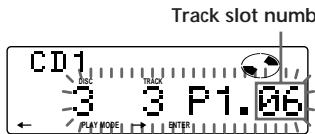
text_image
Track slot numb CD1 3 3 P1.06 PLAY MODE | ENTERThe track currently registered in slot 6 of Programme 1.
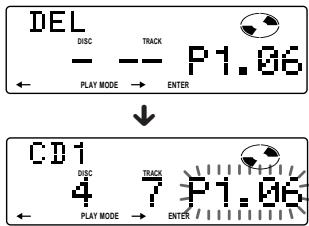
3 Press ⑥ (ENTER) for two seconds. When you erase a track from a slot number, the succeeding tracks shift up to fill the gap.
text_image
DEL DISC TRACK P1.06 ← PLAY MODE → ENTER ↓ CD1 DISC TRACK 4 7 P1.06 ← PLAY MODE → ENTER4 To continue erasing tracks, repeat steps 2 and 3.
5 When you finish erasing tracks, press ④ (PLAY MODE) for two seconds.
6 Press SHIFT.
Labeling a CD — Disc Memo (CD unit with the custom file function)
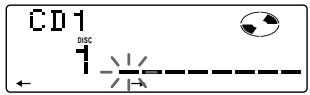
You can label each disc with a personalized name. You can enter up to eight characters for a disc. If you label a CD, you can locate the disc by name (page 27) and select the specific tracks for playback (page 28).
1 Play the CD and press PTY/LIST for two seconds.
text_image
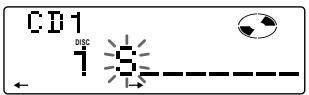
CD1 DISC 1 ←2 Enter the characters.
① Rotate the dial clockwise to select the desired characters.
$$ \begin{array}{l} (A \to B \to C \to \cdots Z \to 0 \to 1 \to 2 \to \ \cdots 9 \to + \to - \to^* \to / \to \backslash \to > \to < \ \to . \to_-) \end{array} $$
text_image
CD1 DISC ↑ ←If you rotate the dial counterclockwise, the characters appear in the reverse order.
If you want to put a blank space between characters, select “_” (underbar).
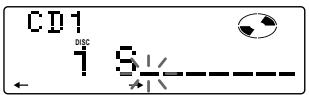
② Press ⑤ (→ after locating the desired character.
The flashing cursor moves to the next space.
text_image
CD1 DISC 1 S ←If you press ② (←), the flashing cursor moves to the left.
③ Repeat steps ① and ② to enter the entire name.
3 To return to normal CD playback mode, press PTY/LIST for two seconds.
Tip
To erase/correct a name enter “_” (under-bar) for each character.
Displaying the disc memo name
Press DSPL during CD or CD TEXT disc playback.
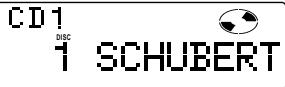
text_image
CD1 disc 1 SCHUBERTEach time you press DSPL during CD or CD TEXT disc playback, the item changes as follows:
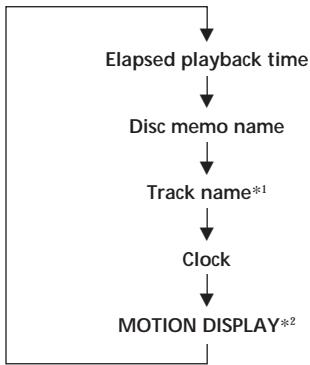
flowchart
graph TD
    A["Elapsed playback time"] --> B["Disc memo name"]
    B --> C["Track name*1"]
    C --> D["Clock"]
    D --> E["MOTION DISPLAY*2"]
*1 If you connect an optional CD unit with the CD TEXT function, the CD TEXT information will appear in the display when you playback a CD TEXT disc.
*2 All the items above are scrolled in the display one by one in order.
Erasing the disc memo
1 Press SOURCE repeatedly to select CD.
2 Press MODE repeatedly to select the CD unit.
3 Press PTY/LIST for two seconds.
4 Press DSPL for two seconds.
5 Rotate the dial to select the name you want to erase.
6 Press ⑥ (ENTER) for two seconds.
The name is erased.
Repeat steps 5 and 6 if you want to erase other names.
7 Press PTY/LIST for two seconds.
The unit returns to normal CD playback mode.
Note
When the personalized label is erased, the original CD TEXT information will appear in the display.
Locating a disc by name
— List-up (CD unit with the custom file function or MD unit)
You can use this function for discs that have been assigned a custom name. For more information on disc names, refer to “Labeling a CD” (page 26).
1 Press PTY/LIST momentarily.
The name assigned to the current disc appears in the display.
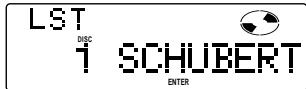
text_image
LST DISC 1 SCHUBERT ENTERWhen you assign a disc memo label to a CD TEXT disc, it takes priority over the original CD TEXT information.
2 Press PTY/LIST repeatedly until you find the desired disc.
3 Press ⑥ (ENTER) to play back the disc.
Notes
- After a disc name has been displayed for five seconds, the display goes back to normal playback mode. To turn off the display, press DSPL.
- The track names are not displayed during MD or CD TEXT disc playback.
- If there are no discs in the magazine, "NO Disc" appears in the display.
- If a disc has not been assigned a custom file, "*******" appears in the display.
- If the disc information has not been read by the unit, “?” appears in the display. To load the disc, first press the number button, then choose the disc that has not been loaded.
- The information appears only in upper case. There are also some letters which cannot be displayed (during MD or CD TEXT disc playback).
Selecting specific tracks for playback
— Bank
(CD unit with the custom file function)
If you label the disc, you can set the unit to skip tracks and play only the tracks you want.
1 Start playing the disc and press SHIFT. Then press ④ (PLAY MODE) for two seconds.
Bank edit mode.
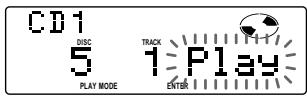
text_image
CD1 DISC 5 PLAY MODE TRACK 1-Play ENTERNote
If you have not labeled the disc, the bank edit mode does not appear and the programme edit mode appears. To go back to normal playback mode, press ④ (PLAY MODE) for two seconds.
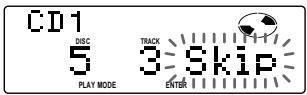
2 Push the SEEK/AMS control up or down to select the track number you want to skip and press ⑥ (ENTER).
text_image
CD1 DISC 5 PLAY MODE TRACK 3-Skip ENTERThe indication changes from “Play” to “Skip.” If you want to return to “Play,” press ⑥ (ENTER) again.
3 Repeat step 2 to set the "Play" or "Skip" mode on all the tracks.
4 Press ④ (PLAY MODE) for two seconds. The unit returns to normal CD playback mode.
5 Press SHIFT.
Notes
- You can set the "Play" and "Skip" mode on up to 24 tracks.
- You cannot set the "Skip" mode on all the tracks.
Playing the specific tracks only
You can select:
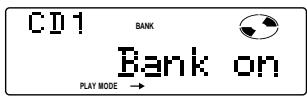
- Bank on to play the tracks with the “Play” setting.
- Bank inv (Inverse) to play the tracks with the “Skip” setting.
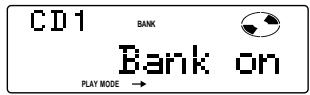
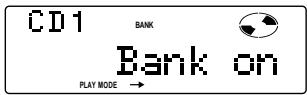
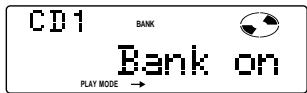
1 During playback, press SHIFT, then press ④ (PLAY MODE) repeatedly until "Bank" appears.
2 Press ⑤ (→) to repeatedly until the desired setting appears.

flowchart
graph LR
    A["→ Bank on"] --> B["→ Bank inv"]
    B --> C["→ Bank off"]
text_image
CD1 BANK Bank on PLAY MODE →Playback starts from the track following the current one.
3 Press SHIFT.
To go back to normal playing mode, select "Bank off" in step 2 above.
Additional Information
Precautions
- If your car was parked in direct sunlight resulting in a considerable rise in temperature inside the car, allow the unit to cool off before operating it.
- If no power is being supplied to the unit, check the connections first. If everything is in order, check the fuse.
- If no sound comes from the speakers of a 2-speaker system, set the fader control to the centre position.
- When the tape is played back for a long period, the cassette may become warm because of the built-in power amplifier. However, this is not a sign of malfunction.
If you have any questions or problems concerning your unit that are not covered in this manual, please consult your nearest Sony dealer.
To maintain high quality sound
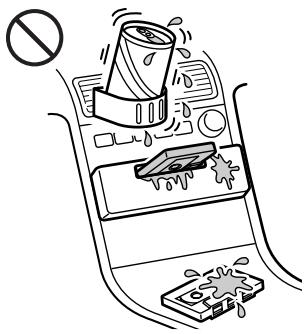
If you have drink holders near your audio equipment, be careful not to splash juice or other soft drinks onto the car audio. Sugary residues on this unit or cassette tapes may contaminate the playback heads, reduce the sound quality, or prevent sound reproduction altogether.
Cassette cleaning kits cannot remove sugar from the tape heads.
text_image
Diagram showing a car interior with a coffee cup, a tray, and a trash can, indicating no litter or waste.Notes on Cassettes
Cassette care
- Do not touch the tape surface of a cassette, as any dirt or dust will contaminate the heads.
- Keep cassettes away from equipment with built-in magnets such as speakers and amplifiers, as erasure or distortion on the recorded tape could occur.
- Do not expose cassettes to direct sunlight, extremely cold temperatures or moisture.
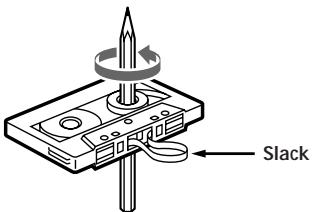
- Slack in the tape may cause the tape to be caught in the machine. Before you insert the tape, use a pencil or similar object to turn the reel and take up any slack.
text_image
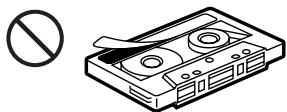
Slack- Distorted cassettes and loose labels can cause problems when inserting or ejecting tapes. Remove or replace loose labels.
natural_image
Illustration of a cassette tape with a prohibition symbol (no text or labels present)Cassettes longer than 90 minutes
The use of cassettes longer than 90 minutes is not recommended except for long continuous play. The tapes used for these cassettes are very thin and tend to be stretched easily.
Frequent playing and stopping of these tapes may cause them to be pulled into the cassette deck mechanism.

text_image
120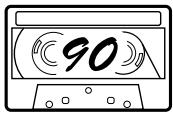
text_image
90Maintenance
Fuse Replacement
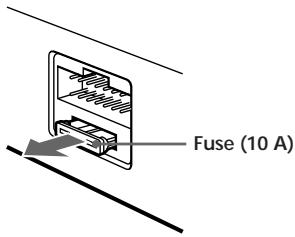
When replacing the fuse, be sure to use one matching the amperage rating stated on the original fuse. If the fuse blows, check the power connection and replace the fuse. If the fuse blows again after replacement, there may be an internal malfunction. In such a case, consult your nearest Sony dealer.
text_image
Fuse (10 A)Warning
Never use a fuse with an amperage rating exceeding the one supplied with the unit as this could damage the unit.
Cleaning the Connectors
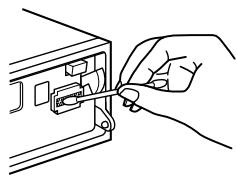
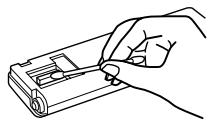
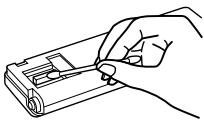
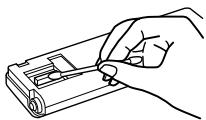
The unit may not function properly if the connectors between the unit and the front panel are not clean. In order to prevent this, open the front panel by pressing ⓄOPEN, then detach it and clean the connectors with a cotton swab dipped in alcohol. Do not apply too much force. Otherwise, the connectors may be damaged.
natural_image
Line drawing of a hand inserting a plug into a device (no text or symbols)Main unit
natural_image
Line drawing of a hand holding a battery pack with a pen inserted (no text or symbols)Back of the front panel
Notes
- For safety, before cleaning the connectors, turn off the engine and remove the key from the ignition switch.
- Never touch the connectors directory with your fingers or any metal device.
Dismounting the unit
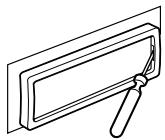
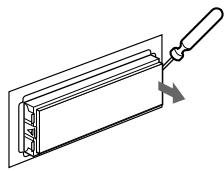
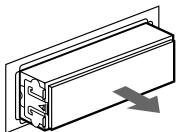
1 Press the clip inside the front cover with a thin screwdriver, and lever the front cover free.
natural_image
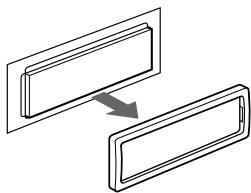
Simple line drawing of a rectangular object with a handle, resembling a stylus or tool (no text or symbols)2 Repeat step 1 on the left side. The front cover is removed.
natural_image
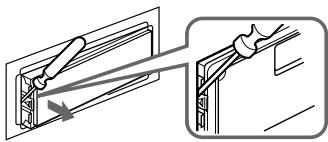
Diagram showing two rectangular panels with an arrow pointing from one to the other (no text or symbols)3 Use a thin screwdriver to push in the clip on the left side of the unit, then pull out the left side of the unit until the catch clears the mounting.
natural_image
Diagram showing a mechanical assembly with an arrow indicating direction, no text or symbols present4 Repeat step 3 on the right side.
natural_image
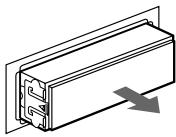
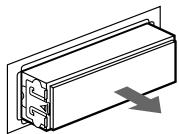
Diagram of a tool interacting with a rectangular object, showing an arrow indicating rotation (no text or symbols present)5 Slide the unit out of the mounting.
natural_image
Pure technical line drawing of a rectangular component with internal structure and a downward arrow, no text or symbols present.Specifications
Cassette player section
| Tape track | 4-track 2-channel stereo |
| Wow and flutter | 0.08 % (WRMS) |
| Frequency response | 30 – 20,000 Hz |
| Signal-to-noise ratio |
| Cassette type | Dolby B NR | Dolby NR off |
| TYPE II, III, IV | 67 dB | 61 dB |
| TYPE I | 64 dB | 58 dB |
Tuner section
FM
| Tuning range | 87.5 – 108.0 MHz |
| Aerial terminal | External antenna connector |
| Intermediate frequency | 10.7 MHz |
| Usable sensitivity | 8 dBf |
| Selectivity | 75 dB at 400 kHz |
| Signal-to-noise ratio | 65 dB (stereo),68 dB (mono) |
| Harmonic distortion at 1 kHz | |
| 0.7 % (stereo),0.4 % (mono) | |
| Separation | 35 dB at 1 kHz |
| Frequency response | 30 – 15,000 Hz |
MW/LW
| Tuning range | MW: 531 – 1,602 kHz |
| LW: 153 – 281 kHz | |
| Aerial terminal | External antenna connector |
| Intermediate frequency | 10.71 MHz/450 kHz |
| Sensitivity | MW: 30 μV |
| LW: 50 μV |
Power amplifier section
| Outputs | Speaker outputs(sure seal connectors) |
| Speaker impedance | 4 – 8 ohms |
| Maximum power output | 45 W × 4 (at 4 ohms) |
General
| Outputs | Line outputs (3)Power antenna relay control leadPower amplifier control leadTelephone ATT control lead |
| Tone controls | Bass ±8 dB at 100 HzTreble ±8 dB at 10 kHz |
| Power requirements | 12 V DC car battery(negative ground) |
| Dimensions | Approx. 178 × 50 × 180 mm(w/h/d) |
| Mounting dimensions | Approx. 182 × 53 × 160 mm(w/h/d) |
| Mass | Approx. 1.5 kg |
| Supplied accessories | Rotary commander (1)Parts for installation and connections (1 set)Front panel case (1) |
| Optional accessories | Wireless remote RM-X47BUS cable (supplied with an RCA pin cord)RC-61 (1 m), RC-62 (2 m) |
| Optional equipment | CD changerCDX-805 (10 discs),CDX-715 (10 discs),CDX-T65 (6 discs),CDX-T62 (6 discs)MD changerMDX-62Source selectorXA-C30 |
Design and specifications are subject to change without notice.
Troubleshooting guide
The following checklist will help you remedy the problems you may encounter with your unit. Before going through the checklist below, check the connection and operating procedures.
General
| Problem | Cause/Solution |
| No sound. | Cancel the ATT function.Set the fader control to the centre position for two-speaker systems.Rotate the dial in a clockwise direction to adjust the volume. |
| The contents of the memory have been erased. | The power cord or battery has been disconnected.The reset button has been pressed.→ Store again into the memory. |
| Indications do not appear in the display. | Remove the front panel and clean the connectors. See “Cleaning the connectors” (page 30) for details. |
Tape playback
| Problem | Cause/Solution |
| Playback sound is distorted. | Contamination of the tape head. → Clean the head. |
| The AMS does not operate correctly. | There is noise in the space between tracks.A blank space is too short (less than four seconds).▶▶ on the SEEK/AMS control is pressed immediately before the following tracks.◀◀ on the SEEK/AMS control is pressed immediately after the track starts.A long pause, or a passage of low frequencies or very low sound level is treated as a blank space. |
Radio reception
| Problem | Cause/Solution |
| Preset tuning is not possible. | Memorise the correct frequency.The broadcast signal is too weak. |
| Automatic tuning is not possible. | The broadcast signal is too weak.→ Use manual tuning. |
| The “ST” indication flashes. | Tune in the frequency accurately.The broadcast signal is too weak.→ Set to the MONO mode (page 11). |
RDS
| Problem | Cause/Solution |
| A SEEK starts after a few seconds of listening. | The station is non-TP or has a weak signal.→Press AF/TA to select “AF TA off” appears. |
| No traffic announcements. | Activate “TA.”The station does not broadcast any traffic announcements despite being TP. → Tune to another station. |
| PTY displays “NONE.” | The station does not specify the programme type. |
Error displays (when an optional CD/MD unit is connected)
The following indications will flash for about five seconds, and an alarm sound will be heard.
| Display | Cause | Solution |
| NO Mag | The disc magazine is not inserted in the CD/MD unit. | Insert the disc magazine in the CD/ MD unit. |
| NO Disc | No disc is inserted in the CD/MD unit. | Insert discs in the CD/MD unit. |
| NG Discs | A CD/MD cannot play because of some problem. | Insert another CD/MD. |
| Error*1 | A CD is dirty or inserted upside down.*2 | Clean or insert the CD correctly. |
| An MD does not play because of some problem.*2 | Insert another MD. | |
| Blank*1 | No tracks have been recorded on an MD.*2 | Play an MD with tracks recorded on it. |
| PushReset | The CD/MD unit cannot be operated because of some problem. | Press the reset button of the unit. |
| Not Ready | The lid of the MD unit is open or MDs are not inserted properly. | Close the lid or insert the MDs properly. |
| HighTemp | The ambient temperature is more than 50°C. | Wait until the temperature goes down below 50°C. |
*1 When an error occurs during playback of an MD or CD, the disc number of the MD or CD does not appear in the display.
*2 The disc number of the disc causing the error appears in the display.
If the above-mentioned solutions do not help improve the situation, consult your nearest Sony dealer.
¡Bienvenido!
PLAY MODE 9, 10, 11, 13, 15, 22, 23, 24, 25, 28
REP 10, 23
SET UP 7, 18, 20, 21, 22
SHUF 23
text_image
Diagram showing a hand pressing a device into a folder, labeled with two arrows indicating direction of movement.Notas
text_image
Diagram illustrating a file transfer process with labeled steps and hand gestureNotas
natural_image
Pure electrical circuit lines without any symbolsIndicador TIR
text_image
Set Clock SET UP →① Pulse ⑤ (→).
text_image
Set SET UP → 1:00text_image
Set 10:00 SET UP →text_image
10:08 SET UPnatural_image
Illustration of a hand inserting a device into a device casing (no text or symbols visible)text_image
SET UP/PLAY MODE REP SHIFT 1 2 3 4 5 6 7 8 9text_image
FWD Intro off PLAY MODE →text_image
FWD Intro on PLAY MODE →flowchart
graph LR
    A["→ FM1"] --> B["→ FM2"] --> C["→ MW"] --> D["→ LW"]
text_image
TIR TIR ontext_image
TIR 10:104 Pulse TIR.
natural_image
Pure diagram of a device casing with no text, numbers, or symbolstext_image
Set CT off SET UP →text_image
Set CT on SET UP →text_image
SOURCE MODETAPE → TUNER → CD → MD
natural_image
Line drawing of a handheld device with a scroll wheel and control buttons (no text or symbols)natural_image
Line drawing of a hand holding a cylindrical device with a handle (no text or symbols)natural_image
Illustration of hands using a handheld device to interact with a button (no text or symbols visible)Clock → CT → D.Info* → Amber/Green → Dimmer → Contrast → Voice* → Beep → RM → Loud* → LPF* → A.ScrI*
flowchart
graph LR
    A["Repeat 1"] --> B["Repeat 2"]
    B --> C["Repeat off"]
    C --> A
text_image
CD1 DISC I ←text_image
CD1 DISC 1 Stext_image
CD1 DISC 1 Sflowchart
graph LR
    A["→ Bank on"] --> B["→ Bank inv"]
    B --> C["→ Bank off"]
text_image
CD1 BANK Bank on PLAY MODE →text_image
Diagram showing a hand washing a car with a stop sign, indicating no chemical waste or pollution.natural_image
Illustration of a cassette tape with a stop symbol (no text or labels)natural_image
Line drawing of a hand inserting a component into a device (no text or symbols)Unidad principal
natural_image
Line drawing of a hand using a tool to adjust or install a device (no text or symbols present)natural_image
Line drawing of a saw cutting through a rectangular frame (no text or symbols)natural_image
Diagram showing two rectangular panels with an arrow pointing from one to the other (no text or symbols)natural_image
Technical illustration of a mechanical assembly with a close-up view of a bracket detail (no text or symbols)natural_image
Diagram of a tool interacting with a rectangular object, showing an arrow indicating rotation (no text or symbols present)natural_image
Pure technical line drawing of a rectangular component with internal slots and a directional arrow (no text or symbols)Especificaciones
PLAY MODE 9, 10, 11, 13, 15, 22, 23, 24, 25, 28
REP 10, 23
SET UP 7, 18, 20, 21, 22
SHUF 23
text_image
Diagram showing a hand pressing a device into a folder, with numbered arrows indicating process flow.Observera
text_image
Diagram illustrating a device's internal processing steps, showing step-by-step assembly from external to internal storage.Observera
natural_image
Pure electrical circuit lines without any symbolsTIR-indikator
Mer information om TIR-funktionen får du om du läser “Spela in trafikmeddelanden” (sidan 16).
text_image
Set SET UP Clock① Tryck på ⑤ (→).
text_image
Set SET UP → 1:00text_image
Set SET UP 10:00③ Tryck på ⑤ (→).
text_image
Set 10:00 SET UP →text_image
Set 10:08 SET UP →2 Tryck på SHIFT.
text_image
10:08 SET UPKlockan aktiveras.
3 Tryck på SHIFT.
natural_image
Illustration of a hand inserting a CD into a device (no text or symbols visible)text_image
SET UP/PLAY MODE REP SHIFT 1 2 3 4 5 6 7 8 9Intro → NR → B.Skip → ATA
text_image
FWD Intro off PLAY MODE →text_image
FWD Intro on PLAY MODE →Sökningen påbörjas.
4 Tryck på SHIFT.
flowchart
graph LR
    A["FM1"] --> B["FM2"]
    B --> C["MW"]
    C --> D["LW"]
text_image
TIR TIR ontext_image
TIR 10:104 Tryck på TIR.
natural_image
Pure technical diagram of a mechanical component with no text, numbers, or symbolstext_image
Set CT off SET UP →text_image
Set SET UP → CT ontext_image
SOURCE MODETAPE → TUNER → CD → MD
natural_image
Line drawing of a hand holding a device with a circular component and adjustment knob (no text or symbols)natural_image
Line drawing of a hand holding a handheld device with a scroll wheel (no text or symbols)natural_image
Illustration of hands using a handheld device to interact with a button (no text or symbols visible)Clock → CT → D.Info* → Amber/Green → Dimmer → Contrast → Voice* → Beep → RM → Loud* → LPF* → A.ScrI*
flowchart
graph LR
    A["Repeat 1"] --> B["Repeat 2"]
    B --> C["Repeat off"]
text_image
CD1 disc 12 Mata in tecknen.
text_image
CD1 DISC 1 S ←text_image
CD1 DISC 1 Sflowchart
graph LR
    A["→ Bank on"] --> B["→ Bank inv"] --> C["→ Bank off"]
text_image
CD1 BANK Bank on PLAY MODE →text_image
Diagram showing a fire safety hazard with a smokestack, fire extinguisher, and firecracker inside a vehicle cabinSköta kassetterna
Skötselföreskrifter
text_image
Slakt bandnatural_image
Illustration of a cassette tape with a stopper and no stop symbol (no text or labels)natural_image
Line drawing of a hand inserting a small component into a device (no text or symbols)Huvudenhet
natural_image
Line drawing of a hand holding a small electronic device (no text or symbols)Frontpanelens baksida
Observera
natural_image
Simple line drawing of a rectangular object with a handle, resembling a stylus or tool (no text or symbols)natural_image
Diagram showing two rectangular panels with a bidirectional arrow between them, no text or symbols present.natural_image
Diagram showing a hand holding a tool interacting with a window frame, with an arrow indicating direction (no text or symbols present)natural_image
Diagram of a tool interacting with a rectangular object, showing an arrow indicating rotation (no text or symbols present)5 Dra ut enheten.
natural_image
Pure technical line drawing of a rectangular component with internal slots and a downward arrow, no text or symbols present.Tekniska data
Kassettbandspelaren
PLAY MODE 9, 10, 11, 13, 15, 22, 23, 24, 25, 28
REP 10, 23
SET UP 7, 18, 20, 21, 22
SHUF 23
natural_image
Pure electrical circuit lines without any symbolsNota
text_image
Diagram showing a hand pressing a device into a folder, with numbered arrows indicating process flow.Notas
text_image
Diagram illustrating a file transfer process with labeled components and directional arrows indicating movement.Notas
text_image
Set SET UP Clocktext_image
Set SET UP → 1:00text_image
Set 10:00 SET UP →text_image
10:08 SET UPnatural_image
Illustration of a hand inserting a CD into a device (no text or symbols visible)2 Feche o painel frontal.
Intro → NR → B.Skip → ATA
text_image
FWD Intro off PLAY MODE →text_image
FWD Intro on PLAY MODE →flowchart
graph LR
    A["FM1"] --> B["FM2"]
    B --> C["MW"]
    C --> D["LW"]
MOTION DISPLAY* ← Relógio ←
text_image
TIR TIR ontext_image
TIR 10:10natural_image
Pure technical diagram of a device casing with no text, numbers, or symbolstext_image
Set CT off SET UP →text_image
Set CT on SET UP →text_image
SOURCE MODEnatural_image
Line drawing of a handheld device with a scroll wheel and control buttons (no text or symbols)natural_image
Line drawing of a hand holding a cylindrical device with a handle (no text or symbols)Carregue e rode o controlo para:
natural_image
Illustration of hands using a handheld device to interact with a button (no text or symbols visible)Clock → CT → D.Info* → Amber/Green → Dimmer → Contrast → Voice* → Beep → RM → Loud* → LPF* → A.ScrI*
— Pesquisa sequencial
flowchart
graph LR
    A["Repeat 1"] --> B["Repeat 2"]
    B --> C["Repeat off"]
text_image
CD1 DISC 1 ←text_image
CD1 DISC 1 ←text_image
CD1 disc 1 Sflowchart
graph LR
    A["→ Bank on"] --> B["→ Bank inv"]
    B --> C["→ Bank off"]
text_image
CD1 BANK Bank on PLAY MODE →text_image
Diagram showing a hand holding a cigarette in a car with a 'No' symbol above, indicating no smoking or no smoking.Notas sobre as cassetes
natural_image
Illustration of a cassette tape with a stopper and no stop symbol (no text or labels)text_image
Fusivel (10 A)Aviso
natural_image
Line drawing of a hand inserting a cable into a device (no text or symbols)Unidade principal
natural_image
Line drawing of a hand holding a small electronic device (no text or symbols)natural_image
Simple line drawing of a rectangular object with a handle and a curved blade, no text or symbols present.natural_image
Diagram showing two rectangular panels with an arrow pointing from one to the other (no text or symbols)natural_image
Diagram showing a mechanical assembly with an arrow indicating direction, no text or symbols presentnatural_image
Diagram of a tool interacting with a rectangular object, showing an arrow indicating rotation (no text or symbols present)5 Façadeslizaroaparelhoparaforado suporte.