USER MANUAL VP510T BLACK & DECKER
7.2 Volt Cordless Detail Sander
VP510
- Charge batteries before first use.
- Charger may hum; batteries or charger may become warm while charging (batteries and charger sold separately).
- Not for use on drywall or plaster.
- Ensure sandpaper is correctly installed before using.
SAVE THIS
MANUAL FOR
FUTURE REFERENCE.
VEA EL ESPAÑOL EN LA CONTRAPORTADA.
POUR LE FRANÇAIS, VOIR LA COUVERTURE ARRIÈRE
If you have any questions, call 1-800-762-6672 RAPORTADA:
WARNING: IMPORTANT SAFETY WARNINGS AND INSTRUCTIONS
TO REDUCE RISK OF INJURY:
- Before any use, be sure everyone using this tool reads and understands all safety instructions and other information contained in this manual.
- Save these instructions and review frequently prior to use and in instructing others.
- ⚠️ WARNING: When using electric tools, basic safety precautions should always be followed to reduce risk of fire, electric shock, and personal injury, including the following.
READ ALL INSTRUCTIONS
NOTE: Refer to battery and/or charger manual for battery and charger safety and usage information.
- KEEP WORK AREA CLEAN. Cluttered areas and benches invite injuries.
- CONSIDER WORK AREA ENVIRONMENT. Keep work area well lit. Do not use tool in presence of flammable liquids or gases. Motors in these tools normally spark, and the sparks may ignite the fumes.
- GUARD AGAINST ELECTRIC SHOCK. Prevent body contact with grounded surfaces. For example; pipes, radiators, ranges, and refrigerator enclosures. Do not contact any exposed electrical terminals with the tool. Use extreme caution when drilling, driving or cutting into walls, floors ceilings or other areas or wherever live electrical wires may be encountered, DO NOT TOUCH ANY METAL PARTS OF THE TOOL. Hold the tool only by the plastic handle to prevent electric shock.
- KEEP CHILDREN AWAY. Do not permit children and visitors to contact the tool. All children and visitors should be kept away from work area.
- STORE IDLE TOOLS. When not in use, tools should be stored in dry, and high or locked-up place — out of reach of children.
- DON'T FORCE TOOL. It will do the job better and safer at the rate for which it was intended.
1 • USE RIGHT TOOL. Don't force small tool or attachment to do the job of a heavy-If you have any questions, call 1-800-54-HOW-TO
3
4
duty tool. Don't use tool for purpose not intended — for example — don't use circular saw for cutting tree limbs or logs.
- DRESS PROPERLY. Do not wear loose clothing or jewelry. They can be caught in moving parts. Rubber gloves and non-skid footwear are recommended when working outdoors. Wear protective hair covering to contain long hair.
- USE SAFETY GLASSES. Also use face or dust mask if tool operation is dusty.
- SECURE WORK. Use clamps or a vise to hold work. It's safer than using your hand and it frees both hands to operate tool.
- DON'T OVERREACH. Keep proper footing and balance at all times.
- MAINTAIN TOOLS WITH CARE. Keep tools sharp and clean for better and safer performance. Follow instructions for lubricating and changing accessories. Inspect tool periodically and if damaged, have repaired by authorized service facility only. Keep handles dry, clean, and free from oil and grease.
- DISCONNECT/LOCK OFF TOOLS when not in use, before servicing, and when changing accessories, such as blades, bits, cutters.
- REMOVE ADJUSTING KEYS AND WRENCHES. Form habit of checking to see that keys and adjusting wrenches are removed from tool before turning it on.
- AVOID UNINTENTIONAL STARTING. Don't carry tool with finger on switch. Be sure switch is in the off position (lock off if available) when carrying.
- STAY ALERT. Watch what you are doing. Use common sense. Do not operate tool when you are tired or otherwise impaired.
- CHECK DAMAGED PARTS. Before further use of the tool, a guard or other part that is damaged should be carefully checked to determine that it will operate properly and perform its intended function. Check for alignment of moving parts, binding of moving parts, breakage of parts, mounting, and any other conditions that may affect its operation. A guard or other part that is damaged should be properly repaired or replaced by an authorized service center unless otherwise indicated elsewhere in this instruction manual. Have defective switches replaced by authorized service center. Do not use tool if switch does not turn it on and off.
- REPAIRS AND SERVICE. Repairs, maintenance and adjustment should be performed by authorized service centers or other qualified service organizations, always using identical replacement parts.
- THE USE OF OTHER ACCESSORIES. The use of any other accessory not recommended for use with this tool could be hazardous.
IMPORTANT SAFETY INSTRUCTIONS (FOR BATTERY AND CHARGER)
WARNING: When using electric tools, basic safety precautions should always be followed to reduce risk of fire, electric shock, and personal injury, including the following:
READ ALL INSTRUCTIONS
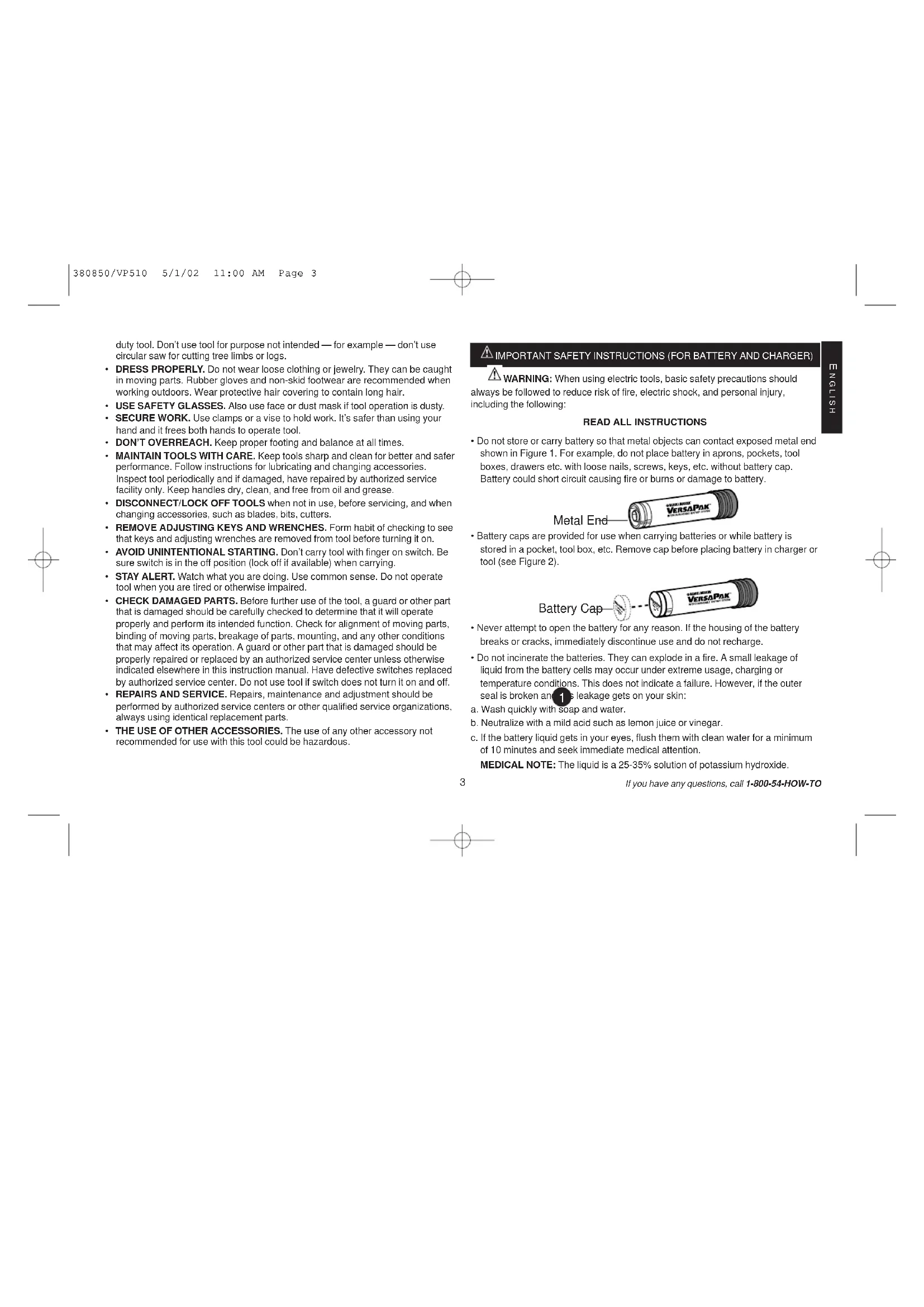
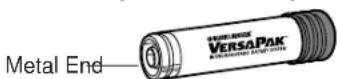
- Do not store or carry battery so that metal objects can contact exposed metal end shown in Figure 1. For example, do not place battery in aprons, pockets, tool boxes, drawers etc. with loose nails, screws, keys, etc. without battery cap. Battery could short circuit causing fire or burns or damage to battery.
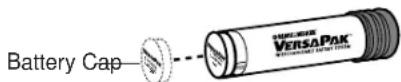
- Battery caps are provided for use when carrying batteries or while battery is stored in a pocket, tool box, etc. Remove cap before placing battery in charger or tool (see Figure 2).
- Never attempt to open the battery for any reason. If the housing of the battery breaks or cracks, immediately discontinue use and do not recharge.
- Do not incinerate the batteries. They can explode in a fire. A small leakage of liquid from the battery cells may occur under extreme usage, charging or temperature conditions. This does not indicate a failure. However, if the outer seal is broken and 1's leakage gets on your skin:
a. Wash quickly with soap and water.
b. Neutralize with a mild acid such as lemon juice or vinegar.
c. If the battery liquid gets in your eyes, flush them with clean water for a minimum of 10 minutes and seek immediate medical attention.
MEDICAL NOTE: The liquid is a 25-35% solution of potassium hydroxide.
If you have any questions, call 1-800-54-HOW-TO
- Charge battery only with VersaPak battery charger.
- Do not use charger in wet or damp conditions. It is intended for indoor use only. Do not use near sinks, tubs, or the like. Do not immerse in water.
- Do not use charger for any uses other than charging VersaPak batteries. Other batteries may explode.
- Do not operate charger with damaged cord or plug — have them replaced immediately.
- Do not operate charger if it has received a sharp blow, been dropped, or otherwise damaged in any way; take it to a qualified Black & Decker service center.
- Do not disassemble charger; take it to a qualified Black & Decker service center when service or repair is required. Incorrect reassembly may result in risk of electric shock or fire. There are no consumer serviceable parts inside.
- For best results, do not charge batteries when they or air temperature is BELOW +40^ or ABOVE +105^ .
- The charger is designed to operate on standard household electrical power (120 volts AC only). Do not attempt to use it on any other voltage.
- Unplug charger when not in use.
- Do not abuse charger cord. To reduce the risk of damage to electric plug and cord, never carry charger by cord or yank it to disconnect from receptacle. Keep charger cord from heat, oil, and sharp edges.
- Use only charger supplied by the manufacture to recharge.
PRECAUTIONS WHEN SANDING PAINT
Sanding of lead based paint is NOT RECOMMENDED due to the difficulty of controlling the contaminated dust. The greatest danger of lead poisoning is to children and pregnant women.
Since it is difficult to identify whether or not a paint contains lead without a chemical analysis, we recommend the following precautions when sanding any paint:
A. PERSONAL SAFETY
- No children or pregnant women should enter the work area where the paint sanding is being done until all clean up is completed.
- You must mask your respirator \1800-\4000 by all persons entering the work
area. The filter should be replaced daily or whenever the wearer has difficulty breathing.
NOTE: Only those dust masks suitable for working with lead paint dust and fumes should be used. Ordinary painting masks do not offer this protection. See your local hardware dealer for the proper (NIOSH approved) mask.
- NO EATING, DRINKING or SMOKING should be done in the work area to prevent ingesting contaminated paint particles. Workers should wash and clean up BEFORE eating, drinking or smoking. Articles of food, drink, or smoking should not be left in the work area where dust would settle on them.
B. ENVIRONMENTAL SAFETY
- Paint should be removed in such a manner as to minimize the amount of dust generated.
- Areas where paint removal is occurring should be sealed with plastic sheeting of 4 mils thickness.
- Sanding should be done in a manner to reduce tracking of paint dust outside the work area.
C. CLEANING AND DISPOSAL
- All surfaces in the work area should be vacuumed and thoroughly cleaned daily for the duration of the sanding project. Vacuum filter bags should be changed frequently.
- Plastic drop cloths should be gathered up and disposed of along with any dust chips or other removal debris. They should be placed in sealed refuse receptacles and disposed of through regular trash pick-up procedures. During clean up, children and pregnant women should be kept away from the immediate work area.
- All toys, washable furniture and utensils used by children should be washed thoroughly before being used again.
SAFETY WARNINGS AND INSTRUCTIONS: SANDERS
• ALWAYS WEAR EYE PROTECTION.
- Clean dust off your tool periodically.
- CAUTION: Some wood contains preservatives such as copper chromium arsenate (CCA) which can be toxic. When sanding these
materials extra care should be taken to avoid inhalation and minimize skin contact.
SAVE THESE INSTRUCTIONS
ASSEMBLY/ADJUSTMENT SET-UP

WARNING: Always remove batteries from tool before any of the following operations.
• P APER ATTACHMENT
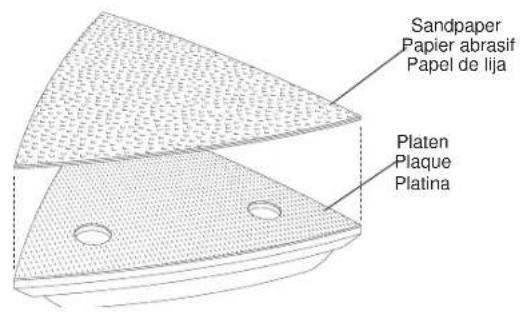
To apply a new piece of sandpaper, center the cloth side of the paper over the platen, (Fig. 3). Press firmly.
NOTE: Use only VersaPak Detail Sandpaper with your detail sander.
OPERATING INSTRUCTIONS
- REMOVING AND INSTALLING THE BATTERIES
NOTE: VERSAPAK™ BATTERIES ARE NOT FULLY CHARGED AT THE FACTORY.
To install the batteries into the tool, slide them into the handle until they click into place.
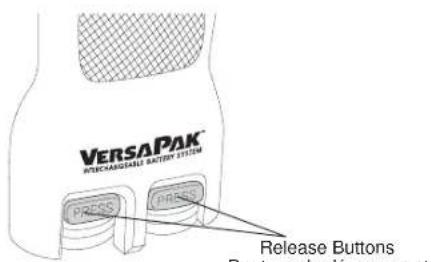
To remove the VersaPak™ batteries from the tool, press the release buttons, (Fig. 4), and pull the batteries out of the tool handle.
NOTE: Battery caps are provided for use when carrying batteries or while battery is stored in a pocket, tool box, etc. Remove cap before placing battery in charger or tool.
Install the battery cap, (Fig. 2), by snapping it in place. To remove the cap, simply pull it off.
NOTE: Only operate tool with both VersaPak™ batteries installed.
• SWITCH
Toturn the tool on, hold it (Fig. 5) and depress the front end of the rocker switch labeled "I". To turn off, depress the rear end of the rocker switch labeled "O".
• SANDING
Do not push down on the tool. Pushing down while sanding slows the removal rate.
The tips of the sandpaper may wear unevenly, depending on use. When tip of sandpaper is worn, remove the sandpaper, rotate it, and press it back on the platen. NOTE: The platen is not designed to rotate. NOTE: Large work surfaces should be sanded with a 1/4 sheet sander or a 1/2 sheet sander. Use this tool to sand small or tight areas (Fig. 5).
MAINTENANCE
Use only mild soap and damp cloth to clean the tool. Never let any liquid get inside the tool; never immerse any part of the tool into a liquid.
IMPORTANT: To assure product SAFETY and RELIABILITY, repairs, maintenance and adjustment should be performed by authorized service centers or other qualified service organizations, always using identical replacement parts.
• THE RBRC™ SEAL
The RBRC™ (Rechargeable Battery Recycling Corpora the nickel-cadmium battery (or battery pack) indicates that the costs to recycle the battery (or battery pack) at the end of its useful life have already been paid by Black & Decker. In some areas, it is illegal to place

spent nickel-cadmium batteries in the trash or municipal solid waste stream and the RBRC program provides an environmentally conscious alternative. RBRC in cooperation with Black & Decker and other battery users, has established programs in the United States to facilitate the collection of spent nickel-cadmium batteries. Help protect our environment and conserve natural resources by returning the spent nickel-cadmium battery to an authorized Black & Decker service center or to your local retailer for recycling. You may also contact your local recycling center for information on where to drop off the spent battery.
Accessories
Recommended accessories for use with your tool are available from your local dealer or authorized service center. If you need assistance regarding accessories, please call: 1-800-762-6672.
- ⚠️ WARNING: The use of any accessory not recommended for use with this tool could be hazardous.
Full Two-Year Home Use Warranty
Black & Decker (U.S.) Inc. warrants this product for two years against any defects that are due to faulty material or workmanship. Please return the complete unit, transportation prepaid, to the seller (if a participating retailer) for free replacement (proof of purchase may be required). This unit may also be returned to a Black & Decker service center or authorized service station, listed under "Tools-Electric" in the yellow pages for free replacement or repair at our option. This warranty does not apply to accessories. This warranty gives you specific legal rights and you may have other rights which vary from state to state. Should you have any questions, contact your nearest Black & Decker service center manager.
This product is not intended for commercial use.
Every Black & Decker tool is of the highest quality. If you wish to contact us regarding this product, please call toll free between 8:00 a.m. and 8:00 p.m. ET, seven days a week: 1-800-762-6672
Black & Decker offers a full network of company-owned and authorized service locations throughout North America. All Black & Decker Service Centers are staffed with trained personnel to provide customers with efficient and reliable power tool service.
Whether you need technical advice, repair, or genuine factory replacement parts, contact the Black & Decker location nearest you.
To find your local service location, refer to the yellow page directory under "Tools—Electric" or call: 1-800-762-6672.
Imported by
Black & Decker (U.S.) Inc..
E. Jonna Bd
Towson, MD 21286 U.S.A.
See 'Tools-Electric'
- Yellow Pages -
for Service & Sales

If you have any questions, call 1-800-54-HOW-TO
GUIDE
D'UTILISATION
Cat. No. VP510 Form No. 380850 (FEB97-1) Copyright © 1997 Black & Decker Printed in U.S.A.