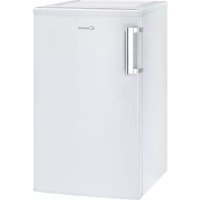
CCTOS 482WHN - Refrigerator CANDY - Free user manual and instructions
Find the device manual for free CCTOS 482WHN CANDY in PDF.



| Product type | Freestanding refrigerator |
| Brand | Candy |
| Model | CCTOS 482WHN |
| Power supply | 230 V ~ 50 Hz |
| Climate class | SN (10°C to 32°C), N (16°C to 32°C), ST (16°C to 38°C), T (16°C to 43°C) |
| Refrigerant | R600a (isobutene) |
| Insulating gas | Cyclopentane |
| Compartments | Refrigerator and negative temperature compartment (freezer) |
| Number of shelves | Several grids in the refrigerator compartment |
| Crisper drawer | Yes |
| Door bins | Yes |
| Defrosting | Manual for the freezer |
| Door reversibility | Yes (reversible hinges) |
| Temperature indicator | Yes (coldest zone) |
| Recommended temperature | Refrigerator 4°C, Freezer -18°C |
| Maintenance | Monthly cleaning, defrost when frost > 2 mm |
| Safety | Avoid open flames, do not damage the refrigerant circuit |
| Spare parts available | Thermostats, sensors, boards, handles, hinges, trays, bins (7 years), door gaskets (10 years) |
| Minimum warranty | 2 years (EU) |
| Use | Domestic and indoor |
Frequently Asked Questions - CCTOS 482WHN CANDY
User questions about CCTOS 482WHN CANDY
0 question about this device. Answer the ones you know or ask your own.
Ask a new question about this device
Download the instructions for your Refrigerator in PDF format for free! Find your manual CCTOS 482WHN - CANDY and take your electronic device back in hand. On this page are published all the documents necessary for the use of your device. CCTOS 482WHN by CANDY.
USER MANUAL CCTOS 482WHN CANDY
INSTRUCTION MANUAL
Thank you for purchasing this product.
Before using your refrigerator, please carefully read this instruction manual in order to maximize its performance. Store all documentation for subsequent usage or other owners. This product solely for household use or similar applications such as:
- the kitchen area for personnel in shops, offices and other working environments
-on farms, by clientele of hotels, motels and other environments of a residential type
- at bed and breakfasts (B & B)
- For catering services and similar applications not for retail sale.
This appliance must be used on ly for purposes of storage of food, any other use is considered dangerous and the manufacturer will not be responsible for any omissions. Also, it is recommended that you take note of the warranty conditions.
SAFETY INFORMATION
The refrigerator contains a refrigerant gas (R600a: isobutene) and insulating gas (cyclopentane), with high compatibility with the environment, that are, however, inflammable.
We recommend that you follow the following regulations so as to avoid situations dangerous to you:
Before performing any operation, unplug the power cord from the power socket.
•The refrigeration system positioned behind and inside the appliance contains refrigerant. Therefore, avoid damaging the tubes.
•If in the refrigeration system a leak is noted, do not touch the wall outlet and do not use open flames. Open the window and let air into the room. Then call a service center to ask for repair.
- Do not scrape with a knife or sharp object to remove frost or ice that occurs. With these, the refrigerant circuit can be damaged, the spill from which can cause a fire or damage your eyes.
- Do not install the appliance in humid, oily or dusty places, nor expose it to direct sunlight and to water.
- Do not install the appliance near heaters or inflammable materials.
- Do not use extension cords or adapters.
- Do not excessively pull or fold the power cord or touch the plug with wet hands.
- Do not damage the plug and/or the power cord; this could cause electrical shocks or fires.
- It is recommended to keep the plug clean, any excessive dust
residues on the plug can be the cause fire.
- Do not use mechanical devices or other equipment to hasten the defrosting process.
- Absolutely avoid the use of open flame or electrical equipment, such as heaters, steam cleaners, candles, oil lamps and the like in order to speed up the defrosting phase.
- Do not use or store inflammable sprays, such as spray paint, near the appliance, it could cause an explosion or fire.
- Do not use electrical appliances inside the food storage compartments, unless they are of the type recommended by the manufacturer.
- Do not place or store inflammable and highly volatile materials such as ether, petrol, LPG, propane gas, aerosol spray cans, adhesives, pure alcohol, etc. These materials may cause an explosion.
- Do not store medicine or research materials in the appliance. When the material that requires a strict control of storage temperatures is to be stored, it is possible that it will deteriorate or an uncontrolled reaction may occur that can cause risks.
- Maintain the ventilation openings in the appliance enclosure or in the built-in structure, free of obstruction.
- Do not place objects and/or containers filled with water on the top of the appliance.
- Do not perform repairs on this appliance. All interventions must be performed solely by qualified personnel.
- This appliance can be used by children aged from 8 years and above and by persons with reduced physical, sensory or mental capabilities or with a lack of experience and knowledge; provided that they have been given adequate supervision or instruction concerning how to use the appliance in a safe way and understand the hazards involved.
- Children should not play with the appliance. Cleaning and user maintenance should not be made by children without supervision
“FOR appliances without a 4-star compartment: this refrigerating appliance is not suitable for freezing foodstuffs”
“FOR a free standing appliance: this refrigerating appliance is not intended to be used as a built-in appliance”
SCRAPPING OLD APPLIANCE

This appliance is marked according to the European directive 2012/19/EU on Waste Electrical and Electronic Equipment (WEEE). WEEE contains both polluting substances (which can cause negative consequences for the environment) and basic components (which can be re-used). It is important to have
WEEE subjected to specific treatments, in order to remove and dispose properly all pollutants, and recover and recycle all materials. Individuals can play an important role in ensuring that WEEE does not become an environmental issue; it is essential to follow some basic rules:
- WEEE should not be treated as household waste;
- WEEE should be handed over to the relevant collection points managed by the municipality or by registered companies. In many countries, for large WEEE, home collection could be present.
In many countries, when you buy a new appliance, the old one may be returned to the retailer who has to collect it free of charge on a one-to-one basis, as long as the equipment is of equivalent type and has the same functions as the supplied equipment.
CE Conformity
By placing the European safety for this product.

mark on this product, we are confirming compliance to all relevant and environmental requirements which are applicable in legislation
ENERGY SAVINGS
For better energy savings, we suggest:
- Installing the appliance away from heat sources and not exposed to direct sunlight and in a well ventilated room.
- Avoid putting hot food into the refrigerator to avoid increasing the internal temperature and therefore causing continuous functioning of the compressor.
- Do not excessively stuff foods so as to ensure proper air circulation.
- Defrost the appliance in case there is ice (see DEFROSTING) to facilitate the transfer of cold.
• In case of absence of electrical energy, it is advisable to keep the refrigerator door closed. - Open or keep the doors of the appliance open as little as possible
- Avoid adjusting the thermostat to temperatures too cold.
- Remove dust present on the rear of the appliance (see CLEANING).
- Total no frost Audy( with display on door): remove all the baskets in freezer compartment;
- Total no frost (with internal user interface for fridge and knob for freezer): remove other baskets in freezer compartment but keep bottom drawer in its position.
- Frost free model: remove other baskets in freezer compartment but keep bottom drawer in its position.
- All normal static models: remove all drawers in freezer compartment.
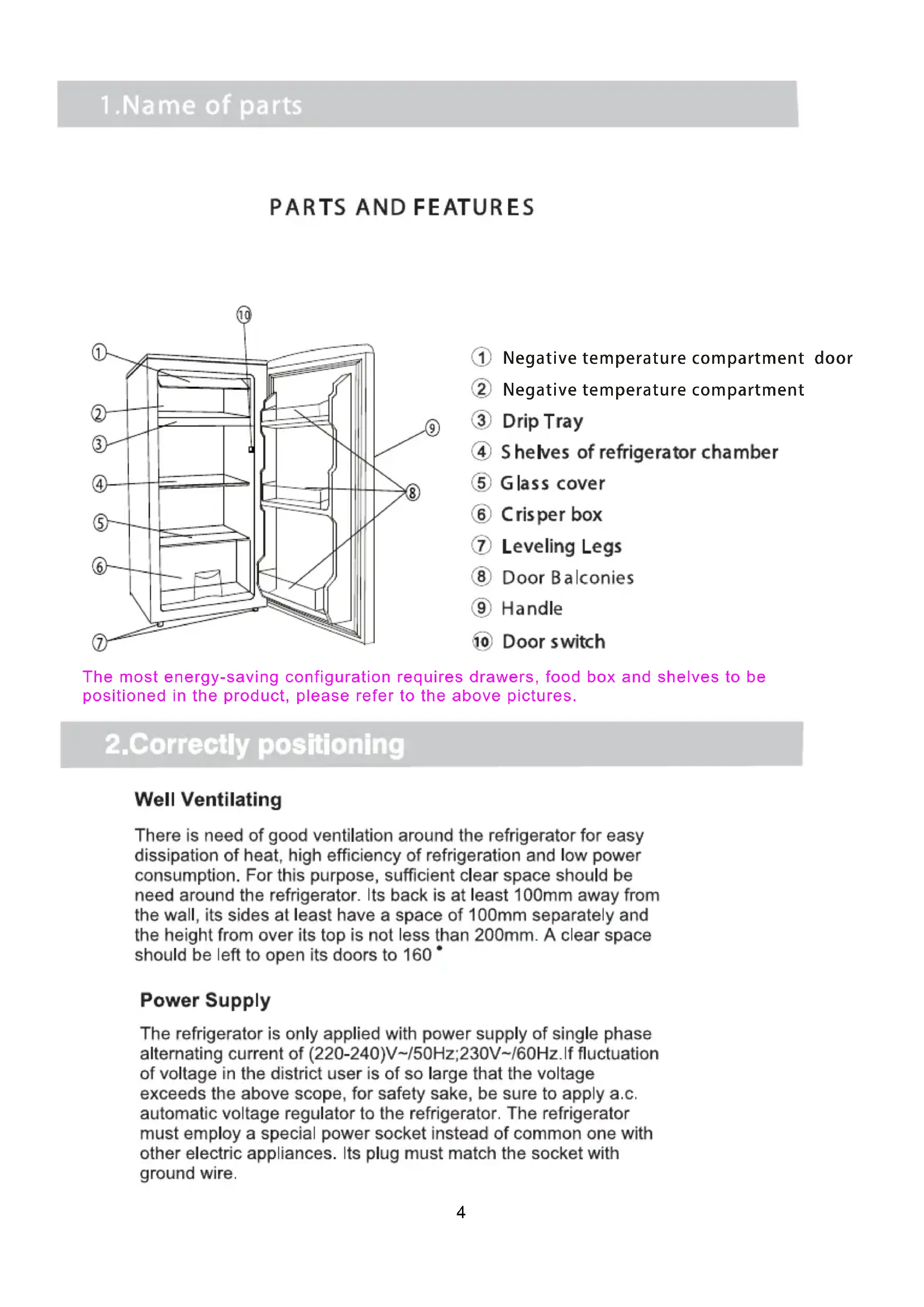
PARTS AND FEATURES

① Negative temperature compartment door
② Negative temperature compartment
③ Drip Tray
④ Shelves of refrigerator chamber
⑤ Glass cover
⑥ Crisper box
⑦ Leveling Legs
⑧ Door Balconies
⑨ Handle
⑩ Door switch
The most energy-saving configuration requires drawers, food box and shelves to be positioned in the product, please refer to the above pictures.
2. Correctly positioning
Well Ventilating
There is need of good ventilation around the refrigerator for easy dissipation of heat, high efficiency of refrigeration and low power consumption. For this purpose, sufficient clear space should be need around the refrigerator. Its back is at least 100mm away from the wall, its sides at least have a space of 100mm separately and the height from over its top is not less than 200mm. A clear space should be left to open its doors to 160°
Power Supply
The refrigerator is only applied with power supply of single phase alternating current of (220-240)V\~/50Hz;230V\~/60Hz. If fluctuation of voltage in the district user is of so large that the voltage exceeds the above scope, for safety sake, be sure to apply a.c. automatic voltage regulator to the refrigerator. The refrigerator must employ a special power socket instead of common one with other electric appliances. Its plug must match the socket with ground wire.
Position different food in different compartments according to be below table
| Refrigerator compartments | Type of food |
| Door or balconies of fridge compartment | ·Foods with natural preservatives, such as jams,juices, drinks, condiments.·Do not store perishable foods. |
| Crisper drawer (salad drawer) | ·Fruits, herbs and vegetables should be placed separately in the crisper bin.·Do not store bananas, onions, potatoes, garlic in the refrigerator. |
| Fridge shelf – middle | ·Dairy products, eggs |
| Fridge shelf – top | ·Foods that do not need cooking, such as ready-to-eat foods, deli meats, leftovers. |
| Freezer drawer(s)/ tray | ·Foods for long-term storage.·Bottom drawer for raw meat, poultry, fish.·Middle drawer for frozen vegetables, chips.·Top tray for ice cream, frozen fruit, frozen baked goods. |
- It's suggested to set the temperature at 4°C in the fridge compartment, and, whether possible, at -18°C in the freezer compartment.
- For most food categories, the longest storage time in the fridge compartment is achieved with colder temperatures. Since some particular products (as fresh fruits and vegetables) may be damaged with colder temperatures, it is suggested to keep them in the crisper drawers, whenever present. If not present, maintain an average setting of the thermostat.
- For frozen food, refer to the storage time written on the food packaging. This storage time is achieved whenever the setting respects the reference temperatures of the compartment (one-star -6°C, two stars -12°C, three stars -18°C)
Temperature setting recommendation
| Temperature Setting Recommendation | ||
| Environment Temperature | Freezer compartment | Fridge compartment |
| Summer | / | 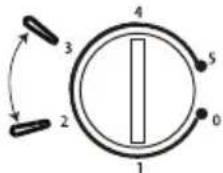 |
| Set on 2~3 | ||
| Normal | / | 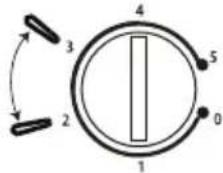 |
| Set on 2~3 | ||
| Winter | / | 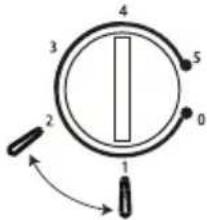 |
| Set on 1~2 | ||
• Information above give users recommendation of temperature setting.
- extended temperate (SN): ‘this refrigerating appliance is intended to be used at ambient temperatures ranging from 10 °C to 32 °C’;
- temperate (N): 'this refrigerating appliance is intended to be used at ambient temperatures ranging from 16 °C to 32 °C';
- subtropical (ST): 'this refrigerating appliance is intended to be used at ambient temperatures ranging from 16 °C to 38 °C';
- tropical (T): ‘this refrigerating appliance is intended to be used at ambient temperatures ranging from 16 °C to 43 °C’;
Power Line Cord
The cord should be neither lengthened nor folded into coil during operation. Moreover, it is forbidden that cord is kept close onto the compressor at the back of the refrigerator, the surface temperature of which is quite high when operating. Touching with it would deactivate the insulation or cause leakage for electricity.
Protection from Moisture
Avoiding placing the refrigerator in a place where heavy moisture is present so as to minimize possibility of rusty for its metal parts. Still more, the refrigerator is forbidden to be directly sprayed by water, otherwise, poor insulation and current leakage would occur.
Protection from Heat
The refrigerator should be far away from any heat source or direct sunshine.
Fixing Stable
Floor on which refrigerator will be placed must be flat and solid. It should not be laid on any soft material such as foam plastic, etc. If the refrigerator is not on the same level, adjust the screws suitably. The refrigerator should not be placed near anything which may echo.
Keep Away from Danger
It is inadvisable that the refrigerator is placed near any volatilizable or combustible such as gas, petrol, alcohol, lacquer and banana oil, etc. The above-mentioned objects can not be stored in the refrigerator.
Moving
When fixed or moved, the refrigerator can not be set horizontally or declined to more than 45° or upside-down
3.Cautions
★ Water contained in food or getting into air inside the refrigerator by opening doors may form a layer of frost inside, It will weaken the refrigerator when the frost is thick, while it is more than 2mm thick, you should defrost.
★ Defrosting in freezer chamber is operated manually. Before defrosting, take the food, the ice tray and the shelf out into the cold storing chamber temporarily then set the knob of the temperature regulator to position "0" (where the compressor will stop working) and leave the door open until ice and frost dissolve thoroughly deposited at the bottom of the freezer chamber, wipe off the water with soft cloth. In the case of speeding up the defrosting, you may put a bowl of warm water (about 50°C) into the freezer chamber, and be sure to set the knob of the temperature regulator to original position after defrosting.
★ It's inadvisable to heat the freezer chamber directly with hot water or hair dryer while defrosting to prevent deformation of the inner case.
It's also inadvisable to scrape of ice and frost or separate food from the containers which have been congealed together with the food with sharp tool or wooden bars, so as not to damage the inner casing or the surface of the evaporator.
★ If the supply cord of this appliance is damaged, it must only be replaced by a repair shop appointed by the manufacturer, because special purpose tools are required.
4. Changing the reversible door
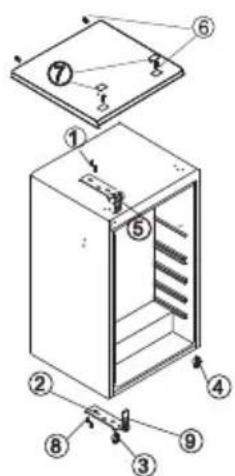
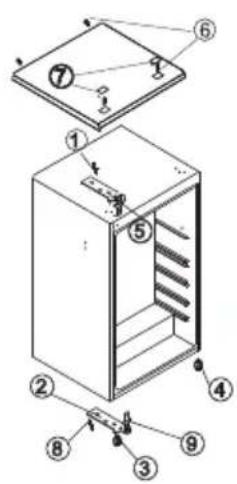
This refrigerator has been built with the door hinges on the right. If you wish to change the opening direction, follow the instructions below:
- Remove the small plastic cover (7) and the screws (6) which fix the worktop to disassembly the worktop.
- Remove the two screws (1) that hold the upper hinge (5) (right side) to the frame. Take away the upper hinge (5).
- Lift the door and place it on a padded surface to prevent scratching it.
- Remove the two screws(8) that hold the lower hinge(2) and Make sure to Remove the lower hinge(2).
- Remove the left front leg (4) and transfer it to the right side.
- Before placing this lower hinge(2), remove the bolt-pin (9) and reverse the direction of the lower hinge(2). Then install the lower hinge (2) onto the left side of the lower frame with two screws (8).
- Insert the bolt-pin(9) to the lower hinge (2).
- Set the door to its place making sure the door seat at the lower hinge(2)
9..While holding the door in the closed position secure the upper hinge (5) in the top frame of left side with two screws (1). Please remember that do not tighten the two screws(1) until the top of the door is levelled with the counter top. - Install the worktop onto the top of the cabinet with screws(6) and cover the small plastic cover(7)
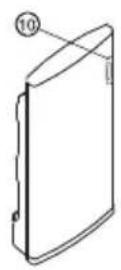
- Remove the door handle (10) from the left side to the right side.
4. Changing the reversible door
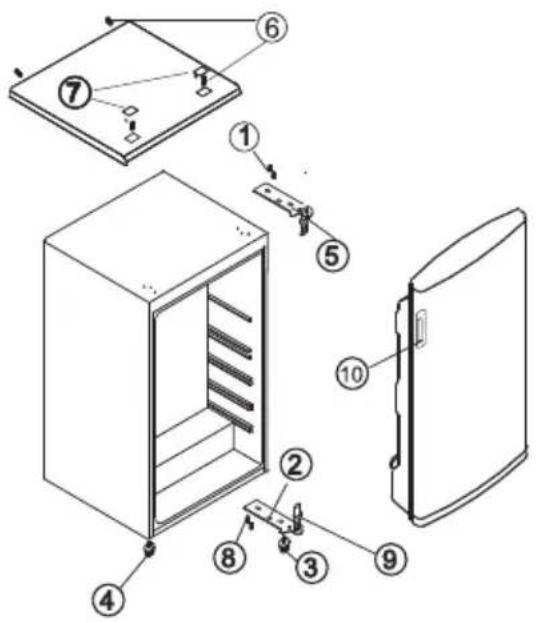
FIGURE 1
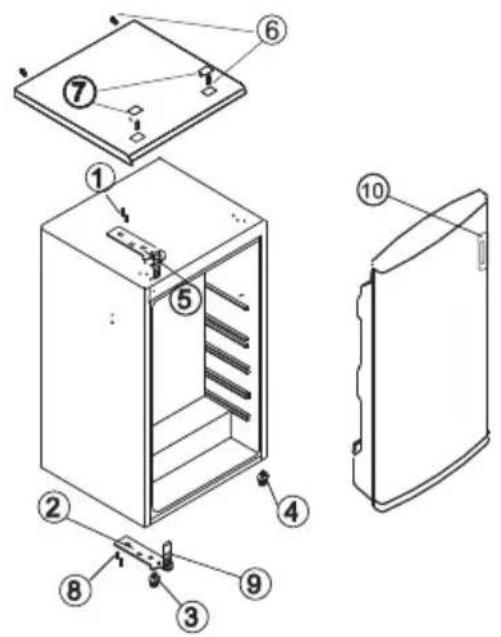
FIGURE 2
FIGURE 1 - REPRESENTS POSITION OF COMPONENTS PRIOR TO DOOR REVERSAL.
FIGURE 2 - REPRESENTS POSITION OF COMPONENTS AFTER DOOR REVERSAL.
5. Troubleshooting
- When the refrigerator does not work
Check if there is a power failure.
Check if the power plug is plugged into the power outlet.
Check that the fuse has not blown.
- When the refrigerator is cooling excessively
The temperature control dial may be set too high.
If you place foodstuffs containing a lot of moisture directly under the cool air outlets, they will freeze easily. This does not indicate a malfunction.
- When the refrigerator is not cooling sufficiently
The food may be packed too tightly together which will block the flow of cool air.
You may have put something hot or a lot of foodstuffs into the refrigerator.
The door may not have been closed properly.
The door gaskets may be damaged.
The refrigerator may not be ventilated.
There may be insufficient clearance between the refrigerator and the surfaces. Immediately both sides and above.
The temperature control dial may not be set properly.
- When the defrosting water overflows inside the refrigerator and onto the floor.
Check that the drain pipe and the drain hose are not clogged.
Check that the drain pan is housed properly.
- When condensation form on the outside of the refrigerator.
Condensation may form on the outside when the humidity is high such as during a wet season. This is the same result as the condensation formed when chilled water is poured into a glass. It does not, therefore, indicate a failure, wipe dry with a dry cloth.
- When you hear a sound like water flowing.
A sound like water flowing is the refrigerant flowing. It does not Indicate a malfunction.
- When the cabinet's side panel heats up
The side panel of the cabinet will heat up when the door is opened or closed frequently, when starting the unit and when the unit operates in summer with high ambient outside temperature, In such case, do not touch the panel, it results from the dissipation of the heat from inside the cabinet, and it does not mean that something is wrong with the refrigerator.
6. Technical specifications
*For the detailed technical specifications, please refer to the nameplate at the back of the refrigerator..
*Specifications are subject to change without prior notice.
GUARANTEE
Minimum guarantee is: 2 years for EU Countries, 3 years for Turkey, 1 year for UK, 1 year for Russia, 3 years for Sweden, 2 years for Serbia, 5 years for Norway, 1 year for Morocco, 6 months for Algeria, Tunisia no legal warranty required.
AVAILABILITY OF SPARE PARTS
“Thermostats, temperature sensors, printed circuit boards and light sources are available for a minimum period of seven years after placing the last unit of the model on the market.
Door handles, door hinges, trays and baskets for a minimum period of seven years and door gaskets for a minimum period of 10 year, after placing the last unit of the model on the market".
For further information about the product, please consult https://eprel.ec.europa.eu/ or scan the QR on the energy label supplied with the appliance
To contact the technical assistance, visit our website: https://corporate.haier-europe.com/en/
Under the section “website”, choose the brand of your product and your country. You will be redirected to the specific website where you can find the telephone number and form to contact the technical assistance.
RYSUNEK 1

RYSUNEK 2
RYSUNEK 1 - SCHEMAT UMIESZCZENIA POSZCZEGÓLNYCH CZĘŚCI PRZED ZMIANĄ KIERUNKU OTWIERANIA DRZWI
RYSUNEK 2 – SCHEMAT UMIESZCZENIA POSZCZEGÓLNYCH CZĘŚCI PO ZMIANIE KIERUNKU OTWIERANIA DRZWI
5. Konserwacja
FIGURE 1

FIGURE 2
FIGURE 1 : REPRESENTE LA POSITION DES COMPOSANTS AVANT DE RENVERSER LA PORTE
FIGURE 2 : REPRESENTE LA POSITION DES COMPOSANTS APRES QUE LA PORTE AIT ETE RENVERSEE
5. Maintenance

VERIFICATION DE LA TEMPERATURE DANS LA ZONE LA PLUS FROIDE
1.ÁBRA
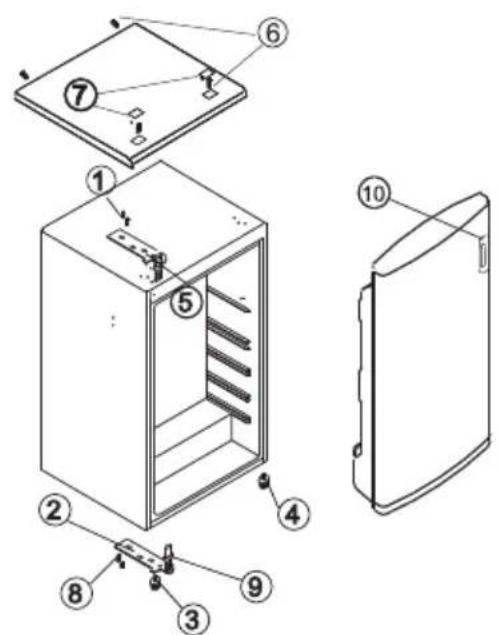
2.ÁBRA
- ÁBRA - AZ ALKATRÉSZEK ELHELYEZKEDÉSE AZ AJTÓ ÁTHELYEZÉSE ELÖTT.
- ÁBRA - AZ ALKATRÉSZEK ELHELYEZKEDÉSE AZ AJTÓ ÁTHELYEZÉSE UTÁN.
5. Hibaelhárítás
OBRÁZEK 1

OBRÁZEK 2

Мал. 1
Мал. 2
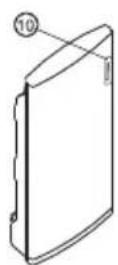
FIGURA 1

FIGURA 2

FIGURA 1 - POZITIA PARTILOR COMPONENTE INAINTE DE SCHIMBAREA SENSULUI DE DESCHIDERE A USII
FIGURA 2 – POZITIA PARTILOR COMPONENTE DUPÀ SCHIMBAREA SENSULUI DE DESCHIDERE A USII
SLIKA 1
SLIKA 2
ФИГУРА 1

ФИГУРА 2
OBRÁZOK 1

OBRÁZOK 2
OBRÁZOK 1 - PREDSTAVUJE POZÍCIU KOMPONENTOV PRED VÝMENOU.
OBRÁZOK 2 - PREDSTAVUJE POZÍCIU KOMPONENTOV PO VÝMENE DVIEROK.
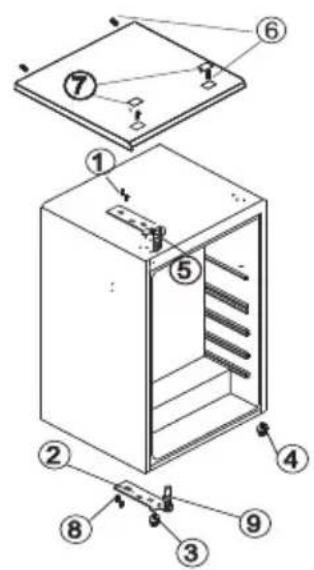

РИСУНОК 1 РИСУНОК 2
1-iii CYPET 2-iii


i CYPET
| 1-πi CYPETECIKHE KAHTA IINHGENGE DEIHNΓI DETALBDERDIN KAIIbIN KOPCETEDI. |
| 2-πi CYPETECIKHE KAHTA IINHGENHEN KEIHNΓI DETALBDERDIN KAIIbIN KOPCETEDI |
AFBEELDING 1

AFBEELDING 2
| AFBEELDING 1 - DE POSITIE VAN DE COMPONENTEN VOOR HET OMKEREN VAN DE DEUR |
| AFBEELDING 2 - DE POSITIE VAN DE COMPONENTEN NA HET OMKEREN VAN DE DEUR |
5. Problemen oplossen
FIGURE 1

FIGURE 2
FIGURA 1 - REPRESENTA A POSIÇÃO DOS COMPONENTES ANTES DA INVERSÃO DA PORTA.
FIGURA 2 - REPRESENTA A POSIÇÃO DOS COMPONENTES DEPOIS DA INVERSÃO DA PORTA
Caution: risk of fire!
If the model contains R600a-(see name plate under refrigerant) the coolant isobutene is naturals gas that, is very environmentally friendly but also combustible.
When transporting and installing the unit care must be taken to ensure that none of the refrigeration circuit components become damaged.

WARNING - Do not store explosive substances such as aerosol cans with a flammable propellant in this appliance
Test information for refrigerator freezer or upright freezer
In order to freeze more food stuff and reach best performance, the drawers (if have) in the freezer compartment can be removed for use.
The rated data in rating label and energy label of this appliance shall be validated by testing the samples which drawers have been removed.

The fridge makes some noises when working. This is entirely normal and you might hear HUMMING, GURGLING, RUSTLING AND WHISTLING, as well as slight CLICKING OR JUMPING noises.
FRENCH:
CONSEILS PRATIQUES
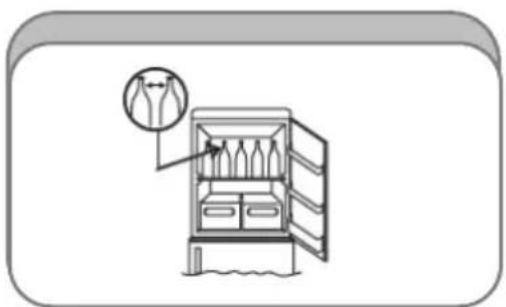
EN: Adjust the feet to level the appliance.
l'appareil.
Do not install the appliance outside.
The appliance works properly at the following temperature ranges.
Climatic class: SN +10 +32°C
Climatic class:N+10+32°C
Climatic class:ST+1B+38°C
Climatic class: T +18 +43°C
Climatic class: N/ST +16 +38°C
(See appliance's rating plate)

FR:
PRECAUTIONS ET SUGGESTIONS GENERALES
ongevingstemperaturer:
Dear client, apart from the instruction booklet, we recommend you read carefully the instructions contained in this information sheet. This will provide you with some important safety guidelines, as well as instructions on how to install and operate the temperature control dial. Should the temperature control dial be missing, please ask your distributor for it.
1. THE COLDEST AREA OF THE FRIDGE
This symbol indicates the coldest area of your fridge. This area is usually defined by the fruit and vegetable compartment(s) at the bottom and the symbol shown here at the top.

2. TEMPERATURE INDICATOR
In order to help you set your fridge properly, we have included a temperature control dial which will monitor the temperature in the area defined as the coldest.
CAUTION: The indicator was designed to function exclusively in your fridge. It is not possible to use it in another fridge or for any other purposes.

TEMPERATURE CONTROL
By using the temperature control dial you will be able to check on a regular basis that the temperature of the coldest area is correct. If this is not the case, it will be necessary to change the position of the thermostat.
The room temperature and the frequency with which the fridge door is opened have an impact on the internal temperature.
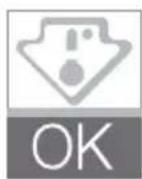
In order to maintain the correct temperature inside the fridge, check that the control dial is green (see Figure 1).
If the control dial turns white (see Figure 2), it means that the temperature is too high. In that case, set the thermostat and wait 12 hours before re-checking.
After charging the product or opening the door, it is normal for the control dial to turn white after a few seconds.

fi gure 1 fi gure 2
3. FOOD HYGIENE AND FRIDGE MANAGEMENT RULES
A good use of the fridge and the compliance with food hygiene rules contribute to improving food storage.
Clean the internal part of the fridge regularly with delicate products or with water and disinfectant in order to combat bacteria effectively.
Remove all food packaging before placing it in the fridge (for instance yoghurt carton packages).
Wrap the products systematically in order to avoid mutual contamination.
Do not place any kitchenware or other containers inside the fridge after having already used them prior to washing up (for instance, spoons or knives contaminated by food).
Wait for foodstuffs to have completely cooled down prior to storage (e.g. soups). Limit the number of door openings and in any case do not leave the doors open for a long time, in order to prevent the fridge temperature from rising.
Place the foodstuffs so that the air may flow freely throughout the entire fridge. Store the foodstuffs according to their nature inside the appropriate compartments and in particular, place the following items in the coldest area: meat, poultry, cold meats or sausages, ready-made dishes, mixed salads, egg or cream based pastry products, fresh pasta, dough, pizza, fresh products and cheeses made of whole or pasteurised milk, ready-made legumes sold without plastic bag and more generally all fresh products with use-by date and associated with storage temperatures lower or equal to +4°C.

Z STUDIO - Cod. 41030825/A
- SAFETY INFORMATION
- SCRAPPING OLD APPLIANCE
- CE CONFORMITY
- ENERGY SAVINGS
- PARTS AND FEATURES
- CORRECTLY POSITIONING
- WELL VENTILATING
- POWER SUPPLY
- TEMPERATURE SETTING RECOMMENDATION
- POWER LINE CORD
- PROTECTION FROM MOISTURE
- PROTECTION FROM HEAT
- FIXING STABLE
- KEEP AWAY FROM DANGER
- MOVING
- 3.CAUTIONS
- CHANGING THE REVERSIBLE DOOR
- TROUBLESHOOTING
- TECHNICAL SPECIFICATIONS
- GUARANTEE
- AVAILABILITY OF SPARE PARTS
- KONSERWACJA
- MAINTENANCE
- VERIFICATION DE LA TEMPERATURE DANS LA ZONE LA PLUS FROIDE
- HIBAELHÁRÍTÁS
- PROBLEMEN OPLOSSEN
- CAUTION: RISK OF FIRE
- TEST INFORMATION FOR REFRIGERATOR FREEZER OR UPRIGHT FREEZER
- FRENCH
- CONSEILS PRATIQUES
- FR
- THE COLDEST AREA OF THE FRIDGE
- TEMPERATURE INDICATOR
- TEMPERATURE CONTROL
- FOOD HYGIENE AND FRIDGE MANAGEMENT RULES
Brand : CANDY
Model : CCTOS 482WHN
Category : Refrigerator