
HSLP451UC - Built-in oven BOSCH - Free user manual and instructions
Find the device manual for free HSLP451UC BOSCH in PDF.
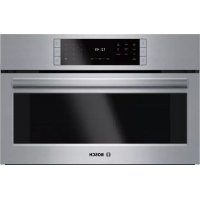


| Product Type | Built-in Oven |
| Brand | Bosch |
| Model | HSLP451UC |
| Category | Steam and Convection Oven |
| Water Tank Capacity | 1.4 L (1.3 L) |
| Number of Cooking Modes | 11 modes |
| Cooking Modes | Steam, Steam Conv, Defrost, Proof, Hot Plate, Reheat, European Convection, Keep Warm, Low Temperature, Auto Chicken, Auto Vegetables |
| Auto Programs | Chicken, Vegetables (with weight selection) |
| Temperature Range | 95 °F to 450 °F (35 °C to 232 °C) depending on mode |
| Rack Levels | 4 levels |
| Control Type | Touch with Digital Display |
| Safety Features | Panel Lock, Auto Shut-off, Door Safety |
| Steam Cleaning | Yes, 30-35 minute cycle |
| Descaling | Yes, with recommended product |
| Cavity Material | Stainless Steel |
| Included Accessories | Rack, Perforated cooking pan (full size), Perforated cooking pan (half size), Baking pan (full size) |
| Oven Lighting | Halogen bulb 230 V / 25 W max |
| Warranty | 1 year limited (parts and labor) |
Frequently Asked Questions - HSLP451UC BOSCH
User questions about HSLP451UC BOSCH
0 question about this device. Answer the ones you know or ask your own.
Ask a new question about this device
Download the instructions for your Built-in oven in PDF format for free! Find your manual HSLP451UC - BOSCH and take your electronic device back in hand. On this page are published all the documents necessary for the use of your device. HSLP451UC by BOSCH.
USER MANUAL HSLP451UC BOSCH
Built-In Steam Convection Oven
Use and Care Manual
Models:
HSLP451UC

BOSCH
Invented for life
About This Manual....1
Safety 2
Getting Started 4
Parts and Accessories 4
Control Panel 4
Oven Interior 5
Oven Accessories 5
Additional Accessories 5
Before First Use 6
Water Tank 6
Water Level Warnings 6
Set the Clock 7
Setting Water Hardness Level....7
Clean Using the STEAM Mode 7
Calibration....7
Basic Oven Settings 8
Setting Options 8
Operation 10
Start Cooking .... 10
Preheating the Oven 10
Rack Positions 10
Setting the Mode 10
Setting the Temperature 11
Editing Oven Settings 11
Oven Clear/Off 11
Panel Lock 12
Kitchen Timer 12
Oven Timer 12
Multiple Timers 12
Vegetables And Chicken Automatic Programs . . . 13
Steam Oven Modes 14
Temperature Setting for Each Mode....14
Steam 14
Steam Conv 14
Defrost 14
Proof 15
Dish Warming 15
Reheat 15
European Conv 15
Keep Warm 15
Slow Cook 15
Chicken and Vegetables Programs 15
Getting the Most Out of Your Steam
Oven 16
General Tips 16
Cooking Recommendations 17
Vegetables 17
Side Dishes and Legumes 18
Meat, Poultry, Fish 18
Slow Cooking Meat 20
Souffles, Casseroles, Additions to Soups ..... 20
Desserts, Compotes 20
Cakes and Baked Goods 21
Reheating Foods 23
Defrosting 23
Proofing Dough 24
Juice Extraction 24
Frozen Products 24
Special Foods 25
Cleaning and Maintenance .....26
Cleaning 26
Cleaners 27
Steam Cleaning 27
Descale 28
Rack Cleaning 29
Maintenance 29
Service 30
Before Calling Service 30
Troubleshooting 30
Data Rating Label 31
Service Information 31
Limited Product Warranty ....32
Customer Support, Accessories
& Parts ...... back page
This BOSCH® appliance is made by
BSH Home Appliances Corporation
1901 Main Street, Suite 600
Irvine, CA. 92614
Questions?
1-800-944-2904
www.bosch-home.com/us
We look forward to hearing from you!
About This Manual
How This Manual is Organized
You can get the most out of your new appliance by reading this manual from beginning to end. This way you will systematically get to know your appliance and become familiar with its operation and features.
The manual consists of the following sections:
- The "Safety" section provides information on how to safely operate your oven.
- “Getting Started” introduces you to the oven components and features.
- The "Operation" section offers you step-by-step instructions on how to operate your oven.
- In "Getting the Most Out of Your Appliance" you can find a list of many common foods with the appropriate oven mode, temperature, rack position and bake time. This section also provides you with several bakeware and preparation tips.
- "Cleaning and Maintenance" provides you with information on how to clean and care for the various oven parts.
- The "Service" section includes your warranty and do-it-yourself troubleshooting tips.
- Pay special attention to the important safety instructions in the "Safety" section.
Safety Definitions
WARNING
This indicates that death or serious injuries may occur as a result of non-observance of this warning.
CAUTION
This indicates that minor or moderate injuries may occur as a result of non-observance of this warning.
NOTICE: This indicates that damage to the appliance or property may occur as a result of non-compliance with this advisory.
Note: This alerts you to important information and/or tips.
Safety

IMPORTANT SAFETY INSTRUCTIONS READ AND SAVE THESE INSTRUCTIONS
Before You Begin
INSTALLER: Please leave these instructions with this unit for the owner.
OWNER: Please retain these instructions for future reference.
WARNING

ELECTRICAL SHOCK HAZARD
Disconnect power before installing or servicing. Before turning power ON, ensure that all controls are OFF. Failure to do so can result in death or electrical shock.
Safety Notes
This appliance is intended for domestic use only. This appliance must only be used for food preparation.
Adults and children must not operate the appliance without supervision,
- if they are physically or mentally incapable of doing so; or
- if they have insufficient knowledge or experience.
Never let children play with the appliance.
Proper Installation and Maintenance
Have the installer show you the location of the circuit breaker. Mark it for easy reference.
This appliance must be properly installed and grounded by a qualified technician. Connect only to a properly grounded outlet. Refer to Installation Instructions for details.
Local codes vary. Installer is responsible for ensuring that the installation and grounding comply with all applicable codes. Failure to follow appropriate local codes and regulations may void the warranty.
DO NOT store or use corrosive chemicals, vapors, flammables or nonfood products in or near this appliance. The use of corrosive chemicals in heating or cleaning will damage the appliance and could result in injury.
DO NOT operate this appliance if it is not working properly, or if it has been damaged. Contact an authorized servicer.
DO NOT obstruct oven vents.
DO NOT repair or replace any part of the appliance unless specifically recommended in this manual. Refer all servicing to a factory authorized service center.
Risk of Burns!
Hot steam may escape when the appliance door is opened. Open the appliance door carefully during or after cooking. When opening the door, do not lean over it. Ensure that, depending on the temperature, steam is not visible.
DO NOT clean the appliance immediately after switching it off. The water in the evaporator dish is still hot. Wait until the appliance has cooled down.
Exercise caution when opening the appliance. Standing to the side, open the door slowly and only slightly to let hot air and/or steam escape. Keep your face clear of the opening and ensure there are no children or pets near the unit. After the hot air and/or steam is released, proceed with your cooking. Keep oven doors shut unless necessary for cooking or cleaning purposes. Do not leave open door unattended.
DO NOT heat or warm sealed food containers. Build-up of pressure may cause the container to burst and cause injury.
Always place oven racks in desired location while oven is cool.
Never prepare food with large quantities of high proof alcoholic beverages. Steam containing alcohol can ignite inside the appliance. Use only small quantities of high proof alcoholic beverages, and use caution when opening the appliance door.

IMPORTANT SAFETY INSTRUCTIONS READ AND SAVE THESE INSTRUCTIONS
Moist or damp potholders on hot surfaces may result in burns from steam.
Interior surfaces of an oven become hot enough to cause burns. During and after use, do not touch, or let clothing, pot holders, or other flammable materials come in contact with interior surfaces of the oven until they have had sufficient time to cool. Other surfaces of the appliance may become hot enough to cause burns. These surfaces include oven vent openings, surfaces near these openings and oven doors.
Small children must be kept at a safe distance from the appliance.
Risk of Fire!
Never store combustible items in the cooking compartment.
Do not use aluminum foil or protective liners to line any part of the appliance. Use of a foil liner could result in a shock or fire hazard, or the obstruction of the flow of combustion and ventilation air. Foil is an excellent heat insulator and heat will be trapped beneath it. This will affect the cooking performance and can damage the finish of the oven.
If materials inside an oven should ignite, keep door closed. Turn off the appliance and disconnect the circuit at the circuit breaker box.
Use this appliance only for its intended purpose as described in this manual. For example, never use the appliance for warming or heating the room. Never use the appliance for storage.
Always have a working smoke detector near the kitchen.
In the event that personal clothing or hair catches fire, drop and roll immediately to extinguish flames.
Smother flames from food fires other than grease fires with baking soda. Never use water on cooking fires.
Have an appropriate fire extinguisher available highly visible and easily accessible near the oven.
Causes of Damage
CAUTION!
- Do not place anything on the cooking compartment floor. Do not cover it with aluminium foil. A build-up of heat could damage the appliance.
- The cooking compartment floor and the evaporator dish must always be kept clear.
- Aluminium foil in the cooking compartment must not come into contact with the oven cavity or door panel. This could cause permanent discoloration.
- Ovenware must be heat and steam resistant.
- When steaming with the perforated baking pan, always insert the baking pan beneath it.
- If the door seal is very dirty, the appliance door will no longer close properly during operation. The fronts of adjacent units could be damaged. Always keep the door seal clean and replace when necessary.
- Do not place anything on the open appliance door. The appliance could be damaged.
- Do not carry or hold the appliance by the door handle. The door handle cannot support the weight of the appliance, and could break.
The cooking compartment in your appliance is made of high grade stainless steel. Improper care can lead to corrosion in the cooking compartment. Refer to the care and cleaning instructions in this manual. Remove food residues from the cooking compartment as soon as the appliance has cooled.
State of California Proposition 65 Warnings:
This product contains chemicals known to the State of California to cause cancer, birth defects or other reproductive harm.
Getting Started
Parts and Accessories
Control Panel
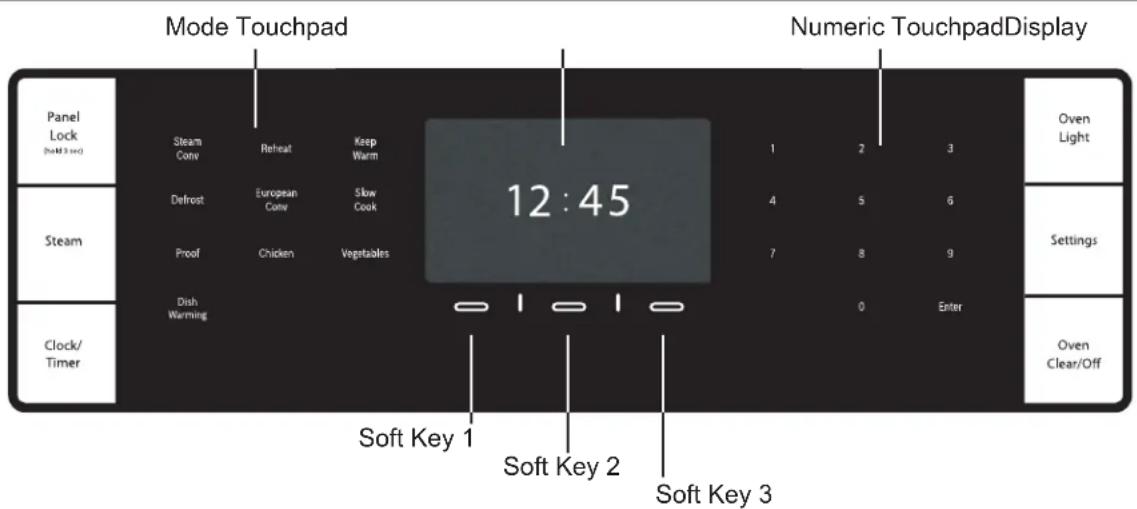
| FUNCTIONS | You only have to press lightly on the touchpads to operate them. The touchpads will not work if you press several of them at once, such as when cleaning them. |
| Panel Lock | Press and hold for three seconds to turn the panel lock on or off. Prevents the oven from being turned on. |
| Clock/Timer Sets | the clock and timer functions. |
| Oven Light Turns | oven light on or off. |
| Settings | User settings are available for the operator to customize the steam oven to their preference. Settings can only be accessed from stand-by state. |
| Oven Clear/Off Turns | the oven off. |
COOKING MODE MODE FUNCTION
| Steam For vegetables, fish, side dishes, for juicing fruit and for blanching. | |
| Steam Conv | Combines steam and convection oven modes. Use for meat, soufflés and baked goods. |
| Defrost Defrosts fruits, vegetables, meats and fish for cooking or serving. | |
| Proof Proof (raises) yeast dough and sourdough. | |
| Dish Warming Heats and keeps warm oven-safe ovenware, plates and bowls. | |
| Reheat Gently rehearses cooked foods in plated dishes and baking dishes. | |
| European Conv | Operates as a convection oven, with no steam. Use for moist cakes, sponge cakes and braised meat. |
| Keep Warm Keeps hot, cooked foods at serving temperature. | |
| Slow Cook Slowly roasts meats so they remain very tender. | |
| Chicken | Automatic program setting for cooking chicken. |
| Vegetables | Automatic program setting for cooking vegetables. |
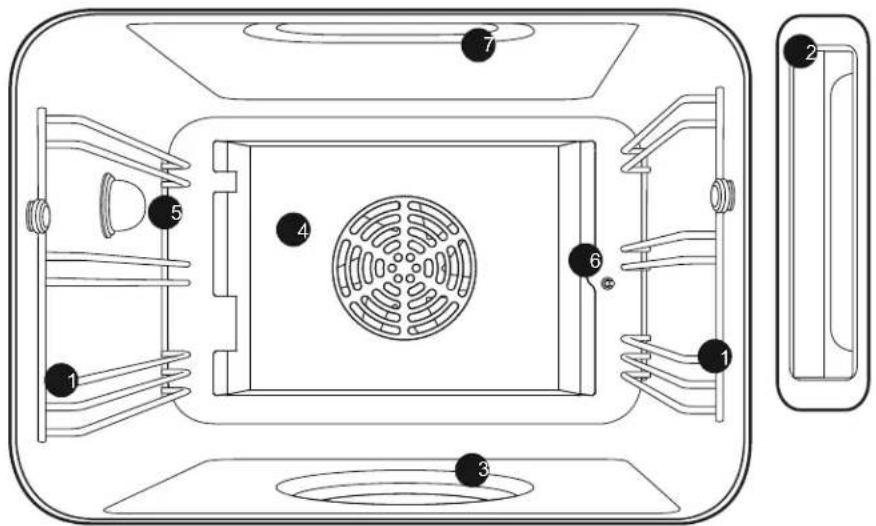
Oven Interior
- Rack Guide
- Water Tank
- Evaporator Dish
- Convection Cover
- Oven Light
- Temperature Sensor
- Steam Vent
Oven Accessories
Clean the accessories thoroughly with soapy water and a cloth before initial use. The following steam oven accessories come with your steam oven:
| Wire rack(CSRACKH)Use for support during baking.Place meats on the wire rack with the baking pan underneath and insert both together into one level. | 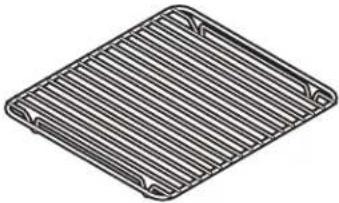 |
| Perforated baking pan, full-size (CS2XLPH) 15/8" deepIdeal for steaming fish or large quantities of vegetables, extracting juice from berries, and much more. | 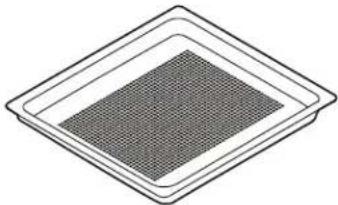 |
| Perforated baking pan, half-size (CS1XLPH) 15/8" deepIdeal for steaming fish or vegetables, extracting juice from berries, and much more. | 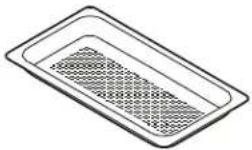 |
| Baking pan, half-size (CS1XLH) 15/8" deepUse for smaller quantities and for rice and cereals. | 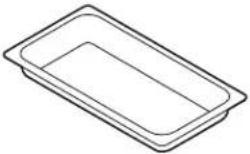 |
| Baking pan, full-size (CS2LH)1 1/8 " deepIdeal for baking cakes and catching dripping liquid when steaming. | 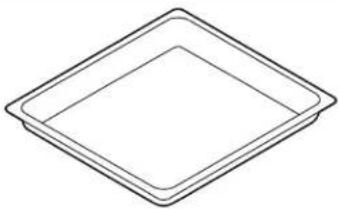 |
Additional Accessories
The following additional accessories can be purchased through the e-store at www.bosch-home.com/us/store:
| ACCESSORY | ORDER NUMBER |
| Perforated baking pan, full-size, 1 5/8 " deep CS2XLPH | |
| Perforated baking pan, half-size, 1 5/8 " deep CS1XLPH | |
| Baking pan, full-size, 1 5/8 " deep CS2XLH | |
| Baking pan, half-size, 1 5/8 " deep CS1XLH | |
| Baking pan, full-size, 1 1/8 " deep CS2LH | |
| Wire rack CSRACKH | |
| Descaling powder 00573828 | |
Before Using the Appliance for the First Time
- Appliance must be properly installed by a qualified technician before use.
- Remove all packing materials from inside and outside the oven.
- While cool, wipe with a clean, damp cloth and dry. There may be a slight odor during first uses; this is normal and will disappear.
- Read and understand all safety precautions and Use and Care Manual information.
- Execute the following sections prior to operating:
Water tank
The water tank is on the right side of the steam oven. It holds 1.4 quarts (1.3 L) of water. The water tank is not dishwasher safe.
Important notes about the water used to fill the tank:
- Moisten the seal in the tank lid with some water before using it for the first time.
- Use only fresh tap water or, if necessary, plain non-carbonated purchased water to fill water tank.
CAUTION
Use of inappropriate liquids can damage the appliance! Do not fill the water tank with distilled water or any other liquids.
- If your water is very hard (10 grains per gallon or higher), we recommend using softened water.
- If your tap water is highly chlorinated (>40 mg/L), use plain non-carbonated purchased water with a low amount of chlorine.
Fill the Water Tank
- Open door and remove water tank (picture A).
- Moisten the seal in the tank lid with some water prior to initial use.
- Fill the water tank to the "MAX" line with cold water (picture B).
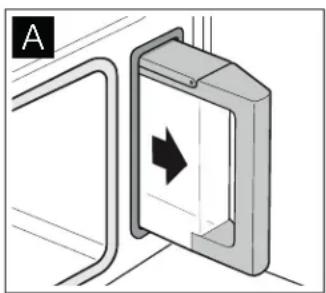
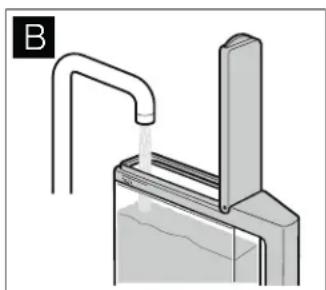
- Close the tank lid until it snaps.
- Insert the water tank completely (picture C).
- The tank must be flush with the tank funnel (picture D).
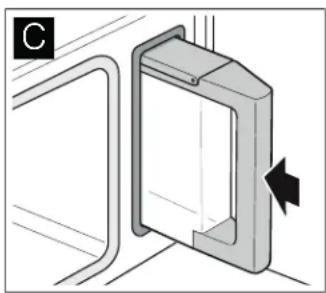
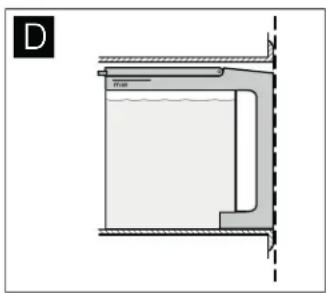
EMPTY THE WATER TANK AFTER EACH USE.
- Keep the water tank level while slowly pulling it out of the appliance to ensure that no remaining water drips down and out through the vent.
- Pour out the water.
- Thoroughly dry the seal of the tank lid and the slot where the tank resides in the appliance. Prolonged dampness could lead to a musty odor in the tank.
Water Level Warnings
The water tank must have enough water to generate the steam needed for the cooking mode and time you are using. As the water is converted to steam, the tank level will drop during cooking. There are three different water levels that are monitored by the control:
NONE: Tank Full
— Full tank, any oven mode can be run. — The steam oven can operate at 100% steam for 150 minutes without the need to refill the water tank.
WATER LEVEL IS LOW: Tank with water
— Tank less than full but not empty.
TANK IS EMPTY: Tank is without water.
— A heating mode cannot be run without adding sufficient water.
— Refill water tank to run a cooking mode.
Set the Clock
The clock may only be set/edited from stand-by state.
To Set the Clock
- Press CLOCK/TIMER button on the control panel.
- Input the desired time using the numeric key pad.
- Press the SET CLOCK (Soft Key 1).
- Choose either AM or PM with the appropriate soft key. — Display transitions to stand-by with the new clock time.
For Daylight Savings Time Followers
The clock may be set up or back in a single hour increment by doing the following:
- Press CLOCK/TIMER button on the control panel.
- Press SOFT KEY 2.
- Select either -1 HOUR (Soft Key 1) or +1 HOUR (Soft Key 3). — The display immediately reverts to stand-by state.
Setting the Water Hardness Level
Check the water hardness using the test strip provided or ask your water utility company.
- Select the SETTINGS button on the control panel.
- Press the SOFT KEY 2 to scroll through the options to WATER HARDNESS.
- Press ENTER.
- Using the NUMERIC TOUCHPAD, input the hardness level for your water type. The factory setting is 3.
1 = SOFTENED (0 - 17 mg/L) 2 = SOFT (18 - 60 mg/L) 3 = MEDIUM (61 - 120 mg/L) 4 = HARD (121 - 180 mg/L) 5 = VERY HARD (over 180 mg/L)
- Press ENTER.
Unless you use softened water, you will need to descale your steam oven at regular intervals (see "Descale" in the "Care and Maintenance" section on page 28).
If you move or if your water source changes, you will need to reset the water hardness value.
Clean With STEAM Mode Before First Use
Before using the steam oven for the first time, heat it once while it is empty:
- Fill and slide in the water tank. Close the oven door.
- Select STEAM on the control panel.
- Press ENTER.
- Press the SOFT KEY 2 (Oven Timer).
- Using the Numeric Touchpad, set the oven time for 20 minutes (0:20, in HR/MIN format).
- Press ENTER.
— The oven will heat for 20 minutes and then stop. — An audible tone will indicate the completion of the function.
- Press OVEN OFF/CLEAR or open the oven door.
- Leave the door opened slightly until the oven cools.
See "After Oven Operation" on page 11.
This initial cleaning will also calibrate the steam oven to the air pressure at your location.
Automatic Calibration
The steam oven automatically calibrates to adjust to the pressure conditions in your area the first time steam is used at 212° F ( 100° C).
Calibrating the Steam Oven
- Select the SETTINGS button on the control panel.
- Press the SOFT KEY 2 to scroll through the options to CALIBRATE.
- Press ENTER. — START CYCLE will flash on the display.
- Select YES (Soft Key 2) to confirm. Select NO (Soft Key 3) to return to the main menu. — DONE will flash on the display screen.
- Press ENTER.
Recalibrate the appliance manually if you should move to ensure that the steam oven automatically adjusts to your new location.
Recalibration is not necessary after a power failure.
Clean the Accessories
Wash the accessories thoroughly with soapy water and a cloth before using them. Rinse well before use.
Basic Oven Settings
User settings are available for the customer to customize the appliance to their liking. Many of these features should be adjusted when the oven is first installed or after a move to a new location. User settings can only be accessed from stand-by state. If the Settings button is pressed while the appliance is not in stand-by, the display will sound an error tone.
Adjust Settings
- Select the SETTINGS button on the control panel.
- Press the SOFT KEY 2 to advance through the menu options. The following table lists the available setting options and their values.
| ITEM DESCRIPTION OPTIONS | |
| °F/°C (Temperature Units) | °F |
| °C | |
| Brightness | Low |
| Med | |
| High | |
| Volume | Low |
| Med | |
| High | |
| Off | |
| Clock | 12 hr |
| 24 hr | |
| Stand-by Clock | On |
| Off | |
| Language | English |
| French | |
| Weight Unit Type | Ibs |
| Kg | |
| Customer Service Contact information only | |
| Demo Mode | On |
| Off | |
| Steam Clean See page 27. | |
| Descale See page 28. | |
| Calibrate See page 7. | |
| Water Hardness See page | 7. |
- Press SOFT KEY 1 or the ENTER button on the control panel to edit the setting that is in the field.
- Press SOFT KEY 3 to cycle through the submenu options.
- Set the option by pressing the ENTER key on the control panel or by pressing SOFT KEY 1.
Setting Options
°F/°C (TEMPERATURE UNITS): The temperature units setting allows the user to switch between Fahrenheit and Celsius units of temperature. The default temperature unit setting is "Fahrenheit".
BRIGHTNESS: The brightness setting allows the user to adjust the brightness of the display. Switching between values adjusts the backlighting of the display. The default brightness setting is "High".
VOLUME: The volume setting allows the user to adjust the sound level of button presses. The default volume setting is "High".
CLOCK: The clock mode setting allows the user to select a 12-hour or 24-hour based clock. The default clock mode setting is "12 hour".
STAND-BY CLOCK: The stand-by clock setting allows the user to disable the clock whenever the user interface goes into stand-by state. The default stand-by clock display setting is "On".
LANGUAGE: The language setting allows the user to select either English or French operating languages. The default language setting is "English".
WEIGHT UNIT TYPE: The weight unit setting allows the user to switch between pounds (lbs.) and kilograms (kg) units of measure. The default weight unit setting is "lbs".
CUSTOMER SERVICE: Contact information for the Technical Service Department if your appliance needs repair. Contains the following:
Visit us at: www.bosch-home.com/us Or call 1-800-944-2904
DEMO MODE: Demo mode consists of 6 images cycled at timed intervals. If any button is pressed, the user interface appears to work as normal for the pressed button. However, no real cooking mode information is passed to the appliance. Therefore the oven will not heat up, preheat will never end, self clean will not start, etc. After 30 seconds with no input from the user, the display resumes the image slide show.
STEAM CLEAN: You may use steam to dissolve food residues and spills so that they can be easily wiped up. Running the steam clean cycle takes 30–35 minutes. The oven cannot be used for any other purpose while steam cleaning is underway. Detailed instructions for steam cleaning the oven are provided in the "Cleaning and Maintenance" section of this manual starting on page 26. The oven cannot be used for any other purpose while steam cleaning is in progress.
Steam Cleaning requires 3 start/stop cycles to complete its operation. Once started, the Steam Cleaning operation cannot be aborted. The appliance will not operate again until after the first and second rinse cycle to ensure that no cleaning agent remains inside.
DESCALE: Descale the appliance at regular intervals. This can prevent damage to the appliance. The appliance automatically informs you when descaling is required.
Detailed instructions for descaling the steam oven are provided in the “Cleaning and Maintenance” section of this manual starting on page 26. The oven cannot be used for any other purpose while descaling is in progress.
Descaling requires 3 start/stop cycles to complete its operation. Once started, the Descaling operation cannot be aborted. The appliance will not operate again until after the first and second rinse cycle to ensure that no cleaning agent remains inside.
Note:
If you use softened water, you will not need to descale the steam oven.
WATER HARDNESS: The hardness of the tap or bottled water (NEVER distilled water) you put in the water tank should be determined and entered with this setting when the appliance is installed. As explained on page 7, you may either use water hardness strips or contact your local water utility to find out the hardness of your tap water.
If you move or if your water source changes, you will need to reset the water hardness value.
CALIBRATE: The boiling point depends on the air pressure. The higher the altitude, the lower the air pressure, and also the boiling point. The steam oven automatically calibrates to adjust to the pressure conditions in your area the first time steam is used at 212° F ( 100° C).
Operation
Start Cooking
Using nine of the eleven modes available in your steam oven requires similar steps. Using CHICKEN or VEGETABLES automatic programs is somewhat different and is described separately starting on page 13.
Preheating the Oven
Place food in steam oven before preheat unless using KEEP WARM, SLOW COOK or EUROPEAN CONV modes. In KEEP WARM, SLOW COOK or EUROPEAN CONV modes, place food in oven after the oven has been preheated.
Food needs to be in the oven during preheat for steam modes because if the door is opened to put food inside after the preheat cycle the steam will leave the cavity, lowering the temperature, which may cause the food to be undercooked.
CAUTION
Exercise caution when opening the appliance. Standing to the side, open the door slowly and only slightly to let hot air and/or steam escape. Keep your face clear of the opening and make sure there are no children or pets near the unit. After the hot air and/or steam is released, proceed with your cooking. Keep doors shut unless necessary for cooking or cleaning purposes. Do not leave open doors unattended.
Rack Positions
The oven has four rack levels. The rack levels are numbered bottom to top as shown in the figure below.
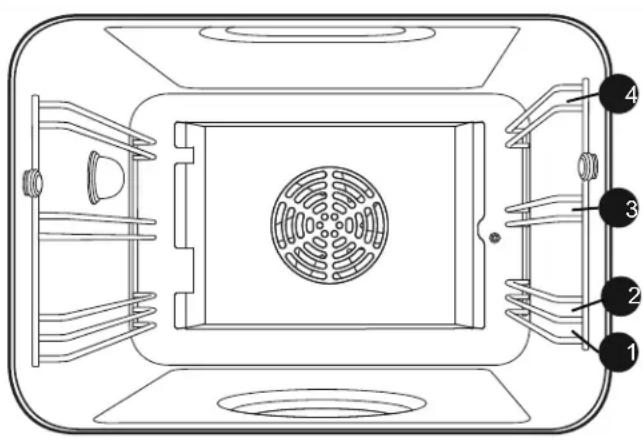
To Operate the Oven by Setting the Mode First
- Select the desired cooking mode.
— The display transitions to the mode setting screen with the mode and the default temperature. The temperature flashes, indicating that it may be edited and that the mode has not yet started. — The display will revert to stand-by state if a selection is not made within 5 seconds.
- Press buttons on the numeric keypad to set a temperature.
— The display transitions to the temperature setting screen flashing “--x” in the display, where x is the numeric key pressed by the user. — If the temperature in the display is outside the allowable limits for the selected mode and ENTER is pressed, an error tone will sound and the allowed temperature range for that mode is shown below the set temperature. — Temperature control is not possible with DEFROST, PROOF, KEEP WARM, and DISH WARM, which have preselected temperatures. When one of these modes is selected, the temperature will appear on the display.
- Press ENTER.
— If ENTER is not pressed after setting a temperature other than the default temperature, the oven will automatically start the cooking mode after 5 seconds at the entered temperature. If no input is made to the default temperature, the display screen will transition back to stand-by state after 5 seconds of inactivity. — Display will indicate that the oven is preheating.
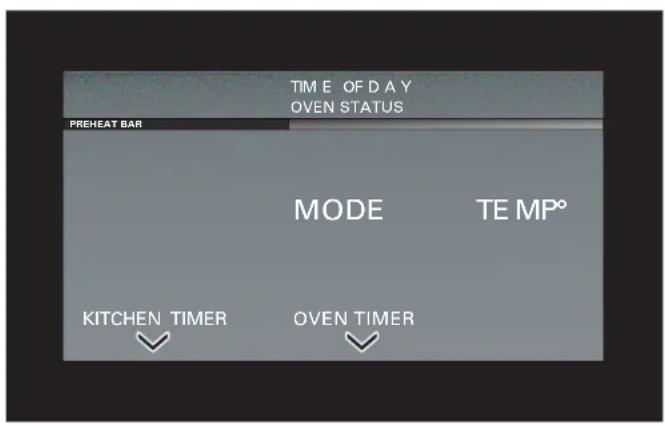
To Operate the Oven by Setting the Temperature First
- From stand-by state, press the numeric touchpad buttons to enter a desired temperature.
— The display transitions to the mode setting screen flashing “--x” in the display, where x is the numeric key pressed by the user. — The display screen prompts the user to select a mode.
- Select the desired cooking mode.
- Press ENTER.
— If the temperature in the display is outside the allowable limits for the selected mode and ENTER is pressed, an error tone will sound. — For the modes with one dedicated temperature (DEFROST, PROOF, KEEP WARM, DISH WARM), once the error tone has sounded and the default temperature appears on the display, the user can initiate that particular mode by pressing ENTER. — The display will revert to stand-by state if a selection is not made within 5 seconds. — Once a selection has been made, the display will indicate that the oven is preheating.
To Edit Oven Settings During Operation
Change to a New Cooking Mode During Operation
- Press the touchpad for the new desired cooking mode.
— The current running mode is immediately ended and the display enters editing mode.
- Press ENTER.
Change to a New Temperature During Operation
- Press the button for the current running mode. — The current mode continues to run, but the display enters editing mode.
- Press the numeric touchpad to enter a desired temperature.
- Press ENTER.
Door Operation During a Cooking Mode
If the door is opened during a mode that uses the steam function, the cooling fan will cycle on and off five-six times in succession to purge the excess steam.
If the oven is in an operation mode that uses the convection fan, the convection fan will shut off automatically. Operation will resume once the door is shut.
The display screen will prompt the user to close the oven door.
Automatic operation of the cooling blower
The cooling blower activates immediately for any of the oven modes. If steam oven modes that use steam are switched off (STEAM, STEAM CONV, REHEAT, etc.), the cooling blower stays on for 10 minutes independent from the oven temperature before shutting off. If heating modes without steam are turned off, the cooling blower goes off when the oven temperature falls below 230°F (110°C).
Oven Clear/Off
- Press the OVEN CLEAR/OFF button to cancel the cooking mode and return to the stand-by state screen.
— The temperature and mode clear from the display screen. The cooling fan will continue to run.
After Oven Operation
- After each use, leave the oven door open in the "at-rest" position, until the interior has cooled down. Refer to the illustration below.
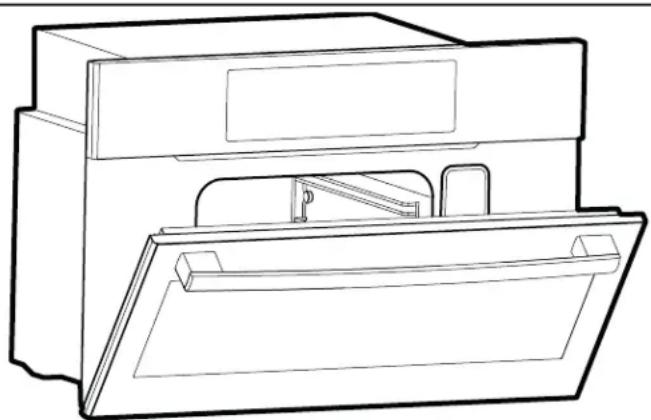
- When cool, use a cleaning sponge to remove any water remaining in the evaporator dish. Wipe down the oven using the cleaning sponge and dry afterwards using a soft cloth before closing the door.
IMPORTANT:
- Wipe down the oven cavity and the evaporator dish with the sponge provided and dry well with a soft cloth after each use.
- Remove food residue and spills from the oven immediately after the appliance has cooled down. Burned on residue is very difficult to remove at a later time.
- Salts are very abrasive and can cause rust spots. The steam oven cavity can rust if not properly cared for.
Panel Lock
The Panel Lock is a child safety mechanism to prevent children from accidentally turning on the oven or changing an oven setting.
The Panel Lock feature can only be turned on from stand-by state. If the Panel Lock button is pressed in any state other than stand-by, the display sounds a key error tone.
To Execute Panel Lock
- Press and hold the PANEL LOCK button on the touchpad for three seconds (press and hold for another three seconds to deactivate).
— PANEL LOCKED will appear in the display.
Setting the Timers
Kitchen Timer
The kitchen timer can be used whether the oven is in operation or not and it does not affect oven heating.
A kitchen timer may be set from the following states:
- any running cooking or heating mode.
- stand-by state.
Setting the Kitchen Timer in Stand-by State
- Press the CLOCK/TIMER touchpad on the control panel.
- Enter the desired time using the numeric touchpad to set the time in the format HH:MM.
- Press SOFT KEY 3 (Set Timer).
— Once started, the display shows the timer countdown. — When the timer reaches zero, the display shows 0:00 and sounds an alarm tone every 10 seconds for 2 minutes.
- After the timer has finished, it may be reset by pressing SOFT KEY 1 (Timer Off) or by opening the door.
Editing the Kitchen Timer
- Press SOFT KEY 3 (Edit Kitchen Timer).
- Set the new time using the numeric touchpad or SOFT KEY 1 (Clear) to clear and exit the timer.
- Press ENTER.
Oven Timer
The Oven Timer is intended to mechanically shut the oven off when the desired cooking time is complete. The maximum oven time is 11 hours and 59 minutes.
An oven timer may start from any mode editing or running state. These instructions assume you have placed food in the cooking space and have already selected a mode and temperature.
NOTE:
Oven Timer is not available for Chicken or Vegetables Automatic Programs.
Setting the Oven Timer
- Press SOFT KEY 2 (Oven Timer).
- Enter the desired time using the numeric touchpad to set the time in the format HH:MM.
- Press ENTER.
— Once started, the display shows the timer countdown. — When the timer reaches zero, the display indicates "0:00" on its screen and sounds an alarm tone every 10 seconds for 2 minutes.
- After the timer has finished, it may be reset by pressing the OVEN CLEAR/OFF or by opening the door.
Editing the Oven Timer
- Press SOFT KEY 2 (Edit Oven Timer).
- Set the new time using the numeric touchpad.
- Press ENTER.
Multiple Timers
It is possible to set a combination of both a Kitchen Timer and an Oven Timer.
- Set and edit the timers individually as instructed previously.
— Both timers are displayed on the screen.
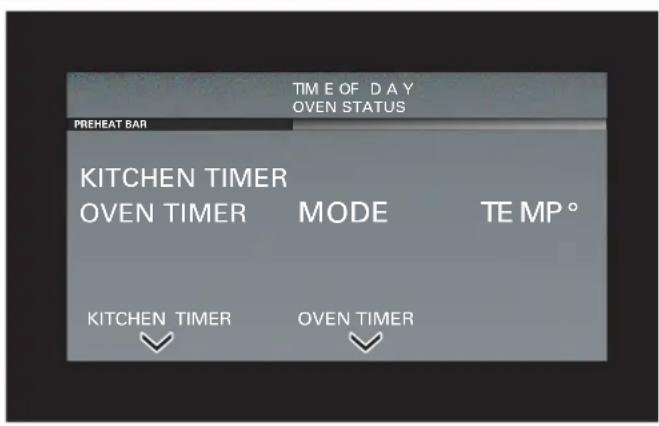
VEGETABLES and CHICKEN Automatic Programs
| FOOD | DEFAULT WEIGHT | MIN. WEIGHT MAX. WEIGHT | ACCESSORIES AND RACK LEVELS | |
| VEGETABLES | ||||
| Wait until after cooking to season vegetables, including potatoes. | ||||
| Cauliflower florets 1.0 | Ibs. (0.4 kg) 0.2 Ibs. (0.1 kg) 4.5 Ibs. | (2 kg) Perforated | (level 3) + baking pan (level 1) | |
| Broccoli florets 1.0 Ibs. | (0.4 kg) 0.2 Ibs. | (0.1 kg) 4.5 Ibs. (2 kg) | Perforated (level 3) + baking pan (level 1) | |
| Green beans 1.0 Ibs. | (0.4 kg) 0.2 Ibs. | (0.1 kg) 4.5 Ibs. (2 kg) | Perforated (level 3) + baking pan (level 1) | |
| Green asparagus 1.0 | Ibs. (0.4 kg) 0.2 Ibs. | (0.1 kg) 4.5 Ibs. | (2 kg) Perforated (level 3) + baking pan (level 1) | |
| Mixed veggie steam | 1.0 Ibs. (0.4 kg) 0.2 Ibs. | (0.1 kg) 4.5 Ibs. | (2 kg) Perforated (level 3) + baking pan (level 1) | |
| Peeled potatoes 1.0 | Ibs. (0.4 kg) 0.2 Ibs. | (0.1 kg) 4.5 Ibs. | (2 kg) Perforated (level 3) + baking pan (level 1) | |
| Unpeeled potatoes 1.0 | Ibs. (0.4 kg) 0.2 Ibs. | (0.1 kg) 4.5 Ibs. | (2 kg) Perforated (level 3) + baking pan (level 1) | |
| CHICKEN | ||||
| Weigh individual pieces of chicken. Enter the weight of the heaviest piece.DO NOTplace pieces of chicken on top of one another in the ovenware. You can marinate the pieces of chicken before cooking. | ||||
| Whole chicken 3.5 Ibs. | (1.6 kg) 1.5 Ibs. | (0.7 kg) 5.0 Ibs. (2.3 kg) | Wire rack + baking pan (level 2) | |
| Chicken portions 0.25 | Ibs. | 0.1 Ibs. | 0.75 Ibs. | Wire rack + baking pan (level 2) |
| (0.1 kg) | (0.04 kg) | (0.36 kg) | ||
Setting the Automatic Program
Choose the Food
- Select either CHICKEN or VEGETABLES on the control panel. — The display screen will show a list of food groupings.
- Press SOFT KEY 2 (Food Type) to advance through the menu options.
- Press the ENTER button on the control panel to select the desired food. — The display will show the rack level (levels 1 – 3) and specific ovenware/accessories that should be used.
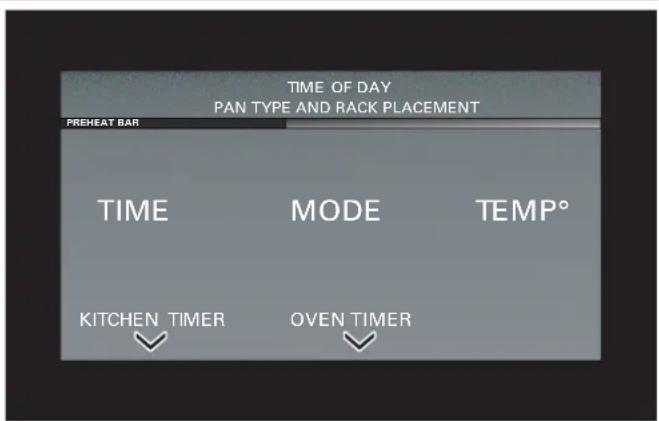
- Place food in steam oven at the indicated locations.
- Close the oven door.
Set the Weight
- Press the numeric touchpad buttons to adjust the weight of the food you will be cooking.
— Each type of food has a maximum and minimum weight setting.
- Press ENTER.
— The display will show cooking time for the particular choice of food. — The oven will begin preheating.
Steam Oven Modes
Temperature Setting for Each Mode
Different modes have different possible minimum and maximum temperatures. The following table describes the limits on setting the temperature ranges for each mode:
| COOKING MODE | MINIMUM TEMP. | MAXIMUM TEMP. |
| STEAM 95°F (35°C) 21 | 2°F (100°C) | |
| STEAM CONV 250°F (121°C) 450°F (232°C) | ||
| DEFROST 110°F (43°C) only | ||
| PROOF 100°F (37°C) only | ||
| DISH WARMING 125°F (51°C) only | ||
| REHEAT 210°F (99°C) | 360°F (182°C) | |
| EUROPEAN CONV 95°F (35°C) 450°F (232°C) | ||
| KEEP WARM 140°F (60°C) only | ||
| SLOW COOK 140°F (60°C) 250°F (121°C) | ||
| CHICKEN Automatic Program | ||
| VEGETABLES Automatic Program | ||
Steam
The Advantages of Cooking with Steam:
- Almost no loss of nutrients: When steamed, food is not immersed in water, so the vitamins and minerals do not leach out. Studies have shown that steamed broccoli, for example, contains 50% more vitamin C than boiled broccoli.
- Low-fat cooking: Food can be cooked with low amounts of fat or, depending on taste, with no fat at all. When meat is steamed, the fat separates itself from the meat and drips into the baking pan.
- Meat cooking: Cook a 14 lb. turkey in just 90 minutes in the oven's Steam Conv mode. Golden on the outside; moist on the inside.
- Appetizing appearance: Foods retain their natural color when cooked with steam. Cooked vegetables look like they have been freshly harvested. You rarely need to stir or turn the food, which means that even delicate fish dishes retain their shape. Foods do not dry out.
- Flavorful enjoyment: Steaming provides naturally flavorful food that needs hardly any salt.
- Cooking a menu: With steam you can cook several components of a menu at the same time, with little or no seasoning, without the different flavors mixing.
Tips for Steaming
- Foods with similar cooking times may be cooked together, saving energy and clean-up time.
- Place the baking pan underneath the perforated pan to collect precipitate and food spills. Season vegetables after steaming.
Steam Conv
Steam and convection are used together with the Steam Conv mode. Roasts get crispy on the outside and juicy on the inside thanks to the combination of convection and steam. Pastries get a nice, shiny surface and do not dry out. Use convection steam for any foods you want to be tender inside and roasted or crisped outside.
This combination is particularly suitable for cooking meat and baking bread and rolls. Steam Conv also works exceptionally well for roasting vegetables.
Tips for Steam Convection
- Season meat carefully – the slow roasting of the meat intensifies the aromas and flavors.
- For meats and poultry, the temperature should not be reduced. The temperature recommended in recipes and cooking charts for meats and poultry should be used.
- Use a meat thermometer to verify that the interior of the meat is fully cooked.
Defrost
Use the Defrost function for defrosting food such as meat, poultry, vegetables, pastries and cakes, bread and fruit.
Tips for Defrosting
- When defrosting poultry, set the food on the rack and insert the baking pan beneath it. This prevents the food from lying in the defrosting liquid.
- Turn, stir, or separate food about halfway through the defrosting period. • DO NOT refreeze food once it has been defrosted. Food should be cooked immediately after the defrost.
- Defrost deep frozen, precooked meals according to the manufacturer's instructions.
Proof
The Proof mode maintains the warm, non-drafty environment needed for proofing yeast leavened products.
Tips for Proofing
- Allow dough to thaw if frozen. Place dough in dish and loosely cover.
- It is best to start with a cool oven when using the proofing function.
- Use any rack level that accommodates the size of the bowl or pan. Dough has "proofed" when it has doubled in size.
- Do not open the oven door unnecessarily. Opening the door will lower the temperature of the air in the oven and lengthen the proofing time. Use the oven light to check the rising of the dough.
Dish Warming
Heats and keeps warm oven-safe ovenware, plates, and bowls.
Place dishes in the oven before heating the oven. DO NOT place cold dishes in an already warm oven as this may cause thermal shock and may cause the dish to shatter.
Reheat
Reheat mode uses steam and hot air to gently restore food. The combination of air and moisture in the Reheat mode warms food evenly and without drying. Entrees, casseroles, side dishes, and leftovers are warmed to serving temperature without compromising quality.
Tips for Reheating
- If possible, arrange the food so that it is spread out evenly on the dish.
- Food does not need to be stirred during Reheat.
- Reheat times vary for foods, so check food occasionally to prevent overcooking.
- Reheat a plate of food, no cover necessary.
European Conv
European Conv operates as a convection oven, with no steam. During the European Conv mode, a heating element at the back of the cooking compartment is heated. The fan then circulates the hot air evenly around the food. Multiple racks of foods can be cooked or large quantities of foods can be cooked at the same time. Foods will cook thoroughly without having to rotate pans. European Conv is most suitable for making sweet and savory pastries, pot roasts, and various cakes; this mode is not suitable for braising.
Tips for Convection Cooking
- For greatest efficiency, load oven to capacity whenever possible.
- Do not cover foods. Covering the food inhibits the cooking process.
- Preheat the oven first unless specified differently in the recipe.
Keep Warm
The Keep Warm mode will keep hot, cooked foods at serving temperature. ALWAYS start with hot food. DO NOT use this mode to heat cold food other than for crisping crackers, chips and dry cereal. DO NOT use the Keep Warm mode to cook food.
NOTES:
- Food may be kept hot in its cooking container or transferred to a heat-safe serving dish.
- Allow time for the oven to preheat before placing warm, cooked food in the oven.
- Do not open the oven door unnecessarily. Opening the door will reduce the temperature of the oven. Use the oven light to check the food.
Slow Cook
Slow Cook is ideal for cooking all tender cuts of meat that will be cooked medium rare. The meat stays very moist and is tender.
Cooking Tip for Slow Cooking
- Place the baking pan in the oven and preheat the oven using Slow Cook mode. Sear the meat well on all sides on the cooktop. Place the meat in the preheated combination oven and continue to slow cook.
Chicken and Vegetables Automatic Programs
There are two sets of automatic programs for the steam oven. These programs are grouped under menu classes labeled "Chicken" and "Vegetables". Both of the automatic programs adjusts the modes, temperatures, and cooking times based on the weight input by the user. Using the automatic programming allows the user to prepare dishes quickly and easily. See "VEGETABLES and CHICKEN Automatic Programs" on page 13.
Getting the Most Out of Your Steam Oven
General Tips
Preheating the Oven
- Place oven rack in desired position before heating the oven.
- Preheat the oven when using the Slow Cook, European Conv, or Keep Warm modes.
- Place food in the steam oven before preheat for modes that use steam. Food needs to be in the oven during preheat for steam modes. If the door is opened to put food inside after the preheat cycle then the steam will leave the cavity, lowering the temperature, which may cause the food to be undercooked.
WARNING
DO NOT use aluminum foil or protective liners to line any part of the appliance, especially the oven bottom.
Installing these liners may result in risk of electric shock or fire.
Ovenware
If you use ovenware, always place it on the center of the rack.
The ovenware must be heat and steam resistant. Thick-walled ovenware extends the cooking time.
Use foil to cover food that would normally be prepared in a water bath (such as when melting chocolate).
Distribute Food Evenly
Always distribute the food evenly in the ovenware. If the food is placed unevenly in the ovenware, it will cook unevenly.
Delicate Food
Do not layer delicate foods too high in the baking pan. It is better to use two pans in this case.
Converting Conventional Baking to Convection Baking
Cooking temperatures versus traditional ovens may be 25 degrees less, and times may be about 25% faster, saving valuable time and lowering energy costs.
To convert most recipes for baked items (cookies, cakes, pies, etc.), reduce the oven temperature by 25°F (14°C). For meats and poultry, the temperature should not be reduced. The temperature recommended in recipes and cooking charts for meats and poultry should be used.
Cooking an Entire Meal
You can cook entire meals at the same time in Steam mode without mixing the flavors of the different food. Place the food with the longest cooking time in the appliance first and then add the remaining dishes at the appropriate time. This will ensure that all dishes are ready at the same time.
The total cooking time will be longer when cooking an entire meal, since every time the appliance door is opened, some steam escapes and the appliance has to reheat.
Cooking Tables and Tips
The following in the Cooking Recommendations charts contain a selection of dishes that can be easily prepared in the steam oven. You can find out which oven mode, accessories and cooking time are best suited for your dish. If not specified otherwise, this information applies to dishes placed in a cold appliance.
When steaming, the cooking times are based on the size of the piece, not on the entire quantity of food. The appliance can steam up to 14 lbs. (6.4 kg) of food.
Note the sizes of pieces listed in the tables. The cooking time is shorter for smaller pieces and longer for larger pieces. The quality and age of the food also affect the cooking time. The values provided therefore serve only as a guideline.
Cooking Recommendations
Vegetables
Place vegetables in the perforated pan and set at rack level 3. Place the baking pan underneath it at rack level 1. The baking pan will catch any drippings.
| FOOD SIZE ACCESSORIES OVEN MODE TEMPERATURE COOKING TIME | |||||
| Artichokes Whole Perforated + | baking pan | Steam 212°F (100°C) 30 – 35 min. | |||
| Asparagus, green* Whole Perforated + | baking pan | Steam 212°F (100°C) 7 – 12 min. | |||
| Asparagus, white* Whole Perforated + | baking pan | Steam 212°F (100°C) 10 – 15 min. | |||
| Beets, red Whole Perforated + | baking pan | Steam 212°F (100°C) 40 – 50 min. | |||
| Broccoli Florets Perforated + | baking pan | Steam 212°F (100°C) 8 – 10 min. | |||
| Brussels sprouts Florets Perforated + | baking pan | Steam 212°F (100°C) 20 – 30 min. | |||
| Cabbage, green Shredded | Perforated + | baking pan | Steam 212°F (100°C) 25 – 35 min. | ||
| Cabbage, red | Shredded | Perforated + baking pan | Steam 212°F (100°C) 30 – 35 min. | ||
| Carrots | Slices | Perforated + baking pan | Steam 212°F (100°C) 10 – 20 min. | ||
| Cauliflower | Florets Perforated + baking pan | Steam 212°F (100°C) 10 – 15 min. | |||
| Cauliflower | Whole Perforated + baking pan | Steam 212°F (100°C) 30 – 40 min. | |||
| Fennel | Slices | Perforated + baking pan | Steam 212°F (100°C) 10 – 14 min. | ||
| Green beans | - | Perforated + baking pan | Steam 212°F (100°C) 15 – 20 min. | ||
| Kohlrabi | Slices | Perforated + baking pan | Steam 212°F (100°C) 15 – 20 min. | ||
| Leeks | Slices | Perforated + baking pan | Steam 212°F (100°C) 4 – 6 min. | ||
| Peas | - | Perforated + baking pan | Steam 212°F (100°C) 5 – 10 min. | ||
| Pea pods | - | Perforated + baking pan | Steam 212°F (100°C) 8 – 12 min. | ||
| Spinach* | - | Perforated + baking pan | Steam 212°F (100°C) 2 – 3 min. | ||
| Stuffed vegetables (zucchini, eggplant, peppers) | DO NOT precook vegetables | Baking pan (level 2) | Steam Conv | 320 – 360°F (160 – 180°C) | 15 – 30 min. |
| Swiss Chard* | Shredded | Perforated + baking pan | Steam 212°F (100°C) 8 – 10 min. | ||
| Zucchini | Slices | Perforated + baking pan | Steam 212°F (100°C) 2 – 3 min. | ||
* Preheat the appliance. Place food in oven before preheat unless using the Slow Cook or European Conv modes.
Side Dishes and Legumes
Add the appropriate amount of water or liquid. Example: 1:1.5 = for every 1/2 cup.
| FOOD RATIO ACCESSORIES | OVEN MODE TEMPERATURE COOKING TIME | ||||
| Potatoes (unpeeled) Medium size Perforated (level 3) + baking pan (level 1) | Steam 212°F (100°C) 35 – 45 min. | ||||
| Potatoes (peeled) Quartered Perforated (level 3) + baking pan (level 1) | Steam 212°F (100°C) 20 – 25 min. | ||||
| Potato gratin | - | Baking pan (level 2) | Steam | 212°F (100°C) | 35 – 45 min. |
| Brown rice | 1:2 | Baking pan (level 2) | Steam | 212°F (100°C) | 30 – 40 min. |
| Long grain rice | 1:2 | Baking pan (level 2) | Steam | 212°F (100°C) | 20 – 30 min. |
| Basmati rice | 1:1.5 | Baking pan (level 2) | Steam | 212°F (100°C) | 20 – 30 min. |
| Parboiled rice | 1:1.5 | Baking pan (level 2) | Steam | 212°F (100°C) | 15 – 20 min. |
| Lentils | 1:2 | Baking pan (level 2) | Steam | 212°F (100°C) | 30 – 45 min. |
| Canellini beans, pre-softened | 1:2 Baking pan (level 2) | Steam 212°F (100°C) 65 – 75 min. | |||
| Couscous | 1:1 | Baking pan (level 2) | Steam | 212°F (100°C) | 6 – 10 min. |
| Dumplings – Perforated (level 3) + baking pan (level 1) | Steam | 205°F (95°C) | 20 – 25 min. | ||
Meat, Poultry, Fish
Insert rack and baking pan together at the same rack level. Once the roast is done, let it rest in the closed convection steam oven for an additional 10 minutes after turning it off. This will help the meat retain its juices.
Using the Steam Conv mode makes the meat particularly tender and juicy on the inside while forming a crust on the outside.
| FOOD | WEIGHT | ACCESSORIES | OVEN MODE | TEMPERATURE | COOKING TIME |
| POULTRY | |||||
| Chicken, whole | 2.65 lbs.(1.2 kg) | Wire rack + baking pan (level 2) | Steam Conv | 360 – 375°F(180 – 190°C) | 50 – 60 min. |
| Chicken, halved | per 1 lbs.(0.4 kg) | Wire rack + baking pan (level 2) | Steam Conv | 360 – 375°F(180 – 190°C) | 35 – 45 min. |
| Chicken breast | per 0.33 lbs.(0.15 kg) | Perforated (level 3) + baking pan (level 1) | Steam | 212°F (100°C) | 15 – 25 min. |
| Chicken pieces | per 2.65 lbs.(1.2 kg) | Wire rack + baking pan (level 2) | Steam Conv | 360 – 375°F(180 – 190°C) | 20 – 35 min. |
| Duck, whole | 4.5 lbs.(2 kg) | Wire rack + baking pan (level 2) | Steam Conv / European Conv | 340°F (170°C)/410°F (210°C) | 60 – 80 min./15 – 20 min. |
| Duck breast* | per 0.77 lbs.(0.35 kg) | Wire rack + baking pan (level 2) | Steam Conv | 360 – 375°F(180 – 190°C) | 10 – 15 min. |
| Turkey, whole, unstuffed | 8 – 11 lbs. Wire rack + baking pan (level 2) | Steam Conv | 325°F (165°C) | 50 – 75 min. | |
| Turkey, whole, unstuffed** | 12 – 14 lbs. Wire rack + baking pan (level 2) | Steam Conv | 325°F (165°C) | 80 – 95 min. | |
| Rolled turkey roast | 3.5 lbs.(1.5 kg) | Wire rack + baking pan (level 2) | Steam Conv | 300 – 320°F(150 – 160°C) | 70 – 90 min. |
| Turkey breast | 2 lbs. (1 kg) Wire rack + baking pan (level 2) | Steam Conv | 300 – 320°F(150 – 160°C) | 60 – 80 min. | |
* Sear first ** Use baking pan 1–5/8" deep (see Additional Accessories)
| FOOD | WEIGHT | ACCESSORIES | OVEN MODE | TEMPERATURE | COOKING TIME |
| BEEF | |||||
| Pot-roasted beef* 3.5 lbs.(1.5 kg) | Ibs. | Wire rack + baking pan (level 2) | Reheat 285 – 300°F | (140 – 150°C) | 100 – 140 min. |
| Filet of beef, medium* 2 lbs. (1 kg) Wire rack + baking pan (level 2) | Ibs. (1 kg) Wire rack + baking pan (level 2) | Wire rack + baking pan (level 2) | Reheat 340 – 360°F | (170 – 180°C) | 20 – 28 min. |
| Thin slice of roast beef, medium* | 2 lbs. (1 kg) Wire rack + baking pan (level 2) | Wire rack + baking pan (level 2) | European Conv 340 – | 360°F(170 – 180°C) | 40 – 55 min. |
| Thick slice of sirloin, medium* | 2 lbs. (1 kg) Wire rack + baking pan (level 2) | Wire rack + baking pan (level 2) | European Conv 340 – | 360°F(170 – 180°C) | 45 – 60 min. |
| VEAL | |||||
| Veal, bone-in 3.5 lbs.(1.5 kg) | Wire rack + baking pan (level 2) | Wire rack + baking pan (level 2) | Steam Conv 320 – 360°F | (160 – 180°C) | 50 – 70 min. |
| Veal loin 2 lbs. (1 kg) Wire rack + baking pan (level 2) | Wire rack + baking pan (level 2) | Wire rack + baking pan (level 2) | Steam Conv 320 – 360°F | (160 – 180°C) | 15 – 25 min. |
| Breast of veal, stuffed 3.5 lbs.(1.5 kg) | Wire rack + baking pan (level 2) | Wire rack + baking pan (level 2) | Steam Conv 285 – 320°F | (140 – 160°C) | 75 – 120 min. |
| PORK | |||||
| Bone-in without rind 3.5 lbs.(1.5 kg) | Wire rack + baking pan (level 2) | Wire rack + baking pan (level 2) | Steam Conv 320 – 360°F | (160 – 180°C) | 50 – 70 min. |
| Bone-in with rind 3.5 lbs.(1.5 kg) | Wire rack + baking pan (level 2) | Wire rack + baking pan (level 2) | Steam/Steam Conv | 210°F (99°C)/285 – 320°F(140 – 160°C) | 20 – 25 min.40 – 50 min. |
| European Conv | 410 – 430°F(140 – 160°C) | 20 min. | |||
| Pork chop, boneless* 1.2 lbs.(0.5 kg) | Wire rack + baking pan (level 2) | Wire rack + baking pan (level 2) | Steam Conv 285 – 320°F | (140 – 160°C) | 75 – 120 min. |
| Fillet in puff pastry | 2 lbs. (1 kg) | Baking pan (level 2) | Steam Conv | 360 – 390°F(180 – 200°C) | 40 – 60 min. |
| Smoked pork on the bone | 2 lbs. (1 kg) Wire rack + baking pan (level 2) | Wire rack + baking pan (level 2) | Steam Conv 250 – 285°F | (120 – 140°C) | 60 – 70 min. |
| Smoked pork ribs | 1 lb. (0.4 kg) | Baking pan (level 2) | Steam | 210°F (99°C) | 45 – 60 min. |
| Rolled roast | 3.5 lbs.(1.5 kg) | Wire rack + baking pan (level 2) | Steam Conv 340 – 360°F | (170 – 180°C) | 70 – 80 min. |
| OTHER | |||||
| Meat loaf (made from ground meat) | 1.2 lbs.(0.5 kg) | Baking pan (level 2) | Steam Conv 340 – 360°F | (170 – 180°C) | 45 – 60 min. |
| Boned leg of lamb | 3.5 lbs.(1.5 kg) | Wire rack + baking pan (level 2) | Steam Conv 340 – 360°F | (170 – 180°C) | 60 – 80 min. |
| Loin of lamb on the bone* | 3.5 lbs.(1.5 kg) | Wire rack + baking pan (level 2) | Steam Conv 320 – 360°F | (160 – 180°C) | 15 – 25 min. |
| Wiener sausages – | Perforated (level 3) + baking pan (level 1) | Perforated (level 3) + baking pan (level 1) | Steam 175 – 185°F | (80 – 85°C) | 12 – 18 min. |
| FISH | |||||
| Whole | per 0.66 lbs.(0.3 kg) | Perforated (level 3) + baking pan (level 1) | Steam 175 – 195°F | (80 – 90°C) | 15 – 25 min. |
| Fillet | per 3.5 lbs.(1.5 kg) | Perforated (level 3) + baking pan (level 1) | Steam 175 – 195°F | (80 – 90°C) | 10 – 20 min. |
| Trout, whole | per 0.5 lbs.(0.2 kg) | Perforated (level 3) + baking pan (level 1) | Steam 175 – 195°F | (80 – 90°C) | 12 – 15 min. |
| * Sear first** Use baking pan 1–5/8" deep (see Additional Accessories) | |||||
| Cod, filet | per 0.33 lbs.(0.15 kg) | Perforated (level 3) +baking pan (level 1) | Steam | 175 – 195°F(80 – 90°C) | 10 – 14 min. |
| Salmon, filet | per 0.33 lbs.(0.15 kg) | Perforated (level 3) +baking pan (level 1) | Steam | 212°F (100°C) | 8 – 10 min. |
| Clams, oysters | 0.33 lbs.(0.15 kg) | Baking pan (level 2) | Steam | 212°F (100°C) | 10 – 15 min. |
| Haddock, perch filet | per 0.5 lbs.(0.2 kg) | Perforated (level 3) +baking pan (level 1) | Steam | 175 – 195°F(80 – 90°C) | 10 – 20 min. |
| Stuffed sole rolls | - | Perforated (level 3) +baking pan (level 1) | Steam | 175 – 195°F(80 – 90°C) | 10 – 20 min. |
| Shrimp, large | per 1 lb(0.4 kg) | Perforated (level 3) +baking pan (level 1) | Steam | 212°F (100°C) | 8 – 13 min. |
| Shrimp, medium | per 1 lb(0.4 kg) | Perforated (level 3) +baking pan (level 1) | Steam | 212°F (100°C) | 5 – 8 min. |
* Sear first ** Use baking pan 1–5/8" deep (see Additional Accessories)
Slow Cooking Meat
| FOOD WEIGHT ACCESSORIES TEMPERATURE COOKING TIME | ||||
| Boned leg of lamb 2 – 3.5 lbs.(1 – 1.5 kg) | Baking pan (level 2) | 175°F (80°C) | 140 – 160 min. | |
| Roast beef 3.5 – 5.5 lbs.(1.5 – 2.5 kg) | Baking pan (level 2) | 175°F (80°C) | 150 – 180 min. | |
| Pork fillets – Baking pan (level 2) 175 – 195°F | (80 – 90°C) | 50 – 70 min. | ||
| Pork medallions | – | Baking pan (level 2) | 175°F (80°C) | 50 – 60 min. |
| Beef steaks | approx. 1.2 in. thick | Baking pan (level 2) | 175°F (80°C) | 40 – 80 min. |
| Duck breast | – | Baking pan (level 2) | 175°F (80°C) | 35 – 55 min. |
Souffles, Casseroles, Additions to Soups
| FOOD | ACCESSORIES | OVEN MODE | TEMPERATURE | COOKING TIME |
| Lasagna | Baking pan (level 2) | Steam Conv | 320 – 340°F(160 – 170°C) | 35 – 45 min. |
| Souffles | Souffle dish + wire rack (level 2) | Steam Conv | 360 – 390°F(180 – 200°C) | 15 – 25 min. |
| Semolina dumplings | Perforated (level 3) + baking pan (level 1) | Steam | 195°F (205°C) | 7 – 10 min. |
Desserts, Compotes
Compote: Weigh out the fruit, add approximately 1/3 of water and add sugar and spices to taste.
Rice pudding: Weigh out the rice and add 2.5 times as much milk. Add the rice and milk no higher than 1 inch up the side of the accessory. Stir after cooking. The remaining milk will be absorbed quickly.
Yogurt: Heat the milk on the cooktop to 195°F (90°C). Remove from heat and let cool to 105°F (40°C). Heating the milk is not required if using ultra high temperature (UHT) milk. Stir in one to two teaspoons of plain yogurt, or the appropriate amount of yogurt starter per 100 ml of milk. Pour the mixture into clean glass jars and cover with lids. After it is done, arrange it on preheated plates and add a warm sauce on top. After preparation, place the jars in the refrigerator to cool.
| FOOD | ACCESSORIES | OVEN MODE | TEMPERATURE | COOKING TIME |
| Yeast dumplings | Baking pan (level 2) | Steam | 212°F (100°C) | 20 – 25 min. |
| Egg custard Mold + wire rack (level 2) | Steam 195 – 205°F | (90 – 95°C) | 15 – 20 min. | |
| Sweet baked items (such as rice pudding) | Ovenproof dish + wire rack (level 2) | Steam Conv 320 – 340°F | (160 – 170°C) | 50 – 60 min. |
| Rice pudding | Baking pan (level 2) | Steam | 212°F (100°C) | 25 – 35 min. |
| Yogurt Portion-sized jars | + wire rack (level 2) | Steam | 105°F (40°C) | 300 – 360 min. |
| Apple compote | Baking pan (level 2) | Steam | 212°F (100°C) | 10 – 15 min. |
| Pear compote | Baking pan (level 2) | Steam | 212°F (100°C) | 10 – 15 min. |
| Cherry compote | Baking pan (level 2) | Steam | 212°F (100°C) | 10 – 15 min. |
| Rhubarb compote | Baking pan (level 2) | Steam | 212°F (100°C) | 10 – 15 min. |
| Plum compote | Baking pan (level 2) | Steam | 212°F (100°C) | 10 – 15 min. |
Cakes and Baked Goods
Dark metal baking pans are recommended. The temperature and cooking time depend on the quantity and consistency of the dough. Temperature ranges are therefore provided in the charts. Start with a lower temperature setting. This will provide for more even browning. Use a higher temperature setting the next time, if necessary. DO NOT overfill the rack or baking pan.
| FOOD | ACCESSORIES | OVEN MODE | TEMPERATURE | COOKING TIME |
| CAKE IN MOLDS OR SPRINGFORM PANS | ||||
| Sponge cake | 10-inch tube pan + wire rack (level 2) | European Conv | 300 – 320°F(150 – 160°C) | 60 – 70 min. |
| Sponge flan base | Ring + wire rack (level 2) | European Conv | 300 – 320°F(150 – 160°C) | 30 – 45 min. |
| Delicate fruit flan, sponge | Springform cake pan + wire rack (level 2) | European Conv | 300 – 320°F(150 – 160°C) | 45 – 55 min. |
| Sponge base (2 eggs) | Ring + wire rack (level 2) | European Conv | 360 – 375°F(180 – 175°C) | 12 – 16 min. |
| Sponge flan (6 eggs) | Springform cake pan + wire rack (level 2) | European Conv | 300 – 320°F(150 – 160°C) | 25 – 35 min. |
| Shortcrust pastry base with crust | Springform cake pan + wire rack (level 2) | European Conv | 300 – 320°F(150 – 160°C) | 40 – 50 min. |
| Swiss flan | Springform cake pan + wire rack (level 2) | European Conv | 360 – 375°F(180 – 175°C) | 35 – 60 min. |
| Bundt® | Bundt®cake pan + wire rack (level 2) | European Conv | 300 – 320°F(150 – 160°C) | 35 – 45 min. |
| Savory cakes | Quiche dish + wire rack (level 2) | European Conv | 360 – 375°F(180 – 175°C) | 35 – 60 min. |
| Apple tart | Flan base cake pan + wire rack (level 2) | European Conv | 340 – 375°F(170 – 190°C) | 35 – 50 min. |
| SHEET CAKES | ||||
| Yeast cake | Baking pan (level 2) | Steam Conv / European Conv | 300 – 320°F(150 – 160°C)/300 – 320°F(150 – 160°C) | 35 – 45 min.35 – 45 min. |
| Swiss roll | Baking pan (level 2) | European Conv | 360 – 375°F(180 – 175°C) | 10 – 15 min. |
| Braided loaf | Baking pan (level 2) | Steam Conv | 300 – 320°F(150 – 160°C) | 25 – 35 min. |
| Strudel, sweet | Baking pan (level 2) | Steam Conv | 320 – 360°F(160 – 180°C) | 40 – 60 min. |
| FOOD ACCESSORIES OVEN MODE TEMPERATURE COOKING TIME | ||||
| Onion tart | Baking pan (level 2) | Steam Conv 340 – | 360°F(170 – 180°C) | 30 – 40 min. |
| BREAD, BREAD ROLLS | ||||
| White bread, 1.7 lbs.(0.75 kg) flour | Baking pan +parchment paper (level 2) | Steam Conv /European Conv | 390 – 410°F(200 – 212°C)/320 – 340°F(160 – 170°C) | 15 – 20 min./20 – 25 min. |
| Sourdough bread, 1.7 lbs.(0.75 kg) flour | Baking pan +parchment paper (level 2) | Steam Conv /European Conv | 390 – 410°F(200 – 212°C)/300 – 320°F(150 – 160°C) | 15 – 20 min./40 – 60 min. |
| Multigrain bread,1.7 lbs. (0.75 kg) flour | Baking pan +parchment paper (level 2) | Steam Conv /European Conv | 390 – 430°F(200 – 220°C)/320 – 340°F(160 – 170°C) | 15 – 20 min./25 – 40 min. |
| Whole grain bread, 1.7 lbs.(0.75 kg) flour | Baking pan +parchment paper (level 2) | Steam Conv /European Conv | 390 – 430°F(200 – 220°C)/285 – 300°F(140 – 150°C) | 20 – 30 min./40 – 60 min. |
| Rye bread, 1.7 lbs.(0.75 kg) flour | Baking pan +parchment paper (level 2) | Steam Conv /European Conv | 390 – 430°F(200 – 220°C)/300 – 320°F(150 – 160°C) | 20 – 30 min./50 – 60 min. |
| Bread rolls, 0.15 lbs. (70 g)each, unbaked | Baking pan +parchment paper (level 2) | Steam Conv 375 – | 390°F(190 – 200°C) | 25 – 30 min. |
| Bread rolls made with sweetyeast dough, 0.15 lbs. (70 g)each, unbaked | Baking pan +parchment paper (level 2) | Steam Conv 340 – | 360°F(170 – 180°C) | 20 – 30 min. |
| SMALL BAKED PRODUCTS | ||||
| Chocolate chip cookies | Cookie sheet + Wire rack(level 3) | European Conv | 325°F (163°C) | 9 – 13 min. |
| Sugar cookies | Cookie sheet + Wire rack(level 3) | European Conv | 325°F (163°C) | 7 – 10 min. |
| Meringue Baking pan (level 2) | European Conv 175 – 195°F | (80 – 90°C) | 120 – 180 min. | |
| Macaroons Baking pan (level 2) | European Conv 285 – 320°F | (140 – 160°C) | 15 – 25 min. | |
| Puff pastry Baking pan (level 2) | Steam Conv 340 – 375°F | (170 – 190°C) | 10 – 20 min. | |
| Muffins Muffin pan + wire rack(level 2) | European Conv 340 – 375°F(170 – 190°C) | 20 – 30 min. | ||
| Choux pastry, such ascream puffs | Baking pan (level 2) EuropeanConv 340 – 375°F | (170 – 190°C) | 27 – 35 min. | |
| Biscuits Baking pan (level 2) | European Conv 300 – 320°F | (150 – 160°C) | 12 – 17 min. | |
| Leavened cake, such asapple cake | Baking pan (level 2) EuropeanConv 300 – 320°F | (150 – 160°C) | 15 – 20 min. | |
Reheating Foods
| FOOD ACCESSORIES OVEN MODE TEMPERATURE COOKING TIME | ||||
| Dinner plate | Wire rack (level 2) | Reheat | 250°F (120°C) | 12 – 18 min. |
| Vegetables | Baking pan (level 3) | Reheat | 210°F (99°C) | 12 – 15 min. |
| Noodles, potatoes, rice | Baking pan (level 3) | Reheat | 210°F (99°C) | 5 – 10 min. |
| Bread rolls* Baking pan + | Wire rack(level 2) | Steam Conv 340 – 360°F(170 – 180°C) | 6 – 8 min. | |
| Baguettes* Baking pan + | Wire rack(level 2) | Steam Conv 340 – 360°F(170 – 180°C) | 5 – 10 min. | |
| Bread* Baking pan + Wire rack(level 2) | Steam Conv 340 – 360°F(170 – 180°C) | 8 – 12 min. | ||
| Pizza | Wire rack + baking pan(level 3) | Reheat 340 – 360°F(170 – 180°C) | 12 – 15 min. | |
*Preheat for 5 minutes
Defrosting
Freeze the food as flat as possible and in appropriate portions at 0°F (-18°C). Do not freeze oversized portions.
Defrosted food does not keep as long and spoils more quickly than fresh food. Defrost the food in the freezer bag on a plate or in the perforated pan. Always slide the baking pan under the perforated baking pan. This keeps the food from lying in the defrosted water and keeps the oven clean. Use the Defrost mode. If necessary, while the food is thawing, split it up or take pieces that have already thawed out of the appliance. Let the food sit for another 5–15 minutes after it has thawed to reach room temperature.
| ⚠ WARNING |
| When defrosting animal food products, make sure to remove the thawed liquid. The liquid must not come into contact with other food products. Bacteria could be transferred to the other food. After the food has thawed, heat up the steamer oven using European Conv for 15 minutes at 360°F (180°C). |
Defrosting meats: Thaw cuts of meat that will be breaded just until seasonings and bread crumbs can stick to the meat.
Defrosting poultry: Remove from packaging before defrosting. Make sure to pour out any defrosted liquid.
| FOOD | WEIGHT | ACCESSORIES | TEMPERATURE | COOKING TIME |
| Chicken parts, bone-in | 2 lbs. (1 kg) | Perforated (level 3) + baking pan (level 1) | 115 – 120°F(45 – 50°C) | 60 – 70 min. |
| Chicken parts, boneless | 1 lb. (0.4 kg) | Perforated (level 3) + baking pan (level 1) | 115 – 120°F(45 – 50°C) | 30 – 35 min. |
| Block-frozen vegetables(such as spinach) | 1 lb. (0.4 kg) | Perforated (level 3) + baking pan (level 1) | 115 – 120°F(45 – 50°C) | 20 – 30 min. |
| Berries | 0.66 lbs. (0.3 kg) | Perforated (level 3) + baking pan (level 1) | 115 – 120°F(45 – 50°C) | 5 – 8 min. |
| Fish fillets | 1 lb. (0.4 kg) | Perforated (level 3) + baking pan (level 1) | 115 – 120°F(45 – 50°C) | 15 – 20 min. |
| Beef | - | Perforated (level 3) + baking pan (level 1) | 115 – 120°F(45 – 50°C) | 70 – 80 min. |
Proofing Dough
The dough rises much faster using this mode than at room temperature. You can choose any rack level for the rack or carefully place the rack on the oven bottom.
Place the dough-rising bowl on the rack. DO NOT cover the dough.
| FOOD WEIGHT ACCESSORIES TEMPERATURE COOKING TIME | ||||
| Yeast dough | 2 lbs. (1 kg) | Bowl + wire rack | 100°F (38°C) | 20 – 30 min. |
| Sourdough | 2 lbs. (1 kg) | Bowl + wire rack | 100°F (38°C) | 20 – 30 min. |
Juice Extraction
Before extracting juice from berries, place the berries in a bowl and add sugar. Let the berries sit for one hour so that the juice is drawn out. Place berries in the perforated baking pan and place pan at rack level 3. To catch the juice, place the non-perforated baking pan at rack level 1. When ready, pour the berries into a cheese cloth and squeeze out the remaining juice.
Frozen Products
Follow the manufacturer's instructions on packaging. The specified cooking times apply to dishes placed in a cold oven.
| FOOD ACCESSORIES OVEN MODE TEMPERATURE COOKING TIME | ||||
| French fries Baking pan + parchment paper (level 2) | European Conv 340 | -375°F(170 - 190°C) | 25 - 35 min. | |
| Croquettes | Baking pan + parchment paper (level 2) | European Conv 360 | -390°F(180 - 200°C) | 18 - 22 min. |
| Thinly sliced fried potatoes | Baking pan + parchment paper (level 2) | European Conv 360 | -390°F(180 - 200°C) | 25 - 30 min. |
| Pasta, fresh, refrigerated* | Baking pan + parchment paper (level 2) | Steam | 212°F (100°C) | 5 - 10 min. |
| Lasagna, frozen | Baking pan + wire rack (level 2) | Steam Conv | 375 - 410°F(190 - 212°C) | 35 - 55 min. |
| Pizza, thin crust | Baking pan + wire rack (level 2) | European Conv 360 | -390°F(180 - 200°C) | 15 - 23 min. |
| Pizza, deep dish | Baking pan + wire rack (level 2) | European Conv 360 | -390°F(180 - 200°C) | 18 - 25 min. |
| Pizza, french bread | Baking pan + wire rack (level 2) | European Conv 360 | -390°F(180 - 200°C) | 18 - 22 min. |
| Chilled pizza Baking pan + parchment paper (level 2) | European Conv 340 | -360°F(170 - 180°C) | 12 - 17 min. | |
| Herb butter baguettes, refrigerated | Baking pan (level 2) | European Conv | 360 - 390°F(180 - 200°C) | 15 - 20 min. |
| Pretzels, frozen | Baking pan + parchment paper (level 2) | European Conv 360 | -390°F(180 - 200°C) | 18 - 22 min. |
| Partially cooked bread rolls or baguettes, pre-baked | Baking pan + parchment paper (level 2) | European Conv 300 | -340°F(150 - 170°C) | 18 - 22 min. |
| Strudel, frozen | Baking pan + parchment paper (level 2) | Steam Conv | 320 - 360°F(160 - 180°C) | 45 - 60 min. |
| Fish sticks | Baking pan + parchment paper (level 2) | European Conv 380 | -400°F(195 - 205°C) | 20 - 24 min. |
| Whole fish | Perforated (level 3) + Baking pan (level 1) | Steam | 175 - 210°F(80 - 99°C) | 20 - 25 min. |
| Frozen fish fillets | Baking pan + wire rack (level 2) | Steam Conv | 360 - 390°F(180 - 200°C) | 35 - 50 min. |
*Add a little liquid.
| FOOD | ACCESSORIES OVEN MODE TEMPERATURE COOKING TIME | |||
| Salmon fillets Perforated (level 3) +Baking pan (level 1) | Steam 175 – 210°F(80 – 99°C) | 20 – 25 min. | ||
| Broccoli Perforated (level 3) +Baking pan (level 1) | Steam 212°F (100°C) 4 – 6 min | |||
| Cauliflower Perforated (level 3) +Baking pan (level 1) | Steam 212°F (100°C) 5 – 8 min. | |||
| Green beans | Perforated (level 3) +Baking pan (level 1) | Steam 212°F (100°C) 4 – 6 min | ||
| Peas | Perforated (level 3) +Baking pan (level 1) | Steam 212°F (100°C) 4 – 6 min | ||
| Carrots | Perforated (level 3) +Baking pan (level 1) | Steam 212°F (100°C) 3 – 5 min. | ||
| Mixed vegetables | Perforated (level 3) +Baking pan (level 1) | Steam 212°F (100°C) 4 – 8 min. | ||
| Brussels sprouts | Perforated (level 3) +Baking pan (level 1) | Steam 212°F (100°C) 5 – 10 min. | ||
| *Add a little liquid. | ||||
Special Foods
| FOOD SIZE ACCESSORIES OVEN MODE TEMPERATURE COOKING TIME | ||||
| Soft cooked eggs Large | Perforated + (level 3)Baking Pan (level 1) | Steam 212°F (100°C) 9 – 11 min. | ||
| Hard cooked eggs Large | Perforated + BakingPan | Steam 212°F (100°C) 14 – 17 min. | ||
Cleaning and Maintenance
Cleaning
NOTICE:
- Remove food residue and spills from the cavity immediately after the appliance has cooled down. Burned-on residue is very difficult to remove at a later time.
- Salts are very abrasive and can cause rust spots. Remove residue left by strong sauces (ketchup, mustard) or salted foods immediately after the oven has cooled down.
WARNING
RISK OF BURNS — Wait until the appliance has cooled before cleaning.
When Cleaning this Appliance:
- For general care, wipe the outside of the stainless steel with mild, lukewarm, soapy water. Always wipe and dry in the direction of the stainless steel grain. Rinse thoroughly.
- Always rub metal finishes in the direction of the polish lines for maximum effectiveness and to avoid marring the surface.
- Use only clean soft cloths, sponges, paper towels, or fibrous brushes for cleaning and scouring, as recommended in the chart on page 27.
- DO NOT use abrasive products such as steel wool.
- DO NOT use cellulose sponges. Some sponges are processed with salt and can cause corrosion by leaving salt deposits on the metal.
- DO NOT allow any cleaning compounds to remain in contact with stainless steel for extended periods. • DO NOT USE CHLORINE-BASED CLEANERS.
- To remove fingerprints and produce added shine, use a stainless steel cleaner or conditioner. The BOSCH Stainless Steel Conditioner can be purchased online (US only) at: www.bosch-eshop.us (order part number 00576696).
- Always wipe dry immediately to avoid water marks.
IMPORTANT:
-- Never use abrasives to clean the steam oven. -- Remove all traces of cleaners used in the steam oven by carefully following all instructions for wiping out the oven and running rinse cycles. Cleaner residues can bond to the glass in the oven door. They can also adversely affect the flavor of foods cooked in the steam oven. -- Never use steel wool or abrasive pads to clean the steam oven. The oven cavity can rust if not properly cared for.
Cleaning Sponge
Use the cleaning sponge to remove any water remaining in the evaporator dish. Wipe down the oven using the cleaning sponge and dry afterwards using a soft cloth.
The cleaning sponge provided is very absorbent. Use the cleaning sponge only to clean the oven cavity and to remove any remaining water from the evaporator dish.
Wash the cleaning sponge thoroughly before initial use. The cleaning sponge can be washed in a dishwasher.
Cleaners
| Appliance exteriorStainless steel front trim; door handle | Soapy water, use a soft cloth to dry. Always remove lime deposits, grease, oil, starch and egg white stains immediately after the appliance has cooled down.Special stainless steel cleaners are available through customer service or at retail stores.Do not use corrosive or abrasive cleaners, which dull the surface. In the event that one of these products comes into contact with the oven, immediately clean it using a damp cloth. |
| Control Panel | To avoid damage to the control panel, do not use abrasive cleaners, steel-wool pads, gritty washcloths or abrasive paper towels.Apply glass cleaner to soft cloth or sponge, not directly on panel. |
| Oven interior Warm soapy water or vinegar and water mixture.Use the cleaning sponge provided or a soft dishwashing brush.NOTICE: NEVER USE STEEL WOOL OR ABRASIVE PADS! The oven cavity can rust.If heavily soiled, use an all-purpose cleaner, such as Simple Green. Follow package directions for mixing. Spray on soils, allow to work for 15 - 30 minutes, then wipe the entire cavity with paper towels or cloth. Run Steam Clean cycle so the cavity is rinsed thoroughly.NOTICE: Do not allow the oven light, bulb or door gaskets to come in contact with the cleaner. | |
| Evaporator dish Warm soapy water or vinegar and water mixture. | |
| Outer gasket on oven Warm soapy water. | |
| Water tank Warm soapy water. DO NOT CLEAN IN DISHWASHER! | |
| Tank slot Wipe dry after each use. | |
| Lid seal Dry well after each use. | |
| Rack rails Use warm soapy water or wash in dishwasher. | |
| Glass in door Glass cleaner. | |
| Accessories | Soak in warm soapy water. Clean with a brush or kitchen sponge or wash in dishwasher.Use a water and vinegar mixture for stains or discoloration caused by starchy foods (such as rice). |
Steam Cleaning
Steam cleaning uses steam to help dissolve food residue and spills in the oven so that they can be easily wiped up. Steam cleaning includes a cleaning phase and a rinse cycle. Steam cleaning requires a total time of 30 – 35 minutes.
You can start Steam Clean only when the oven is set to OFF and is completely cooled down.
IMPORTANT:
Steam Cleaning requires 2 start/stop cycles to complete its operation. Once started, the Steam Cleaning operation cannot be aborted. The appliance will not operate again until after the rinse cycle to ensure that no cleaning agent remains inside.
NOTE:
If the door is opened for 30 seconds while the mode is running, the mode will pause and the oven timer countdown will suspend. When the door is closed, the mode and oven timer will resume. If the door remains open for more than 30 seconds, the mode will spool back to the beginning and the steam clean cycle will start from the beginning.
Cleaning Phase (cycle 1, approximately 30 minutes)
- Let the oven cool down and remove any accessories.
- Clean the evaporator dish with a cleaning sponge.
- Fill the water tank to MAX before inserting it into the appliance.
- Add a drop of dishwashing liquid to the evaporator dish.
- Shut the oven door.
- Select SETTINGS on the control panel.
- Navigate to STEAM CLEAN.
- Press ENTER.
- Press YES to begin steam cleaning.
— The display will show STEAM CLEAN and a time of 30 minutes. The display will start counting down. — If the door is opened for less than 30 seconds while the mode is running, the cleaning mode will pause and the oven timer countdown will suspend. When the door is closed, the mode and oven timer will resume. — If the door remains open for more than 30 seconds, the steam clean cycle will need to be restarted.
At the end of the cleaning phase, the countdown will suspend and an alarm will sound. The display will prompt the user to refill the water tank.
DO NOT press ENTER before following the instructions below:
Rinse Phase (cycle 2, approximately 20 seconds)
- Refill the water tank then slide it back in. — If the water tank is not refilled and the ENTER button is pressed, the action will be ignored. The rinse cycle can only be completed if the water tank is refilled.
- Remove the rack rails from the oven and clean softened food residues from them (see "Rack Cleaning" on page 29).
- Wipe out the food residues from the oven and the evaporator dish with a cleaning sponge, thoroughly wash out the cleaning sponge.
- Press ENTER to start the rinse.
— The display will show STEAM CLEAN. The countdown will resume, and after another 20 seconds a beep will signal the end of STEAM CLEAN.
— The display will show CLEAN STEAM DISH.
- Wipe any remaining water from the evaporator dish with a cleaning sponge. Wipe down the oven. Thoroughly rinse out the cleaning sponge.
- Dry the oven cavity with a soft cloth.
- Press ENTER.
Descale
Unless you use softened water, you will need to descale the steam oven at regular intervals. Descaling includes a descaling phase and a rinse cycle, with a total time of 30-35 minutes.
If the number of hours of operation is exceeded, the "Descal Needed" message will be displayed each time when a new heating mode is selected. Select ENTER to continue. After the Descaling operation is finished, the operation hour counter will be reset and the message will no longer be displayed.
You can start descale only when the oven is set to OFF and it is completely cooled down.
IMPORTANT:
Descaling requires 2 start/stop cycles to complete its operation. Once started, the Descaling operation cannot be aborted. The appliance will not operate again until after the rinse cycle to ensure that no cleaning agent remains inside.
NOTE:
If the door is opened for less than a minute while the mode is running, the mode will pause and the oven timer countdown will suspend. When the door is closed, the mode and oven timer will resume. If the door remains open for more than 30 seconds, the mode will spool back to the beginning and the descale cycle will start from the beginning.
Descale Phase (cycle 1, approximately 30 minutes)
- Use only the descaling powder recommended for this oven (BSH part number 00573828). — Obtain from your retailer or order from www.bosch-home.com/us/store),
- Mix the descaling solution according to the package instructions.
- Empty the water tank and refill it with the descaling solution. Return water tank to tank duct.
- Select SETTINGS on the control panel.
- Navigate to DESCALE.
- Press ENTER
- Press YES to begin descaling.
— The display will show DESCALE and a time of 30 minutes. The display will start counting down.
At the end of the descaling phase, the countdown will suspend and a buzzer will sound. The display will prompt the user to refill the water tank and select the ENTER button to continue.
DO NOT press ENTER before following the instructions below:
Rinse Phase (cycle 2, approximately 20 seconds)
- Remove the water tank and wash it out thoroughly. Fill it with water and slide it back in.
— If the water tank is not refilled and the ENTER button is pressed, the action will be ignored. The rinse cycle can only be completed if the water tank is refilled.
- Wipe any remaining water from the evaporator dish with a cleaning sponge. Wipe out the oven. Thoroughly rinse out the cleaning sponge.
- Press ENTER to start the rinse cycle.
— The display will show DESCALE. The countdown will resume, and after a short time (about 20 seconds), a beep will signal the end of the rinse.
- After 20 seconds, a beep will signal the end of the rinsing cycle.
- Wipe any remaining water from the evaporator dish with a cleaning sponge. Wipe out the oven. Thoroughly rinse out the cleaning sponge.
- Dry the oven cavity with a soft cloth.
- Press ENTER.
Rack Cleaning
Removing racks
- Carefully press the front of the rack up until it unhinges and release it sideways from the bracket (image A).
- Unhinge the rack from the bracket and remove it (image B).
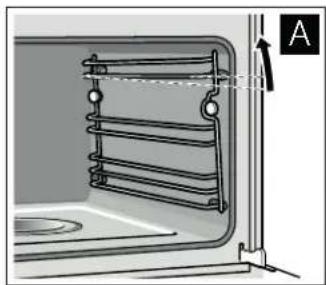
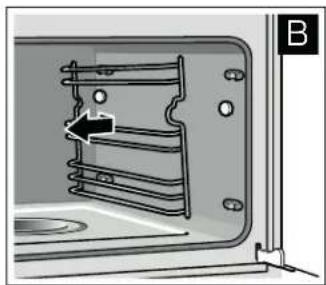
- Clean racks with dish detergent and dish sponge/brush or clean racks in the dishwasher.
Reinserting racks
- Insert the rack with the indentations facing up. The racks each only fit on one side.
- Hook rack in back and push it back until it engages (image C).
- Hook rack on the front bracket and press down until it engages and is horizontally secured in the appliance (image D).
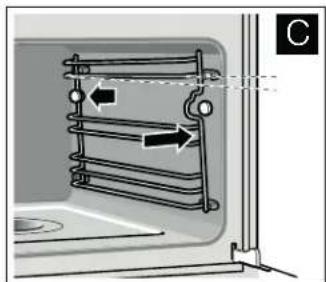
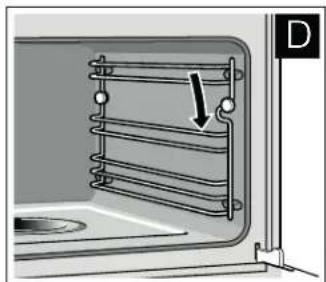
Maintenance
To Replace the Steam Oven Light Bulb
Heat-resistant 230V / 25W max. halogen bulbs with seals can be purchased through retail stores or customer service. When purchasing through customer service provide the appliance model and serial numbers.
- Turn off power to the appliance at the main power supply (breaker box).
- Rotate the cover counterclockwise.
- Remove the bulb by grasping and pulling the bulb straight back.
- Grasp the replacement bulb with a clean dry cloth. DO NOT touch the glass of the new replacement bulb with your fingers. It may cause the bulb to fail when it first lights.
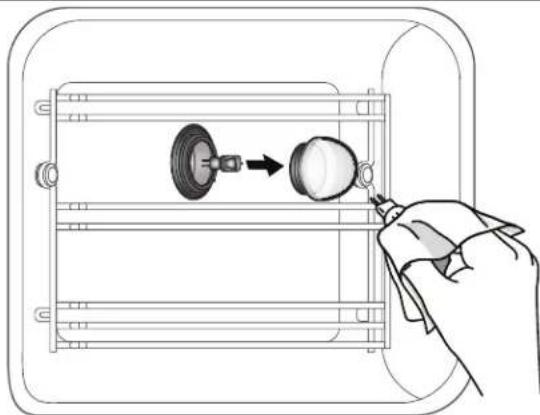
- Locate the two prongs in the ceramic holder, gently poking until the two prongs locate in the ceramic socket.
- Ensure the seals and tension ring are on the glass cover. Screw the glass cover on.
- Reconnect the appliance to power.
IMPORTANT:
DO NOT operate the appliance without the glass cover or seals.
Service
Before Calling Service
Troubleshooting
If you encounter a problem, it often will merely be something minor. Before you call customer service, consider the suggestions and instructions below.
| PROBLEM | POSSIBLE | CAUSE | TIP/SOLUTION |
| Appliance is not working Cord is not plugged in Connect appliance to power. | |||
| Power outage Check if other kitchen appliances are working. | |||
| Circuit breaker may be tripped. Reset breaker. | |||
| Faulty operation Turn off power to the appliance at the main power supply (fuse or breaker box) and turn it back on after approximately 10 seconds. | |||
| Appliance does not start Appliance door is not closed all the way. Close the appliance door. | |||
| Water tank empties without any apparent reason. Evaporator dish is overflowing. | Water tank was not closed properly. Close the tank lid until it clearly snaps into place. | ||
| Tank lid seal is dirty. Clean the seal. | |||
| Tank lid seal is not functioning. A new water tank may be purchased through customer service. | |||
| Evaporator dish has been boiled dry even though the water tank is full | Water tank was not inserted correctly. Slide in the water tank until it locks into place. | ||
| Supply line is clogged. | Descale appliance. | ||
| A "plop" noise can be heard when cooking | Temperature change affecting frozen food and caused by water vapor. | This is normal. | |
| Steam escapes from the vent openings when cooking | This is normal. | ||
| Appliance no longer produces steam correctly | The appliance needs to be descaled. | Descale appliance. | |
Data Rating Label
The data rating label shows the model and serial number. Refer to the data rating label on the appliance when requesting service. The data rating label is located behind the door.
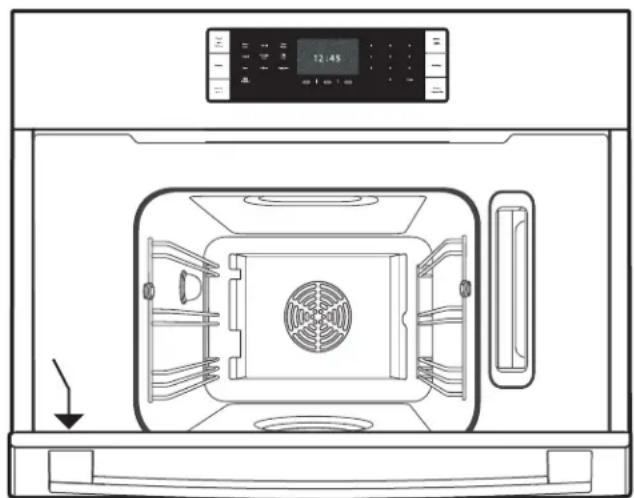
Service Information
Repairs should only be done by a trained servicer. Improper repair of your appliance may result in risk of severe physical injury or death.
To reach a service representative, see the contact information at the front of the manual. Please be prepared with the information printed on your product data plate when calling.
For handy reference, copy the information below from the data rating plate. Keep your invoice for Warranty validation.
MODEL NUMBER
SERIAL NUMBER
DATE OF PURCHASE
Also, enter this information on the Product Registration Form included with this product.
Register your BSH product to ensure timely service and access to your product related information. You may register your product through one of the following ways:
- Mail in the completed Registration card.
- Register your product online at www.bosch-home.com/us/.
Statement of Limited Product Warranty
What this Warranty Covers & Who it Applies to
The limited warranty provided by BSH Home Appliances Corporation (BSH) in this Statement of Limited Product Warranty applies only to the Bosch appliance sold to you, the first using purchaser, provided that the Product was purchased:
- For your normal, household (non-commercial) use, and has in fact at all times only been used for normal household purposes.
- New at retail (not a display, "as is", or previously returned model), and not for resale, or commercial use.
- Within the United States or Canada, and has at all times remained within the country of original purchase.
The warranties stated herein apply only to the first purchaser of the Product and are not transferable.
Please make sure to return your registration card; while not necessary to effectuate warranty coverage, it is the best way for BSH to notify you in the unlikely event of a safety notice or product recall.
How Long the Warranty Lasts
BSH warrants that the Product is free from defects in materials and workmanship for a period of three hundred sixty-five days (365) days from the date of purchase. The foregoing timeline begins to run upon the date of purchase, and shall not be stalled, tolled, extended, or suspended, for any reason whatsoever.
This Product is also warranted to be free from cosmetic defects in material and workmanship (such as scratches of stainless steel, paint/porcelain blemishes, chips, dents, or other damage to the finish of the Product), for a period of thirty (30) days from the date of purchase or closing date for new construction. This cosmetic warranty excludes slight color variations due to inherent differences in painted and porcelain parts, as well as differences caused by kitchen lighting, product location, or other similar factors. This cosmetic warranty specifically excludes any display, floor, "As Is", or "B" stock appliances.
Repair/Replace as Your Exclusive Remedy
During this warranty period, BSH or one of its authorized service providers will repair your Product without charge to you (subject to certain limitations stated herein) if your Product proves to have been manufactured with a defect in materials or workmanship. If reasonable attempts to repair the Product have been made without success, then BSH will replace your Product (upgraded models may be available to you, in the sole discretion of BSH, for an additional charge). All removed parts and components shall become the property of BSH at its sole option. All replaced and/or repaired parts shall assume the identity of the original part for purposes of this warranty and this warranty shall not be extended with respect to such parts. BSH's sole liability and responsibility hereunder is to repair manufacturer-defective Product only, using a BSH-authorized service provider during normal business hours. For safety and property damage concerns, BSH highly recommends that you do not attempt to repair the Product yourself, or use an un-authorized servicer; BSH will have no responsibility or liability for repairs or work performed by a non-authorized servicer. If you choose to have someone other than an authorized service provider work on your Product, THIS WARRANTY WILL AUTOMATICALLY BECOME NULL AND VOID. Authorized service providers are those persons or companies that have been specially trained on BSH products, and who possess, in BSH's opinion, a superior reputation for customer service and technical ability (note that they are independent entities and are not agents, partners, affiliates or representatives of BSH). Notwithstanding the foregoing, BSH will not incur any liability, or have responsibility, for the Product if it is located in a remote area (more than 100 miles from an authorized service provider) or is reasonably inaccessible, hazardous, threatening, or treacherous locale, surroundings, or environment; in any such event, if you request, BSH would still pay for labor and parts and ship the parts to the nearest authorized service provider, but you would still be fully liable and responsible for any travel time or other special charges by the service company, assuming they agree to make the service call.
Out of Warranty Product
BSH is under no obligation, at law or otherwise, to provide you with any concessions, including repairs, pro-rates, or Product replacement, once this warranty has expired.
Warranty Exclusions
The warranty coverage described herein excludes all defects or damage that are not the direct fault of BSH, including without limitation, one or more of the following:
- Use of the Product in anything other than its normal, customary and intended manner (including without limitation, any form of commercial use, use or storage of an indoor product outdoors, use of the Product in conjunction with air or water-going vessels).
- Any party's willful misconduct, negligence, misuse, abuse, accidents, neglect, improper operation, failure to maintain, improper or negligent installation, tampering, failure to follow operating instructions, mishandling, unauthorized service (including self-performed "fixing" or exploration of the appliance's internal workings).
- Adjustment, alteration or modification of any kind.
- A failure to comply with any applicable state, local, city, or county electrical, plumbing and/or building codes, regulations, or laws, including failure to install the product in strict conformity with local fire and building codes and regulations.
- Ordinary wear and tear, spills of food, liquid, grease accumulations, or other substances that accumulate on, in, or around the Product.
- Any external, elemental and/or environmental forces and factors, including without limitation, rain, wind, sand, floods, fires, mud slides, freezing temperatures, excessive moisture or extended exposure to humidity, lightning, power surges, structural failures surrounding the appliance, and acts of God.
In no event shall BSH have any liability or responsibility whatsoever for damage to surrounding property, including cabinetry, floors, ceilings, and other structures or objects around the Product. Also excluded from this warranty are products on which the serial numbers have been altered, defaced, or removed; service visits to teach you how to use the Product, or visits where there is nothing wrong with the Product; correction of installation problems (you are solely responsible for any structure and setting for the Product, including all electrical, plumbing or other connecting facilities, for proper foundation/flooring, and for any alterations including without limitation cabinetry, walls, floors, shelving, etc.); and resetting of breakers or fuses.
TO THE EXTENT ALLOWED BY LAW, THIS WARRANTY SETS OUT YOUR EXCLUSIVE REMEDIES WITH RESPECT TO PRODUCT, WHETHER THE CLAIM ARISES IN CONTRACT OR TORT (INCLUDING STRICT LIABILITY, OR NEGLIGENCE) OR OTHERWISE. THIS WARRANTY IS IN LIEU OF ALL OTHER WARRANTIES, WHETHER EXPRESS OR IMPLIED. ANY WARRANTY IMPLIED BY LAW, WHETHER FOR MERCHANTABILITY OR FITNESS FOR A PARTICULAR PURPOSE, OR OTHERWISE, SHALL BE EFFECTIVE ONLY FOR THE PERIOD THAT THIS EXPRESS LIMITED WARRANTY IS EFFECTIVE. IN NO EVENT WILL THE MANUFACTURER BE LIABLE FOR CONSEQUENTIAL, SPECIAL, INCIDENTAL, INDIRECT, "BUSINESS LOSS", AND/OR PUNITIVE DAMAGES, LOSSES, OR EXPENSES, INCLUDING WITHOUT LIMITATION TIME AWAY FROM WORK, HOTELS AND/OR RESTAURANT MEALS, REMODELLING EXPENSES IN EXCESS OF DIRECT DAMAGES WHICH ARE DEFINITIVELY CAUSED EXCLUSIVELY BY BSH, OR OTHERWISE. SOME STATES DO NOT ALLOW THE EXCLUSION OR LIMITATION OF INCIDENTAL OR CONSEQUENTIAL DAMAGES, AND SOME STATES DO NOT ALLOW LIMITATIONS ON HOW LONG AN IMPLIED WARRANTY LASTS, SO THE ABOVE LIMITATIONS MAY NOT APPLY TO YOU. THIS WARRANTY GIVES YOU SPECIFIC LEGAL RIGHTS, AND YOU MAY ALSO HAVE OTHER RIGHTS WHICH VARY FROM STATE TO STATE.
No attempt to alter, modify or amend this warranty shall be effective unless authorized in writing by an officer of BSH.
We reserve the right to make changes in the product or this manual without notification.
About this guide .... 1
Safety 2
Desserts, compotes. 23
1901 Main Street, Suite 600
Irvine, CA 92614
Questions?
1-800-944-2904
www.bosch-home.com/us
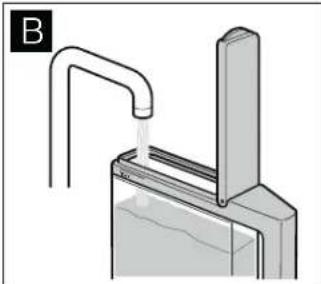
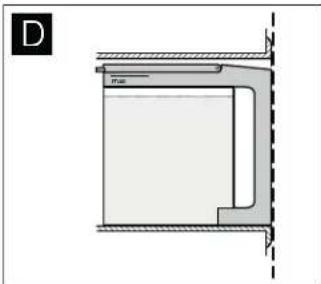
EMPTY THE WATER TANK AFTER EACH USE.
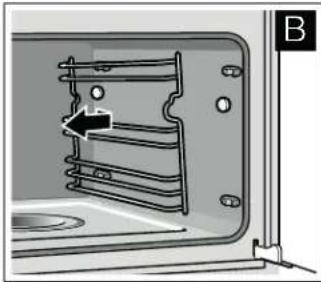

Maintenance
IMPORTANT:
Service information
1901 Main Street, Suite 600
Irvine, CA. 92614
Questions?
1-800-944-2904
www.bosch-home.com/us
Perforated baking pan, medium (CS1XLPH)
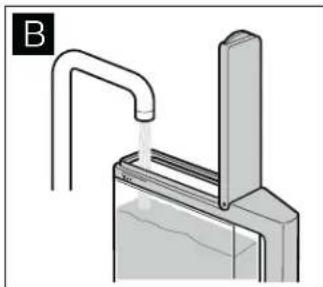
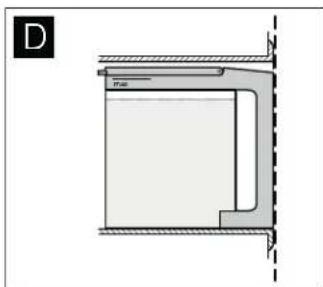
EMPTY THE WATER TANK AFTER EACH USE.
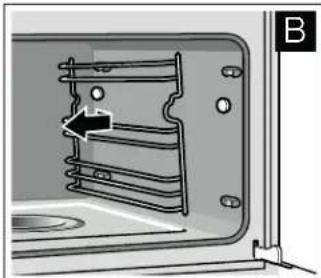
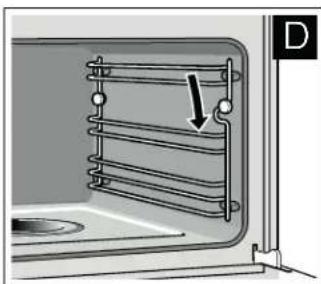
Maintenance
We realize you have made a considerable investment in your appliance. We are dedicated to supporting you and your appliance in any way possible.
Please don't hesitate to contact our Customer Support Team if you have any questions or in the unlikely event that your appliance needs service. We are ready to assist you.
USA:
1-800-944-2904
www.bosch-home.com/us
Canada:
1-800-944-2904
www.bosch-home.ca
Parts & Accessories
Filters, descalers, stainless steel conditioners, parts and more can be purchased in the BOSCH Accessories & Parts Store or by phone.
USA:
www.bosch-eshop.us
Canada:
Marcone 800-287-1627
or
Reliable Parts 800-663-6060
Maintenance
www.thermador-eshop.com
Canada:
Marcone 800-287-1627
or
Reliable Parts 800-663-6060
Maintenance
www.thermador-eshop.com
Canada:
Marcone 800-287-1627
or
Reliable Parts 800-663-6060

BOSCH
Invented for life


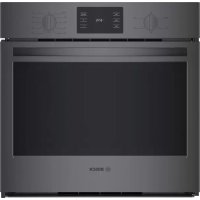
- BUILT-IN STEAM CONVECTION OVEN
- ABOUT THIS MANUAL
- SAFETY
- GETTING STARTED
- PARTS AND ACCESSORIES
- BEFORE FIRST USE
- WATER TANK
- SET THE CLOCK
- SETTING WATER HARDNESS LEVEL
- CLEAN USING THE STEAM MODE
- CALIBRATION
- BASIC OVEN SETTINGS
- OPERATION
- START COOKING
- STEAM OVEN MODES
- TEMPERATURE SETTING FOR EACH MODE
- GETTING THE MOST OUT OF YOUR STEAM
- OVEN
- GENERAL TIPS
- COOKING RECOMMENDATIONS
- CLEANING AND MAINTENANCE
- CLEANING
- MAINTENANCE
- SERVICE
- BEFORE CALLING SERVICE
- LIMITED PRODUCT WARRANTY
- CUSTOMER SUPPORT, ACCESSORIES
- PARTS ...... BACK PAGE
- QUESTIONS
- WE LOOK FORWARD TO HEARING FROM YOU
- HOW THIS MANUAL IS ORGANIZED
- THE MANUAL CONSISTS OF THE FOLLOWING SECTIONS
- SAFETY DEFINITIONS
- WARNING
- CAUTION
- IMPORTANT SAFETY INSTRUCTIONS READ AND SAVE THESE INSTRUCTIONS
- BEFORE YOU BEGIN
- ELECTRICAL SHOCK HAZARD
- SAFETY NOTES
- PROPER INSTALLATION AND MAINTENANCE
- RISK OF BURNS
- RISK OF FIRE
- CAUSES OF DAMAGE
- STATE OF CALIFORNIA PROPOSITION 65 WARNINGS
- OVEN INTERIOR
- OVEN ACCESSORIES
- ADDITIONAL ACCESSORIES
- BEFORE USING THE APPLIANCE FOR THE FIRST TIME
- IMPORTANT NOTES ABOUT THE WATER USED TO FILL THE TANK
- FILL THE WATER TANK
- EMPTY THE WATER TANK AFTER EACH USE
- WATER LEVEL WARNINGS
- NONE: TANK FULL
- WATER LEVEL IS LOW: TANK WITH WATER
- TANK IS EMPTY: TANK IS WITHOUT WATER
- TO SET THE CLOCK
- FOR DAYLIGHT SAVINGS TIME FOLLOWERS
- SETTING THE WATER HARDNESS LEVEL
- CLEAN WITH STEAM MODE BEFORE FIRST USE
- AUTOMATIC CALIBRATION
- CALIBRATING THE STEAM OVEN
- CLEAN THE ACCESSORIES
- ADJUST SETTINGS
- SETTING OPTIONS
- NOTE
- PREHEATING THE OVEN
- RACK POSITIONS
- TO OPERATE THE OVEN BY SETTING THE MODE FIRST
- TO OPERATE THE OVEN BY SETTING THE TEMPERATURE FIRST
- TO EDIT OVEN SETTINGS DURING OPERATION
- CHANGE TO A NEW COOKING MODE DURING OPERATION
- CHANGE TO A NEW TEMPERATURE DURING OPERATION
- DOOR OPERATION DURING A COOKING MODE
- AUTOMATIC OPERATION OF THE COOLING BLOWER
- OVEN CLEAR/OFF
- AFTER OVEN OPERATION
- IMPORTANT
- PANEL LOCK
- TO EXECUTE PANEL LOCK
- SETTING THE TIMERS
- KITCHEN TIMER
- SETTING THE KITCHEN TIMER IN STAND-BY STATE
- EDITING THE KITCHEN TIMER
- OVEN TIMER
- SETTING THE OVEN TIMER
- EDITING THE OVEN TIMER
- MULTIPLE TIMERS
- SETTING THE AUTOMATIC PROGRAM
- CHOOSE THE FOOD
- SET THE WEIGHT
- STEAM
- THE ADVANTAGES OF COOKING WITH STEAM
- TIPS FOR STEAMING
- STEAM CONV
- TIPS FOR STEAM CONVECTION
- DEFROST
- TIPS FOR DEFROSTING
- PROOF
- TIPS FOR PROOFING
- DISH WARMING
- REHEAT
- TIPS FOR REHEATING
- EUROPEAN CONV
- TIPS FOR CONVECTION COOKING
- KEEP WARM
- NOTES
- SLOW COOK
- COOKING TIP FOR SLOW COOKING
- CHICKEN AND VEGETABLES AUTOMATIC PROGRAMS
- GETTING THE MOST OUT OF YOUR STEAM OVEN
- OVENWARE
- DISTRIBUTE FOOD EVENLY
- DELICATE FOOD
- CONVERTING CONVENTIONAL BAKING TO CONVECTION BAKING
- COOKING AN ENTIRE MEAL
- COOKING TABLES AND TIPS
- VEGETABLES
- SIDE DISHES AND LEGUMES
- MEAT, POULTRY, FISH
- DESSERTS, COMPOTES
- CAKES AND BAKED GOODS
- DEFROSTING
- PROOFING DOUGH
- JUICE EXTRACTION
- FROZEN PRODUCTS
- NOTICE
- WHEN CLEANING THIS APPLIANCE
- CLEANING SPONGE
- STEAM CLEANING
- CLEANING PHASE (CYCLE 1, APPROXIMATELY 30 MINUTES)
- DO NOT PRESS ENTER BEFORE FOLLOWING THE INSTRUCTIONS BELOW
- RINSE PHASE (CYCLE 2, APPROXIMATELY 20 SECONDS)
- DESCALE
- DESCALE PHASE (CYCLE 1, APPROXIMATELY 30 MINUTES)
- RACK CLEANING
- REMOVING RACKS
- REINSERTING RACKS
- TO REPLACE THE STEAM OVEN LIGHT BULB
- TROUBLESHOOTING
- DATA RATING LABEL
- SERVICE INFORMATION
- MODEL NUMBER
- SERIAL NUMBER
- DATE OF PURCHASE
- STATEMENT OF LIMITED PRODUCT WARRANTY
- WHAT THIS WARRANTY COVERS & WHO IT APPLIES TO
- HOW LONG THE WARRANTY LASTS
- REPAIR/REPLACE AS YOUR EXCLUSIVE REMEDY
- OUT OF WARRANTY PRODUCT
- WARRANTY EXCLUSIONS
- PARTS & ACCESSORIES
- BOSCH
- INVENTED FOR LIFE
Brand : BOSCH
Model : HSLP451UC
Category : Built-in oven