ManualGo.com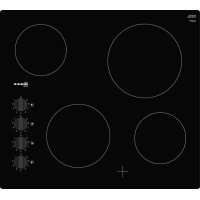
T16CK40X0 - Cooker NEFF - Free user manual and instructions
Find the device manual for free T16CK40X0 NEFF in PDF.



Download the instructions for your Cooker in PDF format for free! Find your manual T16CK40X0 - NEFF and take your electronic device back in hand. On this page are published all the documents necessary for the use of your device. T16CK40X0 by NEFF.
USER MANUAL T16CK40X0 NEFF
- Table of contents 1 Safety p. 16
- 2 Preventing material damage p. 17
- 3 Environmental protection and saving energy p. 18
- 4 Familiarising yourself with your appliance p. 19
- 5 Basic operation p. 19
- 6 Cleaning and servicing p. 20
- 7 Disposal p. 21
- 8 Customer Service 1 Safety Observe the following safety instructions. 1.1 General information ¡ Read this instruction manual carefully. ¡ Keep the instructions, the appliance pass and the product information safe for future reference or for the next owner. ¡ Do not connect the appliance if it has been damaged in transit. 1.2 Intended use Only a licensed professional may connect ap- pliances without plugs. Damage caused by in- correct connection is not covered under the warranty. Only use this appliance: ¡ To prepare meals and drinks. ¡ Under supervision. Never leave the appli- ance unattended when cooking for short periods. ¡ In private households and in enclosed spaces in a domestic environment. ¡ Up to an altitude of max. 2000m above sea level. Do not use the appliance: ¡ With an external timer or a separate remote control. This does not apply if operation with appliances included in EN 50615 is switched off. 1.3 Restriction on user group This appliance may be used by children aged 8 or over and by people who have reduced physical, sensory or mental abilities or inad- equate experience and/or knowledge, provided that they are supervised or have been instructed on how to use the appliance safely and have understood the resulting dangers. Children must not play with the appliance. Children must not perform cleaning or user maintenance unless they are at least 15 years old and are being supervised. Keep children under the age of 8 years away from the appliance and power cable. 1.4 Safe use WARNING‒Risk of fire! Hot oils and fats ignite very quickly. p. 21
Never leave hot oil or fat unattended.
Never use water to put out burning oil or fat.
Switching off the hotplate.
Extinguish flames carefully using a lid, fire blanket or something similar. The hotplates become very hot.
Do not store any objects on the hob. The appliance will become hot.
Do not keep combustible objects or aero- sol cans in drawers directly underneath the hob. The hob switches off automatically and can no longer be operated. It may switch on unin- tentionally at a later point.
Switch off the circuit breaker in the fuse box.
Call the after-sales service. Hob covers can cause accidents, for example due to overheating, catching fire or materials shattering.
Do not use hob covers. WARNING‒Risk of burns! The hotplates and surrounding area (particu- larly the hob surround, if fitted) become very hot.
Keep children at a safe distance. The hotplate heats up but the display does not work.
Switch off the circuit breaker in the fuse box.
Call the after-sales service. Unsuitable safety devices or child hob guards may result in accidents.
Only use safety devices, such as child hob guards, which have been approved by us.Preventing material damage en
The appliance becomes hot during operation.
Allow the appliance to cool down before cleaning. WARNING‒Risk of electric shock! Incorrect repairs are dangerous.
Repairs to the appliance should only be carried out by trained specialist staff.
If the power cord of this appliance is dam- aged, it must be replaced with a special connection cable, which is available from the manufacturer or his Customer Service. If the appliance or the power cord is dam- aged, this is dangerous.
Never operate a damaged appliance.
Never operate an appliance with a cracked or fractured surface.
"Call customer services." →Page21 An ingress of moisture can cause an electric shock.
Do not use steam- or high-pressure clean- ers to clean the appliance. The insulation on cables of electrical appli- ances may melt if it touches hot parts of the appliance.
Never bring electrical appliance cables into contact with hot parts of the appliance. WARNING‒Risk of injury! Saucepans may suddenly jump due to liquid between the saucepan base and the hotplate.
Always keep hotplates and saucepan bases dry. WARNING‒Risk of suffocation! Children may put packaging material over their heads or wrap themselves up in it and suffocate.
Keep packaging material away from chil- dren.
Do not let children play with packaging ma- terial. Children may breathe in or swallow small parts, causing them to suffocate.
Keep small parts away from children.
Do not let children play with small parts. 2 Preventing material damage ATTENTION! Rough pot and pan bases will scratch the ceramic.
Never place empty pans on a heated hotplate or al- low to boil dry. Incorrectly positioned cookware can cause the appli- ance to overheat.
Never place hot pots or pans on the controls or the hob surround. Damage can occur if hard or pointed objects fall onto the hob.
Do not let hard or pointed objects fall onto the hob. Non heat-resistant materials will melt on heated hot- plates.
Do not use aluminium foil or plastic containers. 2.1 Overview of the most common damage Here you can find the most common types of damage and tips on how to avoid them. Damage Cause Measure Stains Food boiling over Remove boiled-over food immediately with a glass scraper. Stains Unsuitable cleaning products Only use cleaning products that are suitable for glass ceramic. Scratch
Salt, sugar or sand Do not use the hob as a work surface or storage space. Scratch
Rough pot or pan bases Check your cookware. Discol- ouration Unsuitable cleaning products Only use cleaning products that are suitable for glass ceramic. Discol- ouration Pan abrasion, e.g. aluminium Lift pots and pans to move on the hob. Blisters Sugar or food with a high sugar content Remove boiled-over food immediately with a glass scraper.en Environmental protection and saving energy
3 Environmental protection and saving energy 3.1 Disposing of packaging The packaging materials are environmentally compat- ible and can be recycled.
Sort the individual components by type and dispose of them separately. 3.2 Saving energy If you follow these instructions, your appliance will use less energy. Select the cooking zone to match the size of your pan. Centre the cookware on the hob. Use cookware whose base diameter is the same dia- meter as the hotplate. Tip:Cookware manufacturers often give the upper diameter of the saucepan. It is often larger than the base diameter.
Unsuitable cookware or incompletely covered cook- ing zones consume a lot of energy. Cover saucepans with suitable lids.
Cooking without a lid consumes far more energy. Lift lids as infrequently as possible.
When you lift a lid, a lot of energy escapes. Using a glass lid
You can see into the pan through a glass lid without having to lift it. Use pots and pans with flat bases.
Uneven bases increase energy consumption. Use cookware suited to the quantity of food.
Large items of cookware containing little food need more energy to heat up. Cook with little water.
The more water contained in cookware, the more energy is required to heat it up. Turn down to a lower heat setting early on. Use a suit- able ongoing cooking setting to continue cooking.
If you continue cooking with an ongoing cooking setting that is too high, you'll waste energy Take advantage of the hob's residual heat. With longer cooking times switch off the hotplate 5-10minutes before the end of cooking.
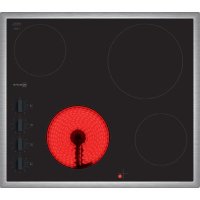
4 Familiarising yourself with your appliance 4.1 Control panel You can use the control panel to configure all functions of your appliance and to obtain information about the operating status. Hotplate controls The hotplate controls are permanently fixed in place. They must not be removed. Forcibly removing the hot- plate controls leads to them being destroyed. 4.2 Hotplates You can find an overview of the different activations of the hotplates here. If you operate the activations, the relevant displays light up. Hotplate Activating and deactivating Single-circuit hotplate Dual-circuit hotplate Turn the hotplate switch to the right until . Set the heat setting. Switching off: Turn the hot- plate switch to 0 and reset. Never turn the hotplate switch past the symbol to
Notes ¡ Dark areas in the glow pattern of the hotplate are part of the technical design. They do not affect the functionality of the hotplate. ¡ The hotplate regulates the temperature by switching the heat on and off. The heat may also switch on and off when on the highest setting. – This protects easily damaged components from overheating. – The appliance is protected from electrical over- load. – Better cooking results are achieved. ¡ With multi-circuit hotplates, the heating of the inner filament circuits and the heating of the activations may switch on and off at different times. 4.3 Hotplate display and residual heat indicator The hob has a hotplate display and a residual heat in- dicator. The display lights up when a hotplate is warm. Display Meaning Hotplate display Lights up during operation, shortly after switching on. Residual heat indic- ator Lit up after cooking when the hotplate is still warm. Note:You can keep small dishes warm or melt cooking chocolate. 5 Basic operation 5.1 Switching the hob on or off You can switch the hob on and off with the hotplate switch. 5.2 Setting the hotplates You can use the hotplate control to adjust the heat out- put of the hotplate. Heat setting 1 Lowest setting 9 Highest setting The symbol in the display panel indicates the hotplate which the display refers to, e.g. for the right rear hot- plate. 5.3 Recommended cooking settings You can find an overview of different foods with appro- priate heat settings here. The cooking time will vary depending on the type, weight, thickness and quality of the food. The ongoing cooking setting depends on the cookware used.en Cleaning and servicing
Cooking tips ¡ To bring food to the boil, use heat setting 9. ¡ Stir thick liquids occasionally. ¡ Food that needs to be seared quickly or that initially loses a lot of liquid during frying should be fried in small portions. ¡ "Tips for saving energy when cooking." →Page18 Melting Food Ongoing cooking setting Ongoing cooking time in minutes Butter, gelatine 1 - Heating or keeping warm Stew, e.g. lentil stew 1 - Milk
Bring the water to the boil with the lid on.
Continue to cook the dish without a lid. Boiling, steaming or braising Rice with double the volume of water 3 15-30 Potatoes boiled in their skin 3-4 25-30 Boiled potatoes 3-4 15-20 Pasta, noodles 1, 2 5 6-10 Stew, soup 3-4 15-60 Vegetables, fresh or frozen 3-4 10-20 Food in a pressure cooker 3-4 -
Bring the water to the boil with the lid on.
Continue to cook the dish without a lid. Stewing Beef olives 3-4 50-60 Pot roast 3-4 60-100 Goulash 3-4 50-60 Frying with little oil Fry food without a lid. Escalope, plain or breaded 6-7 6-10 Chops, plain or breaded
6-7 8-12 Steak, 3cm thick 7-8 8-12 Fish or fish fillet, plain or breaded 4-5 8-20 Fish or fish fillet, breaded and frozen, e.g. fish fingers 6-7 8-12 Stir fry, frozen 6-7 6-10 Pancakes 5-6 -
Turn the dish several times. 6 Cleaning and servicing To keep your appliance working efficiently for a long time, it is important to clean and maintain it carefully. 6.1 Cleaning products You can obtain suitable cleaning products and glass scrapers from customer service, the online shop or a retailer. ATTENTION! Unsuitable cleaning products may damage the sur- faces of the appliance.
Never use unsuitable cleaning products. Unsuitable cleaning products ¡ Undiluted detergent ¡ Detergent intended for dishwashers ¡ Abrasive cleaners ¡ Aggressive cleaning products such as oven spray or stain remover ¡ Abrasive sponges ¡ High-pressure or steam jet cleaners 6.2 Cleaning the glass ceramic Clean the hob after every use to stop cooking residues from getting burnt on. Note:"Note the information on unsuitable cleaning products." →Page20 Requirement:The hob has cooled down.
Remove heavy dirt using a glass scraper.
Clean the hob with a cleaning product for glass ceramic. Follow the cleaning instructions on the product packaging. Tip:You can achieve good cleaning results if you use a special sponge for glass ceramic. 6.3 Cleaning the hob surround Clean the hob frame after use if dirty or stained. Notes ¡ "Note the information on unsuitable cleaning products." →Page20 ¡ Do not use the glass scraper.
Clean the hob frame with hot soapy water and a soft cloth. Wash new sponge cloths thoroughly before use.Disposal en
Dry with a soft cloth. 7 Disposal Find out here how to dispose of old appliances cor- rectly. 7.1 Disposing of old appliance Valuable raw materials can be reused by recycling.
Dispose of the appliance in an environmentally friendly manner. Information about current disposal methods are available from your specialist dealer or local author- ity. This appliance is labelled in accord- ance with European Directive 2012/19/EU concerning used elec- trical and electronic appliances (waste electrical and electronic equip- ment - WEEE). The guideline determines the frame- work for the return and recycling of used appliances as applicable throughout the EU. 8 Customer Service If you have any queries on use, are unable to rectify faults on the appliance yourself or if your appliance needs to be repaired, contact Customer Service. Function-relevant genuine spare parts according to the corresponding Ecodesign Order can be obtained from Customer Service for a period of at least 10 years from the date on which your appliance was placed on the market within the European Economic Area. Note:Under the terms of the manufacturer's warranty the use of Customer Service is free of charge. Detailed information on the warranty period and terms of warranty in your country is available from our after- sales service, your retailer or on our website. If you contact Customer Service, you will require the product number (E-Nr.) and the production number (FD) of your appliance. The contact details for Customer Service can be found in the enclosed Customer Service directory or on our website. 8.1 Product number (E-Nr.) and production number (FD) You can find the product number (E-Nr.) and the pro- duction number (FD) on the appliance's rating plate. The rating plate is located on the appliance certificate. Make a note of your appliance's details and the Cus- tomer Service telephone number to find them again quickly.nl Veiligheid