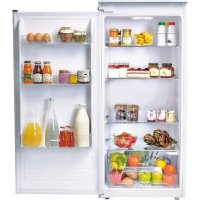
CFBL 2150 NN - Fridge CANDY - Free user manual and instructions
Find the device manual for free CFBL 2150 NN CANDY in PDF.


| Product type | Fridge-freezer |
| Brand | Candy |
| Model | CFBL 2150 NN |
| Climatic class | SN, N, ST, T (from +10°C to +43°C) |
| Refrigerant | R600a (isobutane) |
| Insulating gas | Cyclopentane |
| Interior lighting | LED |
| Refrigerator defrost | Automatic |
| Freezer defrost | Manual |
| Thermostat | Mechanical (rotary knob) |
| Door opening | Reversible (right/left) |
| Cold zone temperature indicator | Yes (on some models) |
| Supply voltage | 220-240 V ~ 50 Hz |
| Installation | Freestanding (built-in with kit) |
| Maintenance | Cleaning with warm water and mild soap; vacuum the rear grille |
| Spare parts availability | Thermostats, sensors, boards, LEDs: 7 years; door gaskets: 10 years |
| Warranty | 2 years (EU) minimum (varies by country) |
| Safety | Use by children over 8 years old under supervision; do not damage the refrigerant circuit |
| Food contact compliance | Conforms to EC Regulation No. 1935/2004 |
Frequently Asked Questions - CFBL 2150 NN CANDY
User questions about CFBL 2150 NN CANDY
0 question about this device. Answer the ones you know or ask your own.
Ask a new question about this device
Download the instructions for your Fridge in PDF format for free! Find your manual CFBL 2150 NN - CANDY and take your electronic device back in hand. On this page are published all the documents necessary for the use of your device. CFBL 2150 NN by CANDY.
USER MANUAL CFBL 2150 NN CANDY
GUIDA RAPIDA DI MANUTEZIONE E D'USO IT
MAINTENANCE AND USER'S GUIDE EN
MANUEL D'ENTRETIEN ET D'UTILISATION FR
GUIA RAPIDA DE USO Y MANTENIMIENTO ES
BEDIENUNGS- UND INSTALLATIONSANLEITUNG DE
GUIA RAPIDO DE MANUTENÇÃO E DE USO PT
HANDLEIDING VOOR ONDERHOUD EN GEBRUK NL
ΓPHΓΟΡΟΣ OΔHΓΟΣ ΣYNTHPΗΣΗΚΑΙ XΗΣΗΣ
KROTKA INSTRUKCJA KONSERWACJI I UZYTKOWANIA PL
STRUÇNY NÁVOD PRO POUŽITÍ A UDRŽBU CZ
ITALIANO pag. 1--10
Congratulations on purchasing this fridge, which has been designed using the latest technologies for an easy-to-use, environmentally friendly appliance.
We recommend you read this guide and the technical datasheet carefully to find out everything you need to know about your new fridge.
FRANÇAIS
page 21--30
SAFETY INFORMATION 12-12
INSTALLATION 13--13
OPERATION 13-13
CONSERVATION 14-14
FREEZING 15--25
DEFROSTING 15--15
MAINTENANCE AND CLEANING 16--16
ENERGYSAVINGS 16--16
AVOIDING NOISES 16--16
REVERSIBILITY OF THE DOOR 16--17
PRODUCT DIMENSION AND BUILT-IN COMPARTMENT.. 17--18
INSTALLATION OF THE APPLIANCE IN THE COLUMN.... 18--18
COPLING OF THE PANELS OF THE BUILT-IN COLUMN
OF THE APPLIANCE DOORS 19--19
PRECAUTIONS FOR THE CORRECT OPERATION 19--19
SUSPENDING USE OF THE APPLIANCE 19--19
TROUBLESHOOTING 20--20
Thank you for purchasing this product.
Before using your refrigerator, please carefully read this instruction manual in order to maximize its performance. Store all documentation for subsequent use or for other owners. This product is intended solely for household use or similar applications such as:
-
the kitchen area for personnel in shops, offices and other working environments
-
on farms, by clientele of hotels, motels and other environments of a residential type
-
at bed and breakfasts (B & B)
-
for catering services and similar applications not for retail sale.
This appliance must be used only for purposes of storage of food, any other use is considered dangerous and the manufacturer will not be responsible for any omissions. Also, it is recommended that you take note of the warranty conditions.
SAFETY INFORMATION
The refrigerator contains a refrigerant gas (R600a: isobutane) and insulating gas (cyclopentane), with high compatibility with the environment, that are, however, inflammable.
We recommend that you follow the following regulations so as to avoid situations dangerous to you:
-
Before performing any operation, unplug the power cord from the power socket.
-
The refrigeration system positioned behind and inside the refrigerator contains refrigerant. Therefore, avoid damaging the tubes.
-
If in the refrigeration system a leak is noted, do not touch the wall outlet and do not use open flames. Open the window and let air into the room. Then call a service centre to ask for repair.
-
Do not scrape with a knife or sharp object to remove frost or ice that occurs. With these, the refrigerant circuit can be damaged, the spill from which can cause a fire or damage your eyes.
-
Do not install the appliance in humid, oily or dusty places, nor expose it to direct sunlight and to water.
-
Do not install the appliance near heaters or inflammable materials.
-
Do not use extension cords or adapters.
-
Do not excessively pull or fold the power cord or touch the plug with wet hands.
-
Do not damage the plug and/or the power cord; this could cause electrical shocks or fires.
-
It is recommended to keep the plug clean, any excessive dust residues on the plug can be the cause fire.
-
Do not use mechanical devices or other equipment to hasten the defrosting process.
-
Absolutely avoid the use of open flame or electrical equipment, such as heaters, steam cleaners, candles, oil lamps and the like in order to speed up the defrosting phase.
-
Do not use or store inflammable sprays, such as spray paint, near the refrigerator. It could cause an explosion or fire.
-
Do not use electrical appliances inside the food storage compartments, unless they are of the type recommended by the manufacturer.
-
Do not place or store inflammable and highly volatile materials such as ether, petrol, LPG, propane gas, aerosol spray cans, adhesives, pure alcohol, etc. These materials may cause an explosion.
-
Do not store medicine or research materials in the refrigerator. When the material that requires a strict control of storage temperatures is to be stored, it is possible that it will deteriorate or an uncontrolled reaction may occur that can cause risks.
-
Maintain the ventilation openings in the appliance enclosure or in the built-in structure, free of obstruction.
-
Do not place objects and/or containers filled with water on the top of the appliance.
-
Do not perform repairs on this refrigerator. All interventions must be performed solely by qualified personnel.
-
This appliance can be used by children aged from 8 years and above and by persons with reduced physical, sensory or mental capabilities or with a lack of experience and knowledge, provided that they have been given adequate supervision or instruction concerning how to use the appliance in a safe way and understand the hazards involved.
Children should not play with the appliance. Cleaning and user maintenance should not be made by children without supervision.
Turning the knob fully counterclockwise, you will hear a click which corresponds to the switch-off of the product.
When the appliance is installed, the electrical cord and the current socket must be easily reached.
The socket is compatible with the plug of the appliance. If not, request replacement of the plug by an authorized technician; do not use extension cords and/or multiple connectors.
Do not touch the internal parts or frozen food with moist or wet hands as it can cause burns.
Scrapbing old appliance
By ensuring that this product is properly disposed of, you will help prevent potential negative consequences for the environment and human health, which could otherwise arise due to inappropriate waste handling of this product on reaching the end of its working life.
With proper disposal of the appliance, it is possible to recover valuable raw materials!
This appliance is marked as conforming to the European Directive 2012/19/EU on Waste of Electrical and Electronic Equipment (WEEE).
The symbol on the product indicates that this appliance may not be treated as normal household waste; it must, instead, be delivered over to the nearest collection point for the recycling of electrical and electronic equipment.
Disposal must be effectuated in accordance with the environmental regulations in force for waste disposal.
For more detailed information about treatment, recovery and recycling of this product, contact the competent public office (Department of Ecology and Environment), your home household waste disposal service, or the shop where you purchased the product.
Cut and dispose of the power cord with the plug.
Up until appropriate disposal, do not damage the tubing because they contain the refrigerant gas.
For the disposal of packing materials, follow local regulations.
WEEE contains both polluting substances (which can cause negative consequences for the environment) and basic components (which can be re-used). It is important to have WEEE subjected to specific treatments, in order to remove and dispose properly all pollutants, and recover and recycle all materials.
Individuals can play an important role in ensuring that WEEE does not become an environmental issue; it is essential to follow some basic rules:
-WEEEE should not be treated as household waste.
-
WEEE should be handed over to the relevant collection points managed by the municipality or by registered companies. In many countries, for large WEEE, home collection could be present.
-
when you buy a new appliance, the old one may be returned to the retailer who has to collect it free of charge on a one-to-one basis, as long as the equipment is of equivalent type and has the same functions as the supplied equipment.
Conformity
CE This equipment, in the parts intended to come into contact with food products, is in conformity with the requirements of EC Regulation No. CE 1935/2004. Apparatus conforms with European Directive 2004/1 08/EC, 2006/95EC and successive amendments.
INSTALLATION
WARNING:
- Do not install the appliance in a damp or wet location as this could compromise the insulation and result in leakage.
Furthermore, on the exterior of the same, condensate could accumulate - Do not place the appliance in locations outside or near sources of heat or exposed to direct sunlight.
The appliance operates properly within the range of environmental temperatures indicated:
+10 +32°C for the climatic class SN
+16 +32°C for the climatic class N
+16 +38°C for the climatic class ST
+16 +43°C for the climatic class T
(See the nameplate of the product)
- Do not place containers with liquids on top of the appliance.
- Wait at least 3 hours after final placement before placing the appliance in operation.
Electrical connection
After shipping, place the appliance vertically and wait at least 2 - 3 hours before connecting it to the electrical system. Before inserting the plug into the electrical socket, make sure that:
- The socket is earthed and in compliance with the law.
- The socket can withstand the maximum power load of the appliance, as indicated on the nameplate of the refrigerator.
- The power supply voltage is within the amounts indicated on the nameplate of the refrigerator.
The cord must not be folded or compressed. - The cord must be checked regularly and replaced solely by authorized technicians.
- The manufacturer declines any liability whenever these safety measures are not respected.
Appliance start-up
Remove all wrapping/packaging present inside the appliance and clean with water and baking soda or neutral soap.
After the installation, wait 2 - 3 hours to allow time for the refrigerator/ freezer to stabilize at normal working temperature, before placing fresh or frozen foods inside.
If the power cord becomes disconnected, wait at least five minutes before restarting the refrigerator/ freezer. At this point, the appliance is ready for use.
OPERATION
Turning On/Off (no display)
- The thermostat unit for control of the appliance is located inside of the refrigerator compartment (Fig. 1).
Rotate the thermostat knob of the thermostat beyond the "0" position. The light is on when the refrigerator door is open. Turning the knob to "0" completely turns off the product.
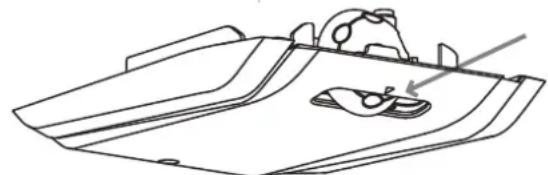
Fig.1
Temperature adjustment (no display)
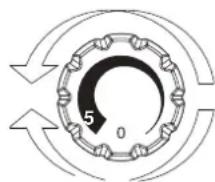
Fig. 2
- The temperature adjustment of both compartments is effected by rotating the thermostat knob (Fig. 2).
Select the desired position: - For colder temperature in the refrigerator and in the freezer, by turning towards 5.
- For temperature less cold in the refrigerator and in the freezer, by rotating in the direction of 0.
| Position Condition | |
| 1-2 | Summaer or ambient temperature between 25-35 °C |
| 3-4 | Spring, autumn or ambient temperature between 15-25 °C |
| 5 | Winter, or ambient temperature between 5-15 °C |
CONSERVATION
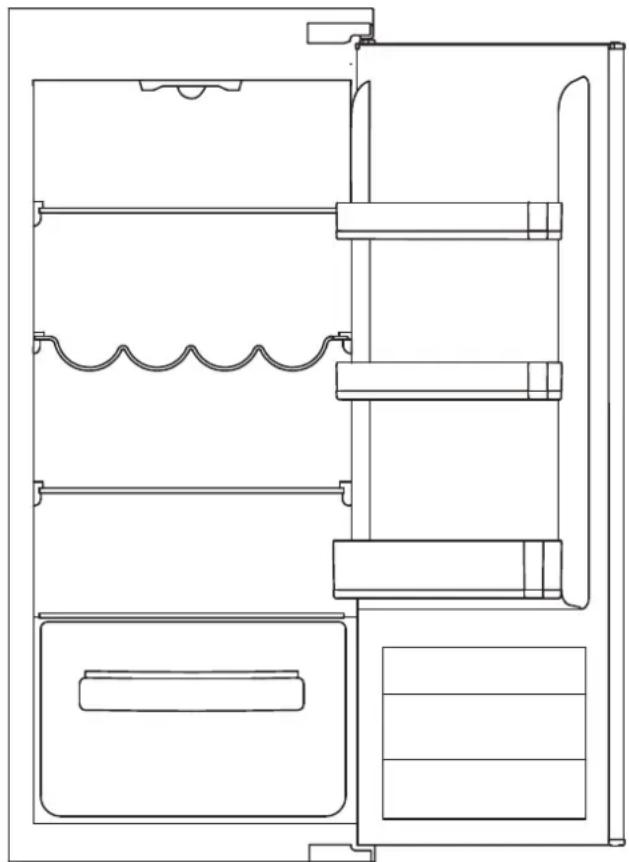
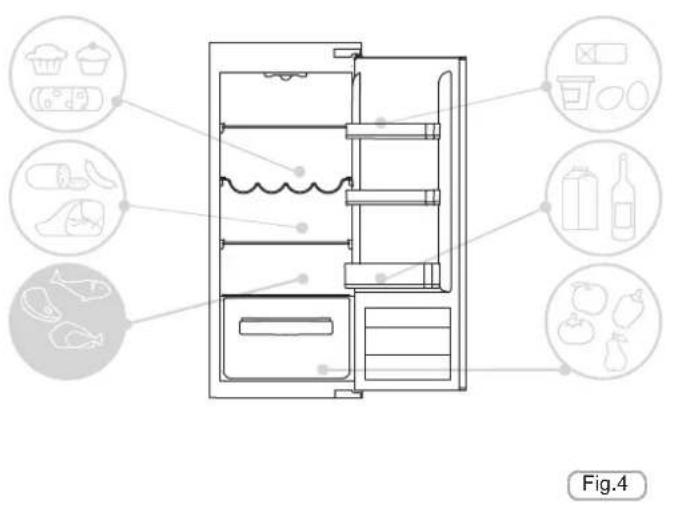
- To maintain the best flavour, nourishment and freshness of foods, it is advisable to store them in the refrigerator compartment as shown in Fig. 6 below, making sure to wrap them in aluminium or plastic sheets or in appropriate covered containers to avoid cross-contamination.
Refrigerator zone
Fruit / Vegetables
- To decrease fruit and vegetable moisture losses they must be wrapped in plastic materials such as, for example, films or bags and then inserted in the fruit/vegetable zone. In this way rapid deterioration is avoided.
FRIDGE ZONE
Indicator of the temperature in the coldest zone (not all models)
Some models are equipped with an indicator of the temperature in the refrigerator compartment in the coldest zone, for you to be able to control the average temperature.
This symbol indicates the coldest zone of the refrigerator (Fig. 5).
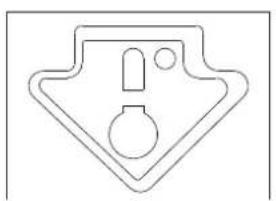
Fig.5
Check that on the indicator of the temperature, the word OK is clearly shown (Fig. 6). If the word does not appear, this means that the temperature is too high: adjust the temperature to a cooler setting and wait for about 10 hours.
Recheck the indicator: if necessary, proceed with a new adjustment.
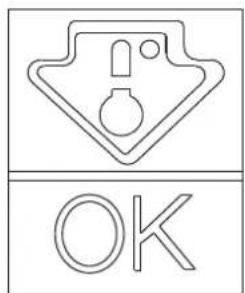
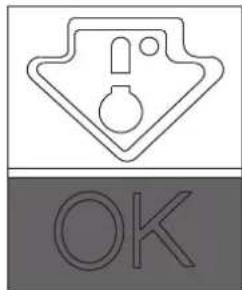
Fig. 6
NOTE: If large quantities of food are inserted or the refrigerator door frequently opened, it is normal for the indicator fails to show OK. Wait at least 10 h before adjusting the knob to a higher setting.
Freezer zone
Use the table below for the compartments

Freezing process can only occur in the compartments

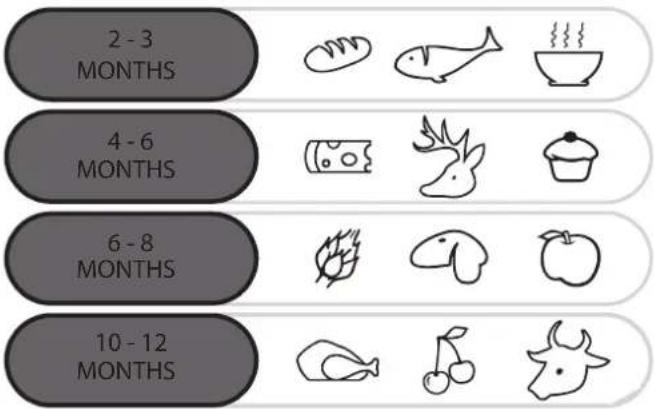
Practical recommendations
Place food on the shelves in a homogeneous manner to allow air to circulate properly and to cool it.
- Avoid contact between the food and the far end walls of the refrigerator compartment.
- Do not introduce hot foods as they can cause deterioration of existing ones and increase energy consumption.
- Remove the wrappings of foods before inserting them.
- Do not put in dishes or other containers unless previously washed.
- Do not obstruct the cold air ventilator openings with food.
- Do not cover the glass shelf of the vegetable bin to allow for proper air circulation.
- Do not store bottles in the freezer compartment as they can burst when frozen.
- In the case of prolonged power outage, keep the doors closed so that foods remain cold as long as possible.
- The installation of the appliance in a hot and humid location, with frequent door openings and storing large amounts of vegetables can cause the formation of condensate and affect the performance of the unit itself.
- To prevent excessive energy consumption, the frequent or prolonged opening of the doors is not recommended.
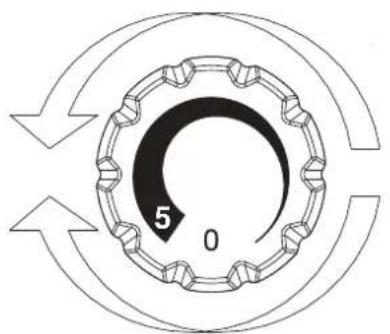
Fig.7
DEFROSTING
Defrosting the refrigerator compartment
During normal functioning, the refrigerator is automatically defrosted.
There is no need to dry the drops of water present on the rear wall or to eliminate the frost (depending on functioning).
The water is conveyed to the rear part through the drain hole found there and the heat of the compressor causes it to evaporate.
- Keep the drainage pipe (Fig. 8) clean in the refrigerator compartment to keep it free of water.
Defrosting of the fridge compartment occurs automatically in this product.
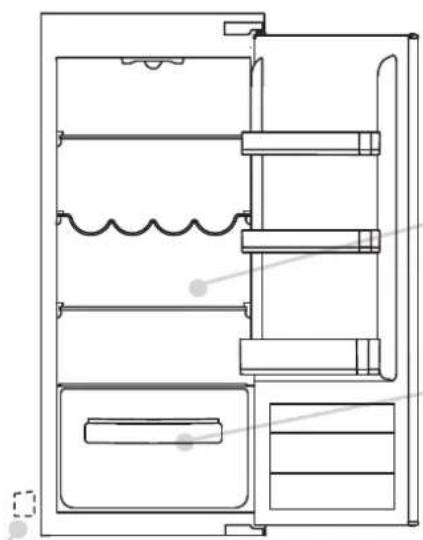
Figure 8)
A small amount of frost or drops of water on the back of the fridge compartment when the fridge is working is normal.
Make sure the water outlet is always clean and make sure foods do not touch the back or sides of the fridge compartment.
N.B. Here you will find your appliance rating plate: it includes all the data to be transmitted to the Customer Service should a fault arise.
Important: if your ambient temperature is high, the appliance may operate continuously, thus building up excessive frost on the inner wall of the fridge. In this case, turn the fridge knob to a warmer setting (1-2).
The most energy-saving configuration requires drawers, food box and shelves to be positioned in the product, please refer to the above pictures
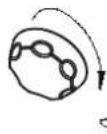
Fig.8
MAINTENANCE AND CLEANING
Lighting
LED lighting
The product is equipped with LED lights, please contact the Technical Assistance Service in case of replacement.
Compared to traditional light bulbs, the LEDs last longer and are environmentally friendly.
Cleaning
NOTICE:
- Before each operation, remove the refrigerator plug from the power socket to prevent electric shocks.
- Do not pour water directly on the outside or inside of the refrigerator itself. This could lead to oxidation and damaging of the electrical insulation.
IMPORTANT:
To prevent cracking of the inside surfaces and plastic parts, follow these suggestions:
- Wipe away any food oils adhered to plastic components.
- The internal parts, gaskets and external parts can be cleaned with a cloth with warm water and baking soda or a neutral soap. Do not use solvents, ammonia, bleach or abrasives.
- Remove the accessories, for example, the shelves, from the refrigerator and from the door. Wash in hot soapy water. Rinse and thoroughly dry.
- The back of the appliance tends to accumulate dust which can be eliminated with the use of a vacuum cleaner, after having switched off and disconnected the appliance from the electrical outlet. This provides greater energy efficiency.
ENERGY SAVINGS
For better energy savings, we suggest:
- Installing the appliance away from heat sources and not exposed to direct sunlight and in a well ventilated room.
- Avoid putting hot food into the refrigerator to avoid increasing the internal temperature and therefore causing continuous functioning of the compressor.
- Do not excessively stuff foods so as to ensure proper air circulation.
- Defrost the appliance in case there is ice (see DEFROSTING) to facilitate the transfer of cold.
- In case of absence of electrical energy, it is advisable to keep the refrigerator door closed.
- Open or keep the doors of the appliance open as little as possible
- Avoid adjusting the thermostat to temperatures too cold.
- Remove dust present on the rear of the appliance (see CLEANING).
AVOIDING NOISES
During its operation, the refrigerator emits some absolutely normal noises, such as:
HUMMING, the compressor is running.
- RUMBLINGS, RUSTLINGS and HISSING, the refrigerant is flowing through the tubes.
- TICKS and Clicks, the operation shutdown of the compressor. Small measures to r ed uce the vibration nois es:
- Containers touch each other: Avoid contact between containers and glass recipients.
- Drawers, shelves, bins vibrate: Check the proper installation of internal accessories.
NOTE:
The refrigerant gas produces noise even when the compressor is off; it is not a defect, it is normal.
If you hear a clicking sound inside the appliance, it is normal as due to expansion of the various materials.
REVERSIBILITY OF THE DOOR
The doors of the appliance can be reversed so as to allow the opening to the right or left according to exigency.
NOTE:
- Inversion of the doors must be performed by qualified technical personnel.
Inversion of the doors is not covered by the warranty.
REVERSING THE OPENING OF THE DOOR
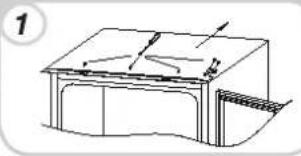
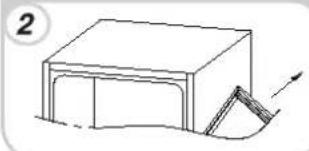
Remove the upper plate and hinge by screw driver.
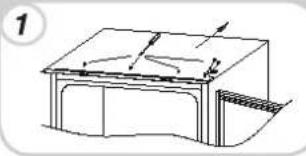
Remove the upper door.
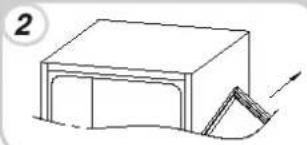
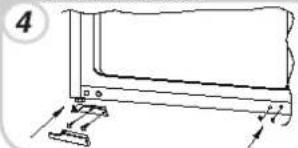
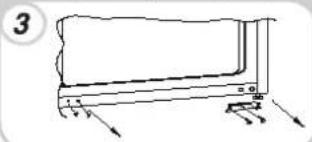
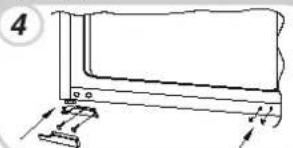
Remove the right bottom hinge and left plastic plugs, and refit them onto the opposite side.
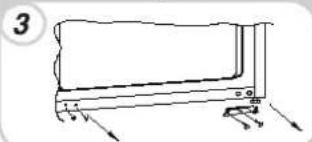
Use the spare hinge and cover from the accessories bag, and fit into the left bottom
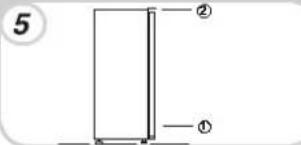
Reassemble the doors and hinges workings from bottom to top, from 1-2.
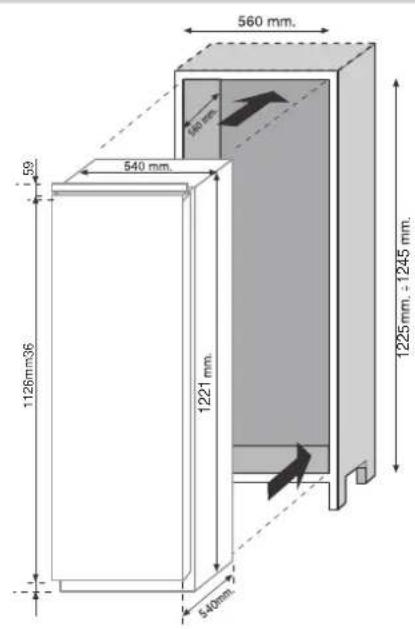
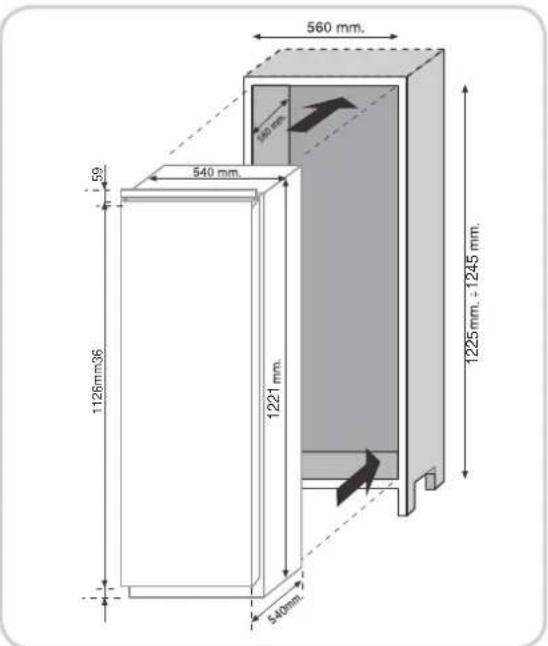
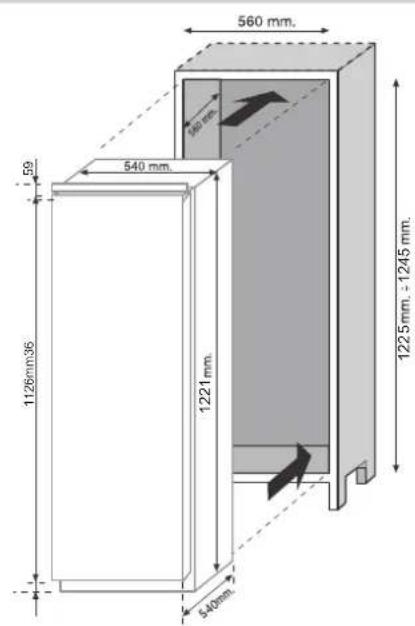
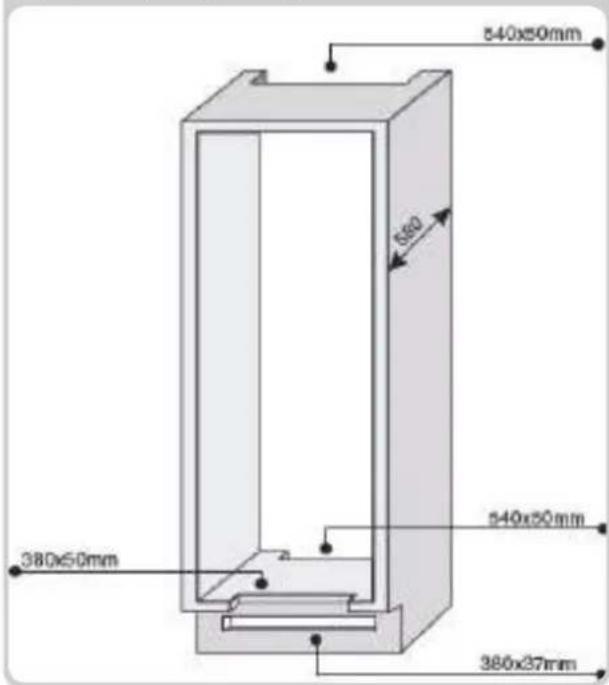
PRODUCT DIMENSIONS AND BUILT-IN COMPARTMENT
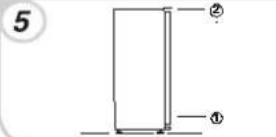
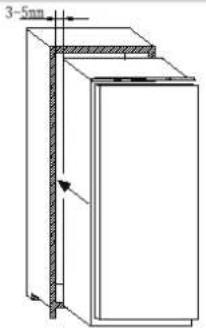
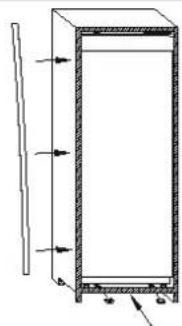
Insert the appliance into the column, placing it on the opposite site of the hinges, and make sure 3-5 mm distance gap.
1
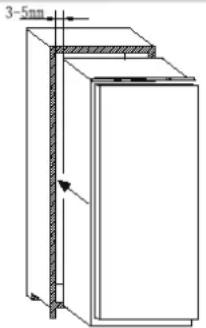
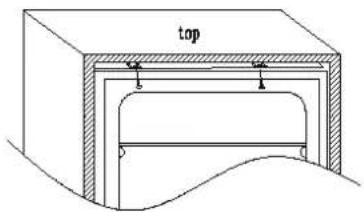
After ensuring the match between appliance door and column door, then screw the appliance upper part to the cabinet
2
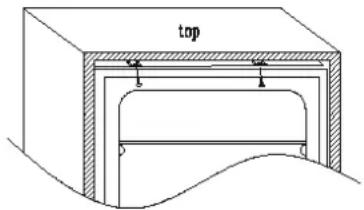
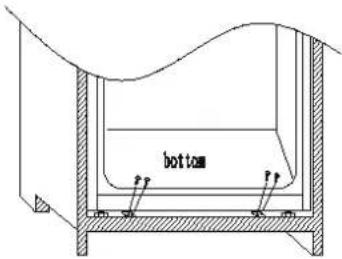
Screw the appliance lower part. Fit the seal to the appliance, cut off the
3
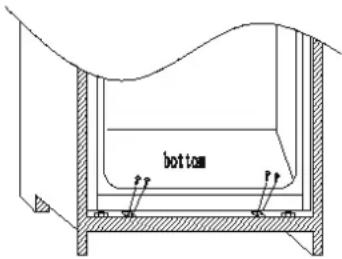
excessive part if necessary. Fit the bottom parts with plastic covers.
4
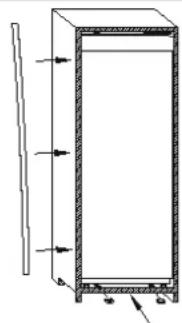
COUPLING OF THE PANELS OF THE BUILT-IN COLUMN OF THE APPLIANCE DOORS
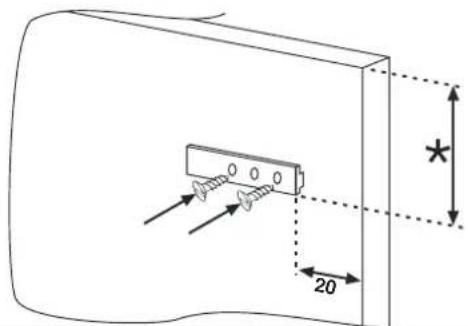
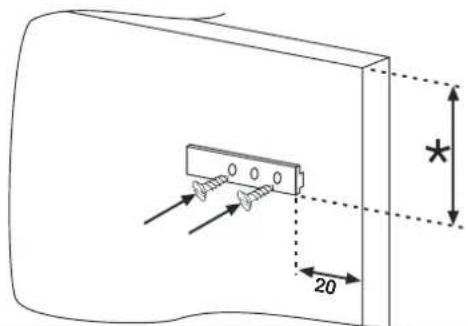
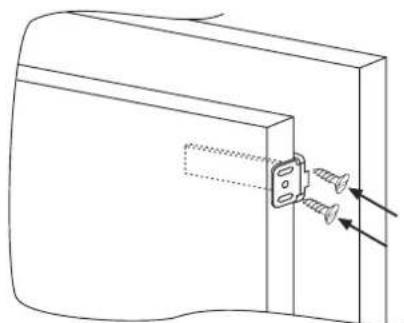
The appliance is equipped with coupling devices for the appliance doors with the column panels (loader slide).
Secure the slide in the inner part of the panel of the built-in column at the desired height and at approx. 20mm . From the outer wire of the door.
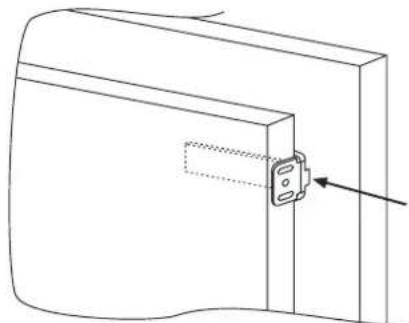
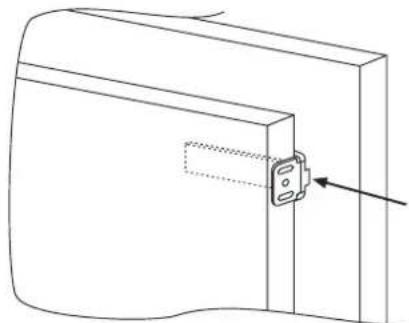
Open the doors of the built-in column and the fridge. Position the built-in loader in the slide, then fit it into the fridge door.
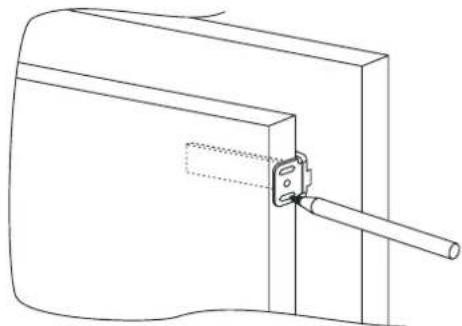
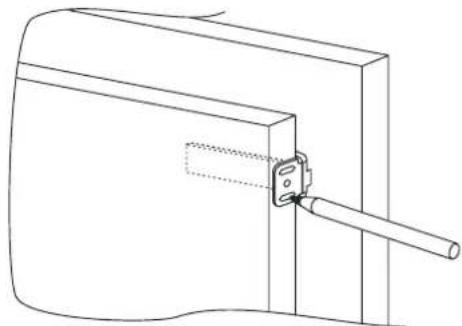
Mark the fixing points for the screws and drill with a bit of a diameter of 2.5mm.
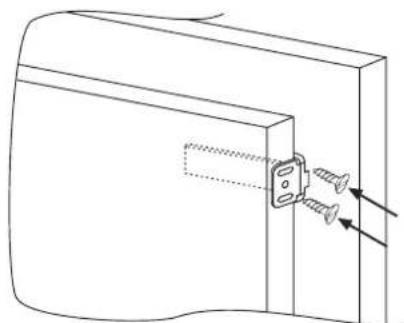
Connect the appliance door to the cabinet panel keeping the loader slots as guidelines.
PRECAUTIONS FOR THE CORRECT OPERATION
Once the product has been embedded, place the rear part of the column in contact with the wall so as to prevent access to the compressor compartment.
For the product to operate correctly it is essential to allow adequate air circulation so as to cool down the condenser located in the rear part of the appliance.
For this reason, the column must be equipped with a rear chimney, whose upper opening must not be blocked and with a front slot which will be covered with a ventilation grill.
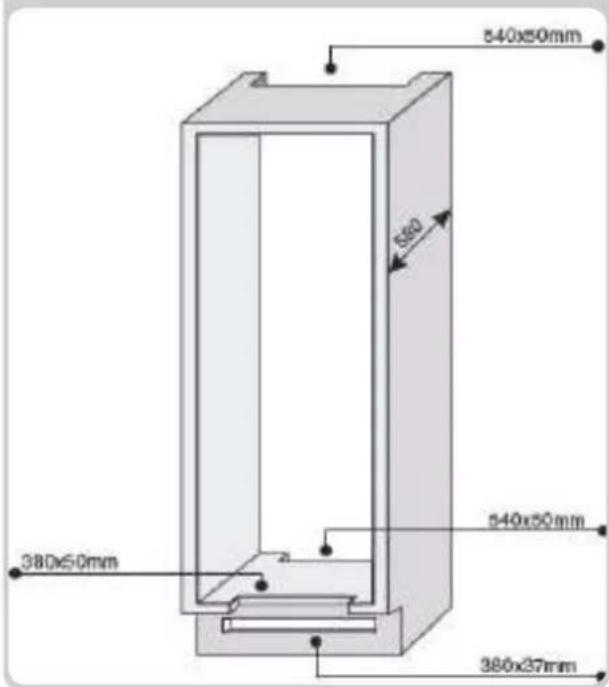
Size of the unit cut outs.
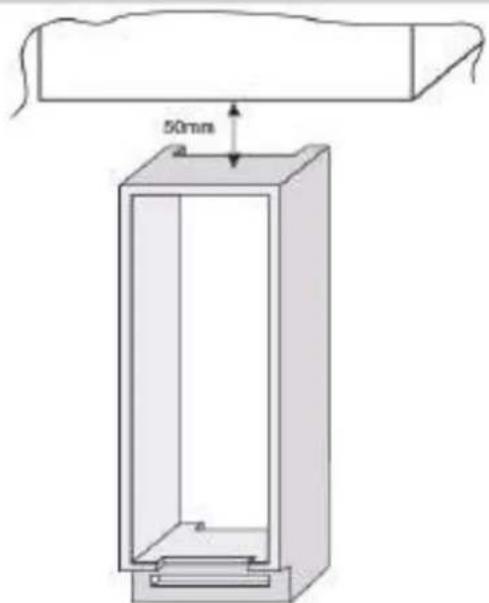
Room to leave between the unit and ceiling.
SUSPENDING USE OF THE APPLIANCE
If the appliance is not to be used for a long time:
1) Turn the appliance OFF (see Operation)
2) Extract the plug or remove the safety device.
3) Clean the appliance
4) Leave the doors of the appliance open.
TROUBLESHOOTING
CAUSEPROBLEM REMEDY
| The inside illumination light bulb does not turn on. | ·Electricity absence. | ·The power cord is not properly plugged in. ·Check whether the appliance is switched off. (see Temperature Adjustment). ·Ensure that there is a current in the house. ·Check that it is active. |
| ·Door switch is blocked. | ||
| The refrigerator and freezer do not sufficiently cool. | ·The doors are not closed. ·The doors are frequently opened | ·Check that the door and gaskets close properly. ·Avoid unnecessary opening of the doors for a period of time. ·Check the temperature setting and, if it is possible, cool even more (see Temperature adjustment) |
| ·Erroneous setting of the temperature. ·The refrigerator and freezer have been excessively filled. ·Surrounding temperature is too low. | ·Wait for the stabilization of the temperature of the refrigerator or freezer. ·Check that the ambient temperature is in accordance with what is indicated on the nameplate (see Installation). ·The power cord is not properly plugged in. ·Check whether the appliance is switched off (see Temperature adjustment) ·Ensure that in the home there is current. | |
| ·No electrical power. | ||
| The food in the refrigerator freezes. | ·Erroneous setting of the temperature. ·Food in contact with the back wall. ·The freezing of too much fresh food causes a lowering of the temperature of the refrigerator | ·Check the temperature setting (see Temperature Adjustment) and, if possible, decrease temperature setting. ·Separate the food from the back wall of the refrigerator. ·Do not exceed the maximum amount to be frozen (see Freezing). |
| The bottom of the refrigerator compartment is wet or droplets are present. | The drain tube could be clogged. | ·Clean the drain tube with a stick or the like to allow the discharge of water. |
| Presence of drops or water on the back wall of the refrigerator. | ·Normal operation of the refrigerator. | ·It is not a defect (see Defrosting). |
| Presence of water in the vegetable drawer. | ·Lack of air circulation. ·Vegetables and fruits with too much moisture. | ·Verify that your glass shelf tray vegetables are not put foods that prevent air circulation. ·Wrap the fruit and vegetable materials plastic such as, for example, films, bags or containers. |
| The motor runs continuously. | ·The doors are not closed. ·The doors are opened frequently. ·Ambient temperature is very high. | ·Make sure the doors are closed and if the seals close properly. ·Avoid unnecessary open ports for a certain period. ·Verify that the ambient temperature is in accordance with the specifications on the nameplate (see Installation). ·Set the display/thermostat a warmer temperature. ·Defrost the unit (see Defrosting). |
| ·Thickness of frost than 3mm. | ||
| The frozen food is thawing. | ·The ambient temperature range below climate class of the product. The compressor starts rarely ·The freezer door is not closed. | ·Move the unit to a warmer or heat the room. ·Make sure the door is closed and that the gasket is sealing properly. |
| WI-FI light flashes 3 sec on - 1 sec off. | ·Router off. ·Lacking connection. | ·Switch the router on. ·Reset the product (see WI-FI) |
IF YOU ARE NOT SOLVED THE PROBLEM, CONTACT THE SERVICE CENTER, PLEASE GIVE THE TYPE OF FAULT AND THE INFORMATION ON THE PLATE OF THIS APPARATUS TO INSIDE THE REFRIGERATOR COMPARTMENT:
The model of equipment.
The number of series.
CONTENU
FR
INFORMATIONS SUR LA SECURITE 22--22
INSTALLATION 23--23
FONCTIONNEMENT 23--23
CONSERVATION 24-24
CONGELATION 25-25
DEGIVRAGE 25--25
MAINTENANCE ET NETTOYAGE 26--26
ECONOMIES D'ENERGIE 26--26
DIMENSIONS DU PRODUIT ET COMPARTIMENT
ENCASTRE 27--28
INSTALLATION DE L'APPAREIL DANS LA COLONNE .... 28--28
ASSEMBLAGE DES PANNEAUX DE LA COLONNE
ENCASTREMENT DES PORTES DE L'APPAREIL 29--29
PRECAUTIONS RELATIVES AU FONCTIONNEMENT
CORRECT 29--29
SUSPENDRE L'UTILISATION DE L'APPAREIL 29--29
DEPANNAGE 30-30
DIMENSIONS DU PRODUIT ET COMPARTIMENT ENCASTRE
CAUSEPROBLEM CORRECTION
CAUSAPROBLEMA SOLUCIOn
ACOPLAMENTO DOS PAINEIS NA COLUNA EMBUTIDA
DAS PORTAS DO APARELHO 59-59
Para eliminar as embalagens, siga as regulamentacoes locais.
CAUSAPROBLEMASOLUÇAO
Aappeate Tny Tavu Tropa.
Apaipote TOV KATU SEJIVAUYTEVEK KA t a apiote piaotik Buauata, kai ToTBeHTeTe TA tAnv AITBn THeuP.
Xpnaioonate Tov avtBtO neVtea KAI KALUma Ka TPOoapOaTe Ta OTNkATOW apote ywia.
SigmaOAOJyHOte EK VEOU TIC TIOPTe KAI
TOUC MEVTEIOEAGPOI TAVW ITOPO T KAOTU, KATYN AVTIOPIO eP6A 1-2.
AIAETAEIEI NPOIONTOKAI ENQMATMENO ANAMO
EIOyTe TO uyeLO To EITINAO,UE TOUC MEVTEODECOTN AVIHTEN TLEUPA KAI ECAQALGOTAC EVA KEVO 3-5 mm.
Apoou eAeyEeTe NT yavntoia x avaeoa stic troptec Tc ouakeui kai atn th oua pot emilau, biodote To ravu peos tou ypsielou ot to viouaam.
1
2
Biodote to katoe oouyoiou. Pnoaaepoate to kaiumu aTo kyueio, koute 0oo TEPIOOeUei, ov xpeiaCetai. BALTE nAaotika kaluyata oTo katw epooc.
3
4
ENQEH TQN OYPQN TOY EINIAOY ME TIG OYPESE THE SYKEYH
H ouakeui diaotei diataeis evwons twv thupwv ncs ouokeunc me ta quaaa tns atnns (naepuaopntwns).
Aoapaiote tv aoiothnpa oTo eouepko epoc Tou pfauou nC evuaupweyn osnns OTO ETIOUHTO uOg kai TPEITAU 20mm ato TIV eEUGEPK TIAeUPA TPGTPOtac.
AvoIE TIC TIOPTES IVVauWtueveNcTnKai Tou yuyeou. ToTOBHTATE TO EVauWtueve FOPTWOT OAVOAMNTnpa, Ka KATOTIV PPOAPUATE TIV TPOTAuYeuio.
EnneWot Ta oneia opeewon yia tis biides kai avoiTe rpunEs μe Tputvdi diaepou 2,5 mm.
Evwote Tn 0upa Tns ouakeung me To pfauo Tou vouaatniou kpatwvtac ts EkykntcTou qoprtwnu ogno.
PPOEIANOIHSEIIGIA TH ΣΩΣTH AEITOYPTIA
Molis to Tpoiov Evwpatwei, ToTOnetnoe To TioW npoc nO tAnC OEtapn Me ToV Toixo Via va AtOKAeiote Tpoaon oTo diaepiaou Tou ouMTIEOT.
TIA OWTN AEITOUPYIA TO TPOIOVTOE, EIVAI ATTAPAITNO VA ETITPEYEETAPKNI KUKLOPOPA aepa WATE VA uuxetai O OUMTKUWNTNC TIOBPIOKETAI OTNIOW HPOC TNS OUKKEUNCS.
TIA TOV loyo auto, n otan npTei va diaTei eva kavai eaywnc, TOUTOIOU To TAVW epoc va evai eaeuEepo, kai n eptpoc ykottn va KAUTTEAIe oxapa eepioou.
MeyeBoG Twv ToWv Tns OoKeuIs.
| Wewétrzna ziarówka nie wiącza są. | • Brak prȩdu. | • Kabel zasilania nie jest podlaczenia prawnidowo. • Sprawdzić,czy urȩzdenie nie jest wymiłaczone (patrz Regulacja temperatuery). • Sprawdzić,czy w domu jest prȩd. • Sprawdzić,czy jest wymiłaczone. | |
| Lodówka i zamrażarka nie chłódź wystarczajćo. | • DrzewiNie są zamar一部分. • Drzewi są一部分 otwierane. • Będne ustawienie temperatuery. • Lodówka i zamrażarka zostaly nadmiemie napeńione. • Zbyt niska temperatura otoczenia. • Brak zasilania elektrycznégo. | • Sprawdzić,czy drzewi zamykajcie prawnidowo, a uzeczelka jest szczelna. • Przewi pewien czas unikaść niemioniecznego otwierania drzewi. • Sprawdzić ustawienia temperatuery i一部分 to some obnićy一部分 bardziej (patrz Regulacja temperatu- ry). • Poczeka na ustabilizowanie sie temperatuery w lodość i zamrażarce. • Sprawdzić,czy terazmianie odztowze jest zgodna z informaciami na tabliczec znamionowey (patrz Monta). • Kabel zasilania nie jest podlaczenia prawnidowo. • Sprawdzić,czy urȩzdenie nie jest wymiłaczone (patrz Regulacja temperatuery). • Sprawdzić przycki zzywnęcie do domu jest prȩd. | |
| Zywność w lodówce zamarza. | • Będne ustawienie temperatuery. • Zywność styka są一部分 tylany scianą. • Zamrażanie zbyt dlzechy ilosci smiezych produktów powoduje obniżenie temperatuery w lodość. | • Sprawdzić ustawienia temperatuery (patrz Regulacja temperatuery) i一部分 to some to some to some to some to some to some to some to some to some to some to some to some to some to some to some to some to some to some to some to some to some to some to some to some to some to some to some to some to some to some to some to some to some to some to some to some to some to some to some to some to some to some to some to some to some to some to some to some to some to some to Some to some to some to some to some to some to some to some to some to some to some to some to some to some to some to some to some to some to some to some to some to some to some to some to some to some to some to some to some to some to some to some to some to some to some to some to some to some to some to some to some to some to some to some to some to some to some to some to some to some toSome to some to some to some to some to some to some to some to some to some to some to some to some to some to some to some to some to some to some to some to some to some to some to some to some to some to some to some to some to some to some to some to some to some to some to some to some to some to some to some to some to some to some to some to some to some to some to some to some to some tosome to some to some to some to some to some to some to some to some to some to some to some to some to some to some to some to some to some to some to some to some to some to some to some to some to some to some to some to some to some to some to some to some to some to some to some to some to some to some to some to some to some to some to some to some to some to some to some to some to some to • Odr komory lodówki jest mokry lub znajdujsi sied w nim krople wody. | • Wyczyść rure odpradowadzajność pataczkiem lub podobnym przem diatom tem, umozliwiajcieym odplyw wody. |
| Obecność kropli wody na tylnej scianie lodówki. | • Normalne dzialanie lodówki. • To nie jest usterka (patrz Rozmrażanie). | ||
| Obecność wody w szufladzie na warzywa. | • Brak cyrkulacci powietrza. • Warzywa i owoce zbyt wilgotne. | • Sprawdzić,czy na szlkaniej一部分 nad szufladny na warzywa nie są ulozone produkty uniemiazliawiecie obieg powietrza. • Owinć owoce i warzywa folia plastikowa, zapakowa je do worków foliowych lub pojemników. | |
| Silnik dla piagle. | • DrzewiNie są zamkniţe. • Drzewi są一部分 otwierane. • Temperatura otoczenia jest bardzo wysocka. • Grubosćszronu Więska zied 3 mm. | • Sprawdzić,czy drzewi są zamkniţe i一部分 to some to some to some to some to some to some to some to some to some to some to some to some to some to some to some to some to some to some to some to some to some to some to some to some to some to some to some to some to some to some to some to some to some to some to some to some to some to some to some to some to some to some to some to some to some to some to some to some toSome toSome toSome toSome toSome toSome toSome toSome toSome toSome toSome toSome toSome toSome toSome toSome toSome toSome toSome toSome toSome toSome toSome toSome toSome toSome toSome toSome toSome toSome toSome toSome toSome toSome toSome toSome toSome toSome toSome toSome toSome toSome toSome toSome toSome toSome toSome toSome toSome toSome to Some toSome toSome toSome toSome toSome toSome toSome toSome toSome toSome toSome toSome toSome toSome toSome toSome toSome toSome toSome toSome toSome toSome toSome toSome toSome toSome toSome toSome toSome toSome toSome toSome toSome toSome toSome toSome toSome toSome toSome toSome toSome toSome toSome toSome toSome toSome toSome toSome toSome toSame toSome toSome toSome toSome toSome toSome toSome toSome toSome toSome toSome toSome toSome toSome toSome toSome toSome toSome toSome toSome toSome toSome toSome toSome toSome toSome toSome toSome toSome toSome toSome toSome toSome toSome toSome toSome toSome toSome toSome toSome toSome toSome toSome toSome toSome toSome toSome toSome toSome toSample • Owinć owoce i warzywa fola plastikowa, zapakowa je do worków foliowych lub pojemników. | |
| Zamrożona ziarównicy rozmraża są. | • Zakres temperatur otoczenia ponizej klasy klimatycznej uradczenia. Spręzarka uruchamia są zradko. • Drzewi zamrażarkiNie są zamkniţe. | • Przenieść uradczenia do cieplejszego pomieszczenia lub ostracoweignie. • Sprawdzić,czy drzewi są zamkniţe i一部分 to some to some to some to some to some to some to some to some to some to some to some to some to some to some to some to some to some to some to some to some to some to some to some to some to some to some to some to some to some to some to some to some to some to some to some to some to some to some to some toSome toSome toSome toSome toSome toSome toSome toSome toSome toSome to Some toSome toSome toSome toSome toSome toSome toSome toSome toSome toSome toSome toSome toSome toSome toSome toSome toSome toSome toSome toSome toSome toSome toSome toSome toSome toSome toSome toSome toSome toSome toSome toSome toSome toSome toSome toSome toSome toSome to Some toSome toSome toSome toSome toSome toSome toSome toSome toSome toSome to Some toSome toSome toSome toSome toSome toSome toSome toSome toSome toSome toSome toSome toSome toSome toSome toSome toSome toSome toSome toSome toSome toSome toSome toSome toSome toSome toSome toSome toSome toSome toSome toSome toSome toSome toSome toSome toSome toSome to.Some toSome toSome toSome toSome toSome toSome toSome toSome toSome toSome toSome toSome toSome toSome toSome toSome toSome toSome toSome toSome toSome toSome toSome toSome toSome toSome toSome toSome toSome toSome toSome toSome toSome toSome toSome toSome toSome toSome toSome toSome toSome toSome toSome toSome toSome toSome toSome toSome toSome to.Some toSome toSome toSome toSome toSome toSome toSome toSome toSome toSome to Some toSome toSome toSome toSome toSome toSome toSome toSome toSome toSome toSome toSome toSome toSome toSome toSome toSome toSome toSome toSome toSome toSome toSome toSome toSome toSome toSome toSome toSome toSome toSome toSome toSome toSome toSome toSome toSome toSome to"Some toSome toSome toSome toSome toSome toSome toSome toSome toSome toSome toSome toSome toSome toSome toSome toSome toSome toSome toSome toSome toSome toSome toSome toSome toSome toSome toSome toSome toSome toSome toSome toSome toSome toSome toSome toSome toSome toSome toSome toSome toSome toSome toSome toSome toSome toSome toSome toSome toSome to"Some toSome toSome toSome toSome toSome toSome toSome toSome toSome toSome to"Some toSome toSome toSome toSome toSome toSome toSome toSome toSome toSome toSome toSome toSome toSome toSome toSome toSome toSome toSome toSome toSome toSome toSome toSome toSome toSome toSome toSome toSome toSome toSome toSome toSome toSome toSome toSome toSome toSome to Some toSome toSome toSome toSome toSome toSome toSome toSome toSome toSome to"Some toSome toSome toSome toSome toSome toSome toSome toSome toSome toSome toSome toSome toSome toSome toSome toSome toSome toSome toSome toSome toSome toSome toSome toSome toSome toSome toSome toSome toSome toSome toSome toSome toSome toSome toSome toSome toSome toSome to"Some toSome toSome toSome toSome toSome toSome toSome toSome toSome toSome to Some toSome toSome toSome toSome toSome toSome toSome toSome toSome toSome toSome toSome toSome toSome toSome toSome toSome toSome toSome toSome toSome toSome toSome toSome toSome toSome toSome toSome toSome toSome toSome toSome toSome toSome toSome toSome toSome toSome to some • Owinć owoce i warzywa fola plastikowa, zapakowa je do worków foliowych lub pojemników. |
JEZELI PROBLEM NIE ZOSTAL ROZWIAZANY, NALEZY SKONTAKTOWAC SIE Z SERWISEM, PODAĆ RODZAJ USTERKI I INFORMACJE Z TABLICZKI ZNAMIONOWEJ URZADZENIA WEWNATRZ KOMORY LODOWKI:
FOR appliances without a 4-star compartment: this refrigerating appliance is not suitable for freezing foodstuffs
FOR a free standing appliance: this refrigerating appliance is not intended to be used as a built-in appliance
FOR Wine Coolers: this appliance is intended to be used exclusively for the storage of wine
FOOD STORAGE
Position different food in different compartments according to be below table
| Refrigerator compartment | Type of food |
| Door or balconies of fridge compartment | ·Foods with natural preservatives, such as jams, juices, drinks, condiments. ·Do not store perishable foods |
| Crisper drawers (salad drawer) | ·Fruits, herbs and vegetables should be placed separately in the crisper bin ·Do not store bananas, onions, potatoes, garlic in the refrigerator |
| Fridge shelf – middle | ·Dairy products, eggs |
| Fridge shelf – top | ·Foods that do no need coocking, such as ready-to-cat foods, deli meats, leftovers. |
| Freezer drawer(s)/tray | ·Foods for long-term storage ·Bottom drawer for raw meet, poultry, fish ·Middle drawer for frozen vegetables, chips. ·Top tray for ice cream, frozen fruit, frozen baked goods. |
- It's suggested to set the temperature at 4^ in the fridge compartment, and, whether possible, at -18^ in the freezer compartment.
- For most food categories, the longest storage time in the fridge compartment is achieved with colder temperatures. Since some particular products (as fresh fruits and vegetables) may be damaged with colder temperatures, it is suggested to keep them in the crispier drawers, whenever present. If not present, maintain an average setting of the thermostat.
- For frozen food, refer to the storage time written on the food packaging. This storage time is achieved whenever the setting respects the reference temperatures of the compartment (one-star -6^ , two stars -12^ , three stars -18^
POSITIONING
Install the appliance at a location where the ambient temperature corresponds to the climate class indicated on the rating plate of the appliance:
- Extended temperate (SN): 'this refrigerating appliance is intended to be used at ambient temperatures ranging from 10^ to 32^
- Temperate (N): 'this refrigerating appliance is intended to be used at ambient temperatures ranging from 16^ to 32^
-
Subtropical (ST): 'this refrigerating appliance is intended to be used at ambient temperatures ranging from 16^ to 38^
-
Tropical (T): 'this refrigerating appliance is intended to be used at ambient temperatures ranging from 16^ to 43^
AVAILABILITY OF SPARE PARTS
"Thermostats, temperature sensors, printed circuit boards and light sources are available for a minimum period of seven years after placing the last unit of the model on the market. Door handles, door hinges, trays and baskets for a minimum period of seven years and door gaskets for a minimum period of 10 year, after placing the last unit of the model on the market".
GUARANTEE
Minimum guarantee is: 2 years for EU Countries, 3 years for Turkey, 1 year for UK, 1 year for Russia, 3 years for Sweden, 2 years for Serbia, 5 years for Norway, 1 year for Morocco, 6 months for Algeria, Tunisia no legal warranty required.
TECHNICAL ASSISTANCE
To contact the technical assistance, visit our website: https://corporate.haier-europe.com/en/ Under the section "website", choose the brand of your product and your country. You will be redirected to the specific website where you can find the telephone number and form to contact the technical assistance
For further information about the product, please consult https://eprel.ec.europa.eu/ or scan the QR on the energy label supplied with the appliance
BG
3a oxIaIITeIITe 3a BnHO: ,TO3H ypeI e IpeIHa3HaueH Ja ce H3IOJ3Ba eINHCTBeHO 3a cbXpaHRAHe Ha BnHO
3a cbo6oHocToIypei:TO3N XJIaIHHe ypeI He e IpeHa3HaueH 3a BrpaKaJhaHe
3a ypeH 6e3 oTJeIeHne 4 3Be3H: ,TO3H XJaIHHeH ypeH He e IIOxOJH 3a 3aMpa3BaHe Ha xpaHHTeJIHH IPOyKTH
CKJIaI 3A XPAHA
IocTabaHTe pa3JHHTte xpaHH B pa3JHHTte OTJeHn, KaKTo c HocOueHO Ta6JIHntaTIO-JOly.
| Од��елене нахладилика | Видхраиа |
| Врараза плп поставкITE на врараза нахладилиото отд��елене | •Храни с ecTeCTBeHи KOнсерВaHTи KaTo KOнфПИори, сokOBc, habNTKN, пДПравКи. •He Дрьжte Там sbp3opaЗВаЛяпи ce xраHIи. |
| Чекmedжke 3a плобови и зелени (чекmedжke 3a сбсжо сьхсангп) | •Плобовete, билкITEи 3eЛeнчуиITE trябва за споставгт OTдELПИо. •He сьхсангыaite 6aHaHи, ЛуК, картофи и чесьи вхладилика. |
| Рафт нахладилика - срелен | •Млechни подуктNi, рица |
| Рафт нахладилика - Горсн | •Х рани, Конто Нс Сс Нждайт O налprимер ГOTOBи 3a KOнсумаIGNIЯхраHIи, ДeЛИКаТССН МЕСа, OCTaТБПИ. |
| Чекmedжete/поставka нахлдзера | •Храни 3a Дьлгocрочи сьхсане. •Най-дOLIHOTO чекmedжke e 3a сypobO MeCo, пТиПи и риба. •СрсIHOTO чекmedжke e 3a ЗampaЗСИЗ 3eЛeнчуи и 6ЛЯнширани картофи. •Най-горната поставka e 3a сладолед, 3aMpaЗЕпи плобови и 3aMpa3eHи плобови и 3aMpa3eHи пeuHBa. |
- IpeIopbUba ce TeMIIepaTypa Ta B XIAHJHOTO OTJeHHe Da ce 3aJaTe Ha 4^ n, ako e BB3MOKHO, Ha -18^ BBB pH3epHOTo OTJeHHe.
3a IOBeyTo KaTeOpHN XpaHn Hau-NbIbIc pOK Ha cbXpaHeHne B XJaHJHOto OTJeHHe ce NoCTHra IIpN IIO-HNCKN TeMnepaTyprn. Tb Kato OIIpeJeHn IpOdyKTH (KATO IIpeCHN IIIOIOBE n 3eJIeHu) MoKe Ja ce pa3BaJIr TpN IIO-HNckN TeMnepaTyprn, ce IIpeIOpBuBa Da TN cbXpaHRABe B YceKMEdKeTaTa 3a CBeKO cbXpaHeHne, aKO HMa TaKNBa. B IIpoTHBeH cIyau NIOIbPkaIte TepMoCTaHa cpeHa IIO3HIN.
3a 3ampa3eHH xpaHH cna3BaHTe cpoKa 3a cbxpaHeHHe, nocoueH Ha oHaKOBkata Ha xpaHHTeJIHHIPOyKT. To3n cpoK Ha cbxpaHeHHe ce IocTHra, KOrato HAcTPOhKaTa OTROBapra Ha pepepeHTHHTe TEMIIepaTpyH B OTJeJIeHHeTo (eHa 3Be3Ja -6°C, DBe 3Be3HN -12°C, Tprn 3Be3JN -18°C).
IIO3NIOHHPAHE
HcTaIHpAte ypeHa Ha MxCTO, KbTeTo TeMIIepaTypaTa Ha OKOIHaTa cpea CbOTBeTcTBa Ha KJIHMaTHUHHa KJIac, NOCOeH Ha Ta6JIkata C daHHH Ha ypeHa:
- Pa3HInpeH yMepeH (SN): ,To3N xJaIJIeH ypeI e IpeHa3HaueH Ja ce H3IOJ3Ba IIpH TeMIIepaTypa Ha OKoJIHaTa cpeIa ot 10^ do 32^
- YMepeH (N): ,To3n XlaIJIeH ypeI e IpeIHa3HaueH da ce H3IOJ3Ba npH TeMIIepaTypa Ha OKoJIHaTa cpeIa or 16°C do 32 °C
Cy6tpoHueh (ST):,TO3n XlaIHHJe Hyeep e IpeHa3HaueH da ce H3IOJI3Ba IIpn TeMIIepaTpa Ha OKOJIHaTa cpeJ aOr 16 ^ C do 38^
TpoHHueH (T): ,TO3N XIAIINJIe HyeE e IpeHnA3HaueH Ja ce H3IOJ3Ba IIpr TEmIIepaTypa Ha OKoJIHaTa cpeJa ot 16^ lo 43°C
HAJIINHOCHT HA PE3EPBHN YACTN
TePMOCTaTH, TeMIIepaTyPhN DaTChN, NeaTH N IITAKH H3TOHH Ha CBeTTHa HA-MaIKO B IIPOIbJIkeHHe Ha CeEM ToHH cJeI PycKaHeTo Ha Na3apa Ha IocJIeIHATA 6poiKa OT MOJIeJa. PbKOXBaTK 3a BpAHT, NaHTN 3a BpAHT, paTOBE H YeKMeJKeTa HAI-MaIKO B IIPOIbJIkeHHe Ha CeEM ToHH, H yIbTIHeHH 3a BpaTH Ha-MaIKO B IIPOIbJIkeHHe Ha 10 ToHH cJeI PycKaHeTo Ha Na3apa Ha IocJIeIHATA 6poiKa OT MOJIeJa;
TAPAHIIH
MHHMaJIHaTa rapaHnna c: 2 roIHn3a cTpaHnTe ot EC, 3 roIHn3a Typnna, 1 roIHn3a O6eINHeHTo KpaJIcTBo, 1 roIHn3a Pycnna, 3 roIHn3a IIBeuHn, 2 roIHn3a CbP6nna, 5 roIHn3a HopBerHn, 1 roIHn3a MapoKo, 6 Meceua 3a AJIkp; 3a TyHnc He ce H3NCKBa 3aKOHOba rapaHnna.
TEXHNUECKA HOMOII
3a da ce cbbpxkeTe c TexHHueckata NOMOII, Nocetete HaHINy ye6caIT: https://corperate.haier-europe.com/en/. B pa3JeIa „websites" H36epeTe Mapkata Ha BaIIH N IpOdyKT N BaIIATA IIpKAb. Ile 6bIeTe IpeHacOeyH KbM KOHKpeTHN yE6caIT, KbIeTO MOKeTe Ja HAmepHT TeJIefoHHN HOpE HΦopMyJpa 3a Bpb3Ka c TexHHueckata NOMOII
3a IIOJIbIINTeJIHa HhOpMaIIHr OTHoCHO pOdyKtA, MoJIa, KOHCyJIITnpaIte ce c https://eprel.ec.europa.eu/ Hn cKaHpAIe QR Ha eHepRnHn erHKeT, JocTaBeH cypeJa