DS145010S - Fridge BEKO - Free user manual and instructions
Find the device manual for free DS145010S BEKO in PDF.



User questions about DS145010S BEKO
0 question about this device. Answer the ones you know or ask your own.
Ask a new question about this device
Download the instructions for your Fridge in PDF format for free! Find your manual DS145010S - BEKO and take your electronic device back in hand. On this page are published all the documents necessary for the use of your device. DS145010S by BEKO.
USER MANUAL DS145010S BEKO
Please read this user manual first!
Dear Customer,
We hope that your product, which has been produced in modern plants and checked under the most meticulous quality control procedures, will provide you an effective service.
Therefore, read this entire user manual carefully before using the product and keep it as a reference. If you handover the product to someone else, give the user manual as well.
The user manual will help you use the product in a fast and safe way.
- Read the manual before installing and operating the product.
- Make sure you read the safety instructions.
- Keep the manual in an easily accessible place as you may need it later.
- Read the other documents given with the product.
Remember that this user manual is also applicable for several other models.
Differences between models will be identified in the manual.
Explanation of symbols
Throughout this user manual the following symbols are used:
iImportant information or useful tips.
Warning against dangerous conditions for life and property.
Warning against electric voltage.
1 Your refrigerator 3
2 Safety and Environment Instructions 4
General Safety 4
Intended Use 6
Child Safety 6
Compliance with WEEE Directive and
Disposing of the Waste Product .......7
Compliance with RoHS Directive .......7
Package Information 7
3 Installation 8
Points to be paid attention to when the relocation of the refrigerator .8
Electrical connection 8
Disposing of the packaging 9
Disposing of your old refrigerator .... 9
Placing and Installation 9
Adjusting the legs 10
Changing the illumination lamp ....10
Reversing the doors 11
Reversing the doors 12
Reversing the doors 13
Reversing the doors 14
4 Preparation 15
5 Using your refrigerator 16
Thermostat setting button. 16
Defrost 16
Stopping your product 17
Making ice 17
Crisper humidity control sliders .18
Turbo Cooling Fan 18
Using the rotary crisper (in some models) 19
6 Maintenance and cleaning 20
Protection of plastic surfaces 20
7. Troubleshooting 21
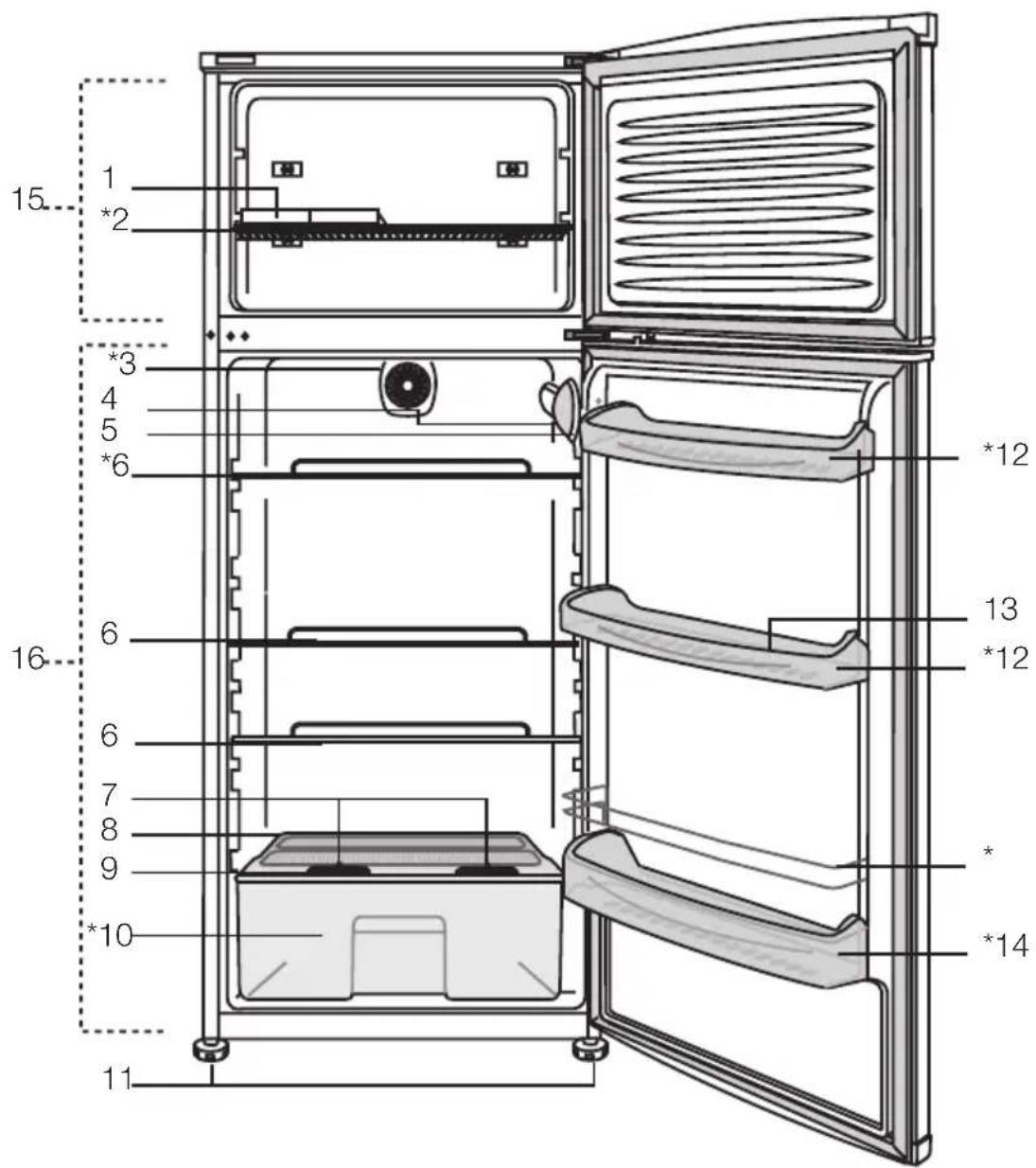
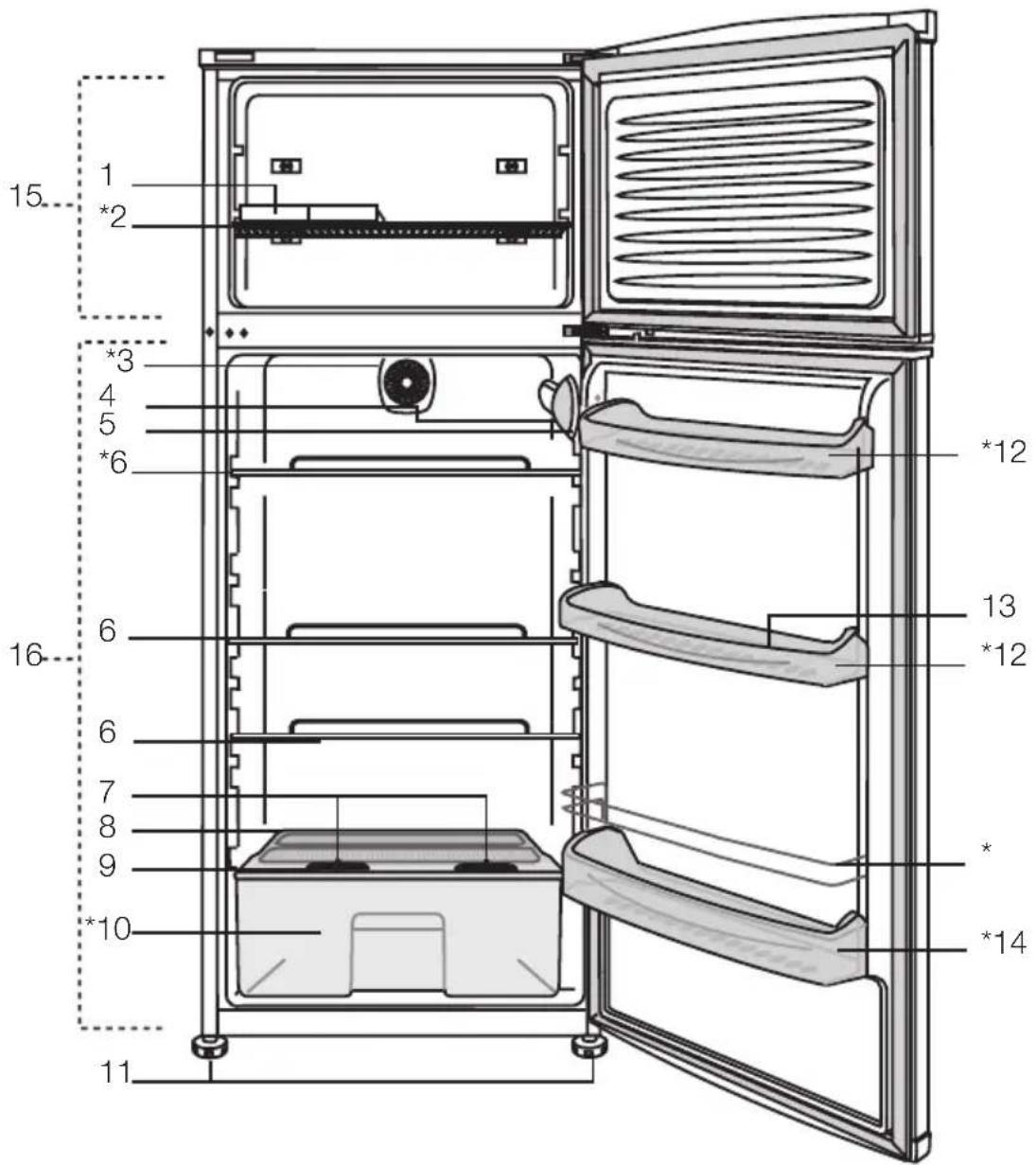
- Ice cube tray
- Freezer shelf
- Interior light
- Thermostat knob
- Fridge compartment shelves
- Defrost water collection channel - Drain tube
- Crisper humidity controls
-
Crisper cover
-
Salad crisper
- Adjustable legs
- Door shelf
- Egg tray
- Bottle shelf
14.Key
15.Freezer compartment
16.Fridge compartment
* OPTIONAL
Figures that take place in this instruction manual are schematic and may not correspond exactly with your product. If the subject parts are not included in the product you have purchased, then it is valid for other models.
2 Safety and Environment Instructions
This section provides the safety instructions necessary to prevent the risk of injury and material damage. Failure to observe these instructions will invalidate all types of product warranty.
Intended use
| ▲ | WARNING: Keep ventilation openings, in the appliance enclosure or in the built-instructure, clear of obstruction. |
| ▲ | WARNING: Do not use mechanical devices or other means to accelerate the defrostingprocess, other than those recommended by the manufacturer. |
| ▲ | WARNING: Do not damage the refrigerant circuit. |
| ▲ | WARNING: Do not use electrical appliances inside the food storage compartments of the appliance, unless they are of the type recommended by the manufacturer. |
WARNING: Do not store explosive substances such as aerosol cans with a flammable propellant in this appliance.
This appliance is intended to be used in household and similar applications such as
-
staff kitchen areas in shops, offices and other working environments;
-
farm houses and by clients in hotels, motels and other residential type environments
-
bed and breakfast type environments;
-
catering and similar non-retail applications.
General Safety
- This product should not be used by persons with physical, sensory and mental disabilities, without sufficient knowledge and experience or by children. The device can only be used by such persons under supervision and instruction of a person responsible for their safety. Children should not be allowed to play with this device.
- In case of malfunction, unplug the device.
After unplugging, wait at least 5 minutes before plugging in again. - Unplug the product when not in use.
- Do not touch the plug with wet hands!
Do not pull the cable to plug off, always hold the plug.
- Do not plug in the refrigerator if the socket is loose.
- Unplug the product during installation, maintenance, cleaning and repair.
If the product will not be used for a while, unplug the product and remove any food inside. - Do not use the product when the compartment with circuit cards located on the upper back part of the product (electrical card box cover) (1) is open.
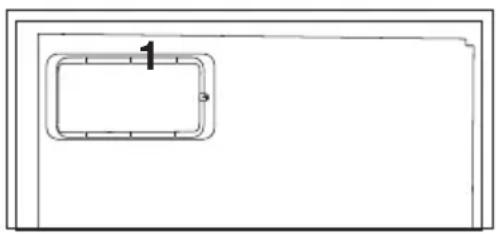
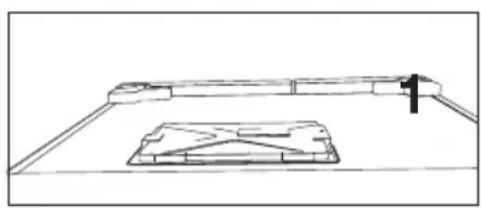
- Do not use steam or steamed cleaning materials for cleaning the refrigerator and melting the ice inside. Steam may contact the electrified areas and cause short circuit or electric shock!
- Do not wash the product by spraying or pouring water on it! Danger of electric shock!
- In case of malfunction, do not use the product, as it may cause electric shock. Contact the authorized service before doing anything.
-
Plug the product into an earthed socket. Earthing must be done by a qualified electrician.
-
If the product has LED type lighting, contact the authorized service for replacing or in case of any problem.
- Do not touch frozen food with wet hands! It may adhere to your hands!
- Do not place liquids in bottles and cans into the freezer compartment. They may burst out!
- Place liquids in upright position after tightly closing the lid.
- Do not spray flammable substances near the product, as it may burn or explode.
- Do not keep flammable materials and products with flammable gas (sprays, etc.) in the refrigerator.
- Do not place containers holding liquids on top of the product. Splashing water on an electrified part may cause electric shock and risk of fire.
- Exposing the product to rain, snow, sunlight and wind will cause electrical danger. When relocating the product, do not pull by holding the door handle. The handle may come off.
Take care to avoid trapping any part of your hands or body in any of the moving parts inside the product. - Do not step or lean on the door, drawers and similar parts of the refrigerator. This will cause the product to fall down and cause damage to the parts.
- Take care not to trap the power cable.
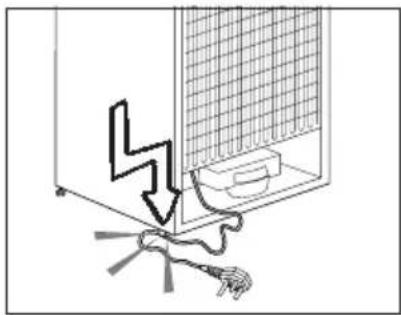
- When positioning the appliance, ensure the supply cord is not trapped or damaged.
- Do not locate multiple portable socket-outlets or portable power supplies at the rear of the appliance.
1.1.1 HC Warning
If the product comprises a cooling system using R600a gas, take care to avoid damaging the cooling system and its pipe while using and moving the product. This gas is flammable. If the cooling system is damaged, keep the product away from sources of fire and ventilate the room immediately.
The label on the inner left side indicates the type of gas used in the product.
1.1.2 For Models with Water Dispenser
-
Pressure for cold water inlet shall be maximum 90 psi (6.2 bar). If your water pressure exceeds 80 psi (5.5 bar), use a pressure limiting valve in your mains system. If you do not know how to check your water pressure, ask for the help of a professional plumber.
-
If there is risk of water hammer effect in your installation, always use a water hammer prevention equipment in your installation. Consult Professional plumbers if you are not sure that there is no water hammer effect in your installation.
- Do not install on the hot water inlet. Take precautions against of the risk of freezing of the hoses. Water temperature operating interval shall be 33^ (0.6^) minimum and 100^ (38^) maximum.
- Use drinking water only.
Intended Use
This product is designed for home use. It is not intended for commercial use.
The product should be used to store food and beverages only.
- Do not keep sensitive products requiring controlled temperatures (vaccines, heat sensitive medication, medical supplies, etc.) in the refrigerator.
The manufacturer assumes no responsibility for any damage due to misuse or mishandling.
- Original spare parts will be provided for 10 years, following the product purchasing date.
Child Safety
- Keep packaging materials out of children's reach.
- Do not allow the children to play with the product.
If the product's door comprises a lock, keep the key out of children's reach.
Compliance with WEEE
Directive and Disposing of the Waste Product
This product complies with EU WEEE Directive (2012/19/EU). This product bears a classification symbol for waste electrical and electronic equipment (WEEE).
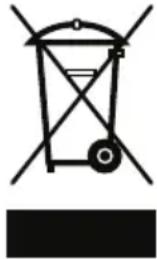
This product has been manufactured with high quality parts and materials which can be reused and are suitable for recycling. Do not dispose of the waste product with normal domestic and other wastes at the end of its service life. Take it to the
collection center for the recycling of electrical and electronic equipment. Please consult your local authorities to learn about these collection centers.
Compliance with RoHS Directive
- This product complies with EU WEEE Directive (2011/65/EU). It does not contain harmful and prohibited materials specified in the Directive.
Package Information
Packaging materials of the product are manufactured from recyclable materials in accordance with our National Environment Regulations. Do not dispose of the packaging materials together with the domestic or other wastes. Take them to the packaging material collection points designated by the local authorities.
3 Installation
In case the information which are given in the user manual are not taken into account, manufacturer will not assume any liability for this.
Points to be paid attention to when the relocation of the refrigerator
- Your refrigerator should be unplugged.Before transportation of your refrigerator, it should be emptied and cleaned.
- Before it is re-packaged, shelves, accessories, crisper, etc. inside your refrigerator should be fixed with adhesive tape and secured against impacts. Package should be bound with a thick tape or sound ropes and the transportation rules on the package should be strictly observed.
- Original packaging and foam materials should be kept for future transportations or moving.
Before you start the refrigerator, Check the following before you start to use your refrigerator:
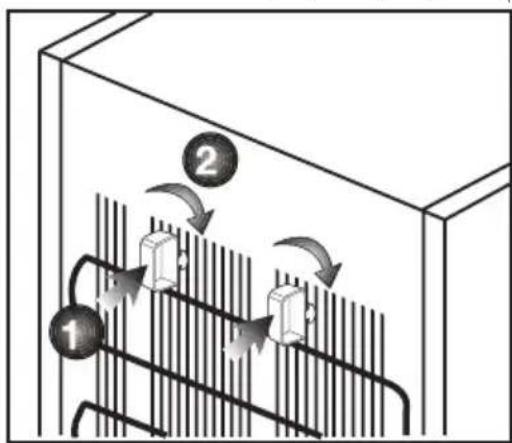
- Attach 2 plastic wedges as illustrated below. Plastic wedges are intended to keep the distance which will ensure the air circulation between your refrigerator and the wall. (The picture is drawn up as a representation and it is not identical with your product.)
- Clean the interior of the refrigerator as recommended in the "Maintenance and cleaning" section.
- Connect the plug of the refrigerator to the wall socket. When the fridge door is opened, fridge internal lamp will turn on.
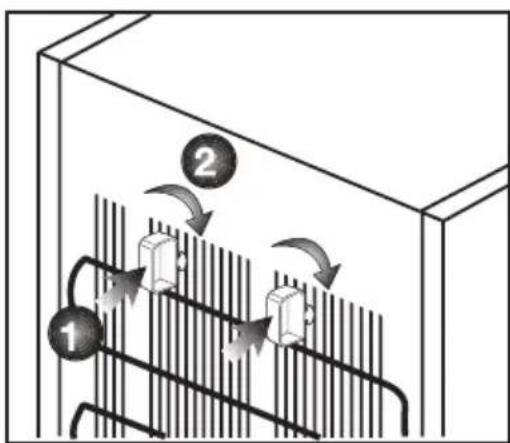
- When the compressor starts to operate, a sound will be heard. The liquid and gases sealed within the refrigeration system may also give rise to noise, even if the compressor is not running and this is quite normal.
- Front edges of the refrigerator may feel warm. This is normal. These areas are designed to be warm to avoid condensation.
Electrical connection
Connect your product to a grounded socket which is being protected by a fuse with the appropriate capacity.
Important:
The connection must be in compliance with national regulations.
- The power plug must be easily accessible after installation.
- Electrical safety of your refrigerator shall be guaranteed only if the earth system in your house complies with standards.
The voltage stated on the label located at left inner side of your product should be equal to your network voltage. - Extension cables and multi plugs must not be used for connection.
A damaged power cable must be replaced by a qualified electrician.
Product must not be operated before it is repaired! There is the risk of electric shock!
Disposing of the packaging
The packing materials may be dangerous for children. Keep the packing materials out of the reach of children or dispose of them by classifying them in accordance with the waste instructions stated by your local authorities. Do not throw away with regular house waste, throw away on packaging pick up spots designated by the local authorities.
The packing of your refrigerator is produced from recyclable materials.
Disposing of your old refrigerator
Dispose of your old refrigerator without giving any harm to the environment.
- You may consult your authorized dealer or waste collection center of your municipality about the disposal of your refrigerator.
Before disposing of your refrigerator, cut out the electric plug and, if there are any locks on the door, make them inoperable in order to protect children against any danger.
Placing and Installation
If the entrance door of the room where the refrigerator will be installed is not wide enough for the refrigerator to pass through, then call the authorized service to have them remove the doors of your refrigerator and pass it sideways through the door.
- Install your refrigerator to a place that allows ease of use.
- Keep your refrigerator away from heat sources, humid places and direct sunlight.
- There must be appropriate air ventilation around your refrigerator in order to achieve an efficient operation. If the refrigerator is to be placed in a recess in the wall, there must be at least 5 cm distance with the ceiling and at least 5 cm with the wall. Do not place your product on the materials such as rug or carpet.
- Place your refrigerator on an even floor surface to prevent jolts.
Adjusting the legs
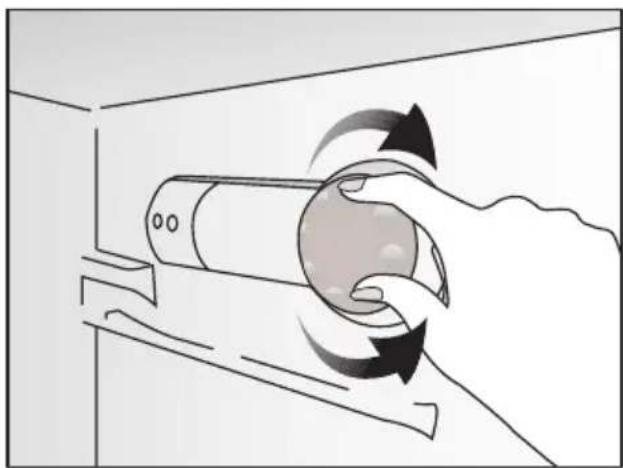
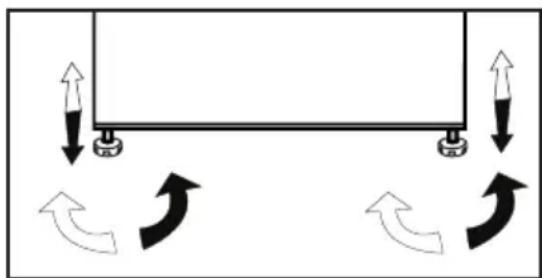
If your refrigerator is unbalanced; You can balance your refrigerator by turning its front legs as illustrated in the figure. The corner where the leg exists is lowered when you turn in the direction of black arrow and raised when you turn in the opposite direction. Taking help from someone to slightly lift the refrigerator will facilitate this process.
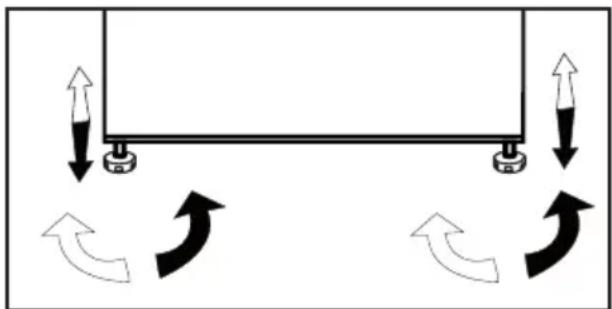
Changing the illumination lamp
To change the Bulb/LED used for illumination of your refrigerator, call your AuthorisedService.
The lamp(s) used in this appliance is not suitable for household room illumination. The intended purpose of this lamp is to assist the user to place foodstuffs in the refrigerator/freezer in a safe and comfortable way. The lamps used in this appliance have to withstand extreme physical conditions such as temperatures below -20^ . (only chest and upright freezer)
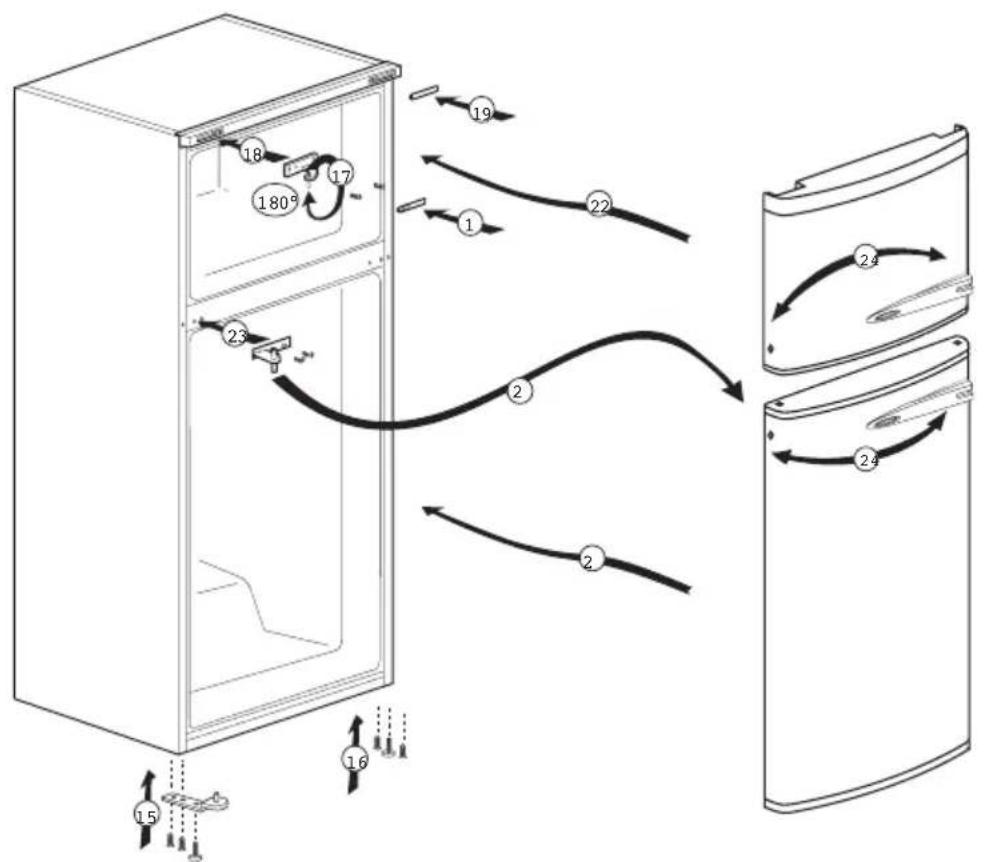
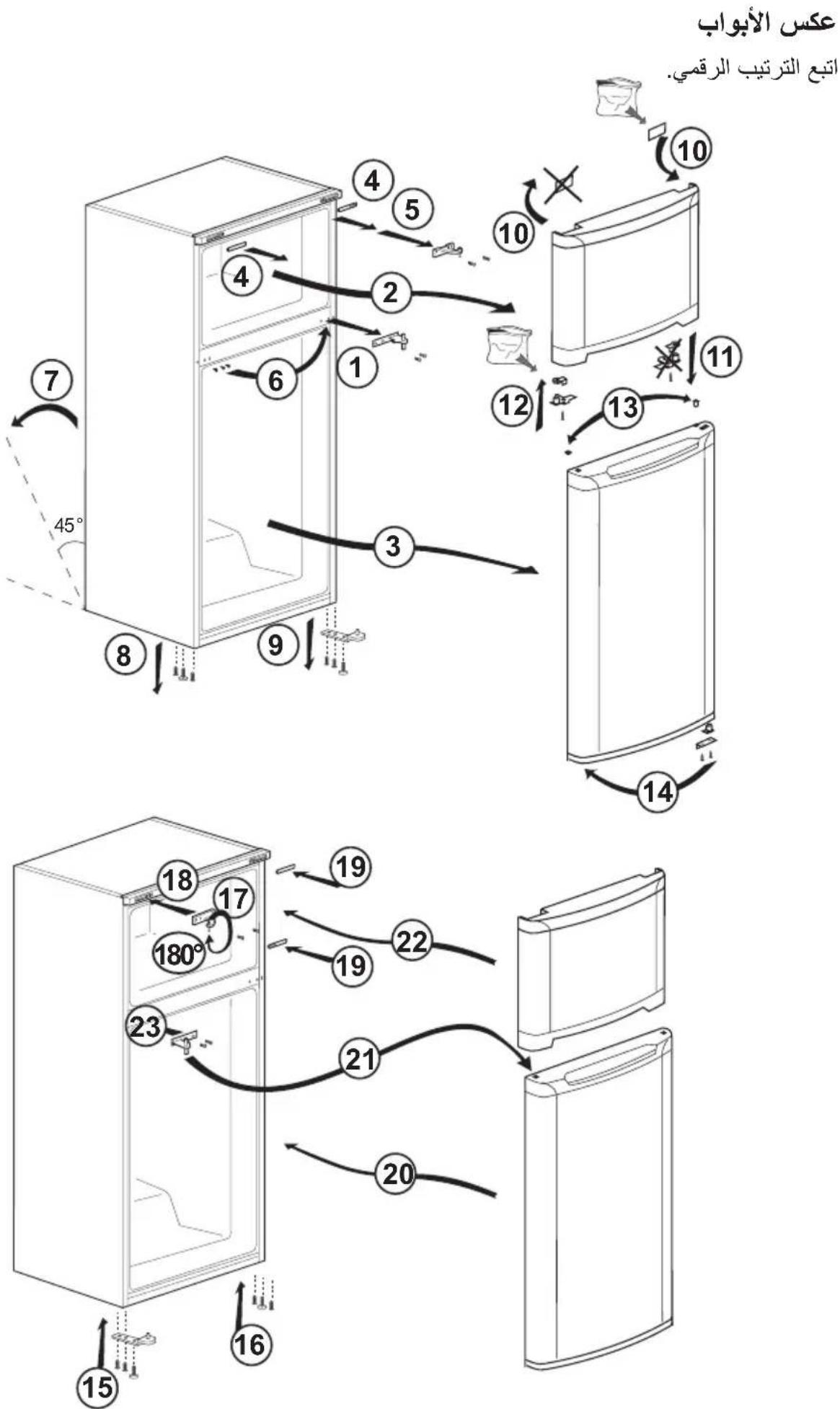
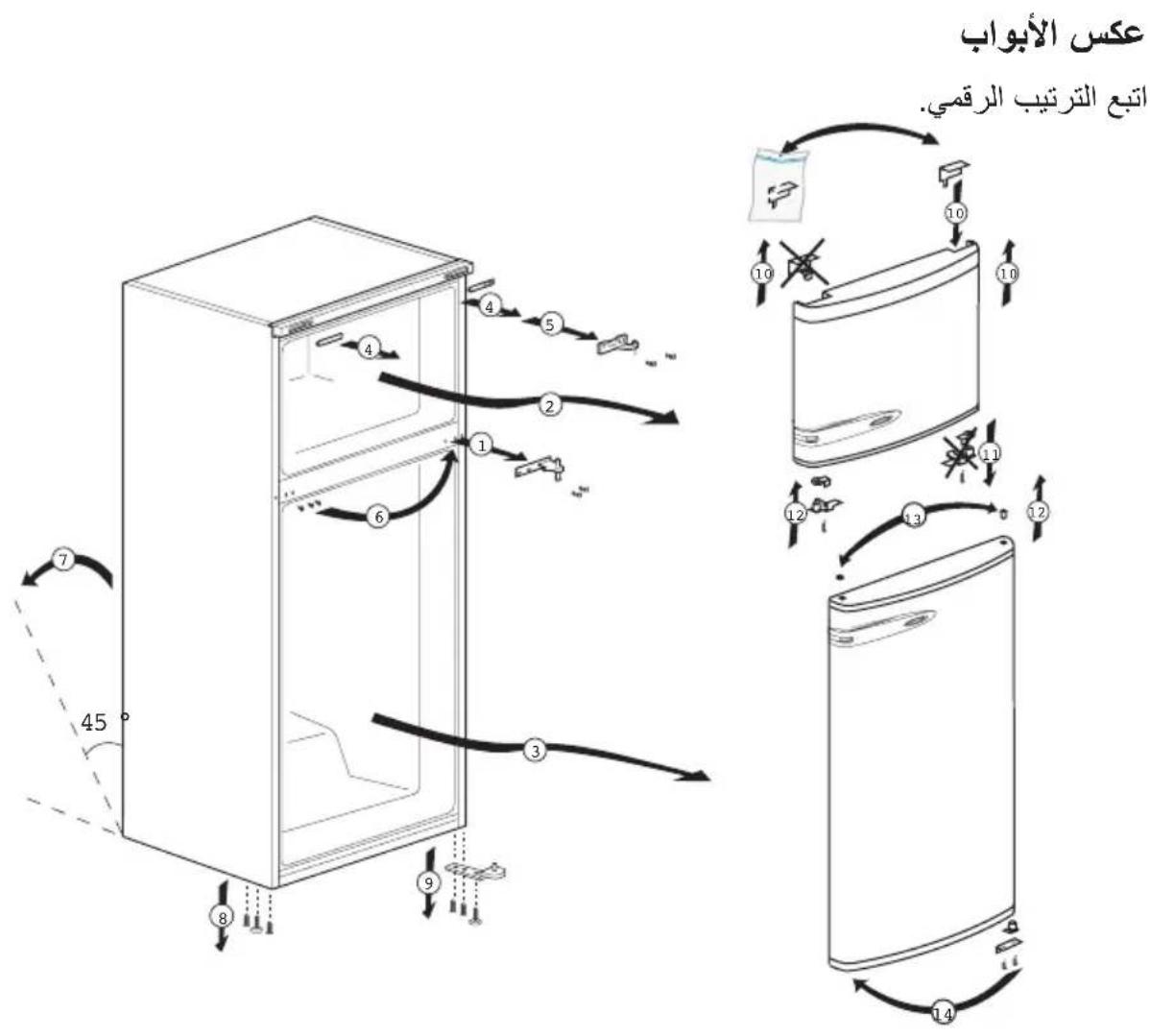
Reversing the doors
Proceed in numerical order.
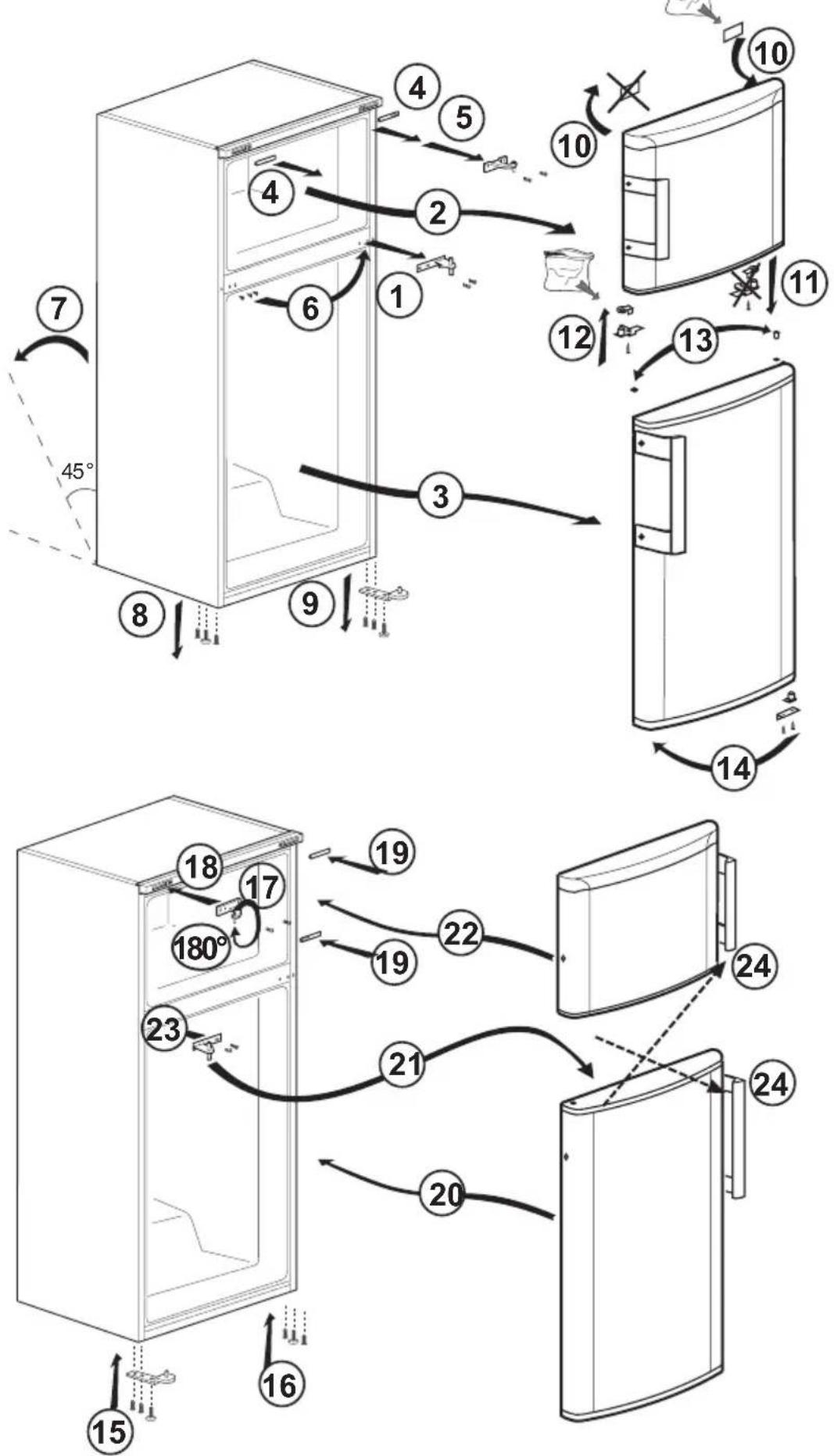
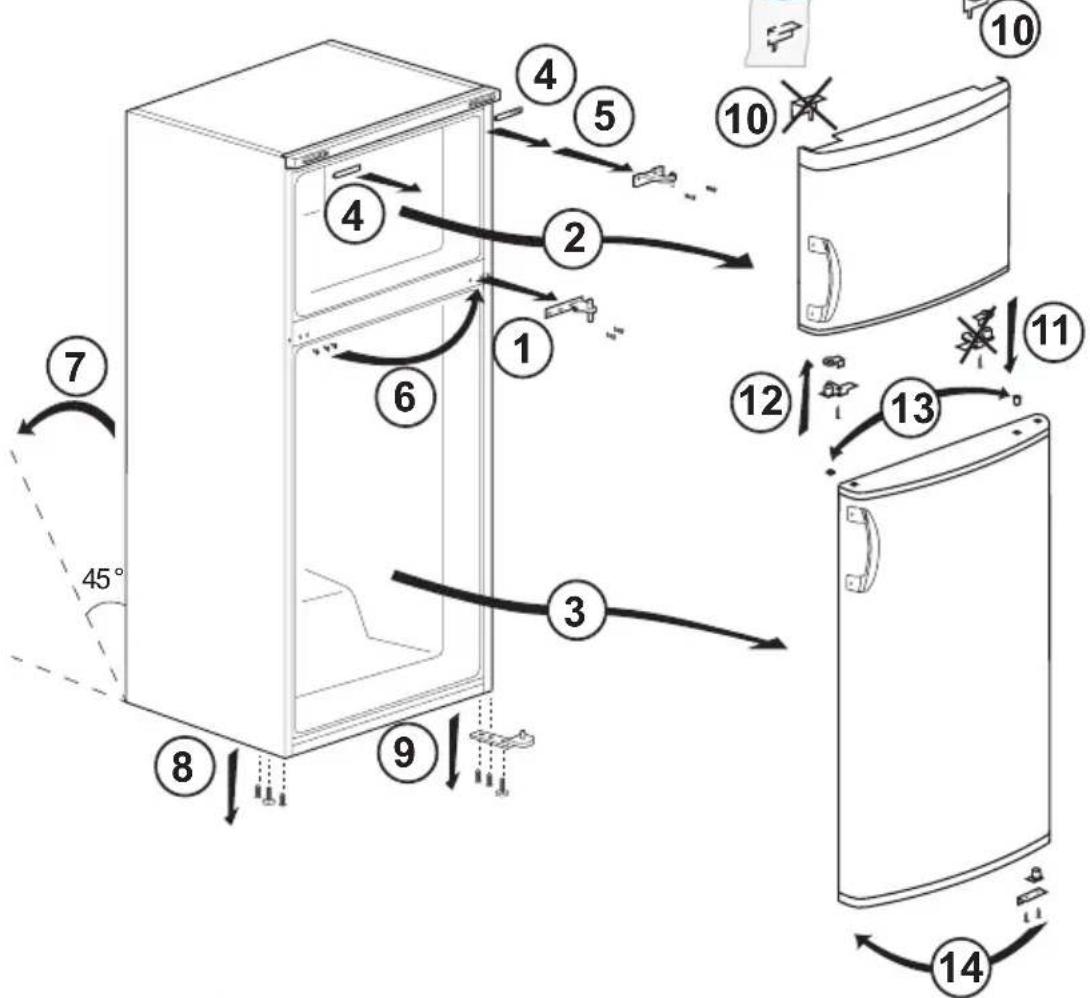
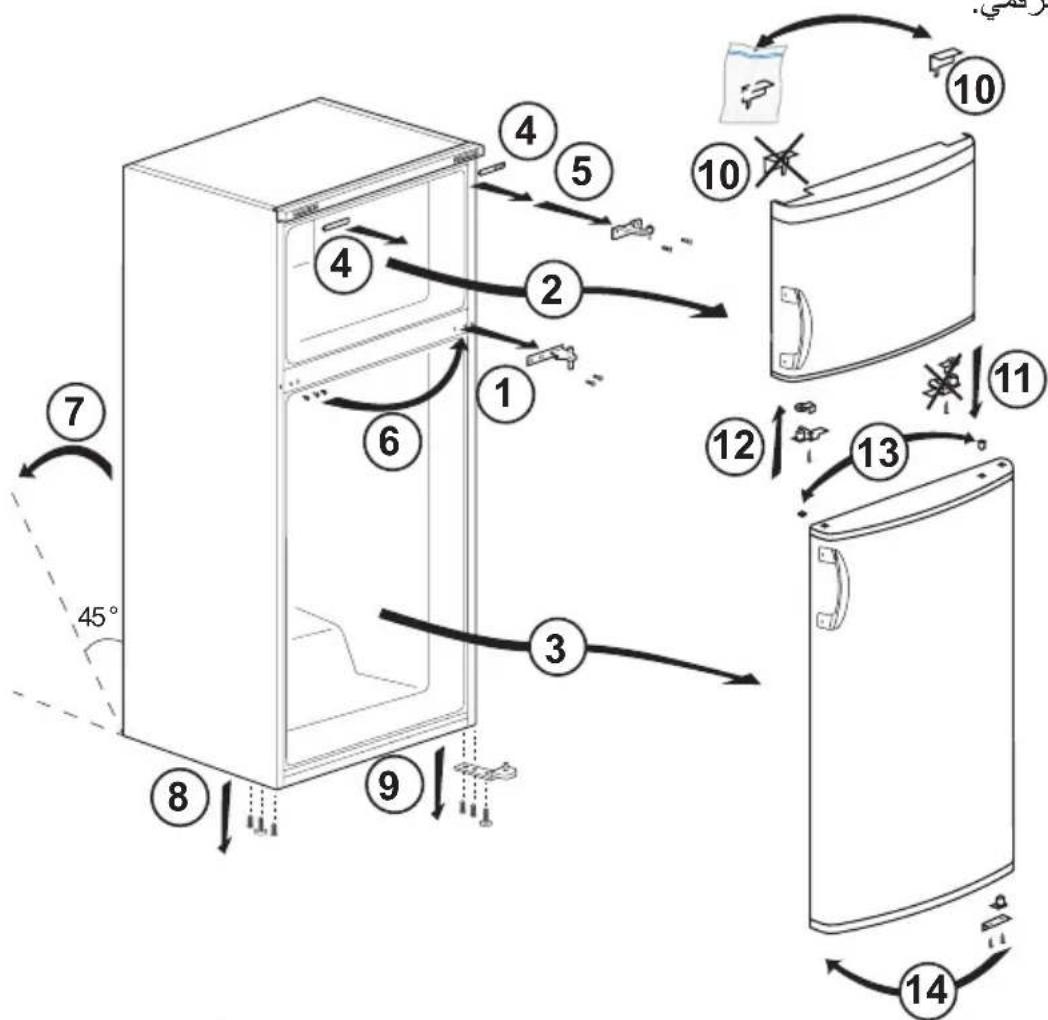
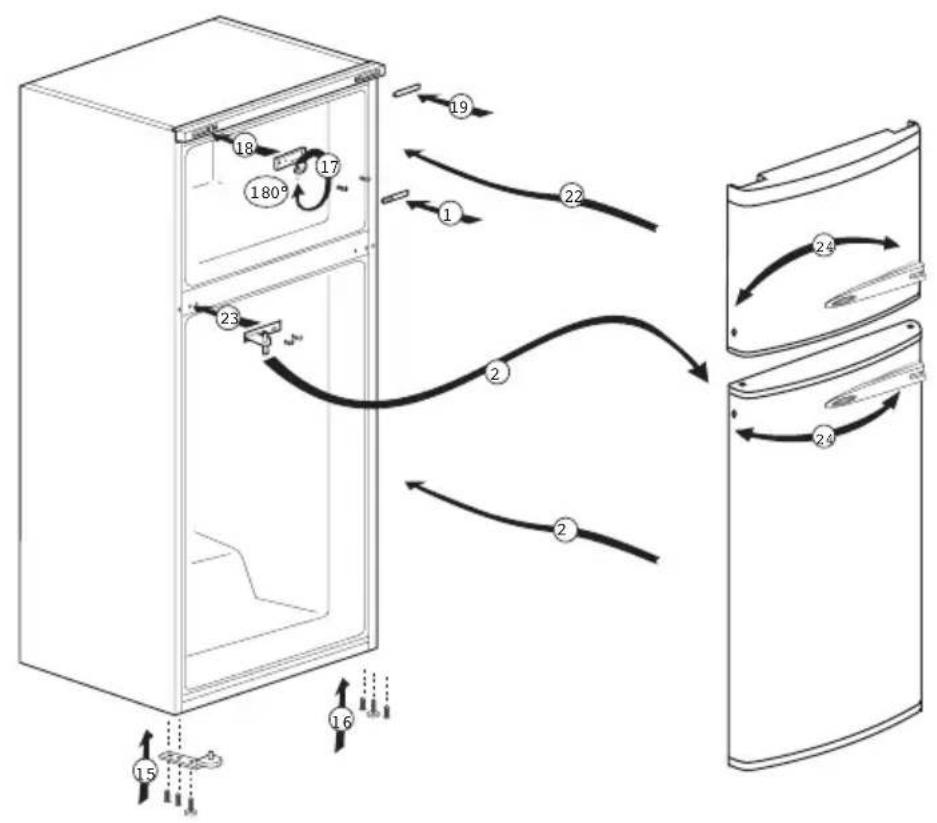
Reversing the doors
Proceed in numerical order.
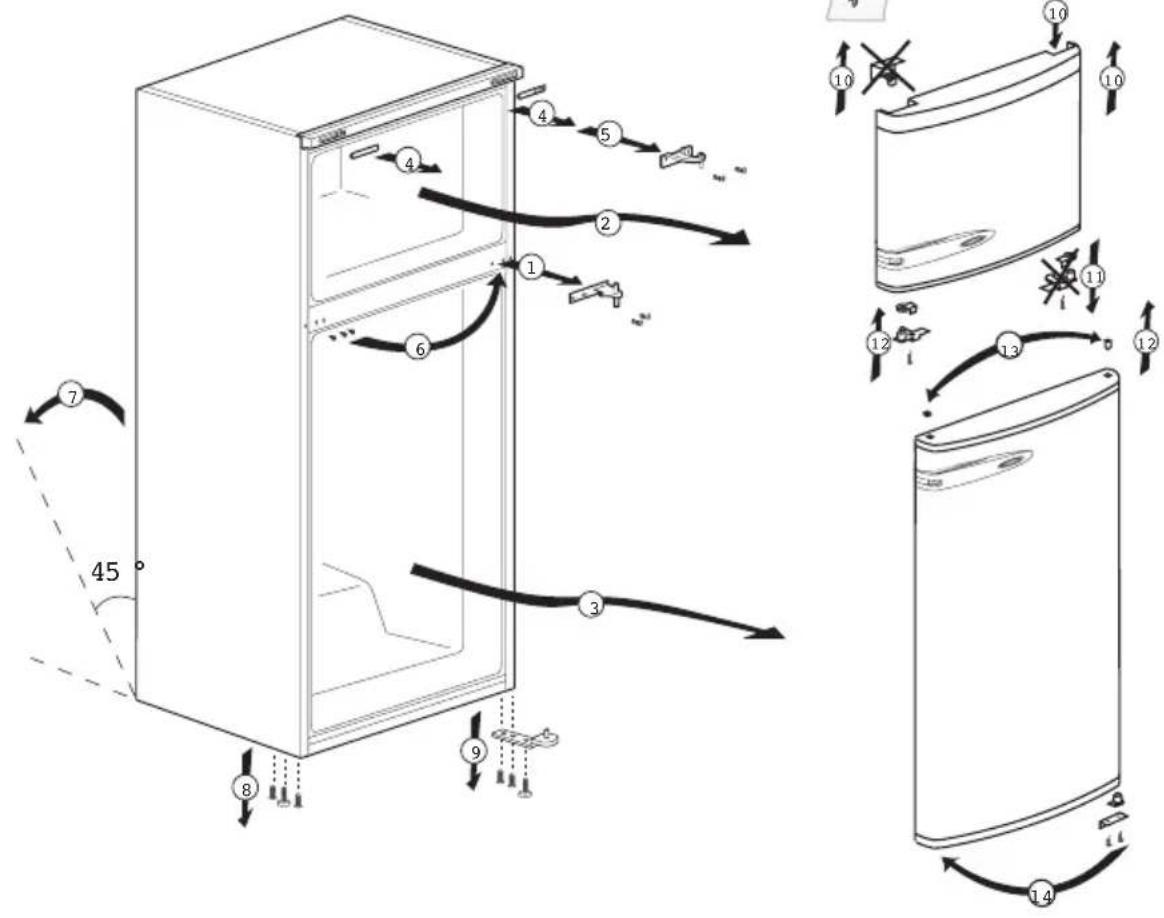
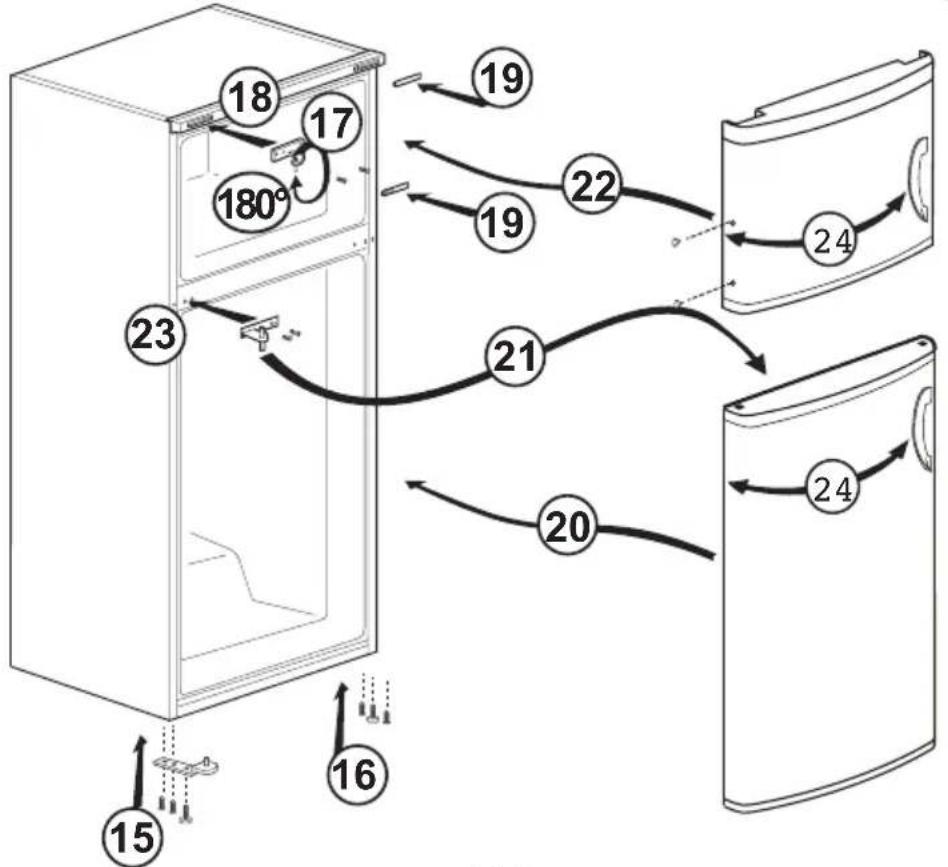
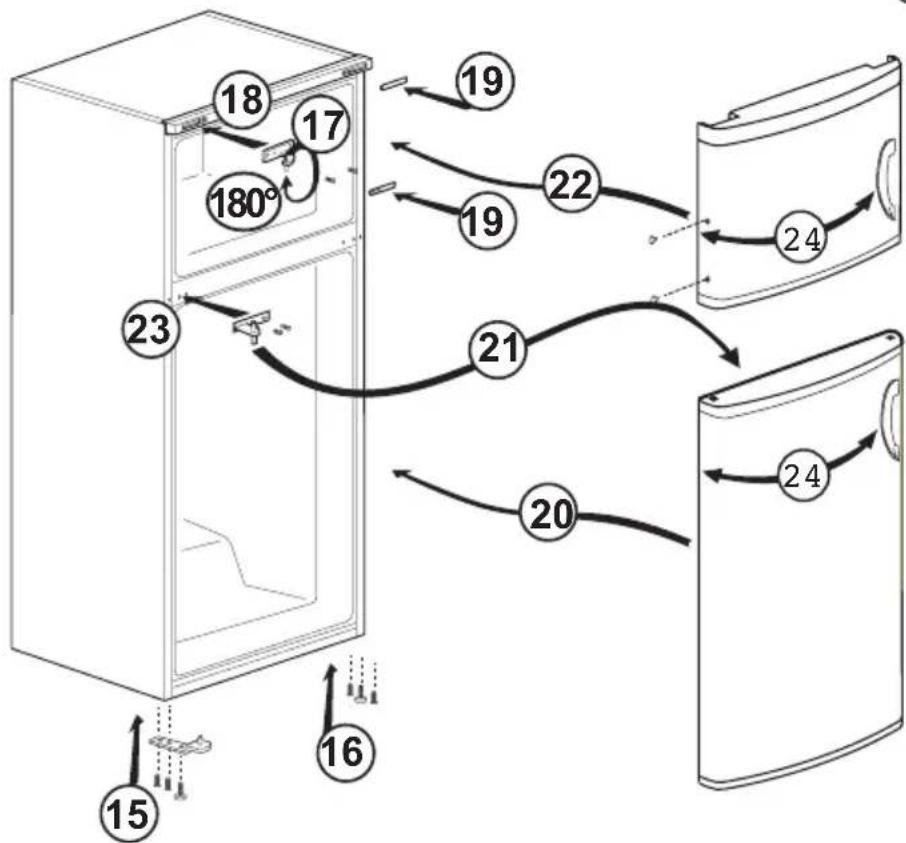
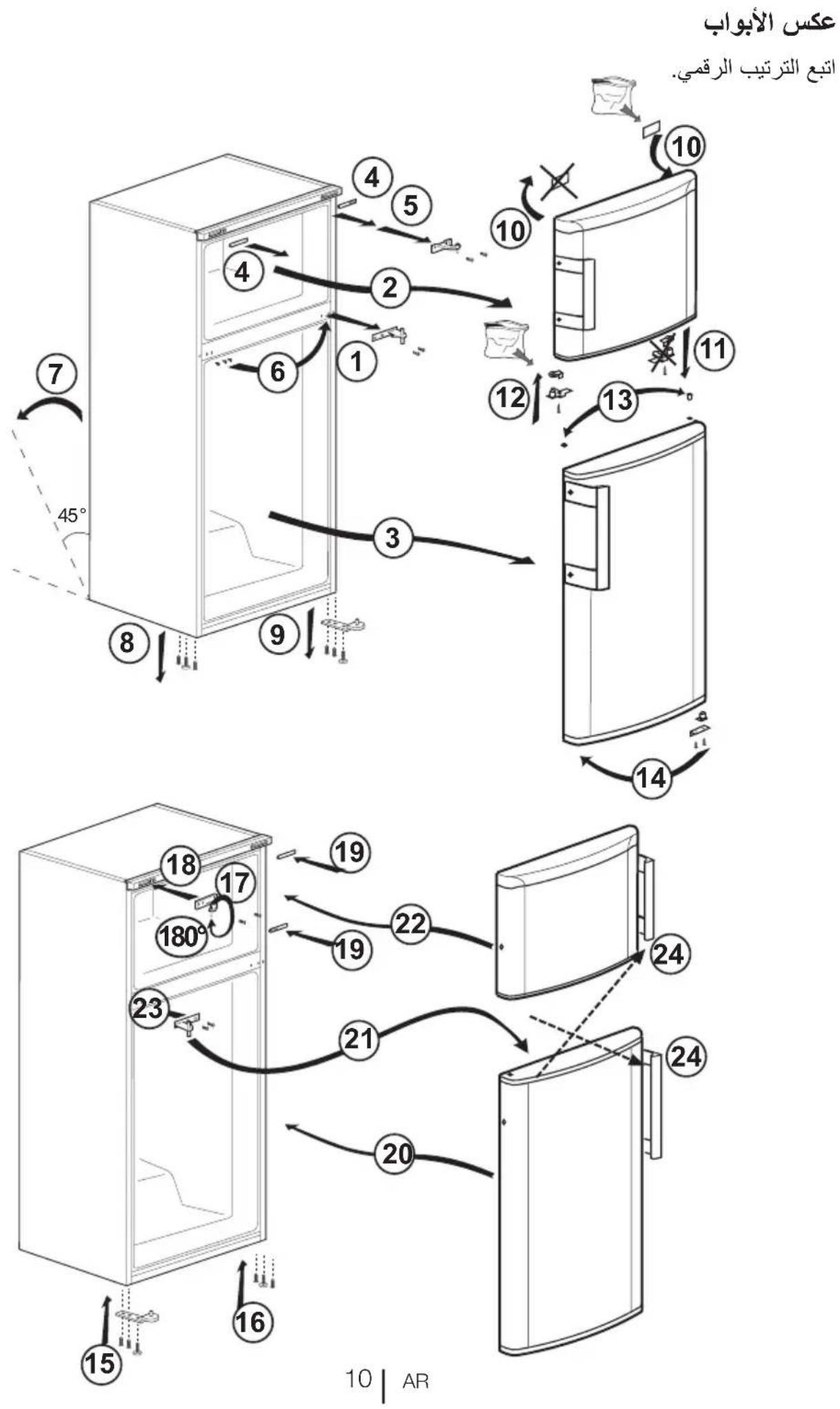
Reversing the doors
Proceed in numerical order.
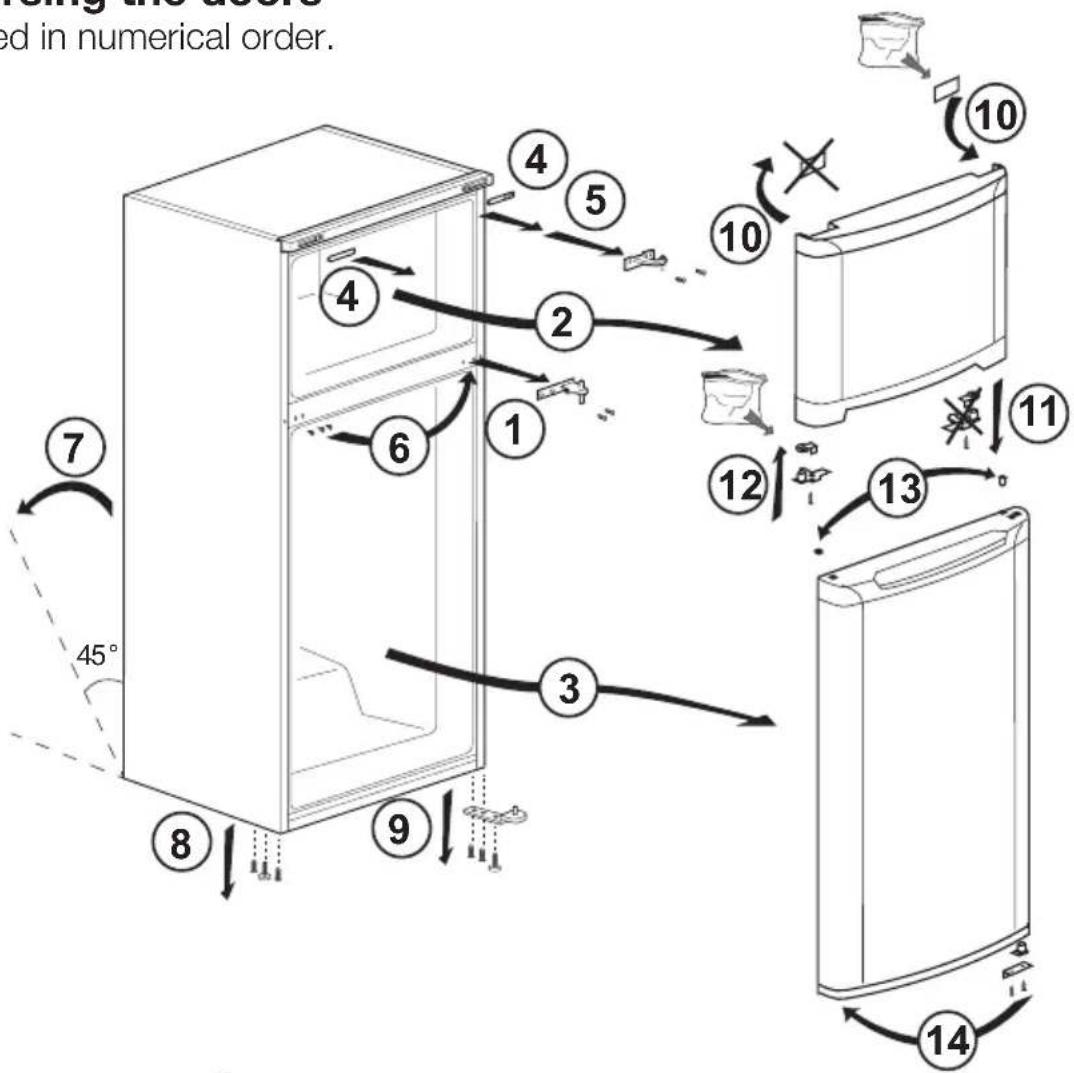
Reversing the doors
Proceed in numerical order.
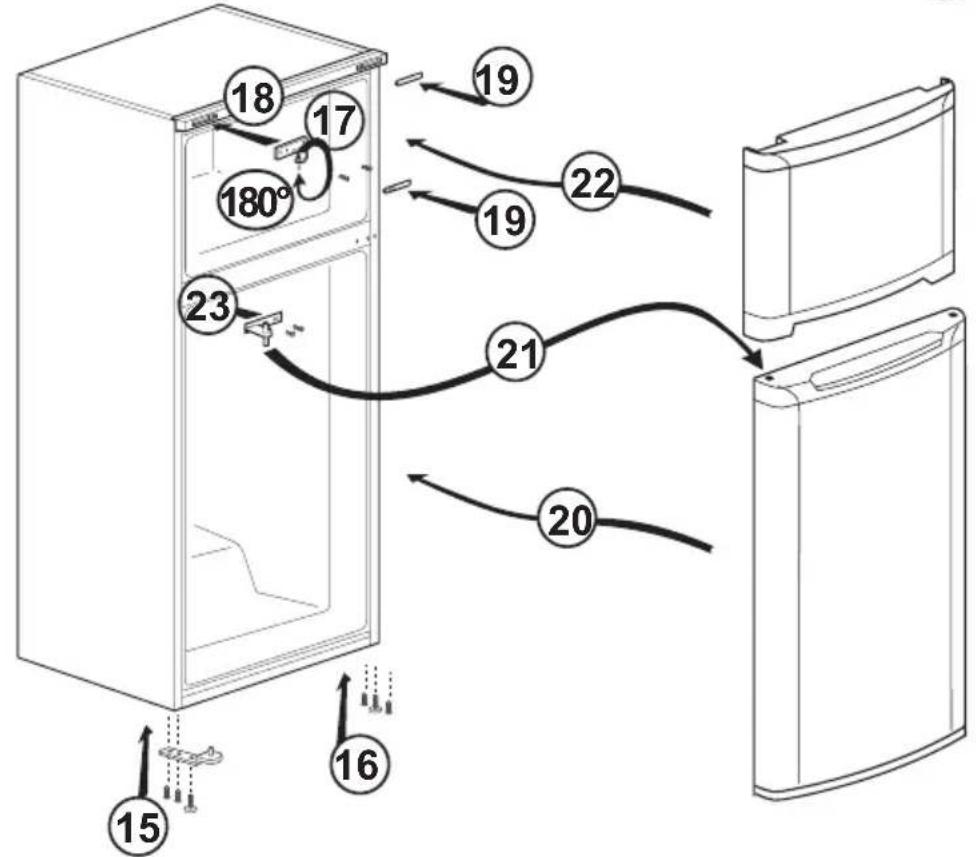
4 Preparation
- Your cooler/freezer should be installed at least 30~cm away from heat sources such as hobs, ovens, central heater and stoves and at least 5cm away from electrical ovens and should not be located under direct sunlight.
- Please make sure that the interior of your cooler/freezer is cleaned thoroughly.
- When you operate your cooler/freezer for the first time, please observe the following instructions during the initial six hours.
- Its door should not be opened frequently.
It must be operated empty without placing any food in it. - Do not unplug your cooler/freezer. If a power failure occurs out of your control, please see the warnings in the "Recommended solutions for the problems" section.
- The baskets/drawers that are provided with the chill compartment must always be in use for low energy consumption and for better storage conditions.
- Food contact with the temperature sensor in the freezer compartment may increase energy consumption of the appliance. Thus any contact with the sensor(s) must be avoided.
- This product has been designed to function at ambient temperatures up to 43^ (90 SDgrF). Even if the ambient temperature falls to -15 ^ C , frozen food in the freezer does not thaw thanks to its Advanced Electronic Temperature Control System. For the first installation, the
product should NOT be placed under low ambient temperatures. This is because the freezer cannot go down to standard operation temperature. When reaching continuous operation, the product can be moved to another place. Thus, later you can place your product in the garage or an unbeated room without the concern of causing frozen food to get rotten. However, it is likely that above mentioned low temperatures may cause the freezing of the food in the fridge compartment; thus, please consume the food items in the fridge in a controlled way as needed. When ambient temperature goes back to normal, you may change button setting according to your need.
- If the ambient temperature is below 0^ , the food in fridge compartment will freeze. Therefore, we recommend not using the fridge compartment in such low ambient temperatures. You may continue to use the freezer compartment as usual.
- In some models, the instrument panel automatically turns off 5 minutes after the door has closed. It will be reactivated when the door has opened or pressed on any key.
- Due to temperature change as a result of opening/closing the product door during operation, condensation on the door/body shelves and the glass containers is normal.
5 Using your refrigerator
Thermostat setting button
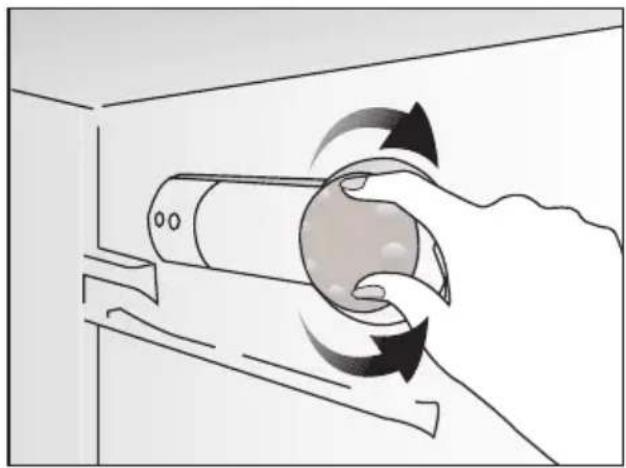
The interior temperature of your refrigerator changes for the following reasons;
- Seasonal temperatures,
- Frequent opening of the door and leaving the door open for long periods,
- Food put into the refrigerator without cooling down to the room temperature,
- The location of the refrigerator in the room (e.g. exposing to sunlight).
- You may adjust the varying interior temperature due to such reasons by using the thermostat. Numbers around the thermostat button indicates the cooling degrees.
- If the ambient temperature is higher than 32^ , turn the thermostat button to maximum position.
If the ambient temperature is lower than 25^ turn the thermostat button to minimum position.
Defrost
Fridge compartment performs full-automatic defrosting. Water resulting from the defrosting passes from the water collection groove and flows into the evaporator through the drain pipe and evaporates here by itself.
- Deep freezer compartment does not perform automatic defrosting in order to prevent decaying of the frozen food.
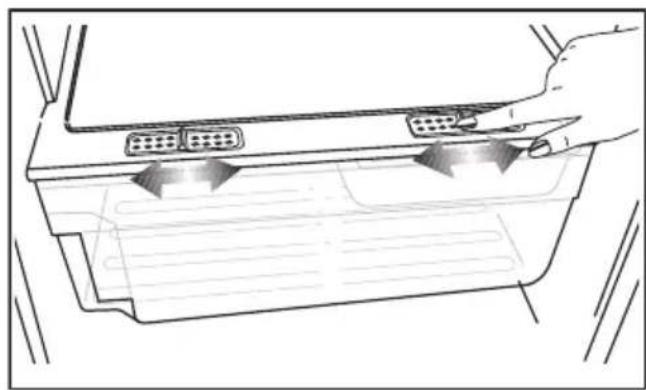
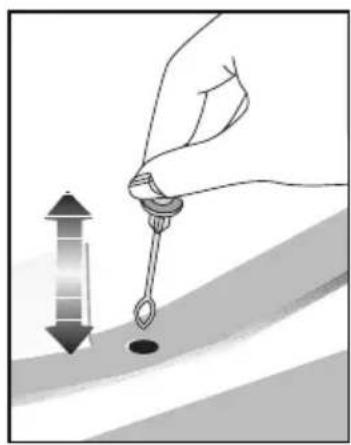
- Check regularly to see if the drain pipe is clogged or not and clear it with the stick in the hole when necessary.
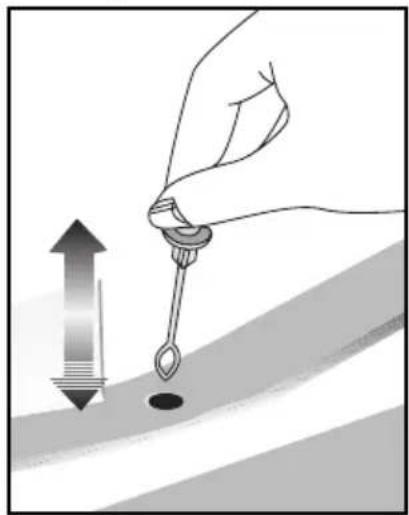
- Frost formation in the freezer compartment must be defrosted every 6 months. It is recommended to defrost the ice when the deep freezer compartment is not filled too much or is empty.
-
To do this, wrap the frozen food by paper and keep them in the coolest place possible or in another refrigerator if available.
-
Stop your refrigerator by means of the temperature setting button or unplug the power cord from the outlet. You can place a container filled with hot water into the freezer compartment or leave the door of the freezer compartment open in order to hasten the defrosting.
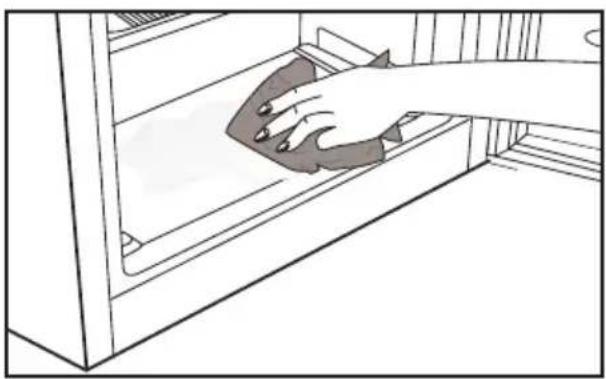
- Remove the water that accumulates in the lower container of the freezer compartment with an absorbent cloth or sponge.
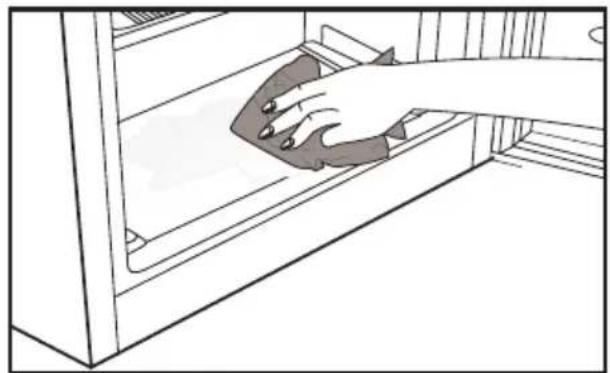
- Dry the freezer compartment completely and return the temperature setting button to its previous position.
- Operate your refrigerator for 2 hours while it is empty and its doors are closed before replacing your food into the deep freezer.
Stopping your product
If your thermostat is equipped with "0" position:
- Your product will stop operating when you turn the thermostat button to "0" (zero) position. Your product will not start unless to you turn the thermostat button to position "1" or one of the other positions again.
If your thermostat is equipped with "min" position:
- Unplug your product to stop it.
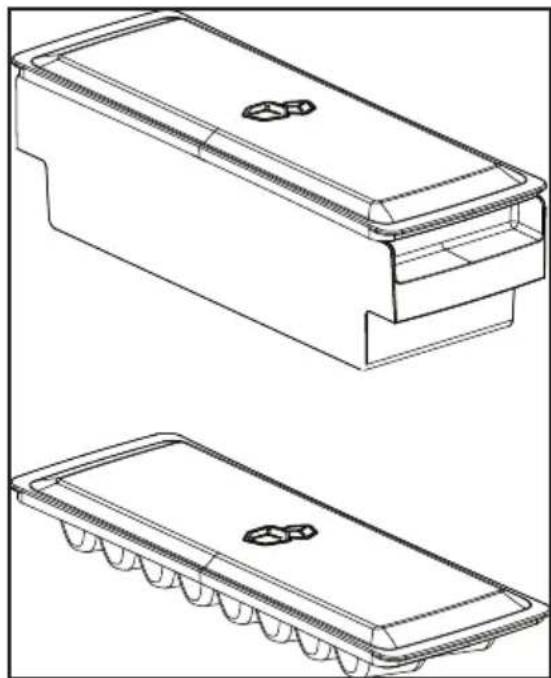
Making ice *optional
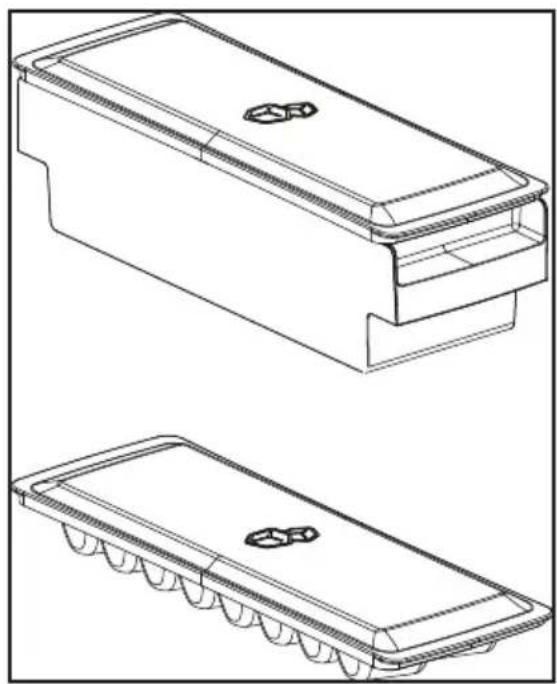
Fill the ice container with water and place it into the freezer compartment. Your ice will be ready approximately in two hours.
You can remove the ice in the ice container by removing it from the freezer and twisting it.
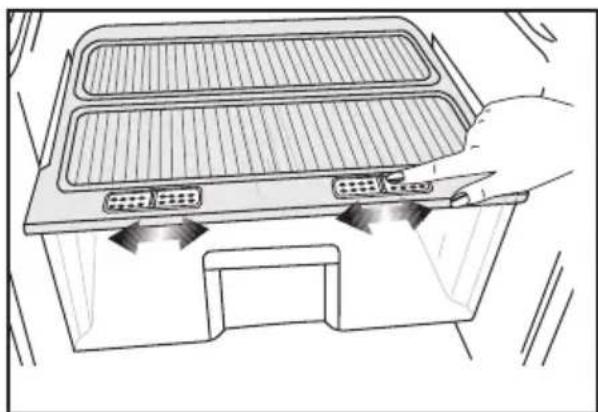
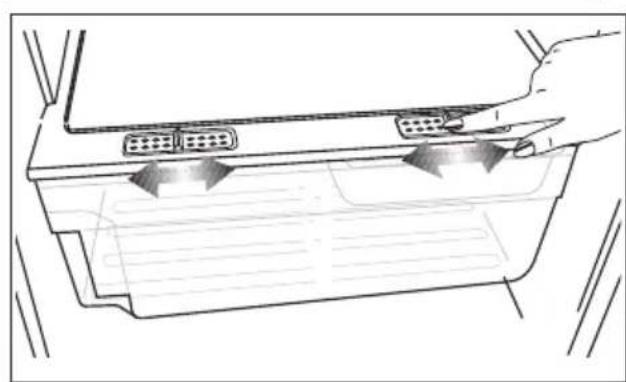
Crisper humidity control sliders
Using the crisper humidity control sliders
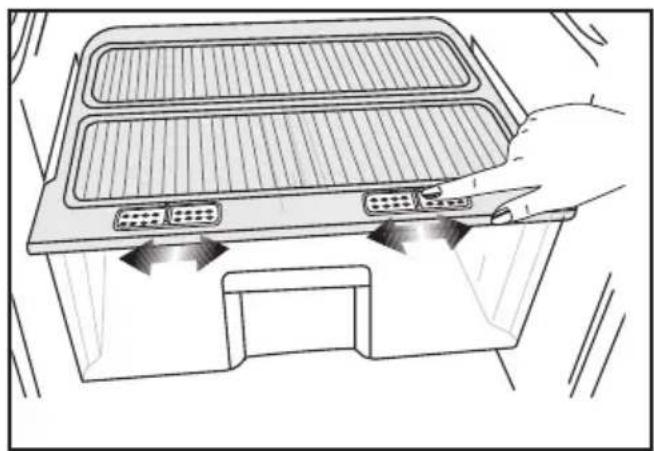
Crisper of your refrigerator is designed specially to keep your vegetables fresh without loosing their humidity. Cold air circulates basically around the crisper and the amount of the cold air passing through the crisper is controlled by the sliders on the front side of the crisper cover.
You can adjust the humidity control sliders to a suitable position according to the humidity and cooling condition of your food in the crisper.
If you want your food in the crispert o cool more, open the holes of the humidity control sliders and if you want them to cool less and keep their humidity for a longer time, close the holes.
* OPTIONAL
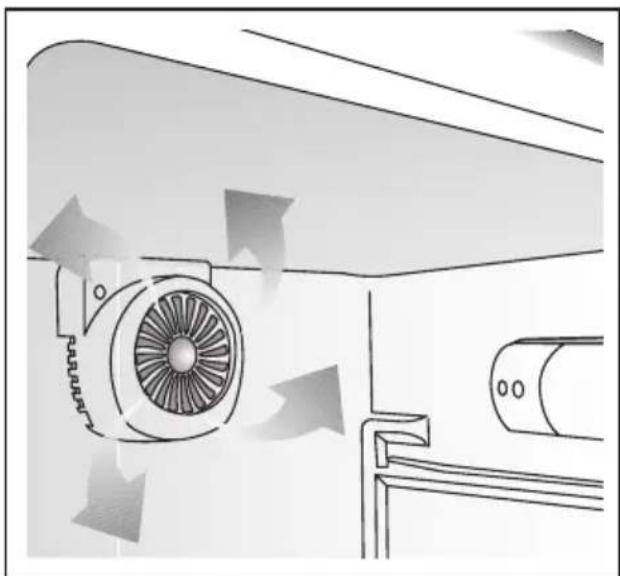
Turbo Cooling Fan
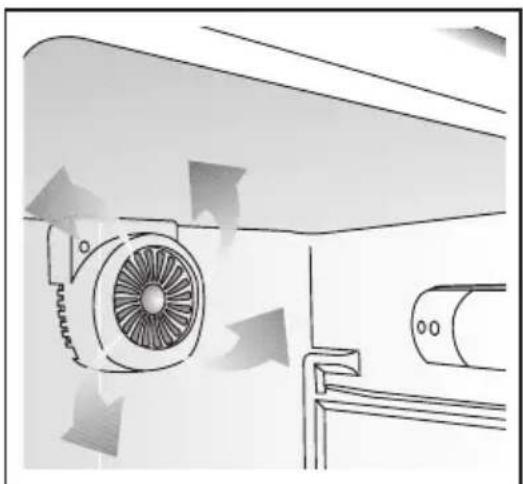
"Turbo cooling fan is designed to ensure homogenous distribution and circulation of the cold air inside your refrigerator. Operation time of the turbo cooling fan may vary depending on the properties of your product. While the turbo fan works only with the compressor in some products, the control system determines its operation time in some products in accordance with the cooling requirement. This situation is explained on a separate warning and information label attached on the refrigerator in products equipped with turbo fans running under different conditions than the compressor."
Using the rotary crisper (in some models)
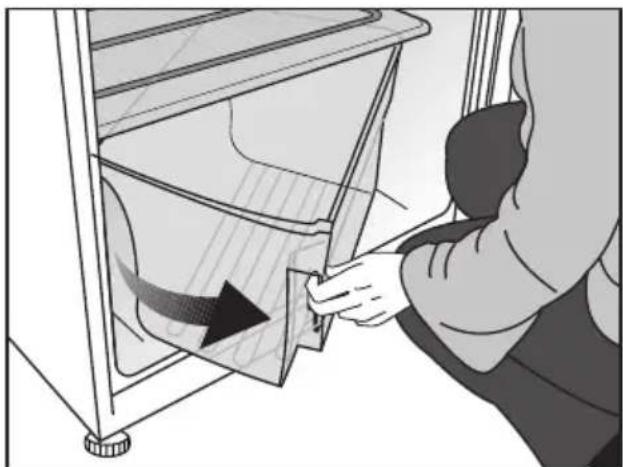
The crisper of your refrigerator which opens with a rotating movement is designed specially to provide ease of usage and allow you to store more vegetables and fruits (large volume) you buy during large shopping.
When you grab and pull the handle on the lower left hand side of the crisper, it will rotate from left to right and open easily. The separator in the crisper will allow you to separate the vegetables and fruits according to their types and prevent them from crushing.
6 Maintenance and cleaning
Never use gasoline, benzene or similar substances for cleaning purposes.
We recommend that you unplug the appliance before cleaning.
Never use any sharp abrasive instrument, soap, household cleaner, detergent and wax polish for cleaning.
For non-No Frost products, water drops and frosting up to a fingerbreadth occur on the rear wall of the Fridge compartment. Do not clean it; never apply oil or similar agents on it.
Only use slightly damp microfiber cloths to clean the outer surface of the product. Sponges and other types of cleaning cloths may scratch the surface.
Use lukewarm water to clean the cabinet of your refrigerator and wipe it dry.
Use a damp cloth wrung out in a solution of one teaspoon of bicarbonate of soda to one pint of water to clean the interior and wipe it dry.
Make sure that no water enters the lamp housing and other electrical items.
If your refrigerator is not going to be used for a long period of time, unplug the power cable, remove all food, clean it and leave the door ajar.
Check door seals regularly to ensure they are clean and free from food particles.
To remove door racks, remove all the contents and then simply push the door rack upwards from the base.
Never use cleaning agents or water that contain chlorine to clean the outer surfaces and chromium coated parts of the product. Chlorine causes corrosion on such metal surfaces.
Do not use sharp, abrasive tools, soap, household cleaning agents, detergents, kerosene, fuel oil, varnish etc. to prevent removal and deformation of the prints on the plastic part. Use lukewarm water and a soft cloth for cleaning and then wipe it dry.
Protection of plastic surfaces
1 Do not put the liquid oils or oil-cooked meals in your refrigerator in unsealed containers as they damage the plastic surfaces of your refrigerator. In case of spilling or smearing oil on the plastic surfaces, clean and rinse the relevant part of the surface at once with warm water.
7 Troubleshooting
Check this list before contacting the service. Doing so will save you time and money. This list includes frequent complaints that are not related to faulty workmanship or materials. Certain features mentioned herein may not apply to your product.
The refrigerator is not working.
- The power plug is not fully settled. >> Plug it in to settle completely into the socket.
- The fuse connected to the socket powering the product or the main fuse is blown. >> Check the fuses.
Condensation on the side wall of the cooler compartment (MULTI ZONE, COOL, CONTROL and FLEXI ZONE).
- The door is opened too frequently Take care not to open the product's door too frequently.
- The environment is too humid. Do not install the product in humid environments.
- Foods containing liquids are kept in unsealed holders. >>> Keep the foods containing liquids in sealed holders.
The product's door is left open. Do not keep the product's door open for long periods. - The thermostat is set to too low temperature. >> Set the thermostat to appropriate temperature.
Compressor is not working.
- In case of sudden power failure or pulling the power plug off and putting back on, the gas pressure in the product's cooling system is not balanced, which triggers the compressor thermic safeguard. The product will restart after approximately 6 minutes. If the product does not restart after this period, contact the service.
- Defrosting is active. >>> This is normal for a fully-automatic defrosting product. The defrosting is carried out periodically.
The product is not plugged in. >>Make sure the power cord is plugged in.
- The temperature setting is incorrect. Select the appropriate temperature setting.
The power is out. The product will continue to operate normally once the power is restored.
The refrigerator's operating noise is increasing while in use.
The product's operating performance may vary depending on the ambient temperature variations. This is normal and not a malfunction.
The refrigerator runs too often or for too long.
- The new product may be larger than the previous one. Larger products will run for longer periods.
- The room temperature may be high. >> The product will normally run for long periods in higher room temperature.
- The product may have been recently plugged in or a new food item is placed inside. >> The product will take longer to reach the set temperature when recently plugged in or a new food item is placed inside. This is normal.
Large quantities of hot food may have been recently placed into the product. Do not place hot food into the product. -
The doors were opened frequently or kept open for long periods. >>>> The warm air moving inside will cause the product to run longer. Do not open the doors too frequently.
-
The freezer or cooler door may be ajar. >> Check that the doors are fully closed.
- The product may be set to temperature too low. >> Set the temperature to a higher degree and wait for the product to reach the adjusted temperature.
- The cooler or freezer door washer may be dirty, worn out, broken or not properly settled. >> Clean or replace the washer. Damaged / torn door washer will cause the product to run for longer periods to preserve the current temperature.
The freezer temperature is very low, but the cooler temperature is adequate.
- The freezer compartment temperature is set to a very low degree. >> Set the freezer compartment temperature to a higher degree and check again.
The cooler temperature is very low, but the freezer temperature is adequate.
- The cooler compartment temperature is set to a very low degree. >> Set the freezer compartment temperature to a higher degree and check again.
The food items kept in cooler compartment drawers are frozen.
- The cooler compartment temperature is set to a very low degree. >> Set the freezer compartment temperature to a higher degree and check again.
The temperature in the cooler or the freezer is too high.
-
The cooler compartment temperature is set to a very high degree. Temperature setting of the cooler compartment has an effect on the temperature in the freezer compartment. Wait until the temperature of relevant parts reach the sufficient level by changing the temperature of cooler or freezer compartments.
-
The doors were opened frequently or kept open for long periods. >> Do not open the doors too frequently.
The door may be ajar. >>>> Fully close the door. - The product may have been recently plugged in or a new food item is placed inside. This is normal. The product will take longer to reach the set temperature when recently plugged in or a new food item is placed inside.
Large quantities of hot food may have been recently placed into the product. Do not place hot food into the product.
Shaking or noise.
- The ground is not level or durable. >>> If the product is shaking when moved slowly, adjust the stands to balance the product. Also make sure the ground is sufficiently durable to bear the product.
- Any items placed on the product may cause noise. >> Remove any items placed on the product.
The product is making noise of liquid flowing, spraying etc.
The product's operating principles involve liquid and gas flows. This is normal and not a malfunction.
There is sound of wind blowing coming from the product.
The product uses a fan for the cooling process. This is normal and not a malfunction.
There is condensation on the product's internal walls.
- Hot or humid weather will increase icing and condensation. This is normal and not a malfunction.
-
The doors were opened frequently or kept open for long periods. >> Do not open the doors too frequently; if open, close the door.
-
The door may be ajar. >>>> Fully close the door.
There is condensation on the product's exterior or between the doors.
- The ambient weather may be humid, this is quite normal in humid weather. The condensation will dissipate when the humidity is reduced.
The interior smells bad.
- The product is not cleaned regularly. >>> Clean the interior regularly using sponge, warm water and carbonated water.
Certain holders and packaging materials may cause odour. >> Use holders and packaging materials without free of odour. - The foods were placed in unsealed holders. Keep the foods in sealed holders. Micro-organisms may spread out of unsealed food items and cause malodour. Remove any expired or spoilt foods from the product.
The door is not closing.
- Food packages may be blocking the door. Relocate any items blocking the doors.
- The product is not standing in full upright position on the ground. >> Adjust the stands to balance the product.
- The ground is not level or durable.
Make sure the ground is level and sufficiently durable to bear the product.
The vegetable bin is jammed.
The food items may be in contact with the upper section of the drawer. Reorganize the food items in the drawer.
If The Surface Of The Product Is Hot.
- High temperatures may be observed between the two doors, on the side panels and at the rear grill while the product is operating. This is normal and does not require service maintenance! Be careful when touching these areas.
WARNING:
If the problem persists after following the instructions in this section, contact your vendor or an Authorised Service. Do not try to repair the product.
| laa.aa aaaa aaaa aaaa aaaa aaaa aaaa aaaa aaaa aaaa aaaa aaaa aaaa aaaa aaaa aaaa aaaa aaaa aaaa aaaa aaaa aaaa aaaa aaaa aaaa aaaa aaaa aaaa aaaa aaaa aaaa aaaa aaaa aaaa aaaa aaaa aaaa aaaa aaaa aaaa aaaa aaaa aaaa aaaa aaaa aaaa aaaa aaaa aaaa aaaa aaaa aaa |
| laa.aa aaaa aaaa aaaa aaaa aaaa aaaa aaaa aaaa aaaa aaaa aaaa aaaa aaaa aaaa aaaa aaaa aaaa aaaa aaaa aaaa aaaa aaaa aaaa aaaa aaaa aaaa aaaa aaaa aaaa aaaa aaaa aaaa aaaa aaaa aaaa aaaa aaaa aaaa aaaa aaaa aaaa aaaa aaaa aaaa aaaa aaaa aaaa |
| laa.aa aaaa aaaa aaaa aaaa aaaa aaaa aaaa aaaa aaaa aaaa aaaa aaaa aaaa aaaa aaaa aaaa aaaa aaaa aaaa aaaa aaaa aaaa aaaa aaaa aaaa aaaa aaaa aaaa aaaa aaaa aaaa aaaa aaaa aaaa aaaa aaaa aaaa aaaa aaaa aaaa aaaa aaaa aaaa aaaa aaaa aaaa |
| laa.aa aa aaaa aaaa aaaa aaaa aaaa aaaa aaaa aaaa aaaa aaaa aaaa aaaa aaaa aaaa aaaa aaaa aaaa aaaa aaaa aaaa aaaa aaaa aaaa aaaa aaaa aaaa aaaa aaaa aaaa aaaa aaaa aaaa aaaa aaaa aaaa aaaa aaaa aaaa aaaa aaaa aaaa aaaa aaaa aaaa aaaa aaaa aaaa aaaa aaaa abbb |
| laa.aa aaaa aaaa aaaa aaaa aaaa aaaa aaaa aaaa aaaa aaaa aaaa aaaa aaaa aaaa aaaa aaaa aaaa aaaa aaaa aaaa aaaa aaaa aaaa aaaa aaaa aaaa aaaa aaaa aaaa aaaa aaaa aaaa aaaa aaaa aaaa aaaa aaaa aaaa aaaa aaaa aaaa aaaa aaaa aaaa aaaa aaaa b |
| laa.aa aaaa aaaa aaaa aaaa aaaa aaaa aaaa aaaa aaaa aaaa aaaa aaaa aaaa aaaa aaaa aaaa aaaa aaaa aaaa aaaa aaaa aaaa aaaa aaaa aaaa aaaa aaaa aaaa aaaa aaaa aaaa aaaa aaaa aaaa aaaa aaaa aaaa aaaa aaaa aaaa aaaa aaaa aaaa aaaa aaaa aaaa c |
| liljia jia |
| goujiangyue yuanyuan yuanyuan yuanyuan yuanyuan yuanyuan yuanyuan yuanyuan yuanyuan yuanyuan yuanyuan yuanyuan yuanyuan yuanyuan yuanyuan yuanyuan yuanyuan yuanyuan yuanyuan yuanyuan yuanyuan yuanyuan yuanyuan yuanyuan yuanyuan yuanyuan yuanyanan yuanyanan yuanyanan yuanyanan yuanyanan yuanyanan yuanyanan yuanyanan yuanyanan yuanyanan yuanyanan yuanyanan yuanyanan yuanyanan yuanyanan yuanyanan yuanyanan yuanyanan yuanyanan yuanyanan yuanyanan yuanyanan yuanyanan yuanyanan yuanyanan yuanyatan yuanyanan yuanyanan yuanyanan yuanyanan yuanyanan yuanyanan yuanyanan yuanyanan yuanyanan yuanyanan yuanyanan yuanyanan yuanyanan yuanyanan yuanyanan yuanyanan yuanyanan yuanyanan yuanyanan yuanyanan yuanyanan yuanyanan yuanyanan yuanyanan yuanyangan yuanyangan yuanyangan yuanyangan yuanyangan yuanyangan yuanyangan yuanyangan yuanyangan yuanyangan yuanyangan yuanyangan yuanyangan yuanyangan yuanyangan yuanyangan yuanyangan yuanyangan yuanyangan yuanyangan yuanyangan yuanyangan yuanyangan yuanyangan yuanyangan yuanyanan yuanyangan yuanyangan yuanyangan yuanyangan yuanyangan yuanyangan yuanyangan yuanyangan yuanyangan yuanyangan yuanyangan yuanyangan yuanyangan yuanyangan yuanyangan yuanyangan yuanyangan yuanyangan yuanyangan yuanyangan yuanyangan yuanyangan yuanyangan yuanyadan yuanyadan yuanyadan yuanyadan yuanyadan yuanyadan yuanyadan yuanyadan yuanyadan yuanyadan yuanyadan yuanyadan yuanyadan yuanyadan yuanyadan yuanyadan yuanyadan yuanyadan yuanyadan yuanyadan yuanyadan yuanyadan yuanyadan yuanyadan yuanyadan yuanyidan yuanyidan yuanyidan yuanyidan yuanyidan yuanyidan yuanyidan yuanyidan yuanyidan yuanyidan yuanyidan yuanyidan yuanyidan yuanyidan yuanyidan yuanyidan yuanyidan yuanyidan yuanyidan yuanyidan yuanyidan yuanyidan yuanyidan yuanyidan yuanyidan yuanydan yuanydan yuanydan yuanydan yuanydan yuanydan yuanydan yuanydan yuanydan yuanydan yuanydan yuanydan yuanydan yuanydan yuanydan yuanydan yuanydan yuanydan yuanydan yuanydan yuanydan yuanydan yuanydan yuanydan yuanydan yuanyidan yuanyidan yuanyidan yuanyidan yuanyidan yuanyidan yuanyidan yuanyidan yuanyidan yuanyidan yuanyidan yuanyidan yuanyidan yuanyidan yuanyidan yuanyidan yuanyidan yuanyidan yuanyidan yuanyidan yuanyidan yuanyidan yuanyidan yuanyidan yuanyadan yuanyadan yuanyadan yuanyadan yuanyadan yuanyadan yuanyadan yuanyadan yuanyadan yuanyadan yuanyadan yuanyadan yuanyadan yuanyadan yuanyadan yuanyadan yuanyadan yuanyadan yuanyadan yuanyadan yuanyadan yuanyadan yuanyadan yuanyadan yuanydan yuanyadan yuanydan yuanydan yuanydan yuanydan yuanydan yuanydan yuanydan yuanydan yuanydan yuanydan yuanydan yuanydan yuanydan yuanydan yuanydan yuanydan yuanydan yuanydan yuanydan yuanydan yuanydan yuanydan yuanydan yuanydan yuanyadan yuanyadan yuanyadan yuanyadan yuanyadan yuanyadan yuanyadan yuanyadan yuanyadan yuanyadan yuanyadan yuanyadan yuanyadan yuanyadan yuanyadan yuanyadan yuanyadan yuanyadan yuanyadan yuanyadan yuanyadan yuanyadan yuanyadan yuanyadan yuanylogan yuanylogan yuanylogan yuanylogan yuanylogan yuanylogan yuanylogan yuanylogan yuanylogan yuanylogan yuanylogan yuanylogan yuanylogan yuanylogan yuanylogan yuanylogan yuanylogan yuanylogan yuanylogan yuanylogan yuanylogan yuanylogan yuanylogan yuanylogan yuanylogan yuanyogan yuanylogan yuanylogan yuanylogan yuanylogan yuanylogan yuanylogan yuanylogan yuanylogan yuanylogan yuanylogan yuanylogan yuanylogan yuanylogan yuanylogan yuanylogan yuanylogan yuanylogan yuanylogan yuanylogan yuanylogan yuanylogan yuanylogan yuanylogan yuanylogan yuanyolan yuanylogan yuanylogan yuanylogan yuanylogan yuanylogan yuanylogan yuanylogan yuanylogan yuanylogan yuanylogan yuanylogan yuanylogan yuanylogan yuanylogan yuanylogan yuanylogan yuanylogan yuanylogan yuanylogan yuanylogan yuanylogan yuanylogan yuanylogan yuanylogan yuanyidan yuanyidan yuanyidan yuanyidan yuanyidan yuanyidan yuanyidan yuanyidan yuanyidan yuanyidan yuanyidan yuanyidan yuanyidan yuanyidan yuanyidan yuanyidan yuanyidan yuanyidan yuanyidan yuanyidan yuanyidan yuanyidan yuanyidan yuanyidan yuanyiden yuanyiden yuanyiden yuanyiden yuanyiden yuanyiden yuanyiden yuanyiden yuanyiden yuanyiden yuanyiden yuanyiden yuanyiden yuanyiden yuanyiden yuanyiden yuanyiden yuanyiden yuanyiden yuanyiden yuanyiden yuanyiden yuanyiden yuanyiden yuanyiden yuanyidan yuanyidan yuanyidan yuanyidan yuanyidan yuanyidan yuanyidan yuanyidan yuanyidan yuanyidan yuanyidan yuanyidan yuanyidan yuanyidan yuanyidan yuanyidan yuanyidan yuanyidan yuanyidan yuanyidan yuanyidan yuanyidan yuanyidan yuanyidan yuany Sheridan yuany Sheridan yuany Sheridan yuany Sheridan yuany Sheridan yuany Sheridan yuany Sheridan yuany Sheridan yuany Sheridan yuany Sheridan yuany Sheridan yuany Sheridan yuany Sheridan yuany Sheridan yuany Sheridan yuany Sheridan yuany Sheridan yuany Sheridan yuany Sheridan yuany Sheridan yuany Sheridan yuany Sheridan yuany Sheridan yuany Sheridan yuany Sheridan yuanyidan yuanyidan yuanyidan yuanyidan yuanyidan yuanyidan yuanyidan yuanyidan yuanyidan yuanyidan yuanyidan yuanyidan yuanyidan yuanyidan yuanyidan yuanyidan yuanyidan yuanyidan yuanyidan yuanyidan yuanyidan yuanyidan yuanyidan yuanyidan yuany DAN |
a 10
jglal aliloo 12gall lgl y jsl aedlo
aaii aalll aaiii clll jno
0 1
a. y ≤ 11 julal all
aIgab j 8jai Jaauiu J aJll 15
aaiy i j 2i jy k 11 Jll JlS
j 2
5ill 1bii bll l jg
alabll lily jia la gla gao
s jii jill ooll g i bll lgljip
1j 1 j 1 j 1 j 1 j 1 j 1 j 1 j 1 j
15
aiee 1
g j gjll g abil g dall 1g y
aaii i jiiil cai biaill ai jial aibiiil algo
4j1 1 j1 1 1 g j1g
acllaalaglila eaoiul.og
a. 与
a
y
a 1
yj kwl lal . 1
jll i 1i 1
1
a 1
1
auii jy 511 jll jie jieai
1 1
eaiie gai jiuie ciaibio gai jiao ciaibio
a + b = 1 又 a^2 + b^2 = 3ab
No)
(Frost
iJ 1
Jaaai 2. aBii 2. aDill gddal
Aulc Ailao Jolgc Jbailbo
a,bj aai jn 10
i
2h
ii
j 1
动量
i
1
J 111111111111111111111111111111111111111111111111111111
() 120 Lg 120 Lg 120 Lg 120 Lg 120 Lg 120 Lg 120 Lg 120 Lg 120 Lg 120 Lg 120 Lg 120 Lg 120 Lg 120 Lg 120 Lg 120 Lg 120 Lg 12
()
1 1 1 1 1 1 1 1 1 1 1 1 1 1 1 1 1 1 1 1 1 1 1 1 1 1 1 1 1 1 1 1 1
1c 4y jll 50
y 1
2g 1
gall paleal 2y s gss
12g 4y
4yblaiyglabll 5gssuus
i 1
*
1
1s1j 1j
15
(0)
().
1
12 18 18 18
1s1 s1 jgulj 1
1jE 1eJyol
C
()
a 1
1
11 11
111111111111111111111111
aalpalehslwgeiaLjla
2 1
gdsy jj 6 J5
100
aJl pIJI aI: aI.
100 100
a j 1
1
a10g 5c y g<1y L:la a:0
g 1000
J 1
a e b a h w g j j jg i J .
jLolao jyrrnagdsin
L
Lsic n 2 aJyI J#
J 1
cIuogjllb
:
aagaae
Sio J5 111
aLgB 1rjLgao4
aJ11 g aegn j sI I ploJIa
a
)
(
a
aBwIgWlOgJgJgJgJgJg
jLc0gogalpLaR
1
a#
32 1
1
a#
25 1
1
1
J.111 111 111 111 111 111 111 1
J 1
Jlssnnnssssssssssssssssssssssssssssssssssssssssssssssssssssssssssssssssss
A
A 0
A 0
A 0
A 0
A 0
A 0
A 0
A 0
A 0
A 0
A 0

.
(LED) aJlal oJL 1/2u/2uall jS JJIaJyI yjR aJdll oJL! gpdiiwll .aiall ai.
1.0 2.0
JgdsLuswLio jLdI
1 1
pI 10gJ gJ pssuill oclw
a
-20 1JgJrJrJrJrJrJrJrJrJr
aaii i 1
i 1
i
aill i 111 jaiil l
y
gai jie 1
jia jia jia jia jia jia jia jia jia
1
A
A
a 1
.
1
gblallll 2
.
JgsslllJgsslllgygillj.3
e 1
5 1 j j j j j j j j j j j j j j j j j j j j j j j j j j j j j j j j j j j j
5 5
Jia 1o go 5i xi xi xi 2. bilal
1
4
y
i 1
Lalalol 1
p 4 y j gall j k
iic
jai jai kaiui 11 cuiu .Sleal olaiy
aal 0j j
3
1
s2g 4
1 1
al gll bina jgs jls jg aol gaa
a1 + a2 + a_3 = 6
5
i 1
iiill i jai 1
y
J 1
aolio
a < 0
△s△Lcpa1ydsllalgalilglj
Laaia 1yclr y Jaaie
1sawglaa
aaiiie iipiaaiy bai
1
1.
Lalalg 1
gaiolgl 1
a
Jaiy jaii wll Jai lrcy aal
.
在 Rt ABD 中:
15
0 1
j1 = k1( x - x_1)
j j 1
sLJ 2gJgJgJgJgJg
LaaJg aJgSJI cJlogJI pIaI IpaI
Jgill Jll
iabwgllll jlll llll
2019 ≤ x_1 < 34
1
i 1
iill oic no uaiil
-
-
-
-
-
-
-
-
- 1.
-
-
-
-
-
-
-
J 1
alilall no alilll lalil Ig, Igsi, Igio
jolalil 8. jlll llll joi dall
alilly jiall laiiae
aill gaiiil 1go blll bai jio leio
aall lalll
y 1 y
. 以 g = 12
1
2g 1
a
yjgssgssgall 1
(.
2
"..
aalal
:RoHS
2g 1
RoHS
y
.
[\therefore \left| {x}^{2}\right| = 1]
Jn Jn Jn Jn Jn Jn Jn Jn Jn Jn Jn Jn Jn Jn Jn Jn Jn Jn Jn Jn Jn Jn Jn Jn Jn Jn Jn Jn Jn Jn Jn Jn Jn Jn Jn Jn Jn Jn Jn Jn Jn Jn Jn Jn Jn Jn Jn Jn Jn Jn Jn
j 100000000000000000000000000000000000000000000000000000000000000000000
j j j j j j j j j j j j j j j j j j j j j j j j j j j j j j j j j j j j j j j j j j j j j j j j j j j j j j j j j j j j j j j j j j j j j j j j j j j j j j j j j j j j j j j j j
= 0 = 0 = 0 = 0 = 0 = 0 = 0 = 0 = 0 = 0 = 0 = 0 = 0 = 0 = 0 = 0 = 0 = 0 = 0 = 0 = 0 = 0 = 0 = 0 = 0 = 0
gJlI Jll
gJlI gJlI gJlI
JSL aJlal aJlal
JLg JIg JIg JIg JIg JIg JIg JIg JIg JIg JIg JIg JIg JIg JIg JIg JIg JIg JIg JIg JIg JIg JIg JIg JIg JIg JIg JIg JIg JIg JIg JIg JIg JIg JI.
L J. 111111111111111111111111111111111111111111
ii1 1
- , B^ C = 90^ -
10-
11
12-
13
14-
15
16
*
a^2011 · S_ = ^201 - 1
S OBC = S AOB + S_ BOC
an + 1 = 2( an + 1) 2 + 1a_n
121 24--4
Ciiinoojill jia 5-
g0-
2x - 6 = 2 + 2k ,
-8
aoll 15. jiee ealbui y dgyi y
g
14 4
5 10
15
15
16
16jJyBjg
aill 6
18
18
19 7
1
4 aagai xuui 2
4
4
6.
WEEE
6
7 :RoHS
7
7....(HC) 8
7.
8 3
- 8
- 9 1
9 1
9 4.
9 1
10
11
12
13 8
1
jij jall liya
a a a a a a a a a a a a a a a a a a a a a a a a a a a a a
aieae aee