
HWCB 15 - Wine cellar HOOVER - Free user manual and instructions
Find the device manual for free HWCB 15 HOOVER in PDF.
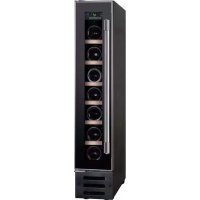


| Product type | Service wine cellar (refrigeration) |
| Brand | Hoover |
| Model | HWCB 15 |
| Bottle capacity | 7 bottles (Bordeaux format 0.75 L) |
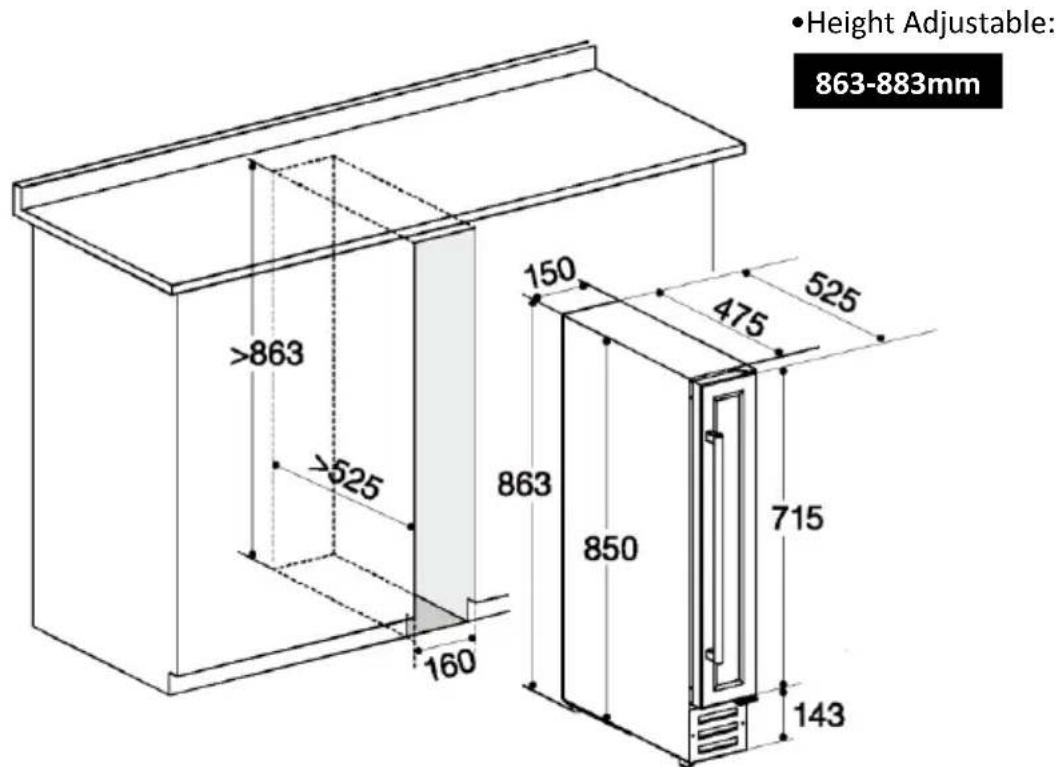
| Dimensions (H x W x D) | 863-883 mm x 475 mm x 525 mm (height adjustable) |
| Net volume | 22 L |
| Temperature range | 5 °C to 22 °C (default, selectable among 4 ranges) |
| Energy efficiency class | C |
| Annual consumption | 236 kWh/year |
| Climate class | N (ambient temperature 16 °C - 32 °C) |
| Noise level | 39 dB |
| Power supply | 220-240 V, 50 Hz (check rating plate) |
| Refrigerant | R600a (isobutane), flammable |
| Installation type | Built-in or freestanding |
| Control panel | Touch, with LED display, child lock, °C/°F switch |
| Interior lighting | LED, switchable |
| Shelves | Beech wood, removable and adjustable |
| Charcoal filter | Present (optional depending on model), annual replacement recommended |
| Door | Glass, with handle, reversible (left or right opening) |
| Adjustable feet | Yes, for leveling |
| Defrosting | Automatic (water drained into evaporation tray) |
| Cleaning | Interior: warm water + baking soda; exterior: damp cloth; do not use abrasive products |
| Warranty | See conditions on the warranty card provided |
| Legal information | Compliant with European directives (CE, WEEE) |
Frequently Asked Questions - HWCB 15 HOOVER
User questions about HWCB 15 HOOVER
0 question about this device. Answer the ones you know or ask your own.
Ask a new question about this device
Download the instructions for your Wine cellar in PDF format for free! Find your manual HWCB 15 - HOOVER and take your electronic device back in hand. On this page are published all the documents necessary for the use of your device. HWCB 15 by HOOVER.
USER MANUAL HWCB 15 HOOVER
Mono zone: HWCB 15, HWCB 30, HWCB 45, HWCB 60D
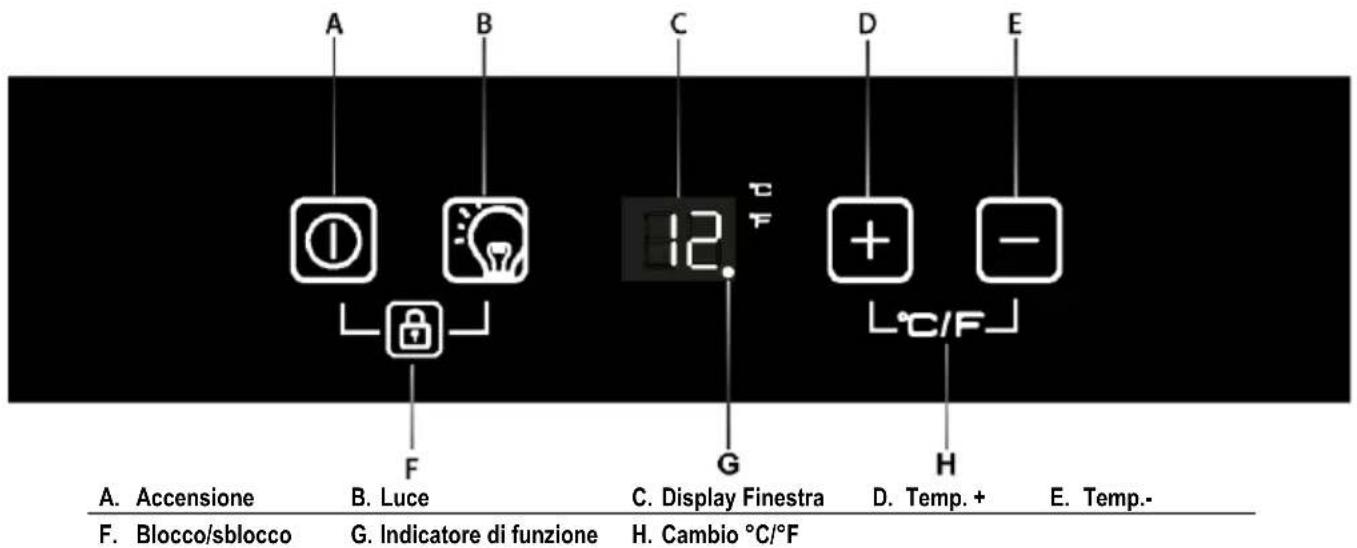
A. Stopped
USING YOUR WINE CELLAR
Before switching on
HWCB 15, HWCB 30, HWCB 45. HWCB 60, HWCB 60D
HWCB 15, HWCB 30, HWCB 45. HWCB 60, HWCB 60D
HWCB 15, HWCB 30, HWCB 45. HWCB 60, HWCB 60D

HWCB 15, HWCB 30, HWCB 45
HWCB 15, HWCB 30, HWCB 45, HWCB 60D
HWCB 15, HWCB 30, HWCB 45, HWCB 60D
HWCB 15, HWCB 30, HWCB 45, HWCB 60
HWCB 15, HWCB 30, HWCB 45
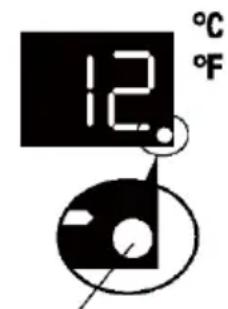
HWCB 15, HWCB 30, HWCB 45, HWCB 60D
Defrosting
HWCB 30, HWCB 60, HWCB 60D
A· Self-tapping screws (4, ST4.2x10)
HWCB 30
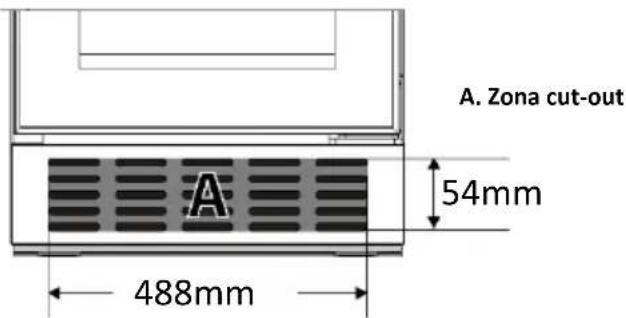
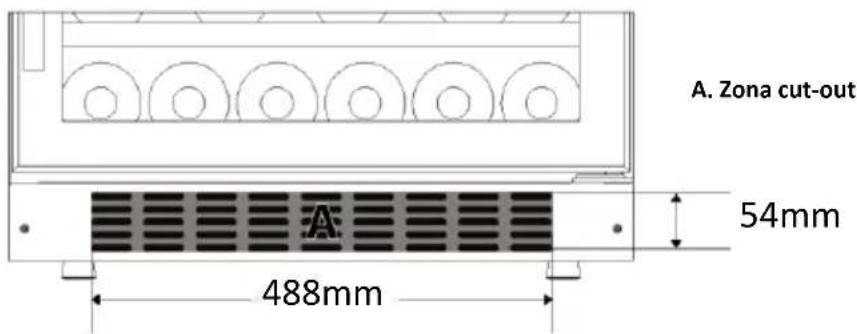
HWCB 60
HWCB 60D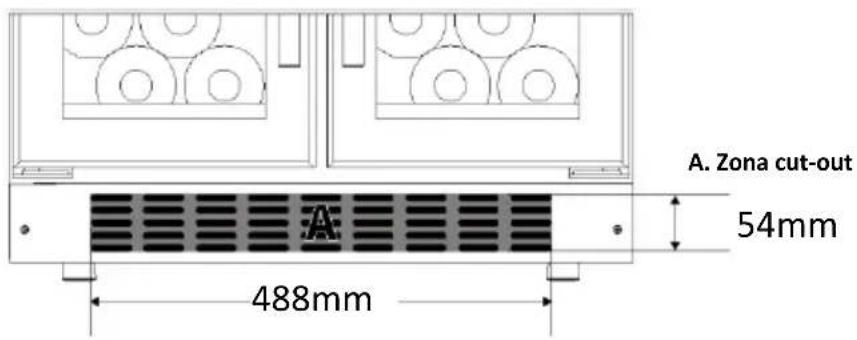
HWCB 15, HWCB 30, HWCB 60
Thank you for purchasing this product.
Before using your refrigerator, please carefully read this instruction manual in order to maximize its performance. Store all documentation for subsequent use or for other owners. This product is intended solely for household use or similar applications such as:
- the kitchen area for personnel in shops, offices and other working environments
- on farms, by clientele of hotels, motels and other environments of a residential type
- at bed and breakfasts (B & B)
- for catering services and similar applications not for retail sale.
This appliance must be used only for purposes of storage of food, any other use is considered dangerous and the manufacturer will not be responsible for any omissions. Also, it is recommended that you take note of the warranty conditions. Please, to obtain the best possible performance and trouble free operation from your appliance it is very important to carefully read these instructions. Failure to observe these instructions may invalidate your right to free service during the guarantee period.
SAFETY INFORMATION
This guide contains many important safety information. Please, we suggest you keep these instructions in a safe place for easy reference and a good experience with the appliance.
The refrigerator contains a refrigerant gas (R600a: isobutane) and insulating gas (cyclopentane), with high compatibility with the environment, that are, however, inflammable.
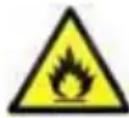
Caution: risk of fire
If the refrigerant circuit should be damaged:
- Avoid open flames and sources of ignition.
Thoroughly ventilate the room in which the appliance is situated.
WARNING!
- Care must be taken while cleaning or carrying the appliance to avoid touching the condenser metal wires at the back of the appliance, as you might injure your fingers and hands or damage your product.
- This appliance is not designed for stacking with any other appliance. Do not attempt to sit or stand on top of your appliance as it is not designed for such use. You could injure yourself or damage the appliance.
- Make sure that the mains cable is not caught under the appliance during and after carrying or moving the appliance, to avoid the mains cable becoming cut or damaged.
- When positioning your appliance, take care not to damage your flooring, pipes, wall coverings, etc. Do not move the appliance by pulling the lid or handle. Do not allow children to play with the appliance or tamper with the controls. Our company declines to accept any liability should the instructions not be followed.
- Do not install the appliance in humid, oily, or dusty places, nor expose it to direct sunlight or water.
- Do not install the appliance near heaters or inflammable materials.
- If there is a power failure, do not open the lid. Frozen food should not be affected if the failure lasts for less than 20 hours. If the failure is longer, then the food should be checked and eaten immediately or cooked and then refrozen.
- If you find that the lid of the chest freezer is difficult to open just after you have closed it, don't worry. This is due to the pressure difference which will equalize and allow the lid to be opened normally after a few minutes.
- Do not connect the appliance to the electricity supply until all packing and transit protectors have been removed.
- Leave to stand for at least 4 hours before switching on to allow compressor oil to settle if transported horizontally.
- This freezer must only be used for its intended purpose (i.e., storing and freezing of edible foodstuff).
- Do not store medicine or research materials in the Wine Coolers. When storing materials that require strict control of storage temperatures, they may deteriorate or undergo an uncontrolled reaction that can cause risks.
- Before performing any operation, unplug the power cord from the power socket.
- On delivery, check to make sure that the product is not damaged and that all parts and accessories are in perfect condition.
- If a leak is noted in the refrigeration system, do not touch the wall outlet and do not use open flames. Open the window and let air into the room. Then call a service center to ask for repair.
- Do not use extension cords or adapters.
- Do not excessively pull or fold the power cord or touch the plug with wet hands.
- Do not damage the plug and/or the power cord; this could cause electrical shocks or fires.
- If the supply cord is damaged, it must be replaced by the manufacturer, its service agent, or similarly qualified person in order to avoid a hazard.
- Do not place or store inflammable and highly volatile materials such as ether, petrol, LPG, propane gas, aerosol spray cans, adhesives, pure alcohol, etc. These materials may cause an explosion.
- Do not use or store inflammable sprays, such as spray paint, near the Wine Coolers. It could cause an explosion or fire.
- Do not place objects and/or containers filled with water on the top of the appliance.
- We do not recommend the use of extension leads and multi-way adapters.
- Do not dispose of the appliance on a fire. Take care not to damage the cooling circuit/pipes of the appliance in transportation and in use. In case of damage, do not expose the appliance to fire or potential ignition sources, and immediately ventilate the room where the appliance is situated.
- The refrigeration system positioned behind and inside the Wine Coolers contains refrigerant. Therefore, avoid damaging the tubes.
- Do not use electrical appliances inside the food storage compartments of the appliance, unless they are of the type recommended by the manufacturer.
- Do not damage the refrigerant circuit.
- Do not use mechanical devices or other means to accelerate the defrosting process, other than those recommended by the manufacturer.
- Do not use electrical appliances inside the food storage compartments, unless they are of the type recommended by the manufacturer.
- Do not touch internal cooling elements, especially with wet hands, to avoid cracks or injuries.
- Maintain the ventilation openings in the appliance enclosure or in the built-in structure, free of obstruction.
- Do not use pointed or sharp-edged objects such as knives or forks to remove the frost.
- Never use hairdryers, electrical heaters or other such electrical appliances for defrosting.
- Do not scrape with a knife or sharp object to remove frost or ice that occurs. With these, the refrigerant circuit can be damaged, the spill from which can cause a fire or damage your eyes.
- Do not use mechanical devices or other equipment to hasten the defrosting process.
- Absolutely avoid the use of open flame or electrical equipment, such as heaters, steam cleaners, candles, oil lamps and the like in order to speed up the defrosting phase.
- Never use water to wash the compressor position; wipe it with a dry cloth thoroughly after cleaning to prevent rust.
- It is recommended to keep the plug clean, any excessive dust residues on the plug can be the cause of fire.
- The product is designed and built for domestic household use only.
- The guarantee will be void if the product is installed or used in commercial or non-residential domestic household premises.
- The product must be correctly installed, located and operated in accordance with the instructions contained in the User Instructions Booklet provided.
- The guarantee is applicable only to new products and is not transferable if the product is resold.
- Our company disclaims any liability for incidental or consequential damages.
- The guarantee does not in any way diminish your statutory or legal rights.
- Do not perform repairs on this Wine Cooler. All interventions must be performed solely by qualified personnel.
SAFETY CHILDREN!
- If you are discarding an old product with a lock or latch fitted to the door, ensure that it is left in a safe condition to prevent the entrapment of children.
- This appliance can be used by children aged from 8 years and above and by persons with reduced physical, sensory or mental capabilities or with a lack of experience and knowledge; provided that they have been given adequate supervision or instruction concerning how to use the appliance in a safe way and understand the hazards involved.
- Children should not play with the appliance. Cleaning and user maintenance should not be made by children without supervision.
DESCRIPTION OF APPLIANCE
Product Features
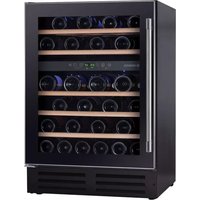
HWCB 15: Single Zone--7 Bottles
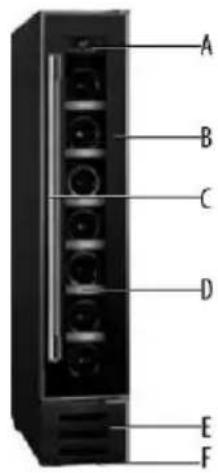
A. Control Panel B. Glass Door C. Handle D. Beech Shelves E. Front Vent F. Adjustable Foot
HWCB 30: Single Zone--19 Bottles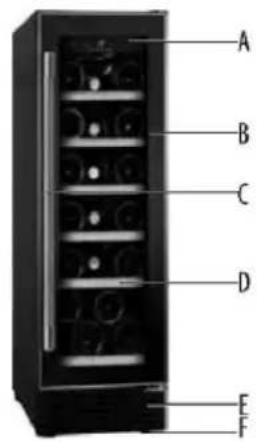
A. Control Panel B. Glass Door C. Handle D. Beech Shelves E. Front Vent F. Adjustable Foot
HWCB 45: Single Zone--18 Bottles
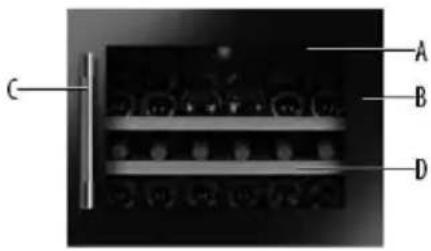
A. Control Panel B. Glass Door C. Handle D. Beech Shelves
HWCB 60: Dual Zone--46 Bottles
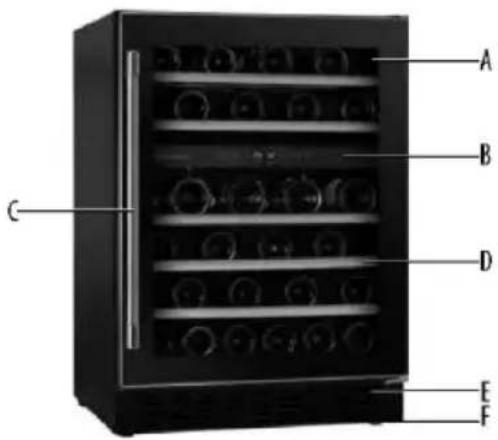
A. Glass Door B. Control Panel C. Handle D. Beech Shelves E. Front Vent F. Adjustable Foot
HWCB 60D: 2 Single Zones (Left & Right)--19+19 Bottles
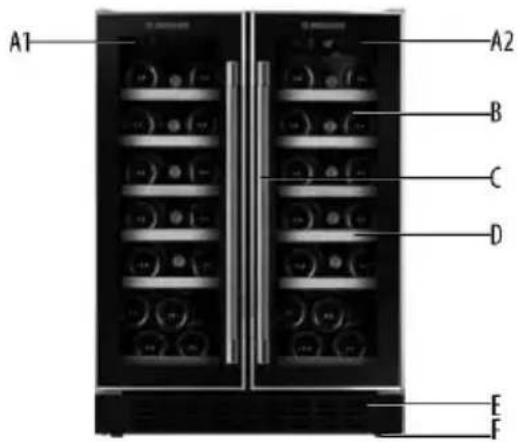
A1. Control Panel (Left) A2. Control Panel (Right) B. Glass Door C. Handle D. Beech Shelves E. Front Vent F. Adjustable Foot
Control Panel
Single Zone: HWCB 15, HWCB 30, HWCB 45, HWCB 60D
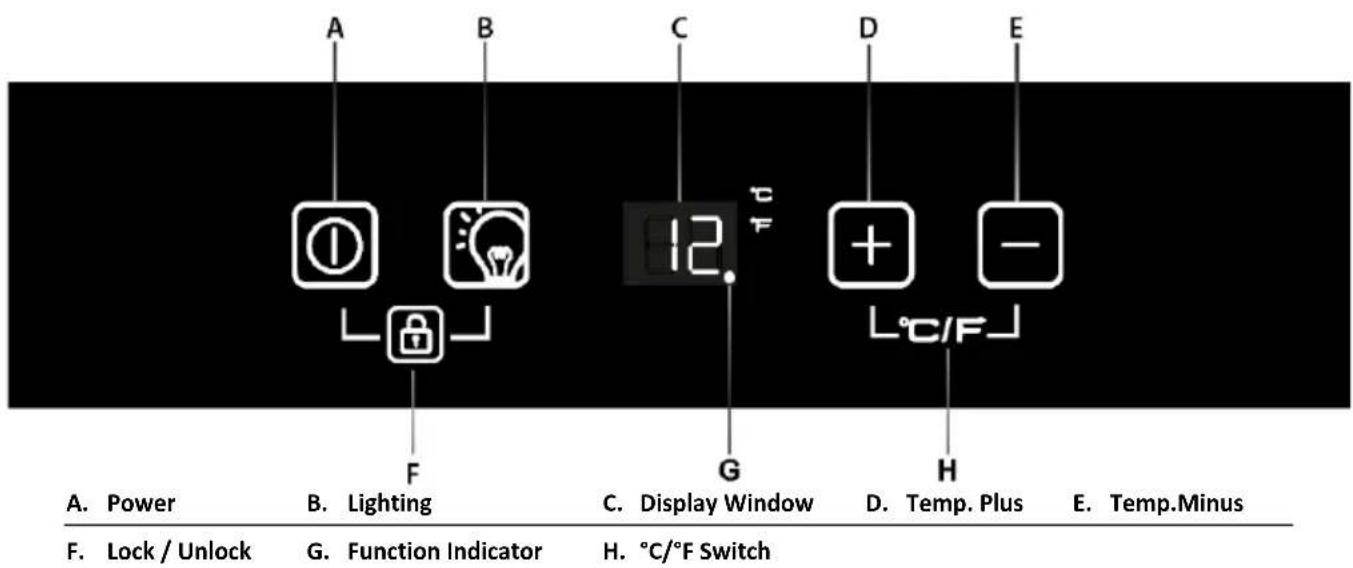
*HWCB 60D is without Function Indicator
Dual Zone: HWCB 60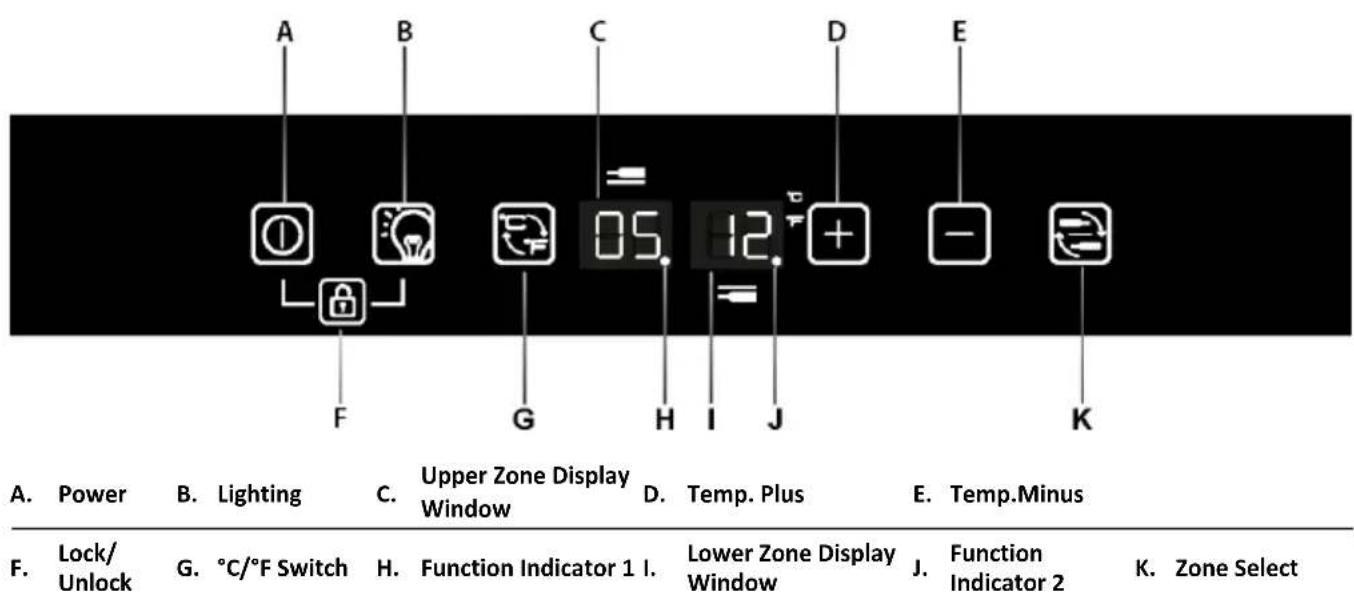
Interior light
Note: This LED light has a long life time. Once it is broken, it is mandatory to call aftersales center to get a new one.
A replacement made by unqualified people without supervision from electrical engineer would result in electrical shock and injury.
- The cooling zone has an interior light. The light can be switched on and off by using the light button.
The Wine Cooler shelves
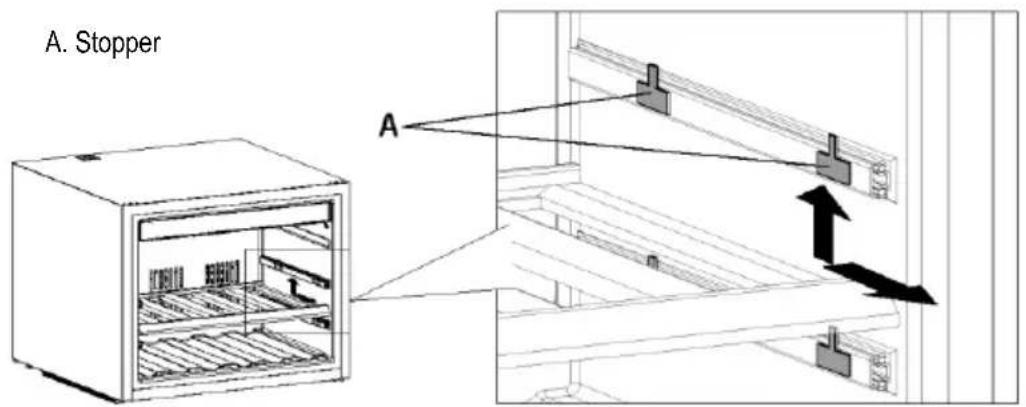
To prevent damaging the door gasket, make sure the door is fully open when pulling shelves out of the rail compartment. For easy access to the bottles stored, pull the shelves out approximately 1/3 of the way. For a model without telescopic rails, 2 plastic stoppers on each shelf are on the left and right side of the interior cabinet to prevent the shelf from falling out.
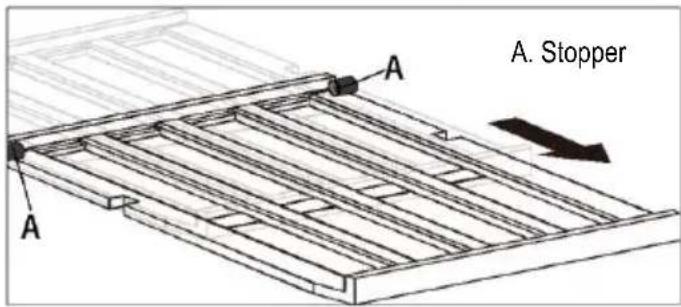
For a model with telescopic rail, 2 stoppers are fixed on each rail base.
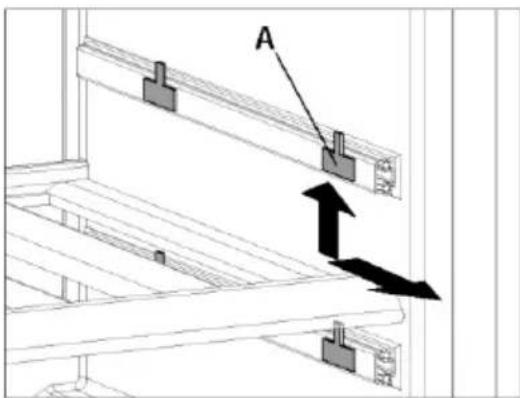
A. Stopper
Make sure that it has been installed by a suitably qualified person, as per the information contained in the installation instructions. After delivery, wait for eight hours before connecting the appliance to your mains supply. This will allow any refrigerant gasses that may have been disturbed during the transportation process to settle. The outside of the appliance and the removable accessories contained within it should be cleaned with a solution of liquid detergent and water.
The interior of the appliance should be cleaned with a solution of sodium bicarbonate dissolved in lukewarm water. The interior and accessories should be thoroughly dried after the cleaning process has been completed.
There can be an odour when you first switch on the appliance. It will lessen as the appliance starts to cool.
During First Use
IMPORTANT: When you use the Wine Cooler for the first time or restart the appliance after it has been turned off for a long time, there could be a few degrees variance between the temperature you select and the one indicated on the LED display. This is normal and it is due to the length of activation time.
Once the Wine Cooler has been running for a few hours everything will be back to normal.
- When you first switch on the appliance, the compressor will run continuously until the Wine Cooler reaches a cool enough temperature. During this period of time, you should try not to open the door frequently or place bottles inside of the appliance.
- If the unit is switched off or unplugged, you must allow at least 5 minutes before restarting the appliance or reconnecting it to your mains supply.
Turning The Appliance On And Off
HWCB 15, HWCB 30, HWCB 45. HWCB 60, HWCB 60D
When the Wine Cooler is connected to the power outlet it will turn on automatically.
Press and hold the power button for 10 seconds to turn the appliance on and off.
- Even if the safety lock is activated, the appliance can still be turned off by pressing and holding the power button for 10 seconds.
* For HWCB 60D, the power of Left and Right Zone will be turned off/on at the same time no matter the operation above on Left or Right Zone.
Unlocking The Control Panel
HWCB 15, HWCB 30, HWCB 45, HWCB 60, HWCB 60D

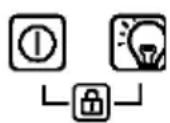
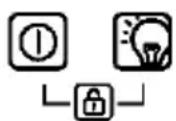
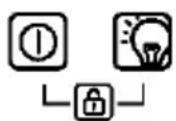
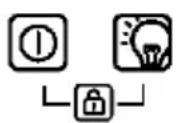
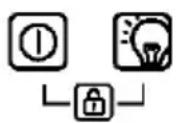
To unlock the control panel, press the power and light buttons simultaneously for 3 seconds. A beep will sound to indicate that the control panel has unlocked.
- The control panel will automatically lock after 10 seconds if no buttons are pressed. A beep will sound to indicate that the control panel has locked.
- When the control panel is locked, no buttons can be operated except for the power button to turn the appliance off.
The Interior Light
HWCB 15, HWCB 30, HWCB 45, HWCB 60, HWCB 60D

- When the control panel is unlocked, you can use the light button to switch the interior light on and off.
- The light will remain on unless it is turned off manually by pressing the light button.
Setting The Temperature Range
- The appliance has 4 temperature ranges for option, the ranges list of each model is as below.

To change temperature range, when the control panel is locked, press the temperature minus button for 3 seconds, the display window will flash "E"--"F"--"H"--"L" in loop with a sound of beep by every pressing.
- Leave the display window flashing for 3 seconds, a beep will sound to indicate that the setting is confirmed.
HWCB 15, HWCB 30, HWCB 45, HWCB 60D
- The default range of Single Zone is E: 5-22 °C (41-72 °F).
| Display | Temp. Range (Single Zone) |
| E (Default) | 5 - 22 °C (41°F-72°F) |
| F | 2 - 20 °C (36°F-68°F) |
| H | 10 - 19 °C (50°F-66°F) |
| L | 0 - 20 °C (36°F-68°F) |
* For HWCB 60D, the default temperature setting range is E: 5-22 °C (41-72 °F) for Left Zone, F: 2 - 20 °C (36°F-68°F) for Right Zone.
HWCB 60
- The default range of Dual Zone is E: 5-12 °C (41-54 °F) for the upper zone and 12-22 °C (54-72 °F) for the lower zone
| Display | Temp.Range (Dual Zone) | |
| Upper Zone | Lower Zone | |
| E (Default) | 5 - 12 °C (41°F-54°F) | 12 - 22 °C (54°F-72°F) |
| F | 2 - 12 °C (36°F-54°F) | 12 - 20 °C (54°F-68°F) |
| H | 5 - 12 °C (41°F-54°F) | 8 - 19 °C (46°F-66°F) |
| L | 2 - 10 °C (36°F-50°F) | 12 - 22 °C (54°F-72°F) |
Setting The Temperature
HWCB 15, HWCB 30, HWCB 45, HWCB 60D
- Use the temperature plus button and minus button to select the temperature you want the Wine Coolers to operate at.
○ Each press of the temperature plus button will increase the set temperature by 1°C/1°F.

○ Each press of the temperature minus button will decrease the set temperature by 1°C/1°F.
- The first touch of these buttons will automatically set the previous set temperature.
- When the display shows the desired temperature, release all buttons and the display will change to show the actual temperature inside of the cabinet after about 10 seconds.
HWCB 60
Use the zone selection button to choose which zone you want to set the temperature for. The relevant LED display will flash to show you can set the temperature for that zone.
- Use the temperature plus and minus buttons to select the temperature you want the wine cabinet to operate at.

- The first touch of these buttons will automatically set the previous set temperature.

- Each press of the temperature plus button will increase the set temperature by 1°C/1°F. Each press of the temperature minus button will decrease the set temperature by 1°C/1°F.
- When the display shows the desired temperature, release all buttons and the display will change to show the actual temperature inside the cabinet after about 10 seconds.
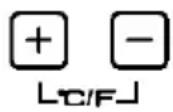
Changing Between Fahrenheit and Celsius
- You can select whether the temperature display shows Celsius or Fahrenheit.
HWCB 15, HWCB 30, HWCB 45, HWCB 60D
To alter what the temperature display is showing, press the Celsius and Fahrenheit switch. This will change the temperature display for both cooling zones.
* For HWCB 60D, the Celsius and Fahrenheit of Left and Right Zone will be changed at the same time no matter the operation above on Left or Right Zone.
HWCB 60
To alter what the temperature display is showing, press the Celsius and Fahrenheit switch. This will change the temperature display for both cooling zones.
Silent Mode
HWCB 15, HWCB 30, HWCB 45, HWCB 60
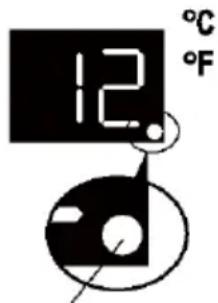
- The appliance is with Silent Mode, which will slow down the fans speed when the inside temperature reaches the temperature set.

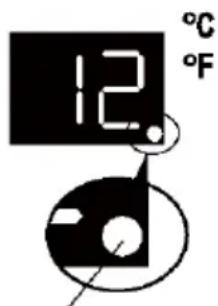
- The Silent Mode is set as "On" by default, to turn it off, when the control panel is under locked condition, press and hold the light mark for 3 seconds, the icon °C or °F will stay on to indicate the Silent Mode is off.

To turn on Silent Mode again, when the control panel is under locked condition, press and hold the light mark for 3 seconds, the icon °C or °F will flash every 2 seconds continuously to indicate the Silent Mode is working.
Function Indicator
HWCB 15, HWCB 30, HWCB 45
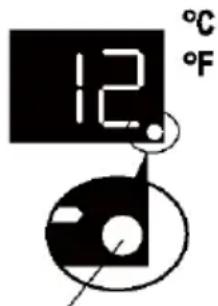
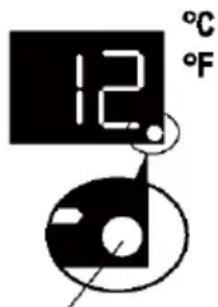
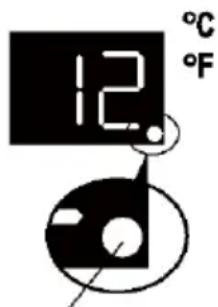
- When the compressor starts to work, the Indicator will stay on.
- In other conditions, the Indicator will be off.
Function Indicator
HWCB 60
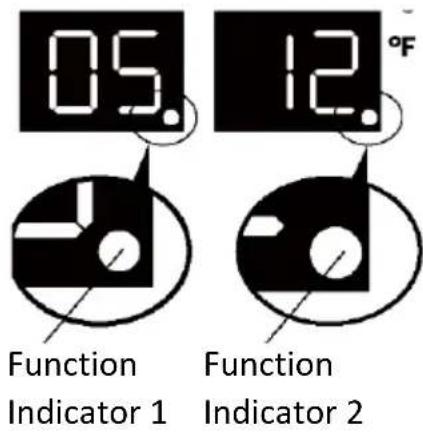
- Indicator 1 will flash every 2 seconds when the unit is plugged in.
- Indicator 1 will stay on when the compressor starts to work.
- Indicator 2 will flash every 3 seconds when the heating function of the lower zone starts to work.
- Indicator 2 will stay on when the cooling function of the lower zone starts to work.
Loading the Wine Cooler
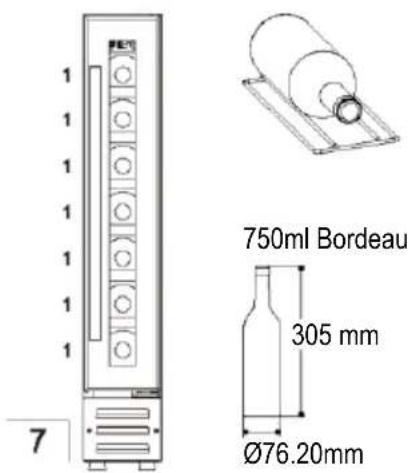
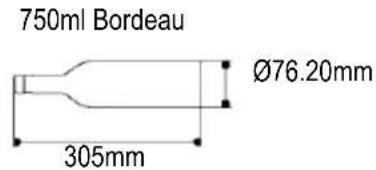
IMPORTANT: Your appliance is ideally suited to store 0.75 litre Bordeaux style wine bottles. You must make sure that they do not prevent the door from shutting properly.
Always check that you can close the door without it fouling on a wine bottle before shutting it. When loading several bottles of wine at once, it will take longer for the appliance to cool the individual bottles. As many bottles may differ in size and dimensions, the actual number of bottles you are able to store may vary. The maximum storage number is based on standard 0.75 litre Bordeaux style wine bottles.
HWCB 15
HWCB 30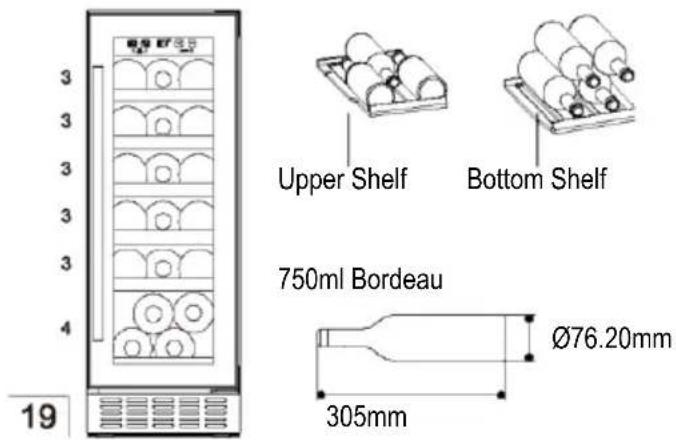
HWCB 45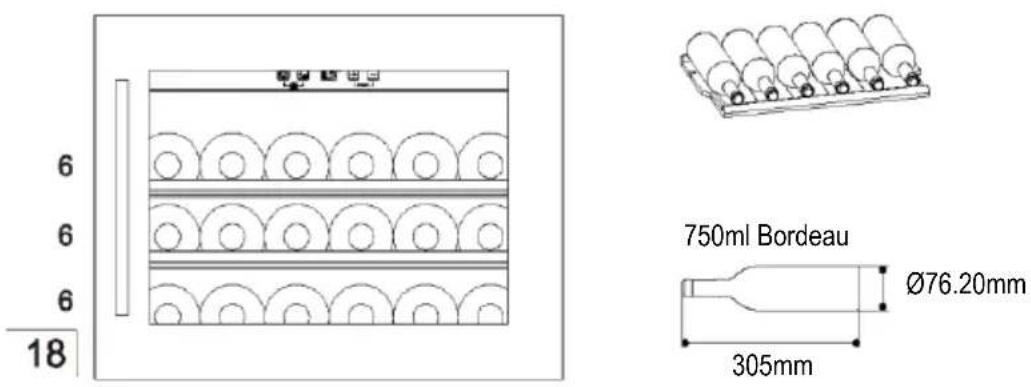
HWCB 60
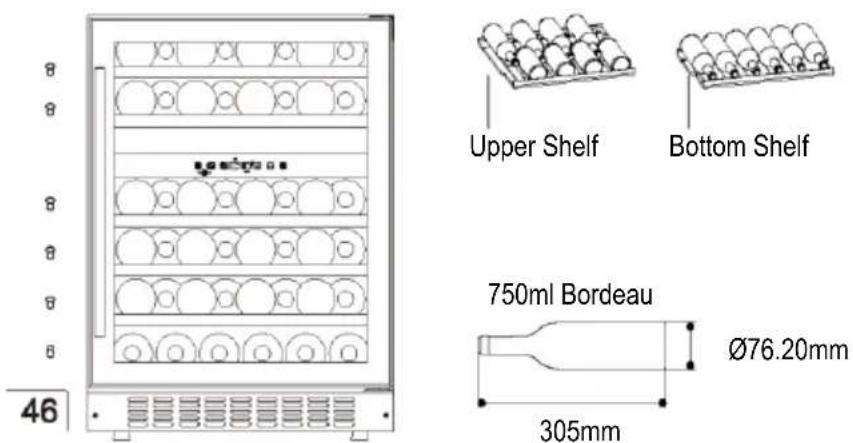
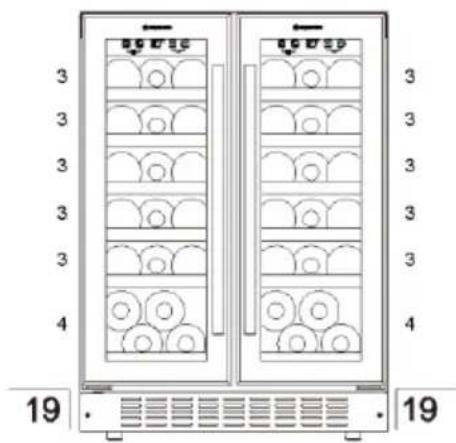
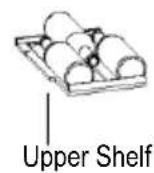
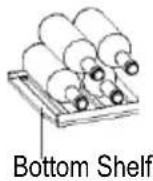
Storing Your Wines
The chart below indicates the ideal storage temperatures for different types of wine:
| Type of wine | Temperature (Celsius) | Temperature (Fahrenheit) |
| Red wine (*) | 15.5 - 18.5°C | 59.9 - 65.3°F |
| White wine (**) | 10 - 15°C | 50 - 59°F |
| Sparkling wines/ Champagne | 7.2 - 9.5°C | 45 - 49.1°F |
| Rose wine | 9.5 - 10.5°C | 49.1 - 50.9°F |
| Vintage wine | 13°C | 55°F |
* Light red wines, such as Beaujolais, Pinot Noir, and Cabernet Franc, benefit from being served slightly cooler than full-bodied reds. ** Chardonnay is often served too cold. You should chill it at a warmer temperature inside your Wine Cooler, or leave it to warm slightly when you remove it from your Wine Cooler. - Temperature stability is the most important factor when it comes to storing wine. - Exposure to light, vibrations, or fluctuations in temperature and humidity can all cause wine to spoil. When properly stored, wines not only maintain their quality but many will actually improve in aroma, flavor, and complexity as they mature. ○ Wines kept at a higher temperature will age faster. Wine that is exposed to temperatures greater than 21°C (70°F) will suffer from poorer flavor and aroma.
○ If wine is kept at too low a temperature, this can result in the development of harmful deposits. A humidity of 70% is ideal for keeping corks from shrinking. ○ After a bottle of wine has been opened, the wine comes into contact with air. So it is best to store the remainder of the bottle upright, to minimize the surface area of the wine that is coming into contact with the air. Once opened, wine will remain in a drinkable condition for two days for delicate whites or three days for rich reds, as long as the bottle has been resealed. You should make sure that the seal is firm by checking the stopper. ○ Special stoppers that keep wine sparkling and Champagne bubbling for one or two days after opening can be bought at most good wine shops. - When stored correctly, white wines can keep well for up to two years. Full-bodied reds will age well for ten years, and dessert wines will age well for up to twenty years. - When you buy a bottle of wine, you should transfer it to a suitable storage location immediately (if you are not going to store it in your Wine Cooler). - Cheaper bottles of wine will not age as well as more expensive ones. To make the most of the bouquet and taste of your wine, never fill more than half a glass at a time. It will also help if the shape of your wine glass is appropriate for your wine. The size and shape of your wine glass's bowl will determine the intensity and complexity of the bouquet. The stem should be long enough to allow you to avoid hand contact with the bowl of the glass and should be tulip-shaped or tapered at the top.
Wine Storage Problems
Corking - a tiny percentage of bottled wine (about 1%) will suffer from this. The cork reacts with the wine and gives it a musty, unpleasant taste. It is the most common wine storage problem and is caused by harmless bacteria growing on the cork. As unfortunate as this is, there is nothing to do but to discard all of the wine in the affected bottle. This is not to be confused with small fragments of cork floating in the wine itself, which will not impair the flavour.
Oxidisation - when wine has been opened and left for longer than a day, it tends to lose its aroma and colour, giving an overall flat taste. The only way to avoid this is to either drink the wine on the same day it was opened or to use a vacuum device specially designed for removing oxygen from opened wine bottles. If you use such a device, the wine should still be consumed shortly afterwards.
Ullage - this is loss of wine from the bottle by evaporation or leakage. Signs of ullage include wine seeping around the cork, a protruding cork or a stained label. It can happen if the bottle has been allowed to get too warm. The wine may still be drinkable, if the leakage was recent; however, you should be aware that if the wine cools down again, contraction can cause more air to be sucked into the bottle and result in further deterioration.
Slight effervescence in still wine - this isn't really a problem with the way the wine has been stored, but as a result of incomplete malolactic fermentation before the wine was bottled. A good way to get rid of the effervescence is to let the wine breathe. Alternatively you can use a bottle vacuum device, after about five minutes the effervescence will vanish.
Sediment - this is not normally a problem, however both red and white wines can produce sediment after a number of months in a bottle. The sediment consists of tartrate crystals and is totally harmless. If anything the building of sediment can be considered a good sign because it means that the wine was not subjected to much (if any) filtering, meaning that the flavours and aromas should be preserved better.
A good way to get around sediment (if it is a problem) is to stand the bottle upright, the day before opening, so that the sediment can settle to the bottom of the bottle.
You can also decant your wine; decanting will "open up" the flavour of both young and old wines, but younger wines in particular. To decant, pour the wine slowly and evenly into your decanter.
CLEANING AND MAINTENANCE
WARNING: PLEASE ENSURE THAT YOUR APPLIANCE IS DISCONNECTED FROM YOUR MAINS SUPPLY BEFORE ATTEMPTING TO CLEAN IT.
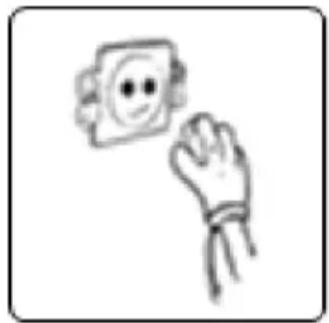
- Do not clean the appliance by pouring water onto it or spraying water over it.
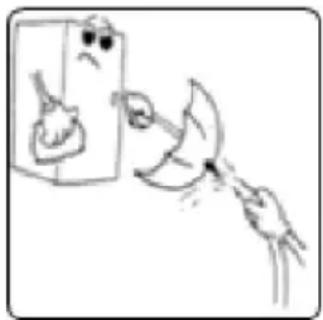
- The interior of the Wine Cooler should be cleaned periodically, using a solution of bicarbonate of soda and lukewarm water.
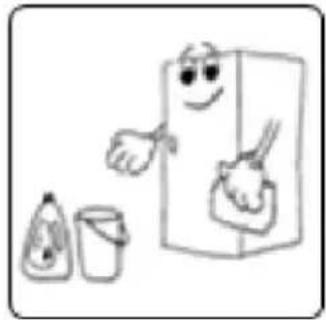
- Clean the accessories separately with soap and water. Do not clean them in a dishwasher.
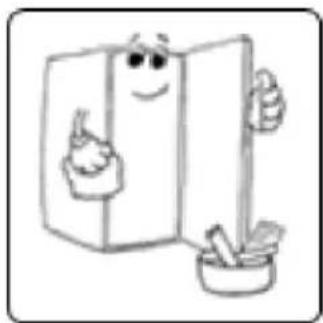
- Do not use abrasive products, detergents or soaps.
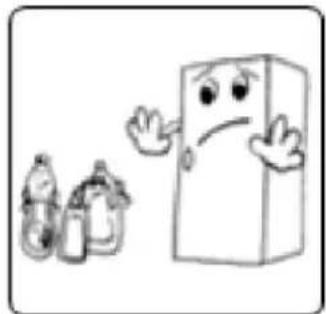
After washing the appliance, wipe over the area that you have cleaned with a damp cloth and then dry it thoroughly.
When cleaning is complete, dry your hands and then reconnect the plug to your mains supply.
Removing The Shelves For Cleaning
Before removing a shelf from the appliance, it is necessary to remove all the bottles on the shelf.
HWCB 15, HWCB 30, HWCB 45, HWCB 60D
Move the shelf to the position where the notch of the wooden shelf is directly under the plastic stopper and lift the wooden shelf. Please ensure these are replaced when the shelf is put back.
Make sure the shelves are fully engaged before loading any bottle into the cabinet. Pull the shelves out all the way to the STOPPER position and push them back in several times to make sure the shelves are properly engaged.
A. Notch B. Plastic Stopper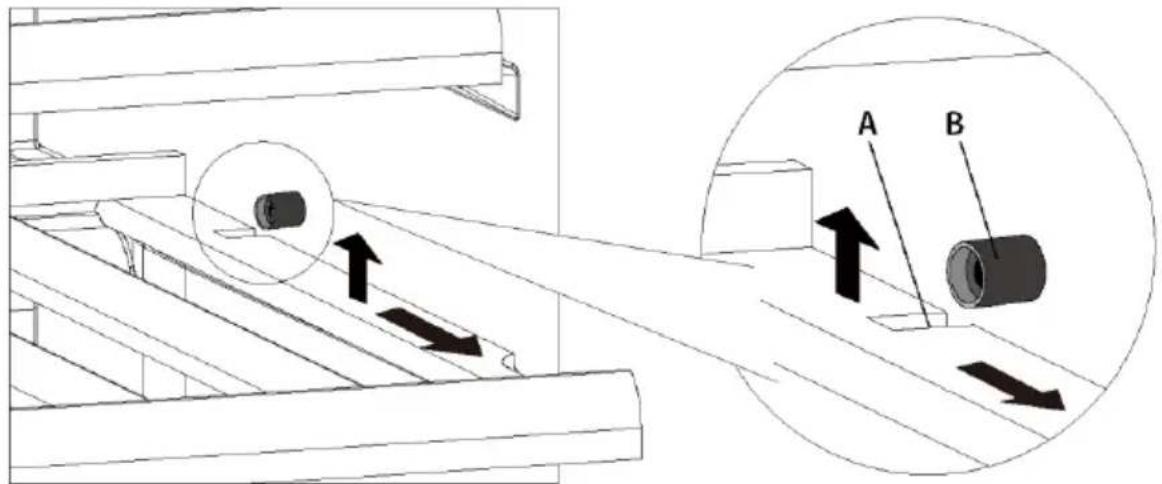
HWCB 45
Pull out the shelf fully and lift the shelf to remove the shelf. To put the shelf back, please ensure the 2 stoppers are exactly inserted into the stopper holes underneath the shelf.
Carbon Filter Change
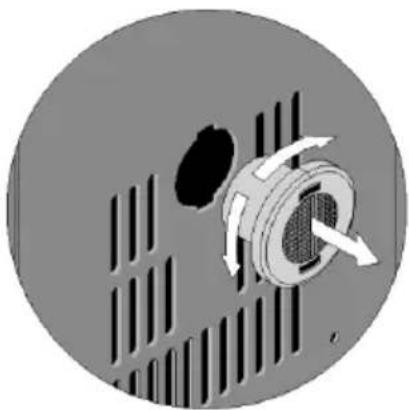
A good ambient air quality is important for wine maturing. The Carbon Filter is very helpful to absorb odor and improve air quality. For the models with Carbon Filter, we suggest to replace it once a year. Please contact your dealer to get the filter.
Removing the Carbon Filter:
Hold the Carbon Filter and turn it 90° to the left or right to remove it.
Reinstalling the Carbon Filter:
Hold the Carbon Filter and turn it 90° to the left or right until it clicks into place.
Defrosting
- Defrosting occurs automatically inside of the Wine Cooler during operation. The defrost water is collected by the evaporating tray and evaporates automatically.
- The evaporating tray and defrost water drain hole should be cleaned periodically. This will prevent water from collecting in the bottom of the Wine Cooler, instead of flowing down the defrost drainage channel and drain hole.
- You can also pour a small amount of water down the drain hole to clean inside of it.
- You should be careful to make sure that wine bottles do not touch the rear wall of the appliance, as this can interrupt the automatic defrosting process and deflect water into the base of your Wine Cooler.
Moving Your Wine Cooler
If you need to move your Wine Cooler to another location you should follow the steps outlined below.
- Remove all items from the Wine Cooler.
- Securely tape down all loose items such as the shelves inside of the appliance.
- Turn the adjustable foot up to the base to avoid damage. Tape the door closed.
- Ensure the appliance stays secure in the upright position during transportation. Also protect the outside of the appliance with a blanket or similar item.
Power Failure
- If power is cut to the appliance, for a few hours it will be able to maintain the temperature inside the cabinet. Providing that the number of times that the door is opened is kept to a minimum.
- If the power cut is for longer than a few hours, then you will need to store the contents in an alternate location to prevent them being affected by temperature rise.
IMPORTANT: If the appliance is unplugged, the power is lost or turned off, you must wait 5 minutes before restarting the Wine Cooler. If you attempt to restart before this time delay, the compressor could be damaged.
Vacation Time
Short vacations: Leave the Wine Cooler in operation for holidays of less than 3 weeks.
Long vacations:
- If your appliance is not going to be in use for a period of time, you should remove the bottles of wine and switch off the appliance.
- The interior should be cleaned with a solution of bicarbonate of soda and lukewarm water.
- The interior should then be thoroughly dried.
- To prevent mould growth, the door should be left slightly ajar.
Disconnecting From Power
- If the unit is unplugged, or there is a power cut, you must wait for 5 minutes before restarting. Attempting to restart the Wine Cooler before 5 minutes has elapsed, may cause it not to function.
INSTALLATION
IMPORTANT: Before installation and usage read all the instructions and make sure that the voltage (V) and the frequency (Hz) indicated on the rating plate are exactly the same as the voltage and frequency in your home. The rating plate can be found on the front left edge of the inside of the Wine Cooler.
The manufacturer declines all responsibility in the event of the installer failing to observe all the accident prevention regulations in force, which are necessary for normal use and the regular operation of the electric system.
Electrical Connection
YOUR Wine Cooler IS INTENDED FOR FITTED AND PERMANENT INSTALLATION.
We recommend that the appliance is connected by a qualified electrician, who is a member of the N.I.C.E.I.C. and who will comply with the I.E.E. and local regulations.
Positioning
- It is advisable that your appliance is only installed in a location where the ambient temperature of the room corresponds with the climate classification stated on the rating plate of your appliance. Your appliance may not function correctly if the ambient temperature falls outside of the following ranges.
| Climate classification | Appropriate ambient temperature |
| SN | 10 - 32 °C (50°F-90°F) |
| N | 16 - 32 °C (61°F-90°F) |
| ST | 16 - 38 °C (61°F-100°F) |
| T | 16 - 43 °C (61°F-109°F) |
- Positioning the appliance requires two people in order to avoid injuries or damage to the appliance.
- Your appliance should not be located in direct sunlight or exposed to continuous heat or extremes of temperature (e.g. next to a radiator or boiler). If this is not feasible, then you should install an insulation plate between the appliance and the adjacent heat source.
- You should check whether there is an electrical socket available, which will be accessible after your appliance is installed.
- Place the appliance flatly and firmly on a solid base.
- Anything positioned above the appliance must be at least 10 cm away to allow sufficient cooling of the condenser. You must allow a 5 cm gap to the rear and either side of the appliance.
- Be sure to leave enough space for the opening of the door, to avoid damage to the appliance or personal injury.
Built-In Installation
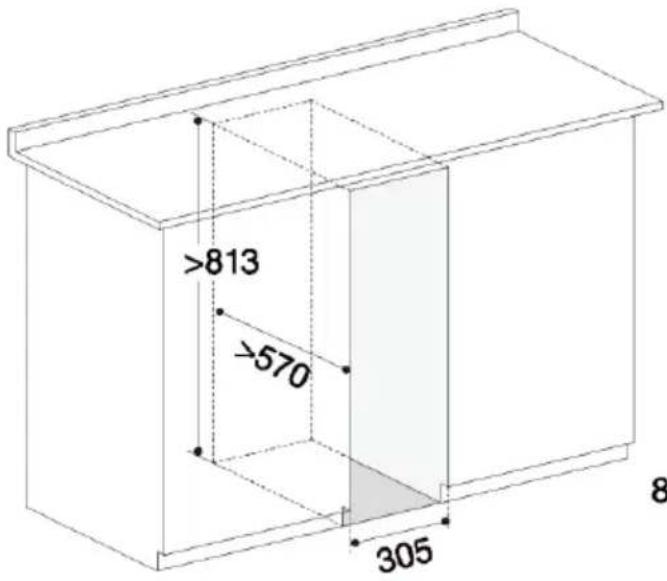
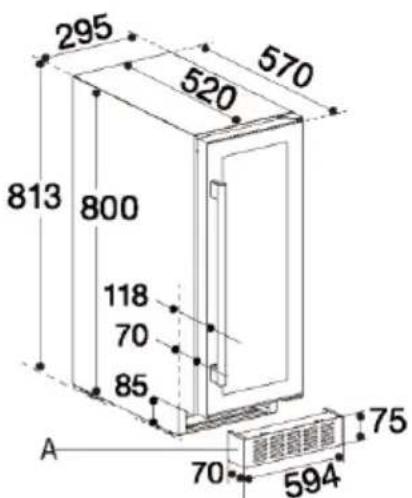
HWCB 15
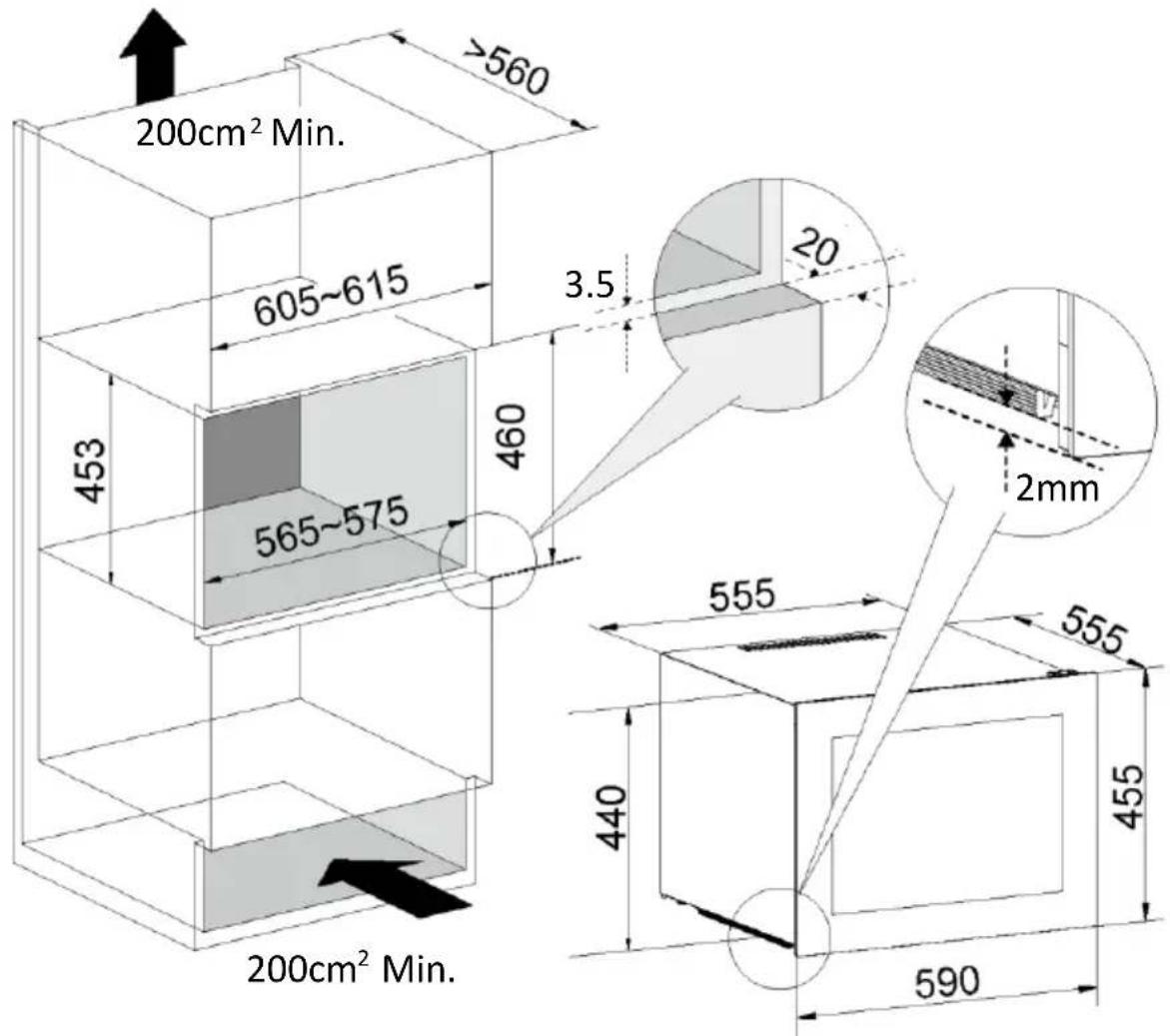
HWCB 30
A·Removable Front Grille
• Height Adjustable:
813-833mm
To fix the appliance with the cabinet, please screw the 4 screws (ST4.2*12mm) through the top bracket. The top bracket is preinstalled on top of the appliance.
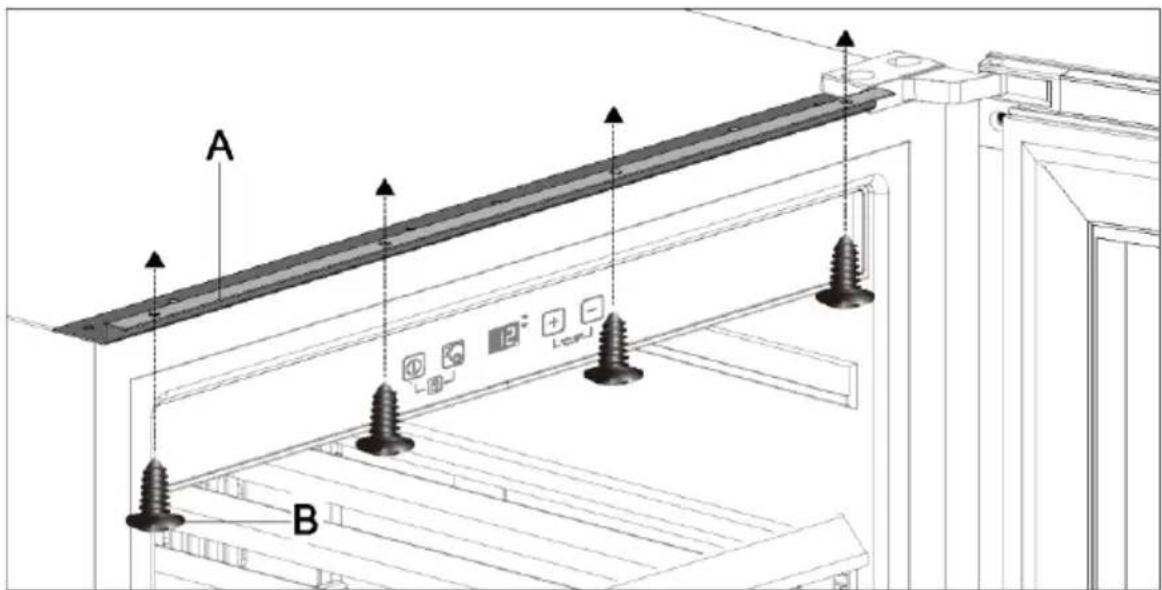
A. Top Bracket B. 4 Screws (ST4.2*12mm)
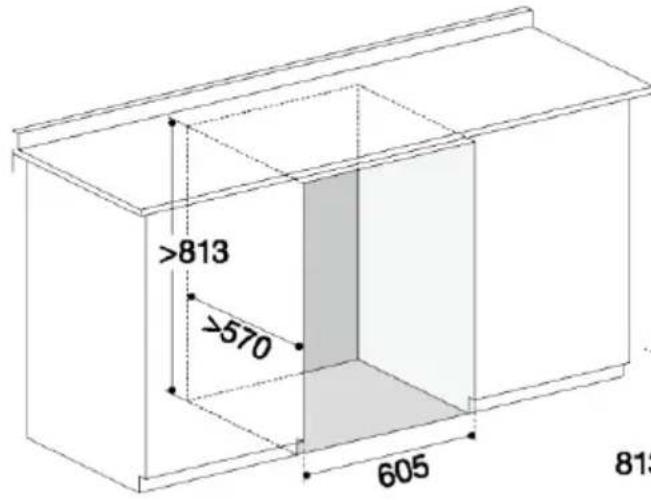
A· Removable Front Grille - Height Adjustable:
813-833mm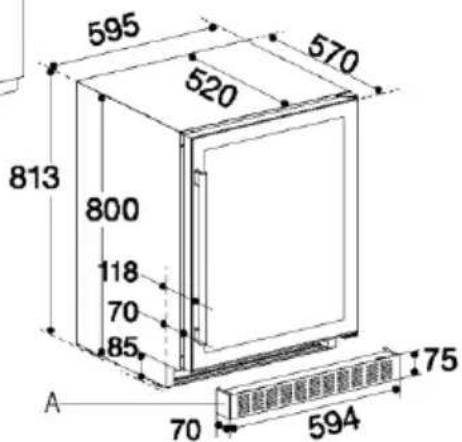
HWCB 60D
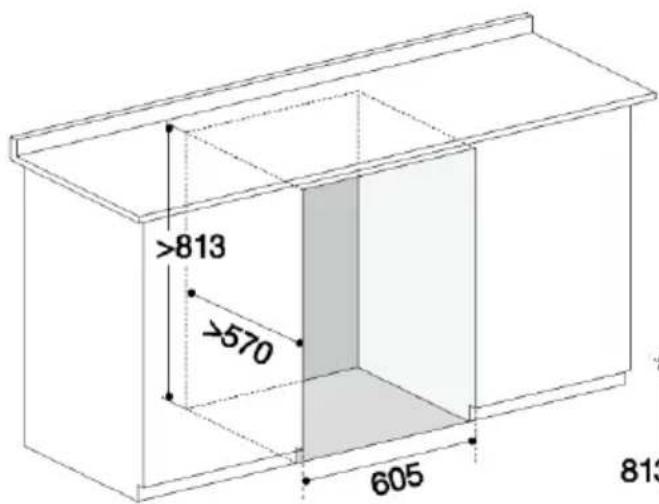
A· Removable Front Grille - Height Adjustable:
813-833mm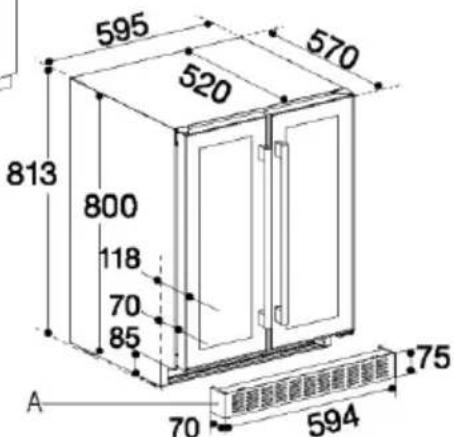
- Your wine cooler can be used as a freestanding or built-in unit. The clearances shown in the above drawing should be followed for both types of installation.
- In particular, the depth dimension must be observed.
• Install Removable Front Grille (Option)
- The front grille is packed as an accessory. Please unpack and remove it from inside the cabinet. Place the unit on a soft and flat floor, lay it down to a suitable angle.
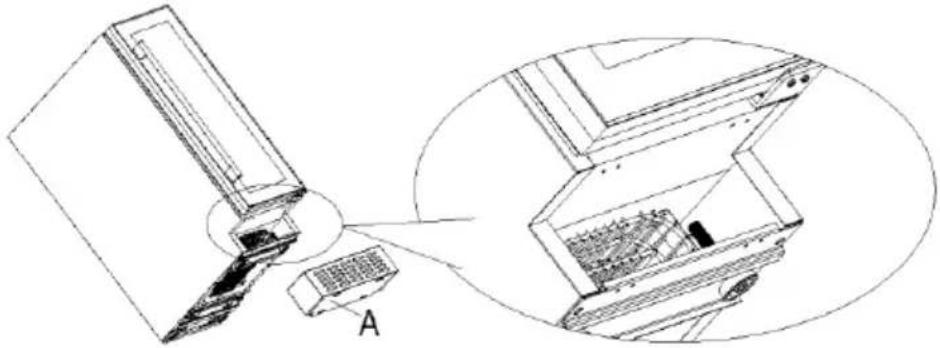
A· Removable Front Grille
- Install the front grille by screwing the 4 tapping screws (ST4.2x10) tightly with a Phillips screwdriver.
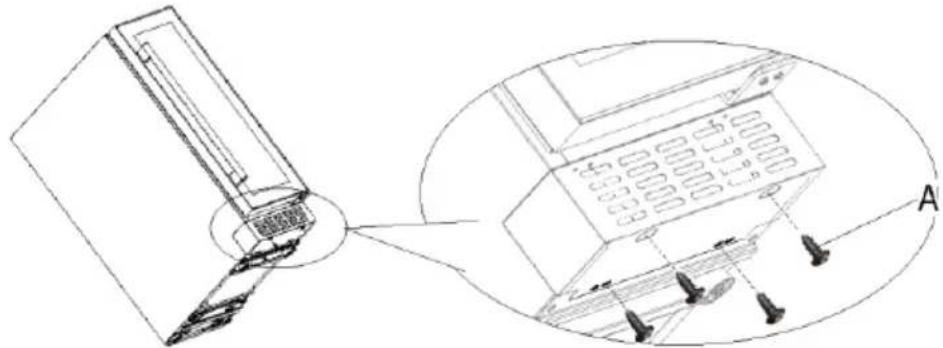
A·Tapping Screws (4pcs, ST4.2x10)
- The unit with the Front Grille installed.
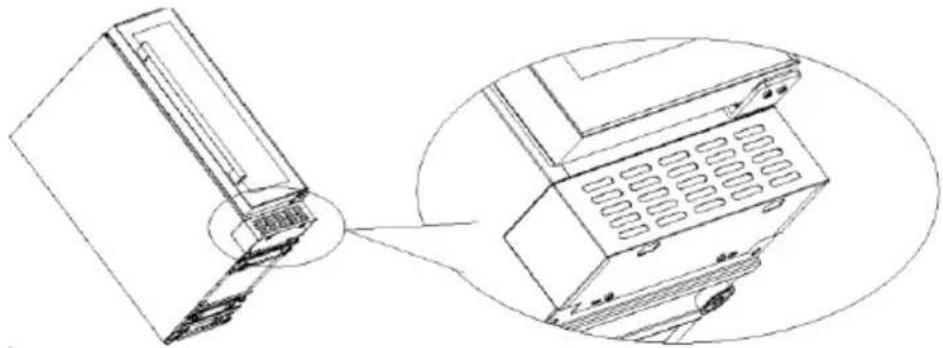

Warning: The Front Grille is not a support. To avoid it twisting, please never try to lay the unit down on the foot of the Front Grille.
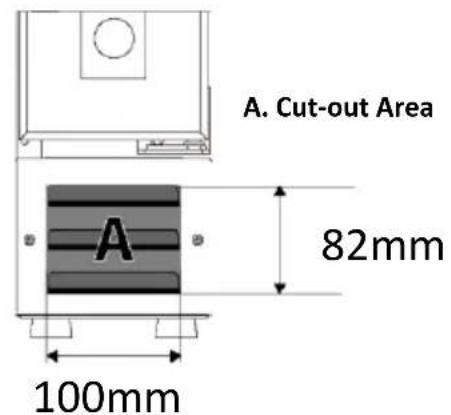
IMPORTANT: The vent at the base of the appliance is for ventilation. Nothing should be placed in front of this vent; otherwise your Wine Cooler may not operate properly.
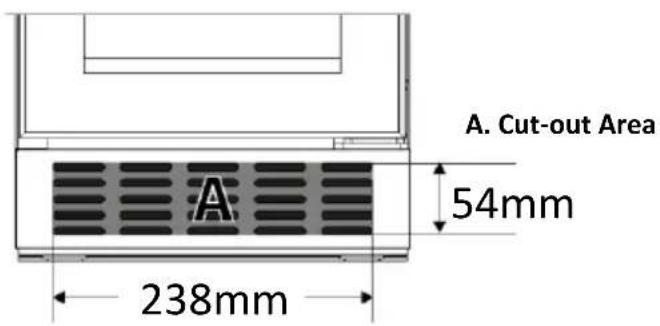
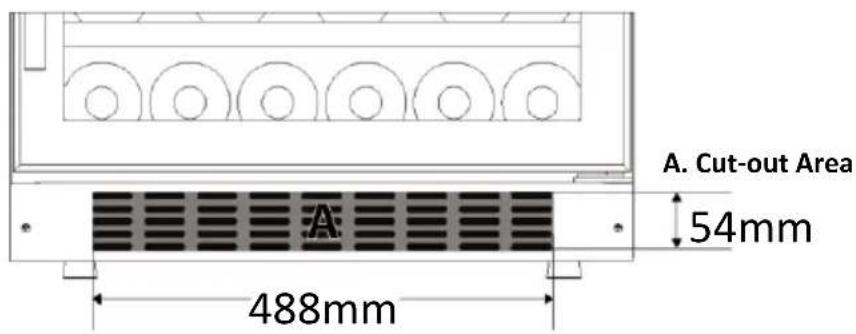
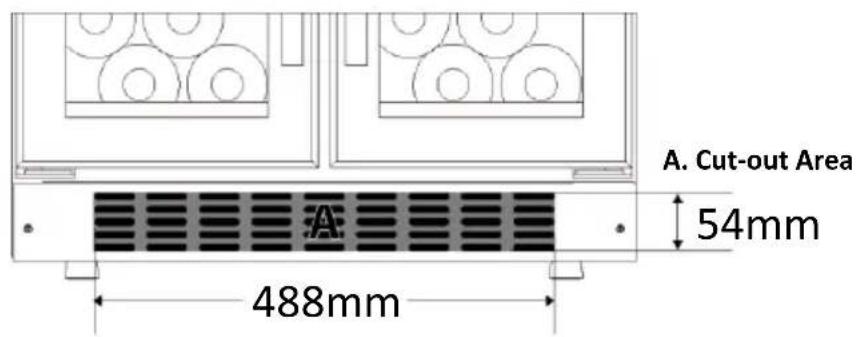
A decorative plinth can be fitted to the front of the base vent as long as the cut out shown in the diagram below is made in the plinth. This cut out is required whether the vent is removed or not.
HWCB 15
HWCB 30
HWCB 60
HWCB 60D
Adjusting the height and levelling off your wine cabinet
HWCB 15, HWCB 30, HWCB 60, HWCB 60D
- The appliance is equipped with adjustable feet, so that the height may be adjusted to level the cabinet on uneven floor surfaces.
- We recommend that two people carry out this procedure.
- The height must be adjusted prior to building the appliance into the housing unit and it should be set at such a height that the top panel of the appliance fits exactly below the kitchen worktop.
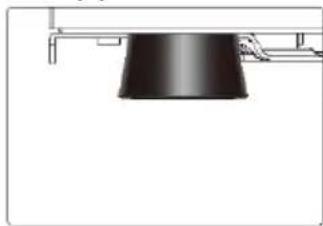
- Tilt the appliance approximately 60° to allow access to the adjustable feet. Take care to ensure the cabinet is supported at all times.
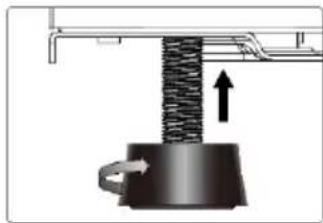
Twist the foot into a suitable position to level the cabinet.
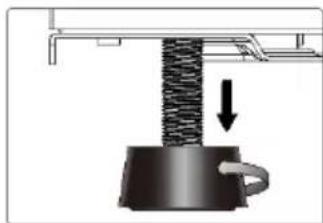
Repeat these steps for the other adjustable feet.
IMPORTANT: If the appliance is not level, then the door and door seal may be affected.
IMPORTANT: Do not move the appliance when the feet are adjusted high.
Installing The Handle
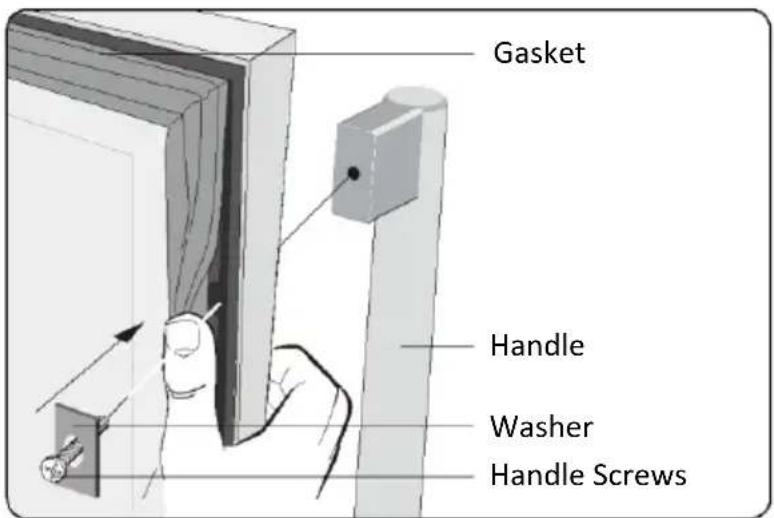
- Remove the door gasket on the inside of the door to expose the two screw holes. Install the handle using the screws and washers provided. Replace the door gasket.
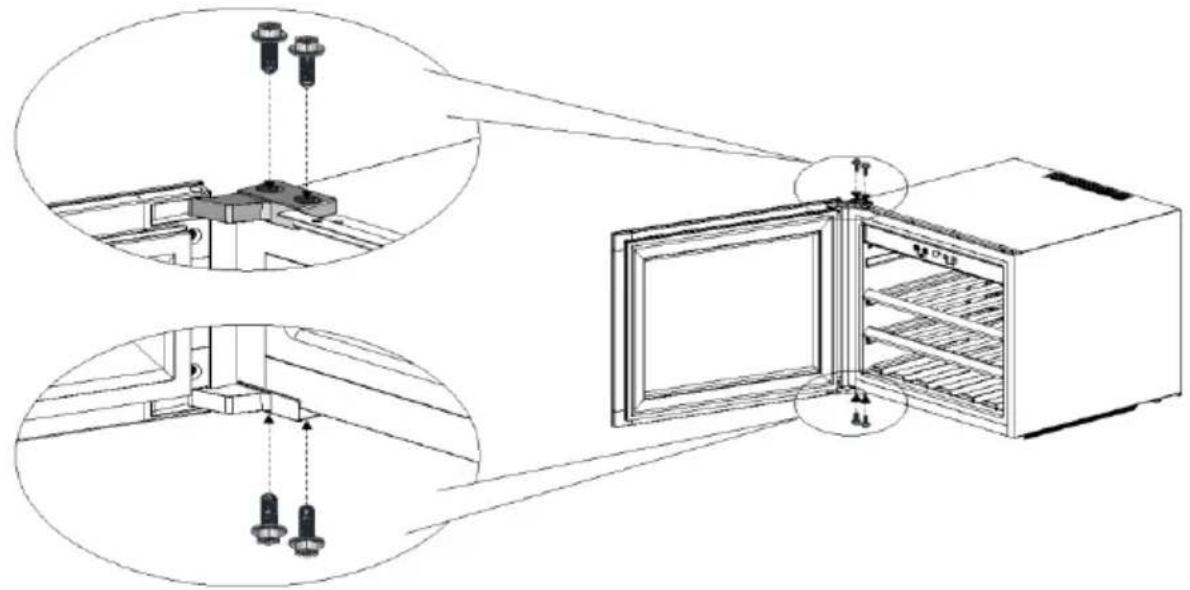
Reversing The Door Of Your Wine Cooler
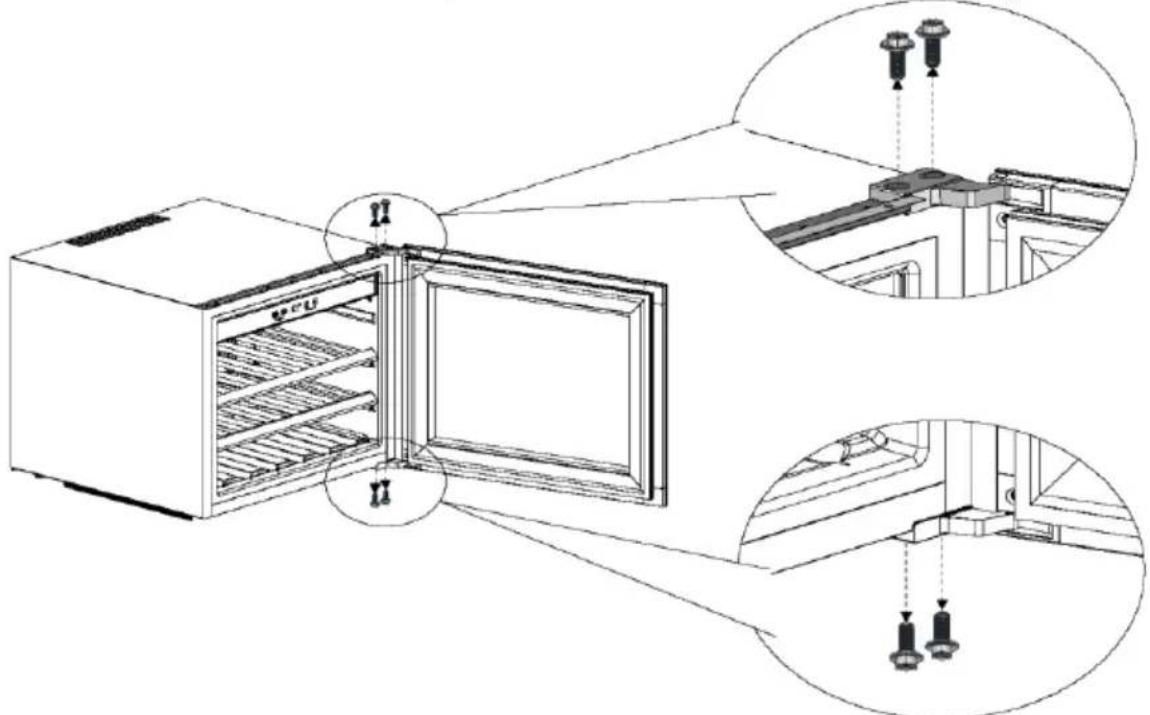
This appliance has the capability of the door opening from either the left or right hand side.
Any parts that you remove from the appliance whilst reversing the door, should be retained for later use.
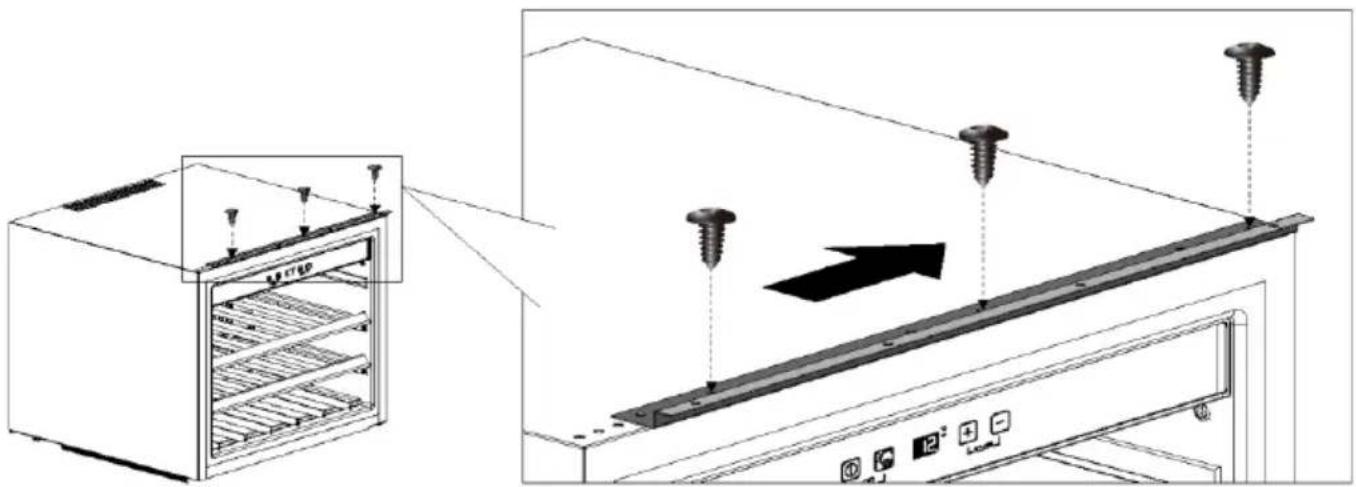
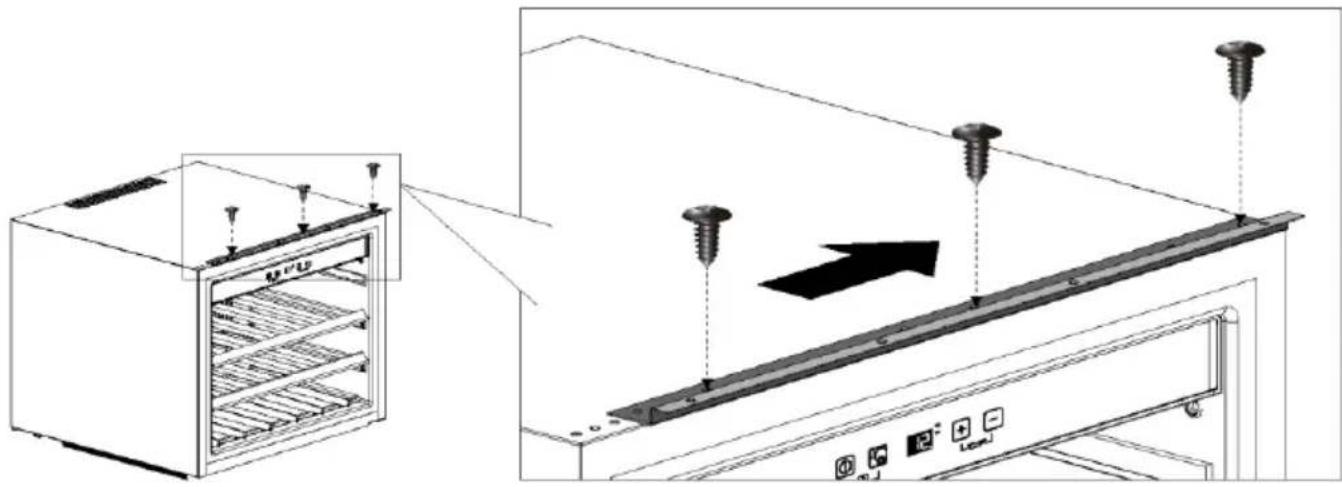
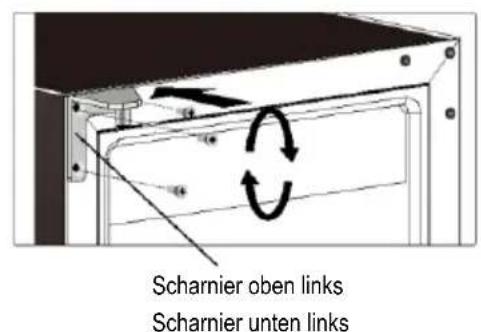
Unscrew the 4 screws from the upper hinge and bottom hinge of door. Remove the door and place it on a soft surface carefully.
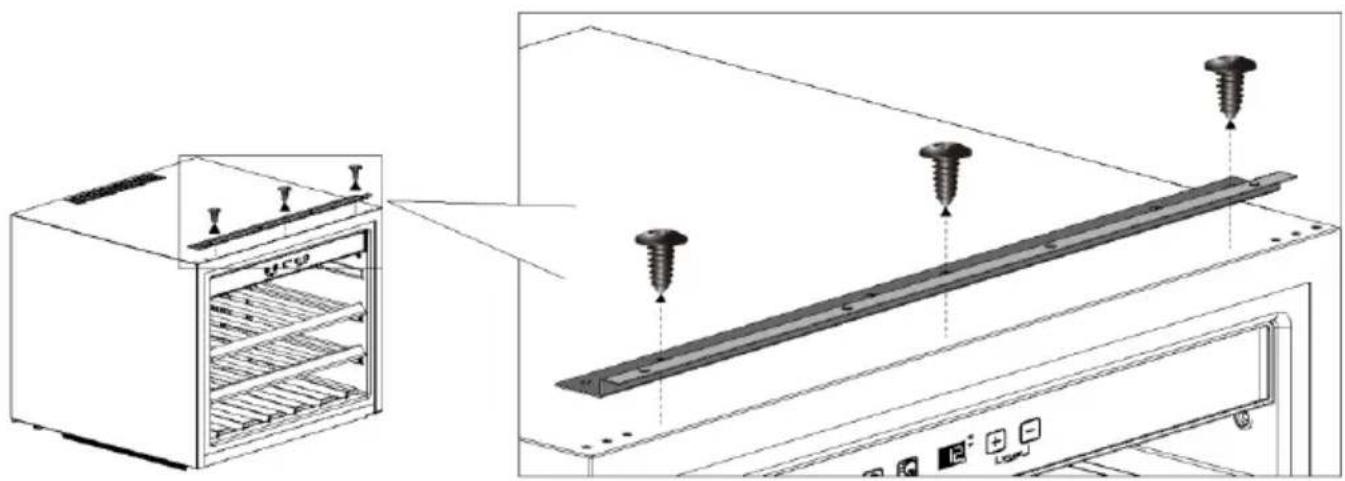
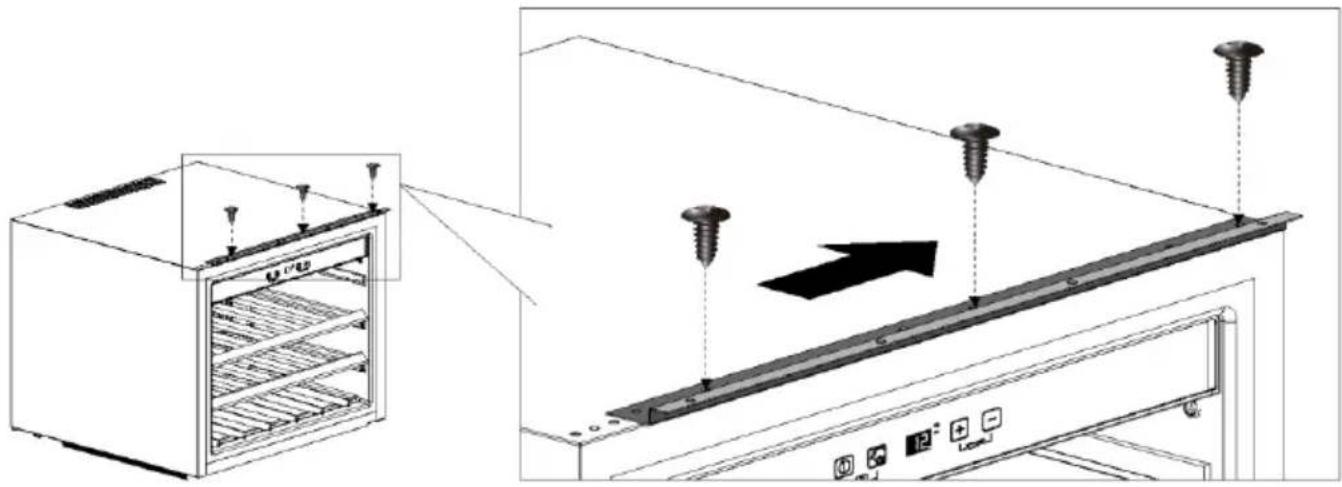
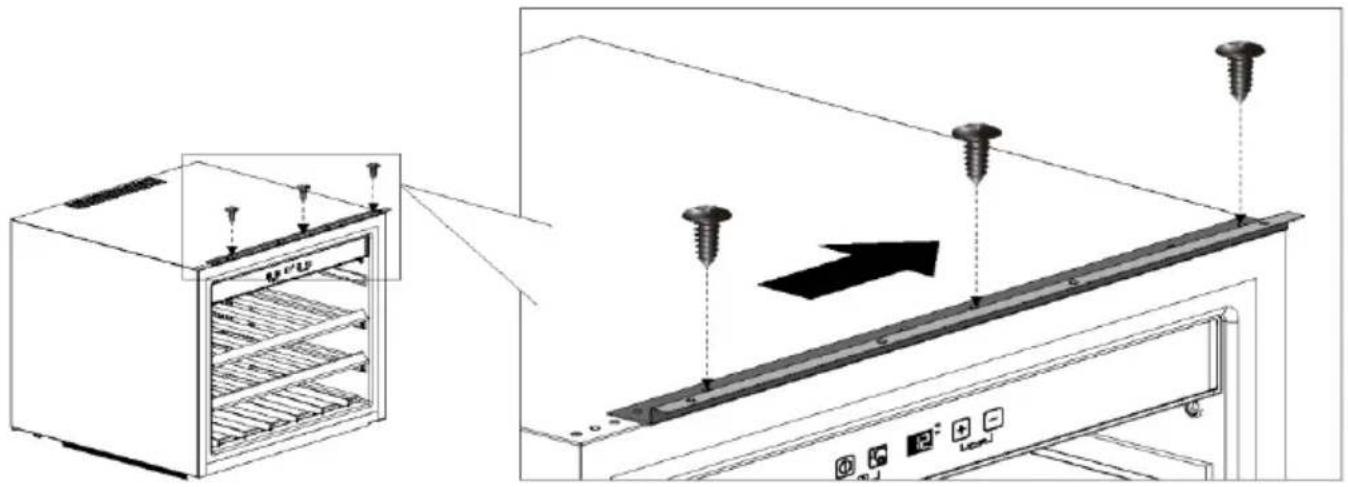
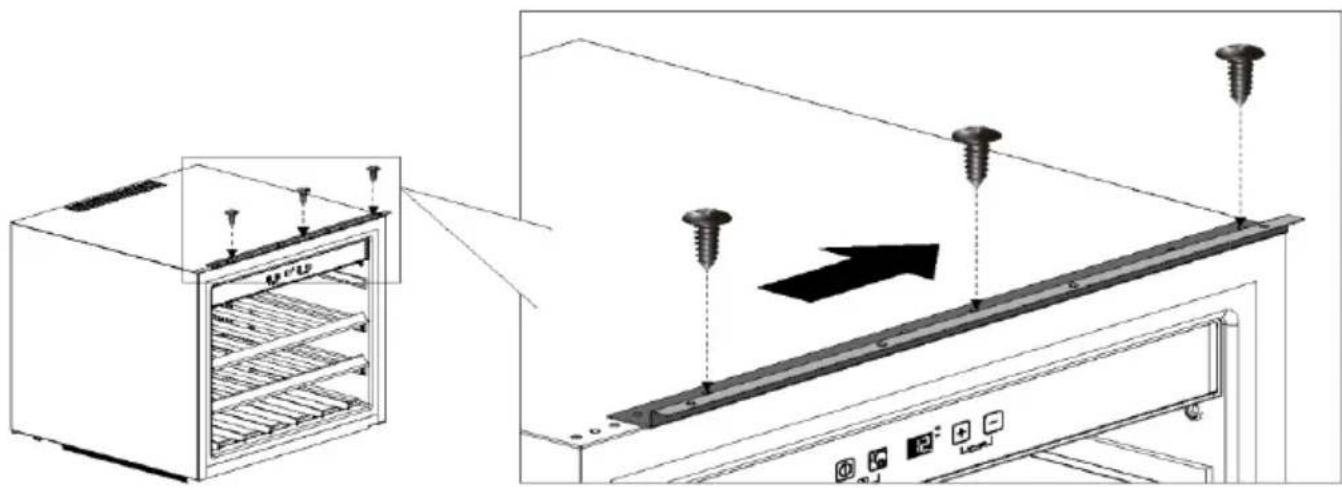
Unscrew the 3 screws from Top Bracket, move the bracket to the right end and screw the 3 screws.
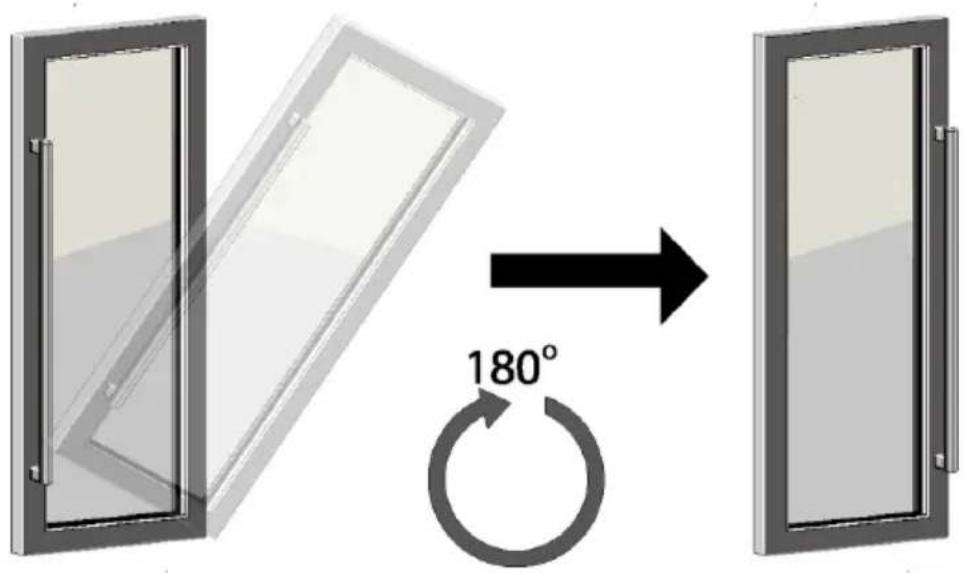
Rotate the door 180 degrees (upside down).
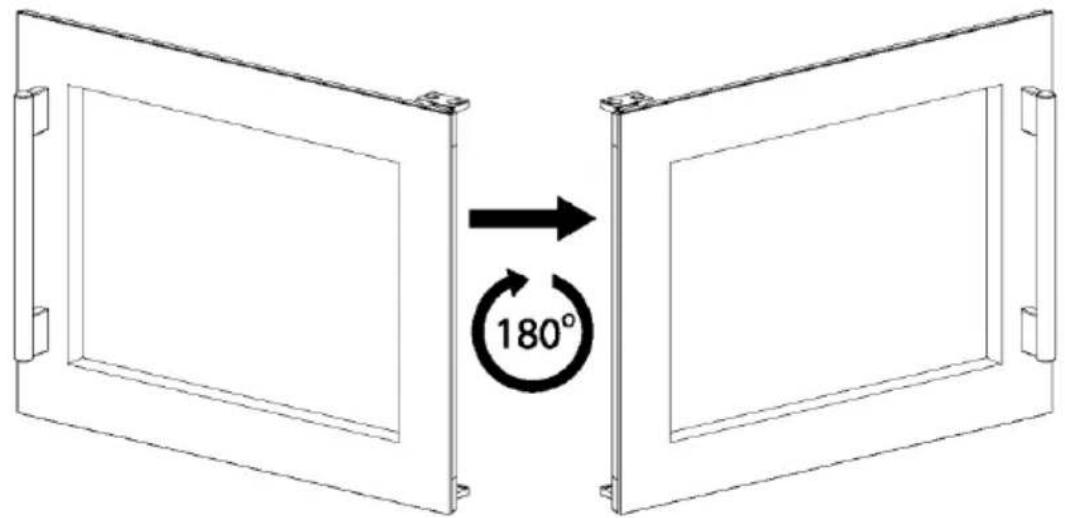
Screw the 4 screws of the upper hinge and bottom hinge tightly to fix the door in place.
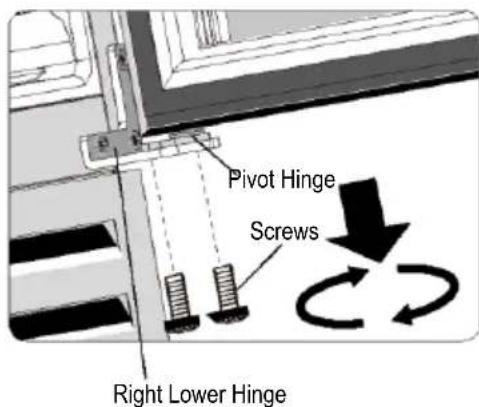
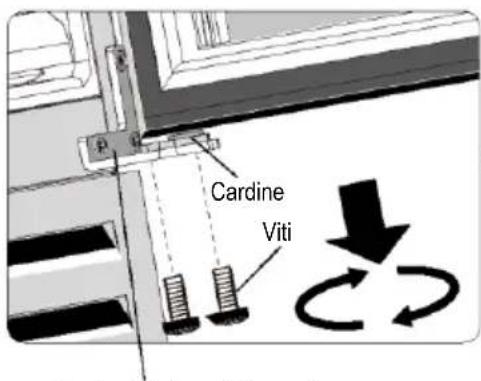
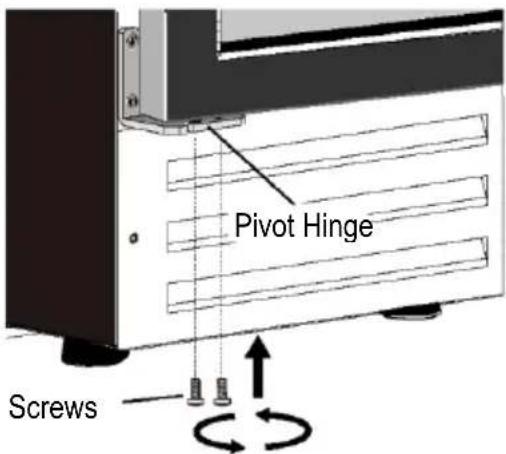
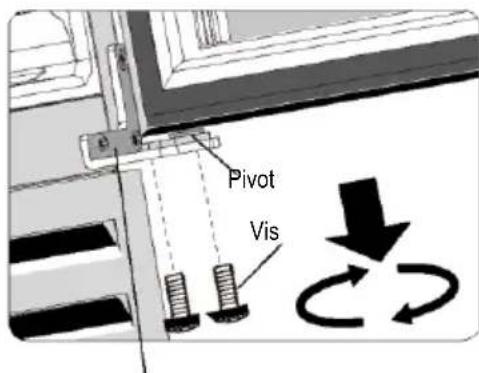
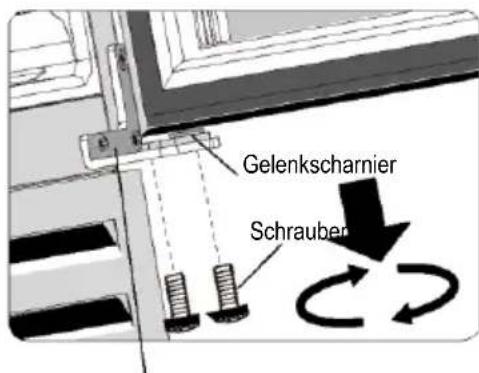
- Open the glass door and remove the two screws from the pivot hinge under the right bottom corner of the glass door.
- Be careful to support the glass door with both hands to prevent it from dropping after removing the screws.
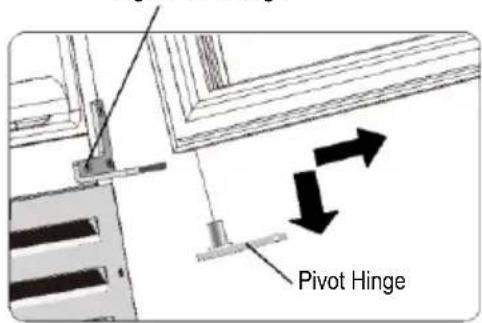
○ Pull down to remove the glass door and place it on a padded surface to prevent scratching it.
○ Remove the right top hinge and right lower hinge.
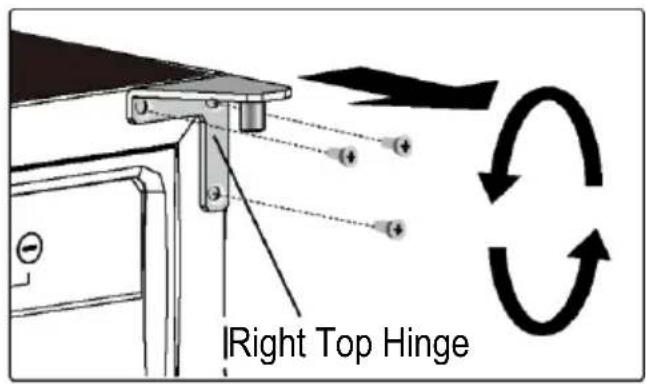
Right Lower Hinge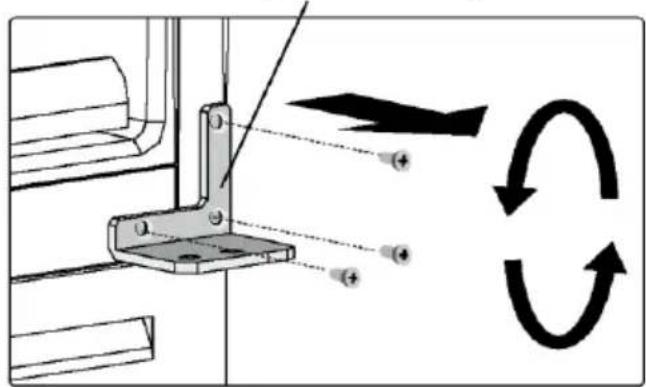
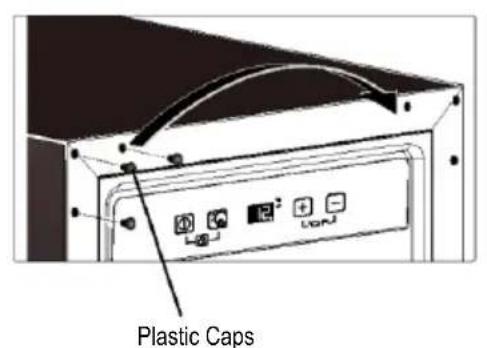
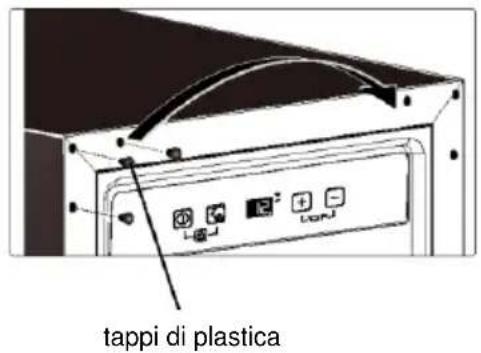
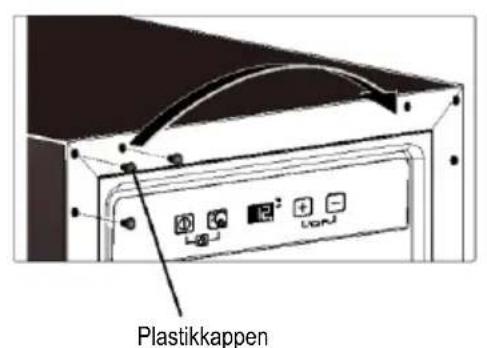
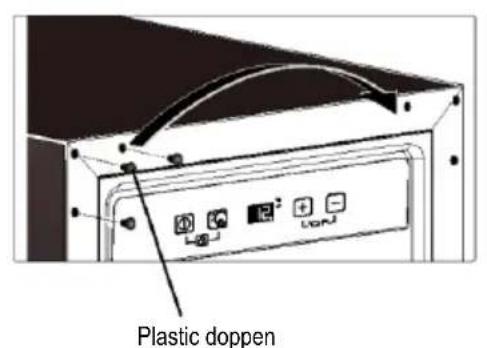
○ Pull out the 6 plastic caps at the front left corner of the cabinet. And move them all to the right side.
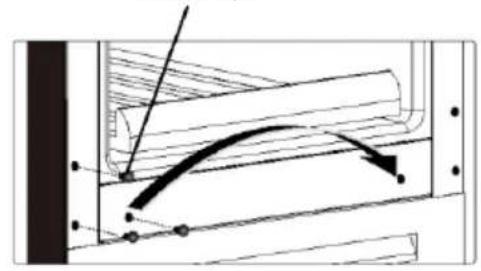
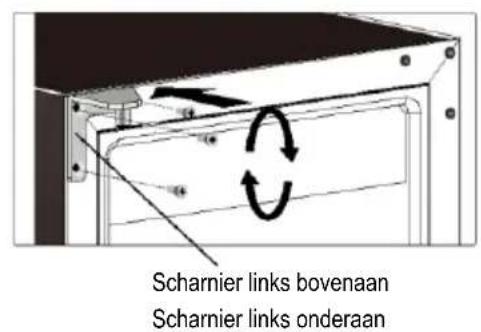
Take the left top hinge and left lower hinge from the plastic bag that contained this manual, then install them in the designated positions on the left side of the cabinet.
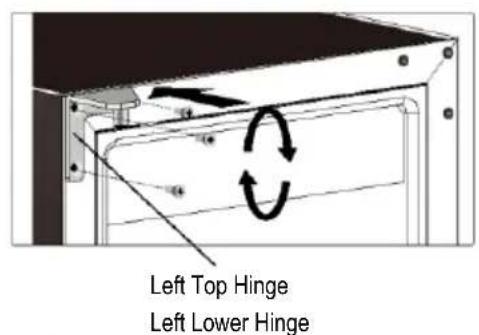
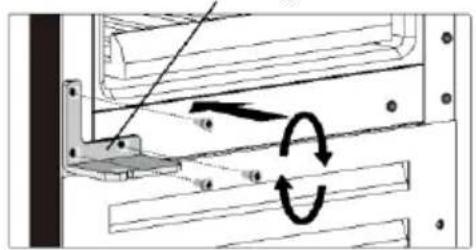
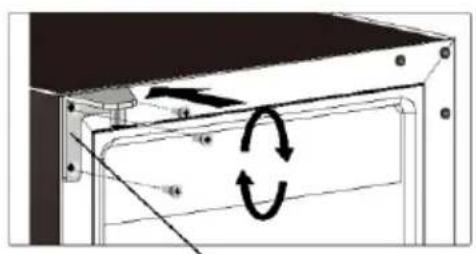
- Turn the glass door around 180° and reinstall it.
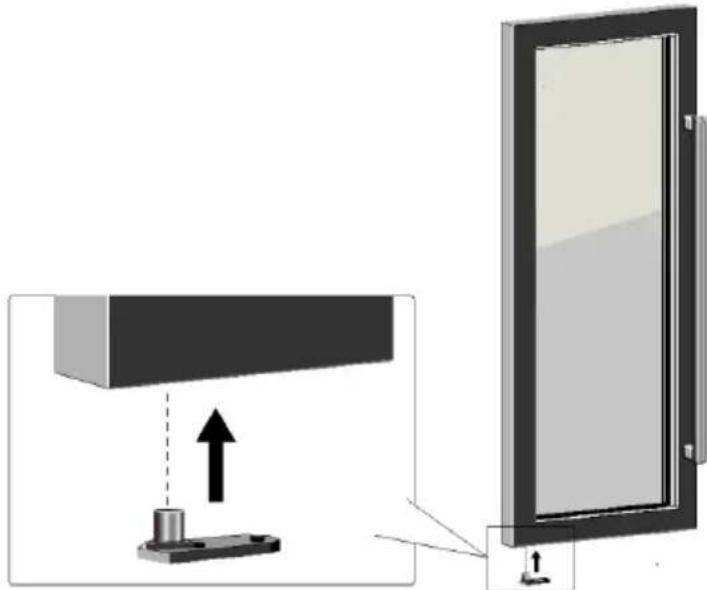
○ Insert the pivot hinge into the left lower hinge hole of the door.
○ Install the door to the left hinge side by tightening the support rod with the 2 screws.
IMPORTANT: Check that the door opens and shuts correctly, without fouling, after you have completed the door reversal process.
After the door has been reversed, you should check the door seal of the wine cooler. The seal should not be creased or crushed; otherwise there will be a gap between it and the inside of the door.
○ The seal must adhere properly all the way around the door. ○ If the seal is not adhering to the cabinet properly, then you should either:-
a) Use a warm damp cloth and manipulate the seal until it does adhere to the cabinet properly, all the way around the door.
or
b) Use a hair dryer on its lowest heat setting and lightly heat the areas of the door seal that are not adhering correctly. The heat will make the seal more pliable and this will allow you to manipulate the seal into the correct position.
IMPORTANT: DO NOT HEAT THE DOOR SEAL ON ANYTHING BUT THE LOWEST HEAT SETTING, OR HEAT THE SEAL FOR A LONG PERIOD OF TIME. OTHERWISE DAMAGE MAY BE CAUSED TO THE DOOR SEAL, WHICH WOULD NOT BE RECTIFIED UNDER THE GUARANTEE FREE OF CHARGE.
IMPORTANT: WHEN YOU HAVE REVERSED THE DOOR OF THE APPLIANCE, IF YOU HAVE PLACED THE APPLIANCE ON ITS BACK, YOU MUST WAIT FOR 8 HOURS BEFORE SWITCHING THE APPLIANCE BACK ON.
TROUBLESHOOTING
IMPORTANT: If your Wine Cooler appears not to be operating properly, before contacting the Customer Care Department, please refer to the checklist below.
| No. | PROBLEM | POSSIBLE CAUSE |
| 1 | The Wine Cooler does not operate | Not plugged in.The appliance is turned off.The circuit breaker tripped or a blown fuse. |
| 2 | The Wine Cooler is not cold enough | Check the temperature control setting.External environment may require a higher setting.The door is opened too frequently.The door is not closed completely.The door gasket does not seal properly. |
| 3 | Automatically turn-on and turn-off frequently | The room temperature is hotter than normal.A large amount of contents has been added to the Wine Cooler.The door is opened too frequently.The door is not closed completely.The temperature control is not set correctly.The door gasket does not seal properly. |
| 4 | The lighting does not work | Not plugged in.The circuit breaker tripped or a blown fuse.The lighting is turned off. |
| 5 | Too much vibration | Check to assure that the appliance is level.Check to assure no parts inside the cabinet or in the compressor chamber are loose. |
| 6 | The Wine Cooler seems to make too much noise | The rattling noise may come from the flow of the refrigerant, which is normal.As each cycle ends, you may hear gurgling sounds caused by the flow of refrigerant.Contraction and expansion of the inside walls may cause popping and crackling noises.The appliance is not level. |
| 7 | The door will not close properly. | The Wine Cooler is not level.The door was reversed and not properly installed.The gasket is dirty.The shelves are out of position. |
| 8 | The display window is shown with “HH” or "LL” instead of a digital figure, and/or with continuous beep sound. | The temperature probe is out of order. |
DO NOT ATTEMPT TO REPAIR THE APPLIANCE YOURSELF.
Please note that if an engineer is asked to attend whilst the product is under guarantee and finds that the problem is not the result of an appliance fault, then you may be liable for the cost of the call out charge.
The appliance must be accessible for the engineer to perform any necessary repair. If your appliance is installed in such a way that an engineer is concerned that damage will be caused to the appliance or your kitchen, then he will not complete a repair.
This includes situations where appliances have been tiled in, sealed in with sealant, have wooden obstructions placed in front of the appliance, like plinths. Or any installation other than the one specified has been completed.
Please refer to the conditions of guarantee that appear on the warranty card that you receive with the appliance.
IMPORTANT: A policy of continuous improvement and reserves the right to adjust and modify its products without prior notification.
TECHNICAL DATA
| Manufacturer | HOOVER | ||||
| Product Category | 2 - Refrigeration-cellar, Cellar and Wine storage appliance | ||||
| Model Number | HWCB 15 | HWCB 30 | HWCB 45 | HWCB 60 | HWCB 60D |
| Energy Efficiency Class (1) | C | B | A | C | D |
| Annual Energy Consumption (2) | 236kWh | 190kWh | 252kWh | 288kWh | |
| Storage Volume of Fridge Compartment | 22 | 57 | 55 | 135 | 116 |
| Storage Volume of Freezer Compartment | N/A | N/A | N/A | N/A | N/A |
| Star Rating | N/A | N/A | N/A | N/A | N/A |
| Coldest Storage Temperature | 5°C | 5°C | 5°C | 5°C | 5°C |
| Frost Free Compartments | N/A | N/A | N/A | N/A | N/A |
| Temperature Rise Time | N/A | N/A | N/A | N/A | N/A |
| Freezing Capacity | N/A | N/A | N/A | N/A | N/A |
| Climate Class (3) | N | N | N | N | N |
| Noise Level | 39dB | 39dB | 39dB | 39dB | 39dB |
| Installation Type | Built-in | Built-in | Built-in | Built-in | Built-in |
(1) On a scale from A+++ (highest efficiency) to G (lowest efficiency). (2) Annual energy consumption based on standard test results for 24 hours. The actual energy consumption will depend on how the appliance is used and where it is located. (3) This appliance is intended to be used at an ambient temperature between "16°C" (lowest temperature) and "32°C" (highest temperature).
--END--
SCRAPPING OLD APPLIANCES
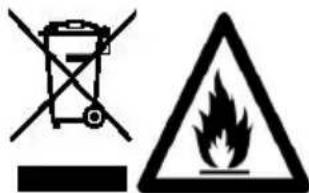
This appliance is marked according to the European directive 2012/19/EU on Waste Electrical and Electronic Equipment (WEEE).
WEEE contains both polluting substances (which can cause negative consequences for the environment) and basic components (which can be re-used). It is important to have WEEE subjected to specific treatments, in order to remove and dispose properly all pollutants, and recover and recycle all materials.
Individuals can play an important role in ensuring that WEEE does not become an environmental issue; it is essential to follow some basic rules:
WEEE should not be treated as household waste.
WEEE should be handed over to the relevant collection points managed by the municipality or by registered companies. In many countries, for large WEEE, home collection could be present.
In many countries, when you buy a new appliance, the old one may be returned to the retailer who has to collect it free of charge on a one-to-one basis, as long as the equipment is of equivalent type and has the same functions as the supplied equipment.
Conformity
By placing the mark € on this product, we are confirming compliance to all relevant European safety, health and environmental requirements which are applicable in legislation for this product.
Zone Unique : HWCB 15, HWCB 30, HWCB 45, HWCB 60D
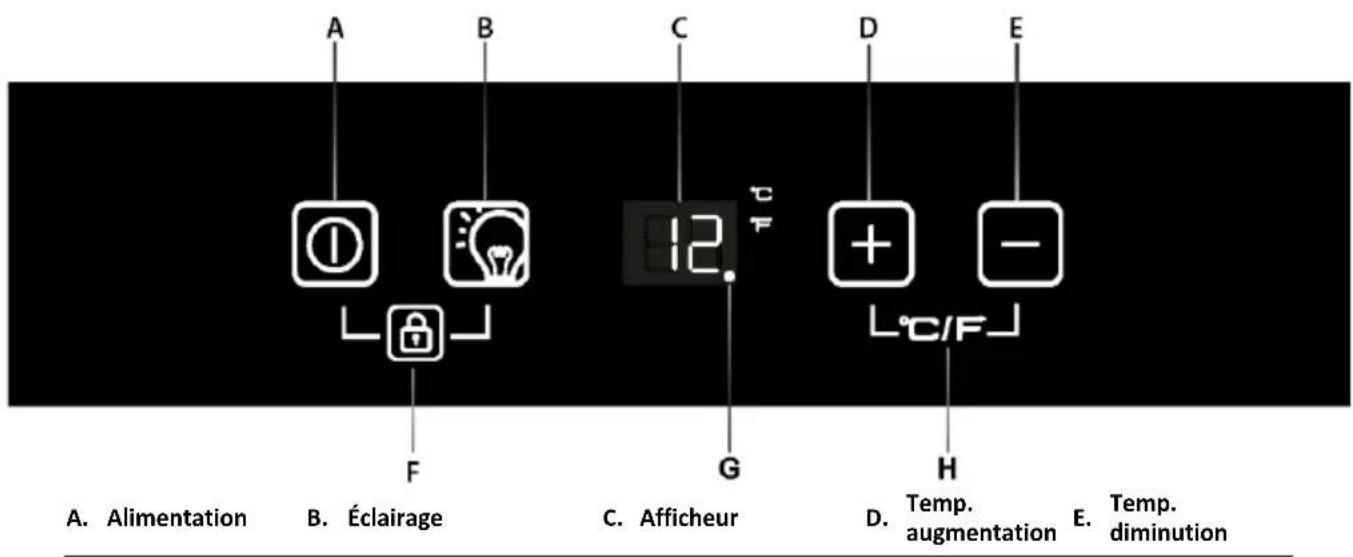
HWCB 15, HWCB 30, HWCB 45. HWCB 60, HWCB 60D
HWCB 15, HWCB 30, HWCB 45. HWCB 60, HWCB 60D
HWCB 15, HWCB 30, HWCB 45. HWCB 60, HWCB 60D

HWCB 15, HWCB 30, HWCB 45, HWCB 60D
HWCB 15, HWCB 30, HWCB 45, HWCB 60D
HWCB 15, HWCB 30, HWCB 45, HWCB 60D

HWCB 15, HWCB 30, HWCB 45, HWCB 60
HWCB 15, HWCB 30, HWCB 45
HWCB 15, HWCB 30, HWCB 45, HWCB 60D
HWCB 45
Defrosting

HWCB 15, HWCB 30, HWCB 60, HWCB 60D
HWCB 15, HWCB 30, HWCB 60, HWCB 60D

HWCB 15, HWCB 30, HWCB 45, HWCB 60, HWCB 60D
HWCB 15, HWCB 30, HWCB 45, HWCB 60, HWCB 60D
HWCB 15, HWCB 30, HWCB 45, HWCB 60, HWCB 60D

HWCB 15, HWCB 30, HWCB 45, HWCB 60D
HWCB 15, HWCB 30, HWCB 45, HWCB 60D
HWCB 15, HWCB 30, HWCB 45, HWCB 60D
HWCB 15, HWCB 30, HWCB 45, HWCB 60
HWCB 15, HWCB 30, HWCB 45
HWCB 15, HWCB 30, HWCB 45, HWCB 60D
HWCB 45
Defrosting
A. Screws (4 pcs. ST4.2 x 10)
HWCB 15, HWCB 30, HWCB 60, HWCB 60D
HWCB 15, HWCB 30, HWCB 60, HWCB 60D

Single zone: HWCB 15, HWCB 30, HWCB 45, HWCB 60D
A. Stopper
HWCB 15, HWCB 30, HWCB 45. HWCB 60, HWCB 60D
HWCB 15, HWCB 30, HWCB 45. HWCB 60, HWCB 60D
HWCB 15, HWCB 30, HWCB 45. HWCB 60, HWCB 60D

HWCB 15, HWCB 30, HWCB 45, HWCB 60D
HWCB 15, HWCB 30, HWCB 45, HWCB 60D
HWCB 15, HWCB 30, HWCB 45, HWCB 60D
HWCB 15, HWCB 30, HWCB 45, HWCB 60
HWCB 15, HWCB 30, HWCB 45
HWCB 15, HWCB 30, HWCB 45, HWCB 60D
HWCB 45
Defrost
HWCB 15, HWCB 30, HWCB 60, HWCB 60D
DESCRIPTION OF THE APPLIANCE
Single zone: HWCB 15, HWCB 30, HWCB 45, HWCB 60D
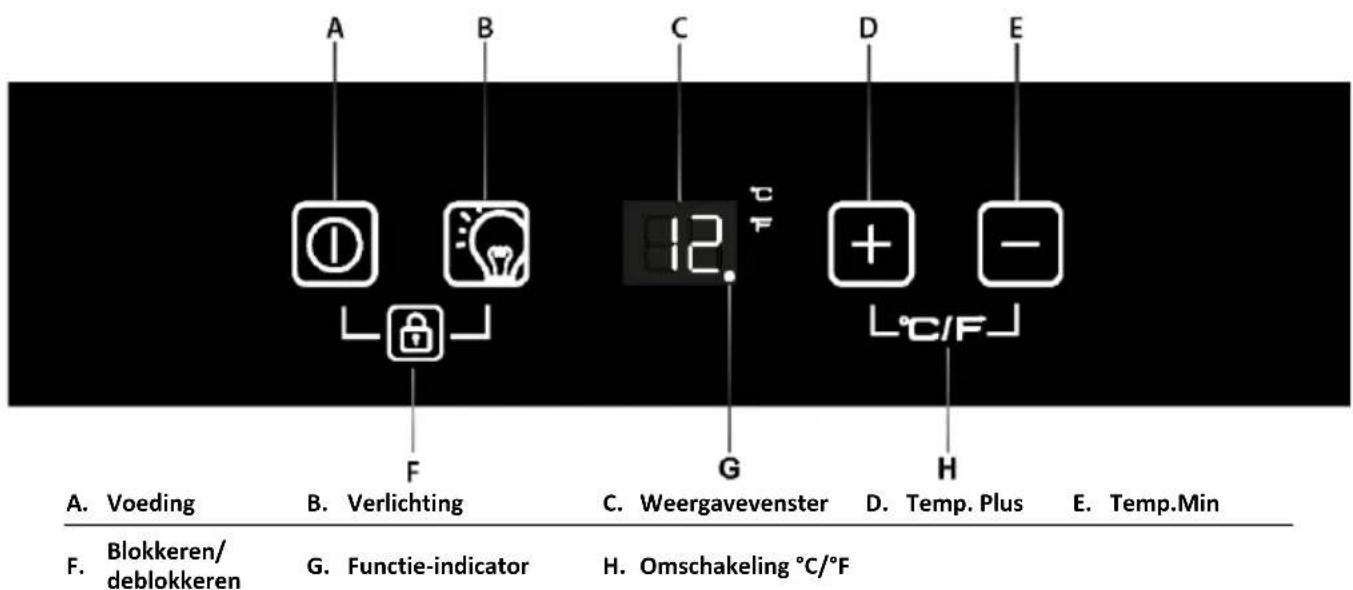
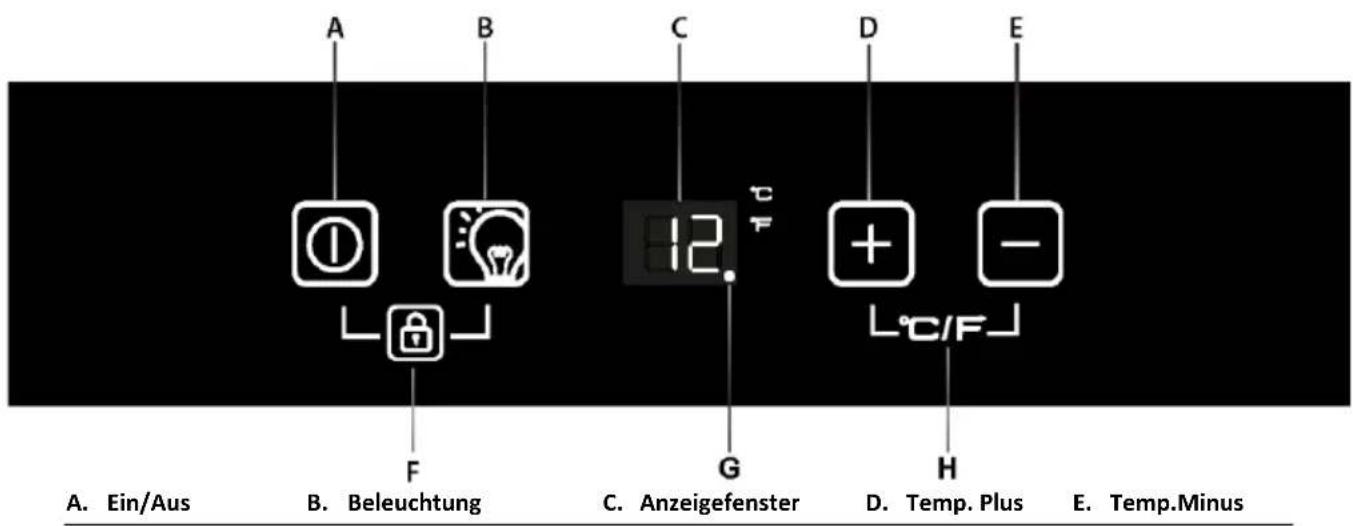
A. Power supply
B. Lighting
C. Upper zone display window
D. Temp. Plus
E. Temp. Min
F. Lock/unlock
G. Switch °C/°F
HWCB 15, HWCB 30, HWCB 45, HWCB 60, HWCB 60D
HWCB 15, HWCB 30, HWCB 45. HWCB 60, HWCB 60D
HWCB 15, HWCB 30, HWCB 45. HWCB 60, HWCB 60D

HWCB 15, HWCB 30, HWCB 45, HWCB 60D
HWCB 15, HWCB 30, HWCB 45, HWCB 60D
HWCB 15, HWCB 30, HWCB 45, HWCB 60D

HWCB 15, HWCB 30, HWCB 45, HWCB 60
HWCB 15, HWCB 30, HWCB 45
HWCB 15, HWCB 30, HWCB 45, HWCB 60D
HWCB 45
Defrosting
YOUR WINE COOLER IS INTENDED FOR A FIXED, PERMANENT INSTALLATION.
A·Tapping screws (4 pcs., ST4.2x10)

HWCB 15, HWCB 30, HWCB 60, HWCB 60D
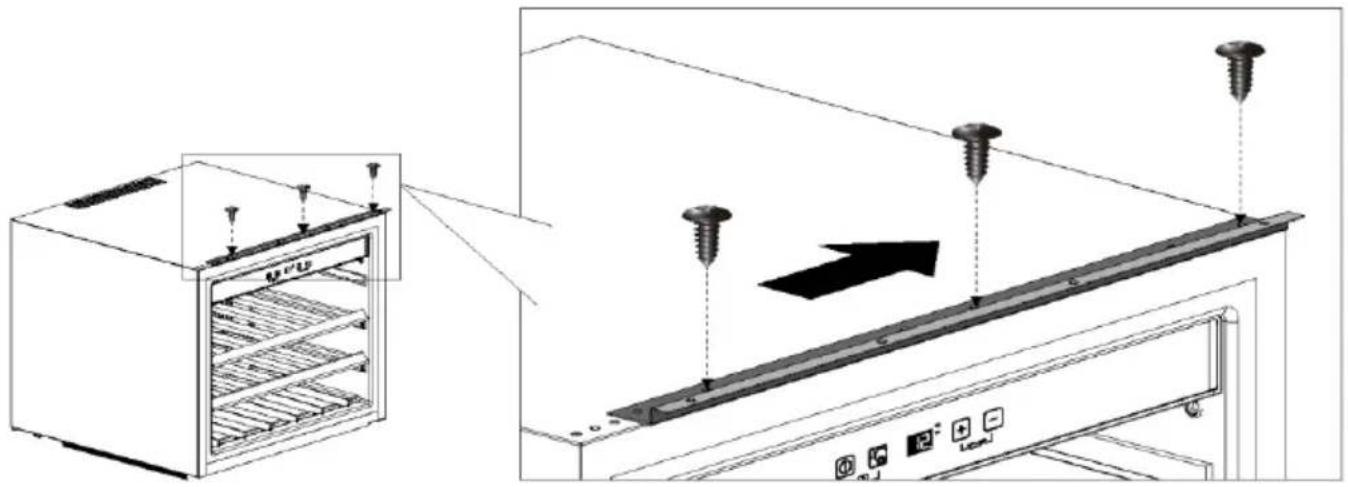
HWCB 15, HWCB 30, HWCB 60, HWCB 60D
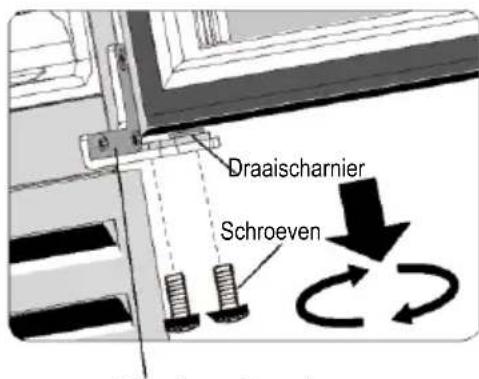
Hinge right at bottom


- USING YOUR WINE CELLAR
- BEFORE SWITCHING ON
- HWCB 15, HWCB 30, HWCB 45. HWCB 60, HWCB 60D
- HWCB 15, HWCB 30, HWCB
- HWCB 15, HWCB 30, HWCB 45, HWCB 60D
- HWCB 15, HWCB 30, HWCB 45, HWCB
- DEFROSTING
- HWCB 30, HWCB 60, HWCB 60D
- SAFETY INFORMATION
- WARNING
- SAFETY CHILDREN
- DESCRIPTION OF APPLIANCE
- PRODUCT FEATURES
- HWCB 45: SINGLE ZONE--18 BOTTLES
- HWCB 60: DUAL ZONE--46 BOTTLES
- HWCB 60D: 2 SINGLE ZONES (LEFT & RIGHT)--19+19 BOTTLES
- CONTROL PANEL
- INTERIOR LIGHT
- THE WINE COOLER SHELVES
- DURING FIRST USE
- TURNING THE APPLIANCE ON AND OFF
- UNLOCKING THE CONTROL PANEL
- HWCB 15, HWCB 30, HWCB 45, HWCB 60, HWCB 60D
- THE INTERIOR LIGHT
- SETTING THE TEMPERATURE RANGE
- HWCB
- SETTING THE TEMPERATURE
- CHANGING BETWEEN FAHRENHEIT AND CELSIUS
- SILENT MODE
- FUNCTION INDICATOR
- LOADING THE WINE COOLER
- STORING YOUR WINES
- WINE STORAGE PROBLEMS
- CLEANING AND MAINTENANCE
- REMOVING THE SHELVES FOR CLEANING
- CARBON FILTER CHANGE
- MOVING YOUR WINE COOLER
- POWER FAILURE
- VACATION TIME
- LONG VACATIONS
- DISCONNECTING FROM POWER
- INSTALLATION
- ELECTRICAL CONNECTION
- YOUR WINE COOLER IS INTENDED FOR FITTED AND PERMANENT INSTALLATION
- POSITIONING
- BUILT-IN INSTALLATION
- HWCB 60D
- INSTALL REMOVABLE FRONT GRILLE (OPTION)
- ADJUSTING THE HEIGHT AND LEVELLING OFF YOUR WINE CABINET
- HWCB 15, HWCB 30, HWCB 60, HWCB 60D
- REVERSING THE DOOR OF YOUR WINE COOLER
- TROUBLESHOOTING
- DO NOT ATTEMPT TO REPAIR THE APPLIANCE YOURSELF
- SCRAPPING OLD APPLIANCES
- CONFORMITY
- DEFROST
- DESCRIPTION OF THE APPLIANCE
- YOUR WINE COOLER IS INTENDED FOR A FIXED, PERMANENT INSTALLATION
Brand : HOOVER
Model : HWCB 15
Category : Wine cellar