NDE7800AYW - Tumble drier AMANA - Free user manual and instructions
Find the device manual for free NDE7800AYW AMANA in PDF.


| Product type | Dryer |
| Brand | Amana |
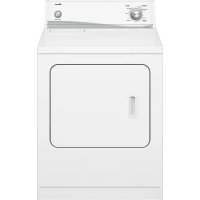
| Model | NDE7800AYW |
| Dimensions (H x W x D) | 107 x 69 x 71 cm |
| Weight | 54 kg |
| Power supply | 240 V, 60 Hz, 30 A |
| Drum capacity | 7.0 cu ft (198 L) |
| Drying programs | Regular, No Iron, Time Dry, Air Fluff, Automatic Wrinkle Out |
| Temperature settings | Air Fluff, Handwash/Low, No Iron/Medium, Regular/High |
| Options | Extended Tumble, End of cycle signal, Extended tumble |
| Automatic drying function | Yes, with moisture detection |
| Lint filter | Clean before each use |
| Drum maintenance | Clean with an all-purpose cleaner |
| Cabinet maintenance | Water and soap, wax once a year |
| Exhaust system maintenance | Inspect and clean once a year |
| Door reversal | Yes, instructions included |
| Optional accessory | Drying rack (ref. 504105) |
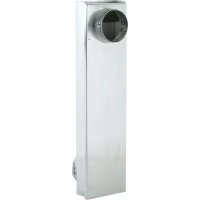
| Exhaust duct type | Rigid metal 10 cm (4 in) diameter |
| Safety | Grounding required, do not dry articles soaked with oil, do not use flexible plastic duct |
| Warranty | 1 year parts and labor, additional limited warranty |
Frequently Asked Questions - NDE7800AYW AMANA
User questions about NDE7800AYW AMANA
0 question about this device. Answer the ones you know or ask your own.
Ask a new question about this device
Download the instructions for your Tumble drier in PDF format for free! Find your manual NDE7800AYW - AMANA and take your electronic device back in hand. On this page are published all the documents necessary for the use of your device. NDE7800AYW by AMANA.
USER MANUAL NDE7800AYW AMANA
Using the Controls 3-5

Accessories 5

Operating Tips 6

Care & Cleaning 6

Door Reverse 7

Dryer Exhaust Tips 8

Troubleshooting 9-10

Service & Warranty 11
Installer: Please leave this manual with this appliance.
Consumer: Please read and keep this manual for future reference. Keep sales receipt and/or canceled check as proof of purchase.
Model Number
Serial Number
Date of Purchase
If you have questions, call:
Amana Customer Assistance
1-800-843-0304 U.S.A.
1-866-587-2002 Canada
U.S. Customers using TTY for deaf, hearing impaired or speech impaired, call 1-800-688-2080.
In our continuing effort to improve the quality and performance of our appliances, it may be necessary to make changes to the appliance without revising this guide.
For service information, see page 11.
What You Need to Know About Safety Instructions
Warning and Important Safety Instructions appearing in this manual are not meant to cover all possible conditions and situations that may occur. Common sense, caution and care must be exercised when installing, maintaining or operating appliance.
Always contact your dealer, distributor, service agent or manufacturer about problems or conditions you do not understand.
Recognize Safety Symbols, Words, Labels
WARNING
WARNING - Hazards or unsafe practices which COULD result in severe personal injury or death.
CAUTION
CAUTION - Hazards or unsafe practices which COULD result in minor personal injury.
WARNING
For your safety, the information in this manual must be followed to minimize the risk of fire or explosion or to prevent property damage, personal injury or death.
- Do not store or use gasoline or other flammable vapors and liquids in the vicinity of this or any other appliance.
WHAT TO DO IF YOU SMELL GAS
- Do not try to light any appliance.
- Do not touch any electrical switch.
- Do not use any phone in your building.
- Clear the room, building or area of all occupants.
- Immediately call your gas supplier from a neighbor's phone. Follow the gas supplier's instructions.
- If you cannot reach your gas supplier, call the fire department.
Installation and service must be performed by a qualified installer, service agency or the gas supplier.
WARNING! FIRE HAZARD
Do not place into your dryer items that have been spotted or soaked with vegetable oil or cooking oil. Even after being washed, these items may contain significant amounts of these oils. The remaining oil can ignite spontaneously. The potential for spontaneous ignition increases when the items containing vegetable oil or cooking oil are exposed to heat. Heat sources, such as your clothes dryer, can warm these items, allowing an oxidation reaction in the oil to occur. Oxidation creates heat. If this heat cannot escape, the items can become hot enough to catch fire. Piling, stacking or storing these kinds of items may prevent heat from escaping and can create a fire hazard.
All washed and unwashed fabrics that contain vegetable oil or cooking oil can be dangerous. Washing these items in hot water with extra detergent will reduce, but will not eliminate, the hazard. Always use the "cool down" cycle for these items to reduce the items' temperature. Never remove these items from the clothes dryer hot or interrupt the drying cycle until the items have run through the "cool down" cycle. Never pile or stack these items when they are hot.

Safety
WARNING
Toreduce the risk of fire, explosion, electric shock, or personal injury when using your washer, follow basic safety precautions, including the following:
- Read all instructions before using the appliance.
- To avoid the possibility of fire or explosion:
a. Do not dry items that have been previously cleaned in, washed in, soaked in, or spotted with gasoline, dry-cleaning solvents, other flammable or explosive substances as they give off vapors that could ignite or explode. Any material on which you have used a cleaning solvent, or which is saturated with flammable liquids or solids, should not be placed in the dryer, until all traces of these flammable liquids or solids and their fumes have been removed. There are many highly flammable items used in homes, such as: acetone, denatured alcohol, gasoline, kerosene, some liquid household cleaners, some spot removers, turpentine, waxes and wax removers.
b. Items containing foam rubber (may be labeled latex foam) or similarly textured rubber-like materials must not be dried on a heat setting. Foam rubber materials when heated, can under certain circumstances produce fire by spontaneous combustion.
- Do not allow children or pets to play on, in, or in front of the appliance. Close supervision is necessary when the appliance is used near children and pets.
- Before the appliance is removed from service or discarded, remove the door to the drying compartment.
- Do not reach into the appliance if the drum is moving.
- Do not install or store this appliance where it will be exposed to the weather.
7.Do not tamper with controls. - Do not repair or replace any part of the appliance or attempt any servicing unless specifically recommended in published user-repair instructions that you understand and have the skills to carry out.
-
Do not use fabric softeners or products to eliminate static unless recommended for dryer use by the manufacturer of the fabric softener or product.
-
Clean the lint screen before or after each load.
- Keep the area around the exhaust opening and surrounding areas free from lint accumulation, dust and dirt.
- The interior of the dryer and exhaust duct should be cleaned periodically by qualified service personnel.
- This appliance must be properly grounded. Never plug the appliance cord into a receptacle which is not grounded adequately and in accordance with local and national codes. See installation instructions for grounding this appliance.
- Do not sit on top of the clothes dryer.
Important Safety Notice & Warning
The California Safe Drinking Water and Toxic Enforcement Act of 1986 (Proposition 65) requires the Governor of California to publish a list of substances known to the State of California to cause cancer or reproductive harm, and requires businesses to warn customers of potential exposures to such substances.
Users of this appliance are hereby warned that the burning of gas can result in low-level exposure to some of the listed substances, including benzene, formaldehyde, and soot, due primarily to the incomplete combustion of natural gas or liquid petroleum (LP) fuels. Exhaust ducts should be kept free of obstructions and properly exhausted dryers will minimize exposure.
WARNING
Gas leaks may occur in your system and result in a dangerous situation. Gas leaks may not be detected by smell alone. Gas suppliers recommend you purchase and install an UL approved gas detector. Install and use in accordance with the manufacturer's instructions.
Note
- Because of continuing product improvements, Maytag reserves the right to change specifications without notice. For complete details, see the Installation Instructions packed with your product before selecting cabinetry, making cutouts or beginning installation.
STEP1
Select Temperature
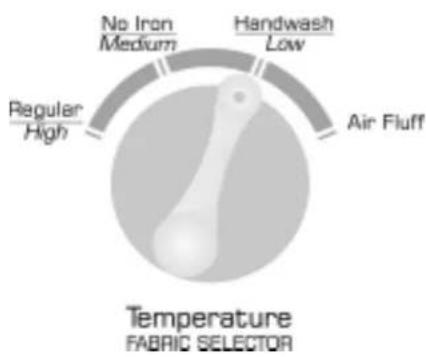
Toselect the correct temperature, turn the temperature control to one of four choices; Air Fluff, Handwash, No Iron or Regular.
| DRYER TEMPS LOAD | TYPE |
| Air Fluff | Tumbles without heat. Used for sensitive loads or items needing freshening. |
| Handwash/Low | For heat-sensitive items labeled “Tumble Dry Low” or “Tumble Dry Warm.” |
| No Iron/Medium | For permanent press, synthetics, lightweight cottons or items labeled “Tumble Dry Medium.” |
| Regular/High | For sturdy cottons or those labeled “Tumble Dry.” |
STEP 2
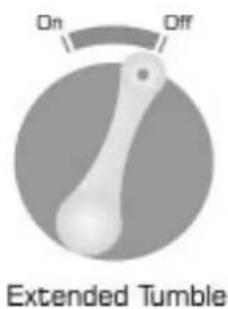
Select Extended Tumble if desired, (select models)
When using No Iron and Regular cycles, Extended Tumble helps to reduce wrinkling after the normal drying cycle. After the Cool Down portion of the cycle, the dryer continues to tumble clothes without heat for approximately 30 minutes, until the dryer door is opened, or the switch is turned to the OFF position.
STEP 3
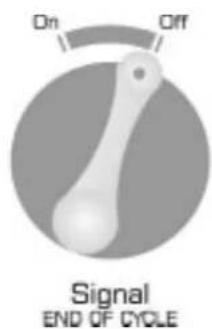
Select Signal (select models) End of Cycle Signal
Shortly before the cycle is complete, an audible signal will sound. During the Cool Down portion of the No Iron Fabrics cycle, the audible signal will sound intermittently.
STEP 4
Select Cycle
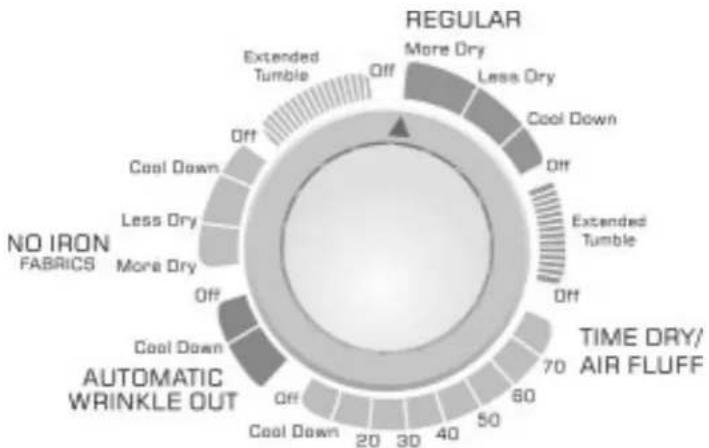
Toselect a cycle, rotate the control dial to the desired setting. When using an Auto Dry cycle, the control dial should point between "More Dry" and "Less Dry" for most loads.
Loads of larger or bulkier size may require the "More Dry" setting to completely dry the load. The "Less Dry" setting is best suited for lightweight fabrics or for leaving some moisture in the clothing at the end of the cycle.
Regular
The Regular cycle is designed to dry loads such as towels, underwear, t-shirts, jeans, etc.
No Iron Fabrics
The No Iron Fabrics cycle is designed to dry wrinkle-free cottons, synthetic fabrics, double knits and permanent press fabrics automatically. It minimizes wrinkling by providing an unheated Cool Down period at the end of the cycle.
Time Dry/Air Fluff
This cycle can be used to regulate the drying time. Use with Air Fluff, Handwash, No-Iron or Regular temperature settings. For timed drying, turn the control dial until the pointer points to the proper time setting in the Time Dry/Air Fluff cycle.
Note
- Using the Air Fluff temperature setting will require a longer drying time.
Control features vary by model.
Automatic Wrinkle Out
The Automatic Wrinkle Out cycle helps remove wrinkles from slightly wrinkled items that may have been sitting in the dryer or laundry basket overnight. The cycle has a short heat setting followed by a five-minute Cool Down.
Note
- T he dial can be turned in either direction to select a cycle. Once started, the dial will not advance at a specific rate during the Auto Dry cycles. At first the dial may not advance at all. Toward the end of the cycle (when the load begins to dry) the dial will advance at a more regular rate and much more quickly. This is normal operation.
STEP 5
Press Start
Push this button to start the dryer. The dryer door must be shut for the dryer to operate. If the door is opened during the cycle, the Start button must be pushed again to resume the cycle once the door is closed.

Accessories
Optional Drying Rack
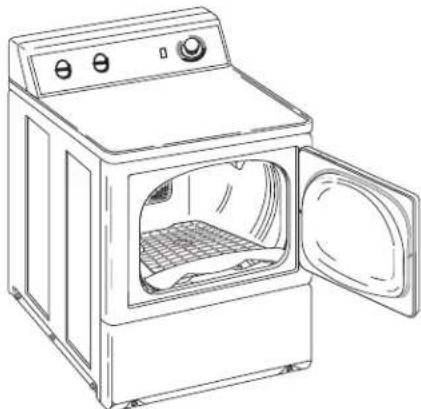
Select dryer models are equipped with a Drying Rack. The Drying Rack is useful for drying items that require no tumble drying, such as tennis shoes, sweaters, stuffed toys or other delicate items.
Note
T he Drying Rack, part no. 504105, is available when not included with your dryer. See your dealer or call 1-877-232-6771 to order.
Operating Tips
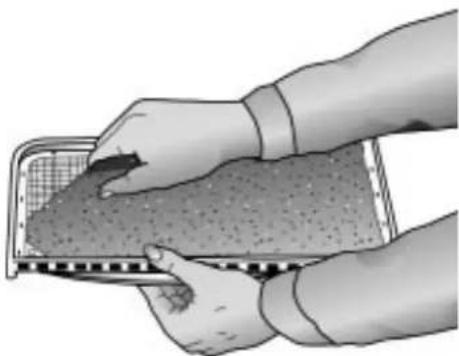
Clean the Lint Filter
After each load.
T o shorten drying time.
T o operate more energy efficiently.
Note
- Do not operate the dryer without the linter filter in place.
Load the Dryer Properly
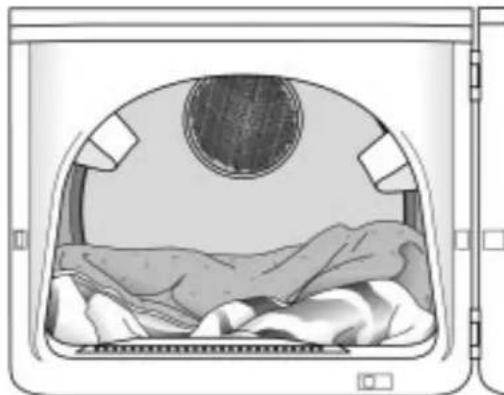
- Place only one washload in the dryer at a time.
- Mixed loads of heavy and lightweight clothes will dry differently. Lightweight clothes will dry, while heavy clothes may be damp.
- Add one or more similar items to the dryer when only one or two articles need drying. This improves the tumbling action and drying efficiency.
Overloading restricts tumbling action, resulting in uneven drying as well as excessive wrinkling of some fabrics. - W hen drying large, bulky items such as a blanket or comforter, it may be necessary to reposition the load during the cycle to ensure even drying.
Care & Cleaning
Control Panel
Clean with a soft, damp cloth. Do not use abrasive substances.
Tumbler
Remove any stains such as crayon, ink pen or fabric dye from new items (such as towels or jeans) with an all-purpose cleaner. Then tumble old towels or rags to remove any excess stain or cleaning substance. Once these steps are done, stains may still be visible, but should not transfer to subsequent loads.
Cabinet
Wipe off any marks with soap and water. Use an appliance wax once a year if desired.
Dryer Exhaust System
Inspect and clean once a year to maintain optimum performance. The outside exhaust hood should be cleaned more frequently to ensure proper operation. (Refer to the Installation Instructions for more information.)
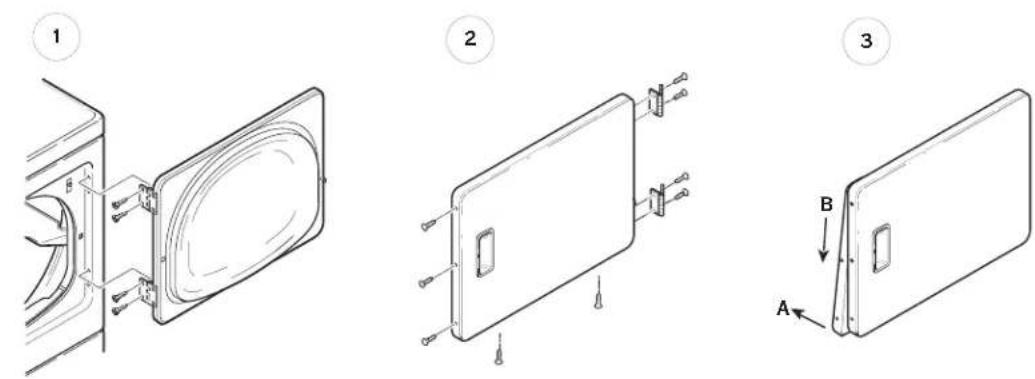
Reversing the Door
Follow these steps to reverse the door:
- Remove four hinge-attaching screws.
- Remove all nine screws from door and hinges.
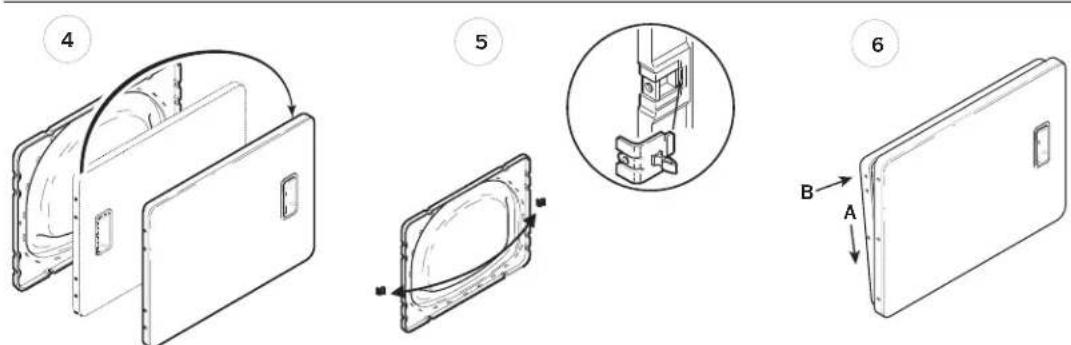
- Pull bottom of door liner out (A), then pull down (B), removing door liner from door panel.
- Rotate door panel 180^ as shown.
-
Remove door strike from door liner and reinstall on opposite side.
-
Insert liner under flange on bottom of door (A), then push top of door liner into place (B).
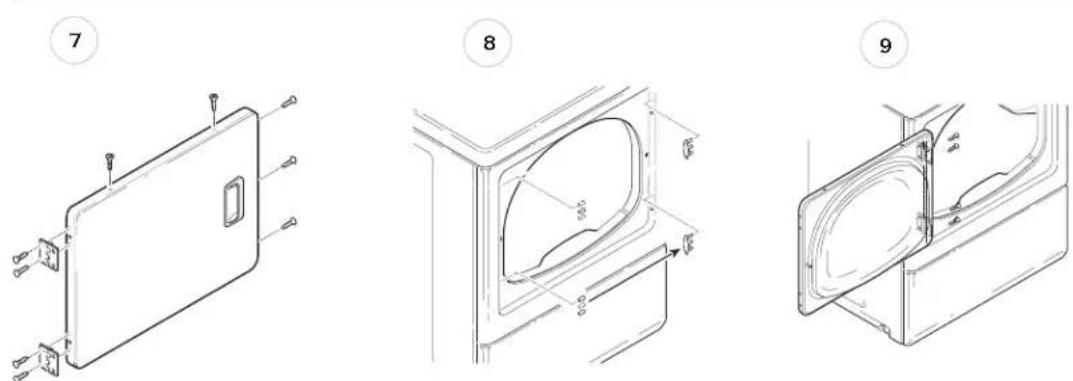
7.Reinstall nine screws removed in Step 2. - Using screwdriver, remove two door plugs and reinstall on opposite side of door opening.
- Reinstall four hinge attaching screws removed in Step 1.
WARNING
Plastic or nonmetal flexible duct presents a potential fire hazard.
Do
Read the installation instructions and the use and care guide.
Do
Let your dryer exhaust the air easily.
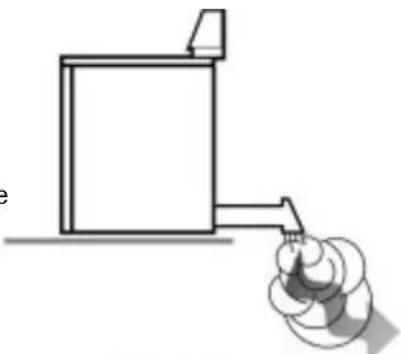
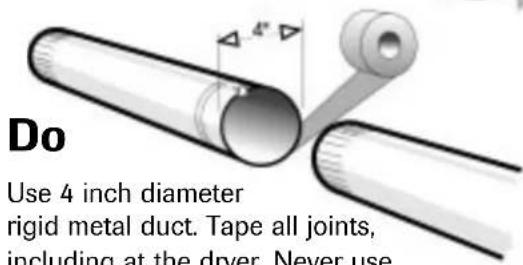
Use 4 inch diameter rigid metal duct. Tape all joints, including at the dryer. Never use lint-trapping screws.
Do
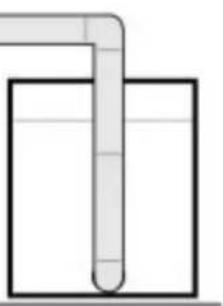
Keep duct runs as straight as possible.
Do
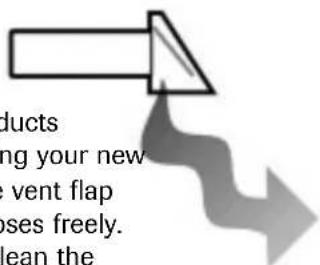
Clean all old ducts before installing your new dryer. Be sure vent flap opens and closes freely. Inspect and clean the exhaust system annually.
Don't
Let a poor exhaust system cause slow drying.
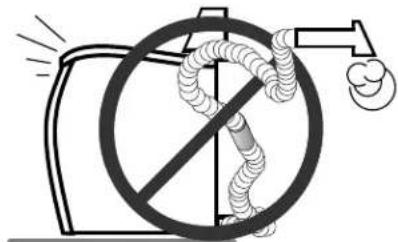
Restrict your dryer with a poor exhaust system.
Don't
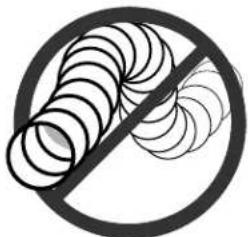
Use plastic, thin foil, or nonmetal flexible duct.
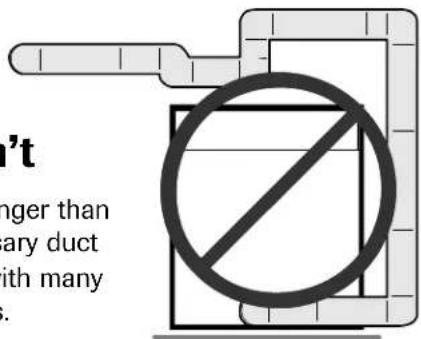
Don't
Use longer than necessary duct runs with many elbows.
Don't
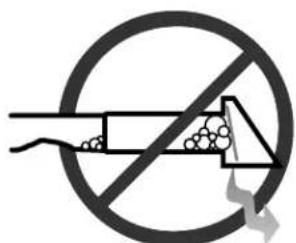
Allow crushed or clogged ducts and vent.
For problem laundry solutions (i.e. fabric damage, residue, tangling) and special laundry care procedures, see the enclosed Laundering Tips brochure.
| Doesn't Run | ·Be sure the door is shut. ·Is the electrical cord plugged in? ·Has a fuse blown or the circuit breaker tripped? ·Push the Start button again if the door was opened during the cycle. |
| Doesn't Heat | ·Has a fuse blown or the circuit breaker tripped? ·Select a heat setting, not air fluff. ·Check that the gas supply is on for gas dryers. ·Clean the lint filter and exhaust duct. ·Dryer time may have moved into the cool-down portion of the cycle. |
| Doesn't Dry Properly | ·Check all of the above, plus ... ·Check the exhaust hood outside the house, does it open and close freely? ·Check exhaust system for lint buildup. Ducting should be inspected and cleaned annually. ·Use rigid 4" metal exhaust duct. ·Do not overload. 1 wash load = 1 dryer load. ·Sort heavy items from lightweight items. ·Large, bulky items like blankets or comforters may require repositioning to ensure even drying. ·Check the washer to be sure it is draining properly to extract water from the load. ·Clothes load is too small to tumble properly. Add a few towels. |
| Is Noisy | ·Check the load for objects such as coins, nails, etc. Remove promptly from dryer. ·It is normal to hear the dryer gas valve or heating element cycle on and off during the drying cycle. ·The dryer should be level and installed on a solid floor. ·Be sure the rubber feet are installed on the leveling legs. ·A clicking noise may be the timer advancing. ·It is normal for the dryer to hum due to the high velocity of air moving through the dryer drum and exhaust system. |
| Control Knob Advances Slowly | ·This is normal operation for an Auto Dry cycle, especially at the beginning of cycle. Once the load begins to dry, the control knob will start to advance. The rate of advancement will be slow at the beginning of the cycle because there is more moisture in the load. As the load becomes more dry, the control knob will advance more quickly. |
| Dries Unevenly | • Seams, pockets and other similar heavy areas may not be completely dry when the rest of the load has reached the selected dryness level. This is normal. Select the “More Dry” setting if desired. • If one heavy item is dried with a lightweight load, such as one towel with sheets, it is possible that the heavy item will not be completely dry when the rest of the load has reached the selected dryness level. Sort heavy items from lightweight items for best drying results. |
| Has an Odor | • Household odors such as from painting, varnishing, strong cleaners, etc. may enter the dryer with the surrounding room air. This is normal as the dryer draws the air from the room, heats it, pulls it through the tumbler and exhausts it to the outside. When these odors are present in the air, ventilate the room completely before using the dryer. |
Dryer Warranty
Full One-Year Warranty
For one (1) year from the date of original retail purchase, any part which fails in normal home use will be repaired or replaced free of charge.
Limited Warranty
After the first year from date of original retail purchase, through the time periods listed below, the parts designated below which fail in normal home use will be repaired or replaced free of charge for the part itself, with the owner paying all other costs, including labor, mileage, transportation, trip charge and diagnostic charge, if required.
Second Year - All parts.
Third Through Fifth Year - All parts of the solid state controls (if so equipped).
Additional Limited Warranty Against Rust-Through - Should an exterior cabinet, including the door, rust through during the one-year period starting from the date of retail purchase, repair or replacement will be made free of charge. After the first and through the tenth year, repair or replacement will be made free of charge for the part itself, with the owner paying all other costs, including labor, mileage, transportation, trip charge and diagnostic charge, if required.
Please Note: This full warranty and the limited warranty apply when the washer is located in the United States or Canada. Washers located elsewhere are covered by the limited warranty only, including parts which fail during the first two years.
Canadian Residents
This warranty covers only those appliances installed in Canada that have been listed with the Canadian Standards Association unless the appliances are brought into Canada due to transfer of residence from the United States to Canada.
The specific warranties expressed above are the ONLY warranties provided by the manufacturer. This warranty gives you specific legal rights, and you may also have other rights that vary from state to state.
What is Not Covered By These Warranties:
-
Conditions and damages resulting from any of the following:
a. Improper installation, delivery or maintenance.
b. Any repair, modification, alteration, or adjustment not authorized by the manufacturer or an authorized servicer.
c. Misuse, abuse, accidents or unreasonable use.
d. Incorrect electric current, voltage or supply.
e. Improper setting of any control. -
Warranties are void if the original serial numbers have been removed, altered or cannot be readily determined.
- Light bulbs.
- Products purchased for commercial or industrial use.
- The cost of service or service call to:
a. Correct installation errors.
b. Instruct the user on the proper use of the product.
c. Transport the appliance to the servicer.
- Consequential or incidental damages sustained by any person as a result of any breach of these warranties.
Some states do not allow the exclusion or limitation of consequential or incidental damages, so the above exclusion may not apply.
To Obtain Warranty Service
Tolocate an authorized service company in your area, contact the dealer from whom your appliance was purchased; or call Maytag Services™, Amana Customer Assistance. Should you not receive satisfactory warranty service, please call or write:
Maytag Services
Attn: CAIR Center
P.O.Box 2370
Cleveland, TN 37320-2370
U.S. 1-800-843-0304
Canada 1-866-587-2002
U.S. Customers using TTY for deaf, hearing impaired or speech impaired, call 1-800-688-2080.
Note
- W hen contacting Maytag Services, Amana Customer Assistance about a service problem, please include the following:
a. Your name, address and telephone number;
b. Model number and serial number (found on the back center of the control panel) of your appliance;
c. Name and address of your dealer and the date the appliance was purchased;
d. A clear description of the problem you are having;
e. Proof of purchase.
Amana®
Séchuse
Amana Customer Assistance
1-800-843-0304 U.S.A.
1-866-587-2002 Canada
Amana Customer Assistance
U.S. Customers using TTY for deaf, hearing impaired or speech impaired, call 1-800-688-2080.