
D51NAA1C0B - Range hood NEFF - Free user manual and instructions
Find the device manual for free D51NAA1C0B NEFF in PDF.
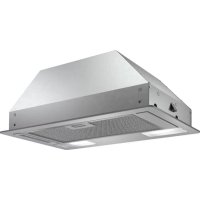



| Product type | Extractor hood |
| Brand | Neff |
| Model | D51NAA1C0B |
| Weight | Maximum 5 kg |
| Power supply | 220-240 V, 50 Hz, AC |
| Protection class | Class 1 |
| Number of speeds | 3 speeds |
| Lighting | LED, independently switchable |
| Operating modes | External extraction and air recirculation |
| Grease filter type | Metallic, dishwasher-safe |
| Odour filter | Activated carbon (ref. DWZ0IN0AO), replace every 3 months |
| Recirculation kit | Ref. DWZ0IN0T0, optional |
| Grease filter maintenance | Monthly cleaning, manual or dishwasher (max 70°C) |
| Controls | Slider for ventilation and lighting |
| Safety | Automatic shutdown not specified; observe safety distances and installation instructions |
| Appliance dimensions | Not specified in the manual; width must correspond to that of the hob |
| Power cord length | Approximately 1.30 m |
| Product number (E-Nr.) | On the rating plate (under the filter) |
| Available accessories | Activated carbon filter, recirculation kit |
Frequently Asked Questions - D51NAA1C0B NEFF
User questions about D51NAA1C0B NEFF
0 question about this device. Answer the ones you know or ask your own.
Ask a new question about this device
Download the instructions for your Range hood in PDF format for free! Find your manual D51NAA1C0B - NEFF and take your electronic device back in hand. On this page are published all the documents necessary for the use of your device. D51NAA1C0B by NEFF.
USER MANUAL D51NAA1C0B NEFF
1 Safety. 15 2 Avoiding material damage. 17 3 Environmental protection and saving energy 17 4 Operating modes 18 5 Familiarising yourself with your appliance 19 6 Accessories 19 7 Basic operation 19 8 Cleaning and servicing. 20 9 Troubleshooting 21 10 Disposal. 22 11 Customer Service 22 12 INSTALLATION INSTRUCTIONS 23 12.4 Secure installation 24

1 Safety
Observe the following safety instructions.
1.1 General information
- Read this instruction manual carefully.
- Keep the instruction manual and the product information safe for future reference or for the next owner.
- Do not connect the appliance if it has been damaged in transit.
1.2 Intended use
This appliance is designed only to be built into kitchen units. Read the special installation instructions.
The appliance can only be used safely if it is correctly installed according to the safety instructions. The installer is responsible for ensuring that the appliance works perfectly at its installation location.
Only use this appliance:
For extracting cooking vapour. - In private households and in enclosed spaces in a domestic environment. Up to an altitude of max. 2000 m above sea level.
Do not use the appliance: - With an external timer.
1.3 Restriction on user group
This appliance may be used by children aged 8 and above and by persons with reduced physical, sensory, or mental capabilities, or lack of experience and knowledge, provided they are supervised or have been instructed on the safe use of the appliance and understand the hazards involved.
Do not allow children to play with the appliance. Children must not perform cleaning or user maintenance unless they are at least 15 years old and are supervised.
Keep children under 8 years of age away from the appliance and the power cord.
1.4 Safe use
WARNING - Risk of suffocation!
Children may put packaging material over their heads or wrap themselves in it and suffocate.
- Keep packaging material away from children.
- Do not let children play with packaging material.
Children may inhale or swallow small parts, which can cause suffocation.
- Keep small parts away from children. Do not let children play with small parts.
WARNING - Risk of poisoning!
Risk of poisoning from flue gases being drawn back. Room-air-dependent heat-producing appliances (e.g., gas, oil, wood, or coal heaters, continuous flow heaters, or water heaters) obtain combustion air from the room in which they are installed and discharge exhaust gases into the open through an exhaust gas system (e.g., a chimney). With the extractor hood switched on, air is extracted from the kitchen and adjacent rooms. Without an adequate supply of air, the air pressure falls below atmospheric pressure. Toxic gases from the flue or extraction shaft are sucked back into the living space.
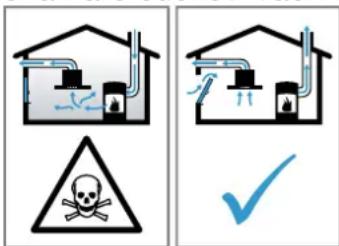
Always ensure adequate fresh air in the room if the appliance is operated in exhaust air mode simultaneously with a room-air-dependent heat-producing appliance. Safe operation is only possible if the pressure in the room where the heating appliance is installed does not drop more than 4 Pa (0.04 mbar) below atmospheric pressure. This can be achieved when the air needed for combustion can enter through openings that cannot be sealed, for example, in doors, windows, incoming/exhaust air wall boxes, or by other technical means. An incoming/exhaust air wall box alone does not ensure compliance with the limit. In any case, consult your responsible chimney sweep. They can assess the house's entire ventilation setup and suggest suitable ventilation measures. Unrestricted operation is possible if the appliance is operated exclusively in circulating-air mode.
WARNING - Risk of fire!
Fatty deposits in the grease filters may catch fire.
- Never operate the appliance without a grease filter. Clean the grease filters regularly.
- Never work with naked flames close to the appliance (e.g. flambéing).
- Do not install the appliance near a solid fuel heating appliance (e.g. wood- or coal-burning) unless the heating appliance has a sealed, non-removable cover. There must be no flying sparks.
Hot oil or grease ignites very quickly.
Always supervise hot oil and fat. - Never extinguish burning oil or fat with water. Switch off the cooking zone. Extinguish flames carefully using a lid, fire blanket or something similar.
When gas burners are in operation without any cookware placed on them, they can build up a lot of heat. A ventilation appliance installed above the cooker may become damaged or catch fire.
- Only operate the gas burners with cookware on them.
Operating multiple gas hobs at the same time generates a great deal of heat. A ventilation appliance installed above the cooker may become damaged or catch fire.
- Only operate the gas hobs with cookware on them.
- Select the highest fan setting.
- Never operate two gas hobs simultaneously on the highest flame for longer than 15 minutes. Two gas hobs correspond to one large burner.
- Never operate large burners of more than 5 kW with the highest flame for longer than 15 minutes, e.g. a wok.
WARNING - Risk of burns!
The accessible parts of the appliance become hot during operation.
- Never touch these hot parts.
- Keep children at a safe distance.
The appliance becomes hot during operation.
- Allow the appliance to cool down before cleaning.
WARNING - Risk of injury!
Components inside the appliance may have sharp edges.
- Carefully clean the appliance interior. Changes to the electrical or mechanical assembly are dangerous and may lead to malfunctions.
- Do not make any changes to the electrical or mechanical assembly.
The light emitted by LED lights is very dazzling, and can damage the eyes (risk group 1).
Do not look directly into the switched-on LED lights for longer than 100 seconds.
WARNING - Risk of electric shock!
An ingress of moisture can cause an electric shock.
Before cleaning, pull out the mains plug or switch off the fuse in the fuse box. - Do not use steam- or high-pressure cleaners to clean the appliance.
WARNING - Risk of explosion!
Highly caustic alkaline or highly acidic cleaning agents in conjunction with aluminium parts in the interior of the appliance may cause explosions.
- Never use highly caustic alkaline or highly acidic cleaning agents. In particular, do not use commercial or industrial cleaning agents in conjunction with aluminium parts, e.g. grease filter on extractor hoods.
WARNING - Risk of fire!
Fatty deposits in the grease filters may catch fire.
Clean the grease filters regularly.
WARNING - Risk of injury!
Improper repairs are dangerous.
Repairs to the appliance should only be carried out by trained specialist staff. If the appliance is defective, call Customer Service.
WARNING - Risk of electric shock!
Penetrating moisture may cause an electric shock.
Do not use wet sponge cloths.
2 Avoiding material damage
ATTENTION!
Condensate may cause corrosion damage.
- To prevent condensation from building up, switch on the appliance during cooking. If moisture gets into the controls, this may result in damage.
- Never clean controls with a wet cloth. Incorrect cleaning damages the surfaces.
- Follow the cleaning instructions. Do not use harsh or abrasive detergents. Clean stainless steel surfaces in the direction of the finish only.
- Never clean controls with stainless steel cleaners. Condensation that flows back in may damage the appliance. The air extraction duct must be installed with a gradient of at least 1° from the appliance.
If you put incorrect stress on the design elements, they may break off.
Do not pull design elements. - Do not place objects on the design elements or hang objects from them.
There is a risk of surface damage if you do not peel off the protective film.
- Remove the protective film from all parts of the appliance before using for the first time.
If one lamp is defective, this may overload the remaining lamps.
Replace any defective lamps.
Painted surfaces are easily damaged.
- Follow the cleaning instructions. → "Cleaning the appliance", Page 20
- Ensure that the painted surfaces are not scratched.
3 Environmental protection and saving energy
3.1 Disposing of packaging
The packaging materials are environmentally compatible and can be recycled.
- Sort the individual components by type and dispose of them separately.
3.2 Saving energy
If you follow these instructions, your appliance will use less power.
Adjust the fan speed to the amount of steam produced during cooking.
The lower the fan speed, the less energy is consumed. If cooking produces large amounts of steam, select a higher fan speed in good time. The odours are distributed around the room less.
Switch off the lighting if it is no longer required.
- When the lighting is switched off, it does not consume any energy. Clean or replace the filters at regular intervals. The effectiveness of the filter is retained.
Put the cooking lid on.
- The cooking vapours and condensation are reduced. Only use the additional functions if required.
- Switching off additional functions reduces power consumption.
4 Operating modes
You can use your appliance in air extraction mode or circulating-air mode.
4.1 Air extraction mode
The air which is drawn in is cleaned by the grease filters and conveyed to the exterior by a pipe system.

The air must not be discharged into a flue that is used for exhausting fumes from appliances burning gas or other fuels (not applicable to appliances that only discharge the air back into the room).
If the exhaust air is to be conveyed into a non-functioning smoke or exhaust gas flue, you must obtain the consent of the heating engineer responsible. If the exhaust air is conveyed through the external wall, a telescopic duct should be used.
4.2 Air recirculation mode
The air which is drawn in is cleaned by the grease filters and an odour filter, and conveyed back into the room.

To bind odours in circulating-air mode, you must install an odour filter. The different options for operating the appliance in circulating-air mode can be found in our catalogue. Alternatively, ask your dealer. The required accessories are available from specialist retailers, from customer service or from the Online Shop.
5 Familiarising yourself with your appliance
5.1 Controls
You can use the control panel to configure all functions of your appliance and to obtain information about the operating status.
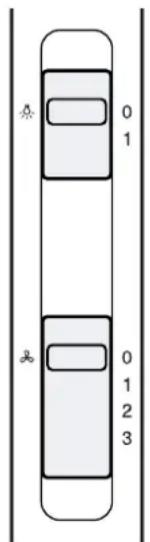
0 Switches off the fan :1 Switches on fan setting 1 2: 2 Switches on fan setting 2 3 Switches on fan setting 3 0 Switches off the lighting 1 Switches on the lighting
6 Accessories
You can buy accessories from the after-sales service, from specialist retailers or online. Only use original accessories, as these have been specifically designed for your appliance.
Accessories vary from one appliance to another. When purchasing accessories, always quote the exact product number (E no.) of your appliance. → Page 22
You can find out which accessories are available for your appliance in our catalogue, in the online shop or from our after-sales service. www.neff-international.com
Accessories Order number
Standard odor filter DWZ0IN0A0
Standard recirculation kit DWZ0INOTO
7 Basic operation
7.1 Switching on the appliance
- Set the slide control to position 1.
7.2 Setting a fan setting
- Set the slide control to position 1, 2 or 3.
7.3 Switching off the appliance
- Set the slide control to position 0.
7.4 Switching on the lighting
The lighting can be switched on and off independently of the ventilation system.
- Set the slide control to position 1.
7.5 Switching off the lighting
- Set the slide control to position 0.
8 Cleaning and servicing
To keep your appliance working efficiently for a long time, it is important to clean and maintain it carefully.
8.1 Cleaning products
You can obtain suitable cleaning products from after-sales service or the online shop.
ATTENTION!
Unsuitable cleaning products may damage the surfaces of the appliance.
Do not use harsh or abrasive detergents. Do not use cleaning products with a high alcohol content. Do not use hard scouring pads or cleaning sponges. Do not use any special cleaners for cleaning the appliance while it is hot. Only use glass cleaners, glass scrapers, or stainless steel care products if recommended in the cleaning instructions for the relevant part. Wash sponge cloths thoroughly before use.
8.2 Cleaning the appliance
Clean the appliance as specified. This will ensure that the different parts and surfaces of the appliance are not damaged by incorrect cleaning or unsuitable cleaning products.
WARNING - Risk of explosion!
Highly caustic alkaline or highly acidic cleaning agents in conjunction with aluminium parts in the interior of the appliance may cause explosions.
- Never use highly caustic alkaline or highly acidic cleaning agents. In particular, do not use commercial or industrial cleaning agents in conjunction with aluminium parts, e.g. grease filter on extractor hoods.
WARNING - Risk of electric shock!
An ingress of moisture can cause an electric shock.
Before cleaning, pull out the mains plug or switch off the fuse in the fuse box.
- Do not use steam- or high-pressure cleaners to clean the appliance.
WARNING - Risk of burns!
The appliance will become hot during operation.
- Allow the appliance to cool down before cleaning it.
WARNING - Risk of injury!
Components inside the appliance may have sharp edges.
- Carefully clean the appliance interior.
- Observe the information regarding the cleaning agents.
- Clean as follows, depending on the surface: - Clean stainless steel surfaces in the direction of the finish using a sponge cloth and hot soapy water.
- Clean painted surfaces using a damp sponge cloth and hot soapy water.
- Clean aluminium using a soft cloth and glass cleaner.
- Clean plastic using a soft cloth and glass cleaner.
- Clean glass using a soft cloth and glass cleaner.
- Dry with a soft cloth.
- Apply a thin layer of the stainless steel cleaning product to stainless steel surfaces using a soft cloth. You can obtain stainless steel cleaning products from the after-sales service or the online shop.
8.3 Cleaning controls
#
WARNING - Risk of electric shock!
Penetrating moisture may cause an electric shock.
Do not use wet sponge cloths.
- Observe the information regarding the cleaning agents.
- Clean using a damp sponge cloth and hot soapy water.
- Dry with a soft cloth.
8.4 Removing the grease filter
1. ATTENTION!
Falling grease filters may damage the hob below. Grip below the grease filter with one hand. Open the locks on the grease filters.
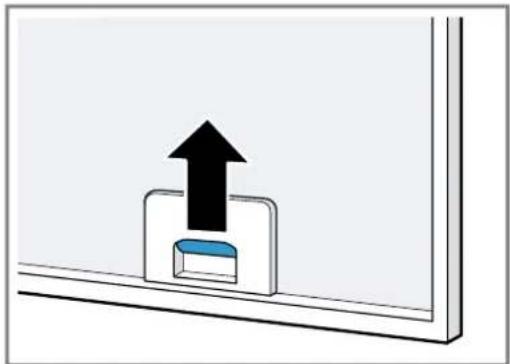
- Remove the grease filters from the holders.
To prevent grease from dripping, hold the grease filter horizontally.
8.5 Cleaning grease filters manually
The grease filters filter the grease from the cooking vapour. Regularly cleaned grease filters guarantee a high level of grease removal.
#
WARNING - Risk of fire!
Fatty deposits in the grease filters may catch fire. Clean the grease filters roughly once a month.
Requirement: The grease filters have been removed. → "Removing the grease filter", Page 20
- Observe the information regarding the cleaning agents.
- Soak the grease filter in hot soapy water.
Use special grease solvent for stubborn dirt. You can obtain grease solvents from after-sales service or the online shop.
- Use a brush to clean the grease filters.
- Rinse the grease filters thoroughly.
- Allow the grease filters to drain.
8.6 Cleaning grease filters in the dishwasher
The grease filters filter the grease from the cooking vapour. Regularly cleaned grease filters guarantee a high level of grease removal.
WARNING - Risk of fire!
Fatty deposits in the grease filters may catch fire.
Clean the grease filters roughly once a month.
ATTENTION!
The grease filters may become damaged if they are squeezed.
Do not squeeze the grease filters.
Note: When cleaning the grease filter in the dishwasher, light discolouration may occur. This discolouration has no effect on the performance of the metal grease filters.
Requirement: The grease filters have been removed.
-> "Removing the grease filter", Page 20
- Observe the information regarding the cleaning agents.
- Place the grease filters loosely into the dishwasher. Do not clean heavily soiled grease filters with utensils.
Use special grease solvent for stubborn dirt. You can obtain grease solvents from after-sales service or the online shop.
- Start the dishwasher. Select a temperature of no more than 70°C
- Allow the grease filters to drain.
8.7 Odour filter for recirculating air mode
Odour filters bind odorous substances in air recirculation mode. Regularly replaced odour filters guarantee a high level of odour removal.
With normal use (approx. one hour a day), the odour filter must be replaced every 3 months. The odour filter cannot be cleaned or regenerated.
You can obtain odour filters from the after-sales service or the online shop. Only use original odour filters.
Removing the odour filter
- Remove the grease filter. → Page 20
- Remove the grid and the grease filter.
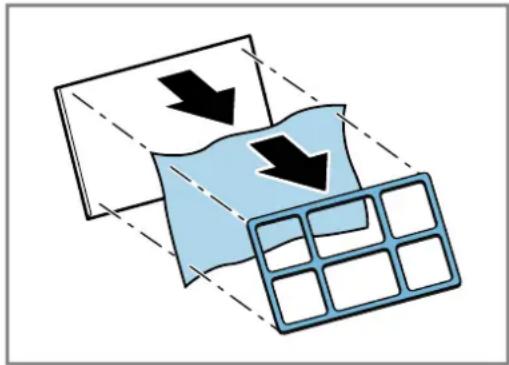
Fitting odour filters
- Place the odour filter on the grease filter.
- Use the grid to secure the odour filter.
8.8 Fitting grease filters
ATTENTION!
Falling grease filters may damage the hob below.
Grip below the grease filter with one hand. 1. Fit the grease filters. 2. Fold the grease filters upwards and engage the locks. 3. Make sure that the locks engage.
9 Troubleshooting
You can rectify minor faults on your appliance yourself. Read the troubleshooting information before contacting after-sales service. This will avoid unnecessary costs.
WARNING - Risk of injury!
Improper repairs are dangerous.
- Repairs to the appliance should only be carried out by trained specialist staff. If the appliance is defective, call Customer Service.
9.1 Malfunctions
Fault Cause and troubleshooting
| The appliance is not working. | The mains plug of the power cord is not plugged in. ► Connect the appliance to the power supply. |
| The circuit breaker is faulty. ► Check the circuit breaker in the fuse box. |
Fault Cause and troubleshooting
The appliance is not working. There has been a power cut. Check whether the lighting in your kitchen or other appliances are working.
9.2 Replacing the LED lights
WARNING - Risk of electric shock!
When changing the bulb, the bulb socket contacts are live.
Before replacing the bulb, unplug the appliance from the mains or switch off the circuit breaker in the fuse box.
WARNING - Risk of injury!
The light emitted by LED lights is very dazzling, and can damage the eyes (risk group 1). Do not look directly into the switched-on LED lights for longer than 100 seconds.
Note:
Only use bulbs of the same type and wattage.
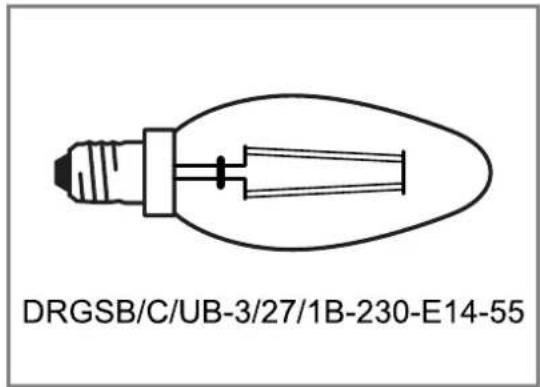
- Disconnect the appliance from the power supply.
- Loosen and remove the bulb cover ①
- Unscrew the bulb ② and replace it with a bulb of the same type.
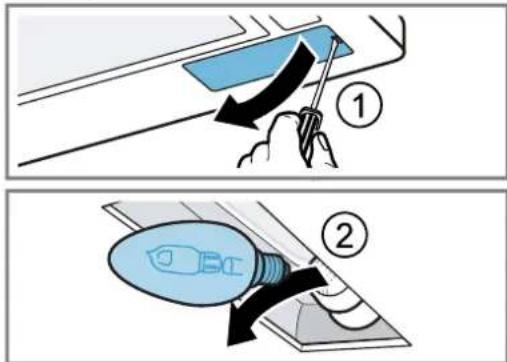
- Refit the bulb cover.
- Insert the mains plug and switch on the fuse again.
10 Disposal
10.1 Disposing of old appliance
Valuable raw materials can be reused by recycling.
- Dispose of the appliance in an environmentally friendly manner. Information about current disposal methods are available from your specialist dealer or local authority.
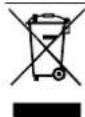
This appliance is labelled in accordance with European Directive 2012/19/EU concerning used electrical and electronic appliances (waste electrical and electronic equipment - WEEE). The guideline determines the framework for the return and recycling of used appliances as applicable throughout the EU.
11 Customer Service
Detailed information on the warranty period and terms of warranty in your country is available from our after-sales service, your retailer or on our website. If you contact Customer Service, you will require the product number (E-Nr.) and the production number (FD) of your appliance.
The contact details for Customer Service can be found in the enclosed Customer Service directory or on our website.
11.1 Product number (E-Nr.) and production number (FD)
You can find the product number (E-Nr.) and the production number (FD) on the appliance's rating plate. Depending on the model, the rating plate can be found:
- Inside the appliance (remove grease filters for access).
- On top of the appliance.
Make a note of your appliance's details and the Customer Service telephone number to find them again quickly.
12 Installation instructions
Observe this information when installing the appliance.

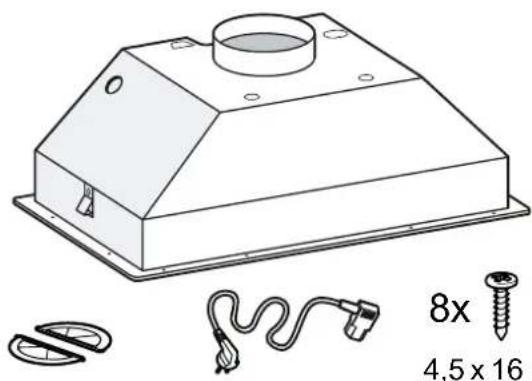
12.1 Scope of delivery
After unpacking all parts, check for any damage in transit and completeness of the delivery.
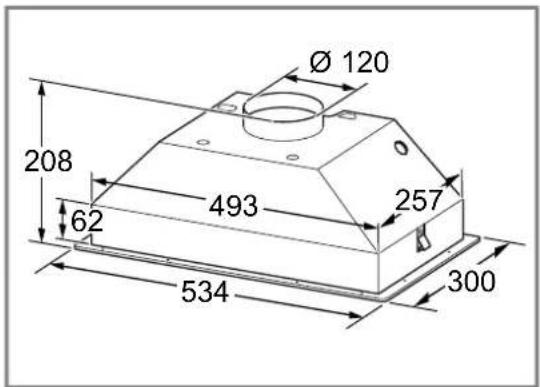
12.2 Appliance dimensions
You will find the dimensions of the appliance here.
12.3 Safety clearances
Comply with the safety clearances for the appliance.
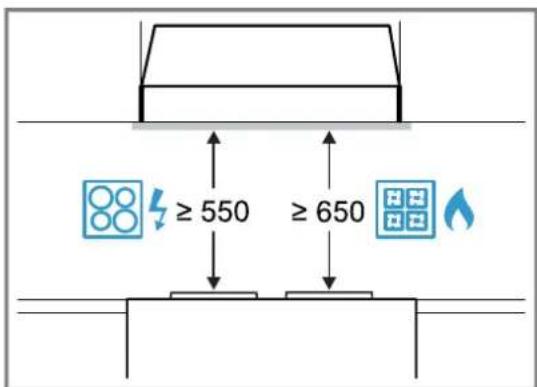
For Australia and New Zealand the minimum safety clearance above electrical cooktops must be 600 mm.

12.4 Secure installation
Follow these safety instructions when installing the appliance.
WARNING - Risk of poisoning!
Risk of poisoning from flue gases being drawn back in. Room-air-dependent heat-producing appliances (e.g. gas, oil, wood or coal-operated heaters, continuous flow heaters or water heaters) obtain combustion air from the room in which they are installed and discharge the exhaust gases into the open through an exhaust gas system (e.g. a chimney). With the extractor hood switched on, air is extracted from the kitchen and the adjacent rooms. Without an adequate supply of air, the air pressure falls below atmospheric pressure. Toxic gases from the flue or the extraction shaft are sucked back into the living space.
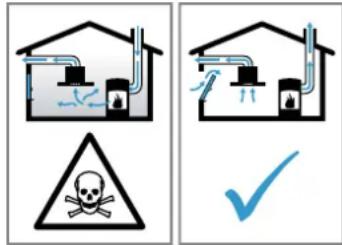
Always ensure adequate fresh air in the room if the appliance is being operated in exhaust air mode at the same time as a room-air-dependent heat-producing appliance is being operated. It is only possible to safely operate the appliance if the pressure in the room in which the heating appliance is installed does not drop more than 4 Pa (0.04 mbar) below atmospheric pressure. This can be achieved whenever the air needed for combustion is able to enter through openings that cannot be sealed, for example in doors, windows, incoming/exhaust air wall boxes or by other technical means. An incoming/exhaust air wall box alone does not ensure compliance with the limit. In any case, consult your responsible chimney sweep. They are able to assess the house's entire ventilation setup and will suggest the suitable ventilation measures to you. Unrestricted operation is possible if the appliance is operated exclusively in circulating-air mode.
Risk of poisoning from flue gases being drawn back in.
If an extractor hood with an open-flued heat production source is installed, the power supply for the extractor hood must be provided with a suitable safety switch.
Risk of poisoning from flue gases being drawn back in.
- Do not emit the exhaust air into a smoke or exhaust gas flue that is in operation.
- Do not emit the exhaust air into a shaft that is used to ventilate installation rooms for heat-producing appliances. If the exhaust air is to be conveyed into a smoke or exhaust gas flue, you must obtain the consent of the heating engineer responsible.
WARNING - Risk of suffocation!
Children may put packaging material over their heads or wrap themselves up in it and suffocate.
- Keep packaging material away from children.
- Do not let children play with packaging material.
WARNING - Risk of fire!
Grease deposits in the grease filter may catch fire.
The specified safety clearances must be complied with in order to prevent a build-up of heat. Observe the specifications for your cooking appliances. If the installation instructions for the cooking appliances specify a different clearance, the larger of the two must always be provided for. If gas hobs and electric hobs are operated together, the largest specified clearance applies.
The grease deposits in the grease filter may catch fire.
- Never work with naked flames close to the appliance (e.g. flambéing).
- Do not install the appliance near a heat-producing appliance for solid fuel (e.g. wood or coal) unless a closed, non-removable cover is present. There must be no flying sparks.
WARNING - Risk of injury!
Components inside the appliance may have sharp edges.
Wear protective gloves.
The appliance may fall down if it has not been properly fastened in place.
All fastening components must be fixed firmly and securely in place. Changes to the electrical or mechanical assembly are dangerous and may lead to malfunctions. Do not make any changes to the electrical or mechanical assembly.
WARNING - Risk of electric shock!
Sharp-edged components inside the appliance may damage the connecting cable.
- Do not kink or trap the connecting cable. Incorrect installation is dangerous.
- Connect and operate the appliance only in accordance with the specifications on the rating plate.
- Connect the appliance to a power supply with alternating current only via a properly installed socket with earthing. The protective conductor system of the domestic electrical installation must be properly installed.
- Never equip the appliance with an external switching device, e.g. a timer or remote control.
- When the appliance is installed, the mains plug of the power cord must be freely accessible. If free access is not possible, an all-pole isolating switch must be installed in the permanent electrical installation according to the conditions of Overvoltage Category III and according to the installation regulations.
- When installing the appliance, check that the power cable is not trapped or damaged.
12.5 General information
Follow these general instructions during the installation.
- For the installation, observe the currently valid building regulations and the regulations of the local electricity and gas suppliers.
- When discharging the exhaust air, the official and legal regulations, such as the regional building code, must be observed.
- In order to freely access the appliance for servicing, select an easy-to-reach installation site.
- The surfaces of the appliance are sensitive. Avoid damaging them during installation.
12.6 Instructions for the electrical connection
In order to safely connect the appliance to the electrical system, follow these instructions.
WARNING - Risk of electric shock!
It must always be possible to disconnect the appliance from the electricity supply. The appliance must only be connected to a protective contact socket that has been correctly installed.
The mains plug for the mains power cable must be easily accessible after the appliance is installed. If this is not possible, an all-pole isolating switch must be integrated into the permanent electrical installation according to the conditions of overvoltage category III and according to the installation regulations. The permanent electrical installation must only be wired by a professional electrician. We recommend installing a residual-current circuit breaker (RCCB) in the appliance's power supply circuit.
Sharp-edged components inside the appliance may damage the connecting cable.
Do not kink or trap the connecting cable. The connection data can be found on the rating plate. (See page 22) The connecting cable is approx. 1.30 m long. This appliance complies with the EC interference suppression regulations. - The appliance corresponds to protection class 1. You should therefore only use the appliance with a protective earth connection. - Do not connect the appliance to the power supply during installation. - Ensure that the protection against contact is guaranteed during installation.
12.7 Information on the installation situation
Install this appliance in a kitchen cupboard. - To install additional special accessory parts, observe the enclosed installation instructions. The width of the extractor hood must correspond at least with the width of the hob. - To optimally detect the cooking vapours, install the appliance in the middle of the hob.
12.8 Instructions for the exhaust air pipe
The appliance manufacturer does not provide any warranty for faults attributable to the pipeline.
Use a short, straight exhaust air pipe with as large a pipe diameter as possible. - Long, rough exhaust air pipes, many pipe bends or small pipe diameters reduce the suction power and increase the fan noise. - Use an exhaust pipe that is made of non-combustible material. - To prevent condensate from returning, fit the exhaust pipe with a 1° gradient from the appliance.
Round pipes
Round pipes with an inner diameter of 120 mm
Flat ducts
Use flat ducts with an inner cross-section that corresponds to the diameter of the round pipes:
Diameter of 120 mm corresponds to approx. 113 cm². Use sealing strips for different pipe diameters. - Do not use any flat ducts with sharp bends.
12.9 Instructions for the air extraction mode
For air extraction mode, a one-way flap should be installed.
Notes
If a one-way flap is not included with the appliance, one can be ordered from a specialist retailer. If the exhaust air is conveyed through the external wall, a telescopic duct should be used.
12.10 Information about circulating-air mode
The appliance must only be operated when it is securely installed and the air recirculation pipework is connected. A connecting pipe or flexible hose and an air recirculation diffuser are also required for this.
12.11 Installation
Checking the unit
- Check whether the fitted unit is level and has sufficient load-bearing capacity. The max. weight of the appliance is 5 kg.
Note: Note the furniture manufacturer's specifications with regard to the load-bearing capacity of the fitted unit.
- Ensure that the fitted unit is heat-resistant up to 90 °C.
- Ensure that the fitted unit is still stable after the cut-outs have been made.
Preparing the units
Requirement: The unit is suitable for the installation.
→ "Checking the unit", Page 26
- Make the cut-out in the fitted unit.
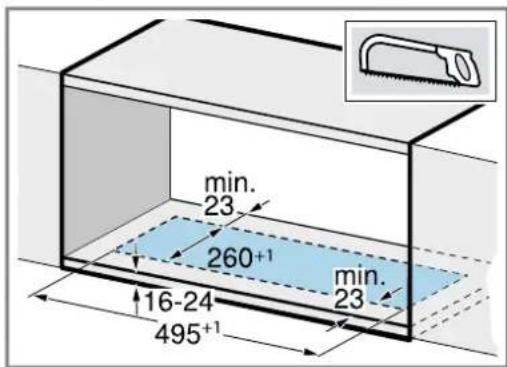
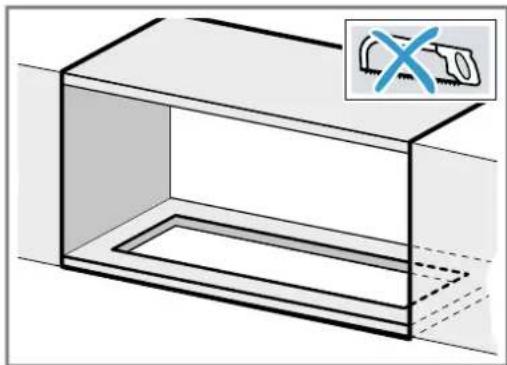
If you already have the cut-out for a previous model of the same brand, you can continue using this.
- Make the cut-out for the exhaust pipe.
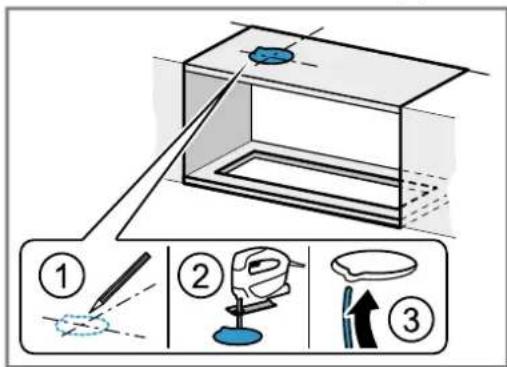
Preparing the appliance
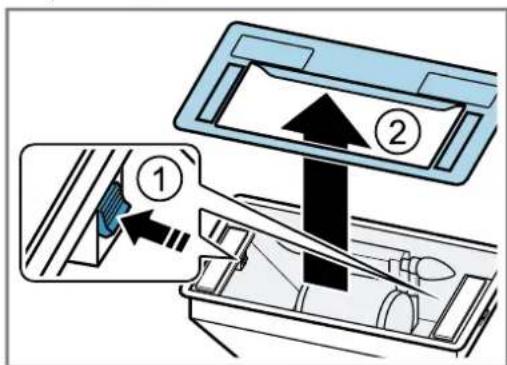
- Remove the grease filters. To avoid causing damage, do not bend the grease filters.
- Remove the panel. To do this, press the two latching mechanisms at the same time 1 and remove the panel 2
- Fit the one-way flaps on the air outlet and click them into place.
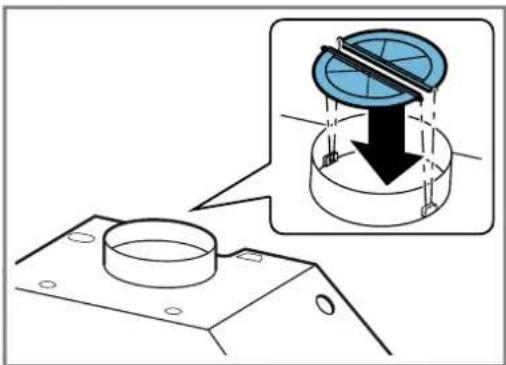
Note: If the fitted unit is no longer accessible after the appliance is installed, remove the side locking mechanism. To do this, undo the fastening screws and secure these to the appliance's housing.
Installing the appliance
1. ATTENTION!
If you already have a cut-out for a previous model of the same brand, the latching mechanism does not engage.
- Secure the appliance so that it does not fall down and become damaged.
Place the appliance in the cut-out ①
New cut-out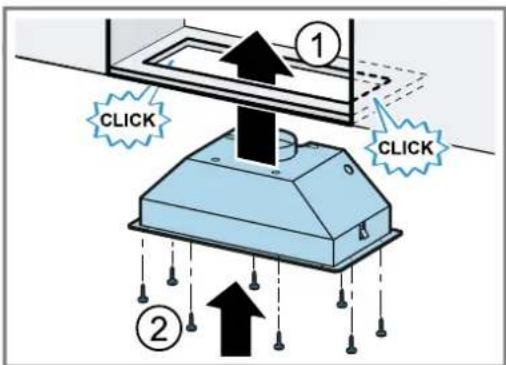
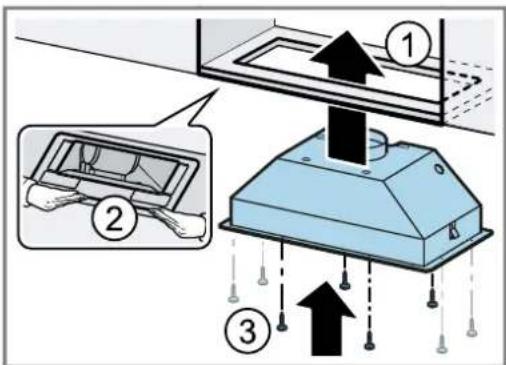
Cut-out for a previous model
- Tighten the fastening screws ② If you are using a cut-out for a previous model, you may not be able to use the side screws ③
- Secure the panel.
- Push the panel upwards until the latching mechanism engages.
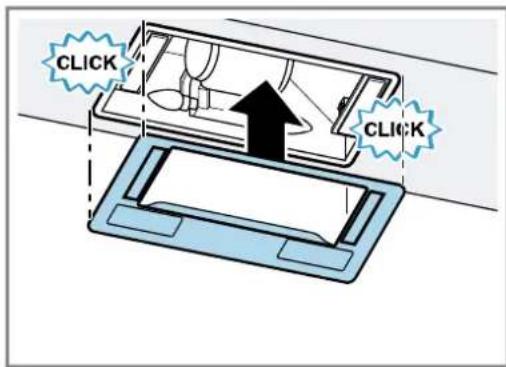
- Fit the grease filters.
To avoid causing damage, do not bend the grease filters.
- Insert the mains plug into the protective contact socket.
Removing the appliance
WARNING - Risk of injury!
Components inside the appliance may have sharp edges.
Wear protective gloves.
- Disconnect the appliance from the power supply.
- Loosen the exhaust pipe.
- Remove the grease filters. To avoid causing damage, do not bend the grease filters.
- Remove the panel.
- Loosen the screw connection with the fitted unit.
- In order to loosen the fixing, use a screwdriver as a lever. To do this, guide the screwdriver through the lateral slot.
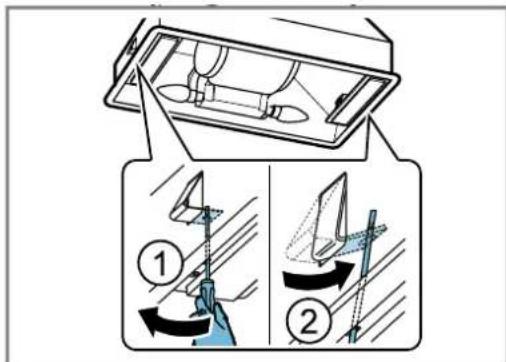
- Slowly take the appliance down.
Table of Contents
USER MANUAL
1.4 Safe use
WARNING - Risk of suffocation!
www.neff-international.com
Valid within Great Britain:
Imported to Great Britain by
BSH Home Appliances Ltd.
Grand Union House
Old Wolverton Road
Wolverton, Milton Keynes
MK125PT
United Kingdom

- SAFETY
- GENERAL INFORMATION
- INTENDED USE
- RESTRICTION ON USER GROUP
- SAFE USE
- WARNING - RISK OF SUFFOCATION
- WARNING - RISK OF POISONING
- WARNING - RISK OF FIRE
- WARNING - RISK OF BURNS
- WARNING - RISK OF INJURY
- WARNING - RISK OF ELECTRIC SHOCK
- WARNING - RISK OF EXPLOSION
- AVOIDING MATERIAL DAMAGE
- ATTENTION
- ENVIRONMENTAL PROTECTION AND SAVING ENERGY
- DISPOSING OF PACKAGING
- SAVING ENERGY
- OPERATING MODES
- AIR EXTRACTION MODE
- AIR RECIRCULATION MODE
- FAMILIARISING YOURSELF WITH YOUR APPLIANCE
- CONTROLS
- ACCESSORIES
- ACCESSORIES ORDER NUMBER
- BASIC OPERATION
- SWITCHING ON THE APPLIANCE
- SETTING A FAN SETTING
- SWITCHING OFF THE APPLIANCE
- SWITCHING ON THE LIGHTING
- SWITCHING OFF THE LIGHTING
- CLEANING AND SERVICING
- CLEANING PRODUCTS
- CLEANING THE APPLIANCE
- CLEANING CONTROLS
- REMOVING THE GREASE FILTER
- CLEANING GREASE FILTERS MANUALLY
- CLEANING GREASE FILTERS IN THE DISHWASHER
- ODOUR FILTER FOR RECIRCULATING AIR MODE
- REMOVING THE ODOUR FILTER
- FITTING ODOUR FILTERS
- FITTING GREASE FILTERS
- TROUBLESHOOTING
- MALFUNCTIONS
- FAULT CAUSE AND TROUBLESHOOTING
- REPLACING THE LED LIGHTS
- NOTE
- DISPOSAL
- DISPOSING OF OLD APPLIANCE
- CUSTOMER SERVICE
- PRODUCT NUMBER (E-NR.) AND PRODUCTION NUMBER (FD)
- INSTALLATION INSTRUCTIONS
- SCOPE OF DELIVERY
- APPLIANCE DIMENSIONS
- SAFETY CLEARANCES
- SECURE INSTALLATION
- INSTRUCTIONS FOR THE ELECTRICAL CONNECTION
- INFORMATION ON THE INSTALLATION SITUATION
- INSTRUCTIONS FOR THE EXHAUST AIR PIPE
- ROUND PIPES
- FLAT DUCTS
- INSTRUCTIONS FOR THE AIR EXTRACTION MODE
- NOTES
- INFORMATION ABOUT CIRCULATING-AIR MODE
- INSTALLATION
- CHECKING THE UNIT
- PREPARING THE UNITS
- PREPARING THE APPLIANCE
- INSTALLING THE APPLIANCE
- REMOVING THE APPLIANCE
- TABLE OF CONTENTS
- USER MANUAL
Brand : NEFF
Model : D51NAA1C0B
Category : Range hood