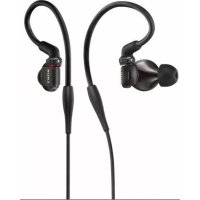
MDREX1000 - Earphones SONY - Free user manual and instructions
Find the device manual for free MDREX1000 SONY in PDF.


| Product Type | Closed-type in-ear headphones |
| Brand | Sony |
| Model | MDREX1000 |
| Transducer Type | Dynamic |
| Transducer Diameter | 16 mm (largest in the industry) |
| Diaphragm Material | Liquid crystal polymer film |
| Magnet | Ultra-powerful neodymium (440 kJ/m³) |
| Cord Type | Litz 7N-OFC (oxygen-free copper, purity 99.99999%) |
| Cord Lengths | 0.6 m and 1.2 m (detachable) |
| Ear Tips | Hybrid silicone rubber, 7 sizes (SS, S, MS, M, ML, L, LL) |
| Hanger | TEKNOROTE™ (flexible plastic material) |
| Housing | Magnesium alloy |
| Noise Isolation | Noise-isolating ear tips (passive) |
| Acoustic Tuner | Original Sony manual adjustment |
| Carrying Case | Genuine leather |
| Usage | Audio playback, compatible with smartphones, MP3 players, etc. (3.5 mm jack) |
| Cleaning | With a soft, dry cloth |
| Safety | Do not listen at high volume for extended periods |
| Spare Parts | Ear tips and cord available separately |
| Repairability | Detachable cord and replaceable ear tips |
Frequently Asked Questions - MDREX1000 SONY
User questions about MDREX1000 SONY
0 question about this device. Answer the ones you know or ask your own.
Ask a new question about this device
Download the instructions for your Earphones in PDF format for free! Find your manual MDREX1000 - SONY and take your electronic device back in hand. On this page are published all the documents necessary for the use of your device. MDREX1000 by SONY.
USER MANUAL MDREX1000 SONY
©2010 Sony Corporation Printed in Japan
4-257-842-32(1)
Introduction
Over many years, Sony has joined together with people who work in professional production studios, and using their feedback has crafted superior headphones that meet their high expectations. One of the most important elements among those expectations is accurate sound. In order to allow the wearer to enjoy that sound in an outdoor environment, these headphones have passed through a development stage that pursued perfection in functionality and performance. To provide accurate sound and a fit designed for outdoor usage and portability without compromise, they are packed with technology that Sony has accumulated to date as well as Sony's own cutting edge technology. This pamphlet explains these technological components.
1. For high sound quality
Rich bass and expansive treble:
Large caliber 16 mm diameter dynamic-type driver unit
In the closed-body-type in-car headphones, a large caliber dynamic driver unit that is the largest in the industry at 16mm diameter was used. It enables a wide dynamic range available only with a dynamic driver unit and playback of a broad range of sound, providing a clear and accurate sound with incredible balance from the bass to treble range.
Driver unit size comparison
9 mm driver unit 13.5 mm driver unit 16 mm driver unit
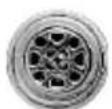
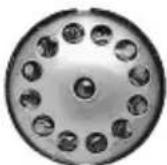
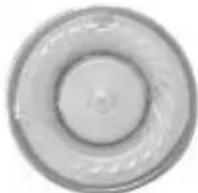
Suppressing unwanted vibrations and providing high resolution sound playback:
Liquid Crystal Polymer film diaphragm
For the driver unit diaphragm material, lightness and consideration to the seemingly contradictory features of highly rigidity vs. high internal loss is essential. Though rigidity is key in accurately converting input signals over a wide bandwidth into sound, a high level of internal loss is also required to suppress unnecessary vibration of the diaphragm itself.
Liquid Crystal Polymer has already been identified for some time as a material that can provide a balanced combination of these two characteristics in high order. However, previously it could not be used to create diaphragms for headphones due to the inability of compositions and manufacturing methods to obtain sufficient heat resistance and the inability to achieve the thinness required for usage in headphones, caused by a low degree of film elongation and the difficulty of formation.
To solve this problem, a highly stretchable Liquid Crystal Polymer was successfully developed for use as a casting film using polymer varnish. This made it possible to enable both rigidity and a high level of internal loss over a wide bandwidth, while also providing the level of strength required to stand up to the process of creating a thin film. In short, a material for creating the perfect diaphragm for reproducing accurate sound was born.
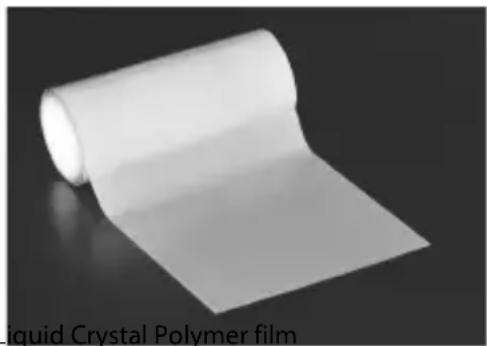
Liquid Crystal Polymer filmLiquid Crystal Polymer film
Increasing flux density and achieving highly sensitive playback:
440kJ/m³ high power neodymium magnets
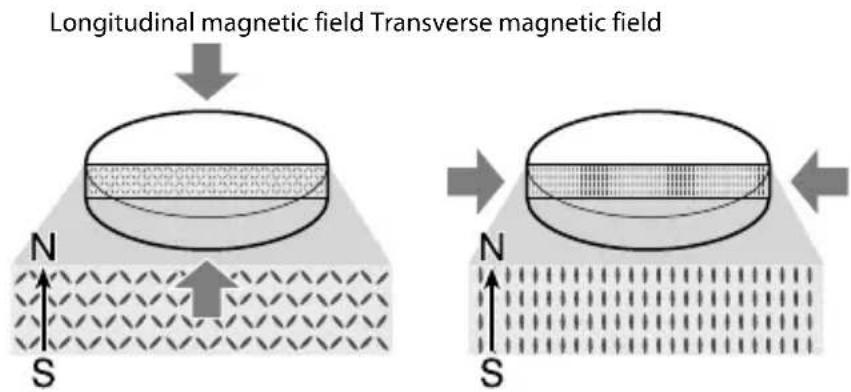
To enhance sound resolution, 440kJ / m^3 high power neodymium magnets which boast the highest energy efficiency among general industrial goods were used. They supply clear mid and high tones and powerful bass.
A manufacturing method called the "transverse field pressing method" boosts the magnetic force of neodymium magnets even higher. This is a manufacturing method designed to strengthen magnetic force even further by arranging the orientation of magnetic powder particles parallel in directionality from the N pole to the S pole of the magnetic field that magnetizes the particles.
Enabling both high sound quality and miniaturization:
Driver unit-integrated housing
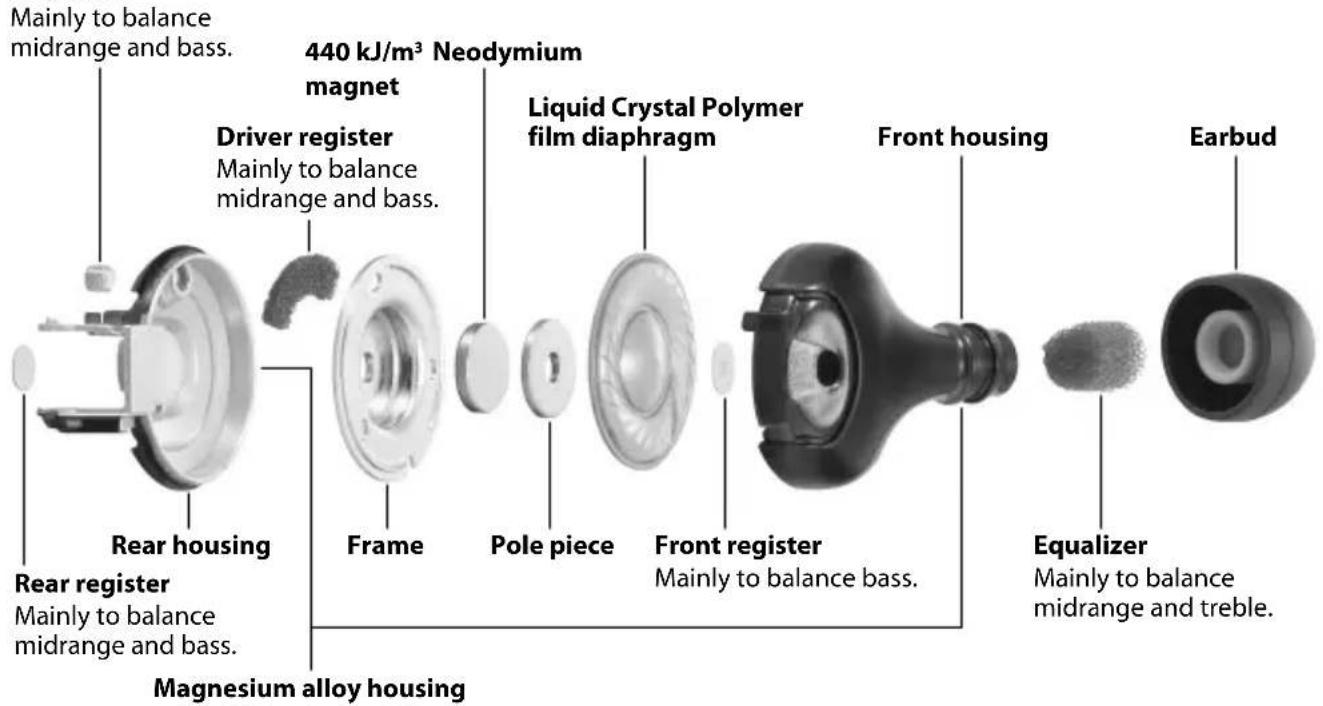
In order to miniaturize and thin the housing, a structure that integrates the driver unit and housing was implemented. In addition to cutting unwanted air leakage generated from slight gaps between the components, this also suppresses unwanted vibration and actualizes a smooth response at low pitch frequencies.
Headphone component diagram
Regulator
Adjusting sound quality for each set by hand:
Sony original acoustic tuner
In addition to measuring each set meticulously during the manufacturing process, adjustment of acoustic resistance material to constant values is also performed by hand. To achieve ideal characteristics, only items that clear strict sound control requirements are shipped. Persistent detailed tuning with precision controlled acoustic tuning components and original Sony acoustic tuners ensure sound quality control at a level of precision higher than ever before.
Suppressing transmission loss of music signals:
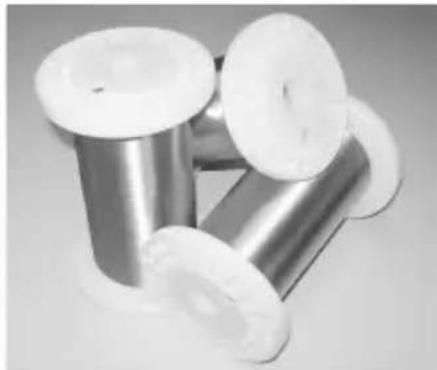
High grade 7N-OFC Litz cord
The cord for transmitting the signal uses grade 7N OFC (Oxygen Free Copper) of extremely high purity (99.99999%) . Suppressing signal loss in the cord minimizes sound degradation.
8 (GB)
The ultimate in sound insulation:
Noise isolation earbud
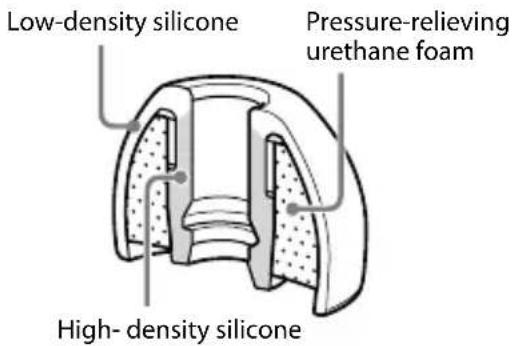
Pressure-relieving urethane foam inside the earbud equalizes pressure to the ear canal and complements the complex bumps and dips of the inner-ear. Due to this, sound insulation is increased with a fit that exceeds the comfort of previous earbuds.
Noise isolation earbud cross section
2. For a snug fit
Actualizing a superior fit with a large caliber driver unit:
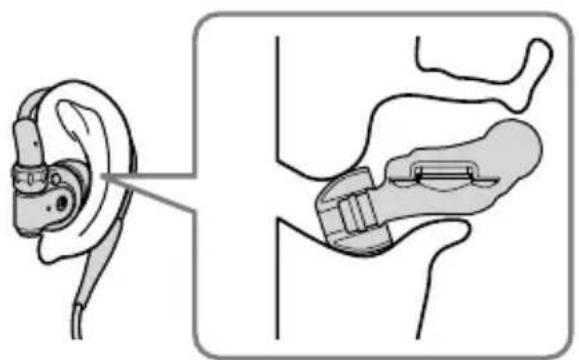
Closed-type vertical in-the-ear method
In using a 16mm diameter large caliber driver unit, a closed-type vertical in-the-ear method wherein the driver unit is positioned perpendicularly to the external ear canal was incorporated. And, in order to absolutely minimize the thickness of the housing, which impacts the fit of the headphones, a high strength magnesium alloy for the housing was used. This let us shave over 30% off the thickness compared to housings that use common resin material.
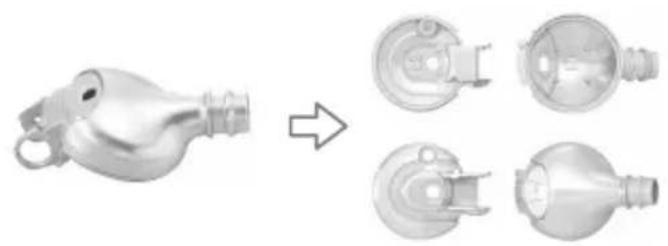
Magnesium alloy housing before coating
Physical properties of magnesium
| Magnesium Aluminum Iron ABS | ||||
| Specific gravity 1.82 2.7 | 7.86 | 1.03 | ||
| Specific strength 154 1.7 | 66 | 34 | ||
Actualizing a highly stable fit for individual ear shapes:
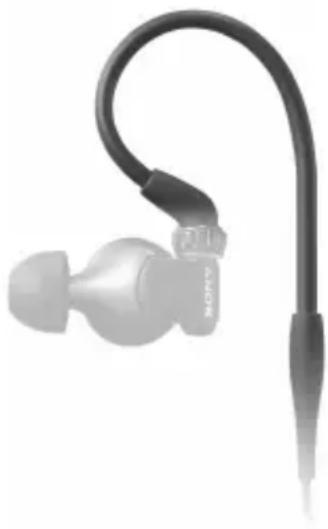
Flexible ear hanger using TEKNOROTE™
For the hanger component, TEKNOROTE ^TM , a plastic material that folds freely and maintains its shape was used. Because this material can alter the hanger shape to fit each individual ear, a superior fit stability is achieved. Also, TEKNOROTE ^TM
provides a comfortable and safe fit because it is lighter and more difficult to snap.
- TEKNOROTE is a trademark of Mitsui Chemicals, Inc.
Selectable by ear size:
7 hybrid silicone rubber earbuds
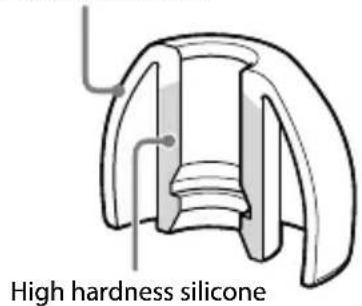
Newly developed, hybrid silicone rubber earbuds combine silicone of two different hardness levels. This new design maintains the shape of the earbud tips where sound exits by making the core firm, preventing sound quality deterioration via squeezing of the earbud tips. The outer portion is soft, and this improves fitting to the outer ear canal. Overall, the earbuds have increased enclosure and provide a more comfortable fit even during long usage periods. 7 earbuds are included to fit different ear types.
Hybrid silicone rubber earbud cross section
Low hardness silicone
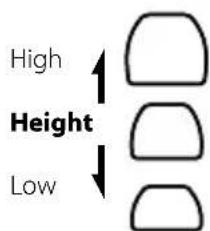
Earbud size
| Small Diameter Large | ||
| -ML | (blue) | LL (purple) |
| S (orange) | M (green) | L (light blue) |
| SS (red) | MS (yellow) | - |
3. Other features
Detachable cord
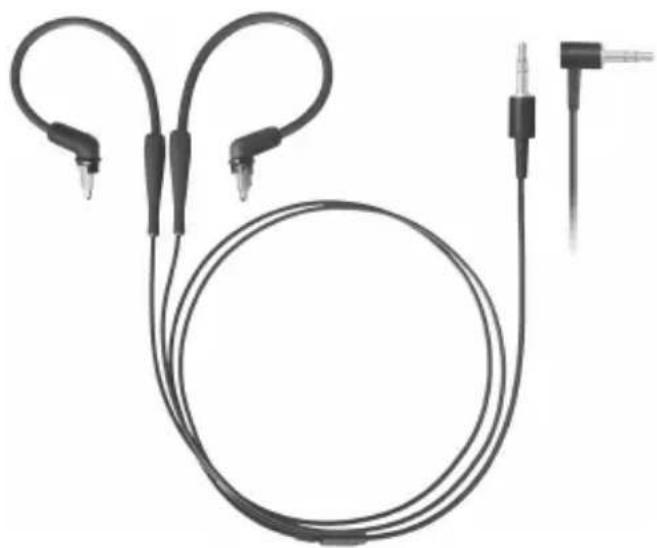
The cord is detachable, and a 0.6m and 1.2m cord are included. Users can select a cord length of their choosing.
Enjoy a high quality feel and convenience:
Genuine leather carrying case
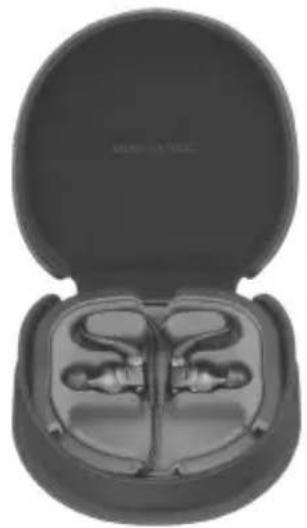
For the convenient carrying case, genuine leather was used. Users can look forward to that wonderful and intimate leather feel that emerges with age and use.
Introduction


- Introduction
- For high sound quality
- Driver unit size comparison
- Suppressing unwanted vibrations and providing high resolution sound playback:
- Liquid Crystal Polymer film diaphragm
- Increasing flux density and achieving highly sensitive playback:
- 440kJ/m³ high power neodymium magnets
- Enabling both high sound quality and miniaturization:
- Driver unit-integrated housing
- Headphone component diagram
- Adjusting sound quality for each set by hand:
- Sony original acoustic tuner
- Suppressing transmission loss of music signals:
- High grade 7N-OFC Litz cord
- The ultimate in sound insulation:
- Noise isolation earbud
- Noise isolation earbud cross section
- For a snug fit
- Actualizing a highly stable fit for individual ear shapes:
- Flexible ear hanger using TEKNOROTE™
- Selectable by ear size:
- hybrid silicone rubber earbuds
- Hybrid silicone rubber earbud cross section
- Earbud size
- Other features
- Detachable cord
- Enjoy a high quality feel and convenience:
- Genuine leather carrying case
Brand : SONY
Model : MDREX1000
Category : Earphones