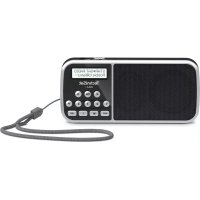
Viola 3 - Radio TECHNISAT - Free user manual and instructions
Find the device manual for free Viola 3 TECHNISAT in PDF.


| Product Type | Digital DAB+ / FM Radio |
| Brand | TechniSat |
| Model | Viola 3 |
| Dimensions (W x H x D) | 127 mm x 60 mm x 24 mm |
| Weight | 124 g |
| Power Supply | 5 V DC, 500 mA via micro USB port (mains adapter not included) |
| Battery | Lithium-ion 3.7 V / 800 mAh, rechargeable, removable |
| Reception Modes | DAB+ (174.9 - 239.2 MHz), FM (87.5 - 108 MHz) |
| Number of Presets | 20 DAB+ and 20 FM |
| Direct Select Buttons | 4 buttons (1-4) for quick access to stored stations |
| Display | Scrolling text display, RDS information in FM |
| Antenna | Integrated in the wrist strap (do not cut or remove) |
| LED Flashlight | Yes, activated by LED button; battery indicator (blue=charging, green=charged, red=low) |
| AUX Input | 3.5 mm jack socket for external audio sources |
| USB Port | Play MP3 files from USB stick |
| Audio Power | Mono 3 W RMS, 4 ohms |
| Cleaning | Soft slightly damp cloth; do not use abrasive or solvent-based products |
| Safety | Do not open, do not expose to water or flames, use in temperate climate |
| Warranty | 24 months (statutory); keep the invoice |
| Customer Service | Telephone support: +49 (0)392592201800 (Mon-Fri 8am-8pm) |
| Package Contents | Radio, battery, USB cable, instruction manual |
Frequently Asked Questions - Viola 3 TECHNISAT
User questions about Viola 3 TECHNISAT
0 question about this device. Answer the ones you know or ask your own.
Ask a new question about this device
Download the instructions for your Radio in PDF format for free! Find your manual Viola 3 - TECHNISAT and take your electronic device back in hand. On this page are published all the documents necessary for the use of your device. Viola 3 by TECHNISAT.
USER MANUAL Viola 3 TECHNISAT
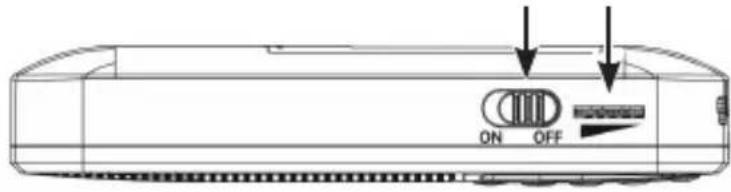
On/Off switch Volume control
1.1 Button description
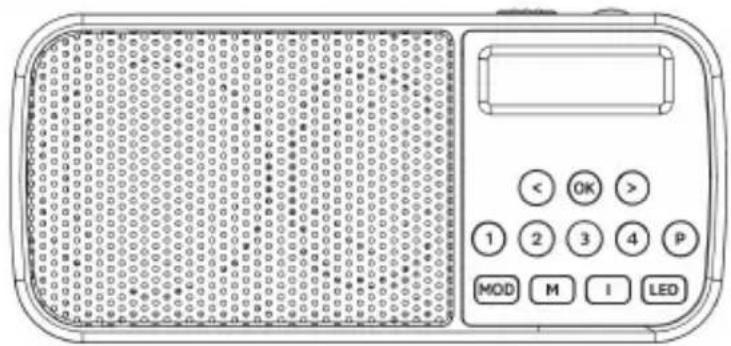
</> Left/right selection, station list
OK Confirm selection.
1-4 Favourites memory direct selection button.
P Favourites memory (1 - 20).
MOD Source switching (DAB+, FM, USB, AUX).
M Main menu.
Switch display.
LED Activates the side LED (torch). The LED also shows the battery charge status:
Blue = battery is charging,
Green = battery is charged,
Red = battery is low.
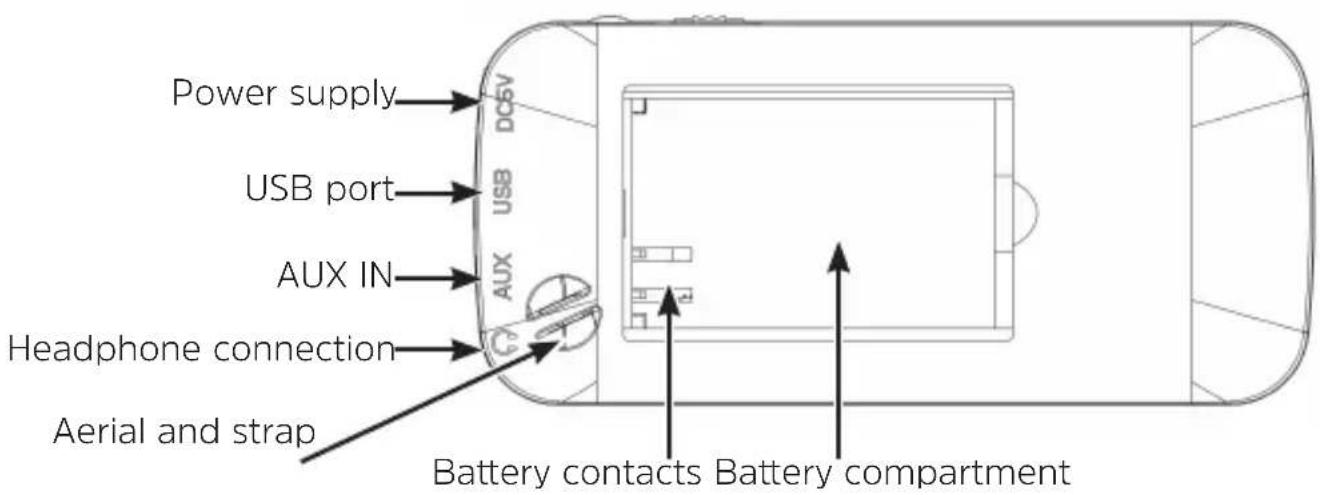
1.2 Rear
2 Contents
1 Illustrations 64
1.1 Button description.. 65
1.2 Rear 66
2 Contents 67
3 Description of the digital radio 72
3.1 Scope of delivery 72
3.2 Special properties of the digital radio 73
3.3 Preparing the digital radio for use 74
3.3.1 Insert battery 74
3.3.2 Connect power supply/Insert battery 75
3.3.3 Using headphones 77
3.4 General device functions 78
3.4.1 Switching on the device 78
3.4.2 Switching off the device 79
3.4.3 Select the source 79
3.4.4 Adjusting the volume 79
3.4.5 Display 80
4 Menu operation 80
5 DAB+ (digital radio) function. 82
5.1 What is DAB+? 82
5.1.1 Data compression 83
5.1.2 Audio stream 84
5.2 DAB+ (digital radio) reception 85
5.2.1 Performing a complete scan 85
5.2.2 Selecting stations 87
5.2.3 Storing DAB+ stations on a memory slot 87
5.2.4 Retrieving DAB+ stations from a memory slot 88
5.2.5 Overwriting/deleting a station memory slot 89
5.2.6 Manual scan 89
6 FM mode 90
6.1 Switching on FM radio mode 90
6.2 FM reception with RDS information 91
6.3 Automatic station scan 92
6.4 Manual station scan 93
6.5 Saving FM stations to a memory slot 93
6.6 Automatic station saving 94
6.7 Retrieving FM stations from a memory slot 95
6.8 Overwriting/deleting a station memory slot 96
7 USB playback. 96
8 AUX input 98
9 System settings 99
9.1 Selecting the language 99
9.2 Factory setting 99
9.3 Software version 101
10 Cleaning 102
11 Legal notices 104
11.1 Target group for this instruction manual 104
11.1.1 Intended use 104
11.2 Important information 104
11.2.1 Safety 105
11.2.2 Disposal 111
11.2.3 Legal notices 116
11.2.4 Service instructions 117
12 Technical specifications / manufacturer's instructions. 119
3 Description of the digital radio
3.1 Scope of delivery
Before start-up, please check whether everything has been delivered.
1 x digital radio
1 x rechargeable battery
1 x USB charging cable
1 x instruction manual
3.2 Special properties of the digital radio
The digital radio consists of a DAB+/FM receiver with the following functions:
- You can store up to 20 DAB+ and 20 FM stations.
- The radio receives on the FM 87.5-108 MHz (analogue) and DAB+ 174.9-239.2 MHz (digital) frequencies.
- 4 direct selection buttons.
- Rechargeable battery.
- Aerial integrated into strap (please do not remove or cut the strap).
3.3 Preparing the digital radio for use
3.3.1 Insert battery
Open the battery compartment at the rear of the device by using the tab to lift up the battery compartment lid. Then remove the lid.
Insert the battery observing the alignment of the gold contacts with one another. To do this, push it under the plastic guide inside the battery compartment.

The rechargeable battery can also be bought separately in stores.
Replace the battery compartment lid on the battery compartment and close it until it audiably engages.

The battery is charged as soon as the device is connected to the mains. Use the supplied USB cable to do so.

Replace a rechargeable battery that is weak in good time or recharge it.
3.3.2 Connect power supply/Insert battery
Connect the supplied USB cable to a commercially available 5V USB power supply (not included in delivery) and plug the mini-USB connector into the jack labelled DC IN on the side of the digital
radio. Then connect the power supply to the mains. The side LED lights up blue when the battery is charging and the display shows the charge status (only when switched off).

Ensure that the operating voltage of the power supply unit matches the mains voltage before you insert it into the wall socket. A USB port on a PC can also be used to supply power.

When the digital radio is switched on for the first time, "Digital Radio" appears in the display. This will then be followed by a station scan via DAB+.
3.3.3 Using headphones
Hearing impairment!
Do not listen to the radio at high volume with headphones. Doing so can cause permanent hearing impairment. Turn down the radio volume to the lowest volume before using headphones.

Only use headphones with a 3.5 mm jack plug.
Insert the headphone plug into the headphone jack on the rear of the device. Sound will now only be heard via the headphones, the speaker is switched to mute.
If you would like to use the speakers again, unplug the headphones from the headphone jack on the radio.
3.4 General device functions
3.4.1 Switching on the device
Slide the ON/OFF switch to the ON position.

After switching on for the first time, the device automatically performs a complete scan in DAB mode. While scanning, the display information shows the progress as well as the number of digital radio stations detected. After completing the station scan the first DAB+ channel is played.
3.4.2 Switching off the device
Slide the ON/OFF switch to the OFF position.

The battery will continue to charge when the radio is switched off.
3.4.3 Select the source
Use the MOD button to switch between sources: DAB+ (digital radio), FM, AUX and USB (MP3 playback).
3.4.4 Adjusting the volume
Adjust the volume using the volume control dial.
3.4.5 Display
Depending on the function or option selected, various pieces of information will appear in the display. The various display modes can be scrolled through using the I button.
4 Menu operation
You can access all of the digital radio functions and settings via the menu. Menu navigation is performed using the M, <, > and OK buttons. The menu is divided into submenus and contains different menu items or activatable functions depending on the mode (DAB+ or FM). Simply press the M button briefly to open the menu. To switch to submenus, first press the < or > buttons to display a submenu, then press the OK button to access the submenu.

To close the menu: Press the M button several times (depending on which submenu you are in) until the current radio channel is displayed again.

Settings are not saved until the OK button is pressed. If the M button is pressed instead, the settings are not accepted or saved (in this case the M button acts as a "Back" button).

The functions and buttons to be pressed are shown in bold in this instruction manual. Displays in [square brackets].

Some text (e.g. menu items, station information) may be too long to show on the display. These will be then shown as running text shortly thereafter.
5 DAB+ (digital radio) function
5.1 What is DAB+?
DAB+ is a new digital format through which crystal clear sound with no noise can be heard. In contrast to conventional analogue radio stations, DAB+ can be used to broadcast multiple stations on one and the same frequency. This is referred to as an ensemble or multiplex. An ensemble is comprised of the radio station, as well as several service components or 82
data services, which are broadcast individually by the radio stations. For further information go to www.dabplus.de or www.dabplus.ch.
5.1.1 Data compression
With this, digital radio takes advantage of the properties of human hearing. The human ear does not perceive sounds which are found under a specific minimum volume. Data which are found under the so-called audibility threshold can, therefore, be filtered out. This is possible because, in a digital data stream, the relevant relative volume for other units is saved for every unit of information. Moreover, in an audio signal, the quieter parts are superimposed by louder ones at a specific limit value. All the sound information below the threshold of hearing in a piece of music can be filtered out of the signal to be broadcast. This leads to a reduction of data
in the data stream to be transmitted, with no perceptible difference in sound for the listener (HE AAC v2 process as a supplementary codification process for DAB+).
5.1.2 Audio stream
With digital radio, audio streams are continuous data streams which contain the MPEG 1 audio layer 2 frames and thereby represent acoustic information. This enables standard radio channels to be broadcast and listened to on the receiver side. Digital radio provides you with not only with excellent sound quality radio but also additional information. This may refer to the programme being broadcast or be independent information (e.g. news, weather, traffic, tips).
5.2 DAB+ (digital radio) reception
Press the MOD button until [DAB] appears on the display.

If DAB+ is being started for the first time, a complete scan will be performed. After the scan is complete, the first station is played back in alphanumeric order.
5.2.1 Performing a complete scan

The automatic scan scans all DAB+ band III channels and thereby finds all stations being broadcast within the reception area.

After the scan is complete, the first station is played back in alphanumeric order.
In order to perform a complete scan, open the menu by pressing the M button and use the <,> and OK buttons to select the [Automatic Scan] menu item.
[Scanning...] appears in the display.

During the scan a progress bar and the number of stations found is displayed.
5.2.2 Selecting stations
By pressing the
buttons, the station list can be called up and you can switch between the available stations.
5.2.3 Storing DAB+ stations on a memory slot

The programme memory can save up to 20 stations in the DAB+ range.
First select the desired station (see section 5.2.2).
In order to store this station in a memory slot, hold down the P button while playing the station. Then use the <,> buttons to select a station memory slot (1 - 20). Press the OK button to save.
Alternatively you can also save a station directly to one of the direct selection buttons (1 - 4) by briefly holding down the respective button.
Repeat this process to save additional stations.
5.2.4 Retrieving DAB+ stations from a memory slot
To retrieve a station that you have already stored in the FAV memory, briefly press the P button and select a station slot (1 - 20) using the < and > buttons. Press the OK button to play the station.
Press one of the direct selection buttons (1 - 4) to play the station saved to it.
5.2.5 Overwriting/deleting a station memory slot
Simply save a new station to a favourite memory slot as described.

When retrieving the factory settings all memory slots are deleted.
5.2.6 Manual scan
Briefly press the M button, use the < or > buttons to select the [Set DAB manually] item and press the OK button.
Use the < or > to select a channel (5A to 13F) and press the OK button to set this channel.
6 FM mode
6.1 Switching on FM radio mode
Switch to FM mode by pressing the MOD button.
[FM] is shown on the display.

When switching on for the first time, the frequency is set to 87.50 MHz.

If you have already set or saved a station, the radio plays the last station set.

In the case of RDS stations, the station name appears.
6.2 FM reception with RDS information
RDS is a procedure for broadcasting additional information via FM stations. Broadcasters with RDS broadcast their station name or the programme type, for example. This is shown on the display. The device can show the RDS information RT (Radio text), PS (Station name), PTY (Programme type).
6.3 Automatic station scan
Hold down the < or > buttons for longer (2 to 3 sec.), in order to automatically search for the next station with a sufficient signal.

If an FM station with sufficient signal intensity is found, the scan stops and the station is played. If an RDS station is received, the station name, and possibly the radio text, appear.

Please use the manual station scan for setting weaker stations.
6.4 Manual station scan
Briefly press the < or > buttons repeatedly to set the desired stations or frequency.
6.5 Saving FM stations to a memory slot

The station memory can save up to 20 stations in the FM range.
First set the desired station frequency (Point 6.3, 6.4).
In order to store this station in a memory slot, hold down the P button while playing the station. Then use the <,> buttons to select a station memory slot (1 - 20). Press the OK button to save.
Alternatively you can also save a station directly to one of the direct selection buttons (1 - 4) by briefly holding down the respective button.
Repeat this process to save additional stations.
6.6 Automatic station saving
Automatic station saving (Auto Memory Store, AMS) enables a search to be launched that also saves the station in the favourites memory.
Briefly press the M button and use the < or > button to select the [AMS] item, then press the OK button. The FM frequencies are then scanned and the stations found are saved in the favourites memory.
6.7 Retrieving FM stations from a memory slot
In order to retrieve a station that you have previously stored in the favourites memory, briefly press the P button and use the < or > buttons to select a station memory slot (1 - 20). Press the OK button to play the station.
Press one of the direct selection buttons (1 - 4) to play the station saved to it.
6.8 Overwriting/deleting a station memory slot
Simply save a new station to the respective memory slot as described.

When retrieving the factory settings all memory slots are deleted.
7 USB playback
It is possible to play MP3 music files located on a USB stick via the digital radio.
Insert a USB stick with MP3 music files into the USB port on the side of the digital radio.
Switch to USB mode by pressing the MOD button.
USB appears in the display and the USB stick is scanned for MP3 music files. Playback then starts automatically.
You can use the > button to skip to the next song.
You can use the < button to skip to the previous song.
8 AUX input
You can use the AUX input on the digital radio to play music from external devices, e.g. a smartphone, via the digital radio speaker.
Connect the audio output (e.g. headphone socket) on your external device to the AUX input on the side of the digital radio. Use a jack cable (3.5 mm) from the range of optional accessories to do so. The digital radio automatically switches to the AUX input. You can control the playback from your external device.
9 System settings
9.1 Selecting the language
Press the M button and use the < or > buttons to select the [Language] item. Press the OK button.
You can now use the < or > buttons to select one of the available languages. Press the OK button to save the selection.
9.2 Factory setting
If you change the location of the device, e.g. when moving house, it is possible that the saved stations can no longer be received. In this case you
can reset the device to factory settings to delete all the saved stations and then launch a new scan.
Press the M button and use the < or > buttons to select the [Factory settings] item. Press the OK button.
Using the < or > buttons, select the [Yes] item to reset to the factory setting and press the OK button.
All previously stored stations and settings will now be deleted. The device is now in the same status as when delivered.
[Restarting...] appears in the display.
The device then automatically performs a complete scan in DAB mode. While scanning, the display information shows the progress as well as the number of digital radio stations detected. After completing the station scan the first DAB+ channel is played.
9.3 Software version
Under SW Version you can retrieve the currently installed software version.
Press the M button and use the < or > buttons to select the [SW Version] item.
Press the OK button. The current SW version is displayed.
10 Cleaning

To prevent the risk of an electric shock, you may not clean the device using a wet cloth or under running water. Prior to cleaning, pull out the mains plug and switch off the device.

You may not use scouring pads, scouring powder and solvents such as alcohol or petrol.

Do not use any of the following substances: saltwater, insecticide, chlorine-based or acidic solvents (ammonium chloride).

Clean the housing using a soft, moist cloth. Do not use spirit, thinners, etc.; you could damage the surface of the device.

Only clean the display with a soft, cotton cloth. If required, use a cotton cloth with small amounts of non-alkaline, diluted, water or alcohol-based soap solution.

Gently clean the surface using the cotton cloth.
11 Legal notices
11.1 Target group for this instruction manual
The instruction manual is intended for anyone who is installing, operating, cleaning or disposing of the device.
11.1.1 Intended use
The device has been designed to receive DAB+/FM radio programmes. The device has been designed for private use and not for commercial purposes.
11.2 Important information
Please take note of the following information to minimise safety risks, to prevent damage to the device and to make a contribution to environmental protection.
Please read all the safety information carefully and keep it for future reference. Always follow all the warnings and instructions in this instruction manual and on the rear of the device.

Caution - This identifies important information that must be observed to prevent device defects, data loss/misuse or undesired operation.

Tip - This identifies information relating to the described function, as well as to another related function that may have to be taken into account, with reference to the corresponding section in the manual.
11.2.1 Safety
For your protection, read the safety precautions carefully before operating your digital radio. The manufacturer accepts no liability for damage caused by inappropriate handling, or by non-compliance with the safety precautions.

Do not open the device under any circumstances! Touching live parts poses a danger to life!

Any required intervention may only be performed by qualified staff.

The device must only be operated in an appropriate climate.



In the event of extended transportation in the cold and subsequent moving to warm rooms, do not switch on immediately; wait for the temperature to equalise.

Do not expose the device to dripping or splashing water. If water has penetrated the device, switch it off and inform the Service department.

Do not expose the device to heat sources that will heat it up more than normal use.
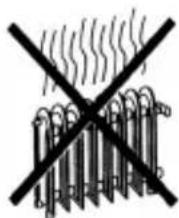


In the event of a thunderstorm, disconnect the device from the mains. Overvoltage can damage the device.

If you detect a device defect, odour or smoke, considerable malfunctions, or damage to the housing, switch off the device and inform the Service department.

Do not put the device into operation in the vicinity of baths, swimming pools or splashing water.

Never try to repair a faulty device yourself. Always contact one of our customer service locations.

Foreign bodies, e.g. nails, coins, etc. must not be allowed to fall inside the device. Do not touch the connection contacts with metal objects or fingers. This could lead to short-circuits.

Do not place any open flames, such as burning candles, on the device.

Never allow children to use the device unsupervised.

Do not listen to music or the radio at high volume. Doing so can cause permanent hearing impairment.

This device is not intended to be used by people (including children) with limited physical, sensory or mental capacities or lack of experience and/or knowledge, unless they are supervised by a person responsible for their safety or they have been instructed by them as to how to use the device.

Children must be supervised to ensure that they do not play with the device.

Modifications must not be performed on the device.

Damaged devices or damaged accessories must not continue to be used.
Handling batteries

Make sure that batteries do not get into the hands of children. Children could put their batteries in their mouths and swallow them. This could lead to serious injuries. Seek medical advice immediately if this occurs! Therefore keep batteries out of reach of infants.

Only operate the device using the battery approved for this device.

Normal batteries may not be recharged. Batteries must not be reactivated by other means, not taken apart, heated or thrown into an open fire (danger of explosion!).

Clean battery contacts and device contacts before inserting.

If the rechargeable battery is inserted incorrectly, there is a risk of explosion!

Only replace with rechargeable batteries of the correct type and model number.

Caution! Do not expose batteries to extreme conditions.

Do not place them on radiators, or expose them to direct sunlight.

Leaking or damaged batteries can cause burns if they come into contact with the skin. In this case use suitable protective gloves. Clean the battery compartment with a dry cloth.

Remove the battery if the device will not be used for a long time..
11.2.2 Disposal
The device packaging is exclusively comprised of recyclable materials. Please sort the components appropriately, and dispose of them in line with your local waste disposal regulations. At the end of its service life, this device must not be disposed of with your regular household waste. It must be taken to a recycling collection point for electrical and electronic equipment.

This is indicated by the symbol on the product, the instruction manual or the packaging. The materials are recyclable according to their identification.
An important contribution is made to our environment by recycling, recovery of materials or other kinds of recycling for old devices.

Please ask local authorities for the location of the relevant disposal point. Ensure that used batteries/rechargeable batteries as well as electronic waste are not disposed of with domestic waste, but are properly disposed of (returned to the specialist shop, hazardous waste).
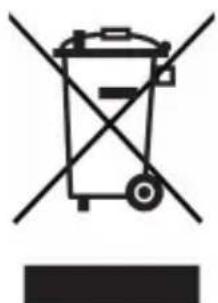
Batteries/rechargeable batteries may contain poisonous substances which cause harm to health and the environment. Batteries/rechargeable batteries are subject to European Directive 2006/66/EC. They must not be disposed of with normal domestic waste.

Disposal instructions:
Disposal of packaging:
Your new device was protected by packaging on its way to you. All materials used are environmentally friendly and recyclable. Please collaborate and dispose of the packaging in an environmentally-friendly
way. Ask for information from your dealer regarding current disposal means or your local disposal facility.

Risk of suffocation! Do not give packaging and parts thereof to children. Risk of suffocation by films and other packaging materials.
Device disposal:
Old devices constitute valuable waste. Valuable raw materials can be recovered through environmentally-friendly disposal. Consult your town or local authority as to the possibilities for environmentally-friendly and proper disposal of the device. Prior to disposal of the device, remove the batteries/rechargeable batteries contained therein.

This device is identified in accordance with the Waste Electrical and Electronic Equipment (WEEE)

At the end of its service life, this device must not be disposed of with your regular household waste. It must be taken to a recycling collection point for electrical and electronic equipment. The symbol on the product, the operating manual or the packaging indicates this. The materials are recyclable according to their identification. An important contribution is made to our environment by recycling, recovery of materials or other kinds of recycling for old devices.

Important information for the disposal of batteries/rechargeable batteries: Batteries/rechargeable batteries may contain poisonous substances which harm the environment. Therefore you must always comply with applicable statutory provisions when you dispose of batteries/rechargeable batteries. Never dispose of batteries in normal household waste. Used batteries/rechargeable batteries can be disposed of at your specialist retailer or at special disposal sites free of charge.
11.2.3 Legal notices

TechniSat hereby declares that the digital radio equipment complies with the 2014/53/EU Directive. The complete text of the EU Declaration of Conformity is available at the following web address:
TechniSat accepts no liability for product damage as a result of external influences, wear or improper handling, unauthorised repairs, modifications or accidents.

Changes and printing errors reserved. Version 12/18.
Copying and duplication are subject to the publisher's consent. The respective current version of the manual can be obtained in PDF format in the download area of the TechniSat homepage at
www.technisat.de.

TECHNIRADIO RDR, VIOLA 3, AQINOVA Digital 1 and TechniSat are registered trademarks of:
D-54550 Daun/Eifel, Germany
www.technisat.de
11.2.4 Service instructions

This product is quality-tested and provided with the legal warranty period of 24 months as from the date of purchase. Please keep your receipt as proof of purchase. In the event of warranty claims please contact the product dealer.

Note! Should you experience a problem with this device, or for queries and information, our Technical Hotline is available:
Mon. - Fri. 8:00 am - 8:00 pm on tel.:
+49 (0) 3925 9220 1800.
If the device needs to be sent back, please use the following address only:
39418 Stassfurt, Germany
The names of the companies, institutions or makes referred to are trademarks or registered trademarks of the respective owners.
12 Technical specifications / manufacturer's instructions
Subject to technical changes and errors.
| Reception channels DAB/DAB+, FM, USB, AUX | |
| power supply DC: 5V, 500mA | |
| Battery 3.7 V/800 mAh Li-ON, | |
| Frequencies FM: 87.5-108 MHz | DAB/DAB+: 174-240 MHz |
| Aerial Integrated into strap | |
| Audio output performance Mono 3W RMS, | 4 Ohm |
| LED status Blue = battery is charging | Green = battery is fully charged Red = battery is low White = torch mode |
| Weight 124 g | |
| Dimensions (W x H x D) 127 mm x 60 mm | x 24 mm |
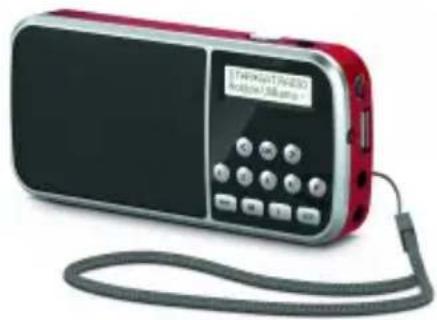
Mode d'emploi
TECHNIRADIO RDR
VIOLA 3
AQINOVA Digital 1
TechniSat
1 Illustrations
OK Confirmer la selection.
11.2.4 Service-instructions

11.2.3 Wskazowski prowne

- Button description
- Rear
- Contents
- Cleaning 102
- Legal notices 104
- Technical specifications / manufacturer's instructions. 119
- Description of the digital radio
- Scope of delivery
- Special properties of the digital radio
- Preparing the digital radio for use
- Insert battery
- Connect power supply/Insert battery
- Using headphones
- Hearing impairment!
- General device functions
- Switching on the device
- Switching off the device
- Select the source
- Adjusting the volume
- Display
- Menu operation
- DAB+ (digital radio) function
- What is DAB+?
- Data compression
- Audio stream
- DAB+ (digital radio) reception
- Performing a complete scan
- Selecting stations
- Storing DAB+ stations on a memory slot
- Retrieving DAB+ stations from a memory slot
- Overwriting/deleting a station memory slot
- Manual scan
- FM mode
- Switching on FM radio mode
- FM reception with RDS information
- Automatic station scan
- Manual station scan
- Saving FM stations to a memory slot
- Automatic station saving
- Retrieving FM stations from a memory slot
- Overwriting/deleting a station memory slot
- USB playback
- AUX input
- System settings
- Selecting the language
- Factory setting
- Software version
- Cleaning
- Legal notices
- Target group for this instruction manual
- Intended use
- Important information
- Safety
- Handling batteries
- Disposal
- Disposal instructions:
- Legal notices
- Service instructions
- Technical specifications / manufacturer's instructions
- Mode d'emploi
- Illustrations
- Service-instructions
- Wskazowski prowne
Brand : TECHNISAT
Model : Viola 3
Category : Radio