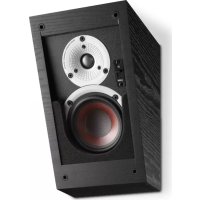
Alteco C1 - Loudspeaker Dali - Free user manual and instructions
Find the device manual for free Alteco C1 Dali in PDF.



| Product type | Speaker |
| Brand | Dali |
| Model | Alteco C1 |
| Primary use | Surround sound, stereo, desktop |
| Directional switch | Yes, 2 positions (perpendicular or tilted at 25°) |
| Mounting options | On speaker (with feet), wall (brackets), desktop (large feet) |
| Connection | Screw terminals, respect polarity (+/-) |
| Connection precautions | Turn off amplifier before handling |
| Impedance | Linear (optimized for amplifier) |
| Placement tips | Symmetry around listening position, parallel to wall, avoid obstacles |
| Break-in | Up to 100 hours for optimal performance |
| Maintenance | Soft dry cloth, avoid abrasive products |
| Cone cleaning | Very fragile, wipe gently |
| Front grilles | Clothing brush, then lint-free cloth with mild cleaner |
| Avoid direct sunlight | To prevent fading or discoloration |
| Disposal | Do not dispose with household waste, specific recycling |
| Amplifier recommendation | Powerful amp to avoid distortion and damage |
| Tone controls | Set to neutral position for optimal quality |
| Listening room | Avoid large reflective surfaces, use rugs/curtains |
| Included accessories | Feet of various sizes, wall mounts (depending on version) |
Frequently Asked Questions - Alteco C1 Dali
User questions about Alteco C1 Dali
0 question about this device. Answer the ones you know or ask your own.
Ask a new question about this device
Download the instructions for your Loudspeaker in PDF format for free! Find your manual Alteco C1 - Dali and take your electronic device back in hand. On this page are published all the documents necessary for the use of your device. Alteco C1 by Dali.
USER MANUAL Alteco C1 Dali
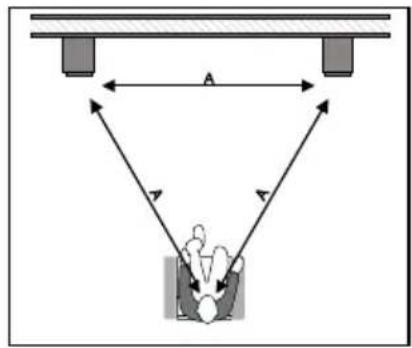
FIGURE 1A FIGURE 1B FIGURE 1C
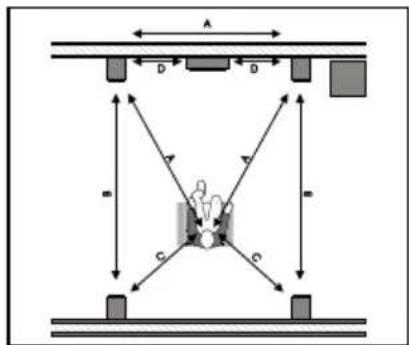
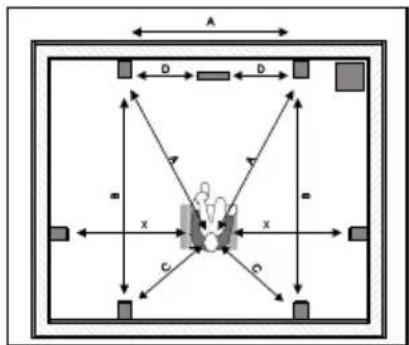
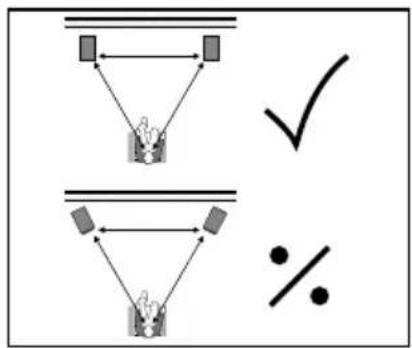
FIGURE 2 FIGURE 3A
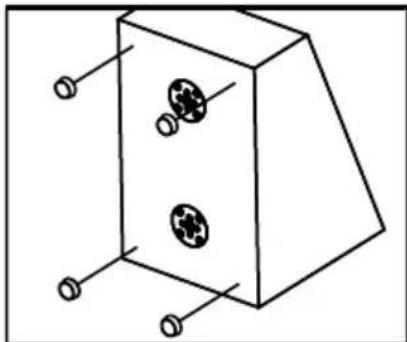
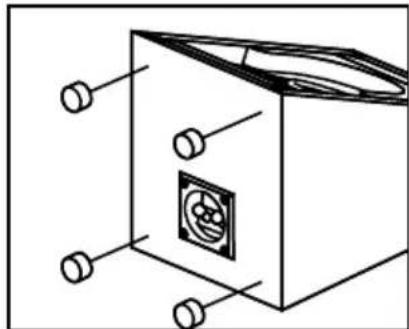
FIGURE 3B
FIGURE 4BFIGURE 4AFIGURE 4C
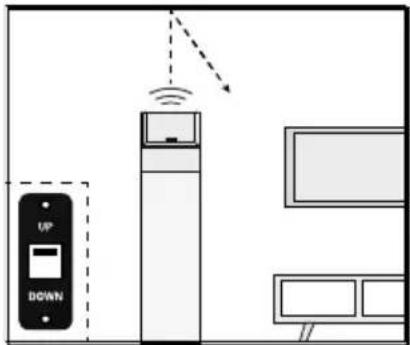
FIGURE 4D
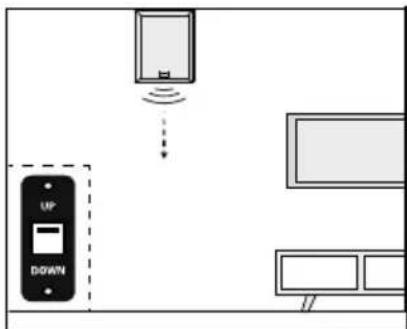
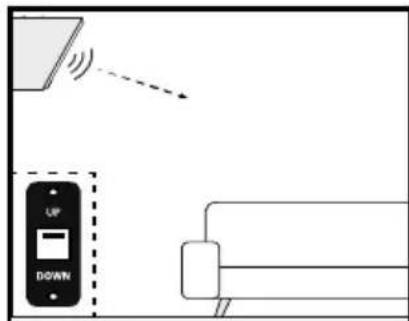
FIGURE 4E FIGURE 4F
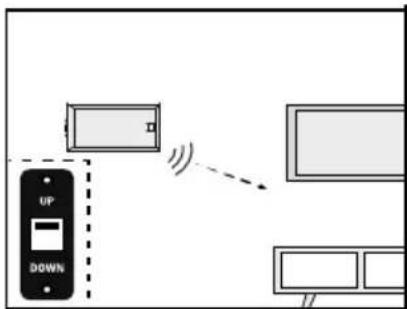
FIGURE 5
The lightning flash within an equilateral triangle is intended to alert you to the presence of non insulated "dangerous voltage" within the product's enclosure that may be of sufficient magnitude to constitute an electric shock to persons.

The exclamation point within an equilateral triangle is intended to alert you to the presence of important operating and maintenance (servicing) instructions in the literature accompanying the appliance.
1 Read instructions - all the safety and operating instructions should be read before the appliance is operated.
2 Retain instructions - the safety and operating instructions should be retained for future reference.
3 Heed warnings - all warnings on the appliance and in the operating instructions should be adhered to.
4 Follow instructions - all operating and use instructions should be followed.
5 Water and moisture - the appliance should not be used near water - for example, near a bathtub, washbowl, kitchen sink, laundry tub, in a wet basement, or near a swimming pool and the like.
6 Carts and stands - the appliance should be used only with a cart or stand if recommended by the manufacturer.
7 Wall or ceiling mounting - the appliance should be mounted to a wall or ceiling only as recommended by the manufacturer.
8 Ventilation - the appliance should be situated so that its location or position does not interfere with proper ventilation. For example, the appliance should not be situated on a bed, sofa, rug, or similar surface that may block the ventilation openings; or placed in a built-in installation, such as a bookcase or cabinet, that may impede the flow of air through the ventilation openings.
9 Heat - the appliance should be situated away from heat sources such as radiators, heat registers, stoves, or other appliances that produce heat.
10 Power sources - the appliance should be connected to a power supply only of the type described in the operating instructions or as marked on the appliance.
11 Power cord protection - power-supply cords should be routed so that they are not likely to be walked on or pinched by items placed on or against them, paying particular attention to cords at plugs, convenience receptacles and the point where they exit from appliance.
12 Cleaning - do not use any liquid cleaners. Use only a dry cloth to wipe off dust and grease.
13 Non-use periods - the power cord of the appliance should be unplugged from the outlet when left unused for a long period of time.
14 Object and liquid entry - care should be taken so that objects do not fall and liquids are not spilled into the enclosure through openings.
15 Damage requiring service - the appliance should be serviced by qualified personnel when:
a) The power-supply cord or the plug has been damaged; or
b) Objects have fallen, or liquid has been spilled into the appliance; or
c) The appliance has been exposed to rain; or
d) The appliance does not appear to operate normally, or exhibits a marked change in performance; or
e) The appliance has been dropped, or the enclosure damaged.
16 Servicing - the user should not attempt to service the appliance beyond that described in the opera ting instructions. All other servicing should be referred to qualified service personnel.
CONTENTS
1.0 INtrODuction 8
2.0 uNPAcKING 8
3.0 POSITIONING 8
4.0 cONNECTION 9
5.0 ruNNING-IN 9
6.0 cLEANING AND MAINTENANCE 9
7.0 DISPOSAL 9
8.0 POWER AND AcOuStlc PrESSurE 10
9.0 tHE LISTENING rOOM 10
10.0 tEChNlcAL SPEclfIcAtIONS 10
1.0 INTRODUCTION
Congratulations with your new DALI ALTECO loudspeaker. It is important to us that your new DALI loudspeakers are set up and connected optimally. For this reason, we recommend that you read this manual and follow its recommendations. The manual contains instructions for setup and connection, as well as tips and advice on how to get the most out of your new loudspeakers. DALI is acclaimed around the world for unique loudspeakers built to our uncompromising standards for design and performance. The goal for every single DALI loudspeaker is always our foremost commitment: To create a listening experience in your home that will make you forget time and place.
Remember to sign up for the DALI newsletter at www.dali-speakers.com.
Enjoy!
2.0 UNPACKING
Be careful not to damage the contents when you unpack the parts. Depending on which DALI ALTECO model you have bought, different accessories come with the loudspeaker. Check that all parts are contained in the cardboard box (see Table 1). Keep the packaging materials should your speaker need to be relocated or serviced.
3.0 POSITIONING
To achieve the best results, the loudspeaker setup should be symmetrical round your favorite listening position, see Figure 1A - C. We recommend that you experiment with the position of your loudspeakers – the sound quality will change depending on the loudspeaker position.
Objects positioned between the speaker and the listening position might negatively affect sound quality. The speakers are designed to meet our wide dispersion principle, so they should NOT be angled towards the listening position, but be positioned parallel with the rear wall, see Figure 2. By parallel positioning, the distortion in the main listening area will be lowered and the room integration will be improved. The wide dispersion principle will ensure that sound is spread evenly within a large area in the listening room.
3.1 DALI ALTECO C-1
The multi-purpose DALI ALTECO C-1 is designed to deliver high quality audio from a variety of positions.
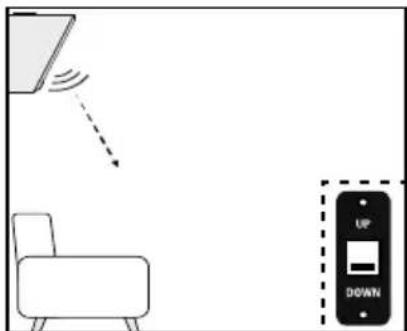
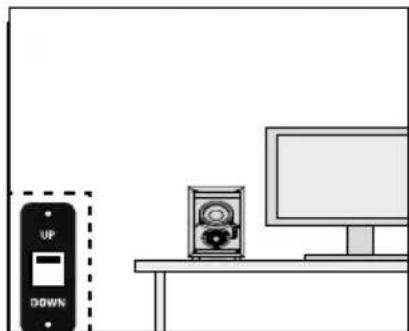
Adding height information in a surround setup either via placement on top of the front, or/and rear speakers (see Figure 4A) or mounted high on the wall in the front, side or back positions (see Figure 4B or 4C). When placing the ALTECO C-1 on top of a speaker use the included bumpers (see Figure 3A). For wall mount use the keyhole brackets on the rear of the speaker. Playing in stereo mounted vertical or horizontal on the front wall (see Figure 4B or 4D) or in a desktop setup (see Figure 4F). When used in the desktop setup add the large included bumpers (see Figure 3B).
They can also be used as rear or surround speakers in a surround setup mounted on the wall right above the listening position (see Figure 4E).
The switch found on the front baffle of the speaker is used to determine the direction of the sound. The Up position of the switch delivers an audio signal perpendicular to the front of the speaker. The Down position on the switch delivers an audio signal angled down the front of the speaker at about 25 degrees. Please refer to Figure 4A - 4F for matching position and switch setting.
4.0 CONNECTION
Correct, tight connections to your amplifier are extremely important for your listening experience. Always use cables of the same type and length for left and right channels. We recommend using special speaker cables from DALI, available from your dealer.
Connection in correct phase is a detail that is often ignored. The red (+) terminal of the amplifier must be connected to the red (+) terminal of the loudspeaker. The black (-) terminal of the amplifier must be connected to the black (-) terminal of the loudspeaker. Even a single loudspeaker connected out-of-phase in a stereo or surround installation will make the bass weaker and the stereo image unfocused.
For the optimal listening experience, the right loudspeaker (as seen from the listening position) must be connected to the amplifier output terminals marked "R" or "Right". The left loudspeaker must be connected to the amplifier output terminals marked "L" or "Left".
NOTE: Before connecting cables or changing any connections, ALWAYS turn off your amplifier.
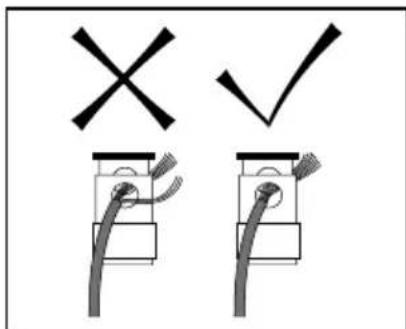
NOTE: Make sure that the bare conductors are tightly gripped by the terminals with no loose wires which could cause a short circuit and damage the amplifier (see Figure 4).
NOTE: If you are using DALI ALTECO in a surround system, follow the instructions included with your surround amplifier.
5.0 RUNNING-IN
Like any mechanical system, a loudspeaker requires a "running-in" period to perform at its best. You will experience a gradual increase in sound quality during the first period of use. The break-in period will vary depending on use and playback volume. You should expect up to 100 hours of playback until maximum performance is reached. Unlike other mechanical systems, the life-span of a loudspeaker is increased by normal, regular playback of music.
6.0 CLEANING AND MAINTENANCE
Clean the cabinets with a soft, dry cloth. If the cabinets are dirty, wipe with a soft cloth dipped in all-purpose cleaner and then well wrung out. Be very careful when wiping the speaker cones, as they are very fragile. Front grilles can be cleaned with a clothes brush and wiped with a wellwring, lint-free cloth and mild all-purpose cleaner.
6.1 AVOID DIRECT SUNLIGHT:
The surfaces of the speakers may fade or become discoloured over time when exposed to direct sunlight. Therefore avoid positioning the speakers in direct sunlight.
7.0 DISPOSAL
If you want to dispose of this product, do not mix it with general household waste. There is a separate collection system for used electronic products in accordance with legislation that requires proper treatment, recovery and recycling. Private households in the EU member states, Switzerland, Liechtenstein and Norway may return their used electronic products free of charge to designated collection facilities or to a retailer (if you purchase a similar new one). If you reside in countries not mentioned above, please contact your local authorities for the correct method of disposal. By following this process, you will ensure that your disposed product undergoes the necessary treatment, recovery and recycling and thus prevent potential negative effects on the environment and human health.
8.0 POWER AND ACOUSTIC PRESSURE
How loud a speaker is able to play and still sound good is completely dependent on the signal it has to reproduce. So, in practice, it is not possible to define an unequivocal level for use in comparing different speakers.
Lots of pure, undistorted output from a large amplifier is better than a distorted signal from a small amplifier stretched beyond its capacity. The signal from a distorting (clipping) amplifier contains much more high-frequency information than an undistorted signal, and therefore puts a heavy strain on the tweeter. Consequently, speakers are often damaged by small amplifiers, having to work too hard - and very rarely by large amplifiers, which are practically running idle.
It is worth noting that turning tone controls above the neutral setting significantly burdens both speakers and amplifier. On a good sound system, tone controls should only be used to compensate for poor recordings and not to permanently compensate for weaknesses elsewhere in the system. DALI recommends the tone controls generally be set to the neutral position, and to achieve your desired sound image through correct positioning of the speakers. Ensuring that you keep the volume low enough for the sound to remain clear and undistorted will minimize the strain on both speakers and amplifier.
All DALI loudspeakers are designed with linear impedance for an optimal amplifier load. The result is a significantly more open and detailed sonic image.
9.0 THE LISTENING ROOM
Every room has its own distinctive acoustics, which influence the way we experience sound from a speaker. The sound you hear consists of direct sound from the speakers and reflected sound from the floor, ceiling and walls. The latter will affect how you experience the sound. As a basic rule, try to avoid large, hard and reflective areas in the immediate vicinity of your loudspeakers as it will typically cause strong reflections, which might disturb the precision and spatial effect of the sound reproduction. Reflection might be suppressed by positioning e.g. a plant between the speaker and the reflecting surface. Soft items such as carpets, curtains etc. might help if the sound is too bright. Both the amount and quality of the deep bass depend on the size and shape of the room, and the position of the speakers. Positioning the speakers near a side or back wall will accentuate the bass.
A corner location will accentuate it even more, but will also increase the reflections.
10. O TECHNICAL SPECIFICATIONS
In Table 2 you will find the most common specifications for our speakers. Please have in mind that there are countless methods for measuring speakers. However, none of them tell you anything useful about how a speaker really sounds. Only your ears can decide whether one speaker sounds better than another. Like all our speakers, DALI ALTECO series is designed to reproduce music as honestly as possible.
Enjoy your new DALI ALTECO!
VORSICHT
ELEKTROSCHOCKGEFAHR - NICTT OFFNEN. ZUR REDUZIERUNG DER ELEKTROSCHOCKGEFAHR DIE RUCKWAND NICTT ABNEHMEN. DAS GERAT ENTHALT KEINE VOM BENUTZER WARTBAREN TEILE. WARTUNGSARBEITEN NUR VON QUALIFIZIERTEM PERSONAL AUSFuhren LASSEN.

The lightning flash within an equilateral triangle is intended to alert you to the presence of non insulated "dangerous voltage" within the product's enclosure that may be of sufficient magnitude to constitute an electric shock to persons.

The exclamation point within an equilateral triangle is intended to alert you to the presence of important operating and maintenance (servicing) instructions in the literature accompanying the appliance.
1 Read instructions - all the safety and operating instructions should be read before the appliance is operated.
2 Retain instructions - the safety and operating instructions should be retained for future reference.
3 Heed warnings - all warnings on the appliance and in the operating instructions should be adhered to.
4 Follow instructions - all operating and use instructions should be followed.
5 Water and moisture - the appliance should not be used near water - for example, near a bathtub, washbowl, kitchen sink, laundry tub, in a wet basement, or near a swimming pool and the like.
6 Carts and stands - the appliance should be used only with a cart or stand if recommended by the manufacturer.
7 Wall or ceiling mounting - the appliance should be mounted to a wall or ceiling only as recommended by the manufacturer.
8 Ventilation - the appliance should be situated so that its location or position does not interfere with proper ventilation. For example, the appliance should not be situated on a bed, sofa, rug, or similar surface that may block the ventilation openings; or placed in a built-in installation, such as a bookcase or cabinet, that may impede the flow of air through the ventilation openings.
9 Heat - the appliance should be situated away from heat sources such as radiators, heat registers, stoves, or other appliances that produce heat.
10 Power sources - the appliance should be connected to a power supply only of the type described in the operating instructions or as marked on the appliance.
11 Power cord protection - power-supply cords should be routed so that they are not likely to be walked on or pinched by items placed on or against them, paying particular attention to cords at plugs, convenience receptacles and the point where they exit from appliance.
12 Cleaning - do not use any liquid cleaners. Use only a dry cloth to wipe off dust and grease.
13 Non-use periods - the power cord of the appliance should be unplugged from the outlet when left unused for a long period of time.
14 Object and liquid entry - care should be taken so that objects do not fall and liquids are not spilled into the enclosure through openings.
15 Damage requiring service - the appliance should be serviced by qualified personnel when:
a) The power-supply cord or the plug has been damaged; or
b) Objects have fallen, or liquid has been spilled into the appliance; or
c) The appliance has been exposed to rain; or
d) The appliance does not appear to operate normally, or exhibits a marked change in performance; or
e) The appliance has been dropped, or the enclosure damaged.
16 Servicing - the user should not attempt to service the appliance beyond that described in the opera ting instructions. All other servicing should be referred to qualified service personnel.
目录
The lightning flash within an equilateral triangle is intended to alert you to the presence of non insulated "dangerous voltage" within the product's enclosure that may be of sufficient magnitude to constitute an electric shock to persons.

The exclamation point within an equilateral triangle is intended to alert you to the presence of important operating and maintenance (servicing) instructions in the literature accompanying the appliance.
1 Read instructions - all the safety and operating instructions should be read before the appliance is operated.
2 Retain instructions - the safety and operating instructions should be retained for future reference.
3 Heed warnings - all warnings on the appliance and in the operating instructions should be adhered to.
4 Follow instructions - all operating and use instructions should be followed.
5 Water and moisture - the appliance should not be used near water - for example, near a bathtub, washbowl, kitchen sink, laundry tub, in a wet basement, or near a swimming pool and the like.
6 Carts and stands - the appliance should be used only with a cart or stand if recommended by the manufacturer.
7 Wall or ceiling mounting - the appliance should be mounted to a wall or ceiling only as recommended by the manufacturer.
8 Ventilation - the appliance should be situated so that its location or position does not interfere with proper ventilation. For example, the appliance should not be situated on a bed, sofa, rug, or similar surface that may block the ventilation openings; or placed in a built-in installation, such as a bookcase or cabinet, that may impede the flow of air through the ventilation openings.
9 Heat - the appliance should be situated away from heat sources such as radiators, heat registers, stoves, or other appliances that produce heat.
10 Power sources - the appliance should be connected to a power supply only of the type described in the operating instructions or as marked on the appliance.
11 Power cord protection - power-supply cords should be routed so that they are not likely to be walked on or pinched by items placed on or against them, paying particular attention to cords at plugs, convenience receptacles and the point where they exit from appliance.
12 Cleaning - do not use any liquid cleaners. Use only a dry cloth to wipe off dust and grease.
13 Non-use periods - the power cord of the appliance should be unplugged from the outlet when left unused for a long period of time.
14 Object and liquid entry - care should be taken so that objects do not fall and liquids are not spilled into the enclosure through openings.
15 Damage requiring service - the appliance should be serviced by qualified personnel when:
a) The power-supply cord or the plug has been damaged; or
b) Objects have fallen, or liquid has been spilled into the appliance; or
c) The appliance has been exposed to rain; or
d) The appliance does not appear to operate normally, or exhibits a marked change in performance; or
e) The appliance has been dropped, or the enclosure damaged.
16 Servicing - the user should not attempt to service the appliance beyond that described in the opera ting instructions. All other servicing should be referred to qualified service personnel.
SOMMAIRE
1.0 INtrODuctION 34
2.0 DEBALLAGE 34
3.0 POSITIONNEMENT 34
4.0 cONNEXION 35
5.0 rODAGE 35
6.0 NEtTOYAGE Et ENtrEtIEN 36
7.0 MISE Au rEBut 36
8.0 PuISSANcE Et PrESSION AcOuStlQuE 36
9.0 LA PIEcE D'EcOut E 37
10.0 cArActErlStlQuES tEcHNIQuES 37
1.0 INTRODUCTION
| ALTECO C-1 | |
| Frequency Range [+/- 3] dB [Hz] 74 | - 26,000 |
| Sensitivity [2.83V/1m] [dB] 83.0 | |
| Nominal Impedance [ohms] 6 | |
| Maximum SPL [dB] 103 | |
| Recommended Amplifier Power [Watt] | 40 -100 |
| Crossover Frequency [Hz] 2,100 | |
| Crossover Principle 2-way | |
| High Frequency Driver 1 x 21 mm | soft dome |
| Low Frequency/midrange Driver(s) 1 x 4½" | |
| Enclosure Type Closed | |
| Bass Reflex Tuning Frequency [Hz] N/A | |
| Connection Input(s) Single | Wire/Spring loaded push- button |
| Recommended Placement On speaker | er/Wall |
| Recommended Distance from rear wall to speaker's rear panel [cm] | 1 - 50 |
| Dimensions (H x W x D) [mm] 190 x | 160 x 255 |
| Dimensions (H x W x D) [inches] | 7.5 x 6.3 x 10.0 |
| Weight [kg/lb] | 2.8 / 6.2 |
| Accessories | Rubber feet, manual |
All technical specifications are subject to change without notice.

IN ADMINATION OF MUSIC
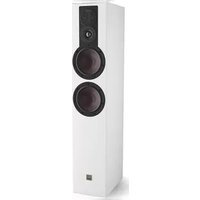

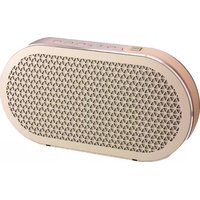


Brand : Dali
Model : Alteco C1
Category : Loudspeaker