EG20358NL - Cooker SIEMENS - Free user manual and instructions
Find the device manual for free EG20358NL SIEMENS in PDF.


User questions about EG20358NL SIEMENS
0 question about this device. Answer the ones you know or ask your own.
Ask a new question about this device
Download the instructions for your Cooker in PDF format for free! Find your manual EG20358NL - SIEMENS and take your electronic device back in hand. On this page are published all the documents necessary for the use of your device. EG20358NL by SIEMENS.
USER MANUAL EG20358NL SIEMENS
natural_image
Modern kitchen scene with a wok on a gas stove and steam rising (no text or symbols visible)Gaskochfeld
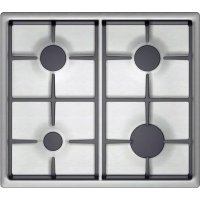
Gas hob
2 Auxiliary burner (up to 1 kW)
1 Parrillas
3 Semi-rapid burner (up to 1.75 kW)
4 Rapid burner (up to 3 kW)
natural_image
Illustration of a cooking pot and its cooking tray with a stove (no text or symbols)Simmer Plate
natural_image
Exploded view diagram of a mechanical component showing top, front, and side views (no text or labels)Brenner zünden
natural_image
Diagram of a mechanical assembly with two cylindrical components and connecting rods (no text or labels)natural_image
Two identical illustrations of a cooking pot with a stove and a cooking pan, showing no text or symbols.text_image
Illustration comparing cooking pots with checkmark and cross symbols, likely indicating cooking or storage issuestext_image
Illustration showing two cooking pots with checkmarks and a crossed-out 'X' symbol, likely indicating cooking or heating conditions.text_image
Illustration showing a cooking pot with a checkmark and a cross symbol indicating cooking resistance.text_image
Illustration showing a cooking pot with a checkmark and a cross symbol indicating incorrect cooking conditions.Your new appliance....11
Accessories 11
Possible combinations....11
Gas burners ....11
Switching on a burner....11
Safety system 11
Switching off a burner.... 11
Power levels....11
Protection against overheating.... 11
Warnings.... 11
Cooking guidelines....12
Cooking pans....12
Suitable pans.... 12
Precautions for use 12
Cleaning and maintenance....13
Cleaning.... 13
Maintenance 13
Trouble shooting 13
Technical Assistance Service ....14
Warranty conditions....14
Used appliances and packaging....14
Environmentally-friendly disposal.... 14
Additional information on products, accessories, replacement parts and services can be found at www.siemens-home.com and in the online shop www.siemens-eshop.com
⚠ Safety precautions
Read these instructions carefully. You will only be able to use your appliance safely and effectively when you have read them. These operating and installation instructions should be retained, and passed onto the buyer if the appliance is sold.
The manufacturer is exempt from all responsibility if the requirements of this manual are not complied with.
The images shown in these instructions are for guidance only.
Do not remove the appliance from its protective packaging until it is installed in the unit. Do not switch on the appliance if it is damaged in any way. Contact our Technical Assistance Service.
This appliance is class 3 type, according to the EN 30-1-1 regulation for gas appliances: built-in appliance.
Before installing your new hob, ensure that it is being installed according to the assembly instructions.
This appliance cannot be installed on yachts or in caravans.
This appliance must only be used in well ventilated places.
This appliance is not intended for operation with an external clock timer or a remote control.
All operations relating to installation, connection, regulation and conversion to other gas types must be performed by an authorised technician, respecting all
applicable regulations, standards and the specifications of the local gas and electricity suppliers. Special attention shall be paid to ventilation regulations.
This appliance leaves the factory set to the gas type that is indicated on the specifications plate. If this needs to be changed, please consult the assembly instructions. It is recommended you contact the Technical Assistance Service to change to another gas type.
This appliance has been designed for home use only, not for commercial or professional use. This appliance is only intended for cooking purposes, not as a heating system. The warranty will only be valid if the appliance is used for the purpose for which it was designed.
This appliance is intended for use up to a maximum height of 2000 metres above sea level.
Never leave the appliance unattended during operation.
Do not use lids or protective barriers for children which are not recommended by the hob manufacturer. They may cause accidents such as those due to the overheating, ignition or detachment of fragments of materials.
This appliance may be used by children over the age of 8 years old and by persons with reduced physical, sensory or mental capabilities or by persons with a lack of experience or knowledge if they are
supervised or are instructed by a person responsible for their safety how to use the appliance safely and have understood the associated hazards.
Children must not play with, on, or around the appliance. Children must not clean the appliance or carry out general maintenance unless they are at least 8 years old and are being supervised.
Keep children below the age of 8 years old at a safe distance from the appliance and power cable.
Risk of deflagration!
Accumulation of unburned gas in an enclosed area carries a risk of deflagration. Do not subject the appliance to draughts. These might blow out the burners. Carefully read the instructions and warnings on the operation of gas burners.
Risk of poisoning!
The kitchen will become hot and humid and combustion products produced when this gas appliance is used. Make sure the kitchen is well ventilated, particularly when the hob is in operation: either keep the natural ventilation apertures open, or install a ventilation system (extractor hood). Intense prolonged use of the appliance may require additional or more effective ventilation: open a window or increase the power of the ventilation system.
Risk of burns!
■ The hotplates and their immediate vicinity get very hot. Never touch the hot surfaces. Keep children under 8 years old well away from this appliance.
If the liquefied gas bottle is not upright, liquefied propane/butane can enter the appliance. Intense darting flames may therefore escape from the burners. Components may become damaged and start to leak over time so that gas escapes uncontrollably. Both can cause burns. Always use liquefied gas bottles in an upright position.
Risk of fire!
■ The hotplates get very hot. Do not rest inflammable objects on the hob. Do not store objects on the hob.
- Do not store or use corrosive chemicals, products which produce fumes, inflammable materials or non-food products below or near this domestic appliance.
- Fat or oil which is overheated can catch fire easily. Never leave fat or oil to heat up unattended. If oil or fats do catch fire, never use water to put the fire out. Put the fire out by covering the pan with a lid and switch off the hotplate.
Risk of injuries!
■ Pans which are damaged, are not the right size, hang over the edge of the hob or are not positioned correctly can cause serious injuries. Follow the advice and warnings provided relating to the cooking pans.
In the event of a malfunction, turn off the appliance's gas and electricity supply. For repairs, call our Technical Assistance Service.
- Do not tamper with the appliance's interior. If necessary, call our Technical Assistance Service.
■ If one of the control knobs will not turn, do not force it. Call the Technical Assistance Service immediately so that they can repair or replace them.
Risk of electric shock!
Do not clean the appliance using steam cleaners.
Your new appliance
Page 2 shows an overall view of your new appliance as well as the burner power.
Accessories
The following accessories can be purchased from the Technical Assistance Service:
natural_image
Illustration of a cooking pot and its cooking pan with a stove (no text or symbols)Simmer Plate
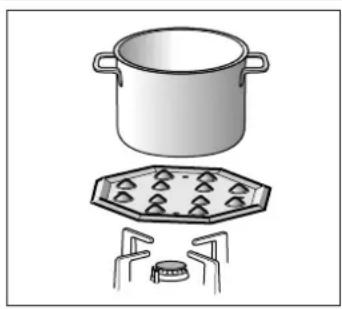
This accessory has been designed to reduce the level of heat at the lowest power setting.
Place the accessory directly on the pan support with the cones facing upwards, never directly over the burner. Centre the pan over the accessory.
Code
HZ298105 Simmer Plate
The manufacturer accepts no liability if these accessories are not used or are used incorrectly.
Possible combinations
| Hob Oven | |
| EG20158EU | HV33AB520 |
| EG20358NL | HV23AB510 |
Gas burners
There are indications to show which burner each control knob operates.
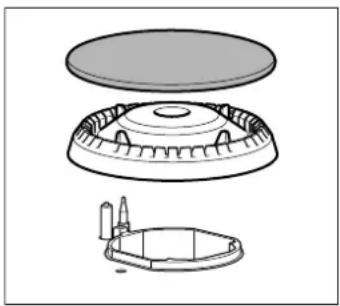
It is essential to ensure that all the burner parts and pan supports are correctly installed for the appliance to work correctly. Do not swap the burner caps around.
natural_image
Exploded view diagram of a mechanical component showing top, front, and side views (no text or labels)Switching on a burner
Turn the desired burner control knob anticlockwise to the required position.
If the burner does not switch on, wait at least a minute until trying again.
Safety system
All the hotplates have a security device (thermocouple).
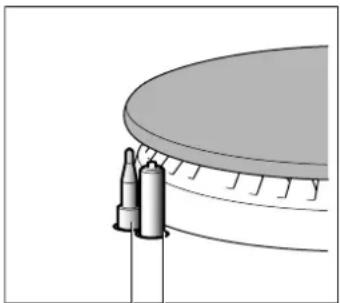
natural_image
Diagram of a mechanical assembly with two cylindrical components and curved surfaces (no text or symbols)thermocouple lignition sparker
If the burner is switched off during operation (e.g. due to a draught), the appliance automatically switches on the hotplate again.
If relighting is not successful (for example, due to food remains on the burner), the gas supply to this burner is turned off and a warning sound is given. Turn the control knob to 0.
Switching off a burner
Turn the corresponding control knob clockwise to the 0 setting.
Automatic off
After six hours of operation, the appliance switches off automatically. Turn all control knobs to setting 0; the appliance can now be switched on again.
Power levels
The progressive control knobs can be used to control the power needed, from minimum to maximum power.
| Setting | ● | Control knob off |
| High flame | ▲ | Maximum capacity or aperture and electricity on |
| Low flame | ▲ | Minimum capacity or aperture |
Protection against overheating
The hob has a protection against overheating system to protect the electrical installation. This will turn of all burners in case of overheating and will emit a warning sound.
Turn all control knobs to setting 0. Wait until the appliance has cooled down sufficiently and turns off. Now you can reconnect the appliance normally.
Warnings
This appliance will not function if it is not connected to the mains or if the electricity supply is cut off.
It is normal to hear a soft whistling noise while the burner is operating.
When first used, it is normal for the burner to give off odours. This does not pose any risk and does not indicate a malfunction. They will disappear in time.
An orange-coloured flame is normal. This is caused by the presence of dust in the atmosphere, spilt liquids, etc.
Keep the burner as clean as possible. If the ignition sparkers are dirty they will not light properly. Clean them periodically using a small non-wire brush. Bear in mind that the ignition sparkers must not suffer any serious impacts.
Cooking guidelines
| Burner Very high - High Medium Low | |||
| Rapid burner | Escalopes,steaks, omelettes, frying | Rice, white sauce, ragout | Steaming: fish, vegetables |
| Semi-rapid burner | Steamed potatoes, fresh vegetables, vegetable stews, pasta | Reheating, keeping things hot and making tasty casse-roles | |
| Auxiliary burner | Cooking: casse-roles, rice pudding, caramel | Defrosting and slow cooking: veg-etables, fruit and frozen products | Melting: but-ter, choco-late, jelly |
Cooking pans
Suitable pans
| Burner Minimum pan diameter | Maximum pan diameter |
| Rapid burner 22 cm 26 cm | |
| Semi-rapid burner 12 cm 20 cm | |
| Auxiliary burner 10 cm 12 cm |
Precautions for use
The following advice is intended to help you save energy and prevent pan damage:
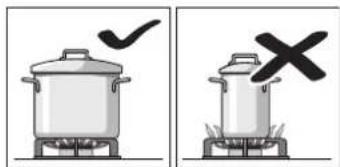
natural_image
Two identical illustrations of a cooking pot with a checkmark and a cross symbol, no text or labels present.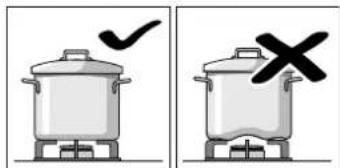
text_image
Illustration showing two cooking pots with checkmarks and X marks indicating cooking resistance or absence.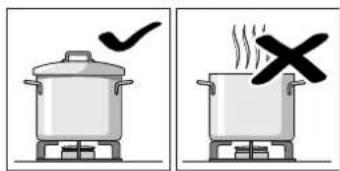
text_image
Illustration showing cooking pots with checkmark and cross symbols indicating cooking methods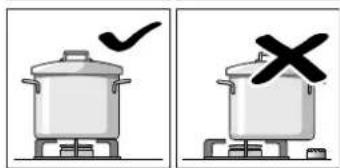
text_image
Illustration showing two cooking pots with checkmarks and a cross symbol, likely indicating cooking or cooking process.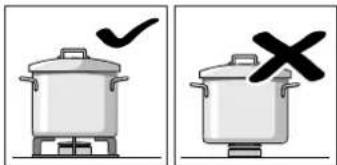
text_image
Illustration showing two cooking pots with checkmarks and X marks indicating absence or failure.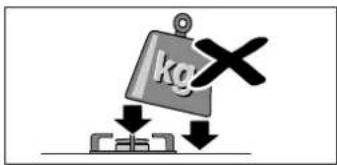
text_image
kgPlace the pans on the pan supports, never directly on the burner.
Make sure that the pan supports and burner caps are correctly positioned before using the appliance.
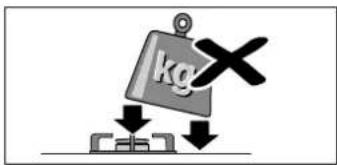
Pans should be placed on the hob carefully.
Do not strike the hob and do not place excessive weight on it.
Cleaning and maintenance
Cleaning
Once the appliance is cool, use a sponge to clean it with soap and water.
After each use, clean the surface of the respective burner parts once they have cooled down. If any residue is left (baked-on food, drops of grease etc.), however little, it will become stuck to the surface and more difficult to remove later. The holes and grooves must be clean for the flame to ignite properly.
The movement of some pans may leave metal residue on the pan supports.
Clean the burners and pan supports using soapy water and scrub with a non-wire brush.
If the pan supports are fitted with rubber rests, ensure that these are also cleaned. The rests may come loose and the pan support may scratch the hob.
Always dry the burners and pan supports completely. Water droplets or damp patches on the hob at the start of cooking may damage the enamel.
After cleaning and drying the burners, make sure the burner caps are correctly positioned on the diffuser.
Caution!
- Do not use steam cleaners. This could damage the hob.
If your hob is fitted with a glass or aluminium panel, never use a knife, scraper or similar implement to clean the point where it joins the metal.
Maintenance
Always clean off any liquid as soon as it is spilt. This will prevent food remains from sticking to the hob surface and you will save yourself any unnecessary effort.
Due to the high temperatures endured, the wok burner and the stainless steel zones (grease drip tray, burner outline, etc.) can change colour. This is normal. After each use, clean these areas with a product that is suitable for stainless steel.
It is recommended that the cleaning product available from our Technical Assistance Service (code 464524) is used regularly.
Caution!
The stainless steel cleaner must not be used in the area around the controls. The (printed) symbols may be wiped off.
Do not leave acidic liquids (e.g. lemon juice, vinegar, etc.) on the hob.
Trouble shooting
Sometimes certain faults detected can be easily resolved. Before calling the Technical Assistance Service, bear in mind the following advice:
Fault Possible cause Solution
| The general electrical sys-tem is malfunctioning. | Defective fuse. Check the fuse in the main fuse box and change it if it is damaged. | |
| The automatic safety switch or circuit breaker has tripped. | Check the main control panel to see if the auto-matic safety switch or circuit breaker has tripped. | |
| The automatic switching on function does not work. | There may be food or cleaning products stuck between the ignition sparkers and the burners. | The space between the ignition sparker and the burner must be clean. |
| The burners are wet. Dry the burner caps carefully. | ||
| The burner caps are not correctly positioned. Check that the burner caps are correctly posi-tioned. | ||
| The appliance is not earthed, is poorly connected or the earthing is faulty. | Contact the installation technician. | |
| The burner flame is not uni-form. | The burner components are not correctly posi-tioned. | Correctly place the parts on the appropriate burner. |
| The grooves on the burner are dirty. Clean the grooves on the burner. | ||
| The gas flow is not normal or there is no gas. | The gas supply is blocked by gas taps. Open all gas taps. | |
| If the gas is supplied from a gas cylinder, check that it is not empty. | Change the gas cylinder. | |
| The kitchen smells of gas. | A gas tap has been left on. Turn off the taps. | |
| Incorrect coupling of gas cylinder. Check that the coupling is sound. | ||
| Possible gas leak. Shut off the gas supply, ventilate the premises and immediately notify an authorised installation tech-nician to check and certify the installation. Do not use the appliance until ensuring that there is no gas leak in the installation or appliance itself. | ||
| A burner switches off and a beep sounds. | The safety system has been activated, cutting off the gas supply. | Turn the burner control knob to the off position. The beep will stop. You can now use your hob normally. |
Fault Possible cause Solution
| All the burners switch off and a beep sounds. | Hob overheating. Turn all the control knobs to the off position. The beep will stop. Wait 30 min before using the hob again. If the beep continues, call the Technical Assistance Service. |
| All the burners switch off and a beep sounds. | General fault detected. A whistling noise will be made after one minute. If not, call the Technical Assistance Service. |
Technical Assistance Service
When contacting our Technical Assistance Service, please provide the product number (E-Nr.) and production number (FD) of the appliance. This information is given on the specifications plate located on the lower section of the hob and on the label in the user manual.
Please find the contact data of all countries in the enclosed customer service list.
To book an engineer visit and product advice
GB 0344 892 8999
Calls charged at local or mobile rate.
IE 01450 2655
0.03 € per minute at peak. Off peak 0.0088 € per minute.
Rely on the professionalism of the manufacturer. You can therefore be sure that the repair is carried out by trained service technicians who carry original spare parts for your appliances.
Warranty conditions
In the unlikely event that the appliance is damaged or does not meet your expectations in terms of quality, please inform us as soon as possible. For the warranty to be valid, the appliance must not have been tampered with, or used inappropriately.
The applicable warranty conditions are those set out by the company's representative office in the country of purchase. Detailed information is available from retail outlets. Proof of purchase must be presented to obtain the benefits of the warranty.
We reserve the right to introduce changes.
Used appliances and packaging
If the ⚡ symbol is shown on the specifications plate, bear in mind the following instructions:
Environmentally-friendly disposal
Dispose of packaging in an environmentally-friendly manner.
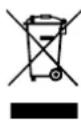
This appliance is labelled in accordance with European Directive 2012/19/EU concerning used electrical and electronic appliances (waste electrical and electronic equipment - WEEE). The guideline determines the framework for the return and recycling of used appliances as applicable throughout the EU.
The packaging of your appliance has been manufactured using only the materials which are strictly necessary to guarantee efficient protection during transport. These materials are 100% recyclable, thus reducing the environmental impact. You can also contribute to caring for the environment by following the advice below:
■ Dispose of the packaging in the appropriate recycling bin.
Before you get rid of an old appliance, make sure you disable it. Contact your local authority to find out the address of your nearest recycling centre to dispose of your appliance.
- Do not pour used oil down the sink. Collect it in a sealed container and take it to an appropriate collection point or, failing that, place it in the rubbish bin (it will end up in a controlled dump; this is probably not the best option, but it will avoid contaminating ground water)
www.siemens-eshop.com
natural_image
Illustration of a cooking pot and its cooking pan with a stove (no text or symbols)Simmer Plate
natural_image
Exploded view diagram of a mechanical component showing top, front, and side views (no text or labels)Encender un quemador
natural_image
Illustration of a cooking pot and its cooking pan with a stove (no text or symbols)Simmer Plate
natural_image
Exploded view diagram of a mechanical component showing top, front, and side views (no text or labels)Allumer un brûleur
natural_image
Two identical cooking pots with steam rising, one marked with a checkmark and the other with a cross (no text or symbols)text_image
Illustration comparing cooking pots with and without checkmark symbols, showing one with checkmark and the other with cross.text_image
Illustration showing two cooking pots with checkmarks and a crossed-out 'X' symbol, likely indicating cooking or heating.text_image
Illustration showing two cooking methods: a pot with a checkmark and a cooking pot with a cross, both on a stove.text_image
Illustration showing a cooking pot with checkmark and cross symbols indicating cooking methods or conditions.natural_image
Illustration of a cooking pot and its cooking tray with a stove (no text or symbols)Simmer Plate
natural_image
Exploded view diagram of a mechanical component showing top, front, and side views (no text or labels)natural_image
Two identical illustrations of a cooking pot with a stove and a cooking pan, showing no text or symbols.text_image
Illustration comparing cooking pots with checkmark and cross symbols, likely indicating cooking or storage issuestext_image
Illustration showing a cooking pot with a checkmark and a cooking pan with a 'X' indicating boiling or heating.text_image
Illustration showing two cooking methods: a pot with a checkmark and a cooking pot with a cross, both placed on a stove.text_image
Illustration showing a cooking pot with checkmark and cross symbols indicating cooking methods or conditions.natural_image
Illustration of a cooking pot and its cooking pan with a stove (no text or symbols)Simmer Plate
natural_image
Exploded view diagram of a mechanical component showing top, side, and internal parts (no text or labels)natural_image
Diagram of a cylindrical object with two protruding cylinders, connected to a curved surface (no text or symbols)thermokoppel | bougie
natural_image
Two identical cooking pots on stovels, one with a checkmark and the other with a cross (no text or symbols)text_image
Illustration showing two cooking pots with checkmarks and X marks indicating absence or failure.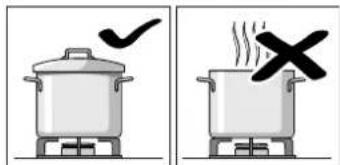
text_image
Illustration showing a cooking pot with a checkmark and a cooking pan with a crossed-out 'X' symbol, likely indicating cooking or heating.text_image
Illustration showing two cooking pots with checkmarks and X marks indicating absence or failure.natural_image
Two identical illustrations of a cooking pot with a checkmark and a cross symbol, no text or labels present.www.siemens-eshop.com
natural_image
Illustration of a cooking pot and its cooking pan with a stove (no text or symbols)Simmer Plate
natural_image
Exploded view diagram of a mechanical component showing top, front, and side views (no text or labels)natural_image
Two identical illustrations of a cooking pot with a checkmark and a cross symbol, no text or labels present.text_image
Illustration showing a cooking pot with a checkmark and a cooking pot with a cross, both labeled in English.text_image
Illustration showing two cooking pots with checkmarks and a crossed-out 'X' symbol, likely indicating cooking or heating conditions.text_image
Illustration showing two cooking pots with checkmarks and a crossed-out 'X' symbol, likely indicating cooking or cooking process.text_image
Illustration showing a cooking pot with checkmark and cross symbols indicating cooking methods or conditions.natural_image
Illustration of a cooking pot and its cooking tray with a stove (no text or symbols)Simmer Plate
natural_image
Exploded view diagram of a mechanical component showing top, side, and bottom views (no text or labels)natural_image
Two identical illustrations of a cooking pot with a checkmark and a cross symbol, no text or labels present.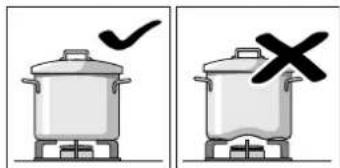
text_image
Illustration showing two cooking pots with checkmarks and X marks indicating cooking resistance or absence.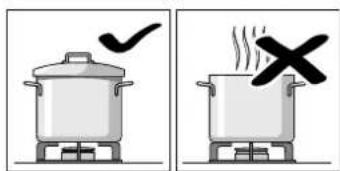
text_image
Illustration showing a cooking pot with a checkmark and a cooking pan with a crossed-out 'X' symbol, likely indicating cooking or heating.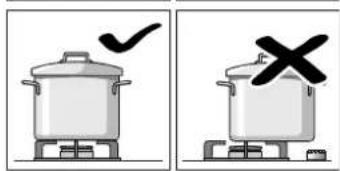
text_image
Illustration showing a cooking pot with a checkmark and a crossed-out pot, likely indicating a cooking or cooking process.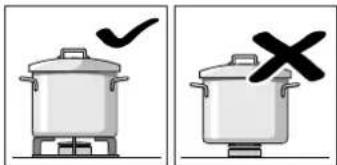
text_image
Illustration showing two cooking pots with checkmarks and X marks indicating absence or failure.