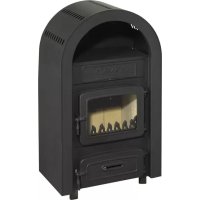
Kamino 1096 FA - Frying Pan Wamsler - Free user manual and instructions
Find the device manual for free Kamino 1096 FA Wamsler in PDF.



| Product type | Wood stove |
| Brand | Wamsler |
| Model | Kamino 1096 FA |
| Nominal power | 6 kW |
| Efficiency | 80 % |
| Permitted fuel | Wood logs (max. length 33 cm, moisture < 20 %) |
| Flue gas outlet diameter | 120 mm (rear) |
| Average flue gas temperature | 325 °C |
| Flue gas mass flow | 5.0 g/s |
| Minimum required draft | 12 Pa |
| Recommended room volume | 116 m³ (optimal conditions) |
| Combustion air supply | External air supply mandatory (free section min. 50 cm²) |
| Safety distances (combustible materials) | Front (radiation zone): 100 cm; Sides: 50 cm; Rear: 30 cm |
| Floor protection | Non-combustible plate: 50 cm in front and 30 cm on sides |
| Dimensions (H × W × D) | 979 × 624 × 376 mm (approx.) |
| Weight | Approx. 80 kg |
| Interior material | Vermiculite plates (insulation, consumable) |
| Glass cleaning | Special products for wood stove glass |
| Flue maintenance | Chimney sweeping at least 2 times per year |
| Spare parts | Use exclusively original Wamsler parts |
| Standards and certifications | CE, EN 13240, DTU 24.1 |
Frequently Asked Questions - Kamino 1096 FA Wamsler
User questions about Kamino 1096 FA Wamsler
0 question about this device. Answer the ones you know or ask your own.
Ask a new question about this device
Download the instructions for your Frying Pan in PDF format for free! Find your manual Kamino 1096 FA - Wamsler and take your electronic device back in hand. On this page are published all the documents necessary for the use of your device. Kamino 1096 FA by Wamsler.
USER MANUAL Kamino 1096 FA Wamsler
GB Fireplace user instruction
Bild 8

Bild 9
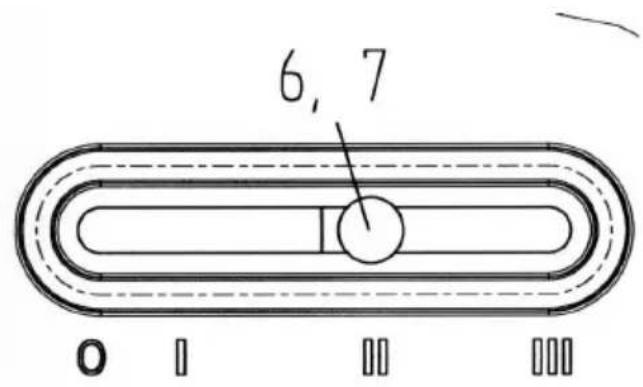
Bild 10
Bild 11
natural_image
Line drawing of a hand using a tool to switch or adjust a device inside a cabinet (no text or symbols visible)Bild 12

natural_image
Illustration of a hand inserting a device into a rack, showing internal components and mounting brackets (no text or symbols)Bild 13

natural_image
Line drawing of a hand inserting a component into a device panel (no text or symbols)Bild 14
natural_image
Line drawing of a hand inserting a component into a device casing (no text or symbols)Bild 15

natural_image
Line drawing of a hand holding a tool interacting with a device panel (no text or symbols visible)

Bild 16.
Thank you for choosing our product!
By purchasing this product you receive guarantee for
• good quality originating from the usage of the finest and proven materials,
- operating security which is controlled according to German and European norms (Corresponds to the standards EN 13240)
- long life ensured by the robust structure.
In order to be able to use your new fireplace for a long time please read the following instructions manual. You will find all the necessary information in it and some additional advice.
PLEASE NOTE:
When ordering replacement parts, the Article No. and Serial No. shown on the identification plate must be quoted.
Contents
Foreword 22
Contents 22
1.1 SAFETY INSTRUCTIONS....23
1.2 Installation 25
1.3 Putting out of operation ....26
1.4 Heating instructions....26
1.5 Cleaning and maintenance....27
1.6 Potential problems and how to tackle them....28
2. Placing....29
2.1 Prescriptions....29
2.2 Place of installation....29
2.3 Distances....29
2.4 Connection of the fireplace....30
3. Technical specification .... 32
3.1 Data, dimensional drawings, pictures....32
3.2 EC Declaration of Conformity ....40
1. Usage
1.1 SAFETY INSTRUCTIONS
- The stoves are tested to EN 13240 (see identification plate).
- For installation and for flue gas connections, the requirements of the Fire Regulations (FeuVO in Germany) apply, as well as local building regulations such as the following technical standards DIN 18896, DIN 4705, EN 13384, DIN 18160, EN 1856-2 and EN 15287. In order for the stove to function correctly the chimney to which you want to connect the stove must be in good condition.
- Before first use and before connecting to the chimney, you must read the Instructions for Use carefully and inform the local authority responsible for approving heating systems.
- While installing the stove you are recommended to wear clean cotton gloves, in order to avoid leaving fingerprints which can be difficult to remove afterwards.
- In the interests both of clean air, and of the safe functioning of the stove, the fuel quantities listed in the Instructions for Use should never be exceeded, and the doors of the stove must be shut during use to avoid the risk of overheating, which can lead to damage to the stove. Damage due to this cause is not covered by the guarantee.
- The stove doors must remain shut at all times while the stove is in use.
-
Permitted fuels are:
-
Natural chopped firewood (up to 33 cm max. in length)
-
Lignite (brown coal) briquettes (see permitted fuels in the Instructions for Use)
-
Never use liquid fire starters. Use either special firelighters or wood shavings.
- Burning rubbish, fine chips, bark, coal slack, chips from planing, damp wood or wood treated with preservative, paper, cardboard or similar is not permitted.
- The first time the stove is heated there may be some smoke and an unpleasant smell. Make sure that the room is well ventilated (open windows and doors) and heat for at least an hour at the maximum nominal heat load. If the maximum temperature is not reached the first time the stove is heated, then there may be further unpleasant smells at a later date.
- All controls and settings must be used as indicated in the Instructions for Use. When the stove is hot, please handle only using the implements or protective gloves provided.
- If the stove is not working correctly, or if the chimney is not drawing properly, smoke may appear when the fire door is opened. It is very important to only open the fire door slowly, initially just a crack, then wait a few seconds before opening fully. In addition, before opening the fire door to top up the fuel, make sure that only glowing material is present: there must not be any visible flames.
- Do not place any flammable items in the warming drawer or on the surface of the stove.
- When in use, all surfaces and particularly the glass doors and handles and other controls can become very hot. Make children, young people, older people and animals aware of this danger, and keep them away from this source of heat when the stove is being used. Use the protective gloves or the implements provided.
Children and young people under 16 must not use the stove unless supervised by an adult who is responsible for them.
- Make sure that the ash pan is always fully pushed in, until it touches the back. Never remove ashes while still hot (fire risk).
- In spring and autumn the chimney may no longer draw correctly, so that gases produced by combustion are not completely removed. The fire chamber should then be filled with a small quantity of fuel, ideally with wood shavings, and lit under supervision, in order to stabilise the chimney draught. The grate must be clean.
- After each prolonged period of use for heating, have the stove checked by a professional. The flues and pipes for the evacuation of fumes must also be thoroughly cleaned.
- If repairs or replacements are necessary, please contact your supplier with the necessary article numbers and serial numbers in good time. Only original WAMSLER replacement parts may be used.
- Work such as installation, setup, commissioning and services, as well as repairs, must only be carried out by qualified personnel (heating system or space heating technicians). Intervention by non-qualified persons invalidates the warranty and guarantee.
- As the solid fuel oven/stove draws the air required for combustion from the surrounding room, you must ensure that sufficient air can be drawn in through non-sealed windows and outside doors. It can be assumed that is this is provided by a room volume of at least 4 m^3 per kW nominal heat capacity. If the volume is less than this, then air vents can be used to provide access to further air in other rooms (min. 150 cm^2 ).
- You must ensure that the correct safety distance is maintained from all flammable components and materials – to the side, rear and front. These distances can be found in the Instructions for Use or the identification plate.
- The fire chamber must not be modified.
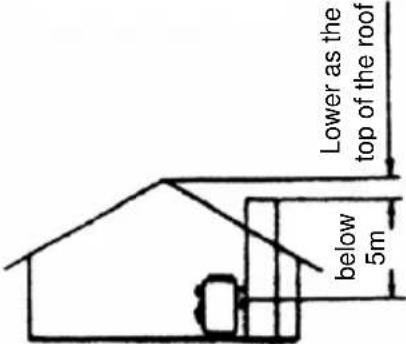
- Connection to a chimney whose functional height is less than 4 m, or if multiple stoves are installed, 5 m, is not permitted. A maximum of two other fires can be connected to the chimney which is to be connected the stove.
- If the chimney catches fire immediately close all doors and openings and call the fire brigade. Do not attempt to extinguish the fire yourself. Afterwards have the chimney thoroughly checked out by a professional.
- Solid fuels naturally create soot, so it is always possible that the window glass will become dirty: this does not mean there is a malfunction.
1.2 Installation
Fuels
The equipment can be used with fuels detailed in the followings. This way the “low-smoke” and trouble-free operation can be secured. Use only dry wood with moisture of maximum 20% and lignite briquette.
| Types of fuels | Heating value appr. kJ/kg |
| Hard wood 19.500 | |
| Soft wood 14.600 | |
| Brown-coal 11.500 |
Filling quantities 6 kW Filling quantities 8 kW
- Split billet: max. Length: 33 cm - Split billet: max. Length: 33 cm
max. two billets per filling, appr. 1.4 kg max. two billets per filling, appr. 2.0 kg - Lignite briquette: max. 1.7 kg - Lignite briquette: max. 2.2 kg
Adjustment of the burning air:
| Fuel | primary air regulator | secondary air regulator | Setting of the fuel selector | |
| door down | door up (when existent) | backside | ||
| Warming up, kindling 2 - 4 2 H | ||||
| Wood | Nominal heating performance | 2 2 H | ||
| Brown-coal | Nominal heating performance | 2,5 2 K | ||
| Putting out of working order | 0 0 K | |||
Table 1
Device control with the automatic control
When igniting the air control to "hand" and level "2". After about an hour, the air controller on "automatic", level 5-6. Then you can with the "automatic control" the desired temperature.
IT IS NOT ALLOWED to burn waste, fine chipping, bark, wood handled with preventive chemicals, furthermore paper and cardboard. For kindling please use wood scrapings or grill starter but never use liquid auxiliaries!
The first kindling
At the first fire set-up could be a little smoke, but is not dangerous, normal!
In this time, please ventilate the room carefully!
Warning! Upon the first kindling, smoke and unpleasant smell may be generated. Always ensure the proper ventilation of the room (by opening windows and doors), and heat the fireplace at maximum rated heating performance. If with the first heating the maximum temperature is not reached, the above-mentioned effects may as well arise later on.
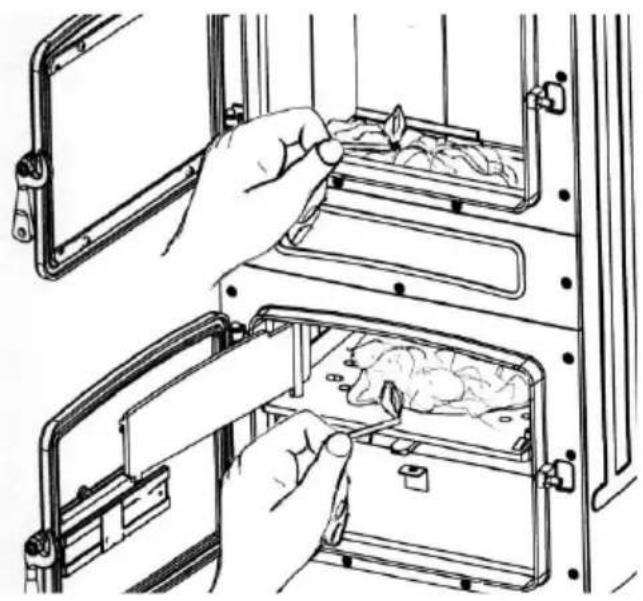
- Before installation pull out the delivery securer off the refractory brick through the furnace chamber.
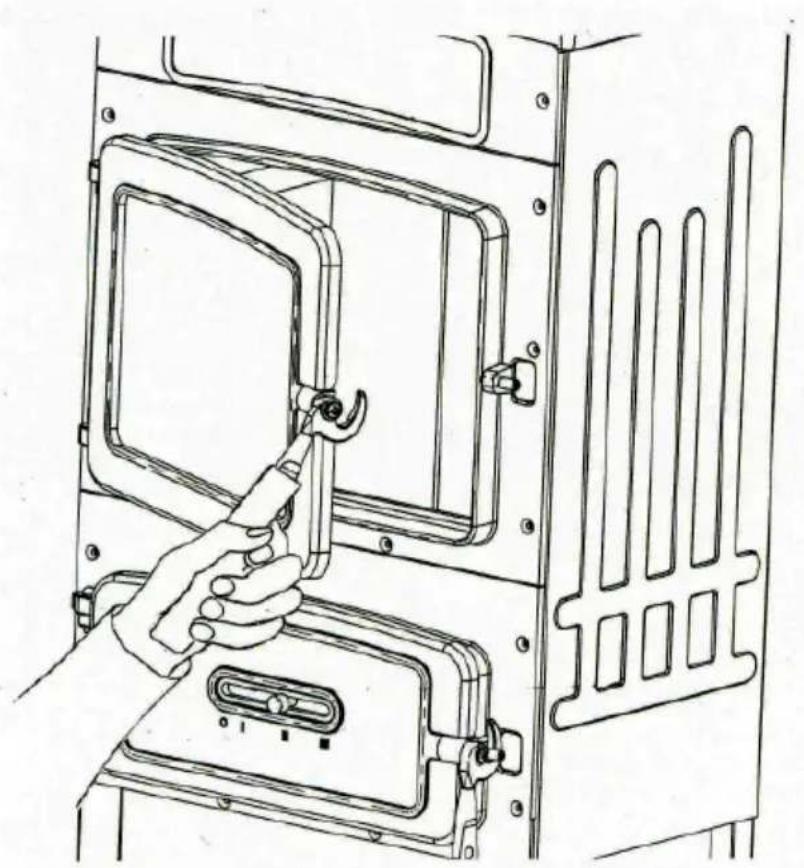
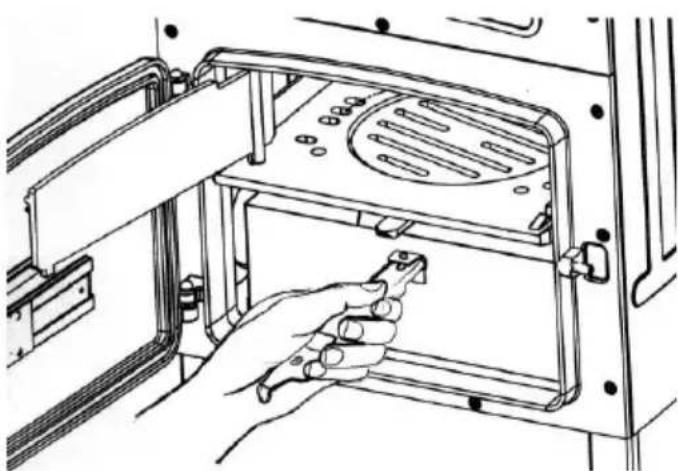
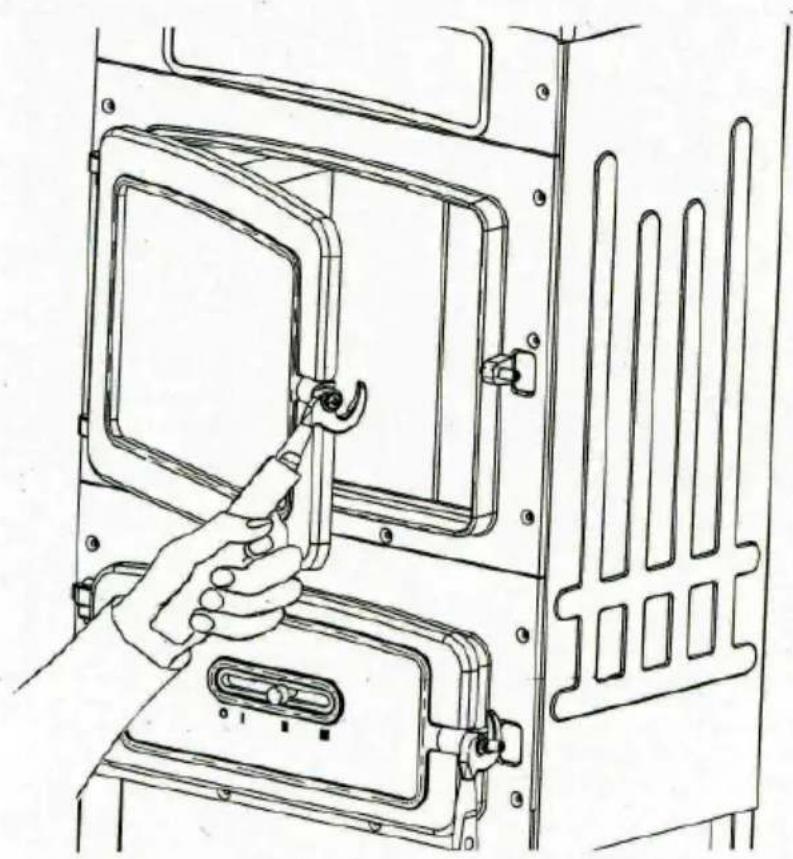
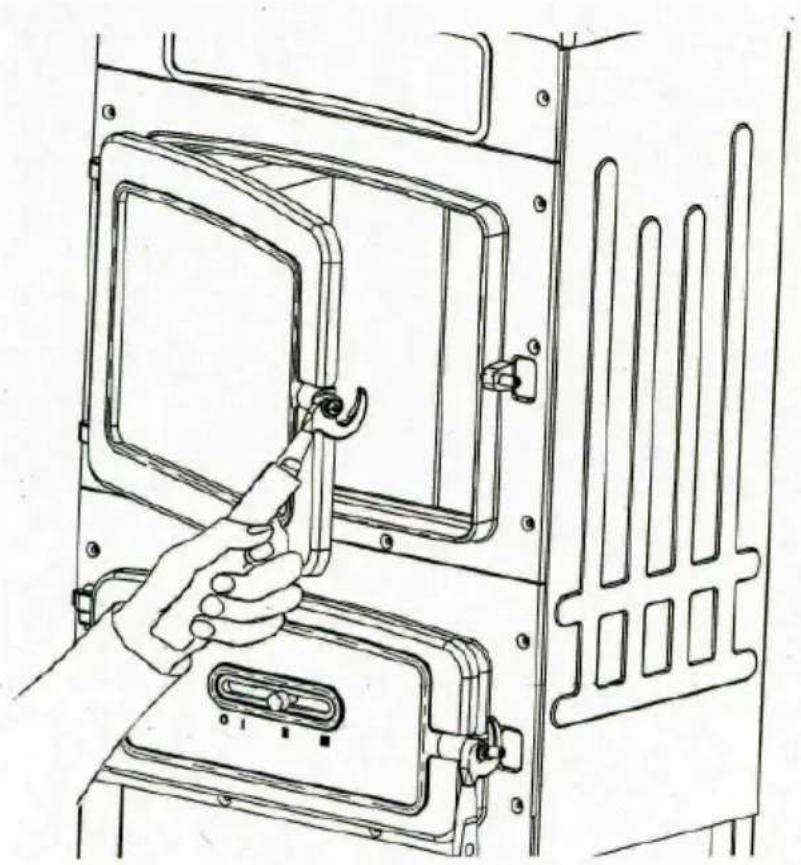
Open the door by raising the handle (Picture 11). If the equipment is hot, you can use insulated gloves. Adjust the primary air regulator (Picture 10), secondary air regulator and the fuel switch according to the Table 1. Put coal lighter or wood wool onto the fire grate, followed by wood chips. First insert small pieces of wood, and then larger ones, light them (Picture 12) and close all the doors again. When the wood burns quickly, and leaves sufficient glowing embers, put additional fuel on the fire. Thereafter, adjust the air regulators and the fuel switch according to the Table 1 („Adjustment of the burning air”). The first kindling should be performed “finely” with little fuel only, so that the parts of the fireplace are adapted to heat. During the first kindling, the generation of smell is normal and absolutely undangerous.
1.3 Putting out of operation
- Let the glowing ember burn to ashes and the fire-place get cold.
• Empty the furnace chamber and the ash bin. - Close the doors, and shut off all air regulators (position 0) and the fuel switch (position K)
1.4 Heating instructions
The fireplace should be operated only with closed furnace chamber door. These doors may be opened only for kindling, loading or when cleaning the furnace chamber (otherwise draught problems may occur with other equipment connected to the same chimney).
Warning!
When opening the furnace chamber door, any incorrect handling or insufficient draught may induce smoke. Always ensure that the furnace chamber door may be opened only slowly, first just to a small extent, and then fully after a few seconds. In addition, if you intend to put additional fuel into the fire, before the opening of the door only there may be only ember bed in the burning space, i.e. no flames may be visible.
Led into the burning space in correspondence with the existing conditions, the secondary air provides for the follow-up burning of the combustible components of in the burning space. This in fact means smoke and soot-poor burning, which contributes to the protection of the environment. If you wish to commission the fireplace in a transitional period, please, please first examine the chimney draught, as it can be especially weak at high external temperatures. Towards this end, hold a burning match in the slightly opened feeding door. If the flame is not drawn significantly by the draught, then a so-called starting fire is to be set first. Towards
this end, burn wood chips/wool in the fireplace or the cleaning hole of the chimney. The fire grate is to be cleaned before every kindling to ensure the proper inflow of air for burning. The ashtray is to be emptied regularly. Should the equipment be extremely hot, use the gloves provided. Please, be careful not to dispose glowing materials into the waste bin.
Ensure that the ashtray should be fully pushed into the equipment.
Warning! In order to keep the air clean and safeguard the fireplace, do not exceed the specified maximum fuel quantity, otherwise overheating may occur, which potentially damage the equipment. Such damage is not covered with any guarantee. Only a single layer of fuel is allowable to be prepared in the fireplace. Try to reach lower heating performance only by decreasing the quantity of fuel, and not by cutting the primary air supply.
1.5 Cleaning and maintenance
After the heating season, it is recommended to clean the fireplace and the flue gas pipes carefully. Any dropping heating performance is almost always the consequence of the strong contamination of the flues. For cleaning, the baffle plate is to be pulled forward. This way, the flues can be cleaned from the inside or – after removing the flue gas pipe – from above. After cleaning, the baffle plate is be pushed back fully again.
Warning!
Following every heating season you are advised to examine the fireplace thoroughly. If any repair or reconditioning is needed, please, contact your local dealer in a timely manner, and specify the model number and serial number of your equipment (as seen on the model plate). External surfaces may be maintained only after the fireplace cooled down, and following the first commissioning. Use cold water for cleaning, or soap, washing ingredient in extraordinary cases, then wipe it dry. Before its first use, clean the ROBAX inspection glass with a wet and clean cloth, and then put a few drops of glass-ceramics cleaner onto both sides of the glass, and spread them with the use of kitchen paper tissues. It provides an invisible film on the valuable surface of the Robax glass. This film helps to keep the glass clean, and facilitates regular cleaning operations. ROBAX S for slightly contaminated surfaces – a commercially available glass surface cleaning agent – may as well be used for the cleaning of the medium or strongly contaminated glass surfaces of the fireplace. Towards this end, spray small quantities of the agent to the cold surfaces, spread it, and wash it down with a wet cloth, followed by drying with a clean, soft cloth. In case there are sticky fuel deposits on these surfaces, first scale simply them with a ceramic-plate scraper held in flat angle, and then clean the surfaces as described above.
Cleaning of the ceramic surfaces dirt and grease are to be removed with soap and water.
Cleaning of the soapstone: the soapstone is a natural stone, therefore minor colour differences may occur; as it is normal, they may not serve as a basis for quality complaints! To clean the soapstone from dirt and fat with water and soap, as well as small scratches, use sand paper (grain size 240).
Warning: Under no circumstances you may use sponge, scouring, aggressive or scratching cleaning agents! If the grate is blocked so that the equipment cannot serve the intended function, the grate is to be removed for cleaning.
1.6 Potential problems and how to tackle them
| Kind of operating problem | Possible reasons Solution | |
| Odour formation Curing of | the applied preventive lacquer. Steaming oil remains. | Operate the fire-place on a low heating level according to the instructions manual for a few hours. Then heat up for maximal performance for a few hours. |
| Too little heating performance | We chose too little performanceChimney draught is slight | Have the heating requirement of the room examined by an expertChimney draught shall be at least 12 Pa, max. for a short time 18 PaCheck the tightness of your chimney and also that the doors of other fire-places leading to the same chimney are closed and sealed properly. Make sure that the chimney-cleaning joints are sealed properly. |
| Too long and leaky smoke tube | All the smoke tube joints must be well sealed and fireproof-isolated | |
| Leakage at the door glass | Check the sealing, close the door properly. May have to have the tightening flap renewed. | |
| Usage of wet wood. Use | well dried wood only. |
Actions to be in chimney fire
Chimney fire may occur upon the improper cleaning of the chimney, the use of inappropriate fuels (e.g. excessively wet wood) or the inadequate setting of the burning air. In such cases, close the burning air at the fire, and call the fire service.
Never try to extinguish the fire with water!
2. Placing
2.1 Prescriptions
For installation and for connection of flue, the requirements of the Fire Regulations (FeuVO in Germany) apply, as well as local building regulations such as the following technical standards DIN 18896, DIN 4705, EN 13384, DIN 18160, EN 1856-2 and EN 15287. In order for the stove to function correctly the chimney to which you want to connect the stove must be in good condition.
2.2 Place of installation
The stove draws the air required for burning from the surrounding room. You must ensure that sufficient air can be drawn in through non-sealed windows and outside doors. In addition you must ensure that a room volume/heat capacity ratio of at least 4 m^3 per kW nominal heat capacity is available. If the volume is less than this, then air vents can be used to provide access to further air supply in other rooms (connecting vents min. 150 cm^2 ).
2.3 Distances
All the combustible materials, furniture or e.g. decoration materials that are in the close environment of the fireplace should be protected from the heat.
Furnishing in the radiation area
Keep a minimal distance of 80 cm (A) between the front edge of the fireplace and the combustible equipment, furniture or e.g. decoration materials in the building. The security distance can be reduced to 40 cm (B) if a heat shield is placed in front of the object to be protected.
Furnishing beyond the radiation area
The walls beside and behind the fireplace may not be made of combustible materials, and they cannot be covered with such materials if the distance on the sides and back sides under the values on Table 3 is.
Safety distance to combustible material:
| Typ back side | front | ||
| KS 109-6 A/A | 30 cm 30 cm 80 cm | ||
| Kamino 109-6F/A | 30 cm 50 cm 80 cm | ||
| WO 109-6/A, 6F/A | 30 cm 50 cm 80 cm | ||
| KS 109-8 | 30 cm 50 cm 80 cm | ||
| WO 109-8, 8F | 30 cm 50 cm 80 cm | ||
| BULLY, Stubenofen 8kW | 20 cm 30 cm 80 cm |
Table 3
Floor in front of and under the fireplace
Floors made from combustible materials, such as carpets, parquet floors or cork is to be protected by a shield of non-combustible material – for example ceramics, stone, glass or steel – placed under the fireplace so that it should reach out to 50 cm in front and 30 cm besides.
2.4 Connection of the fireplace
The connection for attaching to the chimney must be able to withstand at least 400^ C.
PLEASE NOTE:
Before connecting the stove the local authority responsible for approving heating systems must be consulted!
Connection pieces must be firmly connected to the stove and to each other and must not leak. They must not project into the open diameter of the chimney. The connection piece between the stove and the chimney must have the same diameter as the pipe socket on the stove. Horizontal connection pieces of over 0.5 m must rise towards the chimney at an angle of 10 degrees. Any pipes which are not heat insulated or vertical must not be longer than 1 metre.
The requirements of the Fire Regulations (FeuVO) apply, as well as local building regulations such as for the chimney standards DIN 18896, DIN 4705, EN 13384, DIN 18160 and EN 15287. Connection pieces must be tested to EN 1856-2. Measurement X (distance from flammable construction and other materials) must be as defined by the manufacturer of the connection piece.

PLEASE NOTE:
Fitting to a chimney with a functional height of less than 4 m, or if several stoves are being fitted, less than 5 m, is not permitted.
(See: Data for chimney calculations / Chapter 3.) A maximum of two other fires can be connected to the chimney to be connected to the stove.
For safety reasons it is not permitted to use a steam extractor hood to remove air when the stove is producing heat.
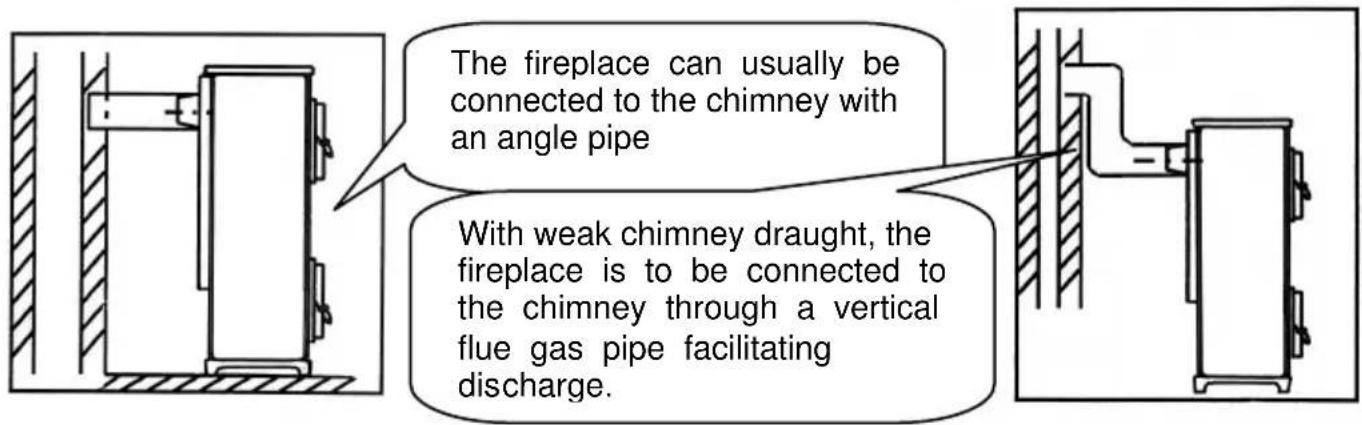
| Correct | Incorrect | |
 |  | |
 |  | Tightening cross section of the chimney because the smoke tube is pushed into the chimney too much |
min 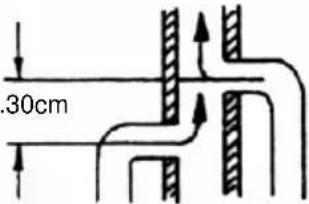 |  | Obstruction, because the smoke tubes are led as facing each other |
 | [Faulty d because fire-plac door (nc use) is c] |  |
 | [Fals an c] | 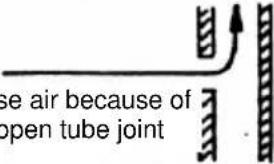 |
 | [Fals beca leak] |  |
 |  | open fire-place door |
3. Technical specification
3.1 data, dimensional drawings, pictures
| Type | KAMINO 109-6F/A | KS 109-6A/A | WO109-6/A WO 109-6F/A | KS 109-8 | WO109-8 / BULLY / WO109-8F | |
| Nominal performance kW | 6 6 6 | 8 8 | ||||
| Flue gas connection backside | D mm | 120 | ||||
| Heating capacity (m3)-under favourable-less favourable-not favourable heating circumstances according to 18893 / TAB2 DIN standard | ||||||
| m3 | 116/69/47 | 116/69/47 | 116/69/47 | 182/105/71 | 182/105/71 | |
| Min. blast pressure at nominal performance | Pa | 12 11 12 1 | 2 12 | |||
| Fuel wood / BB 7" (brown coal) | ||||||
| Flue gas stream g/s | 5,0 6,0 | 5,0 | 6,6 / | 7,2 6,6 / | 7,2 | |
| Flue gas temperature | C° | 325 | 330 | 325 | 353 / 366 | 353 / 366 |
| Dust (13% O2) | < 40 / 70 mg/Nm3 | < 40 mg/m3 | < 40 / 70 mg/Nm3 | < 40 mg/m3 | < 40 mg/m3 | |
| CO (13% O2) | 990 / 1384 mg/Nm3 | 1079 / 930 mg/Nm3 | 990 / 1384 mg/Nm3 | 1140 / 797 mg/Nm3 | 1140 / 797 mg/Nm3 | |
| Efficiency | 80% / 78% | 78% / 79% | 80% / 78% | 80% / 78% | 80% / 78% | |
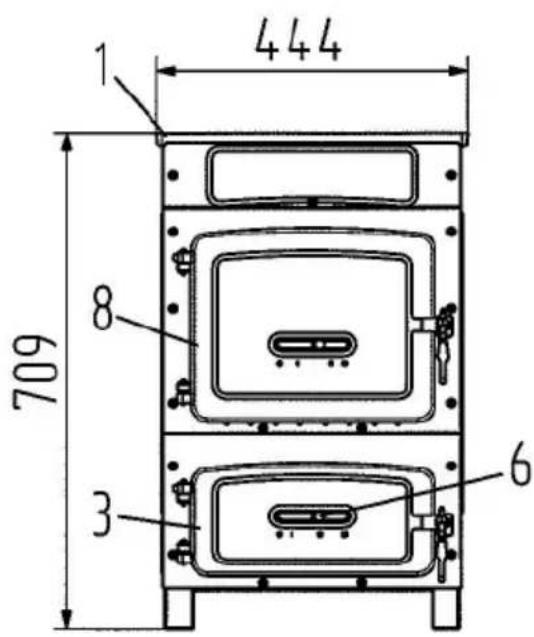
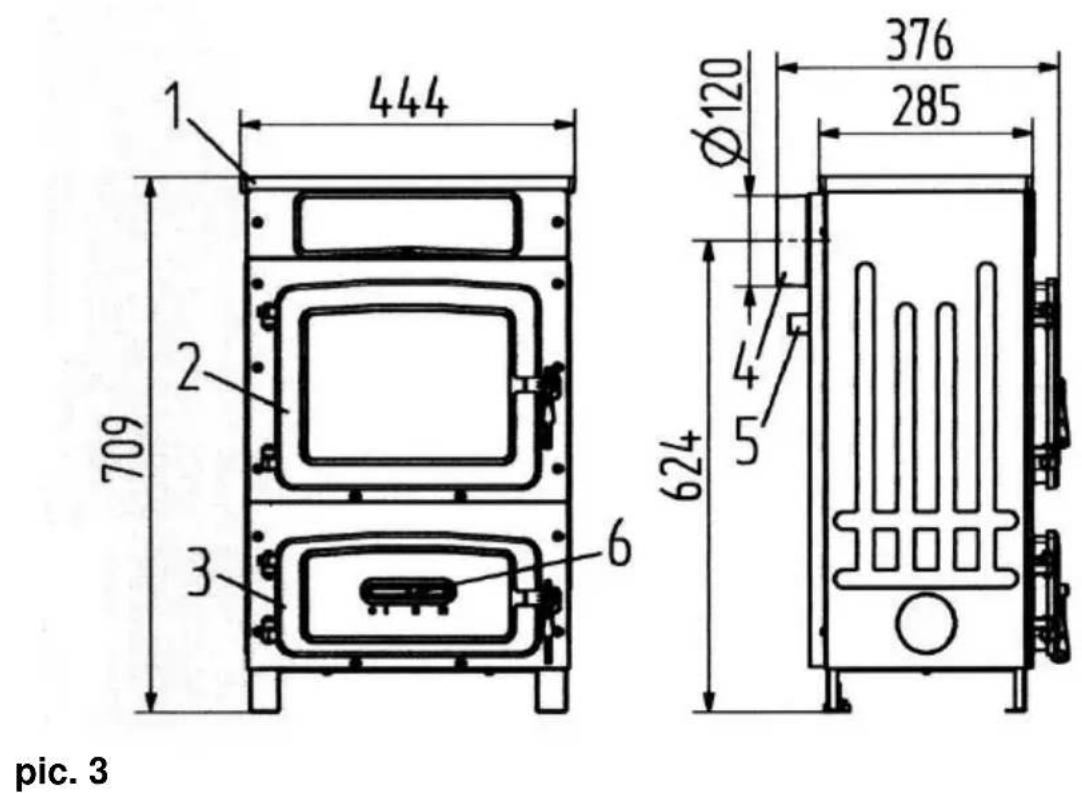
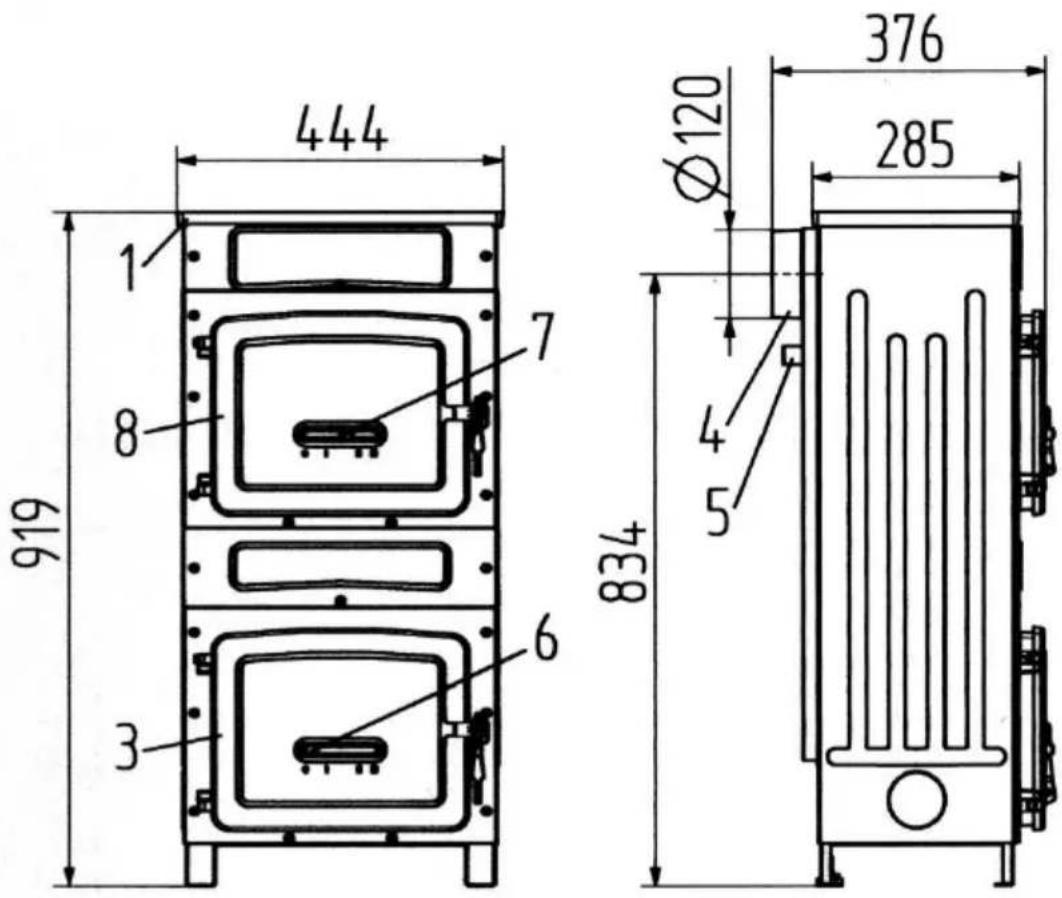
Description to the pictures
- Iron coast plate
- Furnace chamber door with glass
- Ash door
- Flue gas connection
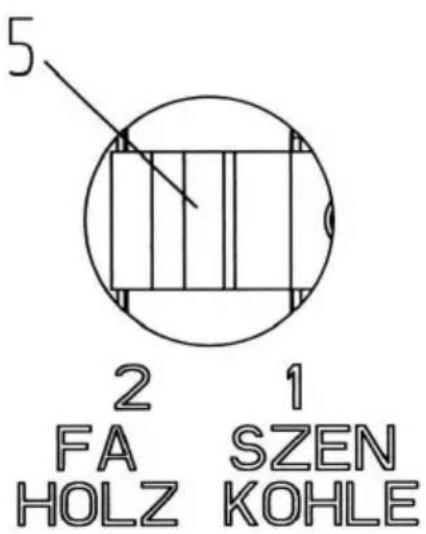
- Fuel selector (,,2" = wood, ,,1" = coal) (pic. 9)
- Primary air regulator (pic. 10)
- Secondary air selector (pic. 10)
- Furnace chamber door
- Casing enamelled
- Casing painted
- Furnace chamber walling (pic. 8)
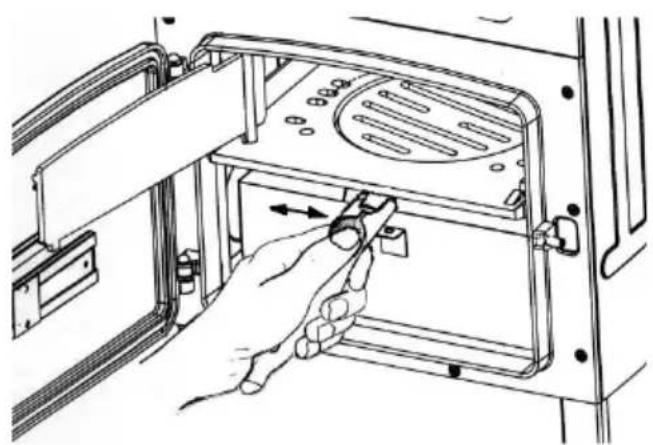
- Riddle bar (inside) (pic. 13)
- Ash bin
- Automatic control
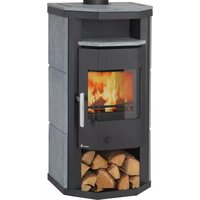
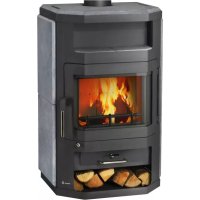
pic. 1: 109-6 Kamino F/A pic. 5: WO 109-8F
pic. 2: WO 109-6/A pic. 6: KS 109-6 A/A
pic. 3: WO 109-6 F/A pic. 7: KS 109-8
pic. 4: WO 109-8 pic. 16: BULLY

pic. 1

pic. 2
pic. 4


pic. 5
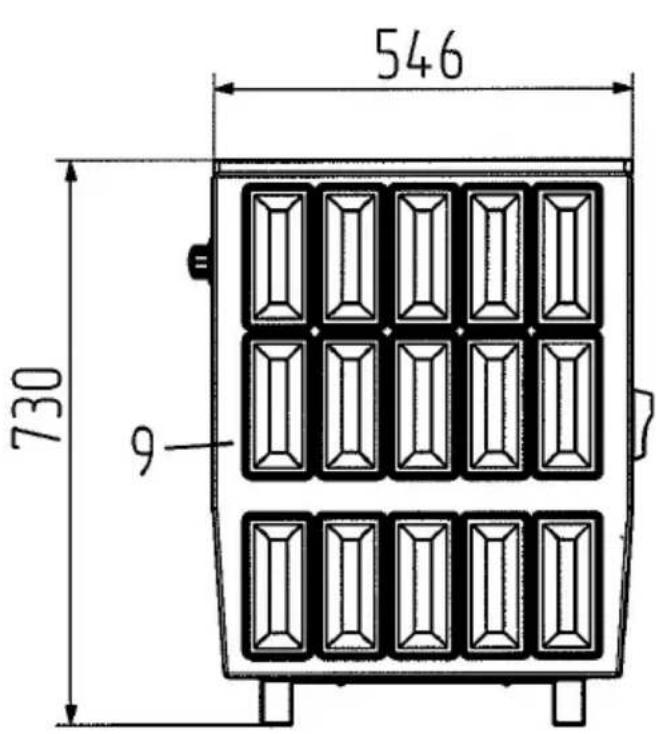

pic. 6
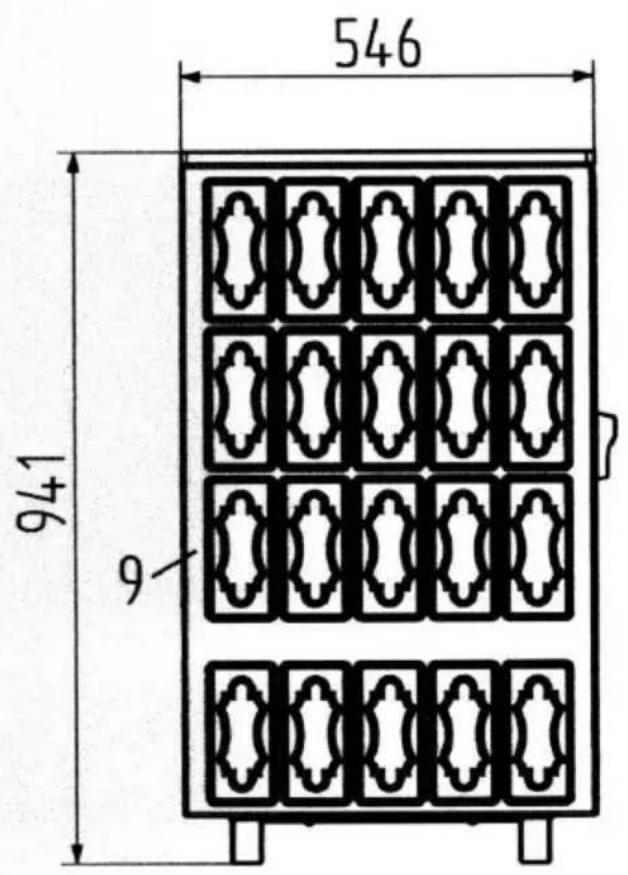
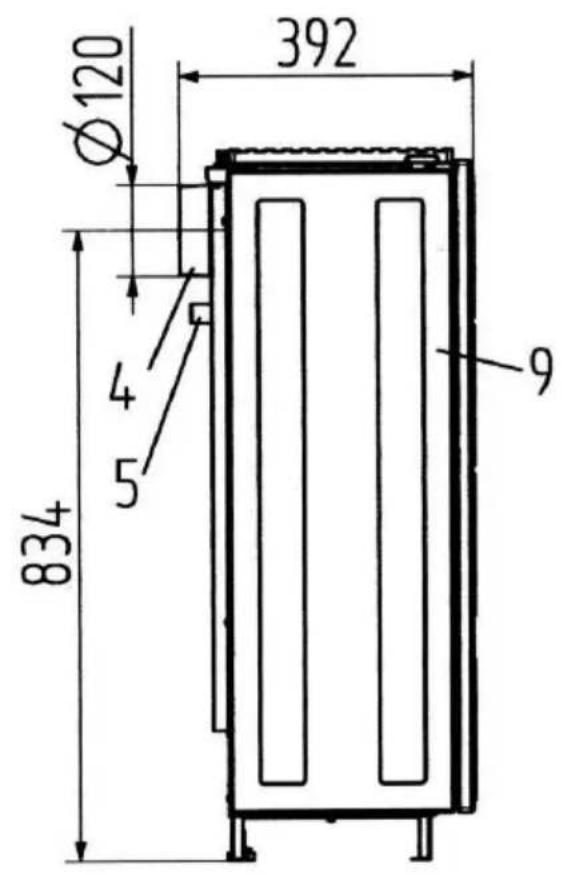
pic. 7


pic. 9
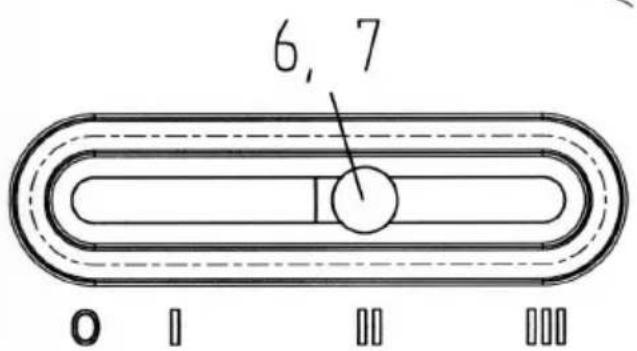
pic. 10
pic. 11
natural_image
Line drawing of a hand using a tool to switch an open panel inside a cabinet (no text or symbols visible)pic. 12
natural_image
Line drawing of a hand inserting a small object into a device with a close-up view of internal components (no text or symbols)pic. 13

natural_image
Line drawing of a hand inserting a device into a rack-mounted unit (no text or symbols)pic. 14

natural_image
Line drawing of a hand inserting a component into a computer drive casing (no text or symbols)
natural_image
Line drawing of a hand holding a tool interacting with a device panel (no text or symbols visible)pic. 15

The specified dimensions and weights are approximate values, and thus have only informative purposes.
We reserve the right to modify the designs as required in terms of technology or quality!
3.2 EC Declaration of Conformity

EC-Declaration of Conformity
Product description: Solid fuel stove
Model no: WO109-8 / WO109-8F / KS 109-8 / Stubenofen 8kW/ Bully 8kW / KS109-6A/A / WO109-6 / WO109-6F / Stubenofen 6kW / Kamino 109-6F
The products listed above conform to the requirements of the following European Directive:
89/106/EC: Construction Products Directive
This is attested by test reports No. R-247495 of 2011 from the state-accredited test centre TÜV SÜD Kermi, test centre H-Budapest (notified body number 1420), and RWE Power AG (notified body number 1427) FSPS-Wa 1650-EN of 15.05.2007 (FSPS-Wa 1919-EN) and FSPS-Wa 1651-EN of 27.07.2007, tested under EN 13240.
Munich, 19.08.2011
K.D. Knabel A. Freund

Managing Director Technical Director
This declaration certifies conformity to he above-named Directives but does not provide any guarantee of product characteristics. The safety notices in the product documentation supplied must be adhered to. This declaration is no longer valid if the equipment is modified by a third party.
We reserve the right to make changes which relate to technical advances and / or to an improvement in quality. We accept no liability for printing errors and changes which occur after printing.
Préambule
Cher Client,
2.3 Distances minimum
Fig. 8

Fig. 9

Fig. 10
Fig. 11

natural_image
Line drawing of a hand using a tool to switch or adjust an open panel inside a vehicle enclosure (no text or symbols)Fig. 12
Fig. 13
Fig. 14

natural_image
Line drawing of a hand using a tool to adjust or install a device panel (no text or symbols visible)Fig. 15
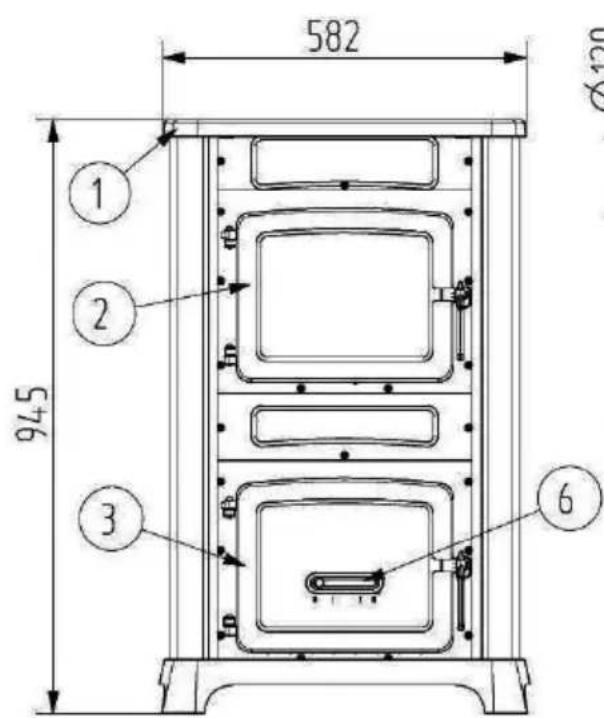
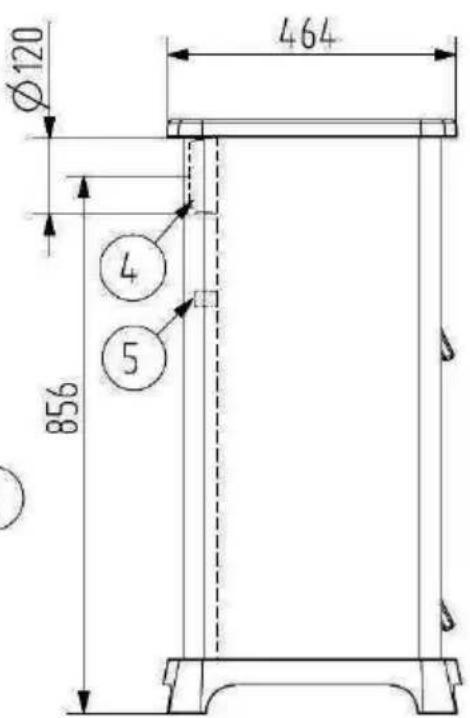
Fig. 16.

Fig. 10

natural_image
Line drawing of a hand using a tool to adjust or install an open electrical cabinet (no text or symbols visible)Fig. 11
Fig. 12

natural_image
Line drawing of a hand inserting a component into a device with a plastic housing (no text or symbols)Fig. 13

natural_image
Line drawing of a hand inserting a component into a device panel (no text or symbols)Fig. 14

natural_image
Line drawing of a hand inserting a component into a computer drive casing (no text or symbols)
natural_image
Line drawing of a hand using a tool to adjust or install a device panel (no text or symbols visible)Fig. 15


Fig. 16.
8.kép
9.kép

10.kép
natural_image
Line drawing of a hand using a tool to adjust or install an electrical panel inside a cabinet (no text or symbols visible)11.kép
12.kép

natural_image
Line drawing of a hand inserting a device into a rack, showing internal components (no text or symbols)13.kép
natural_image
Illustration of a hand inserting a component into a device casing (no text or symbols visible)14.kép

natural_image
Line drawing of a hand inserting a component into a device housing (no text or symbols visible)
natural_image
Line drawing of a hand using a tool to adjust or install a device panel (no text or symbols visible)15.kép

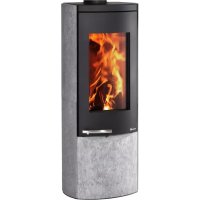
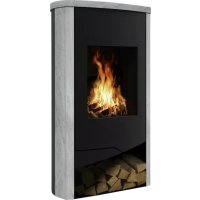
(Kamino- Mátra, Elite, Classic, Nostalgia, Kerámia, Cliff)
- GB Fireplace user instruction
- PLEASE NOTE:
- Contents
- Usage
- SAFETY INSTRUCTIONS
- Installation
- Fuels
- Filling quantities 6 kW Filling quantities 8 kW
- Device control with the automatic control
- Putting out of operation
- Heating instructions
- Warning!
- Cleaning and maintenance
- Actions to be in chimney fire
- Placing
- Prescriptions
- Place of installation
- Distances
- Furnishing in the radiation area
- Furnishing beyond the radiation area
- Connection of the fireplace
- Before connecting the stove the local authority responsible for approving heating systems must be consulted!
- Technical specification
- data, dimensional drawings, pictures
- Description to the pictures
- EC Declaration of Conformity
- EC-Declaration of Conformity
- Préambule
- Cher Client,
- Distances minimum
Brand : Wamsler
Model : Kamino 1096 FA
Category : Frying Pan