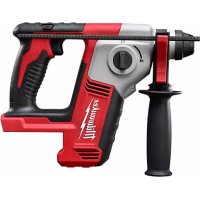
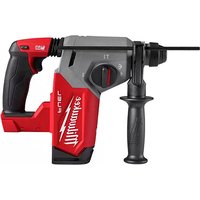
M18 SDS 261222 - Hammer MILWAUKEE - Free user manual and instructions
Find the device manual for free M18 SDS 261222 MILWAUKEE in PDF.



| Product Type | Rotary Hammer (Hammer Drill) |
| Brand | Milwaukee |
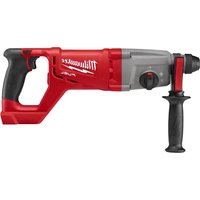
| Model | M18 SDS 261222 (Ref. 2612-20) |
| Power Source | M18™ Lithium-Ion Battery (18 V DC) |
| Battery Type | M18™ |
| Charger Type | M18™ |
| Blows per Minute (BPM) | 0 - 7000 |
| Drilling Capacity (Concrete) | 16 mm (5/8") with carbide SDS Plus bits |
| Recommended Ambient Temperature | -18 °C to 50 °C (0 °F to 125 °F) |
| Chuck Type | SDS Plus |
| Operating Modes | Drill Only, Rotary Hammer |
| Variable Speed | Yes, trigger-controlled |
| Forward/Reverse | Yes, with center lock |
| Side Handle | Yes, adjustable |
| Depth Gauge | Yes, adjustable |
| LED Light | Yes, illuminates when in use |
| Maintenance and Cleaning | Clean with a damp cloth and mild soap; do not immerse |
| Safety | Wear eye and hearing protection; use side handle |
| Replacement Parts and Repairability | Refer to a Milwaukee authorized service center |
| Warranty | 5 years (power tools); see terms and conditions |
Frequently Asked Questions - M18 SDS 261222 MILWAUKEE
User questions about M18 SDS 261222 MILWAUKEE
0 question about this device. Answer the ones you know or ask your own.
Ask a new question about this device
Download the instructions for your Hammer in PDF format for free! Find your manual M18 SDS 261222 - MILWAUKEE and take your electronic device back in hand. On this page are published all the documents necessary for the use of your device. M18 SDS 261222 by MILWAUKEE.
USER MANUAL M18 SDS 261222 MILWAUKEE
Cat. No. / No de cat.
2612-20

M18™ CORDLESS 5/8" SDS PLUS ROTARY HAMMER PERCEUSE À PERCUSSION SDS PLUS SANS FIL DE 16 mm (5/8") M18™
ROTOMARTILLO SDS PLUS M18™ INALÁMBRICO DE 16 mm (5/8")

WARNING To reduce the risk of injury, user must read and understand operator's manual.
AVERTISSEMENT Afin de réduire le risque de blessures, l'utilisateur doit dire et bien comprendre le manuel.
ADVERTENCIA Para reducir el risso de lesiones, el usuario debe leyer y,&enter elmanual.
GENERAL POWER TOOL SAFETYWARNINGS
WARNING
Read all safety warnings, instructions, illustrations and specifica
tions provided with this power tool. Failure to follow all instructions listed below may result in electric shock, fire and/or serious injury. Save all warnings and instructions for future reference. The term "power tool" in the warnings refers to your mains-operated (cored) power tool or battery-operated (cordless) power tool.
WORK AREA SAFETY
- Keep work area clean and well lit. Cluttered or dark areas invite accidents.
- Do not operate power tools in explosive atmospheres, such as in the presence of flammable liquids, gases or dust. Power tools create sparks which may ignite the dust or fumes.
- Keep children and bystanders away while operating a power tool. Distractions can cause you to lose control.
ELECTRICAL SAFETY
- Power tool plugs must match the outlet. Never modify the plug in any way. Do not use any adapter plugs with earthed (grounded) power tools. Unmodified plugs and matching outlets will reduce risk of electric shock.
- Avoid body contact with earthed or grounded surfaces, such as pipes, radiators, ranges and refrigerators. There is an increased risk of electric shock if your body is earthed or grounded.
- Do not expose power tools to rain or wet conditions. Water entering a power tool will increase the risk of electric shock.
- Do not abuse the cord. Never use the cord for carrying, pulling or unplugging the power tool. Keep cord away from heat, oil, sharp edges or moving parts. Damaged or entangled cords increase the risk of electric shock.
- When operating a power tool outdoors, use an extension cord suitable for outdoor use. Use of a cord suitable for outdoor use reduces the risk of electric shock.
- If operating a power tool in a damp location is unavoidable, use a ground fault circuit interrupter (GFCI) protected supply. Use of an GFCI reduces the risk of electric shock.
PERSONAL SAFETY
- Stay alert, watch what you are doing and use common sense when operating a power tool. Do not use a power tool while you are tired or under the influence of drugs, alcohol or medication. A moment of inattention while operating power tools may result in serious personal injury.
- Use personal protective equipment. Always wear eye protection. Protective equipment such as a dust mask, non-skid safety shoes, hard hat or hearing protection used for appropriate conditions will reduce personal injuries.
- Prevent unintentional starting. Ensure the switch is in the off-position before connecting to power source and/or battery pack, picking up or carrying the tool. Carrying power tools with your finger on the switch or energizing power tools that have the switch on invites accidents.
- Remove any adjusting key or wrench before turning the power tool on. A wrench or a key left
attached to a rotating part of the power tool may result in personal injury.
- Do not overreach. 'Keep proper footing and balance at all times. This enables better control of the power tool in unexpected situations.
- Dress properly. Do not wear loose clothing or jewelry. Keep your hair and clothing away from moving parts. Loose clothes, jewelry or long hair can be caught in moving parts.
- If devices are provided for the connection of dust extraction and collection facilities, ensure these are connected and properly used. Use of dust collection can reduce dust-related hazards.
- Do not let familiarity gained from frequent use of tools allow you to become complacent and ignore tool safety principles. A careless action can cause severe injury within a fraction of a second.
POWER TOOL USE AND CARE
- Do not force the power tool. Use the correct power tool for your application. The correct power tool will do the job better and safer at the rate for which it was designed.
- Do not use the power tool if the switch does not turn it on and off. Any power tool that cannot be controlled with the switch is dangerous and must be repaired.
- Disconnect the plug from the power source and/ or remove the battery pack, if detachable, from the power tool before making any adjustments, changing accessories, or storing power tools. Such preventive safety measures reduce the risk of starting the power tool accidentally.
- Store idle power tools out of the reach of children and do not allow persons unfamiliar with the power tool or these instructions to operate the power tool. Power tools are dangerous in the hands of untrained users.
- Maintain power tools and accessories. Check for misalignment or binding of moving parts, breakage of parts and any other condition that may affect the power tool's operation. If damaged, have the power tool repaired before use. Many accidents are caused by poorly maintained power tools.
- Keep cutting tools sharp and clean. Properly maintained cutting tools with sharp cutting edges are less likely to bind and are easier to control.
- Use the power tool, accessories and tool bits etc. in accordance with these instructions, taking into account the working conditions and the work to be performed. Use of the power tool for operations different from those intended could result in a hazardous situation.
- Keep handles and grasping surfaces dry, clean and free from oil and grease. Slippery handles and grasping surfaces do not allow for safe handling and control of the tool in unexpected situations.
BATTERY TOOL USE AND CARE
- Recharge only with the charger specified by the manufacturer. A charger that is suitable for one type of battery pack may create a risk of fire when used with another battery pack.
- Use power tools only with specifically designated battery packs. Use of any other battery packs may create a risk of injury and fire.
- When battery pack is not in use, keep it away from other metal objects, like paper clips, coins, keys, nails, screws or other small metal objects.
that can make a connection from one terminal to another. Shorting the battery terminals together may cause burns or a fire.
- Under abusive conditions, liquid may be ejected from the battery; avoid contact. If contact accidentally occurs, flush with water. If liquid contacts eyes, additionally seek medical help. Liquid ejected from the battery may cause irritation or burns.
- Do not use a battery pack or tool that is damaged or modified. Damaged or modified batteries may exhibit unpredictable behavior resulting in fire, explosion or risk of injury.
- Do not expose a battery pack or tool to fire or excessive temperature. Exposure to fire or temperature above 265^ (130^) may cause explosion.
- Follow all charging instructions and do not charge the battery pack or tool outside the temperature range specified in the instructions. Charging improperly or at temperatures outside the specified range may damage the battery and increase the risk of fire.
SERVICE
- Have your power tool serviced by a qualified repair person using only identical replacement parts. This will ensure that the safety of the power tool is maintained.
- Never service damaged battery packs. Service of battery packs should only be performed by the manufacturer or authorized service providers.
SPECIFIC SAFETY RULES FOR ROTARY HAMMER
- Wear ear protectors. Exposure to noise can cause hearing loss.
- Use auxiliary handle(s), if supplied with the tool. Loss of control can cause personal injury.
- Hold power tools by insulated gripping surfaces, when performing an operation where the cutting accessory may contact hidden wiring. Cutting accessory contacting a "live" wire may make exposed metal parts of the power tool "live" and could give the operator an electric shock.
- Keep hands away from all cutting edges and moving parts.
- Cut embedded rebar only if this operation does not affect the integrity of the building. If in doubt, consult a structural engineer. Tool operator fully responsible for adverse structural effects.
AWARNING To reduce the risk of injury, when working in dusty situations, wear appropriate respiratory protection or use an OSHA compliant dust extraction solution.
- Always use common sense and be cautious when using tools. It is not possible to anticipate every situation that could result in a dangerous outcome. Do not use this tool if you do not understand these operating instructions or you feel the work is beyond your capability; contact Milwaukee Tool or a trained professional for additional information or training.
- Maintain labels and nameplates. These carry important information. If unreadable or missing, contact a MILWAUKEE service facility for a free replacement.
AWARNING Some dust created by power sanding, sawing, grinding, drilling, and other construction activities contains chemicals known to cause cancer, birth defects or other reproductive harm. Some examples of these chemicals are:
- lead from lead-based paint
crystalline silica from bricks and cement and other masonry products, and
- arsenic and chromium from chemically-treated I. I. lumber.
Your risk from these exposures varies, depending on how often you do this type of work. To reduce your exposure to these chemicals: work in a well ventilated area, and work with approved safety equipment, such as those dust masks that are specially designed to filter out microscopic particles.
SYMBOLOGY

Direct Current
_0 XXXX min-1 No Load Revolutions per Minute (RPM)

Blows per Minute (BPM)

Read Operator's Manual

UL Listing for Canada and U.S.
SPECIFICATIONS
Cat. No. 2612-20
Volts. 18 DC
Battery Type .M18TM
Charger Type.. M18TM
RPM 0-1300
BPM. 0-7000
Type.. SDS Plus
Capacities
Drill Only Steel 3/8"
Wood 1/2"
Rotary Hammer (Concrete)
Carbide Tipped Percussion Bit .5/8"
Recommended Ambient
Operating Temperature .0°F to 125°F
FUNCTIONAL DESCRIPTION
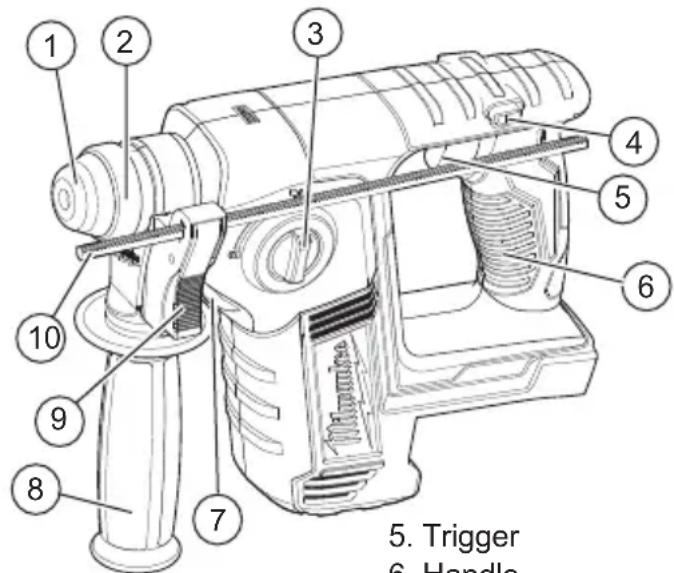
- SDS Plus bit holder
- Release collar
- Mode selector
-
Control switch
-
Trigger
- Handle
- LED
- Side handle
- Clamp
- Depth gauge rod
ASSEMBLY
WARNING Recharge only with the charger specified for the battery. For specific charging instructions, read the operator's manual supplied with your charger and battery.
Removing/Inserting the Battery
To remove the battery, push in the release buttons and pull the battery pack away from the tool.
AWARNING Always lock the trigger or remove the battery pack any time the tool
is not in use.
To insert the battery, slide the pack into the body of the tool. Make sure it latches securely into place.
WARNING Only use accessories specifically recommended for this tool. Others
may be hazardous.
To reduce the risk of injury, always use a side handle when using this tool. Always brace or hold securely.
Adjusting the Side Handle Position
- Loosen the side handle by unscrewing the side handle grip until the side handle rotates freely.
- Rotate the side handle to the desired position.
- Tighten the side handle grip securely.
Setting the Depth Gauge
- Press in the clamping lever.
- Slide the depth gauge rod backward or forward until it is set for the desired depth.
NOTE: The drilling depth is the distance between the tip of the bit and the tip of the depth gauge rod. - Release the clamping lever.
Installing Bits
NOTE: Only use accessories with SDS or SDS Plus shanks.
Be sure that the shank of the bit is clean. Dirt particles may cause the bit to line up improperly. Do not use bits larger than the maximum recommended capacity of the drill because gear damage or motor overloading may result. For best performance, be sure that the bit is properly sharpened and the shank is lightly greased before use.
- Insert the bit into the nose of the tool.
- Rotate bit slowly until it aligns with the locking mechanism.
- Push bit into tool until it locks.
- Check that the bit is locked properly; it should be possible to pull the bit back and forth slightly (about 1/4 ).
- To remove bits, pull bit holder release collar toward the rear of tool and remove bit.
NOTE: Use caution when handling hot bits.
OPERATION
AWARNING To reduce the risk of injury, always remove battery pack before changing or removing accessories. Only use accessories specifically recommended for this tool. Others may be hazardous.
Keep hands away from the bit and all moving parts. Always wear proper eye protection marked to comply with ANSI Z87.1.
When working in dusty situations, wear appropriate respiratory protection or use an OSHA compliant dust extraction solution.
Always use a side handle when using this tool. Always brace or hold securely.
Selecting Action
Always allow the motor to come to a complete stop before changing the mode selection to avoid damage to the tool.
- For drilling, turn the mode selector so the arrow points to the twist drill symbol.
- For rotary hammering, turn the mode selector so the arrow points to the hammer and twist drill symbol.
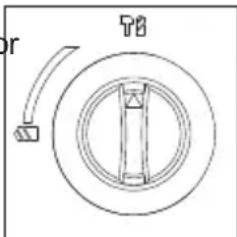
NOTE: To engage the hammering mechanism, maintain pressure on the bit. When pressure on the bit is released, the hammering action will stop.
Using the Control Switch
The control switch may be set to three positions: forward, reverse and lock. Always allow the motor to come to a complete stop before using the control switch to avoid damage to the tool.
- For forward (clockwise) rotation, push in the control switch from the right side of the tool. Check the direction of rotation before use.
- For reverse (counterclockwise) rotation, push in the control switch from the left side of the tool. Check direction of rotation before use.
- To lock the trigger, push the control switch to the center position. The trigger will not work while the control switch is in the center locked position. Always lock the trigger or remove the battery pack any time the tool is not in use.
Starting, Stopping and Controlling Speed
- To start the tool, grasp the handle(s) firmly and pull the trigger.
NOTE: An LED is turned on when the trigger is pulled and will go off shortly after the trigger is released. - To vary the speed, increase or decrease the pressure on the trigger. The further the trigger is pulled, the greater the speed.
- To stop the tool, release the trigger. Make sure the tool comes to a complete stop before laying the tool down.
Operating
Position the tool, grasp the handle firmly and pull the trigger. Always hold the tool securely to maintain control. This tool has been designed to achieve top performance with only moderate pressure. Let the tool do the work.
If the speed begins to drop off when drilling large or deep holes, pull the bit partially out of the hole while the tool is running to help clear dust. Do not use water to settle the dust since it will clog the bit flutes and tend to make the bit bind in the hole. If the bit should bind, stop the tool, free the bit and begin again.
APPLICATIONS
WARNING
To reduce the risk of electric shock, check work area for hidden pipes in pore drilling.
Cut embedded rebar only if this operation does not affect the integrity of the building. If in doubt, consult a structural engineer. Tool operator fully responsible for adverse structural effects.
Selecting Bits
When selecting a bit, use the right type for your job. For best performance, always use sharp bits.
Drilling
- Before drilling, be sure the workpiece is clamped securely. Use backing material to prevent damage to the workpiece during breakthrough.
- When starting a hole, place the drill bit on the work surface and apply firm pressure. Begin drilling at a slow speed, gradually increasing the speed as you drill.
- Always apply pressure in line with the bit. Use enough pressure to keep the drill biting, but do not push hard enough to stall the motor.
- Reduce pressure and ease the bit through the last part of the hole. While the tool is still running, pull the bit out of the hole to prevent jamming.
Drilling in Wood, Composition Materials and Plastic
(Use chuck adapter kit Cat. No. 48-66-1370) When drilling in wood, composition materials and plastic, start the drill slowly, gradually increasing speed as you drill. When drilling into wood, use wood augers or twist drill bits. Always use sharp bits. When using twist drill bits, pull the bit out of the hole frequently to clear chips from the bit flutes. To reduce the chance of splintering, back work with a piece of scrap wood. Use low speeds for plastics with a low melting point.
MAINTENANCE
WARNING
To reduce the risk of injury, always unplug the charger and remove the from the charger or tool before any maintenance. Never disassemble aterry pack or charger.Contact a service facility for ALL repairs.
Maintaining Tool
Keep your tool, battery pack and charger in good repair by adopting a regular maintenance program. Inspect your tool for issues such as undue noise, misalignment or binding of moving parts, breakage of parts, or any other condition that may affect the tool operation. Return the tool, battery pack, and charger to a MILWAUKEE service facility for repair. After six months to one year, depending on use, return the tool, battery pack and charger to a MILWAUKEE service facility for inspection.
If the tool does not start or operate at full power with a fully charged battery pack, clean the contacts on the battery pack. If the tool still does not work properly, return the tool, charger and battery pack, to a MILWAUKEE service facility for repairs.
WARNING
To reduce the risk of personal injury and damage, never immerse
your tool, battery pack or charger in liquid or allow a liquid to flow inside them.
Cleaning
Clean dust and debris from any vents. Keep tool clean, dry and free of oil or grease. Use only mild soap and a damp cloth to clean, since certain cleaning agents and solvents are harmful to plastics and other insulated parts. Some of these include gasoline, turpentine, lacquer thinner, paint thinner, chlorinated cleaning solvents, ammonia and household detergents containing ammonia. Never use flammable or combustible solvents around tools.
Repairs
For repairs, return the tool, battery pack and charger to the nearest authorized service center.
ACCESSIONS
WARNING
Use only recommended accessories. Others may be hazardous.
For a complete listing of accessories, go online to www.milwaukeetool.com or contact a distributor.
SERVICE - UNITED STATES
1-800-SAWDUST (1.800.729.3878)
Monday-Friday, 7:00 AM - 6:30 PM CST
or visit www.milwaukeetool.com
Contact Corporate After Sales Service Technical Support with technical, service/repair, or warranty questions.
Email: metproductsupport@milwaukeetool.com
Become a Heavy Duty Club Member at www.milwaukeetool.com to receive important notifications regarding your tool purchases.
SERVICE - CANADA
Milwaukee Tool (Canada) Ltd
1.800.268.4015
Monday-Friday, 7:00 AM - 4:30 PM CST
or visit www.milwaukeetool.ca
LIMITED WARRANTY USA & CANADA
Every MILWAUKEE power tool (see exceptions below) is warranted to the original purchaser only to be free from defects in material and workmanship. Subject to certain exceptions, MILWAUKEE will repair or replace any part on an electric power tool which, after examination, is determined by MILWAUKEE to be defective in material or workmanship for a period of five (5) years* after the date of purchase unless otherwise noted. Return of the power tool to a MILWAUKEE factory Service Center location or MILWAUKEE Authorized Service Station, freight prepaid and insured, is required. A copy of the proof of purchase should be included with the return product. This warranty does not apply to damage that MILWAUKEE determines to be from repairs made or attempted by anyone other than MILWAUKEE authorized personnel, misuse, alterations, abuse, normal wear and tear, lack of maintenance, or accidents.
Normal Wear: Many power tools need periodic parts replacement and service to achieve best performance. This warranty does not cover repair when normal use has exhausted the life of a part including, but not limited to, chucks, brushes, cords, saw shoes, blade clamps, o-rings, seals, bumpers, driver blades, pistons, strikers, lifters, and bumper cover washers.
*This warranty does not cover Air Nailers & Staplers; Airless Paint Sprayer; Cordless Battery Packs; Gasoline Driven Portable Power Generators; Hand Tools; Hoist - Electric, Lever & Hand Chain; M12™ Heated Gear; Reconditioned Product; and Test & Measurement Products. There are separate and distinct warranties available for these products.
**The warranty period for Job Site Radios, M12TM Power Port, M18TM Power Source, Jobsite Fan and Trade TitanTM Industrial Work Carts is one (1) year from the date of purchase. The warranty period for the M18 FUEL™ 1" D-Handle High Torque Impact Wrenches, Drain Cleaning Cables, AIRSNAKETM Drain Cleaning Air Gun Accessories, REDLITHIUM™ USB Laser Levels and TRAPSNAKETM 25' Auger w/ CABLE DRIVE™ is two (2) years from the date of purchase. The warranty period for the M18™ Compact Heat Gun, 8 Gallon Dust Extractor, M18™ Framing Nails, M18 FUEL™ 1/2" Ext. Anvil Controlled Torque Impact Wrench w/ ONE-KEY™, M18 FUEL™ 1" High Torque Impact Wrench w/ ONE-KEY™, M18 FUEL™ 2 Gal. Compact Quiet Compressor, M12™ Laser Levels, 165' Laser Detector, M12™ 23GA Pin Nailer, M18 FUEL™ 1/4" Blind Rivet Tool w/ ONE-KEY™, M12 FUEL™ Low Speed Tire Buffer, M18 FUEL™ Random Orbital Polishers, and the M18™ Utility Fencing Stapler is three (3) years from the date of purchase. The warranty period for the LED in the LED Work Light and the LED Upgrade Bulb for the Work Light is the lifetime of the product subject to the limitations above. If during normal use the LED or LED Bulb fails, the part will be replaced free of charge.
Warranty Registration is not necessary to obtain the applicable warranty on a MILWAUKEE power tool product. The manufacturing date of the product will be used to determine the warranty period if no proof of purchase is provided at the time warranty service is requested. ACCEPTANCE OF THE EXCLUSIVE REPAIR AND REPLACEMENT REMEDIES DESCRIBED HEREIN IS A CONDITION OF THE CONTRACT FOR THE PURCHASE OF EVERY MILWAUKEE PRODUCT. IF YOU DO NOT AGREE TO THIS CONDITION, YOU SHOULD NOT PURCHASE THE PRODUCT. IN NO EVENT SHALL MILWAUKEE BE LIABLE FOR ANY INCIDENTAL, SPECIAL, CONSEQUENTIAL OR PUNITIVE DAMAGES, OR FOR ANY COSTS, ATTORNEY FEES, EXPENSES, LOSSES OR DELAYS ALGRESSED TO BE AS A CONSEQUENCE OF ANY DAMAGE TO, FAILURE OF, OR DEFECT IN ANY PRODUCT INCLUDING, BUT NOT LIMITED TO, ANY CLAIMS FOR LOSS OF PROFITS. SOME STATES DO NOT ALLOW THE EXCLUSION OR LIMITATION OF INCIDENTAL OR CONSEQUENTIAL DAMAGES, SO THE ABOVE LIMITATION OR EXCLUSION MAY NOT APPLY TO YOU. THIS WARRANTY IS EXCLUSIVE AND IN LIEU OF ALL OTHER EXPRESS WARRANTYES, WRITTEN OR ORAL. TO THE EXTENT PERMITTED BY LAW, MILWAUKEE DISCLAIMS ANY IMPLIED WARRANTYES, INCLUDING WITHOUT LIMITATION ANY IMPLIED WARRANTY OF MERCHANTABILITY OR FITNESS FOR A PARTICULAR USE OR PURPOSE; TO THE EXTENT SUCH WARRANTYER IS NOT PERMITTED BY LAW, SUCH IMPLIED WARRANTY AS DESCRIBED ABOVE. SOME STATES DO NOT ALLOW LIMITATIONS ON HOW LONG AN IMPLIED WARRANTY LASTS, SO THE ABOVE LIMITATION MAY NOT APPLY TO YOU, THIS WARRANTY GIVES YOU SPECIFIC LEGAL RIGHTS, AND YOU MAY ALSO HAVE OTHER RIGHTS WHICH VARY FROM STATE TO STATE.
This warranty applies to product sold in the U.S.A. and Canada only. Please call the 'Service Center Search' in the Parts & Service section of MILWAUKEE's website www.milwaukeetool.com or call 1.800. SAWDUST (1,800.729.3878) to locate your nearest service facility for warranty and non-warranty service on a Milwaukee electric power tool.
RÉGLES DE SECURITÉ GÉNÉRALES RELATIVES AUX OUTILS ÉLECTRIQUES
AVENTISSEMENT
nXxminute a vide (RPM)

Tours-minute a vide. 0-1300
Porte-embout. SDS Plus
Capacités
Rotationseul.
Acier. 10 mm (3/8")
Bois. 13 mm (1/2")
Milwaukee Tool (Canada) Ltd 1.800.268.4015
Monday-Friday, 7:00 AM - 4:30 PM CST
www.milwaukeetool.ca
GARANTIE LIMITEE - AUX ETATS-UNIS ET AU CANADA
13135 West Lisbon Road
Brookfield, WI 53005 USA
58142611d3 961012549-02(A)
12/21 Printed in China
- GENERAL POWER TOOL SAFETYWARNINGS
- WARNING
- WORK AREA SAFETY
- ELECTRICAL SAFETY
- PERSONAL SAFETY
- POWER TOOL USE AND CARE
- BATTERY TOOL USE AND CARE
- SERVICE
- SPECIFIC SAFETY RULES FOR ROTARY HAMMER
- SYMBOLOGY
- SPECIFICATIONS
- FUNCTIONAL DESCRIPTION
- ASSEMBLY
- Removing/Inserting the Battery
- AWARNING Always lock the trigger or remove the battery pack any time the tool
- is not in use.
- WARNING Only use accessories specifically recommended for this tool. Others
- may be hazardous.
- Adjusting the Side Handle Position
- Setting the Depth Gauge
- Installing Bits
- OPERATION
- Selecting Action
- Using the Control Switch
- Starting, Stopping and Controlling Speed
- Operating
- APPLICATIONS
- Selecting Bits
- Drilling
- Drilling in Wood, Composition Materials and Plastic
- MAINTENANCE
- Maintaining Tool
- Cleaning
- Repairs
- ACCESSIONS
- SERVICE - UNITED STATES
- 1-800-SAWDUST (1.800.729.3878)
- SERVICE - CANADA
- Milwaukee Tool (Canada) Ltd
- 1.800.268.4015
- LIMITED WARRANTY USA & CANADA
- RÉGLES DE SECURITÉ GÉNÉRALES RELATIVES AUX OUTILS ÉLECTRIQUES
- AVENTISSEMENT
- Milwaukee Tool (Canada) Ltd 1.800.268.4015
- GARANTIE LIMITEE - AUX ETATS-UNIS ET AU CANADA
Brand : MILWAUKEE
Model : M18 SDS 261222
Category : Hammer