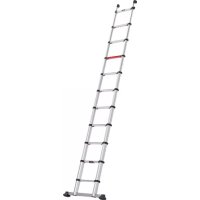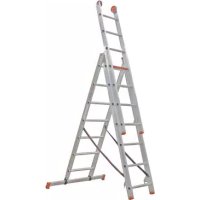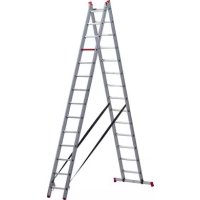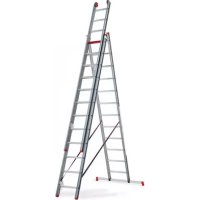
VaritrexDoitAll - Ladder Altrex - Free user manual and instructions
Find the device manual for free VaritrexDoitAll Altrex in PDF.



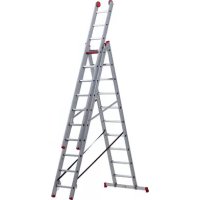
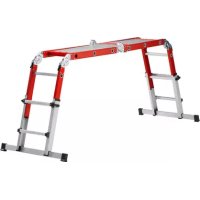
| Technical Features | Versatile ladder, adjustable height, maximum load capacity of 150 kg, materials made of lightweight and corrosion-resistant aluminum. |
|---|---|
| Usage | Ideal for working at heights, home repairs, outdoor and indoor maintenance, and DIY projects. |
| Maintenance and Repair | Regularly check the condition of the steps and hinges, clean with a damp cloth, and store in a dry place to prevent corrosion. |
| Safety | Use on a flat and stable surface, respect the load capacity, wear non-slip shoes, and do not exceed the recommended height. |
| General Information | 2-year warranty, compliant with European safety standards, lightweight for easy transport. |
Frequently Asked Questions - VaritrexDoitAll Altrex
User questions about VaritrexDoitAll Altrex
0 question about this device. Answer the ones you know or ask your own.
Ask a new question about this device
Download the instructions for your Ladder in PDF format for free! Find your manual VaritrexDoitAll - Altrex and take your electronic device back in hand. On this page are published all the documents necessary for the use of your device. VaritrexDoitAll by Altrex.
USER MANUAL VaritrexDoitAll Altrex
natural_image
Two-step diagram showing hand tool application on a mechanical component, with no visible text or symbols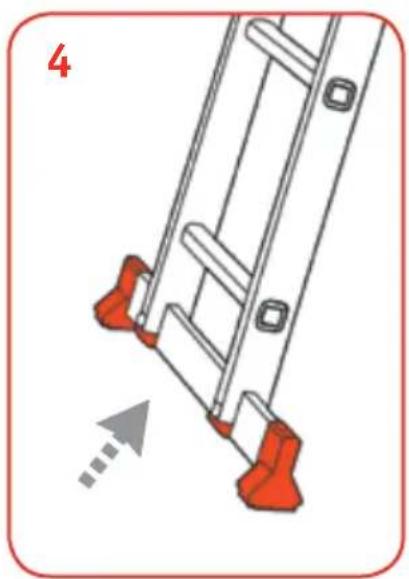
natural_image
Illustration of a ladder with red feet and a gray arrow pointing to it, no text or symbols present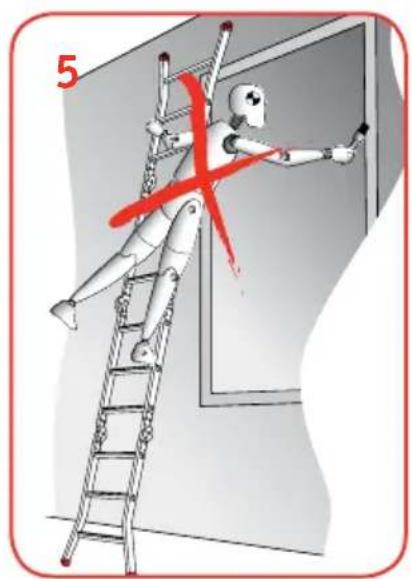
text_image
5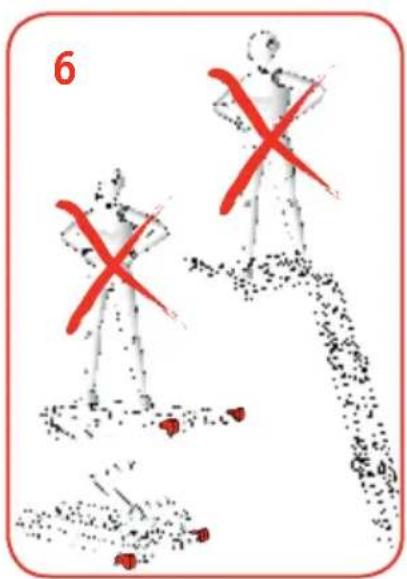
text_image
6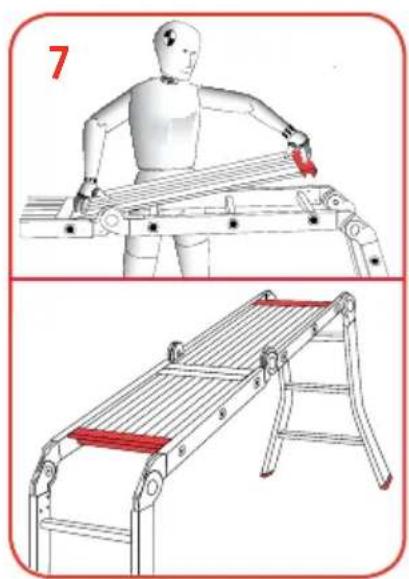
natural_image
Illustration of a humanoid robot climbing a ladder with a red-handled roller, shown from two different angles (no text or symbols)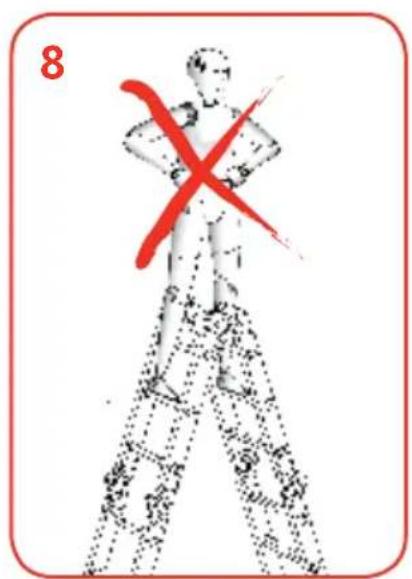
text_image
8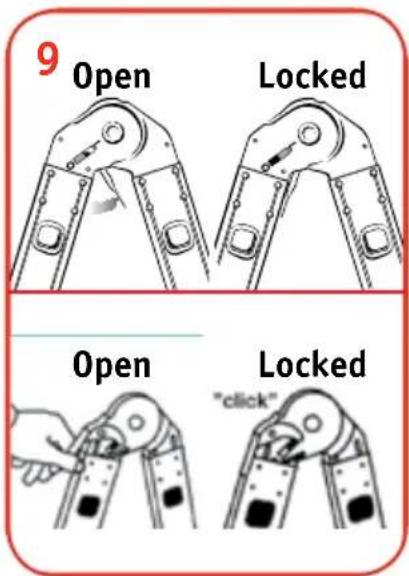
text_image
9 Open Locked Open Locked "click"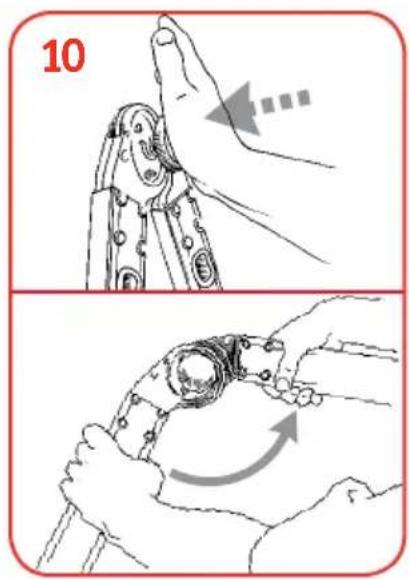
text_image
10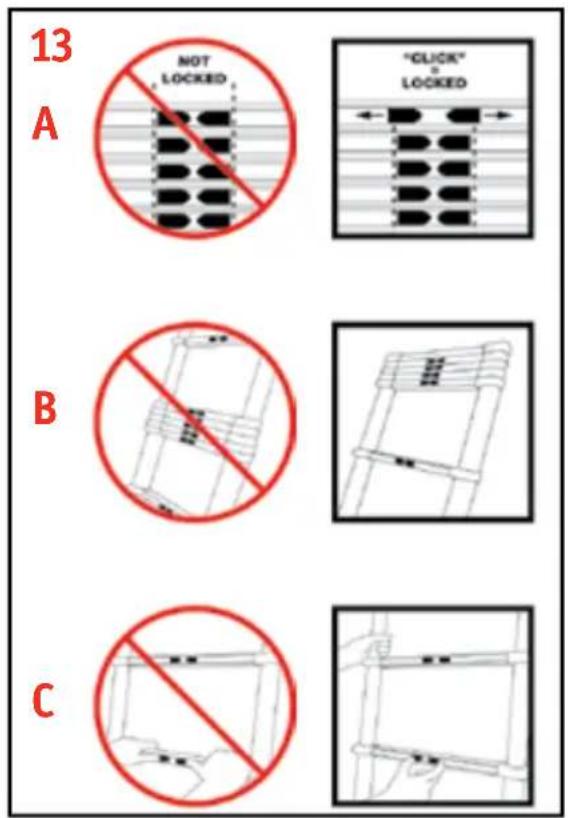
text_image
13 A NOT LOCKED "CLICK" "LOCKED B C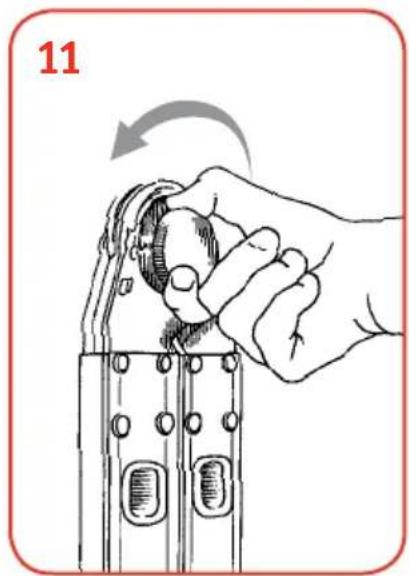
natural_image
Illustration of a hand turning a mechanical component with a curved arrow indicating rotation (no text or symbols)
text_image
altrex max. 1,95 m MAX. 150 kg 1 m 4x 75°
text_image
OIL H2O 06/2010 Altrex B.V. P.O. Box 30160 8003 CD Zwolle The Netherlands www.altrex.com Art. 000000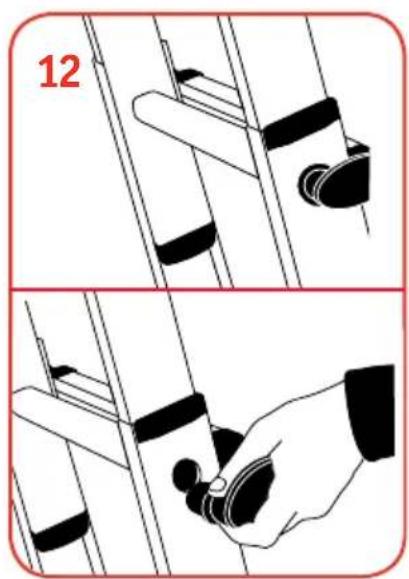
text_image
12Your folding ladder is equipped with one of the under mentioned hinges (A to C).
Please check which hinges your folding ladders are equipped with and read the corresponding instructions.
A. Werking flex-scharnier (met hendel) (fig. 9)
The safe use of a telescopic ladder/folding ladder
Congratulations on your purchase of an Altrex telescopic ladder/folding ladder. You have chosen a product in which the latest techniques in the areas of safety and material have been employed. You will find this Altrex telescopic ladder/ folding ladder very easy to use as a result of the full attention given to its design.
Before using the telescopic ladder/folding ladder, read these instructions carefully! Save these instructions in case they are needed for future reference. Also study the illustrations/pictograms that are shown on the product itself.
Altrex Home & Garden products are not suitable for professional use.
All telescopic ladders/folding ladders which are marketed in the Netherlands must meet the Commodities Act legislation as set out in the Portable Climbing Materials Order. For more information please consult www.altrex.com and the stickers on the folding/telescopic ladder. In order to work professionally and safely on ladders/folding ladders, safety level NEN2484 and the Commodities Act must be selected.
General
• Maximum usage weight 150 kg
• To be used by a maximum of 1 person
Before use
- Maintain a folding/telescopic ladder according to the instructions
- Remain alert. Concentrate when climbing a telescopic ladder/folding ladder and never do so under the influence of alcohol, medication or substances that may affect your ability to react.
- Should you transport the telescopic ladder/folding ladder, ensure that this is folded up and make sure that the telescopic ladder/folding ladder is properly supported and fixed in place.
- Upon receipt and before use of the telescopic ladder/folding ladder, check the condition and operation of all parts. A telescopic ladder must be completely collapsible! Make sure that all parts (including the feet and covers) are present.
• Some folding ladders are equipped with a separate stabiliser. Assemble this before use (fig. 3 and 4). - Every time before use, inspect the telescopic ladder/folding ladder for any defects, such as deformation or wear.
- Telescopic ladders/folding ladders that are used in a professional capacity must be inspected periodically by an expert.
- Every time before using the telescopic ladder/folding ladder make sure that it is suitable for its intended use. Only use the telescopic ladder/folding ladder for the purpose for which it has been made.
- Never use a damaged or telescopic ladder/folding ladder. Temporary repairs are not permitted. Make sure that any damage to a telescopic ladder/folding ladder is repaired as soon as possible by a professional in this field, in any case before it is used again.
- As far as possible, ensure that the telescopic ladder/folding ladder is free from contamination by substances such as wet paint, mud, snow and oil.
- Prior to use, carry out a risk analysis should you be obliged/required to do so by local or national legislation and regulations.
- Never use a telescopic ladder/folding ladder back to front or upside down.
- Dispose telescopic ladders/folding ladders if they are broken, worn-out or irreparable.
Positioning and/or erecting a telescopic ladder/folding ladder
- A telescopic ladder/folding ladder in ladder position has to be positioned in such a way that the distance from the foot of the telescopic ladder/folding ladder to the wall is approximately equal to a quarter of the operational length of the telescopic ladder/folding ladder. The set-up angle will then be circa 75^ (figure 1).
- Always stand the telescopic ladder/folding ladder on a firm, stable, horizontal surface, which is not slippery. This will ensure that the feet of the telescopic ladder/folding ladder cannot sink into the ground and/or slip away. Therefore, do not place the telescopic ladder/folding ladder on tables, boxes, crates or other unstable surfaces, such as muddy soil or loose sand.
- Position a telescopic ladder/folding ladder in ladder position in such a way that each of its four points are adequately supported by a firm bearing surface, therefore never against a window, against circular or narrow pillars or against corners, unless modified accessories are used for that purpose. Satisfy yourself that the telescopic ladder/folding ladder is sufficiently stable and/or, if required, is secured to ensure it cannot slip.
- A telescopic ladder/folding ladder may never be repositioned if somebody is standing on a platform or rung, or from a position that is higher than the platform or the end of the telescopic ladder/folding ladder.
- Take extra precautions if the telescopic ladder/folding ladder has to be positioned in front of a door opening, an opening window or in a corridor, etc. Make sure that nobody can walk against or under the telescopic ladder/folding ladder.
- Never position an aluminium telescopic ladder/folding ladder within a range of 2.5 m from non-insulated electrical components or low-voltage installations and networks which are under live current. Never position aluminium telescopic ladder/folding ladders in the vicinity of components of high-voltage installations.
- Take care when using electrical equipment. Aluminium telescopic ladders/folding ladders conduct electric current. Always take precautions so that a power cable cannot become trapped or become caught when climbing, sliding or repositioning the telescopic ladder/folding ladder. Check beforehand that your tool's electrical cable is not damaged.
- Telescopic ladders/folding ladders must always be positioned on their feet and not on the step/rung.
• Always position a telescopic ladder/folding ladder as close as possible to the work to be carried out. - Do not operate the hinges when someone is standing on the folding ladder.
- Do not operate the catches when someone is standing on the telescopic ladder.
- Do not climb folding ladders erected in the 'M' or 'Z' configurations. These configurations are intended solely for the use of the folding ladder as a worktable (figure 6).
- Do not stand on the horizontal wall support section of the folding ladder (figure 6).
- Verify that all hinges are locked before climbing the folding ladder. Clean the hinges at regular intervals; make sure they always move easily by lubricating them, for example, with PTFE spray.
- Visually check that all steps/rungs are locked before climbing the telescopic ladder. This can be checked on the basis of the catches (fig. 13A).
- Folding ladders that can be used in the scaffolding configuration (except for 4 x 4 versions) must be fitted with a suitable platform prior to use. This platform is available from the manufacturer. Always verify that this platform is correctly positioned, also after relocating the folding ladder (figure 7).
Opening and closing the folding ladder
Your folding ladder is equipped with one of the hinges detailed below (A to C).
Please check which hinges your folding ladders are equipped with and read the corresponding instructions.
A. Operation of the flex hinge (with handle) (figure 9)
- Lay the folded folding ladder flat on a clean surface.
- Lift the upper section of the ladder until it automatically locks into a position.
- Open the handles of the hinges on both sides of the folding ladder until they stay open by themselves. Do not apply force to the handles (if they cannot be opened easily, then gently move the upper section of the ladder backwards and forwards). Prevent the ladder section from falling closed by steadying it with one hand.
- Next, move the ladder section to the following position.
- Arrange the folding ladder in the required configuration using the same procedure to open each ladder section to the required position.
- Important: Verify that all locking blocks are fully locked in the 'LOCKED' position before using the folding ladder (figure 9).
B. Operation of the 3Pin AUTO-LOCKING® hinge (figure 10 + 11)
- Press the hinge buttons on both sides of a ladder section to retract all locking pins fully from the hinges. Prevent the ladder section from falling closed by steadying it with one hand. If difficulty is encountered with opening, then gently move the upper section of the ladder backwards and forwards (figure 10).
- Next, move the ladder section to the following position.
- Arrange the folding ladder in the required configuration using the same procedure to open each ladder section to the required position.
- Make sure that all locking pins are fully extended into the hinges before using the folding ladder.
- When the folding ladder is closed for storage the hinges can be locked in position to prevent sections from opening unexpectedly. The hinges of the closed folding ladder must be locked in position by turning the buttons counter-clockwise (figure 11).
Important!
- Never apply force to the handle of a hinge in an attempt to lock the hinge into position. If a hinge cannot be locked with ease you should unlock the hinge on the other stile and repeat the procedure.
- Do not apply force to hinges that are difficult to move.
C. Operation of the TELELOCK® hinge (figure 12)
- Locking: check whether the grip has been placed in the lock hole in its entirety.
- Unlocking: pull out the grip completely and park it next to the lock hole.
Important!
- Do not use telescopic parts separately
Collapsing and extending a telescopic ladder
Important!
Follow the instruction below closely when collapsing and extending a telescopic ladder. This will help prevent fingers becoming caught between the rungs and the uneven spaces in between!
EN
Extending a telescopic ladder to its full height
-
Place the telescopic ladder upright on a clean and stable surface.
-
When extending a telescopic ladder, start with the uppermost rung and extend this until the rung locks into place. Check this by pressing the uppermost rung downwards on both sides. Also check the position of the catches (see fig. 13A). Also ensure that all of the spaces between the rungs are equal. Repeat this with the subsequent rungs until you have extended the telescopic ladder to its maximum height.
Extending a telescopic ladder to an intermediate length
-
Place the telescopic ladder upright on a clean and stable surface.
-
When extending a telescopic ladder, start with one rung after the lowest rung and extend until the rung locks into place. Check this by pressing the uppermost rung downwards on both sides. Also check the position of the catches (see fig. 13A). Repeat this with the subsequent rungs until you have reached the required height. Ensure that all of the spaces between the rungs are equal.
-
The remaining rungs on a partially extended ladder will have stacked on top of one another at the top of the ladder (fig. 13B).
Collapsing a telescopic ladder
- Place the telescopic ladder upright on a clean and stable surface.
- When collapsing a telescopic ladder start with one rung after the lowest rung.
- Keep the ladder in a steady upright position with one hand on the ladder boom, preferably 2 rungs higher.
- With the other hand, slide the two catches towards one another, using the thumb and first finger, and guide the rung down gently using the other hand (figure 13C).
- You collapse the subsequent rungs in a similar way, finally ending up with a ladder that has been fully collapsed.
- Prevent a situation where you have a half step at all times; this may occur if you collapse higher rungs.
Use of the telescopic ladder/folding ladder
Attention!
If a telescopic ladder falls, immediately check if the ladder can be fully collapsed. If this is not possible, do not use the ladder! Deformities may lead to breakages.
- Never load a telescopic ladder/folding ladder in excess of 150 kg (= a person climbing telescopic ladder/folding ladder including any "baggage").
- When carrying out work, always keep both feet on a step/rung of the telescopic ladder/folding ladder. Never stand, for example, with just one foot on the telescopic ladder/folding ladder and the other foot resting on a window frame. Never reach or lean too far to the side when working on telescopic ladder/folding ladder (max. 1 arm length). If the centre of gravity is moved from the centre of the telescopic ladder folding ladder, this can become unstable and can collapse (rule of thumb: keep your navel between the uprights of the telescopic ladder/folding ladder). If necessary, reposition the telescopic ladder/folding ladder more frequently (figure 5).
- Do not use a telescopic ladder/folding ladder to access other (higher) levels.
- Never climb a telescopic ladder/folding ladder any higher than the red rung or never higher than the 4th rung from the top the maximum safe standing position.
- Never climb a telescopic ladder/folding ladder in the A position higher than the red rung or higher than the 4th rung from top (the maximum safe height).
- Telescopic ladders/folding ladders may only be used for light work and for short periods of time.
- If there is an unavoidable risk of direct contact with electricity, do not use this telescopic ladder/folding ladder!
- Do not use a telescopic ladder/folding ladder outdoors in high winds (force 6) or other unfavourable weather conditions.
- Never leave a telescopic ladder/folding ladder unsupervised that has already been set up for use. Think about (playing) children.
- When possible, close windows and doors (not emergency exits) in the immediate vicinity of the work.
- Climb the telescopic ladder/folding ladder when you have at least one hand free. When ascending/descending the telescopic ladder/folding ladder, hold on properly. This should always been done while facing the telescopic ladder/folding ladder. Holding a rung with at least one hand provides increased security should you slip or miss your footing.
- Do not use a telescopic ladder as bridge (part). A folding ladder can only be used as a bridge in M position. The stability must be guaranteed.
- Wear sensible footwear to avoid slipping and/or painful knocks (no slippers, high-heeled shoes or clogs).
- Do not stand on a telescopic ladder/folding ladder for long periods without taking regular breaks. Tiredness is a risk!
- The telescopic ladder/folding ladder in ladder position should project by at least one metre above the required standing or step-over height (figure 2).
- Any tools that are used while standing on a telescopic ladder/folding ladder have to be light and easy to use.
- Avoid any work that could cause sideways pressure on the telescopic ladder/folding ladder, such as drilling into hard stone. This can cause the telescopic ladder/folding ladder to tip over.
- While working, hold onto the telescopic ladder/folding ladder with at least one hand, or take precautions if it is not possible to hold on.
- No more than one person should stand on a stepladder or ladder at the same time.
- Never reposition the telescopic ladder/folding ladder while somebody is standing on it.
- Never stand astride the folding ladder (A-position) (figure 8).
Additional safety tips when using telescopic ladders/folding ladders
- The fact that ladders/telescopic ladders are equipped with hinges and/or automatic locking parts means that it is important to keep these components clean in order for the equipment to function properly. It is also important, with collapsible ladders, that dirt does not build up between the sliding parts. It is, therefore, important to keep these ladders clean and dry and free from dirt.
- Never wear baggy clothing or jewellery. These could become caught when ascending or descending the stepladder or telescopic ladder which could lead to a fall.
- Frequently check that the feet are not worn. Worn feet may damage the support surface, or can result in the telescopic ladder/folding ladder slipping.
• In the interest of personal safety, only use accessories or aids that have been recommended by Altrex. - Do not leave any tools or other equipment at the bottom of the telescopic ladder/folding ladder which you might trip over.
Assembly and/or repair of replacement parts
Replacement parts supplied by Altrex must be assembled on the correct Altrex product and in the same way as the part that is replaced. Assembly (attachment) and/or repair is effectuated at the own risk and expense of the client. Altrex is not liable for damage caused by incorrect assembly and/or repair. For a fee, Altrex can be called in for the repair of your product, and/or the assembly of the parts in question.
Clean the hinges and sliding components regularly and ensure that they are working properly. Use a PTFE spray to ensure these work correctly.
Warranty conditions
This Altrex product has been designed, manufactured and tested with the greatest care. Our products meet all legal requirements applicable to climbing materials and, in addition, our own high Altrex standards are also applied. Should this product be used in accordance with the instructions and its intended use, a warranty will apply under the following conditions (the warranty period is indicated on the sticker at the side of our products):
- Altrex guarantees the reliability of the product and the quality of the materials used.
- We will rectify any defects that are covered by the warranty by replacing the defective part, or the product itself, or by supplying a part for replacement.
-
Any defects that occur as a result of the following are not covered by the warranty:
a. Use of the product contrary to its intended use or contrary to the instructions for use.
b. Normal wear and tear of the product.
c. Assembly or repair by the client or by third parties (with the exception of fitting the spare parts provided by Altrex as indicated above under point 2).
d. Any modified governmental regulations concerning the nature or quality of the material used in the product. -
Any defects that are found upon the delivery of the product should be reported immediately to Altrex.
Should notification of these defects not take place immediately, the warranty will be null and void.
- Any defects of the product have to be reported to Altrex or your Altrex dealer as soon as possible, but in any case within 14 days of the defect being found.
6.
a. Should a claim be made under the warranty conditions, Altrex has to have the opportunity to be able to investigate the product in its Quality Centre. The client must make the product available for this purpose. Should it be established during the investigation that the product has been used incorrectly, the costs of the investigation will be charged to the client.
b. Should the client ask for an investigation to be carried out by an independent institute, the costs for this investigation are at the expense of the client should it be established during the investigation that the product has been used incorrectly. The costs of the investigation are also at the expense of the client if, prior to this investigation, Altrex offered to repair or to replace the product at no charge to the client.