ManualGo.com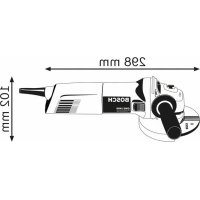
GWS 1400 Professional - Grinder BOSCH - Free user manual and instructions
Find the device manual for free GWS 1400 Professional BOSCH in PDF.



Download the instructions for your Grinder in PDF format for free! Find your manual GWS 1400 Professional - BOSCH and take your electronic device back in hand. On this page are published all the documents necessary for the use of your device. GWS 1400 Professional by BOSCH.
USER MANUAL GWS 1400 Professional BOSCH
GWS 1400 C / GWS 1400 / GWS 14-125
äußeren Abmessung größer als 25cm sind, im Einzel- handelsgeschäft oder in unmittelbarer Nähe hierzu un- entgeltlich zurückzunehmen; die Rücknahme darf nicht an den Kauf eines Elektro- oder Elektronikgerätes ge- knüpft werden und ist auf drei Altgeräte pro Geräteart beschränkt. Der Vertreiber hat beim Abschluss des Kaufvertrags für das neue Elektro- oder Elektronikgerät den Endnutzer über die Möglichkeit zur unentgeltlichen Rückgabe bzw. Abholung des Altgeräts zu informieren und den Endnutzer nach seiner Absicht zu befragen, ob bei der Auslieferung des neuen Ge- räts ein Altgerät zurückgegeben wird. Dies gilt auch bei Vertrieb unter Verwendung von Fernkom- munikationsmitteln, wenn die Lager- und Versandflächen für Elektro- und Elektronikgeräte mindestens 400m² betragen oder die gesamten Lager- und Versandflächen mindestens 800m² betragen, wobei die unentgeltliche Abholung auf Elektro- und Elektronikgeräte der Kategorien 1 (Wärmeüber- träger), 2 (Bildschirmgeräte) und 4 (Großgeräte mit mindes- tens einer äußeren Abmessung über 50cm) beschränkt ist. Für alle übrigen Elektro- und Elektronikgeräte muss der Ver- treiber geeignete Rückgabemöglichkeiten in zumutbarer Ent- fernung zum jeweiligen Endnutzer gewährleisten; das gilt auch für Altgeräte, die in keiner äußeren Abmessung größer als 25cm sind, die der Endnutzer zurückgeben will, ohne ein neues Gerät zu kaufen. English Safety Instructions General Power Tool Safety Warnings WARNING Read all safety warnings, instruc- tions, illustrations and specifica- tions provided with this power tool. Failure to follow all in- structions listed below may result in electric shock, fire and/ or serious injury. Save all warnings and instructions for future reference. The term "power tool" in the warnings refers to your mains- operated (corded) power tool or battery-operated (cord- less) power tool. Work area safety u Keep work area clean and well lit. Cluttered or dark areas invite accidents. u Do not operate power tools in explosive atmospheres, such as in the presence of flammable liquids, gases or dust. Power tools create sparks which may ignite the dust or fumes. u Keep children and bystanders away while operating a power tool. Distractions can cause you to lose control. Electrical safety u Power tool plugs must match the outlet. Never modify the plug in any way. Do not use any adapter plugs with earthed (grounded) power tools. Unmodified plugs and matching outlets will reduce risk of electric shock. u Avoid body contact with earthed or grounded sur- faces, such as pipes, radiators, ranges and refrigerat- ors. There is an increased risk of electric shock if your body is earthed or grounded. u Do not expose power tools to rain or wet conditions. Water entering a power tool will increase the risk of elec- tric shock. u Do not abuse the cord. Never use the cord for carry- ing, pulling or unplugging the power tool. Keep cord away from heat, oil, sharp edges or moving parts. Damaged or entangled cords increase the risk of electric shock. u When operating a power tool outdoors, use an exten- sion cord suitable for outdoor use. Use of a cord suit- able for outdoor use reduces the risk of electric shock. Bosch Power Tools 1 609 92A 763 | (27.03.2024)20 | English u If operating a power tool in a damp location is un- avoidable, use a residual current device (RCD) protec- ted supply. Use of an RCD reduces the risk of electric shock. Personal safety u Stay alert, watch what you are doing and use common sense when operating a power tool. Do not use a power tool while you are tired or under the influence of drugs, alcohol or medication. A moment of inatten- tion while operating power tools may result in serious per- sonal injury. u Use personal protective equipment. Always wear eye protection. Protective equipment such as a dust mask, non-skid safety shoes, hard hat or hearing protection used for appropriate conditions will reduce personal in- juries. u Prevent unintentional starting. Ensure the switch is in the off-position before connecting to power source and/or battery pack, picking up or carrying the tool. Carrying power tools with your finger on the switch or en- ergising power tools that have the switch on invites acci- dents. u Remove any adjusting key or wrench before turning the power tool on. A wrench or a key left attached to a rotating part of the power tool may result in personal in- jury. u Do not overreach. Keep proper footing and balance at all times. This enables better control of the power tool in unexpected situations. u Dress properly. Do not wear loose clothing or jew- ellery. Keep your hair and clothing away from moving parts. Loose clothes, jewellery or long hair can be caught in moving parts. u If devices are provided for the connection of dust ex- traction and collection facilities, ensure these are con- nected and properly used. Use of dust collection can re- duce dust-related hazards. u Do not let familiarity gained from frequent use of tools allow you to become complacent and ignore tool safety principles. A careless action can cause severe in- jury within a fraction of a second. Power tool use and care u Do not force the power tool. Use the correct power tool for your application. The correct power tool will do the job better and safer at the rate for which it was de- signed. u Do not use the power tool if the switch does not turn it on and off. Any power tool that cannot be controlled with the switch is dangerous and must be repaired. u Disconnect the plug from the power source and/or re- move the battery pack, if detachable, from the power tool before making any adjustments, changing ac- cessories, or storing power tools. Such preventive safety measures reduce the risk of starting the power tool accidentally. u Store idle power tools out of the reach of children and do not allow persons unfamiliar with the power tool or these instructions to operate the power tool. Power tools are dangerous in the hands of untrained users. u Maintain power tools and accessories. Check for mis- alignment or binding of moving parts, breakage of parts and any other condition that may affect the power tool’s operation. If damaged, have the power tool repaired before use. Many accidents are caused by poorly maintained power tools. u Keep cutting tools sharp and clean. Properly main- tained cutting tools with sharp cutting edges are less likely to bind and are easier to control. u Use the power tool, accessories and tool bits etc. in accordance with these instructions, taking into ac- count the working conditions and the work to be per- formed. Use of the power tool for operations different from those intended could result in a hazardous situation. u Keep handles and grasping surfaces dry, clean and free from oil and grease. Slippery handles and grasping surfaces do not allow for safe handling and control of the tool in unexpected situations. Battery tool use and care u Recharge only with the charger specified by the manu- facturer. A charger that is suitable for one type of bat- tery pack may create a risk of fire when used with another battery pack. u Use power tools only with specifically designated bat- tery packs. Use of any other battery packs may create a risk of injury and fire. u When battery pack is not in use, keep it away from other metal objects, like paper clips, coins, keys, nails, screws or other small metal objects, that can make a connection from one terminal to another. Shorting the battery terminals together may cause burns or a fire. u Under abusive conditions, liquid may be ejected from the battery; avoid contact. If contact accidentally oc- curs, flush with water. If liquid contacts eyes, addi- tionally seek medical help. Liquid ejected from the bat- tery may cause irritation or burns. u Do not use a battery pack or tool that is damaged or modified. Damaged or modified batteries may exhibit unpredictable behaviour resulting in fire, explosion or risk of injury. u Do not expose a battery pack or tool to fire or excess- ive temperature. Exposure to fire or temperature above 130°C may cause explosion. u Follow all charging instructions and do not charge the battery pack or tool outside the temperature range specified in the instructions. Charging improperly or at temperatures outside the specified range may damage the battery and increase the risk of fire. 1 609 92A 763 | (27.03.2024) Bosch Power ToolsEnglish | 21 Service u Have your power tool serviced by a qualified repair person using only identical replacement parts. This will ensure that the safety of the power tool is maintained. u Never service damaged battery packs. Service of bat- tery packs should only be performed by the manufacturer or authorized service providers. Safety warnings for angle grinder Safety warnings common for grinding, sanding, wire brushing or cutting-off operations: u This power tool is intended to function as a grinder, sander, wire brush, hole cutter or cut-off tool. Read all safety warnings, instructions, illustrations and spe- cifications provided with this power tool. Failure to fol- low all instructions listed below may result in electric shock, fire and/or serious injury. u Operations such as polishing are not to be performed with this power tool. Operations for which the power tool was not designed may create a hazard and cause per- sonal injury. u Do not convert this power tool to operate in a way which is not specifically designed and specified by the tool manufacturer. Such a conversion may result in a loss of control and cause serious personal injury. u Do not use accessories which are not specifically de- signed and specified by the tool manufacturer. Just because the accessory can be attached to your power tool, it does not assure safe operation. u The rated speed of the accessory must be at least equal to the maximum speed marked on the power tool. Accessories running faster than their rated speed can break and fly apart. u The outside diameter and the thickness of your ac- cessory must be within the capacity rating of your power tool. Incorrectly sized accessories cannot be ad- equately guarded or controlled. u The dimensions of the accessory mounting must fit the dimensions of the mounting hardware of the power tool. Accessories that do not match the mounting hardware of the power tool will run out of balance, vibrate excessively and may cause loss of control. u Do not use a damaged accessory. Before each use in- spect the accessory such as abrasive wheels for chips and cracks, backing pad for cracks, tear or excess wear, wire brush for loose or cracked wires. If power tool or accessory is dropped, inspect for damage or in- stall an undamaged accessory. After inspecting and installing an accessory, position yourself and bystand- ers away from the plane of the rotating accessory and run the power tool at maximum no-load speed for one minute. Damaged accessories will normally break apart during this test time. u Wear personal protective equipment. Depending on application, use face shield, safety goggles or safety glasses. As appropriate, wear dust mask, hearing pro- tectors, gloves and workshop apron capable of stop- ping small abrasive or workpiece fragments. The eye protection must be capable of stopping flying debris gen- erated by various applications. The dust mask or respir- ator must be capable of filtrating particles generated by the particular application. Prolonged exposure to high in- tensity noise may cause hearing loss. u Keep bystanders a safe distance away from work area. Anyone entering the work area must wear personal protective equipment. Fragments of workpiece or of a broken accessory may fly away and cause injury beyond immediate area of operation. u Hold the power tool by insulated gripping surfaces only, when performing an operation where the cutting accessory may contact hidden wiring or its own cord. Cutting accessory contacting a "live" wire may make ex- posed metal parts of the power tool "live" and could give the operator an electric shock. u Hold the power tool by insulated gripping surfaces only, when performing an operation where the cutting tool may contact hidden wiring. Contact with a "live" wire will also make exposed metal parts of the power tool "live" and could give the operator an electric shock. u Position the cord clear of the spinning accessory. If you lose control, the cord may be cut or snagged and your hand or arm may be pulled into the spinning accessory. u Never lay the power tool down until the accessory has come to a complete stop. The spinning accessory may grab the surface and pull the power tool out of your con- trol. u Do not run the power tool while carrying it at your side. Accidental contact with the spinning accessory could snag your clothing, pulling the accessory into your body. u Regularly clean the power tool’s air vents. The motor’s fan will draw the dust inside the housing and excessive accumulation of powdered metal may cause electrical hazards. u Do not operate the power tool near flammable materi- als. Sparks could ignite these materials. u Do not use accessories that require liquid coolants. Using water or other liquid coolants may result in electro- cution or shock. Kickback and related warnings: Kickback is a sudden reaction to a pinched or snagged rotat- ing wheel, backing pad, brush or any other accessory. Pinch- ing or snagging causes rapid stalling of the rotating access- ory which in turn causes the uncontrolled power tool to be forced in the direction opposite of the accessory’s rotation at the point of the binding. For example, if an abrasive wheel is snagged or pinched by the workpiece, the edge of the wheel that is entering into the pinch point can dig into the surface of the material causing the wheel to climb out or kick out. The wheel may either jump toward or away from the operator, depending on direc- tion of the wheel’s movement at the point of pinching. Abras- ive wheels may also break under these conditions. Bosch Power Tools 1 609 92A 763 | (27.03.2024)22 | English Kickback is the result of power tool misuse and/or incorrect operating procedures or conditions and can be avoided by taking proper precautions as given below. u Maintain a firm grip with both hands on the power tool and position your body and arms to allow you to resist kickback forces. Always use auxiliary handle, if provided, for maximum control over kickback or torque reaction during start-up. The operator can con- trol torque reactions or kickback forces, if proper precau- tions are taken. u Never place your hand near the rotating accessory. Accessory may kickback over your hand. u Do not position your body in the area where power tool will move if kickback occurs. Kickback will propel the tool in direction opposite to the wheel’s movement at the point of snagging. u Use special care when working corners, sharp edges, etc. Avoid bouncing and snagging the accessory. Corners, sharp edges or bouncing have a tendency to snag the rotating accessory and cause loss of control or kickback. u Do not attach a saw chain woodcarving blade, seg- mented diamond wheel with a peripheral gap greater than 10 mm or toothed saw blade. Such blades create frequent kickback and loss of control. Safety warnings specific for grinding and cutting-off operations: u Use only wheel types that are specified for your power tool and the specific guard designed for the selected wheel. Wheels for which the power tool was not designed cannot be adequately guarded and are unsafe. u The grinding surface of centre depressed wheels must be mounted below the plane of the guard lip. An im- properly mounted wheel that projects through the plane of the guard lip cannot be adequately protected. u The guard must be securely attached to the power tool and positioned for maximum safety, so the least amount of wheel is exposed towards the operator. The guard helps to protect the operator from broken wheel fragments, accidental contact with wheel and sparks that could ignite clothing. u Wheels must be used only for specified applications. For example: do not grind with the side of cut-off wheel. Abrasive cut-off wheels are intended for peri- pheral grinding, side forces applied to these wheels may cause them to shatter. u Always use undamaged wheel flanges that are of cor- rect size and shape for your selected wheel. Proper wheel flanges support the wheel thus reducing the pos- sibility of wheel breakage. Flanges for cut-off wheels may be different from grinding wheel flanges. u Do not use worn down wheels from larger power tools. A wheel intended for larger power tool is not suitable for the higher speed of a smaller tool and may burst. u When using dual purpose wheels always use the cor- rect guard for the application being performed. Failure to use the correct guard may not provide the desired level of guarding, which could lead to serious injury. Additional safety warnings specific for cutting-off operations: u Do not “jam” the cut-off wheel or apply excessive pressure. Do not attempt to make an excessive depth of cut. Overstressing the wheel increases the loading and susceptibility to twisting or binding of the wheel in the cut and the possibility of kickback or wheel breakage. u Do not position your body in line with and behind the rotating wheel. When the wheel, at the point of opera- tion, is moving away from your body, the possible kick- back may propel the spinning wheel and the power tool directly at you. u When the wheel is binding or when interrupting a cut for any reason, switch off the power tool and hold it motionless until the wheel comes to a complete stop. Never attempt to remove the cut-off wheel from the cut while the wheel is in motion otherwise kickback may occur. Investigate and take corrective action to elim- inate the cause of wheel binding. u Do not restart the cutting operation in the workpiece. Let the wheel reach full speed and carefully re-enter the cut. The wheel may bind, walk up or kickback if the power tool is restarted in the workpiece. u Support panels or any oversized workpiece to minim- ize the risk of wheel pinching and kickback. Large workpieces tend to sag under their own weight. Supports must be placed under the workpiece near the line of cut and near the edge of the workpiece on both sides of the wheel. u Use extra caution when making a “pocket cut” into ex- isting walls or other blind areas. The protruding wheel may cut gas or water pipes, electrical wiring or objects that can cause kickback. u Do not attempt to do curved cutting. Overstressing the wheel increases the loading and susceptibility to twisting or binding of the wheel in the cut and the possibility of kickback or wheel breakage, which can lead to serious in- jury. Safety warnings specific for sanding operations: u Use proper sized sanding disc paper. Follow manufac- turers recommendations, when selecting sanding pa- per. Larger sanding paper extending too far beyond the sanding pad presents a laceration hazard and may cause snagging, tearing of the disc or kickback. Safety warnings specific for wire brushing operations: u Be aware that wire bristles are thrown by the brush even during ordinary operation. Do not overstress the wires by applying excessive load to the brush The wire bristles can easily penetrate light clothing and/or skin. u If the use of a guard is specified for wire brushing, do not allow any interference of the wire wheel or brush with the guard. Wire wheel or brush may expand in dia- meter due to work load and centrifugal forces. 1 609 92A 763 | (27.03.2024) Bosch Power ToolsEnglish | 23 Additional safety information Wear safety goggles. The protective guard must not be used for cutting. With a suitable adapter, the protective guard can also be used for cutting. Hold the power tool firmly with both hands and make sure you have a stable footing. The power tool can be more securely guided with both hands. u For application tools with an internal thread, such as brushes and diamond annular cutters, attention must be paid to the max. thread length of the grinding spindle. The spindle end must not touch the base of the application tool. u Use suitable detectors to determine if utility lines are hidden in the work area or call the local utility com- pany for assistance. Contact with electric lines can lead to fire and electric shock. Damaging a gas line can lead to explosion. Penetrating a water line causes property dam- age or may cause an electric shock. u Use suitable detectors to determine if there are hid- den supply lines or contact the local utility company for assistance. Contact with electric cables can cause fire and electric shock. Damaging gas lines can lead to ex- plosion. Breaking water pipes causes property damage. u Do not touch grinding and cutting discs until they have cooled down. The discs can become very hot while work- ing. u Release the On/Off switch and set it to the off position when the power supply is interrupted, e. g., in case of a power failure or when the mains plug is pulled. This prevents uncontrolled restarting. u Release the On/Off switch and set it to the Off posi- tion when the power supply is interrupted, e.g. when the battery pack is removed. This prevents uncontrolled restarting. u Secure the workpiece. A workpiece clamped with clamping devices or in a vice is held more secure than by hand. u Store the application tools inside buildings, in a dry, frost-free room at a uniform temperature. u Remove the application tools before transporting the power tool. This will allow you to avoid damage. u Bonded cutting and grinding discs have an expiration date, after which the discs must no longer be used. u In case of damage and improper use of the battery, va- pours may be emitted. The battery can set alight or ex- plode. Ensure the area is well ventilated and seek medical attention should you experience any adverse effects. The vapours may irritate the respiratory system. u Do not open the battery. There is a risk of short-circuit- ing. u The battery can be damaged by pointed objects such as nails or screwdrivers or by force applied externally. An internal short circuit may occur, causing the battery to burn, smoke, explode or overheat. u This is the only way in which you can protect the battery against dangerous overload. Protect the power tool against heat, e.g. against continuous intense sunlight, fire, water, and moisture. There is a risk of explo- sion. Protect the battery against heat, e.g. against continuous intense sunlight, fire, dirt, water and moisture. There is a risk of explosion and short-circuiting. u Connect the power tool to a mains supply that is prop- erly connected to earth. The socket and extension cable must have a fully functioning protective conductor. Products sold in GB only: Your product is fitted with an BS 1363/A approved electric plug with internal fuse (ASTA approved to BS 1362). If the plug is not suitable for your socket outlets, it should be cut off and an appropriate plug fitted in its place by an au- thorised customer service agent. The replacement plug should have the same fuse rating as the original plug. The severed plug must be disposed of to avoid a possible shock hazard and should never be inserted into a mains socket elsewhere. Product Description and Specifications Read all the safety and general instructions. Failure to observe the safety and general in- structions may result in electric shock, fire and/or serious injury. Please observe the illustrations at the beginning of this oper- ating manual. Read all the safety and general instructions. Fail- ure to observe the safety and general instructions may result in electric shock, fire and/or serious injury. Please observe the illustrations at the beginning of this oper- ating manual. Intended use The power tool is intended for cutting and brushing metal, stone, plastic and composite materials, roughing metal, plastic and composite materials as well as making holes in stone materials using diamond annular cutters, without the use of water. Make sure that the correct protective guard is used(see "Operation", page28). Sufficient dust extraction must be provided when cutting stone. Bosch Power Tools 1 609 92A 763 | (27.03.2024)24 | English With approved abrasive tools, the power tool can be used for sanding with sanding discs. The power tool must not be used to grind stone materials with diamond grinding heads. Product Features The numbering of the product features refers to the diagram of the power tool on the graphics page. (1) Unlocking lever for protective guard (2) Spindle lock button (3) On/off switch (4) Low-vibration auxiliary handle (insulated gripping surface)
(5) Standard auxiliary handle (insulated gripping sur- face) (6) Extraction guard for grinding
(7) Protective guard for grinding (8) Protective guard for cutting
(9) Cover for cutting (10) Mounting flange with O‑ring (11) Carbide grinding head
(16) Diamond cutting disc
(19) Two-pin spanner for clamping nut/round nut (20) Handle (insulated gripping surface) (21) Grinding spindle (22) Hand guard
(23) Rubber sanding pad
(28) Diamond annular cutter
(30) Extraction guard for cutting with cutting guides
Accessories shown or described are not included with the product as standard. You can find the complete selection of accessories in our accessories range. Technical Data Angle grinder GWS 1000 GWS 1400 C GWS 1400 GWS 14-125 Article number 3601H288.. 3601H242.. 3601H248.. 3601H248.. Rated power input W 1000 1400 1400 1400 Power output W 630 820 820 820 Rated no-load speed
11,800 11,800 11,800 11,800 Max. grinding disc diameter/rubber sanding pad diameter mm 125 125 125 125 Grinding spindle thread M 14 M 14 M 14 M 14 Max. thread length of grinding spindle mm 22 22 22 22 Restart protection ● ● ● ● Soft start ● ● ● ● Constant electronic control – ● ● ● Weight
kg 2.2–2.5 2.2–2.5 2.2–2.5 2.2–2.5 Protection class / II / II / II / II A) Rated no-load speed for the selection of appropriate application tools in accordance with ENIEC62841-2-3. The actual no-load speed must not exceed the rated no-load speed and is therefore lower.
Depends on protective guard((8), (7), (9)) and auxiliary handle((5), (4)) in use The specifications apply to a rated voltage [U] of 230 V. These specifications may vary at different voltages and in country-specific models. Values can vary depending on the product, scope of application and environmental conditions. To find out more, visit www.bosch-professional.com/wac. Noise/Vibration Information Noise emission values determined according toENIEC62841-2-3. Typically, the A-weighted noise level of the power tool is: Sound pressure level92dB(A); sound power level100dB(A). Uncertainty K=3dB. Wear hearing protection! Vibration total values a
(triax vector sum) and uncertainty K determined according to ENIEC62841-2-3: Surface grinding (roughing) and abrasive cutting:
Grinding thin metal sheets or other materials that tend to easily vi- brate with a large surface area can cause the noise emission value to increase by up to 15dB. Suitable, heavy damping mats can reduce the increased noise emissions. Increased noise emissions must be taken into consideration, both for the risk assessment of the noise output and for selecting suitable hearing protection. The vibration level and noise emission value given in these instructions have been measured in accordance with a standardised measuring procedure and may be used to com- pare power tools. They may also be used for a preliminary estimation of vibration and noise emissions. The stated vibration level and noise emission value repres- ent the main applications of the power tool. However, if the power tool is used for other applications, with different ac- cessories or is poorly maintained, the vibration level and noise emission value may differ. This may significantly in- crease the vibration and noise emissions over the total work- ing period. To estimate vibration and noise emissions accurately, the times when the tool is switched off or when it is running but not actually being used should also be taken into account. This may significantly reduce vibration and noise emissions over the total working period. Implement additional safety measures to protect the oper- ator from the effects of vibration, such as servicing the power tool and accessories, keeping their hands warm, and organising workflows correctly. Soft start The electronic soft start limits the torque when the power tool is switched on and enables a smooth start-up. Note: If the power tool runs at full speed immediately after being switched on, this means that the soft start and restart protection mechanisms have failed. The power tool must be sent to the after-sales service immediately; see the "After- Sales Service and Application Service" section for ad- dresses. Restart protection The restart protection feature prevents the power tool from uncontrolled starting after the power supply to it has been interrupted. To restart the tool, set the on/off switch (3) to the "off" posi- tion and then switch the power tool on again. In rare cases, certain interference pulses can cause the re- start protection to activate. In such cases, the power tool switches off and stays switched off. The power tool can be started up again by releasing the on/off switch(3) and pressing it again. Constant Electronic control
GWS 1400 C / GWS 1400 / GWS 14-125
The Constant Electronic keeps the speed at no load and un- der load virtually consistent, guaranteeing uniform perform- ance. Fitting Fitting Protective Equipment u Remove the battery from the power tool before carry- ing out work on the power tool (e.g. maintenance, changing tool, etc.). The battery should also be re- moved for transport and storage. There is risk of injury from unintentionally pressing the on/off switch. u Pull the plug out of the socket before carrying out any work on the power tool. Note: If the grinding disc breaks during operation or the holding fixtures on the protective guard/power tool become damaged, the power tool must be sent to the after-sales ser- vice immediately; see the "After-Sales Service and Applica- tion Service" section for addresses. Protective guard for grinding Place the protective guard (7) onto the holder on the power tool until the coding cams of the protective guard are aligned with the holder. When do- ing so, press and hold the unlocking lever (1). Press the protective guard (7) onto the spindle collar until the shoulder of the protective guard is sitting on the flange of the power tool and rotate the protective guard until it audibly clicks into place. Adjust the position of the protective guard (7) to meet the requirements of the operation. To do this, push the unlock- ing lever (1) upward and rotate the protective guard (7) into the required position. u Always position the protective guard(7) such that the two cams on the unlocking lever(1) engage in the corresponding openings on the protective guard(7). u Adjust the protective guard (7) such that sparking in the direction of the operator is prevented. u The protective guard(7) must only be able to be ro- tated in the direction of the accessory while the un- locking lever(1) is actuated. Otherwise, the power tool must not be used any more under any circum- stances and must be sent to the after-sales service. Note: The coding cams on the protective guard (7) ensure that only a protective guard that is suitable for the power tool can be fitted. Extraction guard for sanding For low-dust grinding of paints, lacquers and plastics in con- junction with carbide grinding heads(11), you can use the extraction guard(6). The extraction guard(6) is not suitable for machining metal. A suitable Bosch dust extractor can be connected to the ex- traction guard(6). To do so, insert the vacuum hose with dust extraction adapter into the provided receiving connec- tion of the extraction guard. Bosch Power Tools 1 609 92A 763 | (27.03.2024)26 | English Protective guard for cutting u For cutting, always use the protective guard for cutting(8) or the protective guard for grinding (7) to- gether with the cover for cutting(9). u Provide sufficient dust extraction when cutting stone. The protective guard for cutting(8) is fitted in the same way as the protective guard for grinding(7). Metal cover for cutting Fit the metal cover for cutting(9) on the protective guard for grinding(7) (see figureA): Swivel the tool retainer back (➊). Attach the cover(9) to the protective guard for grinding(7) (➋). Press the tool retainer firmly into place on the protective guard(7) (➌). To remove the cover (see figureB), press the button on the tool retainer (➊) and swivel it back (➋). Remove the cover(9) from the protective guard(7) (➌). Plastic cover for cutting Attach the plastic cover for cutting(9) to the protective guard for grinding(7) (see figureC). The cover(9) audibly and visually engages on the protective guard(7). To remove the cover (see figureD), unlock the cover(9) on the left- or right-hand side of the protective guard(7) (➊) and remove the cover (➋). Extraction guard for cutting with a guide block The extraction guard for cutting with a cutting guide(30) is fitted in the same way as the protective guard for grinding. By securing the auxiliary handle(5)/(4) with the clip through the extraction guard on the gearbox housing, the power tool is firmly attached to the extraction guard. A suitable Bosch dust extractor can be connected to the extraction guard with a cutting guide(30). To do so, insert the vacuum hose with dust extraction adapter into the provided receiving connec- tion of the extraction guard. Note: The friction generated by the dust in the vacuum hose and accessory during extraction causes an electrostatic charge that the user may experience as static discharge (de- pending on environmental factors and their physiological state). Bosch generally recommends using an anti-static va- cuum hose (accessory) to vacuum up fine dust and dry ma- terials. Hand guard u Always fit the hand guard (22) when working with the rubber sanding pad (23) or with the cup brush/conical brush/diamond annular cutter. Attach the hand guard(22) to the auxiliary handle(5)/(4). Standard auxiliary handle/low-vibration auxiliary handle Screw the auxiliary handle (5)/(4) on the right or left of the machine head depending on the working method. u Do not operate your power tool without the auxiliary handle(5)/(4). u Do not continue to use the power tool if the auxiliary handle (5)/(4) is damaged. Do not make any altera- tions to the auxiliary handle (5)/(4). The low-vibration auxiliary handle (4) reduces vibration, enabling the tool to be used safely and more comfortably. Fitting the Abrasive Tools u Remove the battery from the power tool before carry- ing out work on the power tool (e.g. maintenance, changing tool, etc.). The battery should also be re- moved for transport and storage. There is risk of injury from unintentionally pressing the on/off switch. u Pull the plug out of the socket before carrying out any work on the power tool. u Do not touch grinding and cutting discs until they have cooled down. The discs can become very hot while work- ing. Clean the grinding spindle (21) and all the parts to be fitted. Lock the grinding spindle with the spindle lock button (2) before clamping and releasing the abrasive tools. u Do not press the spindle lock button while the grind- ing spindle is moving. The power tool may become dam- aged if you do this. Grinding/cutting disc Pay attention to the dimensions of the abrasive tools. The diameter of the hole must match that of the mounting flange. Do not use an adapter or reducer. When using diamond cutting discs, make sure that the direc- tion of rotation arrow on the diamond cutting disc corres- ponds to the direction of rotation of the machine (see direc- tion of rotation arrow on the housing). See the graphics page for fitting instructions. Note: When assembling bonded grinding or cutting discs us- ing the supplied mounting flange(10) and the clamping nut(17) or quick-clamping nut(18), the use of intermediate layers is not necessary. To secure the grinding/cutting disc, place the mounting flange with O-ring(10) on the grinding spindle(21) and screw on the clamping nut(17). Ensure the alignment of the clamping nut(17) depending on the grinding/cutting disc used (see figures in the front part of the operating manual), and tighten them with the two-pin spanner(see " Quick- clamping nut ", page27). u After fitting the abrasive tool, check that the abrasive tool is fitted correctly and can turn freely before switching on the power tool. Make sure that the abras- ive tool does not brush against the protective guard or other parts. A plastic part (O-ring) is fitted around the centring collar in the mounting flange (10). If the O-ring is missing or damaged, the mounting flange (10) must be replaced before opera- tion can resume. 1 609 92A 763 | (27.03.2024) Bosch Power ToolsEnglish | 27 Quick-clamping nut To change the abrasive tool easily without having to use any additional tools, you can use the quick-clamping nut (18) in- stead of the clamping nut (17). u The quick-clamping nut (18) may be used only for grinding or cutting discs. Only use quick-clamping nuts (18) that are in good work- ing order and not damaged. When screwing on, make sure that the printed side of the quick-clamping nut (18) is not facing the grinding disc; the arrow must be pointing towards the index mark (31). (31) Press the spindle lock button (2) to lock the grinding spindle. To tighten the quick-clamping nut, turn the grind- ing disc firmly clockwise. If the quick-clamping nut has been at- tached correctly and is not damaged, you can loosen it by hand by turning the knurled ring anticlockwise. If the quick-clamping nut is stuck, do not attempt to loosen it with pliers – al- ways use the two-pin spanner. Posi- tion the two‑pin spanner as shown in the figure. Approved abrasive tools You can use all the abrasive tools mentioned in these operat- ing instructions. The permissible speed [min
] or the circumferential speed [m/s] of the abrasive tools used must at least match the val- ues given in the table. It is therefore important to observe the permissible rota- tional/circumferential speed on the label of the abrasive tool. max. [mm] [mm] [°] D b s d α [min
GWS 1400 C / GWS 1400 / GWS 14-125
GWS 1400 C / GWS 1400 / GWS 14-125
GWS 1400 C / GWS 1400 / GWS 14-125
GWS 1400 C / GWS 1400 / GWS 14-125
GWS 1400 C / GWS 1400 / GWS 14-125
GWS 1400 C / GWS 1400 / GWS 14-125
GWS 1400 C / GWS 1400 / GWS 14-125
GWS 1400 C / GWS 1400 / GWS 14-125
GWS 1400 C / GWS 1400 / GWS 14-125
GWS 1400 C / GWS 1400 / GWS 14-125
GWS 1400 C / GWS 1400 / GWS 14-125
GWS 1400 C / GWS 1400 / GWS 14-125
GWS 1400 C / GWS 1400 / GWS 14-125
GWS 1400 C / GWS 1400 / GWS 14-125
GWS 1400 C / GWS 1400 / GWS 14-125
GWS 1400 C / GWS 1400 / GWS 14-125
GWS 1400 C / GWS 1400 / GWS 14-125
GWS 1400 C / GWS 1400 / GWS 14-125
GWS 1400 C / GWS 1400 / GWS 14-125
GWS 1400 C / GWS 1400 / GWS 14-125
GWS 1400 C / GWS 1400 / GWS 14-125
GWS 1400 C / GWS 1400 / GWS 14-125
GWS 1400 C / GWS 1400 / GWS 14-125
GWS 1400 C / GWS 1400 / GWS 14-125
GWS 1400 C / GWS 1400 / GWS 14-125
GWS 1400 C / GWS 1400 / GWS 14-125
GWS 1400 C / GWS 1400 / GWS 14-125
GWS 1000 GWS 1400 C GWS 1400 GWS 14-125
GWS 1400 C / GWS 1400 / GWS 14-125
www.bosch-pt.com/serviceaddresses
1 609 92A 763 | (27.03.2024) Bosch Power ToolsLicenses | 393 Licenses Copyright © 2020, Microchip Technology Inc. and its subsidiaries ("Microchip") All rights reserved. This software is developed by Microchip Technology Inc. and its subsidiaries ("Microchip"). Redistribution and use in source and binary forms, with or without modification, are permitted provided that the following conditions are met: – Redistributions of source code must retain the above copyright noti- ce, this list of conditions and the following disclaimer. – Redistributions in binary form must reproduce the above copyright notice, this list of conditions and the following disclaimer in the do- cumentation and/or other materials provided with the distribution. – Microchip's name may not be used to endorse or promote products derived from this software without specific prior written permission. THIS SOFTWARE IS PROVIDED BY MICROCHIP "AS IS" AND ANY EXPRESS OR IMPLIED WARRANTIES, INCLUDING, BUT NOT LIMITED TO, THE IMPLIED WARRANTIES OF MERCHANTABILITY AND FITNESS FOR PURPOSE ARE DISCLAIMED. IN NO EVENT SHALL MICROCHIP BE LIABLE FOR ANY DIRECT, INDIRECT, INCIDENTAL, SPECIAL, EXEMPLARY, OR CONSEQUENTIAL DAMAGES (INCLUDING BUT NOT LIMITED TO PROCUREMENT OF SUBSTITUTE GOODS OR SERVICES; LOSS OF USE, DATA OR PROFITS; OR BUSINESS INTERRUPTION) HOWSOEVER CAUSED AND ON ANY THEORY OF LIABILITY, WHETHER IN CONTRACT, STRICT LIABILITY, OR TORT (INCLUDING NEGLIGENCE OR OTHERWISE) ARISING IN ANY WAY OUT OF THE USE OF THIS SOFTWARE, EVEN IF ADVISED OF THE POSSIBILITY OF SUCH DAMAGE. Bosch Power Tools 1 609 92A 763 | (27.03.2024)394 | Licenses 1 609 92A 763 | (27.03.2024) Bosch Power ToolsI
EU Declaration of Conformity We declare under our sole responsibility that the stated products comply with all applicable provisions of the directives and regulations listed below and are in conformity with the following standards. Technical file at: * Angle Grinder Article number
EU Declaration of Conformity We declare under our sole responsibility that the stated products comply with all applicable provisions of the directives and regulations listed below and are in conformity with the following standards. Technical file at: * Angle Grinder Article number