CH 575 T - Freezer Rommer - Free user manual and instructions
Find the device manual for free CH 575 T Rommer in PDF.


| Product Type | Chest Freezer |
| Brand | Rommer |
| Model | CH 575 T |
| Capacity | 575 L (approx.) |
| Power Supply | 220-240 V ~ 50 Hz |
| Refrigerant | R600a (isobutane) |
| Insulation | Cyclopentane |
| Temperature Control | Rotary knob from Min (1) to Max (4/5) |
| Quick Freeze | Super switch (if available) |
| Green Indicator | Power supply |
| Red Indicator | Excessive temperature alarm |
| Yellow Indicator | Compressor running or Super mode |
| Interior Light | Max 15 W bulb |
| Defrosting | Manual |
| Water Drainage System | Yes |
| Basket | Yes (H) |
| Wheels | Yes (depending on model) |
| Grounding | Mandatory |
| Installation | Min. 10 cm distance from walls |
| Intended Use | Domestic and similar |
| Maintenance | Clean with water and baking soda |
| Bulb Replacement | Remove cover by pushing the ends |
Frequently Asked Questions - CH 575 T Rommer
User questions about CH 575 T Rommer
0 question about this device. Answer the ones you know or ask your own.
Ask a new question about this device
Download the instructions for your Freezer in PDF format for free! Find your manual CH 575 T - Rommer and take your electronic device back in hand. On this page are published all the documents necessary for the use of your device. CH 575 T by Rommer.
USER MANUAL CH 575 T Rommer
Installation and use
Congélateur
Installation etemploi
Congelador
Instalación y uso
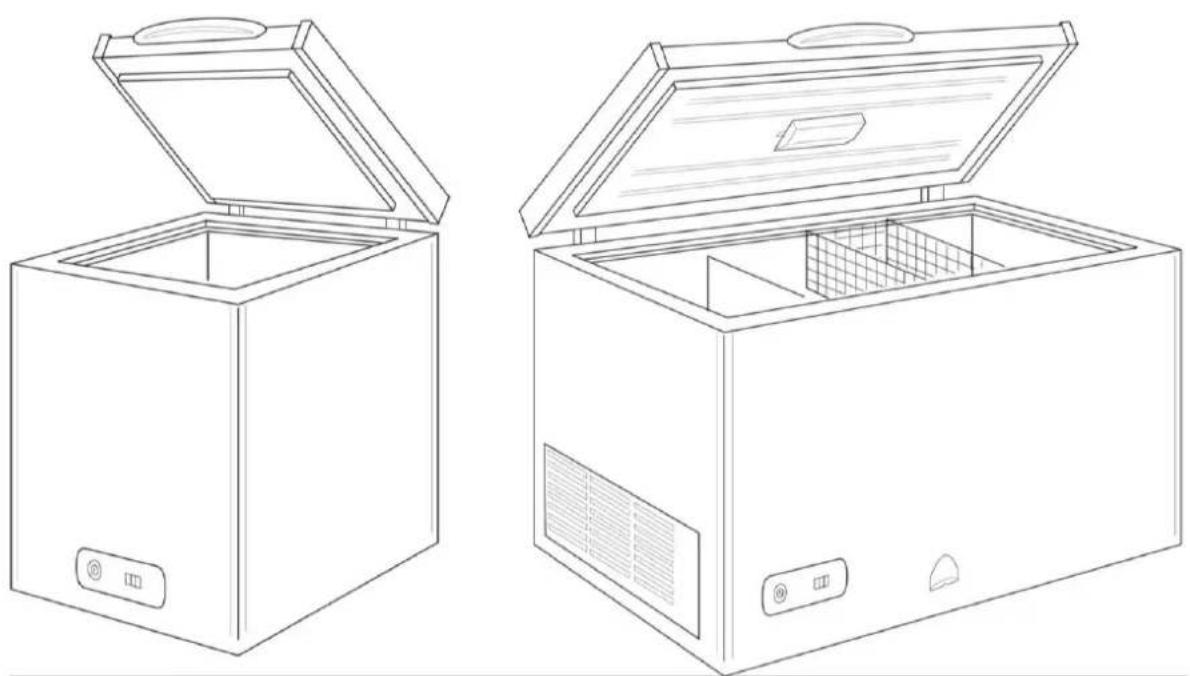
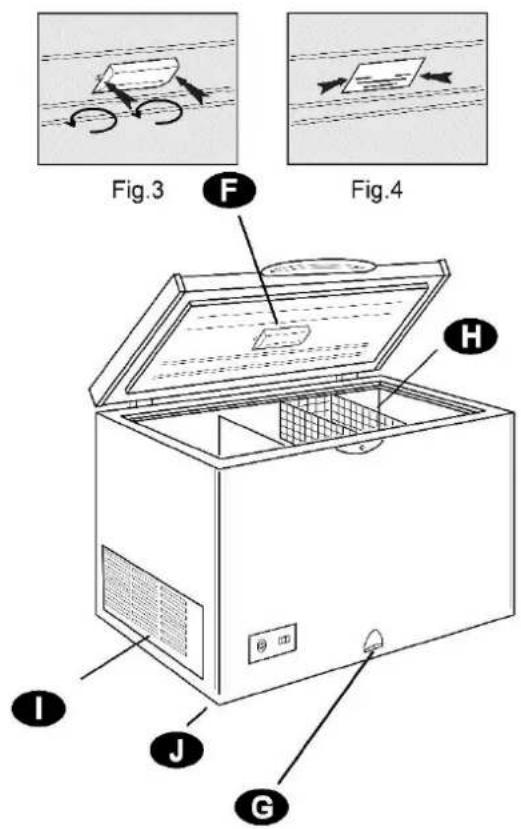
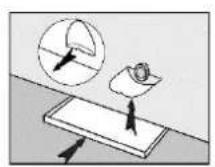
Fig.1
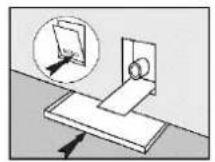
Fig.2
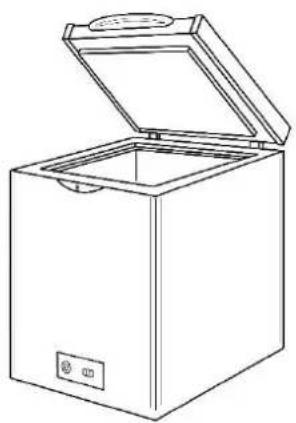
TIPO DE PAINEL DE CONTROLO CONTROL PANEL TYPE
TYPE DE PANNEAU DE CONTROLTEIPO DE PANEL DE CONTROL
SINALIZADORES NA PEGA HANDLE INDICATOR LIGHTS VOYANT SUR LA POIGNCE INDICADORES EN EL TIRADOR
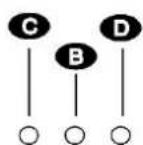
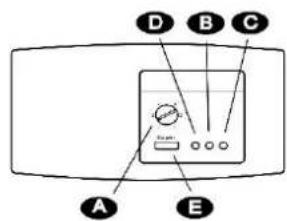
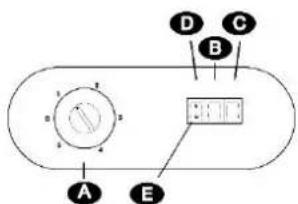
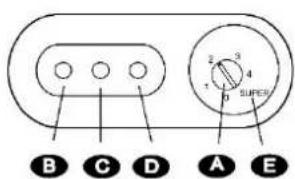
SINALIZADOSORES NA PEGA HANDLE INDICATOR LIGHTS VOYANT SUR LA POIGNÉ INDICADOSER EN LE TIRADOR
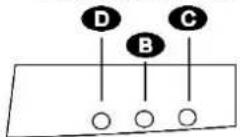
REGULATOR NA TRASEIRA
REAR ADJUSTMENT KNOB
BOUTON DANS LE ARRRIERE
REGULADOR EM LA TRASEIRA
SINALIZADOSORENA PEGA HANDLE INDICATORS LIGHTS VOYANT SUR LA POING INDICADOREN ES EL TIRADOR
REGULATOR NA TRASERA REAR ADJUSTMENT KNOB BOUTON DANSLE ARRIERE REGULADOR EM LA TRASERA
PT Congelador Horizontal 4
Instruction for installation and use
Read your manual carefully since it contains instructions which will ensure safe installation, use and maintenance of your appliance.
Your appliance is built to International safety standards (2006/95/CE).
It also meets the standards on the prevention and elimination of radio interference (2004/108/CE).
- The manufacturer reserves the right to modify the characteristics of the models without prior notice.
- Some models may not have all the accessories indicated.
Warning:
This appliance must be earthed.
A plug with a bared flexible cord is hazardous if engaged in a live socket.
- This appliance is designed to be used indoors and under no circumstances should it be installed outside, even if protected by a roof. Leaving the appliance exposed to the rain and whether is exceedingly dangerous.
- This appliance is not intended for use by persons (including children) with reduced physical, sensory or mental capabilities, or lack of experience and knowledge, unless they have been given supervision or instruction concerning use of the appliance by a person responsible for their safety.
Children should be supervised to ensure that they do not play with the appliance.
- Do not attempt to operate or handle this appliance when barefoot, or with wet hands or feet.
- It is highly recommended that you do not operate this appliance by connecting it to the power supply with extensions or multiple socket plugs. If the appliance has been installed between two cabinets, make sure that the supply cord is not dangerously crimped or trapped beneath a heavy object.
- Never pull the cable or the appliance to remove the plug from the socket; this is exceedingly dangerous.
- Do not touch the internal cooling elements, especially if your hands are wet, since you could burn or hurt yourself. Do not place ice cubes straight from the freezer into your mouth as this may result in burns.
- Before doing any cleaning, disconnect the appliance from the electricity (by pulling out the plug or turning off the general switch in your home).
- Before disposing of your old appliance, remember to break or remove the lock as a safety measure to protect children who might lock themselves inside the appliance when playing. In addition, if the appliance is a new one with a lock, keep the key out of the reach of small children.
-
If your appliance is not operating properly, read the chapter entitled, "Trouble Shooting", which might help you resolve the problem. Do not attempt to repair the appliance by tampering with the internal components.
-
If the supply cord is damaged, it must be replaced by the manufacturer, its service agent or similarly qualified persons in order to avoid a hazard.
- Do not use electric appliances inside the food storage compartments of the appliance, unless they are of the type recommended by the manufacturer.
- Do not use mechanical devices or other means to accelerate the defrosting process, other than those recommended by the manufacturer.
- Do not store explosive substances such as aerosol cans with a flammable propellant in this appliance.
- This appliance is intended to be used in household and similar applications such as:
- Staff kitchen areas in shops, offices and other working environments;
- Farm houses and by clients in hotels, motels and other residential type environments;
- Bed and breakfast type environments;
- Catering and similar non-retail applications.
- At the end of the functional life of your appliance - containing cyclopentane gas in the insulation foam and perhaps R600a gas (isobutane) in the refrigeration circuit - it should be made safe before being sent to the dump. For this operation, please contact your dealer or the Local Organisation in charge of waste disposal.
- Do not damage the refrigeration circuit.
- Keep ventilation openings, in the appliance enclosure or in the built-in structure, clean and clear of obstruction.
Fuse replacement
If the mains lead of this appliance is fitted with a BS 1363A 13 amp fused plug, to change a fuse in this type of plug use an A.S.T.A. approved fuse to BS 1362 type and proceed as follows:
- Remove the fuse cover and fuse.
- Fit replacement 13A fuse into fuse cover.
- Refit both into plug.
Important: The fuse cover must be refitted when changing a fuse and if the fuse cover is lost the plug must not be used until a correct replacement is fitted.
Correct replacement is identified by the colour insert or the colour embossed in words on the base of the plug. Replacement fuse covers are available from your local electrical store.
Connection to a rewireable plug
If the fitted plug is not suitable for your socket outlet, then it should be cut off and disposed of in order to avoid a possible shock hazard should it be inserted into a 13A socket elsewhere. A suitable alternative plug should then be fitted to the cable. The wires in this mains lead are coloured in accordance with the following code; BLUE - neutral ("N")
BROWN - live ("L")
GREEN AND YELLOW - earth ("E")
- The GREEN AND YELLOW wire must be connected
to the terminal in the plug which is marked with the letter "E" or by the Earth symbol or coloured green or green and yellow.
-
The BLUE wire must be connected to the terminal which is marked with the letter "N" or coloured black.
-
The BROWN wire must be connected to the terminal which is marked with the letter "L" or coloured BROWN or RED which is connected to the fuse.
Installation
To ensure that the appliance operates properly and to reduce energy consumption, it is important that the appliance is installed correctly.
Ventilation
The compressor and condenser generate heat and, therefore, need to be ventilated properly. Rooms with no ventilation are not suited for installation of the appliance. Therefore, it should be installed in a room with an opening (window or French window) that provide the appropriate amount of air re-circulation. It is also important to install it in a free humidity room.
During installation, make sure not to cover or obstruct the grates that allow for proper ventilation of the appliance. For proper ventilation of the appliance, leave a space of at least 10cm between the sides of the appliance and any adjacent cabinets/walls.
Away from Heat
Avoid positioning the appliance in a place where it is directly exposed to sunlight or near an oven, cook top or the like.
Electrical and Earth Connection
The appliance should not be turned on right after transportation. Two hours is the advised time so that the oil from the motor-compressor gets back to its original position. Before proceeding with the electrical connection, make sure that the voltage indicated on the rating plate, corresponds to the mains voltage in your home and that the socket is fitted with a standard earth wire in accordance with safety standards. If the socket is not fitted with an earth wire, the manufacturer will not be held liability for any damages and or injuries arising out of the use of the appliance. Do not use multiple sockets or adapters. Position the appliance in such a way that you can access the socket where it is plugged in.
Electrical power
The electrical socket must be able to handle the maximum power load of the appliance, which is indicated on the rating plate located in the back of the appliance.
The Appliance
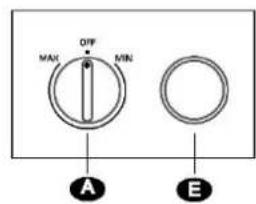
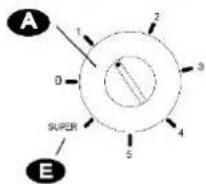
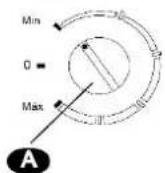
A - Temperature adjustment knob
By turning the knob from setting Min (1) to setting Max (4/5) allows adjusts the temperature inside the freezer.
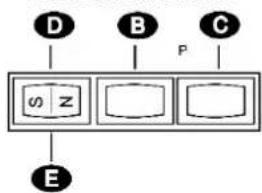
B - Warning Indicator (red light)
When this red warning light comes on for a prolonged period of time, it means that the freezer is not functioning properly and the temperature is too high.
This warning light may come on for a brief period when the door is left open for an extended period of time (when the freezer is being loaded or unloaded).
C - Power supply indicator (green light)
The green light will come on and stay on while the appliance is connected and is operating normally.
D - Fast freeze indicator / Running compressor indicator (orange light) *
This yellow indicator light will come on when the Temperature adjustment knob is turned to the Super position E (if present). Models without "Super" function, this light (if present) comes
on while compressor is running.
E - The freezing position*
The position Super, allows the compressor to function continuously in order to reach the necessary temperatures for the rapid freezing of fresh food. When the push button is not pressed, the freezer is functioning according to the thermostat regulation.
F-Light\*
G - Defrost water drain system *
H-Basket
I - Ventilating grille
J-Wheels or feet (depending on model)
-
- Not present in all models
Setting Up the Appliance
Once the appliance has been connected to the power source, the green C and red B lights will turn on. Turn the temperature adjustment knob A to the fast freeze position E (Super setting) (the yellow D light will turn on).
When the red B light turns off, change the setting by turning the temperature adjustment knob A, from the fast freezing position E to the desired freezing temperature. At this point
the freezer can be used.
NOTICE
Use average temperature settings to ensure optimum performance and to save energy.
Some models may not have all the functions described.
Efficient Usage of the Appliance
Tips on Freezing
Remember that you should never refreeze products you have allowed to thaw, even if only partially. Once thawed, cook the food, then either eat (within 24 hours) or refreeze it.
Tips on Packaging
For the best storage and thawing, remember to freeze small portions. This will ensure rapid and uniform freezing.
Mark package with a description of the contents and the date it was frozen. Never freeze more food than that allowed by the maximum freezing capacity indicated on the data plate which is located on the back of the freezer.
To freeze food, make sure that the red light is off. Then place the food to be frozen into the freezer, making sure that it is placed, to the furthest extent possible, in direct contact with the side walls of the deepest part of the freezer and not in contact with food that has already been frozen. Proper storage depends on the speed at which the food is frozen. For this reason, we recommend that the switch should be turned to the "Super" E (if possible) setting 24 hours before the food to be frozen is placed inside the freezer.
Avoid opening the freezer door during the freezing process.
Placing substantial amounts of fresh food in the appliance may temporarily raise the temperature within the freezer (the red light may turn on). Since this is a temporary situation, it will not compromise the storage of the food that has already been frozen.
Attention: Do not forget to change the temperature setting if you want to avoid useless wastes of energy.
In the case of power failure or breakdown, do not open the freezer door. This will help maintain the temperature inside the freezer, ensuring that the goods are conserved for at least 20 hours.
Do not place full bottles in the freezer because liquids increase in volume when they freeze and this could cause the bottles to burst.
Tips on storage
For best storage of fresh-frozen and frozen foods, do not set the thermostat knob below Min, regardless of the ambient temperature of the room where the freezer is installed. For ambient temperatures of up to 25^ - 27^ ,the thermostat knob should be set between 1 and 2, while for temperatures up to 32^ the setting should be between 2 and 3.
Follow the instructions on the packages of frozen foods scrupulously.
If none are provided, do not store the food for more than 3 months from the date of purchase.
When purchasing frozen food, make sure that they have been stored at the proper temperature and that the package is properly sealed. When purchasing frozen foods, it is best to transport them in appropriate containers to keep them cold and then place them in the freezer immediately.
If the package is damp on the outside or is abnormally swollen, it is likely that the package was stored at an inadequate temperature and the food has deteriorated.
Energy Saving
Install the Appliance Correctly
This means that the appliance should be installed away from sources of heat or direct sunlight, in a well-ventilated room.
Correct Temperature Settings
Set the freezer temperature knob to one of the medium settings. Very low temperatures will not only consume a great deal of energy, but will neither improve nor lengthen the storage life of the food.
Shut the Doors
Open your appliance only when strictly necessary - every
time you open the door most of the cold air will be lost. In order to restore the correct temperature, the motor will have to run and consume energy.
Check the Door Seals
Keep the seals clean and pliable so that they fit closely against the door to ensure that no cold air is lost.
Avoid Frost Build-up
Remember to check the sides of the freezer for frost. When the frost becomes too thick, defrost the freezer immediately (See, "Caring for Your Appliance").
Maintaining the Appliance
Before doing any cleaning, disconnect the appliance from the electricity (by pulling out the plug or turning off the general switch in your home).
Defrosting
WARNING: do not damage the refrigeration circuit.
It is a good idea to remove the frost build up from the inside of the appliance from time to time.
Make sure not to use pointed metal objects to do so as this could result in piercing the refrigeration circuits, causing irreparable damage to the appliance. Use a not-pointed tool in plastic material.
To defrost the freezer completely (which should be done once or twice a year), disconnect the appliance from the power supply and leave the door open until all the frost has melted.
The freezer is equipped with a system to drain the water from the defrosting procedure. Simply, place a container in the
position indicated in figures 1 or 2. To speed up defrosting, one or more pots of warm water can be placed inside the appliance.
While defrosting the freezer, it is a good idea to wrap the food taken from the freezer in several layers of paper and place it in a cool place. Since the temperature of the frozen food will inevitably rise, it is best to consume it quickly as its storage life will have been shortened.
Cleaning and Maintenance
The inside of the freezer should be cleaned on a periodic basis after it has been defrosted. Only use a water and bicarbonate solution to clean the appliance.
Do not use abrasive cleaning products, detergents or soap. After the inside has been cleaned, rinse well with clean water and dry carefully.
Once the appliance has been cleaned, turn on the appliance, following the instructions in Setting Up Your Appliance.
Changing the inside lamp bulb
To change the bulb inside the appliances that are equipped with internal lighting, remove the bulb cover situated on the inside wall of the door by pushing the ends of the cover (Fig. 3 / Fig. 4). Replace the old bulb with a new one of no higher than 15 W.
When not in use
Should the unit not be used for a long period of time (for example during the summer holidays), disconnect the plug from the mains and leave the door open to avoid the formation of mould and unpleasant odours after completing the defrosting and cleaning operations.
Troubleshooting
The green light is off
Check if:
- There is power to the unit;
- The main power switch to the house is on.
The red alarm light is always on
Check it:
- The door is closed properly and the seal is still OK;
The door is being opened too often;
The temperature knob is on the right setting;
There is too much frost build-up.
The motor runs constantly
Check it:
- The door is closed properly and the seal is still OK;
The door is being opened too often; - In the internal surfaces there is too much ice;
The thermostat is on the right setting; - The outside temperature is too high.
The appliance makes too much noise
Check it:
The freezer is levelled;
- The appliance has been installed between cabinets that vibrate and make noise;
- It is the noise made by the refrigerant, which occurs even when the compressor is off (this is not a defect).
If after the checks the appliance still does not operate or the problem persists, call the nearest Service Centre, communicating: type of malfunction, appliance model and Serial Number (SN). This information can be found on the data plate located inside the appliance.
Never call on unauthorized technicians and always refuse spare parts which are not originals.