USER MANUAL GC2120 PHILIPS
GC2225, GC2220, GC2215, GC2120, GC2115, GC2110, GC2105
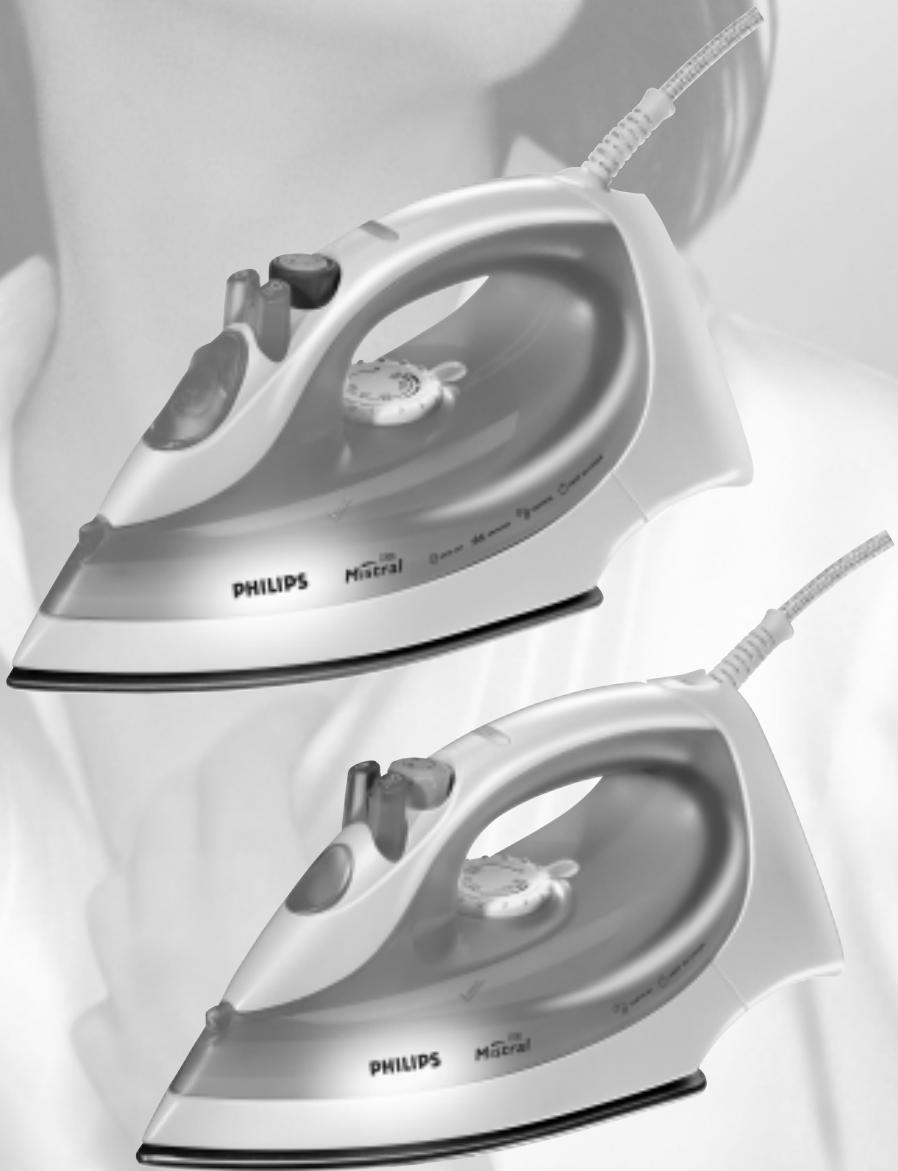
natural_image
Two Philips Matral iron steamers shown in grayscale, no text or symbols visible on the devices themselves.
ENGLISH 4
DEUTSCH 12
FRANÇAIS 22
ITALIANO 32
Important
Read these instructions for use carefully before using the appliance and save them for future reference.
Check if the voltage indicated on the type plate corresponds to the local mains voltage before you connect the appliance.
- Only connect the appliance to an earthed wall socket.
Do not use the appliance if the plug, the cord or the appliance itself shows visible damage, or if the appliance has been dropped or is leaking.
▶ Check the cord regularly for possible damage.
If the mains cord is damaged, it must be replaced by Philips, a service centre authorised by Philips or similarly qualified persons in order to avoid a hazard.
Never leave the appliance unattended when it is connected to the mains.
Never immerse the iron and the stand, if provided, in water.
Keep the appliance out of the reach of children.
The soleplate of the iron can become extremely hot and may cause burns if touched.
Do not allow the cord to come into contact with the soleplate when it is hot.
When you have finished ironing, when you clean the appliance, when you fill or empty the water tank and also when you leave the iron even for a short while: set the steam control to position O, put the iron on its heel and remove the mains plug from the wall socket.
Always place and use the iron and the stand, if provided, on a stable, level and horizontal surface.
Do not put perfume, vinegar, starch, descaling agents, ironing aids or other chemicals in the water tank.
This appliance is intended for household use only.
Before first use
natural_image
Line drawing of a hand using a power iron to lift a button (no text or symbols)
Check if the voltage indicated on the type plate corresponds to the local mains voltage before you connect the appliance.
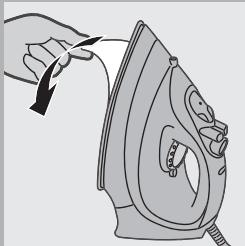
2 Remove any sticker or protective foil from the soleplate.
3 Heat up the iron to maximum temperature and pass the iron over a piece of damp cloth for several minutes to remove any residues from the soleplate.
The iron may give off some smoke when you use it for the first time
This will cease after a short while.
Preparing for use
Filling the water tank
natural_image
Diagram showing a mechanical component with an arrow indicating rotational motion and a magnified inset of a circular component (no text or symbols)
natural_image
Illustration of a hand pouring liquid into a steam iron (no text or symbols)
I Remove the mains plug from the wall socket.
2 Set the steam control to position O (= no steam).
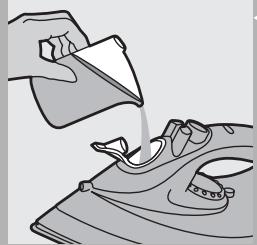
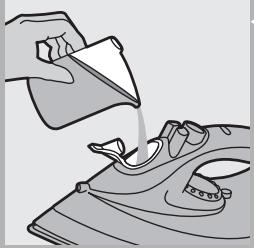
3 Open the filling cap.
(types GC2225, GC2220, GC2215 and GC2120 only)
4 Tilt the iron.
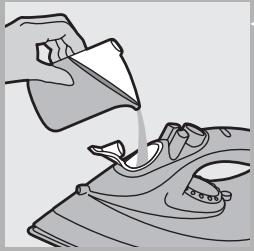
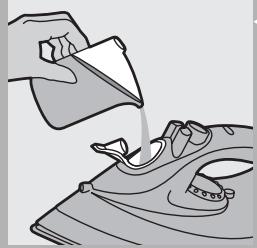
5 Use a measuring cup to fill the water tank up to maximum level.
6 Close the filling cap (click!).
(types GC2225, GC2220, GC2215 and GC2120 only)
If the tap water in your area is very hard, we advise you to use distilled water: Do not use vinegar, starch or chemically descaled water:
Do not fill the water tank beyond the MAX indication.
Setting the temperature
flowchart
graph TD
    A["SODA"] --> B["LANA"]
    B --> C["ALGONN"]
    C --> D["ALGONN"]
    D --> E["ALGONN"]
    E --> F["ALGONN"]
    F --> G["ALGONN"]
    G --> H["ALGONN"]
    H --> I["ALGONN"]
    I --> J["ALGONN"]
    J --> K["ALGONN"]
    K --> L["ALGONN"]
    L --> M["ALGONN"]
    M --> N["ALGONN"]
    N --> O["ALGONN"]
    O --> P["ALGONN"]
    P --> Q["ALGONN"]
    Q --> R["ALGONN"]
    R --> S["ALGONN"]
    S --> T["ALGONN"]
    T --> U["ALGONN"]
    U --> V["ALGONN"]
    V --> W["ALGONN"]
    W --> X["ALGONN"]
    X --> Y["ALGONN"]
    Y --> Z["ALGONN"]
    Z --> AA["ALGONN"]
    AA --> AB["ALGONN"]
    AB --> AC["ALGONN"]
    AC --> AD["ALGONN"]
    AD --> AE["ALGONN"]
    AE --> AF["ALGONN"]
    AF --> AG["ALGONN"]
    AG --> AH["ALGONN"]
    AH --> AI["ALGONN"]
    AI --> AJ["ALGONN"]
    AJ --> AK["ALGONN"]
    AK --> AL["ALGONN"]
    AL --> AM["ALGONN"]
    AM --> AN["ALGONN"]
    AN --> AO["ALGONN"]
    AO --> AP["ALGONN"]
    AP --> AQ["ALGONN"]
    AQ --> AR["ALGONN"]
    AR --> AS["ALGONN"]
    AS --> AT["ALGONN"]
    AT --> AU["ALGONN"]
    AU --> AV["ALGONN"]
    AV --> AW["ALGONN"]
    AW --> AX["ALGONN"]
    AX --> AY["ALGONN"]
I Put the iron on its heel.
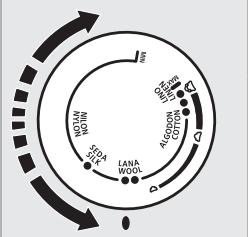
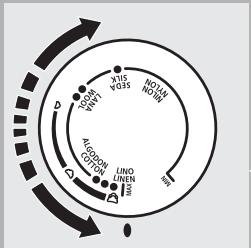
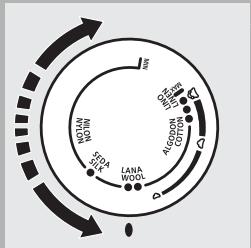
2 Set the temperature dial to the required ironing temperature by turning it to the appropriate position.
- Check the garment label for the required ironing temperature.
- ● Synthetic fabrics (e.g. acrylic, viscose, polyamide, polyester)
- ● Silk
- ●● Wool
- ●●● Cotton, linen
- If you do not know what kind of fabric(s) a garment is made of, determine the right ironing temperature by ironing a part that will be invisible when you wear the garment.
- Silk, woollen and synthetic materials; iron the reverse side of the fabric to prevent shiny patches. Avoid using the spray function to prevent stains.
3 Put the mains plug in an earthed wall socket.
4 When the amber temperature light has gone out, wait a while before you start ironing.
The amber pilot light will go on from time to time during ironing.
natural_image
Illustration of a hand holding a device with a black arrow pointing to a device (no text or symbols present)
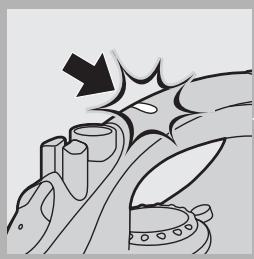
For versions with auto shut-off (type GC2225 only) (see also 'Other features')
If the automatic shut-off function has been activated (red pilot light blinks), move the iron slightly to deactivate this function (red pilot light stops blinking).
Using the appliance
Steam ironing
Make sure that there is enough water in the water tank.
1 Set the temperature dial to the recommended position. See 'Setting the temperature'.
2 Set the steam control to the appropriate steam position.
- △ for minimum steam (temperature settings ●● and ●●●).
- △ for moderate steam (temperature settings ●●● to MAX) (Types GC2225, GC2220, GC2215 and GC2120 only).
- 📄 for maximum steam (temperature settings ●●● to MAX).
▶ Steaming will start as soon as the set temperature has been reached.
Types GC2215, GC2120, GC2115, GC2110 and GC2105 only
Water may leak from the soleplate if the set temperature is too low (MIN to ●●).
GC2225 and GC2220 only.
The iron is equipped with a drip stop system (see also 'Other features).
Ironing without steam
1 Set the steam control to position O (= no steam).
2 Set the temperature dial to the recommended position.
See 'Setting the temperature'.
Other features
Spraying
To remove stubborn creases at any temperature
I Make sure that there is enough water in the water tank.
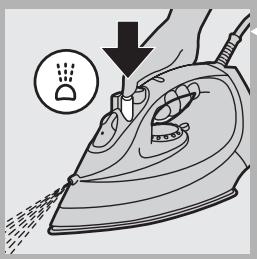
2 Press the spray button several times to moisten the garment to be ironed.
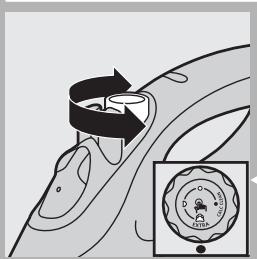
This function provides extra steam to remove really stubborn creases.
The Extra Steam function only works at temperature settings between ●●● and MAX.
I Set the steam control to maximum position 🔊.
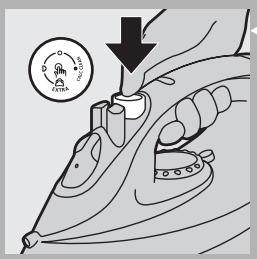
2 Press and hold the Steam Control button down for max. 5 seconds.
3 Wait at least 1 minute before using Extra Steam again to prevent water from dripping out of the soleplate.
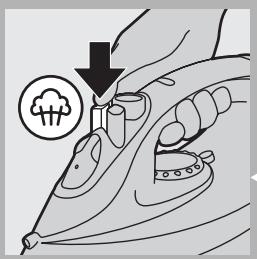
Shot of Steam (GC2225, GC2220, GC2215, GC2120, GC2115 and GC2110 only)
natural_image
Illustration of a hand using an iron with a cloud icon and downward arrow indicating motion (no text or symbols)
A powerful shot of steam helps to remove very stubborn creases.
The Shot-of-Steam function only works at temperature settings between ●● and MAX.
I Press and release the Shot-of-Steam button.
Vertical Shot of Steam (types GC2225, GC2220, GC2215, GC2120 and GC2115 only)
natural_image
Illustration of a person using an electric iron to clean or smoke from a curtain, with a cloud icon above (no text or symbols)
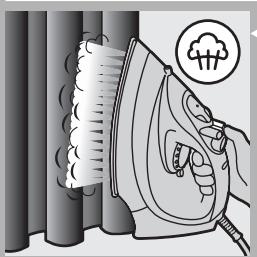
The Shot-of-Steam function can also be used when you are holding the iron in vertical position. This is useful for removing creases from hanging clothes, curtains, etc.
Never direct the steam towards people.
Drip Stop (types GC2225, GC2220 only)
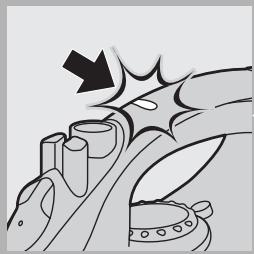
This iron is equipped with a drip stop function: the iron automatically stops steaming when the temperature is too low to prevent water from dripping out of the soleplate. When this happens you will hear a click.
Automatic shut-off (type GC2225 only)
natural_image
Illustration of a hand holding a device with a black arrow pointing to it (no text or symbols present)
An electronic safety device will automatically switch the heating element off if the iron has not been moved for a while.
To indicate that the heating element has been switched off, the red auto-off pilot light will start blinking.
To heat up the iron again:
I Pick up the iron or move it slightly.
2 The red auto-off pilot light will go out. The amber temperature pilot light will go on, depending on the soleplate temperature.
3 If the amber pilot light goes on after the iron has been moved, wait for it to go out before you start ironing.
4 If the amber light does not go on after the iron has been moved, the iron is ready for use.
Cleaning and maintenance
Calc-Clean
The Calc-Clean function removes scale and impurities.
Use the Calc-Clean function once every two weeks. If the water in your area is very hard (i.e. when flakes come out of the soleplate during ironing), the Calc-Clean function should be used more frequently.
I Set the steam control to position O.
2 Fill the water tank to the maximum level.
Do not pour vinegar or other descaling agents into the water tank..
3 Set the temperature dial to MAX.
4 Put the plug in the wall socket.
5 Unplug the iron when the amber pilot light has gone out.
natural_image
Illustration of a hand using a tool to apply a component to a mechanical part (no text or symbols present)
natural_image
Illustration of a hand ironing an iron on a kitchen, with arrows indicating iron movement (no text or symbols)
natural_image
Illustration of a thermometer inserted into a beaker of liquid (no text or symbols)
natural_image
Medical procedure illustration showing a hand using a pipette to adjust internal components, with an inset close-up of the insertion site (no text or symbols present)
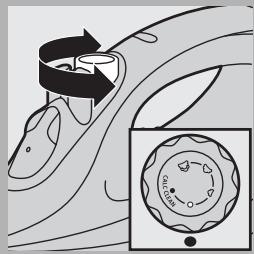
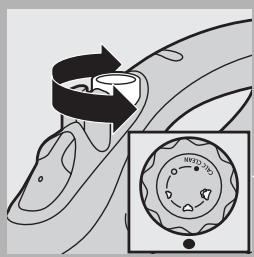
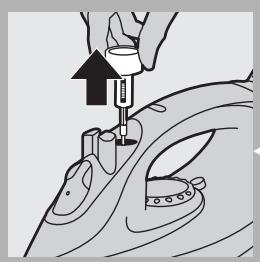
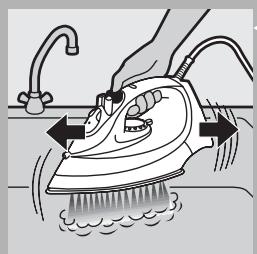
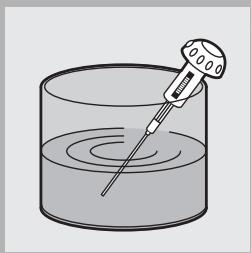
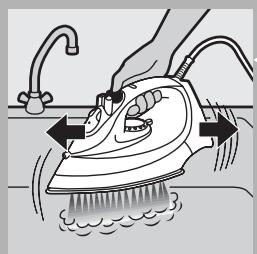
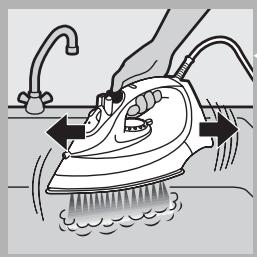
6 Hold the iron over the sink and set the steam control to position ● (Calc-Clean). The steam control knob will spring up slightly.
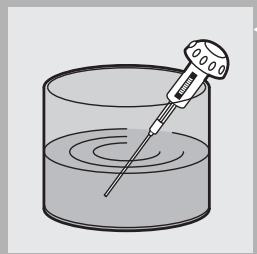
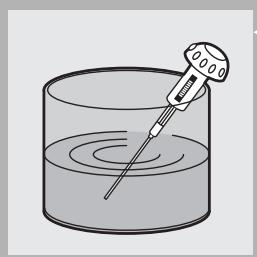
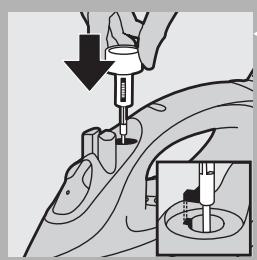
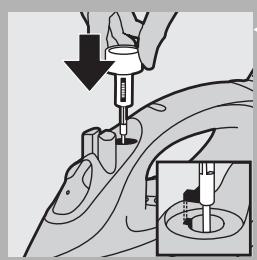
7 Pull the steam control knob upwards to remove the steam control needle.
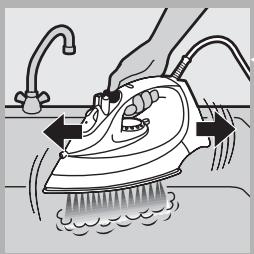
8 Move the iron to and fro.
▶ Steam and boiling water will come out of the soleplate. Impurities and scale (if any) will be flushed out.
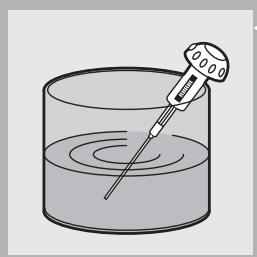
9 Use vinegar to remove scale, if any, from the needle.
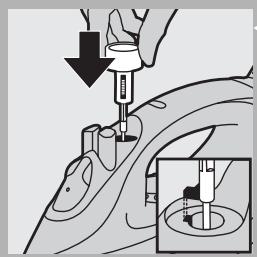
Do not bend or damage the steam control needle.
10 Put the steam control needle back by inserting the point of the needle exactly in the centre of the hole and by fitting the small projection on the side of the needle into the slot. Set the steam control knob to position O.
11 Repeat the Calc-Clean process if the iron still contains a lot of impurities.
After the Calc-Clean process
Plug the iron in to let the soleplate dry up.
2 Unplug the iron when the amber pilot light has gone out.
3 Move the iron gently over a piece of used cloth to remove any water stains that may have formed on the soleplate.
4 Let the iron cool down before you store it.
After ironing
Remove the mains plug from the wall socket and let the iron cool down.
2 Wipe scale and any other deposits off the soleplate with a damp cloth and a non-abrasive (liquid) cleaner.
Keep the soleplate smooth: avoid hard contact with metal objects.
Never use a scouring pad, vinegar or other chemicals.
3 Clean the upper part of the appliance with a damp cloth.
4 Regularly rinse the water tank with water. Empty the water tank after cleaning.
Storage
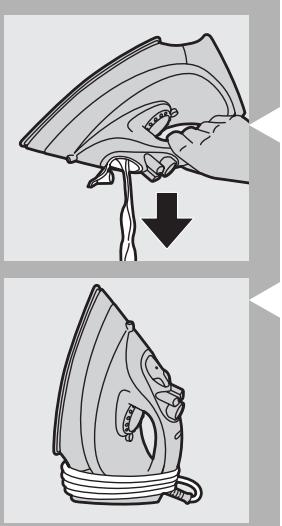
Remove the mains plug from the wall socket, let the iron cool down and set the steam control to position O.
2 Empty the water tank.
3 Wind the mains cord round the cord storage facility.
4 Always store the iron standing on its heel in a safe and dry place.
Environment
natural_image
Symbol of a trash bin with crossed lines indicating no waste or discharge (no text or labels)
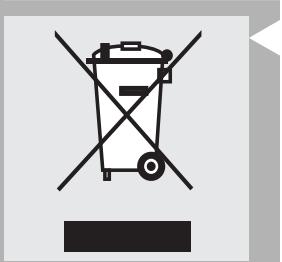
Do not throw the appliance away with the normal household waste at the end of its life, but hand it in at an official collection point for recycling. By doing this you will help to preserve the environment.
Guarantee & service
If you need information or if you have a problem, please visit the Philips Web site at www.philips.com or contact the Philips Customer Care Centre in your country (you will find its phone number in the worldwide guarantee leaflet). If there is no Customer Care Centre in your country, turn to your local Philips dealer or contact the Service Department of Philips Domestic Appliances and Personal Care BV.
Troubleshooting
This chapter summarises the most common problems you could encounter with your iron. Please read the different sections for more details. If you are unable to solve the problem, please contact the Philips Customer Care Centre in your country.
| Problem | Possible cause(s) | Solution |
| The iron is plugged in but the soleplate is cold. | Connection problem | Check the mains cord, the plug and the wall socket. |
| Temperature dial set at MIN | Set the temperature dial to the required position. |
| I'm unable to fill the water tank to maximum level. | You have tried to fill the iron in horizontal position. | Tilt the iron during filling. |
| No steam | Not enough water in the water tank. | Fill the water tank (see 'Preparing for use'; section 'Filling the watertank'.) |
| The steam control has been set to position O. | Set the steam position to △, △ or △(see 'Using the appliance', section 'Steam ironing'). |
| The soleplate is not hot enough and/or the Drip stop function (types GC2225 and GC2220 only) has been activated. | Set the temperature dial to a position in the steam area (●● to MAX). Put the iron on its heel and wait until the amber pilot light has gone out before you start ironing. |
| No shot of steam (types GC2225, GC2220, GC2215, GC2120, GC2115 and GC2110 only) or no Vertical Shot of Steam (types GC2225, GC2220, GC2215, GC2120 and GC2115 only). | The (Vertical) Shot of Steam function has been used too often within a very short period. | Put the iron in horizontal position and wait a while before using the (Vertical) Shot of Steam function again. |
| The soleplate is not hot enough. | Set the temperature dial to a position in the steam area (●● to MAX). Put the iron on its heel and wait until the amber pilot light has gone out before you start ironing. |
| Flakes and impurities come out of the soleplate during ironing. | Hard water forms flakes inside the soleplate. | Use the Calc-Clean function a few times (see 'Cleaning and maintenance', section 'Calc-Clean'). |
| Red pilot light is blinking (type GC2225 only). | The auto shut-off function has been activated. See "Automatic shut-off" section. | Shake the iron lightly to deactivate the auto shut-off function: the pilot light will stop blinking. |
| Water droplets on fabric (types GC2225, GC2220, GC2215 and GC2120 only) | The filling cap has not been closed properly. | Press the filling cap until you hear a click. |
| Water droplets on fabric (types GC2215, GC2120, GC2115, GC2110 and GC2105 only) | The temperature has been set too low. | Set the temperature dial to a position in the steam area (●● to MAX). Put the iron on its heel and wait until the amber pilot light has gone out before you start ironing. |
| Water drips from the soleplate after the iron has been stored or cooled down. | The iron has been put in horizontal position while there was still water in the water tank. | Empty the water tank before you store the iron. Set the steam control to position O and store the iron standing on its heel. |
Wichtig
natural_image
Line drawing of a hand using a power iron to lift a small iron (no text or symbols present)
natural_image
Diagram showing a mechanical component with an arrow indicating rotation and a magnified inset of a circular component (no text or symbols)
natural_image
Illustration of a hand pouring liquid into a steam iron (no text or symbols)
flowchart
graph TD
    A["NODM"] --> B["504X"]
    B --> C["LANA"]
    C --> D["GONN"]
    D --> E["2023/2018"]
    E --> F["Output"]
    style A fill:#f9f,stroke:#333
    style B fill:#ccf,stroke:#333
    style C fill:#cfc,stroke:#333
    style D fill:#fcc,stroke:#333
    style E fill:#ffc,stroke:#333
    style F fill:#cff,stroke:#333
- ● Synthetics, z. B. Akryl, Viskose, Polyamid, Polyester
- ● Seide
- ●● Wolle
- ●●● Baumwolle, Leinen
natural_image
Illustration of a hand pressing down on a mechanical component with a black arrow indicating compression (no text or symbols present)
natural_image
Diagram showing a mechanical or fluidic component with an inset circular detail (no text or symbols)
natural_image
Illustration of a person using an iron on a pipe, with a cloud icon above (no text or symbols)
Vertikaldampf (nur GC2225, GC2220, GC2215, GC2120 und GC2115)
natural_image
Illustration of a hand holding a device with a black arrow pointing to it (no text or symbols present)
natural_image
Illustration of a hand using a tool to apply liquid into a container, with no visible text or symbols.
natural_image
Illustration of a hand ironing an iron on a surface with steam rising (no text or symbols)
natural_image
Illustration of a thermometer inserted into a beaker of liquid (no text or symbols)
natural_image
Medical procedure illustration showing a hand using a needle to apply a catheter, with an inset close-up of the insertion site (no text or symbols present)
natural_image
Diagram of a hand holding a curved object with a downward arrow indicating force or movement (no text or symbols present)
natural_image
Line drawing of an iron (£) with a strap and handle (no text or symbols)
natural_image
Symbol of a trash bin with crossed lines indicating no waste or restriction, and a blank rectangular base (no text or symbols)
natural_image
Line drawing of a hand using a power iron to lift a small boat (no text or symbols)
natural_image
Diagram showing a mechanical component with an arrow indicating rotation and a magnified inset of a circular component (no text or symbols)
natural_image
Illustration of a hand pouring liquid into a steam iron (no text or symbols)
natural_image
Illustration of a hand holding a cup with a spiky hair, emitting vapor or smoke (no text or symbols)
natural_image
Illustration of a hand using a hair iron to lift a cup, with a cloud icon and arrow indicating motion (no text or symbols)
natural_image
Illustration of a person using an iron on a pipe, with a cloud icon above (no text or symbols)
Défroissage vertical (GC2225, GC2220, GC2215, GC2120, et GC2115 uniquement)
natural_image
Illustration of a hand holding a device with a black arrow pointing to it (no text or symbols present)
natural_image
Illustration of a hand using a tool to adjust or install a mechanical component (no text or symbols visible)
natural_image
Illustration of a hand ironing an iron on a kitchen surface with steam rising (no text or symbols)
natural_image
Illustration of a pipette stirring liquid in a beaker (no text or symbols)
natural_image
Medical procedure illustration showing a hand using a pipette to insert a component, with an inset close-up of the insertion site (no text or symbols present)
natural_image
Illustration of a hand holding a curved object with a downward arrow indicating compression or disassembly (no text or symbols)
natural_image
Line drawing of a steam iron with handle and base (no text or symbols)
natural_image
Symbol of a trash bin crossed out by a diagonal line, representing no waste or discharge (no text or numbers present)
natural_image
Illustration of a hand using a power iron to press down a socket (no text or symbols present)
natural_image
Diagram showing a mechanical component with an arrow indicating rotation and a magnified inset of a circular feature (no text or symbols)
natural_image
Illustration of a hand pouring liquid into a steam iron (no text or symbols)
natural_image
Illustration of a hand holding a cup with a black arrow pointing downward (no text or symbols)
natural_image
Diagram of a mechanical or fluidic component with an inset showing a circular seal-like symbol (no text or labels present)
natural_image
Line drawing of a hand using a hair iron to lift a cup, with a cloud icon and arrow indicating motion (no text or symbols)
natural_image
Illustration of a person using an iron on a steam machine, with a cloud icon above (no text or symbols)
natural_image
Illustration of a hand holding a cup with a black arrow pointing to it, no text or symbols present
natural_image
Illustration of a hand using a tool to adjust or install a mechanical component (no text or symbols visible)
natural_image
Illustration of a hand using a steam iron to clean water, with no text or symbols present.
natural_image
Illustration of a pipette stirring liquid in a beaker (no text or symbols)
natural_image
Medical procedure illustration showing a hand using a needle to insert a component, with an inset close-up of the insertion site (no text or symbols present)
natural_image
Illustration of a hand holding a medical device with a downward arrow indicating force or pressure (no text or symbols present)
natural_image
Line drawing of a steam iron with visible internal components and base (no text or symbols)
natural_image
Symbol of a trash bin crossed out by a diagonal line, representing no waste or discharge (no text or numbers present)