ManualGo.com
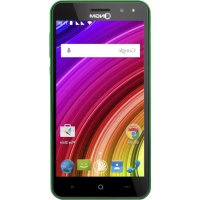
 Forward Young - Smartphone NGM - Free user manual and instructions
Find the device manual for free Forward Young NGM in PDF.



Frequently Asked Questions - Forward Young NGM
Download the instructions for your Smartphone in PDF format for free! Find your manual Forward Young - NGM and take your electronic device back in hand. On this page are published all the documents necessary for the use of your device. Forward Young by NGM.
USER MANUAL Forward Young NGM
world. Thank you for purchasing NGM Forward Young. With this device you have access to the many features of the new edition of the Android
4.2.2 Jelly Bean OS to manage your contacts, email, social
networks and to discover the opportunities of Internet with just a single touch! It will be like having a small tablet and a phone in one, stylish device. Compared to the usual mono SIM Smartphones available on the market, NGM Forward Young offers the convenience of Dual SIM technology, which has always distinguished the entire spectrum of NGM phones, i.e. the ability to manage two SIM cards simultaneously by setting the preferred SIM for calls, video calls and data connection; an exclusive benefit for NGM clients! By visiting the official website www.ngm.eu you can appreciate the whole range of NGM mobile phones, ask for assistance, access the forum for technical assistance and download software updates.
Warning: Data Connection of NGM Forward Young is active as soon as you first power on
the phone (and after every eventual factory data reset). If you do not have a special or "flat" rate for data connection with your USIM card, you are recommended to turn off data traffic and set up a Wi-Fi connection, in order to avoid additional costs.23ENGLISH Set up Insert USIM cards: USIM cards contain your phone number, PIN codes, links to external services, contacts and other important details. To access the compartment containing the USIM slots, turn off the phone and lift up the cover from the bottom of the phone. Remove the battery. Insert the USIM cards into the slots with their gold contacts facing downwards. Insert SD card: To use all the functions of NGM Forward Young, we recommend the use of a micro-SD card: it should be inserted in the back side of the phone after removing the back cover and the battery; its slot is placed left to the USIM slots, above the battery tray. Slide in the memory card, as shown below, with the gold contacts facing downwards.
Warning: insert USIM and SD cards only after
removing the battery, in order to prevent data loss.
SD card slot Slot 1: USIM 124 ENGLISH Insert the Battery: Your device is provided with a lithium-ion battery and is designed to be used exclusively with original NGM batteries and chargers. The battery must be inserted into the backside of the phone. Insert the battery into the battery compartment with the contacts facing up, matching with those of the phone. When done, put the hind cover back into position as shown in the following illustrations.25ENGLISH Charge the battery: Charge the battery before starting to use the device. Use the supplied USB cable and the USB connector on the top side of the phone. Connect the charger to the provided wall socket adapter, and then the device to the USB cable. You can also charge the phone by connecting it with the PC USB port, but in this case charging will take longer. When the battery is charging, an animated icon on the screen will show the charging progress if the phone is on. Once the battery icon is filled, it is fully charged and the phone can be disconnected from the grid.
Warning: Do not connect the phone to a booting-up or running down PC to avoid voltage
jumps. To preserve the functionality of the product and the integrity of the warranty, we recommend the use of original NGM chargers. Please charge the battery indoors, in a dry and favorable environment. It’s normal for the battery to get slightly warm during the charging process. The battery will reach its full capacity when cycled several times. Turn on, turn off and standby To turn on the phone, press and hold the power on/off key. To turn off your device, press and hold the same key and confirm by selecting "Shutdown". A quick pressure sets the phone in stand-by mode (screen off) or allows you to go back to the lock screen (see below).26 ENGLISH Main screen: Use the touch screen by tapping, holding or dragging a finger across the screen. The main screen is the starting point for using all the applications on your phone. Other main screen pages are available (as indicated by the white bar), just swipe the screen left or right. These pages can be customized with shortcuts of the favorite applications; to place a link on one of the main screens, press and hold the desired shortcut from the main menu and drop it on the desktop. You also can customize the four widgets next to the central menu icon holding and moving them on the desktop. To delete shortcuts or widgets, tap and hold the icon and drag it onto the " X Delete" symbol on the screen. By moving an icon on top of another one, you can create folders on the desktop and by pressing the contextual menu you can change the wallpaper. The main menu: Select an application from the main menu or scroll left/right to view other applications. Press the back button to return to the previous screen, press the Home key to return to the main screen, press the contextual menu to create folders and access the phone settings. Standby Screen
Hold and drag the central element to unlock the screen27ENGLISH
Home Screen Main Menu Notification panel USIM signal intensity and battery level Page Indicator Bar Phone Phonebook Main Menu Browser Messaging Scroll HOME screens Scroll menu WiFi Signal Intensity28 ENGLISH
On/Off and Standby key Microphone Speaker Capacitive Touch Screen Flash Camera Micro USB connector Earphone Plug Front Camera Receiver Brightness and Proximity Sensors Contextual menu key Back key Home Key29ENGLISH SHORTCUTS Notification panel: To open the Notification panel, touch the upper area containing the battery and signal-intensity icons and drag it downwards. Tap the icon in the upper right corner to switch between notifications and Quick Setup buttons or tap the settings icon to open the Phone Settings menu. To hide the panel, drag up the bottom of the panel or tap the Back button. Recent applications: When you are inside any application, long press the Home key: a list of the most recent applications you have recently accessed will be shown and can be directly selected. Contextual Menu: Some applications provide a Contextual Menu. By clicking on that icon, you can display a contextual menu referred to the application itself, with related functions. Lock screen and vibration: from the main menu, select Settings > Security > Screen Lock. Select the desired unlocking mode (None, Slide, Face Unlock, Voice Unlock, Pattern, PIN or Password) and confirm. To quickly lock the screen, briefly press the power on/off key. To unlock it, follow the instructions on the screen. Quickly turn on/off vibration mode: To quickly disable ringtone for calls and messages, you can press and hold volume "-". Once you reach the minimum volume, the phone will enter the vibrating mode. Pressing volume "-" again, the phone will enter the silent mode.30 ENGLISH Managing the two USIM cards: from the main menu, select Settings > Dual SIM Settings . Select I/O keys next to the phone operators corresponding to "USIM1" and "USIM2" to selectively activate or deactivate the USIM at any time. From this menu you can also customize the color and name for each USIM icon and decide which USIM to use as default for calls, messages and data connection, choosing "always ask" if you don't want to set a SIM as default. MANAGING CALLS: From the main screen touch the Phone icon; use the virtual keypad to digit the desired phone number. Press the dial icon and then the desired USIM if you haven't set a default SIM for calls, otherwise, the call will start with the default SIM. To end the call press the red end call key. To answer a call, drag the phone icon to the right onto the green handset; to reject it, drag it to the left onto the red handset, to reject with a message drag the phone icon upwards. To silence an incoming call, press Volume "+" or "-" (on the left side of the phone). Call a number from the call log: From the main menu select the Phone icon. Above the keyboard the call log with missed, received and outgoing calls is displayed. Tap the phone next to the selected number and choose the SIM to place the call.31ENGLISH MANAGING CONTACTS Add a new contact: From the main menu select the Contacts icon. Press the icon indicated by "+" symbol on the bar at the bottom Select the storage where you want to save the contact (Phone, USIM1 or USIM2). Insert Name, Number and any other contact detail (if the contact is saved on USIM is not guaranteed saving any further details as well as the name and phone number) and confirm with Done. Add a new contact from the call log: From Phone menu, access to call log selecting the Clock icon Touch the contact icon near the number you want to save into Missed, Received or Outgoing calls and confirm with OK. Choose Create New Contact or add the number to an Existing contact. After you selected the save path and added name and any other information (if saving in Phone), confirm with Done. It is possible to associate contacts to one of the SIM cards in order to automatically call those contacts with the associated SIM card; to associate a contact to one of the inserted SIM cards, press the contextual menu and choose Associate SIM card or from Settings > SIM Manager, choose Contact Association, select the SIM card and choose the contacts you want to associate with the SIM card, from the phone book. To activate the associations, select the "Smart Dial" function in Settings > Dual SIM Settings > Contact binding. Note: In the contextual menu of the phonebook you can access to Import/Export functions and several other settings.32 ENGLISH Set Ringtones From the main menu, select Settings > Audio Profiles > General. Select Voice call ringtone, and choose the desired ringtone for both USIM. If you want to set a custom ringtone: in Music select the desired audio track with a long press and choose Use as Ringtone in the contextual menu. So, the audio file will be added to the available ringtones list Send and read SMS and MMS Sending SMS and MMS: from the page or from the main menu, choose Messaging and then the icon on the left side of the bottom bar . Type the first letters of a name in the recipient field to search for a contact, select it from the pop-up or directly enter the recipient number, otherwise select the icon next to the field and check the recipients. Write the text into the dedicated space with the virtual keypad. Select the "+" icon to insert multimedia files (the message will automatically be converted into MMS). Press either Send key, selecting the SIM you want to use. Read SMS and MMS: when you receive a new SMS or MMS, an icon appears in the notification panel. Clicking on the icon appears, you can go directly to the conversation and read the incoming message. In any case, you can view the incoming messages from the home screen or menu, selecting Messaging. Note: you can set ringtones in *mid,*wav or *mp3 formats.33ENGLISH CONNECTIVITY To better use the potentiality provided by the device and its operating system, you must have an active data connection; data Connection of NGM Forward Young is active when you first power ON the phone. If not provided by subscription, data traffic may cause you costs, so it is recommended to configure Internet connection via WiFi. To enable data traffic on one of the USIM card, select Settings > SIM Manager > Data connection, or activate it from the Quick Setup buttons in the notifications panel. Connect to the Internet using Wi-Fi®: You can connect to the WLAN using Wi-Fi option. To activate it, choose Settings > WiFi On/Off. Please follow all warnings and indications concerning the use of wireless devices in areas where the use of such functions is restricted (airplanes, hospitals, etc.). Go offline mode when you have to use only the functions that do not require Network access . Connecting to a Bluetooth® device: Turn on the Bluetooth device you want to connect with. From the main menu, choose Settings > Bluetooth I/O to turn Bluetooth on. Choose Search for devices to automatically find other Bluetooth devices. Among the discovered devices, select the device name to associate with. The phone will attempt to associate with the device, which may be asked for a pairing code.34 ENGLISH Connect to the Internet: From the main menu, choose Browser. Type the URL in the address bar to start browsing. If you choose to navigate using data connection, be aware of costs or choose a "flat" data contract with your service provider. Alternatively, use WLAN (see "Connectivity") where possible. Account setup: In order to better manage OS Android
functionalities, it is recommended to configure a default account. When you first power on the phone, it will guide you in configuring a default account that allows you to access Android
OS applications such as Email sync, for example. Email: Configuring a default account you can easily manage e-mail and display it automatically on your phone. If you want to use also a different Email account from the default one, you can configure a new account with another provider within Email app in the Main Menu. SwiftKey text input: SwiftKey is an advanced system for entering predictive text, is the default input method. When you write SMS, MMS or E-mail, this method predicts the word you are typing, changing it at any key press. During the first use, the program will prompt you with a pop-up the innovations and peculiarities of this writing system. SwiftKey has an "intelligent" dictionary that retrieves words also from other applications in the phone, such as phonebook or social networks etc. For the correct use of this function, the micro-SD contained in the selling package has to be installed. To change the text input parameters, select Settings > Language and input > SwiftKey for NGM .35ENGLISH Synchronization: Synchronization is the most efficient approach to manage your useful data because it allows you to make a backup of the data on your device with an internet account. In case of replacement, loss or damage of the phone, you will not experience data loss. The synchronization can be automatic (Settings > More > Data usage > Contextual menu > Auto-sync data) or can be activated manually, individually for each installed application to be synchronized; you can find the list of such applications in Settings > Account [installed app list]. To add a new account, select Add Account. The synchronization uses an active data connection, which could result in data traffic costs. It is advisable to use a WiFi connection when available. GPS geolocalization: The Global Positioning System (GPS) is a satellite-based positioning system, with a global and continuous coverage. To access the GPS, select Settings > Location Access > GPS Satellites (I/O). When the GPS function is activated, the phone starts to collect data from satellites and determines the current position. The Fix Times (position detection) are variable and can be affected by several external factors (clouds, high buildings, etc.). Limit the use of battery and memory by switching off this function when you don’t need it. The device is compatible with NGM NAVIGATION SYSTEM
For more details on the system operation visit www.ngm.eu.36 ENGLISH
Warning: formatting and delivery of this user manual is based on the Android
operating system, NGM Italia will not bear responsibility for any incompliance with the above guidelines or improper use of the mobile phone NGM reserves the right to modify any of the content in this user guide without previous public announcement. The content of this manual may vary from the actual content displayed in the mobile phone. In such case, the latter shall govern.
Copyright © 2013 NGM Italia No part of this manual may be reproduced, distributed, translated, or transmitted in any form or by any means, electronic or mechanical, including photocopying, recording, or storing in any information storage and retrieval system, without the prior written permission of NGM Italia. Bluetooth® is a registered trademark of the Bluetooth SIG, Inc. worldwide. Wi-Fi® and the Wi-Fi logo are registered trademarks of the Wi-Fi Alliance.37DEUTSCH Kurzanleitung - Deutsch38 DEUTSCH Herzlich willkommen in der Welt von NGM Android