FR 158 B - Fridge SMEG - Free user manual and instructions
Find the device manual for free FR 158 B SMEG in PDF.



| Product type | Integrated undercounter refrigerator |
| Brand | Smeg |
| Model | FR 158 B |
| Category | 0-star refrigerator with ice compartment |
| Dimensions (approximate) | Height: 85 cm, Width: 60 cm, Depth: 55 cm |
| Weight (approximate) | 30 kg |
| Power supply | 220-240 V ~ 50 Hz |
| Control type | Rotary mechanical thermostat (positions 1 to 5) |
| Refrigerator compartment defrosting | Automatic by evaporation |
| Ice compartment defrosting | Manual (turn thermostat to off position) |
| Interior lighting | Incandescent bulb ≤ 15 W (accessible after unscrewing) |
| Freezer compartment | 0-star compartment for ice production |
| Materials | Enameled steel, plastic, cyclopentane insulating foam |
| Included accessories | Vegetable drawer, door balconies with egg holder, butter box, bottle separator, adjustable shelves |
| Main functions | Temperature adjustment, sliding and height-adjustable shelves, interior lighting |
| Maintenance and cleaning | Interior and exterior cleaning with warm water and baking soda; avoid abrasives and solvents |
| Safety | Mandatory grounding, do not use with bare feet or wet hands, do not touch cooling parts |
| Spare parts and repairability | Use only original spare parts and contact an authorized technical assistance center |
| General information | Undercounter installation, away from heat sources, in a well-ventilated room; wait 3 hours before first use |
Frequently Asked Questions - FR 158 B SMEG
User questions about FR 158 B SMEG
0 question about this device. Answer the ones you know or ask your own.
Ask a new question about this device
Download the instructions for your Fridge in PDF format for free! Find your manual FR 158 B - SMEG and take your electronic device back in hand. On this page are published all the documents necessary for the use of your device. FR 158 B by SMEG.
USER MANUAL FR 158 B SMEG
Installation and use
Réfrigérateur
Installation etemploi
Kühlschrank
GB 0 star integrated under-counter fitting refrigerator 7
Instructions for installation and use
To maintain the EFFICIENCY and SAFETY of this appliance, we recommend:
- call only the Service Centers authorized by the manufacturer
- always use original Spare Parts
Safety a good habit to get into
ATTENTION
Read your handbook carefully since it contains instructions which will ensure safe installation, use and maintenance of your appliance.
Your Indesit Fridge Freezer is built to International standards (EN60) and has been awarded the European approval mark (IMQ) for compliance to UK electrical safety requirements. It also meets the EC standards on the prevention and elimination of radio interference (EC directive 87/308 - 02.06.89).
- This appliance is designed to be used indoors and under no circumstances should it be installed outside.
- The appliance should be used only by adults exclusively for storing foodstuffs in compliance with the instructions provided in the handbook. Under no circumstances should children be allowed to operate, or tamper with, this product.
- For electrical safety, do not attempt to operate this appliance with wet hands or feet.
- Do not operate this appliance connected to an extension lead. If a longer supply cable is required, this must be replaced with one of the same specifications in compliance with the current electrical regulations. This operation should be carried out by a qualified person. Ensure that the cable is not trapped or damaged during the installation.
-
Never pull the cable or the appliance to remove the plug from the socket.
-
Do not touch the internal cooling elements, especially if your hands are wet, since you could burn or hurt yourself. Do not eat ice cubes straight out of the freezer.
- Before doing any cleaning, disconnect the appliance from the electricity (by pulling out the plug or turning off the general switch in your home); it is not sufficient to place the temperature regulation knob on to cut off the power.
- Before disposing of your old appliance, remember to break or remove the lock as a safety measure to protect children who might lock themselves inside the appliance when playing.
- If your appliance is not operating properly, before calling your after-sales service read the chapter on "Trouble Shooting" which might help you resolve the problem. Do not attempt to repair the fault by intervening on the internal components.
- If damaged, the power supply cord on this appliance must necessarily be replaced by our service centre because special tools are required for replacement.
- Do not use electric appliances inside the compartment for food storage, if these are not those recommended by the manufacturer.
- At the end of the functional life of your appliance - containing cyclopentane gas in the insulation foam and perhaps gas R600a (isobutane) in the refrigeration circuit - the latter should made safe before being sent to the dump. For this operation, please contact your dealer or the Local Organisation in charge of waste disposal.
Installation
To ensure that the appliance operates properly and to reduce energy consumption, it is important that the appliance is installed correctly.
Ventilation
The compressor and condenser generate heat and, therefore, need to be ventilated properly. Rooms with less than perfect ventilation are not very suited for installation of the appliance. Therefore, it should be installed in a room with an opening (window or French window) that provide the appropriate amount of air re-circulation. It is also important that the room not be too humid.
During installation, make sure not to cover or obstruct the grates that allow for proper ventilation of the appliance.
Away from Heat
Avoid positioning the appliance in a place where it is directly exposed to sunlight or near an oven, cook top or the like.
Electrical Connection and Earthing
Before proceeding with the electrical connection, make sure that the voltage indicated on the rating plate, located at the bottom left near the vegetable crisper, corresponds to the mains voltage in your home and that the socket is fitted with a standard earthing wire in accordance with safety stand
ards for 46/90 systems. If the socket is not fitted with an earthing wire, the manufacturer will not be held liability for any damages and or injuries arising out of the use of the appliance. Do not use multiple sockets or adapters.
Position the appliance in such a way that you can access the socket where it is plugged in.
Insufficient power?
The electrical socket must be able to handle the maximum power load of the appliance, which is indicated on the rating plate located at the bottom left next to the vegetable crisper.
Before making the electrical connection ...
After the appliance has been delivered, place it in the vertical upright position and wait at least 3 hours before inserting the plug into the socket in order to ensure that it functions properly.
For English Market only
The appliance is fitted with a continental 2-ën plug for factory testing. Before installation the plug should be cut off. The appliance is designed to be installed in a switched spur outlet fused at 13 Ampere. If the installation requires a 13 Ampere plug type to be fitted it should be conform to BSI 1363.
A closer look

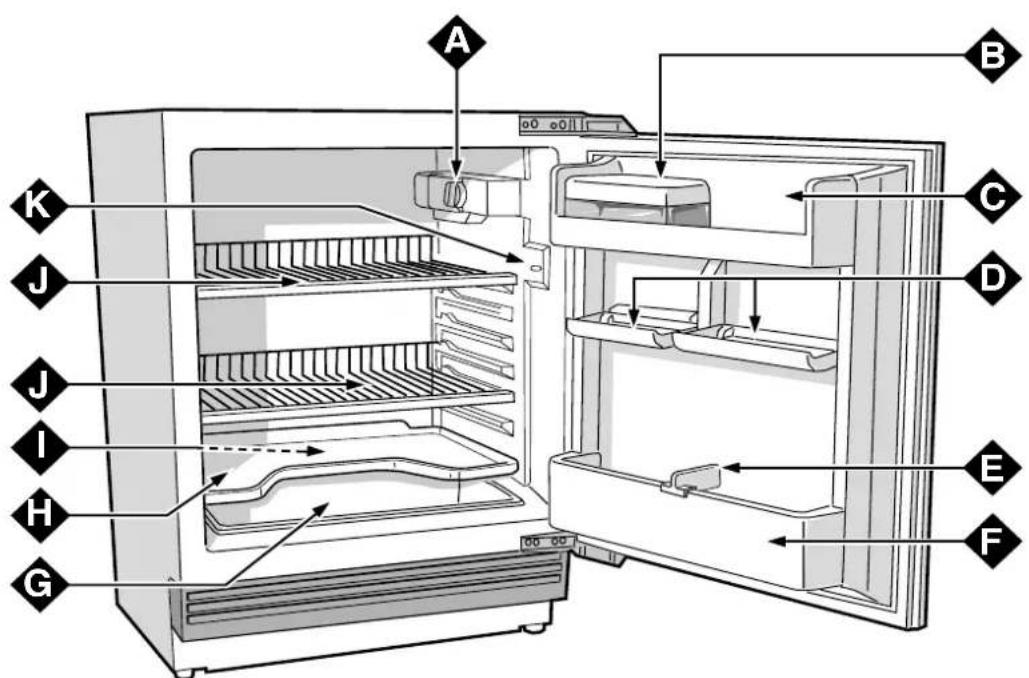
Temperature regulation knob
Use this knob to regulate the temperature of the refrigerator. The following settings are available:
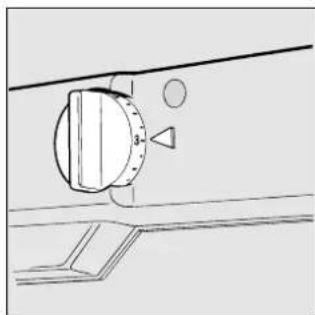
- refrigerator OFF;
1 minimum cold temperature;
5 maximum cold temperature
You can position the knob on any of the settings from 1 - 5 as required. Remember that you can turn off your refrigerator by setting the knob to

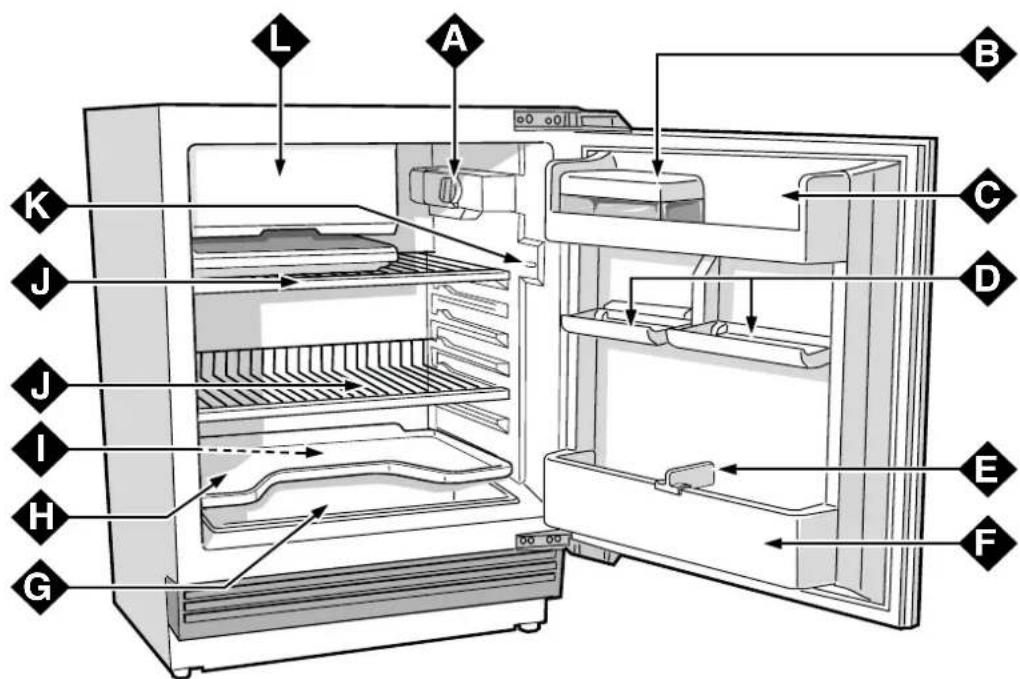
Container with Lid for Butter, Small Tins and Tubes

Door Shelf with Egg Compartment

Tiltable Door Shelf for Food Products

Sliding Bottle Divider

Door Shelf for Holding Bottles

Fruit and Vegetable Crisper

Removable Crisper Cover Tray

Drain for Defrost Water

Removable, Height-adjustable Shelves

Internal Light Button

Ice Unit Compartment
Setting up Your Appliance
ATTENTION
After transport stand the appliance upright and wait at least 3 hours before plugging the appliance into the mains to ensure proper performance. Use these average temperature settings to ensure optimum performance and to save energy.
Before storing food in your refrigerator wipe the interior with a solution of warm water and bicarbonate of soda. After having plugged the appliance into the socket, make sure that the refrigerator light has turned on. Then turn the thermostat knob "A" to setting "3". After a couple of hours, you can place fresh food into the refrigerator. Fill the ice trays and place them in the compartment "K".
Storage - getting the most out of your appliance.
Storing Food in the Refrigerator Compartment
Food Storage Time Location in the Refrigerator
| Wrapped meat and cleaned fish (use plastic wrap or pack in plastic bags) | 2 or 3 days | On the shelf above the vegetable crisper (which is the coldest area). |
| Fresh cheese 3 or 4 days | On the shelf above the vegetable crisper (which is the coldest area). | |
| Eggs 1 month In special egg rack on door. | ||
| Butter, margarine On any shelf. | ||
| Cooked or precooked food (placer in air-tight containers and when cool store in refrigerator) | 3 or 4 days On any shelf. | |
| Sausages, salami, sandwich meats in general, fresh pasta, custards, puddings, chocolates, cream pastries, bread, dry pastries, red tomatoes | 3 or 4 days On any shelf. | |
| Bottled products, milk, drinks, yoghurt On special door shelves. | ||
| Fruits and legumes In vegetable crisper. |
What Not to Store in the Refrigerator
Garlic (transmits odour), onions and leeks.
Bananas (they will turn black).
Citrus fruits.
Potatoes and root vegetables (store in dark, dry places).
- Air in the refrigerator circulates naturally so that colder, heavier air tends to descend towards the bottom. This is why meat and fish should be stored just above the crisper.
- Remember to follow our instructions on the storage life of foods: If not stored correctly, even the freshest food will deteriorate quite quickly.
- Contrary to popular belief, cooked foods do not keep longer than fresh food.
- Do not store liquids in unsealed containers since this will increase the humidity and lead to the formation of frost in the refrigerator.
Energy Saving Tips
Install the Appliance Correctly
This means that the appliance should be installed away from heat sources or direct sunlight in a well ventilated room.
- Correct Temperature Settings
Set the refrigerator temperature knob to one of the middle settings. Very cold temperature settings will not only consume a great deal of energy but will neither improve nor lengthen the storage life of the food. Excessively cold temperatures may ruin vegetables, cold cuts and cheese.
- Do Not Overfill Your Appliance
Remember that proper storage of food requires good air circulation. Overfilling your appliance will hamper proper air circulation and overwork the compressor.
- Keep the Door Closed
Open the refrigerator only when necessary; remember that every time you open the door most of the cold air will be lost. To bring the temperature back to the proper level, the motor must run for a considerable amount of time, consuming a substantial amount of energy.
- Check the Seal on the Door
Keep the seal clean and soft so that it fits tightly against the door to ensure that no cold air is lost.
- Never Put Food in the Refrigeror while Still Hot
A container of hot food in the refrigerator will increase the temperature significantly; allow food to cool to room temperature before storing.
Caring for Your Appliance
Before doing any cleaning, disconnect the appliance from the electricity (by pulling out the plug or turning off the general switch in your home).
Defrosting
WARNING: do not damage the refrigeration circuit. Do not use mechanical devices or other tools to speed up the defrosting process, unless they have been recommended by the manufacturer.
Models without an Ice Unit
The evaporator defrosts automatically during operation; the defrost water drips into the drain, is collected in a special tray and then evaporates.
Clean the defrost water drain hole periodically (see fig. 1) to prevent water from collecting on the bottom of the refrigerator instead of flowing out.
Models with an Ice Unit
It is advisable now and then to remove the frost which forms on the evaporator.
Take care to not use sharp objects for this purpose since they could pierce the refrigeration circuit and permanently damage the appliance.
Proper cleaning is very important in order to guarantee that the refrigerator operates efficiently and does not consume excess energy needlessly.
To defrost the evaporator completely, turn the thermostat knob to " (fig. 2). The water from the frost will collect in the special tray.
When finished, dry the tray and put it back in place. To start the appliance again, turn the thermostat knob to the appropriate setting.
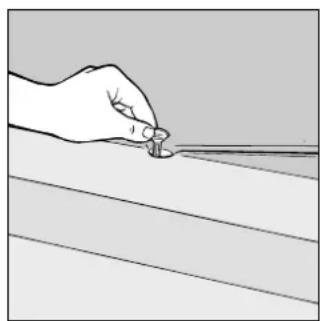
Fig. 1
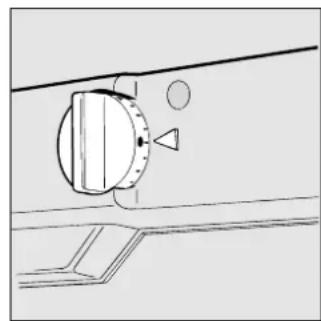
Fig. 2
Cleaning and Maintenance
- Your appliance is manufactured with hygienic, odourless materials. To preserve these characteristics, always use sealed containers to store foods in order to prevent spills, stains and the formation of difficult to remove odours.
- Only use a water and bicarbonate solution to clean the applianc. Clean the internal and exterior of your appliance with a sponge soaked in a warm water and sodium bicarbonate solution, which is also a good disinfectant. If you do not have any sodium bicarbonate at home, use a neutral soap.
- What not to use: Do not use abrasive detergents, bleach or detergents containing ammonia. Never use solvent based products.
- All removable parts can be cleaned by soaking them in hot soapy water or detergent. Remember to dry them thoroughly before replacing them.
- Discontinued use of the appliance: If the appliance is not in use for any length of time, remember to clean the interior and dry thoroughly, leaving the door open to prevent the
formation of odours and mould.
- Replacing the light bulb. The bulb for lighting the interior of the appliance is located at the back of the thermostat box. Unscrew the burned out bulb and replace it with another bulb with a wattage no higher than 15 Watt, follow the instructions illustrated in fig. 3.
Before carrying out this operation, disconnect the appliance from the electricity (to do so, turn off the general switch in the house or remove the plug for the appliance from the socket).
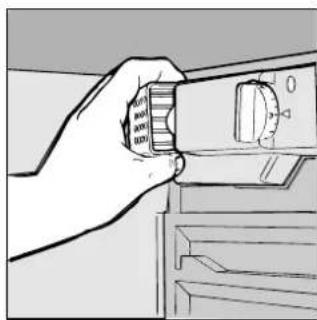
Fig. 3
Trouble Shooting
The Refrigerator does not Work
Check that:
The mains switch in your home is on.
The Appliance does not Refrigerate Properly
Check that:
- The door is shut properly and that the door seal is not damaged;
- The thermostat temperature knob is on the correct setting;
The refrigerator has not been overfilled.
Food in the Refrigerator is too Cold
Check that:
- The thermostat knob is on the correct setting.
The Motor Runs Continuously
Check whether:
- The door is not closed properly or has been left open;
The room temperature is not too high.
The Appliance is Noisy
Check whether:
- The appliance is perfectly level;
- The appliance has been installed between cabinets or other objects that vibrate or make noise.
There is Water on the Bottom of the Refrigerator
Check whether:
The defrost drain is clogged.
Remember that the refrigerant in the cooling circuit causes a slight bubbling sound, even when the compressor is not running (this is quite normal).
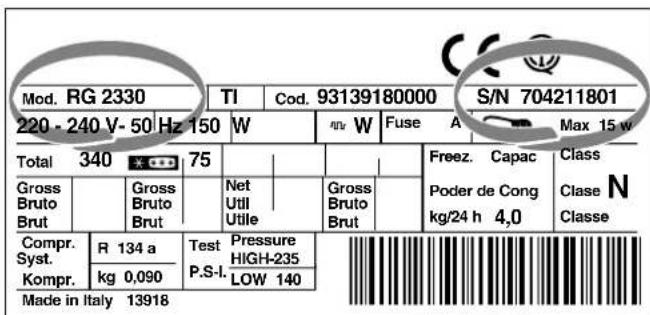
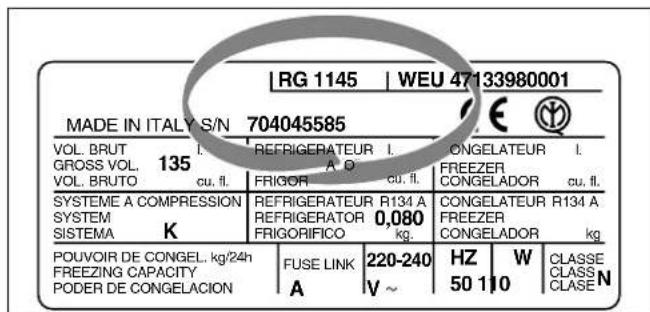
If after all the checks, the appliance still does not operate or the problem persists, call the nearest Service Centre and inform them of: the type of problem, the abbreviation of the model name (Mod.) and the relative numbers (S/N) written on the rating plate located at the bottom left next to the vegetable crisper (see examples in the figures below).
Never call on unauthorized technicians and always refuse spare parts which are not originals.
Balconnets repliables

Compartment fruits et legumes

Dooiwater-afvoeropening

Under-top refrigerators and freezers
Instructions for installation
- Réfrigérateur
- Kühlschrank
- Safety a good habit to get into
- ATTENTION
- Installation
- Ventilation
- Away from Heat
- Electrical Connection and Earthing
- Insufficient power?
- Before making the electrical connection ...
- For English Market only
- A closer look
- Temperature regulation knob
- - refrigerator OFF;
- Setting up Your Appliance
- Storage - getting the most out of your appliance.
- Storing Food in the Refrigerator Compartment
- What Not to Store in the Refrigerator
- Energy Saving Tips
- Install the Appliance Correctly
- - Correct Temperature Settings
- - Do Not Overfill Your Appliance
- - Keep the Door Closed
- - Check the Seal on the Door
- - Never Put Food in the Refrigeror while Still Hot
- Caring for Your Appliance
- Defrosting
- Models without an Ice Unit
- Models with an Ice Unit
- Cleaning and Maintenance
- Trouble Shooting
- The Refrigerator does not Work
- The Appliance does not Refrigerate Properly
- Food in the Refrigerator is too Cold
- The Motor Runs Continuously
- The Appliance is Noisy
- There is Water on the Bottom of the Refrigerator
Brand : SMEG
Model : FR 158 B
Category : Fridge