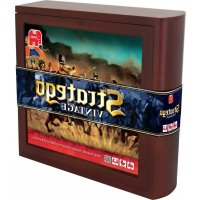
Stratego Vintage - Board game Jumbo - Free user manual and instructions
Find the device manual for free Stratego Vintage Jumbo in PDF.


User questions about Stratego Vintage Jumbo
0 question about this device. Answer the ones you know or ask your own.
Ask a new question about this device
Download the instructions for your Board game in PDF format for free! Find your manual Stratego Vintage - Jumbo and take your electronic device back in hand. On this page are published all the documents necessary for the use of your device. Stratego Vintage by Jumbo.
USER MANUAL Stratego Vintage Jumbo
natural_image
Red elephant logo with white outline and 'Jumbo' text (no additional symbols or text)Stratego® VINTAGE
EEN NOSTALGISCHE UITVOERING VOOR EEN SPEL VAN NU. VAL AAN EN VEROVER DE VLAG!
L'ÉDITION NOSTALGIQUE D'UN JEU INDÉMODABLE. ATTACQUEZ ET CAPTUREZ LE DRAPEAU ENNEMI !
Historic background 33
Outline of the game 34
Box contents 34
The playing pieces 35
The setup 36
Aim of the game 37
Moving 37
Attacking 38
Winning the game 38
Special pieces 39
Game tips 40
More exciting variations 41
Fast-paced variations 42
F
UK

text_image
Repeating pattern of stylized icons and symbols in a grid layout, possibly representing cultural or symbolic motifs.40 RODE SPEELSTUKKEN

natural_image
Grid of identical black-and-white icons representing various objects or items, arranged in rows (no text or symbols)40 BLAUWE SPEELSTUKKEN
text_image
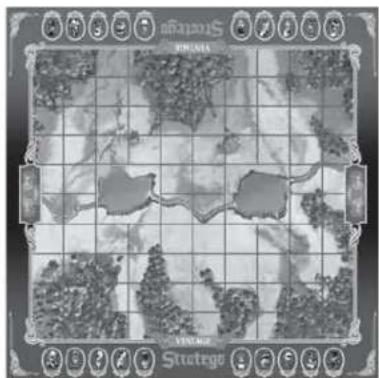
BROCCOLAS STATION STRATEGSPEELBORD
natural_image
Historical black-and-white painting depicting a battle scene with soldiers, horses, and smoke (no visible text or symbols)1 SCHERM
2 OPBERGBAKJES
natural_image
Pure diagram of a central tower with directional arrows, surrounded by grid lines (no text or symbols)natural_image
Grid-based coordinate system with four directional arrows and a central circular symbol (no text or labels)text_image
Repeating pattern of stylized icons and text blocks, possibly representing a logo or decorative design.40 PIÈCES ROUGES

natural_image
Repeating pattern of stylized icons and symbols in dark rectangular frames (no text or labels)40 PIÈCES BLEUES
text_image
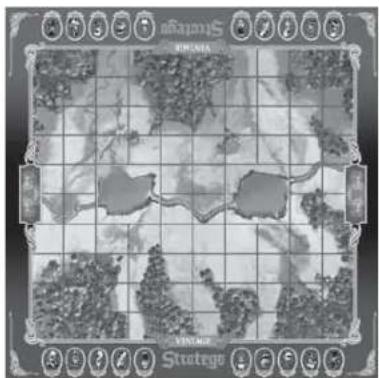
NIGAIA NIGAIA Strategy1 PLATEAU DE JEU
natural_image
Historical battle scene painting showing soldiers in combat and cavalry with chariots (no visible text or symbols)1 PARAVENT
2 PRÉSENTOIRS DE RANGEMENT
natural_image
Pure diagram of a central tower-like structure with directional arrows, surrounded by hatched grid lines (no text or symbols)text_image
Stoats StoatsLes lacs
IMPORTANT
natural_image
Grid-based coordinate system with four directional arrows and a central circular symbol (no text or labels)text_image
Repeating pattern of stylized icons and symbols arranged in a grid, possibly representing themes or concepts.natural_image
Grid of identical black-and-white icons representing various objects or items, arranged in rows (no text or symbols)natural_image
Historical battle scene painting showing soldiers in combat and cavalry with smoke and explosions (no visible text or symbols)natural_image
Pure diagram of a mechanical or electrical component with directional arrows, no text or symbols presenttext_image
StrategicDie Seen
WICHTIG
natural_image
Grid-based coordinate system with two shaded rectangular blocks and directional arrows, no text or symbols presentIt's the year 1958 ...
The British artist Gerald Holtom designs the international peace symbol; Charles de Gaulle becomes President of France; Brazil wins the FIFA World Cup in Sweden; and Elvis sings Jailhouse Rock.
Was that all? No, of course not! In that same year, the game Stratego began its unstoppable march across Europe, crossing the ocean some years later to conquer the USA.
In 1958, Jumbo acquired the rights to the game from Dutchman Jacques Mogendorff, who had developed the game at the start of the Second World War. People began playing the game during the Second World War. But only after Jumbo took it over did it really take off.
The game has since been purchased by more than 20 million players, transcending several generations. And each time anew, the players are soon gripped by the excitement of the game. Is that unknown piece higher or lower than mine? Am I being brave or reckless if I attack that piece?
In the course of time, new rules developed and different themes and target groups emerged.
This luxurious edition harks back to the original game. It is a lavish, nostalgic edition for contemporary times. There are many variants to play. So challenge your opponent.
Attack and capture the Flag!

OUTLINE OF THE GAME

Both players have an army of playing pieces; the pieces have different ranks. Each player has a Flag. The game hinges on defending your own Flag while trying to capture your opponent's Flag. You do so by first creating a secret, decisive setup and then unleashing the battle ...
BOX CONTENTS

text_image
Repeating pattern of stylized icons and symbols in a grid layout, possibly representing decorative or symbolic motifs.40 RED PLAYING PIECES

natural_image
Repeating pattern of dark rectangular blocks with white and black icons, no text or symbols present40 BLUE PLAYING PIECES
text_image
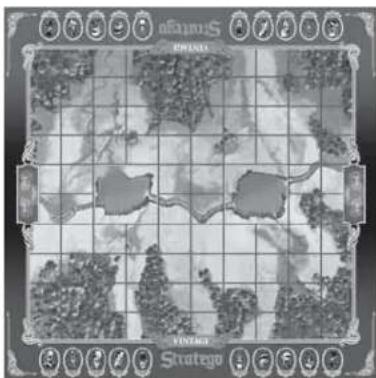
Enelis StrategiaGAME BOARD
natural_image
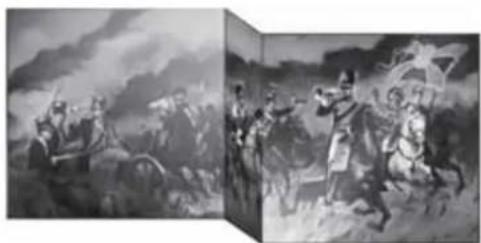
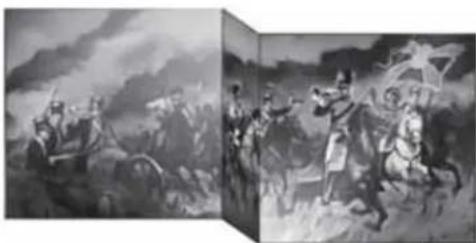
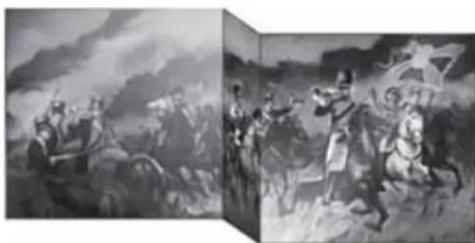
Historical battle scene painting showing soldiers in combat and cavalry with horseback riders (no visible text or symbols)1 SHIELD
2 STORAGE TRAYS
First, you need to understand the rules of Stratego Original. You have to know these rules before you can play the variations. The variations start on page 41.

THE PLAYING PIECES

The pieces below can be moved on the game board. The number on the playing piece indicates its rank. The Marshal has a rank of 10 and is therefore the most powerful piece; the Spy has the lowest rank at 1.
MOVING PIECES
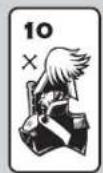
Marshal
(x1)
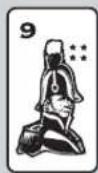
General (x1)
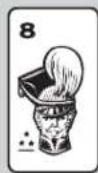
Colonel (x2)
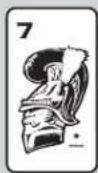
Major (x3)
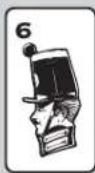
Captain (x4)
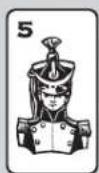
Lieutenant (x4)
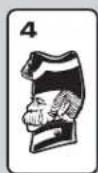
Sergeant (x4)
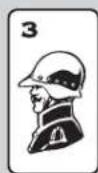
Miner (x5)
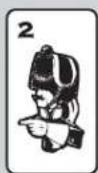
Scout (x8)
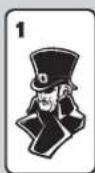
Spy
(x1)
STATIONARY PIECES
The remaining seven pieces cannot be moved during the game:
Bomb (x6)
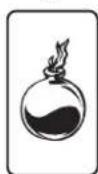
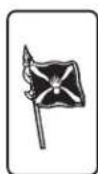
Flag (x1)
OUT IN
THE SETUP

◆ Decide which player will command the Blue Army and which will command the Red Army. The Red Army always goes first.
◆ Place the playing board on the table with the Blue side in front of the Blue player and the Red side in front of the Red player.
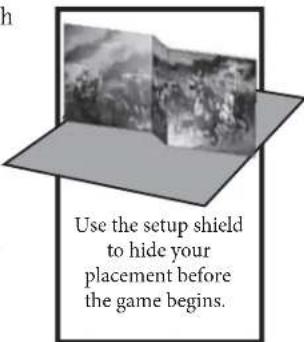
◆ Unfold the shield and stand it in the centre of the game board so that neither player can see the other's playing field.
◆ Each player places their 40 playing pieces on the game board, one piece on each square in the first four rows in front of the. The two rows in the middle of the board remain empty.
◆ The different ranks are illustrated in the correct order on the game.
text_image
Use the setup shield to hide your placement before the game begins.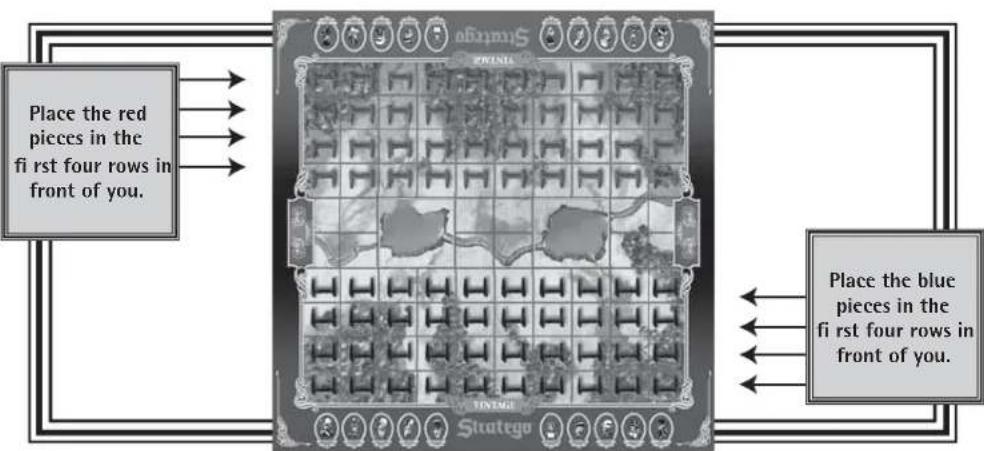
flowchart
graph TD
    A["Strategy Board"] --> B["Red Pieces in First Four Rows Front of You"]
    A --> C["Blue Pieces in First Four Rows Front of You"]
    B --> D["Arrow to Red Pieces"]
    C --> E["Arrow to Blue Pieces"]
◆ Position your pieces with their backs to your opponent so that only you can see the illustrations.
The setup at the beginning is an important part of the game. It can determine whether you win or lose. Carefully read the rules for moving and attacking on page 37/38 before moving your pieces or read the game tips on page 40.
Once both players are ready to begin, carefully remove the setup shield and place it back in the box.

AIM OF THE GAME

Capture your opponent's Flag. You capture your opponent's Flag by seizing it.
MOVING
Red begins! The players alternate turns. You either move one of your pieces or attack one of your opponent's pieces. Only one piece can be moved during each turn.
If none of your pieces are able to move or attack, the game is over and your opponent wins.
You can only move one piece during each turn and each piece can move only one square at a time (with the exception of scouts, see page 43).
◆ The pieces can move forwards, backwards or sideways, but never diagonally.
◆ Two pieces cannot occupy the same square at the same time.
◆ The pieces cannot jump over or move through an occupied square.
◆ The pieces can move over the rivers in the centre of the board.
The pieces may not land in the 'lakes' in the centre of the board; they must move around these areas, never through or over them.
Once a piece has been moved to a square and the player's hand removed, it cannot be moved back to its original position.
The pieces cannot be moved back and forth between the same two squares for more than three consecutive turns. It's important to determine which player begins moving his/her piece back and forth. The player who starts this has to be the first to stop and this could mean losing an important piece.
If a piece is pursuing an enemy piece, the attacker has to stop if a repeat scenario threatens to arise on the board.
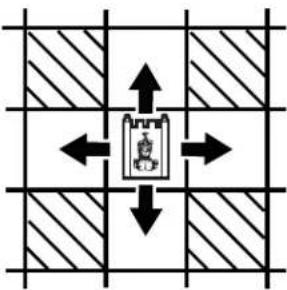
natural_image
Pure diagram of a mechanical or electrical component with directional arrows, no text or symbols presentSquares where pieces can move to and attack
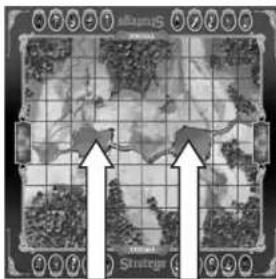
text_image
Stutzg StutzgThe lakes
NOTE:
The Flag and the Bombs cannot move. These pieces must remain where they were placed at the beginning of the game.
ATTACKING
If one of your opponent's pieces occupies a square in front, beside or behind yours, you can attack it. You cannot attack diagonally. Attacking is always optional.
- Different rules apply to the Scout! See 'special pieces' on page 39.
◆ To attack, pick up your piece and tap your opponent's piece and call out your piece's rank (name and number). Your opponent must then call out his/her piece's rank.
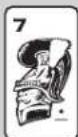
Major
rank 7
VS.
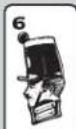
Captain rank 6
THE MAJOR WINS!
If your piece's RANK is HIGHER (in number) than your opponent's piece, you win the attack and capture his/her piece. Your winning piece now occupies that square.
If your piece's RANK is LOWER (in number) than your opponent's piece, you lose the attack and your piece is captured. Your opponent's piece remains in its square.
If your piece's RANK MATCHES (same in number) the rank of your opponent's piece, both pieces are captured.
◆ Captured pieces are immediately removed from the board. Sort them and place them where both players can see them in
the designated storage trays. This makes it possible for both players to see which pieces they have already captured.
The Flag and the Bombs cannot attack. They remain where they are until an enemy piece attacks them.
ATTACKING A BOMB
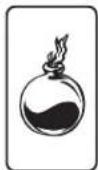
When a piece attacks a Bomb, the attacking piece loses and is captured. The Bomb remains in its square.
♦ Only a Miner (3) can attack and defuse a Bomb! See page 39.
THE WINNER
THE GAME ENDS WHEN:
◆ A player attacks and captures the opposing player's Flag. The attacking player is the winner.
or
◆ A player cannot move a piece or attack. In that case, the opposing player is the winner.

SPECIAL PIECES

THE SCOUT (2)
Scouts can move quickly, probing enemy lines to reveal potential strengths and weak nesses.
MOVING AND ATTACKING WITH A SCOUT
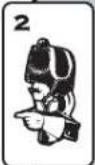
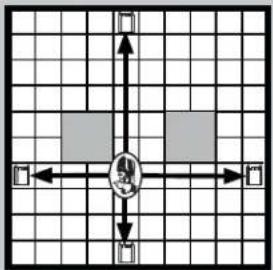
Scouts can move across any number of open squares: forwards, backwards or sideways, but only in a straight line. They may not move diagonally. Scouts may also not move across the lakes in the centre of the board. Scouts can move and attack during the same turn, but again, only in a straight line.
NOTE: If a Scout moves more than one square, its identity will be revealed. You may choose to move your Scouts one square at a time to conceal their identity.
natural_image
Grid map with directional arrows and shaded rectangular areas, no text or symbols presentScouts can be moved during each turn and can attack pieces on all the squares shown by the arrows.
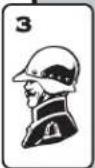
THE MINER (3)
The Miner is the only piece that can attack and defuse a Bomb!
ATTACKING WITH A MINER
When a Miner attacks a Bomb, the Bomb is removed from the game board. The Miner then moves into the Bomb's square.
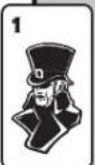
THE SPY (1)
The stealthy Spy has but one mission: destroy the Marshal!
ATTACKING WITH A SPY
When a Spy attacks a Marshal (10), the Marshal is captured and removed from the board. However, if the Marshal attacks the Spy first, the Spy is captured and removed from the board.
The Spy has the lowest rank. If the Spy is attacked by any other piece, it is captured. This means that Scouts can capture the Spy from a great distance!

GAME TIPS

THE SETUP
The setup at the beginning is an important part of the game. The setup can determine whether you win or lose. Here are number of tips you may want to use when setting up your army:
Place your Flag in the back row, so you have several pieces in front to defend it. Place Bombs around your Flag to protect it. This means that enemy Miners (3) alone will be able to get to your Flag.
◆ Consider placing a few Bombs away from your Flag. These Bombs could fool your opponent into moving in the wrong direction.
♦ Scouts (2) are very useful in the front lines. Use them to probe the strength of your opponent's pieces. You might also want to keep some Scouts in the back to help you capture your opponent's Flag later in the game. If you lose your Scouts too quickly, you will be playing in the dark.
◆ Cover a piece in the front row with a piece that is at least two higher in rank. If one of your pieces in the front row is captured, you can retaliate.
Miners are important later in the game, so keep some of them in the back rows.
ATTACKING AND DEFENDING
Don't be too careless with your higher-ranked pieces. Try to identify the rank of your opponent's piece before attacking it with your Marshal. And keep a close eye on the Spy.
If you've determined you have the highest-ranking piece on the board, you can safely attack and defeat any piece that moves.
Try to capture as many of your opponent's Miners as you can. Without Miners, your opponent will have great difficulty removing your Bombs and finding your Flag.
- Don't make it easy for your opponent to memorise your pieces. Once your opponent knows the higher rank of one of your pieces, you should alternate moving with three of your pieces.
Once you have identified your opponent's Marshal, you can attack any of the pieces he/she moves with your General. That is, if you stay out of the Marshal's way of course!

MORE VARIANTS

When pieces of the same rank battle, the attacking piece wins.
EXPLODING BOMBS
In this game, if any piece other than a Miner attacks a Bomb, both the attacking piece and the Bomb are captured and removed from play. If a Miner attacks a Bomb, the Bomb is captured and the Miner stays on the board.
MOVING BOMBS
This variation plays just like 'Exploding Bombs', but the Bombs can move like all other pieces (except the Flag). Moving Bombs may not attack.
MOVING FLAG
The Flag is allowed to move. To win this game, you must either capture your opponent's Flag, or move your Flag to your opponent's back row.
RESCUING PIECES
When one of your pieces moves into a square in your opponent's back row, you may rescue one of your captured pieces. Immediately pick any one of your pieces that your opponent has captured and place it on any unoccupied space in your first four rows. This ends your turn.
Restrictions
• Each player may make only two rescues.
- You cannot rescue a Bomb.
• Scouts cannot make a rescue.
• The same piece cannot make two rescues.
SILENT DEFENCE
When an attack is made, the attacker is the only player who declares his/her piece's rank. The defender 'remains silent' but has to remove the lower-ranked piece from the board. Exception: when a Scout attacks, the defender must reveal the rank of his/her piece.

FAST-PACED VARIATIONS

STRATEGO BARRAGE
In this quick tournament game each player has only eight pieces. All other rules are the same as Stratego Original.
1x Marshal (10) 1x General (9) 1x Miner (3) 2x Scouts (2)
Players can set up these 8 pieces in the 40 squares of their first 4 rows. For example, you could set up your Flag in a corner, with the other pieces surrounding it. However, the other player will immediately know where to look for your Flag! Try different locations and setups to find the best formation.
STRATEGO DUEL
The same as Stratego Barrage, only with 10 playing pieces. The players each get an extra Bomb and Miner. You can therefore position your Flag in a corner between two Bombs.
ULTIMATE LIGHTNING STRATEGO
Ultimate Lightning Stratego is a variation of Stratego Original played with fewer pieces. Each army consists of 20 pieces, which are set up anywhere in the 40 squares of each player's first 4 rows.
1x Flag 1x Marshal (10) 1x General (9) 1x Colonel (8) 1x Major (7) 2x Captain (6)
2x Lieutenant (5) 2x Sergeant (4) 2x Miners (3) 4x Scouts (2) 1x Spy (1) 2x Bombs
Ultimate Lightning Stratego is played in the same way as Stratego Original, with the following adjustments:
MOVING AND ATTACKING WITH THE CAPTAIN (6)
Captains can move two spaces during each turn, either in a straight line or by changing direction after the first space.
Captains, like Scouts, can move and attack during the same turn. Captains can only attack once during each turn.
Have fun and good luck!
Stratego® VINTAGE

natural_image
Red elephant logo with white outline and 'JUMBO' text (no additional symbols or text)www.jumbo.eu

CE
Warning: Not suitable for children under 36 months of age due to small parts.
Choking hazard.
Please keep this box for future reference.
17854
Made by Koninklijke Jumbo B.V., part of JumboDiset.
Westzijde 184, 1506 EK Zaandam, The Netherlands.
© Koninklijke Jumbo B.V., all rights reserved.
www.jumbo.eu.
Made in China.