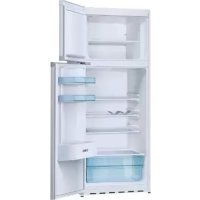
KDV70E00 - Fridge BOSCH - Free user manual and instructions
Find the device manual for free KDV70E00 BOSCH in PDF.



| Features | Details |
|---|---|
| Product type | Combined refrigerator |
| Total gross capacity | 300 liters |
| Net refrigerator capacity | 210 liters |
| Net freezer capacity | 90 liters |
| Energy class | A++ |
| Noise level | 39 dB |
| Dimensions (HxWxD) | 186 x 60 x 65 cm |
| Weight | 70 kg |
| Cooling system | Static cooling |
| Additional features | LED lighting, vegetable drawer, glass shelves |
| Maintenance | Manual defrost recommended, regular cleaning of seals |
| Safety | Door locking system, temperature alarm |
| Warranty | 2 years |
Frequently Asked Questions - KDV70E00 BOSCH
User questions about KDV70E00 BOSCH
0 question about this device. Answer the ones you know or ask your own.
Ask a new question about this device
Download the instructions for your Fridge in PDF format for free! Find your manual KDV70E00 - BOSCH and take your electronic device back in hand. On this page are published all the documents necessary for the use of your device. KDV70E00 by BOSCH.
USER MANUAL KDV70E00 BOSCH
EN Operating Instructions
FR Mode d'emploi
Household Appliances

Inhaltsverzeichnis
| Information concerning disposal | 14 |
| Safety information | 14-16 |
| Your new appliance | 16 |
| Observe ambient temperature and ventilation | 17 |
| Connecting the appliance | 17 |
| Turning on and temperature selection | 18 |
| Switching-off and setting out of use | 18 |
| Arranging food | 19 |
| Freezing fresh products storing frozen food and making ice | 20-21 |
| Defrosting | 22 |
| Cleaning | 23 |
| Energy saving tips | 23 |
| Small problems for self-help | 24-25 |
| Calling customer service | 25 |

Innholdsfortegnelse
Information concerning disposal
Disposal of your old appliance
When replacing your old appliance with a new one, please comply with the following:
Old appliances are not worthless rubbish! Valuable raw materials can be reclaimed by recycling old appliances.
Render your old appliance unusable:
- Pull out the mains plug.
- Cut off the power cord and discard with the mains plug.
- Remove the lock to prevent children from locking themselves in the refrigerator and suffocating.
Refrigerators contain refrigerants and the insulation contains gases. Refrigerant and gases must be disposed of properly. Ensure that tubing of the refrigerant circuit is not damaged prior to proper disposal.
Disposal of packaging
Warning:
Keep children away from packaging materials. Danger of suffocation from folding cartons and plastic film!
You received your new appliance in a protective shipping carton. All packaging materials are environmentally friendly and recyclable. Please contribute to a better environment by disposing of packaging materials in an environmentally-friendly manner.
Please ask your dealer or inquire at your local authority about current means of disposal.
This appliance is labelled in accordance with European Directive 2002/96/EG concerning used electrical and electronic appliances (waste electrical and electronic equipment - WEEE). The guideline determines the framework for the return and recycling of used appliances as applicable throughout the EU.
Safety information
Before you switch ON the appliance
Please read the operating and installation instructions carefully. They contain important information on how to install, use and maintain the appliance.
The manufacturer is not liable if you fail to comply with the instructions and warnings. Please retain these operating and installation instructions as they may be required by a subsequent user of the appliance.
Warnings
- This appliance contains a small quantity of environmentally-friendly but flammable R600a refrigerant. Ensure that the tubing of the refrigerant circuit is not damaged during transportation and installation. Leaking refrigerant may cause eye injuries or ignite. If refrigerant is escaping, ensure that:
- there are no naked flames or ignition sources in the vicinity.
- Pull out the mains plug and ventilate the room for several minutes.
- The more refrigerant an appliance contains, the larger the room must be. Leaking refrigerant can form a flammable gas-air mixture in rooms which are too small.
en
The room must be at least 1m^3 per 8 g of refrigerant. The amount of refrigerant in your appliance is indicated on the rating plate inside the appliance.
In an emergency
Rinse eyes and call a doctor.
- Keep ignition sources and naked flames away from the appliance.
- Pull out the mains plug and ventilate the room for several minutes.
-
In the following cases pull out the mains plug or switch off the fuse.
-
Defrosting
- Cleaning
Do not pull out the mains plug by tugging the cable.
- Do not switch on damaged or defective appliances. If in doubt, contact your dealer.
- Never use electrical appliances inside the refrigerator (e.g. heater, electric ice maker, etc.).
- Do not store products which contain flammable propellants (e.g. spray cans) or explosive substances in the appliance - Risk of explosion!
- Do not allow children to play with the appliance!
- NEVER use a steam cleaner to defrost or clean the appliance. Steam may come into contact with electrical components and cause a short-circuit or an electric shock.
When using the appliance, comply with the following:
- Never cover or block the ventilation openings!
- Repairs may be performed by qualified technicians only. Improper repairs may put the user in considerable danger.
- Do not stand or support yourself on the base, drawers or doors, etc.
- Bottles which contain a high percentage of alcohol must be sealed and stored in an upright position.
If the appliance features a lock, keep the key out of the reach of children. - Keep plastic parts and the door seal free of oil and grease. Otherwise, parts and door seal will become porous.
- Do not store bottled or canned drinks (especially carbonated drinks) in the freezer compartment. Bottles and cans will explode.
- Do not put an ice lolly or ice cube directly from the freezer compartment into your mouth. Risk of burns from very low temperatures!
- Never touch frozen food with wet hands. Your hands could freeze to the food!
- Do not scrape off hoar frost or stuck frozen food with a knife or pointed object. You could damage the refrigerant tubing. Leaking refrigerant may ignite or cause eye injuries.
- Use only agents recommended by the manufacturer to accelerate the defrosting process.
People who have limited physical, sensory or mental abilities or inadequate knowledge must not use this appliance unless they are supervised or given meticulous instructions
en
Important
- Do not block the ventilation grilles on the refrigerator casing.
- Do not use mechanical devices or any other method to accelerate the thawing-out process, other than those recommended by the manufacturer.
- Do not damage the refrigeration circuit.
Always use the internal electrical components recommended by the manufacturer for your refrigerator/freezer.
General requirements
The appliance is suitable
- for refrigerating and freezing food,
for making ice.
The appliance is designed for domestic use.
If the appliance is used industrially, the appropriate standards and regulations shall apply.
The appliance has been interference-suppressed in compliance with EU Directive 89/336/EEC.
The refrigerant circuit has been tested for leaks.
This product complies with the relevant safety regulations for electrical appliances (EN 60335/2/24).
Your new appliance
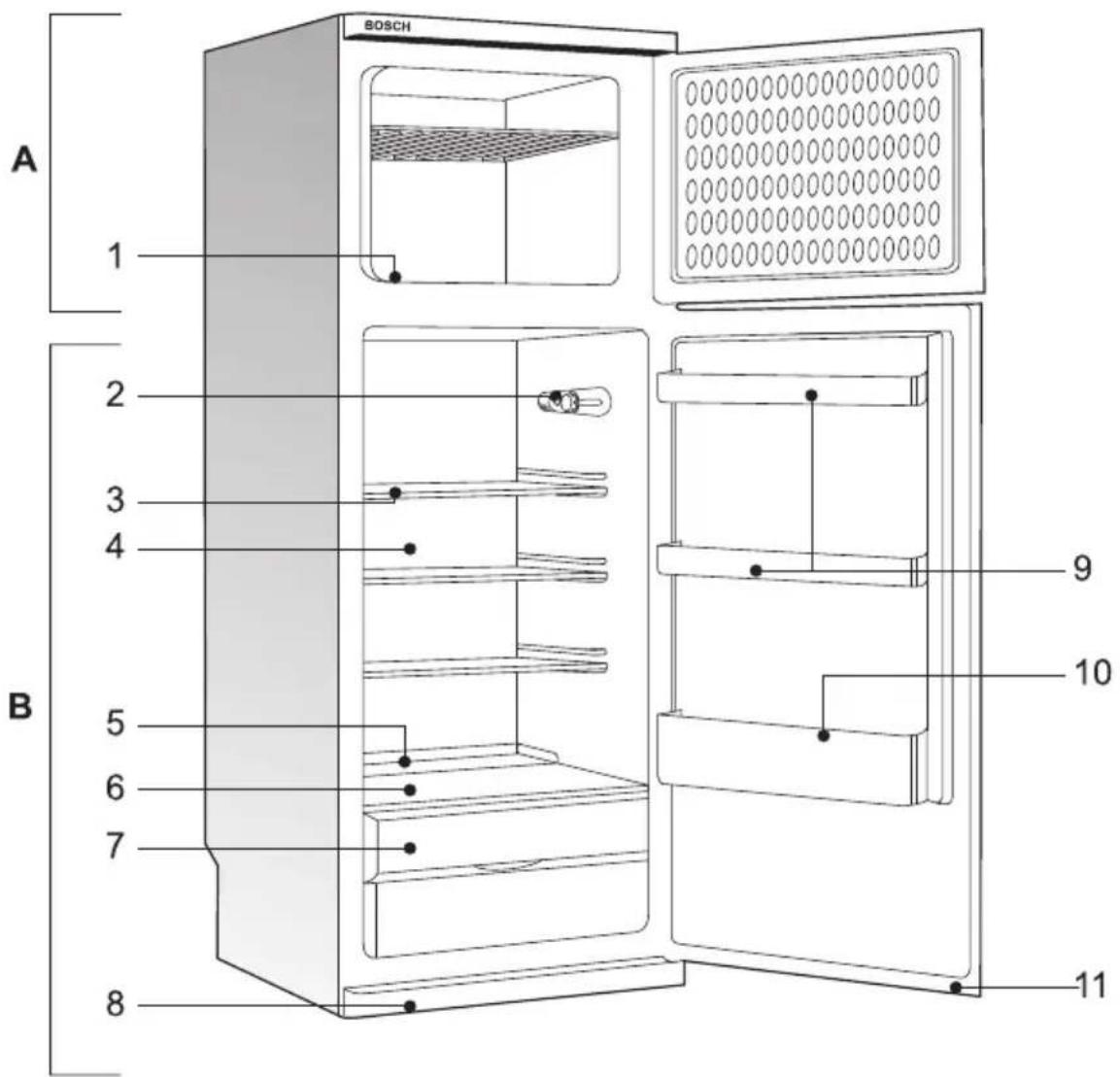
Details may differ according to the appliance type, especially with respect to features.
Fig. 1
1 Ice-cube tray
2 Temperature selector/inner light
3 Racks
4 Meat container
5 Discharge gutter for thaw-water
6 Shelf
7 Vegetable bin
8 Kickstrip with ventilation outlet
9 Container
10 Big shelf
11 Door seal
22 Freezer switch (Fig. 3)
A Deep-freezing compartment
B Refrigerator
Observe ambient temperature and ventilation
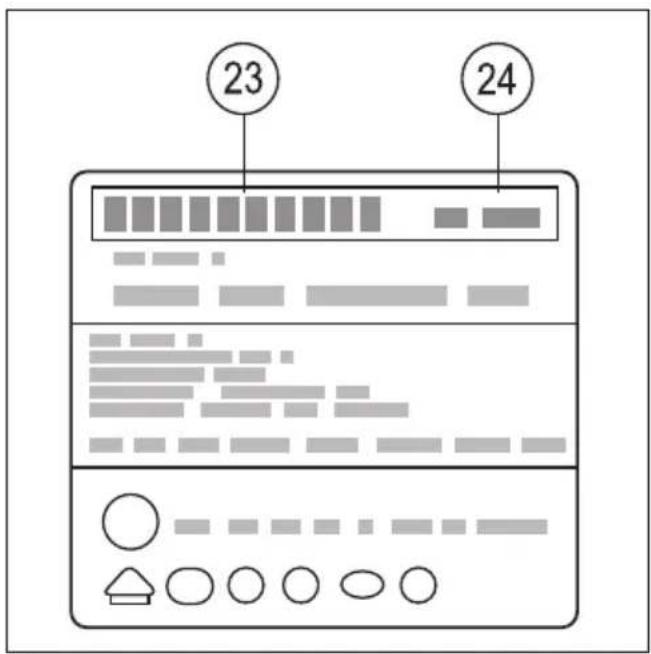
The climatic class can be found on the rating plate (Fig. 10) and indicates the ambient temperatures at which the appliance can be operated.
| Climatic class Permitted ambient temperature | |
| SN +10 °C to 32 °C | |
| N +16 °C to 32 °C | |
| ST | +16 °C to 38 °C |
| T | +16 °C to 43 °C |
Ventilation
Fig. 4
The air on the rear panel of the appliance heats up. The warm air must be able to escape. Otherwise, the refrigerator must work harder. This will increase the power consumption.
Therefore: Never cover or block ventilation openings!
Usable capacity
Information on the usable capacity can be found inside your appliance on the rating plate.
Connecting the appliance
After installing the appliance, wait at least 1/2 hour until the appliance starts up. During transportation the oil in the compressor may have flowed into the refrigeration system.
Before switching on the appliance for the first time, clean the interior (see Cleaning).
The socket should be easily accessible. Connect the appliance to 220-240 V/50 Hz alternating current via a correctly installed earthed socket. The socket must be fused with a 10 A fuse or higher.
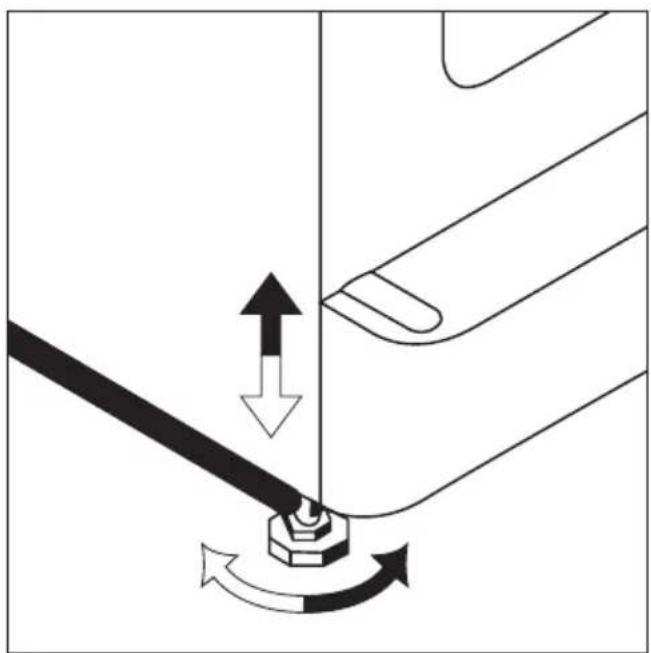
If the appliance is to be operated in a non-European country, check on the rating plate whether the indicated voltage and current type correspond to the values of your mains supply. The rating plate is located in the appliance at the bottom left-hand side. The mains connection cable may be replaced by an electrician only.
en
Turning on and temperature selection
Clean the inside of the appliance thoroughly, before using the first time (see cleaning).
Turning on
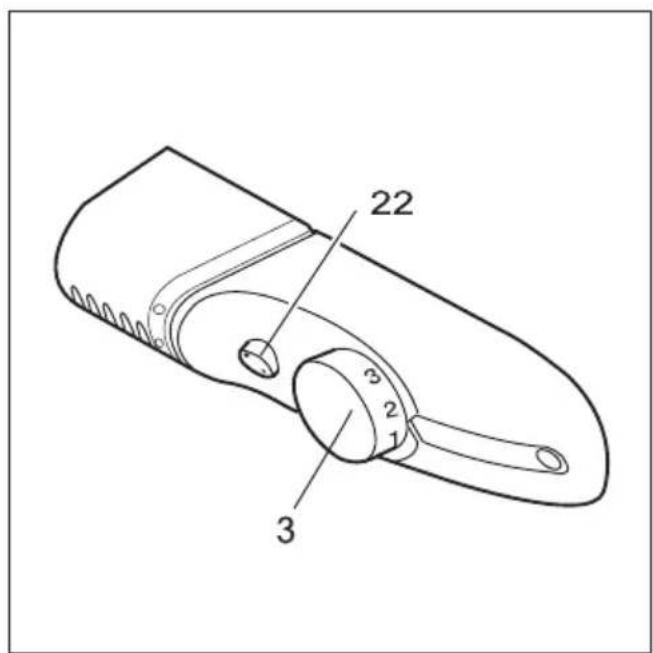
Turn temperature selector (figure 3) out of the position "O".
The refrigerating process begins.
Should the door of the freezer compartment refuse to come open shortly after having closed it, please wait for two or three minutes for the suction produced, when the door was first opened, to release.
Temperature selection
Use the temperature selector (Figure 3) to adjust the temperature of both freezer and refrigerating compartments.
Observe the high figures yield low degrees of temperature.
When the temperature selector is placed at setting "O" the refrigerating process is turned off.
From setting "1" onwards it starts and increases.
We suggest a medium temperature setting (approximately "2-3").
To freeze foods, rotate the temperature control to "3" (see also "Freezing").
Observe the following for the storage of frozen food:
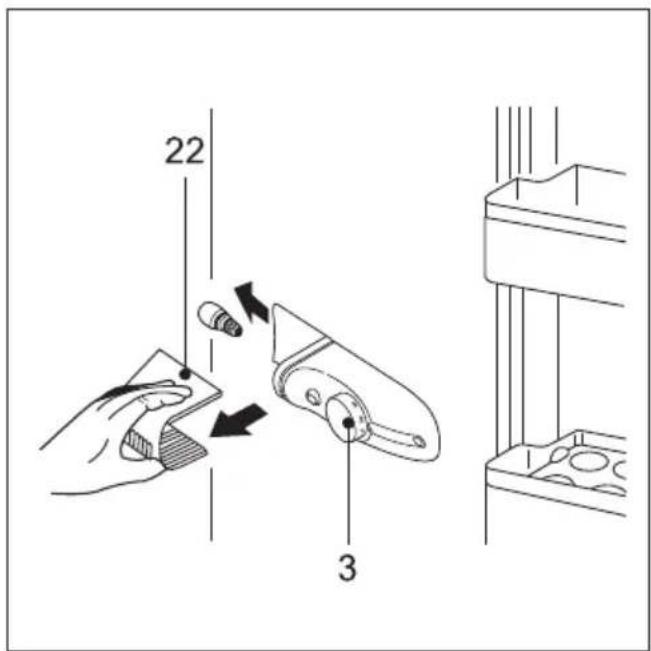
If the temperature of the room where the appliance has been placed drops below +18^ the freezer switch should be connected. A red mark will indicate it is on (figure 3/22). On connecting the switch, the inner light will remain on at reduced power. This ensures that the temperature required in the freezer compartment for long-life storage of food is maintained.
Switching-off and setting out of use
Switching-off
Turn the temperature selector (Figure 3) to the setting "O".
The refrigerating process stops for the whole appliance.
Setting out of use
If the appliance is set out of use for a long period of time, unplug, allow to defrost and clean. Leave the door of the freezer compartment and appliance's door open.
en
Arranging food
How to rearrange the inner fittings
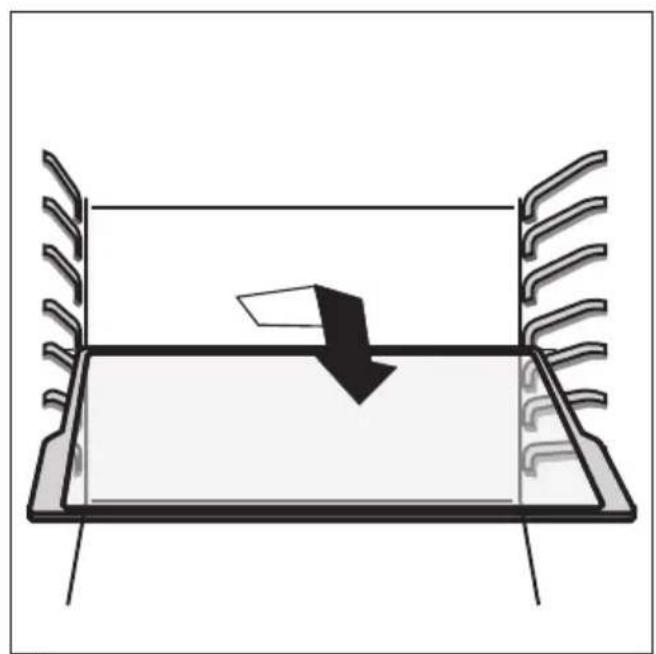
The shelf racks in the refrigerator area may be adjusted to different levels. To adjust, pull rack forward, push it down and reinstall at the desired position. (Fig. 4).
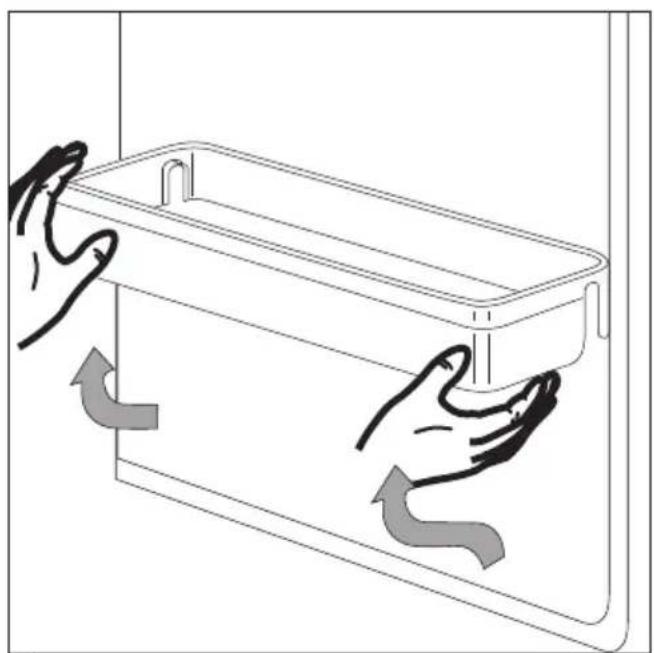
The containers on the inside of the door may be taken out for cleaning (Fig. 6).
Please observe the following when arranging food inside the appliance:
- Allow warm food or beverages to cool down before placing inside the appliance.
- Wrap or cover food well before placing inside the appliance.
- Oil or fat should not be allowed to come in contact with the plastic parts of the appliance or with the door seal (these are materials which tend to become easily porous).
- Do not store explosive substances inside the appliance.
- Keep high-proof alcoholic beverages in air-tight bottles or jars and store in upright position.
The coldest areas in the refrigerator are the rear wall and the area around the bottom shelf.
Example of arrangement
Figure 1
In the freezer compartment (A): freezing of fresh products, storage of deep-frozen goods and making ice cubes.
In the refrigerator (B):
On racks (3), from top to bottom: pastries, ready-cooked meals, dairy products.
In the meat containers (4)
meat and cold slices.
On the shelf (6):
meat, sausages and cold slices.
In the vegetable bin (7):
vegetables, lettuce and fruit.
In the door compartment (9):
tubes and small tins.
On the large shelf (10):
large bottles.
Note refrigeration zones in the refrigerator compartment!
The air circulation in the refrigerator compartment means that there are zones at different temperatures.
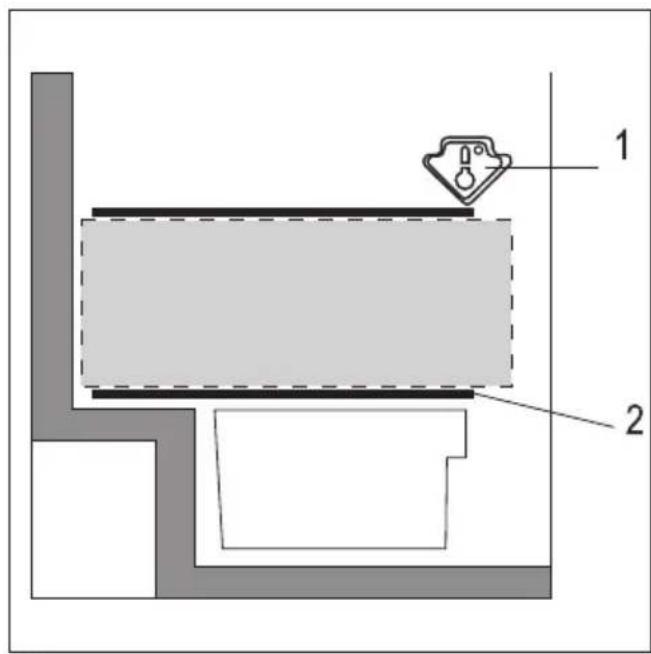
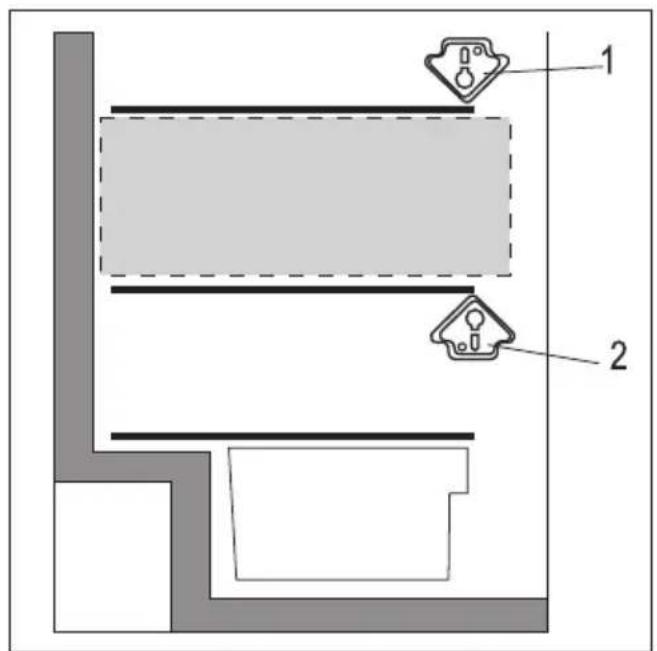
Depending on the model, the zone for sensitive foods is right at the bottom between the arrow on the side and the glass surface below (fig. 11/1 and 2) or between the two arrows (fig. 12/1 and 2). Ideal for storing meat, fish, sausage and salad mixtures, etc.
en
Freezing fresh products storing frozen food and making ice
Observe the following when purchasing deep-frozen food:
- Inspect the package and ensure that it is perfect conditions.
- Check the expiry date stamped on the package; make sure it has not run out.
- Check the thermometer in the freezer of the store where you purchase your goods; it should indicate a temperature lower than -18^ .
- When shopping, ensure that the deep-frozen products are the last items to be purchased; wrap them up in newspaper or place in an insulating bag and take them home at once, place in the home freeze right away.
Wrapping-up
If home freezing, ensure that the products of your choice are absolutely fresh and in perfect condition. Pack food airtight so that it does not lose its taste or dehydrate.
Suitable wrapping material:
Plastic film, polyethylene bags, alu-foil and freezing containers.
All these products are available at your local dealers and most large supermarkets.
Unsuitable wrapping material:
wrapping paper, wax-coated paper, butcher's paper, cellophane, rubbish bags or used carrier bags.
Wrap-up food, press down on parcel to remove all air and seal airtight.
Suitable sealing material:
rubber bands, plastic clips, string, waterproof adhesive tape or similar. Plastic and polyethylen bags may be heat-sealed with an appropriate machine.
Label package indicating contents and date of freezing before storing in the freezer compartment.
Freezing capacity:
Information about the max. freezing capacity according to current standards can be found on the rating plate.
The maximum freezing capacity for fresh food in 24h (distributed on the freezer racks) is indicated on the characteristics plate (in Kg/24h), see figure 10.
To retain the vitamins, nutritional value, appearance and flavour, do not exceed the max. freezing capacity.
Adjust temperature selector to freezing and switch on freezing process
Turn temperature selector to an average temperature setting (approx. "3") whenever fresh products are put in to freeze.
This temperature setting is sufficient for freezing up to 2,5kg of food. For larger amounts you should additionally actuate the freezing switch (Fig. 3/22).
(Press the rocker switch -red marking appears).
If takes approximately 24 hours for the freezing process to reach full completion; once the food is thoroughly frozen, you may disengege the freezing switch.
Please observe following when putting fresh food into the freezer compartment:
Please carefully ensure that freshly freezing food does not come into contact with food which is already frozen.
Observe the following tips for better storage of frozen food:
If the temperature of the room where the appliance has been placed drops below +18^ the freezer switch should be connected. A red mark will indicate it is on (figure 3/22). On connecting the switch, the inner light will remain on at reduced power. This ensures that the temperature required in the freezer compartment for long-life storage of food is maintained.
Storage life
To avoid quality loss, it is important not to be exceed the admissible storage life assigned to each product. The length of admissible storage varies from product to product. Fish, cold slices, ready-cooked meals bread and pastries will keep out to two months at a temperature of -18^ . At the same degree of temperature you may keep meat, poultry and cheese for up to four months and fruit and vegetables for up to six months.
Defrosting frozen products
Depending on the type of food and the use intended for it, you may choose among any of the following defrosting methods:
- at ambient temperature,
- in the refrigerator,
- in an electric oven.
- with/without fanheater,
- in a microwave oven.
You may refreeze food that has partially or totally defrosted provided that:
- in the case of meat and fish, these products were not kept for longer than a day at a temperature of 3^ or higher;
- in the case of other products, these were not kept for longer than three days at a temperature of 3^ or higher.
Otherwise, check food for smell, appearance and flavour, if these have remained unaltered, boil, fry, roast or cook food to some kind of ready meal and refreeze. Observe that the maximum admissible storage life in this case is shorter than average.
Making ice
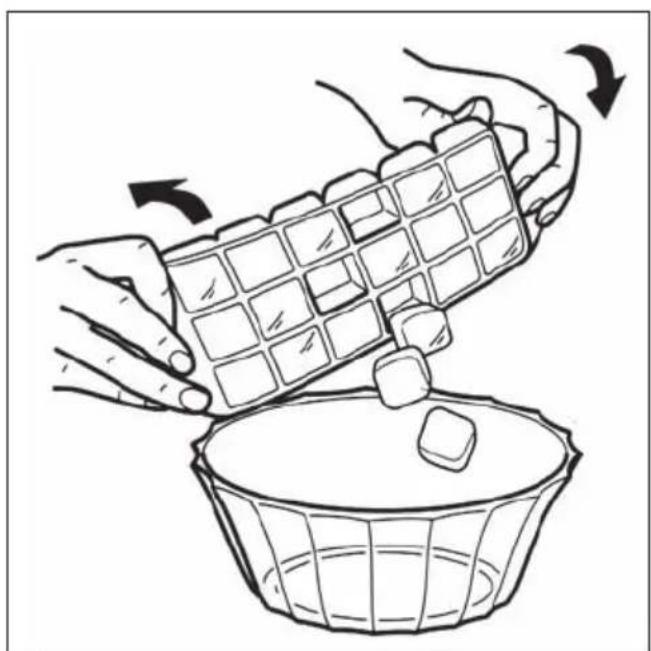
Figure 7
Fill ice tray 3/4 full with water and place on the bottom of the freezer compartment. Ice cubes will be easier to remove if the tray is given a gentle twist.
en
Defrosting
Refrigerator
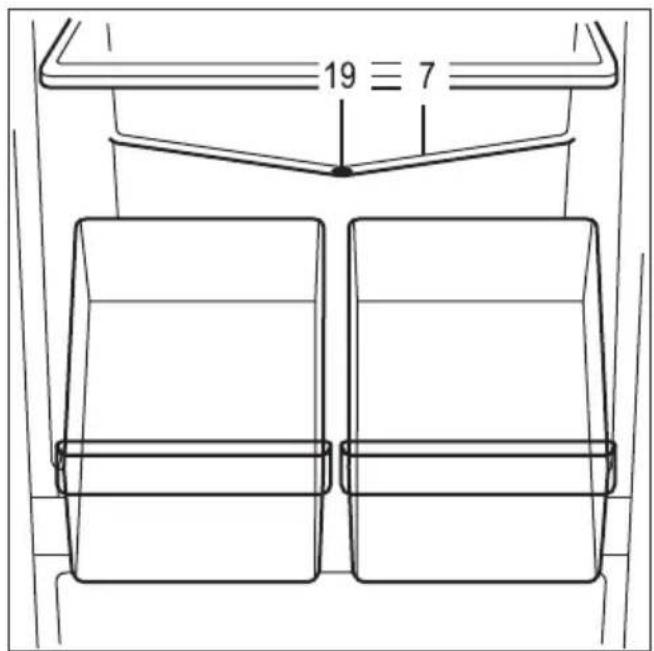
The refrigerator defrosts automatically. The thaw-water collects in the discharge gutter (figure 8/7) and is then conducted to the refrigerating unit to evaporate. Ensure that the discharge gutter and the discharge outlet (figure 8/19) are clean at all times, so that water may drain unhindered.
Freezer compartment
For safety reasons, the freezer compartment (Figure 1/A) does not defrost automatically, since the products stored in this area, are not supposed to accidentally thaw out. Intensive frost and ice build-up adversely influence the cold transmission to the frozen products and cause the rate of energy consumption to increase.
Scrape off frost build-ups
To remove frost build-ups you may use the standard frost scrapers available at most local dealers and large supermarkets. Ensure that the freezer compartment is not damaged when frost is scraped. Never use sharp or pointed items or metal utensils to remove frost.
Allow ice coats to thaw out
If a thick ice coat has built up inside the freezer compartment, it should be allowed to thaw out.
If there are still frozen products in the freezer, swicht on the freezer switch (Fig. 3/22) about 4 hours before defrosting so that the food is once again deep frozen.
Observe the following procedure:
- Remove frozen products, wrap up well in newspaper and store in a cool place.
- Turn the temperature selector (Figure 1/2) to setting "O" or unplug. Do not allow thaw water to run into the temperature selector.
- Leave door open and wipe-up thaw water with a cloth or sponge.
- Rub freezer compartment dry, switch appliance on once more and reinsert frozen products.
Defrosting aids
Be extremely careful when using defrosting sprays. These sprays may cause the formation of explosive gases, contain propellants or substances which may be a major health hazard and even damage the plastic parts of the appliance.
When making use of these sprays, read the manufacturer's instructions most carefully and adhere strictly to the given indications.
Cleaning
Before cleaning, make it a rule to unplug the appliance and/or disengage the fuse
Use luke-warm water with a little desinfectant and washing-up liquid to clean the entire appliance, except for the door seal. Never use sand, abrasive cleansers or acids, e.g. chemical solvents.
Clean the door seal (Figure 1/11) with clear water and dry thoroughly afterwards.
Do not allow cleaning water to get into the temperature selector.
The discharge gutter (Figure 8/7) and the discharge outlet (Figure 8/19) should be cleaned more frequently to ensure that thawwater can drain unhindered. Pierce the discharge outlet with a toothpick or similar object to get it clean. Try to prevent cleaning water from getting into discharge outlet and running through to the evaporating plate.
In you so wish, you may additionally use a standard furniture polish to clean the outer cabinet panels. Ensure that the door of the appliance is closed while doing this, to
prevent the polish from getting to the door seal or to the plastic parts inside the appliance.
Energy saving tips
Install appliance in a cool and well ventilated room, do not expose to direct sunlight and keep away from heat sources (radiators, cookers etc.).
- Allow warm food and beverages to cool down before storing in the appliance.
- When defrosting, place the deep-frozen goods inside the refrigerator. The cold loss from the frozen goods can be effectively used-up to assist the cooling process inside the refrigerator.
- Allow freezer compartment to thaw out when ice has built-up. A thick coat of ice adversely affects the cold transmission to the frozen goods and causes the rate of energy consumption to increase.
- When putting in or taking out food, avoid keeping the door of the appliance open for too long.
en
Small problems for self-help
Before calling the service engineer, check the following points and see if you can solve the problem yourself.
If the service engineer is simply called-in for advice, i.e. if he finds no real fault with the appliance when he visits, you will be charged the full cost of service time, even before the guarantee period has run out.
| Problem | Possible cause |
| Unusual noises: | - The appliance may not be standing level or some kind of object is caught near the refrigerating unit. - A part on the rear wall of the appliance cannot turn freely and rubs against the appliance or against the wall. In this case, bend part carefully away. |
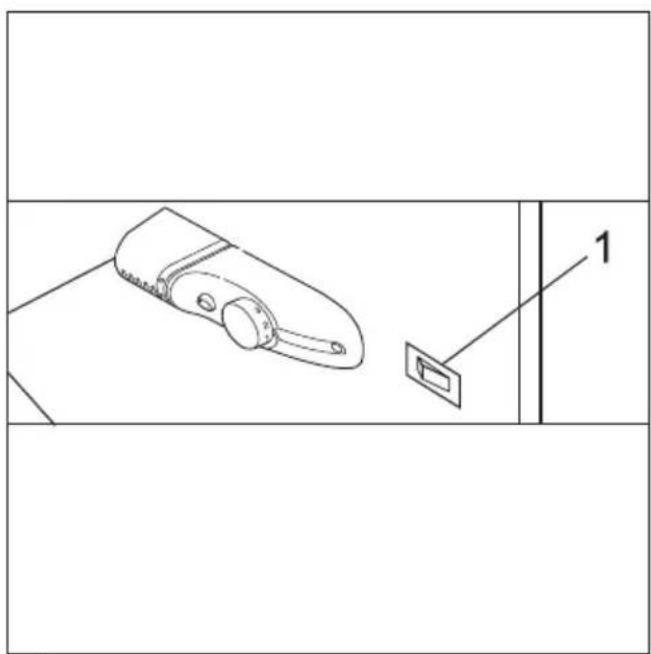
| The inner light does not work: | - The bulb has burnt out. Pull plug out of supply socket. Remove screen (Fig. 9) then remove bulb and exchange for a new one, maximum 15W, 220-240 V, E 14 base. - The light switch sits (Figure 5/1). Try to get the switch to move. If it doesn't budge call customer service. - The temperature selector (figure 9/3) is on setting “O”. |
| The temperature inside the refrigerator is too cold: | - Temperature setting dial is set at a too low position. - Fresh food was put into freeze without switching on the super-freeze (Fig. 8/22). |
| Cooling output deteriorates: | - The door was opened too often. - A large amount of food was placed in the refrigerator. - A thick layer of frost has built up inside the freezer. - The relief outlet and the ventilation grid are covered. - Some kind of object is caught between the refrigerating unit and the wall. |
| Total lack of cooling: | - Plug does not fit properly into socket. - The fuse has disengaged. - Temperature selector (figure 11/2) is on setting “O”. |
Small problems for self-help
If you have not managed to solve the problem with help of the above mentioned tips, call customer service.
Do not insist on solving the problem yourself. Above all, refrain from working on the electrical parts.
Try not to open the door of the appliance unnecessarily to avoid cooling loss.
Calling customer service
You can find your local customer service in the telephone directory or in the customer service list. When calling customer service, please quote the product number (E-Nr.) and the production number (FD) of the appliance.
This information can be found on the rating plate (Fig. 10).
To prevent unnecessary call-outs, please assist customer service by quoting the product and production numbers. This will save you additional costs.
fr
Compartment congélateur
CoBeTbI NO yJaJIeHnIO
YNAKOBKN
He daaIte JETAM HpTaB C yNakOBouHbMaTepeHa.ION HcCactbO eTO dIeHentOB.Annapat - 30 He Hpyka! Ectb onacnoctbyyu, B CBBn C TEM, TIO Kopo6Kn HILACTHBICAHHbH N IACTMACCB!
BoBpeMTrpanCHOpTHPOBKNIOBaHeroDoma HOBn annapat 3aHHHeu ynaKOBKO.Bce yHaKOBOHTbIe MaTePNaJIb CJeTaJIb B COOTBETCTBNI C HopMaMH 3aHHITb OKpyKaHOWeCpeB, INHXMOKHO perEhepPOBaTb HINHCIOJIb3OBaTBTOPHNO.
CJeIaIeBaaKTHBbHbKbIbB3aHHTy OKpyKaIOHcIcPbIy,yaIbHnpeHEpHpyyBAKOBOHbE MaTePbIb B COOTBetCTBn C HOpMaHncc3aHHTbl.
BaI Dnctprh6bIOTOp HIN MeCTHbI ynpabJIIOHN C yIOBOJcTBNCM IPOHHOPMHyOT Bac O HANOOE e 0fpeKTHBHN N COBPemEHBN MEOJAN H BO3MOKHOCTX YdA.TeHN, B COOTBeTCTBH N C HOpMaH 3aHIHTb OKpyKaIOUe Cpebl.
AaHb npOp HmEe OTMeKy O COOTBcETCBn EBponecckn HopMaM 2002/96/EG yTH.13aunn 3Jektpnuecknx n 3JektponuHx npOpOBw (waste electrical and electronic equipment - WEEE).
JaHHHe HOpMb OHpeJIeHOT JeHCTByIOHHe Ha TeppHTOPHN EBPOCOO3IpaBnIa BOBpATA H yTHINBAHHN CTapBX npH6OpOB.
CobetbI IO MEPaM
JIyIyIaKOBKn He IIOxOJI:
YnakOBOHnB6yMaH,NEpramENT,NEIIOOan HBCPbTaN MaRaHHHa YnakOBKa.
BIOKHTIPOJyIKTBYHAKOBKY,BBHcyHTHE H3IEECBO3yXHIOTHHO3aKpOITe.
JIA 3aKpbBaHn yIaKOBKn IIOXODT:
PcHOBbc KObHa,PiactMaccOBbc 3aKHMb, MOpOyCToHHBBe KJIeHNHe JeHTb (CKOT) H T.I. NIOTHAIECHOBbc NaKCTb MoKaHO 3aIaHBaTb C HOMOIBBO CHIIHAJIbIOr ObTOBO np6opa.
Ipei 3akJaIKo IpoIyKTOB B MOpO3HbHyIO KaMepy, HOMeTbTe NaKeTb, yKa3aB IX COIEpKIMoe H JAty 3akJaIK.
Monnoctb 3amopaxnBaHna
JIaHbIe OTHOCHTJIbHO MaKc.
IPOH3BOJNTCJbHOCTN 3aMOpaJKNBaHHB B COOTBeTCTBM C TpeoBaHHIM,
IPMBCHbIMn B IcYCTByeIOIIeH
HOPMaTHBHOJ IOkymeHTaHH, BbI
HaJIteC BΦHPMeHHo TaBJHKe.
MaKcHMaJIbHa MoIIIOCTb
3aMopaxHBaHHn CBxHX IPOyKTOB 3a
24 Yaca (HOmeHeHHbx Ha
3aMopaxHBaIOHnpe PienETKN),
yKa3BaAeTcB Ta6JIHe XapakTePnCTHK
(B Kf/24I.)CM.PcyHOK 10.
No.10KHTI npOyKTb, KOTOpBte BxOHTI 3AMOPo3HTb, HJHO MOpO3HbHOI KAMcPb. CTeIITRE 3a TEM, TTO6b yke ZAMOPoKeHHne I CBEKHe npOyKTb Hc COUPBaCAIIOBbApYr CIPyTOM.
BkIIOueHne 3amopaknBaHnN n BbOp TempeaTypbI
IocTaBtepeKIOHATcBtemepaTybB HIOJKeHnOo"3",CmBbXOTHeZAMOpOBHTB CBeKHe npOyKtB. Ipn ETOM NOToKEHH HpeKIOHATcB BMyKcTe ZAMOpOBHTB JO2,5 KITPOyKTob. JINBaZAMopAKHNBAHH60JIIEHO KOIMCTBa npOyKTob Heo6XoHMO IOnOHHTeCBHO HAKaTb KHONKYIy6OKOH ZAMOpOaKN 22 (pnc. 3).Ipn ETOM 3aTopaetcKpaChn HnHKaTOp. JINHOIHO ZAMOpOaKN npOyKTob Heo6XoHMo 24 Yaca. IocTe OTOrPeKHM Tny6OKOH ZAMOpOaKN IyKHOOTKIOHNTB.
KaJIeHJIapb 3aMOpaJKNBaHnIa
IITTO TIO6b COxpaHHTb KaYcTBO 3AMOPOKEHHbX HPOyKTOB,BAKHO 06IOJATb IOnyCTHMb CpOK XpaHEHH, KOTOpMH ZAHNCHT OT BHa DA3AMOPOKEHHbX HPOyKTOB. HpeC3AMopaKaHBaHcM OTMETTE Laty H3OTOBIEHH HPOyTA II Laty 3AKIAKN B MOpO3HbHyIO KaMepy.
Pa3mopaJnBaHne 3amopOKeHHbIX IPOIyKTOB
B3ABHCIMOCHTOBTBIAIPOUyKTOBHHX HOCIEIyIOHNEo6paOOTK,pa3MOPaKaHBAHHe MOKHNOOCYHCCCTBHTb pa3THHHBMN CHOOC6AMH:
-ПИС KOMHATOH TeMHepaType,
-BXOIOIIBHOI KAMOP
B3.IeKTPHueCKOJIyXOBKe,
BMMKPOBOHOBOHNCHN.
Pa3mopokhenbIe np3mopaknbaembe HPOyKTb MOYr 6bH CHOBa zAMOPOKHN, ecm MIO pbl6a He 6o1ee 1 n, a pyTH e HPOyKb - He 60ce 3 hne haoHHnc bHn Temhepatype Bbue + 3eC. Bo CEX npyTHX cIyuaH, cHn Bvyc, 3aHx HnHnnn Hn HPOyTA He HMeHHINcB, erO MoKnO CBAPHTb Hn HOkapHTb HCHOBA zAMOP3HTb. PpH ETOM CpOK NocTeJyIOIOc XpaHCHN HPOyKTa COkpanaETc.
PnIroTOBJIeHHeJIbJa
HaONHHTe BAHHOky IINI JbHa Ha 3/4 BOIOI HIOCTABTE B MOPOBILHyIO KAMpy.
TTOI TO6B Bam 6bIO. Jrrne HEBIEKATb TOTOBHE Ky6HKn. Ia H BAHNOHN, MOKHOC CTERKa NeprHyTB.
Pa3MopajKbHaHne XOJIOnJIbHnKa
Pa3mopaaKbAHne XoJIOJIbHO KaMepbl
XIOIINbIK pa3MopaaKHBaeTCA
ABTOVAHTHcN. B0a cObnpactcB CTOHb
KeIO67 (pnc. 8),OTKYIA H0aetcB
XIOIOJIbHyIO MAHHy H TAMHCnAPHeTcA
PiOBepte, YTO6b CTOnHb KKeIO6 HCTOHoe OTBepCThe 19 (pnc. 8) BCERda HAxOHNICB B
HCTOTE.
Pa3mopaaKbHne MOpO3nJIbHO KaMepbI
Mop0HbHa KaMepa pMaOpKaHBaEtCe He ABTOVATWcckn, Ta KaK ZAMOPoKHeHHbc IPOyKTb He IOJKAHbIOITaHbTaB. CToI HHe H.I.Bla yXyIiAeT HOaCy XOIOJa B MOp0HbHyO KaMepy, TTO B CBOIO Opepey byeINHBAeT paXo1 EJIeKTPoHepHN.
Chartne cioa Hnher
YTOb yuaHTb cIOI Opa3OBaBHeOra HHea,
HyKaHO HCIO.B3OBaTB CHeHa.1bHbN CKpe60K.
HbKoCm CuyAc HC.IBaHOHO3OBaTBc
OCTpMaM Meta.1uPecKHM IIpeIMetAMn,
YTOb HC HOBe.CHTb HOEpxHOCTb
MOPO3HbHO Kamepb.
ru
OrTaBaHnE CIOJbJa
EcmBMOPO3HbHOKAMpeO6pa3OBaJIC CIOIbA,TOp4MOPaKaHBaTbCCHyKHO CTyIOHNMOpa3OM:
BKIOHITPCGKHM CYBOKOHAMOPOKHN4YACA,HAKAB KHOHky22(pHC.3);
BBHbTEZAMOPOKCHHHICHPOLYKTM,BABCPHTE HXB43ETYHIOJOKHTBEHPOXTAHHOEC MCTO;
HEPCKHOHATC,TEMHPATyPHIOCTABNTB HIOJOKEHNE“0”HINBBITAHHTBEIHKYH3 PO8ETK.HCHNTREa TEM,YTO6bBOHAHE HONATA BHYTPHEPKHOHATC,TEMHPATyPH;
-ocrabtreBepnyotkpbrton;
-ydaJIHTe BOYI NOIOTHeIM HIN rOkoi;
HAcyO HOpOTHTC MPOBILbHyIO KAMEPY, BKHOHTE XOIOIBUBHK HIOJOGKHTTE 3AMOPGCKHHbIUPOLYKTH.
PoiptyuHbIe cpeJcTbA
PnHIOIb3OBAHH 3JIKTPOBENTHTOTOPOB HINΦHOB,paBHOMePHo paNpCteHITc HOTOK TOpHrERo BO3yXa IIO BceH IOBepxHOCTH KAMEpb.HN B KOem Cuyae He pa3MeHnIte 3JIKTPoPNH6Opb BHyTPh MOp0HNbHONKAMEpb.
ByIbte OCTOPOKHn IPN HCHNOBAAHH CHINHA.BHNA A3P03OJIe, KOTOPBE MOrYT O6pa3OBBBaTB B3pBBOONACHIE Ra3b, COIEpKaT BENOCCTBA, NIOpeKJADIOHNH IIACTMACCOBBIE TETA.IIH INH BPeIHBE JITI 3IOPOBBIA.
UNTka XOJIOJIbHnKa
HepeTcKaHauatbHCTHTbH MHTb XOIOIHINHHK, He 3aBHyTe OTEIOOHHTb cTO CTH. JIMMBtBA BCFO XOIOIHINHHKA, KPOME yIOOTHHTeJIIBEPHI, COHTCH TEIJI BOTA C H6oBHMM IO6ABIEHEM MOIOHNX cpeCTB. HenpHROHm IIO6be paCTBOPHTJI, a TaKaKe YHCTAHNC cpeICTBA, CoepKaHInE NECOK HIN KHCTOTBI.
YIOHTHTE 11 (pnc.1)
IPOTHPATB TObKO YCTOIN BOIOI H 3ATCM
HACXNO BHTPATB.CIEHNTe 3a TEM, TTO6b
BOIA HC HONLA BHYTPB HEPCKIOAATEI
TEMHEPATy.
CTOHHJKeIOB H CTOHHOE OTHBPCTHE HUYKHO OHHATb HAJIe, YEM OCTaJIbIbIe YACTH XIOHOHHHKA, YTOOB HMHTO HE MCHALIO BOIE HPIH OTAHBAHH CTKAHTB IO HMM. CTOHHOE OTHBPCTHE OHHHAIITE HAIOKOJ.CIEJITETa TEM, YTOOB BOJA, KOTOPOI MOOT XIOHOHHHK, HC HOHAJIAYTA, UDE HCHAPAE TCA BOJA.
CoBeTbI IO 3KOHOMH NJIeKTPo3Heprn
YCTAHABHBAHHTXOIOUBHBHKB HPOXBAHOM, XOPHO IPOBETPBACMOMIOMCHHHB, BTAHOTIPIMBX COIHCHBHAX. tyCNI HNCTOHIKOB TELTA.
- He zakpbbaite bentn. binnounhne otBepctna.
TeIbIe 6JIOJa nepei pa3MeHHeHem B XIOIOJIbIKKe Ipe.IBaPITcIbIO OCTyKaIITBE MOpO3JIbHKa.
XOpOIO 3AMOPOBBtE HPOUYKTH, HPGKICHEM pA3MOPaKaHBtB MOP03HbHyIO KAMEpy.
吕B3Hpy3H H Bby3H HPOyKTOB JepKHTE BcPHM OTKpHTBMN MHHMAJIbHO BO3MOaHOE BPEM. Yem MeHHe Bb6yTe JepKaTH BcPHM OTKpHTBMN, TCM MCHHE Jb46yET O6PzOBBBHBTBCH RA MOpOBA.HBOH PCHCTKE.
HeocraBnIe IbepuXoIOHbIMKaOTKpHTbIMM UHTTEbHOC BcEMH.
ru
Kak camocToTeJbHo yCTpaHnTb MeJkne HeIOJaIKN /CepBnchA cnjx6a
JaIeKO He np KaKIOH HeIOJKe HEOxOIMMO BbBbBaTc CHeMaJIINCTa CepBnCHOH cTyKb. OueH yAcTO JeIo 3aIKHOaETcB KAKoJINBO MeIOH. IOTOMy, PekJe Yem ObpaIIaHTCB CepBnCHHy cNyKbO, IpOBepbTe, HeJIb3 JIn yCTpaHNTb Ety HeNCIPaBIIOCTb CBOMM CNJAmn Ha OCHOBaHH NpBBeJIHHbIX Hnke yKa3aHH.
Pn HeobyHOM Iyme:
HINXOIOHNBHHKCTOHHEPOBNO HINH HEPPOHO, HIN B XOIOHNBHHaIPTATNONAIOCTOPOHHN IpeIMET TAK,TOIetaHa 3aIHei CTENKc XOIOHNBHHka He MoKeT CBOOIOH NBIOPHPoBaTb. OCTOPGKn ydaJIHTEOTIpeIMET.
EcJn He ropnt ocBeneHne XOJIIOJIbHOI KaMepbl:
Hnnpabna JamaHa HaaHaHaHHn. BbHtte Bnky ceterBOO nhya Hb poETK, CnHmTe KpbHky (pnc.9), ZAMHNTcJAMHy (MaKc. 15Bt,220B, uKOeE14).
3aHHHCHBHKHOHATB,OCHEHHI (pHc.5).PiOBepbTe,MOKETJHON HHTBCH.EHNHERTO BBOBHTE CHHNA.HCTA CEPBCHOH cYak6bl.
IpeKIOHnATcB,TCMnepaTypMa HANOTTCB NOJIOKeHHN "0".
BExoJIOJIbHOJ Kamepe TemepaTypa HnKe O6bHNOJ:
- IpeekIOHATE. IB TEMHepaTyb CTOH He B TOI NO3HNN.
B MOPOBIIBHYIO KAMEPY HOIOKIN CHIHIKOM MHORO CBOKHX IPOTYKOB, HC BIKOHNB KHOKY peKHMA TAYOKOH ZAMOPOKH.
BExoJIOJIbHnKe TemHepaTpa Bblue OobuHOI:
C. BAHINKOM RACTO OTKPBANOTCEBEPHA
B MOpO3HbHOI KAmpe CmHKOM MHOOR CBEXN HPOYKTOB.
OueHB60JIbHON CIOH HHeB MOpO3MbHO KaVcpe.
3aKpbTbBeHTBHHH H BbTBKa.
Mcayy cteohn HxolnnbHKOM nonan noctopounn npimet.
COBCEM HET OXJaKJdeHnA:
Bunka loxo ykpenenha npocne.
BbIKIOIOIOIpeIOxpaHHTe.HHOyycpOIOCTBO.
HepeKIOHATE.1b TEMHepATypb CTnT B NOIOKEHHN "0".
EcmBamye yiaIOc byctpaHHTb HnnpabHIOCTb HA OCHOBAHIN HINBCENHHbX 3decykaaHH, oopaaHTECB CepBHcyO cyko.
YTO6bH36eKaTHnoTePBxOIOa,He OTKpbBaIHTbeepn6e3neoNOUMOCNT.
He npohBODHTe camOCToTeJIbHO ⅡaJIbeHmHnpepaOToH,upKcIeBCero,C 3JIeKTPnueckoiqactbOarperata.
Cep Bnch a cnyk6a
PnO6paHcHHB CcpBcHcyoCtyK6y COO6aHte,HOKaJyHcta,cepHbH (pnc.10/23) H3aBOIcko (pnc.10/24) Homep BaHero arperata.
Tn daHHBe Bb HainTe BuepeHoi pAMKe Ha TINIOBO Ta6HKe, paHOIOKeHoi CteBa CH3y B MIOO3B.HOM OTICICHHI, PUIOM C 6OKCOM IIO OBOIIe.

YBaKaembe roChHa, CooBHaem BaM, TTo HauH npolykna OepTHpHnPoBaHa Ha COOTBcTCTBE pocHHckm Tpe6oHaHMM 6eOHaacIOCTn corIaHO 3akOny PΦ «O zaiHHe IpaB nhotpeBteJe. HOpMaHNO no CeTPhKanH HAHnx np6OpOB, a TaKke JAAHbHe o Homepe oepTHpHkata m cPoke erO JeHCTBnBa MoKete No.tyHtB B φHpme OOO «BCX BHTOBaTeXIHka» no TeJeFOy (095) 737-22939.
TeepoHmchTepckOcayKbno pmoHTy 6b0BbX npOpop8 (095) 737-2961
TeJeFOnIINcHrEpckOy C LyKbI No pEmoITry 6bITOBx IpiHoOpOB «CmHeIO» (095) 737-22962
TepeoH. HcHepckoi CuyKbHOpemOHry BbTOBbX np6opOB 《d'artehay》(095) 737-2965
TexnneKoHcy.braHH no TeJepony: (095) 737-22975
IIpHcMaBOKHa pEmOHn peKaIaMauH: (095) 737-2982(4Kc)
FapantnnaIaIroTOBHTeJIa
Hpma-HcTOTOBHTB HpeoCTaBBHtBaHnHpO6ptenHHb Bamn HpO6pK KOTOPOMy npHIOKYke 6bHbHnIg TaapHHHnIyraOH, rapaTHIO B COOTBeTCTBHm C DeHCTByIOHM 3aKHOaTeJIbCTBOM P0 o 3aHHtePab HOtpBEHcC pOKOM 12meHIE.
BnMaHHe!BaKaHa HfOpMaHuaIaI Iotpe6nteJe
JaHHH HnHOp HcHHe3AHmEH JINHCHIOBAAHH HCKHOHTeJIbHO UJIN JINHbIX, CEMHbIX, IOMaHHIX HbHX HyKJ, He CHBAHHIX C OcyNCCTBHeHHM HpeHHMMATEBckOJeTBeIbHOCTN. HcHIOBBOAHHI npHbOpa B NeHIX, OTNHIX OT BnEyKazHHIX, BnHETCn HApUHeHHM IpabAI HauNeKaHHIgKCIUYATAUHH NpHooPA.
HAROTOBITE.BHEHOCTOTBETCBENHOCTb3aHEIOCTATKINBB HINBOPE,ECNCEPOHOO CLYKKBODyAEETNOA3HO,TO OHNI BOHHNIOOCNEIpepeauH INPBOOPNTOEHTBO HCIECTBHe HAPUUEHNH NHPABHNNIOHOSSOBAHHH TPAHCIOPTPOBNH,XPAHENH,NIECHTBNTOPTBNNH HENPEOOHMONCBI(HOKApa,IPNPONHOI KATACTPCPOBn H.TII.HOBAAHHN BHTOBHX IACOKOMBX H PpEyHOB, BOAIECTBNA HNBX IOCTOPOHNX PAKTOPOB, A TAKKE BCIECTBHe CYNECTCBENHbH HAPUUEHNH TEXHHCKHX TpeBOBAHH, OROBOEPBNN H NICTPYAUH N EKCUYATAHNN,BTONMCCNEHCCTAOHBHOCTI napMetPOB 3HEKTOPOETY,CYTAHOUBENHbX FOCT13109-827.
1HIOITBEPKDEHN HATI NOKYIN PIP6Opa IHP TAPAHTHHOM pemOHTE HINI IPEbIHENH HINX IIeYCMOTpeHHx ZAKOHOM TpeOBaHIN, yEeHTREHO BPOGM Bac COXPaHbT COnpOBOHTe.BHe JOKyMeHTH (Yek, KBHTAHHHIO, IpaBBbHO N YETKO ZAIIOHEHHN BAPAHTHHNI TaIOI C YKcAaHHeCepHHORIO HOpema IIP6Opa, DAtb IpoJAA, YETKO pa3JIHHMOI NCsAHI IOJABHA, HIIbe IOKMyHt, HOITBepKaAHOHne DaTy H MeCTO NOyIKH). C HeJIO OBeJIeYHn IaTIHeHHero CEPCBHOrO 06CyKbHaHH BaIero np6Opa, ObaPaaHTecB K MaCTepAM OepBaCA C IPO6bOo O aHECCEHMH CBEHIN IO6BcX NPOBcTeHHXpEMOHTHBX paBoTAX BCOOTBCTByIOHN PAaEL TAPAHTHHORO TAIOHA.
PekomeHuyem IOBepbTb HOIKIOHOHE (yCTAHOBky) HIO60pO, Tpe6yOIMX CHINBAIHOORo HOIKIOHOENH (yCTAHOBK), TOIbKO OPRHAIIHHM (HPEHHPMHATEB), ZAHMAHOHNCHMHOPOY CBOE HeTeJIHOCTN OcyIECCTBTHEMN TAKHX paBOT. CHeHNAJIHCtB, OcyIHcETBHOHNHE HOIKIOHOHENH (yCTAHOBky), HEIAOT OTMEKY OHOIOHOHENH (yCTAHOBK) BCOOTBECTBYHOHNMPaTE TApAHNIHOHRTO TaIOH. IPOCIM COXPaHIb KIBTAHHN H HIIbe KOyMeHTn OIOIOHOHNH (yCTAHOBKe) BaIIero np60paB TceHHNE cPoka er 3kQUTAYATAHIN.
CobnoenepekOMeHuaHHykaaHH,copeKanHHXcB HHCPTPKHHN NO EKCIUYATAHH (PpAHnBX HOJIOSOBHH), HOMOKET HOBGEHTHOPOEM B EKCIUYATAHH Npboopa Hero OOcYsKaHH.
HeHcnpabHbE yIbI np6OpOB I rapaHTHHn HnepHO GecuHATIO pemOHHTpyOCH T Hn 3aMeHHOTCH HOBBM. PEmHHe BOPOCA O HeOOooBpaHOCTN Hx 3aMeHHI Hn pemOHTA OCTAETCH 3ACUYb6AMn OEBPNA.
B nepnoHIO H NOCTeHcHHeHraPHTHHHO rpoKa HnHa Cyaobcepnc, aTakke MaCtepckHeaHnx HaptnepoB BCERTA roTOBNI pIeIOOKeHTB Bam cOny yCyTH.CnHOOK aIpcOB yIOHOMOHbIX HrTOBOTcHjem NyHKTOB AHTOPBOBBOHIO OePHIOHO 06ClyKHNHn HpnHATAETCA.
CnHOpmaHHeO cpokeCitybHa bBtROBHePnpbOpBa BMOKETe OHHKOMHTBH CTOBAPOOHPOODHTEUYHO NOKyMeHTaHH,BMATAHHe pRn NOKyIKe PnHOOPa,TIOBO BCEPHCHX HHTpax.
1
2
3
4
5
6
7
8
9
10
11
12
Internet:
Subject to modification