
T25T4N0 - Cooker NEFF - Free user manual and instructions
Find the device manual for free T25T4N0 NEFF in PDF.



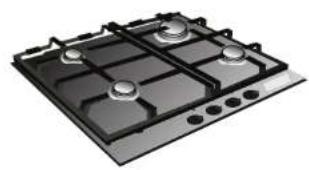
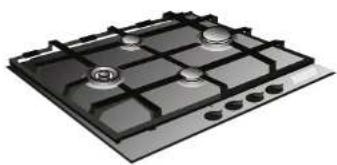
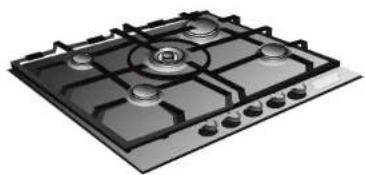
| Product type | Gas hob |
| Brand | Neff |
| Model | T25T4N0 |
| Number of burners | 4 gas burners (including one dual-flame) |
| Dual-flame burner power | Up to 3.80 kW (depending on model) |
| Rapid burner power | Up to 2.80 kW |
| Semi-rapid burner power | Approximately 1.75 kW |
| Auxiliary burner power | Approximately 1.00 kW |
| Ignition | Integrated electronic |
| Gas safety | Safety valves on all burners (automatic shut-off) |
| Automatic shut-off | After 6 hours of continuous operation |
| Electronic protection | Against high temperature and mains power failure |
| Control lock | Lock function (PL) for child safety |
| Electronic timer | Countdown (99 min max) + cooking timer for 2 burners |
| Hob material | Ceramic glass |
| Gas supply | Natural gas / butane / propane (adjustable) |
| Electrical supply | 230 V ~ 50 Hz for controls and ignition |
| Cleaning | Specific product for ceramic glass; removable burners washable with soapy water |
| Additional grates | Wok and coffee maker grate (depending on model) |
| Repairability index | Not provided |
Frequently Asked Questions - T25T4N0 NEFF
User questions about T25T4N0 NEFF
0 question about this device. Answer the ones you know or ask your own.
Ask a new question about this device
Download the instructions for your Cooker in PDF format for free! Find your manual T25T4N0 - NEFF and take your electronic device back in hand. On this page are published all the documents necessary for the use of your device. T25T4N0 by NEFF.
USER MANUAL T25T4N0 NEFF
en Operating instructions de Gebrauchsanweisung fr Mode d'emploi it Avvertenze per l'uso es Instrucciones de funcionamiento pt Manual de utilização nl Gebruiksaanwijzing tr Kullanma Kilavuzu
Neff GmbH
Carl-Wery-Straße 34
81739 München
Cod. 9000133692 E

| E M | FC | |||
| Type: HSE CPL403W | Vgm3.5V | |||
| 99R0606 | G-50 | 550 | G-20 6.734 | |
| G-31 | 550 | |||
| 1.6W230V~50Hz | ||||
| CK/RFS/FV | RF/FR | IU | FE/SR/RF/RF | |
| I/W | 134 | 22+14 | 15C | 2H4 |
| F/WD | 20 | 2025-22 90-37 | 20 | 25+25-37 |
| AT | CE | CZ/KK/EET/LTGE | LPT | |
| CW | 128AP | 1281-200 | 22BAP | 1243 |
| F/WD | 20-20 | 20-30 | 22-30-37 | |
| E Nt | FC | |||
| Might | Vin2H | |||
| C 30 | 657 | C 20 | ||
| C 31 | 695 | |||
| 1.6 W230 V~50 Ω | ||||
| DKF/FS-E/V | RF/FR | LU | ES/GS/GEV | |
| Cal. | 134 | II 25-15 | I25 | II 345 |
| P(HK) | 30 | 1825-25-035 | 30 | 25 2537 |
| AT | DC | CZ/SKCC/LT5 | II 1PT | |
| Cal. | IgGFB-F | IgGEL-3B-P | II 243BP | II 245 |
| P(HK) | 20.50 | 20.50 | 25mm | |
| C-Air | FO | ||
| Type: HSE 7FL3WSM9500000 | Mg/hj | V/mS/N | |
| G.36 | G27 | ||
| 1,8 W 230 V ~ 50 Hz | G.25 | 1,054 | |
| AARDGAS G 2025 mos | |||
| N | |||
| cor | E+e+e+e | E+e | |
| Pretax | 2550 | 5.60 kW (Hz) | 0099 |
| Type: HSE-FLANOM BOROBER | Might | Vip3/4 | |||
| 0-30 | 867 | 0-20 1,139 | |||
| 0-31 | 853 | ||||
| 1.6W 230 V~53 Hz | |||||
| CKRFS/LV | DG/FR | LII | FG/RG/RPE | ||
| I/O | 13H | II2E+4 | I2C | II2H+4 | |
| T1/10A | 20 | 2033 20 30 37 | 20 | 20 20 27 | |
| AT | CE | CZ/SKEELT6 | II-PT | ||
| Cal. | I2H/BP | I2EL/3B-P | II2H/BP | I2H+ | |
| T1/10A | 20 50 | 20-50 | 20 20 27 | ||
Dear Customer,
We thank you and congratulate you on your choice.
This practical appliance, which is modern and functional, has been manufactured from top-quality materials which have been subjected to a strict quality control during the entire manufacturing process, and have been carefully tested so that they will meet all your cooking needs. In addition, we are pleased to supply you with this instruction book which is divided into two sections: one on how to use the appliance, and the other on its installation. We strongly advise to read through and follow these simple instructions, so as to ensure that you get perfect results from the moment you first use this appliance. This book contains important information, not only on how to use the appliance, but also on maintenance and safety.
When our products are being transported, they must be provided with suitable protective packaging. However, we have reduced our packaging to the bare essentials, and it is all completely recyclable. You too can contribute to the conservation of the environment by depositing the packaging in the nearest recycling container to your home. Used oil should not be poured down the sink, as this causes serious damage to the environment. Pour it into a sealable container and take it to a recycling point, or simply put in your rubbish bin. It will then finish up in a controlled landfill site, which though it is not the best solution, it does prevent water pollution. Your children and you yourself will appreciate this. Before you get rid of an old appliance, make sure you render it useless, and then take it to a collecting centre for recyclable materials. Ask your local authorities for details on the nearest centre to your home.
Packaging and old appliances
If the symbol appears on the specifications plate, follow these instructions:
Disposing in an environmentally-responsible manner
Unpack the appliance and dispose of the packaging in an environmentally-responsible manner.
This appliance is labelled in accordance with the European Directive 2002/96/EC concerning used electrical and electronic appliances (waste electrical and electronic equipment - WEEE).
The guideline determines the framework for the return and recycling of used appliances as applicable.
CONTENTS
Safety warnings 3
Get to know your cooking hob 5
Gas burners 6....
Recommended diameters of receptacles 7....
Notes on cooking 8....
Timer operation 9
Programming 10
Other functions 11
The digital display 13
Tips on how to use this appliance 14
Cooking suggestions 14
Cleaning and care 15
Home troubleshooting 16
Warranty conditions 16
Safety warnings
Read this user's manual carefully to ensure that you use this appliance as effectively and safely as possible. In accordance with current regulations, installation of the appliance and changing of gas type may only be carried out by an officially authorized technician. Before installing your new cooking hob, check that the measurements are correct. This appliance should not be connected to an evacuation device for combustion products. The following instructions are only valid in countries whose symbol appears on the appliance. To adapt the appliance to the conditions of use, always follow the technical instructions for your country. It is of the utmost importance that the place in which the appliance is to be installed should have suitable, fully-functioning ventilation (Basic Rules for Gas Installations in Inhabited Buildings, BOE no. 281, 24/11/93). Make sure that the appliance is not subjected to strong draughts, as they might blow out the burners. This appliance left the factory adjusted for use with the type of gas that is indicated on the specifications plate. If any change needs to be made, call our technical assistance service. Do not make any adjustments to the interior of the appliance. If this should be necessary, call our technical assistance service. Make sure you keep these instructions for use and assembly, so that you can hand them on with the appliance if it ever changes owner. Never use a malfunctioning appliance. As the appliance's heating and cooking surfaces get very hot during operation, always use with care. Always keep children away from the appliance. Only use this appliance for cooking, and never as a form of heating.
Very hot fat or oil can easily catch fire, so if you are cooking with fat or oil (for example, frying chips), keep an eye on the pan. DANGER: If a pan containing fat or oil catches fire, do not pour water onto it, as this may cause burns. Cover the pan with a damp cloth to extinguish the fire and disconnect the cooking appliance. In the event of a malfunction, turn off the appliance's gas and electricity supply before calling our technical assistance service. Never place unstable pans or containers on the cooking hob or the burners, as they may accidentally tip over. If a gas tap gets stuck, do not force it. Call our official technical services department, and a technician will come to repair or replace it. While using your gas hob, prevent any draughts and do not spill any cold liquids on it, as this may cause the glass to break. Do not use steam cleaning machines to clean the hotplate, as there is a risk of electrocution. This appliance is not intended for use by persons (including children) with reduced physical, sensory or mental capabilities, or lack of experience and knowledge, unless they have been given supervision or instruction concerning use of the appliance by a person responsible for their safety. Never leave the appliance unattended during operation. The diagrams contained in this instruction book are for orientation purposes only.
IF THESE INSTRUCTIONS ARE NOT FOLLOWED, THE MANUFACTURER ACCEPTS NO RESPONSIBILITY.
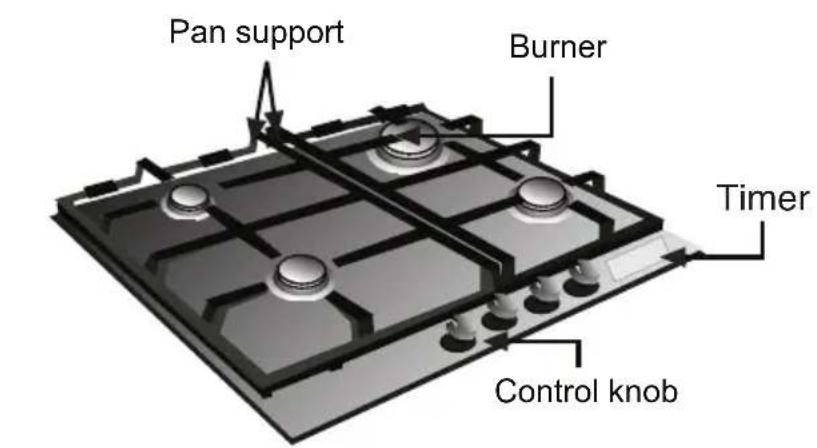
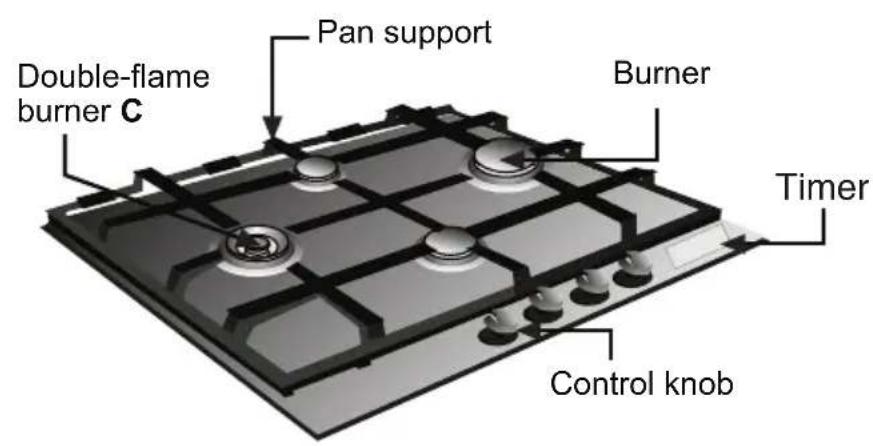
Get to know your cooking hob:
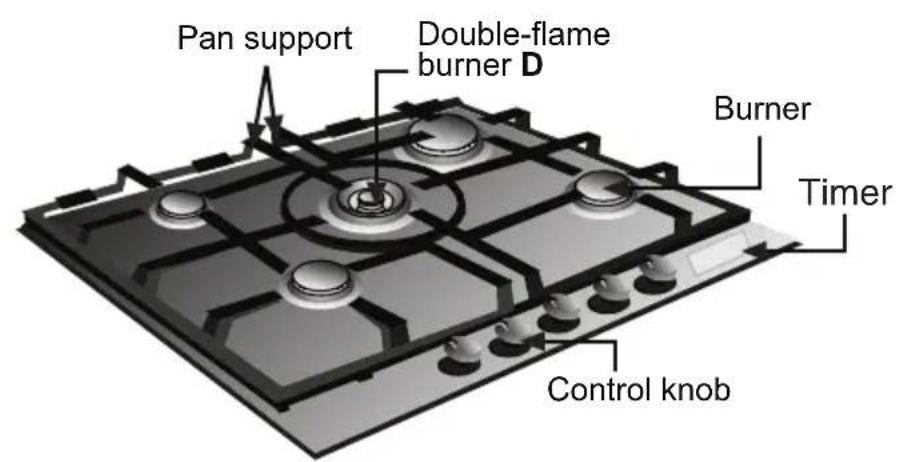
The gas burners
Fig. 1.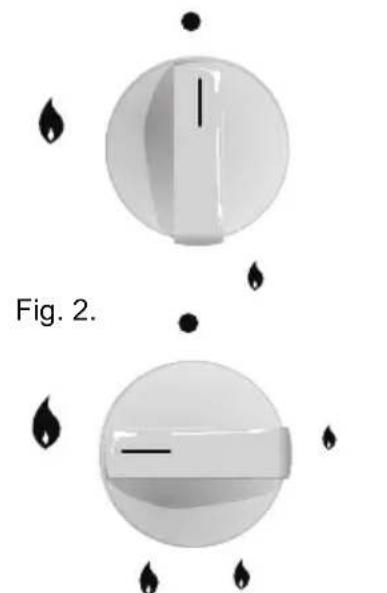
Each crown (exterior and interior) burns at maximum power.
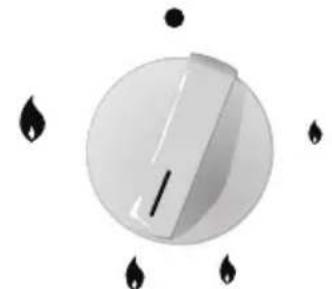
The exterior crown burns at minimum power; the interior crown burns at maximum power.
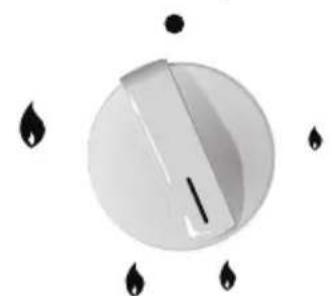
The interior crown burns at maximum power.
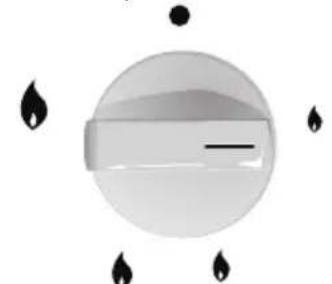
The interior crown burns at minimum power.
Each control knob on the oven and on the control panel is clearly marked to show which burner it controls (Fig. 1).
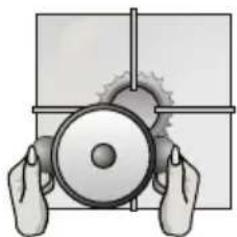
To light one of the burners, press in the control knob of the respective burner and turn it to the left, as far as the maximum symbol, and hold it there for a couple of seconds until the burner lights. Now release the knob and turn it to the desired heating setting. If the burner does not light, repeat the process.
If your cooking hob is not fitted with this automatic lighting feature, use a lighter or a match to light the burner. If the ignition sparkers are dirty, this makes the burner harder to light, so you should keep them as clean as possible. Clean them using a small brush, and remember that the ignition sparkers must be treated very gently. If the burners on your cooking hob are fitted with safety valves (which stop the flow of gas if one of the burners accidentally goes out), light the burners in the same way, though you should continue to hold in the control knob for a few seconds after the flame lights. If the burner does not light, repeat the process, this time keeping the control knob pressed in for 10 seconds. The appliance switches off automatically after 6 hours of operation. Turn all the control knobs to the ● position and then you can turn the appliance on again.
To turn off the burner, turn the control knob to the right, to setting ●. When you do this, the ignition system will be activated once more: do not worry, this is completely normal.
With the modern and functional cooking hob you have purchased, you can have progressive taps fitted which allow you to adjust the flame to the desired heat.
Depending on the model, your cooking hob may have a double-flame burner, which is very practical if you wish to cook with receptacles such as paella pans or Chinese woks (to create all kinds of Asian dishes).
If your hob is equipped with a double flame burner type B, C or D, it will have taps that will allow you to control the interior and exterior flame individually. Operating description Fig. 2
When you are using this gas appliance, it will make the kitchen hot and humid, and therefore you must ensure that the kitchen is well ventilated. Either keep the natural ventilation apertures open, or install an extractor hood. If you use your appliance for a long period of time, you may need extra ventilation - either open a window (though watch out for draughts) or turn up the power on the extractor hood, if possible.
Recommended diameter of receptacles (in cm) Depending on the model:
Depending on the model:
| BURNER | MINIMUM ∅ OF RECEPTACLE MAXIMUM ∅ OF RECEPTACLE | |
| Double flamme A: 3,80 kW | 22 cm | 28 cm |
| Double flamme B: 2,80 kW | 16 cm | 22 cm |
| Double flamme C: 3,80 kW | 22 cm | 28 cm |
| Double flamme D: 4,25 kW | ≥ 22 cm | |
| Quick burner: | 22 cm | 26 cm |
| Medium fast: | 14 cm | 20 cm |
| Auxiliary burner: | 12 cm | 14 cm |
Additional pan supports:
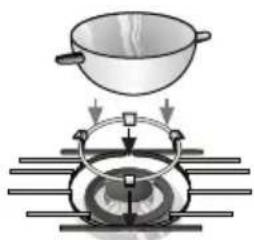
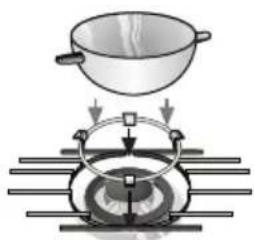
Fig. 2.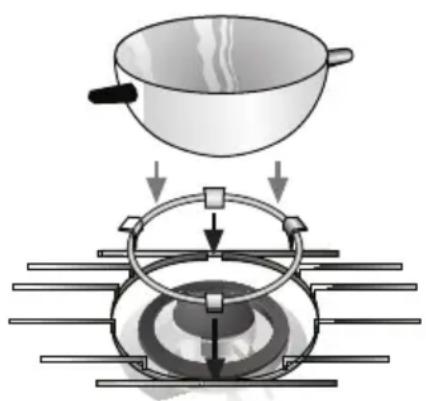
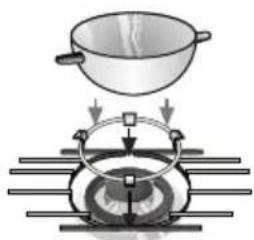
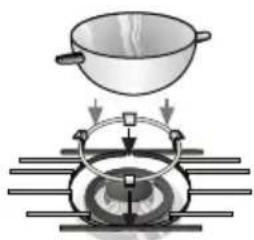
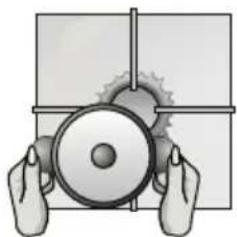
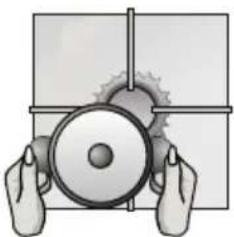
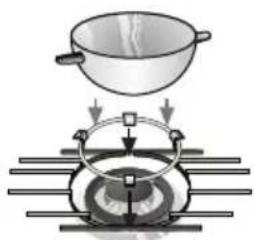
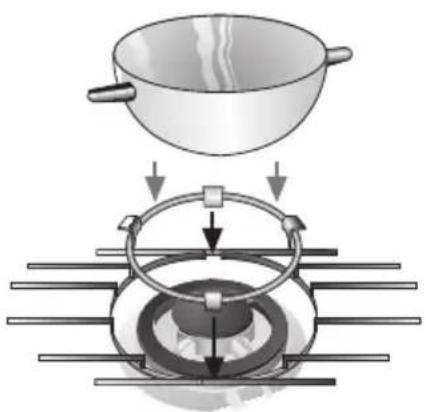
Depending on which model you have purchased, your cooking hob may include a very useful extra cradle support for use on the double flame burner for receptacles with diameters of over 26 cm, barbecue griddles, earthenware cooking pots and all kinds of concave receptacles (Chinese woks, etc.) Fig. 2.
Pan support for coffee pot: Depending on the model, your cooking hob may include an additional coffee pot support, which is exclusively for use on the auxiliary burner with receptacles of a diameter smaller than 10 cm.
The manufacturer declines all responsibility if these additional pan supports are not used or are used incorrectly.
Notes on cooking:
Here are some cooking guidelines:
| Very high High Medium Low | |||
| Double flame | Boiling, grilling, browning, paellas and Asian food (woks). | Reheating and keeping things hot: cooked and pre-cooked dishes. | |
| Rapid | Scallops, steaks, omelettes, frying. | Rice, white sauce and ragout. | Steaming: fish and vegetables. |
| Medium fast | Steaming potatoes, fresh vegetables, stews and pasta. | Reheating, keeping things hot and making tasty casseroles. | |
| Auxiliary | Cooking: casseroles, rice pudding and caramels. | Defrosting and slow cooking: vegetables, fruits and frozen products. | Melting: butter, chocolate and jelly. |
Timer Function
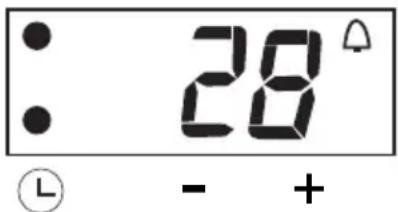
The timer is an electronic clock used to set a kitchen timer and two cooking timers for the burners.
The kitchen timer runs independently of all other settings. This means it can still be set even when the hob is locked.
The cooking timers can be used to automatically switch off the burners.
Kitchen timer
You can use the kitchen timer to set a time up to 99 minutes. It runs independently of all other settings. THE KITCHEN TIMER DOES NOT SWITCH OFF ANY BURNER.
Setting procedure
- Touch the symbol Ⓛ. The display will show the following image: 00°.
- Touch the symbol - or + within the next 5 seconds to set the time.
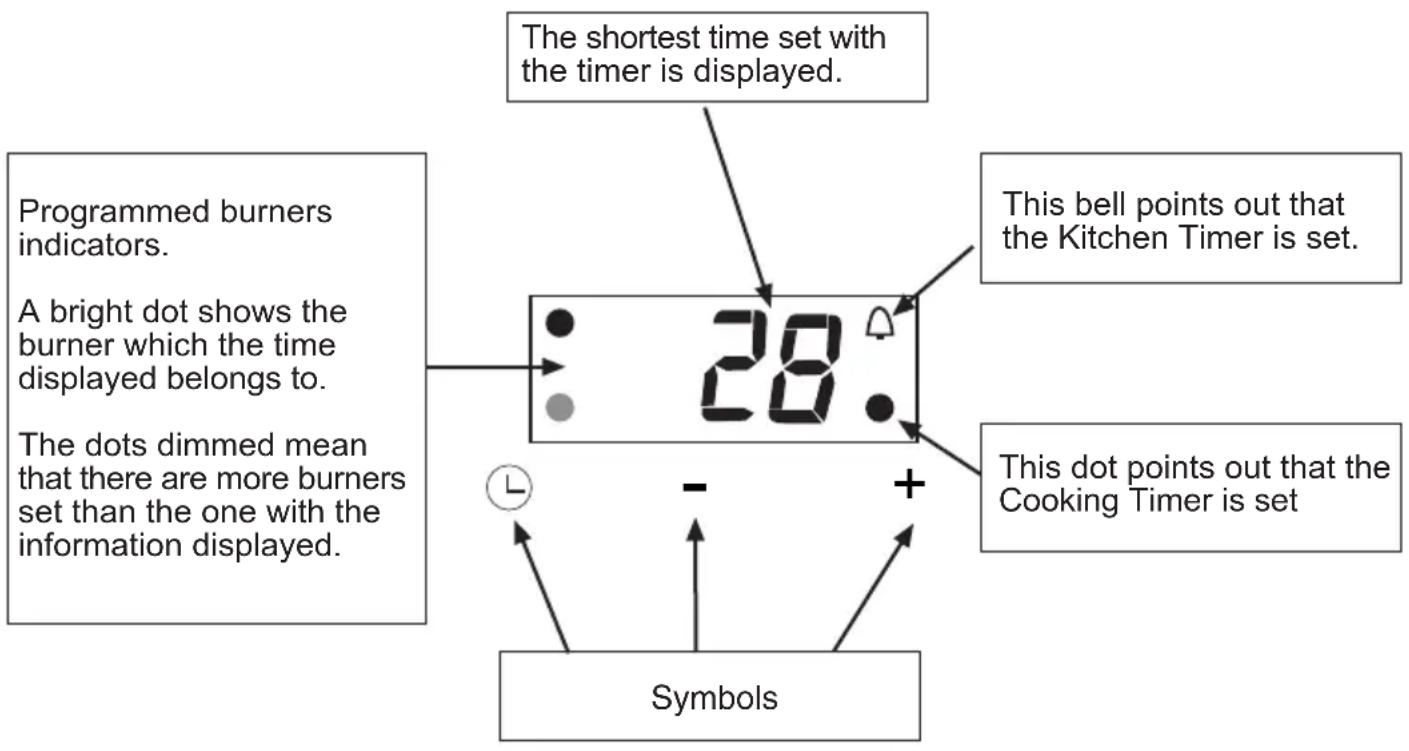
The time begins to count down after a few seconds. If more than one timer (kitchen or cooking timer) is set, the timer with the shortest time is displayed.
When the cooking time has elapsed
A signal sounds for 30 seconds, and ° is shown in the display.
Touch any symbol. The display goes out and the audible signal ceases.
Changing the time
Touch the symbol Ⓛ and change the time using the symbol - or + within the next 5 seconds. The new time begins to count down after a few seconds.
Cancelling prematurely
Touch the symbol ⏻ and change the time to 00° using the symbol - or +.
The indicator disappears after a few seconds, or if more than one timer is set, the timer with the shortest time is displayed.
Notes
The kitchen timer is no longer in operation after a power cut.
You can set a time up to 99 minutes.
Setting a burner to switch off automatically. The cooking timer.
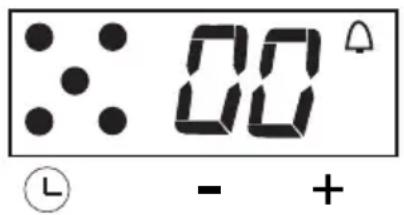
Enter a specific duration for the desired burner. When the duration has elapsed, the burner switches off automatically.
The burner must be switched on.
- Touch the symbol Ⓛ. The display will show the following image: 00°.
- Touch the symbol Ⓛ once more. The display will show for 1 second the layout of the appliance ∴ 00. Now, touch the symbol ⏻ to select the desired burner.
- Once the desired burner is selected, touch the symbol - or - + within the next 5 seconds to set the desired time.
You can set, in this way, any burner of the hob. YOU CAN ONLY HAVE 2 COOKING TIMERS SET AT THE SAME TIME.
The time begins to count down after a few seconds or when we select another burner.
If more than one timer is set, the timer with the shortest time is displayed.
When the duration has elapsed
When the duration has elapsed, the burner switches off, a signal sounds for 30 seconds, ☐ is shown on the right of the display and on the left ☑ the dots will rotate.
Touch any symbol. The display goes out and the audible signal ceases.
TURN THE CONTROL KNOB TO THE "0" POSITION FOR THE BURNERS WHICH HAVE BEEN SWITCHED OFF BY THE TIMER.
Changing the duration
Touch the symbol ⏻, select the burner and change the time using the symbol - or + within next 5 seconds. The new time begins to count down after a few seconds.
Cancelling prematurely
Touch the symbol Ⓛ, select the burner and change the time to ☐. using the symbol - or +. The indicator disappears after a few seconds or if another timer is set, the timer with the shortest time is displayed.
Notes
The timer function is no longer active after a power cut. You can set duration up to 99 minutes. If you would like to call up the remaining duration of the set times, touching the symbol Ⓛyou will see them.
Other functions
Timer button lock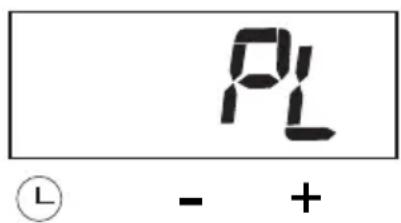
Press and hold the ⏻ symbol for at least 4 seconds. A whistle will sound and the display will show the following message PL. Then the display will show the programme information again. If any symbol is touched when this function is being used, a whistle will sound and PL will appear on the display. To deactivate the button lock, press the ⏻ symbol again for at least 4 seconds.
Protection against excess temperatures
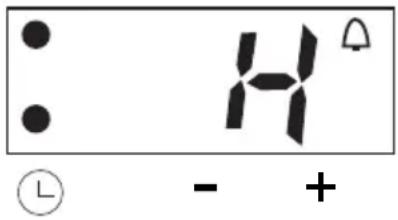
Your hob has a protection system for the timer's electronics.
When the temperature in the timer's electronics is high, the message H and the information of the set times are alternately displayed, and the burners will stay switched on. If the temperature drops to an acceptable level, the H message disappears. If the temperature reaches the maximum allowed limit, the timer switches off all the burners of your appliance as
a safety action, the message H and the remaining time of the set burners which have been switched off are alternately displayed. The controls are blocked until the temperature drops to an acceptable level. Wait a few minutes and use your appliance again.
Protection against power supply failure
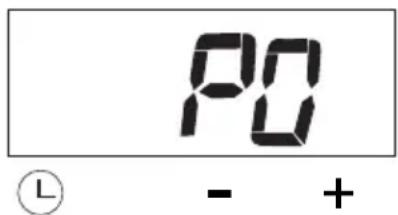
If there is a power cut, as a safety action, the set burners are switched off.
As soon as the electricity is restored, the message PO is displayed. In order to use the timer again, touch any of the symbols, the display will go out and your hob will be ready to be set.
The message PO is also displayed the first time the appliance is plugged in. In order to use the timer again, touch any of the symbols, the display will go out and your hob will be ready to be set.
Notes
When water falls on any of the sensors, the system sends out an alarm.
The system will not work if it is handled with wet hands.
The digital display
Messages in the digital display
| H | Excess temperatures (See Protection against excess temperatures). |
| PL | Timer button lock (See Timer button lock). |
| PO | Connecting the appliance to the power supply/Power failure (See Protection against power supply failure). |
Warnings and suggestions for cooking

DO NOT
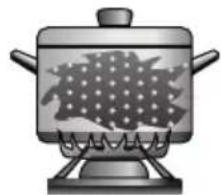
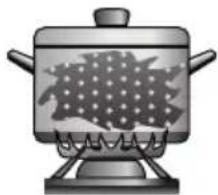
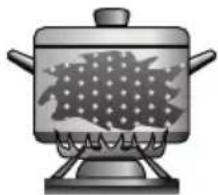
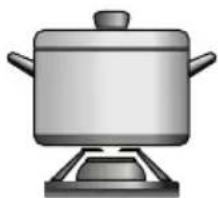
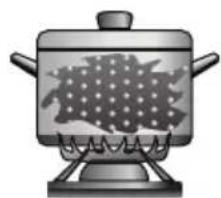
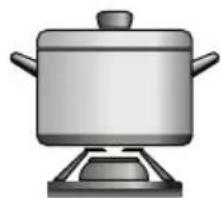
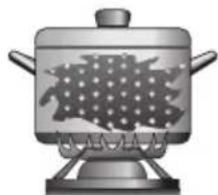
Do not use small receptacles on large burners. The flame should never come up the sides of the receptacle.
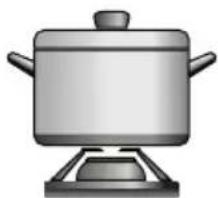
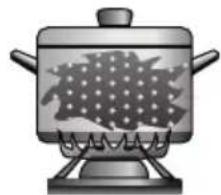
Never cook without a lid or with the lid half off - you are wasting energy.
Do not use receptacles with uneven bottoms, as they make the food take longer to cook and waste energy.
Do not place a receptacle on one side of a burner, as it could tip over. Do not use large-diameter receptacles on the burners nearest to the control knobs, as the flames might reach them, making them so hot that they could cause injury. Never place receptacles directly on top of the burners.
Do not use excessive weight, or strike the cooking hob with heavy objects.
Never use two burners or heat sources to heat one single receptacle.
Avoid using griddles and earthenware pots etc. at maximum heat for a long time.
DO
Always use receptacles that are suitable for each burner, so as to avoid wasting gas and discolouring the receptacles.
Always place the lid on the receptacles.
Only use pots, saucepans and frying pans with thick, flat bottoms.
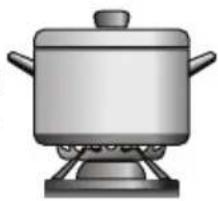
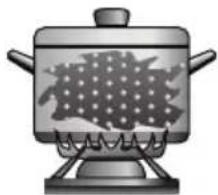
Always place the receptacle right over the burner, not to one side.
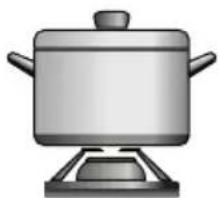
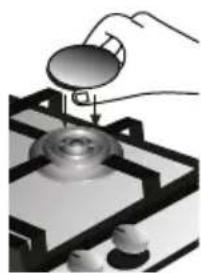
Place the receptacle on top of the pan support. Make sure that the pan supports and burner covers are in their correct positions before using the appliance.
Handle receptacles with care when they are on the cooking hob.
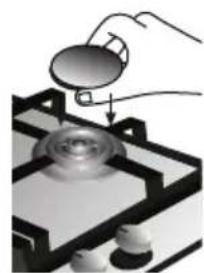
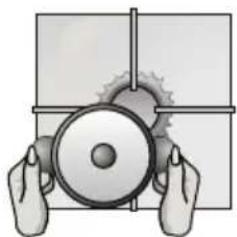
Only use one receptacle per burner. Use the additional cradle support on the double flame burner.
Warnings and suggestions for using glass: cleaning and care
DO NOT
DO
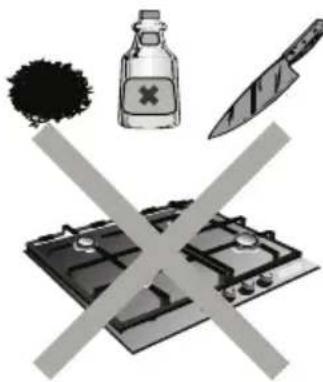
Never use detergent powder, oven-cleaning sprays, or abrasive sponges, as they may scratch the glass.
Never use sharp objects such as metal scourers or knives to remove hardened food remains from the surface. Never use a knife, scraper, or similar to clean the area where the glass meets the trim of the burners or the metal trim edging.
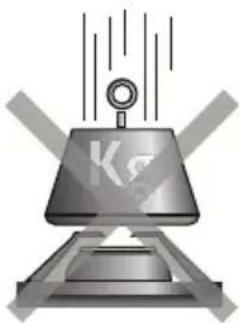
Never slide receptacles across the glass surface, as you may scratch it. In addition, try not to drop heavy or sharp objects on the glass. Never strike any part of the cooking hob.
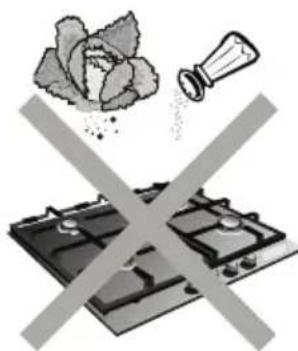
Grains of sand that may come from cleaning fruits and vegetables will scratch the glass surface.
Clean the surface of the heating element once it has cooled down, and every time you use it. Even small patches of food or dirt will burn when you switch the plate on again.
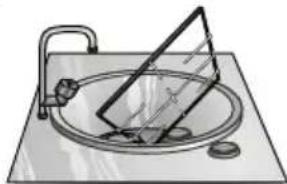
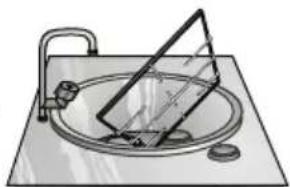
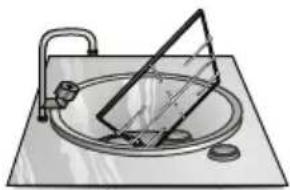
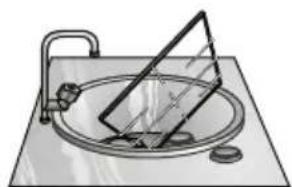
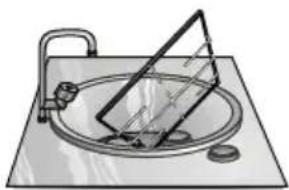
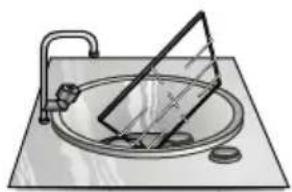
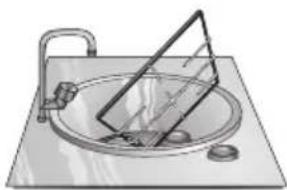
To keep the burners and pan supports clean, you must clean them periodically by placing them in soapy water and brushing them with a non-metallic brush to ensure that the holes and grooves are perfectly clean, and can provide a perfect flame. Always dry the burner covers and the pan supports if they have become wet.
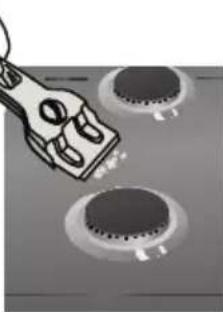
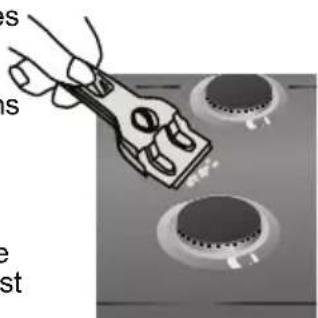
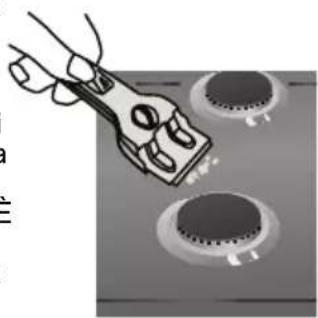
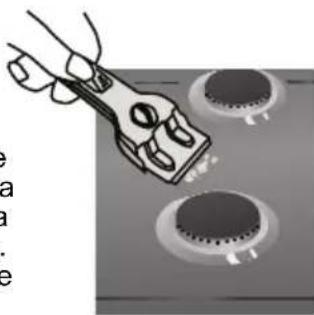
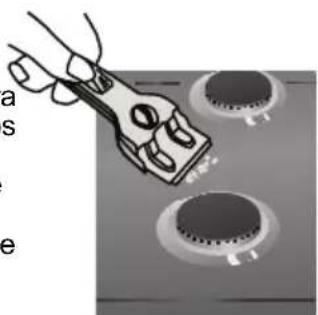
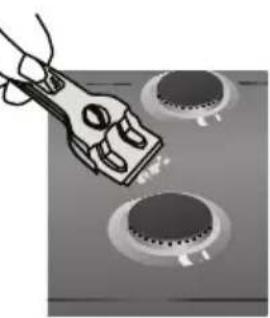
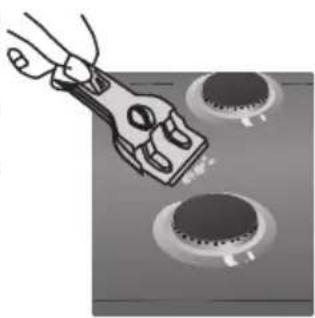
Always use a special flat scraper for glass, taking special care not to scrape near the trim of the gas burners. For cleaning this surface we recommend the product "Vitro Clen". The fact that this product contains a high percentage of silicon produces a film on the surface, which makes it much easier to remove. We recommend taking regular care of this appliance.
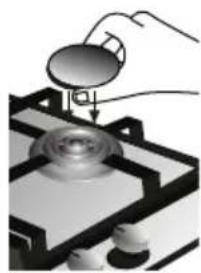
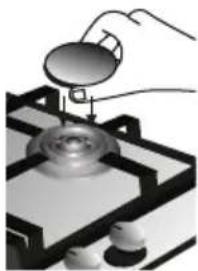
After cleaning and drying the burners, make sure the burner covers are correctly placed on the burner's flame diffuser.
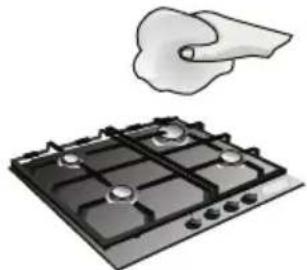
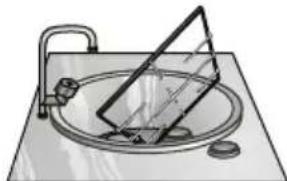
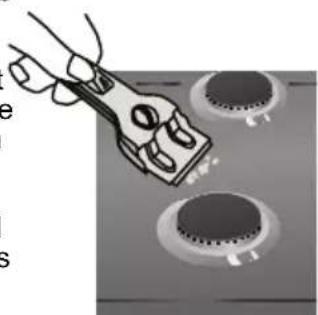
Remove any boiled over food immediately using the glass scraper. This applies in particular to melted foodstuffs, sugars, and foodstuffs with high sugar contents.
WARNING:
Proceed with caution when removing the pan supports to avoid damaging the pivots they fit onto. After washing the pan supports, dry them completely before cooking with them again. Drops of water or damp patches on the surfaces when you begin cooking may cause deterioration of the enamel.
When you are cleaning the pan supports, take care with the rubber rests, as they could come off and the pan support could scratch the glass or the profile next time you use it.
Home troubleshooting
You do not always need to call the technical assistance service. Very often, you can solve the problem on your own. The following table contains a few pieces of advice.
Important note:
Only personnel authorised by our Technical Services Department should carry out work on the functional gas and electrical system.
| What has gone wrong? | Probable cause Solution | |
| ... if the general electrical system is malfunctioning? | -Defective fuse. -Check the fuse in the main fuse box and change it if necessary.-The automatic fuse may have fused or the trip switch has tripped. | |
| ... if the electrical sparker does not work? | -There may be food or cleaning residue between the sparker and the burners.-The burners are wet. -Dry the burner covers and sparkers carefully.-The burner covers are not located correctly. | -Carefully clean the spaces between the sparker and the burners.burner covers and sparkers carefully.-Make sure that the burner covers are correctly located. |
| ... if the flames on the burners are not uniform? | -The different parts of the burner have been located incorrectly.-The grooves on the burners' gas outlets are dirty. | -Place the different pieces correctly.-Clean the grooves on the burners' gas outlets. |
| ... if the gas flow does not seem normal, or no gas comes out? | -The gas stop cock is turned off.-If the gas is coming from a gas bottle, it may be empty. | -Turn on all stop cocks.-Replace the gas bottle with a full one. |
| ... if there is a smell of gas in the kitchen area? | -A gas tap has been left on.-There may be a leak at the connection between the pipe and the gas bottle. | -Check to see if any gas taps are on.-Make sure that the connection is airtight. |
| ... if the safety valves on the different burners do not work? | -The control knob has not been pressed in for long enough.-The grooves on the burners' gas outlets are dirty. | -Light the burner, and then keep the control knob pressed in a few seconds longer.-Clean the grooves on the burners' gas outlets. |
In the event that you do call our Technical Services Department, please supply the following code:
E - NR FD
This code can be found on the specifications plate of your appliance, located on the underside of your cooking hob.
Warranty conditions
The warranty conditions which apply to this appliance are those that have been established by the suppliers representing our company in the country where the appliance was purchased. If necessary, the salesperson who sold you the appliance will be happy to provide details on same. However, the warranty is only valid if it is submitted together with the purchase document. We reserve the right to make any changes.
| BRÜLÖR | MINIMUM KAP ÇAPI | MAKSIMUM KAP ÇAPI |
| İkılı alev acoak A: 3,80 Kww | 22 cm. | 28 cm. |
| İkılı alev acoak B: 2,80 Kww | 16 cm. | 22 cm. |
| İkılı alev acoak C: 3,80 Kww | 22 cm. | 28 cm. |
| İkılı alev acoak D: 4,25 Kww | >22 cm. | |
| Hızlı: | 22 cm. | 26 cm. |
| Yarı - hızlı | 14 cm. | 20 cm. |
| Yedec | 12 cm. | 14 cm. |
- PACKAGING AND OLD APPLIANCES
- CONTENTS
- SAFETY WARNINGS
- GET TO KNOW YOUR COOKING HOB
- GAS BURNERS
- TIMER OPERATION
- THE DIGITAL DISPLAY
- TIPS ON HOW TO USE THIS APPLIANCE
- HOME TROUBLESHOOTING
- WARRANTY CONDITIONS
- IF THESE INSTRUCTIONS ARE NOT FOLLOWED, THE MANUFACTURER ACCEPTS NO RESPONSIBILITY
- THE GAS BURNERS
- RECOMMENDED DIAMETER OF RECEPTACLES (IN CM) DEPENDING ON THE MODEL
- ADDITIONAL PAN SUPPORTS
- NOTES ON COOKING
- TIMER FUNCTION
- KITCHEN TIMER
- SETTING PROCEDURE
- WHEN THE COOKING TIME HAS ELAPSED
- CHANGING THE TIME
- CANCELLING PREMATURELY
- NOTES
- SETTING A BURNER TO SWITCH OFF AUTOMATICALLY. THE COOKING TIMER
- WHEN THE DURATION HAS ELAPSED
- CHANGING THE DURATION
- OTHER FUNCTIONS
- PROTECTION AGAINST EXCESS TEMPERATURES
- PROTECTION AGAINST POWER SUPPLY FAILURE
- MESSAGES IN THE DIGITAL DISPLAY
- WARNINGS AND SUGGESTIONS FOR COOKING
- DO NOT
- DO
- WARNINGS AND SUGGESTIONS FOR USING GLASS: CLEANING AND CARE
- IMPORTANT NOTE
Brand : NEFF
Model : T25T4N0
Category : Cooker