Vermont - Television SEG - Free user manual and instructions
Find the device manual for free Vermont SEG in PDF.



| Product Type | LED TV |
| Brand | SEG |
| Model | Vermont |
| Screen Size | 32 inches (diagonal 81.28 cm) |
| Resolution | 1920 x 1080 pixels (Full HD) |
| TV System | PAL/BG/DK/I |
| Audio System | BG/DK/I |
| Audio Power | 2 x 6 W |
| Power Supply | 100-240 V, 50/60 Hz |
| Power Consumption | 110 W |
| Standby Consumption | < 1 W |
| Weight | 9.20 kg |
| Connectivity | 3x HDMI, VGA, Scart (SCART), USB, CI, YPbPr, RCA audio output, coaxial output, headphone jack |
| Wall Mount | VESA standard 200 x 100 mm (bracket not included) |
| Multimedia Functions | Playback of photos, music, and videos via USB |
| Electronic Program Guide (EPG) | Yes |
| Parental Lock | Yes (default password 0000) |
| Picture Modes | Standard, Dynamic, User, Medium |
| Sound Modes | Standard, Music, Video, Sports, User |
| Noise Reduction | Off, Low, Medium, High, Default |
| Manufacturer Warranty | 2 years (Switzerland) |
| Cleaning | Soft dry cloth; avoid solvents |
Frequently Asked Questions - Vermont SEG
User questions about Vermont SEG
0 question about this device. Answer the ones you know or ask your own.
Ask a new question about this device
Download the instructions for your Television in PDF format for free! Find your manual Vermont - SEG and take your electronic device back in hand. On this page are published all the documents necessary for the use of your device. Vermont by SEG.
USER MANUAL Vermont SEG
service@schmid-electronics.de
serviceaschmid-electronics.de
Sertronicx GmbH
o string 60
D-66740 Saarlouis-Fraulautern
SAFETY INFORMATION 3
Headphone Warning 4
Where to install. 4
LCD Screen 4
Unit and Accessories 5
Getting Started. 5
Front view. 5
Remote Control 6
Functions of remote control buttons 6
9
Using the Remote Control 9
Aerial connection 9
Connecting the TV Antenna 9
Connecting external devices 9
HDMI Lead 9
SCART Lead. 9
VGA Cable 9
CONNECTIONS 11
PC connection. 11
VGA, HDMI PC Connection 11
Connecting Video camera and Video recorder 12
Connecting an audio system 12
Connecting a DVD player 12
Common Interface Slot 13
USING YOUR COMMON INTERFACE SLOT 13
Auto installation setup 13
Power On/Off the LED TV. 13
Source Menu 14
Menu Settings 14
CHANNEL MENU 14
PICTURE MENU 14
SOUND MENU 14
TIME MENU 15
LOCK MENU. 15
SETUP MENU. 15
CHANNEL MENU 15
Picture Menu 16
Sound Menu 17
Time Menu 17
Lock Menu 17
Setup Menu 17
Multimedia Operation 18
Photo 18
Music 19
Movie 19
Text 19
EPG 20
TROUBLESHOOTINGGUIDE 21
TECHNICAL SPECIFICATIONS 21
TV Specifications 21
Wall Mounting 22
Waste Electrical Recycling 22
Correct disposal of Product 22
Introduction
Thank you for purchasing this LED TV which has been designed and manufactured to give you many years of trouble free service.
You may already be familiar with using a similar product but please take time to read these instructions which have been written to ensure you get the very best from your purchase.
HDMI
HDMI (High Definition Multimedia Interface) is the next generation of digital interface. Unlike conventional connections, it transmits uncompressed digital and audio signals using a single cable. This TV supports high-definition video input via the HDMI socket on the back of the TV.
Safety is important
To ensure your safety and the safety of others, please read the safety precautions BEFORE you operate this product.

Disclaimer
The illustrations of the LCD-TV, accessories and menus shown in this User's Manual may differ from the actual product.
SAFETY INFORMATION
IMPORTANT SAFETY INSTRUCTIONS - READ CAREFULLY BEFORE USE.
Take note of the following safety information which appears on the back of the TV.
CAUTION: TO PREVENT ELECTRICAL SHOCK, DO NOT REMOVE ANY COVER SCREWS, NO USER SERVICEABLE PARTS INSIDE, REFER SERVICING TO QUALIFIED SERVICE PERSONNEL.


This symbol indicates that there are important operating maintenance instructions in the literature accompanying this unit.
This symbol indicates that dangerous voltage constituting a risk of electric shock is present within this unit.
Keep these instructions
- Do not use this TV near water.
- Clean only with a slightly damp cloth.
- Do not block any ventilation openings.
- Install in accordance with the supplied Quick Start Guide and this User Guide.
- Protect the power chord from being walked on or pinched, particularly at plugs, and the point where it exits from the TV.
- Do not allow the power chord to overhang the edge of a table.
- Unplug this TV during lightening storms or when unused for long periods of time.

WARNING! TO REDUCE THE RISK OF FIRE OR ELECTRICAL SHOCK, DO NOT EXPOSE THIS TV TO RAIN OR MOISTURE. THE TV MUST NOT BE EXPOSED TO DRIPPING AND SPLASHING AND NO OBJECTS FILLED WITH LIQUIDS SHOULD BE PLACED ON THE TV.
NOTE: No naked flames such as candles should be placed on the TV.
NOTE: When displaying the same still picture for more than 2 hours without any interruption, the picture contours of the continuously displayed contents may remain visible on screen, i.e. a persistent image remains. The same applies, when displaying for more than 2 hours:
the same background/wallpaper
- logos, video games, computer images, Teletext
- contents with a non-filling aspect ratio (e.g. 4:3 format)
These do not represent any malfunction and will not be covered by the manufacturer's warranty
This unit has been produced according to all current safety regulations. The following safety tips should safeguard users against careless use and the dangers connected with such use.
- Although this appliance has been carefully manufactured and rigorously checked prior leaving the factory, as with all electrical appliances it is possible for problems to develop. If you notice smoke, an excessive build up of heat or any other unexpected phenomena, you should disconnect the plug from the mains power socket immediately.
- Ensure that the unit is sufficiently ventilated! Never place next to or underneath curtains!
- The mains plug or appliance coupler is used as the disconnect device, the disconnect device shall remain readily operable.
- This set should only be connected to a mains power supply which matches that stated on the label on the rear of the TV - do not attempt to connect it to any other type of supply.
- The socket - outlet must be installed near the equipment and easily accessible.
- To prevent overload, don't share the same mains supply socket with too many other items of equipment.
- Apparatus with Class 1 construction shall be connected to a mains socket outlet with a protective earth connection.
- Keep away from rodents. Rodents enjoy biting into electric flexes.
Always hold the plug when pulling out the plug from the mains supply socket. Do not pull on the flex, the flex can become overloaded and cause a short circuit. - Set up the unit so that no one is able to trip over the flex.
- Do not place heavy it ems on the flex, which may damage it.
Take note that the flex cannot be reached and pulled by young children, avoiding injury. - Do not set up the unit near to heat sources. The casing and the flex could be damaged by the impact of heat.
- The screen is made of plastic and can break if damage is done to it. Be careful when collecting sharp edged plastic splinters to avoid injury.
- Avoid placing the unit on any surfaces that may be subject to vibrations or shocks.
- To protect the unit during a thunderstorm unplug the AC power cable and disconnect the aerial. Caution: Do not touch the aerial (RF) connector.
- When you leave your home for long periods of time, unplug the AC power cable for safety reasons.
- The unit becomes warm when in operation. Do not place any covers or blankets on the unit in order to prevent overheating. The ventilation holes are not to be blocked. Do not set up near radiators. Do not place in direct sunshine. When placing on a shelf leave 5 cm [2"] free space around the whole unit.
- Do not allow water or moisture to enter the TV. Do NOT use in wet or moist areas such as Bathrooms,
steamy kitchens or near swimming pools.
- Do not use this unit when moisture condensation may occur
- Any repairs must be carried out by qualified personnel only.
- Do not open this unit. A non-expert attempting to repair the unit could be dangerous and potentially cause a fire hazard.
- Liquids spilt into the unit can cause serious damage. Switch the set OFF and disconnect the mains power supply, then consult a qualified service person before attempting to use the unit again.
- Do NOT remove the safety covers. There are no useable or serviceable parts inside. You may invalidate the warranty. Qualified personnel must only service this apparatus.
- Do NOT tap or shake the screen, you may damage the internal circuits. Take good care of the remote control, do not drop.
- Never place hot objects or open flame sources on or close to the TV.
- High temperatures can melt plastic and lead to fires.
- To clean the TV use a soft dry cloth. Do NOT use sol - vents or petrol based fluids. For stubborn stains, you may use a damp cloth with dilute detergent.
Headphone Warning

Loud music can damage your hearing irreversibly, therefore do not set the volume to a high level when listening through headphones, particularly for lengthy listening periods.
Where to install
Locate the television away from direct sunlight and strong lights, soft indirect lighting is recommended for comfortable viewing. Use curtains or blinds to prevent direct sunlight falling on the screen. Place the TV on a sturdy platform of which the surface should be flat and steady. This will prevent it from falling over.
Make sure the television is located in a position where it cannot be pushed or hit by objects, as pressure will break or damage the screen, and so that small objects cannot be inserted into the ventilation slots or openings in the cabinet.
LCD Screen
The LCD display panels are manufactured using an extremely high level of precision technology, however sometimes some parts of the screen may be missing picture elements or have luminous spots. This is not a sign of malfunction.
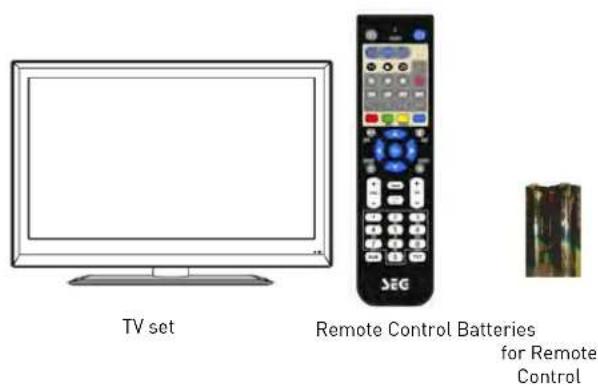
Unit and Accessories
Getting Started
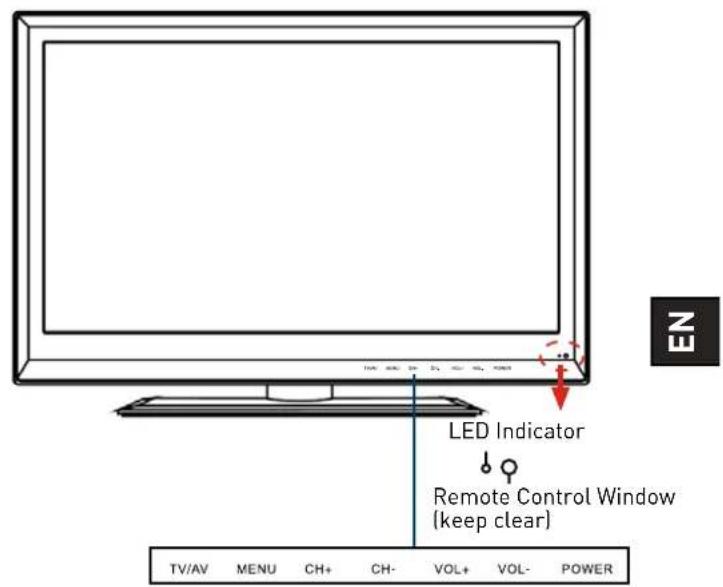
Front view
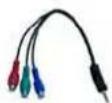
Converter cable for YPbPr video
User Guide
Packaging materials are no toys. Please keep away from children. Plastic bags can cause suffocation when pulled over the head.
Remote Control
Remote control may differ in shape from actual remote
Functions of remote control buttons
Depending on the model of the Television some keys will have no function
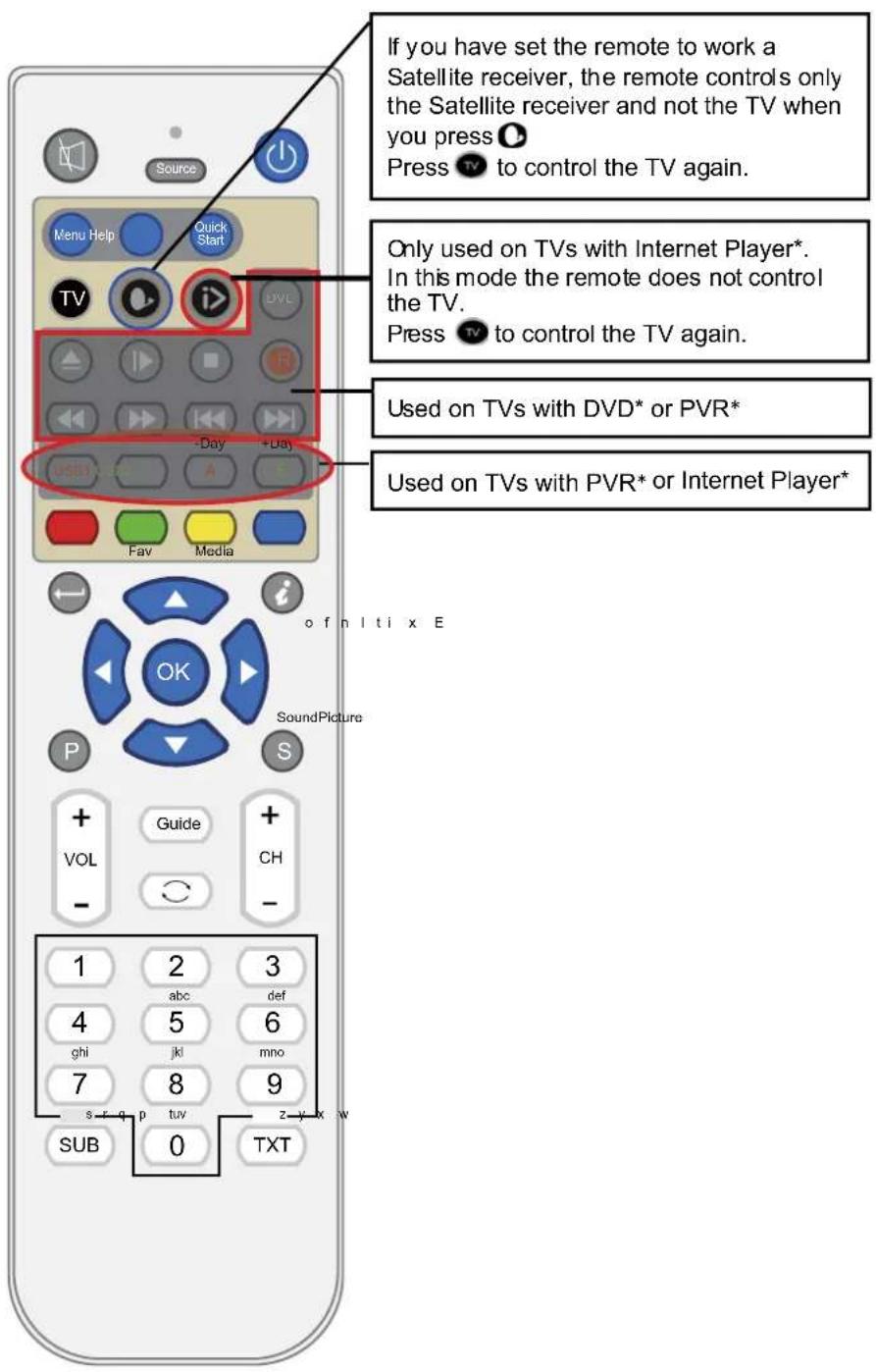
* Depending on the model
Remote control (continued)
Functions of remote control buttons
Depending on the model of the Television some keys will have no function
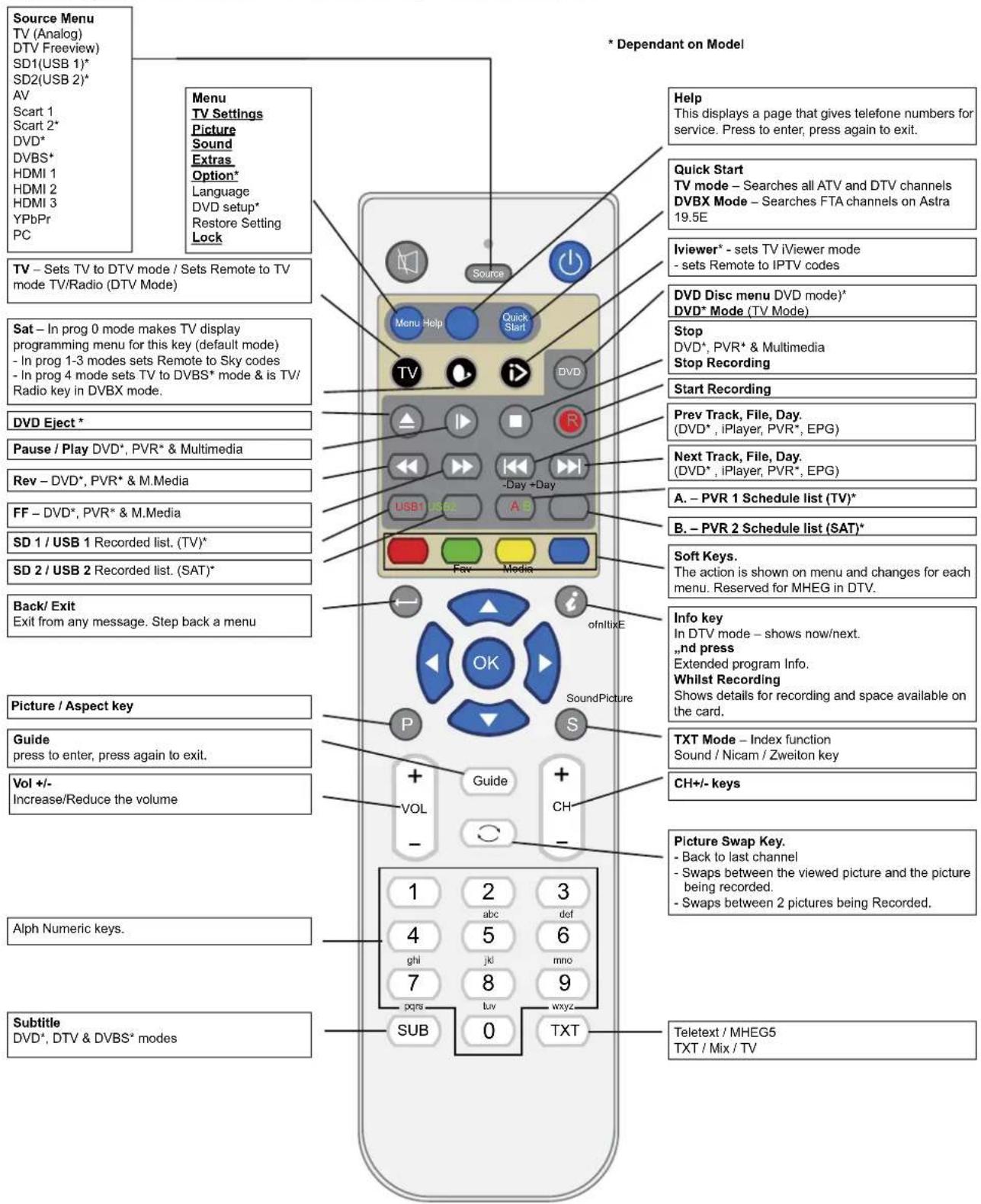
Remote control (continued)
Dependant on the model of TV some keys will have no function
*Dependant on Model
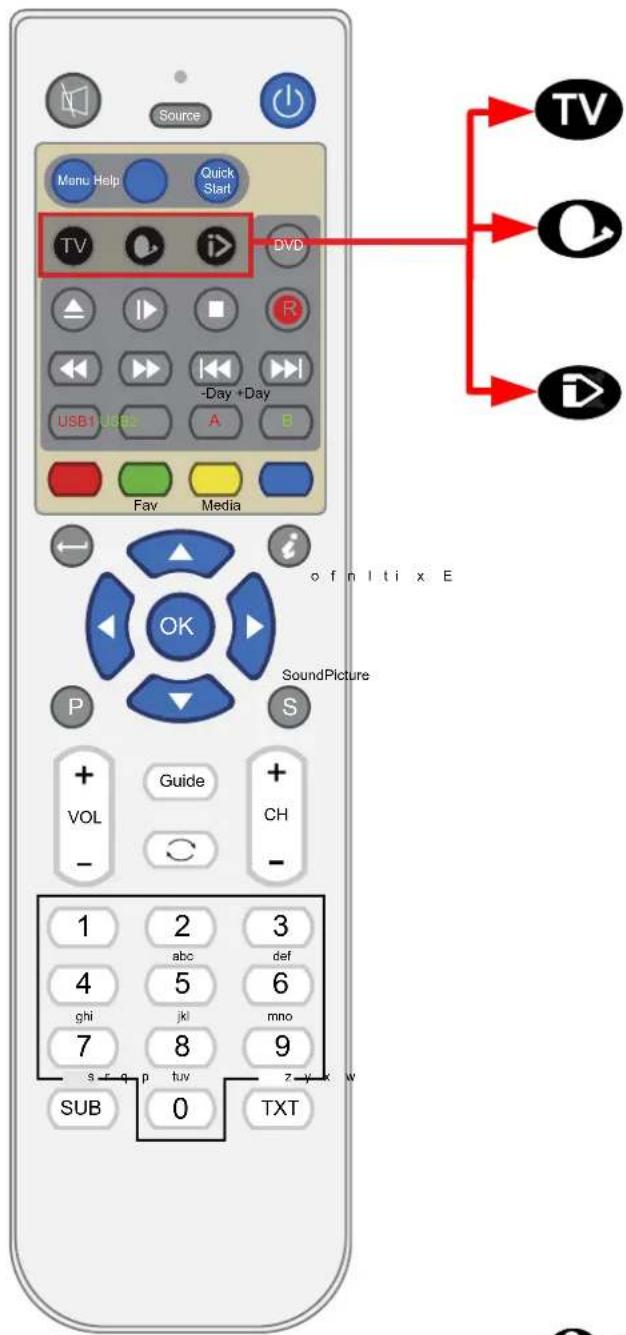
This button puts the Remote in TV control mode
This button puts the Remote in a Multi Satellite control mode
- A number of modes are available. See below for details
This button puts the Remote into an Internet Player mode
- This is only used on some TVs and Digital Boxes
To Set the Multi-Satellite Mode button
The Sat button is programmable in the remote and can be set as follows:
To set the button if you have no Satellite Receiver:
Press at the same time press 0.
If you have a Satellite Receiver with Recorder (Known as "Plus" type)
Press at the same time press 1.
If you have a Satellite Receiver with High Definition (Known as "HD" type)
Press at the same time press 2.
If you have a normal Digital Satellite Receiver (Known as "Digital" type)
Press at the same time press 3.
If you want to use this button to switch on the DVBS Player
Press at the same time press 4.
*DVBS only fitted on certain models.
O + 0 NO SAT RECEIVER
O + 1 SAT +
O + 2 SATHD
O + 3 SAT DIGITAL
O + 4 FTA DVBS
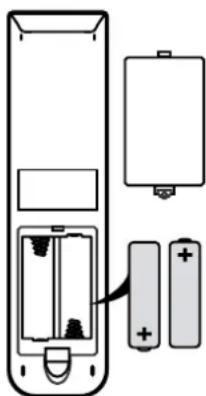
Installing Batteries in the Remote Control
- Remove the battery compartment cover at the rear of the remote control by pushing the retaining clip forward and pulling up.
- Install the supplied batteries, ensuring the polarity matches what is shown in the battery compartment.
- Replace the battery compartment cover.
Aerial connection
WARNING! ENSURE THE TV AND ALL ANCILLARY EQUIPMENT IS UNPLUGGED FROM THE MAINS BEFORE MAKING ANY CONNECTIONS!
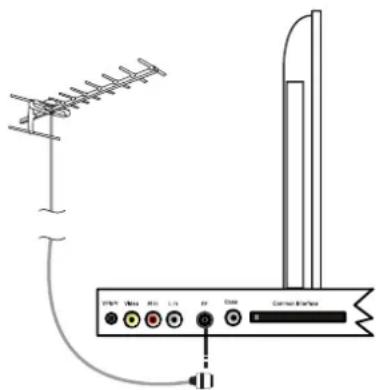
Connecting the TV Antenna
Connect the TV antenna to the aerial socket with a 75 ohm co-axial plug. For best results use a high gain TV aerial, preferably roof or loft mounted.
- To improve picture quality in a poor signal area, purchase and install a signal amplifier.
- If the antenna needs to be split for two TVs, use a 2-Way Signal Splitter (not supplied).
Using the Remote Control
To use the remote control point it at the TV and press the required buttons. You must be within 6 meters and at an angle of less than 30 degrees from the center of the TV.
NOTE: Sunshine or other strong light sources may interfere with the signal from the remote control. In this situation turn the TV away from the light source.

WARNING! DO NOT LEAVE BATTERIES IN THE REMOTE CONTROL FOR EXTENDED PERIODS AS THEY CAN LEAK OR CORRODE CAUSING DAMAGE TO THE REMOTE CONTROL. CHECK THEM PERIODICALLY AND REPLACE THEM AS REQUIRED.

WARNING! DO NOT MIX BATTERY TYPES. WHEN INSERTING BATTERIES, REPLACE ALL BATTERIES AT THE SAME TIME. DO NOT MIX OLD AND NEW BATTERIES.

WARNING! EXHAUSTED BATTERIES MUST BE TREATED WITH CARE AND DISPOSED OF ACCORDING TO ANY SAFETY OR RECYCLING REGULATIONS IN FORCE IN YOUR LOCAL AREA, NEVER DISPOSE OF BATTERIES INTO GENERAL WASTE, OR FIRE.

WARNING! NEVER EXPOSE BATTERIES TO EXCESSIVE HEAT SUCH AS SUNSHINE, FIRE OR THE LIKE.
Connecting external devices
This instruction manual shows the simplest and most effective way of connecting your TV to ancillary equipment. Alternate methods are listed below.
HDMI Lead
You can connect this TV to a compatible device using a HDMI lead. This method will give the best picture.
Connect the cable from the HDMI equipment to the TV HDMI socket.
SCART Lead
You can connect this TV to a compatible device using a SCART lead. The connection uses component video signals, i.e. the red, green and blue [RGB] content of the video are sent on separate signals.
VGA Cable
You can use your TV as a monitor for your personal computer by using a VGA cable. Sound from your personal computer may also be played through the TV.
Connecting external devices (continued)
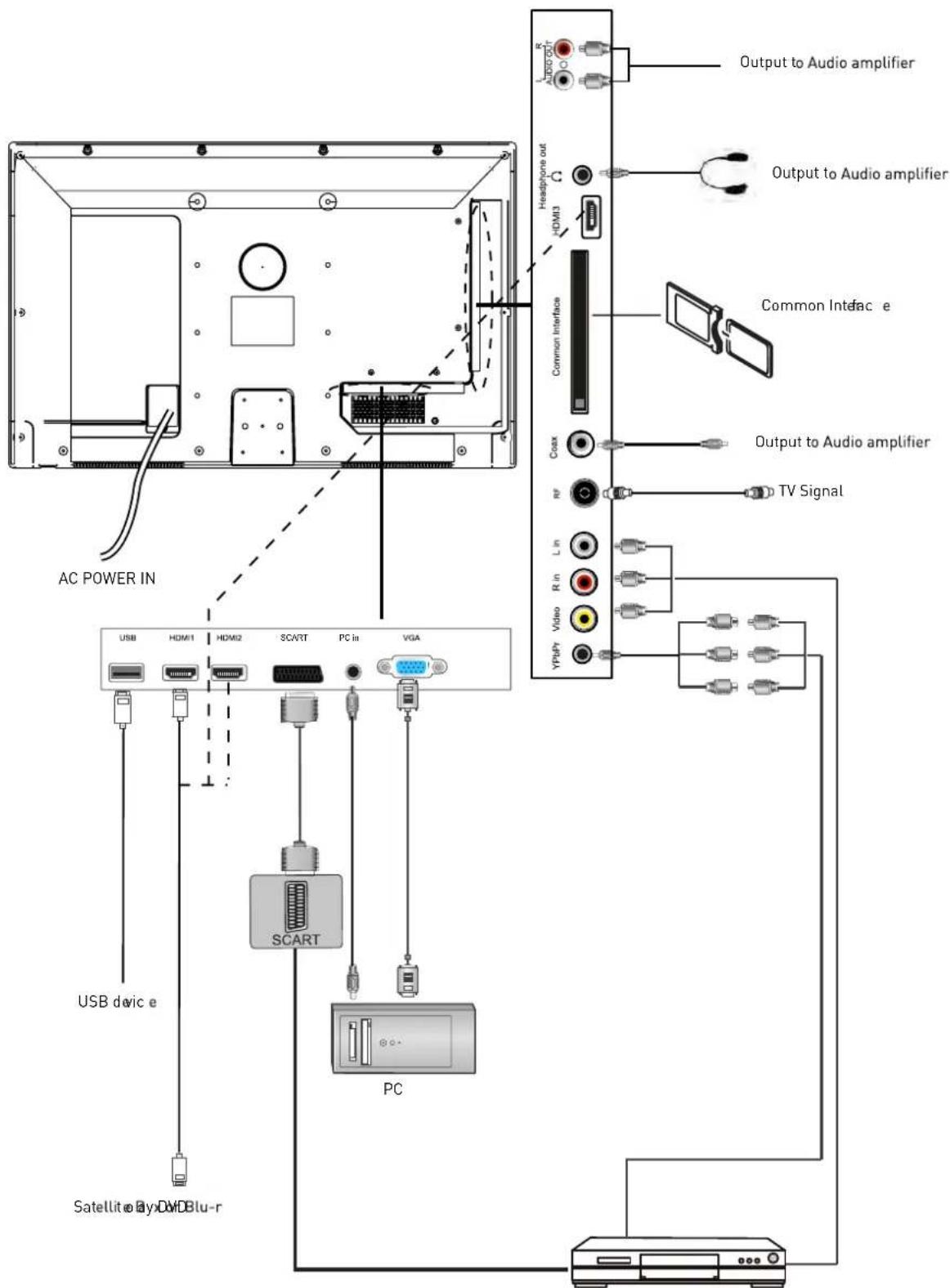
Connecting external devices (continued)
CONNECTIONS
| Name Function | Description |
| AC POWER IN Co | Connect to power supply |
| HDMI 1, 2, 3 | Connect to the HDMI socket of your DVD or Satellite Box |
| VGA | Connect to the PC VGA output to display PC graphics |
| PC-IN PC audio input | Input |
| mini YpbPr | Connect to the YPbPr output on external devices |
| RCA audio out Audio output t o audio amplifier | Audio output t o audio amplifier |
| USB Connect to USB device for multimedia | USB device for multimedia |
| SCART | Connect to the Scart input / output of external devices |
| RF Connect to an antenna | tenna or cable source |
| Headphone Conect Headphone | nect Headphone |
| CI Cl slot (pay as you view card slot) | you view card slot |
| Coax Output t | o audio amplifier |
VGA, HDMI PC Connection
Use a PC-VGA cable (not supplied) to connect the TV to your PC. You can also use an HDMI cable to connect to your PC (if your PC Graphic card supports HDMI). When the HDMI cable is used, the PC audio cable is no longer required. If you use the HDMI to DVI cable, you will need to use the PC audio cable. Connect all cables carefully and do not bend or break the connector pins.
When using the VGA cable
- Switch on the TV
- Switch on the PC
- Select PC/VGA as input source
When using the HDMI cable
- Select HDMI as input source

Caution:
Before connecting external devices:
- Makes sure to disconnect the appliances from the power supply in order to avoid any potential damage from occurring.
- Make sure to establish the required connection.
- Make sure that the connectors are properly and correctly attached before connecting the appliances to the power supply.
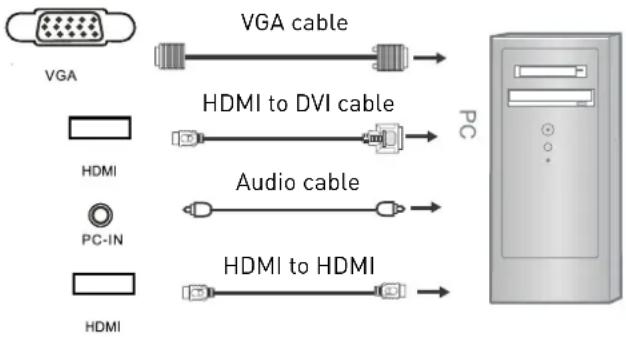
(All illustrated cables are not supplied)
PC connection
As PCs are sometimes still supplied with a 'conventional' CRT monitor, you may need to adjust the display settings of your PCs graphics card, otherwise the pictures may not appear correctly. Switch on your PC (still with your original monitor connected) now select the screen resolution, and select 60Hz refresh rate. Switch off your PC, then connect it to your TV while both appliances are still switched off.
Connecting Video camera and Video recorder Video camera
- Connect the AV cable to the TV and to the video camera.
- Turn on both video camera and the TV.
- Select AV/CVBS source
- You can now see the playback picture from the video camera. Note:
- To connect the video camera using other cables, refer to the video camera instruction manual.
Video recorder
- Connect the Scart cable to the TV and video recorder.
- Turn on both video recorder and the TV.
- Select Scart source
- You can now see the playback picture from the video recorder.
Note:
- To connect the video recorder using other cables, refer to the video recorder instruction manual.
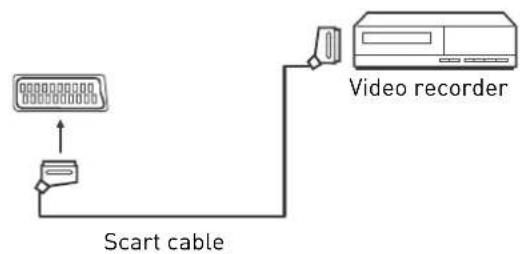
Use Scart adapter cable
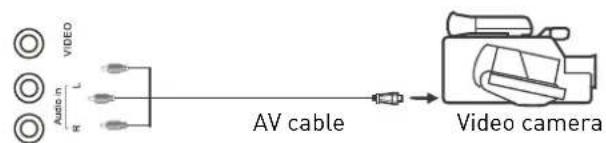
[All illustrated cables are not supplied]
Connecting an audio system
You can supply the TV sound to the stereo system (A) with the Scart socket. Use a special Scart cable SCART to RCA. (Please consult your hi-fi instructions for details). If you have a surround sound amplifier/decoder [B] Use the Scart cable or the special Scart cable Scart to RCA.
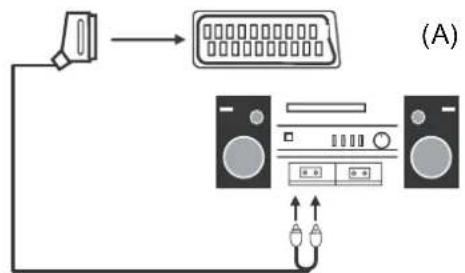
Scart to RCA cable
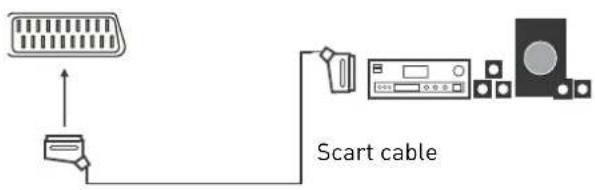
{All illustrated cables are not supplied}
Connecting a DVD player
Connect a DVD player using either a SCART cable or the HDMI cable. (only if your external equipment supports HDMI).
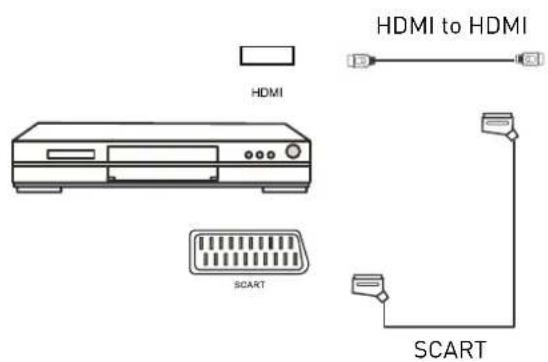
[All illustrated cables are not supplied]
When using the SCART cable
- Switch on the TV
- Switch on the DVD player
- Select SCART as input source
When using the HDMI cable
- Select HDMI as input source
Common Interface Slot
USING YOUR COMMON INTERFACE SLOT Common Interface
The Common Interface (CI) slot is designed to accept the Conditional Access Module (CAM) and Smart Card in order to view the pay TV programmes and additional services. Contact your Pay Per View TV service provider to get more information about the modules and subscriptions.
NOTE: Conditional Access Module and Smart Cards are sold separately.
WARNING! SWITCH OFF YOUR TV BEFORE ANY MODULE IS INSERTED INTO THE COMMON INTERFACE SLOT, THEN ADD THE SMART CARD TO THE CAM.
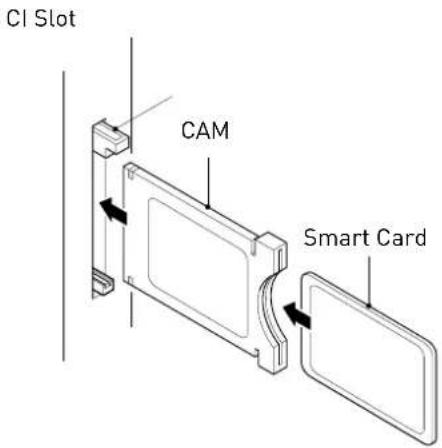
- Turn on the TV and ensure 'DTV' Source is selected.
- If the CAM is detected the TV will display the following message on the screen. "Common Interface Module inserted" wait for a few moments until the card is activated.
- Select the relevant digital Pay Per View channel.
- Detailed information on the Smart Card in use is displayed
- Press the Ok button to access the card menu. Refer to the Module Instruction Manual for setting details.
- When the module is removed, the following message will appear on the screen. "Common Interface module removed".
Auto installation setup
Power On/Off the LED TV
To turn on the LED TV
Press the power button on the LED TV or the button on the remote control, the standby indicator will light green.
To turn off the LED TV
Press the power button on the LED TV or the button on the remote control, the standby indicator will light red.
When you initially turn on the LED TV you will see the first time installation menu as below:
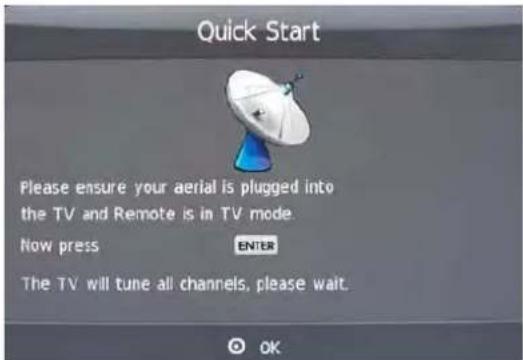
Ensure that the aerial is plugged in to the TV, Make sure your Remote is in TV mode (by pressing button), switch on the TV by pressing. Your still see the fi installation menu.
Press the OK button on the remote control to start the tuning procedure. This process will find all available ATV and DTV channels and store them.
By pressing the Quick Start button the first time installation can be recalled at any time.
Source Menu
You can select the input source menu by pressing the Source button on the remote control or the TV / AV button on the LED TV.
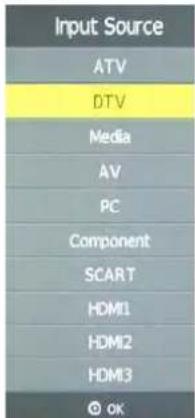
Press Source button on the remote control.
Use Move to the desired input source
Press OK to select.
Menu Settings
- Turn the LED TV on.
- Press the MENU button on the Remote Control.
3.Use the and buttons to navigate through the menu. - Press the EXIT button to exit the Menu.
CHANNEL MENU
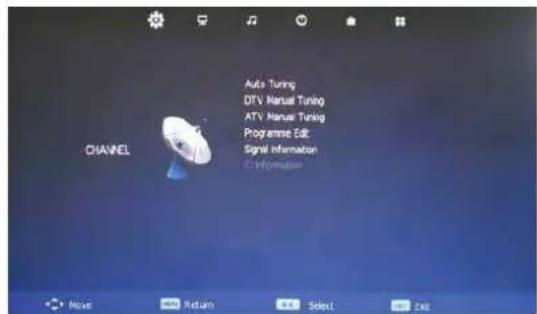
Allows you to search channels and set up a variety of channel options. (Select DTV source for example)
PICTURE MENU
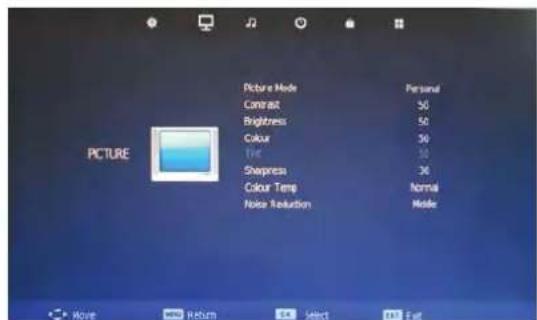
Allows you to make adjustments to your picture settings. (Select DTV source for example)
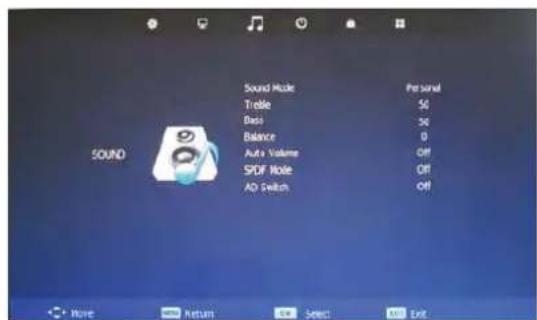
SOUND MENU
Allows you to customize the sound options and effects. (Select DTV source for example)
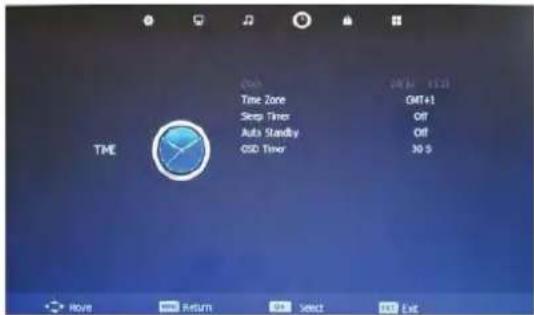
TIME MENU
Allows you to setup a variety of time options. (Select DTV source for example)
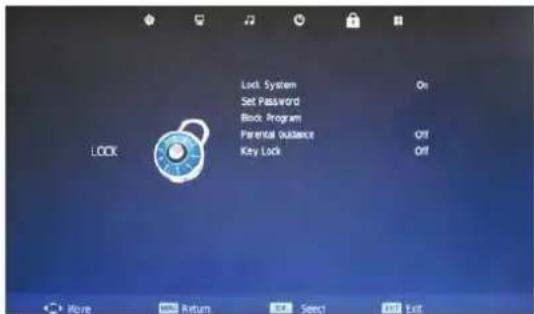
LOCK MENU
Allows you to set up a variety of lock options. (Select DTV source for example)
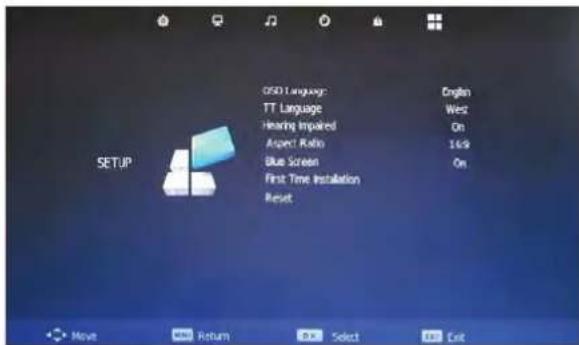
SETUP MENU
Allows you to set up a variety of options. (Select DTV source for example)
CHANNEL MENU
Use the and buttons to select the CHANNEL menu (as the picture above), press button to enter the menu.
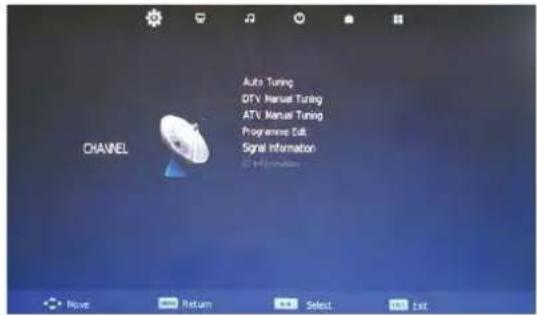
The CHANNEL menu includes the following options :
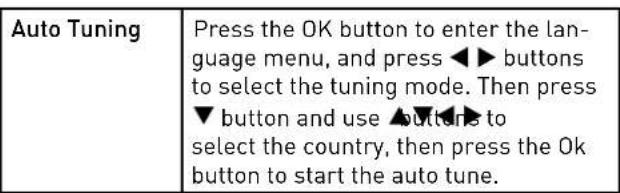
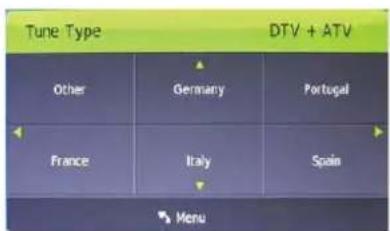

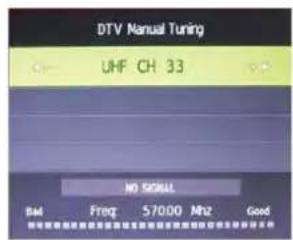

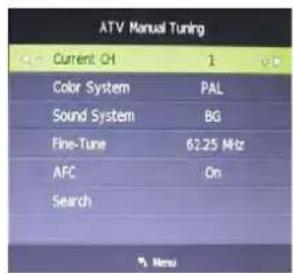
Press OK button to enter the ATV manual Tuning menu.
Current CH: Select a channel for storing the programme
Colour System: Select from PAL and AUTO
Sound System: Select from I, BG, DK
Search: Press button to manual search
Fine Tune: Press button to fine-tune
AFC: Automatic Frequency control ON/OFF
| Programme Edit | Opens the Programme Edit window where you can organise (delete, re-name, move, etc.) your channels. |
| Signal Information | Displays information about the signal strength and quality (DTV mode only). |
| CI Information | Displays information about the insert- ed CI Page /if any). |
Programme Edit
Press OK button to enter the Programme Edit menu as the following picture.
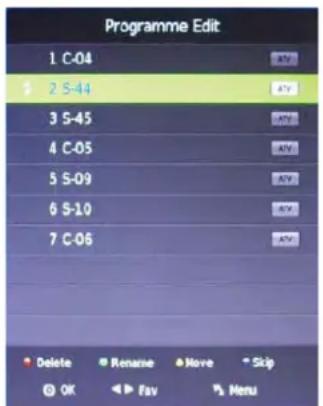
Delete: Select a channel and press RED button, "Delete" will appear on the right of the programme edit menu next to the channel you have chosen, then press RED button again, the programme will be deleted. However if you decide not to continue to delete press the menu button to quit.
Rename: Select an ATV channel and press the GREEN button to change the name of the channel by buttons.
Move: Select an ATV channel and press YELLOW button, then you can use buttons to exit and it will automatically save the current setting.
Skip: Select a channel and press the BLUE button to label the channel, as long as the channel has a skip label it will be skipped when searching through the channels with the CH+/- buttons.
Picture Menu
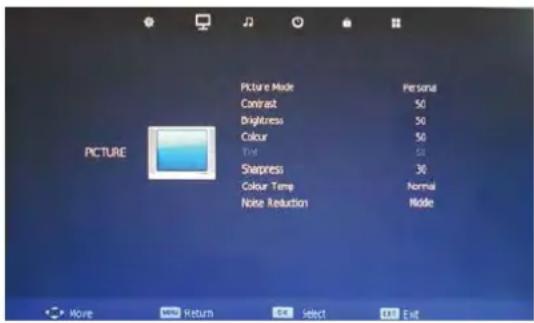
Picture Mode: Choose from Standard, Dynamic, User and Mild
Note: Contrast, Brightness, Colour and Sharpness are only available and can be adjusted in the User mode option.
Contrast: Controls the difference between the brightest and darkest regions of the picture.
Brightness: Controls the overall brightness of the picture.
Color: Controls the colour
Sharpness: Increase this setting to see crisp edges in the picture, decrease it for soft edges
Tint: Controls the [Tint / Hue] NTSC mode only.
Color Temp: Choose from Medium, Cool, User and Warm.
Noise Reduction: Choose interference noise modes from OFF, LOW, MIDDLE, HIGH and DEFAULT
Sound Menu
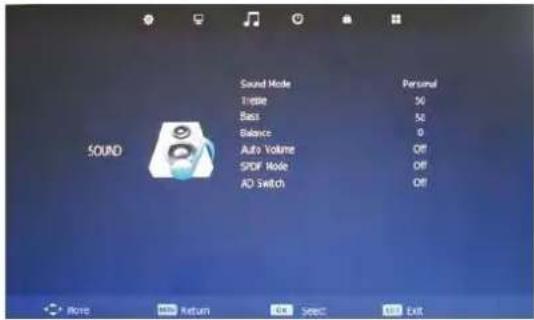
Sound Mode: Allows you to select Standard, Music, Movie, Sports or User. Note: Treble, Bass, Balance can only be adjusted when set in User mode.
Treble: Controls the relative intensity of higher pitched sounds
Bass: Controls the relative intensity of lower pitched sounds
Balance: Controls the volume between the left and right speaker.
Auto Volume: Controls the TVs volume automatically when ON is selected
SPDIF mode: Select the SPDIF mode AD Switch: Audio Descriptor ON/OFF
AD Switch: Audio Descriptor ON/OFF
Time Menu
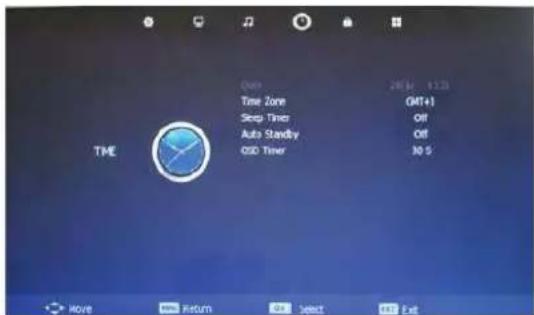
Clock: Display the time
Time Zone: Allows you to select the time zone
Sleep Timer: Allows you to setup the sleep timer among 10min, 20min, 30min, 60min, 90min, 120min, 180min, 24- 0min and off
Auto Standby: Turn ON/OFF the auto standby function
OSD Timer: Allows you to select how long the menu is displayed on screen.
Lock Menu
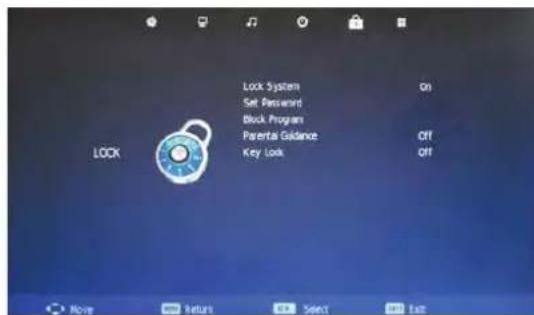
Lock System: Turn ON/OFF the lock system function
Note: you should enter the code to operate the menu (Default code is 0000)
Set Password: If the code has been changed you must enter the current password.
New: Enter new password
Confirm: Enter new password
Block Program: Use buttons to select the channel and press the GREEN button on the remote control to lock the channel.
Note: You must enter your password to view channels that have been blocked.
Parental Guidance: Allows you to select the parental guidance mode.
Key Lock: Lock the buttons on the TV set when you turn on this function.
Setup Menu
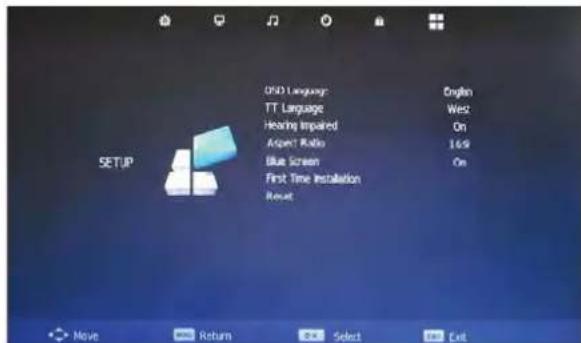
OSD Language: choose the menu language
TT Language: Allows you to select teletext language
Hearing Impaired: Turn ON/OFF the hearing impaired function
Aspect Ratio: AUTO, 4:-3, 16:9, Zoom1, Zoom2, just scan and Panorama
Blue Screen: Turn ON/OFF the blue screen function
First Time Installation: Display the First Time Installation menu
Reset: Press OK to restore factory default settings
Multimedia Operation
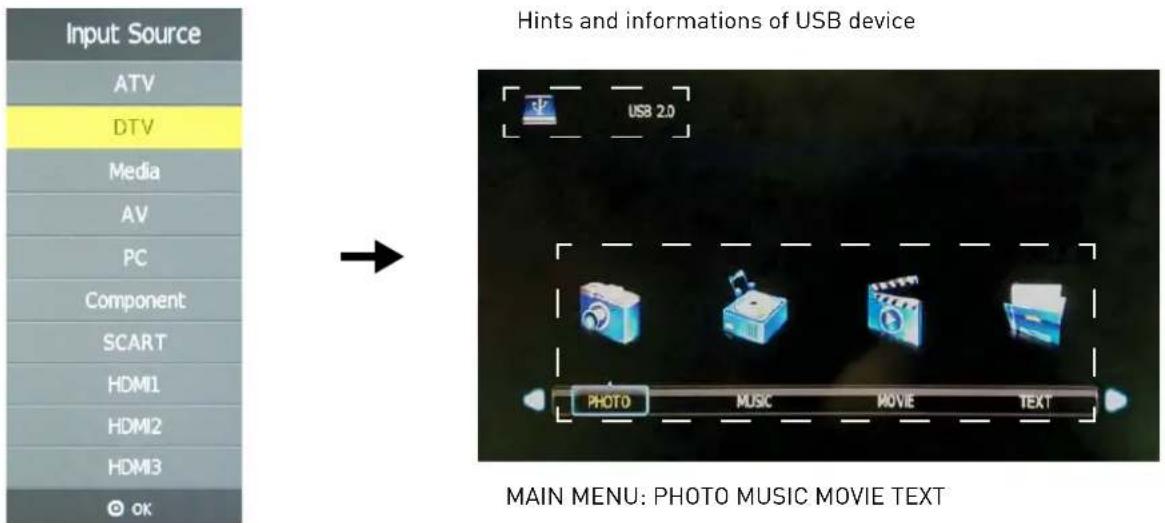
Press the source button to display the Input source menu and select MEDIA, press the OK button to enter the ME-DIA menu as seen in picture above.
Insert USB device and select the type of files you want to listen too or view from PHOTO, MUSIC, MOVIE and TEXT. Then Press OK to enter the menu and choose the folder or file you wish to activate.
Return - Return to previous folder or menu Press play/pause button to preview files
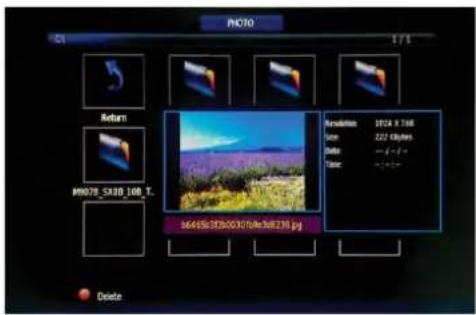
Press up/down/left/right arrow buttons to select and the OK button to activate the file or open the folder. Press OK to play the files in full screen mode. When in full screen mode press the OK button to show the navigation menu on the bottom of the screen or press stop button to return to files.
Note: Press RED button to delete any files
Photo
Photo viewing
Press to select the option on the navigation menu and press OK to activate.
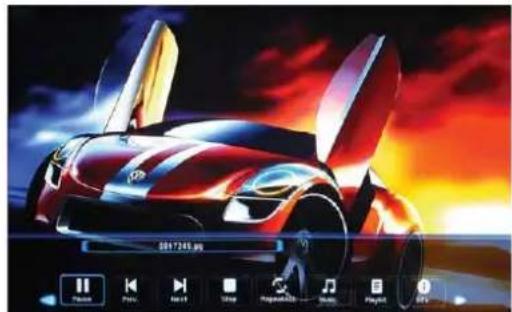
Pause: play/pause the photo viewing
Prev/Next: View the Previous or Next photo
Stop: Stop the photo viewing
Repeat: Select the repeat mode from REPEAT ALL, REPEAT 1 and OFF
Music: Play/Pause the music
Playlist: Display the playlist on screen
Info: Display the file information
Rotate: Turn the photo clockwise or counter clockwise
Zoom: Zoom IN/OUT of the photo.
Move View: Move the photo in Zoom in mode.
Music
Play the music
Press buttons to select the option on the menu and press OK button to activate.
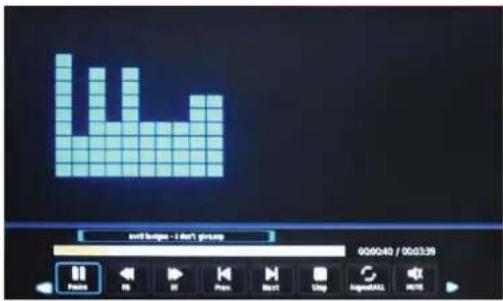
Pause: Play/Pause the music
FB/FF: Fast back and Fast forward
Prev/Next: Play the previous or next file
Stop: Stop the music
Repeat: Select from REPEAT ALL, REPEAT 1 and OFF
Mute: Mute the Audio
Playlist: Display the playlist on screen
Goto Time: Play the music or audio book from the time you set
Movie
Play the movie
Press to select the option on the menu and press OK button to activate.
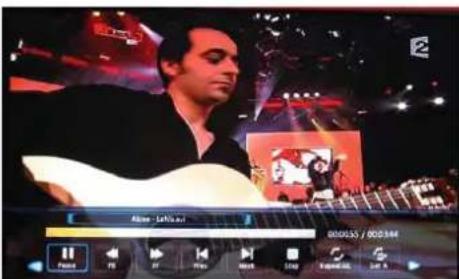
Pause: Play/Pause the movie
FB/FF: Fast back and Fast forward
Prev/Next: Play the previous or next file
Stop: Stop the movie playback
Set A-B: Select and play a chosen part of the movie file by setting A as start point and B as end. Press OK button to cancel.
Playlist: Display the playlist on screen
Slow forward: Play the movies at slow speed, press T for normal playback speed.
Step forward: Step quickly through the movie using this option
Goto Time: Play the movie from the time you set
Zoom: Zoom IN/OUT of the movie screen.
Aspect Ratio: Select the size of the screen display
Move View: Move the photo in Zoom mode
Text
View textfei
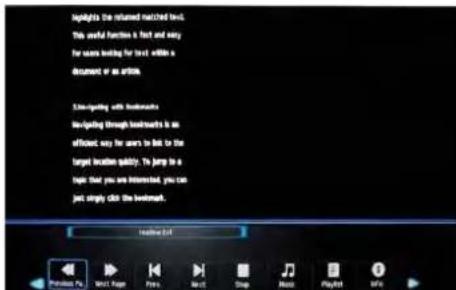
Prev/Next Page: Turn to the Previous or Next page
Prev/Next: Turn to the previous or next file
Music: Play/Pause the music programme
Playlist: Display the playlist on screen
Info: Display the file information
Stop: Stop the text viewing
EPG
Display the programme guide by pressing the GUIDE button
Select a programme to record by navigating through the EPG with the buttons.
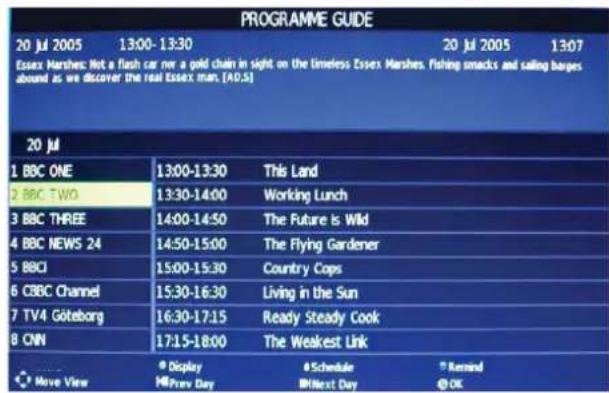
Display: Press the GREEN button to display the information of the programme
Remind: Press BLUE button to display the remind menu. Once the programme starts the TV will automatically switch to this programme.
TROUBLE SHOOTING GUIDE
To assist in locating possible faults use the help guide below.
| NOITULOSMOTPMYS | |
| No Picture, no sound | Check that the TV is correctly plugged in. Check that the TV is connected to a suitable power source. Check the electrical supply is turned on. |
| No Picture | Ensure that the TV is powered on. Check that the cables are fitted securely. Ensure the aerial and/or external sources are connected. Press the SOURCE button to change the source. Turn the TV on or off. |
| No Sound | Press the MUTE button and check if Mute mode is set. Switch to another channel and see if the same problem occurs. Press V+ button to see if the problem can be solved. |
| No picture on some channels | Check that correct channel is selected. Adjust the antenna. |
| No colour on some channels (black & white) | Check if the same problem exists on other channels. Ensure the correct picture settings are selected. |
| Noisy, Snowy, Ghosting picture. | Check the antenna is connected correctly. Check that the antenna is in good condition. Try moving the antenna. |
If none of the suggestions seem to work, try switching your TV off and then on again. If this does not work contact our technical helpline.
NOTE: The TV must only be repaired by a qualified registered service person. Never attempt to remove the back cover as the TV has dangerous voltages inside that may cause fatality or fire.
TECHNICAL SPECIFICATIONS
Specifications of the TV that you have just purchased may vary from the information in this table due to technical innovations.
TV Specifications
| TV System | PAL/BG/DK/ I |
| Audio System | BG/DK/I |
| Screen size | 32" (Diagonal) |
| Resolution | 1920 x 1080 Pixels (RGB) |
| Aerial input | 75 Ohm (unbalanced) |
| Audio output power | 2 x 6W |
| Power requirements | 100-240V ~ 50/60Hz |
| Power consumption | < 110W |
| Standby power consumption | <1W |
| thgW | 0x2x9 |
Remote controdpansfi
| Type Infrared | |
| Control distance 5m | |
| Control angle 30 degrees | (Horizontal) |
| Batteries 2 x 1.5V, Size AAA | |
| Dimensions 48 x 193 x 20mm | |
| Weight 120g (without batteries) |
Wall Mounting
- The stand must first be removed. Place the TV face down.
- Remove the five screws on the back of the TV to release the remaining part of the stand.
- Remove and store the stand and screws.
- Use four machine screws to mount the TV on the bracket.
This unit is VESA-Compliant and designed to be wall mounted with a VESA-Compliant 200mm× 100mm mounting kit. Mount this unit according to the instructions of the wall bracket (not supplied)
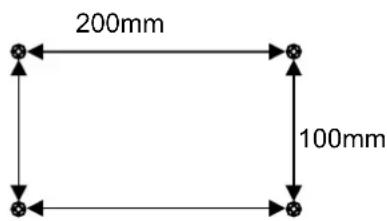
4 Mounting holes Screw size MB6 x 15
Waste Electrical Recycling
Correct disposal of Product
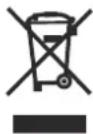
This sign indicates that this product may not be disposed of with your regular household waste. The recycling and separate collection of such products is your responsibility. Please drop off the above mentioned waste at a designated place for recycling waste electri
cal and electronic equipment. If you do not know where to drop off your waste equipment for recycling, please contact your local city office or household waste collection service.
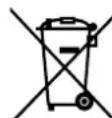
The crossed out wheeled dust bin symbol indicates that batteries and/or accumulators must be collected and disposed of separately from household waste.
Hg Cd Pb
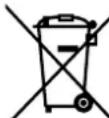
If the battery or accumulator contains more than the specified values of lead [Pb], mercury [Hg], and/or cadmium [Cd] defined in the Battery Directive (2006/66/EC), then the chemicals Hg Cd Pb symbols for lead(Pb), mercury (Hg) and/or cadmium [Cd] will appear below the crossed out wheeled dust bin symbol.
By participating in separate collection of batteries, you will help to assure the proper disposal of products and batteries thus help to prevent potential negative consequences for the environment and human health.
For more detailed information about the collection and recycling programmes available in your country, please contact your local city office or the shop where you purchased this product.

This appliance complies with European Safety and Electrical directives.
It fullfils the following EU regulations:
En55013:2001+A1:2003+A2:2006
EN55020: 2007
EN61000-3-2: 2006 EN61000-3-3:1995+A1:2001+A2:2005
EN55022:2006{CLASS-A}
EN55024:1998+A1:2001+A2:2003
Manufacturer:
D-66780 Rehlingen-Siersburg (Germany)
Fon: +49(0)6835 92350-0
Fax: +49(0)6835 92350-500
-
Contenu
Emplacement Common Interface. 13
UTILISATION DE VOTRE EMPLACEMENT COMMON INTERFACE 13
Telecommande (suite)
Modification programme
Slot Common Interface 13
UTILIZZARE LO SLOT COMMON INTERFACE 13
Slot Common Interface
UTILIZZARE LO SLOT COMMON INTERFACE Common Interface
Sist. file PVR: Imposta SistemBVR
Rapporto del formato: AUTO, 4:3, 16:9, Zoom1, Zoom2, Solo scan e Panorama




- SAFETY INFORMATION 3
- Unit and Accessories 5
- Getting Started. 5
- Remote Control 6
- Aerial connection 9
- Connecting external devices 9
- Common Interface Slot 13
- Auto installation setup 13
- Source Menu 14
- Menu Settings 14
- Multimedia Operation 18
- Introduction
- HDMI
- Safety is important
- Disclaimer
- SAFETY INFORMATION
- Headphone Warning
- Where to install
- LCD Screen
- Remote Control
- Functions of remote control buttons
- Remote control (continued)
- This button puts the Remote in TV control mode
- This button puts the Remote in a Multi Satellite control mode
- This button puts the Remote into an Internet Player mode
- To Set the Multi-Satellite Mode button
- Installing Batteries in the Remote Control
- Aerial connection
- Connecting the TV Antenna
- Using the Remote Control
- Connecting external devices
- HDMI Lead
- SCART Lead
- VGA Cable
- Connecting external devices (continued)
- VGA, HDMI PC Connection
- Caution:
- PC connection
- Connecting Video camera and Video recorder Video camera
- Video recorder
- Note:
- Use Scart adapter cable
- Connecting an audio system
- Connecting a DVD player
- Common Interface Slot
- USING YOUR COMMON INTERFACE SLOT Common Interface
- Auto installation setup
- Power On/Off the LED TV
- Source Menu
- Menu Settings
- CHANNEL MENU
- PICTURE MENU
- SOUND MENU
- TIME MENU
- LOCK MENU
- SETUP MENU
- Programme Edit
- Multimedia Operation
- Photo
- Photo viewing
- Music
- Movie
- Text
- EPG
- TROUBLE SHOOTING GUIDE
- TECHNICAL SPECIFICATIONS
- TV Specifications
- Wall Mounting
- Waste Electrical Recycling
- Correct disposal of Product
- Hg Cd Pb
- Manufacturer:
- Contenu
- Emplacement Common Interface. 13
- Telecommande (suite)
- Modification programme
- Slot Common Interface 13
- Slot Common Interface
- UTILIZZARE LO SLOT COMMON INTERFACE Common Interface
Brand : SEG
Model : Vermont
Category : Television