ManualGo.com
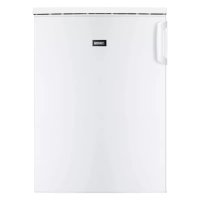
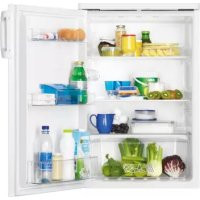
 ZRT 16 JA - Fridge ZANUSSI - Free user manual and instructions
Find the device manual for free ZRT 16 JA ZANUSSI in PDF.


Download the instructions for your Fridge in PDF format for free! Find your manual ZRT 16 JA - ZANUSSI and take your electronic device back in hand. On this page are published all the documents necessary for the use of your device. ZRT 16 JA by ZANUSSI.
USER MANUAL ZRT 16 JA ZANUSSI
From the Electrolux Group. The world’s No.1 choice.
From the Electrolux Group. The world’s No.1 choice.
From the Electrolux Group. The world’s No.1 choice.
ELECTROLUX HOME PRODUCTS BELGIUM Bergensesteenweg, 719 - B-1502 LEMBEEK Tel. 02.363044436
GB Before installing and using the appliance read this user's instruction book carefully. It contains safety precautions,
hints, information and ideas. If the refrigerator is used in compliance with the instructions written, it will operate
properly and provide you with greatest satisfaction.
The symbols below help you to find things more easily:
Warnings and information at this symbol serve safety for you and your appliance.
Hints, useful information
Environmental information
At this symbol ideas can be found according to food and its storing.
From the Electrolux Group. The world’s No.1 choice.
The Electrolux Group is the world's largest producer of powered appliances for kitchen, cleaning and outdoor use. More than 55 million Electrolux
Group products (such as refrigerators, cookers, washing machines, vacuum cleaners, chain saws and lawn mowers) are sold each year to a value
of approx. USD 14 billion in more than 150 countries around the world.
Important safety information 37
General safety precautions 37
Precautions for child safety37
Safety precautions for installation37
Safety precautions for isobutane37
Instructions for the User38
General information 38
Description of the appliance, main parts 38
Handling the appliance 39
Putting it into use 38
Controlling the temperature, setting 38
Hints for storage 38
Storage time and temperature of foods39
How to use the cooling compartment 39
Some useful information and advice 39
How to save energy40
The appliance and environment40
When the refrigerator is not in use 40
How to change the bulb 41
If something does not work41
Instructions for the Installer41
Installing the appliance42
Transportation, unpacking 42
Change of door opening direction42
Electrical connection 43
Storage time chart44
Warranty and service 45
Guarantee conditions45
Service and spare parts 45
Declaration of guarantee terms 45Precautions for child safety
Do not allow children to play with the packaging of the
appliance. Plastic foil can cause suffocation.
Adults must handle the appliance. Do not allow chil-
dren to play with it or its controlling parts.
If you are discarding the appliance pull the plug out of
the socket, cut the connection cable (as close to the
appliance as you can) and remove the door to prevent
playing children to suffer electric shock or to close
Safety precautions for installa-
Put the appliance to the wall to avoid touching or
catching warm parts (compressor, condenser) to pre-
When moving the appliance take care of the plug not
to be in the socket.
When placing the appliance take care not to stand it
Adequate air circulation should be around the appli-
ance, lacking this leads to overheating. To achieve
sufficient ventilation follow the instructions relevant to
Safety precautions for isobutane
The refrigerant of the appliance is isobutane (R600a)
that is inflammable and explosive to a greater extent.
Keep ventilation openings, in the appliance enclosure
or in the built-in structure, clear of obstruction.
Do not use mechanical devices or other means to
accelerate the defrosting process, other than those
recommended by the manufacturer.
Do not damage the refrigerant circuit.
Do not use electrical appliances inside the food stor-
age compartments of the appliance, unless they are
of the type recommended by the manufacturer.
For the safety of life and property keep the pre-
cautions of these user's instructions as the
manufacturer is not responsible for damages caused
GB Important safety information
General safety precautions
Keep these instructions and they should remain at
the appliance when moving away or changing owner.
This appliance is designed for storing food, domestic
use and being used according to these instructions
Specialised companies that are qualified to do
so by the manufacturer must carry out service
and repairs including repairing and changing
the power cord. Accessory parts supplied by them
should be used only for repairing. Otherwise the
appliance can be damaged or can cause other dam-
The appliance is out of circuit only in that case if the
plug is removed from the socket. Before cleaning
and maintenance always unplug it (do not get it by
the cable). If the socket is difficult to reach, switch off
the appliance by cutting off the current.
Power cord must not be lengthened.
Make sure that the power plug is not squashed
or damaged by the back of the fridge/freezer.
- A damaged power plug may overheat and cause a
Do not place heavy articles or the fridge/freezer
itself on the power cord.
- There is a risk of a short circuit and fire.
Do not remove the power cord by pulling on its
lead, particularly when the fridge/freezer is
being pulled out of its niche.
- Damage to the cord may cause a short-circuit, fire
and/or electric shock.
- If the power cord is damaged, it must be replaced
by a certified service agent or qualified service
If the power plug socket is loose, do not insert
- There is a risk of electric shock or fire.
Without the lamp cover of interior lighting you must
not operate the appliance.
When cleaning, do not use sharp, pointed or hard
devices, as they can cause damage to the appliance.
Be careful not to allow liquids to the temperature
control and lighting box.
Do not put hot pot to the plastic parts.
Do not store flammable gas and liquid in the appli-
ance, because they may explode.
Check and clean the outlet of melting water coming
during defrosting regularly - a label inside the appli-
ance warns you for this. If it is clogged the melting
water gathered can cause earlier failure.38
GB Instructions for the User
The official designation of the appliance is home refriger-
ator without frozen food compartment. According to this
the appliance is suitable for storing cooled foods, but it is
not suitable for storing frozen and deep-frozen foods and
The appliance can meet the requirements of standards
between different temperature limits according to the cli-
The letter symbol for class of climate can be found on the
Description of the appliance, main parts
6. Butter compartment
Place the accessories into the refrigerator then plug to the
mains socket. To start cooling turn the control dial on the
right-hand side of the fresh food compartment from "0"
clockwise according to the figure. In "0" position the
appliance is out of operation.
The next paragraph will give instructions for setting.
Controlling the temperature, setting
The thermostatic controller interrupts the operation of the
appliance automatically for more or less time depending
on the setting then restarts it assuring the required tem-
Turning the control button towards the bigger numbers
cooling becomes more and more intensive.
Setting the knob of the thermostatic control to 3 the tem-
perature starting automatically in the fresh food compart-
ment is about +5 °C or below. The 3 position generally
meets the requirements of everyday cooling.
The temperature coming about in the refrigerator is effect-
ed by not only the position of the thermostatic control but
the ambient temperature, frequency of door openings and
the quantity of food put into it newly, etc.
The colder the ambient temperature of the appliance
is the less energy it uses.
Avoid putting the appliance in a sunny place and near
anything that gives off heat.
Be sure that the condenser and the compressor are
well ventilated. Do not cover the sections where ven-
Wrap products in tightly closing dishes or cling film to
avoid building up unnecessary frost.
Do not leave the door open longer than necessary
and avoid unnecessary openings.
Put foods into the appliance only in a closed dish.
Put warm foods into the appliance only when they are
at room temperature.
Keep the condenser clean at the back of the appli-
ance.In the maximum i.e. 5 position - in case of
Storage time and temperature of
The storage time can not be determined exactly in
advance, as it depends on the freshness and handling of
the cooled food. That is why the storage time made
known is only informative.
If you do not want to use up deep-frozen foods bought
immediately they can be stored for about 1 day (until dis-
solving) in this type of refrigerator. If the deep-frozen food
has already dissolved, refreezing is not recommended, it
has to be used up as soon as possible.
How to use the cooling compart-
Developing interior air circulation is necessary for
adequate cooling. For this reason you are asked not
to cover the whole surface of the wire shelves with paper,
Do not put hot food into the refrigerator. Allow
it to reach room temperature naturally. In this
way unnecessary frost building up can be avoided.
Foods can take over odours from each other.
So it is essential to put foods in closed dishes
or wrap them in cellophane, aluminium foil, grease-
proof paper or cling film before placing them into the
refrigerator. This way foods will keep their moisture
e.g. vegetables will not dry out after some days.
Some useful information and advice
The variable shelves are worth paying attention to,
which increases the usefulness of the fresh food
compartment considerably. Rearranging the shelves is
also possible when the door is open at an angle of 90°.
The inside configuration of the door makes rearranging
the door shelves as required possible.
In this chapter practical hints and ideas are given about
how to use the appliance to reach maximum energy sav-
ing and there is environmental information about the appli-
GBHow to save energy
The colder the ambient temperature of the appliance
is the less energy it uses.
Avoid putting the appliance in a sunny place and near
anything that gives off heat.
Be sure that the condenser and the compressor are
well ventilated. Do not cover the sections where ven-
Wrap products in tightly closing dishes or cling film to
avoid building up unnecessary frost.
Do not leave the door open longer than necessary
and avoid unnecessary openings.
Put foods into the appliance only in a closed dish.
Put warm foods into the appliance only when they are
at room temperature.
Keep the condenser clean at the back of the appli-
The appliance and environment
This appliance does not contain gasses which could dam-
age the ozone layer, in either its refrigerant circuit or insu-
lation materials. The appliance shall not be discarded
together with the urban refuse and rubbish. Avoid damag-
ing the cooling unit, especially at the rear near the heat
exchanger. Information on your local disposal sites may
be obtained from your municipal authorities.
The materials used on this appliance marked with the
sympol are recyclable.
Bleeding part of the moisture of cooling chamber in form
of frost and ice goes with the operation of the refrigerator.
Thick frost and ice has an insulating effect, so it reduces
cooling efficiency as the temperature increases and it
At this type of appliance defrosting cooling compartment
is automatic without any external intervention.
The thermostatic control interrupts the operation of com-
pressor at regular intervals for more or less time - during
this cooling is interrupted - temperature of the cooling
compartment increases and defrosting occurs. After
defrosting the thermostatic control restarts operation of
Melting water flows through defrost water outlet into the
evaporative tray maintained on the top of compressor and
evaporates due to warmth of it.
Check and clean the outlet of melting water
coming during defrosting regularly. If it is
clogged the melting water gathered can cause earli-
er failure as it can go to the insulating of the appli-
Clean the melting water outlet with the supplied pipe
scraper that can be seen in the figure. The pipe scraper
has to be stored in the outlet.
Occasionally check the defrost water outlet not to be
The most typical case of clogging up in the defrost water
outlet when you put food wrapped in some paper into the
appliance and this paper contacts back plate of cooling
compartment and freezes to it. If you remove the food
right at this moment the paper will tear and it can cause
clogging up in the outlet by getting into it. So you are
asked to be careful - because of the above - when placing
foods wrapped in paper into the appliance.
In case of increased demand e.g. during heat-
waves, the refrigerator temporarily happens to oper-
ate constantly - during this the automatic defrosting is inef-
Remaining small ice and frost stains on back plate of the
cooling compartment after defrosting period is not abnor-
It is recommended to wash the inside of the refrigerator in
Household cleaner or soap must not be used.
After you made it no-current wash the appliance using
lukewarm water and wipe it.
Clean the magnet door rubber profile with clean water.
After cleaning plug the appliance to the mains socket.
Dust and dirt collected on the back of the refrigerator,
condenser is recommended to be removed and clean the
evaporative tray on top of the compressor once or twice a
When the refrigerator is not in use
In case the appliance will not be used for a long time fol-
Break the circuit of the appliance.
Remove foods from the refrigerator.
Defrost and clean it as written before.
Leave the door open to avoid a build up of air inside.
How to change the bulb
Should the light fail to work you can change it as below:
Break the circuit of the appliance.
Unscrew the plate screw fixing the lamp cover, then take
the lamp cover off in the direction of arrow and the bulb
can be changed. (Type of the bulb: Mignon 322, 230 V,
After changing bulb replace the lamp cover, screw the
plate screw and apply voltage to the appliance.
The lack of light does not influence operation of the refrig-
GB ProblemThe appliance does notcool sufficientlyThe appliance cools too hard The appliance does notcool at allThe appliance is noisyPossible causeThermostatic control is set too low.Too many foods to be cooled were put in.Very warm foods were put in.Door is not shut properly.There is no inside cool air circulation.The thermostatic control is set too high.Plug is not connected to the mains socket properly.There is no voltage in the mains socket.Thermostatic control is in "0" position.The appliance is not supported properly.SolutionSet higher position.Put fewer foods to be cooled.Put foods max. at room temperature.Check if the door is shut.Provide inside cool air circulation.Set lower position.Check if the connection is proper.Check if there is voltage.Check setting of thermostatic control.Check if the appliance stands stable (all the fourfeet should be on the floor). Inasmuch as the advice does not lead to result, call the nearest brand-mark service.
If something does not work
During operation of the appliance some smaller but
annoying trouble can often occur, which does not
require calling a technician out. In the following
chart information is given about them to avoid
unnecessary charges on service.
We draw your attention that operation of appliance
goes with certain sounds (compressor- and circulat-
ing sound). This is not trouble, but means normal
We draw it to your attention again that the
appliance operates discontinuously, so the
stopping of compressor does not mean being no-
current. That is why you must not touch the electri-
cal parts of the appliance before breaking the cir-
Instructions for the Installer
Energy consumption (kWh/24h)
Energy class, according to EU standards
34Do not stand the appliance on a sunny place or close to aradiator or cooker.If it is unavoidable because of furnishing and the appli-ance has to be stood near a cooker take these minimumdistances into consideration:In case of gas or electric cooker 3 cm must be left,when it is less put a 0,5-1 cm non-flam insulationbetween the two appliances.In case of oil or coal-fired stove the distance must be30 cms since they give off more heat.The refrigerator is designed to operate when it is totallypushed to the wall.When placing the refrigerator keep minimal dis-tances recommended in figure.A : placing it under a wall-cupboardB : placing it freely Change of door opening direction Should the setting-up place or handling demand it, door-opening direction can be refitted from right-handed to left-handed.Following operations are to be done on the basis of fig-ures and explanations:Pull out the plug from the mains socket.Tilt back the appliance carefully being careful so thatthe compressor can not touch the floor. It is recom-mended to ask another person for help, who cankeep the appliance at this position safely.Unscrew the adjustable feet situated on both sides (2pieces), in addition the screws fixing the lower door Installing the appliance
Transportation, unpacking It is recommended to deliver the appliance in originalpackaging, in vertical position considering the protectivewarning on packaging.After each transportation the appliance must not beswitched on for approx. 2 hours.Unpack the appliance and check if there are damages onit. Report possible damages immediately to the place youbought it. In that case retain packaging. Cleaning Remove every adhesive tape, which ensure the parts notto move in the appliance.Wash the inside of the appliance using lukewarm waterand mild detergent. Use soft cloth.After cleaning wipe out the inside of the appliance. Placement The ambient temperature has an effect on the energy con-sumption and proper operation of the appliance. Whenplacing, take into consideration that it is practical to oper-ate the appliance between ambient temperature limitsaccording to the climate class that is given in the chartbelow and can be found in the data label.Class of climate Ambient temperatureSN +10 ... +32 °CN +16 ... +32 °CST +18 ... + 38 °CIf the ambient temperature goes below the lower data thetemperature of the cooling compartment can go beyondthe prescribed temperature.If the ambient temperature goes beyond the upper datathis means longer operating time of the compressor,breakdown in the automatic defrosting increasing temper-ature in the cooling compartment or increasing energyconsumption.When placing the appliance ensure that it stands level.This can be achieved by two adjustable feet (1) at the bot-tom in front. 1-1 piece of distance washer (2) are acces-sories of the adjustable feet. If levelling the appliancerequires, these washers can be removed. 42
1holders (3 pieces) respectively the screw on the other
Put over the pin in the lower door holding plate in the
direction of the arrow.
Fix the plate on the other side leaving the position of
Then screw in the one screw in the place set free on
the other side as well as the adjustable feet (2
pieces) and set up the box.
For refitting the upper door holder take out the screws
(2 pieces) fixing the plastic top on the back of the
Push back the top and lift it from the fixing elements.
Unscrew the screws fixing the upper door holder (2
After unscrewing turn over the pin in the door holder
plate in the direction of the arrow.
Fit and fix the door holder plate on the other side with-
out displacing the door.
Put back the plastic top on the fixing elements and
Fix the top with the screws (2 pieces) on the back
Put over the handle and the plastic nails on the other
GB Put the appliance to its place, set it level and plug it
into the mains socket.
In case you do not want to perform the procedures above,
call the nearest brand-mark service. Technicians will
accomplish the refitting expertly for charge.
Electrical connection
This refrigerator is designed to operate on a
The plug must be put into a socket with protective
contact. If there is no such, it is recommended to get
an electrician to fit an earthed socket in compliance
with standards near the refrigerator.
This appliance complies with the following E.E.C.
73/23 EEC of 19.02.73 (Low Voltage Directive) and
subsequent modifications,
89/336 EEC of 03.05.89 (Electromagnetic
Compatibility Directive) and subsequent modifica-
GB Storage time chart
Time and method of storage of fresh foods in the refrigerator
X usual storage time
x possible storage time (concerns to really fresh product only)
Foods Storage time in days Method of packaging
Raw meat XXx x x cling film, airtight
Cooked meat XXXx x x dish covered
Roasted meat XXXx x dish covered
Raw minced meat X dish covered
Roasted minced meat XXx x dish covered
Cold cuts, Vienna sausage XXx x cling film, cellophane, grease-proof
Fresh fish X x x cling film, airtight
Cooked fish XXx x dish covered
Fried fish XXx x x dish covered
Tinned fish, open X x x dish covered
Fresh chicken XXXx x x cling film, airtight
Fried chicken XXXx x x dish covered
Fresh hen XXx x x cling film, airtight
Boiled hen XXx x x dish covered
Fresh duck, goose XXXx x x cling film, airtight
Roasted duck, goose XXXX x x x dish covered
Butter unopened XXXX XX Xoriginal packaging
Butter opened XXx x x x x original packaging
Milk in a plastic bag XXXx x original packaging
Cream XXx x plastic box
Sour cream XXXX x x x plastic box
Cheese (soft) XXXX x x x cling film
Egg XXXX XX X Spinach, sorrel XXx x cling film
Mushroom XXx x x cling film
Carrot, roots XXXX XX Xcling film
Bell-pepper XXx x x cling film
Tomato XXXX XX Xcling film
Cabbage XXXX Xx x cling film
Quickly rotting fruits (strawberry,
raspberry, etc.) XXXx x cling film
Other fruits XXXX x x x cling film
Tinned fruits opened XXXx x dish covered
Cakes filled with cream XXx x dish covered45
GB Guarantee conditions
Service and spare parts
If calling the service is unavoidable, announce the trouble
at a brand-mark service nearest to your place.
When announcing the appliance has to be identified
according to its data label.
The data label of the appliance is stuck to the wall of the
interior beside the vegetable box in the fresh food com-
partment in the bottom on the left side. All necessary
data are there which are needed to the service
announcement (type, model, serial number, etc.). Note
here the data from the data label of your appliance:
The manufacturer reserves the right to make any changes in the products.
Warranty and service
Our appliances are produced with the greatest of care.
However, a defect may still occur. Our consumer services
department will repair this upon request, either during or
after the guarantee period. The service life of the appliance
will not, however, be reduced as a result.
This declaration of guarantee terms is based on European
Union Directive 99/44/EC and the provisions of the Civil
Code. The statutory rights that the consumer has under
this legislation are not affected by this declaration of guar-
This declaration does not affect the vendor's statutory war-
ranty to the end user. The appliance is guaranteed within
the context of and in adherence with the following terms:
1. In accordance with provisions laid down in para-
graphs 2 to 15, we will remedy free of charge any
defect that occurs within 24 months from the date the
appliance is delivered to the first end user. These
guarantee terms do not apply in the event of use for
professional or equivalent purposes.
2. Performing the guarantee means that the appliance is
returned to the condition it was in before the defect
occurred. Defective parts are replaced or repaired.
Parts replaced free of charge become our property.
3. So as to avoid more severe damage, the defect must
be brought to our attention immediately.
4. Applying the guarantee is subject to the consumer
providing proof of purchase showing the purchase
and/or delivery date.
5. The guarantee will not apply if damage caused to del-
icate parts, such as glass (vitreous ceramic), synthet-
ic materials and rubber, is the result of inappropriate
6. The guarantee cannot be called on for minor faults
that do not affect the value or the overall reliability of
Declaration of guarantee terms
7. The statutory warranty does not apply when defects
a chemical or electrochemical reaction caused
abnormal environmental conditions in general,
unsuitable operating conditions,
contact with harsh substances.
8. The guarantee does not apply to defects due to trans-
port which have occurred outside of our responsibili-
ty. Nor will the guarantee cover those caused by inad-
equate installation or assembly, lack of maintenance
or failure to respect the assembly instructions or
9. Defects that result from repairs or measures carried
out by people who are not qualified or expert or
defects that result from the addition of non-original
accessories or spare parts are not covered by the
10. Appliances that are easy to transport may be delivered
or sent to the consumer services department. Home
repairs are only anticipated for bulky appliances or
built-in appliances.
11. If the appliances are built-in, built-under, fixed or sus-
pended in such a way that removing and replacing
them in the place where they are fitted takes more
than half an hour, the costs that result therefrom will
be charged for. Connected damage caused by these
removal and replacement operations will be the
responsibility of the user.
12. If, during the guarantee period, repairing the same
defect repeatedly is not conclusive, or if the repair
costs are considered disproportionate, in agreement
with the consumer, the defective appliance may be
replaced with another appliance of the same value.46
In this event, we reserve the right to ask for a financial con-
tribution calculated according to the length of time it
13. A repair under guarantee does not mean that the nor-
mal guarantee period will be extended nor that a new
guarantee period begins.
14. We give a twelve month guarantee for repairs, limited
15. Except in the event where liability is legally imposed,
this declaration of guarantee terms excludes any com-
pensation for damage outside the appliance for which
the consumer wishes to assert his rights. In the event
of legally admitted liability, compensation will not
exceed the purchase price paid for the appliance.
These guarantee terms are only valid for appliances pur-
chased and used in Belgium. For exported appliances, the
user must first make sure that they satisfy the technical con-
ditions (e.g.: voltage, frequency, installation instructions,
type of gas, etc.) for the country concerned and that they
can withstand the local climatic and environmental condi-
tions. For appliances purchased abroad, the user must first
ensure that they meet the qualifications required in
Belgium. Non-essential or requested adjustments are not
covered by the guarantee and are not possible in all cases.
Our consumer services department is always at your dis-
posal, even after the guarantee period has expired.
Address for our consumer services department:
ELECTROLUX HOME PRODUCTS BELGIUM Bergensesteenweg, 719 - 1502 LEMBEEK Tel. 02.3630444
GB B/Za/9. (04.)47Printed by Océ Hungária Kft.
From the Electrolux Group. The world’s No.1 choice.
The Electrolux Group is the world's largest producer of powered appliances for kitchen, cleaning and outdoor use. More than 55 million Electrolux
Group products (such as refrigerators, cookers, washing machines, vacuum cleaners, chain saws and lawn mowers) are sold each year to a value
of approx. USD 14 billion in more than 150 countries around the world.
ELECTROLUX HOME PRODUCTS OPERATIONS EUROPE