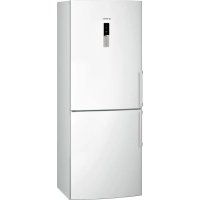
KGN56AW22N - Fridge BOSCH - Free user manual and instructions
Find the device manual for free KGN56AW22N BOSCH in PDF.



User questions about KGN56AW22N BOSCH
0 question about this device. Answer the ones you know or ask your own.
Ask a new question about this device
Download the instructions for your Fridge in PDF format for free! Find your manual KGN56AW22N - BOSCH and take your electronic device back in hand. On this page are published all the documents necessary for the use of your device. KGN56AW22N by BOSCH.
USER MANUAL KGN56AW22N BOSCH
tr Kullanma kilavuzuen Instruction for Use
fr Mode d'emploi ar
tr içindekiler
Safety and warning information 22
Information concerning disposal ...... 24
Scope of delivery 24
Ambient temperature and ventilation 25
Connecting the appliance 25
Getting to know your appliance 26
Switching the appliance on 27
Setting the temperature 28
Energy saving mode 28
Alarm function 28
Usable capacity 29
Refrigerator compartment 29
Super cooling 29
Freezer compartment 30
Max. freezing capacity 30
Freezing and storing food 30
Freezing fresh food 31
Super freezing 32
Thawing frozen food 32
Interior fittings 32
Sticker "OK" 34
Switching off and disconnecting the appliance 34
Cleaning the appliance 34
Light (LED) 35
Tips for saving energy 35
Operating noises 36
Eliminating minor faults yourself 36
Customer service 38
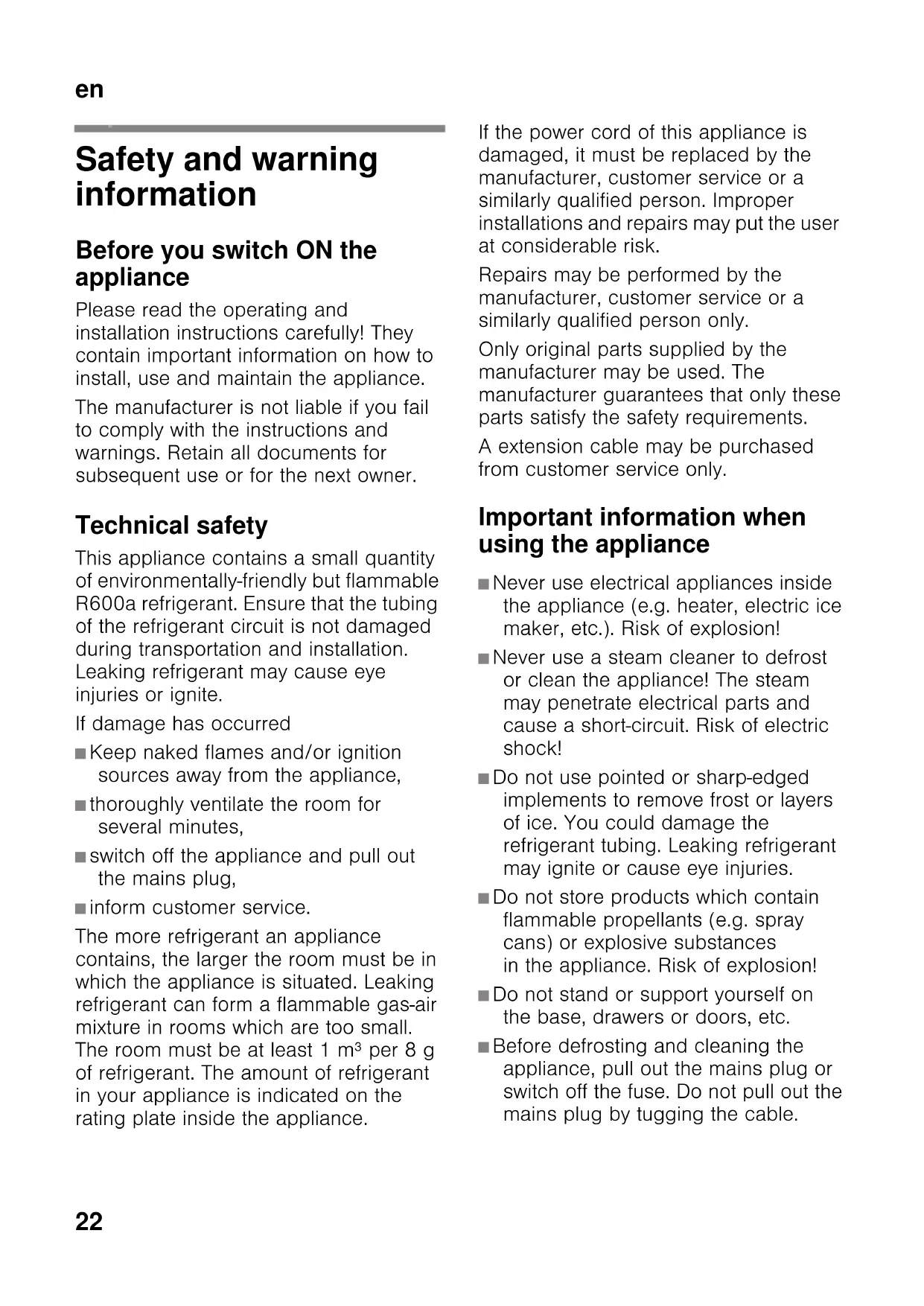
Safety and warning information
Before you switch ON the appliance
Please read the operating and installation instructions carefully! They contain important information on how to install, use and maintain the appliance. The manufacturer is not liable if you fail to comply with the instructions and warnings. Retain all documents for subsequent use or for the next owner.
Technical safety
This appliance contains a small quantity of environmentally-friendly but flammable R600a refrigerant. Ensure that the tubing of the refrigerant circuit is not damaged during transportation and installation. Leaking refrigerant may cause eye injuries or ignite.
If damage has occurred
- Keep naked flames and/or ignition sources away from the appliance,
thoroughly ventilate the room for several minutes,
■ switch off the appliance and pull out the mains plug,
inform customer service.
The more refrigerant an appliance contains, the larger the room must be in which the appliance is situated. Leaking refrigerant can form a flammable gas-air mixture in rooms which are too small. The room must be at least 1m^3 per 8 g of refrigerant. The amount of refrigerant in your appliance is indicated on the rating plate inside the appliance.
If the power cord of this appliance is damaged, it must be replaced by the manufacturer, customer service or a similarly qualified person. Improper installations and repairs may put the user at considerable risk.
Repairs may be performed by the manufacturer, customer service or a similarly qualified person only.
Only original parts supplied by the manufacturer may be used. The manufacturer guarantees that only these parts satisfy the safety requirements.
A extension cable may be purchased from customer service only.
Important information when using the appliance
- Never use electrical appliances inside the appliance (e.g. heater, electric ice maker, etc.). Risk of explosion!
- Never use a steam cleaner to defrost or clean the appliance! The steam may penetrate electrical parts and cause a short-circuit. Risk of electric shock!
- Do not use pointed or sharp-edged implements to remove frost or layers of ice. You could damage the refrigerant tubing. Leaking refrigerant may ignite or cause eye injuries.
- Do not store products which contain flammable propellants (e.g. spray cans) or explosive substances in the appliance. Risk of explosion!
- Do not stand or support yourself on the base, drawers or doors, etc.
Before defrosting and cleaning the appliance, pull out the mains plug or switch off the fuse. Do not pull out the mains plug by tugging the cable.
Bottles which contain a high percentage of alcohol must be sealed and stored in an upright position.
- Keep plastic parts and the door seal free of oil and grease. Otherwise, parts and door seal will become porous.
- Never cover or block the ventilation openings for the appliance.
People (childern incl.) who have limited physical, sensory or mental abilities or inadequate knowledge must not use this appliance unless they are supervised or given meticulous instructions.
- Do not store bottled or canned drinks (especially carbonated drinks) in the freezer compartment. Bottles and cans may explode!
- Never put frozen food straight from the freezer compartment into your mouth. Risk of low-temperature burns!
- Avoid prolonged touching of frozen food, ice or the evaporator pipes, etc. Risk of low-temperature burns!
Children in the household
- Keep children away from packaging and its parts.
Danger of suffocation from folding cartons and plastic film!
- Do not allow children to play with the appliance!
If the appliance features a lock: keep the key out of the reach of children!
General regulations
The appliance is suitable
for refrigerating and freezing food,
for making ice.
This appliance is intended for use in the home and the home environment.
The appliance is suppressed according to EU Directive 2004/108/EC.
The refrigeration circuit has been checked for leaks.
This product complies with the relevant safety regulations for electrical appliances (EN 60335-2-24).
Information concerning disposal
Disposal of packaging
The packaging protects your appliance from damage during transit. All utilised materials are environmentally safe and recyclable. Please help us by disposing of the packaging in an environmentally friendly manner.
Please ask your dealer or inquire at your local authority about current means of disposal.
Disposal of your old appliance
Old appliances are not worthless rubbish! Valuable raw materials can be reclaimed by recycling old appliances.
This appliance is identified according to the European guideline 2002/96/EC on waste electrical and electronic equipment - WEEE. The directive specifies the framework for an EU-wide valid return and re-use of old appliances.
Warning
Redundant appliances
- Pull out the mains plug.
- Cut off the power cord and discard with the mains plug.
- Do not take out the trays and receptacles: children are therefore prevented from climbing in!
- Do not allow children to play with the appliance once it has spent its useful life. Danger of suffocation!
Refrigerators contain refrigerant and gases in the insulation. Refrigerant and gases must be disposed of professionally. Ensure that tubing of the refrigerant circuit is not damaged prior to proper disposal.
Scope of delivery
After unpacking all parts, check for any damage in transit.
If you have any complaints, please contact the dealer from whom you purchased the appliance or our customer service.
The delivery consists of the following parts:
Free-standing appliance
Interior fittings (depending on model)
Operating instructions
Installation manual
Customer service booklet
Warranty enclosure
Information on the energy consumption and noises
Bag containing installation materials
Ambient temperature and ventilation
Ambient temperature
The appliance is designed for a specific climate class. Depending on the climate class, the appliance can be operated at the following temperatures.
The climate class can be found on the rating plate. Fig. 16
| Climate class Permitted ambient temperature |
| SN+10 °C to 32 °C |
| N+16 °C to 32 °C |
| ST+16 °C to 38 °C |
| T+16 °C to 43 °C |
Note
The appliance is fully functional within the room temperature limits of the indicated climatic class. If an appliance of climatic class SN is operated at colder room temperatures, the appliance will not be damaged up to a temperature of +5^ .
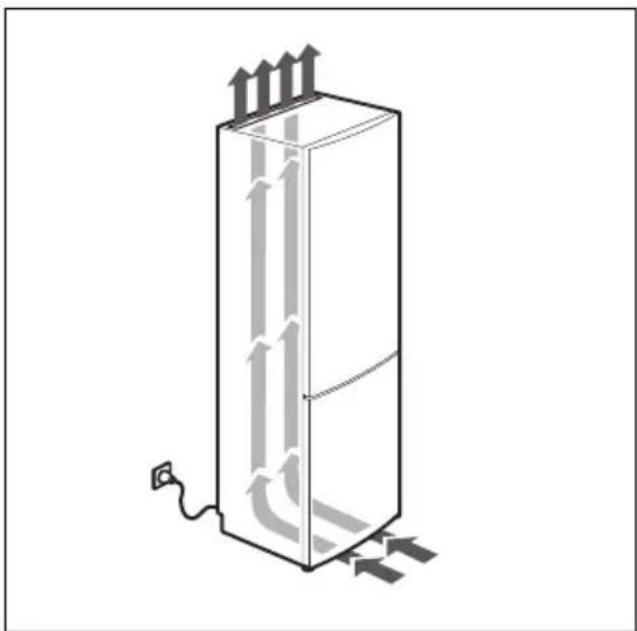
Ventilation
Fig. 3
The air on the rear panel and on the side panels of the appliance heats up.
Conduction of the heated air must not be obstructed. Otherwise, the refrigerating unit must work harder. This increases power consumption. Therefore: Never cover or block the ventilation openings!
Connecting the appliance
After installing the appliance, wait at least 1 hour until the appliance is switched on. During transportation the oil in the compressor may have flowed into the refrigeration system.
Before switching on the appliance for the first time, clean the interior of the appliance (see chapter "Cleaning the appliance").
Electrical connection
The socket must be near the appliance and also freely accessible following installation of the appliance.
The appliance complies with the protection class I. Connect the appliance to 220-240 V/50 Hz alternating current via a correctly installed socket with protective conductor. The socket must be fused with a 10 to 16 A fuse.
For appliances operated in non-European countries, check whether the stated voltage and current type match the values of your mains supply match the values of the mains supply. This information can be found on the rating plate. Fig. 16
Warning
Never connect the appliance to electronic energy saver plugs.
Our appliances can be used with mains and sine-controlled inverters. Mains-controlled inverters are used for photovoltaic systems which are connected directly to the national grid. Sine-controlled inverters must be used for isolated applications (e.g. on ships or in mountain lodges) which are not connected directly to the national grid.
Getting to know your appliance
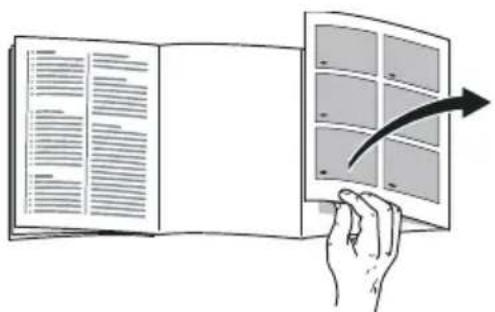
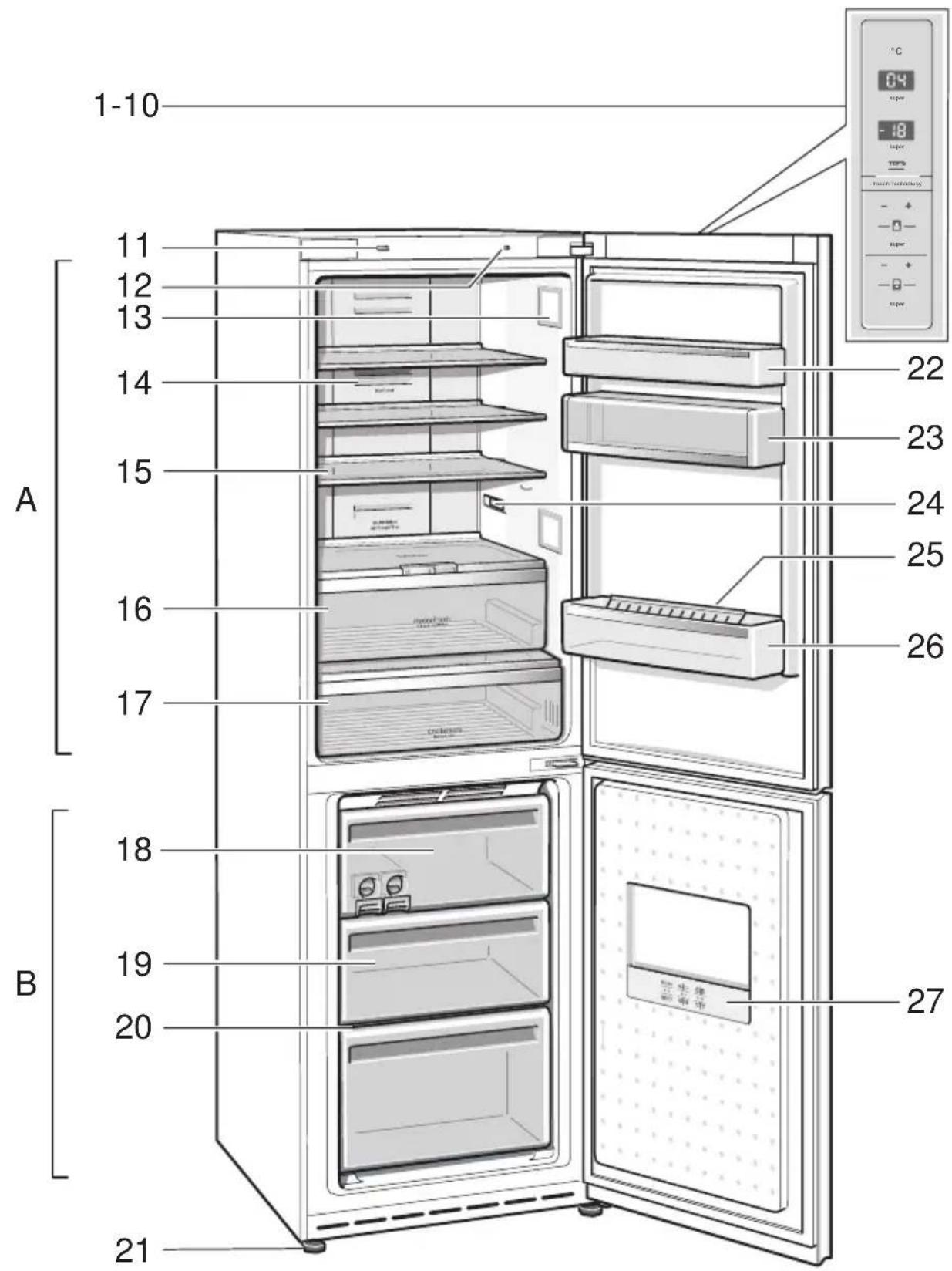
Please fold out the illustrated last page. These operating instructions refer to several models.
The features of the models may vary. The diagrams may differ.
Fig. 1
* Not all models.
1 - 10 Controls
11 Main On/Off switch
12 Light switch
13 Light (LED)
14 Air outlet opening
15 Shelf in the refrigerator compartment
16 Vegetable container
17 Chiller container
18 Ice maker/pizza box *
19 Freezer drawer
20 Freezer shelf
21 Height-adjustable feet
22 Egg rack
23 Butter and cheese compartment *
24 Active carbon filters
25 Bottle holder *
26 Shelf for large bottles
27 Ice block/Frozen-food calendar *
A Refrigerator compartment
B Freezer compartment
Controls
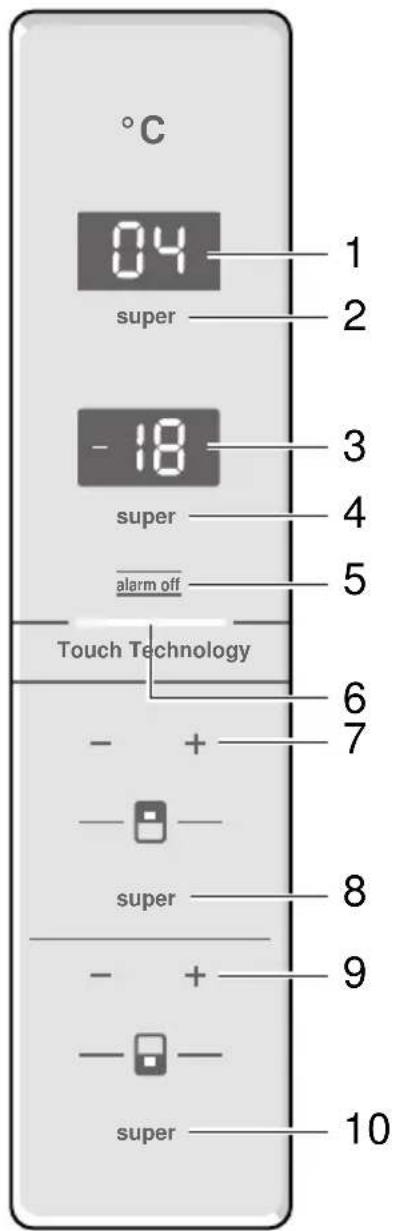
Fig. 2
1 Temperature display refrigerator compartment
The numbers correspond to the set refrigerator compartment temperatures in ^ C
2 "super" display (refrigerator compartment)
Illuminates when "super cooling" is on.
3 Temperature display freezer compartment
The numbers correspond to the set freezer compartment temperatures in ^ C
4 "super" display (freeze compartment)
Illuminates when super freezing is on.
5 Alarm button
Used to switch off the warning signal, see chapter "Alarm function".
6 Energy saving mode display
It is lit when the appliance is not in use.
7 Temperature selection buttons / Refrigerator compartment
These buttons set the temperature in the refrigerator compartment.
8 "Super" button refrigerator compartment
Switches super cooling on and off.
9 Temperature selection buttons // Freezer compartment
These buttons set the temperature in the freezer compartment.
10 "Super" button (freeze compartment)
Switches super freezing on and off.
Note
When the appliance is not used for some time, the display on the fascia switches to ECO mode.
Switching the appliance on
Press the On/Off button 1/11.
Warning signal is emitted. When the alarm button 2/5 is pressed, the warning signal stops.
The alarm button 2/5 remains lit until the set temperature has been reached.
The factory has recommended the following temperatures:
Refrigerator compartment: +4^ C
Freezer compartment: -18 °C
Operating tips
- When the appliance has been switched on, it may take several hours until the set temperatures have been reached.
The fully automatic No Frost system ensures that the freezer compartment remains free of ice. Defrosting is no longer required.
The sides of the housing are sometimes heated slightly. This prevents condensation in the area of the door seal.
If the freezer compartment door cannot be immediately re-opened after it has been closed, wait until the resulting low pressure has equalised.
Setting the temperature
Fig. 2
Refrigerator compartment
The temperature can be set from +2^ to +8^ .
Keep pressing temperature setting button 7 until the required refrigerator compartment temperature is set. The value last selected is saved.
The set temperature is indicated on temperature display 1.
We recommend a factory setting of +4^ in the refrigerator compartment.
Perishable food should not be stored above +4^ .
Freezer compartment
The temperature can be set from -16^ to -24^ .
Keep pressing temperature setting button 9 until the required freezer compartment temperature is set. The value last selected is saved.
The set temperature is indicated on temperature display 3.
We recommend a factory setting of - 18^ in the freezer compartment.
Energy saving mode
When the appliance is not used for a short time, the display on the controls switches to energy saving mode.
Only the energy saving mode display is lit 2/6.
As soon as the appliance is in use again, e.g. when the door is opened, the display switches back to normal illumination.
Alarm function
The warning signal switches on if the freezer compartment is too warm.
Switching off the warning signal
Fig. 2
Press the "alarm" button 5 to switch off the warning signal.
Door alarm
The door alarm switches on if an appliance door is left open for longer than one minute. Close the door to switch off the warning signal.
Temperature alarm
The temperature alarm switches on if the freezer compartment is too warm and the frozen food is at risk of thawing.
The temperature display 3 flashes and the alarm button 5 is lit.
When the alarm button 5 is pressed, the temperature display 3 indicates for five seconds the warmest temperature reached in the freezer compartment.
Then this value is deleted. The temperature display 3 then indicates the set temperature.
The alarm may switch on without any risk to the frozen food:
when the appliance is switched on,
when large quantities of fresh food are placed in the appliance,
if the freezer compartment door is open too long.
Note
Do not refreeze thawing or thawed food. It can only be refrozen when it has been used to prepare a ready meal (boiled or fried).
No longer store the frozen produce for the max. storage period.
Usable capacity
Information on the usable capacity can be found inside your appliance on the rating plate. Fig. 16
Fully utilising the freezer volume
The maximum amount of food can be placed in the freezer by removing all fittings. The food can be stacked directly on the shelves and in the bottom of the freezer compartment.
Removing the fittings
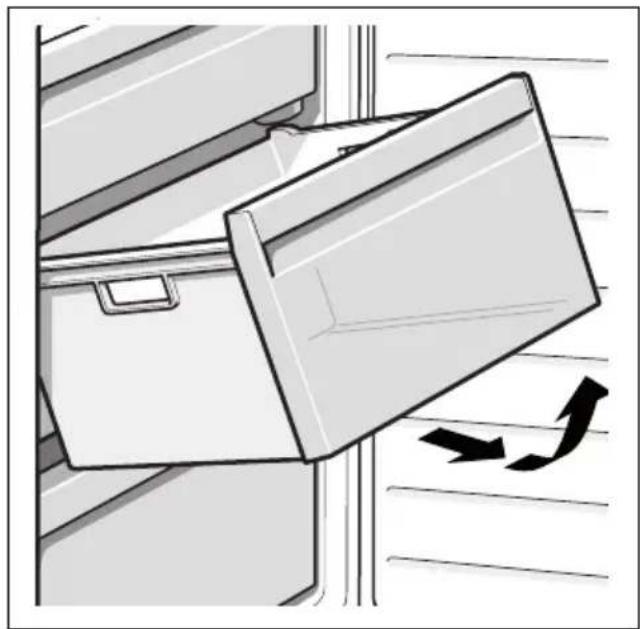
Pull out the frozen food container all the way, lift at the front and remove. Fig. 10
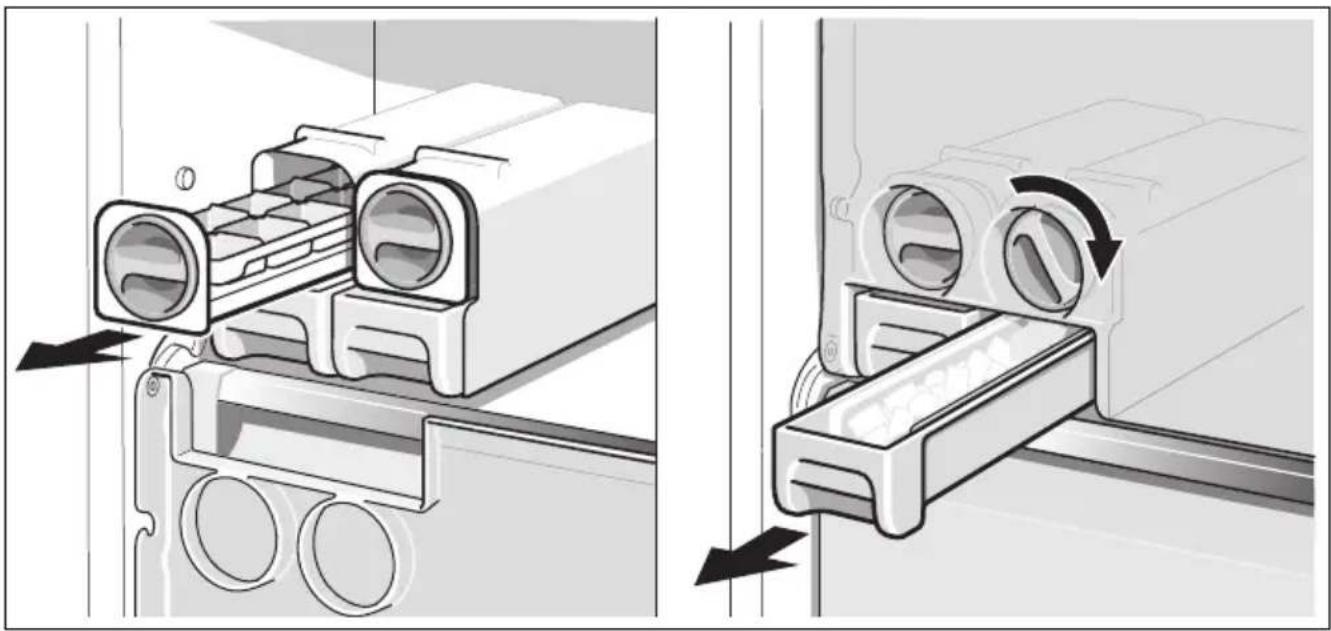
If appliances feature an ice maker, the latter can be taken out. Fig. 7
Refrigerator compartment
The refrigerator compartment is the ideal storage location for ready meals, cakes and pastries, preserved food, condensed milk, hard cheese, fruit and vegetables sensitive to cold as well as tropical fruit.
Note when loading products
- Wrap or cover food before placing in the appliance. This will retain the aroma, colour and freshness of the food. In addition, flavours will not be transferred between foods and the plastic parts will not become discoloured.
- Allow warm food and drinks to cool down before placing in the appliance.
Note
Avoid contact between food and rear panel. Otherwise the air circulation will be impaired.
Food or packaging could freeze to the rear panel.
Super cooling
Super cooling cools the refrigerator compartment as cold as possible for approx. 6 hours. Then the temperature set before super cooling mode is automatically restored.
Switch on super cooling mode, e. g.:
before placing large quantities of food in the refrigerator compartment.
to cool drinks quickly.
en
Switching on and off
Fig. 2
Press the "super" button 8 until the super display 2 is lit.
Freezer compartment
Use the freezer compartment
To store deep-frozen food.
To make ice cubes.
To freeze food.
Note
Ensure that the freezer compartment door has been closed properly. If the door is open, the frozen food will thaw. The freezer compartment will become covered in thick ice. Also: waste of energy due to high power consumption!
Max. freezing capacity
Information about the max. freezing capacity within 24 hours can be found on the rating plate. Fig. 16
Freezing and storing food
Purchasing frozen food
■ Packaging must not be damaged.
Use by the "use by" date.
Temperature in the supermarket freezer must be -18^ or lower.
If possible, transport deep-frozen food in an insulated bag and place quickly in the freezer compartment.
When loading products
Freeze large quantities of food preferably in the very top compartment where food freezes particularly quickly and therefore also gently. Place the food over the whole area of the compartments or in the frozen food container. Food which is already frozen must not come into contact with the food which is to be frozen. If required, move the frozen food to the frozen food container.
Storing frozen food
To ensure good air circulation in the appliance, insert the frozen food container all the way.
Freezing fresh food
Freeze fresh and undamaged food only. To retain the best possible nutritional value, flavour and colour, vegetables should be blanched before freezing. Aubergines, peppers, zucchini and asparagus do not require blanching.
Literature on freezing and blanching can be found in bookshops.
Note
Keep food which is to be frozen away from food which is already frozen.
The following foods are suitable for freezing:
Cakes and pastries, fish and seafood, meat, game, poultry, vegetables, fruit, herbs, eggs without shells, dairy products such as cheese, butter and quark, ready meals and leftovers such as soups, stews, cooked meat and fish, potato dishes, soufflés and desserts.
The following foods are not suitable for freezing:
Types of vegetables, which are usually consumed raw, such as lettuce or radishes, eggs in shells, grapes, whole apples, pears and peaches, hard-boiled eggs, yoghurt, soured milk, sour cream, crème fraîche and mayonnaise.
Packing frozen food
To prevent food from losing its flavour or drying out, place in airtight containers.
- Place food in packaging.
- Remove air.
- Seal the wrapping.
- Label packaging with contents and date of freezing.
Suitable packaging:
Plastic film, tubular film made of polyethylene, aluminium foil, freezer containers.
These products are available from specialist outlets.
Unsuitable packaging:
Wrapping paper, greaseproof paper, cellophane, bin liners and used shopping bags.
Items suitable for sealing packaged food:
Rubber bands, plastic clips, string, cold-resistant adhesive tape, etc.
Bags and tubular film made of polyethylene can be sealed with a film heat sealer.
Shelf life of frozen food
Depends on the type of food.
At a temperature of -18^ :
Fish, sausage, ready meals and cakes and pastries: up to 6 months
Cheese, poultry and meat: up to 8 months
Vegetables and fruit: up to 12 months
Super freezing
Food should be frozen solid as quickly as possible in order to retain vitamins, nutritional value, appearance and flavour.
To prevent an undesirable temperature rise when placing fresh food in the freezer compartment, switch on super freezing several hours beforehand. As a rule, 4-6 hours is adequate.
If the max. freezing capacity is to be used, super freezing must be switched on for 24 hours before the fresh produce is placed in the freezer compartment.
Smaller quantities of food (up to 2kg ) can be frozen without "super freezing".
Note
When super freezing is switched on, increased operating noises may occur.
Switching on and off
Fig. 2
Press the "super" button 10 until the super display 4 is lit.
Super freezing automatically switches off after approx. 21/2 days.
Thawing frozen food
Depending on the type and application, select one of the following options:
at room temperature
in the refrigerator
in an electric oven, with/without fan assisted hot-air
in the microwave

Caution
Do not refreeze food which is beginning to thaw or which has already thawed. It can only be refrozen when it has been used to prepare a ready meal (boiled or fried).
No longer store the frozen produce for the max. storage period.
Interior fittings
Shelves and containers
You can reposition the inner shelves and the containers in the door as required: pull shelf forwards, lower and swivel out to the side. Lift the container and remove.
Special features
(not all models)
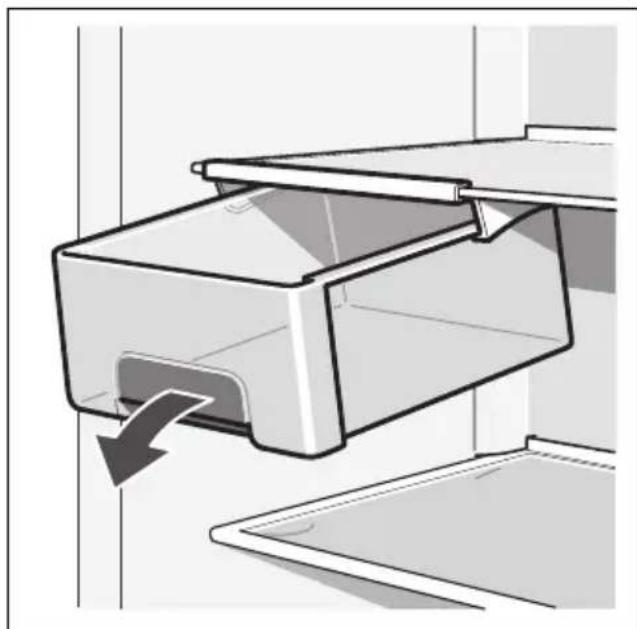
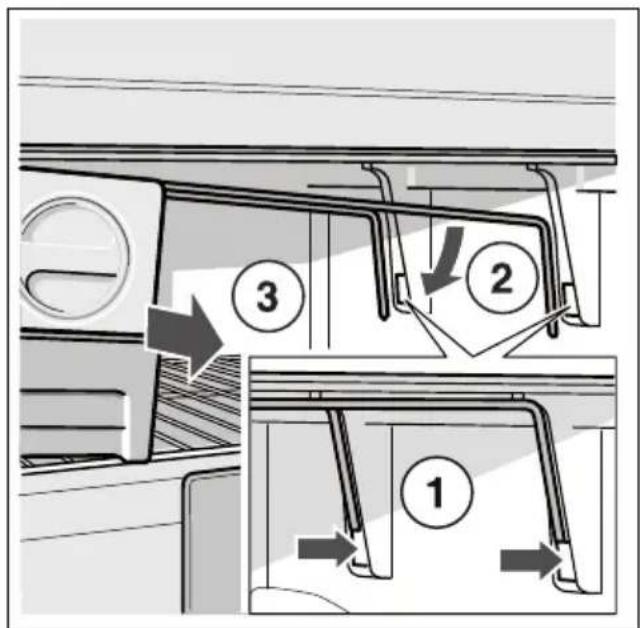
Pull-out container
Bild 4
You can take out the container for loading and unloading. To do this, lift the container and pull out. The holder of the container is variable.
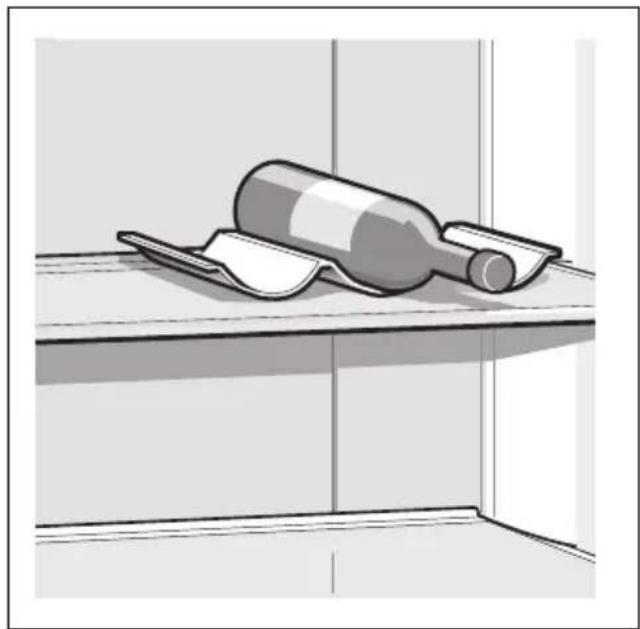
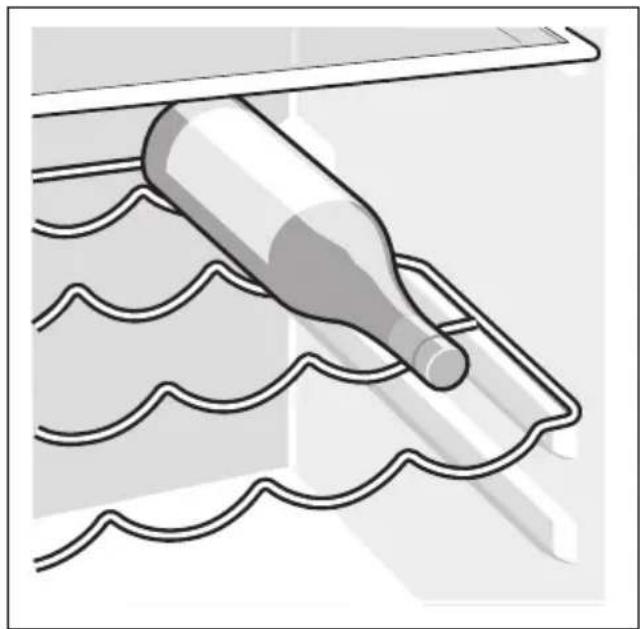
Bottle shelf
Fig. 5
Bottles can be stored securely on the bottle shelf. The holder can be adjusted.
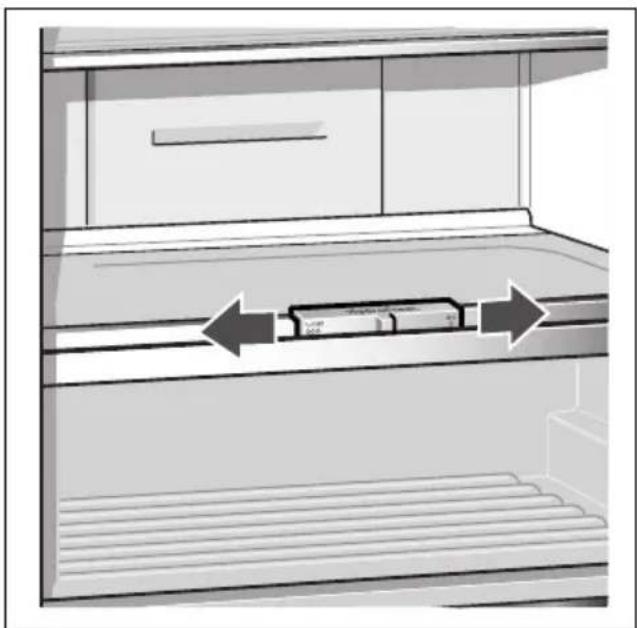
Vegetable container with humidity controller
Fig. 6
To create the optimum storage climate for vegetables, salad and fruit, the air humidity in vegetable container can be regulated according to the quantity stored.
The humidity monitor allows fresh food to be stored up to twice as long as in the normal cooling zone without loss of freshness.
Smaller quantities of food - slide the regulator to the left.
Larger quantities of food –
slide the regulator to the right.
Chiller compartment
Fig. 1/17
The chiller compartment has lower temperatures than the refrigerator compartment. Even temperatures below 0^ may occur.
Ideal for storing fish, meat and sausage. Not suitable for lettuce and vegetables and produce sensitive to cold.
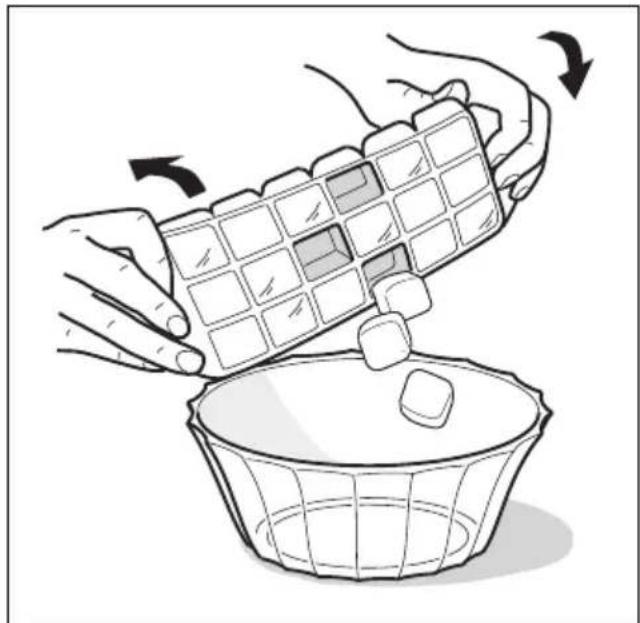
Ice cube tray
Fig. 9
Fill the ice cube tray 3/4 full of water and place in the freezer compartment.
If the ice tray is stuck to the freezer compartment, loosen with a blunt implement only (spoon-handle).
To loosen the ice cubes, twist the ice tray slightly or hold briefly under flowing water.
Freezer calendar
Fig. 1/27
To prevent the quality of the food from deteriorating, it is important that the permitted storage period is not exceeded. The storage period depends on the type of produce. The figures next to the symbols indicate the permitted storage period of the produce in months. When purchasing frozen produce, observe the date of manufacture or use by date.
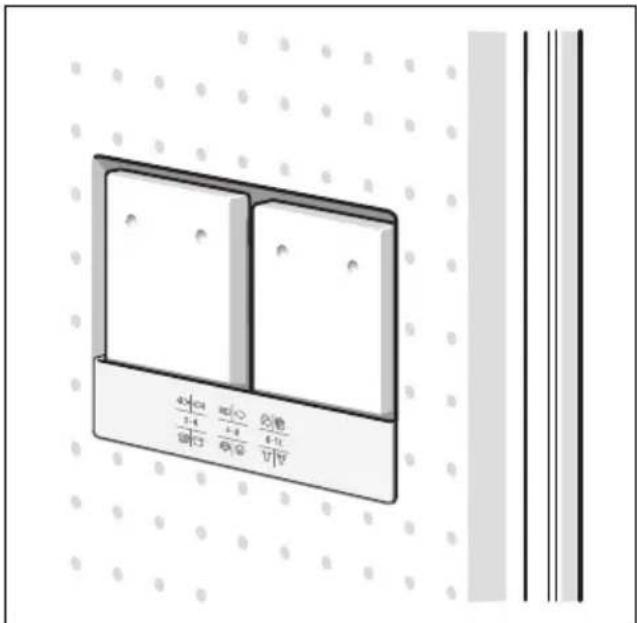
Ice block
Fig. 8
If a power failure or malfunction occurs, the ice blocks can be used to slow down the thawing process. The longest storage time is obtained by placing the ice block directly on the food in the top compartment.
To save space, the ice block can be stored in the door compartment.
The ice blocks can also be used to cool food temporarily, e. g. in a cold bag.
Active carbon filters
Fig. 1/24
The activated carbon filter ensures that air is replaced and odours reduced in the appliance.
Ice maker
Fig. 15
- Remove the ice cube tray, fill 3/4 full of water and re-insert.
- When the ice cubes are frozen, rotate the knobs on the ice cube trays several times to the right and release. The ice cubes loosen and fall into the storage container.
- Remove ice cubes from the storage container.
Sticker "OK"
(not all models)
The "OK" temperature monitor can be used to determine temperatures below +4^ . Gradually reduce the temperature if the sticker does not indicate "OK".
Note
When the appliance is switched on, it may take 12 hours until the temperature is reached.

Correct setting
Switching off and disconnecting the appliance
Switching off the appliance
Fig. 1
Press the On/Off button 11. Refrigerating unit and light switch off.
Disconnecting the appliance
If you do not use the appliance for a prolonged period:
- Switch off the appliance.
- Pull out mains plug or switch off fuse.
- Clean the appliance.
- Leave the appliance door open.
Cleaning the appliance

Caution
- Do not use abrasive, chloride or acidic cleaning agents or solvents.
- Do not use scouring or abrasive sponges.
The metallic surfaces could corrode.
- Never clean shelves and containers in the dishwasher.
The parts may warp!
Water used for cleaning must not drip into the
■ slots in the front base area in the freezer compartment,
controls,
and light.
Proceed as follows:
- Before cleaning: Switch the appliance off.
- Pull out the mains plug or switch off the fuse.
- Take out the frozen food and store in a cool location. Place the ice pack (if enclosed) on the food.
- Clean the appliance with a soft cloth, lukewarm water and a little pH neutral washing-up liquid. The rinsing water must not run into the light.
- Wipe the door seal with clear water only and then wipe dry thoroughly.
- After cleaning reconnect and switch the appliance back on.
- Put the frozen food back in the freezer compartment.
Interior fittings
All variable parts of the appliance can be taken out for cleaning.
Take out glass shelves
Pull the glass shelves forwards and take out.
Taking out the frozen food container
Fig. 10
Pull out the frozen food container all the way, lift at the front and remove.
Glass shelf cold storage compartment
(not all models)
Note
Do not clean glass shelf of the cold storage compartment under running water.
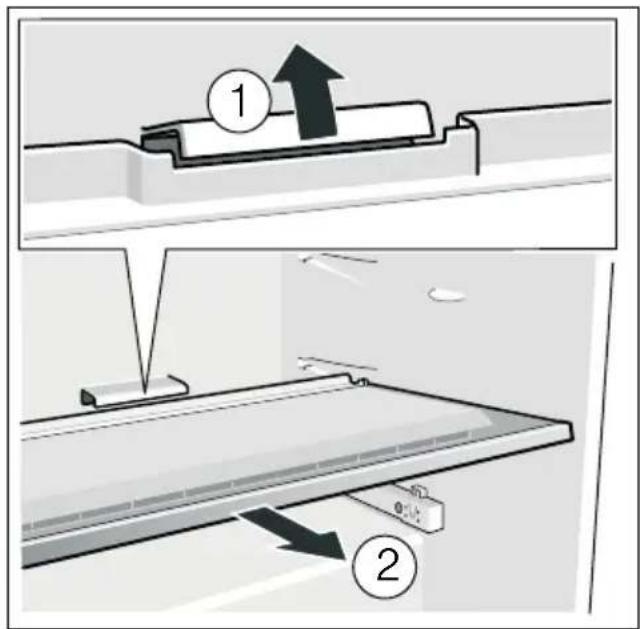
Before removing the glass shelf, remove vegetable container and cold storage compartment.
Fig. 11
Press the holder upwards and take out the glass shelf.
Drawers in the refrigerator compartment
Fig. 12
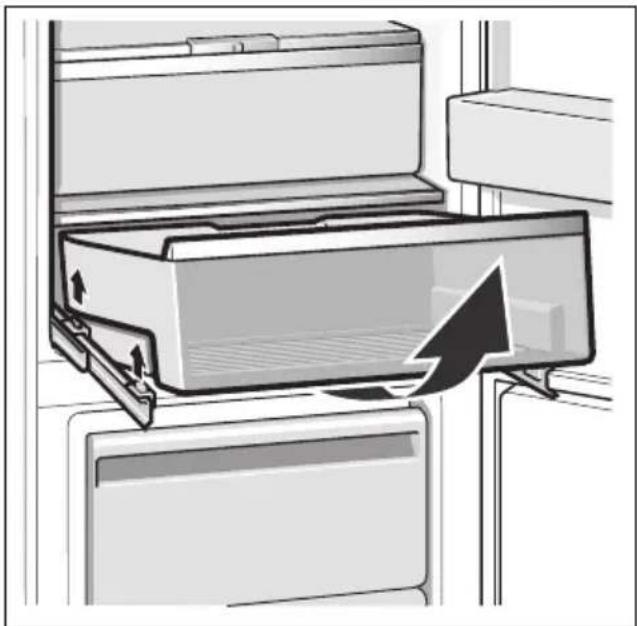
Pull out the drawer all the way, lift up and remove.
To insert drawer, place the drawer on the telescopic rails and push into the appliance. Attach the drawer by pressing it down.
Note
Before the vegetable drawer can be taken out, the glass shelf above must be taken out.
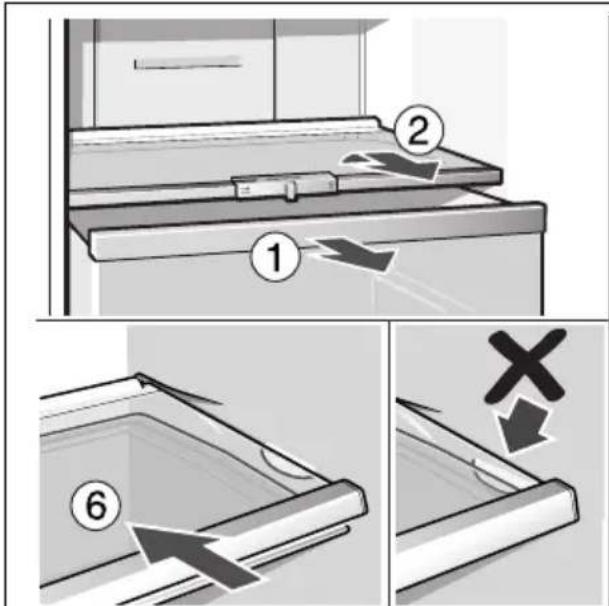
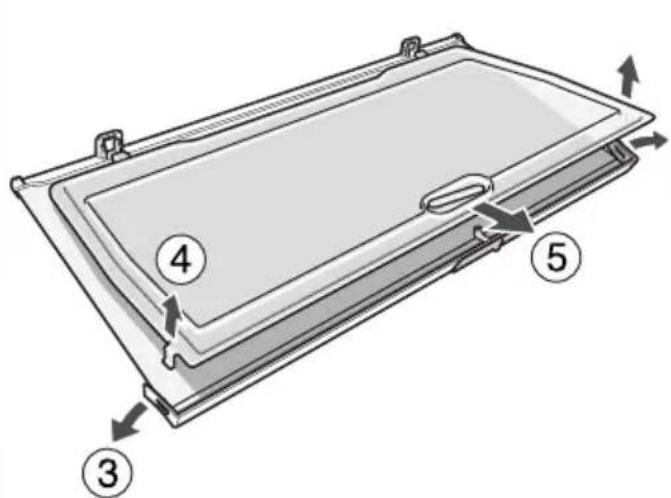
Taking out glass shelf above vegetable drawer
Fig. 14
Before the glass shelf can be taken out, pull out the vegetable drawer.
The glass shelf can be taken apart for cleaning.
Light (LED)
Your appliance features a maintenance-free LED light.
These lights may be repaired by customer service or authorised technicians only.
Tips for saving energy
Install the appliance in a dry, well ventilated room! The appliance should not be installed in direct sunlight or near a heat source (e.g. radiator, cooker). If required, use an insulating plate.
■Allow warm food and drinks to cool down before placing in the appliance!
- When thawing frozen products, place them in the refrigerator. Use the coldness of the frozen food to cool food.
- Open the appliance as briefly as possible.
- Occasionally clean the rear of the appliance to prevent an increased power consumption.
Operating noises
Quite normal noises
Droning
Motors are running (e.g. refrigerating units, fan).
Bubbling, humming or gurgling noises
Refrigerant is flowing through the tubing.
Clicking
Motor, switches or solenoid valves are switching on/off.
Cracking
Automatic defrosting is running.
Preventing noises
The appliance is not level
Please align the appliance with a spirit level. Use the height-adjustable feet or place packing underneath them.
The appliance is not free-standing
Please move the appliance away from adjacent units or appliances.
Containers or storage areas wobble or stick
Please check the removable parts and re-insert them correctly if required.
Bottles or receptacles are touching each other
Move the bottles or receptacles slightly away from each other.
Eliminating minor faults yourself
Before you call customer service:
Please check whether you can eliminate the fault yourself based on the following information.
Customer service will charge you for advice - even if the appliance is still under guarantee!
Fault Possible cause Remedial action
Temperature differs greatly from the set value.
In some cases it is adequate to switch off the appliance for 5 minutes.
If the temperature is too high wait a few hours and check whether the temperature has approached the set value.
If the temperature is too low check the temperature again the next day.
Fault Possible cause Remedial action
| The light does not function. Fig. 1/13 | Light switch is sticking. Check whether the light switch can move. Fig. 1/12 | |
| The light is defective. See chapter “Light”. | ||
| The temperature in the refrigerator compartment is too cold. | A colder temperature in the freezer compartment can also lower the temperature in the refrigerator compartment. This is quite normal. | Set the temperature in the refrigerator compartment slightly warmer. Should this not be enough, e.g. if the room temperature is too low, set the freezer temperature warmer. |
| Displays do not illuminate. | Power failure; the fuse has been switched off; the mains plug has not been inserted properly. | Connect mains plug. Check whether the power is on, check the fuses. |
| The temperature in the freezer compartment is too warm. | Appliance opened frequently. | Do not open the appliance unnecessarily. |
| The ventilation openings have been covered. | Remove obstacles. | |
| Large quantities of fresh food are being frozen. | Do not exceed max. freezing capacity. | |
Fault Possible cause Remedial action
Freezer compartment door was open for a long time; temperature is no longer reached.
The evaporator (refrigeration generator) in the No Frost system is covered in thick ice and can no longer be defrosted fully automatically.
To defrost the evaporator, remove the frozen food with the compartments, insulate well and store in a cool location.
Switch off the appliance and move it away from the wall. Leave the appliance door open.
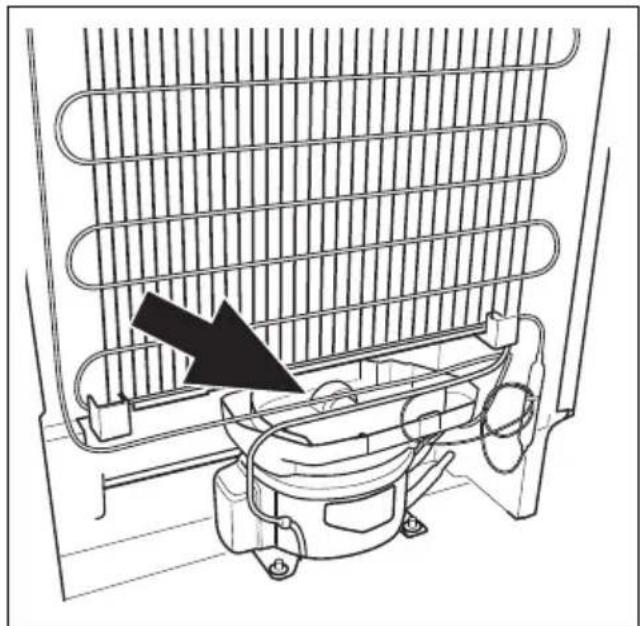
After approx. 20 min. the condensation begins to run into the evaporation pan, at the rear of the appliance. Fig. 13
To prevent the evaporation pan from overflowing in this case, mop up the condensation with a sponge.
The evaporator is defrosted when the water stops running into the evaporation pan. Clean the interior. Switch the appliance back on again.
Customer service
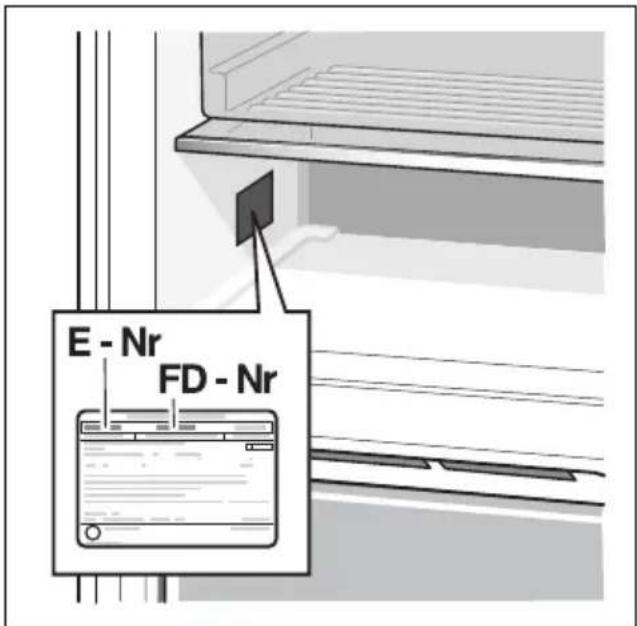
Your local customer service can be found in the telephone directory or in the customer-service index. Please provide customer service with the appliance product number (E-Nr.) and production number (FD).
These specifications can be found on the rating plate. Fig. 16
To prevent unnecessary call-outs, please assist customer service by quoting the product and production numbers. This will save you additional costs.
Repair order and advice on faults
Contact information for all countries can be found on the enclosed customer service list.
GB 0844 8928979 Calls from a BT
landline will be charged at up to 3 pence per minute. A call set-up fee of up to 6 pence may apply.
IE 01450 2655
US 800 944 2904 toll-free
Compartment congélateur
Compartment congélateur
Compartment fraîcheur
Fig. 1/17
jLjLjLjLjLjLjLjLjLjLjLjLjLjLjLjLjLjLjLjLjLjLjLjLjLjLjLjLjLjLjLjLjLjLjLjLjLjLjLjLjLjLjLjLjLjLjLjLjLjLj
ALg
j0a 1 aaii i 1g 1c
OK
()
13 L aL+4 J
aJg 100
.02gJJI Joo gai jgiuwo Jc a
plo 1
JgJgJgJgJgJgJgJgJgJg
12 1
.

Lolc abg 0j1d
pucg jgljoc jlu
aIgobjiaJ aolui
Jg! Joc Jb!
1
11JUaXJI JgIgIe
JooJI Jc aegg osLg aySLo
aIgob oJgJgJpIgIgIgIg
jLg 10s Ls
:ALg
jLJocJb1.1
J 2
.3
Lgia a 4
ar
a
1/27
aIg o aIg I gll ggs Jg 1 g 1 g 1 g 1 g 1 g 1 g 1 g 1 g 1 g 1 g 1 g 1 g 1 g 1 g 1 g 1 g 1 g 1 g 1 g 1 g 1 g 1 g 1 g 1 g 1 g 1 g 1 g 1 g 1 g 1 g 1 g 1 g 1 g 1 g
aclll
8 a
Jg Jg Jg Jg Jg Jg Jg Jg Jg Jg Jg Jg Jg Jg Jg Jg Jg Jg Jg Jg Jg Jg Jg Jg Jg Jg Jg Jg Jg Jg Jg Jg Jg Jg Jg Jg Jg Jg Jg Jg Jg Jg Jg Jg Jg Jg Jg Jg Jg Jg Jg
1
1/24
JgJl 100
E
15 a,ggJ
1
2
3
L
5
Lwll. aiof oogg j 1j J Lj J J J J J J J J J J J J J J J J J J J J J J J J J J J J J J J J
6
g 11 11 11 11 11 11 11 11 11 11 11 11 11 11 11 11 11 11 11 11 11 11 11 11 11 11 11 11 11 11 11 1
aaii iie 1000000000000000000000000000000000000000000
1/17
g jn j (j) 0 0 0 0 0 0 0 0 0 0 0 0 0 0 0 0 0 0 0 0 0 0 0 0 0 0 0 0 0 0 0 0 0 0
cuiiuiuioo sLcg
9
aag g a 3/4 aaaa y slg clll lgslo g slo pia
aaii jy
aaiilglj y glg jzjL oJy Jy (aoLo)
Lwio slo cdo y algo slcgll Jo y jy
a
gJLgSj:paW210
a0j 1
aJ 1
gag a gaoa
[ \Leftrightarrow \frac{y}{x} = \frac{z}{w}]
aagg≤UJ jg
plo
Lgj(Lg-1g)Lg-
S AOB = S COD + S BOC - S BOC
2
1
a.cg81g LgL
1
aeBg,(wblbll)lbblJ aeBj,lgLai
aagb8g jnll gailg
:
aee b81 c1s w dic y Loo
0000
aIcIbIgI ggaia Iggaia IaI aI
a0 = 12,b0 = - 14
1
J 1
12 12
a>1xJ100y
aJlcl aee eae aeae 1eae
j 1 g j j j j a a b Jai
L
a
山
aJlglal no oS c0s aJcJl
aayy Laae aie yalee J
LgA
g
gJ 1 J 1 J 1 J 1 J 1 J 1 J 1
aalglal
glll a jlll a jlll slll j g jell:
1gI 1sSg Jg j0sLc! g slinj sic. Ldo
a11 Lg1 1 g
m = 1
a12x1 1g11 j
aai 1
aLp#
.0gJLJ LLoIg 1j, j
(g)
Jg Lg dgs (rgw) 1Lc
aiee eae ee eee 6
JL
(g)aJ 1
()
:
j j
Jb8g J
2 a
8 «super» 1
y
.2 "super"
100
1 1
12xg
a1s1g1n a1e c05 2
plo a
afoa aonj 1ygl oLg
a o j 10000000000000000000000000000000000000000000
aJg<11 aIbU JgJgJgJgJgJgJg
100
jLia lii lii gao jial aai ji bai an jie
16 aJgJgJgJgJgJgJgJgJgJgJgJgJgJgJgJgJgJgJgJgJgJgJgJgJgJgJgJgJgJgJgJgJgJgJgJgJgJgJgJgJgJgJgJgJgJgJgJgJgJgJ
P
pssuuiu clll yLj aaleil colauy
16 aJ.1gJ 1c aAaI aai I aag J 1c
aiee aee eae
aai 1
1gll 0 gaaal a aol jzj jso o
1
gJl 1
.0j
i
Lg1j!p0g pLo?o 0 Lgge, g aI
10 a
7 aagaaa jg 10
#
1gll,ajolfl aoeb81 jadjlll jLl gdo ybjilj 1g j, jSll l,l, aaii jll gll lle, ojgai iJ I Ls9 oogrrll aowwll oginrlg45gall ,aLl jn
ailll slgll bao nic aaii
:
1
Lgjlgagcglcbladlcxcldy
J 1 Lg.Lg
[;LgJU] a
.1g1g1g2
LgSj aieJ Lgagglg
jLg1 Lgog p 20 g>
plo 4
lg =
3 1
gill gail j 100
a2gio a-18 1c h.

gagll jll jlaaegjlgldl paccic
Jgj 1
a1b
J 1
2/6 a, g aJ. g i j 1a J b a J o a J g a J a J b J
Jc
Jgjy jn Jn Jn Jn Jn Jn Jn Jn
aLJI aLJI JJ

1/11 1JbJj
jiai j j h i jie jie jie jie jie jie jie jie jie jie jie jie jie jie jie jie jie jie jie jie jie jie jie jie jie jie jie jie jie jie jie jie jie jie jie jie jie jie jie
2/5 0
5 2/5 j
LgJgoggl 1gJlc Jgjg jg
(waste electrical and electronic equipment - WEEE)
jg21eJwI gLeII IbXl CLaLeIIOO
1521 slai jS g LgJoloi no oJalw8g aSLgwiI
aalee 10gell Jgnd
a51gimll 8jg>21 no yLsiu aui
aaii aia jgaiaaai iiajia
j
1
JLaJIgooLo:Wg yLgSJI JwGJI Uw g2
JL 10g g
JLbU Jie 1gge
gai gai iia b wlg jii xj hki o
LJ
Jb81 Lg 80
gai gai iiai jie 1c sui wai gai hao
1
yolj j jg1sip
a 1 g a d aal 1g (JLaL Jaa Lc)
X1 LgLoIg oLoI g aai g ai aai g
J 1
J Lw! aL aai 10Lw! agllbc! yss J
[\therefore \lg a + \frac{1}{2}\rho \sin \alpha = {a}_{0}\dot{2}S]
gJ Lj; Jj1s ooggU JlgwU LLe gic
aiaiill a jdl aaiii gjjll jbs
1
ar
y
jglgcll jieo alljwipjj
jL jL jL jgJgJgJgJgJg
J 1
a000jol3jlg1p0000
Joo 2! Jg 1 g C L o! JLoai jol
JgJgJgJgJgJg
A Loo giai jui li ge jia
aL 11 11 11 11 11 11 11 11 11
Ee plaiiwl sic bao jglil qio Joo acgiall
j 1 j 1 j 1 j 1 j 1 j 1
jLo8g aoLwJ oLthic gai
Jglll lIb! alngi plsswly 2
J5gLgUc JgUdI jyj yJyJyJy
Clell
pds
Jds 1s
a-gg aedglg jsswll g-aJ (10)
()!LgA<
jL
J 1 J 1 J 1 J 1 J 1 J 1 J 1 J 1 J 1 J 1 J 1 J 1 J 1 J 1 J 1 J 1 J 1 J 1 J 1 J 1 J 1 J 1 J 1
Jn jnnn n nn nnnnnnnnnnnnnnnnnnnnnnnnnnnnnnnnnnnnnnnnnnnnnnnnnnnnnnnnnnnnnnnnnnnnnnnnnnnnnnnnnnnnnnnnnnnnnnnnnnnnnnnnn
wLo Lg: wg aLgJgJgJgJgJgJ
gA LsLxI dA LdI g y
Lg≤J1
aJglofoaSjullaLoo
pLwJgIyAanilll 1
A
a a a a a a a a a a a a a a a a a a a a
J 1
Jei:di ji 50 ai ji ao ai Los
aLg 15g y
1g0afoJgJg()Joo
L
1,j_L = 2,
LAL 1
Jg8jgl 1
aLols sjjl Laleig pss wlae osl
!PLaolg aLie:9
m = 311
A
R600a 1oLo no aIc o5 lc jg
JLg<1g
a a 1111111111111111111
111 1 11 1 1 1 1 1 1 1 1 1 1 1
L5JyIyIyIyIyIyIyIyIyIyIyIyIy
Joooo
:
JJI JIeXgJgAegSoojnnss
1511 2
J 1
J 1
在 Rt ABN 中:
L 1
L5 L5, jg s 1 y
1
j
iJoo oJU JUg gJoo 0u
J 1
8 8
g 11 11 11 11 11 11 11 11 11 11 11 11
j 1 j 1 j 1 j 1 j 1 j 1 j 1
J
ar
10
10 2
11 2
12
12 1
12
14 OK
14 ...algobjia2 aolssw pao jLgJoc Jlb!
14
15 (LED)
16
16
17 1waiyabwuyjIbc8iaXj
18 502x1 aosj S1
3 1
5
5
6 1g2g b1bwwg210rjdrclr j
6
7
8
8
8
9 1
9 1
9
10
10
2
3
4
5/A 5/B
6
7
8
9
10
11
12
13
14
15
16