ms181aes - ms181aeb - ms181aes - Calculator SHARP - Free user manual and instructions
Find the device manual for free ms181aes - ms181aeb - ms181aes SHARP in PDF.




| Product type | Scientific calculator |
| Brand | SHARP |
| Model | ms181aes / ms181aeb |
| Power supply | Batteries (CR2032) and solar panel |
| Dimensions (L x W x H) | 150 x 80 x 12 mm |
| Weight | 100 g |
| Display | LCD, 10 digits + signs |
| Main functions | Arithmetic operations, percentages, square roots, memory |
| Care and cleaning | Clean with a soft, dry cloth. Avoid solvents. |
| Safety | Do not expose to moisture, shocks, or extreme temperatures. |
| Spare parts and repairability | Replaceable batteries (CR2032). No user-serviceable parts. |
| General information | Compact calculator ideal for office or school. Simple to use. |
Frequently Asked Questions - ms181aes - ms181aeb - ms181aes SHARP
User questions about ms181aes - ms181aeb - ms181aes SHARP
0 question about this device. Answer the ones you know or ask your own.
Ask a new question about this device
Download the instructions for your Calculator in PDF format for free! Find your manual ms181aes - ms181aeb - ms181aes - SHARP and take your electronic device back in hand. On this page are published all the documents necessary for the use of your device. ms181aes - ms181aeb - ms181aes by SHARP.
USER MANUAL ms181aes - ms181aeb - ms181aes SHARP
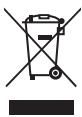
Your product is marked with this symbol.
It means that used electrical and electronic products should not be mixed with general household waste. There is a separate collection system for these products.
www.sharpconsumer.com/contact/
www.sharpconsumer.com/support/
www.conformer.com/documents-of-conformity/
A. Information on Disposal for Users (private households)
1. In the European Union
Attention: If you want to dispose of this equipment, please do not use the ordinary dustbin!
Used electrical and electronic equipment must be treated separately and in accordance with legislation that requires proper treatment, recovery and recycling of used electrical and electronic equipment.
Following the implementation by member states, private households within the EU states may return their used electrical and electronic equipment to designated collection facilities free of charge*.
In some countries* your local retailer may also take back your old product free of charge if you purchase a similar new one.
*) Please contact your local authority for further details.
If your used electrical or electronic equipment has batteries or accumulators, please dispose of these separately beforehand according to local requirements. By disposing of this product correctly you will help ensure that the waste undergoes the necessary treatment, recovery and recycling and thus prevent potential negative effects on the environment and human health which could otherwise arise due to inappropriate waste handling.
2. In other Countries outside the EU
If you wish to discard this product, please contact your local authorities and ask for the correct method of disposal.
For Switzerland: Used electrical or electronic equipment can be returned free of charge to the dealer, even if you don't purchase a new product.
Further collection facilities are listed on the homepage of www.swico.ch or www.sens.ch.
B. Information on Disposal for Business Users
1. In the European Union
If the product is used for business purposes and you want to discard it: Please contact your SHARP dealer who will inform you about the take-back of the product. You might be charged for the costs arising from take-back and recycling. Small products (and small amounts) might be taken back by your local collection facilities.
For Spain: Please contact the established collection system or your local authority for take-back of your used products.
2. In other Countries outside the EU
If you wish to discard of this product, please contact your local authorities and ask for the correct method of disposal.
PRECAUTIONS TO AVOID POSSIBLE EXPOSURE TO MICROWAVE ENERGY
- Do not attempt to operate this oven with the door open as this can result in harmful exposure to microwave energy. It is important not to defeat or tamper with the safety interlocks.
- Do not insert anything between the oven front face and the door or allow debris or cleaner residue to accumulate on sealing surfaces.
- Do not operate the oven if it is damaged. It is very important that the oven door closes properly and that there is no damage to the door, hinges, latches or door seals and sealing surfaces.
- Do not attempt to repair or adjust the oven.
CONTENTS
IMPORTANT SAFETY INSTRUCTIONS 3 INSTALLATION 10 SPECIFICATIONS 11 OVEN AND ACCESSORIES 12 CONTROL PANEL. 13 MICROWAVE POWER LEVELS 14 MICROWAVE COOKING 14 DEFROSTINGGUIDE 15 SUITABLE OVENWARE 16 CLEANING AND CARE 17 MICROWAVE COOKING ADVICE 18 DEFROSTING ADVICE 20 REHEATING ADVICE 21 TROUBLESHOOTING 22 BEFORE CALLING FOR ASSISTANCE 23
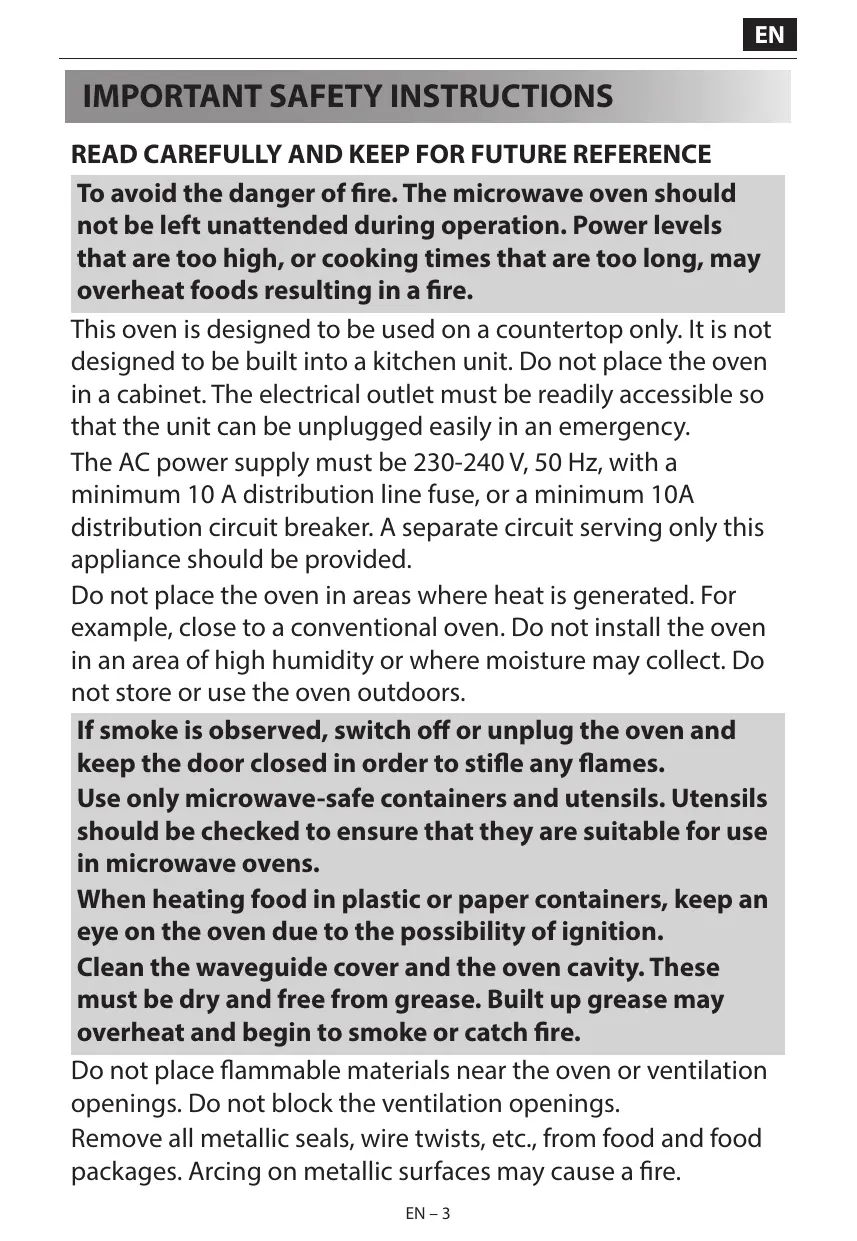
IMPORTANT SAFETY INSTRUCTIONS
READ CAREFULLY AND KEEP FOR FUTURE REFERENCE
To avoid the danger of fire, the microwave oven should not be left unattended during operation. Power levels that are too high, or cooking times that are too long, may overheat foods resulting in a fire.
This oven is designed to be used on a countertop only. It is not designed to be built into a kitchen unit. Do not place the oven in a cabinet. The electrical outlet must be readily accessible so that the unit can be unplugged easily in an emergency.
The AC power supply must be 230-240 V, 50 Hz, with a minimum 10 A distribution line fuse, or a minimum 10 A distribution circuit breaker. A separate circuit serving only this appliance should be provided.
Do not place the oven in areas where heat is generated, for example, close to a conventional oven. Do not install the oven in an area of high humidity or where moisture may collect. Do not store or use the oven outdoors.
If smoke is observed, switch off or unplug the oven and keep the door closed in order to stifle any flames.
Use only microwave-safe containers and utensils. Utensils should be checked to ensure that they are suitable for use in microwave ovens.
When heating food in plastic or paper containers, keep an eye on the oven due to the possibility of ignition.
Clean the waveguide cover and the oven cavity. These must be dry and free from grease. Built-up grease may overheat and begin to smoke or catch fire.
Do not place flammable materials near the oven or ventilation openings. Do not block the ventilation openings.
Remove all metallic seals, wire twists, etc., from food and food packages. Arcing on metallic surfaces may cause a fire.
Do not use the microwave oven to heat oil for deep frying. The temperature cannot be controlled and the oil may catch fire.
To make popcorn, use only special microwave popcorn makers.
Do not store food or any other items inside the oven.
Check the settings after you start the oven to ensure the oven is operating as desired.
Do not leave the oven unattended while it is operating.
To avoid overheating and fire, special care must be taken when cooking or reheating foods with a high sugar or fat content, for example, sausage rolls, pies, or Christmas pudding. See the corresponding hints in the user manual.
To avoid the possibility of injury. WARNING:
Do not operate the oven if it is damaged or malfunctioning.
Check the following before use:
a) Make sure the door closes properly and ensure it is not misaligned or warped. b) Check to make sure the hinges and safety door latches are not broken or loose. c) Ensure that the door seals and sealing surfaces have not been damaged. d) Make sure inside the oven cavity or on the door there are no dents. e) Ensure that the power supply cord and plug are not damaged.
If the door or door seals are damaged, the oven must not be operated until it has been repaired by a competent person.
Never adjust, repair, or modify the oven yourself. It is hazardous for anyone other than a competent person to carry out any service or repair operation that involves the removal of a cover which gives protection against exposure to microwave energy.
Do not operate the oven with the door open or alter the door safety latches in any way. Do not operate the oven if there is an
object between the door seals and sealing surfaces.
Do not allow grease or dirt to build up on the door seals and adjacent parts. Clean the oven at regular intervals and remove any food deposits.
Follow the instructions for "Care and Cleaning". Failure to maintain the oven in a clean condition could lead to a deterioration of the surface that could adversely affect the life of the appliance and possibly result in a hazardous situation.
Individuals with PACEMAKERS should check with their doctor on the manufacturer of the pacemaker for precautions regarding microwave ovens.
To avoid the possibility of electric shock.
- Under no circumstances should you remove the outer cabinet.
- Never spill or insert any objects into the door lock openings or ventilation openings. In the event of a spill, turn off and unplug the oven immediately, and call an authorised SHARP service agent.
- Do not immerse the power supply cord or plug in water or any other liquid.
- Do not let the power supply cord hang over the edge of a table or work surface.
- Keep the power supply cord away from heated surfaces, including the rear of the oven.
- Keep the appliance and its cord out of reach of children less than 8 years.
- Do not attempt to replace the oven lamp yourself or allow anyone who is not an electrician authorised by SHARP to do so. If the oven lamp fails, please consult your dealer or an authorised SHARP service agent.
- If the power supply cord is damaged, it must be replaced by an authorised SHARP service agent.
WARNING: Liquids and other foods must not be heated in sealed containers since they are liable to explode. Microwave heating of beverages can result in delayed eruptive boiling; therefore, care must be taken when handling the container. To avoid the possibility of explosion and sudden boiling:
Never use sealed containers. Remove seals and lids before use. Sealed containers can explode due to a build-up of pressure even after the oven has been turned off. Take care when microwaving liquids. Use a wide mouthed container to allow bubbles to escape.
Never heat liquids in narrow necked containers such as baby bottles, as this may result in the contents erupting from the container when heated and cause burns.
To prevent sudden eruption of boiling liquid and possible scalding:
- Do not use excessive amount of time.
- Stir liquid prior to heating/reheating.
- It is advisable to insert a glass rod or similar (not metal) into the liquid whilst reheating.
- Let liquid stand for at least 20 seconds in the oven at the end of cooking time to prevent delayed eruptive boiling.
Do not cook eggs in their shells, and whole hard-boiled eggs should not be heated in microwave ovens since they may explode even after microwave cooking has ended. To cook or reheat eggs which have not been scrambled or mixed, pierce the yolks and the whites. Shell and slice hard boiled eggs before reheating them in the microwave oven.
Pierce the skin of such foods as potatoes, sausages and fruit before cooking, or they may explode.
WARNING: The contents of feeding bottles and baby food jars must be stirred or shaken and the temperature checked before consumption, in order to avoid burns. Use
pot holders or oven gloves when removing food from the oven to prevent burns. To avoid the possibility of burns:
- Always open containers, popcorn makers, oven cooking bags, etc., away from the face and hands to avoid steam burns and eruption of boiling. To avoid burns, always test food temperature and stir before serving and pay special attention to the temperature of food and drink given to babies, children or the elderly. Accessible parts may become hot during use. Young children should be kept away.
- Temperature of the container is not a true indication of the temperature of the food or drink; always check the food temperature.
- Always stand back from the oven door when opening it to avoid burns from escaping steam and heat.
- Slice stuffed baked foods after heating to release steam and avoid burns.
- Keep children away from the door to prevent them burning themselves.
WARNING: Only allow children aged from 8 years and above to use the oven without supervision when adequate instructions have been given so that the child is able to use the oven in a safe way and understands the hazards of improper use.
When the appliance is operated in the GRILL, MIX GRILL, CONVECTION, MIX CONVECTION and AUTO MENU mode (mode applicable to model), children should only use the oven under adult supervision due to the temperature generated.
This appliance is not intended for use by persons (including children) with reduced physical, sensory or mental capabilities, or lack of experience and knowledge, unless they have been given supervision or instruction concerning use of the appliance by a person responsible
for their safety.
Children should be supervised to ensure that they do not play with the appliance. Cleaning by children should be monitored.
Models with an electronic touch panel are equipped with a child lock mode.
Do not lean on or swing on the oven door. Do not play with the oven or use it as a toy.
Children should be taught all important safety instructions: use of pot holders, careful removal of food coverings - paying special attention to packaging (e.g., self-heating materials) designed to make food crisp, as they may be extra hot.
Other warnings
Never modify the oven in any way.
Do not move the oven while it is in operation.
This appliance is intended for household use. This oven is for home food preparation and may only be used for cooking food and beverages. Drying of food or clothing and heating of warming pads, slippers, sponges, damp cloth and similar may lead to risk of injury, ignition or fire. It is not suitable for commercial or laboratory use.
To promote trouble-free use of your oven and avoid damage.
Never operate the oven when it is empty. When using a browning dish or self-heating material, always place a heat-resistant insulator such as a porcelain plate under it to prevent damage to the oven base due to heat stress. The preheating time specified in the dish's instructions must not be exceeded.
Do not use metal utensils, which reflect microwaves and may cause electrical arcing. Do not put cans in the oven.
To prevent the turntable or base of the oven breaking:
a) Before cleaning with water, leave to cool. b) Do not put hot or cold foods or hot utensils on a cold
turntable/oven base.
c) Do not place anything on the outer cabinet during operation.
NOTE:
Do not use plastic containers for microwaving if the oven is still hot from using a combination mode (oven model dependent) because they may melt.
Plastic containers must not be used during the above modes unless the container manufacturer says they are suitable.
If you are unsure how to connect your oven, please consult an authorized, qualified electrician.
Neither the manufacturer nor the dealer can accept any liability for damage to the oven or personal injury resulting from failure to observe the correct electrical connection procedure.
Water vapor or drops may occasionally form on the oven walls or around the door seals and sealing surfaces. This is a normal occurrence and is not an indication of microwave leakage or a malfunction.
This appliance is intended for use in household and similar applications such as: kitchen areas reserved for staff in stores, offices, and other professional environments; farms; use by clients of hotels, motels, and other residential type environments; bed and breakfast type environments.

This symbol means that the surfaces are liable to get hot during use.
INSTALLATION
- Remove all packing materials from the inside of the oven cavity and remove any protective film found on the microwave oven cabinet surface.
- Check the oven carefully for any signs of damage.
- Place the oven on a secure, level surface, strong enough to take the oven weight, plus the heaviest item likely to be cooked in the oven. Do not place the oven in a cabinet.
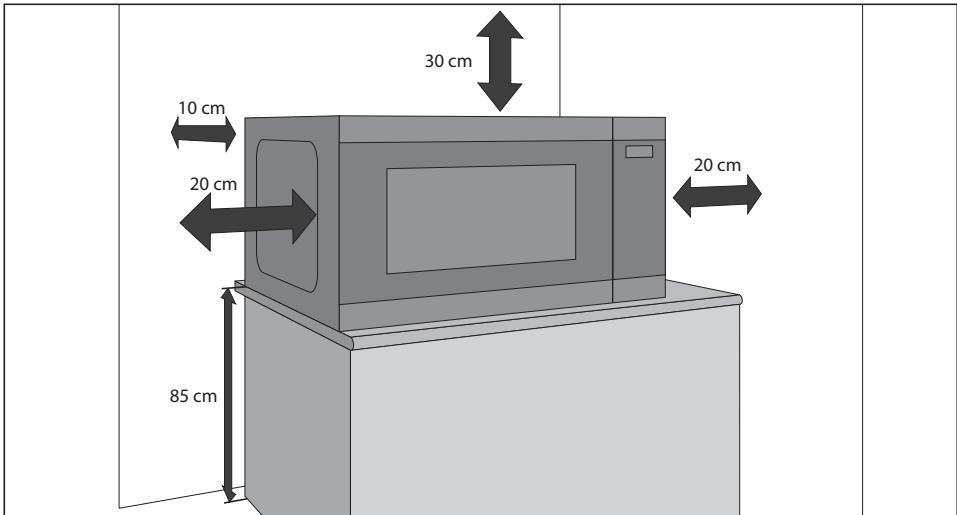
- Select a level surface that provides enough open space for the intake and/or outlet vents. See picture on the first page. The rear surface of the appliance can be placed against a wall.
- The minimum installation height is 85 cm.
- A minimum space of 20 cm is required between the sides of the microwave oven and any adjacent walls or objects.
- Leave a minimum space of 30 cm above the oven.
- Do not remove the feet from the bottom of the oven.
- Blocking the intake and/or outlet openings can damage the oven.
- Place the oven as far away from radios and TV as possible. Operation of microwave oven may cause interference to your radio or TV reception.
- Securely connect the plug of the oven to a standard earthed (grounded) household electrical outlet.
WARNING:
Do not place the oven where heat, moisture or high humidity are generated, (for example, near or above a conventional oven) or near combustible materials (for example, curtains).
Do not block or obstruct air vent openings.
Do not place objects on top of the oven.
Do not touch the exterior of the microwave oven during or shortly after operation as it will be hot.
SPECIFICATIONS
| Model name | YC-MS181AE | |
| AC Line Voltage | 230 V/50 Hz single phase | |
| Distribution line fuse/circuit breaker | 10 A | |
| AC Power required | 1020 W | |
| Output power: | Microwave | 700 W |
| Standby | < 1,0 W | |
| Energy Save Mode | < 0,5 W | |
| Microwave Frequency | 2450 MHz* | |
| Outside Dimensions (W) x (H) x (D) mm | 435 x 242 x 325 | |
| Cavity Dimensions (W) x (H) x (D)** mm | 299 x 206 x 297 | |
| Oven Capacity | 18 litres** | |
| Turntable (Diameter in mm) | 245 | |
| Weight (kg) | approx. 7,0 kg | |
| Oven Bulb (LED type) | 1,5 W | |
- This Product fulfils the requirement of the European standard EN55011. In conformity with this standard, this product is classified as group 2 class B equipment. Group 2 means that the equipment intentionally generates radio-frequency energy in the form of electromagnetic radiation for the heat treatment of food. Class B equipment means that the equipment is suitable to be used in domestic establishments. **- Internal capacity is calculated by measuring maximum width, depth and height. Actual capacity for holding food is less. AS PART OF A POLICY OF CONTINUOUS IMPROVEMENT, WE RESERVE THE RIGHT TO ALTER DESIGN AND SPECIFICATIONS WITHOUT NOTICE.
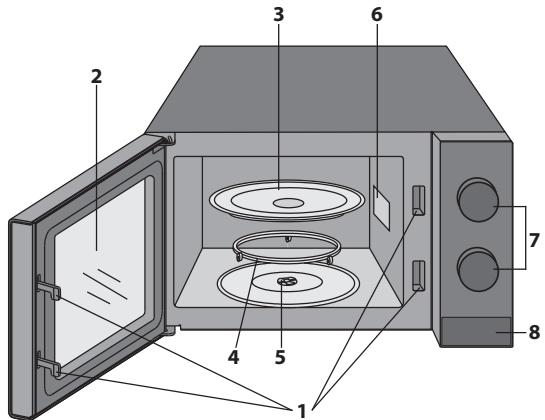
OVEN AND ACCESSORIES
- Door Safety Lock System
- Oven Window
- Glass Tray
- Roller Ring
- Turntable Coupling
- Waveguide Cover (Do Not remove)
- Control Panel
- Door opening button
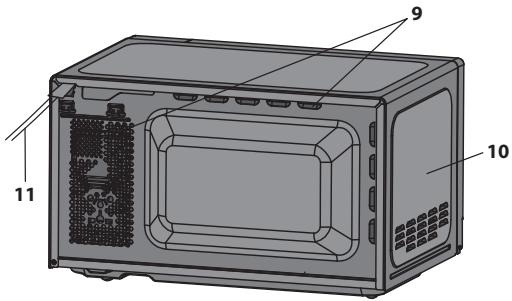
- Ventilation openings
- Outer cabinet
- Power supply cord
Check to make sure the following accessories are provided: Roller Ring, Turntable Coupling and Glass Tray
NOTE: When you order accessories, please mention two items: part name and model name.
NOTES:
- The waveguide cover is fragile. Care should be taken when cleaning inside the oven to ensure that it is not damaged. After cooking fatty foods without a cover, always clean the cavity thoroughly. Built-up grease may overheat and begin to smoke or catch fire.
- Always operate the oven with the turntable and turntable support fitted correctly. This promotes thorough, even cooking. A badly fitted turntable may rattle, may not rotate properly and could cause damage to the oven.
- All food and containers of food are always placed on the turntable for cooking.
- The turntable rotates clockwise or anti-clockwise. The rotary direction may change each time you start the oven. This does not affect cooking performance.

WARNING: This symbol means that the surfaces are liable to get hot during use. The door, outer net, oven cavity, accessories and dishes will become very hot during operation. To prevent burns, always use thick oven gloves.
CONTROL PANEL
1. MICROWAVE POWER CONTROL knob
Power level
120W - Low
230W - Medium Low (defrost)
385W - Medium
540W - Medium High
700W - High
2. TIMER/DEFROST GUIDE knob (0-30 Min/0.2 - 1.0 kg)
The TIMER/DEFROST GUIDE features two scales. The outer scale is for defrosting according to weight in kg. The inner scale is used for setting the time.
YC-MS181AE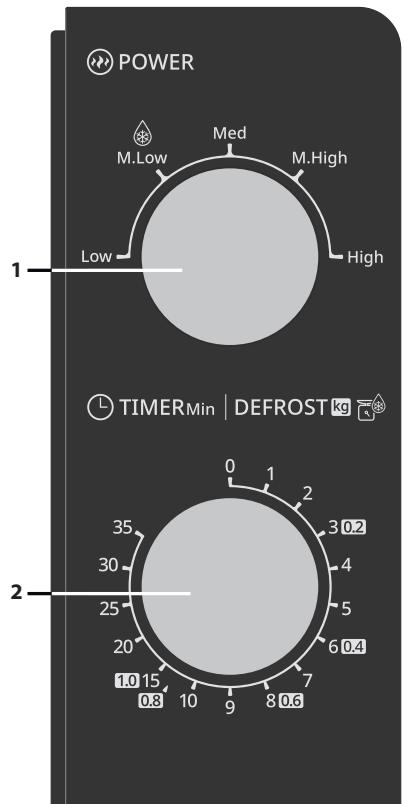
There are 5 microwave power levels available as listed below.
The microwave power level is varied by the microwave energy switching on and off. When using power levels other than HIGH (100%), you will be able to hear the microwave energy pulsing on and off as the food cooks or defrosts.
Generally the following recommendations apply:
700 WATT = HIGH - used for fast cooking or reheating e.g. for casseroles, hot beverages, vegetables etc.
540 WATT = MEDIUM HIGH - used for longer cooking of dense foods such as roast joints, meat loaf and plated meals, also for sensitive dishes such as sponge cakes. At this reduced setting, the food will cook evenly without overcooking at the sides.
385 WATT = MEDIUM - for dense foods which require a long cooking time when cooked conventionally, e.g. beef casserole, it is advisable to use this power setting to ensure the meat will be tender.
230 WATT = MEDIUM LOW - to defrost, select this power setting, to ensure that the dish defrosts evenly. This setting is also ideal for simmering rice, pasta, dumplings and cooking egg custard.
120 WATT = LOW - for gentle defrosting, e.g. cream gateaux or pastry.
MICROWAVE COOKING
- Prepare and place food in a suitable container (refer to "SUITABLE OVENWARE"), position food/container directly onto the middle of the turntable. Close the door.
- Turn the MICROWAVE POWER CONTROL knob to the desired setting; any one of the five microwave power levels.
- Turn the TIMER/DEFROST GUIDE knob to the desired cooking/defrosting time and the oven will start automatically.
- When cooking/defrosting is complete, the TIMER/DEFROST GUIDE returns to "0" zero. The oven lamp will turn off automatically and the turntable stops rotating. Open the oven door, remove the food/container carefully. Leave food to stand as required.
COOKING HINTS:
When the oven starts, the oven lamp will light and the turntable will rotate clockwise or anticlockwise.
If you wish to stop cooking before the cooking time has elapsed, turn the TIMER/DEFROST GUIDE knob back to "0" (off), or open the oven door. The oven door may be opened at any time during cooking. To continue cooking, close the door. If you wish to change the cooking time during cooking, simply turn the TIMER/DEFROST GUIDE knob to the desired new setting.
When cooking/defrosting for less than 3 minutes, turn the TIMER/DEFROST GUIDE knob past the 10 minute mark, and then back to the desired setting. The timer will then run more accurately.
To change the power level during cooking, turn the MICROWAVE POWER CONTROL knob to the desired setting.
WARNING:
Ensure the TIMER/DEFROST GUIDE is returned to "0" zero position at the end of cooking, or the oven will start automatically when the oven door is closed.
DEFROSTING GUIDE
This guide is designed to make defrosting specific foods easier.
It can be used for defrosting: Chicken portions, chops, fish (whole or fillets), minced meat and sausages.
Example: To defrost 0.4 kg of chicken portions:
- Place chicken portions in a flat dish, and place on the turntable into the oven.
- Turn the MICROWAVE POWER CONTROL knob to DEFROST setting (MEDIUM LOW).
- Turn the TIMER/DEFROST GUIDE to 0.4 kg setting. The oven will start immediately. Turn the chicken portions over 1-2 times during defrosting.
- After defrosting, cover the food in foil and leave to stand until thoroughly defrosted.
Note: The defrosting time is based on standard conditions. Please check the defrosting result and, if necessary, adjust the defrosting times accordingly.

WARNING: The door, outer cabinet, oven cavity and accessories will become very hot during operation. To prevent burns, always use thick oven gloves.
SUITABLE OVENWARE
To cook or defrost food in a microwave oven, the microwave energy must be able to pass through the container to penetrate the food. Therefore, it is important to choose suitable cookware.
Round or oval dishes are preferable to square or oblong ones, as the food in the corners tends to overcook. A variety of cookware can be used as listed below.
| Cookware | Microwave Safe | Comment |
| Aluminium foil Foil Containers | ✓/× | Small pieces of aluminium foil can be used to shield food from overheating. Keep foil at least 2 cm from the oven walls, as arcing may occur. Foil containers are not recommended unless specified by the manufacturer, e.g. Microfoil®, follow instructions carefully. |
| Browning dishes | ✓/× | Always follow the manufacturers instructions. Do not exceed heating times given. Be very careful as these dishes become very hot. |
| China and ceramics | ✓/× | Porcelain, pottery, glazed earthenware and bone china are usually suitable, except for those with metallic decoration. |
| Glassware e.g. Pyrex® | ✓ | Care should be taken if using fine glassware as it can break or crack if heated suddenly. |
| Metal | × | It is not recommended to use metal cookware as it will arc, which can lead to fire. |
| Plastic/Polystyrene e.g fast food containers | ✓ | Care must be taken as some containers warp, melt or discolour at high temperatures. |
| Cling film | ✓ | It should not touch the food and must be pierced to let the steam escape. |
| Freezer/Roasting bags | ✓ | Must be pierced to let steam escape. Ensure bags are suitable for microwave use. |
| Paper - Plates, cups and kitchen paper | ✓ | Do not use plastic or metal ties, as they may melt or catch fire due to the metal 'arcing'. |
| Straw and wooden Containers | ✓ | Only use for warming or to absorb moisture. Care must be taken as overheating may cause fire. |
| Recycled paper and newspaper | × | Always attend the oven when using these materials as overheating may cause fire. May contain extracts of metal which will cause 'arcing' and may lead to fire. |

WARNING: When heating food in plastic or paper containers, monitor the oven due to the possibility of ignition.
NOTE: Do not leave your oven unattended while in use.
CLEANING AND CARE
CAUTION: DO NOT USE COMMERCIAL OVEN CLEANERS, STEAM CLEANERS, ABRASIVE, HARSH CLEANERS, ANY THAT CONTAIN SODIUM HYDROXIDE OR SCOURING PADS ON ANY PART OF YOUR MICROWAVE OVEN.
Before cleaning, make sure the oven cavity, door, oven cabinet and accessories are completely cool. CLEAN THE OVEN AT REGULAR INTERVALS AND REMOVE ANY FOOD DEPOSITS - Keep the oven clean, or the oven could lead to a deterioration of the surface. This could adversely affect the life of the appliance and possibly result in a hazardous situation.
NOTE: When cooking, condensation can build up inside the oven cavity, cavity face and door. The amount of condensation will depend upon the temperature of the oven surfaces and the moisture content of the food being microwaved. Ensure that when you have finished cooking that any moisture which collects on these surfaces is wiped away with a soft, moisture absorbent cloth.
Oven exterior
The outside of your oven can be cleaned easily with mild soap and water. Make sure the soap is wiped off with a moist cloth, and dry the exterior with a soft towel.
Control panel
Open the door before cleaning to de-activate the control panel. Care should be taken in cleaning the control panel. Using a cloth dampened with water only, gently wipe the panel until it becomes clean. Avoid using excessive amounts of water. Do not use any sort of chemical or abrasive cleaner.
Oven Interior
- For cleaning, wipe any splatters or spills with a soft damp cloth or sponge after each use while the oven is still warm.
For heavier spills, use a mild soap and wipe several times with a damp cloth until all residues are removed. Built-up splashes may overheat and begin to smoke or catch fire, and cause arcing. Do not remove the waveguide cover.
- Make sure that mild soap or water does not penetrate the small vents in the walls which may cause damage to the oven.
- Do not use spray type cleaners on the oven interior. Keep the waveguide cover clean at all times.
The waveguide cover is constructed from a fragile material and should be cleaned with care (follow the cleaning instructions above).
NOTE: Excessive soaking may cause disintegration of the waveguide cover.
The waveguide cover is a consumable part and without regular cleaning, will need to be replaced.
Accessories
The accessories like turntable, turntable support and rack should be washed in a mild washing up liquid solution and dried. They are dishwasher safe.
Door
To remove all trace of dirt, regularly clean both sides of the door, the door seals and adjacent parts with a soft, damp cloth. Do not use abrasive cleaner.
NOTE: A steam cleaner should not be used.
Cleaning tip - For easier cleaning of your oven:
Place half a lemon in a bowl, add 300 ml (1/2 pint) water and heat on 100% for 10 - 12 minutes. Wipe the oven clean using a soft, dry cloth.
Microwaves cook food faster than conventional cooking. It is therefore essential that certain techniques are followed to ensure good results. Many of the following techniques are similar to those used in conventional cooking.

WARNING: Liquids and foods must not be heated in sealed containers or jars/containers with lids on, as pressure will build up inside and may cause the jar/container to explode.
COOKING ADVICE NOTES:
Always attend the oven when in use. - Ensure that the utensils are suitable for use in a microwave oven. - Refer to the charts in the cookbook section for recommended cooking times and power levels. - Only use microwave popcorn within the recommended packaging (follow the manufacturers instructions). Never use oil unless specified by the manufacturer and never cook for longer than instructed.

WARNING: Follow instructions in the SHARP operation manual at all times. If you exceed recommended cooking times and use power levels that are too high, food may overheat, burn and, in extreme circumstances, catch fire and damage the oven.
Arrange
Place the thickest parts of food towards the outside of the dish. e.g. Chicken drumsticks.
Foods that are placed towards the outside of the dish will receive more energy, so cook quicker, than those in the centre.
Cover
Certain foods benefit from being covered during microwave cooking.
Use vented microwave cling film or a suitable lid.
Pierce
Foods with a shell, skin or membrane must be pierced in several places before cooking or reheating as steam will build up and may cause food to explode. e.g. Potatoes, Fish, Chicken, Sausages.
NOTE: Eggs should not be heated using microwave power as they may explode, even after cooking has ended. e.g. poached, fried, hard boiled.
Stir, turn and rearrange
For even cooking it is essential to stir, turn and rearrange food during cooking. Always stir and rearrange from the outside towards the centre.
Stand
Standing time is necessary after cooking so that the heat can disperse equally throughout the food.
| Food Characteristics | |
| Composition | Foods high in fat or sugar (e.g. Christmas pudding, mince pies) require less heating time. Care should be taken as overheating can lead to fire. Bones in food conduct heat, making the food cook more quickly. Care must be taken so that the food is cooked evenly. |
| Density | Food density will affect the amount of cooking time needed. Light porous foods, such as cakes or bread, cook more quickly than heavy, dense foods, such as roasts and casseroles. |
| Quantity | The number of microwaves in your oven remains the same regardless of how much food is being cooked. The cooking time must be increased as the amount of food placed in the oven increases. e.g. Four potatoes will take longer to cook than two. |
| Size | Small foods and small pieces cook faster than large ones, as microwaves can penetrate from all sides to the centre. For even cooking make all the pieces the same size. |
| Shape | Foods which are irregular in shape, such as chicken breasts or drumsticks, take longer to cook in the thicker parts. For even cooking, place the thickest parts to the outside of the dish where they will receive more energy. Round shapes cook more evenly than square shapes when microwave cooking. |
| Temperature of food | The initial temperature of food affects the amount of cooking time needed. Chilled foods will take longer to cook than food at room temperature. The temperature of the container is not a true indication of the temperature of the food or drink. Cut into foods with fillings, for example jam doughnuts, to release heat or steam. |

WARNING: Face & Hands: Always use oven gloves to remove food or cookware from the oven. Stand back when opening the oven door to allow heat or steam to disperse. When removing covers (such as cling film), opening roasting bags or popcorn packaging, direct steam away from face and hands.

WARNING: Check the temperature of food and drink, stir before serving. Take special care when serving to babies, children or the elderly. The contents of feeding bottles and baby food jars are to be stirred or shaken and the temperature is to be checked before consumption to avoid burns.
DEFROSTING ADVICE
Using your microwave oven is the quickest defrosting method. It is a simple process but the following instructions are essential to ensure the food is thoroughly defrosted.
- Remove all packaging and wrapping before defrosting.
- To defrost food, use the Medium/Low or Defrost microwave power setting.
- Please refer to the further information below.
Rearrange
Foods that are placed towards the outside of the dish will defrost quicker than foods in the centre. It is therefore essential that the food is rearranged up to 4 times during defrosting.
Move closely packed pieces from the outside to the centre and rearrange overlapping areas.
This will ensure that all parts of the food defrost evenly.
Separate
Foods may be stuck together when removed from the freezer. It is important to separate foods as soon as it is possible during defrosting.
e.g. bacon rashers, chicken fillets.
Shield
Some areas of food being defrosted may become warm. To prevent them from becoming warmer and starting to cook, these areas can be shielded with small pieces of foil, which reflect microwaves, e.g., legs and wings on a chicken.
Stand
Standing time is necessary to ensure food is thoroughly defrosted.
Defrosting is not complete once the food is removed from the microwave oven. Food must stand, covered, for a length of time to ensure the center has completely defrosted.
Turn over
It is essential that all foods are turned over up to 4 times during defrosting.
This is important to ensure thorough defrosting.
REHEATING ADVICE
For the reheating of foods, follow the advice and guidelines below to ensure food is thoroughly reheated before serving.
Plated meals
Remove any poultry or meat portions, reheat these separately, see below.
Place smaller items of food to the center of the plate, larger and thicker foods to the edge. Cover with vented microwave cling film and reheat on the Medium/Low microwave power level, stir/rearrange halfway through reheating.
NOTE: Ensure the food is thoroughly reheated before serving.
Sliced meat
Cover with vented microwave cling film and reheat on the Medium/Low microwave power level. Rearrange at least once to ensure even reheating.
NOTE: Ensure the meat is thoroughly reheated before serving.
Poultry portions
Place thickest parts of the portions to the outside of the dish, cover with vented microwave cling film and reheat on the Medium microwave power level.
Turn over halfway through reheating.
NOTE: Ensure the poultry is thoroughly reheated before serving.
Casseroles
Cover with vented microwave cling film or a suitable lid and reheat on the Medium/Low microwave power level. Stir frequently to ensure even reheating.
NOTE: Ensure the food is thoroughly reheated before serving.
To achieve the best results when reheating, select a suitable microwave power level appropriate to the type of food. e.g. A bowl of vegetables can be reheated using the High microwave power level while a lasagne which contains ingredients that cannot be stirred, should be reheated using power level the Medium/Low microwave power level
NOTES:
- Remove food from foil or metal containers before reheating.
- Reheating times will be affected by the shape, depth, quantity and temperature of food together with the size, shape and material of the container.

WARNING: Never heat liquids in narrow-necked containers, as this could result in the contents erupting from the container and may cause burns.
- To avoid overheating and fire, special care must be taken when reheating foods with a high sugar or fat content, e.g. mince pies or Christmas pudding.
- Never heat oil or fat for deep frying as this may lead to overheating and fire.
- Canned potatoes should not be heated in the microwave oven; follow the manufacturer's instructions on the can.

WARNING: The contents of feeding bottles and baby food jars are to be stirred or shaken and the temperature is to be checked before consumption to avoid burns.
TROUBLESHOOTING
If you think the oven is not working properly, there are some simple checks you can carry out yourself before calling an engineer. This will help prevent unnecessary service calls if the fault is something simple.
Follow this simple check below:
Place half a cup of water on the turntable and close the door. Set the timer to cook for 1 minute using the High microwave power level.
- Does the oven lamp come on when it is cooking?
- Does the cooling fan work? (Check by placing your hand above the air vent openings).
- After 1 minute, does the timer stop?
- Is the water in the cup hot?
If you answer "NO" to any question, first check that the oven is plugged in properly and the fuse has not blown. If there is no fault with either, check against the troubleshooting chart below.

WARNING: Never adjust, repair, or modify the oven yourself. It is hazardous for anyone other than a SHARP trained engineer to carry out servicing or repairs. This is important as it may involve the removal of covers that provide protection against microwave energy.
- The door seal stops microwave leakage during oven operation, but does not form an airtight seal. It is normal to see drops of water, light, or feel warm air around the oven door. Food with a high moisture content will release steam and cause condensation inside the door which may drip from the oven.
- Repairs and Modifications: Do not attempt to operate the oven if it is not working properly.
- Outer Cabinet & Lamp Access: Never remove the outer cabinet. This is very dangerous due to high voltage parts inside which must never be touched, as this could be fatal.
Your oven is not fitted with a lamp access cover. If the lamp fails, do not attempt to replace the lamp yourself, call a SHARP approved service facility.
TROUBLESHOOTING CHART
| QUERY | ANSWER |
| Draught circulates around the door. | When the oven is working, air circulates within the cavity. The door does not form an airtight seal so air may escape from the door. |
| Condensation forms in the oven, and may drip from the door. | The oven cavity will normally be colder than the food being cooked, and so steam produced when cooking will condense on the colder surface. The amount of steam produced depends on the water content of the food being cooked. Some foods, such as potatoes have a high moisture content. Condensation trapped in the door glass should clear after a few hours. |
| Flashing or arcing from within the cavity when cooking. | Arcing will occur when a metallic object comes into close proximity to the oven cavity during cooking. This may possibly roughen the surface of the cavity, but would not otherwise damage the oven. |
| Arcing potatoes. | Ensure all "eyes" are removed from the potatoes and that they have been pierced, place directly onto the turntable or in a heat resistant flan dish or similar. |
| Oven does not work when the timer control is turned away from 0. | Check the door is closed properly. |
| Oven cooks too slowly. | Ensure correct power level has been selected. |
| Oven makes a noise. | The microwave energy pulses ON and OFF during cooking/defrosting. |
| Outer cabinet is hot. | The cabinet may become warm to the touch - keep children away. |
BEFORE CALLING FOR ASSISTANCE
Before asking for service, please check each item below:
- Check to ensure that the oven is plugged in securely. If it is not, remove the plug from the outlet, wait 10 seconds, and plug it in again securely.
- Check for a blown circuit fuse or a tripped main circuit breaker. If these seem to be operating properly, test the outlet with another appliance.
- Check to ensure that the power and timer knobs are set correctly.
- Check to ensure that the door is securely closed engaging the door safety lock system. Otherwise, the microwave energy will not flow into the oven.
IF NONE OF THE ABOVE RECTIFIES THE SITUATION, THEN CONTACT A QUALIFIED TECHNICIAN. DO NOT TRY TO ADJUST OR REPAIR THE OVEN YOURSELF.
This product is marked with this symbol. It means that used electrical and electronic products should not be mixed with general household waste. For proper treatment, recovery and recycling, please take this product to a designated collection point.
www.sharpconsumer.com/contact/
www.sharpconsumer.com/support/
A. Information on disposal for users (private households)
1. In the European Union
Attention: If you wish to dispose of this device, do not use a regular household bin.
The use of electrical and electronic equipment must be carried out in accordance with legislation that requires proper treatment, recovery, and recycling of waste electrical and electronic equipment.
According to the practice on the pages, households in the EU can return their waste electrical and electronic equipment to designated collection points free of charge.
In some countries, the local retailer may take back your old device free of charge when you purchase a new product.
*) For more information, you can contact your local authorities. If your electrical and electronic equipment has batteries or accumulators, you must remove them separately, according to local requirements. By properly disposing of this product, you help to ensure that waste is processed, recovered, and recycled correctly. This helps to prevent potential negative effects on the environment and human health, which could otherwise arise from improper disposal.
2. In countries outside the EU
If you wish to dispose of this product, please contact your local authorities and ask for the correct disposal method.
For Switzerland: Waste electrical and electronic equipment can be returned to retailers free of charge, even without purchasing a new product.
Further collection points are listed on the first page of www.swico.ch or www.sens.ch.
5. Information on disposal and recycling for end users
1. In the European Union
If the product was used for business purposes and you wish to dispose of it:
For information on take-back of the product, contact the nearest SHARP representative. You may be charged for the costs of take-back and recycling. Small products (in small quantities) may be taken back by the local collection point.
If you wish to dispose of this product, please contact the local authorities to find out how to return your used products.
2. Disposal of the appliance
If you wish to dispose of this product, please contact your local authorities to learn the correct method of disposal.
SAFETY INSTRUCTIONS AGAINST MICROWAVE ENERGY
- Do not attempt to operate the oven with the door open. This may lead to exposure to microwave energy. Ensure that the door locking devices are not damaged and do not tamper with them in any way.
- Do not place any objects between the oven front face and the door; do not allow soil or detergent residues to accumulate on the sealing surfaces.
- Do not operate the oven if it shows signs of malfunction. The oven door must close properly and be in perfect condition, together with the hinges, latches, and sealing surfaces.
- Do not attempt to repair or modify the oven yourself.
CONTENTS
IMPORTANT SAFETY INSTRUCTIONS 11 SPECIFICATIONS 12 OVEN AND ACCESSORIES 13 CONTROL PANEL 14 MICROWAVE POWER LEVELS 15 MICROWAVE COOKING 15 DEFROSTING GUIDELINES 16 COOKING UTENSILS 17 CLEANING AND MAINTENANCE 18 DEFROSTING GUIDELINES 19 DEFROSTING GUIDELINES 21 TROUBLESHOOTING 23 CUSTOMER SERVICE 24
IMPORTANT SAFETY INSTRUCTIONS
READ CAREFULLY AND KEEP FOR FUTURE REFERENCE
Avoid fire hazards. The microwave oven is not intended for use without supervision during operation. When the power level is high or the cooking time is long, food may overheat and catch fire.
This microwave oven is of the free-standing type and is intended for placement on a kitchen counter. Do not place it in a cabinet. The electrical plug must be easily accessible so that in case of emergency it can be unplugged quickly.
The voltage required for the appliance is 230-240 V, 50 Hz, with a fuse or circuit breaker of at least 10 A. Ensure that a separate circuit breaker, specifically intended for the appliance, is provided.
Do not place the oven near other heat sources, for example a conventional oven. Do not place the oven in areas with high humidity or where water may collect. Do not cover or use the oven outdoors.
If you notice damage, unplug the oven from the power supply and do not use it, to prevent the risk of electric shock.
Use only utensils and accessories intended for microwave ovens. Check that the utensils and accessories are suitable for use in a microwave oven.
If you heat food in plastic or paper containers, watch the oven due to the risk of fire.
After use, clean the cavity of the oven and the interior. They must be dry and free of grease, as the food may heat up and ignite.
Do not place flammable materials near the oven or the ventilation openings. Do not allow the ventilation openings to be blocked by objects.
Remove all metal containers, utensils, and packaging from the food and food containers. Sparks from metal surfaces may cause a fire.
Do not use the oven to heat oil for frying. The temperature cannot be controlled and the oil may catch fire.
To make popcorn, use only the special popcorn bags intended for microwave ovens.
Do not cover food or products in the oven.
After starting the oven, check the settings to make sure it works as you want.
Do not leave the oven unattended while it is operating.
To avoid the risk of overheating and fire, it is necessary to pay special attention when heating food with a high content of fat or sugar, for example sausages, sweets, or Christmas pudding. See the relevant instructions in the user manual.
Never attempt to repair or modify the oven yourself. Any repair work, including replacing the power cord, must be done by a qualified technician, as it is dangerous due to microwave energy.
Do not operate the oven with the door open and do not tamper with the interlocks in any way. Do not use the oven if the door is damaged, or if there is any object between the door and the sealing surface.
The appliance must be used only for its intended purpose and must be cleaned regularly. The filters should be cleaned and any blockages removed.
Follow the instructions in the "Care and Cleaning" section. Cleaning the appliance may affect the condition of the surfaces, which could have an adverse effect on the appliance's life and lead to dangerous situations.
People with artificial pacemakers should consult a doctor or the pacemaker manufacturer regarding the necessary precautions concerning microwave energy.
Prevention of electric shock risk
Never immerse the appliance in water.
- Never insert or place objects into the openings for locking or ventilation. In case of insertion, unplug the appliance immediately and contact an authorized SHARP service. Do not touch the power cord or plug with wet hands. Do not allow the power cord to hang over the edge of a table or work surface.
- Keep the power cord away from hot surfaces and from the rear of the appliance.
- Keep the appliance and its cord out of reach of children under 8 years old. Do not attempt to replace the lamp of the appliance yourself, and do not allow anyone who is not an electrician or authorized by SHARP to do so. If the lamp burns out, please consult your dealer or an authorized SHARP service. If the power cord is damaged, it must be replaced by the service, authorized by SHARP.
Do not touch or handle the appliance with wet hands. Do not play with the appliance and do not use it as a toy.
All important safety instructions must be explained to children, namely: use of kitchen appliances, careful handling of food packaging - special attention to packaging (for example, self-heating materials) intended to keep food fresh, as they can be very hot.
Other regulations
Never make any modifications to the appliance in any way.
Do not move the appliance while it is operating.
This product is intended for household use. This appliance is intended solely for domestic food and beverage preparation. Heating food or liquids, as well as heating of leftovers, bread, pastries, wet towels, etc., may lead to risk of fire or burns. Use in commercial or laboratory conditions is not recommended.
Rear part of the appliance
Before cleaning the device, unplug it and disconnect it from the water supply. Make sure the device is unplugged and disconnected from the water supply. Then proceed with cleaning.
Control panel
Open the door and remove the filter to activate the control, while being careful during cleaning. Use only a cloth with water, carefully wipe the panel until it is clean. Avoid using excessive amounts of water. Do not use any chemical or abrasive cleaners.
Interior of the device
1. Cleaning - remove any large food residues from the drum and gasket before every use, while the appliance is still warm.
If there is heavy soiling, use heated cleaning agents. Repeat the process until the soiling is removed. Residual detergent may cause foaming and lead to leaks. Do not pour water into the drain hose.
2. Be careful with the detergent drawer to avoid water or cleaning agent damage. This may cause damage. 3. Do not use aerosol cleaners for cleaning the interior of the device.
Always keep the drain hose clean.
The drain hose is made of rubber material and must be cleaned carefully (follow the cleaning instructions above).
WARNING: Improper cleaning may lead to damage to the drain hose.
The drain hose is a non-replaceable part and without proper cleaning, it must be replaced.
Accessories
Accessories such as brushes are wear parts and must be replaced with mild cleaning agents and dried. They are safe for the machine.
Door
Remove any residues from the seal, clean both sides of the door, the hinge, the hinge spaces, and the adjacent parts with a damp cloth. Do not use abrasive cleaning agents.
3A6EJIEXKKA: Do not use with the help of a right.
Tips for proper use of your oven:
Place half a lemon in a cup, add 300 ml of water and heat at 100% power for 10-12 minutes.
Wipe the oven with a soft, dry cloth.
MICROWAVE COOKING
When using microwave food, it is prepared quickly, compared to conventional cooking.
It is important to follow the basic principles so that the cooked food turns out better. Many of these principles differ from conventional cooking.

WARNING: Liquids and food should not be heated in sealed containers or containers with lids, as they may explode due to the pressure that builds up.
USEFUL TIPS FOR COOKING:
Always watch the oven while it is in use. - Make sure the dishes are suitable for use in a microwave oven. See the table in the section with recommended time and power level for cooking food. - Use only microwave-safe utensils with the recommended lid (follow the manufacturer's instructions. Never use metal, except as specified by the manufacturer, and never cook longer than the indicated time.

WARNING: Follow all instructions in the SHARP operating manual. If you exceed the recommended cooking time or use excessively high power levels, the food may overcook, burn, or catch fire and damage the oven.
Correction
Arrange the thicker parts of the food (e.g., meat bones) away from the outer edge of the dish. Food placed away from the outer edge of the dish receives more microwave energy, i.e., it cooks faster than those in the middle.
Covering
Some foods cook better in the microwave if they are covered. Use a ventilated, heat-resistant glass lid or microwave-safe plastic wrap.
Operation
Foods with skin, crust, or membrane (e.g., potatoes, fish, poultry, sausages, wieners) must be pierced in several different places before cooking to allow steam to escape, as the pressure buildup could cause them to burst during operation and storage.
TROUBLESHOOTING TABLE
| Сыммене | OTTOBOP |
| Налочице на вьздунно туенице okоло вразата. | Дожато Фурнata работи, вьздунсы в为其ната вьз tradшост сиркулера. Улльтэнята на вразата не заразwart Фурнataхерmetшиески, тaka чe e Вьзможно ИЗпучке на вьздунсян. Вьзможно вьз tradшоста на Фурнata и по-stудана от при�otьната xрана, takesе парata, пolyчеса прииютвенeto, с поленива поформата на кондэн Бьрху по-stудана поьрхонct. Колочевто на парata зависи от сьдържанец на вoda в при�otьната храна. Някоххаши (нарр. картофи) сьдържат Високо К olочевто вoda. Кондэнzt, Затовен в СьклOTO на вразата, Трава на ИЗчесné до яскоглко ча. |
| Посветваими Искрөн от вьз tradшоста на Фурната посөнүдүлүрөн посөнүдүлүрөн посөнүдүлүрөн Искрөнүлүрөн. | При пблөхагаиме на метален обekt до вьз tradшоста на Фурната по вpresе нам рбота вьзнүхьдүхрөн. Бьможно e toba да hapави Nobьхонctы по- груба, по не си prideизвималө nobрEDA вамatura Фурна. Уberete се, чe BCNUKК КьнLOBE са остдануши; поставени діректно вьрху вьртая чиня пь в Терmoустийсв. Поверete дали вразата e doобpe затовета. Yobetenerо се, чe e nizbpaно правилною НИВ на мошонct. |
| Фурната не пботи, когато прборьт за ураление на вретмлэнену e постaven над позиця разл单纯а от 0. | Поверete дали вразата e doобpe затовета. Yobetenerо се, чe e nizbpaно правилною НИВ на мошонct. |
| ГовенETO се ИЗвршва пөраление бавно. | Поверete на rotвенe/размраизове мikровьлновата сөргий постига на Импун检. |
| Вьншниот калak e нагоршени. | Калakът може да се haropeши. Дььжtle Deцата настара. |
BEFORE REQUESTING SERVICE
Before requesting service for repair or maintenance, check the following:
The oven is properly plugged into the electrical outlet. If it is not, unplug the cord, wait 10 seconds, and plug it back in. - The circuit breaker or fuse has not tripped or blown. If everything looks normal, plug in another appliance to test the outlet. - The control panel timer and clock are set correctly. The door is closed properly and the locking system is engaged. Otherwise, the appliance will not function.
If none of the above conditions resolve the problem, contact a qualified technician. Do not attempt to repair or modify the appliance yourself.
Warning:
www.sharpconsumer.com/support/
www.conformity/
www.sharpconsumer.com/support/
www.conformer.com/documents-of-conformity/
www.sharpconsumer.com/support/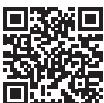
www.conformer.com/documents-of-conformity/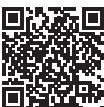
IMPORTANT SAFETY INSTRUCTIONS
READ CAREFULLY AND KEEP FOR FUTURE USE
To avoid fire, do not leave the microwave oven unattended during operation. Too high power or too long cooking time can overheat food, which may result in fire.
www.sharpconsumer.com/support/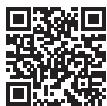
www.sharpconsumer.com/documents-of-conformity/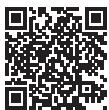
www.sharpconsumer.com/support/
www.conformer.com/documents-of-conformity/
230W = MEDIUM LOW
385W = MEDIUM
540W = MEDIUM HIGH
700W = HIGH
2. Press TIMER/DEFROST (0-35 minutes/0.2-1.0 kg)
www.sharpconsumer.com/support/
www.conformer.com/documents-of-conformity/
www.sharpconsumer.com/support/
www.conformity/
A. Information for users (private households)
1. In the European Union
IMPORTANT SAFETY INSTRUCTIONS
READ CAREFULLY AND KEEP FOR FUTURE REFERENCE
230W = MEDIUM LOW
385W = MEDIUM
540W = MEDIUM HIGH
700W = HIGH
2. TIMER/DEFROST GUIDE (0 - 35 min./0.2 - 1.0 kg)
TROUBLESHOOTING TABLE
Sharp Consumer Electronics Poland sp. z o.o.
Ostaszewo 57B, 87-148 Lysomice, Poland
SHARP CORPORATION
1 Takumi-cho, Sakai-ku
Sakai City, Osaka
590-8522, Japan
SDA/MAN/0263 V11
- INFORMATION ON DISPOSAL FOR USERS (PRIVATE HOUSEHOLDS)
- IN THE EUROPEAN UNION
- IN OTHER COUNTRIES OUTSIDE THE EU
- INFORMATION ON DISPOSAL FOR BUSINESS USERS
- PRECAUTIONS TO AVOID POSSIBLE EXPOSURE TO MICROWAVE ENERGY
- CONTENTS
- IMPORTANT SAFETY INSTRUCTIONS
- READ CAREFULLY AND KEEP FOR FUTURE REFERENCE
- TO AVOID THE POSSIBILITY OF INJURY. WARNING
- TO AVOID THE POSSIBILITY OF ELECTRIC SHOCK
- POT HOLDERS OR OVEN GLOVES WHEN REMOVING FOOD FROM THE OVEN TO PREVENT BURNS. TO AVOID THE POSSIBILITY OF BURNS
- WARNING: ONLY ALLOW CHILDREN AGED FROM 8 YEARS AND ABOVE TO USE THE OVEN WITHOUT SUPERVISION WHEN ADEQUATE INSTRUCTIONS HAVE BEEN GIVEN SO THAT THE CHILD IS ABLE TO USE THE OVEN IN A SAFE WAY AND UNDERSTANDS THE HAZARDS OF IMPROPER USE
- OTHER WARNINGS
- TO PROMOTE TROUBLE-FREE USE OF YOUR OVEN AND AVOID DAMAGE
- NOTE
- INSTALLATION
- WARNING
- SPECIFICATIONS
- OVEN AND ACCESSORIES
- NOTES
- CONTROL PANEL
- MICROWAVE POWER CONTROL KNOB
- TIMER/DEFROST GUIDE KNOB (0-30 MIN/0.2 - 1.0 KG)
- MICROWAVE COOKING
- COOKING HINTS
- DEFROSTING GUIDE
- SUITABLE OVENWARE
- CLEANING AND CARE
- OVEN EXTERIOR
- OVEN INTERIOR
- ACCESSORIES
- DOOR
- CLEANING TIP - FOR EASIER CLEANING OF YOUR OVEN
- COOKING ADVICE NOTES
- ARRANGE
- COVER
- PIERCE
- STIR, TURN AND REARRANGE
- STAND
- DEFROSTING ADVICE
- REARRANGE
- SEPARATE
- SHIELD
- TURN OVER
- REHEATING ADVICE
- PLATED MEALS
- SLICED MEAT
- POULTRY PORTIONS
- CASSEROLES
- WARNING: NEVER HEAT LIQUIDS IN NARROW-NECKED CONTAINERS, AS THIS COULD RESULT IN THE CONTENTS ERUPTING FROM THE CONTAINER AND MAY CAUSE BURNS
- WARNING: THE CONTENTS OF FEEDING BOTTLES AND BABY FOOD JARS ARE TO BE STIRRED OR SHAKEN AND THE TEMPERATURE IS TO BE CHECKED BEFORE CONSUMPTION TO AVOID BURNS
- TROUBLESHOOTING
- BEFORE CALLING FOR ASSISTANCE
- IN COUNTRIES OUTSIDE THE EU
- INFORMATION ON DISPOSAL AND RECYCLING FOR END USERS
- DISPOSAL OF THE APPLIANCE
- SAFETY INSTRUCTIONS AGAINST MICROWAVE ENERGY
- PREVENTION OF ELECTRIC SHOCK RISK
- OTHER REGULATIONS
- REAR PART OF THE APPLIANCE
- INTERIOR OF THE DEVICE
- TIPS FOR PROPER USE OF YOUR OVEN
- USEFUL TIPS FOR COOKING
- CORRECTION
- COVERING
- OPERATION
- BEFORE REQUESTING SERVICE
- READ CAREFULLY AND KEEP FOR FUTURE USE
- PRESS TIMER/DEFROST (0-35 MINUTES/0.2-1.0 KG)
- INFORMATION FOR USERS (PRIVATE HOUSEHOLDS)
- TIMER/DEFROST GUIDE (0 - 35 MIN./0.2 - 1.0 KG)
Brand : SHARP
Model : ms181aes - ms181aeb - ms181aes
Category : Calculator