
DLT-S4 - Magnetic Tape Reader QUANTUM - Free user manual and instructions
Find the device manual for free DLT-S4 QUANTUM in PDF.


| Product Type | Magnetic Tape Drive |
| Brand | QUANTUM |
| Model | DLT-S4 |
| Native Storage Capacity | 40 GB |
| Compressed Storage Capacity | 80 GB |
| Interface | SCSI LVD/SE |
| Transfer Speed | Up to 12 MB/s |
| Tape Format | DLTtape IV |
| Power Supply | 100-240 V AC, 50-60 Hz |
| Power Consumption | 25 W |
| Dimensions (L x D x H) | 41 x 27 x 10 cm |
| Weight | 5 kg |
| Operating Temperature | 10°C to 40°C |
| Operating Humidity | 20% to 80% non-condensing |
| Laser Class | Class 1 |
| EMC Compliance | Class A |
| Certifications | UL, CSA |
| Maintenance | Clean with a soft, dry cloth. Do not use solvents. |
| Safety | Unplug the device before any cleaning operation. |
Frequently Asked Questions - DLT-S4 QUANTUM
User questions about DLT-S4 QUANTUM
0 question about this device. Answer the ones you know or ask your own.
Ask a new question about this device
Download the instructions for your Magnetic Tape Reader in PDF format for free! Find your manual DLT-S4 - QUANTUM and take your electronic device back in hand. On this page are published all the documents necessary for the use of your device. DLT-S4 by QUANTUM.
USER MANUAL DLT-S4 QUANTUM
Product Manual Product Manual Product Manual Product Manual
DLT-S4 Tape Drive
DLT-S4 Product Manual, 81-81278-01 A01, July 2006, Made in USA.
Quantum Corporation provides this publication "as is" without warranty of any kind, either express or implied, including but not limited to the implied warranties of merchantability or fitness for a particular purpose. Quantum Corporation may revise this publication from time to time without notice.
COPYRIGHT STATEMENT
Copyright 2006 by Quantum Corporation. All rights reserved.
Your right to copy this document is limited by copyright law. Making copies or adaptations without prior written authorization of Quantum Corporation is prohibited by law and constitutes a punishable violation of the law.
TRADEMARK STATEMENT
Quantum, the Quantum logo, DLT, DLTtape, and the DLTtape logo are registered trademarks of Quantum Corporation in the U.S. and other countries. The DLT logo, GoVault, DLTSage, and SuperLoader are trademarks of Quantum Corporation.
All other trademarks are the property of their respective owners.

Contents
Preface
XIII
Chapter 1 Product Overview 1
Storage Capacity and Transfer Rates 2
Tape Drive Models 2
Tape Drive Features 4
Maximum Data Transfer Rate 5
Functional Specifications. 6
Tape Drive Technology 7
Tape Drive Components 8
Interface Types. 11
Host Interface. 11
Physical Characteristics 12
Chapter 2 Before You Begin 13
Warranty Note 14
Safety Precautions 14
Tape Drive Handling and Storage Guidelines 15
Electrostatic Discharge Protection 16
Pre-Installation Guidelines 17
| Chapter 3 | Cartridges | 19 |
| Choosing Compatible Cartridges | 19 | |
| UsingUnsupported Cartridges | 21 | |
| Backward-read Compatibility Transfer Rate | 22 | |
| Cartridge Handling and Storage Guidelines | 23 | |
| Inspecting a Cartridge | 25 | |
| Write-protecting a Cartridge | 29 | |
| Loading a Cartridge | 32 | |
| Unloading a Cartridge | 33 | |
| DLTSage WORM | 34 | |
| DLTSage WORM Features | 34 | |
| Formatting a Cartridge as DLTSage WORM | 35 |
| Chapter 4 | Specifications | 37 |
| Physical Specifications | 38 | |
| Dimensions and Weights | 39 | |
| Electromagnetic Field Specifications | 40 | |
| Electromagnetic Emissions | 40 | |
| Electromagnetic Interference and Immunity | 41 | |
| Acoustic Noise Emissions | 42 |
| Chapter 5 | Common Interface Information | 43 |
| SCSI Command Timeout | 44 | |
| Rear Panel Connectors | 46 | |
| Power Connector Pin Assignments | 46 | |
| Loader/Library Interface Connector | 46 |
| Chapter 6 | Parallel SCSI Interface | 48 |
| Rear Panel Connectors | 49 | |
| SCSI Cable Connectors | 49 | |
| SCSI Tape Drive Features | 50 | |
| SCSI Stub and Cable Lengths | 50 | |
| SCSI Connectors and Pin Assignments | 51 | |
| Chapter 7 | Fibre Channel Interface | 55 |
| Rear Panel Connectors | 56 | |
| Fibre Channel Cable Connector | 56 | |
| Fibre Channel Tape Drive Features | 57 | |
| Practical Considerations | 58 | |
| Hot-Swappable Cables | 58 | |
| Power Usage | 58 | |
| Power Cycle (Tape Drive On) | 58 | |
| Failure to Obtain a Loop Address | 58 | |
| Fibre Channel Speed and Topology | 59 | |
| World-wide Names | 61 |
| Chapter 8 | Serial Attached SCSI (SAS) Interface | 62 |
| Rear Panel Connectors | 63 | |
| SAS Cable Connector | 64 | |
| SAS Tape Drive Features | 64 | |
| Practical Considerations | 64 | |
| SAS Tape Drive Speed | 65 | |
| World-wide Names | 65 |
| Chapter 9 | Installing an Internal SCSI Tape Drive | 66 |
| Equipment Required | 67 | |
| Installation Steps | 67 | |
| Rear Panel Connectors | 68 | |
| Unpacking the Tape Drive | 69 | |
| Setting the SCSI ID | 69 | |
| Securing the Tape Drive in the System | 71 | |
| Connecting the Cables and Terminating the SCSI Bus | 74 | |
| Setting TERMPWR | 77 | |
| Confirming the Installation | 78 | |
| Adding an Additional Device | 78 | |
| Using the Loader/Library Interface Connector | 79 | |
| Chapter 10 | Installing an Internal Fibre Channel Tape Drive | 80 |
| Equipment Required | 81 | |
| Installation Steps | 81 | |
| Rear Panel Connectors | 82 | |
| Unpacking the Tape Drive | 83 | |
| Securing the Tape Drive in the System | 83 | |
| Connecting the Cables | 86 | |
| Confirming the Installation | 87 | |
| Adding Additional Devices | 88 | |
| Using the Loader/Library Interface Connector | 88 |
| Chapter 11 | Installing an Internal SAS Tape Drive | 89 |
| Equipment Required | .90 | |
| Installation Steps | .90 | |
| Rear Panel Connectors | .91 | |
| Unpacking the Tape Drive | .92 | |
| Securing the Tape Drive in the System | .92 | |
| Connecting the Cables | .95 | |
| Confirming the Installation | .96 | |
| Adding Additional Devices | .97 | |
| Using the Loader/Library Interface Connector | .97 |
| Chapter 12 | Installing the Tabletop Tape Drive | 98 |
| Equipment Required | 99 | |
| Installation Steps | 99 | |
| Rear Panel Connectors | 100 | |
| Unpacking the Tabletop Tape Drive | 101 | |
| Selecting a Location for the Tabletop Tape Drive | 101 | |
| Setting the SCSI ID | 102 | |
| Connecting the Tape Drive to the Host Computer and Terminating the SCSI Bus. | 103 | |
| Connecting the AC Power Cable | 105 | |
| Confirming the Installation | 107 | |
| Adding an Additional Device | 107 | |
| Configuring the Tape Drive | 109 | |
| Using TERMPWR | 109 |
Chapter 13 Using the Tape Drive 110
Front Panel Controls and LEDs. 111
Left LED. 111
Front Panel Controls 112
Power-On Self-Test 113
Performing a Trial Backup 115
Firmware Update via the Host Interface 116
Updating Firmware Using the Host Interface 116
Creating a CUP/FUP Cartridge From Which to Update Firmware. 116
Firmware Update via the Library Tape Drive Interface 118
Cleaning the Tape Drive. 119
When to Clean the Tape Drive 119
Which Cleaning Cartridge to Use 119
Cleaning Cartridge Life Expectancy 120
Cleaning Cartridge Compatibility 120
Cleaning Instructions. 120
Cycle Time for Cleaning Cartridge 121
Optimizing Tape Drive Performance 121
Chapter 14 Troubleshooting 123
General Troubleshooting. 123
POST and SCSI Troubleshooting 124
Over Temperature Condition 128
Chapter 15 Preparing the Tape Drive for Shipping 129
Appendix A Diagnostic Tools 131
Accessing the Tools 132
Device Drivers 132
TapeAlert 133
Medium Auxiliary Memory 133
DLTSage 134
xTalk Management Console 135
DLTSage Dashboard and DLTsage Tape Security 136
| Appendix B | Environmental Compliance | 137 |
| WEEE and RoHS Compliance | 137 | |
| Disposal of Electrical and Electronic Equipment | 138 |
| Appendix C | Regulatory Statements | 139 |
| Glossary | 144 |
| Index | 153 |

Figures
Figure 1 Internal Tape Drive. 3
Figure 2 Tabletop Tape Drive. 3
Figure 3 Tape Drive Integrated Components 10
Figure 4 Receiver Area 16
Figure 5 Compatible Tape Cartridges. 20
Figure 6 Data Cartridge Care 25
Figure 7 Cartridge Bottom View. 26
Figure 8 Cartridge Reel Locks 27
Figure 9 Opening the Media Access Door. 28
Figure 10 Inspecting Inside the Media Access Door 28
Figure 11 Cartridge Write-protect Tab. 30
Figure 12 Loading a Cartridge 33
Figure 13 DLTSage WORM Button 36
Figure 14 ADI/Loader Port Interface Schematic. 47
Figure 15 SCSI Connectors and Jumpers (Rear View) 49
Figure 16 SCSI Connectors. 50
Figure 17 Fibre Channel Connectors and Jumper Block (Rear View) 56
Figure 18 Fibre Channel Cable Connector. 57
Figure 19 Fibre Channel Speed and Topology Jumper Block. 59
Figure 20 SAS Connectors and Jumper Block (Rear View) 63
Figure 21 SAS Cable Connector 64
Figure 22 SCSI Connectors and Jumpers (Rear View) 68
Figure 23 Detail of the Empty SCSI ID Connector 70
Figure 24 Tape Drive Mounting Holes - Right Side View. 72
Figure 25 Tape Drive Mounting Holes - Bottom View 73
Figure 26 SCSI Cable with Built-in Terminator 75
Figure 27 SCSI Interface - Terminator Installation 75
Figure 28 SCSI and Power Cable Locations 76
Figure 29 Enabling TERMPWR. 77
Figure 30 Fibre Channel Connectors and Jumper Block (Rear View) 82
Figure 31 Tape Drive Mounting Holes - Right Side View. 84
Figure 32 Tape Drive Mounting Holes - Bottom View 85
Figure 33 Connecting the Fibre Channel and Power Cables 87
Figure 34 SAS Connectors and Jumpers (Rear View) 91
Figure 35 Tape Drive Mounting Holes - Right Side View. 93
Figure 36 Tape Drive Mounting Holes - Bottom View 94
Figure 37 Connecting the SAS and Power Cables 96
Figure 38 Tabletop Tape Drive - Rear View 100
Figure 39 Tabletop SCSI ID Selector Switch. 103
Figure 40 SCSI Chain - Single Device. 105
Figure 41 AC Power Cable Connector Types. 106
Figure 42 SCSI Chain - Multiple Devices 109
Figure 43 Tape Drive Front Panel 111


Tables
Table 1 Maximum Transfer Rate. 5
Table 2 Tape Drive Technology. 7
Table 3 Tape Drive Components. 8
Table 4 Interface Speed and Options. 11
Table 5 Tape Drive Interface Physical Characteristics. 12
Table 21 Backward-read Compatibility Transfer Rates 22
Table 22 Write-protect Tab Positions. 31
Table 23 Physical Specifications 38
Table 24 Tape Drive Physical Dimensions. 39
Table 25 Unpackaged and Shipping Weights 39
Table 26 EMI Regulations and Certifications 40
Table 27 Electromagnetic Interference and Immunity Test Summary 41
Table 28 Acoustic Noise Emissions. 42
Table 29 SCSI Command Timeout Values. 44
Table 30 MSE Mode SCSI Connector Pin Assignments. 51
Table 31 MSE LVD Mode SCSI Connector Pin Assignments 53
Table 32 Fibre Channel Speed Configuration 60
Table 33 Fibre Channel Topology Configuration. 61
Table 34 SCSI ID Address Selections. 70
Table 35 Interpreting Front Panel LEDs. 112
Table 36 LED Lighting Pattern During POST 114
Table 37 POST and SCSI Troubleshooting Guidelines 125
Table 1 DLTSage Features. 134

Preface
This document serves as an easy-to-use information source and product catalog to familiarize Quantum customers and systems professionals with the DLT-S4 tape drive system. The DLT-S4 tape drive is an extension of the Quantum Digital Linear Tape (DLT®) product family.
Audience
The primary audience for this document consists of end users installing and using the tape drive. The information in this document applies to the internal tape drive, the library tape drive, and the tabletop tape drive.
Purpose
This document provides information on the DLT-S4 tape drive including:
Product description
Installation instructions
Operation instructions
Regulatory compliance
Document Organization
This document is organized as follows:
- Chapter 1, Product Overview, provides an overview of the DLT-S4 tape drive system, including features, tape drive technology, components, interface types, and functional specifications.
- Chapter 3, Cartridges, provides information on recognizing, handling, inspecting, write-protecting, loading, unloading, and creating secure write-once read-many (WORM) cartridges.
- Chapter 2, Before You Begin, provides unpacking and safe handling guidelines you need to know before you begin installing and using your DLT-S4 tape drive.
- Chapter 4, Specifications, provides basic physical and emissions specifications of the DLT-S4 tape drive.
- Chapter 5, Common Interface Information, provides information common to all interfaces.
- Chapter 6, Parallel SCSI Interface, provides information specific to the SCSI interface.
- Chapter 7, Fibre Channel Interface, provides information specific to the Fibre Channel interface.
- Chapter 8, Serial Attached SCSI (SAS) Interface, provides information specific to the SAS interface.
- Chapter 9, Installing an Internal SCSI Tape Drive, provides instructions for installing the internal SCSI tape drive.
- Chapter 10, Installing an Internal Fibre Channel Tape Drive, provides instructions for installing the internal Fibre Channel tape drive.
- Chapter 11, Installing an Internal SAS Tape Drive, provides instructions for installing the internal SAS tape drive.
- Chapter 12, Installing the Tabletop Tape Drive, provides instructions for installing the tabletop tape drive.
-
Chapter 13, Using the Tape Drive, provides information that you need to use the tape drive, including front panel controls and LEDs, POST, performing a trial backup, updating the firmware, cleaning the tape drive, and information on how to optimize tape drive performance.
Chapter 14, Troubleshooting, provides troubleshooting information. -
Chapter 15, Preparing the Tape Drive for Shipping, provides information on how the special soft-load mechanism "parks" and "unparks" the tape drive for safe shipping and moving.
- Appendix B, Environmental Compliance, provides information on how the DLT-S4 tape drive complies with environmental standards, and information on how to safely dispose of electric and electronic equipment.
- Appendix A, Diagnostic Tools, provides information about the diagnostic tools to use with DLT-S4 tape drives.
- Appendix C, Regulatory Statements, lists all the regulatory statements for the tape drive.
This document concludes with a glossary and a detailed index.
Notational Conventions
This document uses the following conventions:
Note: Notes emphasize important information related to the main topic.
Caution: Cautions indicate potential hazards to equipment and are included to prevent damage to equipment.
Warning:Warnings indicate potential hazards to personal safety and are included to prevent injury.
This document uses the following terminology:
- Right side of the tape drive - Refers to the right side as you face the component being described.
- Left side of the tape drive - Refers to the left side as you face the component being described.
- Power cycle - Means to turn the tape drive or system off, then on again.
Related Documents
The following documents are related to the DLT-S4 tape drive:
| Document No. | Document Title | Document Description |
| 81-81281-xx | DLT-S4 Interface Reference Guide | Provides command and reference information on the tape drive |
| 81-81279-xx | DLT-S4 Product Specification | Provides hardware, performance, environment, shock and vibration, and regulatory specifications for the tape drive |
| 81-81283-xx | DLT-S4 Quick Start Guide | Provides instructions on how to install and run the tape drive |
| 81-81639-xx | DLTSage Dashboard and DLTSage Tape Security Quick Start Guide | Provides instructions on how to install and use DLTSage Dashboard and DLTSage Tape Security |
| 6464162-xx | DLT Tape Drive Library Interface Specification | Describes the interface implemented for two-way communication between a tape drive and a library |
| 81-81235-xx | 2U Rackmount Quick Start Guide | Provides instructions on installing tape drives into the 2U Rackmount unit |
| 81-81610-01 | xTalk Management Console for Windows User's Guide | Provides instructions for using xTalk Management Console via a Windows interface |
| 81-81612-01 | xTalk Management Console User's Guide - Command Line Interface | Provides instructions for using xTalk Management Console via a Linux or Solaris interface |
Current SCSI standards documents available from www.t10.org
| Document No. | Document Title | Document Description |
| ·SCSI Architecture Model (SAM-3)·SCSI Primary Commands (SPC-3)·SCSI Parallel Interface (SPI-5)·SCSI Stream Commands (SSC-3)·Serial Attached SCSI (SAS-1.1)·Fibre Channel Protocol (FCP-2)·Fibre Channel Framing and Signaling (FC-FS-2)·Fibre Channel Arbitrated Loop (FC-AL-2)·Fibre Channel General Services (FC-GS-5) | ||
SCSI Standards
Copies of the approved version of the SCSI standards may be obtained from:
Global Engineering Documents
15 Inverness Way, East
Englewood, CO 80112
(800) 854-7179 or (303) 397-2740
Contacts
Quantum company contacts are listed below.
Quantum Corporate Headquarters
To order documentation on this or other Quantum products, contact:
Quantum Corporation
141 Innovation Drive
Irvine, CA 92617
(949) 856-7800
(800) 284-5101
Technical Publications
To comment on existing documentation send e-mail to: doc/comments@quantum.com
Quantum Home Page
Visit the Quantum home page at:
http://www.quantum.com
Customer Support
The Quantum Customer Support Department provides a 24-hour help desk that can be reached at:
North/South America: (949) 725-2100 or (800) 284-5101
Asia/Pacific Rim:
APAC Headquarters: (International Code) + 65 6334 0660
Specific countries: www.quantum.com/ServiceandSupport/ ContactServiceandSupport/DLTSupportAPAC// Index.aspx
Europe/Middle East/Africa: (International Code) + 44 1256 848 766
Send faxes for the Customer Support Department to:
North/South America: (949) 725-2176
Asia/Pacific Rim: (International Code) + 65 6432 2830
Europe/Middle East/Africa: (International Code) + 44 1256 848 777
Send e-mail for the Customer Support Department to:
North/South America: http://www.quantum.com/am/service_support/Index.aspx
Asia/Pacific Rim: apacheh@quantum.com
Europe/Middle East/Africa: eurohelp@quantum.com

This chapter describes the features of the DLT-S4 tape drive system and covers the following topics:
Storage Capacity and Transfer Rates
- Tape Drive Models
Tape Drive Features
Maximum Data Transfer Rate
Functional Specifications
Tape Drive Technology
- Tape Drive Components
Interface Types
Storage Capacity and Transfer Rates
The DLT-S4 tape drive system provides:
| Mode | Storage Capacity | Transfer Rate |
| Native | 800 Gigabytes (GB) | 60 Megabytes per second (MB/second) |
| Compresseda | 1.6 Terabytes (TB) | 120 MB/second |
a. 2:1 compression ratio.
Tape Drive Models
The tape drive system is available in three models: an internal unit for server installation (see figure 1), a tabletop (or external) unit (see figure 2), and a library model for installing in tape automation systems. The library model (not shown) is similar to the internal model, but has a different front bezel.
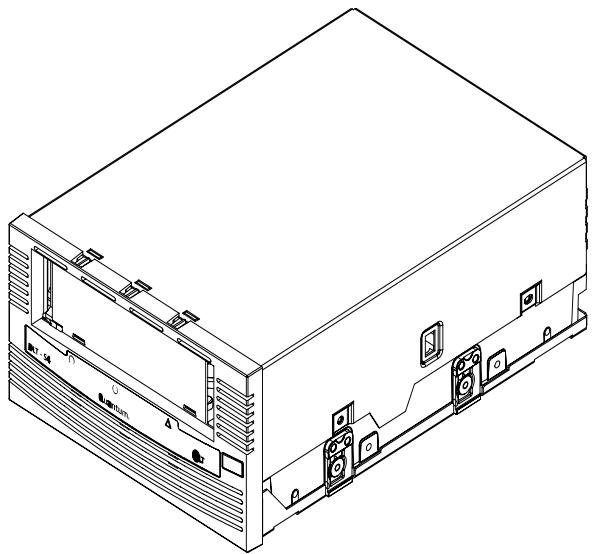
Figure 1 Internal Tape Drive
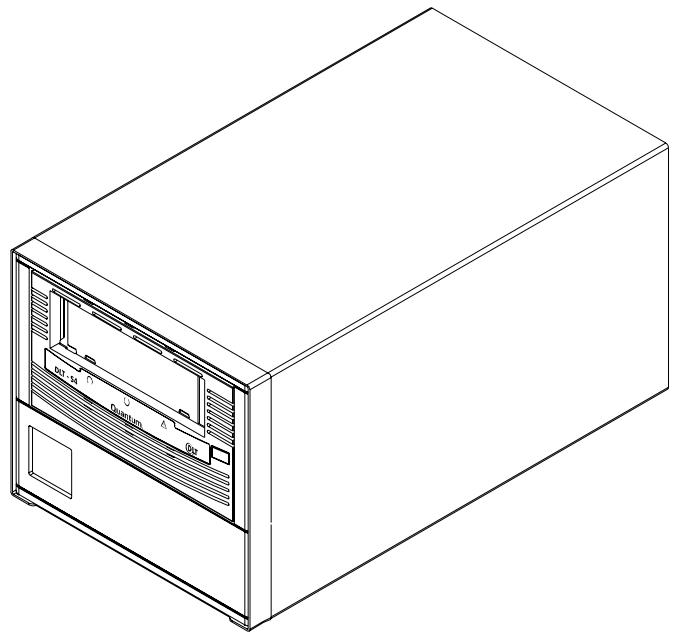
Figure 2 Tabletop Tape Drive
Tape Drive Features
The DLT-S4 tape drive system provides the following product features:
| Feature | Description | |
| Media | A streaming tape drive that uses half-inch wide DLTtape S4 media | |
| Form Factor | A standard 5.25-inch full-height form factor to simplify integration into system and tape library solutions | |
| Format Compatibility | Tape Drive | Cartridge |
| DLT-S4 | DLTtape S4 (write/read) | |
| SDLT 600 | Super DLTtape II (read only) | |
| SDLT 320 | Super DLTtape I (read only) | |
| Interface Options | Ultra320 SCSI | |
| 4 Gigabit (Gb) Fibre Channela | ||
| 3 Gb SAS-1.1a | ||
| Capacity | Mode | Value |
| Native capacity | 800 GB | |
| Compressed capacity | 1.6 TBb (2:1 compression ratio) | |
a. Fibre Channel and SAS interfaces are not available with the tabletop model.
b. In accordance with industry practice, a typical compression ratio is quoted. Actual compression ratios depend on the redundancy and kind of data files you write.
Maximum Data Transfer Rate
Table 1 shows the maximum and burst data transfer rates for the DLT-S4 tape drive.
Table 1 Maximum Transfer Rate
| Configuration | Native | Compressed | Burst Maxa | |
| 2:1 | >4:1 | |||
| Ultra320 SCSI | 60 MB/sec | 120 MB/sec | 140 MB/sec | 320 MB/sec |
| Fibre Channel | 60 MB/sec | 125 MB/sec | 180 MB/sec | 4 Gb/sec |
| SAS-1.1 | 60 MB/sec | 125 MB/sec | 180 MB/sec | 3 Gb/sec |
Note: Cable lengths and cable type may limit attainable transfer rates.
a. The interface limits burst rates, not the design of the tape drive or the media.
Functional Specifications
This section provides performance data for the DLT-S4 tape drive.
| Feature | Value |
| Tape drive read/write transfer ratea | Native - 60 MB per second Compressed - 120 MB per second |
| Tracks | 80 logical tracks 1280 physical tracks |
| Track density | 2988 tracks per inch (tpi) |
| Linear bit density | 256 Kb per inch (Kbpi) |
| Read/Write media speed | 155 inches per second (ips) |
| Rewind media speed | 200 inches per second |
| Linear search media speed | 200 inches per second |
| Average rewind timeb | 70 seconds |
| Maximum rewind timeb | 140 seconds |
| Average access timeb(from BOT) | 70 seconds |
| Maximum access timeb(from BOT) | 142 seconds |
| Load to BOTb | 25 seconds 70 seconds (unformatted media) |
| Unload from BOTb | 25 seconds |
| Nominal media tension | Stationary - 3.0 ± 0.5 oz. Operating speed - 3.5 ± 0.5 oz. Rewind - 3.5 ± 0.5 oz. |
a. Depending on data type, SCSI bus limitations, and the tape system configuration.
b. Note that data is typical; times may be longer if error recovery time is necessary.
Tape Drive Technology
The DLT-S4 tape drive incorporates state-of-the-art technologies that contribute to the SDLT architecture. Some of these ideas are trademarked, others are patented. Table 2 lists some of the important technologies that comprise the DLT-S4 tape drive system.
Table 2 Tape Drive Technology
| Technology | Description |
| Laser Guided Magnetic Recording | The DLT-S4 tape drive system is based on Quantum's Laser Guided Magnetic Recording (LGMR) technology. LGMR provides a unique combination of the best optical and magnetic technologies, which results in dramatically higher capacities by substantially increasing the number of recording tracks on the data-bearing surface of the media. |
| Magneto Resistive Cluster Heads | Magneto Resistive Cluster (MRC) heads are a densely packed array of small Magneto Resistive (MR) tape heads precisely positioned using advanced thin-film processing technology. |
| Advanced Partial Response Maximum Likelihood | Improving on Partial Response Maximum Likelihood (PRML) technology traditionally used in disk drives and communication systems, Quantum's advanced PRML channel technology, co-developed with Lucent Technologies, brings new levels of performance and capacity to high-performance linear tape products. |
| Advanced Metal Powder Media | Advanced Metal Powder (AMP) media is a state-of-the-art media using durable metal powder technology for recording high densities of data. The back side of AMP media receives a specially formulated coating to accept the optical servo tracks, which ensures that the entire data-bearing side of the media is available for recording data and eliminates the need for pre-formating. |
| Positive Engagement Tape Leader Buckling Mechanism | The positive engagement tape leader buckling mechanism engages the media leader on cartridge load and disengages it on cartridge unload. It uses a metal pin attached to the tape drive leader to link with molded clips permanently attached to the media leader inside the cartridge. |
Tape Drive Components
The DLT-S4 tape drive is designed as a total system. The system includes a complex interaction of a number of important components including the base mechanical assembly, the front panel assembly (bezel), and the board assemblies. Table 3 describes these components.
Table 3 Tape Drive Components
| Components | Description |
| Base mechanical assembly | The base mechanical assembly houses the tape control mechanical, actuator, reel motor, load mechanism, eject button, and front-panel indicators. It positions the actuator servo head over the correct tape track. It implements the functions required to buckle and unbuckle the media and control the media motion. It engages the media leader on cartridge load and disengages it on cartridge unload. • Auto load – The tape auto load is a soft-load and seating mechanism that is tolerant of forced media loading; a media sensor is triggered upon cartridge insertion, and after the media reaches a hard stop point, the auto load sensor engages, pulling the cartridges the remaining distance onto the motor. On media ejection, the assembly reverses the process and automatically ejects the cartridge a fixed distance from the front of the tape drive. • Base plate – Acts as the support platform for the other modules and for the tape drive enclosure. It also includes the mounting holes (shock mounts) used to install the tape drive into a server or tape library. |
| Front panel assembly (bezel) | The front panel assembly (bezel) performs these functions: • Protects the front of the drive from physical damage • Channels air flow through the system • Aligns the cartridge when it is inserted into the system • Provides label identifiers for the LEDs mounted on the front of the tape drive • Enables cartridge ejection • Reduces internal environmental contamination with a built-in dust door (internal and tabletop configurations only) |
| Board assemblies | The board assemblies provide the main control function for the system and the interface from the system to the host computer, library, or autoloader. This provides the Advanced Partial Response Maximum Likelihood (PRML) feature of the Quantum DLT-S technology. There are three board assemblies: • Pre-amplifier Board (PAB) – The PAB contains the preamplifier for the read heads, and the write driver for the write heads. • Motor Driver Board (MDB) – The MDB interfaces with the reel motor drivers and hall sensors, actuator driver and sensors, sensor and motor drivers for the soft load, LEDs for front-panel indicators, and eject button signals. • Drive Control Board (DCB) – The DCB is the main control card for the DLT-S4 tape drive. It sends commands to the MDB to control and drive the tape mechanism. The board interfaces with the PAB to send signals to the head for reading and writing. |
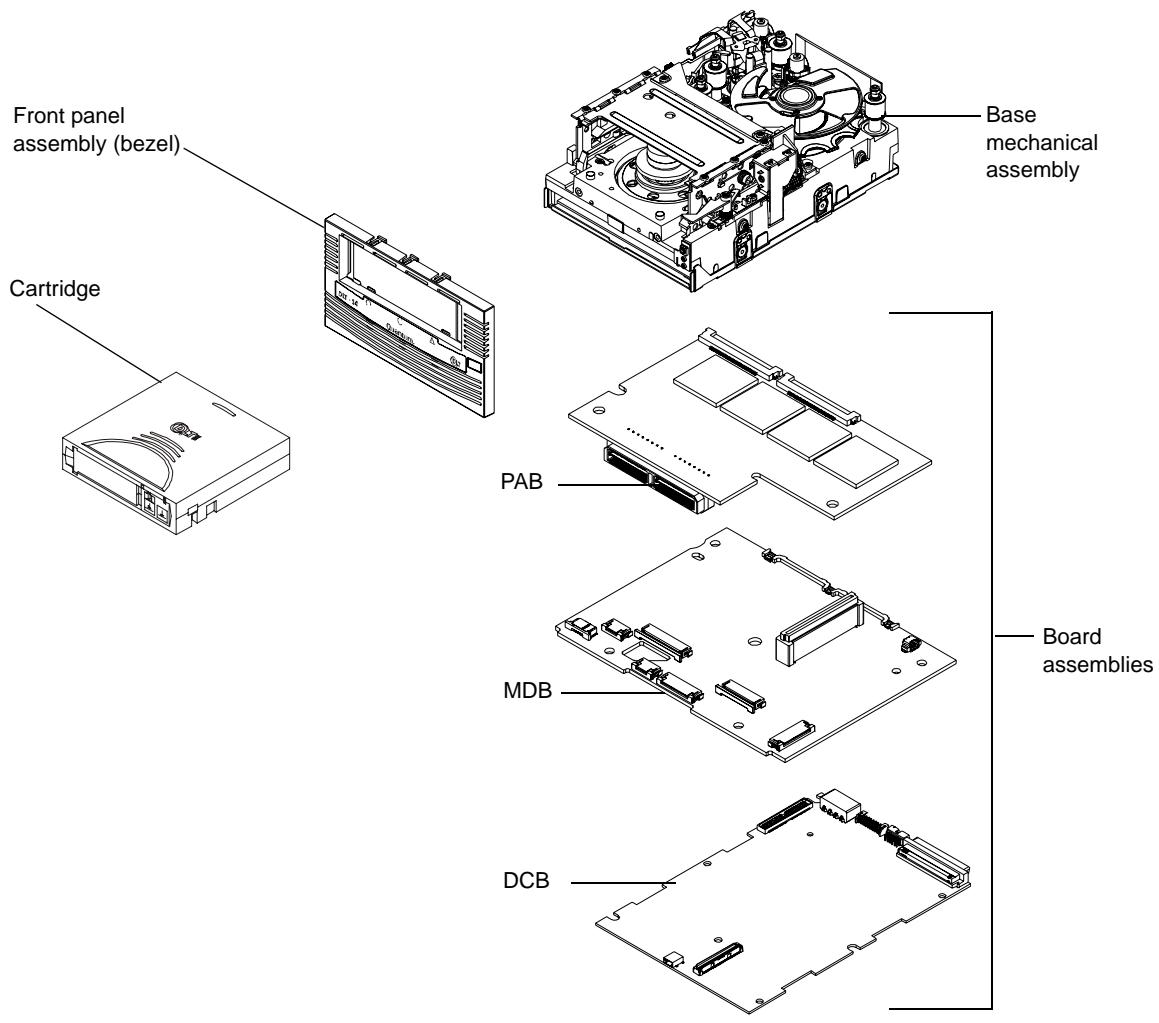
Figure 3 Tape Drive Integrated Components
Interface Types
This section contains the following information for the DLT-S4 tape drive:
- Host Interface
Physical Characteristics
Host Interface
The interface supported by an DLT-S4 tape drive is dependent on the kind of Drive Control Board (DCB) PWA installed. The DLT-S4 tape drive comes in these interface types:
- Tabletop model with Ultra320 SCSI interface
- Internal model with either an Ultra320 SCSI interface, 4 Gb Optical Fibre Channel interface, or SAS Interface
Interface speeds and protocol options are shown in table 4.
Table 4 Interface Speed and Options
| Interface Versions | Speed(Maximum Burst) | Protocol Options |
| Ultra320 SCSI | 320 MB/seconda | Low Voltage Differential (LVD) sense running up to 320 MB per second burstUltra160 2/FAST-20/Asynchronous |
| Fibre Channel | 1 Gb/second2 Gb/second4 Gb/second | Class3Connect to N port, NL port, FL port, and F port |
| SAS | 1.5 Gb/second3 Gb/second | Serial SCSI Protocol (SSP) |
a. The SCSI bus itself limits this rate, not the design of the tape drive or media.
Physical Characteristics
Table 5 lists the physical characteristics for each interface of the tape drive. These interfaces are available from the rear panel (per type, per port).
Table 5 Tape Drive Interface Physical Characteristics
| Interface Versions | Physical Characteristics |
| Parallel SCSI | Ultra320 LVD SCSI ID/TERMPR connector style: 6-pin Connector style: 68-pin high density SCSI |
| Fibre Channel | Topology-constrained (drive automatically detects topology) 4 Gb interface (drive automatically detects speed) LC connector with 850 nanometer SFP transceiver (supplied) |
| SAS-1.1 | Point-to-point topology 3 Gb interface (drive automatically detects speed) |
Inappropriate or careless handling of DLT-S4 tape drive systems may result in damage to the product. Follow the precautions and directions to prevent damaging the DLT-S4 tape drive system. In addition, follow the steps in Pre-Installation Guidelines on page 17 to ensure that you have the correct hardware for the system configuration.
This chapter provides the following important information you need to know before you install and use your DLT-S4 tape drive:
- Warranty Note provides a general reminder of certain precautions to follow so you do not void your warranty
Safety Precautions - Tape Drive Handling and Storage Guidelines
- Electrostatic Discharge Protection
- Pre-Installation Guidelines describes proper steps to take before installing the tape drive in a system
Warranty Note
See the tape drive warranty before installing the tape drive; the tape drive's warranty could be voided if the installation guidelines and restrictions are not closely followed.
Generally, the Limited Product and Limited Repair Warranties are contingent upon proper use in the application for which the product is intended, and do not cover the product if you perform any of the following actions:
- Modify the product without the manufacturer's written approval
- Subject the product to unusual physical, environmental, or electrical stress, including damage caused by handling or shipping in unapproved containers or packaging
- Disturb any warranty labels, or the integrity of the product in any other way
- Remove or damage the serial number label to the extent that warranty status of the product cannot be determined
Safety Precautions
For your safety, follow all safety procedures described here and in other sections of the document.
- Turn off the system into which the DLT-S4 tape drive is to be installed or attached before installing or removing the tape drive to prevent the possibility of electrical shock or damage to the tape drive.
- Unplug the system that contains—or is to contain—the tape drive from AC power before installing the tape drive to provide an added measure of safety.
-
Read, understand, and observe all label warnings.
-
The DLT-S4 tape drive uses a Class I laser product. This laser product complies with 29 CFR 1200 and 29 CFR 1910 as applicable on the date of manufacture.
Warning: If you open the tape drive chassis, you may become exposed to invisible laser emission which could be harmful if you are directly exposed to the beam.
Tape Drive Handling and Storage Guidelines
Damage to the DLT-S4 tape drive system can occur as the result of careless handling, vibration, shock, or electrostatic discharge (ESD). For more details on ESD, see Electrostatic Discharge Protection on page 16.
Follow these guidelines to avoid damage to the tape drive:
Caution: Never power off the tape drive or the host while the tape drive contains a cartridge. Failure to remove a cartridge may result in cartridge or tape drive damage.
- Always handle the tape drive carefully and gently - a drop of 14 inch onto a bench or desktop can damage a tape drive.
- Hold the internal tape drive only by its sides.
- Never hold or carry the tape drive by inserting your fingers into the receiver area on the front of the tape drive. You could damage the receiver area if you lift or carry it in this manner.
- Do not bump, jar, or drop the tape drive. Use care when transporting the tape drive.
- Do not place the tape drive so that it rests on its front bezel.
- Always gently place the tape drive flat and horizontal on an appropriate ESD-protected work surface to keep the tape drive from accidentally being knocked over.
-
Do not stack objects on the tape drive.
-
Do not expose the tape drive to dusty, humid, or smoke-filled areas, or to excessive heat or cold (see Physical Specifications on page 38 for required temperature and humidity conditions).
- Do not place foreign objects inside the tape drive's receiver area (see figure 4).
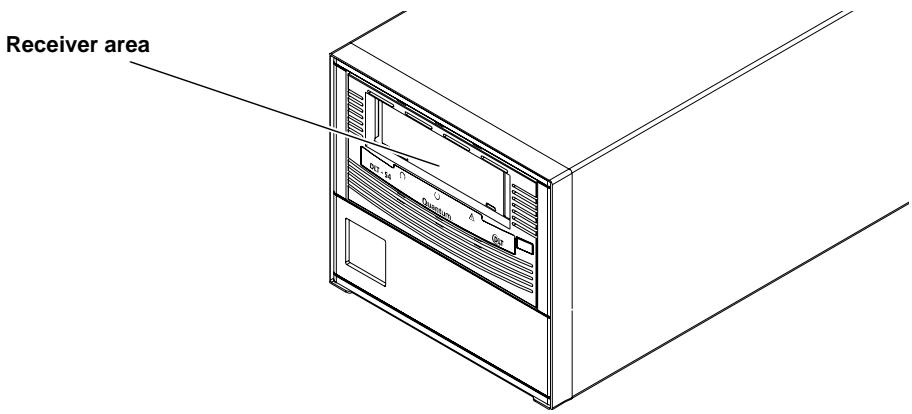
Figure 4 Receiver Area
Electrostatic Discharge Protection
Several electrical components of the DLT-S4 tape drive system are sensitive to static electricity and electrostatic discharge (ESD). Even a static buildup or discharge that is too slight to feel can be sufficient to destroy or degrade a component's operation.
To minimize the possibility of ESD-related damage to the system, the tape drive's manufacturer strongly recommends using both a workstation anti-static mat and an ESD wrist strap. If the devices are correctly installed and properly used, they reduce the buildup of static electricity that might harm the system.
Follow these guidelines to avoid ESD damage to the tape drive:
- Use a properly fitted wrist strap or other suitable ESD protection.
- Observe proper ESD grounding techniques.
-
Keep the internal tape drive in its antistatic bag until ready to install.
-
Place the tape drive in the antistatic bag before placing it in a shipping container.
- Hold the internal tape drive only by its sides.
- Place the tape drive on a properly grounded anti-static work surface pad while it is out of its protective antistatic bag.
- Do not pack other materials with the tape drive in its antistatic bag.
- Do not use the bag as a substitute for the work surface antistatic pad. The outside surface of the bag may not have the same antistatic properties as the inside surface. It could actually increase the possibility of ESD problems.
- Do not remove either the tabletop tape drive cover or the internal/ library tape drive cover to use any test equipment to check components on the PCBAs. There are no user-serviceable components on the tape drive.
Pre-Installation Guidelines
Before you install the tape drive in a system, follow these steps. Also, check the tape drive to be certain it is operating properly before installing it in a system.
1 Unpack and review the contents of the box for any physical damage. If you find damaged items, contact the tape drive sales representative and the shipping company immediately.
2 Save the shipping box and packing materials in case you need to move or ship the tape drive at a later date.
Caution: When returning a unit to Quantum for repair, you must use the original or equivalent packing materials or risk voiding your warranty.
3 Record the model and serial number of the DLT-S4 tape drive system in the space provided below.
These numbers provide specific information on the DLT-S4 tape drive system and will be helpful if you must contact technical support. You can find these numbers on the bottom of the tabletop tape drive enclosure and on the top of the internal and library tape drives.
| Model Number (usually begins with TC) | Serial Number (usually begins with QP, QX, or QK) |
4 Check the enclosed SCSI, Fibre Channel, or SAS cable to ensure it is compatible with the SCSI, Fibre Channel, or SAS controller card in the host computer.
5 Check the SCSI, Fibre Channel, or SAS interface on the host computer to ensure that it is compatible with the tape drive (see table 5 on page 12 for a list of the possible interfaces that are available and the various options with each).
6 Confirm that your back-up software and operating system are compatible with the tape drive.
See www.quantum.com for the most up-to-date compatibility information.

Chapter 3 Cartridges
This chapter discusses the cartridges that you can use in the DLT-S4 tape drive. This chapter covers the following topics:
- Choosing Compatible Cartridges
Using Unsupported Cartridges - Backward-read Compatibility Transfer Rate
- Cartridge Handling and Storage Guidelines
Inspecting a Cartridge
Write-protecting a Cartridge - Loading a Cartridge
Unloading a Cartridge
DLTSage WORM [explains how create a secure archival write-once, read-many (WORM) cartridge]
Choosing Compatible Cartridges
The only cartridge the DLT-S4 tape drive can both read and write to is the DLTtape S4 cartridge.
The DLT-S4 tape drive can read from, but not write to:
Super DLTtape II cartridges formatted in the SDLT 600 tape drive
Super DLTtape I cartridges formatted in the SDLT 320 tape drive
The DLTtape S4 cartridge is black and has a distinctive pattern molded into the plastic, along with the DLTtape logo. The cartridge is made of wear-resistant materials to reduce the potential for debris generation and increase the life of the cartridge.
The cartridge's geometry is similar to previous DLTtape cartridges to simplify integration with existing tape library designs (see figure 5). Its keying feature, however, ensures that it cannot be loaded into previous generation tape drives.
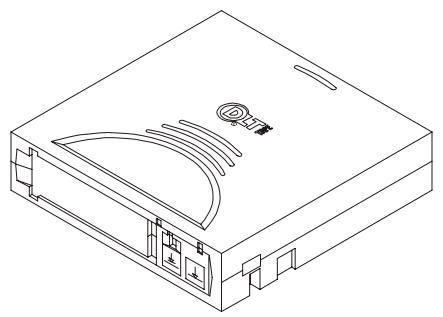
Figure 5 Compatible Tape Cartridges
DLTtape S4 Data Cartridge (BLACK)
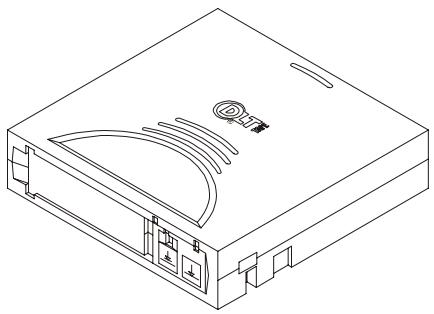
Super DLTtape II Data Cartridge (BLUE)
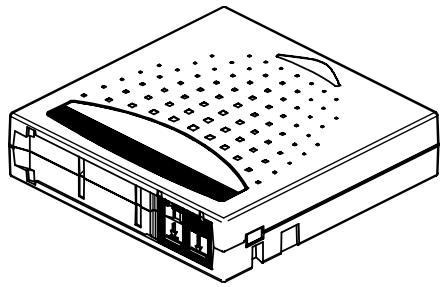
Super DLTape I Data Cartridge (GREEN)
Using Unsupported Cartridges
DLT-S4 tape drives are intended to be used only with the cartridges specified in Choosing Compatible Cartridges on page 19. However, Quantum DLT drives are tested with a variety of unsupported cartridges and are designed to ensure that no damage occurs to either the tape drive or the cartridge if a user attempts to use an unsupported cartridge.
If you try to insert an unsupported cartridge into the DLT-S4 drive, the drive will not be able to accept it. Possible results are:
- You may not be able to insert the unsupported cartridge into the drive.
- The unsupported cartridge may trigger the soft-load mechanism at an inappropriate time, which may cause the soft-load mechanism to stop at an improper location. While the soft-load mechanism is stopped, the unsupported cartridge may not be completely loaded in the drive, and the drive may not automatically eject the cartridge. (If this happens, you must manually eject the cartridge by issuing an EJECT command or by pressing the Eject button.)
- If the unsupported cartridge does manage to load properly, the drive will not be able to buckle, read, or write to it. If this happens, a load failure will be issued over the interface. (If this happens, you must manually eject the cartridge by issuing an EJECT command or by pressing the Eject button.)
When a compatible cartridge is loaded correctly, the left LED lights either green or orange. If you load, or attempt to load, an incompatible cartridge, the left LED stays off (see Loading a Cartridge on page 32).
Backward-read Compatibility Transfer Rate
The DLT-S4 tape drive includes a backward-read compatibility feature that enables it to read Super DLTtape I and Super DLTtape II cartridges (but not write to these cartridges). The following table lists the transfer rates for backward-read cartridges.
Table 21 Backward-read Compatibility Transfer Rates
| \(Format^a\) | Cartridge Type | Native Capacity | Native Read Transfer Rate | Native Read Transfer Rate in DLT-S4 Tape \(Drive^b\) |
| SDLT 600 | Super DLTtape II | 300 GB | 36.0 MB/sec | ≥18.0 MB/sec |
| SDLT 320 | Super DLTtape I | 160 GB | 16.0 MB/sec | ≥8.0 MB/sec |
a. Tape drives older than the DLT-S4 will eject a data cartridge written with DLT-S4 format.
b. Transfer rates shown are the minimum when reading uncompressed data.
Cartridge Handling and Storage Guidelines
DLTtape S4 cartridges are engineered to be reliable, robust, and durable. They are manufactured to withstand 1,000,000 head passes and have a shelf life of 30 years. By following these guidelines, you will greatly reduce the chance that you will experience problems with the cartridges or cause damage to the tape drive system.
Caution: The safety of data depends on proper care and handling of cartridges.
Caution: Never power off the tape drive while it contains a cartridge. Failure to remove a cartridge prior to power-off may result in cartridge or tape drive damage.
For best results, follow these guidelines for data cartridge handling and storage:
- Follow the handling instructions and observe the environmental specifications provided in the plastic cartridge case.
- Inspect tape cartridges for damage as described in Inspecting a Cartridge on page 25.
- Store cartridges vertically in their protective cases when not in use or when archived (see figure 6).
- Protect cartridges from shock, vibration, moisture, direct sunlight, dust, smoke, and magnetic fields.
- Do not stack more than five cartridges on top of each other.
- Do not carry cartridges loosely in a box or any other container. Allowing cartridges to jostle together exposes them to unnecessary physical shock.
- When carrying cartridges in their cases, orient the cases so that the grooves in the cases interlock. This prevents the cases from slipping apart and falling.
-
Do not drop the cartridge. A dropped cartridge may have dislodged, loosened, or damaged internal components. If you drop a cartridge, give it a thorough visual inspection (see Inspecting a Cartridge on page 25 for complete instructions).
-
Use only the slide-in labels provided with each cartridge or slide-in bar code labels designed for use with DLT media. Slide labels into the label slot on the cartridge (see figure 6). Never apply adhesive labels or "sticky" notes on the top, side, or bottom of tape cartridges, and do not write on the cartridge.
- Do not write on the labels with debris-producing writing instruments, such as graphite pencils and water-soluble felt pens.
- Other than the bar code label, ensure that nothing else is stuck to the cartridge before inserting it into the tape drive. Loose labels and other materials can cling to the bottom of the cartridge and get stuck in the tape drive.
- Leave unused labels attached to the printed material (called the u-card) within the cartridge case.
- Store any loose labels or other materials that are smaller than 4.5 × 4.5 inches (114.3 x 114.3 mm) separate from the cartridge. A loose label or piece of paper accidentally inserted into the tape drive along with a cartridge can prevent the hub reel and tape drive gear from meshing.
- Never touch the tape or media leader. Dust and oils from your skin contaminate the tape and affect performance.
- Avoid unnecessarily opening the cartridge media access door (see figure 9). This may expose the media to contamination or physical damage.
- Protect cartridges from shock, vibration, moisture, direct sunlight, dust, smoke, and magnetic fields. Devices that may produce magnetic fields, such as computer monitors, motors, or video equipment can alter or erase data on the media.
- Observe the proper temperature and humidity conditions for operating and storing cartridges as follows:
Temperature
| Operating | 10 °C to 40 °C (50 °F to 104 °F) |
| Storage (with data) | 18 °C to 28°C (64 °F to 82 °F) |
Humidity
| Operating | 20% to 80% non-condensing |
| Storage (with data) | 40% to 60% non-condensing |
Note: If storage or transportation of a cartridge has exposed it to temperature or humidity conditions outside the specifications shown in the preceding table, allow the cartridge to acclimate to the proper operating environment for 24 hours before using it.
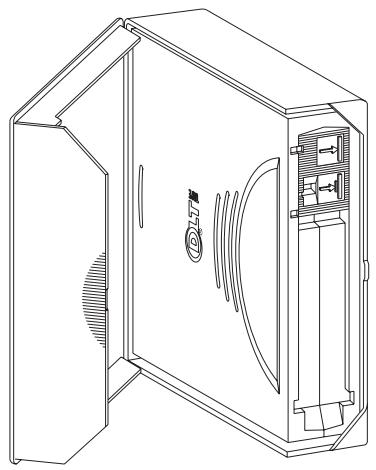
Figure 6 Data Cartridge Care
Store data cartridges vertically in plastic cases
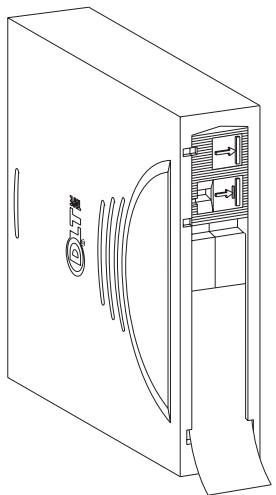
Use slide-in labels
Inspecting a Cartridge
Improper cartridge handling is the primary reason for tape drive problems. To avoid losing data or damaging the tape drive, inspect the cartridges:
-
Before loading a new cartridge in the tape drive
After dropping a cartridge or subjecting it to physical shock -
When the tape drive becomes inoperable after loading a cartridge
- When you receive a shipment of cartridges that show any sign of shipping damage
Follow these steps to inspect a tape cartridge:
1 Gently shake the cartridge and listen for loose pieces.
2 Remove the cartridge from its protective plastic case.
3 Check for loose debris attached to the cartridge, and for other contamination (oily, slimy, or sticky substances) that may have built up on the surface of the cartridge.
4 Check the cartridge for any obvious cracks or other physical damage. Rotate the cartridge in your hands, looking for broken or missing parts.
5 Rotate the cartridge to view the bottom (see figure 7).
Confirm that the spring-loaded hub on the bottom of the cartridge is centered. Press the hub to ensure that the spring is functioning properly and that the hub returns to its normal position.
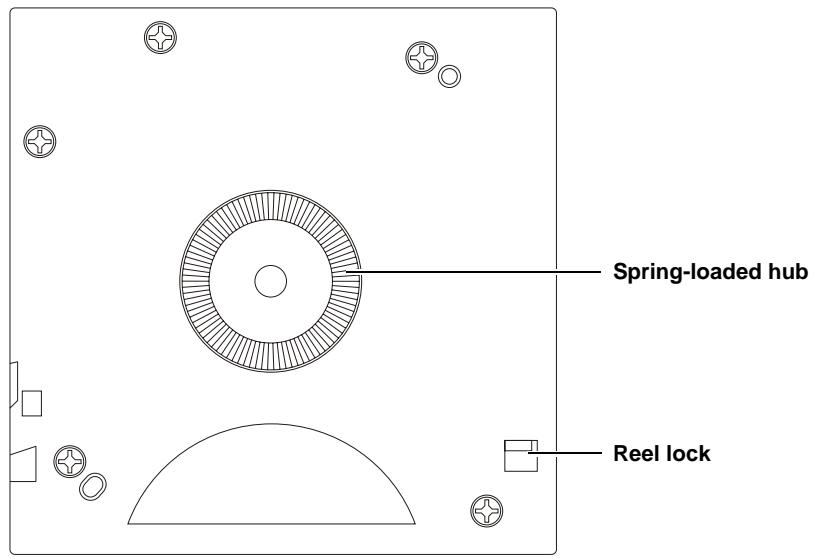
Figure 7 Cartridge Bottom View
6 Check that both reel lock tabs (the small plastic tabs inside the reel lock) are partially visible (see figure 8).
One reel lock is located on the end of the cartridge that is inserted into the tape drive. The other is on the bottom of the cartridge. The reel locks are black.
Note: The reel locks can break if you drop the cartridge. If the reel lock tabs are not visible, do not use the cartridge.
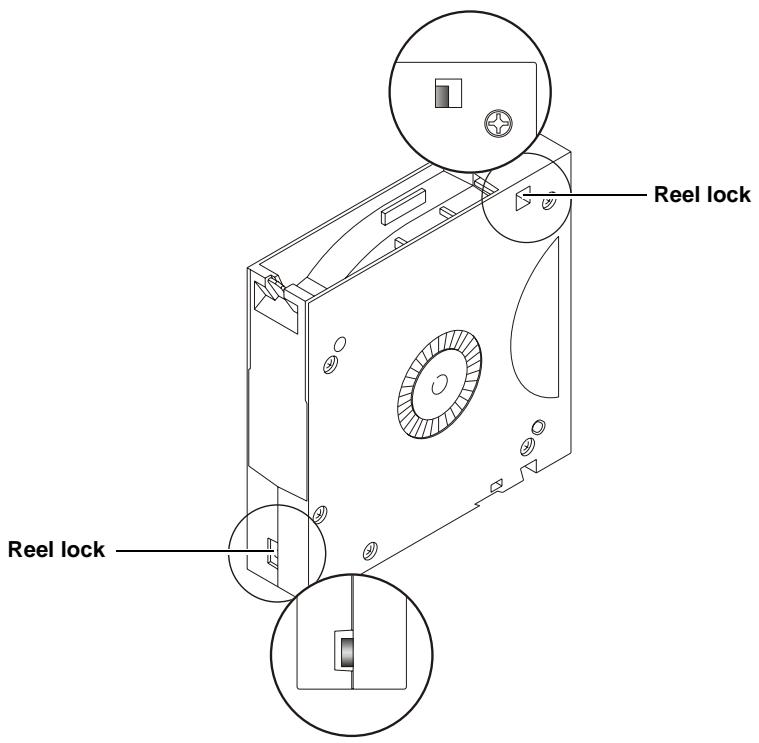
Figure 8 Cartridge Reel Locks
7 Open the media access door by pressing on the tab in the door pivot notch (see figure 9). Ensure that you do not touch the media leader.
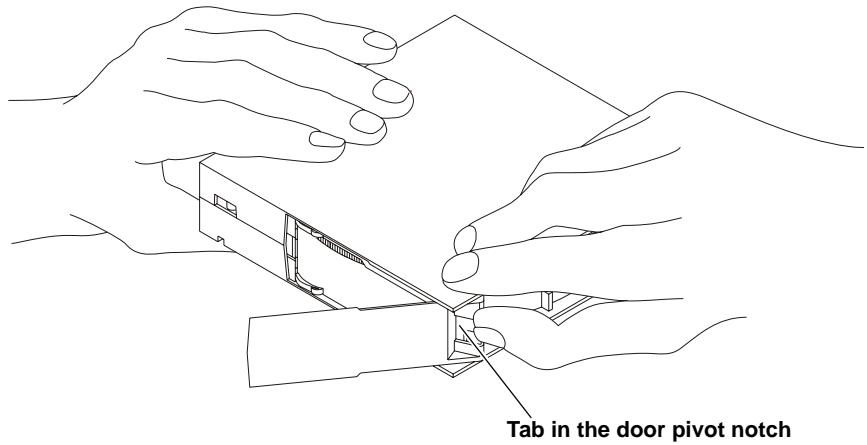
Figure 9 Opening the Media Access Door
8 Compare what you see inside the media access door to figure 10. Look for damage to the cartridge buckling clips, including:
- Bent or "toed-in" appearance on one or both clips
- Improper seating (clips should be fully retracted towards the left side of the opening)
- Bending of the leader bar that supports the clips
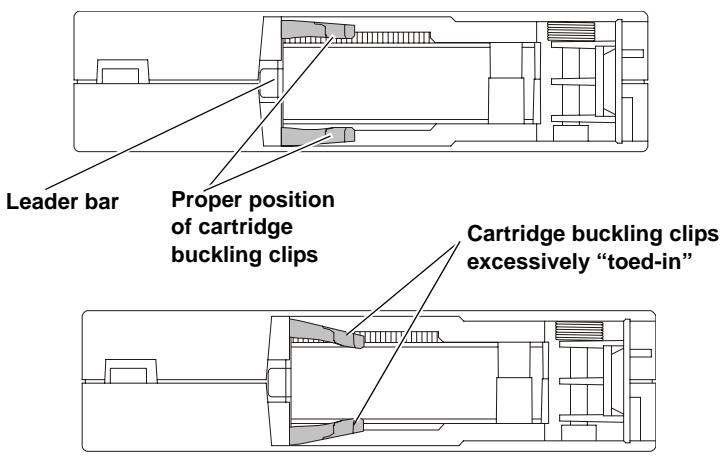
Figure 10 Inspecting Inside the Media Access Door
9 Examine the visible media leader (without touching it) for excessive debris, oily or sticky residue, condensed droplets of moisture, or any other signs of contamination.
10 Finally, check for proper operation of the cartridge's write-protect tab (see figure 11).
This sliding tab, located on the end of the cartridge used for the label, should snap smartly back and forth, and the orange tab should be visible when the cartridge is set to provide write protection (you cannot write over the data already on the media).
Caution: If a cartridge shows any signs of damage, do not use it. If a cartridge is dropped, retrieve the data, back it up on a new cartridge, and dispose of the dropped cartridge. A dropped cartridge should not reused even if it shows no signs of damage.
Write-protecting a Cartridge
Each cartridge has a write-protect tab, which you can use to prevent accidental erasure of data. Before inserting the cartridge into the tape drive, position the write-protect tab on the front of the cartridge (see figure 11) according to the kind of operations you expect to perform.
Note: To ensure you don't erase valuable data already written to a data cartridge, always make sure the cartridge is write-protected before inserting it into the tape drive.
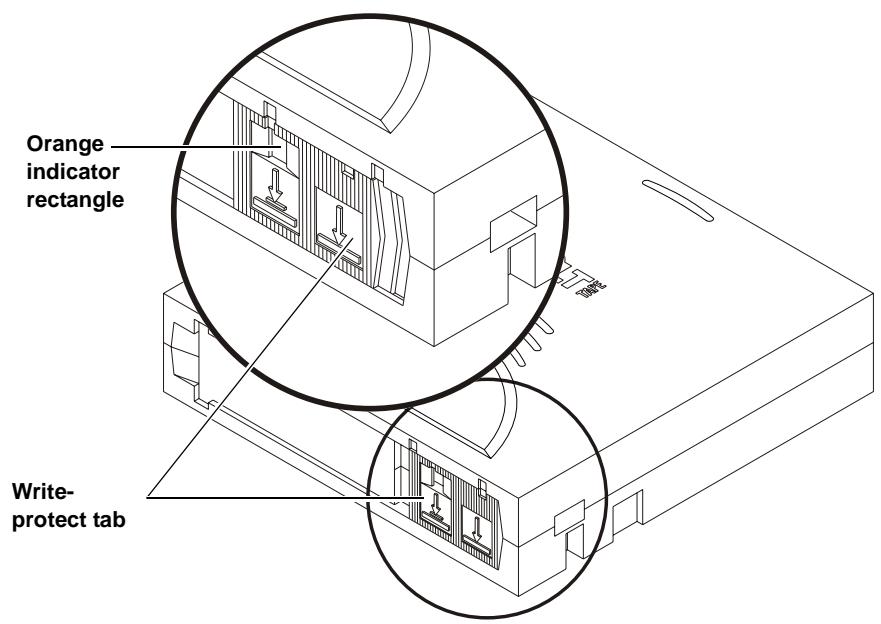
Figure 11 Cartridge Write-protect Tab
- To enable write protection — Slide the write-protect tab to the left so that the bright orange rectangle is visible. This is the visual reminder that you cannot write data to the media.
You can read existing data; however, you cannot write over existing data on the media, nor append additional data to the media. - To disable write protection - Slide the write-protect tab to the right so that the orange rectangle is not visible.
You can write over existing data on the media, and you can append additional data to the media unless the cartridge is write-protected via firmware (in other words, the cartridge has been formatted as a DLTSage WORM cartridge; see DLTSage WORM on page 34 for details).
For more details about write-protecting a cartridge, see table 22.
Table 22 Write-protect Tab Positions
| Write-protect Tab Position | Orange Write-protect Indicator | Result |
| Before Loading the Cartridge | ||
| Enabled (Slide tab to left) | Visible | You cannot write data to the mediaYou cannot overwrite existing data on the mediaYou cannot append additional data to the media |
| Disabled (Slide tab to right) | Not Visible | Unless the cartridge is write-protected via firmware:You can write data to the mediaYou can overwrite existing data on the mediaYou can append additional data to the media |
| After Loading the Cartridge and During Operation | ||
| If you move the write-protect tab from its right (disabled) position to its left (enabled) position | Visible | If the tape drive is currently writing to a cartridge, the write-protect feature does not take effect until after the current write operation completes. |
| If you move the write-protect tab from its left (enabled) position to its right (disabled) position | Not Visible | The cartridge becomes write-enabled after a variable number of seconds. |
Loading a Cartridge
Follow these steps to load a cartridge (see figure 12).
1 Insert the cartridge into the receiver on the front of the tape drive.
2 Push the front center of the cartridge into the tape drive until the soft-load mechanism engages and mounts the tape.
The middle LED flashes to show that the media is loading. When the media reaches the Beginning of Tape (BOT) marker, the middle LED lights steadily.
The cartridge is now ready for use.
To verify that you have loaded a compatible cartridge, look at the left LED for the following indications.
| If the Left LED is... | Then this cartridge is loaded... |
| Green | DLTtape S4 |
| Orange | Super DLTtape I or Super DLTtape II |
| Off | No cartridge is inserted or an incompatible cartridge is inserted |
For more information on choosing cartridges, see Choosing Compatible Cartridges on page 19.
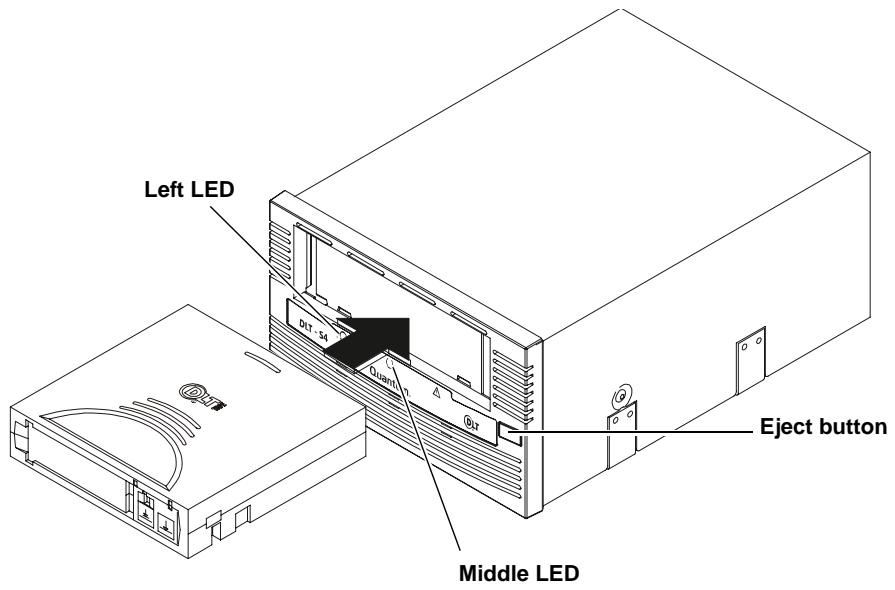
Figure 12 Loading a Cartridge
Unloading a Cartridge
Follow these steps to unload a cartridge (see figure 12).
Caution:
Never turn off the tape drive or the host while the tape drive contains a cartridge. Failure to remove a cartridge prior to power-off may result in cartridge or tape drive damage.
Do NOT rush removal of the cartridge. Wait until the tape drive ejects the cartridge and the middle LED lights steady before removing the cartridge.
1 Press the Eject button (or issue an appropriate system software command).
The tape drive completes any active writing, then rewrites. The middle LED flashes as the media rewrites. When the media is finished rewinding, the tape drive ejects the cartridge and the middle LED lights steadily.
2 Remove the cartridge from the tape drive and return it to its plastic case to protect it from damage.
DLTSage WORM
DLTSage WORM is the firmware compliance management function of DLTSage. This feature uses a Write Once, Read Many (WORM) functionality, which allows you to securely archive data stored on a DLTtape S4 cartridge written on a DLT-S4 tape drive. The firmware allows you to append data to a cartridge, but you cannot rewrite, reformat, or erase the data.
DLTSage WORM firmware is a standard feature of the DLT-S4 tape drive and the DLTtape S4 cartridge. See Formatting a Cartridge as DLTSage WORM on page 35 for instructions on how to create a WORM cartridge.
DLTSage WORM Features
This section details the many features of DLTSage WORM. For more information, see
http://www.dlttape.com/technology/DLTSageWORM/index.aspx
| Feature | Description |
| Security | The tape drive's firmware places an electronic signature key on each cartridge to ensure that data written to the media cannot be rewritten, reformatted, or erased. • The key is a unique identifier that cannot be altered. • The firmware allows you to append new data to the cartridge. • The cartridge initialization process assures that only unformatted cartridges will be WORM enabled. |
| Verification | The verification is a two-part process. • The DLT-S4 tape drive provides best-of-class verification through its ECC algorithms. • The firmware provides archive media verification and tamper verification with time and date signatures. |
| Identification | The identification applies to both the data and the cartridges. · The storage management software issues a time and date stamp, which enables you to locate and authenticate specific records using ISV compliant storage management software. · The cartridge used for DLTSage WORM is a standard DLTtape S4 cartridge. Use the special yellow labels provided by Quantum to identify the WORM cartridges. |
| Duplication | The data stored on the DLTape S4 cartridge can be downloaded to another storage media through any ISV-compliant storage management software. |
Formatting a Cartridge as DLTSage WORM
Some backup software applications work with DLTSage to allow you to format a tape cartridge as DLTSage WORM directly via the backup software user interface.
If your backup software application does not allow this, you can use xTalk Management Console to create the DLT Sage WORM cartridge. (See xTalk Management Console on page 135 for information about xTalk Management Console.)
Follow these steps to format a cartridge with DLTSage WORM using xTalk Management Console:
1 If xTalk Mangement Console is not installed on your computer, download it now (see Accessing the Tools on page 132 for instructions on downloading).
2 Obtain a blank DLTtape S4 cartridge that you want to format as DLTsage WORM. Ensure that the cartridge contains no data.
3 Insert the cartridge into the drive and wait for the tape drive to come ready.
4 Launch xTalk Management Console.
5 Click the DLTsage WORM button on the toolbar (see figure 13).

Figure 13 DLTSage WORM Button
The DLTSage WORM Wizard displays.
6 Click Format to continue.
The cartridge is formatted as a DLT Sage WORM cartridge.
Further information and instructions are available in the xTalk Management Console for Windows User's Guide found in the Help menu in xTalk Management Console.

This chapter provides the following specifications for the DLT-S4 tape drive:
Physical Specifications
Dimensions and Weights
- Electromagnetic Field Specifications
Acoustic Noise Emissions
The specifications noted are applicable to the drive itself and not as it is integrated into an automation system. Testing performed to validate these specifications was done with the internal tape drive and the tabletop tape drive models.
Physical Specifications
Table 23 lists error types and environmental operating and storage limits for the DLT-S4 tape drive.
Table 23 Physical Specifications
| Data Integrity | |
| Error Type | Frequency |
| Detected, Unrecoverable Read | < 1 error in 1018bits read |
| Undetected Read | < 1 error in 1027bits read |
| Temperature | |
| Operating | 10 °C to 40 °C (50 °F to 104 °F) |
| Storage | -40 °C to 66 °C (-40 °F to 150 °F) |
| Humidity | |
| Operating | 20% to 80% non-condensing |
| Storage | 10% to 95% non-condensing |
| Safety Certifications | |
| Meets UL 60950, GS mark, and EN60950/IEC 950 standards (EN60825-1: Information Technology Equipment). See the DLT-S4 Product Specification for more detailed information. | |
| Air Flow | |
| 10.4 CFM minimum with 0.09 in H2O pressure drop | |
| Note: Allow at least 100 mm of unobstructed space behind the tape drive for proper air flow. | |
| Electrical Rating (numbers describe the SCSI model) | |
| Tabletop | 85 to 264 VAC, 63 W typical, 100 W (power supply rating) maximum, 47 to 63 Hz |
| Internal | +5 V, 4.9 A RMS, 6.2 A Peak, typical |
| +12 V, 0.7 A RMS, 2.7 A Peak, typical | |
Dimensions and Weights
Table 24 lists the dimensions and weights for the internal, library, and tabletop tape drives.
Table 24 Tape Drive Physical Dimensions
| Dimension | Internal Model | Library Model | Tabletop Model |
| Height (without the front bezel) | 82.55 mm (3.25 in.) | 82.55 mm (3.25 in.) | 164.46 mm (6.48 in.) |
| (including the front bezel) | 85.73 mm (3.38 in.) | 85.73 mm (3.38 in.) | |
| Width (without the front bezel) | 146.05 ± 1.143 mm (5.75 ± .045 in.) | 146.05 ± 1.143 mm (5.75 ± .045 in.) | 174.75 mm (6.88 in.) |
| (including the front bezel) | 148.59 mm (5.85 in.) | 148.59 mm (5.85 in.) | |
| Depth (from the rear of the front bezel) | 203.20 mm (8.00 in.) | 204.47 mm (8.05 in.) | 320.04 mm (12.60 in.) |
| (including the front bezel) | 212.73 mm (8.375 in.) | 213.61 mm (8.41 in.) |
Note: The mounting hole pattern for the bottom and sides of the system is industry standard.
Table 25 Unpackaged and Shipping Weights
| Weight | Internal Version | Tabletop Version |
| Unpackaged weighta | 2.38 kg (5.25 lbs.) | 6.27 kg (13.82 lbs.) |
| Shipping weightb | 3.77 kg (8.31 lbs.) | 9.90 kg (21.83 lbs.) |
a. Weights depend on the configuration.
b. The packaging used may change the shipping weight
Electromagnetic Field Specifications
Quantum tape drives are electrical devices; as such, this equipment generates, uses, and may emit radio frequency energy. The tape drives may emit energy in other frequencies, as well, as discussed in the following sections.
Electromagnetic Emissions
The internal tape drive model complies with Class A limits in a 2U Rackmount enclosure. The tabletop tape drive model complies with Class B limits. The library tape drive model is subject to the enclosure utilized in an automation system integration.
Table 26 lists electromagnetic interference (EMI) regulations and certifications held by the DLT-S4 tape drive internal and tabletop models.
Table 26 EMI Regulations and Certifications
| Type | Regulation/Certification |
| EEC Directive 89/336 CE | BS6527 (UK) EN55022 (EU) EN55024 (EU) |
| CFR 47, 1995 | FCC Rules Part 15 (MDOC) |
| IECS-003 | Canada |
| V-3/97.04 | VCCI (Japan) |
| CNS 13438 | BSMI (Taiwan) |
| AS/NZS 3548 | C-tick (Australia/New Zealand) |
Electromagnetic Interference and Immunity
The DLT-S4 tape drive internal and tabletop models were tested to the performance limits listed in Table 27 (per legislative and customer requirements). The drives were tested to the latest standards in effect on the date of the test, and passed in all cases.
Table 27 Electromagnetic Interference and Immunity Test Summary
| Test Name | Test Specification | Required Performance |
EN55022: 2003 Radiated and Conducted Emissions
| Radiated Electromagnetic Emissions | EN55022: 2003 | Class B |
| Conducted Electromagnetic Emissions |
Current Harmonics and Flicker Emissions Tests
| AC Power Supply Harmonic Emissions | EN61000-3-2 | Pass |
| AC Power Supply Voltage Flicker | EN61000-3-3 | Pass |
EN55024: 1998 Immunity Tests
| Electrostatic Discharge Immunity | EN61000-4-2 | Criteria Aa |
| Radiated Electromagnetic Immunity | EN61000-4-3 | Criteria A |
| Electrical Fast Transient / Burst Immunity | EN61000-4-4 | Criteria B |
| Electrical Surge Immunity | EN61000-4-5 | Criteria B |
| Conducted Electromagnetic Immunity | EN61000-4-6 | Criteria A |
| Power Frequency Magnetic Field Immunity | EN61000-4-8 | Criteria A |
| AC Voltage Dips and Interrupts Immunity | EN61000-4-11 | Criteria B |
a. The minimum legal requirement for this drive is Criteria B; however, the drive was tested to and passed Criteria A.
Acoustic Noise Emissions
This section lists acoustic noise emission levels, both as noise power and sound pressure. The table provides the preliminary declared values per ISO 9296 and ISO 7779/EN2779. The values shown in table 28 are the maximum values based on 3 sigma limits from a distribution of tape drives.
Table 28 Acoustic Noise Emissions
| Mode | Internal | Tabletop |
| Noise Power Emission Level (LNPEc) | ||
| Idle | Not applicable | 5.4 Bel |
| Streaming | 5.9 Bel | 5.9 Bel |
| Sound Pressure Level (LPAc)a | ||
| Idle | Not applicable | 42 dB |
| Streaming | 47 dB | 53 dB |
a. Sound pressure level measured at front of tape drive.

Chapter 5
Common Interface Information
This chapter provides interface specifications that apply to all variations of the DLT-S4 tape drive, which include the following topics:
- SCSI Command Timeout lists the length of time the SCSI command initiator waits for a response before it times out for each SCSI command
- Rear Panel Connectors describes how to use the connectors on the rear of the tape drive, defines the connectors, and lists the power and loader connector pinouts
SCSI Command Timeout
This section lists the length of time the SCSI command initiator waits for a response before it times out.
Table 29 SCSI Command Timeout Values
| Command | Timeout |
| ERASE | 6 hours (overwrite entire media) |
| INQUIRY | 500 milliseconds |
| LOAD/UNLOAD | 16 minutes |
| LOCATE | 6 hours |
| LOG SELECT | 500 milliseconds |
| LOG SENSE | 500 milliseconds |
| MODE SELECT | 500 milliseconds |
| MODE SENSE | 500 milliseconds |
| PERSISTENT RESERVE IN | 500 milliseconds |
| PERSISTENT RESERVE OUT | 500 milliseconds |
| PREVENT/ALLOW MEDIA REMOVAL | 500 milliseconds |
| READ | 1 hour |
| READ ATTRIBUTE | 500 milliseconds |
| READ BLOCK LIMITS | 500 milliseconds |
| READ BUFFER | 3 minutes |
| READ POSITION | 500 milliseconds |
| RECEIVE DIAGNOSTIC RESULTS | 500 milliseconds |
| RELEASE (10) | 500 milliseconds |
| RELEASE UNIT | 500 milliseconds |
| REPORT DENSITY SUPPORT | 500 milliseconds |
| REPORT DEVICE IDENTIFIER | 500 milliseconds |
| REPORT LUNS | 500 milliseconds |
| REPORT SUPPORTED OPERATION CODES | 500 milliseconds |
| REQUEST SENSE | 500 milliseconds |
| RESERVE (10) | 500 milliseconds |
| RESERVE UNIT | 500 milliseconds |
| REWIND | 6 minutes |
| SEND DIAGNOSTIC | 20 minutes |
| SET DEVICE IDENTIFIER | 500 milliseconds |
| SPACE | 6 hours (directory may need rebuilding) |
| TEST UNIT READY | 500 milliseconds |
| VERIFY | 1 hour |
| WRITE | 1 hour |
| WRITE ATTRIBUTE | 500 milliseconds |
| WRITE BUFFER (UPDATE FIRMWARE) | 10 minutes |
| WRITE FILEMARKS | 1 hour |
Note: For more information on SCSI commands, see the DLT-S4 Interface Reference Guide (81-81281-xx).
Rear Panel Connectors
This section describes how to use the rear panel connectors that are common to all models of the tape drive.
For the locations of these connectors, see the following illustrations:
SCSI- Figure 15 on page 49
- Fibre Channel - Figure 17 on page 56
SAS - Figure 20 on page 63
Power Connector Pin Assignments
Pin assignments for the 4-pin power connector are listed here. Pin 1 is indicated by a solid red dot in the illustrations.
| Pin Number | Signal Name |
| 1 | +12 V DC |
| 2 | Ground (+12 V return) |
| 3 | Ground (+5 V return) |
| 4 | +5 V DC |
Loader/Library Interface Connector
The connector for the library/tape drive interface is an RS-422 serial port set to 9600 baud, 8 bits per character, no parity, and 1 stop bit. All data sent to or from the library/tape drive interface consists of bit-wise encoded hex values.
This 10-pin loader connector provides the signals used when the tape drive is part of a loader/library configuration. The loader connector provides a "universal port" that can support various serial interface protocols. The electrical signals from the DLT-S4 tape drive need to be translated to the appropriate serial interface protocol by a hardware and software interface system.
The Loader/Library Controller interface conforms to the T10 Committee Automation/Drive - Transport Protocol (ADT) Specification (see www.t10.org).
The loader connector part number is Molex, 89401-1010; it is a single row, 10 × 2 ~mm configuration. See figure 14 for a schematic representation of the connector and for connector pin assignments.
For more information, see the DLT Tape Drive Library Interface Specification (6464162-xx).
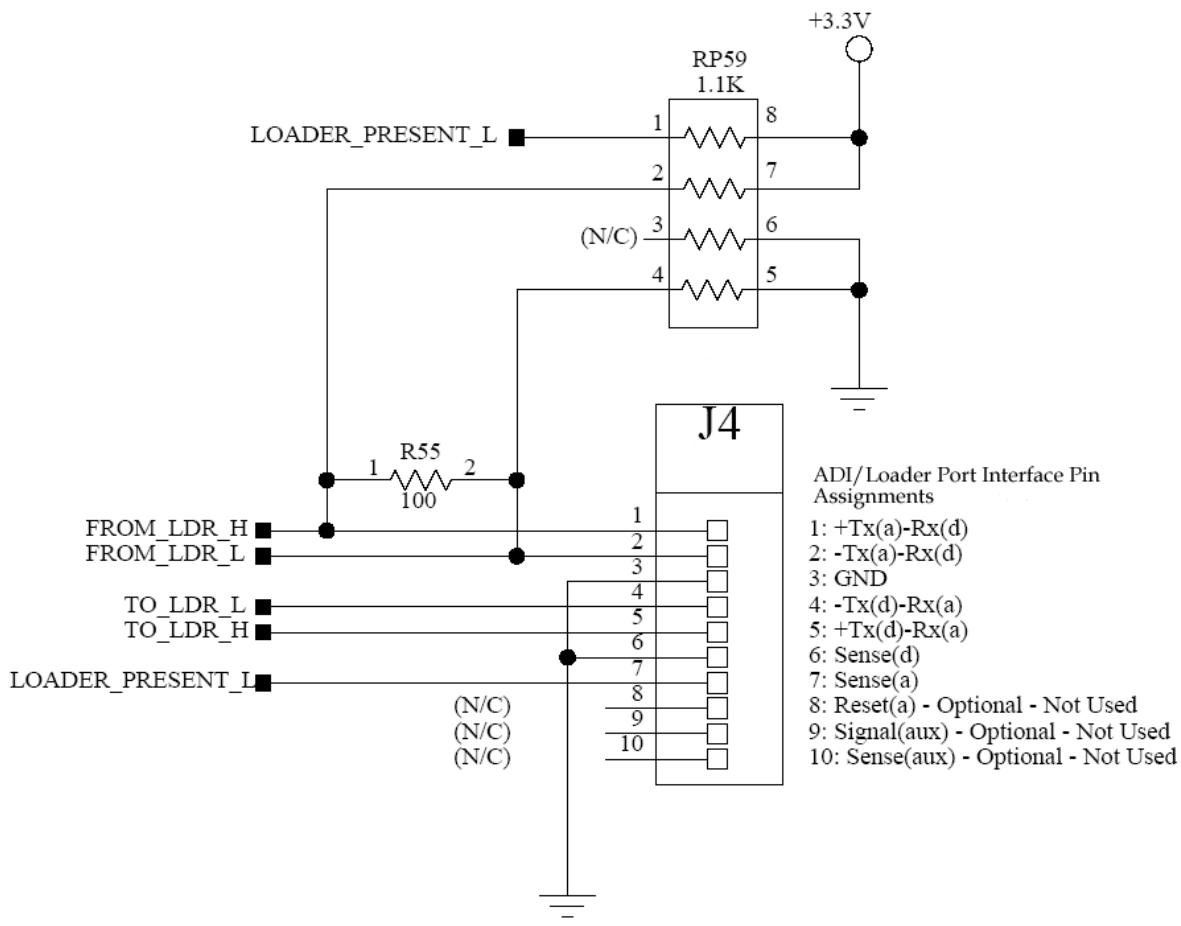
Figure 14 ADI/Loader Port Interface Schematic

Chapter 6 Parallel SCSI Interface
This chapter provides SCSI interface specifications associated with the DLT-S4 tape drive, which includes the following topics:
- Rear Panel Connectors
SCSI Cable Connectors
SCSI Tape Drive Features
SCSI Stub and Cable Lengths - SCSI Connectors and Pin Assignments
For information on transfer rates and protocol options, see table 4 on page 11.
For more information on the SCSI interface, see the DLT-S4 Interface Reference Guide (81-81281-xx).
Also, see the latest SCSI reference documentation available at www.t10.org.
Rear Panel Connectors
Figure 15 shows the location of the connectors on the rear panel of the DLT-S4 SCSI configured internal tape drive. (See figure 38 on page 100 for an illustration of the SCSI connectors on the tabletop model.)
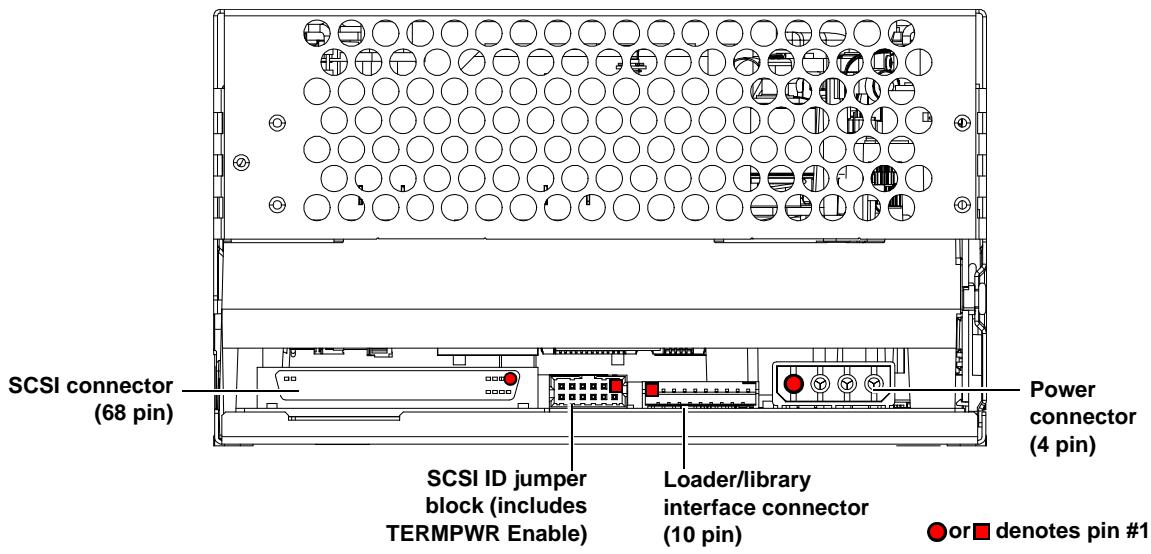
Figure 15 SCSI Connectors and Jumpers (Rear View)
SCSI Cable Connectors
SCSI models of the DLT-S4 tape drive have two high-density 68-pin SCSI connectors. Connect the tape drive to the computer using a SCSI cable with the correct type of connector on each end. The tape drive operates best when the computer and host end of the cable have one of the types of connector shown in figure 16. (The tape drive will, however, operate with other host-end connectors.)

Figure 16 SCSI Connectors
High-density 68-pin Micro DB68 or Mini DB68

SCA 80-pin Hot Swap Connector
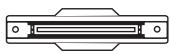
Very High-density Interconnect Connector
SCSI Tape Drive Features
The DLT-S4 tape drive conforms to the Ultra320 SCSI standard and allows for a maximum burst rate of 320 MB per second.
Quantum recommends one DLT-S4 tape drive per bus, with a maximum of two DLT-S4 tape drives per bus.
SCSI Stub and Cable Lengths
The longest stub length on the DLT-S4 PCBA is 1.64 inches, and the maximum cable length for one DLT-S4 tape drive is 20 meters. The maximum SCSI cable interconnect length is 10 meters total with a maximum of two DLT-S4 tape drives on the bus.
To operate properly in Ultra320 mode, ensure that all SCSI cables and terminators are Ultra320 (SPI-4) compatible.
For more information on the SCSI interface, see the DLT-S4 Interface Reference Guide (81-81281-xx).
For information on transfer rates and protocol options, see table 4 on page 11.
SCSI Connectors and Pin Assignments
This section shows the connector pin assignments for:
- MSE Mode SCSI connector (see table 30)
MSE LVD Mode SCSI connector (see table 31)
Table 30 MSE Mode SCSI Connector Pin Assignments
| Signal Name | Pin Number | Pin Number | Signal Name |
| Ground | 1 | 35 | -DB(12) |
| Ground | 2 | 36 | -DB(13) |
| Ground | 3 | 37 | -DB(14) |
| Ground | 4 | 38 | -DB(15) |
| Ground | 5 | 39 | -DB(P1) |
| Ground | 6 | 40 | -DB(0) |
| Ground | 7 | 41 | -DB(1) |
| Ground | 8 | 42 | -DB(2) |
| Ground | 9 | 43 | -DB(3) |
| Ground | 10 | 44 | -DB(4) |
| Ground | 11 | 45 | -DB(5) |
| Ground | 12 | 46 | -DB(6) |
| Ground | 13 | 47 | -DB(7) |
| Ground | 14 | 48 | -DB(P0) |
| Ground | 15 | 49 | Ground |
| DIFFSENS | 16 | 50 | Ground |
| TERMPWR | 17 | 51 | TERMPWR |
Note: The minus sign (-) next to a signal indicates active low.
| Signal Name | Pin Number | Pin Number | Signal Name |
| TERMPWR | 18 | 52 | TERMPWR |
| Reserved | 19 | 53 | Reserved |
| Ground | 20 | 54 | Ground |
| Ground | 21 | 55 | -ATN |
| Ground | 22 | 56 | Ground |
| Ground | 23 | 57 | -BSY |
| Ground | 24 | 58 | -ACK |
| Ground | 25 | 59 | -RST |
| Ground | 26 | 60 | -MSG |
| Ground | 27 | 61 | -SEL |
| Ground | 28 | 62 | -C/D |
| Ground | 29 | 63 | -REQ |
| Ground | 30 | 64 | -I/O |
| Ground | 31 | 65 | -DB(8) |
| Ground | 32 | 66 | -DB(9) |
| Ground | 33 | 67 | -DB(10) |
| Ground | 34 | 68 | -DB(11) |
Note: The minus sign (-) next to a signal indicates active low.
Table 31 MSE LVD Mode SCSI Connector Pin Assignments
| Signal Name | Pin Number | Pin Number | Signal Name |
| +DB(12) | 1 | 35 | -DB(12) |
| +DB(13) | 2 | 36 | -DB(13) |
| +DB(14) | 3 | 37 | -DB(14) |
| +DB(15) | 4 | 38 | -DB(15) |
| +DB(P1) | 5 | 39 | -DB(P1) |
| +DB(0) | 6 | 40 | -DB(0) |
| +DB(1) | 7 | 41 | -DB(1) |
| +DB(2) | 8 | 42 | -DB(2) |
| +DB(3) | 9 | 43 | -DB(3) |
| +DB(4) | 10 | 44 | -DB(4) |
| +DB(5) | 11 | 45 | -DB(5) |
| +DB(6) | 12 | 46 | -DB(6) |
| +DB(7) | 13 | 47 | -DB(7) |
| +DB(P) | 14 | 48 | -DB(P) |
| Ground | 15 | 49 | Ground |
| DIFFSENS | 16 | 50 | Ground |
| TERMPWR | 17 | 51 | TERMPWR |
| TERMPWR | 18 | 52 | TERMPWR |
| Reserved | 19 | 53 | Reserved |
| Ground | 20 | 54 | Ground |
| +ATN | 21 | 55 | -ATN |
| Ground | 22 | 56 | Ground |
| +BSY | 23 | 57 | BSY |
Note: The minus sign (-) next to a signal indicates active low.
| Signal Name | Pin Number | Pin Number | Signal Name |
| +ACK | 24 | 58 | -ACK |
| +RST | 25 | 59 | -RST |
| +MSG | 26 | 60 | -MSG |
| +SEL | 27 | 61 | -SEL |
| +C/D | 28 | 62 | -C/D |
| +REQ | 29 | 63 | -REQ |
| +I/O | 30 | 64 | -I/O |
| +DB(8) | 31 | 65 | -DB(8) |
| +DB(9) | 32 | 66 | -DB(9) |
| +DB(10) | 33 | 67 | -DB(10) |
| +DB(11) | 34 | 68 | -DB(11) |
Note: The minus sign (-) next to a signal indicates active low.
This chapter provides Fibre Channel interface specifications associated with the DLT-S4 tape drive, which include the following topics:
- Rear Panel Connectors
- Fibre Channel Cable Connector
- Fibre Channel Tape Drive Features
Practical Considerations - Fibre Channel Speed and Topology
World-wide Names
The Fibre Channel interface operates at transfer rates up to 4 Gb/second.
The Fibre Channel interface is ONLY available with the internal and library models; it is not available with the tabletop model.
Fibre Channel can support up to 126 devices in a loop configuration. Longwave transceivers (with fiber optic cable) support distances up to 10 kilometers; short pulsewave transceivers (with fiber optic cable) support distances up to 500 meters.
For more information on transfer rates and protocol options, see table 4 on page 11.
For more information on the Fibre Channel interface, see the DLT-S4 Interface Reference Guide (81-81281-xx).
Also, see the latest Fibre Channel reference documentation available at www.t10.org.
Rear Panel Connectors
Figure 17 shows the location of the connectors on the rear panel of the DLT-S4 Fibre Channel configured internal tape drive.
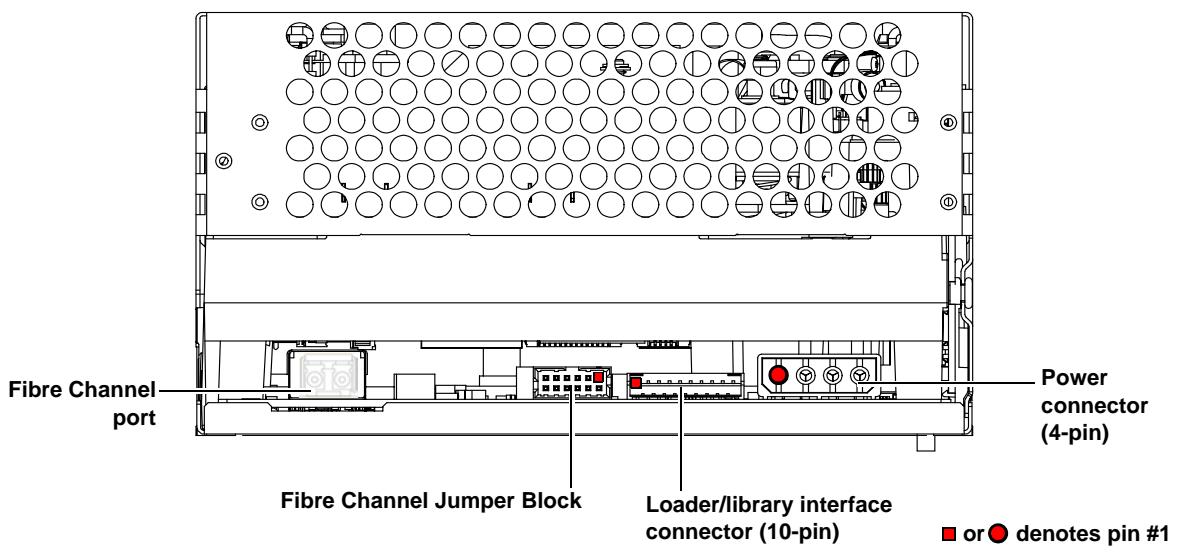
Figure 17 Fibre Channel Connectors and Jumper Block (Rear View)
Fibre Channel Cable Connector
Fibre Channel models of the DLT-S4 tape drive (internal model only) have one Fibre Channel port. The Fibre Channel cable connector looks like the one shown in figure 18.
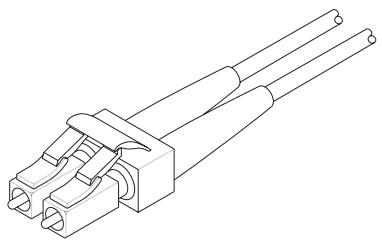
Figure 18 Fibre Channel Cable Connector
Fibre Channel Tape Drive Features
The DLT-S4 Fibre Channel tape drive supports the following features:
Automatic speed negotiation, with transfer rates of:
1 Gb per second
2Gb per second
4 Gb per second
Automatic topology negotiation (the tape drive operates as an NL_Port or N_Port):
- Arbitrated Loop - private loop, NL_Port to NLPorts(s)
- Arbitrated Loop - public loop, NL_Port to NLPorts(s) and one FL_Port.
Fabric attachment—N_Port to F_Port - Point-to-Point attachment—N_Port to N_Port
FCP-2 (SCSI-3 command set) for tape devices
Class 3 level of service
Basic and extended link services
- Hard assigned port address, when attached to a library.
The library has the ability to assign a hard address to the tape drive. If no hard address is assigned to the tape drive, then a soft address is taken initially.
Practical Considerations
This section describes considerations specific to the DLT-S4 Fibre Channel tape drive.
Hot-Swappable Cables
Fibre Channel cables are "hot swappable," which means that you may connect and disconnect them with unit power turned on. Therefore, unlike some other systems, the tape drive and computer may remain powered on while you connect the DLT-S4 tape drive to the host computer.
Power Usage
DLT-S4 Fibre Channel tape drives use slightly more power than SCSI-configured tape drives. See the DLT-S4 Product Specification (81-81279-xx).
Power Cycle (Tape Drive On)
When the tape drive completes the power cycle process (including POST) and the port is initialized, the Fibre Channel port is enabled and will attempt to initialize on the attached Fibre Channel topology.
When the tape drive completes the power cycle process (tape drive turned on and POST complete), the device is on-line and capable of tape drive operations.
See Power-On Self-Test on page 113 for information about POST.
Failure to Obtain a Loop Address
If the tape drive is unable to obtain an address (fabric assigned, previously assigned, hard assigned, or soft assigned), it goes into a non-participating mode and immediately implicitly logs out all logged-in ports.
If the tape drive experiences a power-on reset, or recognizes an LIP (AL_PD, AL_PS), it does not retain a previously acquired address to use during the next loop initialization.
Fibre Channel Speed and Topology
Although Fibre Channel DLT-S4 tape drives will auto-negotiate the speed and topology, you may override the automatic selections by placing jumpers on the Fibre Channel jumper block at the rear of the tape drive.
If you decide it is necessary to change the tape drive's speed or topology, use your fingers to move the jumpers to the pattern corresponding to the speed or topology you want. Using this jumper block is optional.
Note: The tape drive only checks the jumpers at a power cycle. To change the speed or topology configurations after installation, turn off the tape drive, move the jumpers as needed, and then turn on the tape drive.
See:
Figure 17 for the Fibre Channel jumper block location
Figure 19 for the empty jumper block that you use to set the speed and topology
Table 32 and table 33 for the various jumper setting combinations
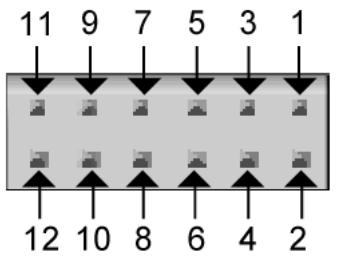
Figure 19 Fibre Channel Speed and Topology Jumper Block
Table 32 Fibre Channel Speed Configuration
| To Select This Speed | Put Jumper on These Pins | Result |
| 1 Gb per second | 7 and 8 | Tape drive attempts to synchronize the link at 1 Gb per second only |
| 2 Gb per second | 5 and 6 | Tape drive attempts to synchronize the link at 2 Gb per second only |
| 4 Gb per second | 3 and 4 | Tape drive attempts to synchronize the link at 4 Gb per second only |
| Auto-negotiate | No jumpers | Auto Speed Negotiate: Tape drive attempts to synchronize • first at 4 Gb per second • then at 2 Gb per second • then at 1 Gb per second |
| 5 and 6 AND 3 and 4 | Auto Speed Negotiate: Tape drive attempts to synchronize • first at 4 Gb per second • then at 2 Gb per second • then at 1 Gb per second |
Note: Pins 1 and 2 are spare pins that are not used; there is no effect if they are jumpered or not jumpered.
Table 33 Fibre Channel
Topology Configuration
| To Select This Topology | Put Jumper on These Pins | Result |
| Arbitrated Loop | 11 and 12 | Tape drive attempts to initialize the link in FC Arbitrated Loop topology only |
| Point-to-Point | 9 and 10 | Tape drive attempts to initialize the link in FC Point-to-Point topology only |
| Auto-negotiate | No jumpers | Auto Topology: Tape drive attempts to • first initialize in FC Arbitrated Loop topology • then initialize in FC Point-to-Point topology |
| 11 and 12 AND 9 and 10 | Auto Topology: Tape drive attempts to • first initialize in FC Arbitrated Loop topology • then initialize in FC Point-to-Point topology |
Note: Pins 1 and 2 are spare pins that are not used; there is no effect if they are jumpered or not jumpered.
World-wide Names
Each DLT-S4 tape drive contains two unique, 64-bit world-wide names: a node name for the tape drive, and one for the tape drive's Fibre Channel port. The tape drive reports the world-wide names to the host through the INQUIRY Command (12h). See the DLT-S4 Interface Reference Guide (81-81281-xx) for more information.
This chapter provides SAS interface specifications associated with the DLT-S4 tape drive, which include the following topics:
- Rear Panel Connectors
SAS Cable Connector
SAS Tape Drive Features
Practical Considerations
SAS Tape Drive Speed
World-wide Names
The SAS interface is ONLY available with the internal and library models; it is not available with the tabletop model.
For information on transfer rates and protocol options, see table 4 on page 11.
For more information on the SAS interface, see the DLT-S4 Interface Reference Guide (81-81281-xx).
Also, see the latest SAS reference documentation available at www.t10.org.
Rear Panel Connectors
Figure 20 shows the location of the connectors on the rear panel of the DLT-S4 SAS configured internal tape drive.
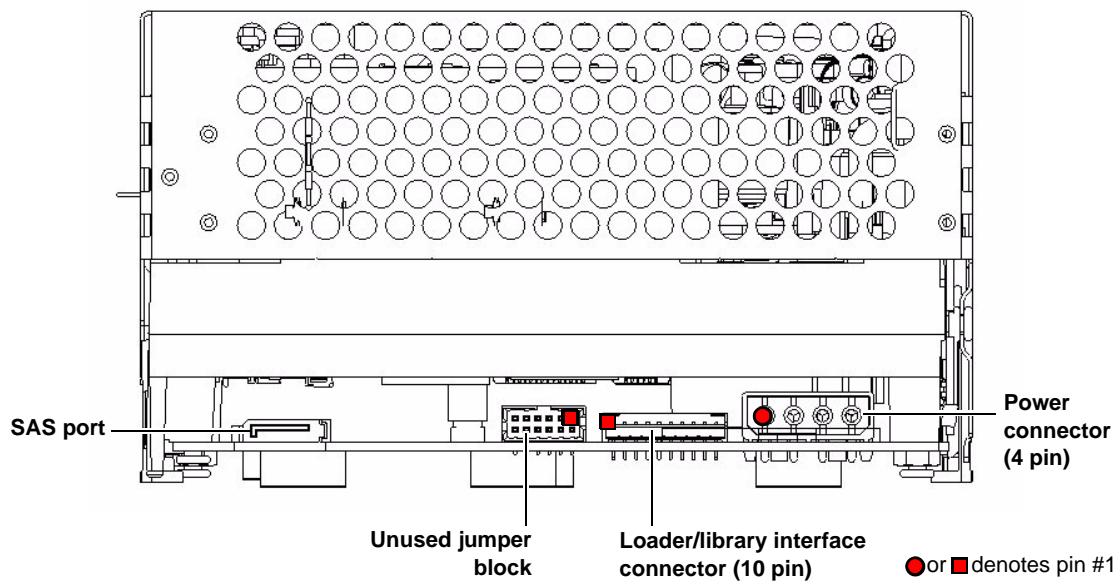
Figure 20 SAS Connectors and
Jumper Block (Rear View)
SAS Cable Connector
SAS models of the DLT-S4 tape drive (internal model only) have one SAS port. The SAS cable connector looks like the one shown in figure 21.
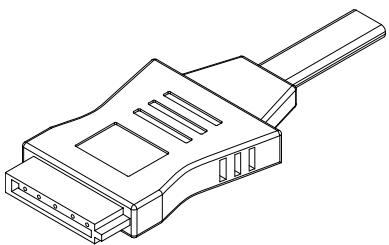
Figure 21 SAS Cable Connector
SAS Tape Drive Features
The DLT S4 SAS tape drive supports the following features:
Automatic speed negotiation, with speeds of:
1.5 Gb per second
3 Gb per second
SAS-1.1
- Transport Layer Retries
Practical Considerations
SAS cables are "hot-swappable," meaning that you may connect and disconnect them with unit power turned on. Therefore, unlike some other systems, the tape drive and computer may remain powered on while you connect the DLT S4 tape drive to the host computer.
DLT S4 SAS tape drives use slightly more power than SCSI-configured tape drives. See the DLT-S4 Product Specification (81-81279-xx) for additional information.
SAS Tape Drive Speed
SAS DLT-S4 tape drives auto-negotiate the speed. The tape drive attempts to synchronize:
first at 3 Gb per second
then at 1.5 Gb per second
World-wide Names
Each DLT-S4 tape drive contains two unique, 64-bit world-wide names: a node name for the tape drive, and one for the tape drive's SAS port. The tape drive reports the world-wide names to the host through the INQUIRY Command (12h). See the DLT-S4 Interface Reference Guide (81-81281-xx) for more information.

This chapter describes how to configure and install the DLT-S4 internal SCSI tape drive.
This chapter includes the following information:
Equipment Required
Installation Steps
Rear Panel Connectors
Unpacking the Tape Drive
Setting the SCSI ID
Securing the Tape Drive in the System
- Connecting the Cables and Terminating the SCSI Bus
Setting TERMPWR
Confirming the Installation
- Adding an Additional Device
Using the Loader/Library Interface Connector
Caution:
Before you begin, review the safety, ESD, and handling precautions described in Chapter 2 to avoid personal injury or damage to equipment.
Equipment Required
You need the following items to install the tape drive in a system:
Four (4) M3 x 8 mm long screws
Screwdriver
- Jumpers (supplied)
- Internal Ultra320 SCSI cable, SPI-4 (or SPI-5) compatible
Active Ultra320 SCSI terminator (if the SCSI cable is already terminated at the end then you do not need this item)
Installation Steps
To install the tape drive, perform the following tasks in this order. Each task is described in detail on the pages listed below.
| Step No. | Step | Page |
| 1 | Unpack the tape drive. | Page 69 |
| 2 | Set the SCSI ID. | Page 69 |
| 3 | Secure the tape drive in the system. | Page 71 |
| 4 | Connect the cables and terminate the SCSI bus. | Page 74 |
| 5 | Set TERMPWR. | Page 77 |
| 6 | Confirm the installation. | Page 78 |
| 7 | Add an additional device (optional). | Page 78 |
Rear Panel Connectors
Figure 22 shows the location of the connectors on the rear panel of the DLT-S4 SCSI configured internal tape drive.
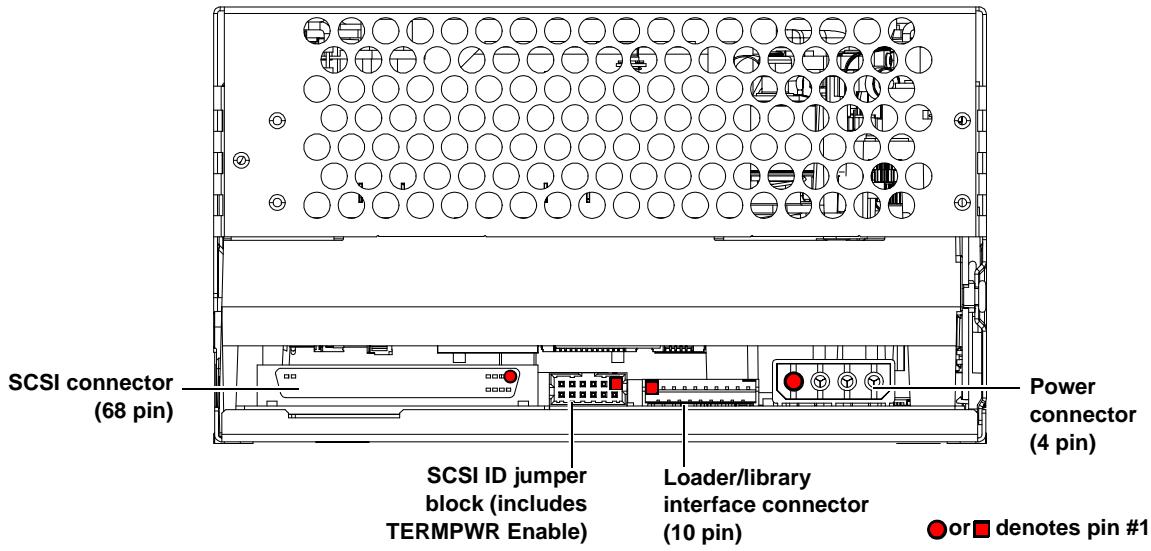
Figure 22 SCSI Connectors and Jumpers (Rear View)
Unpacking the Tape Drive
Before you begin, clear a desk or table so that you can unpack the tape drive.
Note: If the room in which you are working differs from the temperature at which the tape drive was shipped or stored by 30^ ( 17^ ) or more, let the tape drive acclimate to the surrounding environment for at least 12 hours before opening the shipping carton.
Unpack and inspect the tape drive for shipping damage. If you notice any damage, report it both to the sales representative and to the shipping company immediately.
Caution: Save the packing materials in case you need to move or ship the tape drive in the future. When returning a unit to Quantum for repair, you must use the original or equivalent packing materials or risk voiding your warranty.
If there is no damage to the tape drive, select a server or workstation to host the tape drive, then move on to the following installation steps.
Setting the SCSI ID
Each device on the SCSI bus must have a unique SCSI ID address assigned to it. Check the SCSI IDs on all other devices on the selected server or workstation, including the SCSI host adapter, and select an unused SCSI ID for the tape drive. The factory default SCSI ID for the internal tape drive is 5 (no jumpers are installed on the jumper block). If the tape drive's factory default SCSI ID is not currently in use by another device, you do not need to change the SCSI ID.
Caution: If you reset the SCSI ID, do not use ID 7, as that ID is already in use by the SCSI host adapter.
Note: For specific recommendations for assigning SCSI IDs, refer to the system or SCSI controller documentation.
You can set the SCSI ID from 0 to 15. To change the SCSI ID, use your fingers to place the supplied jumpers on the 12-pin SCSI ID jumper block as follows:
Figure 22 shows the location of the jumper block on the rear panel of the tape drive.
Figure 23 shows the empty 12-pin jumper block that you use to set the SCSI ID.
- Table 34 shows how to place the jumpers to obtain the desired SCSI ID.
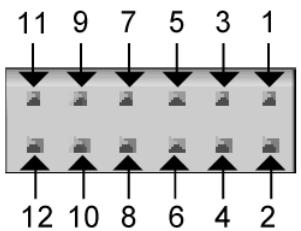
Figure 23 Detail of the Empty SCSI ID Connector
Table 34 SCSI ID Address Selections
| SCSI ID Jumper Block | 0 | 1 | 2 | 3 |
| SCSI ID Jumper Block | 4 | 5 (default) | 6 | 7 |
| SCSI ID Jumper Block | 8 | 9 | 10 | 11 |
| SCSI ID Jumper Block | 12 | 13 | 14 | 15 |
Note: The computer system and the tape drive SCSI IDs are only checked when you turn both the computer system and the tape drive off and then on again. To change the SCSI ID after installation, turn off the system, change the tape drive's SCSI ID, and then turn on the system.
Securing the Tape Drive in the System
This section describes how to mount and secure the tape drive in the system. Because of the variety of mounting possibilities for tape drives, the instructions presented here are general guidelines. Use these instructions only as a guide for mounting the tape drive in the system.
Note: In some system configurations, it may be more convenient to connect the SCSI bus and power cables to the tape drive before securing it in the system.
Mount the tape drive in the system by performing the following steps:
1 Ensure that the host computer and all peripheral devices are turned off.
2 Position the tape drive in the system and align the tape drive mounting holes (side or bottom) with those in the system (see figure 24 and figure 25).
3 Secure the tape drive in the bay or chassis using four M3 x 8mm long screws.
Caution:
The screws used to mount the tape drive must be M3 x 8mm long. This kind of screw is exactly the proper length and will not damage the tape drive.
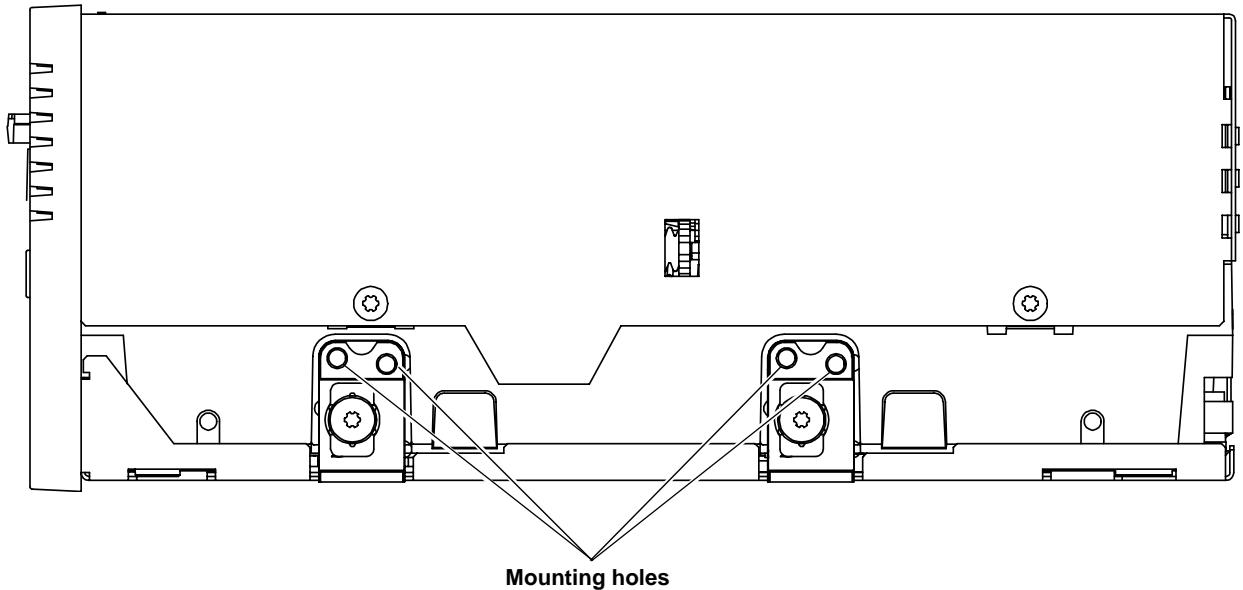
Figure 24 Tape Drive Mounting Holes — Right Side View
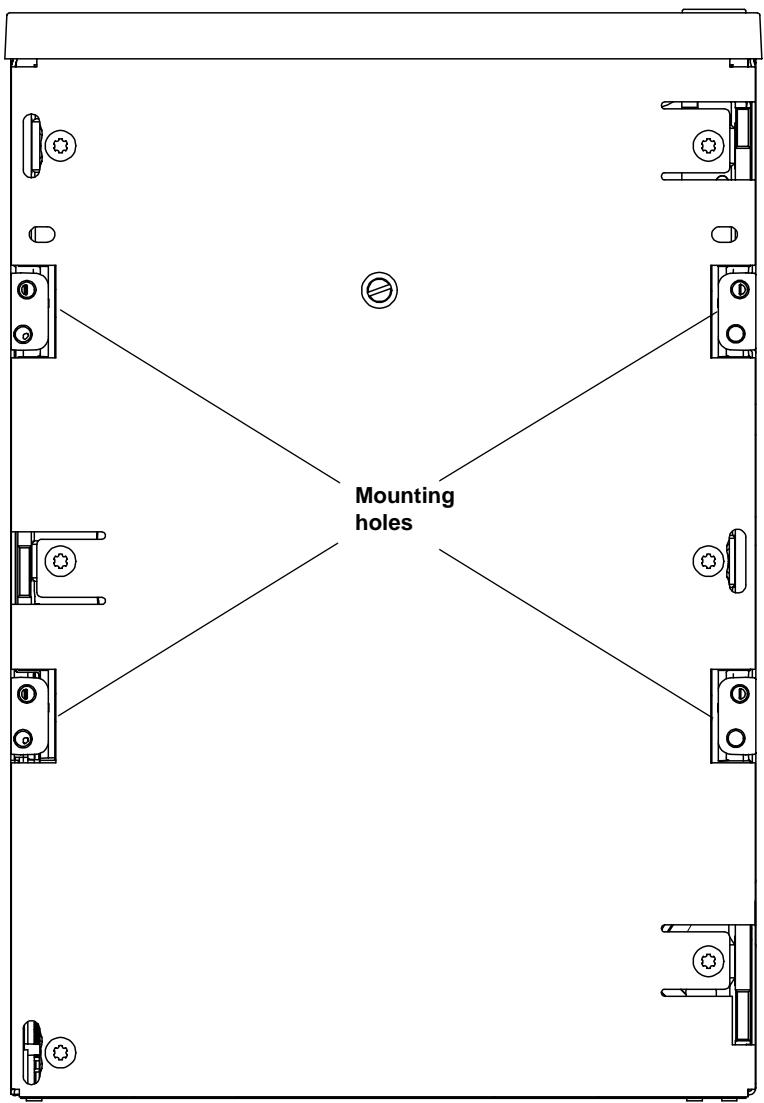
Figure 25 Tape Drive Mounting Holes — Bottom View
Connecting the Cables and Terminating the SCSI Bus
You can connect the DLT-S4 tape drive to the host computer as a single device, or as one of two total devices connected via a SCSI cable with multiple SCSI connectors in a "chain" configuration.
If you are connecting two devices to the SCSI bus, connect only one tape drive to the host computer at this time. Finish the installation procedure and confirm that the host computer and tape drive are communicating correctly (see Confirming the Installation) before adding the additional device (see Adding an Additional Device).
Follow these steps to connect the tape drive to the host computer (see SCSI Connectors and Pin Assignments on page 51 for more information).
Note: Use care when connecting the cables to avoid bending or damaging the connector pins.
1 Ensure that the tape drive, host computer, and all peripheral devices (such as printers) are turned off.
Caution: Never connect the tape drive while the tape drive, host system, or peripheral devices are turned on. Doing so could result in damage to the tape drive or other peripheral devices.
2 Disconnect any other SCSI devices from the SCSI bus at this time. You can add them back on later (see Adding an Additional Device).
3 Ensure that the SCSI cable(s) and terminator(s) are Ultra320 and SPI-4 (or SPI-5) compatible.
Note: SPI refers to SCSI Parallel Interface; you can learn more from this standard at the Web site www.t10.org.
4 Terminate the SCSI bus by making sure a terminator is installed in the very last connector of the SCSI cable.
If the SCSI cable you are using has a built-in terminator, you do not need to add another terminator (see figure 26 for an example of such a cable). If the cable is not terminated, then install an active Ultra320 SCSI terminator on the SCSI cable (see figure 27).
Note: There should be only one terminator at the end of the SCSI bus.
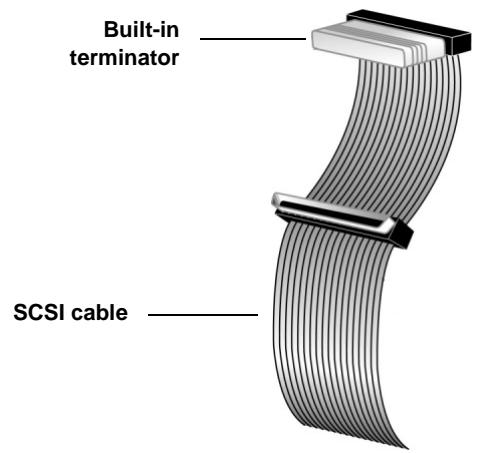
Figure 26 SCSI Cable with Built-in Terminator
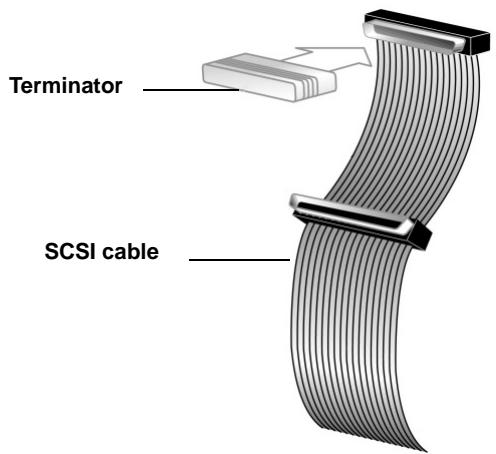
Figure 27 SCSI Interface -Terminator Installation
5 Connect one of the SCSI connectors on the SCSI cable to the SCSI connector on the rear panel of the tape drive (see figure 28). The SCSI connectors are keyed, preventing improper connection.
6 If not already connected, connect the other end of the SCSI cable to the connector in the SCSI host adapter, aligning the colored stripe on the cable with pin 1 on the SCSI host adapter's connector.
7 Locate an available DC power cable in the host computer and attach it to the power connector on the rear panel of the tape drive (see figure 28). The connector is keyed, preventing improper connection. (See Power Connector Pin Assignments on page 46 for power pin number assignments and signal names.)
8 Check all the cable and termination connections to ensure that they are attached correctly, seated firmly, and secured.
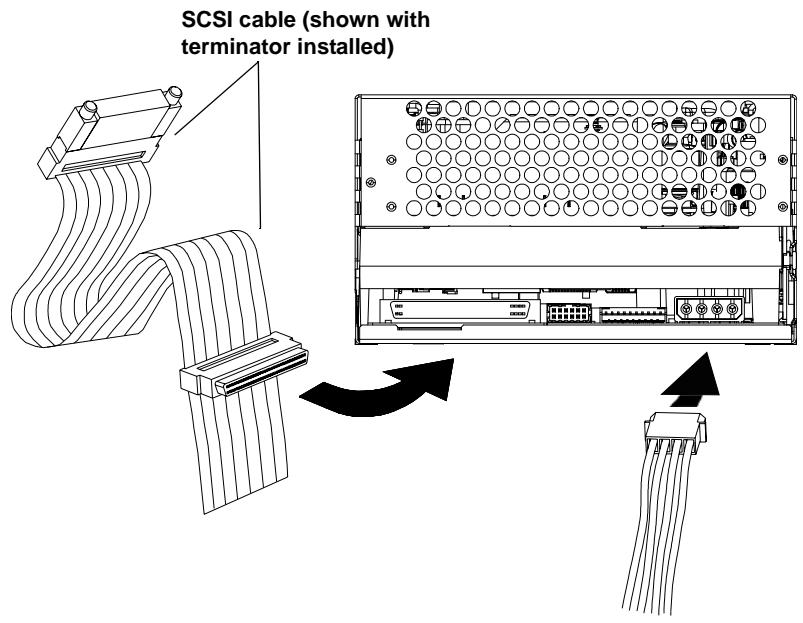
Figure 28 SCSI and Power Cable Locations
Setting TERMPWR
At least one device on the bus must supply terminator power (TERMPRW).
- To enable TERMPWR - Install a jumper across pins 11 and 12 on the SCSI jumper block (see figure 29).
- To disable TERMPWR - Remove the jumper.
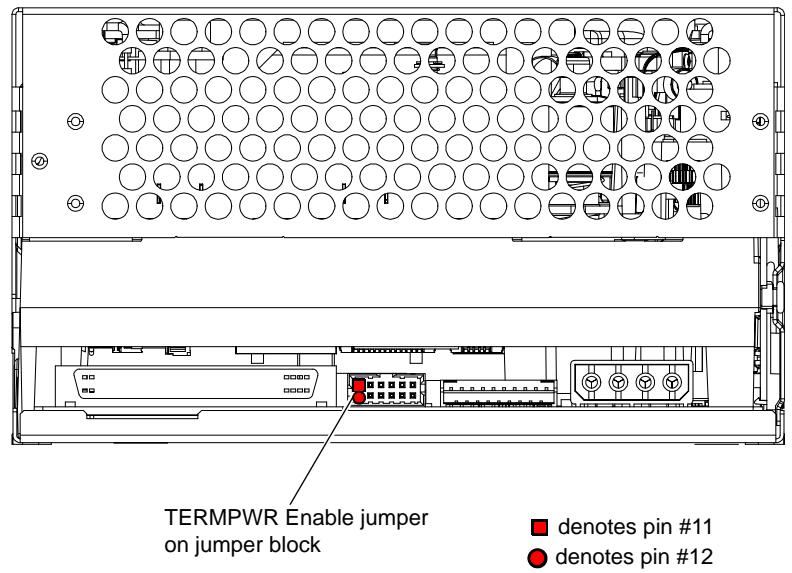
Figure 29 Enabling TERMPWR
Confirming the Installation
To confirm the installation, turn on the host computer.
The screens displayed at power-on contain:
BIOS
- Operating system
- SCSI controller information
If the first screen displays host adapter and SCSI ID information indicating the drive is a Quantum product, then the installation was successful.
If the installation was NOT successful, see POST and SCSI Troubleshooting on page 124.
Adding an Additional Device
Once you have successfully confirmed the installation of your tape drive, you may add one additional device to the SCSI bus.
Note: Use care when connecting the cables to avoid bending or damaging the connector pins.
1 Ensure that all devices have unique SCSI IDs (see Setting the SCSI ID on page 69).
2 Ensure that the tape drive, host computer, and all peripheral devices (such as printers) are turned off.
Caution: Never connect the tape drive while the tape drive, host system, or peripheral devices are turned on. Doing so could result in damage to the tape drive or other peripheral devices.
3 Make sure that all the SCSI cables and terminators are SPI-4 (or SPI-5) compatible.
4 Connect all additional tape drives and peripheral devices to the host computer's SCSI cable.
5 Ensure that a terminator is installed on the very last SCSI connector on the SCSI cable.
Note: Regardless of which device terminates the SCSI bus, that device must have power applied and be powered on for proper termination to occur.
6 Check all the cable and termination connections to ensure that they are attached correctly and seated firmly.
7 Turn on power to the system and all attached devices.
8 Confirm the installation (see Confirming the Installation on page 78).
Using the Loader/Library Interface Connector
This connector is only used for tape drives installed in loaders/libraries. If your system requires it to be used, it should have been pre-assembled at the factory. For more information about the loader/library connector, see Loader/Library Interface Connector on page 46.
This chapter describes how to configure and install the DLT-S4 internal Fibre Channel tape drive.
This chapter includes the following information:
Equipment Required
Installation Steps
Rear Panel Connectors
Unpacking the Tape Drive
Securing the Tape Drive in the System
- Connecting the Cables
Confirming the Installation
Adding Additional Devices
Using the Loader/Library Interface Connector
Caution:
Before you begin, review the safety, ESD, and handling precautions described in Chapter 2 to avoid personal injury or damage to equipment.
Equipment Required
You need the following items to install the tape drive in a system:
Four (4) M3× 8mm long screws
Screwdriver
- Fiber optic cable
Installation Steps
To install the tape drive, perform the following tasks in this order. Each task is described in detail on the pages listed below.
| Step No. | Step | Page |
| 1 | Unpack the tape drive. | Page 83 |
| 2 | Secure the tape drive in the system. | Page 83 |
| 3 | Connect the cable. | Page 86 |
| 4 | Confirm the installation. | Page 87 |
| 5 | Add additional devices (optional). | Page 88 |
Rear Panel Connectors
Figure 30 shows the location of the connectors on the rear panel of the DLT-S4 Fibre Channel internal tape drive.
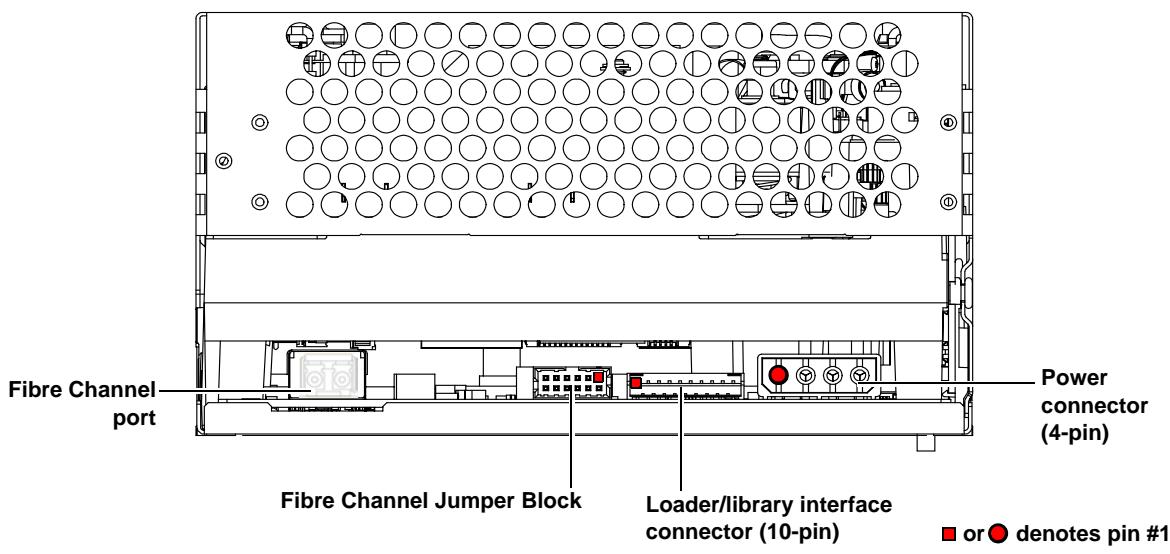
Figure 30 Fibre Channel Connectors and Jumper Block (Rear View)
Unpacking the Tape Drive
Before you begin, clear a desk or table so that you can unpack the tape drive.
Note: If the room in which you are working differs from the temperature at which the tape drive was shipped or stored by 30^ ( 17^ ) or more, let the tape drive acclimate to the surrounding environment for at least 12 hours before opening the shipping carton.
Unpack and inspect the tape drive for shipping damage. If you notice any damage, report it both to the sales representative and to the shipping company immediately.
Caution: Save the packing materials in case you need to move or ship the tape drive in the future. When returning a unit to Quantum for repair, you must use the original or equivalent packing materials or risk voiding your warranty.
If there is no damage to the tape drive, select a server or workstation to host the tape drive, then move on to the following installation steps.
Securing the Tape Drive in the System
This section describes how to mount and secure the tape drive in the system. Because of the variety of mounting possibilities for tape drives, the instructions presented here are general guidelines. Use them only as a guide for mounting the tape drive in the system.
Note: In some system configurations it may be more convenient to connect the Fibre Channel and power cables to the tape drive before securing it in the system.
Mount the tape drive in the system by performing the following steps:
1 Ensure that the host computer and all peripheral devices are turned off.
2 Position the tape drive in the system and align the tape drive mounting holes (side or bottom) with those in the system (see figure 31 and figure 32).
3 Secure the tape drive in the bay or chassis using four M3 x 8mm long screws.
Caution: The screws used to mount the tape drive must be M3 x 8mm long. This kind of screw is exactly the proper length and will not damage the tape drive.
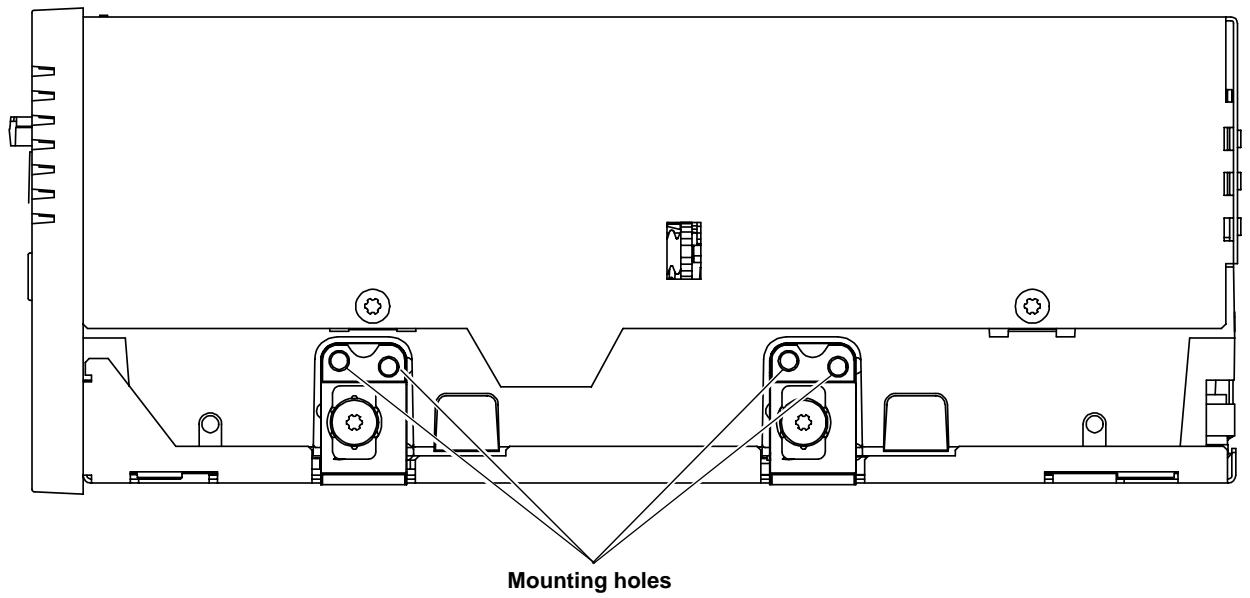
Figure 31 Tape Drive Mounting Holes — Right Side View
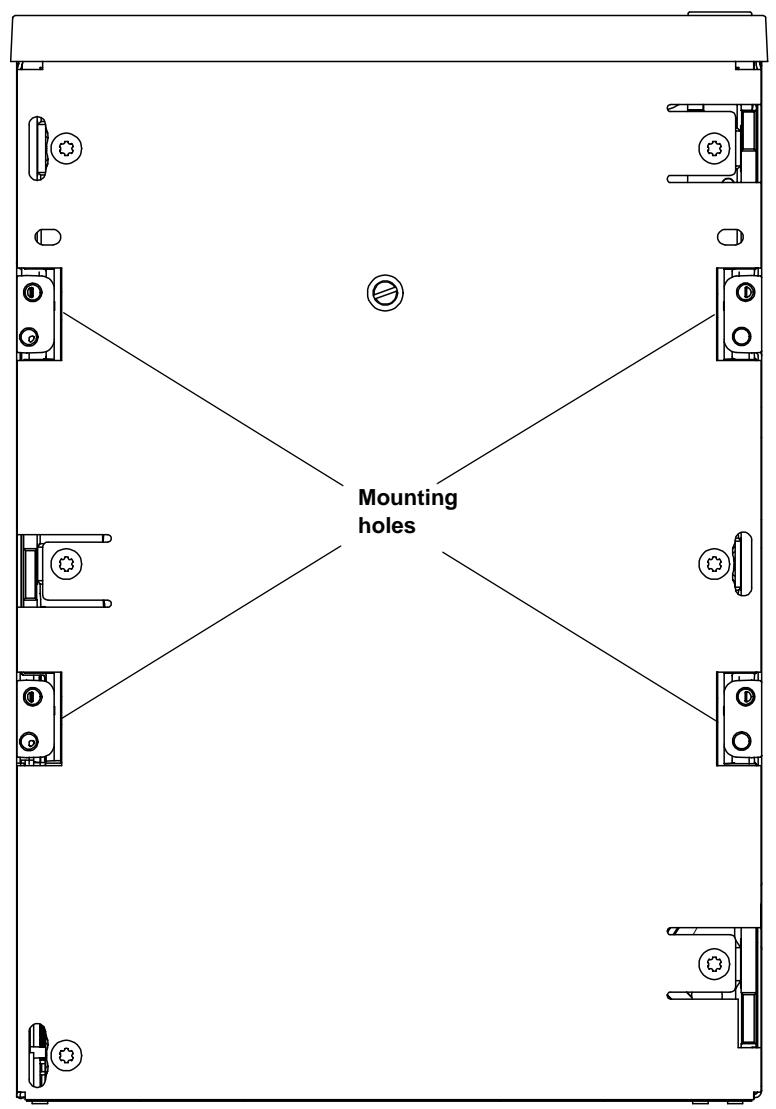
Figure 32 Tape Drive Mounting Holes — Bottom View
Connecting the Cables
Connect the Fibre Channel and power cables as follows:
1 Ensure that both the tape drive and computer are turned off.
2 Insert the fiber optic cable into the Fibre Channel port on the rear of the tape drive (see figure 33).
The connector is fully seated when it snaps into the port.
3 Insert the other end of the fiber optic cable into the Fibre Channel port on the host computer.
Note: If you are connecting several devices to the system, connect only the tape drive to the host computer at this time. Finish the installation procedure and confirm that the host computer and tape drive are communicating correctly before adding additional devices (see Adding Additional Devices on page 88).
4 Locate an available DC power cable in the host computer and attach it to the power connector on the rear panel of the tape drive (see figure 33). The connector is keyed, preventing improper connection. (See Power Connector Pin Assignments on page 46 for power pin number assignments and signal names.)
5 Check all cable connections to ensure that they are attached correctly, seated firmly, and secured.
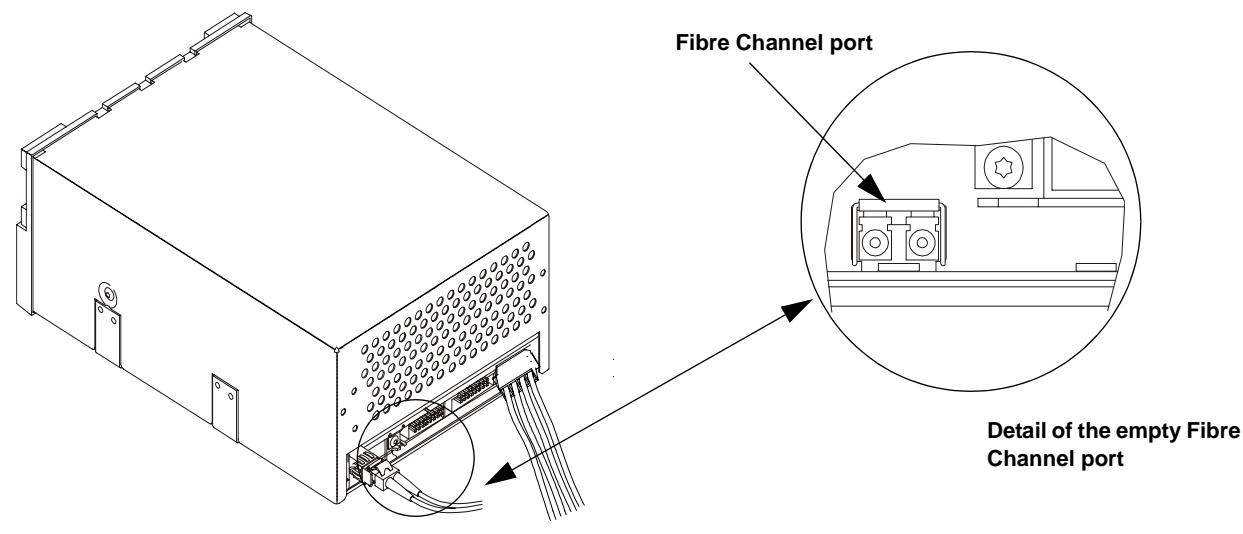
Figure 33 Connecting the Fibre Channel and Power Cables
Confirming the Installation
To confirm the installation, turn on the host computer.
The screens displayed at power-on contain:
BIOS
- Operating system
- SCSI controller information
If the first screen displays host adapter and SCSI ID information indicating the drive is a Quantum product, then the installation was successful.
If the installation was NOT successful, see POST and SCSI Troubleshooting on page 124.
Adding Additional Devices
Once you have successfully confirmed the installation of your tape drive, you may add additional devices.
For each additional device:
1 Ensure that both the tape drive and computer are turned off.
2 Insert the fiber optic cable into the Fibre Channel port on the device (for tape drives see figure 33).
The connector is fully seated when it snaps into the port.
3 Insert the other end of the fiber optic cable into the Fibre Channel port on the host computer.
4 Check all cable connections and ensure that they are attached correctly and seated firmly before turning the system on.
5 Confirm the installation (see Confirming the Installation on page 87).
Using the Loader/Library Interface Connector
This connector is only used for tape drives installed in loaders/libraries. If your system requires it to be used, it should have been pre-assembled at the factory. For more information about the loader/library connector, see Loader/Library Interface Connector on page 46.
This chapter describes how to configure and install the DLT-S4 internal SCSI tape drive.
This chapter includes the following information:
Equipment Required
Installation Steps
Rear Panel Connectors
Unpacking the Tape Drive
Securing the Tape Drive in the System
Connecting the Cables
Confirming the Installation
Adding Additional Devices
Using the Loader/Library Interface Connector
Caution:
Before you begin, review the safety, ESD, and handling precautions described in Chapter 2 to avoid personal injury or damage to equipment.
Equipment Required
You need the following items to install the tape drive in a system:
Four (4) M3 x 8 mm long screws
Screwdriver
SAS cable
Installation Steps
To install the tape drive, perform the following tasks in this order. Each task is described in detail on the pages listed below.
| Step No. | Step | Page |
| 1 | Unpack the tape drive. | Page 92 |
| 2 | Secure the tape drive in the system. | Page 92 |
| 3 | Connect the cables. | Page 95 |
| 4 | Confirm the installation. | Page 96 |
| 5 | Add additional devices (optional). | Page 97 |
Rear Panel Connectors
Figure 34 shows the location of the connectors on the rear panel of the SAS configured internal tape drive.
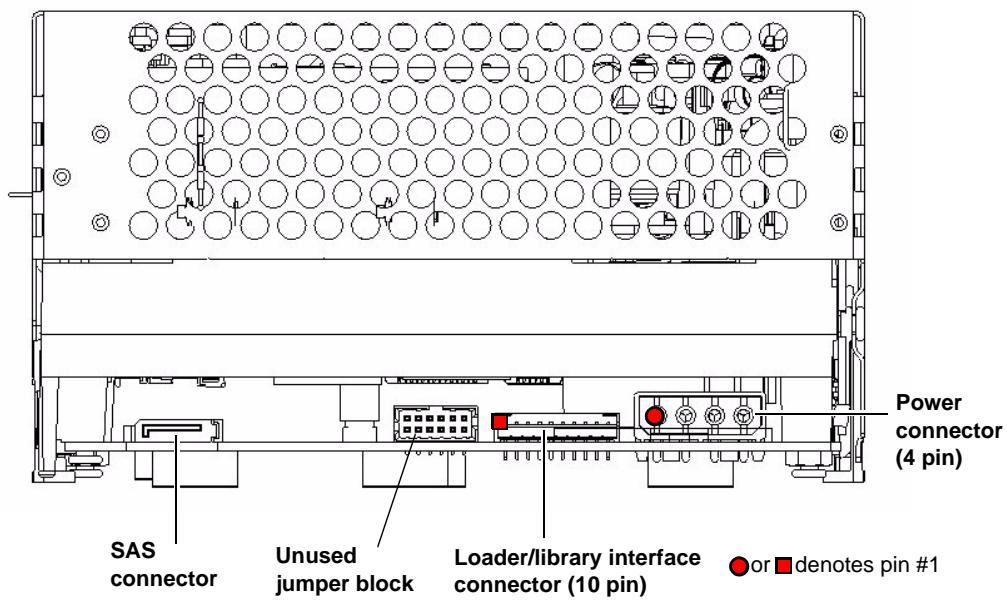
Figure 34 SAS Connectors and Jumpers (Rear View)
Unpacking the Tape Drive
Before you begin, clear a desk or table so that you can unpack the tape drive.
Note: If the room in which you are working differs from the temperature at which the tape drive was shipped or stored by 30^ ( 17^ ) or more, let the tape drive acclimate to the surrounding environment for at least 12 hours before opening the shipping carton.
Unpack and inspect the tape drive for shipping damage. If you notice any damage, report it both to the sales representative and to the shipping company immediately.
Caution: Save the packing materials in case you need to move or ship the tape drive in the future. When returning a unit to Quantum for repair, you must use the original or equivalent packing materials or risk voiding your warranty.
If there is no damage to the tape drive, select a server or workstation to host the tape drive, then move on to the following installation steps.
Securing the Tape Drive in the System
This section describes how to mount and secure the tape drive in the system. Because of the variety of mounting possibilities for tape drives, the instructions presented here are general guidelines. Use them only as a guide for mounting the tape drive in the system.
Note: In some system configurations it may be more convenient to connect the SAS and power cables to the tape drive before securing it in the system.
Mount the tape drive in the system by performing the following steps:
1 Ensure that the host computer and all peripheral devices are turned off.
2 Position the tape drive in the system and align the tape drive mounting holes (side or bottom) with those in the system (see figure 35 and figure 36).
3 Secure the tape drive in the bay or chassis using four M3 x 8mm long screws.
Caution: The screws used to mount the tape drive must be M3 x 8mm long. This kind of screw is exactly the proper length and will not damage the tape drive.
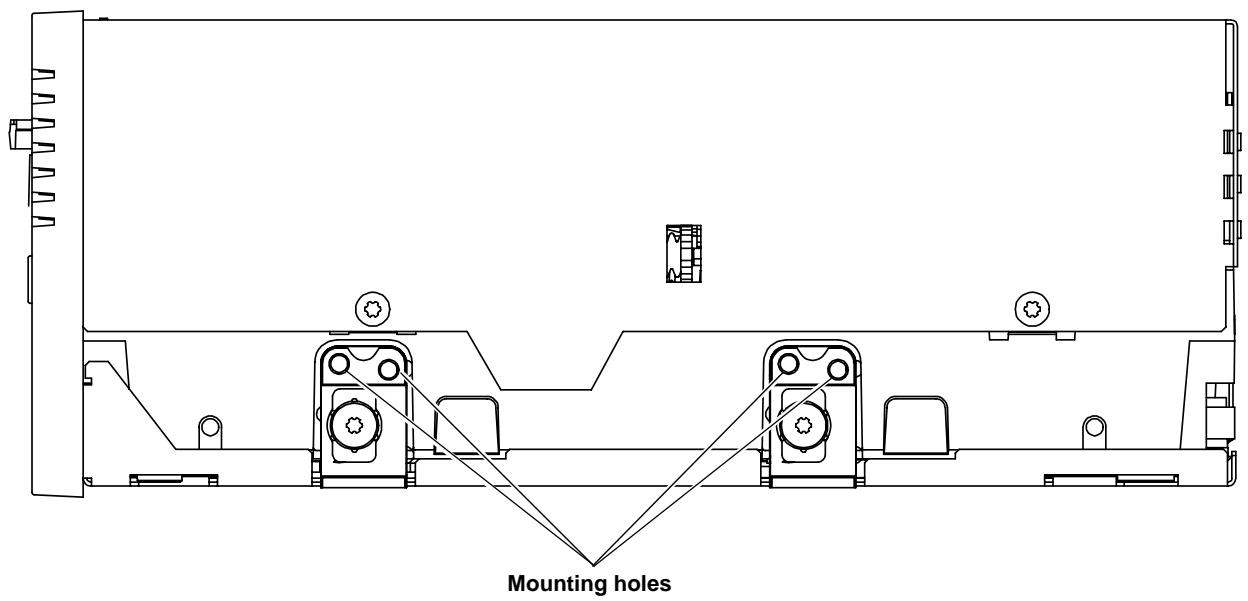
Figure 35 Tape Drive Mounting Holes — Right Side View
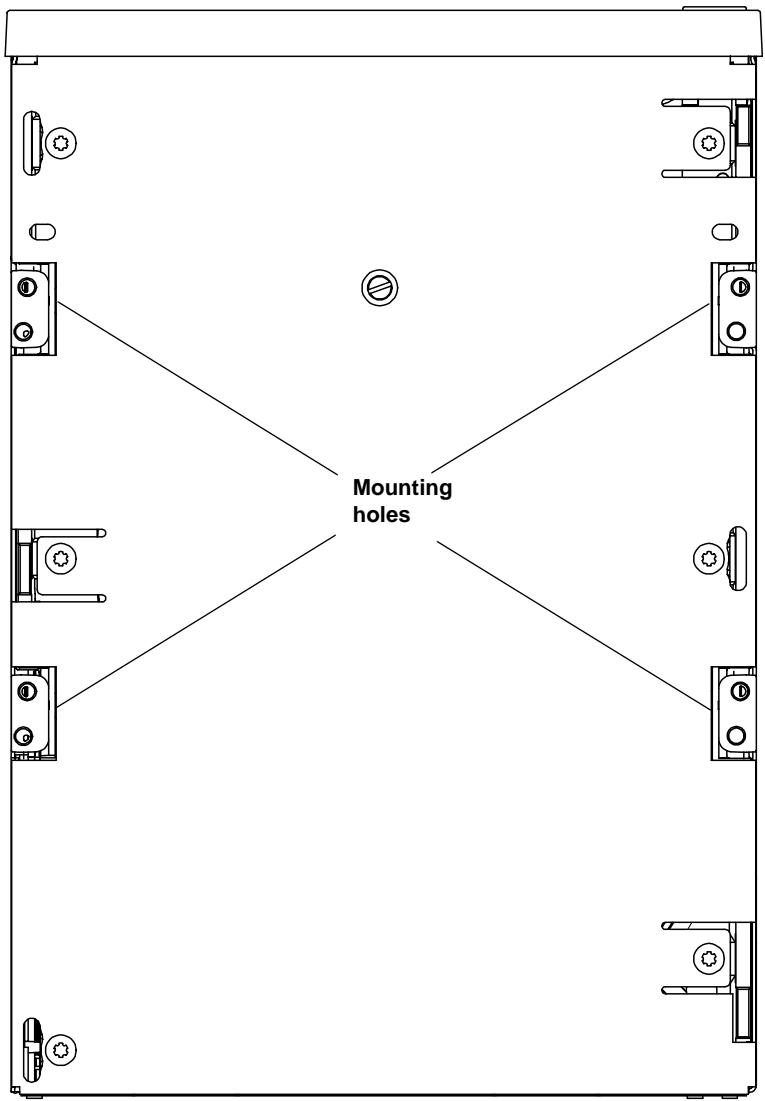
Figure 36 Tape Drive Mounting Holes — Bottom View
Connecting the Cables
Connect the SAS and power cables as follows:
1 Ensure that both the tape drive and computer are turned off.
2 Insert the SAS cable into the SAS port on the rear of the tape drive (see figure 34).
3 Insert the other end of the SAS cable into the SAS port on the host computer.
Note: If you are connecting several devices to the system, connect only the tape drive to the host computer at this time. Finish the installation procedure and confirm that the host computer and tape drive are communicating correctly before adding additional devices (see Confirming the Installation on page 96).
4 Locate an available DC power cable in the host computer and attach it to the power connector on the rear panel of the tape drive (see figure 37). The connector is keyed, preventing improper connection. (See Power Connector Pin Assignments on page 46 for power pin number assignments and signal names.)
5 Check all the cable and termination connections to ensure that they are attached correctly, seated firmly, and secured.
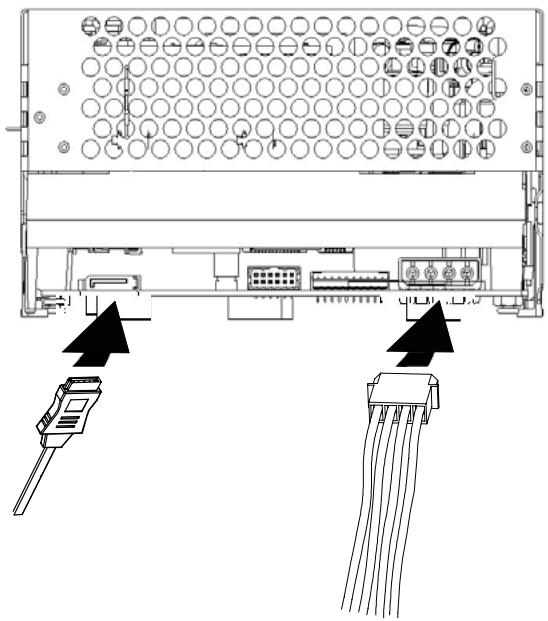
Figure 37 Connecting the SAS and Power Cables
Confirming the Installation
To confirm the installation, turn on the host computer.
The screens displayed at power-on contain:
BIOS
- Operating system
SCSI controller information
If the first screen displays host adapter and SCSI ID information indicating the drive is a Quantum product, then the installation was successful.
If the installation was NOT successful, see POST and SCSI
Troubleshooting on page 124.
Adding Additional Devices
Once you have successfully confirmed the installation of your tape drive, you may add additional devices.
For each additional device:
1 Ensure that both the tape drive and host computer are turned off.
2 Insert the SAS cable into the SAS port on the device (for tape drives, see figure 34).
3 Insert the other end of the SAS cable into the SAS port on the host computer.
4 Check all cable connections and ensure that they are attached correctly and seated firmly before turning the system on.
5 Confirm the installation (see Confirming the Installation on page 96).
Using the Loader/Library Interface Connector
This connector is only used for tape drives installed in loaders/libraries. If your system requires it to be used, it should have been pre-assembled at the factory. For more information about the loader/library connector, see Loader/Library Interface Connector on page 46.

This chapter describes how to configure and install the DLT-S4 tabletop tape drive.
This chapter includes the following information:
Equipment Required
Installation Steps
Rear Panel Connectors
Unpacking the Tabletop Tape Drive
- Selecting a Location for the Tabletop Tape Drive
Setting the SCSI ID
- Connecting the Tape Drive to the Host Computer and Terminating the SCSI Bus
- Connecting the AC Power Cable
Confirming the Installation
Adding an Additional Device
Configuring the Tape Drive
Using TERMpWR
Caution: Before you begin, review the safety, ESD, and handling precautions described in Chapter 2 to avoid personal injury or damage to equipment.
Note: The tabletop model comes ONLY with the SCSI interface. The Fibre Channel and SAS interfaces are not available.
Equipment Required
You need the following items to install the tape drive in a system:
Four (4) M3× 8mm long screws
Screwdriver
- Ultra320-rated SCSI cable and terminator (supplied)
- Ultra320-capable host bus adapter (HBA)
Installation Steps
To install the tape drive, perform the following tasks in this order. Each task is described in detail on the pages listed below.
| Step No. | Step | Page |
| 1 | Unpack the tape drive. | Page 101 |
| 2 | Select a location for the tape drive. | Page 101 |
| 3 | Set the SCSI ID. | Page 102 |
| 4 | Connect the tape drive to the host computer and terminate the SCSI bus. | Page 103 |
| 5 | Connect the AC power cable. | Page 105 |
| 6 | Confirm the installation. | Page 107 |
| 7 | Add an additional device (optional). | Page 107 |
Rear Panel Connectors
Figure 38 shows the location of the connectors on the rear panel of the DLT-S4 tabletop tape drive.
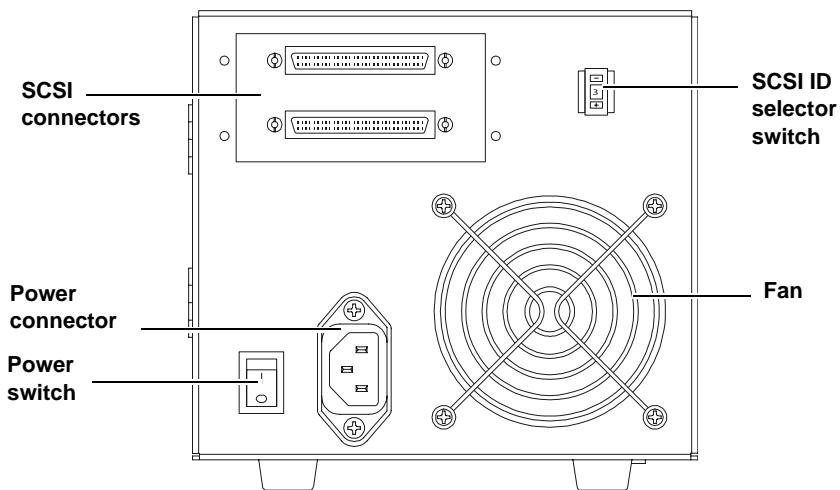
Figure 38 Tabletop Tape Drive — Rear View
Unpacking the Tabletop Tape Drive
Before you begin, clear a desk or table so that you can unpack the tape drive.
Note: If the room in which you are working differs from the temperature at which the tape drive was shipped or stored by 30^ ( 17^ ) or more, let the tape drive acclimate to the surrounding environment for at least 12 hours before opening the shipping carton.
Unpack and inspect the tape drive for shipping damage. If you notice any damage, report it both to the sales representative and to the shipping company immediately.
Caution: Save the packing materials in case you need to move or ship the tape drive in the future. When returning a unit to Quantum for repair, you must use the original or equivalent packing materials or risk voiding your warranty.
Selecting a Location for the Tabletop Tape Drive
Select a location for the tape drive that is flat, sturdy, level, and close to the server or workstation. There should be sufficient room for the tape drive to sit without being crowded. A desk or tabletop surface is most suitable. Regardless of the location you choose for the tape drive, make sure the environment is free from dust, cigarette smoke, and excessive temperature and humidity. See the Physical Specifications on page 38 for acceptable operating temperature and humidity limits.
Be sure to follow these additional guidelines when selecting a location for the tape drive:
-
Allow at least 6 inches (15.2 cm) behind the tape drive for proper cooling.
-
Avoid locations near printers or photocopy machines, both of which produce paper fiber and other types of dust and airborne contaminants.
- Do not place the tape drive on the floor.
- Avoid locations near generators, electric motors, audio speakers, or other sources of magnetic fields. Magnetic fields can adversely affect the tape drive and data cartridges.
Setting the SCSI ID
Each device connected to a SCSI bus must have a unique SDSI ID. Check the SCSI IDs on all other devices on the selected server or workstation, including the SCSI host adapter, and select an unused SCSI ID for the tape drive. The factory default SCSI ID for the tabletop tape drive is 3. If the tape drive's factory default SCSI ID is not already in use by another device on the same SCSI bus, you do not need to change the SCSI ID.
Caution: If you reset the SCSI ID, do not use ID 7, as that ID is already in use by the SCSI host adapter.
Note: For specific recommendations for assigning SCSI IDs, refer to the system or SCSI controller documentation.
You can configure the tape drive for SCSI ID addresses that range from 0 to 15 using the SCSI ID selector switch push buttons (see figure 39 for a close-up view of the SCSI ID switch and its location on the rear of the tabletop tape drive).
To change the SCSI ID, use a small screwdriver or ballpoint pen to press the buttons until the desired SCSI ID appears in the display.
To decrease the ID number - Press the button above the number.
To increase the ID number - Press the button below the number.
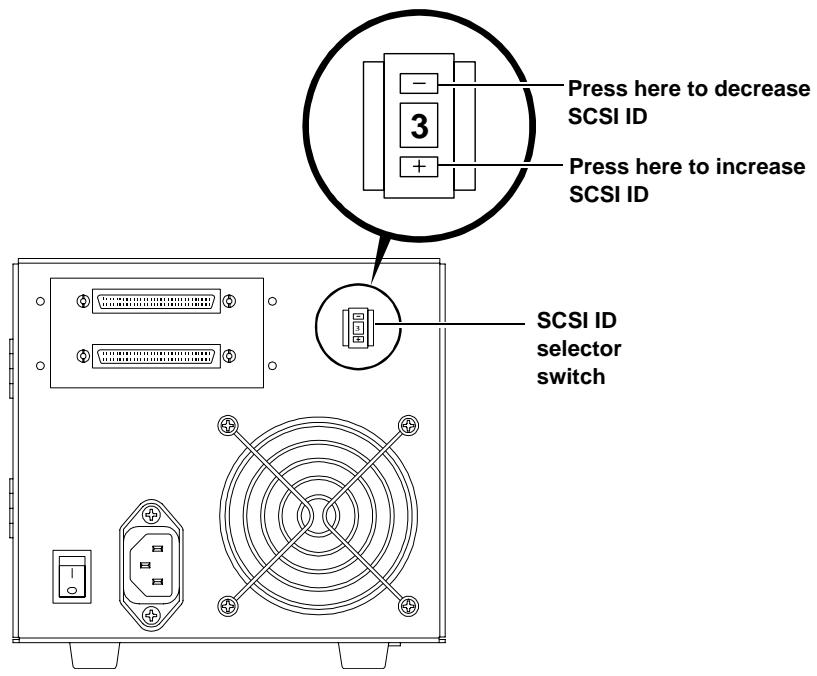
Figure 39 Tabletop SCSI ID Selector Switch
Connecting the Tape Drive to the Host Computer and Terminating the SCSI Bus
You can connect the DLT-S4 tape drive to the host computer as a single device, or as one of a maximum of two devices connected via SCSI cables in a "daisy chain" configuration.
If you are connecting two devices to the SCSI bus, connect only the tape drive to the host computer at this time. Finish the installation procedure and confirm that the host computer and tape drive are communicating correctly (see Confirming the Installation) before adding an additional device (see Adding an Additional Device).
Follow these steps to connect the tape drive to the host computer (see SCSI Connectors and Pin Assignments on page 51 for more information):
Note: Use care when connecting the cables to avoid bending or damaging the connector pins.
1 Ensure that the tape drive, host computer, and all peripheral devices (such as printers) are turned off.
Caution: Never connect the tape drive while the tape drive, host system, or peripheral devices are turned on. Doing so could result in damage to the tape drive or other peripheral devices.
2 Make sure that the SCSI cables and terminators are Ultra320 and SPI-4 (or SPI-5) compatible.
Note: SPI refers to SCSI Parallel Interface; you can learn more from this standard at the Web site www.t10.org.
3 Terminate the SCSI bus by attaching a SCSI terminator to either of the connectors on the rear of the tape drive (see figure 40).
Note: Regardless of which device terminates the SCSI bus, that device must have power applied and be powered on for proper termination to occur.
4 Carefully connect one end of the SCSI cable into the open SCSI connector on the rear of the tape drive (see figure 40).
5 Carefully connect the other end of the SCSI cable to the SCSI connector on the host computer (see figure 40).
6 Check all the cable and termination connections to ensure that they are attached correctly, seated firmly, and secure.
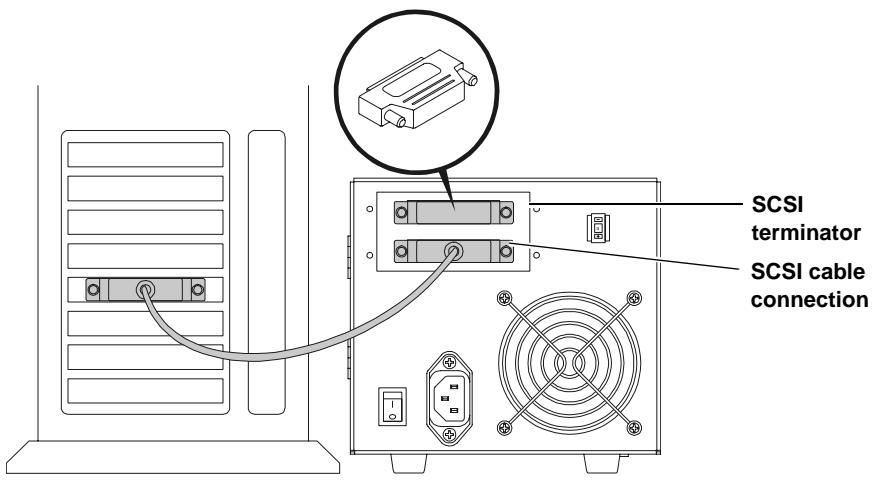
Figure 40 SCSI Chain — Single Device
Connecting the AC Power Cable
An AC power cable is supplied with each tabletop unit. The tabletop unit power supply has an auto-sensing feature; it requires no adjustment or switch setting changes for different AC sources.
To connect the AC power cable:
1 Carefully inspect the power cable and ensure that the cable is the appropriate cable for your country or region based on the following criteria.
Warning: Do not attempt to modify or use a tabletop 100-115 V AC power cable for 220-240 V AC input power. Modifying the power cable in any way can cause personal injury and severe equipment damage.
The AC power cable used with the tabletop unit must meet the following criteria:
-
The power cable should be a minimum of 18/3AWG, 60^ , type SJT or SVT.
-
The cable must be UL and CSA certified cordage rated for use at 250 VAC with a current rating that is at least 125% of the current rating of the product.
- You must terminate the AC plug in a grounding-type male plug designed for use in your country or region. It must also have marks showing certification by an agency acceptable in your country or region.
- The tabletop unit cable connector must be an IEC type CEE-22 female connector.
- The cable must be no longer than 4.5 meters (14.5 feet).
- The cable must be FCC compliant with emissions specifications.
See figure 41 for the AC power cable plug-end types for 115 VAC and 220 V/240 VAC usage.
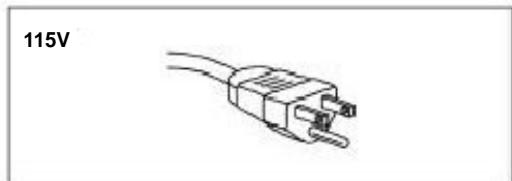
Figure 41 AC Power Cable Connector Types
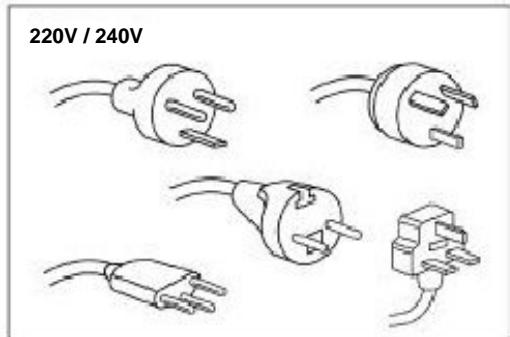
2 Connect one end of the AC power cable into the power connector on the rear of the tabletop tape drive (see figure 38 on page 100).
3 Connect the other end of the power cable to the AC outlet.
Confirming the Installation
To confirm the installation:
1 Turn on the DLT-S4 tabletop tape drive.
2 Turn on the host computer.
The screens displayed at power-on contain:
BIOS
- Operating system
- SCSI controller information
If the first screen displays host adapter and SCSI ID information indicating the drive is a Quantum product, then the installation was successful.
If the installation was NOT successful, see POST and SCSI Troubleshooting on page 124.
Adding an Additional Device
Once you have successfully confirmed the installation of your tape drive, you may add another device (you may have a maximum of two devices) to the SCSI bus.
Follow these steps to install the tape drive as a daisy-chain connection:
Note: Use care when connecting the cables to avoid bending or damaging the connector pins.
1 Ensure that all SCSI devices have unique SCSI IDs (see Setting the SCSI ID on page 102).
2 Ensure that the tape drive, host computer, and all peripheral devices (such as printers) are turned off.
Caution: Never connect the tape drive while the tape drive, host system, or peripheral devices are turned on. Doing so could result in damage to the tape drive or other peripheral devices.
3 Connect the SCSI cable from the host computer to the lower SCSI connector on the rear of the tape drive (see figure 42).
4 Continue the SCSI chain using the upper SCSI connector (see figure 42).
5 Make sure that all the SCSI cables and terminators are SPI-4 (or SPI-5) compatible.
6 Terminate the last device on the SCSI bus by attaching a SCSI terminator on the upper SCSI connector of the last device (see figure 42).
Note: Regardless of which device terminates the SCSI bus, that device must have power applied and be powered on for proper termination to occur.
7 Check all the cable and termination connections to ensure that they are attached correctly, seated firmly, and secure.
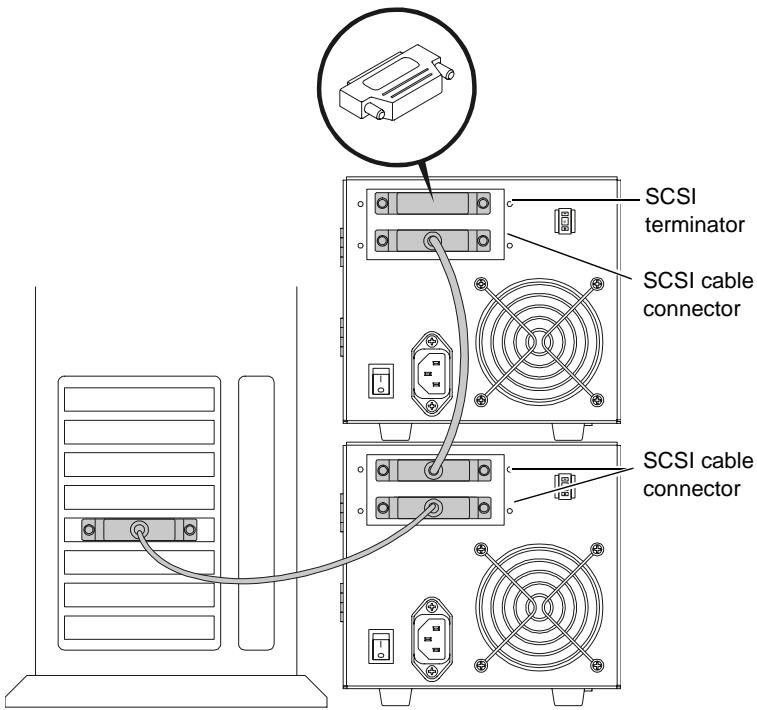
Figure 42 SCSI Chain — Multiple Devices
Configuring the Tape Drive
This model of tape drive is normally configured to meet customer specifications before leaving the factory, so should not require any internal configuration changes on site.
Using TERMPWR
The factory preconfigures the termination (TERMPWR) setting for the tabletop tape drive according to specific customer requirements. You cannot select TERMPWR on site.

This chapter describes how to start using the DLT-S4 tape drive system. This includes making a trial back-up, cleaning the tape mechanism, and various troubleshooting information. This chapter also includes information on the LEDs and buttons on the front panel of the system.
This chapter covers the following topics:
- Front Panel Controls and LEDs
Power-On Self-Test
Performing a Trial Backup - Firmware Update via the Host Interface
- Firmware Update via the Library Tape Drive Interface
- Cleaning the Tape Drive
- Optimizing Tape Drive Performance
Front Panel Controls and LEDs
All controls and LEDs are on the tape drive's front panel (see figure 43). Use these controls and LEDs to operate the tape drive and monitor the DLT-S4 tape drive system's activities. See table 35 for a description of the front panel controls and LED functionality.
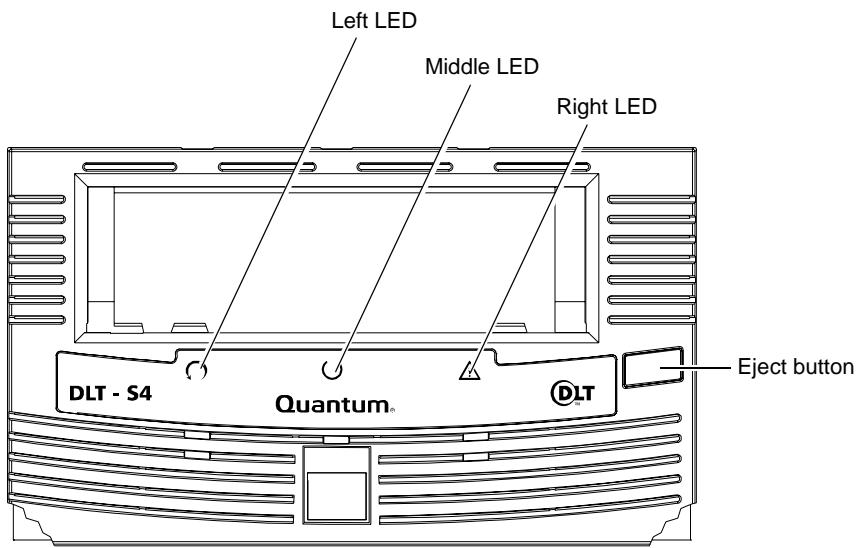
Figure 43 Tape Drive Front Panel
Left LED
On the DLT-S4 tape drive, the leftmost LED is dual color (green/orange). This LED is the Density Indicator.
- Green - A DLTtape S4 cartridge is inserted
- Orange - A Backward Read Compatible (BRC) cartridge is inserted.
Note: The DLT-S4 tape drive is backward read compatible with Super DLTtape II cartridges formatted in an SDLT 600 tape drive; and Super DLTtape I cartridges formatted in an SDLT 320 tape drive.
See table 35 for a summary of these combinations.
Front Panel Controls
Table 35 explains the function of the other LEDs and controls in the front panel.
Table 35 Interpreting Front Panel LEDs
| LED/Button/Port Title | Color andSymbol | State orAction | Explanation |
| Left LED | Green/Orange | On(Green) | Blank or formatted DLTtape S4 cartridge inserted |
| On(Orange) | ·SDLT 600 tape drive formatted Super DLTtape II cartridge inserted ·SDLT 320 tape drive formatted Super DLTtape I cartridge inserted | ||
| Off | No compatible cartridge is inserted | ||
| Middle LED | Green | Flashing | The tape drive is in use. This includes functions such as: ·The media is moving ·The tape drive is calibrating, reading, writing, or rewinding the media ·The tape drive is loading, unloading, or rewinding |
| On | The tape drive is idle. There may or may not be a cartridge in the tape drive. | ||
| Off | The tape drive has not been turned on or is not connected to a power source. | ||
| Right LED | Yellow | On | Cleaning is required. See Cleaning Instructions on page 120 for cleaning instructions. |
| Off | Cleaning is not required. |
Notes: Whenever the tape drive resets, all LEDs illuminate briefly and then illuminate in sequence until the reset completes (see table 36 on page 114 for a complete description). Whenever the tape drive encounters an error, all LEDs flash together.
| LED/Button/Port Title | Color andSymbol | State orAction | Explanation |
| Eject Button | N/A | Press | Use the Eject button to eject the cartridge from the tape drive. When you press the button, the tape drive completes any active writing, then ejects the cartridge. This button also “parks” the soft-load mechanism for shipping. For instructions, see chapter 15, Preparing the Tape Drive for Shipping. See chapter 3, Cartridges for detailed cartridge handling procedures. |
Notes: Whenever the tape drive resets, all LEDs illuminate briefly and then illuminate in sequence until the reset completes (see table 36 on page 114 for a complete description).
Whenever the tape drive encounters an error, all LEDs flash together.
Power-On Self-Test
The DLT-S4 tape drive system performs a self-diagnostic test, called a Power-On Self-Test (POST) each time you turn on the tape drive (see table 36). This test helps in detecting problems with the tape drive.
POST completes in approximately 10 seconds. While POST is running, the tape drive system responds BUSY to SCSI commands, but will respond to various SCSI messages.
During POST, the tape drive responds in the following ways.
| If the host tries to negotiate... | The tape drive... |
| synchronous transfer | negotiates to asynchronous |
| wide transfer | negotiates to narrow |
It may take longer than the duration of POST for the tape drive to become ready.
Table 36 LED Lighting Pattern During POST
| Stage | What You Observe |
| 1 (Power cycle) | ·All LEDs illuminate for approximately one second. |
| 2 | ·The left LED turns orange, then all LEDs turn off simultaneously. |
| 3 | This stage typically lasts 5 to 10 seconds. ·The left and right LEDs remain off. ·The middle LED flashes until POST completes. |
| 4 | When POST is complete: ·The middle LED stops flashing and remains illuminated. ·The left and right LEDs remain off. |
| POST failure | If POST fails: ·The middle and right LEDs illuminate steadily. ·The left LED flashes. |
Note: If a cartridge is loaded when power is applied, all stages remain the same except stage 3. It may take considerably longer for stage 3 to complete because of media rewind and searching operations that occur during this stage.
If the tape drive fails POST, check for the following possible problems:
- The tape drive is not receiving adequate power (try a new power cable or a different outlet).
- The tape drive is not properly connected to the host computer and other SCSI devices.
If any of these problems exist, correct the problem, turn off the tape drive, and turn it back on to restart POST. For additional troubleshooting guidelines, see POST and SCSI Troubleshooting on page 124.
Performing a Trial Backup
Complete the following steps to perform a trial backup and verify correct tape drive installation:
1 Insert a DLTtape S4 cartridge. Push the cartridge partially into the system until the media automatically loads.
2 Choose a sample file set from the host computer.
3 Create a backup file and then restore the file set.
- If the backup file completely restores, without any errors, you installed the system correctly.
- If you experience errors, double-check the tape drive's configuration and setup (see POST and SCSI Troubleshooting on page 124).
After you have exhausted all troubleshooting alternatives, contact your service representative.
4 Press the Eject button to unload the cartridge (see figure 43 on page 111).
Note: For specific instructions on loading cartridges, see chapter 3, Cartridges.
Firmware Update via the Host Interface
When you need to update the firmware in the tape drive, you can do it either of two ways:
- Updating Firmware Using the Host Interface
- Creating a CUP/FUP Cartridge From Which to Update Firmware (used in either a manual firmware update or in a library setting)
The xTalk Management Console tool allows you to update the tape drive's firmware using the host interface, or to create a CUP/FUP cartridge for an DLT-S4 tape drive. See xTalk Management Console on page 135 for information on downloading and using xTalk Management Console.
The following subsections briefly describe both methods of updating the tape drive firmware.
Updating Firmware Using the Host Interface
Use xTalk Management Console to update the firmware:
- Follow the instructions for downloading xTalk Management Console in xTalk Management Console on page 135.
2 Follow the instructions in the xTalk Management Console User's Guide to download the firmware.
Creating a CUP/FUP Cartridge From Which to Update Firmware
Use xTalk Management Console to create a CUP/FUP cartridge:
- Follow the instructions for downloading xTalk Management Console in xTalk Management Console on page 135.
2 Follow the instructions in the xTalk Management Console User's Guide to create a CUP/FUP cartridge.
Follow these steps to use a CUP/FUP cartridge:
1 Verify that the tape drive is turned on (power is applied), and the middle LED on the front panel of the tape drive is on, but not flashing.
2 Verify that the tape drive's cartridge opening is empty. If a cartridge is in the tape drive, unload and eject it before proceeding.
3 Press and hold the Eject button for six seconds; after six seconds, the left LED begins to flash.
4 Release the Eject button, then quickly press and release the Eject button again.
At this point, the left and middle LEDs start flashing synchronously in a regular, rhythmic pattern. The tape drive is now in Firmware Upgrade mode.
You now have a "window" of 3 minutes to insert the CUP/FUP cartridge. If you do not insert a CUP/FUP cartridge and the 3-minute window expires:
- Both LEDs stop flashing, although the middle LED remains on (steadily illuminated)
- The tape drive is now out of Firmware Update mode and can be used in a normal manner (once you insert a cartridge)
To put the tape drive back in Firmware Update mode, repeat steps 2, 3, and 4.
5 Insert the CUP/FUP cartridge.
After you insert the CUP/FUP cartridge, the left and middle LEDs change their pattern and start flashing in an alternating pattern. The tape drive is now performing the firmware update.
Note: The firmware update fails the update process if the firmware personalities do not match. The history log (accessible via the LOG SENSE Page 07h) records this information, as well as the reason for the failure.
6 Wait several minutes for the update process to complete.
The left and middle LEDs flash the entire time that firmware is being updated.
When the update is complete, the tape drive resets itself and goes through POST. The tape drive rewrites the CUP/FUP cartridge, then
unloads and ejects it. SCSI status indicates that firmware has been updated (06h, 3F, 01).
Note: If the tape drive is mounted in a tape automation library, the CUP/FUP cartridge rewinds to BOT and unbuckles in preparation for unloading, but does not automatically eject. Use the applicable library command to eject the cartridge.
Firmware Update via the Library Tape Drive Interface
The DLT-S4 library tape drive interface enables you to update the firmware with a new version, or image via media update.
Follow these steps.
1 Ensure that the tape drive contains no cartridge.
2 Send the CODE UPDATE REQUEST command.
3 Send the library ATTENTION command, then check the Tape Motion Status field of the returned General Status Packet to verify the tape drive is in the Ready for Code Update (0x09) state.
4 Load the cartridge containing the new firmware into the tape drive.
5 Send the library ATTENTION command, then check the Tape Motion Status field of the returned General Status Packet to verify the cartridge is loading (0x07).
6 Send the library ATTENTION command, then check the Tape Motion Status field of the returned General Status Packet to verify the cartridge is in the CUP in Progress (0x0A) state.
Note: It takes about 1 minute to enter the CUP in Progress (0x0A) state.
7 Send the library ATTENTION command, then check the Policy Firmware Revision field to verify that the update completed successfully.
8 Unload the cartridge and remove it from the tape drive.
Caution: During the firmware update, when reprogramming the new image into the flash EEPROMs is actually in progress, a power failure (but not bus RESET) or power cycling the unit causes the controller module to be unusable. When doing a firmware update, take reasonable precautions to prevent a power failure.
Cleaning the Tape Drive
This section discusses the DLT-S4 tape drive cleaning cartridge, maintenance considerations, and important compatibility issues.
Caution: Clean the tape drive only when the backup software or right (yellow) LED light indicate cleaning is necessary (see When to Clean the Tape Drive). Use only the correct cleaning cartridge for your tape drive (see Which Cleaning Cartridge to Use).
When to Clean the Tape Drive
Quantum tape drives occasionally require preventive cleaning. To a large degree, the amount of ambient pollution and particulates in the environment dictates the cleaning frequency.
Do not clean the tape drive unless the tape drive specifically indicates that cleaning is necessary. When your backup software indicates that you need to clean the tape drive, or the right (yellow) LED on the tape drive comes on, use the cleaning cartridge to clean the unit. (See figure 43 on page 111 for the location of this LED.)
Which Cleaning Cartridge to Use
Use ONLY the SDLT CleaningTape. Other cleaning cartridges, such as CleaningTape III or DLT VS CleaningTape, are incompatible with the DLT-S4 tape drive heads.
The cleaning cartridge is packaged in a plastic case, and is white in color.
Cleaning Cartridge Life Expectancy
Each cleaning cartridge is good for 20 uses. Use one of the labels that is supplied with the cleaning cartridge to track the number of uses and discard the cleaning cartridge after the final use.
Cleaning Cartridge Compatibility
The SDLT Cleaning Tape is compatible with SDLT 220, SDLT 320, SDLT 600, and DLT-S4 tape drives.
Cleaning Instructions
To clean the tape drive, follow these steps:
Note: To use the cleaning cartridge in an autoloader or library tape drive, see the autoloader or library owner's documentation.
1 Insert a cleaning cartridge into the tape drive.
The middle (green) LED flashes and the cleaning cycle begins automatically. Based upon previous cleaning cartridge usage, the cleaning operation may last up to 10 minutes.
When the cleaning cycle completes, the tape drive automatically ejects the cleaning cartridge; turns off the right LED; and steadily illuminates the middle LED.
2 Remove the cleaning cartridge, place it back in its plastic case, and mark the label after each cleaning.
Note: On the last (20th) cleaning, the tape drive does not eject the cleaning cartridge. Press the Eject button on the front of the tape drive to eject the expired cleaning cartridge. Dispose of the expired cleaning cartridge.
Cycle Time for Cleaning Cartridge
Cycle times for cleaning cartridges are as follows.
| Cycle Time | Valuea |
| Shortest cycle time (1st pass of cleaning cartridge) | 2 minutes, 55 seconds |
| Longest cycle time (20th pass of cleaning cartridge) | 10 minutes, 20 seconds |
| “Expired” cycle time (expired cleaning cartridge) | 10 minutes |
a. These times are accurate to ± 20 seconds.
On the last (20th) pass, the cleaning process completes and the cleaning media is rewound, but the cleaning cartridge is not ejected. You must manually eject the cartridge.
If the cleaning cartridge is loaded again after the 20th pass, it winds all the way to the end of the cartridge and back again without performing the cleaning sequence, and the cleaning cartridge does not eject. You must manually eject the cartridge.
Optimizing Tape Drive Performance
Many factors contribute to tape drive performance. Host system considerations include processor speed, block size, host adapter performance, host bus configurations, and software.
If you are concerned about the performance of the tape drive, check the following:
- Ensure that the tape drive is properly defined for the host system. If the tape drive is not defined within the system, the host adapter does not interact well with the tape drive.
-
Ensure that the host bus adapter card and the SCSI bus are operating in Ultra320 mode.
-
Check the host block size.
The DLT-S4 tape drive supports block sizes up to 16 MB. In general, the larger the block size, the better the throughput. Many older software applications default to a 512-byte block size, which results in poor performance.
- Ensure that you are using a cartridge that is compatible with the tape drive.

Chapter 14 Troubleshooting
This chapter lists troubleshooting tips and diagnostic tools to use if the tape drive system fails or you experience poor performance. This chapter covers:
General Troubleshooting
POST and SCSI Troubleshooting
Over Temperature Condition
For complete inspection instructions for DLTtape S4, Super DLTtape II, and Super DLTtape I cartridges, see chapter 3, Cartridges.
The Web site wwwquantum.com also includes valuable information on DLT systems.
General Troubleshooting
Follow these steps to troubleshoot problems with the DLT-S4 tape drive:
1 Visually inspect the cartridge for damage, and try a new cartridge if necessary (see chapter 3, Cartridges).
2 Ensure that the cables and connectors are in good working condition. For example, check that they are not worn or broken, and there are no missing or bent pins.
3 Ensure that the connector on each end of the cable is fully seated.
4 Disconnect the tape drive from the host system, turn off the tape drive, and turn it on again to perform a POST (see Power-On Self-Test on page 113).
5 If you have a SCSI tape drive--remove all devices from the SCSI bus. Connect the tape drive directly to the host computer and terminate it (see Connecting the Cables and Terminating the SCSI Bus on page 74 for internal tape drives or Connecting the Tape Drive to the Host Computer and Terminating the SCSI Bus on page 103 for tabletop tape drives).
Confirm that the tape drive and host computer are communicating properly before adding other devices.
6 If you have a Fibre Channel tape drive – look at the rear panel to see if the Fibre Channel cable is correctly attached (see Connecting the Cables on page 86).
If the link light is illuminated, you have a working connection with the Fibre Channel network.
7 If you have a SAS tape drive -- look at the rear panel and make sure the SAS cable is correctly attached (see Connecting the Cables on page 95).
8 Ensure that the operating system (modules, patches, and drivers), backup software, and tape drive are compatible. See www.quantum.com for the most current compatibility information.
If you cannot identify or correct the problem, contact customer support (see Customer Support on page xviii for contact information). Have the model and serial number available when you call. You can find these numbers on the bottom of the tabletop tape drive enclosure and on the top of the internal and library tape drives.
POST and SCSI Troubleshooting
Table 37 provides troubleshooting tips that you will find useful in the event that the tape drive system fails its POST.
If, after attempting the recommended actions listed in the table, the problem still exists or recurs, a hardware failure may be the cause.
Contact your service representative.
Table 37 POST and SCSI
Troubleshooting Guidelines
| If... | Then... | You should... |
| The computer does not recognize the DLT-S4 tape drive system | The computer may not be configured to recognize the interface ID. | Configure the computer to recognize the DLT-S4 tape drive system's ID. |
| The SCSI ID may not be unique. | Change the SCSI ID and power cycle the entire system. The new ID becomes effective at the next power cycle or interface bus reset. | |
| Host bus adapter parameters may be incorrect. | Check host bus adapter documentation for parameter settings. Ensure that the host bus adapter card and the SCSI bus are operating in Ultra320 mode. | |
| The SCSI cable may be loose. | Ensure the SCSI cable is fully seated at each connector end. | |
| The SCSI bus may not be terminated correctly. A terminator may not be at the end of bus or more than two terminators may be present. | Ensure that a terminator is installed at each end of the bus (one terminator is usually already installed at the host end of the bus). If the DLT-S4 tape drive is the last or only device on the bus, be certain the terminator is installed on the DLT-S4 tape drive. If the DLT-S4 tape drive is not the last or only device on the bus, check the cable connections and ensure that the bus is properly terminated at each end. | |
| The computer does not recognize the DLT-S4 tape drive system (continued) | The SCSI bus may be too long. | The maximum cable length for one DLT-S4 tape drive is 20 meters. The maximum SCSI cable interconnect length is 10 meters total with a maximum of two DLT-S4 tape drives on the bus. |
| There may be too many devices on the SCSI bus. | • Limit the number of tape drives on SCSI bus; Quantum recommends one DLT-S4 tape drive per bus, with a maximum of two DLT-S4 tape drives per bus. | |
| A device may not have been turned on and a valid SCSI ID may not have been configured for that device before the system powered on and loaded BIOS. | Turn the tape drive on first, and then turn on the computer. This will enable the tape drive to be properly recognized by the system. | |
| The tape drive does not turn on | No power is reaching the tape drive. | Check the tape drive's power cable connection at the rear of the system. |
| Nonfatal or fatal errors have occurred for which the cause cannot be determined | Interface bus termination or the interface cable connections may be incorrect. | • Ensure the SCSI bus is terminated and that all connections are secure, or • Ensure the Fibre Channel or SAS cables are secured at the host and drive ends. |
| The AC power source grounding may be incorrect (tablet top model). | Use an AC outlet for the tabletop tape drive on the same AC line used by the host system. | |
| The tape drive is operating more slowly than indicated in its performance specification | Your host bus adapter may be limiting the speed, or you may be using an incompatible cartridge. | ·Check the host bus adapter documentation for parameter settings. ·For the best performance, make sure the SCSI controller card can operate at 320 MB/second. Limit the number of tape drives on SCSI bus; Quantum recommends one DLT-S4 tape drive per bus, with a maximum of two DLT-S4 tape drives per bus. ·Ensure that the tape drive is properly defined for the host system. If the tape drive is not defined within the system, the host adapter does not interact well with the tape drive. ·Ensure that the host bus adapter card and the SCSI bus are operating in Ultra320 mode. ·Check the host block size. The DLT-S4 tape drive supports block sizes up to 16 MB. In general, the larger the block size, the better the throughput. Many older software applications default to a 512-byte block size, which results in poor performance. ·Ensure that you are using a cartridge that is compatible with the tape drive. |
Over Temperature Condition
The DLT-S4 tape drive has a thermal sensor located in the tape path. This sensor, which is used to accurately monitor the air temperature in the tape path, reacts in the following ways:
- TapeAlert occurs at 50^
- Shutdown occurs at 53^ C
SCSI status indicates the tape drive is in the over temperature condition.
| Location | When the tape path temperature sensor detects an over temperature condition resulting in shutdown... |
| Not mounted in a library | The media rewinds, unloads, and ejects from the tape drive. |
| Mounted in a library | The cartridge rewinds to BOT and unbuckles in preparation for unloading, but does not automatically eject. |
For more information, see the DLT-S4 Product Specification (81-81279-xx) and the DLT-S4 Interface Reference Guide (81-81281-xx).
This chapter provides instructions on how to properly set the DLT-S4 tape drive for moving or shipping.
The DLT-S4 tape drive is equipped with a soft-load mechanism that is "parked" prior to first power-on. Upon first power-on, the soft-load mechanism becomes "un-parked" and ready for use.
If you intend to move or ship your DLT-S4 tape drive, you must "park" the soft-load mechanism. (The soft-load mechanism will automatically "unpark" upon the next power-on.)
1 Remove the cartridge from the tape drive.
Caution: Do not ship the tape drive with a cartridge loaded in it! This could cause damage to the tape drive or the tape cartridge.
2 Press and hold the Eject button for 15 seconds.
Midway through this 15-second interval, the left LED will flash orange 5 times at a frequency of once per second. After the 15-second interval, the left LED will flash green at a much higher frequency.
3 Release the Eject button.
4 Within 10 seconds, press and release the Eject button once.
The soft-load mechanism will "park" and the Left LED will flash green at a frequency of once per second to verify the "parking" operation is complete.
5 Power off the tape drive.
It is recommended that you retain and re-use the original packaging materials if you plan to ship your DLT-S4 tape drive.
Quantum frequently provides new and updated tools to use with its tape drives. These tools include such items as upgrades for product software and firmware, and diagnostic software that may be newly developed.
These tools either come standard on the DLT-S4 firmware, or can be downloaded from the Quantum Web site (see Accessing the Tools on page 132 for instructions). New tools and utilities get added frequently, so check the site often.
The tools discussed in this chapter are:
Device Drivers
- TapeAlert
Medium Auxiliary Memory
DLTSage
- xTalk Management Console
DLTSage Dashboard and DLTSage Tape Security
Accessing the Tools
TapeAlert and Medium Auxiliary Memory are built-in features of the DLT-S4 tape drive. The other tools described in this chapter can be accessed from the Quantum Web site.
To access these tools:
1 Go to the Quantum Web site: wwwquantum.com.
2 Click Service and Support in the upper menu bar. This opens the Service and Support window.
3 Click Downloads.
4 Click the product for which you want to download (in this case, DLT-S4 tape drive).
5 Scroll down to the Downloads section to review the various items until you find what you need.
Note: These tools are only available to registered Quantum customers.
Device Drivers
Quantum offers device drivers for:
- Windows® 2000
- Windows XP®
- Windows Server™ 2003 (32-Bit Edition) - Intel x86 Platform
The Device Drivers allow for the use of all DLT tape drives with Windows 2000, Windows XP, and Windows Server 2003 running on Intel x86 (32-bit) platforms.
TapeAlert
DLT-S4 tape drives are delivered with TapeAlert features built in. The tape drive firmware constantly monitors the device's hardware and media, checking for errors and potential difficulties. It flags any problems identified on the SCSI LOG SENSE Page 2Eh.
After a backup, the TapeAlert-compatible backup application automatically reads the device's TapeAlert SCSI LOG SENSE Page 2Eh to check for any problems. If an error is flagged, your backup software displays a warning message on your screen, and adds the TapeAlert messages to its logs. These messages are standard across all applications that support TapeAlert, and give an explanation of the problem and suggested resolution. For example, if you were attempting to back up to an expired cartridge, you would see the following message:
WARNING: The data cartridge has reached the end of its calculated useful life.
Copy any data you need to another cartridge.
Discard the old cartridge.
Medium Auxiliary Memory
Medium Auxiliary Memory (MAM) is a feature in the DLT-S4 tape drive that produces various attributes about the cartridge and records them on the media itself. These attributes provide the underlying information for the DLTsage suite of intelligent data protection tools.
For more information on MAM, see the DLT-S4 Interface Reference Guide (81-81281-xx).
You can view the MAM via xTalk Management Console (see xTalk Management Console on page 135).
DLTSage
DLTSage is a suite of intelligent data protection tools that enables users to more effectively manage and protect tape storage environments. Its diagnostic and monitoring tools enhances manageability by allowing you to manage and prevent problems that can occur during a routine backup.
DLTSage is a standard feature of the DLT-S4 tape drive, integrated as part of the firmware. Some of the features of DLTSage are automatically available to you when you use your backup software application. Others (such as xTalk Management Console and DLTSage Dashboard) you must download to use.
Several DLTSage applications are described in this manual:
- xTalk Management Console on page 135)
DLTSage Dashboard and DLTSage Tape Security on page 136
DLTSageWORM on page 34
The features of DLTSage are described in table 1. To learn more about DLTSage and all its capabilities, see
http://www.dlttape.com/technology/DLTSage/index.aspx
Table 1 DLTSage Features
| Feature | Description |
| Manage | The software ensures that you use tape drives and media as efficiently as possible. ·It provides management protocols for acquiring information on DLT tape drives and media anywhere on an enterprise network ·It helps you to understand and control how tape drives are used throughout your system ·It allows you to develop a complete inventory of tape drives and media and the usage statistics for each ·You can ascertain which cartridges and which tape drives are nearing the end of their useful lives. |
| Prevent | The software allows you to see errors as they happen and correct them instantly. ·It alerts you to potential problems, enabling you to take corrective action immediately ·It provides management protocol interfaces for third-party providers, such as library and backup software vendors, to use key information across multiple interfaces ·You can use tape drive and cartridge usage statistics to implement preventative maintenance. |
xTalk Management Console
xTalk Management Console is part of the DLTSage suite of tools. It allows you to evaluate tape device health and determine when a device needs to be sent for service or repair.
xTalk Management Console provides:
Media and device diagnostic tools
The ability to view analysis information
- The ability to quickly update the application or firmware
- The ability to create a secure DLTSage WORM tape (see Formatting a Cartridge as DLTSage WORM on page 35)
See xTalk Management Console User's Guide for detailed instructions on how to use the software. The user's guide is packaged with downloaded software. For Windows users, access the user's guide it through the Help menu once the program is open (choose Help > Online User's Guide).
DLTSage Dashboard and DLTSage Tape Security
DLTSage Dashboard enables you to more effectively manage and protect your tape storage environment. After you download DLTSage
Dashboard, it is accessible from the Windows Start menu and Device Manager.
The Dashboard consists of the following two features:
- The Status tab displays drive and media current health, status, and security settings, including when the drive's next cleaning is due and the cartridge's available free space.
- The Tape Security tab allows you to add an electronic Secure Key to tape cartridges. This protects your cartridges from unauthorized access to data in the event that they are lost or stolen.
See the DLTSage Dashboard and DLTSage Tape Security Quick Start Guide (81-81639-xx) for more information and instructions.


Appendix B
Environmental Compliance
This chapter describes the environmental compliance and provides basic instructions for environmental disposal of your unit.
WEEE and RoHS Compliance
Quantum is committed to providing quality products in an environmentally sound manner and to comply with all applicable environmental laws, rules and regulations.
This product was designed, manufactured and made available with consideration to worldwide laws, rules and regulations applicable to the product and the electronics industry including the European Union Directives 2002/95/EC & 2002/96/EC (RoHS and WEEE).
Disposal of Electrical and Electronic Equipment


This symbol on the product or on its packaging indicates that this product should not be disposed of with your other waste. Instead, it should be handed over to a designated collection point for the recycling of electrical and electronic equipment. The separate collection and recycling of your waste equipment at the time of disposal will help to conserve natural resources and ensure that it is recycled in a manner that protects
human health and the environment. For more information about where you can drop off your waste equipment for recycling, contact your local government authority, your household waste disposal service or the business from which you purchased the product.

Appendix C Regulatory Statements
FCC Statement
This equipment has been tested and found to comply with the limits for a Class A digital device, pursuant to Part 15 of the FCC Rules. These limits are designed to provide reasonable protection against harmful interference when the equipment is operated in a commercial environment. This equipment generates, uses, and can radiate radio frequency energy and, if not installed and used in accordance with the instruction manual, may cause harmful interference to radio communications.
Any changes or modifications made to this equipment may void the user's authority to operate this equipment.
Operation of this equipment in a residential area may cause interference in which case the user at his own expense will be required to take whatever measures may be required to correct the interference.
This device complies with Part 15 of the FCC Rules. Operation is subject to the following conditions:
1 This device may not cause harmful interference, and
2 This device must accept any interference received, including interference that may cause undesired operation.
Taiwan Statement
警告使用者:
Industry Canada (Digital Apparatus)
Reference: Interference-Causing Equipment Standard, ICES-003, Issue 2
This Class A digital apparatus meets all requirements of the Canadian Interference-Causing Equipment Regulations.
This is a Class A product. In a domestic environment this product may cause radio interference in which case the user may be required to take adequate measures.
Achtung!
Notice for USA and CANADA Only
If shipped to USA, use the UL LISTED power cord specified below for 100 - 120V operation. If shipped to Canada, use the CSA CERTIFIED power cord specified below for 100 - 120V operation.
Plug Cap Parallel blade with ground pin (NEMA 5-15P configuration)
Cord Type: SJT, three 16 AWG (1.5mm^2) or 18 AWG (1.0mm^2) wires
Length Maximum 15 feet (4.5m)
Rating Minimum 10 A, 125 V
Attention
LIRE LA REMARQUE DANS LE MODE D'EMPLOI.
Remarque
CETTE REMARQUE NE CONCERNE QUE LES ETATS-UNIS ET LE CANADA.
Class 1 Laser Product
CAUTION: With all panels and enclosures in place, this product is rated as a Class I laser product. The bar code scanner inside this product, however, is a Class II laser. Avoid exposure to the laser light emitted from the bar code scanner. Do not stare into the beam.
CAUTION: Use of controls or adjustments or performance of procedures other than those specified herein may result in hazardous exposure.
Laser Klasse 1
Power Cord Statement
DEN-AN Notice (Japan)
Access (v.) To read, write, or update information on a storage medium, such as magnetic media. (n.) The operation of reading, writing, or updating stored information.
Access Time The interval between the time a request for data is made by the system and the time the data is available from the tape drive.
Advanced PRML Advanced Partial Response Maximum Likelihood. The advanced PRML channel technology provides high-encoding efficiency recording densities for greater capacity and performance.
AMP Media Advanced Metal Powder Media. A state-of-the-art media first designed for Super DLTtape. It incorporates durable metal powder technology for high-density data storage and embedded non-magnetic information for head tracking.
Archiving The removal or copying of data from the computer system onto secondary storage media that is safely stored away.
ASIC Application Specific Integrated Circuit.
B
Backup A copy of a file, directory, or volume on a separate storage device from the original, for the purpose of retrieval in case the original is accidentally erased, damaged, or destroyed.
Base Plate An aluminum die casting that acts as the support platform for the other modules and for the tape drive enclosure. The base plate
includes the precision mounting holes used to install SDLT tape drives into a server or tape library.
Bezel (Also known as the faceplate.) A plastic panel that extends the face of a tape drive so that it covers a computer's tape drive bay opening. The internal model of DLT-S4 has two bezels: a library bezel and an internal bezel.
BIOS Basic Input/Output System. A set of routines that work closely with the hardware to support the transfer of information between various elements of the system, such as memory, disks, and peripheral devices.
Block A sector or group of sectors. DLT-S4 supports block sizes up to 16 MB.
BOT Beginning of Tape. The physical beginning of the media.
BRC Backward-read Compatibility is the ability of a current tape drive product to read cartridges written on earlier model tape drives.
BSMI Bureau of Standards, Metrology, and Inspection (Taiwan).
Buckling Mechanism The buckling mechanism engages the media leaders on cartridge load and disengages them on cartridge unload.
Buffer An area of RAM reserved for temporary storage of data that is waiting to be sent to a device. The data is usually on its way to or from the tape drive or some other peripheral device.
Bus The part of a chip, printed circuit board, or interface designed to send and receive data.
C The degree Celsius (^) is a unit of temperature.
Cache Specialized RAM used as a buffer between a fast CPU or I/O channel and storage which has a relatively slow access time (for example, cartridge or diskette), to avoid slowing down the former.
CE Council of Europe.
Compressed Capacity Capacity after data has been processed, using either software or hardware, to reduce storage space while maintaining data integrity. (See also Data Compression.)
CFR Code of Federal Regulations (United States).
CSA Canadian Standards Association, also known as CSA International.
CTM Cartridge Tape Module. The main function of the SDLT's CTM is to provide the magnetic recording media used by the tape drive to store
customer information. The CTM also provides the protective cartridge, which allows the media to be removed and stored safely.
CUP Code Update (a firmware update).
Data Compression A process that reduces the amount of storage space required to hold a particular block of data. Data transfer speed and total media capacity are affected by the data compression achieved. In accordance with industry practice, a typical compression ratio is 2:1 of data storage. Actual compression ratios achieved depend on the redundancy of data files being written.
dB A Decibel is a logarithmic unit of sound intensity; 10 times the logarithm of the ratio of the sound intensity to some reference intensity.
DC Direct Current is the continuous flow of electricity through a conductor such as a wire from high to low potential.
DCB Drive Control Board.
Device According to the SCSI specification, multiple SCSI devices can be connected to a single SCSI bus. Each SCSI device contains a SCSI ID number that can be set in the range 0 to 15.
Device Driver A low-level (usually kernel-mode) operating system component that enables a PC to communicate with peripheral devices such as printers, CD-ROMs, and tape drives. Each kind of device requires a different driver.
Differential A term referring to the electrical characteristics of the signal used on the SCSI bus interface. Differential signals minimize the effect of common mode signal noise and allow the SCSI bus to operate reliably over greater distances at a higher speed.
DLT Digital Linear Tape.
DLTSage WORM Quantum's firmware compliance management function of DLTsage, which provides secure archival functionality to the DLT-S4 tape drive and the DLTtape S4 cartridge.
DLTSage Quantum's suite of intelligent data protection tools that enables users to more effectively manage and protect tape storage environments.
DLZ Digital Lempel-Ziv 1 Algorithm is named after Abraham Lempel and Jacob Ziv. It is a data compression technique used in all SDLT tape drives.
EEC European Economic Community.
EEPROM Electronically Erasable Programmable Read-Only Memory. An integrated circuit memory chip that can store programs and data in a non-volatile state. These devices store firmware in DLT and SDLT tape drives, and can be erased and reprogrammed with new data.
EMC Electromagnetic Compatibility. The ability of a device or system to function without error in its intended electromagnetic environment.
EMI Electromagnetic Interference. Electromagnetic emissions from a device or system that interfere with the normal operation of another device or system
EN EN standards are voluntary technical standards of the European Union and European Economic Area.
Encoding (n.) Characters (or bytes) of information converted to magnetic patterns on the media. (v.) The process of converting to the desired pattern.
EOD End of Data. Location on media where the last session stopped.
EOM or EOT End of Media or End of Tape. Logical EOM allows space to complete a write operation; physical EOM signifies that the media is completely used.
Erase The removal of data from media.
Error A message that occurs when there is a loss of ability to interpret recorded data; usually because of magnetic issues or defects in or on the media.
ESD An Electrostatic Discharge is a sudden flow of electric current through a material that is normally an insulator.
EU European Union.
F. Fahrenheit is a temperature scale where a degree Fahrenheit (°F) is 5/9ths of a kelvin (or of a degree Celsius).
FC Fibre Channel
FCC Federal Communications Commission (United States).
Fibre Channel A high-speed serial architecture that allows either optical or electrical connections at data rates from 265 MB to 2 Gb per second. Fibre Channel is sometimes abbreviated FC.
Firmware Permanent or semi-permanent instructions and data programmed directly into the circuitry of a programmable read-only memory or electronically erasable programmable read-only memory chips. Used for controlling the operation of the computer or tape drive. Distinct from software, which is stored in random access memory and can be altered with ease.
FUP Firmware Update.
G
GB Gigabyte. Equal to 1,000,000,000 (10 ^9 ) bytes. This is the International System of Units (SI) definition commonly used by telecommunications and storage manufacturers.
Gb Gigabit. Equal to 1,000,000,000 (109) bits.
GS German Safety.
H
Head The tiny electromagnetic coil and metal pole used to create and read back the magnetic patterns on the media. Also known as the read/write head.
1
IEC The International Electrotechnical Commission is a standards organization that prepares and publishes international standards for all electrical, electronic, and related technologies.
Interface A hardware or software protocol - contained in the electronics of the media controller and tape drive - that manages the exchange of data between the tape drive and computer. The most common interfaces for small computer systems are AT (IDE) and SCSI.
ISO The International Organization for Standardization is an international non-governmental standard-setting body made up of representatives from national standards bodies.
ISV Independent Software Vendor.
J
Jumper A tiny connector box that slips over two pins that protrude from a circuit board. While in place, the jumper connects the pins electrically. The jumper can be moved to change electrical connections.
K
KB Kilobyte. Equal to 1,000 (10^3) bytes.
Kb Kilobit. Equal to 1000 (10^3) bits.
L
LED Light Emitting Diode.
LGMR Laser Guided Magnetic Recording.
LVD Low Voltage Differential signalling is an electrical signalling system that can run at high speeds.
M
MAM Medium Auxiliary Memory (MAM) is an DLT-S4 tape drive feature that provides information on the status and prior use history of an SDLTape III cartridge.
MB Megabyte. Equal to 1,000,000 (10^6) bytes. This is the International System of Units (SI) definition used by telecommunications engineers and storage manufacturers.
MDB Motor Driver Board
MR Magneto Resistive.
MRC Heads Magneto Resistive Cluster Heads. A cluster of small, cost-effective Magneto Resistive (MR) media heads packed densely together.
ms A Millisecond is equal to one thousandth of a second.
N
Native Capacity The capacity of a given media product in its basic recording format (without the use of data compression).
Native Mode Refers to the uncompressed storage capacity of a media subsystem. (See Native Capacity.)
Node In referring to a Fibre Channel network, a node is any device attached to the network.
P
PAB Pre-amplifier Board
Parity A method of generating redundant information that can be used to detect errors in stored or transmitted data.
PCBA Printed Circuit Board Assembly
Peripheral A device added to a system as a complement to the basic central processing unit (CPU), such as a disk drive, tape drive, or printer.
Port In referring to a Fibre Channel network, a port connects a node to the network.
Positive Engagement Buckling Mechanism A highly robust, solidly engineered media leader-buckling mechanism for heavy-duty-cycle automated environments.
POST Power-on Self-Test. When power is applied to the tape drive, it performs a POST.
Power Cycle The act of turning the tape drive or system off, then on again.
PRML Partial Response Maximum Likelihood is a method for converting the weak analog signal from the head of a magnetic disk drive into a digital signal. Also see Advanced PRML.
PWA Printed Wiring Assembly.
Receiver (cartridge) At media insertion, the cartridge receiver assembly is responsible for guiding the media into its operating position, opening the door, unlocking the cartridge brakes, and securing the media for operation. At media ejection, the cartridge receiver assembly reverses the process and automatically ejects the cartridge a fixed distance from the front of the tape drive.
Restore To replace data on the hard drive with data obtained from another media device.
RoHS Restrictions on Hazardous Substances is an EU directive that restricts, and in some cases bans, the use of certain compounds in the manufacture of electronic equipment. RoHS mandates that new electrical and electronic equipment put on the market does not contain lead, mercury, cadmium, hexavalent chromium, poly-brominated biphenyls (PBB), or poly-brominated diphenyl ethers (PBDE).
SAS Serial Attached SCSI.
SCSI Small Computer System Interface. An American National Standards Institute (ANSI) standard for the interface between a computer and peripheral controllers.
SDLT Super Digital Linear Tape.
Seek The movement of a read/write head to a specific data track.
Server A powerful computer system with a large tape drive capacity that serves the information access and communication needs of multiple users.
Shelf Life The length of time that media can be stored without losing its magnetic strength. For Super DLTtape II media, this period is 30 years or more.
SI The International System of Units.
T
TB Terabyte. Equal to 1,000,000,000,000 (10 ^12 ) bytes. This is the International System of Units (SI) definition used by telecommunications engineers and storage manufacturers.
Take-up Reel The reel inside every tape drive onto which DLTtape or Super DLTtape media is wound. The in-the-tape drive take-up reel enables DLTtape and Super DLTtape systems to operate using a single-reel cartridge and thereby pack more media and data into every cartridge.
TapeAlert™ A firmware feature that monitors and returns the results of the tape drive's on-going self-diagnosis activity.
Tape Path The path through which media moves from the cartridge, past the read/write head, and onto the take-up reel.
Termination A physical requirement of the SCSI bus. A terminator is a device that attaches to both ends of an electrical bus and prevents reflection or echoes of signals that reach the end of the bus.
Track A linear or angled pattern of data written on a media surface. SDLT tape drives write information on multiple tracks simultaneously.
Transfer Rate The speed at which the data moves between a host (that is, tape drive) and a recorded device. Usually expressed as bytes/sec or bits/sec.
U
UL Underwriters Laboratories is a testing laboratory, which develops standards for consumer products, chiefly dealing with product safety.
Uniformatted Capacity The total number of usable byes on the media, including the space that will be required later to record location, boundary definitions, and timing information. (See also Native Capacity.)
Ultra320 An DLT-S4 tape drive SCSI interface that provides a low-voltage differential (LVD) mode running up to 160 MB/sec.
USB Universal Serial Bus is a serial bus standard for connecting devices to a computer.
V
A Volt is the potential difference across a conductor when a current of one ampere dissipates one watt of power.
VCCI Voluntary Control Council for Interference by Information Technology Equipment (Japan).
W
W The Watt is the SI derived unit of power.
WEEE Waste Electronic and Electrical Equipment is an EU directive that mandates that producers of electronic goods assume the responsibility of recycling WEEE and create sustainable development programs to design more easily reusable and recyclable products.
WORM Write Once Read Many is a functionality, which provides secure archived records needed for government compliance.


Index
Numerics
10-pin connector (see loader/library interface connector)
12-pin connector (see SCSI > ID, setting)
4-pin connector (see power connector pin assignments)
68-pin connector (see SCSI > connectors)
A
access door, media 24, 27 - 28
access time 6
acoustic noise emissions 42
AC power 14, 41, 105 - 106
cable 105-106
AC power supply tests 41
actuator driver 9
actuator sensor 9
additional devices, adding
Fibre Channel 88
SAS 97
SCSI (internal model) 78-79
tabletop tape drive 107-109
advanced metal powder media 7
advanced partial response maximum likelihood 7, 9
advanced PRML 7,9
air flow 9,38
arbitrated loop configuration 61
asynchronous transfer 11, 113
Australian regulations 40
auto load 8
B
backup data 115
backward compatibility 4,20,22, 111
backward-read compatible transfer rates 22
base mechanical assembly 8, 10
base plate 8
beginning of tape (BOT) access time 6
bezel 9,10,111
bezel controls (see front panel controls, LEDs)
board assemblies 9,10
buckling clips 28
buckling mechanism 7,28
burst (maximum) 5
C
cables
(see also connectors)
AC power 105-106
Fibre Channel 56-57, 58
connection of 86-87
hotswappable 58,64
length of 50, 126
SAS 64
connection of 95-96
SCSI 49-50
connection of (internal tape drive) 74-76
connection of (tabletop tape drive) 103-106
Canada
regulations 40
cartridge
(see also cleaning cartridge, media)
cleaning (see cleaning cartridge)
codeupdate 116
compatibility 19-20
CUP/FUP 116
DLTSageWORM 34-36
dropping 29
ejecting 113
firmware update 116
handling 23-25
humidity 24-25
inspection 25-29
labeling 24
loading 32-33
media access door 24, 27-28
physical characteristics 20
reel lock 26-27
storage 23-25
temperature 24-25
unloading 33-34
unsupported, use of 21
WORM 34-36
write once, read many 34-36
write-protecting 29-31
cleaning cartridge
compatibility 120
cycle time 121
instructions for use 120
life expectancy 120
which type to use 119
cleaning the tape drive 119-121
code update (see firmware update)
compatibility
(see also backward compatibility)
back-up software 18
backward 4,20,22,111
cartridge 19-20
operatingsystem 18
components of the tape drive 8- 10
compressed
capacity 4
storage capacity 2
transfer rates 2,5,6
compression ratio 2
conducted electromagnetic emissions 41
configuration (see installation)
connectors
(see also cables, rear panel connectors)
common interface 46-47
daisy-chain 107
Fibre Channel 56, 56-57
loader/libraryinterface 46- 47
pin assignments (see pin assignments)
rear panel 46-47
SAS 63,64,91
SCSI 49,49-50,51,68
tabletop tape drive 100
contact Quantum xvii
control boards 9
CUP/FUP cartridge 116
currentharmonicsemissions 41
customer support xviii
D
data backup 115
data transfer rates 5
density
linear bit 6
track 6
depth, tape drive 39
device drivers 132
diagnostic tools 131-136
dimensions, tape drive 39
disposal of equipment 138
DLT-S4 tape drive (see tape drive)
DLTSage
Dashboard 136
general description 134
Tape Security 136
WORM 34-36
drive control board (DCB) 10
drivers 9,132
dust door 9
E
eject button 9,113
EJECT command 21
ejecting a cartridge 113
electrical rating 38
electromagnetic emissions 41
electromagnetic interference (see EMI)
electronic signature key 34
electrostatic discharge (see ESD)
EMI certification 40 and immunity 41 specifications 40-41 emissions 40-41 environmental compliance 137- 138 error frequency 38 errors 135 ESD 15 precautions 16-17 European regulations 40
F
FCC regulations 40
Fibre Channel tape drive
cables 56-57,58
connection of 86-87
connectors 56-57
installation 80-88
interface 12,55-61
loop address, failure to obtain 58
loop configuration 55
powerusage 58
protocol options 11
rear panel connectors 56,82
shipping 83
speed 5,11,57,59-60
speed negotiation 57, 59-60
topology 59-61
topology negotiation 57, 59 - 61
transfer rates 5
unpacking 83
firmware
DLTSageWORM 34
TapeAlert 133
firmware update
cartridge (CUP/FUP) 116
via the library 118
via the SCSI bus 116
flickermissions 41
form factor 4
front panel assembly (see bezel)
front panel controls
(see also LEDs)
eject button 113
general description 111
lighting pattern 114
front panel module, (see bezel)
G
glossary 144
H
hall sensors 9
handling guidelines
cartridge 23-25
tape drive 15-16
harmonic emissions 41
height, tape drive 39
hostinterface 11
hot-swappable cables 58, 64
humidity
cartridge 24-25
tape drive 16,38,101
1
idle mode 42,112
immunity
and EMI 41
specifications 41
tests 41
inspection
cartridge 25-29
shipping box 17-18
tape drive 17-18
installation
(see also cables)
Fibre Channel tape drive 80- 88
pre-installation guidelines 17
SAS tape drive 89-97
SCSI tape drive (internal) 66-79
tabletop tape drive 98-109
interface
physical characteristics 12
protocol options 11
speeds 11
types 4
internal tape drive
(see also items listed individually under SCSI tape drive (internal model), Fibre Channel tape drive, and SAS tape drive)
dimensions and weights 39
illustration of 3
J
Japan regulation 40
L
laser guided magnetic recording 7
laser information 15, 142
leader
media 7,8,24,27,29
tape drive 7
leader bar 28
LEDs 9
(see also front panel controls)
during firmware update 116
during POST 114
during tape load 32
during tape unload 33
general description 111
left LED 21, 111, 112
lighting pattern 112
middle LED 112
right LED 112
tape drive errors 112
left LED 21, 111, 112
library tape drive xiii, 2
connectors 49,56,63
dimensions and weights 39
loader connectors 47
linear bit density 6
loader/library interface
connector 46-47,79,88,97
loading a cartridge 32-33
load time 6
logical tracks 6
loop configuration 55
LVD
Ultra320 interface 11
M
magneto resistive cluster heads 7
MAM 133
media
(see also cartridge)
access door 24, 27-28
advanced metal powder 7
description 4
leader 7,8,24,27,29
speed 6
tension 6
medium auxiliary memory 133
memory update (see firmware update)
middle LED 112
Mode 51
model number 17-18
motor driver board (MDB) 9, 10
motor drivers 9
mounting holes 72-73,84-85, 93-94
MSE LVD mode SCSI connector pin assignments 53
MSE mode SCSI connector pin assignments 51
N
narrow transfer 113
native
backward-read compatibility transfer rate 22
capacity 4
storage capacity 2, 22
transfer rates 2,5,6
New Zealand regulations 40
noise power emissions 42
0
over temperature condition 128
P
packing materials
saving 17,69,83,92,101
parking the soft-load
mechanism 113, 129
partial response maximum
likelihood (PRML) 7
performance
optimizing 121
troubleshooting 121, 127
physical interface 12
physical tracks 6
pin assignments
loader/library interface
connector 46-47
power connector 46
SCSI MSE LVD mode 53
SCSI MSE mode 51
point-to-point configuration 61
power, AC 14, 41
power cables 105-106
tabletop tape drive 105
types 106
power connector pin
assignments 46
power-on self-test (POST)
general description 113
troubleshooting 114, 124
power usage
Fibre Channel tape drive 58
SAS tape drive 65
pre-amplifier board (PAB) 9, 10
pre-installation guidelines 17- 18
PRML 7
protocol options
Fibre Channel tape drive 11
SAS tape drive 11
SCSI tape drive 11
Q
Quantum
customer support xviii
R
radiated electromagnetic
emissions 41
rear panel connectors
all models 46-47
Fibre Channel tape drive 56, 82
SAS tape drive 63, 91
SCSI tape drive (internal) 49, 68
tabletop tape drive 100
reel drivers 9
reel lock 26-27
Related documents xvi
reset
SCSI bus 125
SCSI ID 69
tape drive 58, 112, 117
rewind speed 6
rewind time 6
right LED 112
RoHS compliance 137
s
safety
certifications 38
of data 23
precautions 14-15
SAS tape drive
cable 64
cables, connection of 95-96
connector 64
installing 89-97
interface 12,62-65
protocol options 11
rear panel connectors 63, 91
shipping 92
speed 5,11,64,65
speed negotiation 64, 65
transfer rates 5
unpacking 92
SCSI
(see also SCSI tape drive, tabletop tape drive)
cable lengths 50
cables 49-50
commands
firmwareupdate 118
timeout lengths 44
connectors 49-50, 51
ID, setting 69-71, 102-103
interface 12,48-54
pin assignments 51
stub lengths 50
TapeAlert 133
troubleshooting 125
SCSI tape drive
protocol options 11
speed 5,11
transfer rates 5
SCSI tape drive (internal model)
(see also SCSI)
cables,connecting 74-76
connectors 49,68
installation 66-79
rear panel connectors 49, 68
SCSI ID setting 69-71
shipping 69
termination 74-76
TERMPRW, setting 77
unpacking 69
SCSI tape drive (tabletop model)
(see tabletop tape drive)
SDLT 320
BRC transfer rates 22
SDLT 600
BRC transfer rates 22
search speed 6
security (see DLTSage WORM,
DLTSage Dashboard, and
DLTSage Tape Security)
selftests (see POST)
serial number 17-18
serial port 46-47
shipping
box 17
preparing drive for 129-130
weight 39
signature key 34
soft-load mechanism 8
parking 113, 129
unparking 129
sound pressure emissions 42
specifications
interface 43-47
tape drive 37-42
speed 5,11,12,57,59-60,64
(see also transfer rates)
Fibre Channel tape drive 5, 11, 12, 57, 59-60
linear search 6
maximum burst 5, 11
read/write 6
rewind 6
SAS tape drive 5,11,12,64, 65
SCSI tape drive 5,11,12
speed negotiation
Fibre Channel 59-60
Fibre Channel tape drive 57
SAS tape drive 64, 65
status, of tape drive and cartridge (see DLTsage Dashboard)
storage capacity 2,4
storage guidelines
cartridge 23-25
tape drive 15-16
storage management software 35
streaming mode 42
stub lengths 50
synchronous transfer 113
T
tabletop tape drive
(see also SCSI)
AC power 105
cables, connection 103-106
configuration 109
dimensions and weights 39
illustration of 3
installation 98-109
pre-installation guidelines 17
rear panel connectors 100
SCSI ID setting 102-103
shipping 101
termination 103-106,109
TERMPWR 109
unpacking 101-102
Taiwan
regulations 40
TapeAlert
feature 133
over temperature
condition 128
tape drive
(see also items listed individually under SCSI tape drive (internal model), Fibre Channel tape drive, SAS tape drive, and tabletop tape drive)
appearance 2-3
cleaning 119-121
components 8-10
design 8
internal model 3
library model 2
performance 121
storage capacity 4
tabletop model 3
tape drive leader 7
tape heads 7
cleaning 119
tape leader (see media leader)
tape leader buckling
mechanism 7,28
temperature
acclimitization 69,83,92,101
cartridge 24-25
tape drive 38
tension 6
termination
SCSI tape drive (internal model) 74-76
tabletop tape drive 103-106, 109
troubleshooting 125
terminator (see termination)
terminator power, setting 77, 109
TERMPWR
internal SCSI tape drive 77
tabletop tape drive 109
tools, diagnostic 131-136
topology
Fibre Channel tape drive 12
topology
Fibre Channel 59-61
Fibre Channel tape drive 57
SAS tape drive 12
topology negotiation
Fibre Channel 59-61
Fibre Channel tape drive 57
track density 6
transfer rates 2,5,6,22
(see also speed)
backward-read compatible 22
Fibre Channel tape drive 5
SAS tape drive 5
SCSI tape drive 5
trial backup 115
troubleshooting 123-128
cartridges 25-29
over temperature condition 12
tape drive 123
tape drive performance 121
U
Ultra320 11
United States regulations 40
unloading a cartridge 33-34
unload time 6
unpacking the tape drive
Fibre Channel 83
SAS 92
SCSI (internal) 69
tabletop 101-102
unparking the soft-load
mechanism 129
updating firmware 116, 118
W
warranty information 14, 17
(see also wwwquantum.com)
WEEE compliance 137
weight, tape drive 39
wide transfer 113
width, tape drive 39
Windows device drivers 132
world-wide names
Fibre Channel tape drive 61
SAS tape drive 65
WORM cartridges, formatting,
DLTSageWORM 34-36
write driver 9
write-once read-many
(WORM) 34-36
write-protecting 29-31
write-protect tab 29, 29 - 31