Fastcut 4000 Freemove - Washing machine CECOTEC - Free user manual and instructions
Find the device manual for free Fastcut 4000 Freemove CECOTEC in PDF.


| Product type | Robotic lawn mower |
| Brand | Cecotec |
| Model | Fastcut 4000 Freemove |
| Recommended mowing area | 4000 m² |
| Cutting width | 22 cm |
| Adjustable cutting height | 25-60 mm |
| Maximum permissible slope | 25 % |
| Power source | Rechargeable lithium-ion battery |
| Operating time | Approximately 70 min |
| Automatic charging station | Yes |
| Programming | Programmable weekly scheduling |
| Safety sensors | Lifting and collision sensors |
| Automatic return to base | Yes |
| Rain sensor | Yes |
| Noise level | ≤ 60 dB |
| Weight | 8.6 kg |
| Dimensions (L x W x H) | 55 x 38 x 22 cm |
| Protection class | IPX4 |
| Maintenance | Clean the blades and body with a damp cloth |
| Spare parts | Replacement blades and batteries available |
| Warranty | 2 years |
Frequently Asked Questions - Fastcut 4000 Freemove CECOTEC
User questions about Fastcut 4000 Freemove CECOTEC
0 question about this device. Answer the ones you know or ask your own.
Ask a new question about this device
Download the instructions for your Washing machine in PDF format for free! Find your manual Fastcut 4000 Freemove - CECOTEC and take your electronic device back in hand. On this page are published all the documents necessary for the use of your device. Fastcut 4000 Freemove by CECOTEC.
USER MANUAL Fastcut 4000 Freemove CECOTEC
FASTCUT 4000 FREEMOVE
Desbrozadora/ Brushcutter.

General power tool safety instructions 18
-
Parts and components 165
-
Before use 165
-
Installation 166
-
Operation 166
-
Cleaning and maintenance 166
-
Technical specifications 167
-
Disposal of old electrical and electronic
appliances 168
-
Technical support and warranty 168
-
Copyright 168
-
Declaration of conformity 168
SOMMAIRE
EN · The coding in this manual is generic and applies to all code variants of the appliance.
KEEP FOR FUTURE REFERENCE
Safe operating practices
- Training
a) Read the instructions carefully. Familiarise yourself with the correct use and operation of the tool.
b) Never allow children or people unfamiliar with these instructions to use the tool. Local regulations may restrict the age of the operator.
c) Please note that the operator or user is responsible for accidents or hazards that may occur to other people or their property.
- Preparation
a) Before use, check the power cord and extension cord for signs of damage or wear. If the cord is damaged during use, disconnect it from the power supply immediately. DO NOT TOUCH THE CORD BEFORE DISCONNECTING THE POWER. Do not use the appliance if the cord is damaged or worn.
b) Before use, visually check the tool for damaged, missing or improperly fitted guards or covers.
c) Never operate the tool while people, especially children, or pets are nearby.
- Operation
a) Keep the power and extension cords away from the cutting head.
b) Always wear eye protection and sturdy footwear while operating the tool.
c) Avoid using the tool in adverse weather conditions, especially when there is a risk of lightning.
d) Use the tool only in broad daylight or in good artificial light.
e) Never operate the tool with damaged guards or covers or without them in place.
f) Start the motor only when hands and feet are away from the cutting head.
g) Always disconnect the tool from the power supply (i.e., remove the mains plug, remove the disabling device or removable battery) whenever it is left unattended, before clearing an obstruction, before checking, cleaning or working on it, after hitting a foreign object or whenever it begins to vibrate abnormally.
h) Be careful not to injure your feet and hands with the cutting blade.
i) Always ensure that the ventilation openings are clear of debris.
- Maintenance and storage
a) Disconnect the tool from the power supply (i.e. remove the mains plug, remove the disabling device or the removable battery) before carrying out maintenance or cleaning tasks.
b) Use only accessories recommended by the manufacturer.
c) Check and clean the tool regularly. Have the tool repaired only by an authorised technician.

WARNING: Read all safety warnings and instructions. Failure to follow all warnings and instructions listed below may result in electric shock, fire and/or serious
injury.
Save all warnings and instructions for future reference.
1) Work area safety
a) Keep the work area clean and well illuminated. Cluttered or dark areas may cause accidents.
b) Do not operate power tools in explosive environments, such as in the presence of flammable liquids, gases or dust. Power tools create sparks that can ignite dust or fumes.
c) Keep children and bystanders away while operating a power tool. Distractions can make you lose control of the tool.
2) Electrical safety
a) Power tool plugs must match the socket. Never modify the plug in any way. Do not use any adapter plugs with earthed power tools. Unmodified plugs and matching sockets will reduce the risk of electric shock.
b) Avoid body contact with grounded surfaces, like pipes, radiators, stoves and refrigerators. There is a higher risk of electric shock if your body is in touch with grounded surfaces.
c) Do not expose power tools to rain or wet conditions. Water entering a power tool will increase the risk of electric shock.
d) Do not misuse the cord. Never use the cord for carrying, pulling or unplugging the power tool. Keep the cord away from heat, oil, sharp edges or moving parts. The damaged or tangled cables can increase the risk of electric shock.
e) When operating a power tool outdoors, use an extension cord suitable for outdoor use. The use of a cord suitable for outdoor use reduces the risk of electric shock.
f) If operating a power tool in a damp location is unavoidable, use a power supply protected by a residual current device (RCD). The use of an RCD reduces the risk of electric shock.
3) Personal safety
a) Stay alert, watch what you are doing and use common sense when operating a power tool. Do not use a power tool if you are tired or under the influence of drugs, alcohol or medication. Lack of attention while operating power tools may result in serious personal injury.
b) Use personal protective equipment. Always wear eye protection. Protective equipment such as dust mask, non-skid safety footwear, helmet or hearing protection, used under appropriate conditions, will reduce personal injuries.
c) Avoid unintentional start-up. Make sure the switch is in the off position before connecting the tool to a power source and/or battery, or before picking it up or transporting it. Carrying power tools with your finger on the switch or plugging in power tools with the switch in the on position may cause accidents.
d) Remove any adjusting key or wrench before turning the
power tool on. Leaving a wrench or a key attached to a rotating part of the power tool may result in personal injury.
e) Do not overstretch yourself. Always keep your feet firmly on the ground and maintain a proper balance. This will provide better control of the power tool in unexpected situations.
f) Wear appropriate clothes. Do not wear loose clothing or jewellery. Keep your hair and clothing away from moving parts. Loose clothes, jewellery or long hair can get caught in moving parts.
g) If devices are provided for the connection of dust extraction and collection facilities, ensure these are connected and properly used. Dust vacuuming can reduce dust-related hazards.
4) Power tool use and maintenance
h) Do not force the power tool. Use the appropriate power tool for the required application. The proper power tool will do the job better and safer at the rate for which it was designed.
i) Do not use the power tool if the switch does not turn it on and off. Any power tool that cannot be controlled with the switch is dangerous and must be repaired.
j) Disconnect the plug from the power source and/or remove the battery pack, if detachable, from the power tool before making any adjustments, changing accessories or storing it. These preventive safety measures reduce the risk of starting the power tool accidentally.
k) Store idle power tools out of the reach of children and do not allow people unfamiliar with the power tool or these
instructions to operate it. Power tools are dangerous in the hands of untrained users.
I) Maintain power tools and accessories. Check if the moving parts are misaligned or stuck, if there are broken pieces or any other condition that may affect the power tool's operation. If damaged, have the power tool repaired before use. Many accidents are caused by poorly maintained power tools.
m) Keep cutting tools sharp and clean. Properly maintained cutting tools with sharp cutting edges are less likely to jam and are easier to handle.
n) Use the power tool, accessories, etc. according to these instructions, taking into account the working conditions and the work to be carried out. The use of the power tool for operations different from those intended could result in a hazardous situation.
5) Battery tool use and maintenance
a) Only recharge with the charger specified by the manufacturer. A charger suitable for one type of battery may create a fire hazard if used with another type of battery.
b) Use power tools only with specifically designated battery packs. Use of any other type of battery packs may create a risk of injury and fire.
c) When the battery is not in use, keep it away from other metal objects, such as paper clips, coins, keys, nails, screws or other small metal objects, which can establish a connection from one terminal to another. A short circuit between the battery terminals may cause burns or fire.
d) Under harsh conditions, liquid may leak from the battery; avoid touching it. In case of accidental contact, rinse
the affected part with water. If the liquid comes into contact with eyes, seek additional medical assistance immediately. Liquid leaking from the battery may cause skin irritation or burns.
e) Do not use a damaged or modified battery pack or tool. Do not use a damaged or modified battery pack or tool. Damaged or modified batteries may show unpredictable behaviours leading to fire, explosion or risk of injury.
f) Do not expose a battery pack or tool to fire or excessive temperatures. Exposure to fire or temperatures above 130\ °C may cause an explosion.
g) Follow all charging instructions and do not charge the battery or the tool outside the temperature range specified in the instructions. Charging improperly or at temperatures outside the specified range may damage the battery and increase the risk of fire.
6) Service
a) Have your power tool repaired by a qualified technician using only original replacement parts. This will ensure that the safety of the power tool is maintained.
b) Never repair damaged batteries. Battery maintenance should only be carried out by the manufacturer or an authorised technician.
The symbols used by this tool are shown below. Make sure you understand their meaning before using the tool.
| Symbol | Meaning |
 | Warning. |
| Read the instruction manual. | |
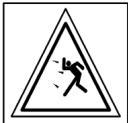  | Danger: Beware of thrown objects. |
| The distance between the tool and nearby bystanders must be at least 15 m.Keep bystanders away. | |
 | Wear eye, hearing and head protection. |
 | Wear protective gloves. |
 | Wear safety footwear. |
 | Do not expose to rain. |
 | Do not use metal wheels. |
Electrical and battery safety
- Avoid hazardous environments. Do not use the tool in humid or rainy environments. Operating a wet tool increases the risk of electric shock.
- Use only the charger specified by the manufacturer for charging. Using a charger suitable for one type of battery pack with another type of battery pack may cause a fire.
- Power tools may only use specially designated battery
packs.
- Using other types of battery packs may cause personal injury or fire. Keep the battery away from paper clips, coins, keys, nails, screws, or other small metal objects when not in use. These objects can cause a short circuit in the battery terminals, which may lead to combustion or fire.
- When used excessively, liquid may leak from the battery. Avoid contact. If you are accidentally exposed to battery leakage, rinse the affected part with water immediately. If the liquid comes into contact with eyes, seek medical assistance. Battery leakage may cause allergies, inflammation or burns.
- Do not dispose of the battery in fire. Otherwise, the battery may explode.
- Do not open or disassemble the battery. The leaked liquid is corrosive and may cause damage to eyes or injury.
- Do not charge in rainy or humid environments.
Operation method
- Do not use the tool if the protective guard is damaged or not properly installed.
- Use the tool only in environments with good lighting and visibility. In winter, watch out for slippery or wet areas, as well as ice and snow (danger of slipping). Keep your feet firmly on the ground.
- Be careful when using the tool, the cutting head may injure your feet and hands.
- Always keep hands and feet away from cutting parts, especially after starting the tool.
- Do not cut above waist height.
- Do not climb on a ladder to operate the tool.
-
Do not work on unstable surfaces.
-
Do not overstretch yourself. When using the tool, stand firmly on both feet and always keep your balance.
- Remove sand, gravel, nails, etc., within the working range. These foreign objects can damage the tool and be projected, causing serious personal injury.
- If the blades hit a stone or other hard object, switched off the tool immediately and check it for damage.
- Before starting to cut, the tool must reach its full speed.
- When using the tool, be sure to hold it with both hands. Do not hold it with only one hand during use. Be sure to keep a firm grip on the tool.
- During operation, all protective equipment attached to the tool must be used, such as the protective guard.
- Except in emergency situations, do not throw or drop the tool on the ground, otherwise you may seriously damage it.
- Do not drag the tool on the ground when moving it, as this may damage it.
- Be sure to remove the battery from the tool when not in use, when checking, cleaning or disposing of it, before making any adjustments, replacing accessories or storing it or when it starts to vibrate abnormally.
- Do not misuse the tool. Using the tool at the designed rated power can complete the job better and reduce the risk of damage.
- Do not operate power tools in explosive environments, such as in the presence of flammable liquids, gases or dust. Power tools create sparks that can ignite dust or fumes.
- Do not forget to rest during operation to avoid losing control of the tool due to fatigue. It is recommended to take a 10-to-20-minute break every hour.
-
Do not use the tool on steep slopes.
-
During operation, be sure to use the shoulder strap provided with the tool (if available).
Important safety precautions for battery packs
- Before using the battery, please carefully read all instructions about (1) the charger, (2) the battery, and (3) the warning labels on the product.
- Do not disassemble the battery.
- If the operating time of the tool becomes too short, stop using it immediately. Otherwise, it may cause overheating, fire and even explosion.
- If the battery liquid gets into your eyes, rinse thoroughly with water and seek medical assistance immediately. Otherwise, it may cause visual impairment.
- Do not short-circuit the battery pack: (1) Do not touch the battery terminals with any conductive material. (2) Avoid placing the battery pack in the same storage box with other metal objects such as nails, coins, etc. (3) Do not immerse the battery pack in water or let it get wet in the rain. Short-circuiting the battery will generate a large current, which will cause overheating and may lead to fire or even breakdown.
- Do not place the tool and battery in areas where the temperature may reach or exceed 50\ °C .
- Do not burn the battery, even if it is severely damaged or completely worn out. The battery will explode in the fire.
- Be careful not to hit or drop the battery.
- Do not use damaged batteries.
- Lithium-ion batteries provided with this tool must comply with the requirements of hazardous goods laws and regulations. When third parties or shipping agencies transport batteries, they must follow special packaging and
labelling requirements. Make sure the batteries comply with the specific national regulations. Use tape to protect the contact information and make sure to not cover it. Wrap the battery tightly so that it does not move in the package.
- To find out how to dispose of discarded batteries, follow local regulations.
This appliance is designed for domestic use only and is not intended for bars, restaurants, farmhouses, hotels, motels, and offices.
If the power cord is damaged, it must be replaced by the official Cecotec Technical Support Service.
WARNING: to recharge the battery, only use the removable power supply unit provided with the tool, with reference HFM04.
CONSIGNES GÉNÉRALES DE SÉCURITÉ POUR LES APPAREILS ÉLECTRIQUES
Important
LISEZ ATTENTIVEMENT AVANT UTILISATION
CONSERVEZ CE MANUEL POUR DE FUTURES RÉFÉRENCES
ALGEMENE VEILIGHEIDSWAARSCHUWINGEN VOOR ELEK-TRISCHE MACHINES
BELANGRIJK
ZORGVULDIG LEZEN VOOR GEBRUIK
BEWAREN VOOR TOEKOMSTIG GEBRUIK
- Battery
- Power switch
- Adjustable telescopic tube
- Protective guard
- Safety lock
NOTE:
The graphics in this manual are schematic representations and may not exactly match the product.
2. BEFORE USE
- This appliance is packaged in a way as to protect it during transport. Take the appliance out of its box and remove all packaging materials. You can keep the original box and other packaging elements in a safe place to prevent damage to the appliance if you need to transport it in the future. In case the original packaging is disposed of, make sure all packaging materials are recycled accordingly.
- Make sure all parts and components are included and in good conditions. If there is any piece missing or in bad conditions, contact the official Cecotec Technical Support Service immediately.
- Box content
- Brushcutter with protective guard and handle
- Cutting wire head x2
- Cutting wire spare parts
- Plastic blade x10
- Metal blade x6
- Cut-off wheel x3
- Battery x2
- Charger
- Safety glasses
- Instruction manual
Do not remove the serial number of the appliance in order to keep a correct traceability of it in case of assistance.
3. INSTALLATION
- Press the release button down to adjust the length of the telescopic tube. Fig. 2
- Install the protective guard. Fig. 3
- Adjusting the head angle. The brushcutter has a swivel head that allows the cutting angle to be adjusted. To do so, simply press the safety lock and move the head to the desired position. Fig. 4
- Installing the cut-off wheel or blade. Place the cut-off wheel on the spindle in the centre of the brushcutter. Then place the retaining washer, guard and lock nut on top in this order. To secure the nut and prevent the wheel from moving, insert a spanner into the locking opening to lock the spindle. Finally, tighten the nut using a spanner until the cutting wheel is securely in place. Fig. 5
4. OPERATION
Lawn trimming and weed cutting
Hold the brushcutter at an angle of about 50° from the ground. Move the tool slowly from right to left. Pass the cut-off wheel or cutting wire several times at ground level without lifting the brushcutter.
Note:
- Start cutting grass or weeds from the top down, never from the root. Otherwise, the cutting wire head or the plastic blade may jam.
- Do not allow the tool to touch the ground directly. Contact of the cutting wire head or plastic blade with the ground may overload the motor and eventually damage the brushcutter. Fig. 6
Note: Do not force its use in overgrown lawns or where the grass is too dense. Fig. 7
Note: Do not allow the tool to dig into the ground, as this could damage its components. Fig. 8
Edge trimming and cutting areas around rocks, trees or walls
Hold the brushcutter at a suitable height and tilt the cutting head slightly. Use the cutting wire head or a plastic blade to trim the edges. This way, you will avoid hitting stones, trees, walls, etc. Fig. 9
5. CLEANING AND MAINTENANCE
- Check the condition of the cut-off wheel or wire before using the tool. Do not forget to put on the harness and the appropriate personal protective equipment (gloves, safety
goggles, etc.).
- Before carrying out any maintenance, cleaning or replacing the cutting accessories, switch off the brushcutter and remove the battery.
- After each use, remove the battery and check the cutting accessory for wear.
- Make sure that the safety washer is tightened securely and that the brushcutter components are not damaged (cracks, bumps, deformations, etc.).
- When the brushcutter is not in use, store it in a dry, indoor area out of the reach of children.
- Only use spare parts and accessories supplied by Cecotec.
- Make sure that no dirt accumulates in the ventilation openings of the motor.
- In case of repair, please contact the official Cecotec Technical Support Service.
- Clean the brushcutter regularly to remove oil residues, dirt and other materials such as soil, grass or dust.
6. TECHNICAL SPECIFICATIONS
Product reference: EU01_117772
Product: FastCut 4000 Freemove
Motor power: 650 W
Speed: 9700 rpm
Battery: 21 V, 4000mAh, 48Wh
Charger model: HFM04
Rated charger input/Input: 220-240 V, 50-60 Hz, 15 W
Rated charger output/Output: 21 V, 0.6 A
Use the tool only with the battery supplied by Cecotec.
Weighting sound pressure level: LpA = 74 dB (A)
K _ pA = 0. 7 4 dB(A)
Weighting sound power level: LWA = 75 dB (A)
K _ WA = 2. 8 4 dB(A)
Typical vibration frequency: ah=2.5\ m/s2
Uncertainty: K = 0.1 m/s2
- The declared overall vibration value has been measured according to a standard test method and can be used to compare one tool with another.
- The declared overall vibration value can also be used in a preliminary exposure assessment.
Warning:
- The vibration emission during actual use of the power tool may differ from the declared overall value depending on how the tool is used.
Technical specifications may change without prior notification to improve product quality. Made in China | Designed in Spain
7. DISPOSAL OF OLD ELECTRICAL AND ELECTRONIC APPLIANCES
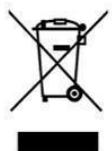
This symbol indicates that, according to the applicable regulations, the appliance and/or batteries must be disposed of separately from household waste. When this product reaches the end of its shelf life, you should dispose of the cells/batteries/accumulators and take them to a collection point designated by the local authorities.
Consumers must contact their local authorities or retailer for information concerning the correct disposal of old appliances and/or their batteries.
Compliance with the above guidelines will help protecting the environment.
8. TECHNICAL SUPPORT AND WARRANTY
Cecotec shall be liable to the end user or consumer for any lack of conformity that exists at the time of delivery of the product under the terms, conditions and deadlines established by the applicable regulations.
Repairs should be carried out by qualified personnel.
If at any moment you detect any problem with your product or have any doubt, do not hesitate to contact the official Cecotec Technical Support Service at +34 96 321 07 28.
9. COPYRIGHT
The intellectual property rights over the texts in this manual belong to CECOTEC INNOVACIONES, S.L. All rights reserved. The contents of this publication may not, in whole or in part, be reproduced, stored in a retrieval system, transmitted, or distributed by any means (electronic, mechanical, photocopying, recording or similar) without the prior authorization of CECOTEC INNOVACIONES, S.L.
10. DECLARATION OF CONFORMITY
MANUFACTURER: CECOTEC INNOVACIONES S.L
ADDRESS: Av. Reyes Católicos, 60, 46910, Alfafar, Valencia (Spain)
DESCRIPTION: Brushcutter
PRODUCT IDENTIFICATION: FastCut 4000 Freemove
FUNCTION: Battery-powered brushcutter
MODEL: EU01_117772
It certifies the appliance described has been designed, manufactured and tested and complies with all applicable provisions.
EU DIRECTIVES IMPLEMENTED:
- Directive 2006/42/CE on machinery.
- Directive 2014/30/EU on the harmonisation of the laws of the Member States relating to electromagnetic compatibility.
- Directive 2011/65/EU and delegated directive (EU) 2015/863 on the restriction of the use of certain hazardous substances in electrical and electronic equipment.
APPLICABLE HARMONISED NORMS:
- EN 60335-1:2012 +A11:2014+A13:2017 +A14:2019 +A1:2019 +A2:2019 +A15:2021
- EN 62841-1:2015 +A11:2022
- EN ISO 11806-1:2022
- EN 50636-2-91:2014
- EN IEC 55014-1:2021
- EN IEC 55014-2:2021
- IEC 62321-1:2013; EN IEC 62321-2:2021; IEC 62321-3-1:2013; IEC 62321-4:2013+A1:2017; IEC 62321-5:2013; IEC 62321-6:2015; IEC 62321-7-1:2015; IEC 62321-7-2:2017; IEC 62321-8:2017.
1. PIÈCES ET COMPOSANTS
Image 1
Product: FastCut 4000 Freemove
Motorvermogen: 650W
Snelheid: 9700 rpm
Accu: 21V/4000mAh, 48Wh
Model oplader: HFM04
Nominale lader ingang/Input: 230V 50/60Hz 15W
Akumulator: 21 V / 4000mAh, 48Wh

∴ m = 3/11
Fig./Img./Abb./Afb./Rys./Obr.1
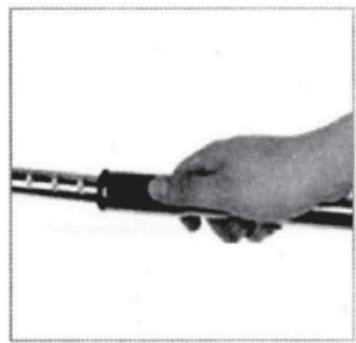
Fig./Img./Abb./Afb./Rys./Obr. 2

Fig./Img./Abb./Afb./Rys./Obr. 3

Fig./Img./Abb./Afb./Rys./Obr. 4

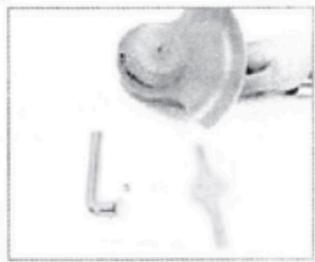

Fig./Img./Abb./Afb./Rys./Obr. 5

Fig./Img./Abb./Afb./Rys./Obr. 6

Fig./Img./Abb./Afb./Rys./Obr. 7
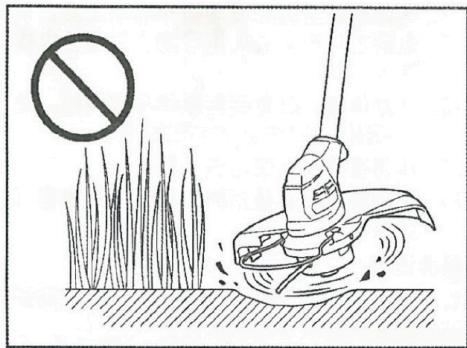
Fig./Img./Abb./Afb./Rys./Obr. 8

Fig./Img./Abb./Afb./Rys./Obr. 9
www.cecotec.es
- SOMMAIRE
- ELECTRICAL AND BATTERY SAFETY
- OPERATION METHOD
- IMPORTANT SAFETY PRECAUTIONS FOR BATTERY PACKS
- CONSIGNES GÉNÉRALES DE SÉCURITÉ POUR LES APPAREILS ÉLECTRIQUES
- ALGEMENE VEILIGHEIDSWAARSCHUWINGEN VOOR ELEK-TRISCHE MACHINES
- NOTE
- BEFORE USE
- INSTALLATION
- OPERATION
- LAWN TRIMMING AND WEED CUTTING
- EDGE TRIMMING AND CUTTING AREAS AROUND ROCKS, TREES OR WALLS
- CLEANING AND MAINTENANCE
- TECHNICAL SPECIFICATIONS
- DISPOSAL OF OLD ELECTRICAL AND ELECTRONIC APPLIANCES
- TECHNICAL SUPPORT AND WARRANTY
- COPYRIGHT
- DECLARATION OF CONFORMITY
- EU DIRECTIVES IMPLEMENTED
- APPLICABLE HARMONISED NORMS
- PIÈCES ET COMPOSANTS
Brand : CECOTEC
Model : Fastcut 4000 Freemove
Category : Washing machine