80-30103 - Telescope National Geographic - Free user manual and instructions
Find the device manual for free 80-30103 National Geographic in PDF.


Pick your language and provide your email: we'll send you a specifically translated version.
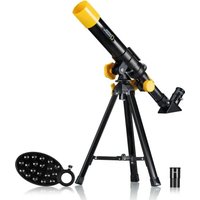
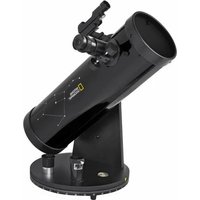
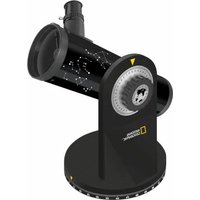
| Product Type | Refractor Telescope |
| Model Number | 80-30103 |
| Brand | National Geographic |
| Aperture | 80 mm (3.15 in) |
| Focal Length | 900 mm |
| Focal Ratio | f/11.25 |
| Magnification (with included eyepieces) | 36x (25mm eyepiece), 90x (10mm eyepiece) |
| Mount Type | Altazimuth |
| Tripod | Aluminum, adjustable height |
| Finderscope | 5x24 optical finderscope |
| Eyepieces Included | 25mm and 10mm |
| Barlow Lens | 2x Barlow lens |
| Star Diagonal | 90° correct image diagonal |
| Maximum Useful Magnification | 160x |
| Dimensions (telescope tube only) | Approx. 90 cm length x 8 cm diameter |
| Weight (telescope and tripod) | Approx. 5.5 kg |
| Power Source | None (manual operation) |
| Cleaning Instructions | Use a soft cloth and lens cleaning solution; avoid touching optics |
| Safety Warnings | Never point at the sun without solar filter; risk of permanent eye damage |
| Spare Parts Available | Eyepieces, finderscope, tripod, diagonal |
| Warranty | Limited manufacturer warranty (check manual for details) |
Frequently Asked Questions - 80-30103 National Geographic
How do I assemble the telescope?
Attach the tripod legs, mount the telescope tube, install the finderscope, and insert the eyepiece. Refer to the manual for detailed steps.
What can I see with this telescope?
You can observe the Moon, planets like Jupiter and Saturn, star clusters, and bright deep-sky objects. For terrestrial viewing, use the diagonal for an upright image.
How do I clean the lens?
Use a soft brush to remove dust, then a microfiber cloth with lens cleaning solution. Gently wipe in a circular motion from the center outward.
Why is the image blurry?
Check focus by turning the focus knob. Also ensure the telescope is properly collimated (aligned). If not, adjust the collimation screws on the lens cell.
Can I use this telescope for solar observation?
Only with a proper solar filter that covers the front aperture. Never look directly at the sun without it, as it can cause permanent eye damage.
What is the maximum magnification?
The maximum useful magnification is about 160x, but image quality degrades at high power due to atmospheric conditions. Use lower power for better views.
How do I align the finderscope?
During daytime, point the telescope at a distant object. Look through the finderscope and adjust its alignment screws until the crosshairs match the telescope's view.
What does the Barlow lens do?
A Barlow lens doubles the magnification of any eyepiece. For example, a 25mm eyepiece becomes 12.5mm, doubling the magnification.
Is the telescope suitable for astrophotography?
Yes, for basic lunar and planetary photography using a smartphone adapter. Long-exposure deep-sky imaging requires a tracking mount, which is not included.
Where can I find spare parts or accessories?
Contact National Geographic customer support or visit their website. Common accessories like eyepieces and filters are widely available online.
User questions about 80-30103 National Geographic
0 question about this device. Answer the ones you know or ask your own.
Ask a new question about this device
No questions yet. Be the first to ask one.
Download the instructions for your Telescope in PDF format for free! Find your manual 80-30103 - National Geographic and take your electronic device back in hand. On this page are published all the documents necessary for the use of your device. 80-30103 by National Geographic.
USER MANUAL 80-30103 National Geographic


Manual assistant
Powered by Anthropic
Waiting for your message
Product information
Brand : National Geographic
Model : 80-30103
Category : Telescope