
TCM80C 6P - Tumble drier HOTPOINT - Free user manual and instructions
Find the device manual for free TCM80C 6P HOTPOINT in PDF.



| Brand | HOTPOINT |
| Model | TCM80C 6P |
| Product type | Condenser tumble dryer |
| Load capacity (cotton) | 8 kg |
| Energy efficiency class | C |
| Annual energy consumption | 627.7 kWh |
| Condensation efficiency class | C |
| Noise level | 69 dB(A) |
| Programs | Cotton, Synthetics, Delicates, Cold drying |
| Temperature setting | Yes (high/low) |
| Timer | Yes (adjustable) |
| Lint filter | Clean after each cycle |
| Water tank | Empty after each cycle |
| Condenser cleaning | Monthly |
| Dimensions (H x W x D) - estimated | Approximately 85 x 60 x 60 cm |
| Power supply | 220-240 V, 50 Hz |
| Installation type | Freestanding |
| Cooling function | Yes (final phase) |
| Water empty indicator | Yes |
| Drum material | Stainless steel |
Frequently Asked Questions - TCM80C 6P HOTPOINT
User questions about TCM80C 6P HOTPOINT
0 question about this device. Answer the ones you know or ask your own.
Ask a new question about this device
Download the instructions for your Tumble drier in PDF format for free! Find your manual TCM80C 6P - HOTPOINT and take your electronic device back in hand. On this page are published all the documents necessary for the use of your device. TCM80C 6P by HOTPOINT.
USER MANUAL TCM80C 6P HOTPOINT
Where to put your dryer
Ventilation
Water drain
Electrical connection
Before you start using your dryer
Dryer description, 5
The features
Control panel
Start and programmes, 6
Choosing a programme
Laundry, 7-8
Sorting your laundry
Wash care labels
Special clothing items
Drying times
Warnings and Suggestions, 9
General safety
Saving energy and respecting the environment
Maintenance and Care, 10
Switching off the electricity
Cleaning the filter after each cycle
Empty the water container after each cycle
Check the drum after each cycle
Cleaning the condenser unit
Cleaning the dryer
Troubleshooting, 11
Service, 12
Disposal
! Keep this instruction booklet on hand in order to refer to it when necessary. Take it with you when you move, and should you sell this appliance or pass it on to another party, make sure that this booklet is supplied along with the dryer so that the new owner may be informed about warnings and suggestions on how the appliance works.
! Read these instructions carefully; the following pages contain important information on installation and suggestions on how the appliance works.

This symbol reminds you to read this booklet.

ARISTON
GB
For your Condenser dryer to operate efficiently, you must follow the regular maintenance schedule shown below:
Fluff Filter...
! You MUST clean the fluff filter after EVERY drying cycle.
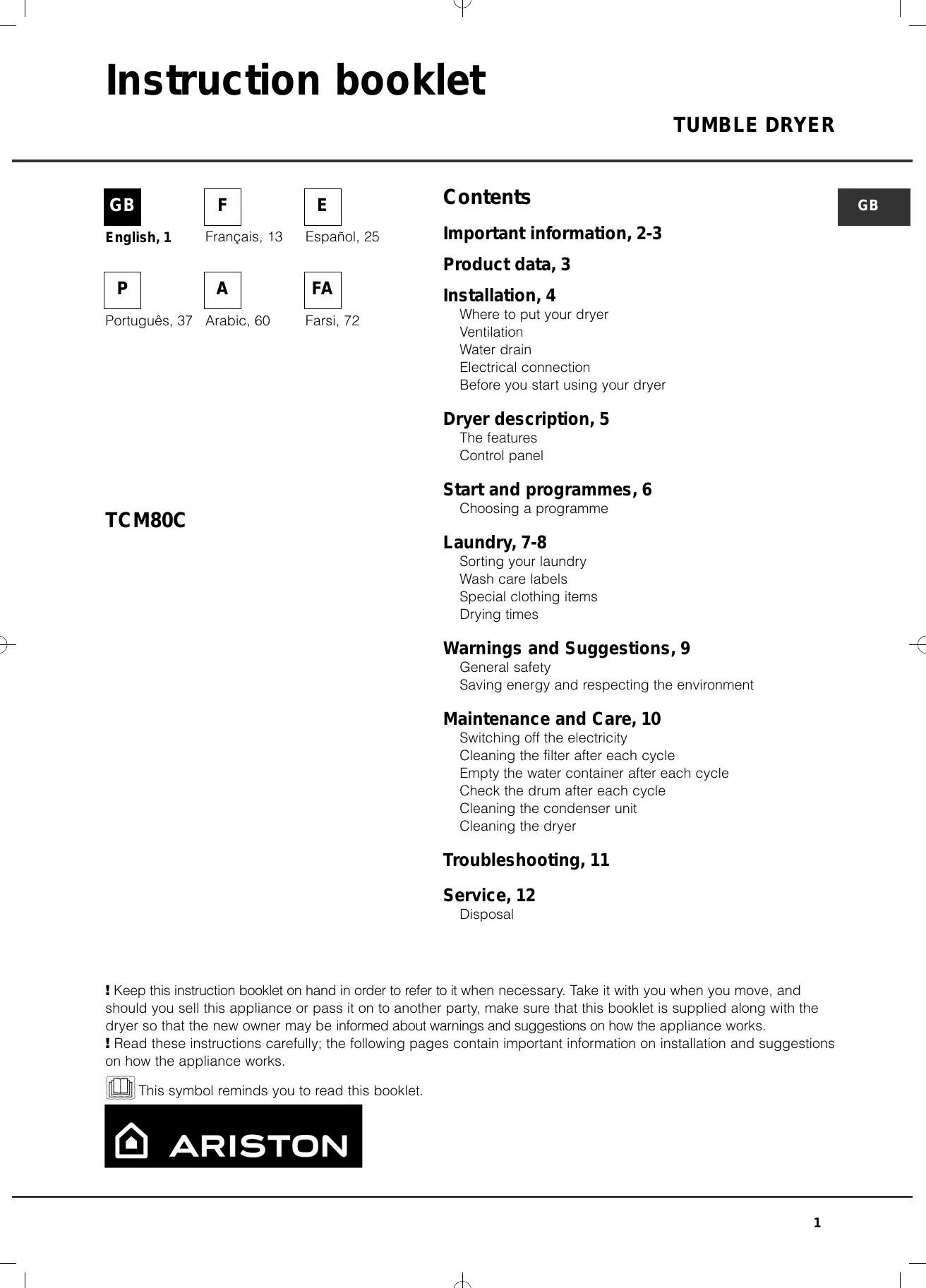
STEP1.
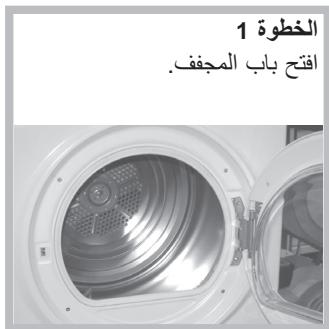
Open the door of your dryer.
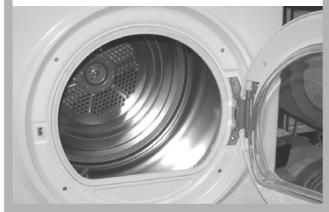
STEP 2.
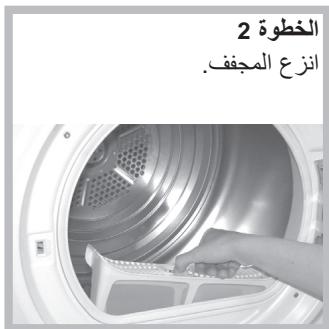
Remove the filter.
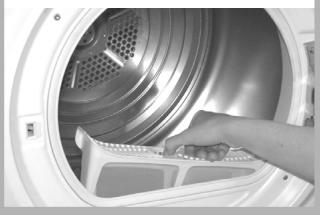
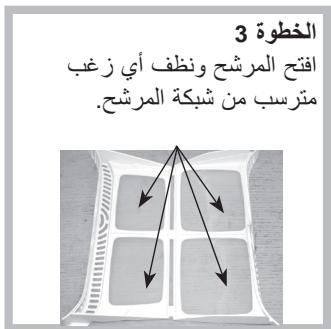
STEP 3.
Open the filter and clean any fluff deposits from the filter mesh.
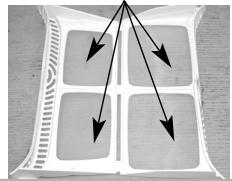
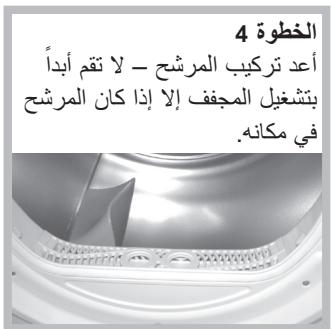
STEP 4.
Refit the filter - NEVER run the dryer without the filter in position.
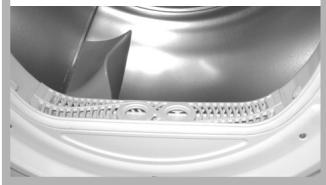
! Failure to clean the filter after EVERY drying cycle will affect the drying performance of your machine.
- It will take longer to dry and as a result will use more electricity during drying.
Water Container...
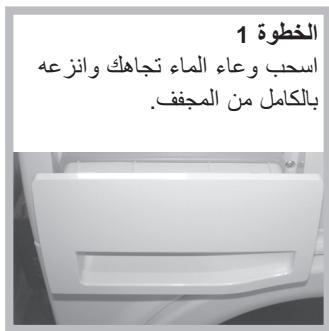
! You MUST empty the water container after EVERY drying cycle.
STEP 1.
Pull the water container towards you and remove it fully from the dryer.

STEP 2.
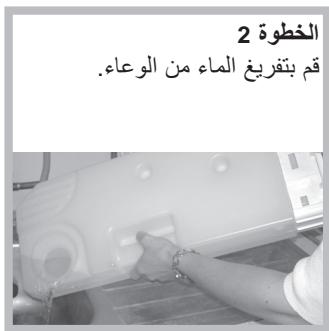
Empty the water from the container.
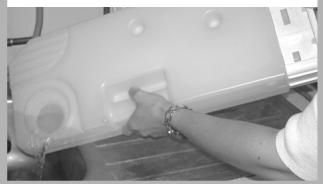
STEP 3.
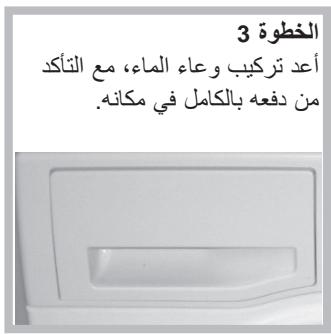
Refit the water container, ensuring that it is pushed fully back into position.
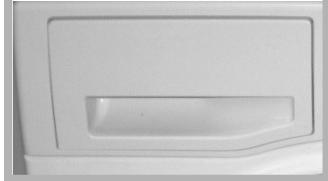
! Failure to empty the water container will result in:
- The machine will stop heating (so the load may still be wet at the end of the drying cycle).
- The 'Empty Water' light will tell you that the water container is full.
Priming the Water Collection System
When your dryer is new, the water container will not collect water until the system is primed... this will take 1 or 2 drying cycles. Once primed it will collect water during every drying cycle.
Condenser Unit...
! You MUST clean the fluff from the condenser EVERY month.
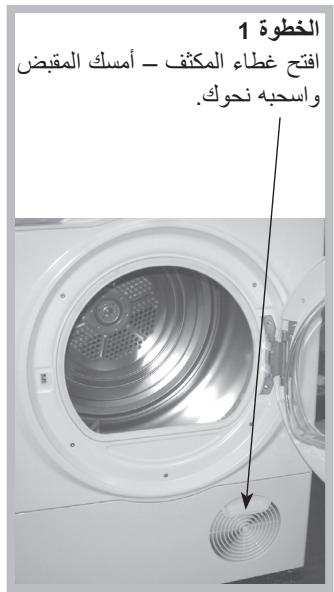
STEP 1.
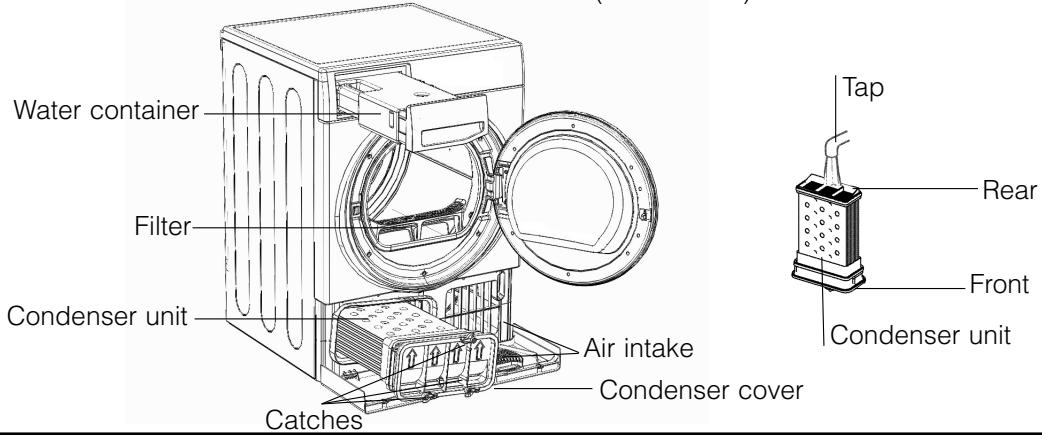
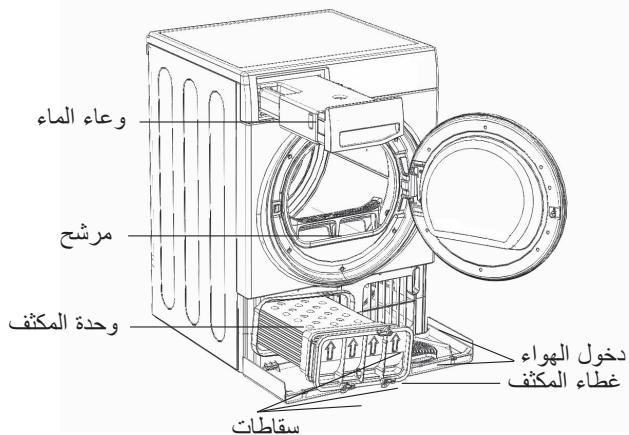
Open the condenser cover - hold the handle and pull towards you.
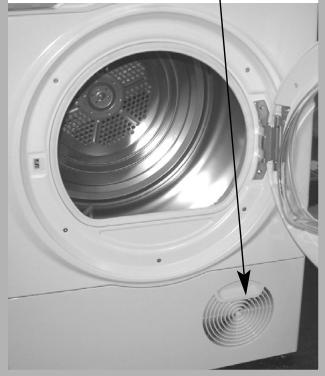
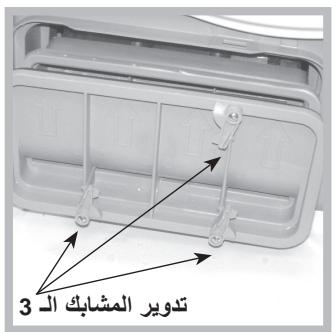
STEP 2.
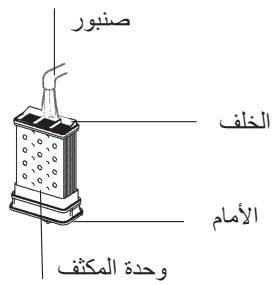
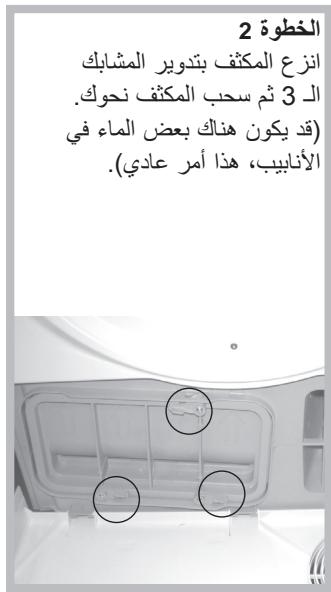
Remove the condenser by rotating the 3 clips then pulling the condenser towards you.
(There may be some water in the tubes, this is normal).
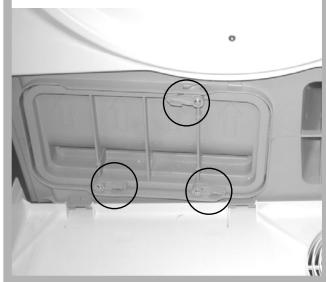
STEP 3.
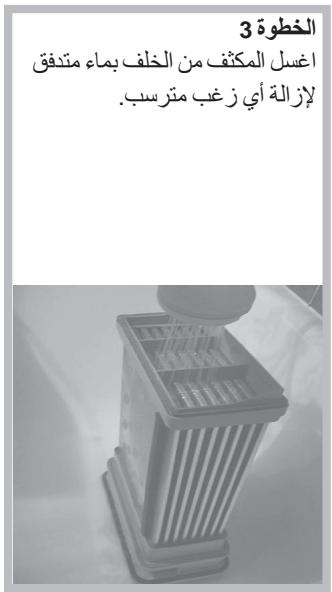
Flush the condenser, from the rear with water, to remove any fluff deposits.
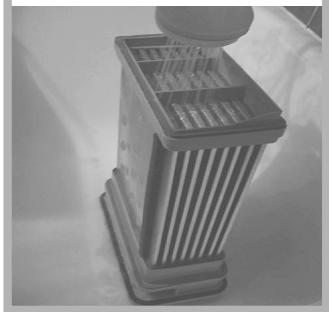
STEP 4.
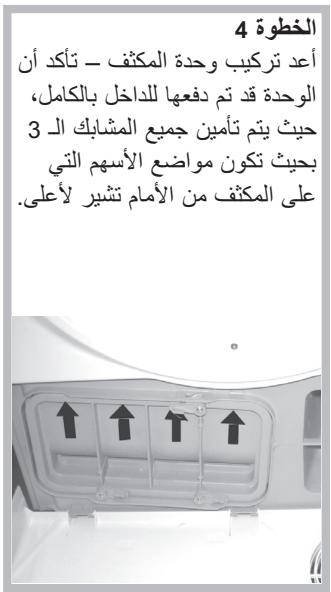
Refit the condenser unit - ensure that the unit is pushed in fully, all 3 clips are re-secured and the position arrows on the front of the condenser are pointing upwards.
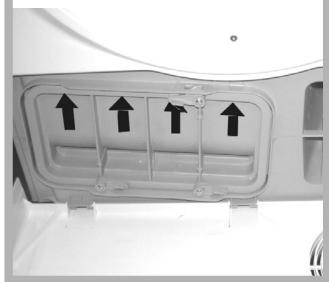
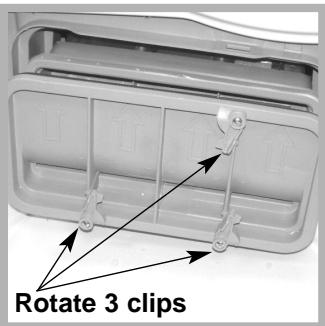
-
Check that:
-
The positioning arrows are pointing upwards.
- The 3 clips are re-secured back into their 'lock' position.
! Failure to clean the condenser could cause premature failure of your dryer.
Product Data... (EU Regulation 392/2012)
| Rated capacity of Cotton laundry for the standard programme at full load 8 kg | Energy efficiency class C |
| The weighted Annual Energy Consumption (AEc) 627.7 kWh Consumption per year, based on 160 drying cycles of the standard cotton programme at full and partial load, and the consumption of the low-power modes. Actual energy consumption per cycle will depend on how the appliance is used. | |
| This household tumble dryer is a Non-Automatic Condenser Dryer | |
| Energy consumption: full load Edry 5.26 kWh, partial load Edry1/2 2.91 kWh | |
| Power consumption: off-mode (Po) 0.06 W | |
| The 'standard cotton programme' suitable for drying normal wet cotton laundry that is the most efficient programme in terms of energy consumption for cotton used at full and partial load is High Heat | |
| Programme time (minutes): weighted (Tt) full & partial load 115, full load (Tdry) 150, partial load (Tdry1/2) 88 | |
| Condensation efficiency class C | |
| Average condensation efficiency (%): full load (Cdry) 73, partial load (Cdry1/2) 74, weighted (Ct) full & partial load 74 | |
| Airborne acoustical noise emissions 69 dB(A) re 1 pW | |
This data is also available on the website http://www.hotpoint-ariston.com/ha/
GB
Where to put your dryer
- Place your dryer at a distance from gas ranges, stoves, heaters, or cook tops because flames can damage the appliance.
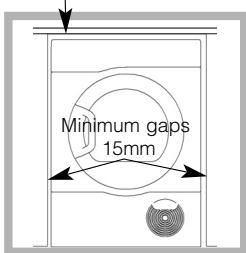
Minimum gap 10mm
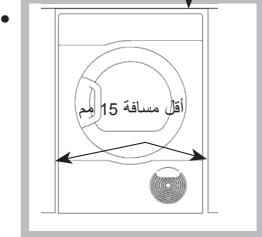
- If you are going to install the appliance under a work counter, be sure to leave a 10mm space between the top and any other objects on or above the machine and a 15mm space between the sides and lateral furnishings or walls.
This is to ensure proper air circulation.
Ventilation
When the dryer is in use, there has to be adequate ventilation. Make sure you put your dryer in an environment that is not damp and has proper air circulation throughout. Airflow around the dryer is essential to condense the water produced during the washing, the dryer will not operate efficiently in an enclosed space or cupboard.
! If using the dryer in a small or cold room some condensation could be experienced.
! We do not recommend that the dryer is installed in a cupboard but the dryer must never be installed behind a lockable door, a sliding door or a door with a hinge on the opposite side to that of the dryer door.
Water drain
If your dryer is installed next to a drain the water can be plumbed into this drain. This does away with the need to empty the water container. If the dryer is stacked onto or installed next to a washing machine it can share the same drain. The height of the drain must be less than 3^ (1m) from the bottom of the dryer.
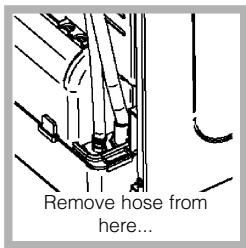
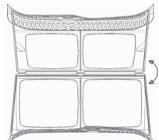
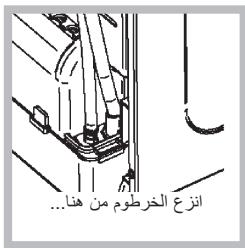
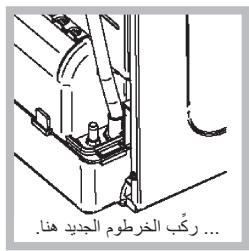
Remove hose from position shown (see diagram).
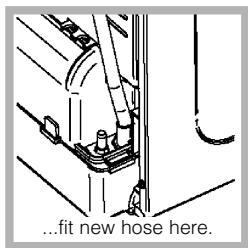
Fit a suitable length of hose to the new location shown (see diagram).
! Make sure that the hose is not squashed or kinked when the dryer is in its final location.
Electrical connections
Make sure of the following before you insert the plug into the the electrical socket:
- The socket must be grounded.
- The socket must be able to sustain the machines maximum power, which is indicated on the rating label (see Dryer Description).
- Power voltage must be within the values indicated on the rating label (see Dryer Description).
- The socket must be compatible with the dryers plug. Should this not be the case, replace the plug or the socket.
! The dryer must not be installed outdoors, even if the space is sheltered. It can be very dangerous if it is exposed to rain or storms.
! Once installed, the dryers electrical wire and plug must be within easy reach.
! Do not use extension cords.
! The power cord must not be bent or squashed.
The power supply cord should be checked periodically and replaced by a cord specially prepared for this dryer and fitted only by authorised technicians (see Service). New or longer power cords are supplied at an extra charge by authorised dealers.
The manufacturer denies any responsibility should any of these rules not be followed.
If in doubt about any of the above consult a qualified electrician.
Before you start using your dryer
Once you have installed your dryer and before you use it, clean the inside of the drum to remove any dust that could have accumulated during transport.
The features
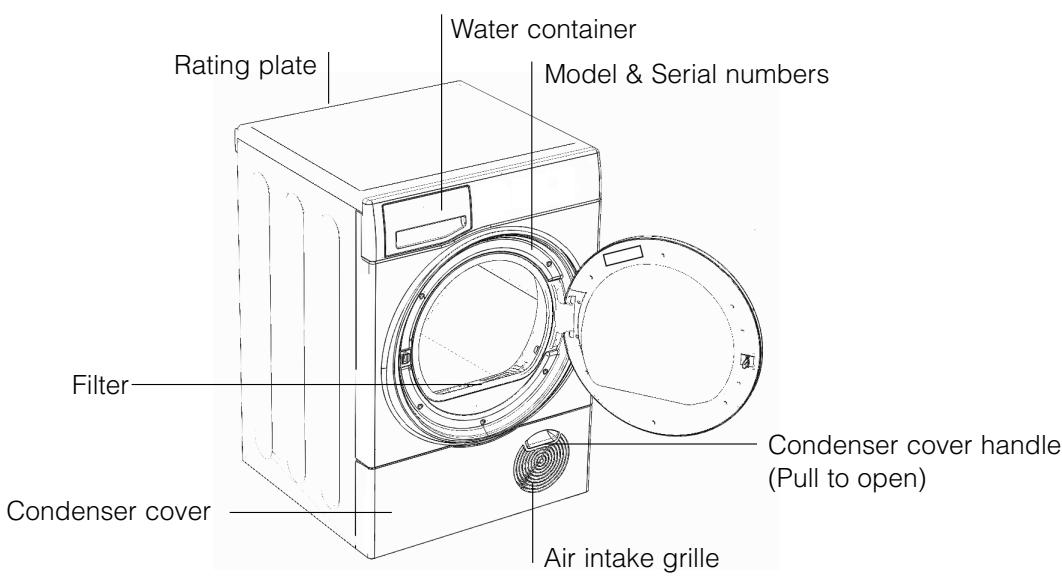
Control panel
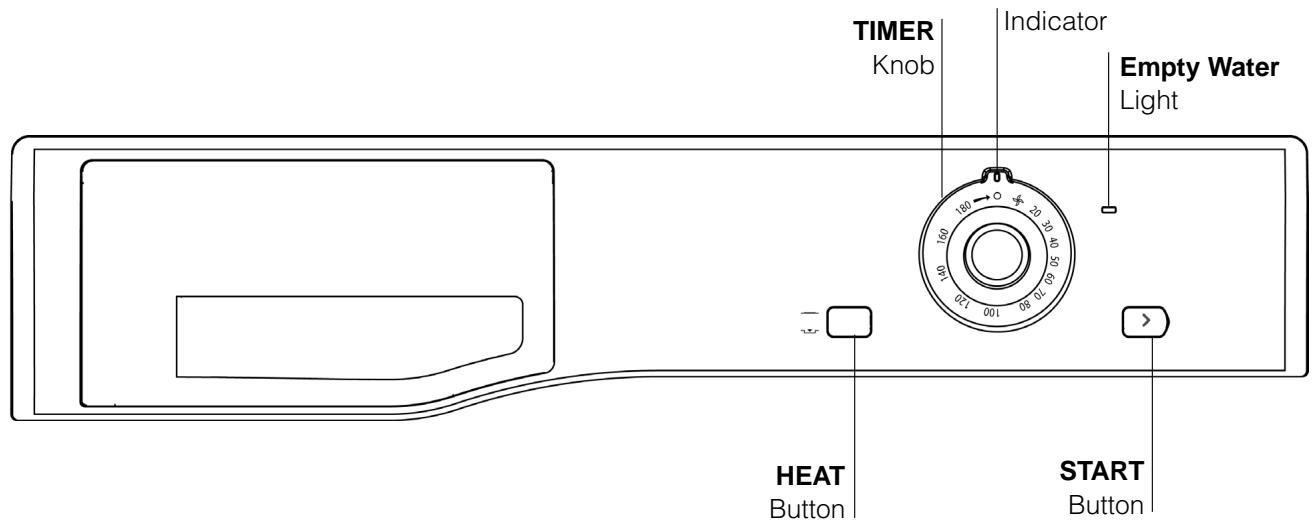
The START button begins drying a selected programme (see Start and Programmes).
The HEAT button selects drying temperature (see Start and Programmes).
OUT: LOW heat

IN: HIGH heat

The Empty Water indicator light signals that the water container is full and must be emptied. The light will take a few seconds to go out after replacing the empty water container, the dryer must be running for this to happen.
Note: If the water container fills the indicator lights, the heat is turned off and your laundry will not dry.
The TIMER knob sets a drying time.
Rotate it clockwise, never counter-clockwise, until the indicator is pointing to the drying time you want to select (see Start and Programmes).
Choosing a programme
- Plug the dryer into the electrical socket.
- Sort your laundry according to fabric type (see Laundry).
- Open the door make sure the filter is clean and in place and the water container is empty and in place (see Maintenance).
- Load the machine and make sure items are not in the way of the door seal. Close the door.
-
Choose the drying time by checking the Drying Guide table for the type of fabric you are drying (see Laundry).
-
Set the temperature with the HEAT button.
-
Select a drying time by rotating the TIMER knob clockwise*.
-
Press the START button to begin.
During the drying programme, you can check on your laundry and take out items that are dry while others continue drying. When you close the door again, press the START button in order to resume drying. - About 10 minutes before the programme is completed, it enters the final COOL TUME phase (fabrics are cooled), which should always be allowed to complete.
- Open the door, take the laundry out, clean the filter and replace it. Empty the water container and replace it (see Maintenance).
- Unplug the dryer.
Note: The COOL TUMBLE programme can be used to refresh fibres of clothing.
- Set the TIMER with the cool tumble symbol inline with the indicator at Step 5 above* if you need this feature.
Sorting your laundry
- Check symbols on clothing labels to make sure that the articles can be tumble dried.
- Sort laundry by fabric type.
- Empty pockets and check buttons.
- Close zippers and hooks and tie loose belts and strings.
- Wring out each item in order to eliminate as much excess water as possible.
! Do not load dripping wet clothes into the dryer.
Maximum load size
Do not load more than maximum capacity.
These numbers refer to dry weight:
Natural fibres: 8kg max (18lb)
Synthetic fibres: 3kg max (6.6lb)
! DO NOT overload the dryer as this could result in reduced drying performance.
Typical weights
Note: 1 kg = 1000 g (1lb = 16oz)
| Clothes | |||
| Blouse | Cotton | 150g | (5oz) |
| Other | 100g | (3oz) | |
| Dress | Cotton | 500g | (1lb 2oz) |
| Other | 350g | (12oz) | |
| Jeans | 700g | (1lb 6oz) | |
| 10 nappies | 1000g | (2lb 3oz) | |
| Shirt | Cotton | 300g | (10oz) |
| Other | 200g | (7oz) | |
| T-Shirt | 125g | (4oz) | |
| Household Items | |||
| Duvet cover | Cotton | 1500g | (3lb 5oz) |
| (Double) | Other | 1000g | (2lb 3oz) |
| Large Tablecloth | 700g | (1lb 6oz) | |
| Small Tablecloth | 250g | (9oz) | |
| Tea Towel | 100g | (3oz) | |
| Bath Towel | 700g | (1lb 6oz) | |
| Hand Towel | 350g | (12oz) | |
| Double Sheet | 500g | (1lb 2oz) | |
| Single Sheet | 350g | (12oz) | |
At the end of a drying cycle, cottons could still be damp if you grouped cottons and synthetics together. If this happens simply give them an additional short period of drying.
- Note: The last 10 minutes of any time set is the Cool Tumble, so allow for this when setting the time, as this period will not dry your laundry.
Wash Care Labels
Look at the labels on your garments, especially when tumble drying for the first time. The following symbols are the most common:

May be tumble dried

Do not tumble dry

Tumble dry at high heat setting

Tumble dry at low heat setting
Items not suitable for tumble drying
- Articles that containing rubber or rubber-like materials or plastic film (pillows, cushions, or PVC rainwear), any other flammable articles or objects that contain flammable substances (towels soiled with hair spray).
Glass fibres (certain types of draperies) - Items which have been dry cleaned
- Items with the ITCL Code (see Special clothing items). These can be cleaned with special at-home dry cleaning products. Follow instructions carefully.
- Large bulky items (quilts, sleeping bags, pillows, cushions, large bedspreads etc). These expand when drying and would prevent airflow through the dryer.
Special clothing items
Blankets and Bedspreads: acrylic items (Acilan, Courtelle, Orion, Dralon) must be dried with special care on LOW heat setting. Avoid drying for a long period of time.
Pleated or creased garments: read the manufacturer's drying instructions on the garment.
Starched articles: do not dry these with non-starched items. Make sure that as much of the starch solution is removed from the load as possible before placing it in the dryer. Do not over-dry: the starch will become powdery and leave your clothing limp, which defeats the purpose of starch.
Drying times
The table (see below) presents APPROXIMATE drying times in Minutes. Weights refer to dry garments.
Times are approximate and can vary depending upon:
-
Amount of water retained in clothes after spin cycle: towels and delicates retain a lot of water.
-
Fabrics: items that are the same type of fabric but different textures and thicknesses may not have the same drying time.
- Quantity of laundry: single items or small loads may take longer to dry.
- Dryness: If you are going to iron some of your clothes, they can be taken out while still a bit damp. Others can be left longer if you need them to be completely dry.
- Heat setting.
- Room temperature: if the room where the dryer is located is cold, it will take longer for the dryer to dry your clothes.
- Bulk: some bulky items can be tumble dried with care. We suggest that you remove these items several times, shake them out, and return them to the dryer until finished.
! Do not over-dry your clothes.
All fabrics contain a little natural moisture, which keeps them soft and fluffy.
| Cottons High/Full Heat | Drying times 800-1000 rpm in washing machine. | |||||||
| 1 kg | 2 kg | 3 kg | 4 kg | 5 kg | 6 kg | 7 kg | 8 kg | |
| 30 - 40 | 40 - 55 | 55 - 70 | 70 - 80 | 80 - 90 | 95 - 120 | 120 - 140 | 130 - 150 | |
| Synthetics Gentle/Low Heat | Drying times on reduced spin in washing machine. | |||||||
| 1 kg | 2 kg | 3 kg | ||||||
| 40 - 50 | 50 - 70 | 70 - 90 | ||||||
| Acrylics A Gentle/Low Heat | Drying times on reduced spin in washing machine. | |||||||
| 1 kg | 2 kg | |||||||
| 40 - 60 | 55 - 75 | |||||||
! The appliance has been designed and built according to international safety standards.
These warnings are given for safety reasons and must be followed carefully.
General safety
- This tumble dryer is not intended for use by persons (including children) with reduced physical, sensory or mental capabilities, or lack of experience and knowledge, unless they have been given supervision or instruction concerning use of the appliance by a person responsible for their safety.
- This tumble dryer has been designed for home, and not professional use.
- Do not touch the appliance while barefoot or with wet hands or feet.
- Unplug the machine by pulling on the plug, not the cord.
- Children must not be in proximity of the dryer when in use. After using the dryer, turn it off and unplug it. Keep the door closed to make sure that children do not use it as a toy.
- Children should be supervised to ensure that they do not play with the dryer.
- The appliance must be installed correctly and have proper ventilation. The air intake at the front of the dryer should never be obstructed (see Installation).
- Never use the dryer on carpeting where the pile height would prevent air from entering the dryer from the base.
- Check to see if the dryer is empty before loading it.
The back of the dryer could become very hot. Never touch it while in use. - Do not use the dryer unless the filter, water container and condenser are securely in place (see Maintenance).
- Do not overload the dryer (see Laundry for maximum loads).
- Do not load items that are dripping wet.
- Carefully check all instructions on clothing labels (see Laundry).
- Do not tumble dry large, very bulky items.
- Do not tumble dry acrylic fibres at high temperatures.
- Complete each programme with its Cool Tumble Phase.
- Do not turn off the dryer when there are still warm items inside.
- Clean the filter after each use (see Maintenance).
- Empty the water container after each use (see Maintenance).
- Clean the condenser unit at regular intervals (see Maintenance).
- Do not allow lint to collect around the dryer.
- Never climb on top of the dryer. It could result in damage.
- Always follow electrical standards and requirements (see Installation).
- Always buy original spare parts and accessories (see Service).
To minimise the risk of fire in your tumble dryer, the following should be observed:
- Tumble dry items only if they have been washed with detergent and water, rinsed and been through the spin cycle. It is a fire hazard to dry items that HAVE NOT been washed with water.
- Do not dry garments that have been treated with chemical products.
- Do not tumble dry items that have been spotted or soaked with vegetable or cooking oils, this constitutes a fire hazard. Oil-affected items can ignite spontaneously, especially when exposed to heat sources such as a tumble dryer. The items become warm, causing an oxidisation reaction with the oil, Oxidisation creates heat. If the heat cannot escape, items can become hot enough to catch fire. Piling, stacking or storing oil-effected items can prevent heat from escaping and so create a fire hazard. If it is unavoidable that fabrics containing vegetable or cooking oil or those that have been contaminated with hair care products be placed in a tumble dryer they should first be washed with extra detergent - this will reduce, but not eliminate the hazard. The cool tumble phase should be used to reduce the temperature of the items. They should not be removed from the dryer and piled or stacked while hot.
- Do not tumble dry items that have previously been cleaned in or washed in, soaked in or soiled with petrol/gasoline, dry cleaning solvents or other flammable or explosive substances. Highly flammable substances commonly used in domestic environments including cooking oil, acetone, denatured alcohol, kerosene, spot removers, turpentine, waxes and wax removers. Ensure these items have been washed in hot water with an extra amount of detergent before being dried in the tumble dryer.
- Do not tumble dry items containing foam rubber (also known as latex foam), or similarly textured rubber like materials. Foam rubber materials can, when heated, produce fire by spontaneous combustion.
- Fabric softener or similar products should not be used in a tumble dryer to eliminate the effects of static electricity unless the practice is specifically recommended by the manufacturer of the fabric softener product.
- Do not tumble dry undergarments that contain metal reinforcements eg. bras with metal reinforcing wires. Damage to the tumble dryer can result if the metal reinforcements come loose during drying.
- Do not tumble dry rubber, plastic articles such as shower caps or babies waterproof covers, polythene or paper.
- Do not tumble dry rubber backed articles, clothes fitted with foam rubber pads, pillows, galoshes and rubber coated tennis shoes.
- Remove all objects from pockets, especially lighters (risk of explosion).
WARNING: Never stop the dryer before the end of the drying cycle unless all items are quickly removed and spread out so that the heat is dissipated.
Saving energy and respecting the environment
- Wring out items to eliminate excess water before tumble drying (if you use a washing machine first, select a high spin cycle). Doing this will save time and energy during drying.
Always dry full loads - you save energy: single items or small loads take longer to dry. - Clean the filter after each use to contain energy consumption costs (see Maintenance).
Switching off the electricity
! Unplug your dryer when not using it, when cleaning it and during all maintenance operations.
Clean the filter after each cycle
The filter is an important part of your dryer: it accumulates lint and fluff that is formed while drying. When finished drying, clean the filter by rinsing it under running water or with your vacuum cleaner. Should the filter become clogged up, the airflow inside the dryer will be seriously compromised: drying times lengthen and you will consume more energy. It may also damage your dryer.
The filter is found in front of the dryer trim (see diagram). Removing the filter:
- Pull the plastic
- Open the filter and clean the lint from the inside.
- Replace it correctly. Ensure the filter is fully located flush into the tumble dryer trim.
- Remove any lint that has built up on the inside of the door and around the door seal.
! Do not use the dryer without replacing the filter.
Empty the water container after each cycle
Pull the container out of the dryer and empty it into a sink or other suitable drain. Replace the container securely.
! Always check and empty the container before you start a new drying programme.
Check the drum after each cycle
Turn the drum manually in order to remove small items (handkerchiefs) that could have been left behind.
Cleaning the drum
! Do not use abrasives, steel wool or stainless steel cleaning agents to clean the drum.
A coloured film may start to appear on the stainless steel drum, this may be caused by a combination of water and, or cleaning agents such as fabric conditioner from the wash. This coloured film will not affect the dryer performance.
Cleaning the condenser unit
Periodically (every month) remove the condenser unit and clean any build up of fluff from between the plates by rinsing it under the tap with cold water.
This should be done with cold water from the rear of the condenser.
Removing the condenser:
- Unplug the dryer and open the door.
- Pull open the condenser cover (see diagram). Release the three catches by turning 90^ counterclockwise then pull on the grip and remove from the dryer.
- Clean the surface of the seals and replace, making sure that the catches have been secured.
Cleaning the dryer
- External parts in metal or plastic and rubber parts can be cleaned with a damp cloth.
- Periodically (every 6 months) vacuum the front air intake grille, to remove any build up of fluff, lint or dust. Also to remove accumulation of fluff from the front of the condenser and filter areas, clean occasionally with a vacuum cleaner.
! Do not use solvents or abrasives.
! Your dryer uses special bearing components which do not need lubrication.
! Have your dryer checked regularly by authorised technicians to ensure electrical and mechanical safety (see Service).
One day your dryer seems not to be working. Before you call your Service Centre (see Service), go through the following troubleshooting suggestions:
Problem:
Possible causes / Solution:
The tumble dryer won't start.
- The plug is not plugged into the socket, or not making contact.
There has been a power failure. - The fuse has blown. Try to plug another appliance into the socket.
- You are using an extension cord? Try to plug the dryer's power cord directly into the socket.
- The door is not closed securely?
- The TIMER knob has not been set properly (see Start and Programmes).
- The START button has not been pressed (see Start and Programmes).
Its taking a long time to dry.
- The filter has not been cleaned (see Maintenance).
- The water container needs emptying? The empty water light is on? (see Maintenance).
- The condenser needs cleaning? (see Maintenance).
- The temperature setting is not ideal for the type of fabric you are drying (see Start and Programmes, and see Laundry).
- The correct drying time has not been selected for the load (see Laundry).
- The air intake grille is obstructed (see Installation, and see Maintenance).
- The items were too wet (see Laundry).
- The dryer was overloaded (see Laundry).
Before calling the Service Centre:
- Use the troubleshooting guide to see if you can solve the problem yourself (see Troubleshooting).
- If not, turn off the dryer and call the Service Centre closest to you.
What to tell the Service Centre:
name, address and post code.
- telephone number.
- the type of problem.
the date of purchase.
the appliance model (Mod.).
the serial number (S/N).
This information can be found on the data label inside the door of the machine.
Spare Parts
This dryer is a complex machine. Repairing it yourself or having a non-authorised person try to repair it could cause harm to one or more persons, could damage the machine and could invalidate the spare parts warranty.
Call an authorised technician if you experience problems while using the machine.
Recycling and Disposal Information

As part of our continued commitment to helping the environment, we reserve the right to use
quality recycled components to keep down customer costs and minimise material wastage.
- Disposing of the packaging material: follow local regulations, so the packaging can be recycled.
- To minimise risk of injury to children, remove the door and plug - then cut off mains cable, flush with the appliance. Dispose of these parts separately to ensure that the appliance can no longer be plugged into a mains socket.
Disposal of old electrical appliances
The European Directive 2012/19/EC on Waste Electrical and Electronic Equipment (WEEE), requires that old household electrical appliances must not be disposed of in the normal unsorted municipal waste stream. Old appliances must be collected separately in order to optimise the recovery and recycling of the materials they contain and reduce the impact on human health and the environment.
The crossed out "wheeled bin" symbol on the product reminds you of your obligation, that when you dispose of the appliance it must be separately collected.
Consumers should contact their local authority or retailer for information concerning the correct disposal of their old appliance.

English, 1

Français, 13

Espanol, 25

Portugués, 37

Arabic, 60

Farsi, 72
Table des Matieres
Informations Importantes, 14-15
Jus Jusall Jus 1s Jus j s Jusall Jus Jus Jusal . (jssll) alaiy akwal
. jy aad j s Jus Jusil gai aiwl all Jp 1s
:aaal jsrjgulu y gill llll
. j 1
.
.
.
.
.
.
.
.
.
.
.
.
.
.
.
.
.
.
.
.
.
.
jlln nnnnngg 1
g jalbai liia aill glc bilally jaiuall lial jil no e jS
laiaiy gll llll jaii la rjdi aed o y cldy piai i
. algal gai dai ai

10 10 10 10 10 10 10 10 10 10 10 10 10 10 10 10 10 10 10 10 10 10 10 10 10 10 10 10 10 10 10 10 10 10 2
aaii i 1
Jall
^2 = - 1m_1 + 1n_2
Aaii 1
Jus
1
1
J 1
9.15.2014 1
.("olalgllg"abla) aalall aal bally abbipy p (TIMER) cglil
.("JgJgJgJgJgJgJgJgJgJgJgJgJgJgJgJgJgJgJgJgJgJgJgJgJgJgJgJgJgJgJgJgJgJgJgJgJgJgJgJgJgJgJgJgJgJgJgJgJgJgJ
aill 1j jil ju jll cll
:all
1
2
j0 4c jil g jiaoll aaii jiaclll o jie 90 la y
( x - 1) · x + y = 1
J 3
j
aai
aegaaalgljg jnssll g jnssll aegaaal ajjl a
Ailu jusaa aebay laeaiy Jsu ball no
aolal algll 6 6 6 6 6
aJ 1 aJ 1 J aJ 1 aJ 1 aJ 1 aJ 1 aJ 1 aJ 1 aJ 1
a jol jSloj g kall soal y a jell sll jial all jil jy
a
a 100
i 1
a aal 1 aal jaae ae aae aee
ai = 12 - ai
S_ ACD = 12 · CD · AB = 12 × 2t × 5
a a a a a a a a a a a a a a a a a a a a a
ailllll luee eee
8
:laia jao pla e jz woll
e 1
jla clai aaiy jaiy jaiy jaiy jaiy jaiy jaiy jaiy jaiy jaiy jaiy jaiy jaiy jaiy jaiy jaiy jaiy jaiy jaiy jaiy jaiy jaiy jaiy jaiy jaiy jaiy jaiy
Ggagagagagagagagagagagagagagagagagagagagagagagagagagagagagagagagagagagagagagagagagagagagagagagagagagagagagagagagagagagag
Lillll llll lll lll lll lll
.(j5)
:
.15 1
12dall 10a bgyll cbiy joll -2
- aquaall a jally 45
aJalSIL 4a
J 4
aall jj j j j j j j j j j j j j j j j j j j j j j j j j j j j j j j j j j j j j j j j j j j j
a 1
g j 1000
p^a + 1 x^p - y^p.
i 1
a
a 1
.
y
e a bally lewie p d j 15 l y i aal all wlll
a elly lewie p ay gill wlll wlli
y
y
yj j yj j j j j j j j j j j j j j j j j j j j j j j j j j j j j j j j j j j j j j j j j j j j j j j j j j j j j j j j j j j j j j j j j j j j j j j j j j j j j j j j j j j j j j j j j j j j j j j j jj yj yj yj yj yj yj yj yj yj yj yj yj yj yj yj yj yj yj yj yj yj yj yj yj yj yj yj yj yj yj yj yj yj yj yj yj yj yj yj yj yj yj yj yj yj yj yj yj yj yj
g lalue g lajll i 1s gill caiy jll lall caa y aai y
g caiiell ciia 1 g jiljgl aig cai s gill gaii
gill jaiu uusu uall o jnaiu uauu uauu uauu uauu uauu uauu uauu uauu uauu uauu uauu uauu uauu uauu uauu uauu uauu uauu uauu uauu uauu uauu uauu uauu uauu uauu uauu uauu uauu uauu uauu uauu uauu uauuu uauuu uauuu uauuu uauuu uauuu uauuu uauuu uauuu uauuu uauuu uauuu uauuu uauuu uauuu uauuu uauuu uauuu uauuu uauuu uauuu uauuu uauuu uauuu uauuu uauuu uauuu uauuu uauuu uauuu uauuu uauuu uauuu uauuu
ylll lal g ailll clllall y aayiyll cllbla plaiiwl pcl 12
jblal qilal aeial all ay jgl pl la ayslilny ll yglll lal jail
Jia auiiia Cui jao 1c ay gai all ay lalall ydlal 8aiyaiyaiyaiyaiyaiyaiyaiyaiyaiyaiyaiyaiyaiyaiyaiyaiyaiyaiyaiyaiyaiyaiyaiyaiyaiyaiyaiyaiyaiyaiyaiyaiyaiyaiyaiyaiyaiyaiyaiyaiyaiyaiyaiyaiyaiyaiyaiyaiyaiyai
aiei jia i jaiuuiu jiall ball no aie juaal laiy jaiy 1
Culuogg jall wlll g bally iialll aaiy 1000000000000000000000000000000000000000000000000000000000000000000
aalil 1aii aalil y. lslw calsll no cagall
ailllglllllllllllllllll
aal aal "jul" jil) jll jil 111 111 111
alall laia baliy jll allal yllal laiy p
j) 1111111111111111111111
A
(Cool Tumble)
Alldi aiee eiee iue y laeaiaai 5
.
.
.
Aali slls yj 10
.
.
aiai gai gai aai i gai gai gai gai
Jglg 11j 0yall Jaaal yall 1yall .
.
gduy d y aagall gill a jell cll 1j: a jell o jr jz .
aagall gaojai jayy aalll elal yjai yalld 0e alld 0e alld oaiy jai jjiui lii ayaiell gai jgol gai jgiy jgiy
J 151 J51 J51 J51 J51 J51 J51 J51 J51 J51 J51 J51 J51 J51 J51 J51 J51 J51 J51 J51 J51 J51 J51 J51 J51 J51 J51 J51 J51
aalal
() ()
a 15
Lgic gill lllll al 0000: Lai y: Lai y lal all
g Lgauu and algall no laill Joln no aas k sll j no Sli. liu
a glll uay bny aai n no jki sll aal aaiy . aaiy all
alj no laill pgiil jaiy gill gill gill gill gill
aagaii iia
J 1. giall aaii iiaai (olai j) jll Jj
aai jll eaiy y gaii: aiajill o jy ay lall ayaiiall alal ayas .
| . . . . . . . . . . . . . . . . . . . . . . . . . . . . . . . . . . . . . . . . . . . . . . . . . . . . . . . . . . . . . . . . . . . . . . . . . . . . . . . . . . . . . . . . . . . . . . . . . . . . . . . . . . . . . . . . . . . . . . . . . . . . . . . . . . . . . . . . . . . . . . . . . . . . . . . . . . . . . . . . . . . . . . . . . . . . . . . . . . . . . . . . . . . . . . . . . . . . . . . . .. . . . . . . . . . . . . . . . . . . . . . . . . . . . . . . . . . . . . . . . . . . . . . . . . . . . . . . . . . . . . . . . . . . . . . . . . . . . . . . . . . . . . . . . . . . . . . . . . . . . . . 52 8 | 52 7 | 52 6 | 52 5 | 52 4 | 52 3 | 52 2 | 52 1 |
| 150 - 130 | 140 - 120 | 120 - 95 | 90 - 80 | 80 - 70 | 70 - 55 | 55 - 40 | 40 - 30 |
| . . . . . . . . . . . . . . . . . . . . . . . . . . . . . . . . . . . . . . . . . . . . . . . . . . . . . . . . . . . . . . . . . . . . . . . . . . . . . . . . . . . . . . . . . . . . . . . . . . . 52 3 | 52 2 | 52 1 | |||||
| 90 - 70 | 70 - 50 | 50 - 40 | |||||
| . . . . . . . . . . . . . . . . . . . . . . . . . . . . . . . . . . . . . . . . . . . . . . . . . . . . . . . . . . . . . . . . . . . . . . . . . . . . . . . . . . . . . . . . . . . . . . . . . 52 2 | 52 1 | ||||||
| 75 - 55 | 60 - 40 | ||||||
A
Jy
aall aiai iic aolal alwlo gll tlll lll j
jll jll jll jll
JUULI 1


aillc 1r jzj zic ylll g

ylll lllllllllllllllllll
aie aieeall jno ae gaaal nlln no ae gaaal
aalall aal lgl aal alal gaaalal alalgai
.("aaiall aog"jbi)
Juslls Jyol.
alalall jbalal aaijai lla (g) 1ybi i jai cai
Jssssssssssssssssssssssssssssssssssssss
.
A
Iwog 1
1
.(a2011)j11)d jao jia 11
jgl jglai aill dlwl jdlz jslb dwlj gao y jgsaiaell lge jgall
a_i = 12
aIgall oE gll a cA lla y aia yaaas aai j
Jaa Jaa Jaa Jaa Jaa Jaa Jaa Jaa Jaa Jaa Jaa Jaa
aai
Jdall no jnoaag aaiy ad oalaiu Jg, gao all iin no slliy iie
jlll lllllllllllllllllllll
10 14
cbw ci jzll yg ci 12
10 10 10
jzlls jzaiy jzjj
15 a
j 1 j 1 j 1 j 1 j
J 1
4.2.9.1
1
J. J. J. J. J. J. J. J. J. J. J. J. J. J. J. J. J. J. J. J. J. J. J. J. J. J. J. J. J. J. J. J. J. J. J. J. J. J. J. J. J. J. J. J. J. J. J. J. J. J. J.
aaiiie aiee e iieiie eaiie aiie aiie aiie aiie aiie aiie aiie aiie aiie aiie aiie aiie aiie aiie aiie aiie aiie aiie aiie aiie aiie aiie aiie aiie aiie aiie aiie aiie aiie aiie aiie aiie aiie aiie aiie aiie aiie aiie aiie aiie aiie aiie aiie aiie aiie aiie aiie aiie aiie aiie
j 1 j 0 0 0 0 0 0 0 0 0 0 0 0 0 0 0 0 0 0 0 0 0 0
i j
Jy 1
Aa jell
Jia 1alba aiee ie e 5i jai jia gao all cuiy iui y li!
ylll llll 15 clll aaln 4 y bly y bny cal s y
#
a gllll 03 g olall yuay acg lglj jy jy all
e 15
ailll l j 1 j 1 1 1 1 1 1 1 1 1 1 1 1
3jieacgllgai jj j j j j j j j j j j j j j j j j j j j j j j j j j j
jil) jlll
( 1,2,·s ,n)
jll jSally aolio gob sb aab sjj
( x,y) = ( ab,52ab) .
gill aI Sa 1000 1000 1000
aai 1
Jus Jscoll no jie jll auii uiie 1
:dy la sili
1 1
aall aag all aagai iaaai kaii aai
(392/2012 2012)
ailllll lllllllllllllllllllllllll
…
a 1
aill jolll o1 glc g w g u 0g 0g 0g 0g 0g 0g 0g 0g 0g 0g 0g 0g 0g 0g 0g 0g 0g 0g 0g 0g 0g 0g 0g 0g 0g
…
J 1
Llae 111 111 111 111 111 111 111 111 111 111 111 111 111 111 111 1
olall pki j
aaii iiaii iiaii iie .ii jgi g i aai i aai i aai i aai i aai i aai i aai i aai i aai i aai i aai i aai i aai i aai i aai i aai i aai i aai i aai i aai i aai i aai i aai i aai i aai i aai i aai i aai i aai i
A
Lg
59-58 aIala cIaIgao
58.
57.
sssss
clll
1
a#
56.
55.
54-53
jizii jjj
Jusily
aalillll lal
52.
aolal 00xuul
aill lcl blll g aill
51 Aie gai wall
S OBC = S COD + S BOC - S BOC
0
0000 15 2a clll c0
0
aoll 2g
aai
50.
49.
aill
E
Espanol, 25
F
Français, 13
GB
English, 1
FA
72
A
60
P
Portugués, 37
TCM80C
11 11 11 1


ARISTON
Syy cIabbi
.212 5 S 2S 2S 2S 2S 2S 2S 2S 2S 2S 2S 2S 2S 2S
jss
Jai jai Jai Jai Jai Jai Jai Jai Jai Jai Jai Jai Jai Jai Jai Jai Jai Jai Jai Jai Jai
J 1
24
1
1
901JdA.()JrK) 2
y 1
1 1
j 3
iiidduaiuy la jia 45 uix Jala
#
Sbyjy jy 1 y SjwN Ciaabe g yjy SjwD y jla Ciaabe
ii jai ji Jaiw
()
2
j 5
1 1 1 1 1 1 1 1 1 1 1 1 1 1 1 1 1 1 1 1
- i5
4y jdydsodolaluagusgljldlyjlauS
ii 12 (s) (sive g)
1j jS S 1j jn nnsski S jI pia gilo aolal
jliabbl j s j klll g s jkssg l aee
(1)
ollesds
g g j j j j j j j j j j j j j j j j j j
1234567890
aai j 1
:swl law jS Sui 10 pao Juyu giwai jilj
J 1
4 4
JSS
S BCD = S COD + S BDO - S BOC
J 12 J 13 J 14 J 15 J 16 J 17 J 18 J 19 J 20 J 21 J 22 J 23 J 24 J 25 J 26 J 27 J 28 J 29 J 30 J 31 J 32 J 33 J 34 J 35 J 36 J 37 J 38 J 39 J 40 J 41 J 42 J 43 J 44 J 45 J 46 J 47 J 48 J 49 J 50 J 51 J 52 J 53 J 54 J 55 J 56 J 57 J 58 J 59 J 60 J 61 J 62 J 63 J 64 J 65 J 66 J 67 J 68 J 69 J 70 J 71 J 72 J 73 J 74 J 75 J 76
i 1 j j j j j j j j j j j j j j j j j j j j j j j j j j j j j j j j j j j j j j j j j j j j j j j j j j j j j j j j j j j j j j j j j j j j j j j j j j j j j j j j j j j j jj
S 1000000000000000000000000000000000000000000000000000
S 12 12 12 12 12 12 12 12 12
jbi) la cià juaiaill gla iis glia I la cia Jai Iai Iai
g 10000000000000000000000000000000000000000000000000000000000000
Cuij j j 1 Caii j g ij j
J 1 J 1 J 1 J 1 J 1 J 1 J 1 J 1 J 1 J 1 J 1 J 1 J 1 J 1 J 1 J 1 J 1 J 1 J 1 J 1 J 1 J 1 J 1 J 1 J 1 J 1 J 1 J 1 J 1 J 1 J 1 J 1 J 1 J 1 J
.
Joo j 1 J 1 J 1 J 1 J 1 J 1 J 1 J 1 J 1
Sui 100
1
0.
y 1 y
0012 jS S 0012 jI jI jI jI jI jI jI jI jI jI jI jI jI jI jI jI jI jI jI jI jI jI jI jI jI jI jI jI jI jI jI jI jI jI jI jI jI jI jI jI jI jI jI jI jI jI jI jI jI jI j
Sj 1 j 1 j 1 j 1 j 1 j 1 j 1 j 1 j 1 j 1 j 1 j 1 j 1 j 1 j 1 j 1 j 1 j 1 j 1 j 1 j 1 j 1 j 1 j 1 j 1 j 1 j 1 j 1 j 1 j 1 j 1 j 1 j 1 j 1 j
Jaaa a J 1 jss S 1 1 1 1 1 1 1 1 1 1 1 1 1 1 1 1
25 25 25 25 25 25 25 25 25 25 25 25 25 25 25 25 25 25 25 25 25 25 25 25
pJ 10000000000000000000000000000000000000000
| . . . . . . . . . . . . . . . . . . . . . . . . . . . . . . . . . . . . . . . . . . . . . . . . . . . . . . . . . . . . . . . . . . . . . . . . . . . . . . . . . . . . . . . . . . . . . . . . . . . . .. Jalan dals/ lal da | ||||||||
| dals 1 | dals 2 | dals 3 | dals 4 | dals 5 | dals 6 | dals 7 | dals 8 | dals 9 |
| 150 - 130 | 140 - 120 | 120 - 95 | 90 - 80 | 80 - 70 | 70 - 55 | 55 - 40 | 40 - 30 | |
| . . . . . . . . . . . . . . . . . . . . . . . . . . . . . . . . . . . . . . . . . . . . . . . . . . . . . . . . . . . . . . . . . . . . . . . . . . . . . . . . . . . . . . . . . . . . . . . . . . . Jalan dals 1 | Jalan dals 2 | Jalan dals 3 | Jalan dals 4 | Jalan dals 5 | Jalan dals 6 | Jalan dals 7 | Jalan dals 8 | Jalan dals 9 |
| 90 - 70 | 70 - 50 | 50 - 40 | la A | |||||
| . . . . . . . . . . . . . . . . . . . . . . . . . . . . . . . . . . . . . . . . . . . . . . . . . . . . . . . . . . . . . . . . . . . . . . . . . . . . . . . . . . . . . . . . . . . . . . . . . Jalan dB | dals 2 | dals 3 | dals 4 | dals 5 | ||||
| 75 - 55 | 60 - 40 | |||||||
gimn oia jia sla
J 1 J 1 J 1 J 1 J 1 J 1 J 1 J 1 J 1 J 1 J 1 J 1 J 1 J 1 J 1 J 1 J 1 J 1 J 1 J 1 J 1 J 1 J 1 J 1 J 1 J 1 J 1 J 1 J 1 J 1
12 1 jS S

山山山

ydy yds J S


iuiuui quuliu jus uui juiuai (s) 45
Sla 1y Suiu yuua 1y Suuiy
(PVC j 1234567890)
(1) a3 + a4 + a_5 = 6,2d = 3
(10)
S OBC = S COD + S_ BOC
()ITCL
2j = 1
S ACD = S COD + S_ BDO
S 1 J 1 1 1 1 1 1 1 1 1 1 1 1 1
J 8
J 2 J 1 J 1 J 1 J 1 J 1 J 1 J 1 J 1 J 1 J 1 J 1 J 1 J 1 J 1 J 1 J 1 J 1 J 1
2.4.5.6.7.8.9
Aalijy
1
J 1 J 1 J 1 J 1 J 1 J 1 J 1 J 1 J 1 J 1 J 1 J 1 J 1 J 1 J 1 J 1 J 1 J 1 J 1 J 1 J 1 J 1 J 1 J 1 J 1 J 1 J 1 J 1 J 1 J 1 J 1 J 1 J 1 J 1 J
a 1
Joo
j 4i j 4i i j j j j j j j j j j j j j j j j j j j j j j j j j j j j j j j j j j j j j j j j j j j j j j j j j j j j j j j j j
(1)LaoLg,≤g()
(START)
S 1 J (HEAT) A L S L .
一
山
#
Jala Jaiabi jz j 1 1 1 1 1 1 1 1 1 1 1 1 1
()jJ 1
()
J 1 J 1 J 1 J 1 J 1 J 1 J 1 J 1 J 1 J 1 J 1 J 1 J 1 J 1 J 1 J 1 J 1 J 1 J 1 J 1 J 1 J 1 J 1 J 1 J 1 J 1 J 1 J 1 J 1
jilai jy j 1i i j 1i j 1i j 1i j
giiin 0iis j1s (Sla y
0.
jss Sss gls jsoj
- laIg i g laJia
G
Cui j b2j Cai j 50
63.
000000000000
aai jai jai jai jai
auiy jj u jz jz jz jz
aolj y j 20 olj 20
J 1
JSS
62.
61.
1
E
Espanol, 25
F
Français, 13
GB
English, 1
FA
72

60.

Portugués, 37
TCM80C
- Dryer description, 5
- Start and programmes, 6
- Laundry, 7-8
- Warnings and Suggestions, 9
- Maintenance and Care, 10
- Troubleshooting, 11
- Fluff Filter...
- Water Container...
- Priming the Water Collection System
- Condenser Unit...
- STEP 1.
- STEP 2.
- STEP 3.
- STEP 4.
- Product Data... (EU Regulation 392/2012)
- GB
- Where to put your dryer
- Ventilation
- Water drain
- Electrical connections
- Before you start using your dryer
- The features
- Control panel
- Choosing a programme
- Sorting your laundry
- Maximum load size
- Typical weights
- Wash Care Labels
- Items not suitable for tumble drying
- Special clothing items
- Drying times
- General safety
- To minimise the risk of fire in your tumble dryer, the following should be observed:
- Saving energy and respecting the environment
- Switching off the electricity
- Clean the filter after each cycle
- Empty the water container after each cycle
- Check the drum after each cycle
- Cleaning the drum
- Cleaning the condenser unit
- Cleaning the dryer
- Problem:
- Possible causes / Solution:
- The tumble dryer won't start.
- Its taking a long time to dry.
- Before calling the Service Centre:
- What to tell the Service Centre:
- Spare Parts
- Recycling and Disposal Information
- Disposal of old electrical appliances
- Table des Matieres
- jlln nnnnngg 1
- Jall
- AC2 = - 1ma_1 + 1na_2
- aai
- S_ ACD = 12 · CD · AB = 12 × 2t × 5
- 8
- a 1
- a
- aalal
- aagaii iia
- Jy
- 4.2.9.1
- #
- Lg
- 57.
- 54-53
- 49.
- E
- F
- FA
- P
- Syy cIabbi
- jss
- ollesds
- aai j 1
- 62.
Brand : HOTPOINT
Model : TCM80C 6P
Category : Tumble drier