
V 621 C - Battery charger GUDE - Free user manual and instructions
Find the device manual for free V 621 C GUDE in PDF.


| Brand | Güde |
| Model | V 621 C |
| Product type | Battery charger |
| Dimensions (L x W x H) | 150 x 80 x 50 mm |
| Weight | 300 g |
| Power supply | 230 V ~ 50 Hz |
| Output voltage | 1.2 V or 9 V depending on mode |
| Charging current | 200 mA |
| Compatible battery types | NiMH, NiCd |
| Number of batteries that can be charged | 2 |
| Functions | Fast charge, maintenance charge, polarity detection |
| Safety | Protection against reverse polarity, short circuit, overcharge |
| Indicators | Charging LED, end-of-charge LED |
| Maintenance | Clean with a dry cloth, avoid humidity |
| Spare parts | Not available |
| Repairability | Appliance not user-serviceable |
| General information | For rechargeable batteries only |
Frequently Asked Questions - V 621 C GUDE
User questions about V 621 C GUDE
0 question about this device. Answer the ones you know or ask your own.
Ask a new question about this device
Download the instructions for your Battery charger in PDF format for free! Find your manual V 621 C - GUDE and take your electronic device back in hand. On this page are published all the documents necessary for the use of your device. V 621 C by GUDE.
USER MANUAL V 621 C GUDE
natural_image
Icon of an open book inside a black circle (no text or symbols)Deutsch DE 3
Translation of original operating instructions
Battery Charger
Français - FR 13
1

2
3
natural_image
Hand placing a dark metal object into a gray container on a concrete floor (no text or symbols visible)4
natural_image
Close-up of a car tire wheel assembly with a white arrow pointing to the center (no text or symbols visible)5
| DE |  |
⚠️ Please read carefully these operating instructions before putting the machine into operation.
A.V. 2 Reprints, even partial, are subject to approval. Technical changes reserved..
GB
Do you have any technical questions? Any claim? Do you need any spare parts or operating instructions?
We will quickly help you and without needles bureaucracy at our web pages at www.guede.com in the Servicing part. Please help us be able to help you. In order to identify your device in case of claim we need the serial No., product No. and year of production. All this data can be found on the type label. Please enter it here for future reference:
Serial No.
Product No.:
Year of production
Tel.: +49 (0) 79 04 / 700-360
Fax:
+49 (0) 79 04 / 700-51999
E-Mail: support@ts.guede.com
Devise
Battery Charger V 421 C
Professional charger for charging, high-rate charging and starting of vehicles. Mobile due to big wheels and practical handle.
Scope (Fig. 1+2)
- Wheels
- Axle
- Screws
- Wheels covers
- Handle
- Charger
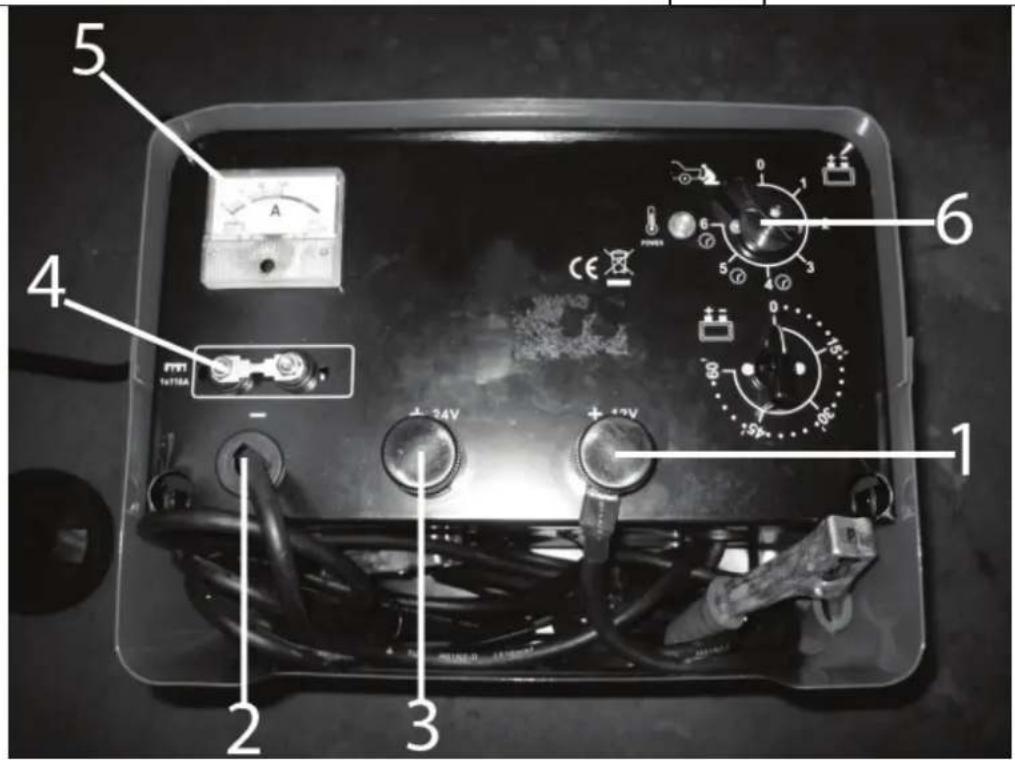
Description of Unit (Fig. 3)
- connection 12 V
- ground
- connection 24 V
- cut-out fuse
- ammeter
- Charging/start tap changer
EC Declaration of Conformity
We,
Güde GmbH & Co. KG
Birkichstraße 6
74549 Wolpertshausen
Germany
hereby declare the conception and construction of the below-mentioned devices correspond - at the type of construction being launched - to appropriate basic safety and hygienic requirements of EC Directives.
In case of any change to devices not discussed with us the Declaration expires.
Marking of devices: V 621 C
product No: 85075
* The appliance meets EN 61000-3-11 requirements and is subject to special connection conditions. That means that use on optionally selected connection points is inadmissible.
The appliance can lead to occasional voltage fluctuations under unfavourable power conditions.
The appliance is only designated to be used for connection points not exceeding the maximum allowed impedance of Z_max = 0,233 .
As a user, you must make sure your connection point on which you want to use the appliance meets the above-mentioned requirements – after agreement with your electricity supplier if necessary.
Guarantee
The guarantee solely covers inadequacies caused by material defect or manufacturing defect.
Original payment voucher with the sales date needs to be submitted for any claim in the guarantee period.
The guarantee does not cover any unauthorised use such as appliance overloading, use of violence, damage as a result of any unauthorised interference or caused by foreign items. Failing to follow the operating and assembly instructions and common wear are also not included in the guarantee.
General Safety Regulations
This instruction manual should be read carefully before the initial use of the unit. If in doubt with regard to connection and operation, contact the manufacturer (servicing department).
Observe the instructions below carefully to provide for a high degree of safety:
Warning: Do not operate unless with current protection (FI) fitted!
Caution!
- Keep your workplace clean and tidy. Messy workplace and disorder on the table increase the risk of accident and injury.
- Mind the conditions of the environment you work in. Do not use electric tools in moist and wet surroundings. Provide for sufficient lighting. Do not expose the electric tools to the rain or high atmospheric moisture. Do not switch on in an area containing inflammable liquids or gases.
- Do not admit any strangers to the machine. Visitors and bystanders, children and the sick in particular keep at a sufficient distance from your workplace.
- Provide for safe storage of the tools. The tools that are not in current need should be stored at a dry unapproachable or an elevated place.
- Watch out for the cable. Do not pull the cable. To unplug, always grasp at the plug. Keep the cable at a safe distance from sources of heat, oil and sharp edges.
- Provide against unintentional switching. Always make sure that the tool switch is in OFF position before plugging in.
-
When working outdoors, use special extension cables. To work outdoors, special extension cables are needed, mark in the appropriate way.
-
Always remain concentrated. Mind what you are doing. Use common sense. Do not use electrical tools when feeling tired.
- Watch out for damaged parts. Check out the unit before use. Are some parts damaged? If the damage is slight, reconsider whether the unit is able of perfect and safe operation.
- Prevent any electrical shock. Avoid any contact of your body with grounded articles, e.g. water piping, heating radiators, stoves and fridges.
- Use approved parts only. For maintenance and repairs, use genuine spare parts only. The spare parts may be obtained from an authorised servicing centre.
- Warning! Use of accessories and additional parts other than those recommended in the operating manual may present a threat for persons and things.
Initial Operation Safety Instructions
- Before starting set-up or maintenance of the unit, disconnect it from the source.
Connect the charger until the power supply, if all settings and the terminals are properly connected. - Having removed the packing, make sure that the condition of the unit and any of its component is perfect.
- Unwind the power cable completely and put it so the pole terminals cannot get in touch with each other.
- If necessary, use an extension cable to extend the power cable; it must be of the same cross section as the power cable. Never use cable of smaller cross section.
- Keep the clamps, terminals and upper surface of the battery clean, if necessary, use the wire brush to clean the battery terminals. In this way, a good electrical contact will be provided and better charging efficiency secured.

- Never mix connections poling! ((-) black; (+) red)
- The charging voltage should be same as that shown on the battery i; the value is equal to the number of cells of a storage battery multiplied by two (3 cells = 6 V; 6 cells = 12 V; 12 cells = 24 V).
- Before charging, put the unit on a stable base and make sure that noting will prevent air flow through the respective holes. A good cooling system must be guaranteed.
- Do not charge more batteries at a time.
- The battery closure should be removed after cleaning the terminals not to have dust and dirt falling in the tubs.
- Provide for the electrolyte covering the plates up to the height of 4-5 mm at least, If necessary, add distilled water that may be obtained at shops for this purpose.
- In the course of charging, explosive gases develop abstain from smoking and naked fire or sparks.
- The batteries should be charged in well ventilated spaces. The charger is prohibited for use inside a vehicle or closed car bonnet.
- Never charge standard and maintenance-free batteries jointly.
- Never recharge disposable batteries.
- Leave sufficient ventilation space behind the unit.
- Follow the manufacturer's instructions.
- Check ion the right level of the acid Kin battery.
- Always check whether condition of the power cable and clamping cable is perfect. If the power cable is damaged, have it replaced at a specialist's.
- The unit should not be exposed to weather effects – snow and rain.
- Do not use the unit bare footed. Do not touch the unit with wet or damp hands or feet.
- Never unplug by pulling the cable.
- Prevent unauthorised persons or children from using the unit.
- Apply in use, always gloves and eye protection and be alert when working with acid!
Do not leave the switched-on unit unattended, it could become a source of risk.
- If you do repairs of safety or protection devices, they should be refit immediately after the job is completed.
- Injuries prevention regulations effective at a place of particular use and any other generally recognised safety rules must be known and observed.
- The safety devices should be checked on before the use of unit. Make sure that even the parts, which are slightly damaged seemingly, may work properly.
- Unless otherwise stated in this manual, repairs and replacement of damaged components and safety devices should be done at an authorised servicing centre.
- Have any damaged switches replaced at an authorised servicing centre.
- This unit complies with any respective safety provisions. The repairs are allowed to be done by skilled electricians at authorised servicing centres only. Only genuine spare parts may be used. A risk of injury is imminent if the regulation is not observed.
Behaviour in case of emergency
Provide necessary first aid treatment corresponding to the injury nature and seek qualified medical help as soon as possible. Protect the injured person from other injuries and calm him/her down. First aid kit must always be available in the place of your work in case of accident in accordance with DIN 13164. Material taken out of the first aid kit needs to be supplemented right away. If help is needed, please provide the following details:
- Place of accident
- Accident nature
- Number of injured persons
- Injury type
Meaning of Symbols
Symbols shown below are used throughout this manual and/or on the unit:
Product Safety:
| CE | |
| Product compliance with respective EU standards | There is protective insulation on the unit. |
Bans:
| General ban (in combination with another pictograph) | Do not use the unit in rain |
| No pulling the cable |
Precaution:
| Warning/caution Beware of hazardous voltage | |
| Warning against caustic substances | |
Commands:
| Read operating manual before use | Use protection gloves |
| Use vision protection aids |
Environment Protection:
 |  | ||
| Wastes to be disposed of in a professional manner not to harm the environment. | Cardboard packaging to be collected for recycling. | ||
 | |||
| Faulty and/or disposed of electrical/electronic appliances to be collected by authorised salvage places. | |||
Packaging:
 |  | |||
| Protect from moisture Keep Jp | ||||
 | ||||
| Interseroh | ||||
Technical Data :
 |  | |||
| Power connection Maximum output | ||||
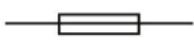 |  | |||
| Min. protection Charging voltage | ||||
 |  | |||
| Battery capacit Max. effective charging current | ||||
 | ||||
| Weight | ||||
Assigned Use
Starting charger to charge, quick-acting charging and vehicle start up. Large wheels enable good travel. Lead battery: onboard electronics will get damaged at batteries connected to the vehicle if started for more than 7-10 seconds. Lead acid batteries to be used only.
Residual Electrical Hazards
Direct electrical contact
Defective cable one plug may cause an electrical shock injury.
Have the defective cables and plugs replaced at a specialist's. Use the unit on a connection equipped with a current protection (FI).
Indirect electrical contact
A risk of injury by conductive parts with open or defective parts of the unit
Disconnect the unit from the source of power to maintain it. Operate with a current protection only.
Insufficient Lighting of Workplace
Insufficient lighting always present a high safety risk.
Always provide for sufficient lighting when working with the unit.
Disposal
Disposal instructions are illustrated in the form of pictograms on the device or packaging. Description of the pictograms is given in "Identification" chapter.
Disposal of transport packaging
Packaging protects the device against damage during transport. Packaging materials are usually selected according to their effect on environment and disposal methods and can therefore be recycled.
Returning of the packaging back to circulation saves resources and costs for packaging disposal.
Parts of the packaging (e.g. foil, styropor) may be dangerous for children. Risk of suffocation!
Keep these parts of the packaging out of reach of children and dispose as soon as possible.
Qualification
No special qualification is required for use of the unit except for detailed direction by a professional.
Minimum Age
Only persons above 16 years of age are allowed to work with the unit. Exempted from the provision is the use of the juvenile trainees if they work in the course of their professional training with an aim to obtain the skill under trainer supervision
Training
Use of the unit requires adequate lesson by a professional or the use of the manual only. Special training is not required.
Technical Data
Connector: 230 V\~50 Hz
Charging voltage at start: 12 V/24 V
Max. input when starting: 9000 W
Charging rms current: 70 A
Charging arithmetic current: 50 A
Starting current (0 V) app.: 500 A
Starting current (1.5 V) app.: 300 A
Min. protection: 16 A
Auxiliary fuse: 100 A
Rated capacity: 20-800 Ah.
Weight:
23 kg
Transportation and Storage
- If putting the unit away for a prolonged storage, it should be cleaned thoroughly.
- Protect the unit from weather effects with a tarpaulin, carton etc.
Assembly and Initial Operation (Fig. 4+5)
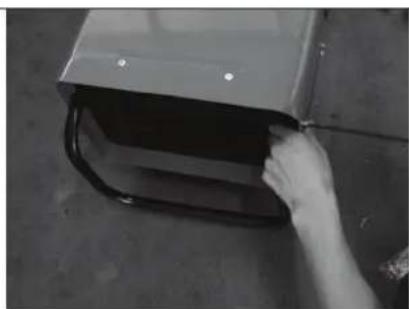
Screw on the handle according to (Fig. 4).
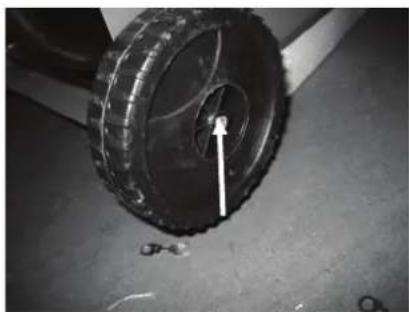
Put the axle through the charger (Fig. 1/2). Fit the supplied safety rings on. Mount the wheels (Fig. 1/1) on the axle and secure them with safety rings (Fig. 5).
Put the wheels covers (Fig. 1/4) on.
Operation

Unplug before any adjustment and set up.
Charging (Fig .3)
- Connect the charger to the battery to be recharged
- Always connect the black cable first, to the negative pole. Connect the red pole cable to the positive pole.
The battery should be completely disconnected from the vehicle before getting down to charging.
- Always set the charger at the lowest charging degree (min/1).
- Now, plug in and control the charging degrees upwards until charging current equal to ca 10% of the battery capacity is displayed.
- Charging degrees may be increased by falling charging current.
- Do not disconnect the battery from terminals later than 3-5 hours after charging is finished.
- Notice. The charging current indicator will not come back to zero after charging is finished.
Charging Time
- The charging time always depends on the battery status (nearly charged, half-charged or completely discharged)
- To recover a battery that is normally in use 2 – 4 hrs are sufficient, while for full recharging 8-10 hrs are needed.
- Charging time should not be exceeded (10 hrs max.).
High-rate charging
4-6 levels allow high-rate charging that must in any case be limited by a timer.
- Connect the battery (see the "Handling" chapter).
- Set the charging level optionally to 4-6 and read the charging current on the ammeter.
- Set the timer to the required charging time (max. 60 minutes).
Start-up Assistance
- CAUTION! At the startup process can overvoltages arise, the on-board electronics could damage their vehicle. Please discuss with your automotive specialist.
- Connect the batteries as shown in part "Charging" and leave it connected to the vehicle!
- On principle, two persons should always start up a vehicle with chargers.
- The charger on max. Performance are: Switching stage 2 (Fig. 3, 7) and "boost" (Fig. 3, 8).
- The first person shall push the Start button on the charger (Fig.3, 9). The other one shall immediately start the ignition, max. 9-10 sec.
- As the vehicle starts up, stop starting immediately
- If the attempt to start fails, wait about 5 minutes for the charger to get cooled and only then begin another attempt to start.
Tip: If you change the battery for 10-15 minutes to subpoena requires much less battery power startup.
Warning: The fuses may burn through and the vehicle damaged if the starting time is more than 10 s.
Note: The terminals may not touch.
⚠️ Notice: The charger is equipped with overload protection.
IMPORTANT NOTICE!: Replacement fuses, the resistance values (Fig. 3,5) of which are different from the plate values, may cause material and personal damage. The fuses replacement should not be done unless the mains cable is unplugged
Operator Safety Instructions
- Any safety and protection devices must be fitted in place before switching the unit on.
- It is forbidden to attempt starting vehicles, the batteries of which are discharged or damaged as that would result in damaging the unit.
- Any attempts to start in position “charging” instead of “starting” could damage the ammeter and start the overload protection.
- Before pressing the main switch, make sure that the unit is connected correctly.
- Warning! If in doubt, consult a specialist in an authorized servicing centre.
- Do not use the unit until you have read the manual carefully.
- Observe all the safety regulation in this manual.
- Be responsible to the others.
Step-by-step Instruction
Charging
- Connect the charger.
- Set the charging function up (min/1).
- Switch the charger on .
- Plug in .
- Battery is being charged. (max. 10 hrs)
Starting
- Connect the charger.
- Set the starting up (Fig.3/6).
- Connect to the mains .
- Switch the charger on and start the vehicle immediately.
- Jas soon as the vehicle is up, stop starting and switch off and disconnect the charger.
Troubles-Causes-Troubleshooting
Notice: Always check the overload protection first!
Overload circuit-breaker:
- Connect the red clamp to the positive pole and the black one to the negative pole.
- Remove the contact and check the fuses.
- Set the charger at the lowest charging degree.
- If the battery power input is too high, it is recommended to have the battery charging done by a skilled electrician and to keep the level of charge high by frequent charging or to get a more powerful charger. Have the battery checked by a specialist. Replace the battery.
Too heavy charging current at the beginning of charging
- Watch out the charging current if it is high even after 15 - 20 minutes, it may mean that the charge would not hold Have the battery checked at a specialist's. Replace the battery.
Too weak charging current.
- Try to adjust the charging current control higher.
Ammeter pointer touches the lowest position of the scale
- Have the battery checked at a specialist. Replace the batteries
- Ensure that the mains voltage is equal to the desired value
Ammeter does not indicate.
- Clean the terminals and put the clamp on again.
- Have it checked at a specialist's . Replace the battery.
Check on the charger working ability on a perfect charged battery.
Overload Causes
- Mixing up the poles when connecting the clamp to the battery
- The battery is heavily or completely discharged.
- Battery is completely discharged and its capacity is higher than the charger power
- Battery is damaged or defective (internal elements short circuit).
Inspections and Maintenance

Unplug before any work on the unit.
- Use a wet cloth to clean the plastic parts. Do not use detergents, solvents and sharp articles.
- Use a soft brush or a paint brush to remove the settled dust from the vent and moving parts.
- Lubricate the wheels regularly!
Inspections and Maintenance Safety Instructions
After every use
Clean the vents and moving parts from dust
Regularly
Oil the moving metal parts (multi-purpose oil)
Regularly
Check all the screws to see if they are tight.

Causes de la surcharge
Manuale "step by step"
Caricamento
Translation of the EC-Declaration of Conformity
We, hereby declare the conception and construction of the below mentioned appliances correspond - at the type of construction being launched - to appropriate basic safety and hygienic requirements of EC Directives.
In case of any change to the appliance not discussed with us the Declaration expires.
☐ Annex IV Notified Body Name: No: Adress:
Type Ex. Cert.-No.:
97/68/EC_ Emission No.:
2000/14/EC_2005/88/EC


- ⚠️ Please read carefully these operating instructions before putting the machine into operation.
- A.V. 2 Reprints, even partial, are subject to approval. Technical changes reserved..
- GB
- Devise
- Battery Charger V 421 C
- Scope (Fig. 1+2)
- Description of Unit (Fig. 3)
- EC Declaration of Conformity
- Guarantee
- General Safety Regulations
- Warning: Do not operate unless with current protection (FI) fitted!
- Caution!
- Initial Operation Safety Instructions
- Do not leave the switched-on unit unattended, it could become a source of risk.
- Behaviour in case of emergency
- Meaning of Symbols
- Assigned Use
- Residual Electrical Hazards
- Direct electrical contact
- Indirect electrical contact
- Insufficient Lighting of Workplace
- Disposal
- Disposal of transport packaging
- Qualification
- Minimum Age
- Training
- Technical Data
- Transportation and Storage
- Assembly and Initial Operation (Fig. 4+5)
- Screw on the handle according to (Fig. 4).
- Operation
- Charging (Fig .3)
- Charging Time
- High-rate charging
- Start-up Assistance
- Operator Safety Instructions
- Step-by-step Instruction
- Charging
- Starting
- Troubles-Causes-Troubleshooting
- Notice: Always check the overload protection first!
- Overload circuit-breaker:
- Too heavy charging current at the beginning of charging
- Too weak charging current.
- Ammeter pointer touches the lowest position of the scale
- Ammeter does not indicate.
- Overload Causes
- Inspections and Maintenance
- Inspections and Maintenance Safety Instructions
- After every use
- Regularly
- Causes de la surcharge
- Manuale "step by step"
- Caricamento
- Translation of the EC-Declaration of Conformity
Brand : GUDE
Model : V 621 C
Category : Battery charger