
PAC 36/94 - Portable air conditioner DELONGHI - Free user manual and instructions
Find the device manual for free PAC 36/94 DELONGHI in PDF.


| Product type | Portable air conditioner |
| Brand | DELONGHI |
| Model | PAC 36/94 |
| Dimensions (indoor unit) | 560 x 735 x 355 mm |
| Weight (indoor unit) | 44 kg |
| Dimensions (outdoor unit) | 450 x 470 x 210 mm |
| Weight (outdoor unit) | 14 kg |
| Power supply | 230 V ~ 50 Hz |
| Cooling power | See rating plate |
| Fan speeds | 2 |
| Maximum air flow | 560 m³/h |
| Timer | 24 h |
| Connection hose length | 3500 mm |
| Hose diameter | 20 x 44 mm |
| Sleep function | Yes (silent program and nighttime temperature control) |
| High Efficiency (HE) system | Yes (4-minute delay before cooling production) |
| Compressor protection | Automatic restart after at least 3 minutes |
| Air filter cleaning | Weekly (wash with lukewarm water max 40°C) |
| Condensation drainage | By evaporation in outdoor unit (drain hose possible if high humidity) |
| Supplied accessories | Wall brackets, straps, hose frame, wheel caps, drain connection |
| Warranty | Contact authorized after-sales service |
Frequently Asked Questions - PAC 36/94 DELONGHI
User questions about PAC 36/94 DELONGHI
0 question about this device. Answer the ones you know or ask your own.
Ask a new question about this device
Download the instructions for your Portable air conditioner in PDF format for free! Find your manual PAC 36/94 - DELONGHI and take your electronic device back in hand. On this page are published all the documents necessary for the use of your device. PAC 36/94 by DELONGHI.
USER MANUAL PAC 36/94 DELONGHI
Air-conditioner PAC 36
Instructions for use
Please read this instruction booklet carefully before installing and using the appliance. In this way, you will obtain the best possible results and maximum operating safety. In particular, refer to the safety warnings on page 24.
INTRODUCTION
The new PAC 36 is a highly versatile electronically-controlled air-conditioner: it can be used as a manual or automatic air-conditioner during the summer.
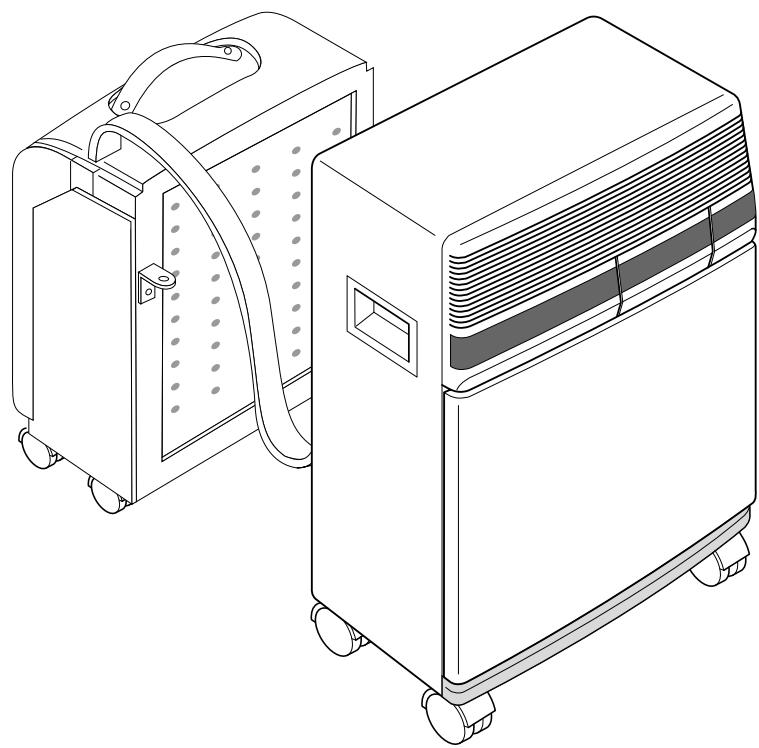
This conditioner consists of two units: the internal unit is designed to operate inside the room to be conditioned; the external unit is installed in the open.
The two units are connected by a special hose, approximately 3,5 metres in length. This hose contains the freon tubes, the electrical wiring and the condensation discharge tube.
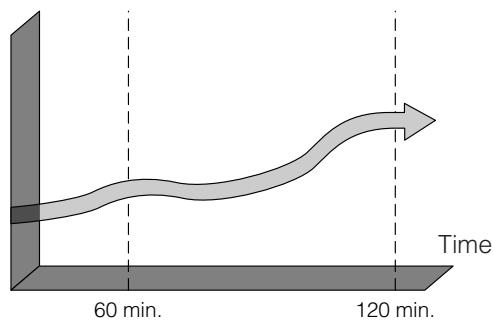
This appliance also has a SLEEP function. This function activates a program studied and designed to increase comfort during sleeping hours. The program not only ensures perfect silence (from both the internal and external units) but also controls the temperature of the environment, without lowering it excessively, to produce the healthiest conditions.
Temperature
Temperature during night
TECHNICAL DATA
| Power supply voltage | see rating label |
| Maximum input power (air-conditioning mode) | see rating label |
| Cooling capacity* | see rating label |
| Fan speeds | 2 |
| Maximum air flow | 560 m³/h |
| Timer | 24 h |
| Length of hose | 3500 mm |
| Tube size | 20 x 44 mm |
| Dimensions (internal unit): | |
| · width | 560 mm |
| · height | 735 mm |
| · depth | 355 mm |
| · weight | 44 kg |
Dimensions (external unit):
width 450 mm
height 470 mm
- depth 210 mm
- weight 14 kg
IDEAL OPERATING CONDITIONS
| * Standard conditions: | ||
| Room temperature | 27°C | |
| 47% | relative | |
| humidity | ||
| External temperature | 35°C | |
| 41% | relative | |
| humidity | ||
Room temperature 21 ÷ 32° C
External temperature 21 ÷ 43° C
DESCRIPTION
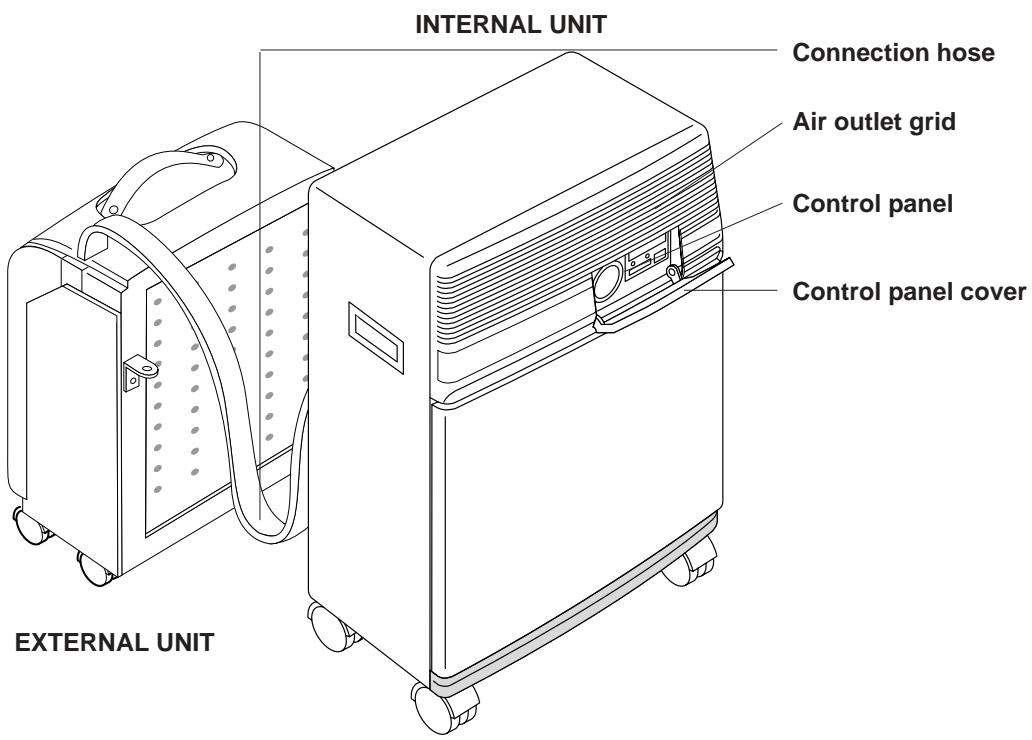
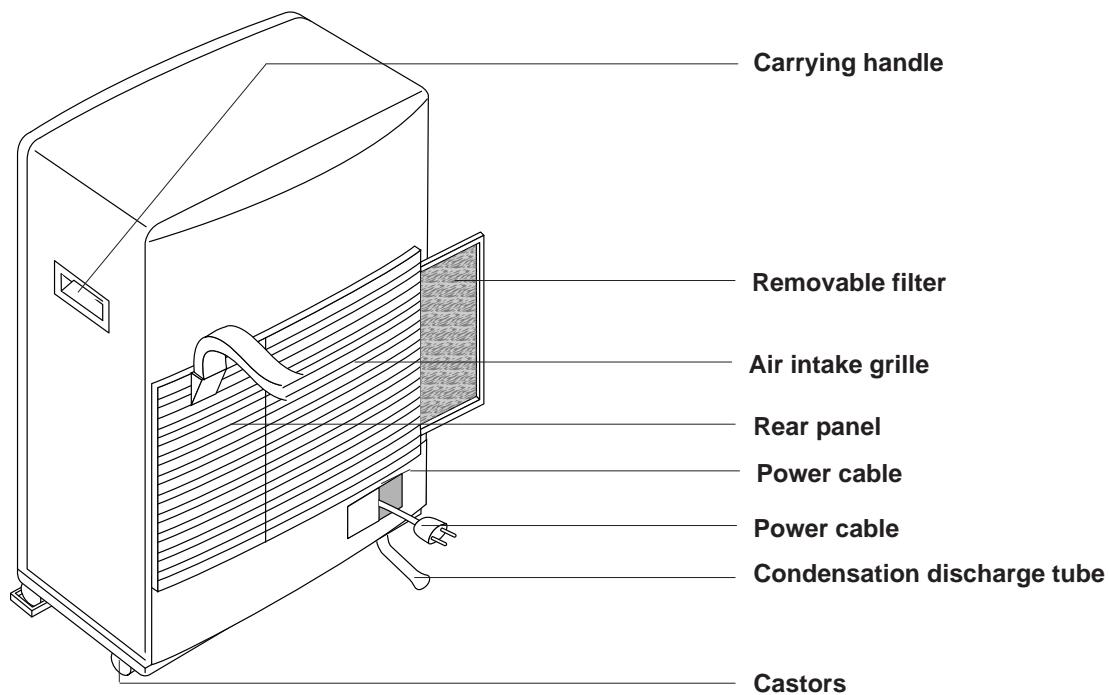
INTERNAL UNIT
ACCESSIONS
| ILLUSTRATION | DESCRIPTION | NUMBER SUPPLIED |
| Wall bracket | 2 | |
| Screws + wall plugs (Ø 6mm) | 4 | |
| Nut and bolt (Ø 5mm) | 4 | |
| Support belt with hook | 2 | |
| Frame for connector hose | 1 | |
| Castor stop | 2 | |
| Condensation drainage coupling | 1 | |
| Castors for external unit and washers | 4 |
This appliance is fitted with a special HE (High Efficiency) system for extra-low energy consumption. When the unit is switched on, this system requires about 4 minutes before cold air is generated.
INSTALLATION
MODELS WITHOUT SPECIAL COUPLINGS
The hose which connects the internal unit to the external unit can be positioned in two ways:
a) Through a slightly-open window or door.
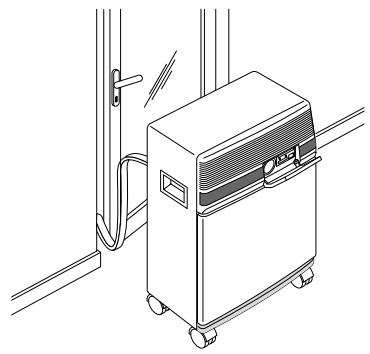
b) Through a small hole (5.5 × 2.5 cm.) in the lower part of the door or window frame. In this case, it is necessary to use the special frame for the connection hose.
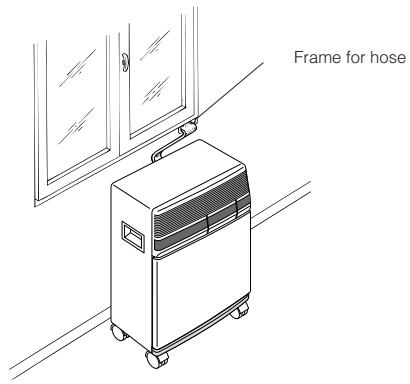
MODELS WITH SPECIAL COUPLINGS
If your air-conditioner is fitted with the special rapid-fit coupling, the hose which connects the internal unit to the external unit can also be passed through a round hole in an external wall (diameter: 6 cm. approx.).
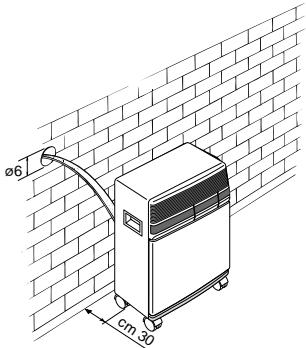
In this case, it is necessary to disconnect the internal unit as follows:
1) Remove the plug from the wall socket.
2) Remove the rear panel (on the back of the appliance) by unscrewing the four retaining screws.
3) Remove the metal brackets which fasten the hose to the appliance (N. 3).
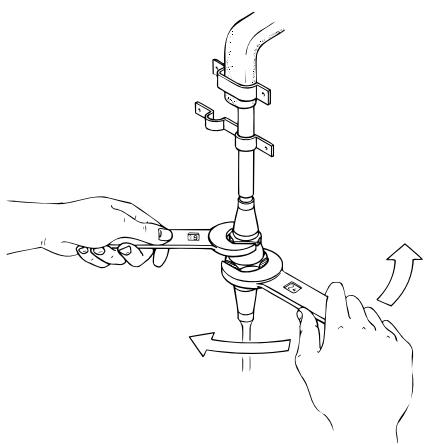
4) Using a 24mm spanner, unscrew the union on the coupling. When doing this, use a 19mm. spanner to block the extremity of the hose in position.
Repeat this operation for the second union.
5) Detach the condensation hose from its coupling.
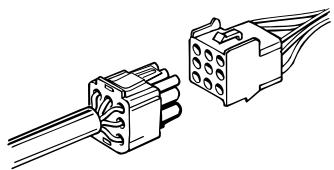
6) Disconnect the electrical connector socket by pressing the two retainer tabs.
The path of the connector hose should be as straight as possible, without sharp curves or kinks.
To re-connect the ends of the connector hose to the internal unit, repeat steps 1 to 6 in reverse order. The following precautions should be observed:
- Before passing the connector hose through the hole in the wall, the threaded ends of the rapid couplings should be protected using insulating tape or similar.
- Fit the two upper refrigerant couplings to the two lower couplings and tighten by hand, ensuring that they are correctly connected. Then use the spanner to tighten fully.
- After connecting the two refrigerant couplings, fasten the brackets.
- Check that the refrigerant couplings are sealed perfectly by wetting the couplings with a little soapy water. No soap bubbles should form.
Attention
Connection and disconnection of the refrigerant couplings should be carried out by qualified personnel.
INTERNAL UNIT
The internal unit should be installed in the room to be conditioned. Generally, the ideal position for the internal unit is under a window. In any case, it should be positioned near an external wall.
The internal unit must be perfectly level. If necessary, use the castor stops supplied with the machine.
The air intake and outlet grilles should not be obstructed in any way.
EXTERNAL UNIT
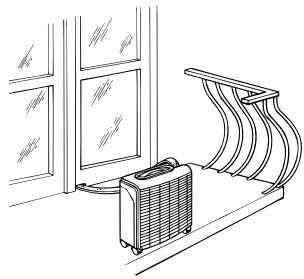
The external unit can be positioned on a terrace or balcony. In this case, it is not necessary to use the fixing brackets.
The external unit can also be mounted on a wall. In this case, use the special wall-mount brackets.
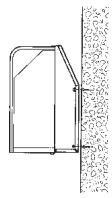
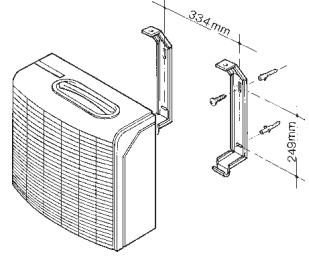
Alternatively, for temporary installation, the external unit can be hung as shown in the figure. In this case, use the special support belts (supplied with the appliance).
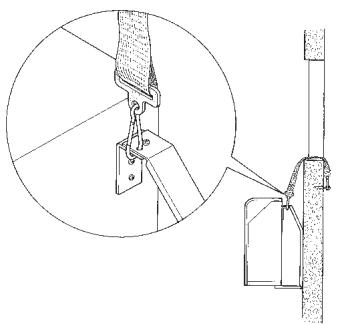
The external unit can be installed above or at the same level as the internal unit, provided that the difference in height between the two units does not exceed 1.5m .
The intake and outlet vents must not be obstructed. Leave a space of at least 6 cm. between the rear of the unit and the wall.
The condensation which forms when the unit is used for air-conditioning (i.e. in summer) evaporates from the external unit.
If the humidity is particularly high, it may be necessary to fit the condensation discharge tube (supplied with the machine). In this case, fit the hose to the coupling on the bottom section of the external unit (remove the rubber cap from the coupling).
In the event there is still some condensation to be eliminated and the equipment is connected to its electrical feed, the waste pump may turn on spontaneously to get rid of that excess moisture even if the equipment itself has been turned off. In order to guarantee the greatest possible operational efficiency, you are advised to position the external unit in such a way that it will not be directly exposed to sun rays, rain etc.
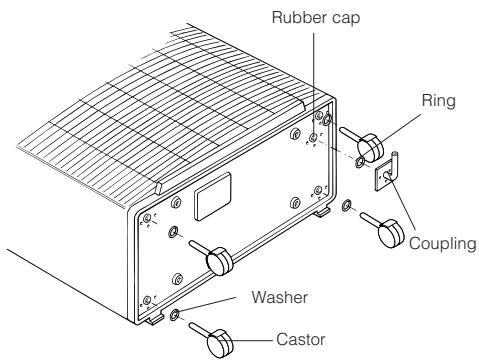
ELECTRICAL CONNECTIONS
Before plugging the unit into the mains, check the following:
- the mains voltage must be the same as the voltage shown on the rating plate
- the power socket and the mains circuit must be suitable for the power requirements of the unit
- the socket must be suitable for the plug; if not, have the socket replaced
- the power socket must be properly earthed. The manufacturer declines all responsibility for any damage or injury arising from non-observation of this safety requirement.
This appliance is manufactured in compliance with EEC Directive EN 44014 regarding the suppression of radio interference.
FINAL CHECK
In order to ensure that your air-conditioner operates with the maximum efficiency, make sure that:
- all doors and windows in the room to be air-conditioned are closed (except for temporary installation, in which case a window must be left partially open).
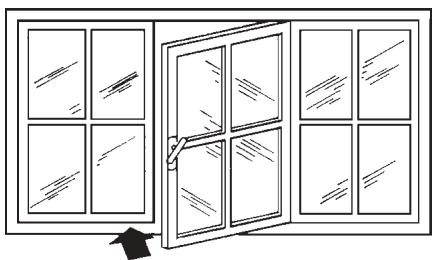
Close the windows
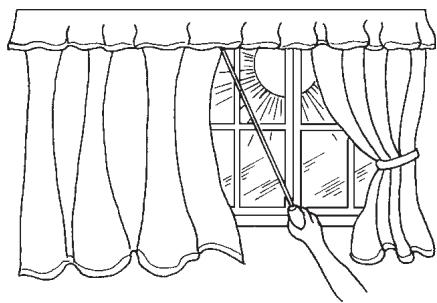
Draw the curtains
- Draw the curtains and/or partially close the blinds to protect the room against direct sunlight. This will increase the efficiency and economy of the air-conditioner.
- Do not place objects of any kind on the air-conditioner.
- Ensure that the air intake and discharge vents are not obstructed.
- Make sure that there are no sources of heat in the room.
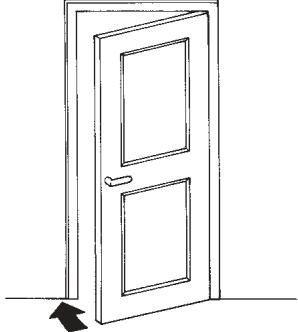
Close the doors
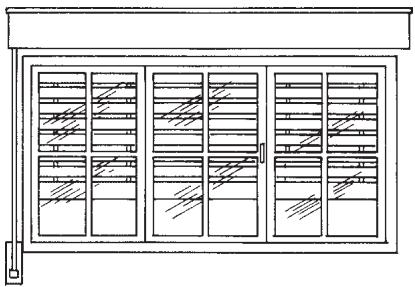
Lower the blinds
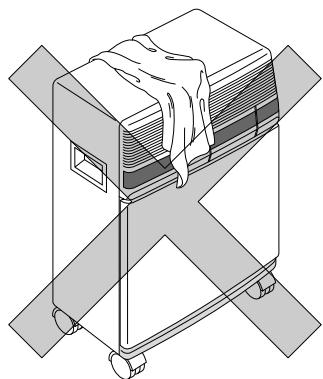
Do not cover
YOUR AIR-CONDITIONER IS NOW READY FOR USE.
CONTROL PANEL
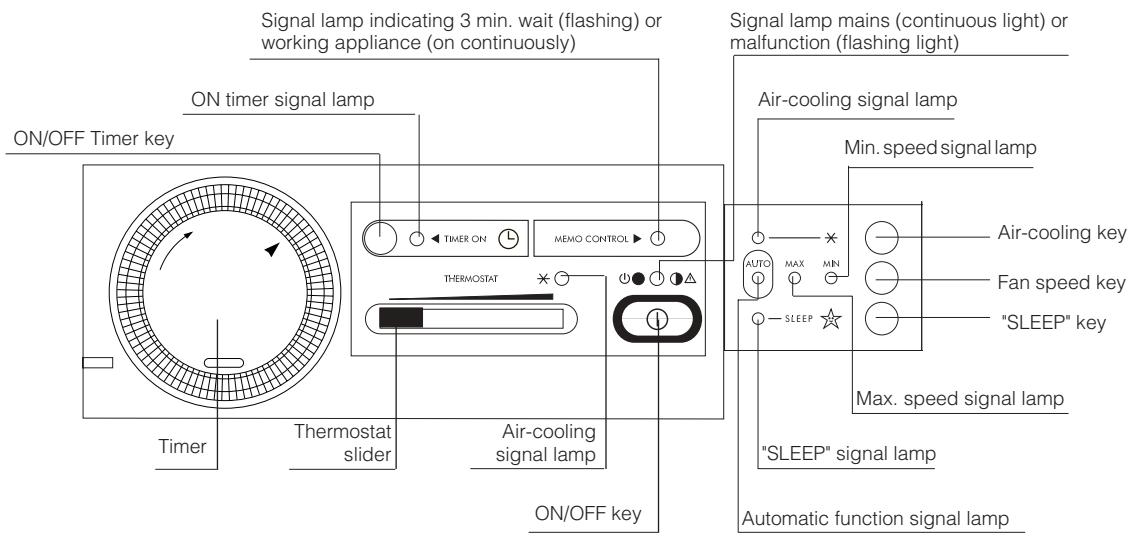
SETTING THE TIMER
Ther programmer/timer, like all clocks, must be set to the exact time. If for example it is 4.00 p.m. (16.00), turn the dial in a clockwise direction (following the direction of the arrow) until the number 16 is lined up with the triangular pointer (the arrows indicate 4:00 p.m. approximately).
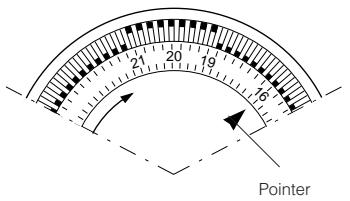
N.B.: Never turn the dial in anti-clockwise direction! The timer is in effect, an electric clock and works only if the plug is connected to the power supply. Whenever the plug is disconnected or there is a power failure, the programmer stops (the clock is then "slow" and must be re-set.
Select operation "with timer" or "without timer".
1) Select the desired function as shown in the chart overleaf.
2) Press the TIMER key, the "TIMER ON" signal lamp will come ON.
3) Make sure that the timer indicates the correct time (see instructions on setting).
4) Set the operating times by pushing out the notches on the dial corresponding to the period required (each notch represent 15 mins).
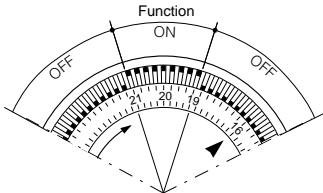
Example: from 7 p.m. to 9 p.m.
The air-conditioner will now switch on each day at the selected times.
N.B.: If you wish to override the programmed operating times, simply press the ON/OFF timer key (the timer signal lamp ON will go out).
1) Press the TIMER ON key again, the TIMER ON signal lamp will go out.
2) Select the desired function as shown in the chart on page. 9.
For technical reasons, the temperature is not expressed in degrees but by a line increasing in thickness. We therefore recommend that when starting up the appliance, the thermostat be turned to maximum (thick green line = maximum cold). When the desired temperature has been reached move the thermostat slider slowly away from the maximum cold position until the appliance is switched off by operation of the thermostat. In this way the appliance has been programmed with the exact temperature degree required, which is then maintained automatically by the thermostat.
HOW TO OPERATE THE AIR-CONDITIONER (refer to the control panel on the opposite page)
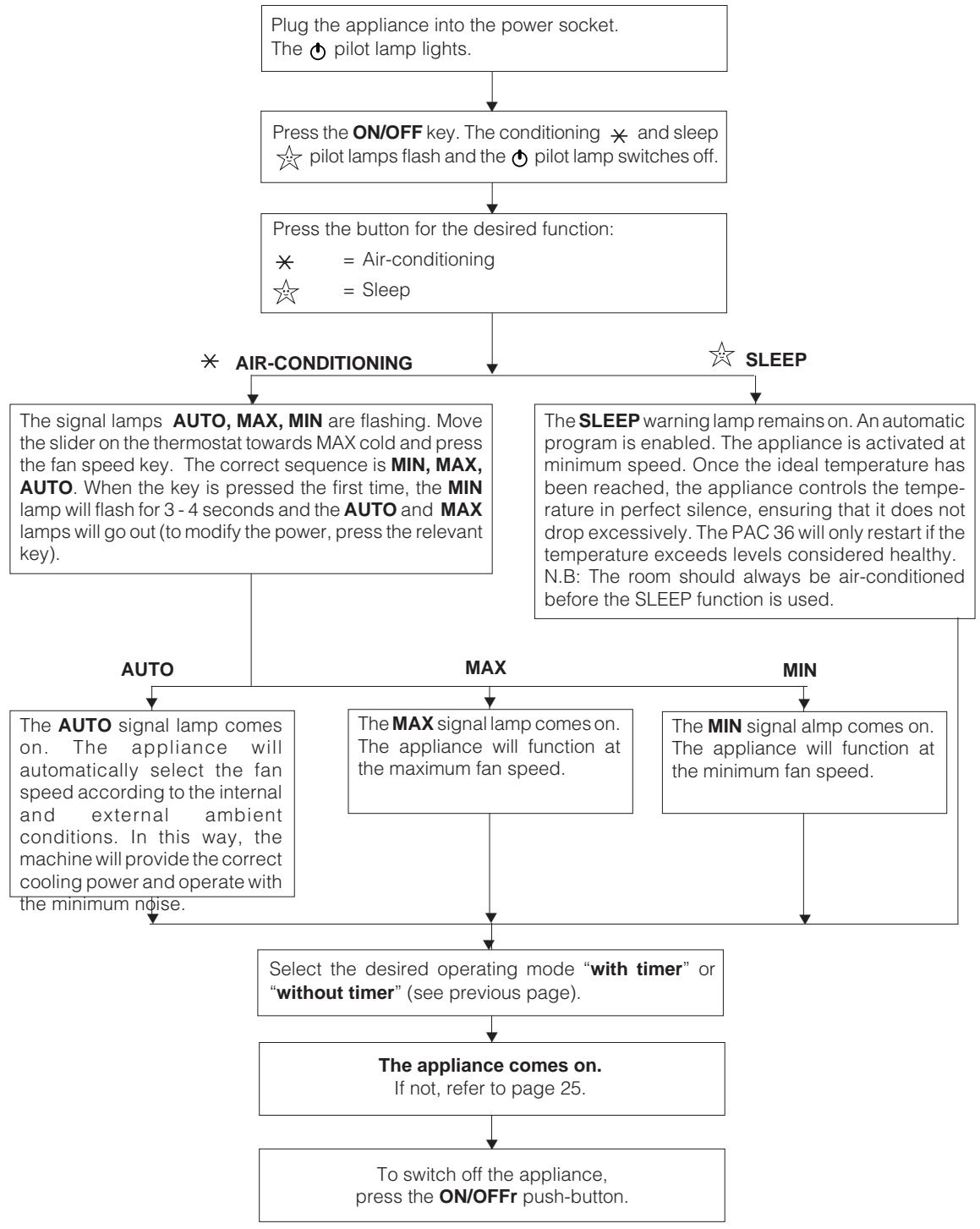
This appliance is fitted with a special safety circuit. When the compressor switches off, this circuit prevents it from switching on again for at least 3 minutes.
MAINTENANCE
Always remove the plug from the power socket before carrying out any cleaning or maintenance operations.
The air-conditioner must never be washed with running water.
CLEANING THE CABINET
Clean the cabinet with a damp cloth and dry carefully with a dry cloth.
Warning
Never use petrol, methylated spirits or solvents for cleaning. Never spray insecticides or similar products on the appliance, as these may seriously damage the paintwork and plastic.
CLEANING THE AIR FILTER
- If the air filter is dirty, air circulation is reduced and the efficiency of the air-conditioner will be diminished. It is therefore recommended to clean the filter at weekly intervals.
- Remove the filter as shown in the figure.
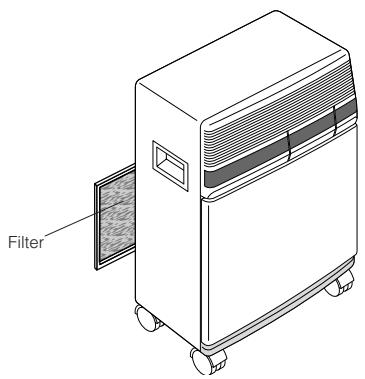
- Use a vacuum cleaner to remove the dust from the filter. If the filter is very dirty, wash it in lukewarm water and rinse thoroughly. The temperature of the water should not exceed 40°C . Allow the filter to dry before replacing it in the appliance.
AT THE BEGINNING OF THE SEASON
Check that the power cord and the plug are undamaged and that the power socket is properly earthed.
Ensure that the installation procedures are followed meticulously.
AT THE END OF THE SEASON
Switch off the appliance by pressing the ON/OFF key.
Remove the plug from the drainage tube and empty the water from the internal condensation tray.
Clean the filter, and dry it carefully before replacing.
Cover the appliance with a plastic bag to protect it from dust.
IMPORTANT
- This appliance is designed to cool domestic environments, and should not be used for any other purpose.
- Any attempts to modify or alter the characteristics of the appliance may be dangerous.
- Should repair be necessary, contact your nearest authorised Service Centre. Any repairs carried out by unqualified personnel may be dangerous.
- This appliance must be properly earthed. Have your electrical system checked by a qualified electrician.
- Avoid the use of extension cords.
- Always remove the plug from the power socket before performing any cleaning or maintenance operations.
- Do not move the appliance by pulling the power cord.
- Do not install the appliance in a room which might contain gas, oil or sulphur, or near sources of heat.
- Do not place hot or heavy objects on the appliance.
- Clean the air filter at least once weekly.
- The appliance should be transported in the upright position or placed on its side.
Empty the condensation tray before transporting the appliance.
After transportation, wait at least one hour before switching on the appliance.
TROUBLESHOOTING
Most malfunctions are caused by a very minor and easily solved problem. Before contacting your nearest authorised Service Centre for assistance, consult the troubleshooting chart below.
| PROBLEM | CAUSE | SOLUTION |
| The air-conditioner does not function | · if the ① pilot lamp is not lit - power failure - the appliance is not plugged in · if the Memo Control pilot lamp is flashing - less than 3 minutes have passed since the appliance was last switched off · if the ② pilot lamp is lit - in conditioning mode: the temperature in the room is already lower than the selected temperature | · wait until the power supply is restored · insert the plug · wait three minutes · slide thermostat slider slowly to the maximum cooling position |
| The air-conditioner functions for a brief period only. The ① pilot lamp flashes | · the safety float has switched the appliance off because the condensation tray inside the appliance is full · the control circuit board is faulty · the condenser fas has jammed | · remove the plug from the drainage tube and drain the condensation from the tray. If this fault persists, contact your nearest Service Centre. · contact your nearest Service Centre · contact your nearest Service Centre |
| The appliance switches on and off constantly | · switch the appliance off and contact your nearest Service Centre | |
| The air-conditioner functions but the room is not cooled | · window open · source of heat in the room (heater, lamp, etc.) or the room is very crowded · the thermostat is set too high · the air filter is dirty · the air-conditioner is not powerful enough for the size or the conditions of the room | · close the window · remove source of heat · lower the thermostat setting · clean the filter |
- AIR-CONDITIONER PAC 36
- INTRODUCTION
- TECHNICAL DATA
- DESCRIPTION
- INSTALLATION
- MODELS WITHOUT SPECIAL COUPLINGS
- MODELS WITH SPECIAL COUPLINGS
- ATTENTION
- INTERNAL UNIT
- EXTERNAL UNIT
- ELECTRICAL CONNECTIONS
- FINAL CHECK
- CONTROL PANEL
- SETTING THE TIMER
- HOW TO OPERATE THE AIR-CONDITIONER (REFER TO THE CONTROL PANEL ON THE OPPOSITE PAGE)
- MAINTENANCE
- CLEANING THE CABINET
- WARNING
- CLEANING THE AIR FILTER
- AT THE BEGINNING OF THE SEASON
- AT THE END OF THE SEASON
- IMPORTANT
- TROUBLESHOOTING
Brand : DELONGHI
Model : PAC 36/94
Category : Portable air conditioner