ICG-2515FW-NR - Unspecified Planet - Free user manual and instructions
Find the device manual for free ICG-2515FW-NR Planet in PDF.


User questions about ICG-2515FW-NR Planet
0 question about this device. Answer the ones you know or ask your own.
Ask a new question about this device
Download the instructions for your Unspecified in PDF format for free! Find your manual ICG-2515FW-NR - Planet and take your electronic device back in hand. On this page are published all the documents necessary for the use of your device. ICG-2515FW-NR by Planet.
USER MANUAL ICG-2515FW-NR Planet
natural_image
Exterior view of a network device with multiple black connectors and wireless antennas connected to a blue network box (no visible text or symbols)User's Manual
Industrial 5G NR Cellular Gateway
ICG-2515 Series
natural_image
Man in white shirt and tie using laptop in server rack (no visible text or symbols)Copyright
Copyright (C) 2025 PLANET Technology Corp. All rights reserved.
The products and programs described in this User's Manual are licensed products of PLANET Technology, This User's Manual contains proprietary information protected by copyright, and this User's Manual and all accompanying hardware, software, and documentation are copyrighted.
No part of this User's Manual may be copied, photocopied, reproduced, translated, or reduced to any electronic medium or machine-readable form by any means, electronic or mechanical including photocopying, recording, or information storage and retrieval systems, for any purpose other than the purchaser's personal use, and without the prior express written permission of PLANET Technology.
Disclaimer
PLANET Technology does not warrant that the hardware will work properly in all environments and applications, and makes no warranty and representation, either implied or expressed, with respect to the quality, performance, merchantability, or fitness for a particular purpose.
PLANET has made every effort to ensure that this User's Manual is accurate; PLANET disclaims liability for any inaccuracies or omissions that may have occurred. Information in this User's Manual is subject to change without notice and does not represent a commitment on the part of PLANET. PLANET assumes no responsibility for any inaccuracies that may be contained in this User's Manual. PLANET makes no commitment to update or keep current the information in this User's Manual, and reserves the right to make improvements and/or changes to this User's Manual at any time without notice.
If you find information in this manual that is incorrect, misleading, or incomplete, we would appreciate your comments and suggestions.
FCC Compliance Statement
This Equipment has been tested and found to comply with the limits for a Class A digital device, pursuant to Part 15 of the FCC rules. These limits are designed to provide reasonable protection against harmful interference in a residential installation. This equipment can radiate radio frequency energy and, if not installed and used in accordance with the instructions, may cause harmful interference to radio communications.
However, there is no guarantee that interference will not occur in a particular installation. If this equipment does cause harmful interference to radio or television reception, which can be determined by turning the equipment off and on, the user is encouraged to try to correct the interference by one or more of the following measures:
- Reorient or relocate the receiving antenna.
- Increase the separation between the equipment and receiver.
- Connect the equipment into an outlet on a circuit different from that to which the receiver is connected.
Consult the dealer or an experienced radio/TV technician for help.
CE mark Warning

The is a class A device, In a domestic environment, this product may cause radio interference, in which case the user may be required to take adequate measures.
WEEE

To avoid the potential effects on the environment and human health as a result of the presence of hazardous substances in electrical and electronic equipment, end users of electrical and electronic equipment should understand the meaning of the crossed-out
wheeled bin symbol. Do not dispose of WEEE as unsorted municipal waste and have to collect such WEEE separately.
Trademarks
The PLANET logo is a trademark of PLANET Technology. This documentation may refer to numerous hardware and software products by their trade names. In most, if not all cases, these designations are claimed as trademarks or registered trademarks by their respective companies.
Revision
User's Manual of PLANET Industrial 5G NR Cellular Gateway
Model: ICG-2515-NR, ICG-2515W-NR, ICG-2515F-NR and ICG-2515FW-NR
Rev.: 1.2 (March, 2025)
Part No. EM-ICG-2515 series_v1.2
Table of Contents
Chapter 1. Product Introduction....7
1.1 Package Contents....8
1.2 Overview....9
1.3 Features....15
1.4 Product Specifications ....18
Chapter 2. Hardware Introduction ......22
2.1 Physical Descriptions....22
2.2 Hardware Installation 24
2.2.1 SIM Card Installation....24
2.2.2 5G NR Antenna Installation....25
2.2.3 Wi-Fi Antenna Installation 26
2.2.4 Wiring the Power Inputs....27
2.2.5 Grounding the Device .... 28
2.2.6 Wiring the Fault Alarm Contact....29
Chapter 3. Preparation ....30
3.1 Requirements....30
3.2 Setting TCP/IP on your PC 30
3.3 Planet Smart Discovery Utility....37
Chapter 4. Web-based Management ....39
4.1 Introduction ......39
4.2 Logging in to the Cellular Gateway....39
4.3 Main Web Page....41
4.4 System 43
4.4.1 Setup Wizard 45
4.4.2 Dashboard ....54
4.4.3 System Status....57
4.4.4 System Service....58
4.4.5 Statistics....59
4.4.6 Connection Status 60
4.4.7 High Availability....61
4.4.8 RADIUS 62
4.4.9 Captive Portal 63
4.4.10 SNMP....65
4.4.11 NMS....66
4.4.12 Fault Alarm....68
4.4.13 Digital Input / Output 69
4.4.14 Remote Syslog 71
4.5 Network....72
4.5.1 Priority....74
4.5.2 WAN....75
4.5.3 WAN Advanced....77
4.5.4 LAN Setup....78
4.5.5 Multi-Subnet....79
4.5.6 Routing....80
4.5.7 WAN IPv6 Setting 81
4.5.8 DHCP 82
4.5.9 DDNS....83
4.5.10 MAC Address Clone 85
4.6 Cellular....86
4.6.1 LTE/NR Configuration....87
4.6.2 LTE/NR Advanced....88
4.6.3 LTE/NR Status 90
4.6.4 LTE/NR Statistics....91
4.6.5 GPS 92
4.6.6 SMS....93
4.7 Security 94
4.7.1 Firewall....95
4.7.2 MAC Filtering 97
4.7.3 IP Filtering....98
4.7.4 Web Filtering....100
4.7.5 Port Forwarding 101
4.7.6 DMZ 103
4.8 Virtual Private Network....104
4.8.1 IPSec 105
4.8.2 GRE....109
4.8.3 PPTP Server....111
4.8.4 L2TP Server....113
4.8.5 SSL VPN 115
4.8.6 VPN Connection 116
4.9 AP Control....117
4.9.1 Preference 118
4.9.2 AP Search....119
4.9.3 AP Management....120
4.9.4 AP Group Management....121
4.9.5 SSID Profile 122
4.9.6 Radio 2.4G Profile 123
4.9.7 Radio 5G Profile 124
4.9.8 Statistics AP Status....125
4.9.9 Statistics Active Clients....126
4.9.10 Map It....127
4.9.11 Upload Map....128
4.10 Wireless 129
4.10.1 2.4G Wi-Fi....130
4.10.2 5G Wi-Fi....131
4.10.3 MAC ACL 132
4.10.4 Wi-Fi Advanced....133
4.10.5 Wi-Fi Statistics 134
Thank you for purchasing PLANET Industrial 5G NR Cellular Gateway, ICG-2515 Series. The descriptions of these models are as follows:
| ICG-2515-NR | Industrial 5G NR Cellular Gateway with 5-Port 10/100/1000T |
| ICG-2515W-NR | Industrial 5G NR Cellular Wireless Gateway with 5-Port 10/100/1000T |
| ICG-2515F-NR | Industrial 5G NR Cellular SD-WAN Gateway + 1-Port 1000X SFP |
| ICG-2515FW-NR | Industrial 5G NR Cellular SD-WAN Gateway w/ Wi-Fi 6 AX1800 + 1-Port 1000X SFP |
| Module Name | RJ45 | Fiber | Wi-Fi |
| ICG-2515-NR | 5 | ||
| ICG-2515W-NR | 5 | 11ax | |
| ICG-2515F-NR | 4 | 1 | |
| ICG-2515FW-NR | 4 | 1 | 11ax |
"Cellular Gateway" mentioned in the manual refers to the above models.
1.1 Package Contents
The package should contain the following:
- Industrial 5G NR Cellular Gateway x 1
- Quick installation guide (QR code) x 1
● PLANET CloudViewer QIG x 1
● Wall-mount plate w/screw x 1 set - 5G NR antenna x 4
- 5G NR antenna extension with magnetic base x 4
● Other components as shown below:
| Model Name | RJ45 dust cap | SFP dust cap | Dual bandWi-Fi antenna | Antenna dust cap |
| ICG-2515-NR | 6 | - | 4 | |
| ICG-2515W-NR | 6 | 2 | 6 | |
| ICG-2515F-NR | 5 | 1 | - | 4 |
| ICG-2515FW-NR | 5 | 1 | 2 | 6 |

Note
If any of the above items are missing, please contact your dealer immediately.
1.2 Overview
Powerful 5G NR and Wi-Fi 6 Industrial Networky Solution
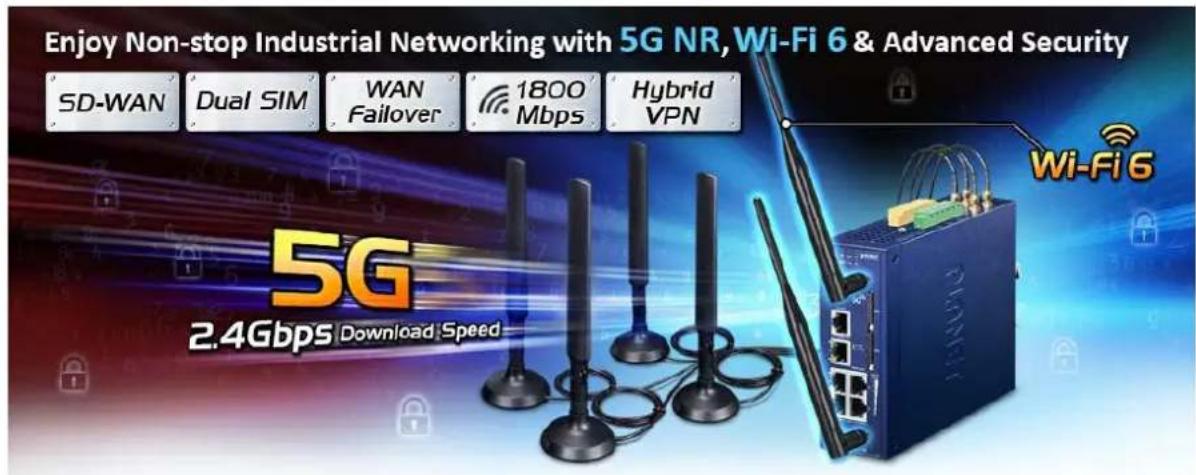
PLANET ICG-2515 series is an industrial-grade wireless cellular gateway for demanding mobile applications, M2M (machine-to-machine) and IoT deployments. Upgraded to the latest cellular technology of 5G NR (new radio), the ICG-2515 series is able to provide ultra-fast broadband access with 5G cellular network. The ICG-2515 series also features five Ethernet ports (4 LANs and 1 WAN),
IEEE 11ax Wi-Fi capability, serial port (RS485), DI and DO interfaces, and VPN technology bundled in a compact yet rugged metal case. It establishes a fast cellular connection between Ethernet and serial port equipped devices. The ICG-2515 series is an integrated 5G NR and Wi-Fi 6 solution for industrial automation, digital factory and other industrial applications.
text_image
Enjoy Non-stop Industrial Networking with 5G NR, Wi-Fi 6 & Advanced Security SD-WAN Dual SIM WAN Failover 1800 Mbps Hybrid VPN 5G 2.4Gbps Download Speed Wi-Fi 6Automatic Failover between 5G NR and Gigabit WAN
Designed with 5G NR and Gigabit Ethernet WAN interfaces, the ICG-2515 series ensures Internet connectivity by featuring failover functionality between 5G NR and GbE WAN. The ICG-2515 series provides flexibility to set priority for 5G NR or GbE WAN connection. When the main WAN interface fails, the secondary WAN interface will automatically back up the connection to ensure always-on connectivity.

flowchart
graph LR
    A["Internet"] -->|Cable| B["5G NR"]
    B --> C["Failover"]
    C --> D["Industrial 5G NR Cellular Gateway"]
Ultra-Fast Speed 4G/5G Network\*
The ICG-2515 series supports 5G NR DL speeds higher than 2.4 Gbps and 4G LTE DL speeds of up to 1 Gbps. The wide spectrum bandwidth accelerates internet speeds and reduces network latency for premium and time-sensitive connectivity services. The ICG-2515 series also supports multi-band connectivity including LTE FDD/TDD, WCDMA and GSM for a wide range of applications.
*The real 5G NR/4G LTE data rate is dependent on local service provider.
Up to download speed 2.4 Gbps

text_image
5G 10x faster than 4GDual SIM Design
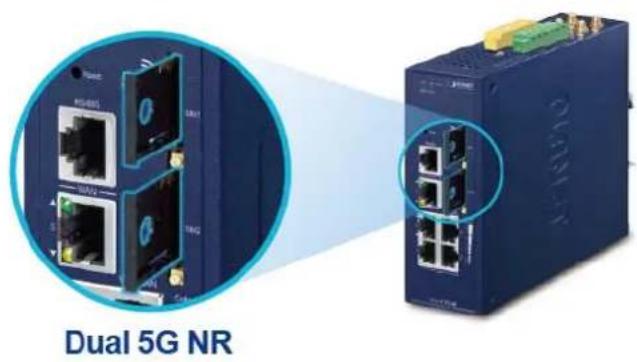
To enhance reliability, the ICG-2515 series is equipped with dual SIM slots that support failover and roaming over to ensure uninterrupted connectivity for mission-critical cellular communications. It provides a more flexible and easier way for users to create an instant network sharing service via 5G-NR in public places like transportations, outdoor events, etc.
natural_image
Illustration of a Dual 5G NR networking device showing internal network ports and external connections (no text or symbols on the device itself)GPS Included
The ICG-2515 series is equipped with (global positioning system) feature. It adopts the 5G-NR technology that includes multiple global navigation systems (GPS/GLONASS/BeiDou/Galileo/QZSS). It helps to position location of cellular gateway based on a network of satellites that continuously transmits necessary data. More signals transmitted from more satellites can triangulate its location on the ground, meaning any location can be easily tracked.
GNSS Positioning
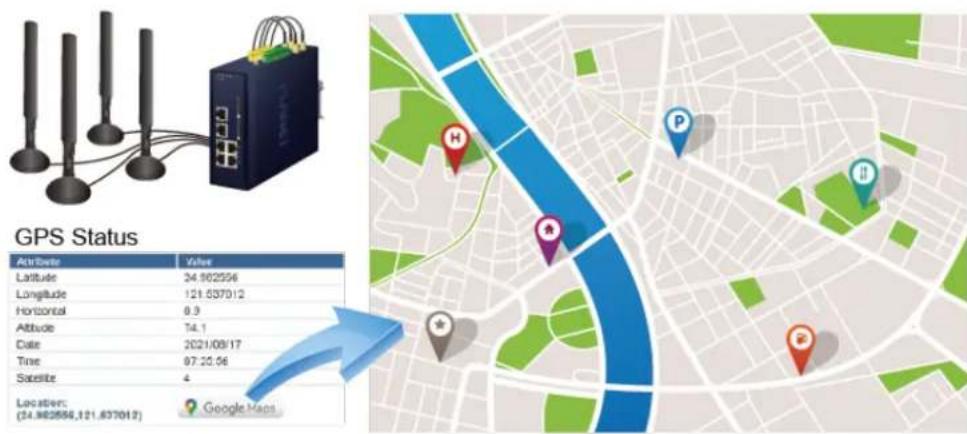
text_image
GPS Status AchRate Value Latitude 34.962556 Longitude 121.637012 Horizontal 8.3 Altitude 74.1 Cate 2021/08/17 Time 07:22:06 Satellite 4 Locatien: (54.962556,121.637012) Google MapsIdeal High-Availability VPN Security Cellular gateway Solution for Industrial Environment
The ICG-2515 series provides complete data security and privacy for accessing and exchanging the most sensitive data, built-in IPSec VPN function with DES/3DES/AES encryption and MD5/SHA-1/SHA-256/SHA-384/SHA-512 authentication, and GRE, SSL, PPTP and L2TP server mechanism. The full VPN capability in the ICG-2515 series makes the connection secure, more flexible, and more capable.

flowchart
graph LR
    A["Industrial 5G NR Cellular Gateway"] --> B["Failover Connection"]
    B --> C["Content Filtering"]
    C --> D["VPN Tunnel"]
    D --> E["Warehouse"]
    style A fill:#f9f,stroke:#333
    style B fill:#ccf,stroke:#333
    style C fill:#cfc,stroke:#333
    style D fill:#fcc,stroke:#333
Wireless 11ax Brings Excellent Data Link Speed (Wi-Fi mode only)
The ICG-2515 series is designed with high power amplifier and 2 highly-sensitive antennas which provide stronger signal and excellent coverage even in the wide-ranging or bad environment. With adjustable transmit power option, the administrator can flexibly reduce or increase the output power for various environments, thus reducing interference to achieve maximum performance. Equipped with the next-generation Wi-Fi 6 (802.11ax) wireless network standard, the total bandwidth reaches 1800Mbps, and the 2-stream transmission technology improves the transmission efficiency of multiple devices, making AR/VR/IoT applications smoother. The IEEE 802.11ax also optimizes MU-MIMO (Multi-User MIMO) mechanism to serve multiple devices simultaneously.
Wi-Fi Deployments and Authentication with Simplified Management
The ICG-2515 series also provides a built-in AP Controller, Captive Portal, RADIUS and a DHCP server to facilitate small and medium businesses to deploy secure employee and guest access services without any additional server. The ICG-2515 series can offer a secure Wi-Fi network with easy installation for your business.
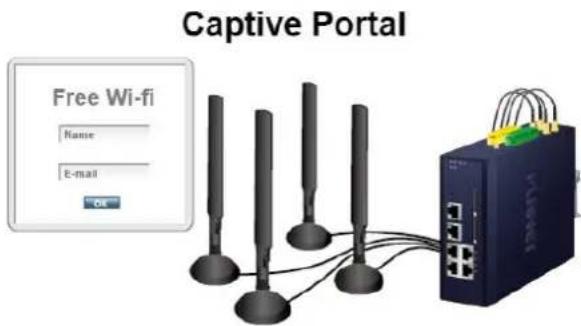
text_image
Captive Portal Free Wi-fi Name E-mail OKCentralized Remote Control of Managed APs
The ICG-2515 series provides centralized management of PLANET Smart AP series via a user-friendly Web GUI. It's easy to configure AP for the wireless SSID, radio band and security settings. With a four-step configuration process, wireless profiles for different purposes can be simultaneously delivered to multiple APs or AP groups to minimize deployment time, effort and cost.
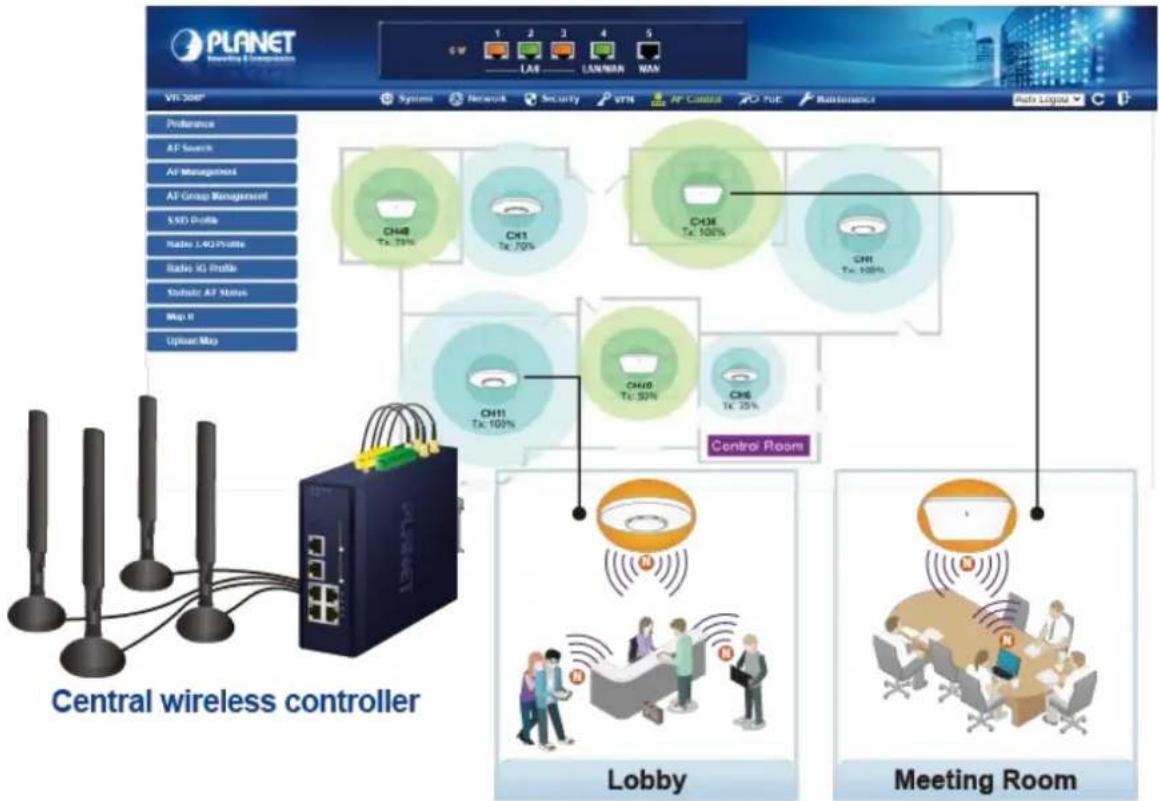
flowchart
graph TD
    subgraph Central wireless controller
        CH48["Tx: 75%"]
        CH1["Tx: 70%"]
        CH38["Tx: 100%"]
        CH6["Tx: 25%"]
    end

    subgraph Central room
        CH11["Tx: 100%"]
        CH48["Tx: 90%"]
        CH38["Tx: 100%"]
    end

    subgraph Lobby
        CH48["Lobby"]
        CH6["Lobby"]
    end

    subgraph Meeting Room
        CH6["Lobby"]
        CH48["Lobby"]
    end

    VIT-200P["PLANET\nRevolving & Compression"] -->|1 2 3 4 5| LAN/MAN/WAN
    style VIT-200P fill:#f9f,stroke:#333
    style Central wireless controller fill:#ccf,stroke:#333
    style Lobby fill:#cfc,stroke:#333
    style Meeting Room fill:#fcc,stroke:#333
For example, to configure multiple Smart APs of the same model, the ICG-2515 series allows clustering them to a managed group for unified management. According to requirements, wireless APs can be flexibly expanded or removed from a wireless AP group at any time. The AP cluster benefits bulk provision and bulk firmware upgrade through single entry point instead of having to configure settings in each of them separately.
Simplified Cluster Management with 4 Steps

flowchart
graph LR
    A["Search"] --> B["Add Profile"]
    B --> C["Batch Provisioning"]
    C --> D["Map It"]
Excellent Ability in Threat Defense
The ICG-2515 series has built-in SPI (stateful packet inspection) firewall and DoS/DDoS attack mitigation functions to provide high efficiency and extensive protection for your network. Thus, virtual server and DMZ functions can let you set up servers in the Intranet and still provide services to the Internet users.
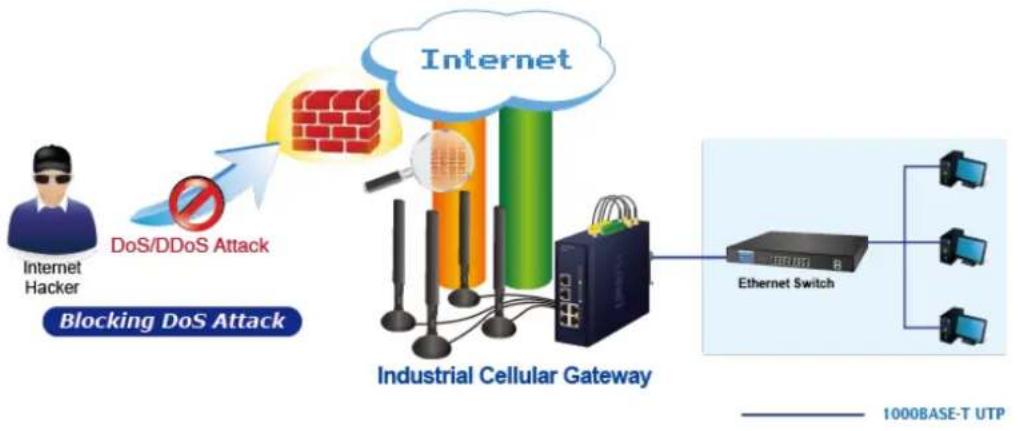
flowchart
graph TD
    A["Internet Hacker"] --> B["DoS/DDoS Attack"]
    B --> C["Internet"]
    C --> D["Industrial Cellular Gateway"]
    D --> E["Ethernet Switch"]
    E --> F["1000BASE-T UTP"]
    style A fill:#f9f,stroke:#333
    style B fill:#ccf,stroke:#333
    style C fill:#cfc,stroke:#333
    style D fill:#fcc,stroke:#333
    style E fill:#cff,stroke:#333
    style F fill:#ffc,stroke:#333
Cybersecurity Network Solution to Minimize Security Risks
The cybersecurity feature included to protect the switch management in a mission-critical network virtually needs no effort and cost to install. For efficient management, the ICG-2515 series is equipped with HTTPS web and SNMP management interfaces. With the built-in web-based management interface, the ICG-2515 series offers an easy-to-use, platform independent management and configuration facility. The ICG-2515 series supports SNMP and it can be managed via any management software based on the standard SNMP protocol.
Maximizing Work Efficiency with PLANET SD-WAN Gateway
PLANET ICG-2515FW-NR incorporated in SD-WAN (software-defined wide area network) function can greatly increase WAN optimization for multiple WAN links to be managed. With SD-WAN, users can connect any application across all available network connections at every site. It improves application performance and provides a high-quality user experience for increasing business productivity and reducing IT costs.
1.3 Features
Key Features
- Global 5G NR (NSA/SA)/4G LTE network with dual SIM design for cellular network redundancy
• Automatic failover between 5G NR and Wired WAN (Ethernet port or SFP port) - Complies with IEEE 802.11ax and IEEE 802.11a/b/g/n/ac standards (Wireless model only)
• One 1000BASE-X SFP slot (ICG-2515F-NR or ICG-2515FW-NR only) - 2 x DI/DO and 1 serial port (RS485) for Modbus applications
• SSL VPN and robust hybrid VPN (IPSec/PPTP/L2TP over IPSec)
• Stateful packet inspection (SPI) firewall and content filtering - Blocks DoS/DDOS attack, port range forwarding
• High Availability, AP Controller, Captive Portal and RADIUS - Planet NMS controller system and CloudViewer app supported
- -45 to 75 degrees C operating temperature; DIN-rail and fanless designs
Hardware
ICG-2515-NR and ICG-2515W-NR:
• 3 x 10/100/1000BASE-T RJ45 LAN ports, auto-negotiation, auto MDI/MDI-X
• 1 x 10/100/1000BASE-T RJ45 LAN/WAN port, auto-negotiation, auto MDI/MDI-X
• 1 x 10/100/1000BASE-T RJ45 WAN port, auto-negotiation, auto MDI/MDI-X
ICG-2515F-NR and ICG-2515FW-NR:
• 3 x 10/100/1000BASE-T RJ45 LAN ports, auto-negotiation, auto MDI/MDI-X
• 1 x 10/100/1000BASE-T RJ45 LAN/WAN port, auto-negotiation, auto MDI/MDI-X
• 1 x 1000BASE-X SFP slot (WAN/LAN)
All models have
• 4 x 5G NR antennas
- 2 x SIM card slots
• 1 x serial console port (RS485)
- 1 x reset button
Cellular Interface
• Supports multi-band connectivity with 5G NR (NSA/SA), LTE-FDD, LTE-TDD, and WCDMA
• Built-in SIM and broadband backup for network redundancy
• Four detachable antennas for 5G NR connection
• LED indicators for signal strength and connection status
RF Interface Characteristics (Wireless model only)
- Features 2.4GHz (802.11b/g/n/ax) and 5GHz (802.11a/n/ac/ax) dual band for carrying high load traffic
• 2T2R MIMO technology for enhanced throughput and coverage - Provides multiple adjustable transmit power control
• High speed up to 1.8Gbps (600Mbps for 2.4GHz or 1200Mbps for 5GHz) wireless data rate
IP Routing Feature
- Static Route
- Dynamic Route
- OSPF
Firewall Security
- Cybersecurity
• Stateful Packet Inspection (SPI) firewall - Blocks DoS/DDoS attack
- Content Filtering
• MAC Filtering and IP Filtering
• NAT ALGs (Application Layer Gateway) - Blocks SYN/ICMP Flooding
VPN Features
- IPSec/Remote Server (Net-to-Net, Host-to-Net), GRE, PPTP Server, L2TP Server, SSL Server/Client (Open VPN)
• Max. Connection Tunnel Entries: 60 VPN tunnels,
• Encryption methods: DES, 3DES, AES, AES-128/192/256 - Authentication methods: MD5, SHA-1, SHA-256, SHA-384, SHA-512
Networking
- Outbound load balancing for Ethernet WANs
• Auto-failover between Ethernet WANs and cellular network
• High Availability - Captive Portal
• RADIUS Server/Client
• Static IP/PPPoE/DHCP client for WAN
• DHCP server/NTP client for LAN
- Protocols: TCP/IP, UDP, ARP, IPv4, IPv6
• Port forwarding, QoS, DMZ, IGMP, UPnP, SNMPv1,v2c, v3
- MAC address clone
• DDNS: PLANET DDNS, Easy DDNS, DynDNS and No-IP
• PLANET SD-WAN function
Others
- Setup wizard
- Dashboard for real-time system overview
• Supported access by HTTP or HTTPS - Auto reboot
• PLANET NMS System and Smart Discovery Utility for deployment management - Planet CloudViewer app for real-time monitoring
1.4 Product Specifications
| Models | ICG-2515-NR | ICG-2515W-NR | ICG-2515F-NR | ICG-2515FW-NR | |
| Hardware Specifications | |||||
| Copper Ports | 5 10/100/1000BASE-T RJ45 Ethernet ports including3 LAN ports (Ports 1 to 3)1 LAN/WAN port (Port 4)1 WAN port (Port 5) | 4 10/100/1000BASE-T RJ45 Ethernet ports including3 LAN ports (Ports 1 to 3)1 LAN/WAN port (Port 4) | |||
| Fiber Port | - | 1 1000BASE-X SFP slot including1 LAN/WAN port (Port 5) | |||
| Serial Interface | RJ45 serial port | ||||
| SIM Interface | 2 SIM card slots with mini-SIM card tray | ||||
| Cellular Antenna | 5 dBi external antennas with SMA connectors for 5G-NR | ||||
| DI & DO Interfaces | 2 Digital Input (DI):Level 0 : -24V~2.1V (±0.1V)Level 1 : 2.1V~24V (±0.1V)Input Load to 24V DC, 10mA max.2 Digital Output (DO):Open collector to 24V DC, 100mA max. | ||||
| Connector | Removable 6-pin terminal block for power inputPin 1/2 for Power 1, Pin 3/4 for fault alarm, Pin 5/6 for Power 2 | ||||
| Reset Button | < 5 sec: System reboot>5 sec: Factory default | ||||
| Enclosure | IP30 metal case | ||||
| Installation | DIN rail, desktop, wall-mounting | ||||
| Dimensions | 50 x 135 x 135 mm (W x D x H) | ||||
| Weight | 0.8 kg | 0.9 kg | 0.8 kg | 0.9 kg | |
| Power Requirements | 9~54V DC, 1.5A | ||||
| Power Consumption | 6.16 W/21.02 BTU | 10 W /34.12 BTU | 5.94 W/20.27 BTU | 11.34 W/38.69 BTU | |
| LED Indicators | System | P1 (Green), P2 (Green), Alarm (Red), I/O (Red) | |||
| Ethernet | Ports 1-4 and WAN Port:1000 LNK/ACT (Green)10/100 LNK/ACT (Amber) | Ports 1-4:1000 LNK/ACT (Green)10/100 LNK/ACT (Amber) | |||
| Fiber | Port 5:1000 LNK/ACT (Green) | ||||
| Cellular SIM | SIM1 and SIM2 (Green) | ||
| Cellular signal | 4 levels (Green) | ||
| Wi-Fi(Wi-Fi only) | 2.4G (Green), 5G (Green) | ||
| Multi Band Supports | |||
| 5G NR | n1/n2/n3/n5/n7/n8/n12/n20/n25/n28/n38/n40/n41/n48/n66/n71/n77/n78/n79 | ||
| LTE-FDD | B1/B2/B3/B4/B5/B7/B8/B12/B13/B14/B17/B18/B19/B20/B25/B26/B28/B29/B30/B32/B46/B66/B71 | ||
| LTE-TDD | B34/B38/B39/B40/B41/B42/B43/B48 | ||
| WCDMA | B1/B2/B3/B4/B5/B8 | ||
| GNSS | GPS L1+L5 dual bands/GLONASS/BeiDou/Galileo/QZSS | ||
| Data Transmission Throughput | 2.4Gbps (DL)/500Mbps (UL) for NR1Gbps (DL)/200Mbps (UL) for LTE42Mbps (DL)/5.76Mbps (UL) for HSPA+ | ||
| Wireless (Wi-Fi model only) | |||
| Standard | IEEE 802.11a/n/ac/ax 5GHzIEEE 802.11g/b/n/ax 2.4GHz | ||
| Band Mode | 2.4G & 5G concurrent mode | ||
| Frequency Range | 2.4GHz | America FCC: 2.412~2.462GHzEurope ETSI: 2.412GHz~2.472GHz | |
| 5GHz | 5.15GHz ~5.875GHz | ||
| Operating Channels | 2.4GHz | America FCC: 1~11Europe ETSI: 1~13 | |
| 5GHz | America FCC:Non-DFS: 36, 40, 44, 48, 149, 153, 157, 161, 165DFS: 52, 56, 60, 64, 100, 104, 108, 112, 116, 132, 136, 140Europe ETSI:Non-DFS: 36, 40, 44, 48, 149, 153, 157, 161, 165DFS: 52, 56, 60, 64, 100, 104, 108, 112, 116, 120, 124, 128, 132, 136, 140*5GHz channel list will vary in different countries according to their regulations. | ||
| Channel Width | 20MHz, 40MHz, 80MHz | ||
| Data Transmission Rates | Transmit: 600 Mbps* for 2.4 GHz and 1200 Mbps* for 5 GHzReceive: 600 Mbps* for 2.4 GHz and 1200 Mbps* for 5 GHz*The estimated transmission distance is based on the theory. The actual distance will vary in different environments. | ||
| Transmission Power | 11b: 23dbm+/- 1.5dbm @11Mbps11g: 20dbm+/- 1.5dbm @54Mbps11g/n: 20dBm +/- 1.5dbm @MCS7, HT2017dBm@MCS7,HT4011a: 19.5dBm +/- 1.5dbm @54Mbps11a/n: 19.5dBm+/- 1.5dbm @MCS7, HT2017dBm@MCS7, HT4011ac HT20: 20+/-1.5dBm @MCS811ac HT40: 17+/-1.5dBm @MCS911ac HT80: 14.5+/-1.5dBm @MCS911ax HT20: 20+/-1.5dBm @MCS911ax HT40: 17 +/- 1.5dBm @MCS911ax HT80: 14.5 +/- 1.5dBm @MCS11 | ||
| Encryption Security | WPA / WPA2 (TKIP/AES)WPA-PSK / WPA2-PSK (TKIP/AES) / WPA3-PSK (TKIP/AES)802.1x Authenticator | ||
| Wireless Advanced | Wi-Fi Multimedia (WMM)Auto channel selectionWireless output power managementMAC address filtering | ||
| Security Service | |||
| Firewall Security | CybersecurityStateful Packet Inspection (SPI)Blocks DoS/DDoS attack | ||
| ALG (Application Layer Gateway) | SIP, RTSP, FTP, H.323, TFTP | ||
| NAT | Port forwardingDMZ HostUPnP | ||
| Content Filtering | MAC filteringIP filteringWeb filtering | ||
| Bandwidth Management | Outbound load balancingFailover for dual-WANQoS (Quality of Service) | ||
| Networking | |||
| Operation Mode | Routing mode | ||
| Routing Protocol | Static Route, Dynamic Route (RIP), OSPF | ||
| VLAN | 802.1q Tag-based, Port-based, Multi-VLAN | ||
| Multicast | IGMP Proxy | ||
| NAT Throughput | Max. 900Mbps | ||
| Outbound Load Balancing | Supported algorithms: Weight | ||
| Protocol | IPv4, IPv6, TCP/IP, UDP, ARP, HTTP, HTTPS, NTP, DNS, PLANET DDNS,PLANET Easy DDNS, DHCP, PPPoE, SNMPv1/v2c/v3, | ||
| Key Features | HA (High Availability) | ||
| Advanced Functions | |||
| VPN | ■ IPSec/Remote Server (Net-to-Net, Host-to-Net)■ GRE■ PPTP Server■ L2TP Server■ SSL Server/Client (Open VPN) | ||
| VPN Tunnels | Max. 60 | ||
| VPN Throughput | Max. 108Mbps | ||
| Encryption Methods | DES, 3DES, AES or AES-128/192/256 encrypting | ||
| Authentication Methods | MD5/SHA-1/SHA-256/SHA-384/SHA-512 authentication algorithm | ||
| Management | |||
| Basic Management Interfaces | Web browserSNMP v1, v2cPLANET Smart Discovery utility and NMS controller supported | ||
| Secure Management Interfaces | SSHv2, TLSv1.2, SNMP v3 | ||
| System Log | System Event Log | ||
| Others | Setup wizardDashboardSystem status/serviceStatisticsConnection statusAuto rebootDiagnostics | ||
| Standards Conformance | |||
| Regulatory Compliance | CE, FCC | ||
| Environment | |||
| Operating | Temperature: -40 ~ 75 degrees CRelative humidity: 5 ~ 90% (non-condensing) | ||
| Storage | Temperature: -40 ~ 85 degrees CRelative humidity: 5 ~ 90% (non-condensing) | ||
Chapter 2. Hardware Introduction
2.1 Physical Descriptions
Front View
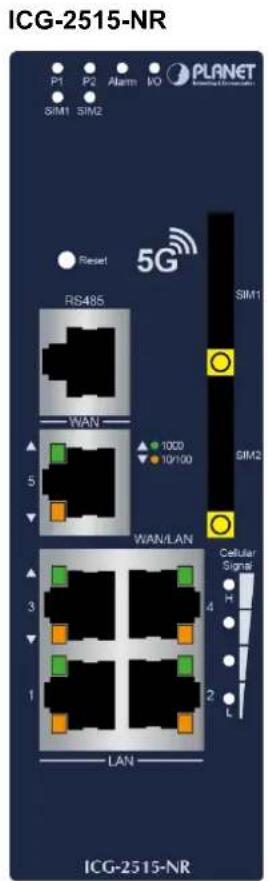
text_image
ICG-2515-NR P1 P2 Alarm IO PLANET SIM1 SIM2 Reset 5G RS485 WAN 5 10C0 10/100 WAN/LAN 3 1 LAN ICG-2515-NR SIM1 SIM2 Cellular Signs H L 4 2 ICG-2515-NR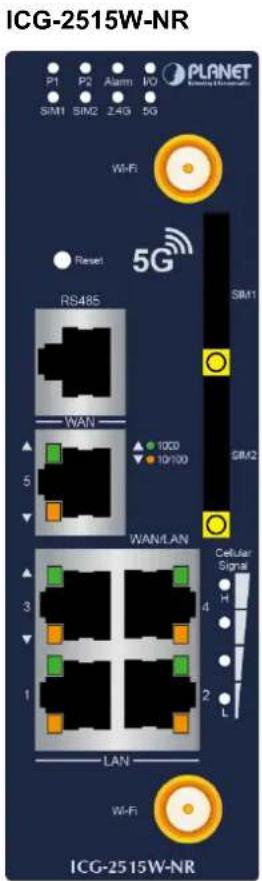
text_image
ICG-2515W-NR P1 P2 Alarm I/O PLANET SIM1 SIM2 243 5G WiFi Reset 5G RS485 WAN 1000 TOP100 SIM1 SIM2 WAN/LAN LAN Cellular Signal H L ICG-2515W-NR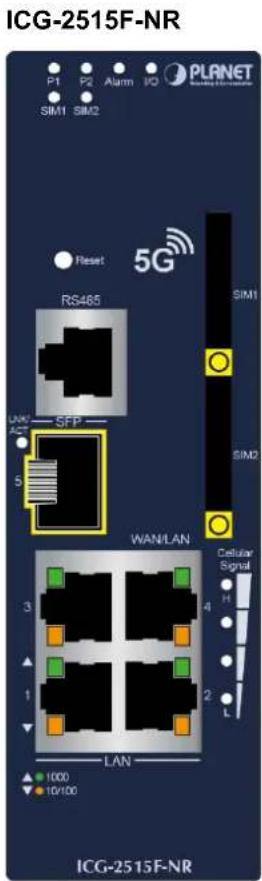
text_image
ICG-2515F-NR P1 P2 Alarm IO PLANET SIM1 SIM2 Reset 5G RS485 SFP LANK ACT 5 WAN/LAN 3 4 1 2 LAN 1000 10V/100 ICG-2515F-NR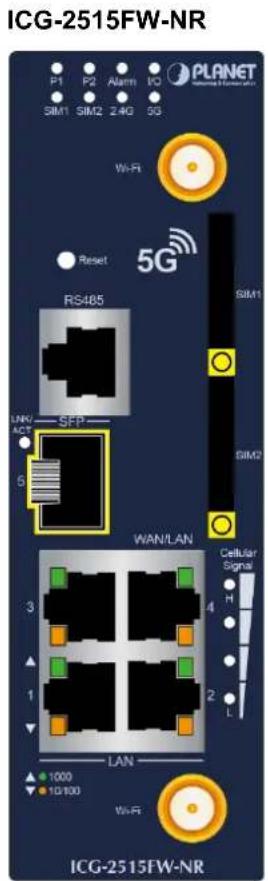
text_image
ICG-2515FW-NR P1 P2 Alarm IC Planet SIM1 SIM2 2.4G 5G Wi-Fi Reset 5G RS485 SFP LINK ACT 5 WAN/LAN Cellular Signal H 4 2 L LAN 1000 10/100 Wi-Fi ICG-2515FW-NRLED Definition:
■ System
| LED | Color | Function |
| P1 | Green | Lights to indicate DC power input 1 has power. |
| P2 | Green | Lights to indicate DC power input 2 has power. |
| Alarm | Red | Lights to indicate that power or port has failed. |
| I/O | Red | Lights to indicate that power or port has failed or DI has event. |
| SIM1 | Green | Lights to indicate the SIM1 is connecting successfully. |
| SIM2 | Green | Lights to indicate the SIM2 is connecting successfully. |
| 2.4G | Green | Lights up when 2.4G Wi-Fi service is enabled (Wireless model only) |
| 5G | Green | Lights up when 5G Wi-Fi service is enabled (Wireless model only) |
■ LAN Per 10/100/1000Mbps Port (Ports 1 to 4)
| LED | Color | Function | |
| 1000LNK/ACT | Green | Lights: | To indicate that the port is operating at 1000Mbps. |
| Blinks: | To indicate that the switch is actively sending or receiving data over that port. | ||
| 10/100LNK/ACT | Amber | Lights: | To indicate that the port is operating at 10/100Mbps. |
| Blinks: | To indicate that the switch is actively sending or receiving data over that port. | ||
■ WAN Per 10/100/1000Mbps Port (Port 5) (ICG-2515-NR and ICG-2515W-NR only)
| LED | Color | Function | |
| 1000LNK/ACT | Green | Lights: | To indicate that the port is operating at 1000Mbps. |
| Blinks: | To indicate that the switch is actively sending or receiving data over that port. | ||
| 10/100LNK/ACT | Amber | Lights: | To indicate that the port is operating at 10/100Mbps. |
| Blinks: | To indicate that the switch is actively sending or receiving data over that port. | ||
■ 1000BASE-X SFP Port (Port 5) (ICG-2515F-NR and ICG-2515FW-NR only)
| LED | Color | Function | |
| 1000LNK/ACT | Green | Lights: | To indicate that the port is operating at 1000Mbps. |
| Blinks: | To indicate that the switch is actively sending or receiving data over that port. | ||
2.2 Hardware Installation
Refer to the illustration and follow the simple steps below to quickly install your Cellular Gateway.
2.2.1 SIM Card Installation
A. Insert an ejector pin into the yellow button next to the tray to loosen the tray.

natural_image
Blue network switch device with multiple ports and connectors, showing internal connections and a red arrow indicating a specific port (no text or symbols visible)B. Pull out the tray gently from the tray slot. Place the SIM card on the tray with the gold-colored contacts facing upwards.
C. Insert the tray back into the tray slot.
● A mini SIM card with 5G NR and 4G LTE subscription

Mini SIM card

Micro SIM card

Nano SIM card
2.2.2 5G NR Antenna Installation
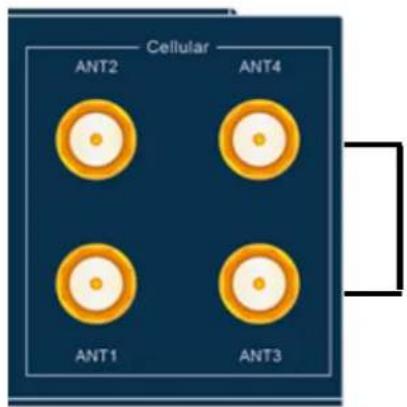
Step 1: Connect 5G NR antennas to the 5G NR antenna extension.
text_image
Cellular ANT2 ANT4 ANT1 ANT3Four SMA female connectors
Step 2: Fasten the 5G NR antenna extensions to the connectors.

natural_image
Blue LEXON network device with four black speakers connected to a multi-port network (no visible text or symbols)2.2.3 Wi-Fi Antenna Installation
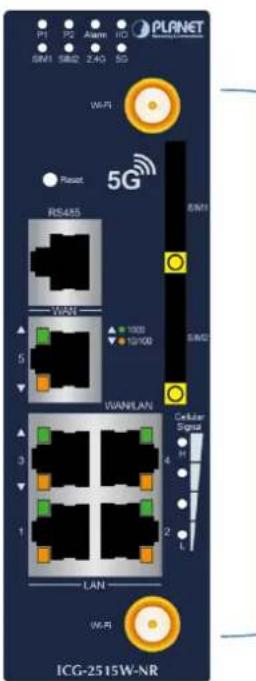
Step 1: Fasten the two dual-band antennas to the antenna connectors on the front panel of the Cellular Gateway.
Step 2: You can bend the antennas to fit your actual needs.
text_image
PLARNET P1 P2 Alarm ICD 64H 58H2 ZAG SG WiFi 5G RIS4AS 5G VAN1 100B 10/100 5 VANLAN 3 LAN 1 WiFi ICG-2515W-NR Cellular Signal L 2 4 H LTwo Wi-Fi
RP-SMA Connectors

Please use PLANET dual-band Wi-Fi antenna for high efficiency to avoid low efficacy.
2.2.4 Wiring the Power Inputs
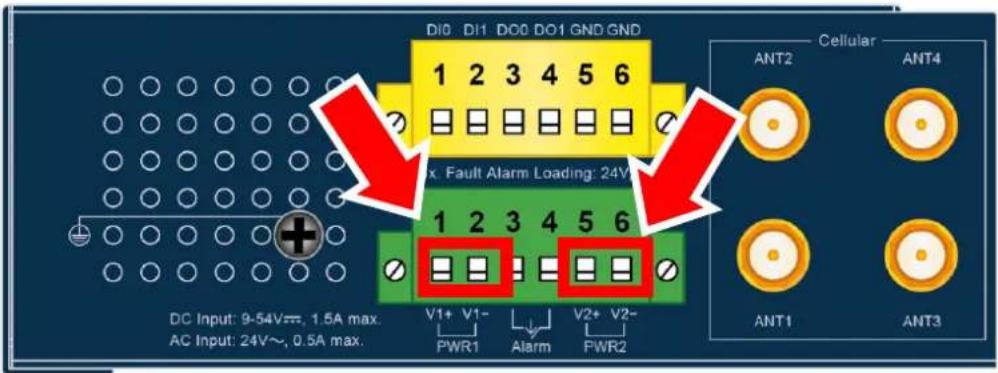
The 6-contact terminal block connector on the top panel of Cellular Gateway is used for two DC redundant power inputs. Please follow the steps below to insert the power wire.

When performing any of the procedures like inserting the wires or tightening the wire-clamp screws, make sure the power is OFF to prevent from getting an electric shock.
- Insert positive and negative DC power wires into contacts 1 and 2 for POWER 1, or 5 and 6 for POWER 2.
text_image
DI0 DI1 DO0 DO1 GND GND 1 2 3 4 5 6 Max. Fault Alarm Loading: 24V 1 2 3 4 5 6 DC Input: 9-54V=, 1.5A max. AC Input: 24V~, 0.5A max. V1+ V1- PWR1 Alarm V2+ V2- PWR2 ANT2 Cellular ANT4 ANT1 ANT3
Please make sure the input voltage is under the specification of the Cellular Gateway.
- Tighten the wire-clamp screws for preventing the wires from loosening.

natural_image
Green electrical connector pinout with four circular holes highlighted in red (no text or symbols)1 2 3 4 5 6
Power 1 Fault Power 2
+ - + -

The wire gauge for the terminal block should be in the range between 12 and 24 AWG.
CAUTION
PWR1 and PWR2 must provide the same DC voltage while operating with dual power input.
2.2.5 Grounding the Device
User MUST complete grounding wired with the device; otherwise, a sudden lightning could cause fatal damage to the device. EMD (Lightning) DAMAGE IS NOT COVERED UNDER WARRANTY.
2.2.6 Wiring the Fault Alarm Contact
The fault alarm contacts are in the middle of the terminal block connector as the picture shows below. Inserting the wires, the Cellular Gateway will detect the fault status of the power failure or port failure, and then will form an open circuit. The following illustration shows an application example for wiring the fault alarm contacts

text_image
1 2 3 4 5 6 Fault Alarm Contacts Fault The Fault Alarm Contacts are energized (CLOSE) for normal operation and will OPEN when failure occursInsert the wires into the fault alarm contacts

- The wire gauge for the terminal block should be in the range between 12 and 24 AWG.
- Alarm relay circuit accepts up to 24V (max.) and 1A current.
Chapter 3. Preparation
Before getting into the device's web UI, user has to check the network setting and configure PC's IP address.
3.1 Requirements
User is able to confirm the following items before configuration:
- Please confirm the network is working properly; it is strongly suggested to test your network connection by connecting your computer directly to ISP.
- Suggested operating systems: Windows 7/8/10/11, macOS 10.12 or later, Linux Kernel 2.6.18 or later, or other modern operating system are compatible with TCP/IP Protocols.
- Recommended web browsers: Google Chrome, Microsoft Edge or Mozilla Firefox.
3.2 Setting TCP/IP on your PC
The default IP address of the cellular gateway is 192.168.1.1, and the DHCP Server is on. Please set the IP address of the connected PC as DHCP client, and the PC will get IP address automatically from the VPN cellular gateway
Please refer to the following to set the IP address of the connected PC.
Windows 7/8
If you are using Windows 7/8, please refer to the following:
- Click on the network icon from the right side of the taskbar and then click on "Open Network and Sharing Center".

text_image
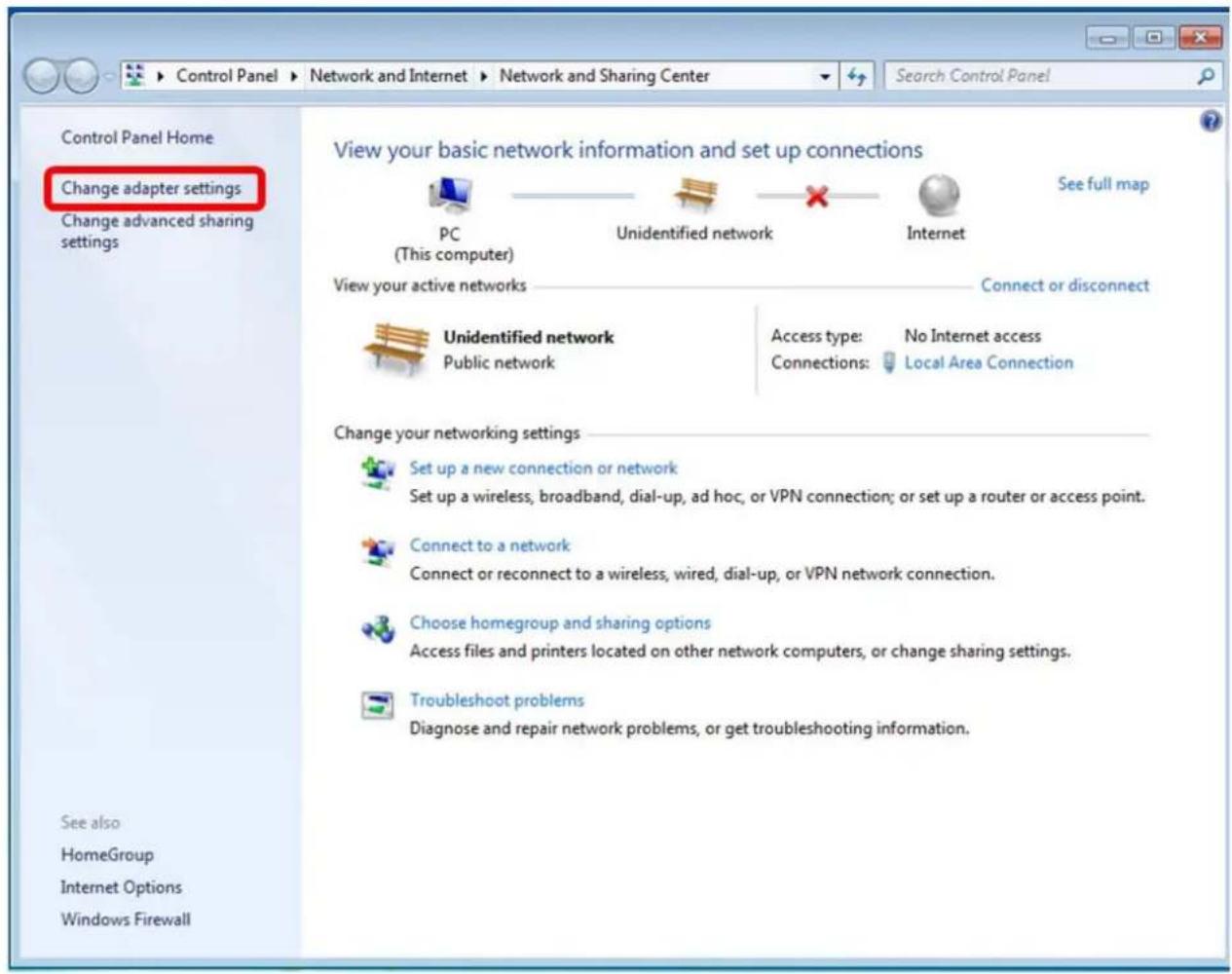
Currently connected to: Unidentified network No Internet access Open Network and Sharing Center 2:41 AM 9/3/20122. Click "Change adapter settings".
text_image
Control Panel Home Change adapter settings Change advanced sharing settings View your basic network information and set up connections PC (This computer) Unidentified network Internet See full map View your active networks Connect or disconnect Unidentified network Public network Access type: No Internet access Connections: Local Area Connection Change your networking settings Set up a new connection or network Set up a wireless, broadband, dial-up, ad hoc, or VPN connection; or set up a router or access point. Connect to a network Connect or reconnect to a wireless, wired, dial-up, or VPN network connection. Choose homegroup and sharing options Access files and printers located on other network computers, or change sharing settings. Troubleshoot problems Diagnose and repair network problems, or get troubleshooting information. See also HomeGroup Internet Options Windows Firewall3. Right-click on the Local Area Connection and select Properties.

text_image
Local Area Connection Unidentified network Intel(R) PRO/1000 Disable Status Diagnose Bridge Connections Create Shortcut Delete Rename Properties- Select Internet Protocol Version 4 (TCP/IPv4) and click Properties or directly double-click on Internet Protocol Version 4 (TCP/IPv4).
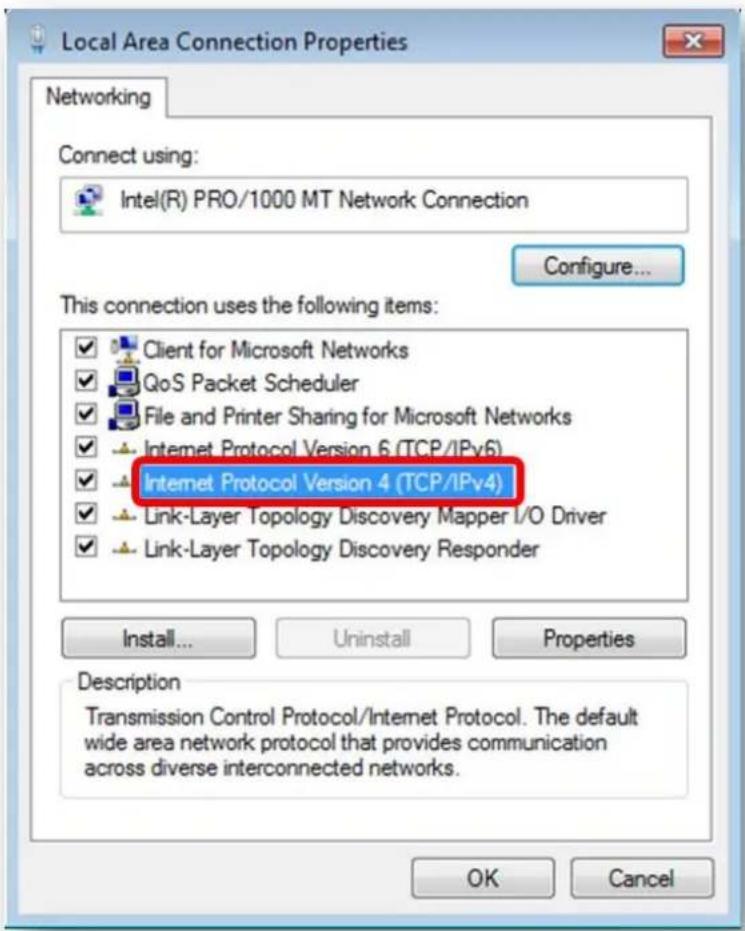
text_image
Local Area Connection Properties Networking Connect using: Intel(R) PRO/1000 MT Network Connection Configure... This connection uses the following items: ✓ Client for Microsoft Networks ✓ QoS Packet Scheduler ✓ File and Printer Sharing for Microsoft Networks ✓ Internet Protocol Version 6 (TCP/IPv6) ✓ Internet Protocol Version 4 (TCP/IPv4) ✓ Link-Layer Topology Discovery Mapper I/O Driver ✓ Link-Layer Topology Discovery Responder Install... Uninstall Properties Description Transmission Control Protocol/Internet Protocol. The default wide area network protocol that provides communication across diverse interconnected networks. OK Cancel- Select "Use the following IP address" and "Obtain DNS server address automatically", and then click the "OK" button.
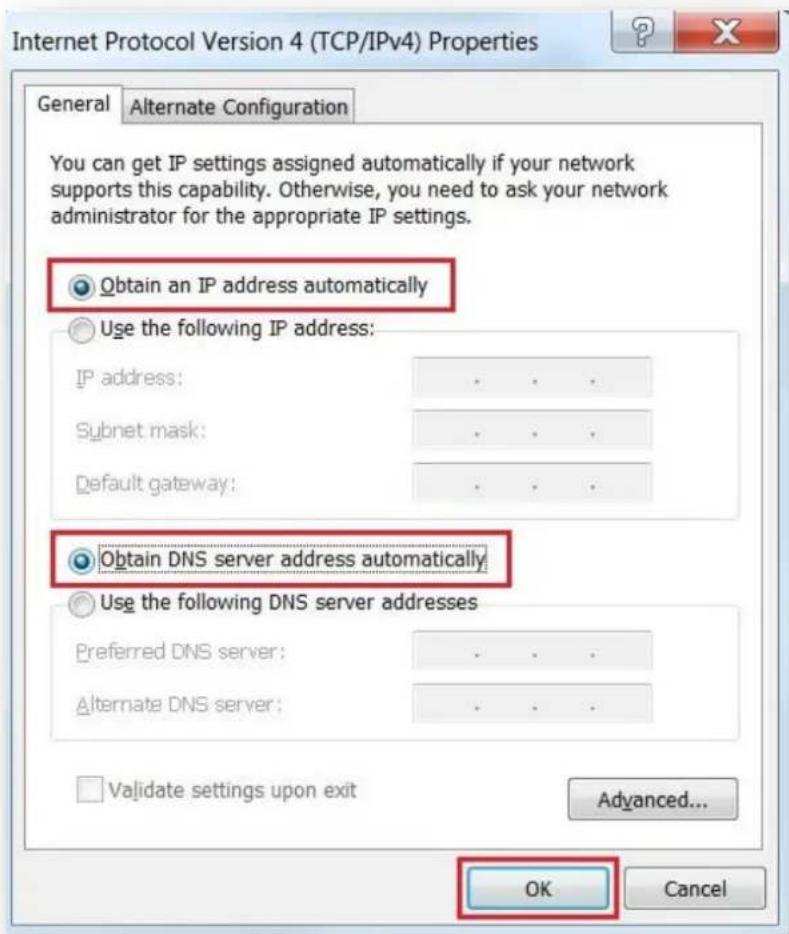
text_image
Internet Protocol Version 4 (TCP/IPv4) Properties General Alternate Configuration You can get IP settings assigned automatically if your network supports this capability. Otherwise, you need to ask your network administrator for the appropriate IP settings. Obtain an IP address automatically Use the following IP address: IP address: . . . Subnet mask: . . . Default gateway: . . . Obtain DNS server address automatically Use the following DNS server addresses Preferred DNS server: . . . Alternate DNS server: . . . Validate settings upon exit Advanced... OK CancelWindows 10
If you are using Windows 10, please refer to the following:
- In the search box on the taskbar, type "View network connections", and then select View network connections at the top of the list.
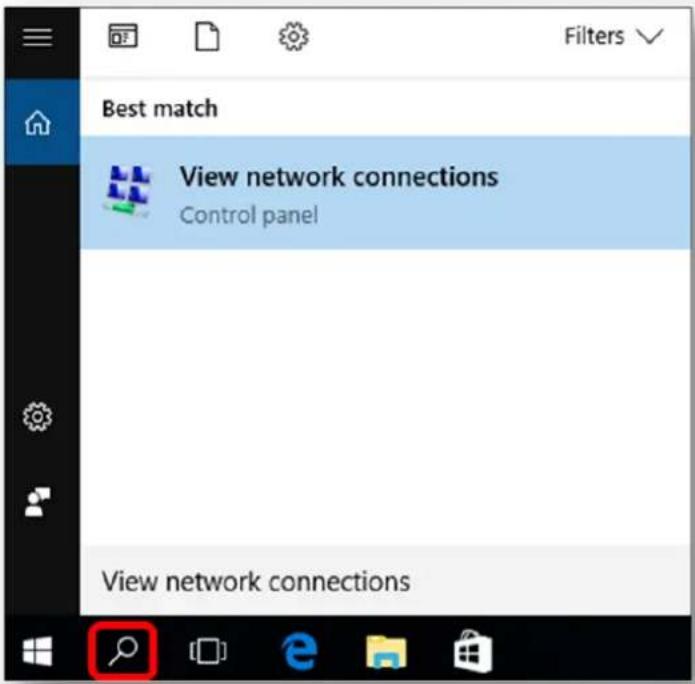
text_image
Best match View network connections Control panel View network connections- Right-click on the Local Area Connection and select Properties.

text_image
Local Area Connection Unidentified network Intel(R) PRO/1000 Disable Status Diagnose Bridge Connections Create Shortcut Delete Rename Properties- Select Internet Protocol Version 4 (TCP/IPv4) and click Properties or directly double-click on Internet Protocol Version 4 (TCP/IPv4).

text_image
Local Area Connection Properties Networking Connect using: Intel(R) PRO/1000 MT Network Connection Configure... This connection uses the following items: ✓ Client for Microsoft Networks ✓ QoS Packet Scheduler ✓ File and Printer Sharing for Microsoft Networks ✓ Internet Protocol Version 6 (TCP/IPv6) ✓ Internet Protocol Version 4 (TCP/IPv4) ✓ Link-Layer Topology Discovery Mapper I/O Driver ✓ Link-Layer Topology Discovery Responder Install... Uninstall Properties Description Transmission Control Protocol/Internet Protocol. The default wide area network protocol that provides communication across diverse interconnected networks. OK Cancel- Select "Use the following IP address" and "Obtain DNS server address automatically", and then click the "OK" button.

text_image
Internet Protocol Version 4 (TCP/IPv4) Properties General Alternate Configuration You can get IP settings assigned automatically if your network supports this capability. Otherwise, you need to ask your network administrator for the appropriate IP settings. Obtain an IP address automatically Use the following IP address: IP address: .. Subnet mask: .. Default gateway: .. Obtain DNS server address automatically Use the following DNS server addresses Preferred DNS server: .. Alternate DNS server: .. Validate settings upon exit Advanced... OK Cancel3.3 Planet Smart Discovery Utility
For easily listing the cellular gateway in your Ethernet environment, the search tool -- Planet Smart Discovery Utility -- is an ideal solution.
The following installation instructions are to guide you to running the Planet Smart Discovery Utility.
- Download the Planet Smart Discovery Utility in administrator PC.
- Run this utility as the following screen appears.
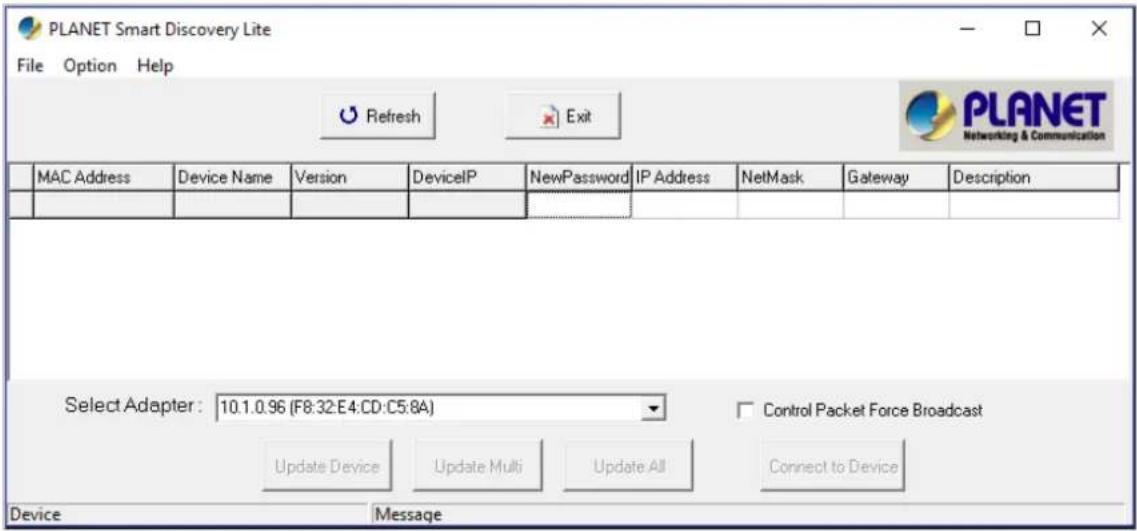
text_image
PLANET Smart Discovery Lite File Option Help Refresh Exit PLANET Networking & Communication MAC Address Device Name Version DeviceIP NewPassword IP Address NetMask Gateway Description Select Adapter: 10.1.0.96 (F8:32:E4:CD:C5:8A) Control Packet Force Broadcast Update Device Update Multi Update All Connect to Device Device MessageFigure 3-1-6: Planet Smart Discovery Utility Screen

If there are two LAN cards or above in the same administrator PC, choose a different LAN card by using the "Select Adapter" tool.
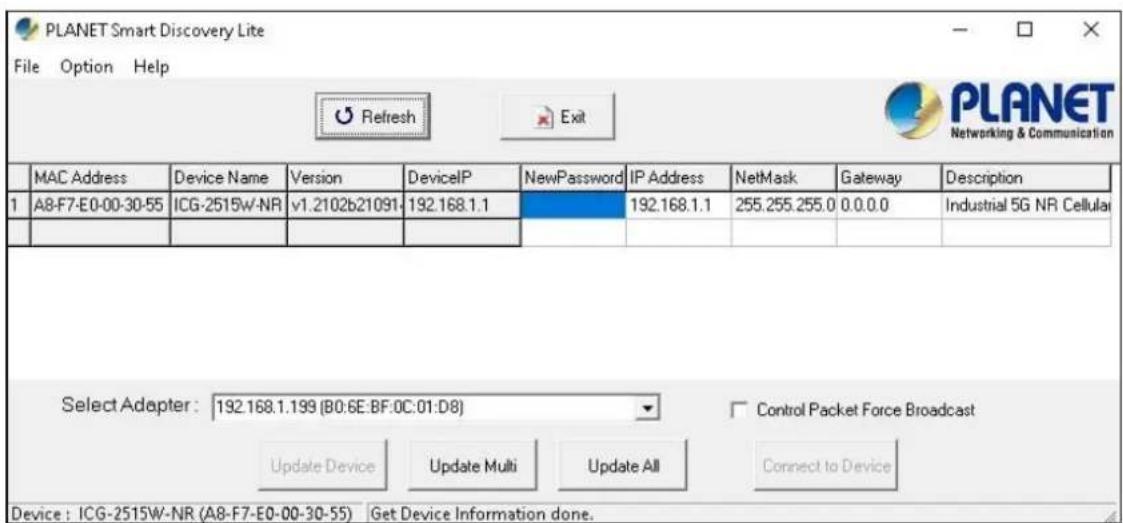
- Press the "Refresh" button for the currently connected devices in the discovery list as the screen shows below:
text_image
PLANET Smart Discovery Lite File Option Help Refresh Exit PLANET Networking & Communication MAC Address Device Name Version DeviceIP NewPassword IP Address NetMask Gateway Description 1 A8-F7-E0-00-30-55 ICG-2515W-NR v1.2102b21091 192.168.1.1 192.168.1.1 255.255.255.0 0.0.0.0 Industrial 5G NR Cellular Select Adapter: 192.168.1.199 (B0:6E:BF:0C:01:D8) Control Packet Force Broadcast Update Device Update Multi Update All Connect to Device Device: ICG-2515W-NR (A8-F7-E0-00-30-55) Get Device Information done.Figure 3-1-7: Planet Smart Discovery Utility Screen
-
This utility shows all necessary information from the devices, such as MAC address, device name, firmware version, and device IP subnet address. It can also assign new password, IP subnet address and description to the devices.
-
After setup is completed, press the "Update Device", "Update Multi" or "Update All" button to take effect. The functions of the 3 buttons above are shown below:
■ Update Device: use current setting on one single device.
■ Update Multi: use current setting on choose multi-devices.
■ Update All: use current setting on whole devices in the list.
The same functions mentioned above also can be found in "Option" tools bar.
-
To click the "Control Packet Force Broadcast" function, it allows you to assign a new setting value to the device under a different IP subnet address.
-
Press the "Connect to Device" button and the Web login screen appears.
Press the "Exit" button to shut down the Planet Smart Discovery Utility.
Chapter 4. Web-based Management
This chapter provides setup details of the device's Web-based Interface.
4.1 Introduction
The device can be configured with your Web browser. Before configuring, please make sure your PC is under the same IP segment with the device.
4.2 Logging in to the Cellular Gateway
Refer to the steps below to configure the cellular gateway:
Step 1. Connect the IT administrator's PC and cellular gateway's LAN port (port 1) to the same hub / switch, and then launch a browser to link the management interface address which is set to http://192.168.1.1 by default.

The DHCP server of the cellular gateway is enabled. Therefore, the LAN PC will get IP from the VPN cellular gateway. If user needs to set IP address of LAN PC manually, please set the IP address within the range between 192.168.1.2 and 192.168.1.254 inclusively, and assigned the subnet mask of 255.255.255.0.
Step 2.
A. The browser prompts you for the login credentials.

The following steps is based on the firmware version before October of 2024.
Default IP address: 192.168.1.1
Default user name: admin
Default password: admin
Default SSID (2.4G): PLANET_2.4G (Wireless model only)
Default SSID (5G): PLANET_5G (Wireless model only)
B. The browser prompts you for the login credentials.

The following step is based on the firmware version of October of 2024 or after.
Default IP address: 192.168.1.1
Default user name: admin
Default password: cg + the last 6 characters of the MAC ID in lowercase
Default 2.4GHz SSID: PLANET_2.4G (Wireless model only)
Default 5GHz SSID: PLANET_5G (Wireless model only)
When Login dialog box appears, please enter the default user name and password. Refer to Figure 4.2-1 to determine your initial login password. Default IP address is 192.168.1.1, default username is admin and default password is cg + the last 6 characters of the MAC ID in lowercase.
Find the MAC ID on your device label. The default password is "cg" followed by the last six lowercase characters of the MAC ID.
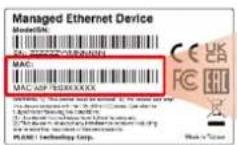
MAC ID: A8F7E0XXXXXX
Default Password: cgxxxxxx
("x" means the last 6 digits of the MAC address.
All characters should be in lowercase.)
Figure 4.2-1: MAC ID Label

Note
Administrators are strongly suggested to change the default admin and password to ensure system security.
4.3 Main Web Page
After a successful login, the main web page appears. The web main page displays the web panel, main menu, function menu, and the main information in the center.

text_image
Main Menu PLANET ICG-2515FW-NR Not Secure | 192.168.1 PLANET Networking & Communications I/O Alarm P2 P3 WAN1 4 2 3 1 System Network Cellular Security VPN AP Control Wireless Maintenance Auto Logout Wizard Dashboard System Status System Service Statistics Connection Status SFP Models Information High Availability RADIUS Captive Portal SNMP NMS Fault Alarm Digital Input/Output Modbus Remote Syslog Event Log Web Panel Port Status System Information 0% CPU 21.1% Memory LAN- LTE/NR Status GPS Status Attribute Value LatitudeFigure 4-3-1: Main Web Page
Web Panel
The web panel displays an image of the device's ports as shown in Figure 4-3-2.

text_image
I/O Alarm P2 P1 5 WAN1 4 2 3 1Figure 4-2: Web Panel
| Object | Icon | Function |
| RJ45 |  | To indicate the port comes with the RJ45 plug-in. |
 | To indicate network data is sending or receiving | |
| Fiber |  | To indicate the port comes with the fiber plug-in. |
 | To indicate network data is sending or receiving |
Main Menu
The main menu displays the product name, function menu, and main information in the center. Via the Web management, the administrator can set up the device by selecting the functions those listed in the function menu and button as shown in Figures 4-3-2 and 4-3-3.

text_image
System Network Cellular Security VPN AP Control Wireless MaintenanceFigure 4-3-2: Function Menu
| Object | Description |
| System | Provides System information of the cellular gateway |
| Network | Provides WAN, LAN and network configuration of the cellular gateway |
| Cellular | Provides Cellular configuration of the cellular gateway |
| Security | Provides Firewall and security configuration of the cellular gateway |
| VPN | Provides VPN configuration of the cellular gateway |
| AP Control | Provides AP Control configuration of the cellular gateway |
| Wireless | Provides wireless configuration of the cellular gateway (Wireless model only) |
| Maintenance | Provides firmware upgrade and setting file restore/backup configuration of the cellular gateway |

Figure 4-3-3: Function Button
| Object | Description |
| [YTIZ] | Click the "Refresh button" to refresh the current web page. |
 | Click the "Logout button" to log out the web UI of the cellular gateway. |
4.4 System
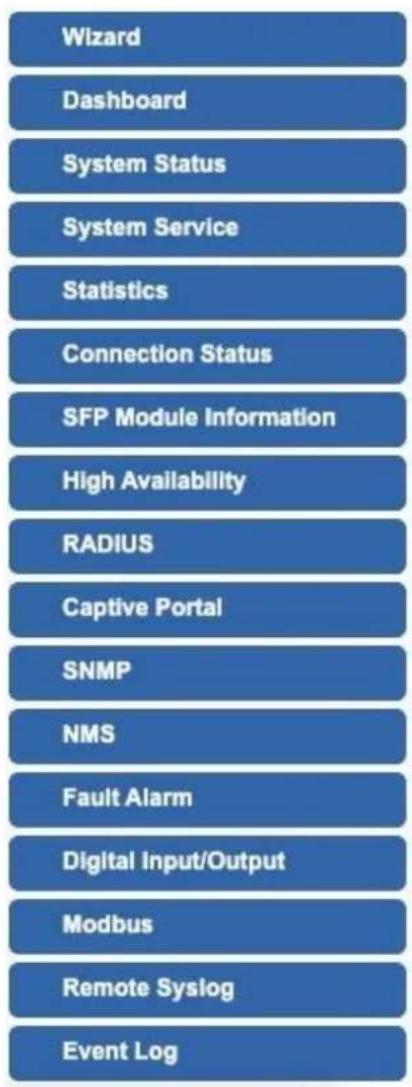
Use the System menu items to display and configure basic administrative details of the cellular gateway. The System menu shown in Figure 4-4-1 provides the following features to configure and monitor system.
text_image
Wizard Dashboard System Status System Service Statistics Connection Status SFP Module Information High Availability RADIUS Captive Portal SNMP NMS Fault Alarm Digital Input/Output Modbus Remote Syslog Event LogFigure 4-4-1: System Menu
| Object | Description |
| Wizard | The Wizard will guide the user to configuring the cellular gateway easily and quickly. |
| Dashboard | The overview of system information includes connection, port, and system status. |
| System Status | Display the status of the system, Device Information, LAN and WAN. |
| System Service | Display the status of the system, Secured Service and Server Service |
| Statistics | Display statistics information of network traffic of LAN and WAN. |
| Connection Status | Display the DHCP client table and the ARP table |
| SFP Module Information (SFP model only) | Display the physical or operational status of an SFP module via the SFP Module Information page (ICG-2515F-NR and ICG-2515FW-NR only) |
| High Availability | Enable/Disable High Availability on cellular gateway |
| RADIUS | Enable/Disable RADIUS on cellular gateway |
| Captive Portal | Enable/Disable Captive Portal on cellular gateway |
| SNMP | Display SNMP system information |
| NMS | Enable/Disable NMS on cellular gateway |
| Fault Alarm | One relay output for power failure. Alarm relay current carry ability |
| Digital Input/Output | Digital Input/Output Control Configuration page |
| Modbus | Configure the Modbus TCP Mode on this page |
| Remote Syslog | Enable Captive Portal on cellular gateway |
| Event Log | Display Event Log information |
4.4.1 Setup Wizard
The Wizard will guide the user to configuring the cellular gateway easily and quickly. There are different procedures in different operation modes. According to the operation mode you switch to, please follow the instructions below to configure the cellular gateway via Setup Wizard as shown in Figure 4-4-2.

flowchart
graph LR
    A["1 Account"] --> B["2 LAN"]
    B --> C["3 Priority"]
    C --> D["4 WAN"]
    D --> E["5 Wireless"]
    E --> F["6 Security"]
    F --> G["7 Completed"]
Figure 4-4-2: Setup Wizard
Step 1: Account Modification
Set up the Username and Password for the Account Modification as shown in Figure 4-4-3.

flowchart
graph LR
    A["1 Account"] --> B["2 LAN"]
    B --> C["3 Priority"]
    C --> D["4 WAN"]
    D --> E["5 Wireless"]
    E --> F["6 Security"]
    F --> G["7 Completed"]
Figure 4-4-3: Account Modification
Step 2: LAN Interface
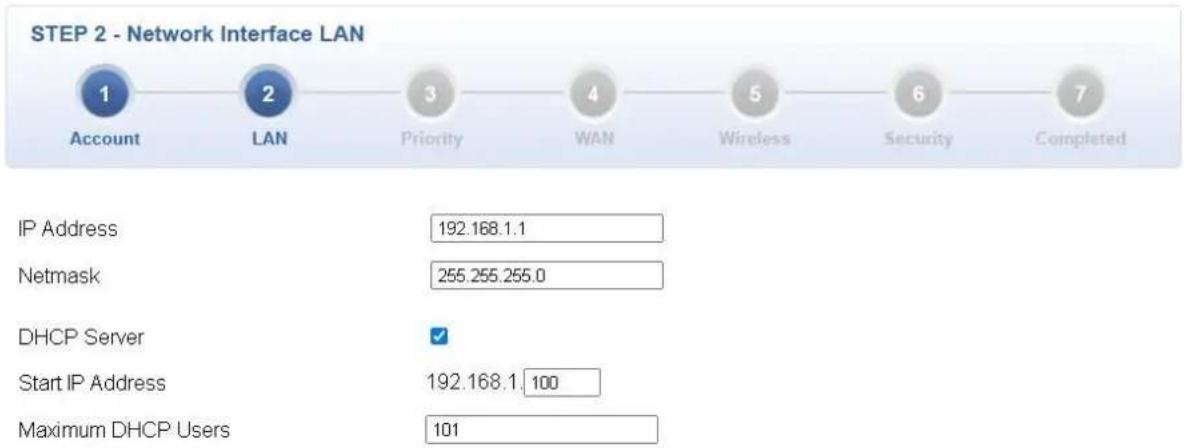
Set up the IP Address and Subnet Mask for the LAN interface as shown in Figure 4-4-4.
line
STEP 2 - Network Interface LAN | Stage | IP Address | Netmask | | :--- | :--- | :--- | | Account | 192.168.1.1 | 255.255.255.0 | | LAN | 192.168.1.1 | 100 | | Priority | 192.168.1.1 | 101 | | WAN | 192.168.1.1 | 101 | | Wireless | 192.168.1.1 | 101 | | Security | 192.168.1.1 | 101 | | Completed | 192.168.1.1 | 101 |Figure 4-4-4: Setup Wizard – LAN Configuration
| Object | Description |
| IP Address | Enter the IP address of your cellular gateway The default is 192.168.1.1. |
| Subnet Mask | An address code that determines the size of the network. Normally use 255.255.255.0 as the subnet mask. |
| DHCP Server | By default, the DHCP Server is enabled.If user needs to disable the function, please uncheck the box. |
| Start IP Address | By default, the start IP address is 192.168.1.100.Please do not set it to the same IP address of the cellular gateway |
| Maximum DHCP Users | By default, the maximum DHCP users are 101, which means the cellular gateway will provide DHCP client with IP address from 192.168.1.100 to 192.168.1.200 when the start IP address is 192.168.1.100. |
| Next | Press this button to the next step. |
| Cancel | Press this button to undo any changes made locally and revert to previously saved values. |
Step 3: Priority Interface
The cellular gateway supports two access modes on the WAN side shown in Figure 4-4-5
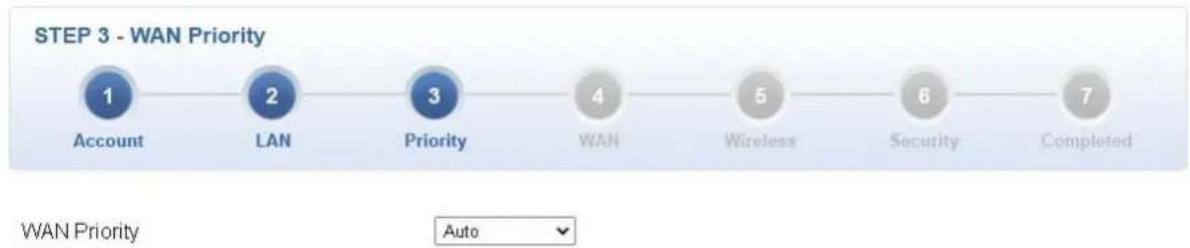
flowchart
graph LR
    A["1 Account"] --> B["2 LAN"]
    B --> C["3 Priority"]
    C --> D["4 WAN"]
    D --> E["5 Wireless"]
    E --> F["6 Security"]
    F --> G["7 Completed"]
Figure 4-4-5: Setup Wizard – WAN 1 Configuration
| Object | Description |
| WAN Priority | ■ Auto: WAN Ethernet is first priority and second priority is NR/LTE. The default is Auto.■ LTE/NR Only: The priority is only LTE/NR■ ETH Only: The priority is only Ethernet.■ LTE/NR First: LTE/NR is first priority and second priority is Ethernet |
Step 4: WAN Interface
The cellular gateway supports two access modes on the WAN side shown in Figure 4-4-6
STEP 4 - Network Interface WAN

flowchart
graph LR
    A["1 Account"] --> B["2 LAN"]
    B --> C["3 Priority"]
    C --> D["4 WAN"]
    D --> E["5 Wireless"]
    E --> F["6 Security"]
    F --> G["7 Completed"]
WAN1
WAN2
LTE/NR 1
LTENR 2
Connection Type
IP Address
Netmask
Default Gateway
DNS Server 1
DNS Server 2
DHCP
natural_image
Five horizontal white rectangular bars on a light background, no text or symbols present.Figure 4-4-6: Setup Wizard – WAN Configuration
Mode 1 -- Static IP
Select Static IP Address if all the Internet port's IP information is provided to you by your ISP. You will need to enter the IP Address, Netmask, Default Gateway and DNS Server provided to you by your ISP. Each IP address entered in the fields must be in the appropriate IP form, which are four octets separated by a dot (x.x.x.x). The cellular gateway will not accept the IP address if it is not in this format. The setup is shown in Figure 4-4-7.

text_image
WAN1 WAN2 LTE/NR 1 LTE/NR 2 Connection Type Static IP Address 210.61.134.96 Netmask 255.255.255.0 Default Gateway 210.61.134.254 DNS Server 1 8.8.8.8 DNS Server 2Figure 4-4-7: WAN Interface Setup – Static IP Setup
| Object | Description |
| IP Address | Enter the IP address assigned by your ISP. |
| Netmask | Enter the Netmask assigned by your ISP. |
| Default Gateway | Enter the Gateway assigned by your ISP. |
| DNS Server | The DNS server information will be supplied by your ISP. |
| Next | Press this button for the next step. |
| Previous | Press this button for the previous step. |
| Cancel | Press this button to undo any changes made locally and revert to previously saved values. |
Mode 2 -- DHCP Client
Select DHCP Client to obtain IP Address information automatically from your ISP. The setup is shown in Figure 4-4-8.

text_image
WAN1 WAN2 LTE/NR 1 LTE/NR 2 Connection Type DHCP IP Address Netmask Default Gateway DNS Server 1 DNS Server 2Figure 4-4-8: WAN Interface Setup – DHCP Setup
Step 4: WAN Interface (for ICG-2515F-NR & ICG-2515FW-NR)
The cellular gateway supports WAN 1 interface to be set to port 5 (SFP) or port 4 (RJ45) by user-defined method on the WAN side shown in Figure 4-4-9

text_image
WAN1 WAN2 LTE/NR 1 LTE/NR 2 Interface Port 4 - LAN/WAN ✓ Port 5 - SFP Connection Type DHCP IP Address Netmask Default Gateway DNS Server 1 DNS Server 2Figure 4-4-9: Setup Wizard – WAN Configuration
Mode 1 -- Static IP
Select Static IP Address if all the Internet port's IP information is provided to you by your ISP. You will need to enter the IP Address, Netmask, Default Gateway and DNS Server provided to you by your ISP. Each IP address entered in the fields must be in the appropriate IP form, which are four octets separated by a dot (x.x.x.x). The cellular gateway will not accept the IP address if it is not in this format.
| Object | Description |
| IP Address | Enter the IP address assigned by your ISP. |
| Netmask | Enter the Netmask assigned by your ISP. |
| Default Gateway | Enter the Gateway assigned by your ISP. |
| DNS Server | The DNS server information will be supplied by your ISP. |
| Next | Press this button for the next step. |
| Previous | Press this button for the previous step. |
| Cancel | Press this button to undo any changes made locally and revert to previously saved values. |
Mode 2 -- DHCP Client
Select DHCP Client to obtain IP Address information automatically from your ISP.
Step 5: Wireless Setting
Set up the Wireless Settings as shown in Figure 4-4-9.
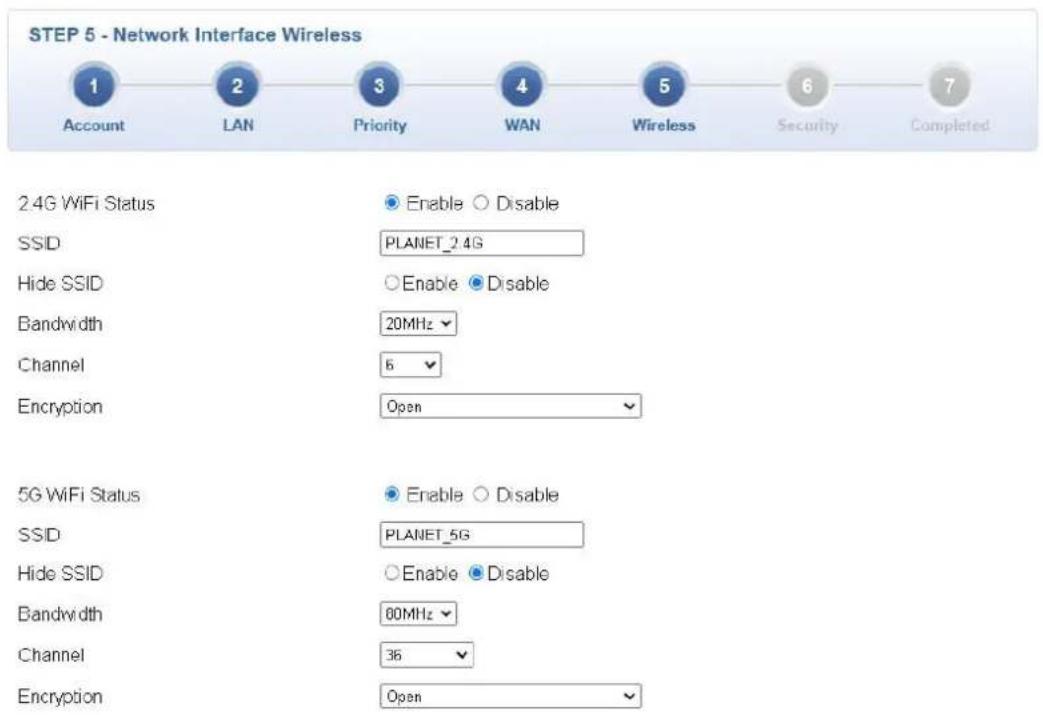
text_image
STEP 5 - Network Interface Wireless 1 Account LAN Priority WAN Wireless Security Completed 2.4G WiFi Status Enable Disable SSID PLANET_2.4G Hide SSID Enable Disable Bandwidth 20MHz Channel 6 Encryption Open 5G WiFi Status Enable Disable SSID PLANET_5G Hide SSID Enable Disable Bandwidth 80MHz Channel 36 Encryption OpenFigure 4-4-9: Setup Wizard – Security Setting
| Object | Description |
| 2.4G Wireless Status | Allows user to enable or disable 2.4G Wi-Fi |
| Wireless Name (SSID) | It is the wireless network name. The default 2.4G SSID is “PLANET_2.4G” |
| Hide SSID | Allows user to enable or disable SSID |
| Bandwidth | Select the operating channel width, “20MHz” or “40MHz” |
| Channel | It shows the channel of the CPE. Default 2.4GHz is channel 6. |
| Encryption | Select the wireless encryption. The default is “Open” |
| Wi-Fi Multimedia | Enable/Disable WMM (Wi-Fi Multimedia ) function |
| Object | Description |
| 5G Wireless Status | Allows user to enable or disable 5G Wi-Fi |
| Wireless Name (SSID) | It is the wireless network name. The default 5G SSID is “PLANET_5G” |
| Hide SSID | Allows user to enable or disable SSID |
| Bandwidth | Select the operating channel width, “20MHz”, “40MHz” or “80MHz” |
| Channel | It shows the channel of the CPE. Default 5GHz is channel 36. |
| Encryption | Select the wireless encryption. The default is “Open” |
| Wi-Fi Multimedia | Enable/Disable WMM (Wi-Fi Multimedia ) function |
Step 6: Security Setting
Set up the Security Settings as shown in Figure 4-4-10.
STEP 6 - Security Settings

Account

LAN

Priority

WAN

Wireless

Security

Completed
SPI Firewall
Block SYN Flood
Block ICMP Flood
Block WAN Ping
Remote Management
Enable ○ Disable
- Enable ○ Disable
○ Enable ● Disable
○ Enable ● Disable
○ Enable ● Disable
Figure 4-4-10: Setup Wizard – Security Setting
| Object | Description |
| SPI Firewall | The SPI Firewall prevents attack and improper access to network resources.The default configuration is enabled. |
| Block SYN Flood | SYN Flood is a popular attack way. DoS and DDoS are TCP protocols. Hackers like using this method to make a fake connection that involves the CPU, memory, and so on.The default configuration is enabled. |
| Block ICMP Flood | ICMP is kind of a pack of TCP/IP; its important function is to transfer simple signal on the Internet. There are two normal attack ways which hackers like to use, Ping of Death and Smurf attack.The default configuration is disabled. |
| Block WAN Ping | Enable the function to allow the Ping access from the Internet network.The default configuration is disabled. |
| Remote Management | Enable the function to allow the web server access of the cellular gateway from the Internet network.The default configuration is disabled. |
Step 7: Setup Completed
The page will show the summary of LAN, WAN and Security settings as shown in Figure 4-4-11.
STEP 7 - Setup Completed

flowchart
graph LR
    A["1 Account"] --> B["2 LAN"]
    B --> C["3 Priority"]
    C --> D["4 WAN"]
    D --> E["5 Wireless"]
    E --> F["6 Security"]
    F --> G["7 Completed"]
LAN Enable: Static IP: 192.168.1.1 / 255.255.255.0
WAN Priority: Auto
WAN1 Enable: DHCP
WAN2 Enable: OFF
LTE/NR 1 Enable: ON
LTE/NR 2 Enable: ON
2.4G WiFi Enable. ON SSID. PLANET_2.4G Bandwidth. 20MHz Channel. 6 Encryption. Open
Hide SSID: Disable
5G WiFi Enable. ON SSID. PLANET_50 Bandwidth. 80MHz Channel. 36 Encryption. Open Hide SSID: Disable
Hide SSID: Disable
Security Settings SPI Firewall: ON
Block SYN Flood: ON
Block ICMP Flood: OFF
Block WAN Ping: OFF
Remote Management: ON
Previous
Finish
Figure 4-4-11: Setup Wizard – Setup Completed
| Object | Description |
| Finish | Press this button to save and apply changes. |
| Previous | Press this button for the previous step. |
4.4.2 Dashboard
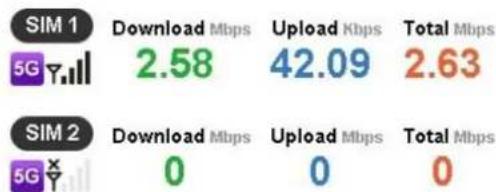
The dashboard provides an overview of system information including connection, port, and system status as shown in Figure 4-4-12.
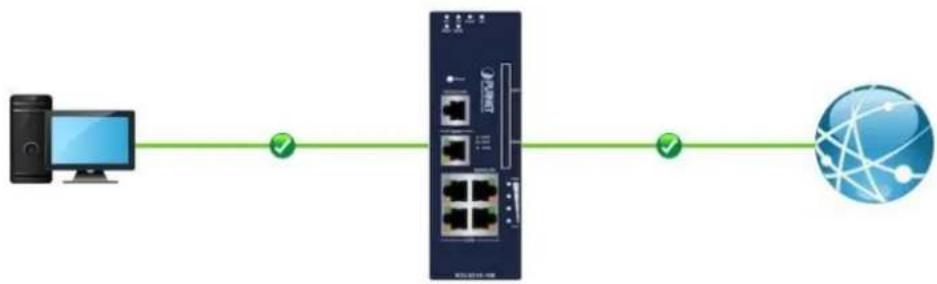
flowchart
graph LR
    A["电脑"] -->|✓| B["Switch"]
    B -->|✓| C[" globe with network topology"]
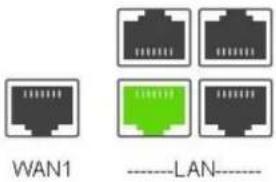
Port Status
text_image
WAN1 ----LAN----System Information

pie
| Category | Value | | -------- | ----- | | CPU | 5% | | Memory | 20% |LTE/NR Status
other
| SIM | Download Mbps | Upload Mbps | Total Mbps | |---|---|---|---| | SIM 1 | 2.58 | 42.09 | 2.63 | | SIM 2 | 0 | 0 | 0 |GPS Status
| Attribute | Value |
| Latitude | 24.982968 |
| Longitude | 121.536459 |
| Horizontal | 1.3 |
| Altitude | 64.1 |
| Date | 2021/10/07 |
| Time | 08:41:07 |
| Satellite | 5 |
Wireless Status
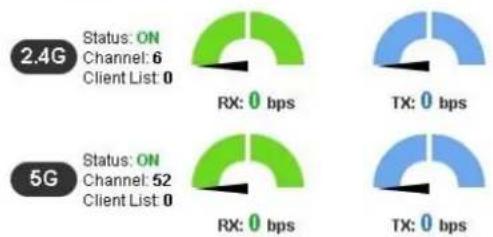
Figure 4-4-12: Dashboard
WAN/LAN Connection Status
| Object | Description |
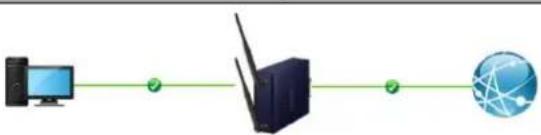 | The status means WAN is connected to Internet and LAN is connected. |
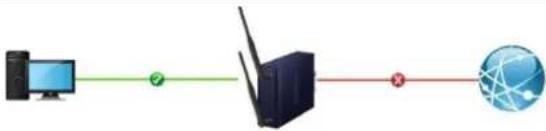 | The status means WAN is disconnected to Internet and LAN is connected. |
 | The status means WAN is connected to Internet and LAN is disconnected. |
Port Status
| Object | Description |
 | Ethernet port is in use. |
 | Ethernet port is not in use. |
 | Fiber port is in use. |
 | Fiber port is not in use. |
System Information
| Object | Description |
| CPU | Display the CPU loading |
| Memory | Display the memory usage |
LTE/NR Status
| Object | Description |
| SIM | SIM signal5G 5G signal4G signal3G 3G signal |
| Download | Download data rate of SIM |
| Upload | Upload data rate of SIM |
| Total | Total data rate of SIM |
Wireless Status
| Object | Description | |
 |  | Wireless is in use. |
| RX: 0 bps | TX: 0 bps | |
 |  | Wireless is not in use. |
| RX: 0 bps | TX: 0 bps | |
4.4.3 System Status
This page displays system status information as shown in Figure 4-4-13.
Device Information
| Model Name | ICG-2515W-NR |
| Firmware Version | v1.2102b211018 |
| Current Time | 2021-11-12 Friday 09:12:32 |
| Running Time | 0 day, 00:07:57 |
WAN1
| MAC Address | A8:F7:E0:87:85:58 |
| Connection Type | DHCP |
| Display Name | WAN1 |
| IP Address | 192.168.0.177 |
| Netmask | 255.255.255.0 |
| Default Gateway | 192.168.0.1 |
LAN
| MAC Address | A8:F7:E0:87:85:57 |
| IP Address | 192.168.1.1 |
| Netmask | 255.255.255.0 |
| DHCP Service | Enable |
| DHCP Start IP Address | 192.168.1.100 |
| DHCP End IP Address | 192.168.1.200 |
| Max DHCP Clients | 101 |
2.4GHz WiFi
| Status | ON |
| SSID | PLANET_2.4G |
| Channel | 6 |
| Encryption | WPA2 Personal (TKIP+AES) |
| MAC Address | A8:F7:E0:87:85:5C |
5GHz WiFi
| Status | ON |
| SSID | PLANET_5G |
| Channel | 36 |
| Encryption | WPA2 Personal (TKIP+AES) |
| MAC Address | A8:F7:E0:87:85:5D |
LTE/NR 1
| Activated SIM | SIM1 |
| SIM Status | Ready |
| Operator | Far EasTone |
| IP Address | 10.230.118.25 |
| Netmask | 255.255.255.252 |
| Default Gateway | 10.230.118.26 |
| Running Time | 00:13:06 |
| Roaming | No |
Figure 4-4-13: System Status
4.4.4 System Service
This page displays system service information as shown in Figure 4-4-14.
| Server Service | |||
| # | Action | Service | Status |
| 1 | Enabled | DHCP Service | DHCP Table: 1 |
| 2 | Disabled | DDNS Service | Not enabled |
| 3 | Enabled | WAN Priority | Auto |
| 4 | Enabled | SIM Priority | Auto SIM1 |
| 5 | Disabled | LTE/NR Roaming | -- |
| 6 | Disabled | Quality of Service | |
| 7 | Disabled | High Availability | |
| 8 | Disabled | RADIUS Service | |
| 9 | Disabled | Captive Portal | |
| 10 | Enabled | 2.4GHz WiFi | SSID: PLANET_2.4G |
| 11 | Enabled | 5GHz WiFi | SSID: PLANET_5G |
| # | Action | Service | Status |
| 1 | Enabled | Cybersecurity | TLS 1.1, TLS 1.2, TLS 1.3 |
| 2 | Enabled | SPI Firewall | |
| 3 | Disabled | MAC Filtering | (Active / Maximum Entries)0/32 |
| 4 | Disabled | IP Filtering | (Active / Maximum Entries)0/32 |
| 5 | Disabled | Web Filtering | (Active / Maximum Entries)0/32 |
| 6 | Disabled | IPSec VPN Server | (Active / Maximum Tunnels)0/32 |
| 7 | Disabled | GRE | (Active / Maximum Tunnels)0/5 |
| 8 | Disabled | PPTP | (Active / Maximum Tunnels)0/91 |
| 9 | Disabled | SSL VPN | (Active / Maximum Tunnels)0/100 |
| 10 | Disabled | L2TP | (Active Tunnels)0 |
Figure 4-4-14: System Service
4.4.5 Statistics
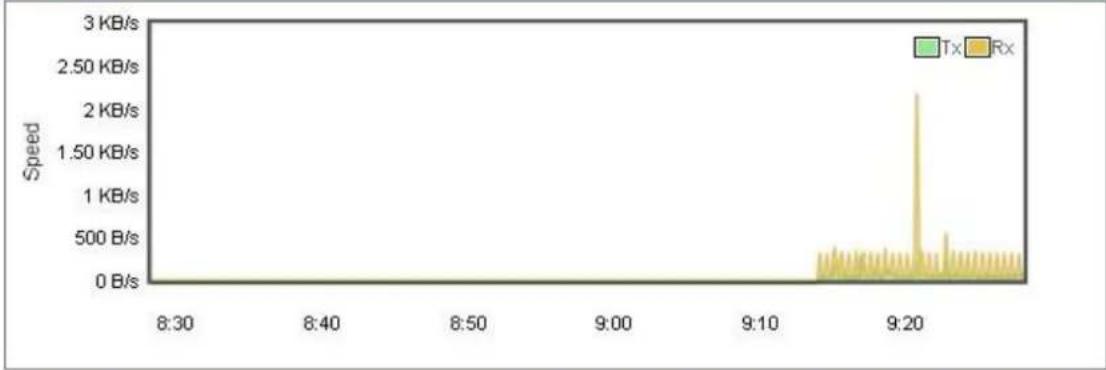
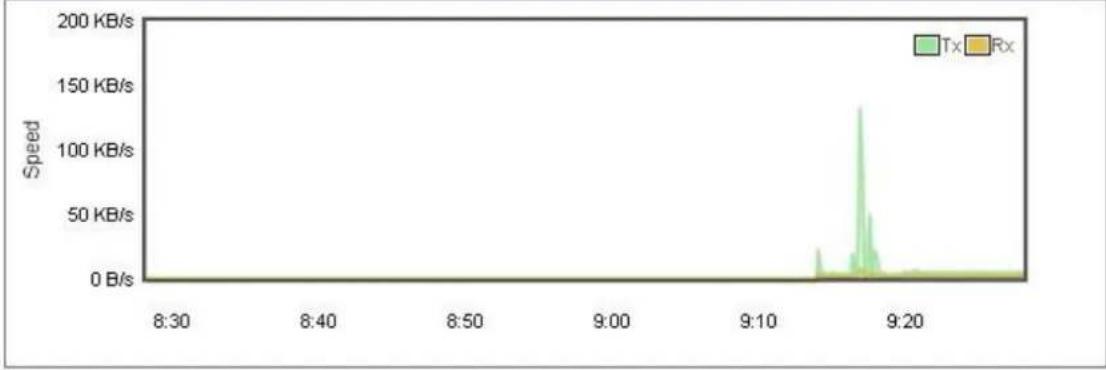
This page displays the number of packets that pass through the cellular gateway on the WAN and LAN. The statistics are shown in Figure 4-4-15.
WAN1
line
| Time | Speed | |-------|-----------| | 8:30 | 0 B/s | | 8:40 | 0 B/s | | 8:50 | 0 B/s | | 9:00 | 0 B/s | | 9:10 | 0 B/s | | 9:20 | 2 KB/s | | 9:30 | 0 B/s |LAN
line
| Time | Speed | |-------|-----------| | 8:30 | 0 B/s | | 8:40 | 0 B/s | | 8:50 | 0 B/s | | 9:00 | 0 B/s | | 9:10 | 0 B/s | | 9:20 | 0 B/s |Figure 4-4-15: Statistics
4.4.6 Connection Status
The page shows the DHCP Table and ARP Table. The status is shown in Figure 4-4-16.
| DHCP Table | |||
| Name | IP Address | MAC Address | Expiration Time |
| ARP Table | ||
| IP Address | MAC Address | ARP Type |
| 8.8.8.8 | 00:00:00:00:00:00 | unknow |
| 208.67.222.222 | 00:00:00:00:00:00 | unknow |
| 8.8.8.8 | 00:00:00:00:00:00 | unknow |
| 208.67.222.222 | 00:00:00:00:00:00 | unknow |
| 192.168.1.18 | 00:00:00:00:00:00 | unknow |
| 192.168.1.69 | 00:30:11:11:11:12 | dynamic |
| 192.168.1.69 | 00:30:11:11:11:12 | dynamic |
Figure 4-4-16: Connection Status
4.4.7 High Availability
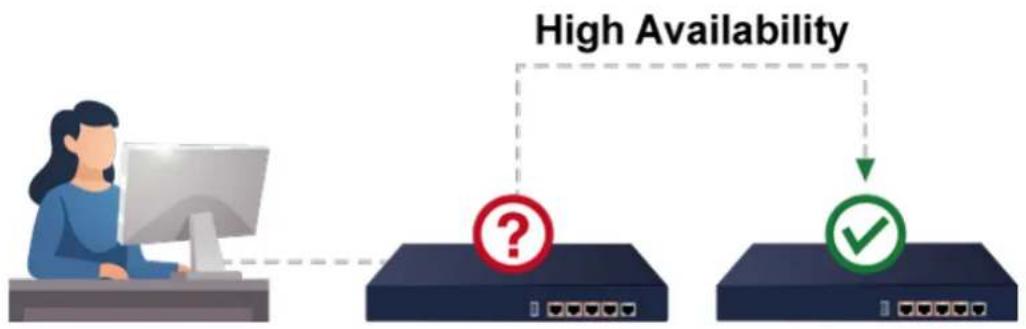
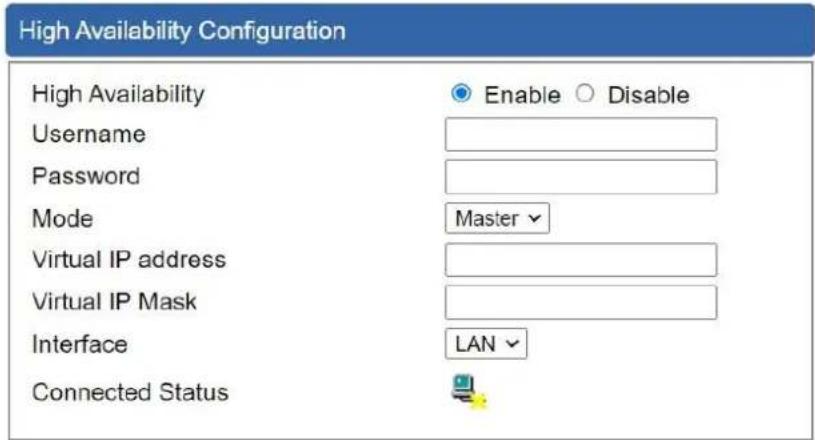
High Availability (HA) is a system redundant that two cellular gateway of ICG-2515 series can be set up in a master/slave configuration. The master cellular gateway provides the Internet connection but, in the case of hardware or WAN connectivity failure, the slave (backup) cellular gateway automatically takes over Internet connection. It provides redundant hardware and software that make the system available despite failures.
flowchart
graph TD
    A["User"] --> B["High Availability"]
    B --> C["Device 1"]
    B --> D["Device 2"]
    C --> E["Checkmark 1"]
    D --> F["Checkmark 2"]
The page shows the High Availability configuration. The High Availability page is shown in Figure 4-4-17.
text_image
High Availability Configuration High Availability Username Password Mode Virtual IP address Virtual IP Mask Interface Connected Status Enable Disable Master LANFigure 4-4-17: High Availability
| Object | Description |
| High Availability | Disable or enable the High Availability function.The default configuration is disabled. |
| Username | Create the username for the HA. |
| Password | Create the password for the HA . |
| Mode | Choose Master or Slave role |
| Virtual IP address | Assign an IP address as a virtual IP. |
| Virtual mask | Assign a mask address as a virtual mask. |
| Interface | Use interface |
| Connection Status | Display the HA status |
4.4.8 RADIUS
Remote Authentication Dial-In User Service (RADIUS) is a security authentication client/server protocol that supports authentication, authorization and accounting. The RADIUS Server page is shown in Figure 4-4-18.

text_image
RADIUS Server Client User Account RADIUS Server Mode ○ Enable ● Disable Server Port 1812Figure 4-4-18: RADIUS Server
| Object | Description |
| RADIUS | Disable or enable the RADIUS function.The default configuration is disabled. |
| Server Port | UDP port number for authentication |
The RADIUS client page is shown in Figure 4-4-19.

text_image
RADIUS Server Client User Account Index Name Client IP Address Secret Key Description Delete (up to 16 clients)Figure 4-4-19: RADIUS Client
| Object | Description |
| Name | Describe client's name |
| Client IP address | Describe client's IP address |
| Secret Key | The RADIUS server and client share a secret key that is used to authenticate the messages sent between server and client. |
| Description | Describe client's information |
4.4.9 Captive Portal
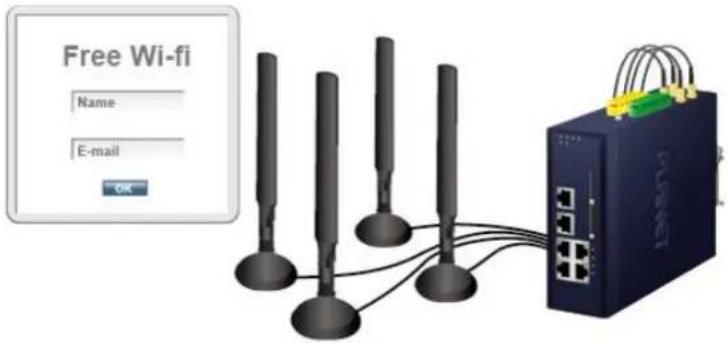
Captive portal service gives the ability to organize a public (or guest) Wi-Fi zone with user authorization. A captive portal is the authorization page that forcibly redirects users who connect to the public network before accessing the Internet.
Captive Portal
text_image
Free Wi-fi Name E-mail OKThe Captive portal page is shown in Figure 4-4-20.

text_image
Captive Portal Config Custom Captive Portal Interfaces Authentication Type Enable Disable LAN Subnet 1 Local RADIUS ServerFigure 4-4-20: Captive portal
| Object | Description |
| Captive portal | Disable or enable the Captive portal function.The default configuration is disabled. |
| Interface | Choose subnet interface■ LAN Subnet 1■ LAN Subnet 2■ LAN Subnet 3■ LAN Subnet 4 |
| Authentication Type | Support local RADIUS server |
Captive Portal
Config
Custom
Background
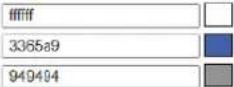
Title Word Color
Description Word Color
Title
PLANET Captive Portal
(Max 256 characters. Allow special symbols and HTML.)
Welcome to PLANET!
Description

PLANET
Networking & Communication
Current Image
选择档案
未選擇任何檔案
Size: up to 1M
FormatLimit.jpg gif bmp.png
Upload Image

text_image
ent-2 Apply Settings Cancel Changes Preview4.4.10 SNMP
This page provides SNMP setting as shown in Figure 4-4-21.

text_image
SNMP SNMP Enable Disable SNMP Versions SNMP v1,v2c Read Community public Write Community private Engine ID SNMP v3 Security Level AuthPRiv SNMP v3 User Name SNMP v3 Auth Protocol MD5 SNMP v3 Auth Password SNMP v3 Privacy Protocol DES SNMP v3 Privacy Password System Identification System Name VR-300P System Location System Contact sales@planet.com.tw Apply Settings Cancel ChangesFigure 4-4-21: SNMP
| Object | Description |
| Enable SNMP | Disable or enable the SNMP function.The default configuration is enabled. |
| Read/Write Community | Allows entering characters for SNMP Read/Write Community of the cellular gateway |
| System Name | Allows entering characters for system name of the cellular gateway |
| System Location | Allows entering characters for system location of the cellular gateway |
| System Contact | Allows entering characters for system contact of the cellular gateway |
| Apply Settings | Press this button to save and apply changes. |
| Cancel Changes | Press this button to undo any changes made locally and revert to previously saved values. |
4.4.11 NMS
The ICG-2515 series can support both NMS controller and CloudViewer Sever for remote management. PLANET's NMS Controller is a Network Management System that can monitor all kinds of deployed network devices, such as managed switches, media converters, routers, smart APs, VoIP phones, IP cameras, etc., compliant with the SNMP Protocol, ONVIF Protocol and PLANET Smart Discovery utility. The CloudViewer is a free networking service designed for PLANET Products. This service provides simplified network monitoring and real-time network status. Working with PLANET CloudViewer app, user can easily check network status, device information, Port and PoE status from Internet. Any other services are not included.
NMS Configuration screens in Figure 4-4-22 appear.

text_image
NMS Configuration NMS PLANET NMS Controller - LAN NMS Controller IP address Authorization Status Disable PLANET CloudViewer Server - Internet PLANET NMS Controller - LANFigure 4-4-22 NMS Configuration Page
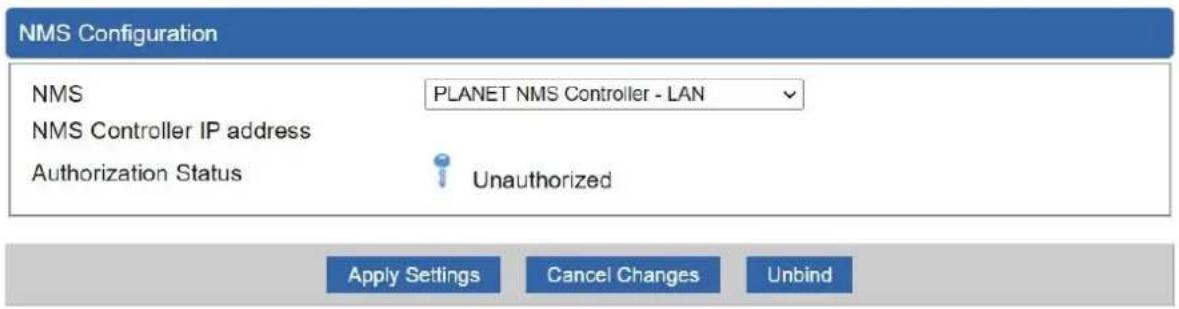
The NMS Controller – LAN Configuration screens in Figure 4-4-23 appear.
text_image
NMS Configuration NMS PLANET NMS Controller - LAN NMS Controller IP address Authorization Status Unauthorized Apply Settings Cancel Changes UnbindFigure 4-4-23 NMS Controller – LAN Configuration Page
| Object | Description |
| NMS Controller IP address | The IP address of NMS Controller |
| Authorization Status | Indicates the authorization status of the switch to NMS Controller |
The CloudViewer Server – Internet screens in Figure 4-4-24 appear.

text_image
NMS Configuration NMS PLANET CloudViewer Server - Internet Email Password Connection Status Not enabledFigure 4-4-24 CloudViewer Server – Internet Configuration Page
| Object | Description |
| The email registered on CloudViewer Server | |
| • Password | The password of your CloudViewer account |
| • Connection Status | Indicates the status of connecting CloudViewer Server |
4.4.12 Fault Alarm
This page provides fault alarm setting as shown in Figure 4-4-25.

text_image
Fault Alarm Control Configuration Fault Alarm Output Enable Record Event Power Alarm Port Alarm Enable System Log SMS Power Fail Port Fail PWR1 PWR2 1 2 3 4 5Figure 4-4-25: Fault Alarm
| Object | Description |
| Enable | Controls whether Fault Alarm is enabled |
| Record | Controls whether Record is sending System log or SMS |
| Event | Controls whether Port or Power is not working. |
| Power Alarm | Controls whether PWR1 or PWR2 or both are not working. |
| Port Alarm | Controls whether a port or ports is/ are not working. |
4.4.13 Digital Input / Output
This page provides Digital Input / Output setting as shown in Figure 4-4-26.
Figure 4-4-26: Digital Input / Output
Object
- Enable
Description
Check the Enable checkbox to enable Digital Input / output function.
Uncheck the Enable checkbox to disable Digital input / output function.
- Condition
As Digital Input:
Allows user to select High to Low or Low to High. This means a signal received by system is from High to Low or From Low to High. It will trigger an action that logs a customize message or issue the message from the switch.
As Digital Output:
Allows user to select High to Low or Low to High. This means that when the switch is power-failed or port-failed, then system will issue a High or Low signal to an external device such as an alarm.
- Event Description
Allows user to set a customized message for Digital Input function alarming.
- Action
As Digital Input:
Allows user to record alarm message to System log, syslog or issues out via SNMP Trap or SMTP.
As default SNMP Trap and SMTP are disabled, please enable
| them first if you want to issue alarm message via them.As Digital Output:Allows user to monitor an alarm from port failure, power failure,Digital Input 0 (DI 0) and Digital Input 1(DI 1) which means ifDigital Output has detected these events, then Digital Outputwould be triggered according to the setting of Condition. | |
| • Power Alarm | Allows user to choose which power module that needs to be monitored. |
| • Port Alarm | Allows user to choose which port that needs to be monitored. |
4.4.14 Remote Syslog
This page provides remote syslog setting as shown in Figure 4-4-27.

text_image
Remote Syslog Enable Syslog Server Port Destination (1~65535)Figure 4-4-27: Connection Status
| Object | Description |
| Enable | Controls whether remote syslog is enabled |
| Syslog Server IP | Indicates the IPv4 host address of syslog server |
| Port Destination | Configure port for remote syslog |
4.5 Network
The Network function provides WAN, LAN and network configuration of the cellular gateway as shown in Figure 4-5-1.

text_image
Priority WAN WAN Advanced LAN Multi-Subnet VLAN UPnP Routing RIP OSPF IGMP IPv6 DHCP DDNS MAC Address CloneFigure 4-5-1: Network Menu
| Object | Description |
| Priority | Allows setting priority of WAN interface. |
| WAN | Allows setting WAN interface. |
| WAN Advanced | Allows setting WAN Advanced settings. |
| LAN | Allows setting LAN interface. |
| Multi-Subnet | Allows setting Multi-Subnet1 ~ Subnet4 interface. |
| VLAN | Disable or enable the VLAN function.The default configuration is disabled. |
| UPnP | Disable or enable the UPnP function.The default configuration is disabled. |
| Routing | Allows setting Route. |
| RIP | Disable or enable the RIP function.The default configuration is disabled. |
| OSPF | Disable or enable the OSPF function.The default configuration is disabled. |
| IGMP | Disable or enable the IGMP function.The default configuration is disabled. |
| IPv6 | Allows setting IPv6 WAN interface. |
| DHCP | Allows setting DHCP Server. |
| DDNS | Allows setting DDNS and PLANET DDNS. |
| MAC AddressClone | Allows setting WAN MAC Address Clone. |
4.5.1 Priority
This page provides WAN priority setting as shown in Figure 4-5-2.

text_image
Priority WAN Priority AutoFigure 4-5-2: Priority
| Object | Description |
| WAN Priority | ■ Auto: WAN Ethernet is first priority and second priority is NR/LTE. The default is auto.■ LTE/NR Only: The priority is only LTE/NR■ ETH Only: The priority is only Ethernet.■ LTE/NR First: LTE/NR is first priority and second priority is Ethernet |
4.5.2 WAN
This page is used to configure the parameters for Internet network which connects to the WAN port of the cellular gateway as shown in Figure 4-5-3. Here you may select the access method by clicking the item value of WAN access type.

text_image
WAN1 Connection Type DHCP ▼ IP Address Netmask Gateway DNS Server 1 DNS Server 2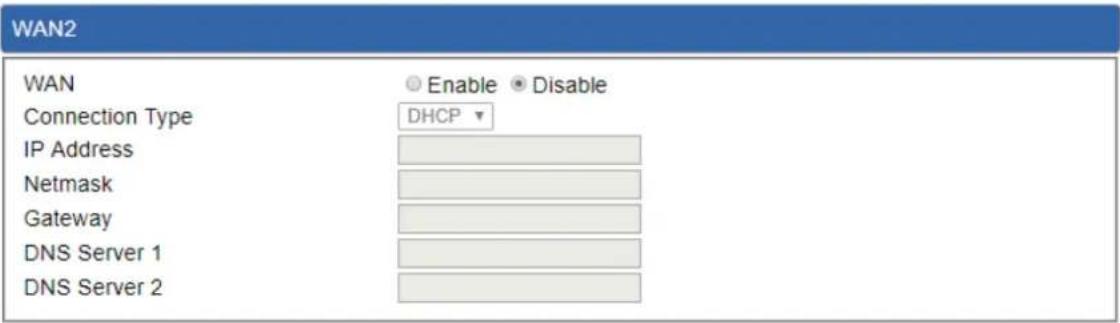
text_image
WAN2 WAN Connection Type IP Address Netmask Gateway DNS Server 1 DNS Server 2 Enable Disable DHCP
text_image
Apply Settings Cancel ChangesFigure 4-5-3: WAN
| Object | Description | |
| WAN Access Type | Please select the corresponding WAN Access Type for the Internet, and fill out the correct parameters from your local ISP in the fields which appear below. | |
| Static | Select Static IP Address if all the Internet ports' IP information is provided to you by your ISP (Internet Service Provider). You will need to enter the IP address, Netmask, Gateway, and DNS Server provided to you by your ISP.Each IP address entered in the fields must be in the appropriate IP form, which are four octets separated by a dot (x.x.x.x). The cellular gateway will not accept the IP address if it is not in this format.IP AddressEnter the IP address assigned by your ISP.NetmaskEnter the Subnet Mask assigned by your ISP.GatewayEnter the Gateway assigned by your ISP.DNS ServerThe DNS server information will be supplied by your ISP. | |
| DHCP | Select DHCP Client to obtain IP Address information automatically from your ISP. | |

Note
WAN IP, whether obtained automatically or specified manually, should NOT be on the same IP net segment as the LAN IP; otherwise, the cellular gateway will not work properly. In case of emergency, press the hardware-based "Reset" button.
4.5.3 WAN Advanced
This page is used to configure the advanced parameters for Internet area network which connects to the WAN port of your cellular gateway as shown in Figure 4-5-4. Here you may change the setting for Load Balance Weight, Detect Interval, Detect Link Up Threshold, etc.
WAN1
Load Balance Weight
External Connection Detection
Detect Interval
Detect Link Up Threshold
Detect Link Down Threshold
Custom Detect Host 1
Custom Detect Host 2

- Enable - Disable


8.8.8.8
208.67.222.222
WAN2
Load Balance Weight
External Connection Detection
Detect Interval
Detect Link Up Threshold
Detect Link Down Threshold
Custom Detect Host 1
Custom Detect Host 2

- Enable - Disable


8.8.8.8
208.67.222.222
Apply Settings
Cancel Changes
Figure 4-5-4: LAN Setup
| Object | Description |
| Load Balance Weight | Load Balance Weight allows you to set a relative weight (from 1 - 10) for each WAN port. |
| External Connection Detection | Enable to detect the status of WAN connection. |
| Detect Interval | Set the detect interval as you need.The recommended value is 5 (default). |
| Detect Link Up Threshold | Set the times for detecting link up.The recommended value is 8 (default). |
| Detect Link Down Threshold | Set the times for detecting link down.The recommended value is 3 (default). |
| Custom Detect Host | The host is used to check whether the internet connection is alive or not. |
4.5.4 LAN Setup
This page is used to configure the parameters for local area network which connects to the LAN port of your cellular gateway as shown in Figure 4-5-5. Here you may change the settings for IP address, subnet mask, DHCP, etc.

text_image
LAN Configuration IP Address 192.168.1.1 Netmask 255.255.255.0 Apply Settings Cancel ChangesFigure 4-5-5: LAN Setup
| Object | Description |
| IP Address | The LAN IP address of the cellular gateway and default is 192.168.1.1. |
| Net Mask | Default is 255.255.255.0. |
4.5.5 Multi-Subnet
This page provides multi-subnet setting as shown in Figure 4-5-6.
Multi-Subnet Configuration
| Name | Network | DHCP Server | |
| LAN Subnet 1 | IP Address | 192.168.1.1 | V |
| Netmask | 255.255.255.0 | ||
| LAN Subnet 2 | IP Address | 192.168.3.1 | √ |
| Netmask | 255.255.255.0 | ||
| LAN Subnet 3 | IP Address | 192.168.5.1 | √ |
| Netmask | 255.255.255.0 | ||
| LAN Subnet 4 | IP Address | 192.168.7.1 | √ |
| Netmask | 255.255.255.0 |
Apply Settings
Cancel Changes
Figure 4-5-6: Multi-Subnet
4.5.6 Routing
Please refer to the following sections for the details as shown in Figures 4-5-7 and 4-5-8.
| Routing config list | |||||||
| Number | Type | Destination | Netmask | Gateway | Interface | Comment | Action |
| Current Routing table in the system | |||||||
| Number | Destination | Netmask | Gateway | Interface | |||
| 1 | 0.0.0.0 | 0.0.0.0 | 192.168.0.180 | LOCAL | |||
| 2 | 0.0.0.0 | 0.0.0.0 | 192.168.1.18 | WAN1 | |||
| 3 | 0.0.0.0 | 0.0.0.0 | 192.168.1.19 | WAN2 | |||
| 4 | 192.168.0.0 | 255.255.255.0 | 0.0.0.0 | LAN | |||
| 5 | 192.168.1.0 | 255.255.255.0 | 0.0.0.0 | WAN1 | |||
| 6 | 192.168.1.0 | 255.255.255.0 | 0.0.0.0 | WAN2 | |||
Figure 4-5-7: Routing table
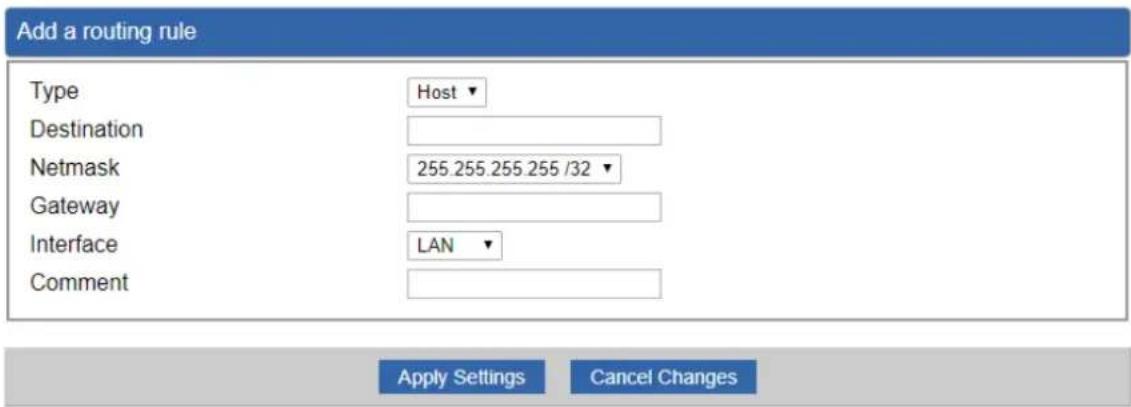
text_image
Add a routing rule Type Host ▼ Destination Netmask 255.255.255.255 /32 ▼ Gateway Interface LAN ▼ Comment Apply Settings Cancel ChangesFigure 4-5-8: Routing setup
Routing tables contain a list of IP addresses. Each IP address identifies a remote cellular gateway (or other network gateway) that the local cellular gateway is configured to recognize. For each IP address, the routing table additionally stores a network mask and other data that specifies the destination IP address ranges that remote device will accept.
| Object | Description |
| Type | There are two types: Host and Net.When the Net type is selected, user does not need to input the Gateway. |
| Destination | The network or host IP address desired to access. |
| Net Mask | The subnet mask of destination IP. |
| Gateway | The gateway is the router or host's IP address to which packet was sent.It must be the same network segment with the WAN or LAN port. |
| Interface | Select the interface that the IP packet must use to transmit out of the router when this route is used. |
| Comment | Enter any words for recognition. |
4.5.7 WAN IPv6 Setting
This page is used to configure parameter for IPv6 internet network which connects to WAN port of the cellular gateway as shown in Figure 4-5-9. It allows you to enable IPv6 function and set up the parameters of the cellular gateway's WAN. In this setting you may change WAN connection type and other settings.
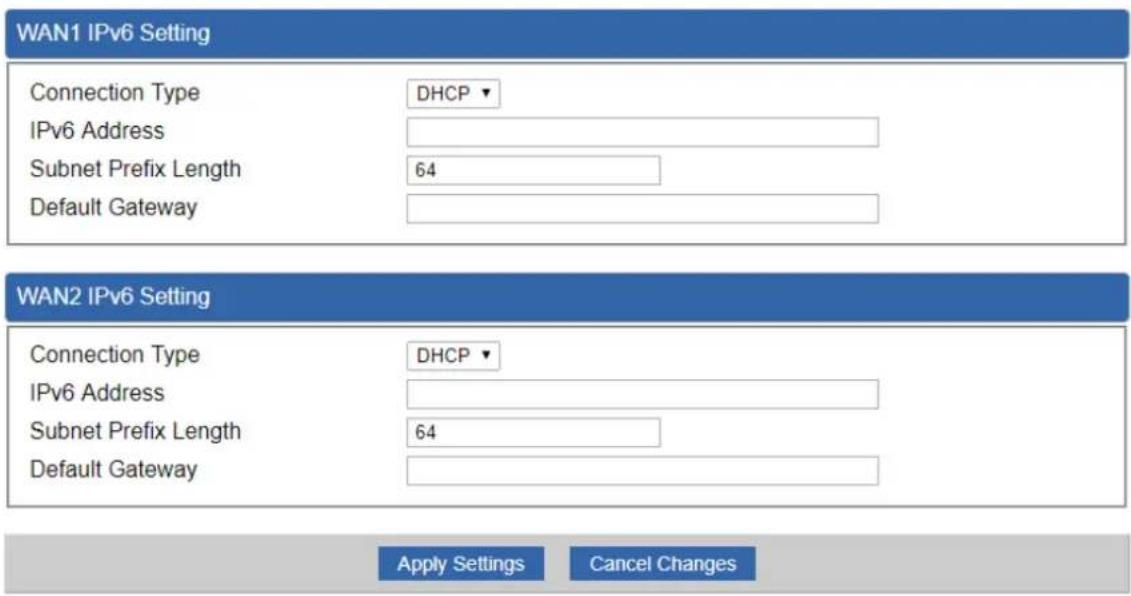
text_image
WAN1 IPv6 Setting Connection Type DHCP ▼ IPv6 Address Subnet Prefix Length 64 Default Gateway WAN2 IPv6 Setting Connection Type DHCP ▼ IPv6 Address Subnet Prefix Length 64 Default Gateway Apply Settings Cancel ChangesFigure 4-5-9: IPv6 WAN setup
| Object | Description |
| Connection Type | Select IPv6 WAN type either by using DHCP or Static. |
| IPv6 Address | Enter the WAN IPv6 address. |
| Subnet Prefix Length | Enter the subnet prefix length. |
| Default Gateway | Enter the default gateway of the WAN port. |
4.5.8 DHCP
The DHCP service allows you to control the IP address configuration of all your network devices. When a client (host or other device such as networked printer, etc.) joins your network it will automatically get a valid IP address from a range of addresses and other settings from the DHCP service. The client must be configured to use DHCP; this is something called "automatic network configuration" and is often the default setting. The setup is shown in Figure 4-5-10.

text_image
DHCP Server DHCP Service Start IP Address Maximum DHCP Users Set DNS Primary DNS Server Secondary DNS Server WINS Lease Time Domain Name Enable Disable 192.168.1 100 101 Automatically Manually minutes PLANET Apply Settings Cancel ChangesFigure 4-5-10: DHCP
| Object | Description |
| DHCP Service | By default, the DHCP Server is enabled, meaning the cellular gateway will assign IP addresses to the DHCP clients automatically. If user needs to disable the function, please set it as disable. |
| Start IP Address | By default, the start IP address is 192.168.1.100.Please do not set it to the same IP address of the cellular gateway |
| Maximum DHCP Users | By default, the maximum DHCP users are 101, meaning the cellular gateway will provide DHCP client with IP address from 192.168.1.100 to 192.168.1.200 when the start IP address is 192.168.1.100. |
| Set DNS | By default, it is set as Automatically, and the DNS server is the cellular gateway's LAN IP address.If user needs to use specific DNS server, please set it as Manually, and then input a specific DNS server. |
| Primary/Secondary DNS Server | Input a specific DNS server. |
| WINS | Input a WINS server if needed. |
| Lease Time | Set the time for using one assigned IP. After the lease time, the DHCP client will need to get new IP addresses from the cellular gatewayDefault is 1440 minutes. |
| Domain Name | Input a domain name for the cellular gatewayDefault is Planet. |
4.5.9 DDNS
The cellular gateway offers the DDNS (Dynamic Domain Name System) feature, which allows the hosting of a website, FTP server, or e-mail server with a fixed domain name (named by yourself) and a dynamic IP address, and then your friends can connect to your server by entering your domain name no matter what your IP address is. Before using this feature, you need to sign up for DDNS service providers such as PLANET DDNS (http://www.planetddns.com) and set up the domain name of your choice.
PLANET DDNS website provides a free DDNS (Dynamic Domain Name Server) service for PLANET devices. Whether the IP address used on your PLANET device supporting DDNS service is fixed or dynamic, you can easily connect the devices anywhere on the Internet with a meaningful or easy-to-remember name you gave. PLANET DDNS provides two types of DDNS services. One is PLANET DDNS and the other is PLANET Easy DDNS as shown in Figure 4-5-11.
PLANET DDNS
For example, you've just installed a PLANET IP camera with dynamic IP like 210.66.155.93 in the network. You can name this device as "Mycam1" and register a domain as Mycam1.planetddns.com at PLANET DDNS (http://www.planetddns.com). Thus, you don't need to memorize the exact IP address but just the URL link: Mycam1.planetddns.com.
PLANET Easy DDNS
PLANET Easy DDNS is an easy way to help user to get your Domain Name with just one click. You can just log in to the Web Management Interface of your devices, say, your cellular gateway, and check the DDNS menu and just enable it. You don't need to go to http://www.planetddns.com to apply for a new account. Once you enabled the Easy DDNS, your PLANET Network Device will use the format PLxxxxxx where xxxxxx is the last 6 characters of your MAC address that can be found on the Web page or bottom label of the device. (For example, if the cellular gateway's MAC address is A8-F7-E0-81-96-C9, it will be converted into pt8196c9.planetddns.com)
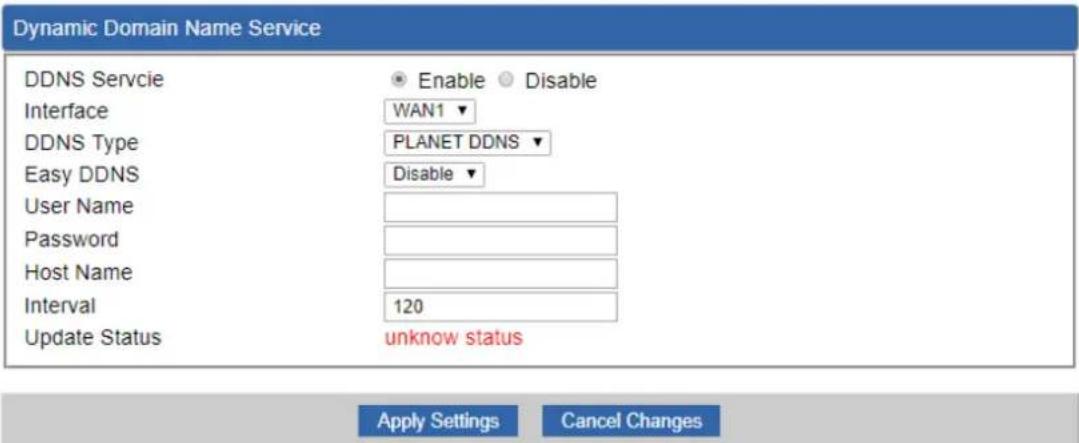
text_image
Dynamic Domain Name Service DDNS Servcie Interface DDNS Type Easy DDNS User Name Password Host Name Interval Update Status Enable Disable WAN1 PLANET DDNS Disable unknown status Apply Settings Cancel ChangesFigure 4-5-11: PLANET DDNS
| Object | Description |
| DDNS Service | By default, the DDNS service is disabled.If user needs to enable the function, please set it as enable. |
| Interface | User is able to select the interface for DDNS service.By default, the interface is WAN 1. |
| DDNS Type | There are three options:1. PLANET DDNS: Activate PLANET DDNS service.2. DynDNS: Activate DynDNS service.3. NOIP: Activate NOIP service.Note that please first register with the DDNS service and set up the domain name of your choice to begin using it. |
| Easy DDNS | When the PLANET DDNS service is activated, user is able to select to enable or disable Easy DDNS.When this function is enabled, DDNS hostname will appear automatically. User doesn't go to http://www.planetddns.com to apply for a new account. |
| User Name | The user name is used to log into DDNS service. |
| Password | The password is used to log into DDNS service. |
| Host Name | The host name as registered with your DDNS provider. |
| Interval | Set the update interval of the DDNS function. |
| Update Status | Show the connection status of the DDNS function. |
4.5.10 MAC Address Clone
Clone or change the MAC address of the WAN interface. The setup is shown in Figure 4-5-12.
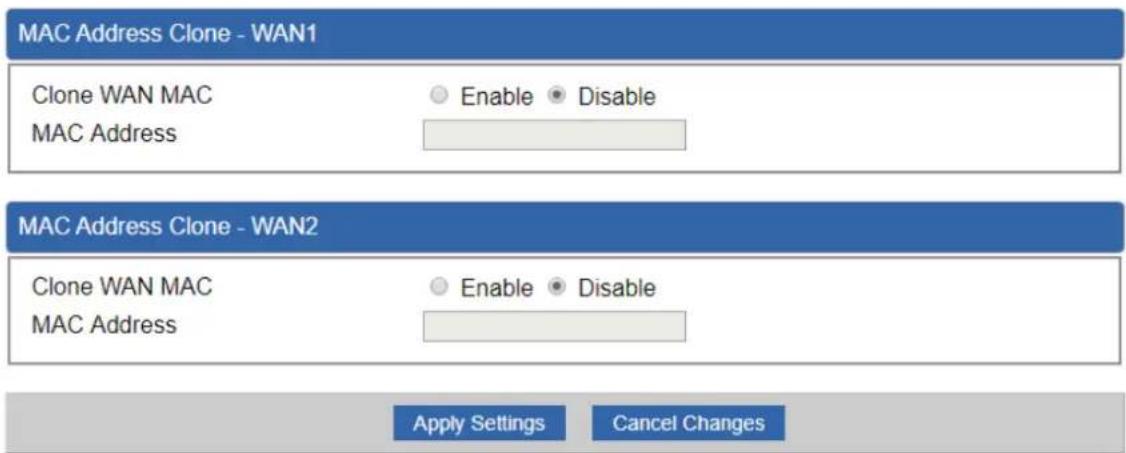
text_image
MAC Address Clone - WAN1 Clone WAN MAC MAC Address Enable Disable MAC Address Clone - WAN2 Clone WAN MAC MAC Address Enable Disable Apply Settings Cancel ChangesFigure 4-5-12: MAC Address Clone
| Object | Description |
| Clone WAN MAC | Set the function as enable or disable. |
| MAC Address | Input a MAC Address, such as A8:F7:E0:00:06:62. |
4.6 Cellular
The Cellular menu provides LTE/NR related functions as shown in Figure 4-6-1. Please refer to the following sections for the details.
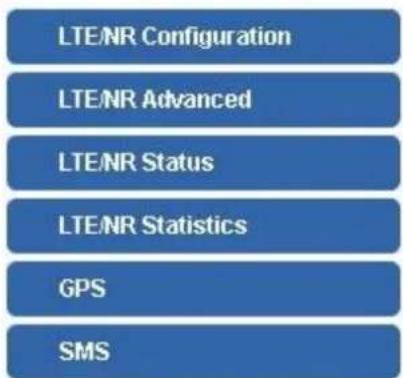
flowchart
graph TD
    A["LTE/NR Configuration"] --> B["LTE/NR Advanced"]
    B --> C["LTE/NR Status"]
    C --> D["LTE/NR Statistics"]
    D --> E["GPS"]
    E --> F["SMS"]
Figure 4-6-1: Cellular menu
| Object | Description |
| LTE/NR Configuration | Allows setting LTE/NR configuration. |
| LTE/NR Advanced | Allows setting SIM configuration. |
| LTE/NR Status | Display the status of cellular. |
| LTE/NR Statistics | Display the statistics of cellular. |
| GPS | Display the location of cellular gateway. |
| SMS | Allows setting SMS configuration for alarm notification. |
4.6.1 LTE/NR Configuration
This page provides LTE/NR configuration as shown in Figure 4-6-2.

text_image
LTE/NR Configuration LTE/NR Config Auto MTU 1500 min: 700; max: 1500Figure 4-6-2: LTE/NR configuration
| Object | Description |
| LTE/NR Config | Indicates what kind of LTE will be used. Possible modes are:■ Auto: Automatically connect the possible band.■ 4G&5G Only: Connect to 4G or 5G network only.■ 5G Only: Connect to 5G network only.■ 4G Only: Connect to 4G network only.■ 3G Only: Connect to 3G network only.■ 2G Only: Connect to 2G network only. |
| MTU | Maximum transfer unit, Default is 1500. |
4.6.2 LTE/NR Advanced
This page provides LTE/NR advanced configuration as shown in Figure 4-6-3.

text_image
LTE/NR Advanced Current SIM Card SIM 1 Disconnect Disable Roaming Yes ○ No Used SIM Dual SIM ○ SIM1 ○ SIM2 SIM Priority Auto ○ SIM1 ○ SIM2 Roaming Switch Switch to another SIM when roaming is detected Connect Retry Number 3 (1~100)*60 seconds Reboot when LTE/NR the only connection which has continuous link down for 5 times (3~15) SIM1 SIM2 SIM PIN Confirmed SIM PIN APN internet Username Password Confirmed Password Auth NONE ▼Figure 4-6-3: LTE/NR advanced
| Object | Description |
| Current SIM Card | Display which SIM slot is using. |
| Disable Roaming | ■ Disable: SIM gets connection even it is in roaming state.■ Enable: SIM would not get connection when in roaming state. |
| Used SIM | Configure which SIM card is used or dual SIM cards. |
| SIM Priority | Configure priority of SIM card |
| Roaming Switch | Switch to another SIM when roaming is detected. System will switch to SIM slot when current SIM is in roaming state and another SIM slot is in READY state. |
| SIM PIN | Configure PIN code to unlock SIM PIN. |
| Confirmed SIM PIN | Confirm PIN code. |
| APN | APN can be input by user or the system.. |
| Username | The username can be input by user or the system. |
| Password | The password can be input by user or the system. |
| Confirm Password | Fill in your changed password. |
| Auth | Configure authentication■ None■ PAP■ CHAP |
4.6.3 LTE/NR Status
This page displays LTE/NR status as shown in Figure 4-6-4.
LTE/NR Status
| SIM Card | SIM1 | SIM2 |
| SIM Status | Ready | Not Inserted |
| Operator | Far EasTone | |
| IMEI | 864284040201845 | |
| IMSI | 466011900610669 | |
| Phone Number | ||
| Band | EUTRAN-BAND7 | |
| EARFCN | 3250 | |
| PLMN | 46601 | |
| IP Address | ||
| Netmask | ||
| Default Gateway | ||
| Running Time | 2 days, 07:24:07 | |
| Roaming | No |
Figure 4-6-4: LTE/NR status
4.6.4 LTE/NR Statistics
This page displays LTE/NR status as shown in Figure 4-6-5.
LTE/NR

area
| Time | Tx | Rx | | ------ | ------ | ------ | | 15:20 | 100 B/s| 130 B/s| | 15:30 | 100 B/s| 130 B/s| | 15:40 | 100 B/s| 130 B/s| | 15:50 | 100 B/s| 130 B/s| | 16:00 | 100 B/s| 130 B/s| | 16:10 | 100 B/s| 130 B/s|Figure 4-6-5: LTE/NR statistics
4.6.5 GPS
This page displays GPS status as shown in Figure 4-6-6.
GPS
Location:(24.982769,121.536890)
Google Maps
| Attribute | Value |
| Latitude | 24.982789 |
| Longitude | 121.536890 |
| Horizontal | 7.6 |
| Altitude | 100.4 |
| Date | 2021/11/11 |
| Time | 08:19:11 |
| Satellite | 3 |
Figure 4-6-6: GPS
4.6.6 SMS
This page provides SMS configuration as shown in Figure 4-6-7.

text_image
SMS Configuration Name Phone EmailFigure 4-6-7: SMS
| Object | Description |
| Name | Configure user's name |
| Phone | Configure user's phone number |
| Configure user's email |
4.7 Security
The Security menu provides Firewall, Access Filtering and other functions as shown in Figure 4-7-1. Please refer to the following sections for the details.

text_image
Firewall MAC Filtering IP Filtering Web Filtering Port Forwarding QoS DMZFigure 4-7-1: Security menu
| Object | Description |
| Firewall | Allows setting DoS (Denial of Service) protection as enable. |
| MAC Filtering | Allows setting MAC Filtering. |
| IP Filtering | Allows setting IP Filtering. |
| Web Filtering | Allows setting Web Filtering. |
| Port Range Forwarding | Allows setting Port Forwarding. |
| QoS | Allows setting Qos. |
| DMZ | Allows setting DMZ. |
4.7.1 Firewall
A "Denial-of-Service" (DoS) attack is characterized by an explicit attempt by hackers to prevent legitimate users of a service from using that service. The cellular gateway can prevent specific DoS attacks as shown in Figure 4-7-2.
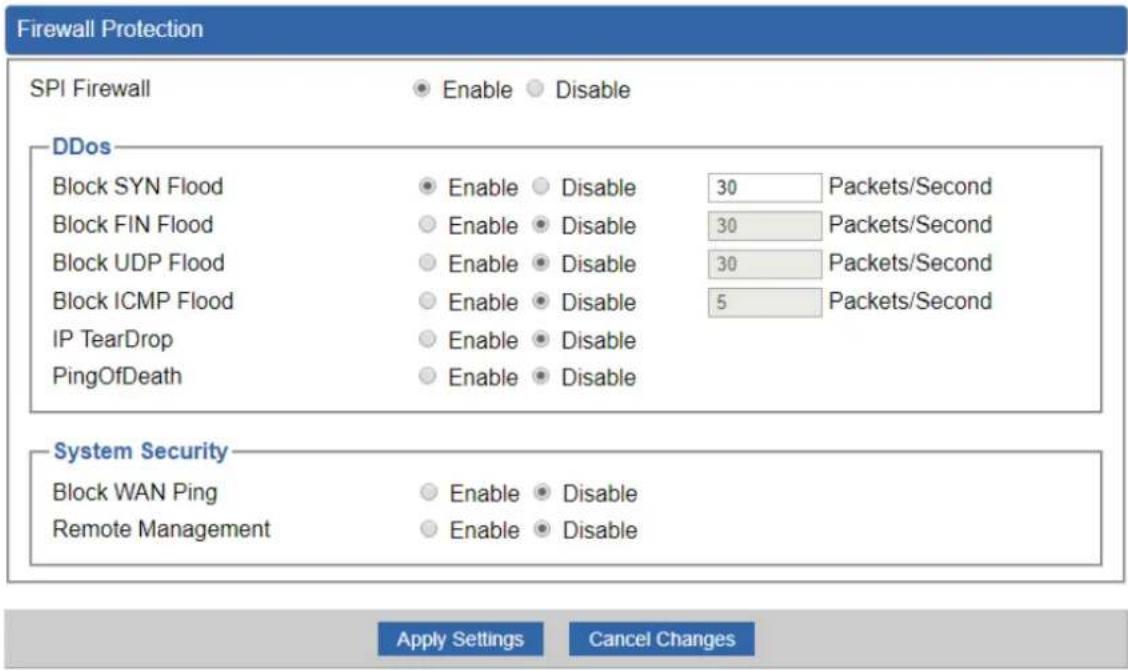
text_image
Firewall Protection SPI Firewall Enable Disable DDos Block SYN Flood Enable Disable 30 Packets/Second Block FIN Flood Enable Disable 30 Packets/Second Block UDP Flood Enable Disable 30 Packets/Second Block ICMP Flood Enable Disable 5 Packets/Second IP TearDrop Enable Disable PingOfDeath Enable Disable System Security Block WAN Ping Enable Disable Remote Management Enable Disable Apply Settings Cancel ChangesFigure 4-7-2: Firewall
| Object | Description |
| SPI Firewall | The SPI Firewall prevents attack and improper access to network resources.The default configuration is enabled. |
| Block SYN Flood | SYN Flood is a popular attack way. DoS and DDoS are TCP protocols. Hackers like using this method to make a fake connection that involves the CPU, memory, and so on.The default configuration is enabled. |
| Block FIN Flood | If the function is enabled, when the number of the current FIN packets is beyond the set value, the cellular gateway will start the blocking function immediately.The default configuration is disabled. |
| Block UDP Flood | If the function is enabled, when the number of the current UPD-FLOOD packets is beyond the set value, the cellular gateway will start the blocking function immediately.The default configuration is disabled. |
| Block ICMP Flood | ICMP is kind of a pack of TCP/IP; its important function is to transfer simple signal on the Internet. There are two normal attack ways which hackers like to use, Ping of Death and Smurf attack.The default configuration is disabled. |
| IP TearDrop | If the function is enabled, the cellular gateway will block Teardrop attack that is targeting on TCP/IP fragmentation reassembly codes. |
| Ping Of Death | If the function is enabled, the cellular gateway will block Ping of Death attack that aims to disrupt a targeted machine by sending a packet larger than the maximum allowable size causing the target machine to freeze or crash. |
| Block WAN Ping | Enable the function to allow the Ping access from the Internet network.The default configuration is disabled. |
| Remote Management | Enable the function to allow the web server access of the cellular gateway from the Internet network.The default configuration is disabled. |
4.7.2 MAC Filtering
Entries in this table are used to restrict certain types of data packets from your local network or Internet through the cellular gateway Use of such filters can be helpful in securing or restricting your local network as shown in Figure 4-7-3.
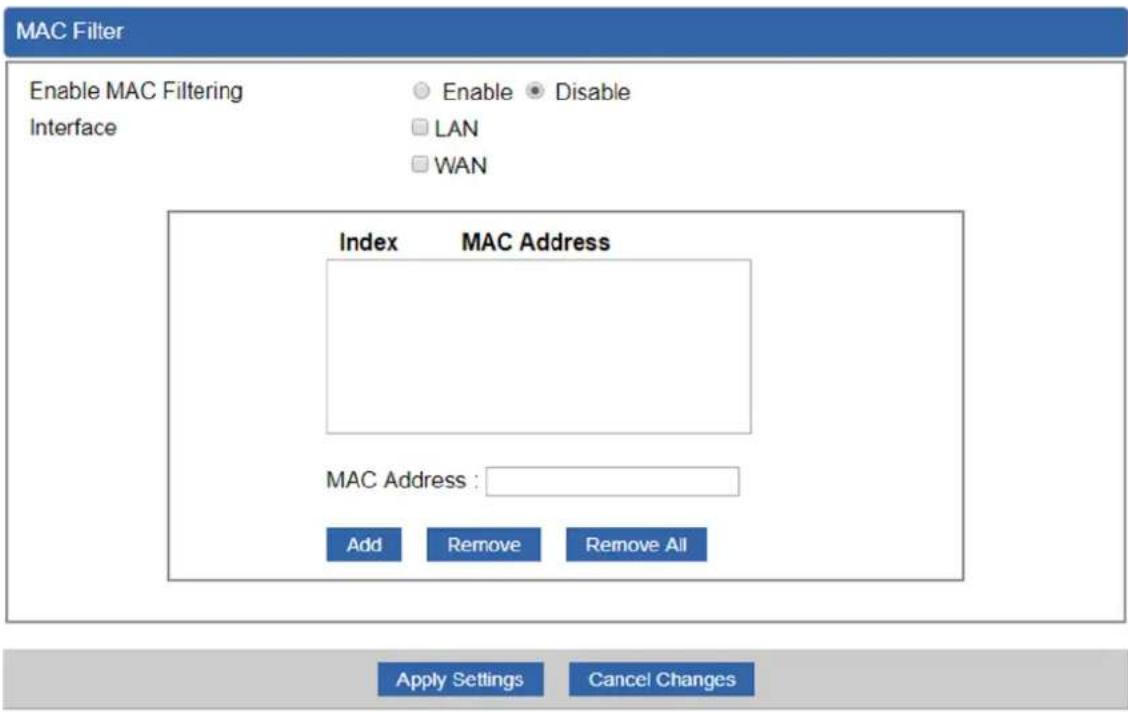
text_image
MAC Filter Enable MAC Filtering Interface Enable Disable LAN WAN Index MAC Address MAC Address : Add Remove Remove All Apply Settings Cancel ChangesFigure 4-7-3: MAC Filtering
| Object | Description |
| Enable MAC Filtering | Set the function as enable or disable.When the function is enabled, the cellular gateway will block traffic of the MAC address on the list. |
| Interface | Select the function works on LAN, WAN or both. If you want to block a LAN device's MAC address, please select LAN, vice versa. |
| MAC Address | Input a MAC address you want to control, such as A8:F7:E0:00:06:62. |
| Add | When you input a MAC address, please click the “Add” button to add it into the list. |
| Remove | If you want to remove a MAC address from the list, please click on the MAC address, and then click the “Remove” button to remove it. |
| Remove All | If you want to remove all MAC addresses from the list, please click the “Remove All” button to remove all. |
4.7.3 IP Filtering
IP Filtering is used to deny LAN users from accessing the public IP address on internet as shown in Figure 4-7-4. To begin blocking access to an IP address, enable IP Filtering and enter the IP address of the web site you wish to block.

text_image
IP Filtering IP Filtering Enable Disable IP Filtering Rules No. Active Source IP Destination IP Port Range Protocol Action Add IP Filtering RuleFigure 4-7-4: IP Filtering
| Object | Description |
| IP Filtering | Set the function as enable or disable. |
| Add IP Filtering Rule | Go to the Add Filtering Rule page to add a new rule. |
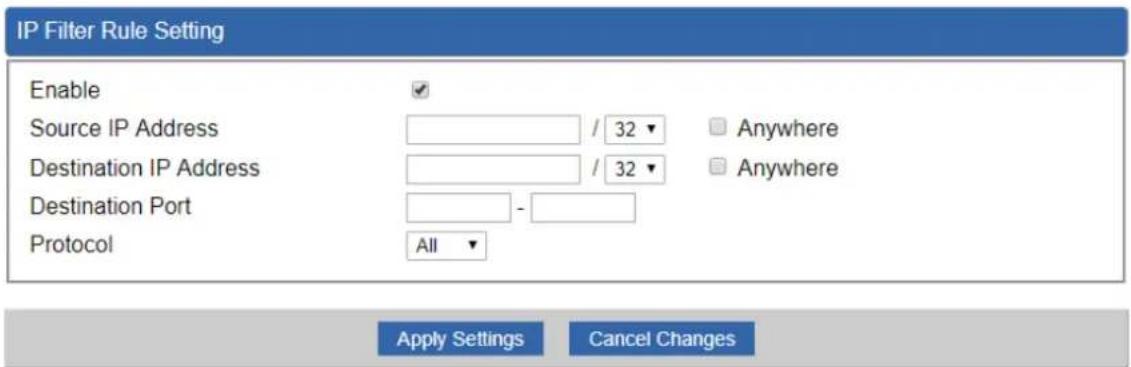
text_image
IP Filter Rule Setting Enable Source IP Address / 32 ▼ Anywhere Destination IP Address / 32 ▼ Anywhere Destination Port - Protocol All ▼ Apply Settings Cancel ChangesFigure 4-7-5: IP Filter Rule Setting
| Object | Description |
| Enable | Set the rule as enable or disable. |
| Source IP Address | Input the IP address of LAN user (such as PC or laptop) which you want to control. |
| Anywhere (of source IP Address) | Check the box if you want to control all LAN users. |
| Destination IP Address | Input the IP address of web site which you want to block. |
| Anywhere (of destination IP Address) | Check the box if you want to control all web sites, meaning the LAN user can’t visit any web site. |
| Destination Port | Input the port of destination IP Address which you want to block.Leave it as blank if you want to block all ports of the web site. |
| Protocol | Select the protocol type (TCP, UDP or all).If you are unsure, please leave it to the default all protocol. |
4.7.4 Web Filtering
Web filtering is used to deny LAN users from accessing the internet as shown in Figure 4-7-6. Block those URLs which contain keywords listed below.

text_image
Web Filtering Web Filtering Enable Disable Web Filtering Rules No. Rule Enable Filter Keyword Filter Type Action Add Web Filtering RuleFigure 4-7-6: Web Filtering
| Object | Description |
| Web Filtering | Set the function as enable or disable. |
| Add Web Filtering Rule | Go to the Add Web Filtering Rule page to add a new rule. |
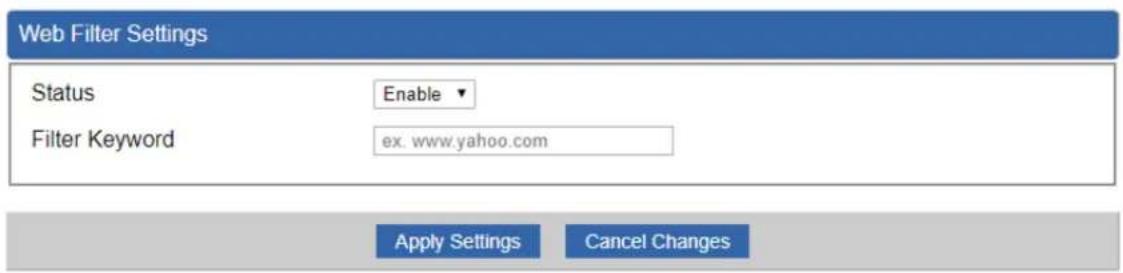
text_image
Web Filter Settings Status Enable Filter Keyword ex. www.yahoo.com Apply Settings Cancel ChangesFigure 4-7-7 Web Filtering Rule Setting
| Object | Description |
| Status | Set the rule as enable or disable. |
| Filter Keyword | Input the URL address that you want to filter, such as www.yahoo.com. |
4.7.5 Port Forwarding
Entries in this table allow you to automatically redirect common network services to a specific machine behind the NAT firewall as shown in Figure 4-7-8. These settings are only necessary if you wish to host some sort of server like a web server or mail server on the private local network behind your Cellular gateway's NAT firewall.
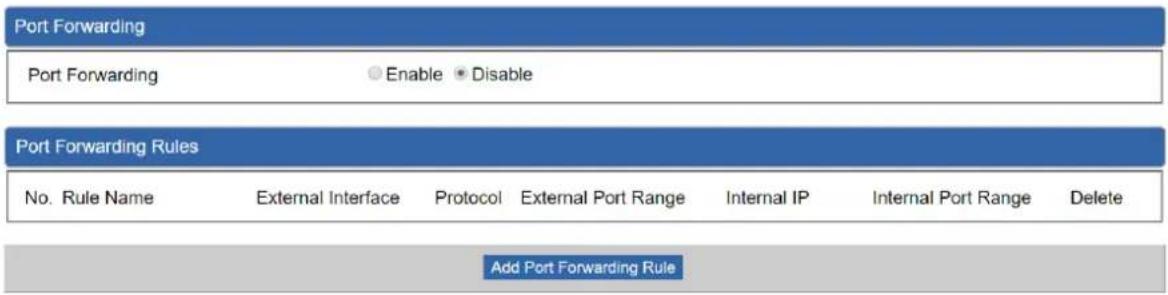
text_image
Port Forwarding Port Forwarding Enable Disable Port Forwarding Rules No. Rule Name External Interface Protocol External Port Range Internal IP Internal Port Range Delete Add Port Forwarding RuleFigure 4-7-8: Port Forwarding
| Object | Description |
| Port Forwarding | Set the function as enable or disable. |
| Add Port Forwarding Rule | Go to the Add Port Forwarding Rule page to add a new rule. |
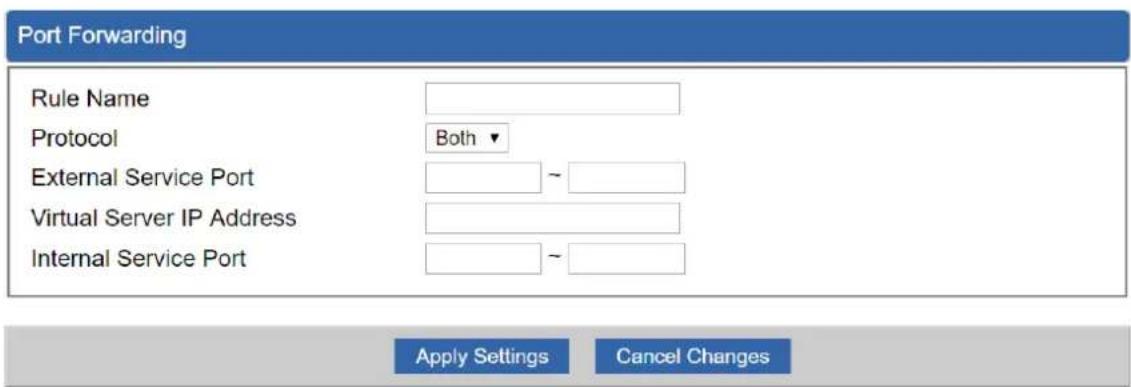
text_image
Port Forwarding Rule Name Protocol Both ▼ External Service Port ~ Virtual Server IP Address Internal Service Port ~ Apply Settings Cancel ChangesFigure 4-7-9: Port Forwarding Rule Setting
| Object | Description |
| Rule Name | Enter any words for recognition. |
| Protocol | Select the protocol type (TCP, UDP or both). If you are unsure, please leave it to the default both protocols. |
| External Service Port | Enter the external ports you want to control. For TCP and UDP services, enter the beginning of the range of port numbers used by the service. If the service uses a single port number, enter it inboth the start and finish fields. |
| Virtual Server IP Address | Enter the local IP address. |
| Internal Service Port | Enter local ports you want to control. For TCP and UDP Services, enter the beginning of the range of port numbers used by the service. If the service uses a single port number, enter it in both the start and finish fields. |
4.7.6 DMZ
A Demilitarized Zone is used to provide Internet services without sacrificing unauthorized access to its local private network as shown in Figure 4-7-9. Typically the DMZ host contains devices accessible to Internet traffic, such as Web (HTTP) servers, FTP servers, SMTP (e-mail) servers and DNS servers.

text_image
DMZ - WAN1 DMZ Enable Disable DMZ IP Address DMZ - WAN2 DMZ Enable Disable DMZ IP Address Apply Settings Cancel ChangesFigure 4-7-9: DMZ
| Object | Description |
| DMZ | Set the function as enable or disable. If the DMZ function is enabled, it means that you set up DMZ at a particular computer to be exposed to the Internet so that some applications/software, especially Internet/online game can have two way connections. |
| DMZ IP Address | Enter the IP address of a particular host in your LAN which will receive all the packets originally going to the WAN port/Public IP address above. |
4.8 Virtual Private Network
To obtain a private and secure network link, the cellular gateway is capable of establishing VPN connections. When used in combination with remote client authentication, it links the business' remote sites and users, conveniently providing the enterprise with an encrypted network communication method. By allowing the enterprise to utilize the Internet as a means of transferring data across the network, it forms one of the most effective and secure options for enterprises to adopt in comparison to other methods.
The VPN menu provides the following features as shown in Figure 4-8-1

text_image
IPsec IPsec Remote Server GRE PPTP L2TP SSL VPN Certificates VPN ConnectionFigure 4-8-1: VPN Menu
| Object | Description |
| IPsec | Allows setting IPsec function. |
| IPsec Remote Server | Disable or enable the IPsec Remote Server function.The default configuration is disabled. |
| GRE | Allows setting GRE function. |
| PPTP | Allows setting PPTP function. |
| L2TP | Allows setting L2TP function. |
| SSL VPN | Allows setting SSL VPN function. |
| Certificates | Download System CA Certificate |
| VPN Connection | Allows checking VPN Connection Status. |
4.8.1 IPSec
IPSec (IP Security) is a generic standardized VPN solution. IPSec must be implemented in the IP stack which is part of the kernel. Since IPSec is a standardized protocol it is compatible to most vendors that implement IPSec. It allows users to have an encrypted network session by standard IKE (Internet Key Exchange). We strongly encourage you to use IPSec only if you need to because of interoperability purposes. When IPSec lifetime is specified, the device can randomly refresh and identify forged IKE's during the IPSec lifetime.
This page will allow you to modify the user name and passwords as shown in Figure 4-8-2.

text_image
IPSec Tunnel Lists No. Name Interface Status Action Add IPSec TunnelFigure 4-8-2: IPSec
| Object | Description |
| Add IPSec Tunnel | Go to the Add IPSec Tunnel page to add a new tunnel. |
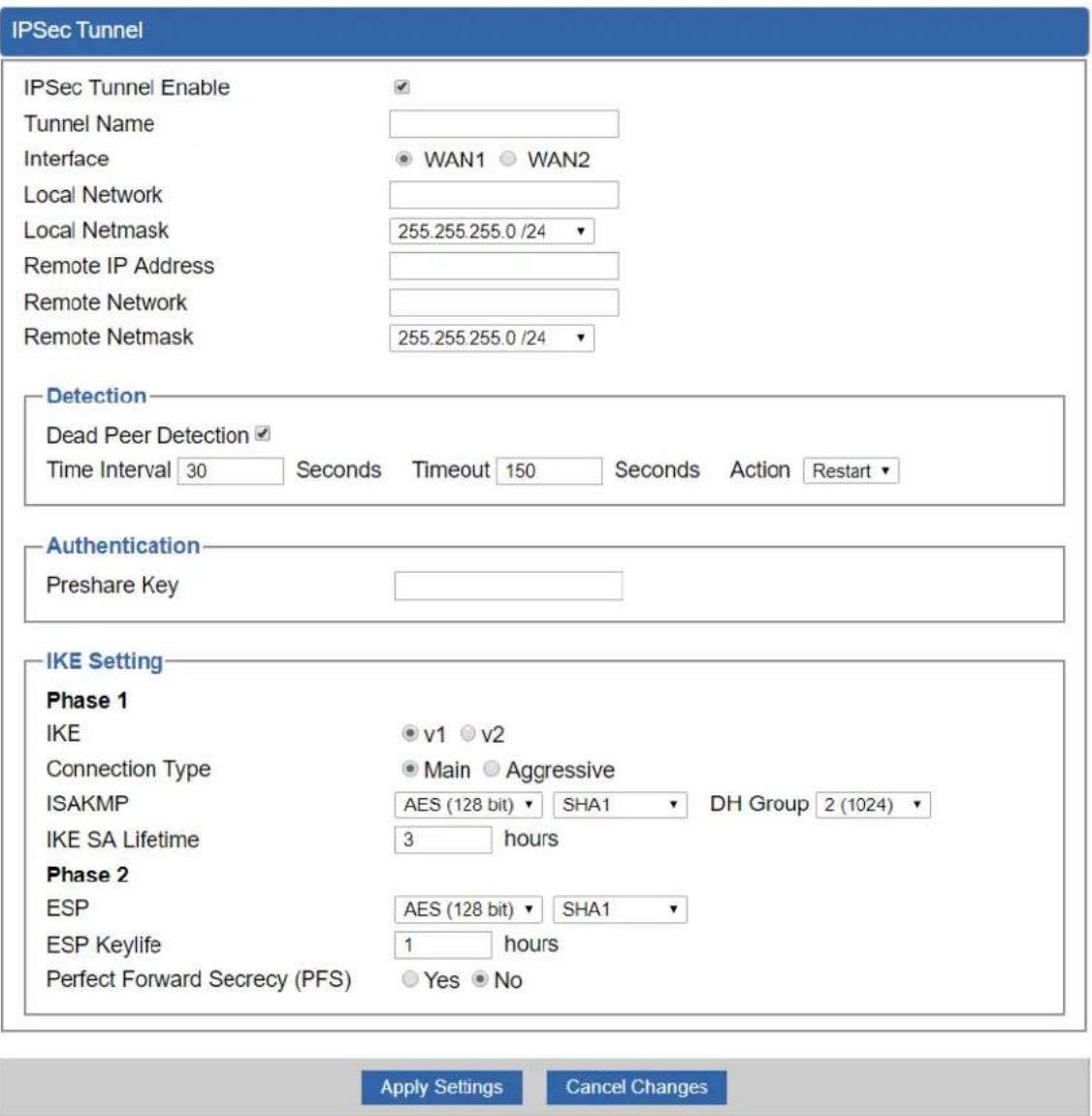
text_image
IPSec Tunnel IPSec Tunnel Enable ✓ Tunnel Name Interface WAN1 WAN2 Local Network Local Netmask 255.255.255.0 /24 ▼ Remote IP Address Remote Network Remote Netmask 255.255.255.0 /24 ▼ Detection Dead Peer Detection ✓ Time Interval 30 Seconds Timeout 150 Seconds Action Restart ▼ Authentication Preshare Key IKE Setting Phase 1 IKE v1 v2 Connection Type Main Aggressive ISAKMP AES (128 bit) SHA1 DH Group 2 (1024) ▼ IKE SA Lifetime 3 hours Phase 2 ESP AES (128 bit) SHA1 ▼ ESP Keylife 1 hours Perfect Forward Secrecy (PFS) Yes No Apply Settings Cancel ChangesFigure 4-8-3: IPSec Tunnel
| Object | Description |
| IPSec Tunnel Enable | Check the box to enable the function. |
| Tunnel Name | Enter any words for recognition. |
| Interface | This is only available for host-to-host connections and specifies to which interface the host is connecting.1. WAN 1.2. WAN 2. |
| Local Network | The local subnet in CIDR notation. For instance, "192.168.1.0". |
| Local Netmask | The netmask of this cellular gateway |
| Remote IP Address | Input the IP address of the remote host. For instance, "210.66.1.10". |
| Remote Network | The remote subnet in CIDR notation. For instance, "210.66.1.0". |
| Remote Netmask | The netmask of the remote host. |
| Dead Peer Detection | Set up the detection time of DPD (Dead Peer Detection).By default, the DPD detection's gap is 30 seconds, over 150 seconds to think that is the broken line.When VPN detects opposite party reaction time, the function will take one of the actions: "Hold" stand for the system will retain IPSec SA, "Clear" stand for the tunnel will clean away and waits for the new sessions, "Restart" will delete the IPSec SA and reset VPN tunnel. |
| Preshare Key | Enter a pass phrase to be used to authenticate the other side of the tunnel. Should be the same as the remote host. |
| IKE | Select the IKE (Internet Key Exchange) version. |
| Connection Type | 1. Main.2. Aggressive. |
| ISAKMP | It provides the way to create the SA between two PCs. The SA can access the encoding between two PCs, and the IT administrator can assign to which key size or Preshare Key and algorithm to use. The SA comes in many connection ways.AES: All using a 128-bit, 192-bit and 256-bit key. AES is a commonly seen and adopted nowadays.3DES: Triple DES is a block cipher formed from the DES cipher by using it three times. It can achieve an algorithm up to 168 bits.SHA1: The SHA1 is a revision of SHA. It has improved the shortcomings of SHA. By producing summary hash values, it can achieve an algorithm up to 160 bits.SHA2: Either 256, 384 or 512 can be chosenMD5 Algorithm: MD5 processes a variably long message into a fixed-length output of 128 bits.DH Group: Either 1, 2, 5, 14, 15, 16, 17, or 18 can be chosen. |
| IKE SA Lifetime | You can specify how long IKE packets are valid. |
| ESP | It offers AES, 3 DES, SHA 1, SHA2, and MD5.AES: All using a 128-bit, 192-bit and 256-bit key. AES is a commonly seen and adopted nowadays.3DES: Triple DES is a block cipher formed from the DES cipherby using it three times. It can achieve an algorithm up to 168 bits.3. SHA1: The SHA1 is a revision of SHA. It has improved the shortcomings of SHA. By producing summary hash values, i can achieve an algorithm up to 160 bits.4. SHA2: Either 256, 384 or 512 can be chosen.5. MD5 Algorithm: MD5 processes a variably long message into a fixed-length output of 128 bits. |
| ESP Keylife | You can specify how long ESP packets are valid. |
| Perfect Forward Secrecy (PFS) | Set the function as enable or disable. |
4.8.2 GRE
This section assists you in setting the GRE Tunnel as shown in Figure 4-8-4.
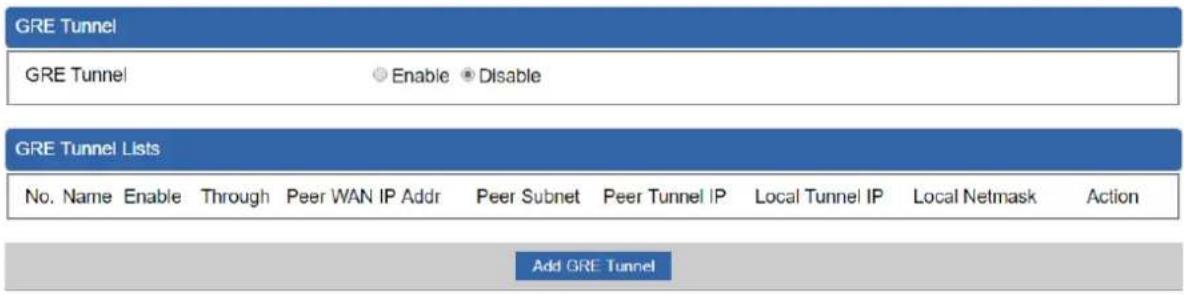
text_image
GRE Tunnel GRE Tunnel Enable Disable GRE Tunnel Lists No. Name Enable Through Peer WAN IP Addr Peer Subnet Peer Tunnel IP Local Tunnel IP Local Netmask Action Add GRE TunnelFigure 4-8-4: GRE
| Object | Description |
| GRE Tunnel | Set the function as enable or disable. |
| Add GRE Tunnel | Go to the Add GRE Tunnel page to add a new tunnel. |

text_image
GRE Tunnel Status Disable ▼ Name Tunnel name Through LAN ▼ Peer Wan IP Address Remote IP Address Peer Subnet Mask 10.10.10.0/24 Peer Tunnel IP Address 10.10.10.2 Local Tunnel IP Address 10.10.10.1 Local Subnet Mask 255.255.255.255 /32 ▼ Apply Settings Cancel ChangesFigure 4-8-5: GRE Tunnel
| Object | Description |
| Active | Check the box to enable the function. |
| Tunnel Name | Enter any words for recognition. |
| Through | This is only available for host-to-host connections and specifies to which interface the host is connecting.1. LAN.2. WAN 1.3. WAN 2. |
| Peer WAN IP Address | Input the IP address of the remote host. For instance, "210.66.1.10". |
| Peer Netmask | The remote subnet in CIDR notation. For instance, "210.66.1.0/24". |
| Peer Tunnel IP Address | Input the Tunnel IP address of remote host. |
| Local Tunnel IP Address | Input the Tunnel IP address of remote host. |
| Local Netmask | Input the Tunnel IP address of the cellular gateway |
4.8.3 PPTP Server
Use the IP address and the scope option needs to match the far end of the PPTP server; its goal is to use the PPTP channel technology, and establish Site-to-Site VPN where the channel can have equally good results from different methods with IPSec. The PPTP server is shown in Figure 4-8-6.

text_image
PPTP Server PPTP Server Broadcast Force MPPE Encryption CHAP MSCHAP MSCHAP v2 DNS1 DNS2 WINS1 WINS2 Server IP Address 192 168.10.1 Clients IP Address Start 192 168.10.10 Clients IP Address End 192 168.10.100 User 1 test 2 user 3 user 4 user 5 user Password test 1234 1234 1234 1234 Apply Settings Cancel ChangesFigure 4-8-6: PPTP server
| Object | Description |
| PPTP Server | Set the function as enable or disable. |
| Broadcast | Enter any words for recognition. |
| Force MPPEEncryption | Set the encryption as enable or disable. |
| CHAP | Set the authentication as enable or disable. |
| MSCHAP | Set the authentication as enable or disable. |
| MSCHAP v2 | Set the authentication as enable or disable. |
| DNS | When the PPTP client connects to the PPTP server, it will assign the DNS server IP address to client. |
| WINS | When the PPTP client connects to the PPTP server, it will assign the WINS server IP address to client. |
| Server IP Address | Input the IP address of the PPTP Server. For instance, "192.168.10.1". |
| Clients IP Address (Start/End) | When the VPN connection is established, the VPN client will get IP address from the VPN Server. Please set the range of IP Address. For instance, the start IP address is "192.168.10.10", the end IP address is "192.168.10.100". |
| User and Password | Create the username and password for the VPN client. |
4.8.4 L2TP Server
This section assists you in setting the L2TP Server as shown in Figure 4-8-7.
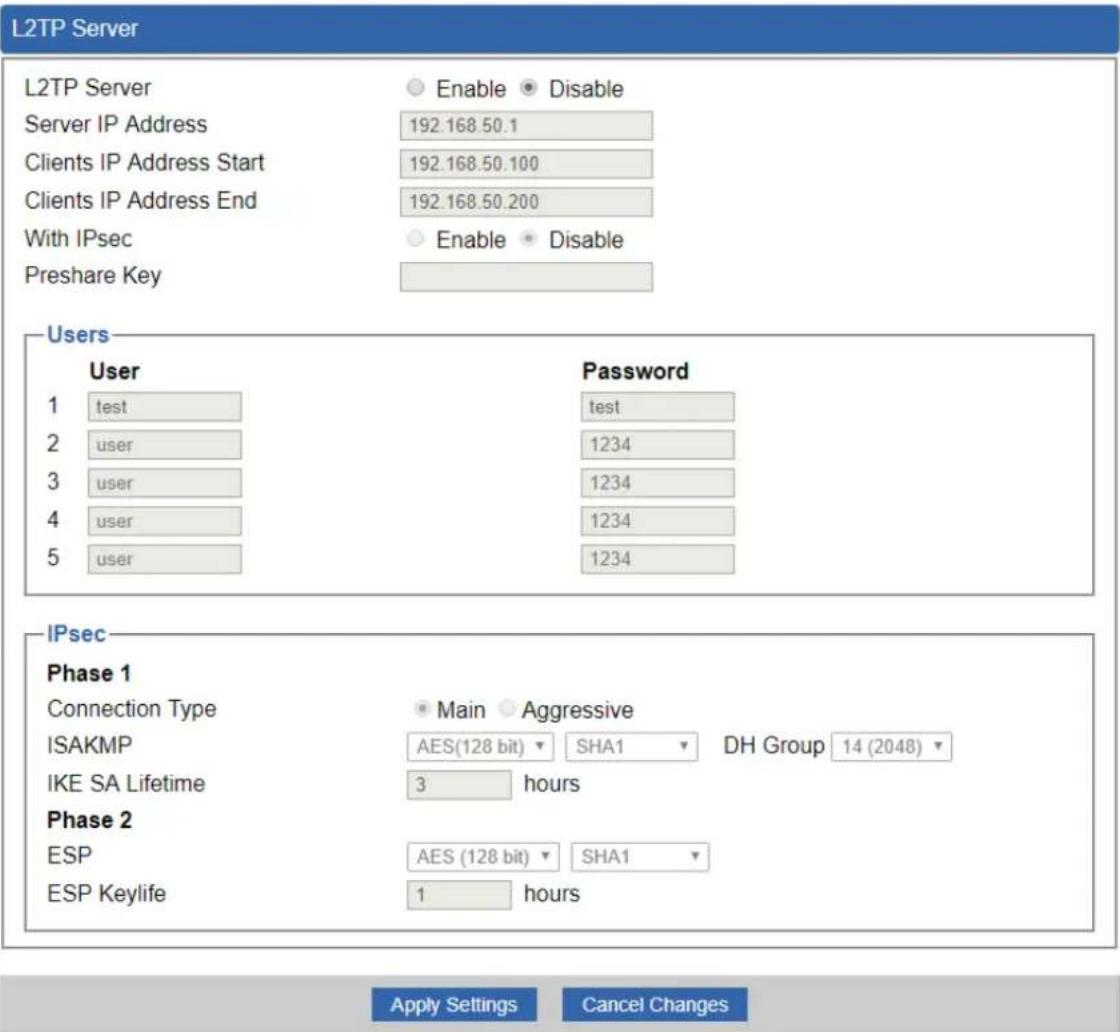
text_image
L2TP Server L2TP Server Server IP Address 192.168.50.1 Clients IP Address Start 192.168.50.100 Clients IP Address End 192.168.50.200 With IPsec Enable Disable Preshare Key Users User Password 1 test test 2 user 1234 3 user 1234 4 user 1234 5 user 1234 IPsec Phase 1 Connection Type Main Aggressive ISAKMP AES(128 bit) SHA1 DH Group 14 (2048) IKE SA Lifetime 3 hours Phase 2 ESP AES (128 bit) SHA1 ESP Keylife 1 hours Apply Settings Cancel ChangesFigure 4-8-7: L2TP Server
| Object | Description |
| L2TP Server | Set the function as enable or disable. |
| Server IP Address | Input the IP address of the L2TP Server. For instance, "192.168.50.1". |
| Clients IP Address(Start/End) | When the VPN connection is established, the VPN client will get IP address from the VPN Server. Please set the range of IP Address. For instance, the start IP address is "192.168.50.100", the end IP address is "192.168.50.200". |
| With IPsec | Set the function as enable to make the L2TP work with IPsec encryption. |
| Preshare Key | Enter a pass phrase. |
| User and Password | Create the username and password for the VPN client. |
| Connection Type | 1. Main.2. Aggressive. |
| ISAKMP | It provides the way to create the SA between two PCs. The SA car access the encoding between two PCs, and the IT administrator can assign to which key size or Preshare Key and algorithm to use. The SA comes in many connection ways.1. AES: All using a 128-bit, 192-bit and 256-bit key. AES is a commonly seen and adopted nowadays.2. 3DES: Triple DES is a block cipher formed from the DES cipher by using it three times. It can achieve an algorithm up to 168 bits.3. SHA1: The SHA1 is a revision of SHA. It has improved the shortcomings of SHA. By producing summary hash values, it can achieve an algorithm up to 160 bits.4. SHA2: Either 256, 384 or 512 can be chosen.5. MD5 Algorithm: MD5 processes a variably long message into a fixed-length output of 128 bits.6. DH Group: Either 1, 2, 5, 14, 15, 16, 17, or 18 can be chosen. |
| IKE SA Lifetime | You can specify how long IKE packets are valid. |
| ESP | It offers AES, 3 DES, SHA 1, SHA2, and MD5.1. AES: All using a 128-bit, 192-bit and 256-bit key. AES is a commonly seen and adopted nowadays.2. 3DES: Triple DES is a block cipher formed from the DES cipher by using it three times. It can achieve an algorithm up to 168 bits.3. SHA1: The SHA1 is a revision of SHA. It has improved the shortcomings of SHA. By producing summary hash values,it can achieve an algorithm up to 160 bits.4. SHA2: Either 256, 384 or 512 can be chosen.5. MD5 Algorithm: MD5 processes a variably long message into a fixed-length output of 128 bits. |
| ESP Keylife | You can specify how long ESP packets are valid. |
4.8.5 SSL VPN
This section assists you in setting the SSL Server as shown in Figure 4-8-8.

text_image
SSL Server SSL VPN Server Port 1194 Tunnel Protocol UDP Virtual Network Device TUN Interface LAN 192.168.1.1 VPN Network 192.168.20.0 Network Mask 255.255.255.0 Encryption Cipher AES-128 CBC Hash Algorithm SHA1 Export client.ovpn Export
Figure 4-8-8: SSL Server
| Object | Description |
| SSL VPN Server | Set the function as enable or disable. |
| Port | Set a port for the SSL Service. Default port is 1194. |
| Tunnel Protocol | Set the protocol as TCP or UDP. |
| Virtual Network Device | Set the Virtual Network Device as TUN or TAP. |
| Interface | User is able to select the interface for SSL service using. |
| VPN Network | The VPN subnet in CIDR notation. For instance, "192.168.20.0". |
| Network Mask | The netmask of the VPN. |
| Encryption Cipher | There are four encryption types: None, AES-128 CBC, AES-192 CBC or AES-256 CBC. |
| Hash Algorithm | There are five types of Hash Algorithm: None, SHA1, SHA1, SHA512 or MD5. |
| Export client.ovpn | Export a configuration for the SSL client. User is able to upload it to VPN client (such as Open VPN software). |
4.8.6 VPN Connection
This page shows the VPN connection status as shown in Figure 4-8-9.

text_image
VPN Connection Status IPsec GRE PPTP L2TP SSL VPN Type Connected Time Local IP Remote IP Local Subnet Remote SubnetFigure 4-8-9: VPN Connection Status
| Object | Description |
| VPN Connection Status | Click the IPSec/GRE/.../SSL VPN bookmark to check the current connection status. |
4.9 AP Control
The AP Control menu provides the following features for managing the system as Figure 4-9-1 is shown below:

text_image
Preference AP Search AP Management AP Group Management SSID Profile Radio 2.4G Profile Radio 5G Profile Statistic AP Status Map It Upload MapFigure 4-9-1: AP Control Menu
| Object | Description |
| Preference | Edit region, RO community, RW community |
| AP Search | Search APs in the same domain |
| AP Management | Config APs IP Address, Subnet Mask, SSID and Radio Profiles |
| AP Group Management | Grouping same model AP |
| SSID Profile | Setup SSID Profile |
| Radio 2.4G Profile | Setup Radio 2.4G Profiles |
| Radio 5G Profile | Setup Radio 5G Profiles |
| Statistics AP Status | Show the status of managed APs |
| Statistics Active Clients | Show the status of active clients |
| Map It | Edit the map of AP location and coverage |
| Upload Map | Search APs in the same domain |
4.9.1 Preference
On this page, you can choose the device region of FCC or ETSI. Then edit RO community and RW community for public or private use. Select Apply or Reset. This screenshot is shown in Figure 4-9-2.
AP Preference

text_image
Region FCC RO Community public RW Community privateFigure 4-9-2: AP Control Menu
Note: Device of FCC and device of ETIS cannot be shown at the same time.
4.9.2 AP Search
On this page, you can add new APs in your AP Control System.
Follow the steps below :
Step 1. Press the Search button to discover PLANET devices.
Step 2. Choose which AP you want to add.
Step 3. Press the Apply button to finish addition.

text_image
AP Search Num MAC Address Device Type Model No.Vennan Devn Device Description 1 a8.f7.e0.46.2e:38 Wireless WDAP-C7200E WDAP-C7200E-AP-FCC-V3.8-Build20200321122005 192.168.0.101 2 a8.f7.e0.3c.5f:ab Wireless WNAP-C3220E WNAP-C3220E-AP-FCC-V3.8-Build20200422115453 192.168.0.102 Step1 Search Apply Step3 Step2Note: When using AP Search, the AP's IP Address must be the same as WS-Series Switch IP domain.
4.9.3 AP Management
On this page, you can manage your APs, including checking AP online status, configuring AP (IP address, Mask, SSID and Radio profile), rebooting AP, firmware update, and deleting AP in the AP Control system.
Status
| AP Management | |||||||||||
| Online Offline Disable | |||||||||||
| Status | AP Group | MAC Address | Device Type | Model No. | Version | IP Address | Device Description | Action | |||
| a8.17.e0.45.2e.38 | Wireless | WDAP-C7200E | WDAP-C7200E-AP-FCC-V3.0-Build20200321122005 | 192.168 0.101 | |||||||
| a8.17.e0.3c.5f.ab | Wireless | WINAP-C3220E | WNAP-C3220E-AP-FCC-V3.0-Build20200422115453 | 192.168 0.102 | |||||||
| Object | Description |
| Connection status: online, offline, Wi-Fi disabled | |
| In progress: action in progress | |
| Finished/Successful: action finished and successful. | |
| Failed: action failed. |
Action
| Object | Description |
| Setting: edit setting and allocate profile to AP | |
| Link: link to the AP's web page | |
| Firmware Update: Upgrade AP's firmware | |
| Reboot: Reboot the AP | |
| Delete: Delete the AP from the LED Control control list: Control the AP's LED. | |
| Mouse-click in a sequential order: LED blink-> LED off-> LED on |
Notes:
- To configure multiple APs at one time, select multiple APs and then choose one of the action icons on the top of the page. The "Link" action is not allowed for multiple APs.
- Press the Apply button to complete the setup of AP.
4.9.4 AP Group Management
On the AP Group Management page, you can create AP group and control one or more AP groups.
| AP Group Management | |||||||
| Num. | Group Name | Group Description | Action | ||||
| 1 | GroupTest1 | test | |||||
| 2 | GroupTest2 | test | |||||
Action:
| Object | Description | |
 | Add new group: Click it to add an AP group | |
 | Delete selected item: Click it to delete the selected AP group | |

text_image
AP Group Config AP Group Configured Model No: WAP-200N AP Group Name: AP Group Description Group Member Setting Current AP Group Members << Add Remove >> Available Managed APs 2 4G Profile 5G Profile SSD 1 Disable Disable SSD 2 Disable Disable SSD 3 Disable Disable SSD 4 Disable Radio Profile Disable DisableCreate Group:
- Select AP Model No. you want to Add
- Type AP Group Name and AP Group Description.
- Select AP you want to add in the group member setting area and press the Add button.
- Select AP Group SSID profile and Radio Profile.
- Press the Apply button to finish the creation of AP group.
Note:
To do profile provisioning to multiple AP groups at one time, select multiple AP groups, and then click the "Apply" button.
The "Link" action is not allowed for multiple APs or AP group.
4.9.5 SSID Profile
On the SSID profile configuration page, enter the value that you preferred and then click "Apply" to save the profile
| Radio Profile 2.4GHz | |||||||||
| Num. | Model No. | Profile Name | Wireless Mode | Channel ID | Channel Bandwidth | Tx Power | Data Rate | Action | |
| 1 | WDAP-C7200E | test_2.4G | 11bigh mixed mode | Auto | 40MHz | 100% | N/A | ||
| 2 | WNAP-C3220E | test_2.4G | 11bigh mixed mode | Auto | 40MHz | 100% | N/A | ||
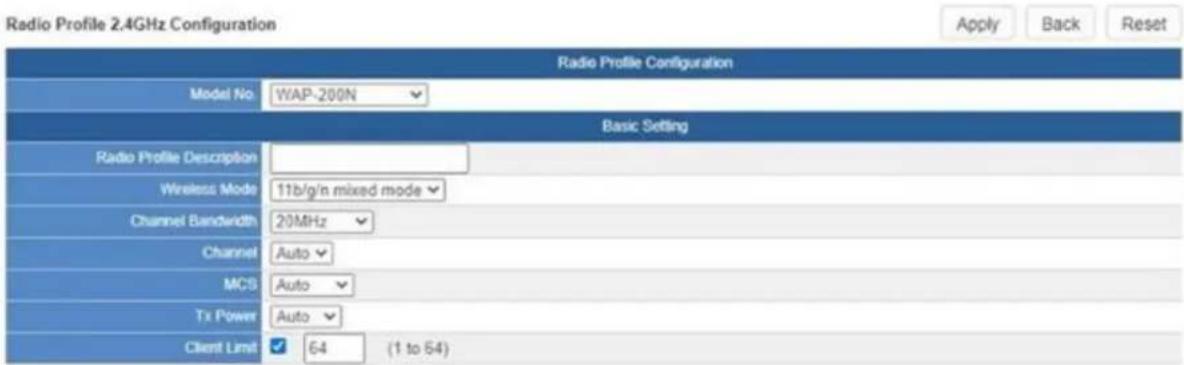
text_image
Radio Profile 2.4GHz Configuration Apply Back Reset Radio Profile Configuration Model No: WAP-200N Basic Setting Radio Profile Description Wireless Mode 11b/g/n mixed mode Channel Bandwidth 20MHz Channel Auto MCS Auto Tx Power Auto Client Limit ✓ 64 (1 to 64)Action:
| Object | Description |
| Add new profile: Click it to add a new profile. | |
| Delete selected item: Click it to delete the selected profile. | |
| Edit: Click it to edit the profile. | |
| Delete: Click it to delete the single profile. |
4.9.6 Radio 2.4G Profile
On the Radio profile configuration page, enter the value that you preferred and then click "Apply" to save the profile.
| Radio Profile 2.4GHz | |||||||||
| Num. | Model No. | Profile Name | Wireless Mode | Channel ID | Channel Bandwidth | Tx Power | Data Rate | Action | |
| 1 | WDAP-C7200E | test_2.4G | 11big/mixed mode | Auto | 40MHz | 100% | N/A | ||
| 2 | WNAP-C3220E | test_2.4G | 11big/mixed mode | Auto | 40MHz | 100% | N/A | ||
Action:
| Object | Description |
| Add new profile: Click it to add a new profile. | |
| Delete selected item: Click it to delete the selected profile. | |
| Edit: Click it to edit the profile. | |
| Delete: Click it to delete the single profile. |
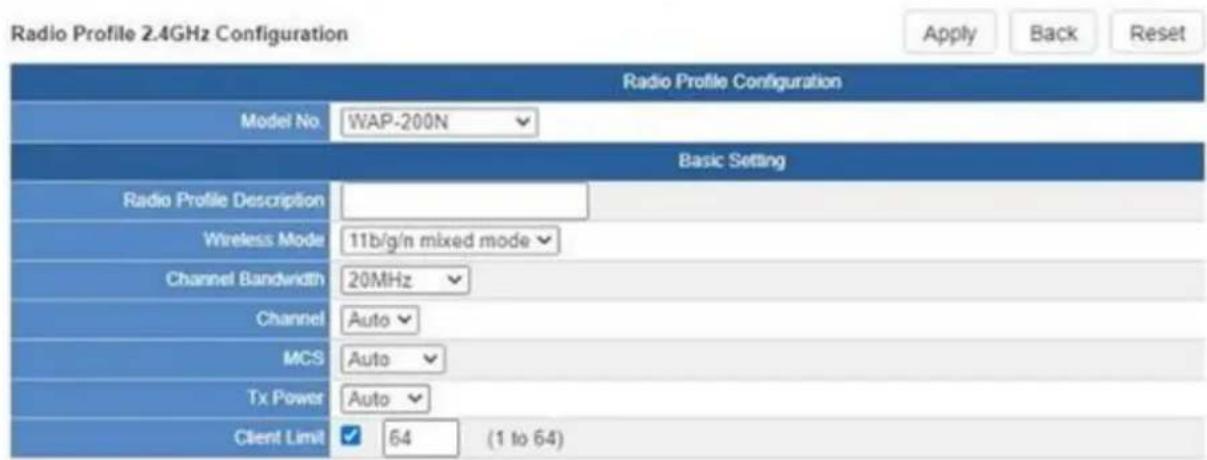
text_image
Radio Profile 2.4GHz Configuration Radio Profile Configuration Model No: WAP-200N Basic Setting Radio Profile Description Wireless Mode 11b/g/n mixed mode Channel Bandwidth 20MHz Channel Auto MCS Auto Tx Power Auto Client Limit ✓ 64 (1 to 64) Apply Back ResetNote:
- Strongly suggest you keep the values as default except the fields like Channel, Network Mode, Channel Bandwidth, Tx Power, IAPP, and Tx/Rx to prevent any unexpected error or impact on the performance.
- WMM Capable is not allowed to be disabled.
4.9.7 Radio 5G Profile
On the Radio profile configuration page, enter the value that you preferred and then click "Apply" to save the profile.
| Radio Profile 5GHz | |||||||||
| Num | Model No. | Profile Name | Wireless Mode | Channel ID | Channel Bandwidth | Tx Power | Data Rate | Action | |
| 1 | WDAP-C7206E | test_5G | 11m/ac mixed mode | Auto | -40MHz | 100% | N/A | ||
Action:
| Object | Description |
 | Add new profile: Click it to add a new profile. |
 | Delete selected item: Click it to delete the selected profile. |
 | Edit: Click it to edit the profile. |
 | Delete: Click it to delete the single profile. |
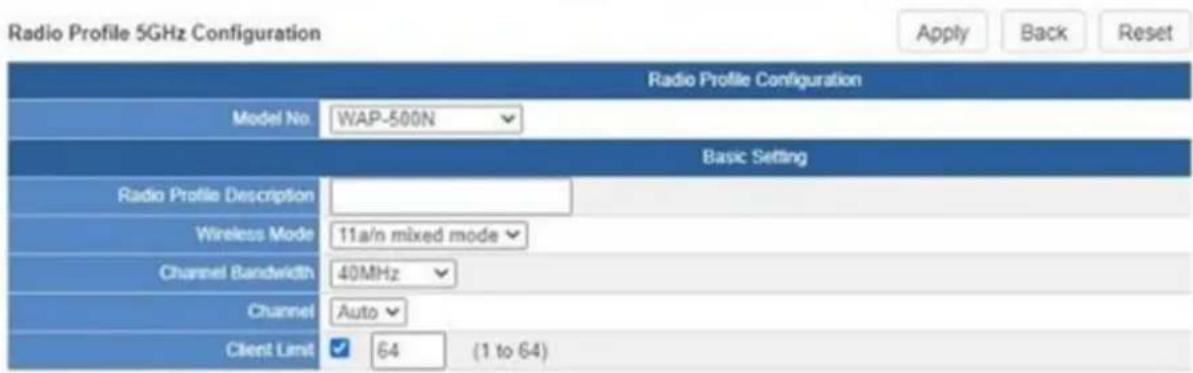
text_image
Radio Profile 5GHz Configuration Radio Profile Configuration Model No. WAP-500N Basic Setting Radio Profile Description Wireless Mode 11a/n mixed mode Channel Bandwidth 40MHz Channel Auto Client Limit ✓ 64 (1 to 64) Apply Back ResetNote:
- Strongly suggest you keep the values as default except the fields like Channel, Network Mode, Channel Bandwidth, Tx Power, IAPP, and Tx/Rx to prevent any unexpected error or impact on the performance.
- WMM Capable is not allowed to be disabled.
4.9.8 Statistics AP Status
On this page, you can observe the current configuration of all managed APs.
| Num. | Status | MAC Address | IP Address | Model No. | Name | firmware | AF Group | 2.4GHz SSID Profile | 5GHz SSID Profile | 2.4GHz Radio Profile | 5GHz Radio Profile |
| 1 | a8.f7 e0 46.2e:38 | 192.168.0.102 | WDAP-C7200E | WDAP-C7200E-AP-FCC-V3.0-Build20200321122005 | |||||||
| 2 | a8.f7 e0 3c.5f ab | 192.168.0.101 | WNAP-C3220E | WNAP-C3220E-AP-FCC-V3.0-Build20200422115453 | N/A | N/A |
Filter: You can filter the AP list by entering the keyword in the field next to the magnifier icon. The keyword should be in any context that belongs to the fields of this page.
4.9.9 Statistics Active Clients
On this page, you can observe the statuses of all associated clients including traffic statistics, transmission speed and RSSI signal strength.
| Statistic > Active Clients | ||||||||
| Num | Client MAC Address | AP MAC Address | AP SSD | Band | Tx (KB) | Rx (KB) | Speed (Mbps) | RSSI (dBm) |
| 1 | 00 00:00 00:00:00 | a8.17 e0.46 2e38 | SSIDtest_2.4G | 2.4GHz | 0 | 0 | 0 | 0 |
Filter: You can filter the search result by entering the keywords in the field next to the magnifier icon. The keywords include MAC Address, IP Address, SSID and Band.
4.9.10 Map It
On this page you can add managed APs to the actual position against the floor map. This is convenient to user to view and adjust the actual deployment by referring to its real transmission power and channel allocation.
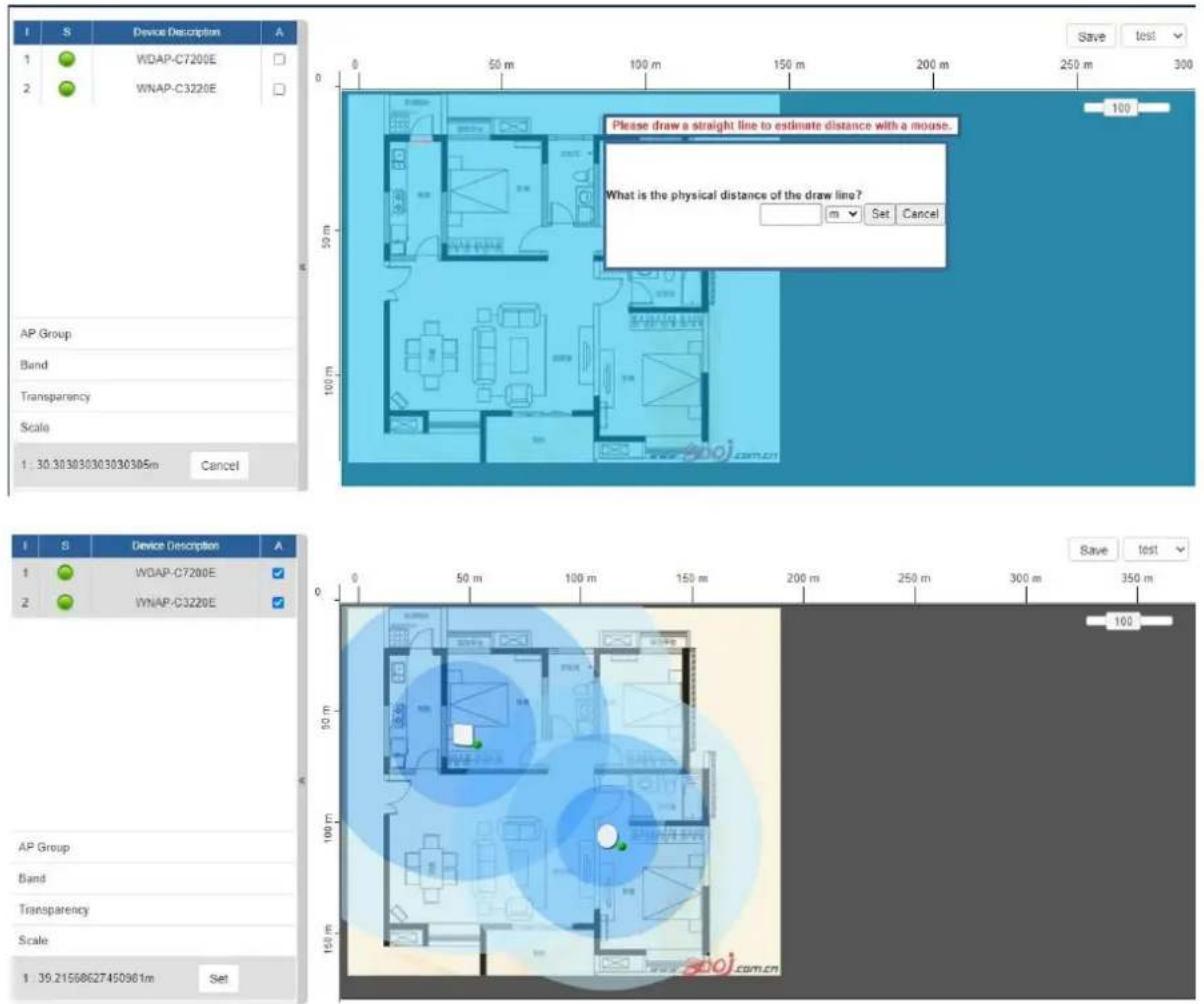
text_image
Device Description WDAP-C7200E WNAP-C3220E Save test Please draw a straight line to estimate distance with a mouse. What is the physical distance of the draw line? m Set Cancel AP Group Band Transparency Scale 1: 30.303030303030305m Cancel Device Description WDAP-C7200E WNAP-C3220E Save test AP Group Band Transparency Scale 1: 39.21568627450961m Set- Click "Scale" to start to reset the map scale.
- Press the set button to draw a line on the map. Fill its physical distance in the blank and press Set or Cancel. For example, in the graph below, set the door width to 0.8 m
Note: You need to upload map image first before mapping managed APs to the actual position.
4.9.11 Upload Map
On this page, the system allows you to upload your floor map to the system.

text_image
Upload Map Map New Map Upload File 缩格搜索 未直接任何搜索 New Description File Size Bytes ApplyNote: The system allows user to upload up to 10 floor maps.
4.10 Wireless
The Wireless menu provides the following features as shown in Figure 4-10-1
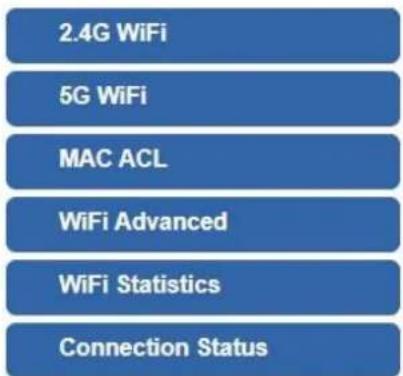
text_image
2.4G WiFi 5G WiFi MAC ACL WiFi Advanced WiFi Statistics Connection StatusFigure 4-9-1: Wireless Menu
| Object | Description |
| 2.4G Wi-Fi | Allows to configure 2.4G Wi-Fi. |
| 5G Wi-Fi | Allows to configure 5G Wi-Fi. |
| MAC ACL | Allows to configure MAC ACL. |
| Wi-Fi Advanced | Allows to configure advanced setting of Wi-Fi. |
| Wi-Fi Statistics | Displays the statistics of Wi-Fi traffic. |
| Connection Status | Displays the connection status. |
4.10.1 2.4G Wi-Fi
This page allows the user to define 2.4G Wi-Fi as shown in Figure 4-10-2.
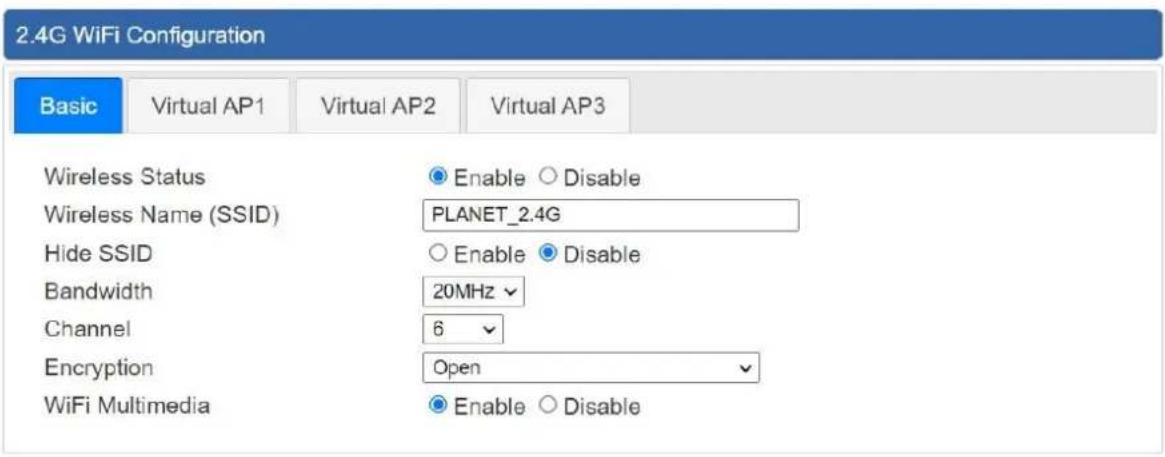
text_image
2.4G WiFi Configuration Basic Virtual AP1 Virtual AP2 Virtual AP3 Wireless Status Enable Disable Wireless Name (SSID) PLANET_2.4G Hide SSID Enable Disable Bandwidth 20MHz Channel 6 Encryption Open WiFi Multimedia Enable DisableFigure 4-10-2: 2.4G Wi-Fi
| Object | Description |
| Wireless Status | Allows user to enable or disable 2.4G Wi-Fi |
| Wireless Name (SSID) | It is the wireless network name. The default 2.4G SSID is “PLANET_2.4G” |
| Hide SSID | Allows user to enable or disable SSID |
| Bandwidth | Select the operating channel width, “20MHz” or “40MHz” |
| Channel | It shows the channel of the CPE. Default 2.4GHz is channel 6. |
| Encryption | Select the wireless encryption. The default is “Open” |
| Wi-Fi Multimedia | Enable/Disable WMM (Wi-Fi Multimedia ) function |
4.10.2 5G Wi-Fi
This page allows the user to define 5G Wi-Fi as shown in Figure 4-10-3.
5G WiFi Configuration
Basic
Virtual AP1
Virtual AP2
Virtual AP3
Wireless Status
Wireless Name (SSID)
Hide SSID
Bandwidth
Channel
Encryption
WiFi Multimedia
Enable
○ Disable
PLANET_5G
○ Enable
80MHz
36
Open
Enable
Disable
[Non-Text]
[Non-Text]
√
Figure 4-10-3: 5G WFI
| Object | Description |
| Wireless Status | Allows user to enable or disable 5G Wi-Fi |
| Wireless Name (SSID) | It is the wireless network name. The default 5G SSID is “PLANET_5G” |
| Hide SSID | Allows user to enable or disable SSID |
| Bandwidth | Select the operating channel width, “20MHz”, “40MHz” or “80MHz” |
| Channel | It shows the channel of the CPE. Default 5GHz is channel 36. |
| Encryption | Select the wireless encryption. The default is “Open” |
| Wi-Fi Multimedia | Enable/Disable WMM (Wi-Fi Multimedia ) function |
4.10.3 MAC ACL
This page provides MAC ACL configuration as shown in Figure 4-10-4.
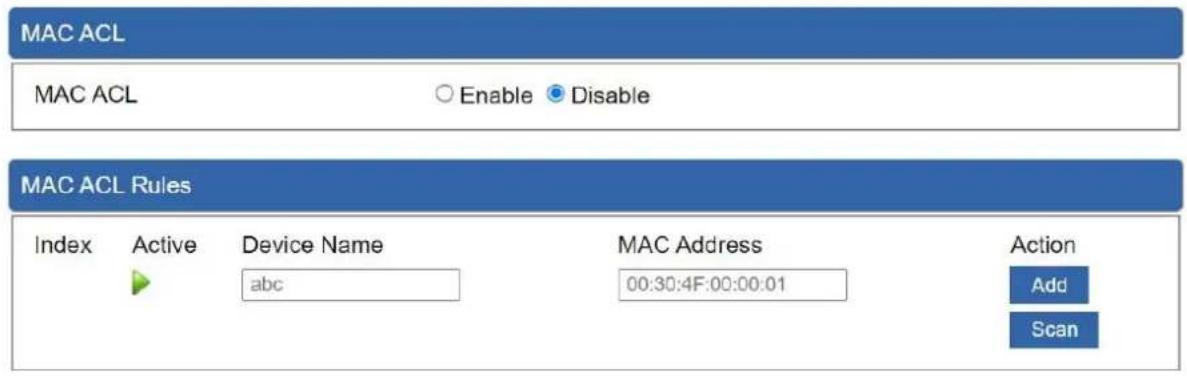
text_image
MAC ACL MAC ACL Enable Disable MAC ACL Rules Index Active Device Name MAC Address Action abc 00:30:4F:00:00:01 Add ScanFigure 4-10-4: MAC ACL
| Object | Description |
| Active | Allows the devices to pass the MAC ACL rule |
| Device Name | Set an allowed device name |
| MAC Address | Set an allowed device MAC address |
| Add | Press the “Add” button to add end-device that is scanned from wireless network and mark them |
| Scan | Connect to client list |
4.10.4 Wi-Fi Advanced
This page allows the user to define advanced setting of Wi-Fi as shown in Figure 4-10-5.
WiFi Advanced
| 2.4G Mode | 11 AX | |
| 5G Mode | 11 AX | |
| 2.4GHz Maximum Associated Clients | 32 | (Range 1~64) |
| 5GHz Maximum Associated Clients | 32 | (Range 1~64) |
| 2.4G Coverage Threshold | -90 | (-95dBm ~ -60dBm) |
| 5G Coverage Threshold | -90 | (-95dBm ~ -60dBm) |
| 2.4G TX Power | Max(100%) | |
| 5G TX Power | Max(100%) |
Figure 4-10-5: Wi-Fi Advanced
| Object | Description |
| 2.4G Mode | 11AC: Select 802.11B/G or 802.11N/G11AX: Select 802.11B/G or 802.11N/G or 802.11AX |
| 5G Mode | 11AC: Select 802.11A or 802.11AN or 802.11AC11AX: Select 802.11A or 802.11AN or 802.11AC or 802.11AX |
| 2.4GHz Maximum Associated Clients | The maximum users are 64 |
| 5GHz Maximum Associated Clients | The maximum users are 64 |
| 2.4G Coverage Threshold | The coverage threshold is to limit the weak signal of clients occupying session. The default is -90dBm |
| 5G Coverage Threshold | The coverage threshold is to limit the weak signal of clients occupying session. The default is -90dBm |
| 2.4G TX Power | The range of transmit power is Max (100%), Efficient (75%), Enhanced (50%), Standard (25%) or Min (15%). In case of shortening the distance and the coverage of the wireless network, input a smaller value to reduce the radio transmission power |
| 5G TX Power | The range of transmit power is Max (100%), Efficient (75%), Enhanced (50%), Standard (25%) or Min (15%). In case of shortening the distance and the coverage of the wireless network, input a smaller value to reduce the radio transmission power |
4.10.5 Wi-Fi Statistics
This page displays Wi-Fi statistics as shown in Figure 4-10-6.
2.4G
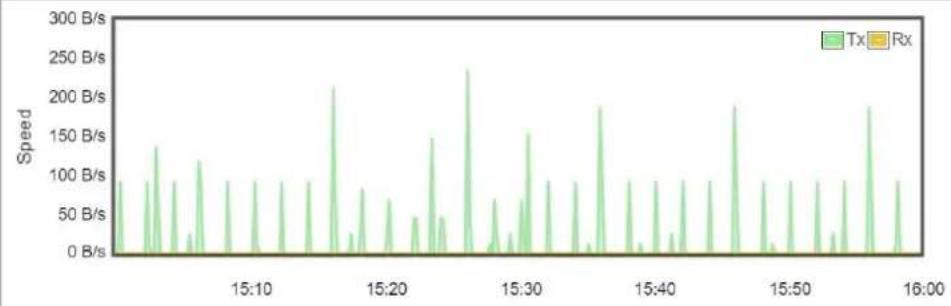
line
| Time | Speed | | ------ | --------- | | 15:10 | ~90 B/s | | 15:15 | ~130 B/s | | 15:20 | ~210 B/s | | 15:25 | ~240 B/s | | 15:30 | ~150 B/s | | 15:35 | ~190 B/s | | 15:40 | ~90 B/s | | 15:45 | ~190 B/s | | 15:50 | ~90 B/s | | 15:55 | ~190 B/s | | 16:00 | ~90 B/s |5G

line
| Time | Speed | | ------ | --------- | | 15:00 | ~90 B/s | | 15:05 | ~130 B/s | | 15:10 | ~80 B/s | | 15:15 | ~210 B/s | | 15:20 | ~40 B/s | | 15:25 | ~240 B/s | | 15:30 | ~150 B/s | | 15:35 | ~190 B/s | | 15:40 | ~90 B/s | | 15:45 | ~190 B/s | | 15:50 | ~190 B/s |Figure 4-10-6: Wi-Fi Statistics
4.10.6 Connection Status
This page shows the host names and MAC address of all the clients in your network as shown in Figure 4-10-7.
| Client List | ||||
| No. | Name | MAC Address | Signal | Connected Time |
Figure 4-10-7: Connection Status
| Object | Description |
| Name | Display the host name of connected clients. |
| MAC Address | Display the MAC address of connected clients. |
| Signal | Display the connected signal of connected clients. |
| Connected Time | Display the connected time of connected clients. |
4.11 Maintenance
The Maintenance menu provides the following features for managing the system as shown in Figure 4-11-1
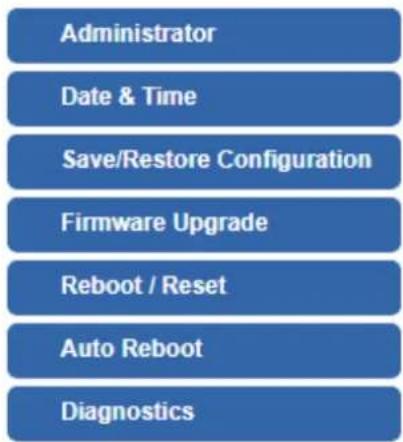
flowchart
graph TD
    A["Administrator"] --> B["Date & Time"]
    B --> C["Save/Restore Configuration"]
    C --> D["Firmware Upgrade"]
    D --> E["Reboot / Reset"]
    E --> F["Auto Reboot"]
    F --> G["Diagnostics"]
Figure 4-11-1: Maintenance Menu
| Object | Description |
| Administrator | Allows changing the login username and password. |
| Date & Time | Allows setting Date & Time function. |
| Save/Restore Configuration | Export the cellular gateway's configuration to local or USB sticker.Restore the cellular gateway's configuration from local or USB sticker. |
| Firmware Upgrade | Upgrade the firmware from local or USB storage. |
| Reboot / Reset | Reboot or reset the system. |
| Auto Reboot | Allows setting auto-reboot schedule. |
| Diagnostics | Allows you to issue ICMP PING packets to troubleshoot IP. |
4.11.1 Administrator
To ensure the cellular gateway's security is secure, you will be asked for your password when you access the cellular gateway's Web-based utility. The default user name and password are "admin". This page will allow you to modify the user name and passwords as shown in Figure 4-11-2.
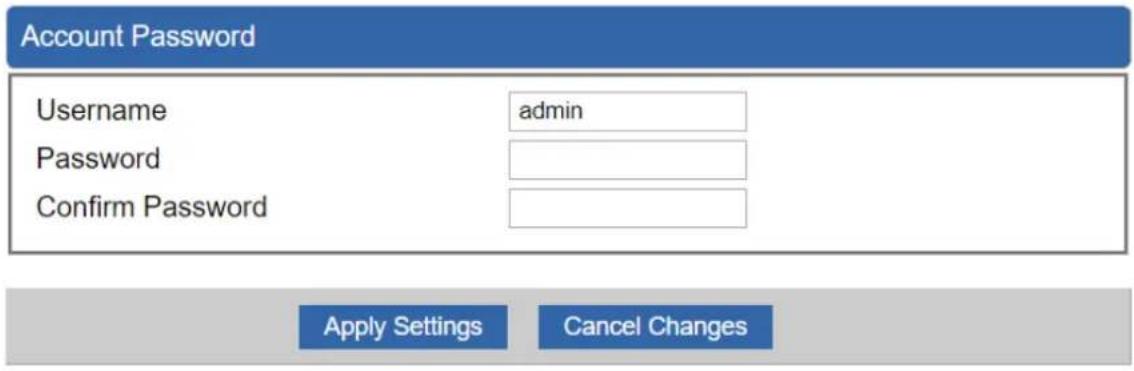
text_image
Account Password Username admin Password Confirm Password Apply Settings Cancel ChangesFigure 4-11-2: Account and Password Page
| Object | Description |
| Username | Input a new username. |
| Password | Input a new password. |
| Confirm Password | Input password again. |
4.11.2 Date and Time
This section assists you in setting the system time of the cellular gateway. You are able to either select to set the time and date manually or automatically obtain the GMT time from Internet as shown in
Figure 4-11-3.
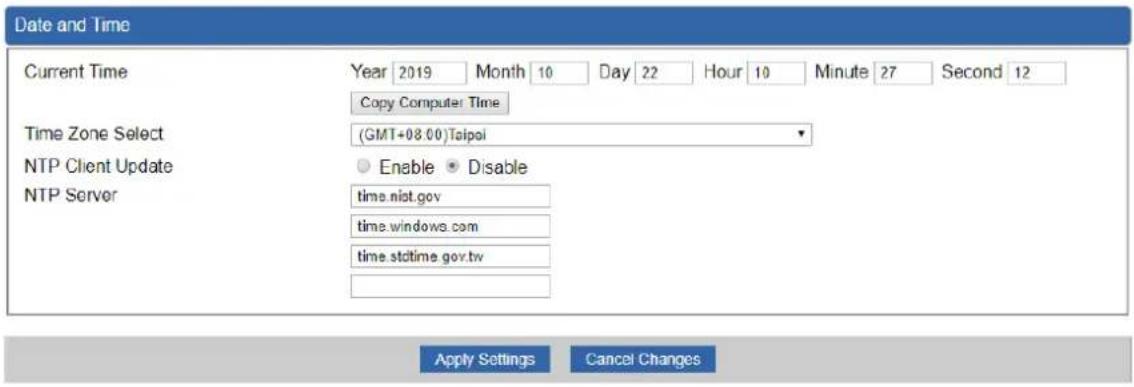
text_image
Date and Time Current Time Year 2019 Month 10 Day 22 Hour 10 Minute 27 Second 12 Copy Computer Time Time Zone Select (GMT+08.00)Taipei NTP Client Update Enable Disable NTP Server time.nist.gov time.windows.com time.ststime.gov.tw Apply Settings Cancel ChangesFigure 4-11-3: Date and Time Page
| Object | Description |
| Current Time | Show the current time.User is able to set time and date manually. |
| Time Zone Select | Select the time zone of the country you are currently in. The cellular gateway will set its time based on your selection. |
| NTP Client Update | Once this function is enabled, cellular gateway will automatically update current time from NTP server. |
| NTP Server | User may use the default NTP sever or input NTP server manually. |
4.11.3 Saving/Restoring Configuration
This page shows the status of the configuration. You may save the setting file to either USB storage or PC and load the setting file from USB storage or PC as Figure 4-11-4 is shown below:
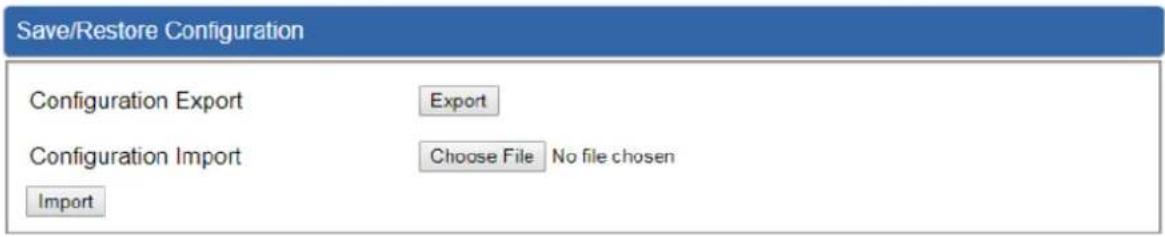
text_image
Save/Restore Configuration Configuration Export Export Configuration Import Choose File No file chosen Import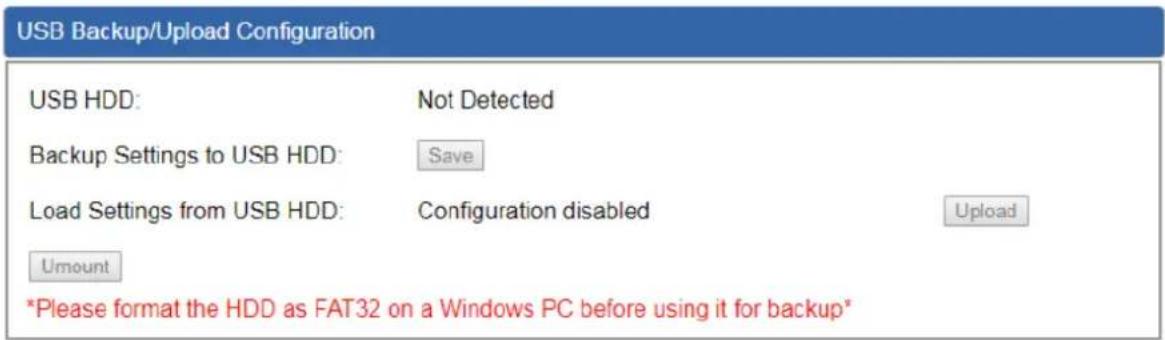
text_image
USB Backup/Upload Configuration USB HDD: Not Detected Backup Settings to USB HDD: Save Load Settings from USB HDD: Configuration disabled Upload Umount *Please format the HDD as FAT32 on a Windows PC before using it for backup*Figure 4-11-4: Saving/Restoring Configuration
■ Save Setting to PC
| Object | Description |
| Configuration Export | Press theExportbutton to save setting file to PC. |
| Configuration Import | Press theChoose Filebutton to select the setting file, and thenpress theImportbutton to upload setting file from PC. |
■ Save Setting to USB Storage
| Object | Description |
| USB Storage | The status of USB storage. |
| Backup Settings to USB Storage | Press the Save button to save setting file to USB storage. |
| Load Settings from USB Storage | Press the Unload button to upload setting file from USB storage. |
| Unmount | Before removing the USB storage from the cellular gateway, please press the “Unmount” button first. |
4.11.4 Upgrading Firmware
This page provides the firmware upgrade function as shown in Figure 4-11-5

text_image
Firmware Upgrade Select File Choose File No file chosen UpgradeFigure 4-11-5: Firmware Upgrade Page
| Object | Description |
| Choose File | Press the button to select the firmware. |
| Upgrade | Press the button to upgrade firmware to system. |
4.11.5 Reboot / Reset
This page enables the device to be rebooted from a remote location. Once the Reboot button is pressed, users have to re-log in the Web interface as Figure 4-11-6 is shown below:
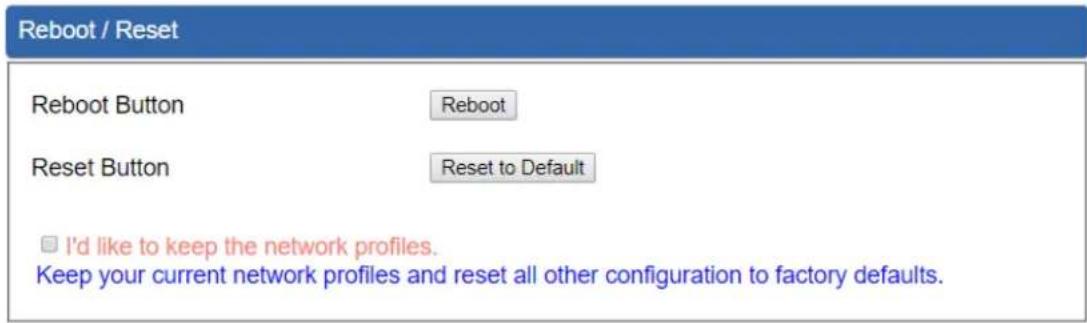
text_image
Reboot / Reset Reboot Button Reboot Reset Button Reset to Default □ I'd like to keep the network profiles. Keep your current network profiles and reset all other configuration to factory defaults.Figure 4-11-6: Reboot/Reset Page
| Object | Description |
| Reboot | Press the button to reboot system. |
| Reset | Press the button to restore all settings to factory default settings. |
| I'd like to keep the network profiles. | Check the box and then press the button to keep the current network profiles and reset all other configurations to factory defaults. |
4.11.6 Diagnostics
The page allows you to issue ICMP PING packets to troubleshoot IP connectivity issues. After you press "Ping", ICMP packets are transmitted, and the sequence number and roundtrip time are displayed upon reception of a reply. The Page refreshes automatically until responses to all packets are received, or until a timeout occurs as shown in Figure 4-11-7

text_image
Ping Test Interface Any Target Host Numbers of Packets Ping PingFigure 4-11-7: Diagnostics Page
| Object | Description |
| Interface | Select an interface of the cellular gateway |
| Target Host | The destination IP Address or domain. |
| Number of Packets | Set the number of packets that will be transmitted; the maximum is 100. |
| Ping | The time of ping. |

Be sure the target IP address is within the same network subnet of the cellular gateway, or you have to set up the correct gateway IP address.
Appendix A: DDNS Application
Configuring PLANET DDNS steps:
Step 1: Visit DDNS provider's web site and register an account if you do not have one yet. For example, register an account at http://planetddns.com
Step 2: Enable DDNS option through accessing web page of the device.
Step 3: Input all DDNS settings.