Patriot 780 - To scan Visioneer - Free user manual and instructions
Find the device manual for free Patriot 780 Visioneer in PDF.


User questions about Patriot 780 Visioneer
0 question about this device. Answer the ones you know or ask your own.
Ask a new question about this device
Download the instructions for your To scan in PDF format for free! Find your manual Patriot 780 - Visioneer and take your electronic device back in hand. On this page are published all the documents necessary for the use of your device. Patriot 780 by Visioneer.
USER MANUAL Patriot 780 Visioneer
natural_image
Abstract geometric logo design with stylized eye and V-shape elements (no text or symbols)Visioneer®
Patriot 780 Scanner
User's Guide
visioneer

for Windows
Visioneer
Patriot 780 Scanner
User's Guide
FOR WINDOWS
COPYRIGHT INFORMATION
Copyright © 2006 Visioneer, Inc.
Reproduction, adaptation, or translation without prior written permission is prohibited, except as allowed under the copyright laws.
The Visioneer brand name and logo are registered trademarks of Visioneer, Inc. The OmniPage Pro brand name and logo are registered trademarks of Nuance Communications, Inc. Kofax VRS is a copyright of Kofax Image Products. QuickScan is a trademark and ISIS is a registered trademark of Captiva Software Corporation. Adobe®, Adobe® Acrobat®, Acrobat® Reader®, and the Adobe® Acrobat® PDF® logo are registered trademarks of Adobe Systems Incorporated in the United States and/or other countries. The Adobe PDF logo will appear in this product's software, and full access to Adobe software features is only available if any Adobe product is installed on your computer.
This product is covered by one or more of the following patents: 6,480,304; 5,818,976; 5,499,108; 5,517,332.
Microsoft is a U.S. registered trademark of Microsoft Corporation. Windows is a trademark of Microsoft Corporation. ZyINDEX is a registered trademark of ZyLAB International, Inc. ZyINDEX toolkit portions, Copyright © 1990-1998, ZyLAB International, Inc. All Rights Reserved. All other products mentioned herein may be trademarks of their respective companies.
Information is subject to change without notice and does not represent a commitment on the part of Visioneer. The software described is furnished under a licensing agreement. The software may be used or copied only in accordance with the terms of such an agreement. It is against the law to copy the software on any medium except as specifically allowed in the licensing agreement. No part of this document may be reproduced or transmitted in any form or by any means, electronic or mechanical, including photocopying, recording, or information storage and retrieval systems, or translated to another language, for any purpose other than the licensee's personal use and as specifically allowed in the licensing agreement, without the express written permission of Visioneer.
Part Number: 05-0709-000
Restricted Rights Legend
Use, duplication, or disclosure is subject to restrictions as set forth in contract subdivision (c)(1)(ii) of the Rights in Technical Data and Computer Software Clause 52.227-FAR14. Material scanned by this product may be protected by governmental laws and other regulations, such as copyright laws. The customer is solely responsible for complying with all such laws and regulations.
Visioneer's Limited Product Warranty
IF YOU FIND PHYSICAL DEFECTS IN THE MATERIALS OR THE WORKMANSHIP USED IN MAKING THE PRODUCT DESCRIBED IN THIS DOCUMENT, VISIONEER WILL REPAIR, OR AT ITS OPTION, REPLACE THE PRODUCT AT NO CHARGE TO YOU, PROVIDED YOU RETURN IT (POSTAGE PREPAID, WITH PROOF OF YOUR PURCHASE FROM THE ORIGINAL RESELLER) DURING THE 90-DAY PERIOD AFTER THE DATE OF YOUR ORIGINAL PURCHASE OF THE PRODUCT. UPON RECEIPT DURING THE INITIAL 90-PERIOD BY VISIONEER OF A VALID REGISTRATION OF THE PRODUCT, THIS LIMITED PRODUCT WARRANTY PERIOD IS EXTENDED TO THE 12-MONTH PERIOD AFTER THE DATE OF YOUR ORIGINAL PURCHASE. IF A VALID REGISTRATION IS NOT RECEIVED DURING THE INITIAL 90-DAY PERIOD, THE 12-MONTH WARRANTY IS NO LONGER AVAILABLE AND YOUR PRODUCT WARRANTY WILL TERMINATE AFTER THE 90-DAY INITIAL PERIOD EXPIRES.
THIS IS VISIONEER'S ONLY WARRANTY AND YOUR EXCLUSIVE REMEDY CONCERNING THE PRODUCT, ALL OTHER REPRESENTATIONS, WARRANTIES OR CONDITIONS, EXPRESS OR IMPLIED, WRITTEN OR ORAL, INCLUDING ANY WARRANTY OF MERCHANTABILITY, FITNESS FOR A PARTICULAR PURPOSE OR NON-INFRINGEMENT, ARE EXPRESSLY EXCLUDED. AS A RESULT, EXCEPT AS SET OUT ABOVE, THE PRODUCT IS SOLD "AS IS" AND YOU ARE ASSUMING THE ENTIRE RISK AS TO THE PRODUCT'S SUITABILITY TO YOUR NEEDS, ITS QUALITY AND ITS PERFORMANCE.
IN NO EVENT WILL VISIONEER BE LIABLE FOR DIRECT, INDIRECT, SPECIAL, INCIDENTAL OR CONSEQUENTIAL DAMAGES RESULTING FROM ANY DEFECT IN THE PRODUCT OR FROM ITS USE, EVEN IF ADVISED OF THE POSSIBILITY OF SUCH DAMAGES.
All exclusions and limitations in this warranty are made only to the extent permitted by applicable law and shall be of no effect to the extent in conflict with the express requirements of applicable law.
RoHS and WEEE Compliance
This product is compliant with RoHS Regulations of the European Parliament and Council Directive on the Restrictions of the Use of Certain Hazardous Substances in Electrical and Electronic Equipment (2002/95/EC), and with the Waste Electrical and Electronic Equipment (WEEE) Directive (2002/96/EC).
FCC Radio Frequency Interference Statement
This equipment has been tested and found to comply with the limits for the class B digital device, pursuant to part 15 of the FCC Rules. These limits are designed to provide reasonable protection against interference in a residential installation. This equipment generates, uses and can radiate radio frequency energy and if not installed, and used in accordance with the instructions, may cause harmful interference to radio communications. However, there is no guarantee that interference will not occur in a particular installation. If this equipment does cause harmful interference to radio or television reception, which can be determined by turning the equipment off and on, the user is encouraged to try and correct the interference by one or more of the following measures:
- Reorient or relocate the receiving antenna.
- Increase the separation between the equipment and receiver.
- Connect the equipment into an outlet on a circuit different from that to which the receiver is connected.
- Consult the dealer or an experienced radio/TV technician for help.
This equipment has been certified to comply with the limits for a class B computing device, pursuant to FCC Rules. In order to maintain compliance with FCC regulations, shielded cables must be used with this equipment. Operation with non-approved equipment or unshielded cables is likely to result in interference to radio and TV reception. The user is cautioned that changes and modifications made to the equipment without the approval of manufacturer could void the user's authority to operate this equipment.
This device complies with part 15 of the FCC Rules. Operation is subject to the following two conditions: (1) This device may not cause harmful interference, and (2) this device must accept any interference received, including interference that may cause undesired operation.
TABLE OF CONTENTS
Welcome 1
What's in the Box 1
The Visioneer Patriot 780 Scanner 2
What You Need 4
Documentation 4
Installation 5
Before You Begin 5
Step 1: Assemble the Scanner ....6
Step 2: Install the Software 9
Step 3: Connect the Power Supply ..... 15
Step 4: Connect the USB Cable and Turn on the Power ..... 16
Additional Applications for Your Scanner 21
Register Your Scanner and Check for Updates 24
Scanning 25
Scanning Basics 26
Loading a Stack of Documents 26
Scanning a Single Page 28
Scan from the OneTouch Button Panel 29
Check the Scan Settings Before Scanning 31
Using the OneTouch Panel 33
About the OneTouch Button Panel's Names and Icons . . . . . . 34
The Default OneTouch Settings on Your Scanner 35
Configuring the OneTouch Buttons 36
About the OneTouch Properties Window 37
Selecting New Settings for a Button 40
Setting Destination Application Properties 42
Selecting Page Format Options 50
Renaming a OneTouch Button 55
Selecting Options for the OneTouch Properties Window ..... 56
Creating a New Scan Configuration 60
Editing or Deleting Scan Configurations ..... 75
Configuring Before Scanning 76
Scanning with Optical Character Recognition (OCR) ..... 78
Scanning with sPDF or nPDF and Searching for Text ..... 86
Scan and Burn to a CD 89
Scanning with Event Forwarding....92
Creating an HTML Web Page from Your Scanned Documents 94
Transferring Scanned Documents to Storage ..... 96
Checking the Hardware and Setting the Lamp Power Saving . 101
Scanning with the TWAIN Interface 104
The Basic Steps to Open the TWAIN Interface ..... 105
The Two TWAIN Interface Options .... 106
Scanning from the TWAIN Basic Interface ..... 107
Scanning from the TWAIN Advanced Interface ..... 109
Adjusting the Image with the Advanced Interface ..... 112
Adjusting the Resolution 114
Adjusting the Brightness and Contrast ..... 116
Adjusting Gamma, Saturation, and Color Hue ..... 117
Adjusting Input Size 118
Creating a New Advanced Interface Profile ..... 121
Display the Device Configuration 122
Scanning with the WIA Interface....123
Fine Tuning Your Scans 127
Scanning with the ISIS Interface 129
Adjusting the ISIS Scan Settings 133
Scanning from ISIS in Other Applications ..... 137
Maintenance 138
Cleaning the Scanner Glass 138
Clearing Paper Jams 138
Care and Maintenance....139
Cleaning the Automatic Document Feeder ..... 139
Replacing the ADF Pad Assembly 140
Troubleshooting 141
Error Light Troubleshooting Codes .... 144
Uninstalling Your Scanner 145
To Install Another Driver 146
Visioner Patriot 780 Scanner Specifications ..... 147
Visioneer Patriot 780 Scanner Parts List 148
Index 149
TABLE OF CONTENTS
WELCOME
Your new Visioner Patriot 780 scanner can quickly scan single-sided or double-sided stacks of color and black-and-white documents, up to 11.7" x 17" with the Automatic Document Feeder and up to 11.69" x 16.53" (A3 paper) on the Flatbed Glass.
WHAT'S IN THE BOX
Before proceeding, check the contents of the box. If items are missing or damaged, contact the dealer where you purchased the scanner.
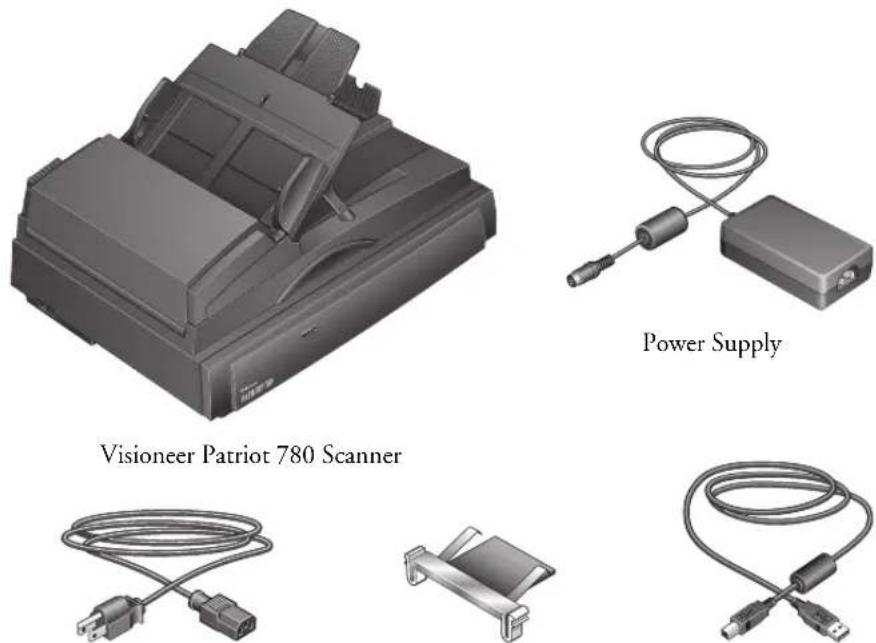
Replacement ADF PadPower Cord USB Cable

Two CD's
Disc 1 and Disc 2


Technical Support Card
User GuideQuick Install Guide
THE VISIONEER PATRIOT 780 SCANNER
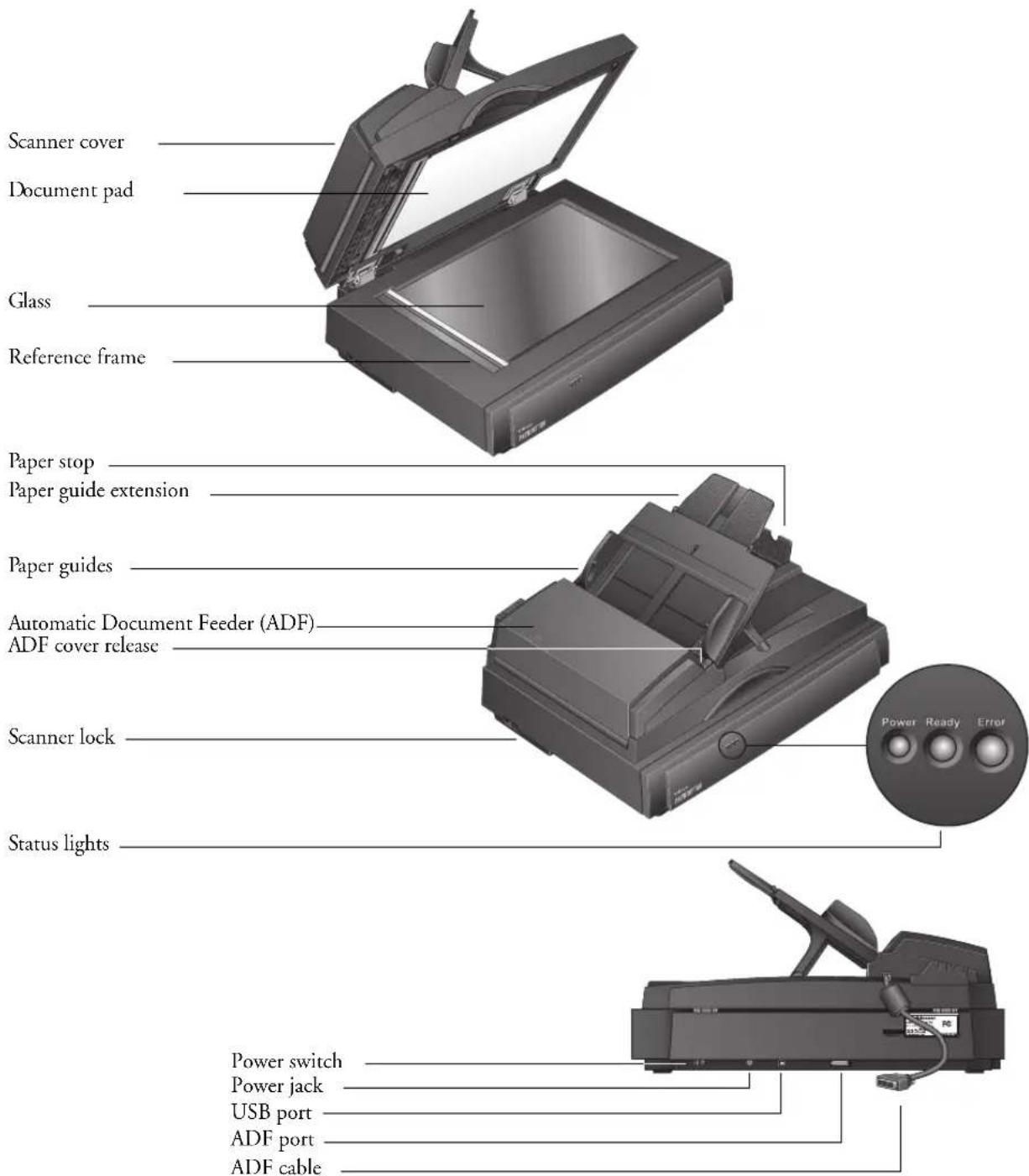
Scanner cover—Protects the document from light and contamination during scanning. Close the cover to put a stack of documents in the Automatic Document Feeder (ADF).
Document pad—Holds documents in place on the scanner glass.
Glass—Documents are placed face down, aligned at the arrow symbol.
Reference frame—Marks on the border of the glass show where to align various paper sizes.
Paper stop—Holds documents in place as they are ejected from the Automatic Document Feeder.
Paper guide extension—Unfolds to support multiple document lengths.
Paper guides—Holds documents in place. Adjust to fit the paper size.
Automatic Document Feeder (ADF)—Feeds a stack of documents onto the glass for scanning. The ADF can hold up to 50 pages at a time.
ADF cover release—Opens the ADF cover to clear paper jams.
Scanner lock—Locks or unlocks the scanning head. The lock must be unlocked for the scanner to scan. The lock should always be locked when transporting the scanner.
Power light—Shows the scanner is receiving power.
Status lights—Shows the scanner's status:
Power light shows the scanner is receiving power.
Ready light is a steady green when the scanner is ready to begin scanning.
Error light flashes amber to indicate a problem. Refer to “Error Light Troubleshooting Codes” on page 144 for additional details about the status lights.
Power switch—On/Off power switch.
Power jack—Connects the power cord to the scanner.
Universal Serial Bus (USB) port—Connects the scanner to the computer.
ADF port—Connects the ADF cable from the Automatic Document Feeder to the scanner body.
ADF cable—Supplies power from the scanner body to the Automatic Document Feeder. The cable must be securely plugged into the ADF port for the Automatic Document Feeder to work.
WHAT YOU NEED
An IBM-compatible Pentium PC, or AMD equivalent with:
■A CD-ROM drive
■An available Universal Serial Bus (USB) port
■Microsoft Windows operating system: 2000 (Service Pack 4) or XP (Service Pack 1 and 2)
■ A minimum of 512 MB (megabytes) of internal memory (RAM)
■200 MB minimum of free hard disk space
A VGA Monitor
The recommended settings for your monitor are:
■High Color (16-bit) or True Color (24-bit or 32-bit)
■Resolution set to at least 800 x 600 pixels
To set your monitor's colors and resolution:
■Open the Windows Control Panel
■ Double-click on Display then select the Settings tab
DOCUMENTATION
Your scanner is delivered with the following documentation:
■ Quick Install Guide—Abbreviated installation instructions.
■Visioneer Patriot 780 Scanner User's Guide—Contains detailed installation, scanning, configuration, and maintenance information; a copy is also available on the Disc 1 Installation CD.
■Online Help—For the scanner configuration, TWAIN, and WIA interfaces.
Installation
Installation is a quick, four-step process:
- Assemble the scanner
- Install the software
- Connect the power supply
- Connect the USB cable and turn on the power
BEFORE YOU BEGIN
Please make sure of the following before you begin installation:
■ If your computer has AntiVirus or AntiSpyware software running, you may see messages during installation asking you to allow the installation to proceed. Although the messages will differ based on the software your computer is running, in each case you should allow the installation to proceed. Alternatively, you can turn off the AntiVirus or AntiSpyware software before installing your scanner, but if you do, make sure to turn it back on again when installation is finished.
If you already have a scanner connected to your computer, it is recommended that you remove that scanner's driver program prior to installing your Visioneer Patriot 780 scanner. While in some cases you can configure your computer to have another manufacturer's scanner operational on your computer in conjunction with the Visioneer Patriot 780 scanner, we do not recommend this configuration as you may lose some of the driver functionality on one, or both of the units. You can remove these programs from the Windows Add/Remove programs list. Please refer to the user manual provided with your other scanner hardware for instructions about removing the driver and software for that unit.
STEP 1: ASSEMBLE THE SCANNER
To assemble the scanner:
- Remove all shipping tape from the top and bottom of the scanner.
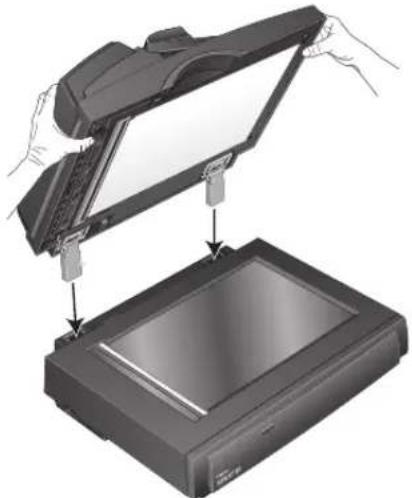
- Holding the top with two hands, carefully lower it onto the Flatbed so the two hinges slide into their slots.
natural_image
Illustration of hands installing or adjusting a device from a tray (no text or symbols visible)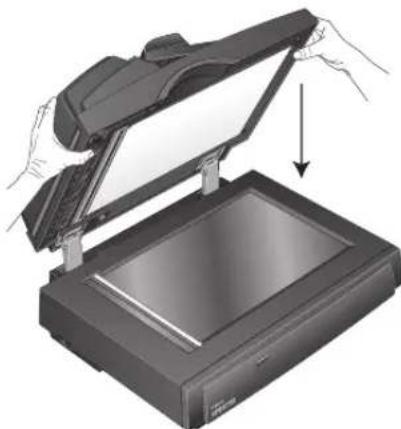
natural_image
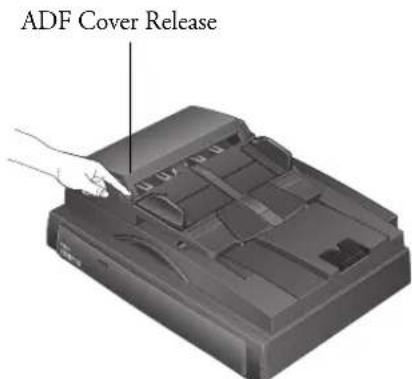
Illustration of hands installing or adjusting a device from a flatbed base, with an arrow indicating the process (no text or symbols present)- Remove any protective foam from the ADF Cover Release, then press the ADF Cover Release and open the Automatic Document Feeder cover.

natural_image
Illustration of a hand inserting a device into a paper filter (no text or symbols visible)-
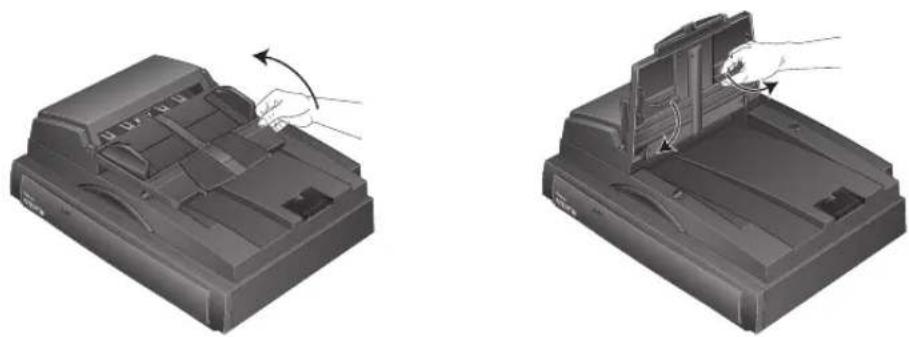
Carefully remove any foam particles that may have gotten inside the Automatic Document Feeder. Close the cover so it snaps shut.
-
Flip the Paper Guide up to reveal the two legs folded into the bottom of the tray.
natural_image
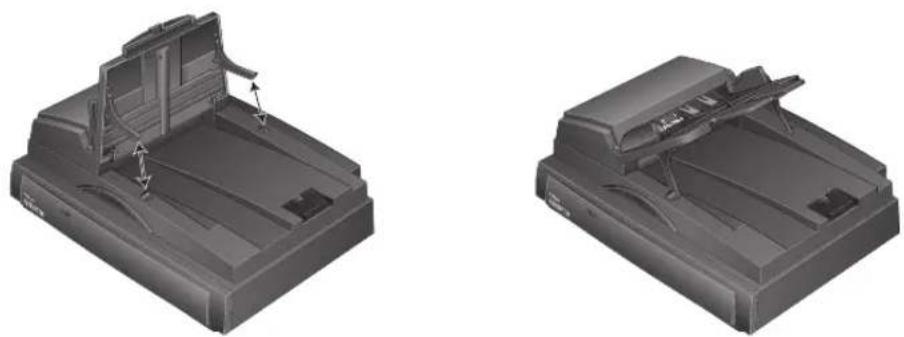
Two technical illustrations of a printer or printer device with hands operating the cover (no text or symbols visible)- Swing out the legs, then lower the Paper Guide Tray so the legs fit into their slots.
natural_image
Two 3D CAD renderings of a mechanical component, one showing internal structure and the other with mounting holes (no text or symbols visible)- Flip up the Paper Guide Extension to fully extend it.
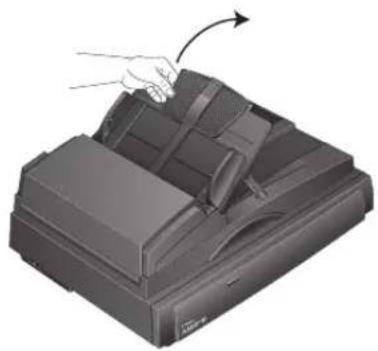
natural_image
Illustration of a hand inserting a paper into a printer (no text or symbols visible)- Slide the Scanner Locking Tab to its unlocked position.
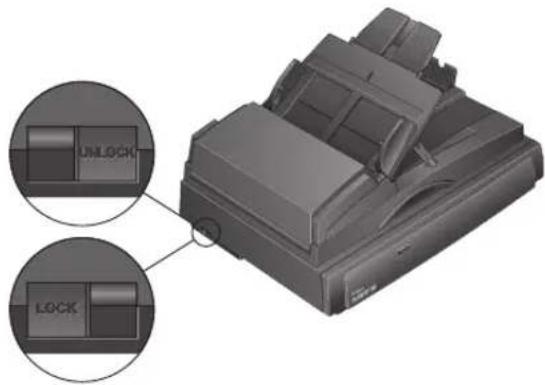
Note: The Locking Tab protects the scanner's scan head by holding it securely in position. Lock the scanner when transporting it from one location to another, but remember to unlock it before scanning. The scanner will not scan when locked.
- Plug the ADF cable into the ADF port. Make sure the ADF cable is securely plugged into the port. The ADF will not function properly if the ADF cable is loose or unplugged.
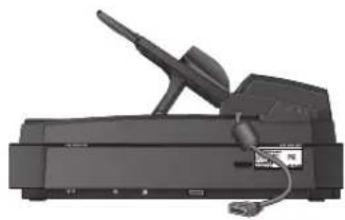
natural_image
Black printer with tripod handle and cable connector (no visible text or symbols)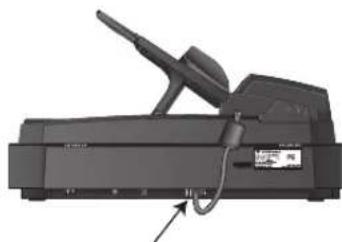
natural_image
Black printer with paper feed and cable attachment (no visible text or symbols)-
When you're finished assembling the scanner, place it on a level surface on your desk. If the scanner is on an uneven surface, it may stall when scanning from the Flatbed.
-
Proceed to "Step 2: Install the Software."
STEP 2: INSTALL THE SOFTWARE
Note: The software is on the two CD's you received with your scanner. Please be sure to install from Disc 1 first.
To install the software:
-
Start Microsoft Windows and make sure no other applications are running.
-
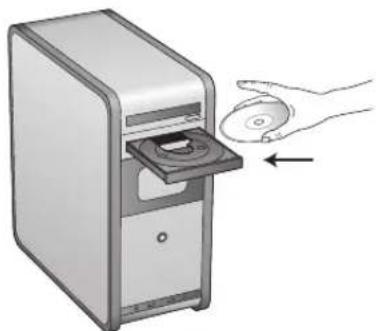
Insert Disc 1 into your computer's CD-ROM drive.
natural_image
Illustration of a computer tower with an open disc and a hand holding a circular object (no text or symbols)The Installation menu automatically opens.
Note: If the CD does not start, check the following:
■ Make sure you have inserted Disc 1.
■Make sure the CD drive's door is completely shut.
■Make sure the CD was inserted in the drive in the proper direction (label side up).
To launch the CD manually:
■Open the Windows option for My Computer. You can do this by double-clicking on the My Computer icon on your desktop.
■Double-click the icon for your CD-ROM drive.
■The Installation menu for the CD should now open.
If the menu does not open:
■From the list of files on the CD, double-click the file named START32.EXE.
- On the Installation menu, select Install Products.
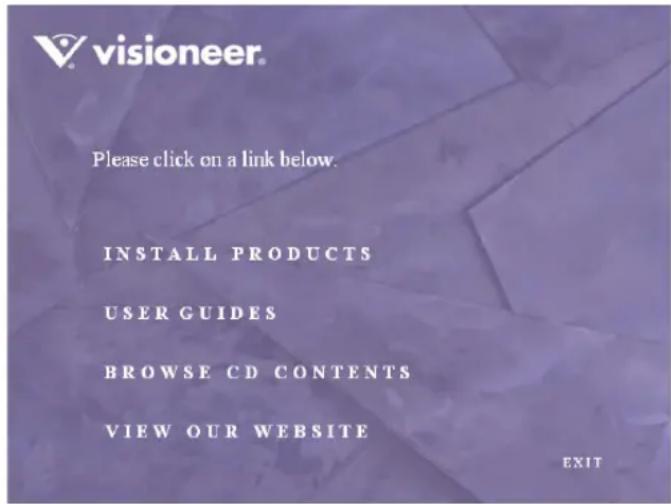
- Make sure the boxes for Scanner Driver and OmniPage Pro ^® are checked.
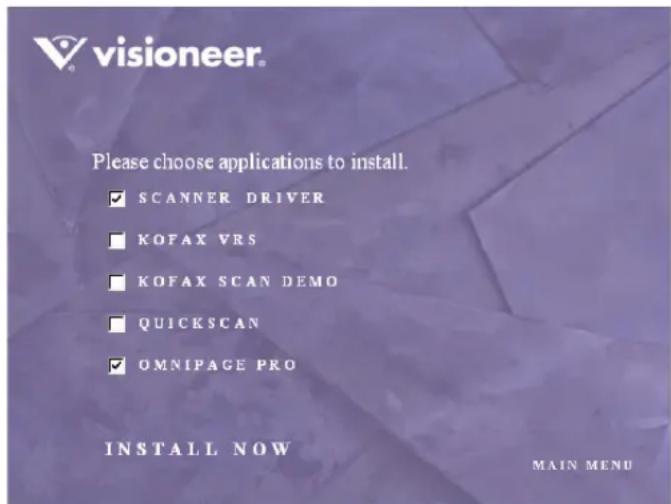
Note: The OmniPage Pro software is required for installation and provides extensive Optical Character Recognition (OCR) capabilities for your scanner software. It also adds special formats to the scanner's OneTouch 4.0 software for creating searchable PDF files (known as sPDF and nPDF). Please note: if you do not install the OmniPage Pro software now, but install it later, you may need to restart your computer before the sPDF and nPDF formats are available in the OneTouch 4.0 software.
-
Click Install Now.
-
The Select Language window opens. Click the drop-down menu arrow and select the language you want to use. Click OK.
-
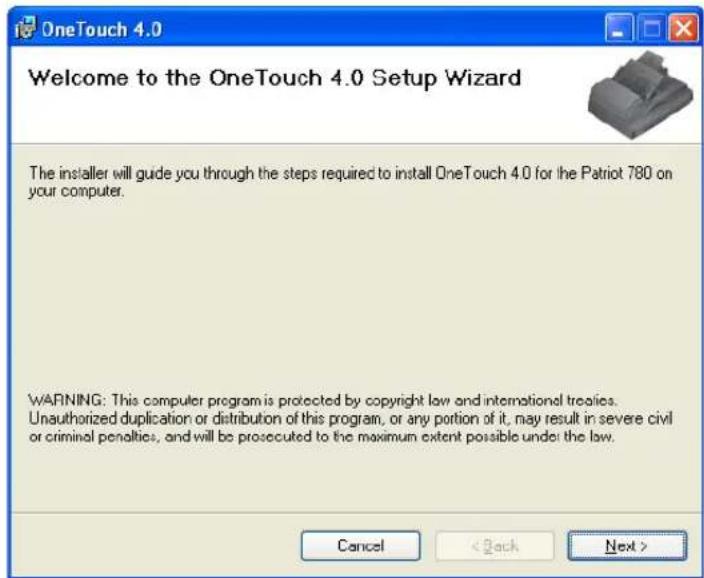
The Welcome to the OneTouch 4.0 Setup Wizard opens.
-
Click Next.
-
On the Visioneer License Agreement window, read the license agreement. If you accept the terms, select I Agree then click Next. If you choose not to accept the license agreement, the installation will terminate and the scanner driver will not be installed.
The next window lists the choices of the drivers that you can install for your scanner.
Note: Some of the options listed in this window may not be available when you purchase your scanner.
Please visit our web site at: www.visioncer.com for the latest updates.
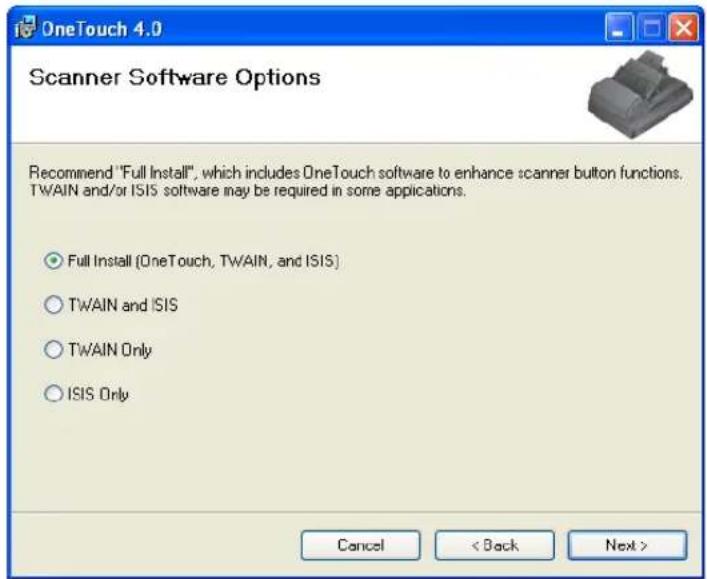
- Select the option you want.
Note: If your computer is running Windows XP, Microsoft's Windows Image Acquisition (WIA) interface for scanning is always available, regardless of your selection on this window.
■ Full Install (OneTouch, TWAIN, and ISIS)—This is the recommended installation. It installs the OneTouch 4.0 software which provides the necessary driver software for the scanner. It also installs scanning interfaces for TWAIN and the ISIS driver. Installing this option means that you can use several different methods to scan, as explained in this User Guide.
■ TWAIN and ISIS—The TWAIN and ISIS drivers are installed. The OneTouch 4.0 Monitor will not run and you cannot use the OneTouch features. You can use the Visioneer TWAIN driver to scan from TWAIN applications. You can also scan from applications that use the ISIS driver. You will not be able to use the Scan button on the scanner.
■ TWAIN only—The TWAIN driver is installed without the OneTouch 4.0 software or the ISIS driver. You can use the Visioneer TWAIN driver to scan from TWAIN applications. You will not be able to use the Scan button on the scanner.
- ISIS only—The ISIS driver is installed. You can use applications that use the ISIS driver, such as QuickScan. You will not be able to use the Scan button on the scanner. You will not be able to use the Visioneer TWAIN driver.
Note: If you decide to change your scanner's installed drivers later on, you must first uninstall the drivers the scanner is currently using. See "To Install Another Driver" on page 146.
11. Click Next.
During installation of the driver you will see this window asking you to select an image for your Color Space setting.
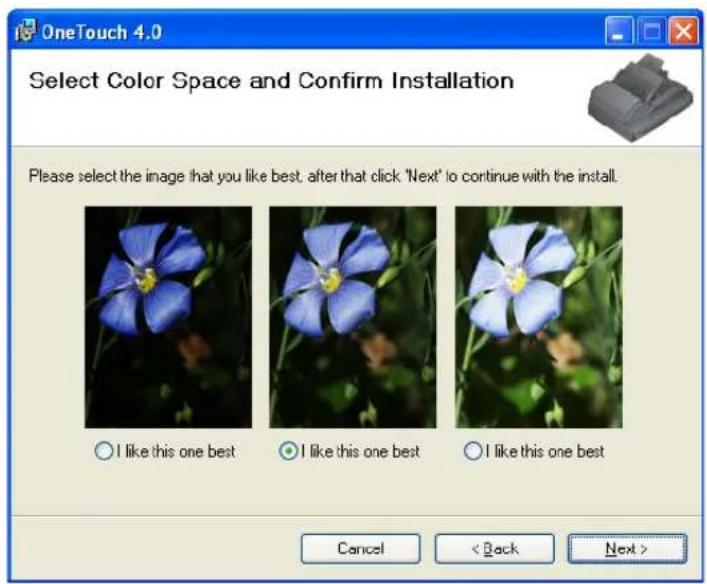
The Color Space setting sets the gamma value for the scanner so scanned items look good on your monitor. Gamma controls the brightness of the midtones of colors. That setting can be changed later on as you're scanning.
- Select the option that looks best to you and click Next.
The driver installation will now begin.
- STOP when you see the "Complete the installation by connecting your hardware" window. Do NOT click OK yet. Leave the window open and proceed to "Step 3: Connect the Power Supply" on page 15.

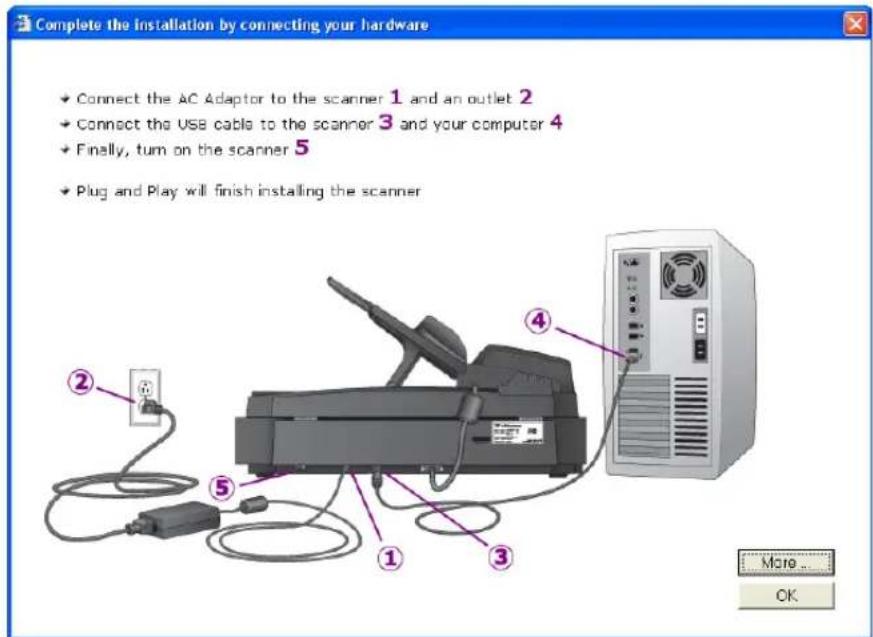
Reminder: If your computer is running AntiVirus or AntiSpyware software, you may see messages asking you to allow the installation. Select the option to allow the installation to proceed.
Note: If you want to see more information about your scanner and a quick explanation of how to use the OneTouch features, click the More button on the window. When you're finished, return to the window above to continue with the installation process.
STEP 3: CONNECT THE POWER SUPPLY
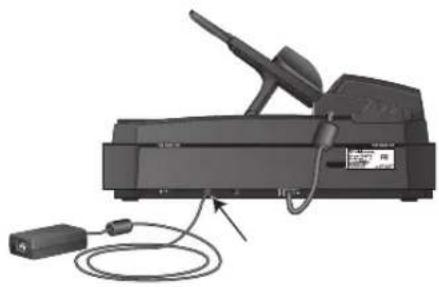
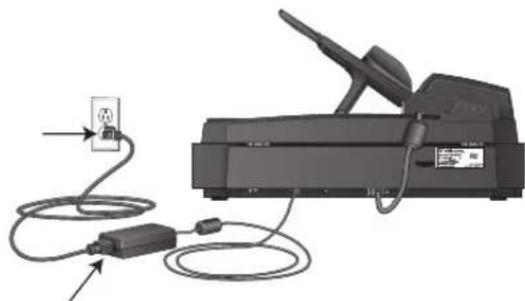
Connect the power supply and power cord, and plug the power supply into an electrical outlet.
To connect your Visioner Patriot 780 scanner:
- Plug the power supply into the power port on the scanner.
natural_image
Illustration of a printer with a cable and cable connector, no visible text or symbolsNote: Only use the power supply [model number: 077-242090-I3 (YC-1050CAN1352PR)] included with your scanner. Connecting any other type of power supply may damage your scanner, and will void its warranty.
- Plug the power cord into the power supply then into a wall outlet.
natural_image
Diagram of a printer with cable and power outlet, no text or symbols presentNow proceed to the next section, "Step 4: Connect the USB Cable and Turn on the Power."
STEP 4: CONNECT THE USB CABLE AND TURN ON THE POWER
The Visioneer Patriot 780 scanner connects to any available USB port. Check your computer's manual for USB port locations.
Note: You can connect the scanner to your computer while the computer is running. You do not have to shut down your computer.
- Remove any protective tape from the USB cable.
- Plug the USB cable into the USB port on the scanner and then into a USB port on the computer. Connection to a USB 2.0 High Speed port provides optimum performance, however your scanner will also connect to a USB 1.1 port.
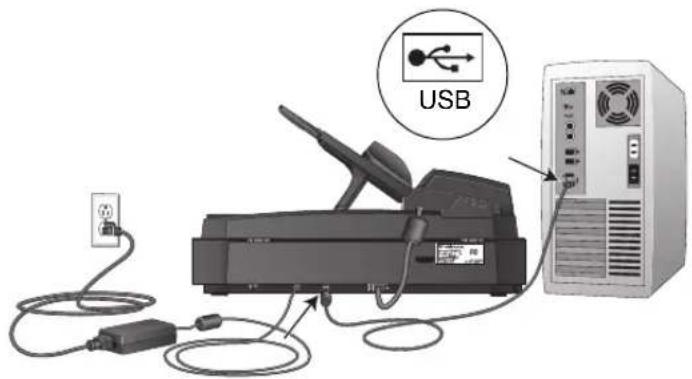
The USB symbol, as seen in the above diagram, identifies the location of the USB port on your computer. If the plug does not attach easily, make sure that you are plugging it in correctly. Do not force the plug into the connection.
You can also connect the scanner to a USB port on the computer's keyboard if it has one, or to a USB hub. If you use a USB hub, it must have its own power supply already plugged into an electrical outlet.
Note: If you have not installed the scanner driver, unplug the USB cable from the computer and install the software now. When the driver installation is complete, a message tells you when to connect the scanner.
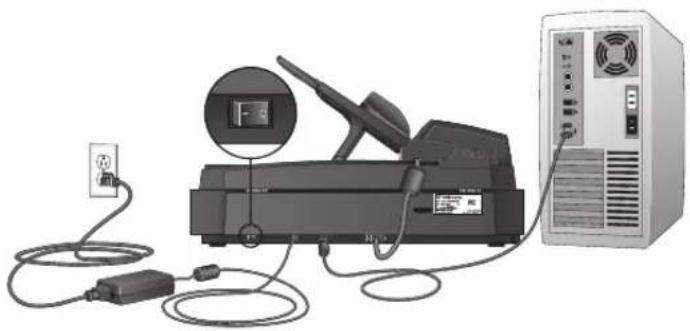
- Turn on the power switch, located on the back of the scanner to the left of the power port.
natural_image
Illustration of a portable electronic device connected to a server unit via cables and power outlet (no text or symbols visible)The status light comes on and flashes indicating that the scanner is receiving power.
If you are using Windows XP Service Pack 2, and have plugged the USB cable into a USB 1.1 port, an information bubble may open explaining that "A HI-SPEED USB device is plugged into a non-HI-SPEED USB hub". Plug the USB cable into a USB 2.0 port (if available) or just disregard the message. If you leave it plugged into the USB 1.1 port, your scanner may scan a bit slower.
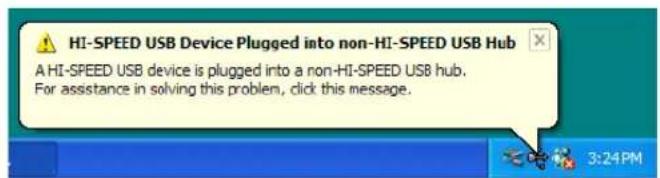
Your computer then recognizes that a scanner has been plugged into the USB port and automatically loads the appropriate software to run the scanner.
The scanner's status light is green when the scanner and computer are communicating properly.
Do not proceed until you receive a message that your computer has found the new hardware, or updated the driver database. If your computer is running Windows XP, you will see the following message.

- When you're certain that the software has completely loaded, return to the "Complete the installation by connecting your hardware" window.
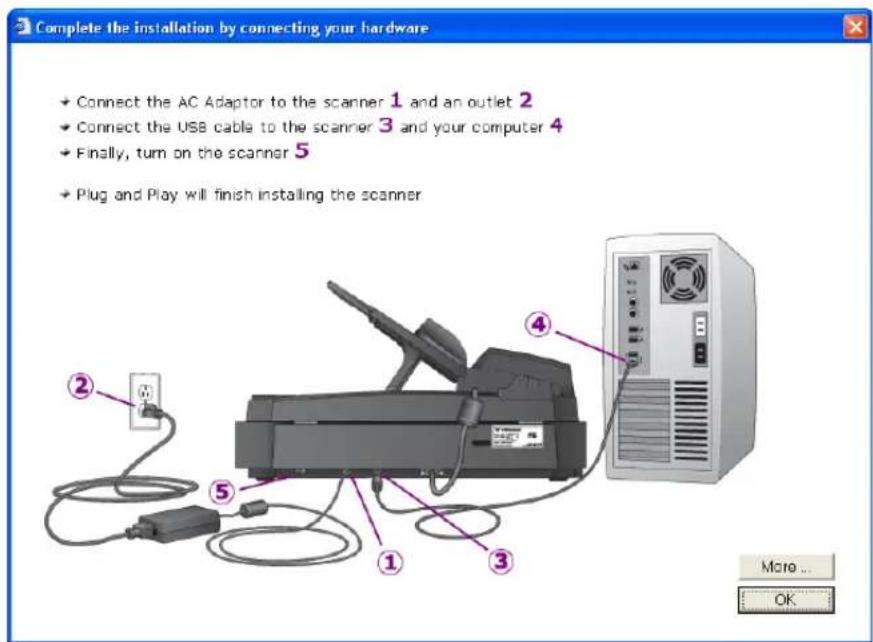
-
Click OK.
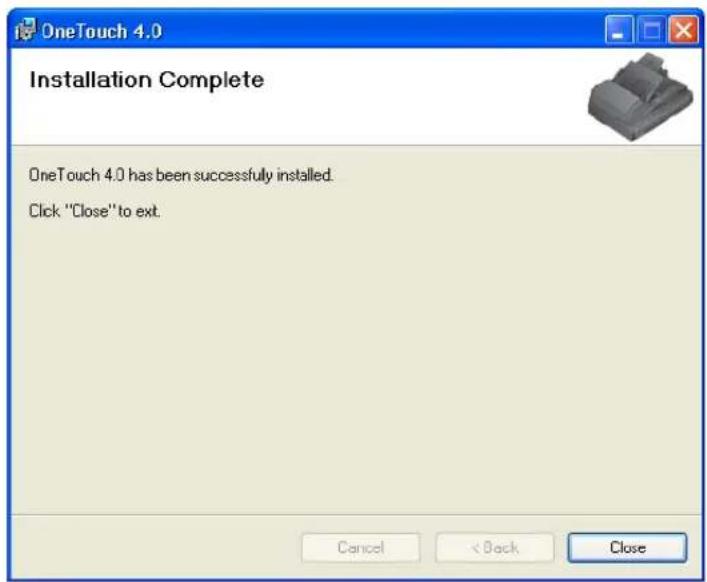
-
Click Close on the Installation Complete window to close and exit the software installer.
If you selected OmniPage Pro for installation, a window tells you to insert the second CD to install it.
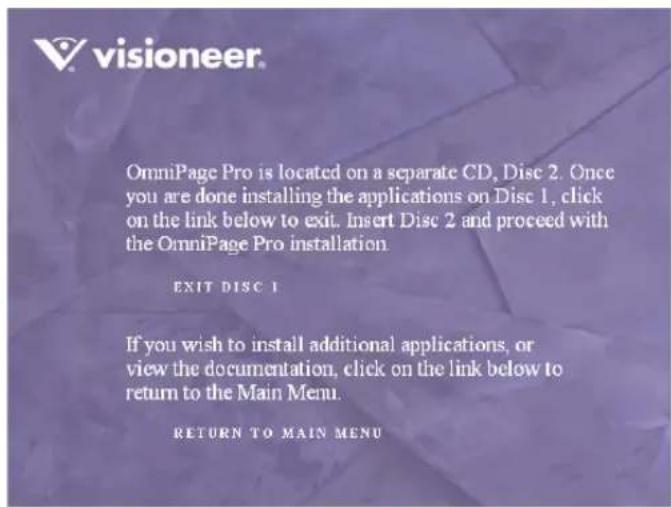
Note: OmniPage Pro is required for your scanner to have its full range of features. Please make sure to install OmniPage Pro before scanning.
To install OmniPage Pro:
-
Click Exit Disc 1 and remove Disc 1 from the CD-ROM drive.
-
Insert Disc 2 into the CD-ROM drive.
The OmniPage Pro Installation menu opens automatically. If it does not open, see the note on page 9.
-
Select Install OmniPage Pro.
-
Follow the instructions on the screen to install OmniPage Pro.
-
When installation is finished, remove Disc 2 and store it in a safe place.
-
If you want to install other software from Disc 1, re-insert it into the CD-ROM drive now and see the next section, "Additional Applications for Your Scanner."
ADDITIONAL APPLICATIONS FOR YOUR SCANNER
Your scanner includes free, additional applications on the installation CD.
Note: Some of the software listed in this window may not be available when you purchase your scanner.
Please visit our web site at: www.visioneer.com for the latest updates.
To install the additional applications:
- Return to the Installation window and select the additional applications you want to install on your computer.
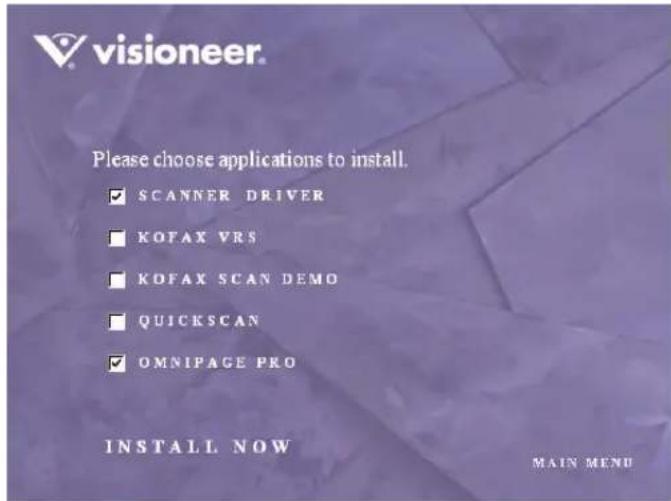
-
Click Install Now.
-
Follow the instructions on the installation windows.
If you want to install the Kofax VRS ^® software, you may see the following message.
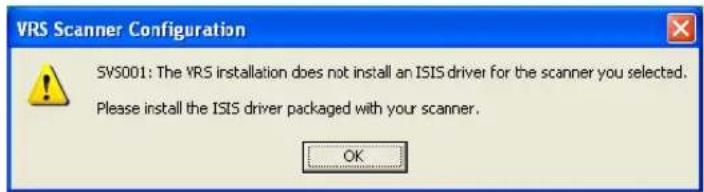
Please disregard this message and click OK. The Kofax VRS Certified ISIS® driver is installed correctly when you install your Visioneer Patriot 780 scanner driver and ISIS is one of the options.
- When installation is finished, return to the Installation window and click Main Menu.
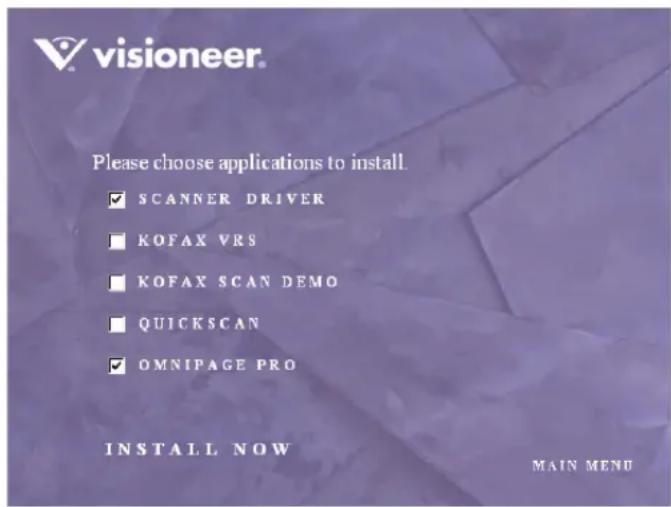
- On the Main Menu, click User Guides.
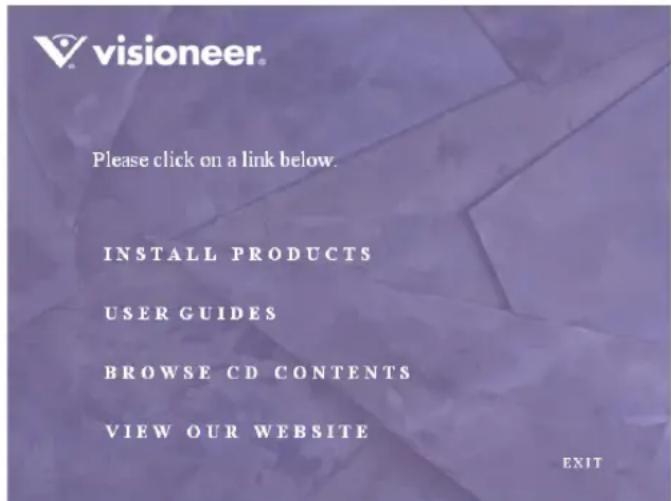
The Visioneer User Guides window opens. Use this window to view and save the User Guides you want.
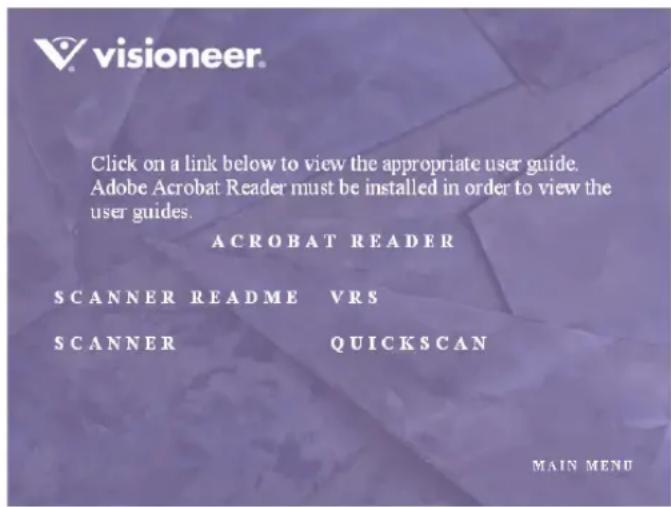
The User Guides are in Adobe ^® Acrobat ^® PDF format. The CD also includes a free copy of Acrobat ^® Reader ^® in case your computer does not have it already installed. The Scanner Readme file is in HTML format and will open in any standard browser.
If you need to, click Acrobat Reader to install it now. Follow the instructions on the installation windows.
To view and save the User Guides:
- Click the name of a User Guide you want to view and it will open in Acrobat Reader. Use the Acrobat Reader Save command to save that User Guide on your computer.
- Return to the Visioneer User Guides window and repeat the process to open, view, and save all the other User Guides you want. The Scanner Readme file has late-breaking news about your scanner.
- When you're finished, click Main Menu to return to the main Visioneer Installation window and click Exit.
- Remove the CD and store both CD's in a safe place.
That's it! Installation is finished and your Visioneer Patriot 780 scanner is ready to scan.
REGISTER YOUR SCANNER AND CHECK FOR UPDATES
Registering your scanner is important as it provides you with access to our free telephone support service. Registration also gives you free access to software updates for your scanner.
To register your scanner:
-
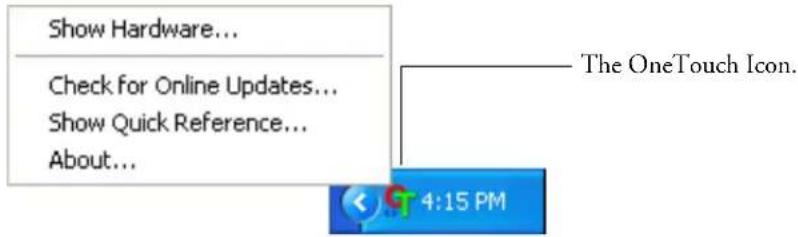
Right-click on the OneTouch icon in the Windows Notification Area (at the bottom right corner of the screen).
-
Choose Check for Online Updates from the pop-up menu.
- Follow the instructions on the screen and register your scanner by entering your scanner's serial number and your email address.
Note: A valid email address is required.
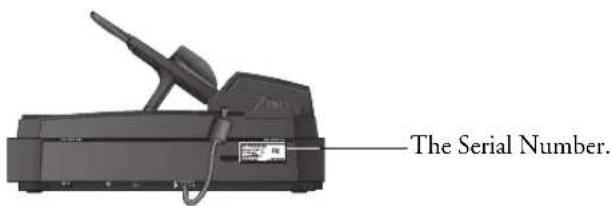
The serial number is located on the side of the scanner.
After registration is complete you will receive an email message with your RegID.
Your RegID is important as you will need it when accessing free telephone support, or checking for online updates.
- Write down your RegID below so you will be able to find it easily in the future.
RegID:
Scanning
If you selected the recommended Full Install option for your scanner's driver (see page 12), you have several different options to scan with your Visioneer Patriot 780 scanner. Each method scans equally well, so use the one with appropriate options for the item you are scanning.
■ OneTouch—Open the OneTouch Panel and window, adjust the scan settings if you want, put the document in the scanner, and then click the icon on the OneTouch Panel. Also use this OneTouch method of scanning if you want to access the advanced features of Optical Character Recognition (OCR) available from the OmniPage Pro application. See “Scan from the OneTouch Button Panel” on page 29.
■ TWAIN Interface—This option uses your scanner's TWAIN interface to scan. Open an application that uses TWAIN, select the TWAIN scan settings, put the document in the scanner, then click a button on the TWAIN interface window. See “Scanning with the TWAIN Interface” on page 104.
■ Windows Image Acquisition (WIA)—If your computer is running Windows XP, you can use this option to scan with the Microsoft Windows WIA interface. Select the WIA scan settings, put the document in the scanner, then click a button on the WIA window. See “Scanning with the WIA Interface” on page 123.
- ISIS Interface—This option uses the ISIS driver to scan. You can access the ISIS interface from the OneTouch software, or by opening an ISIS application. Select the ISIS scan settings, put the document in the scanner, then use your ISIS application to scan using the ISIS Interface. See “Scanning with the ISIS Interface” on page 129.
SCANNING BASICS
You can use your Visioneer Patriot 780 to scan a single page, or stacks of documents using the Automatic Document Feeder.

Note: Always remove any staples or paper clips from documents before inserting them into the scanner. Staples and paper clips can jam the feed mechanism and scratch the internal components. Also remove any labels, stickers, or Post-It™ notes that may come off during the scanning process and get stuck in the scanner. Misuse as described here will void your scanner's warranty.
LOADING A STACK OF DOCUMENTS
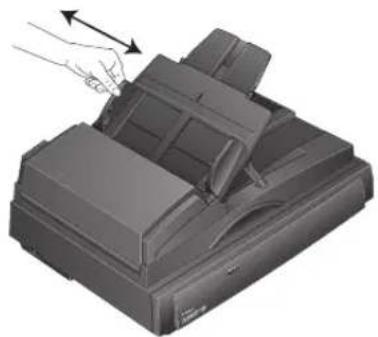
- Adjust the paper guide for the width of paper.
natural_image
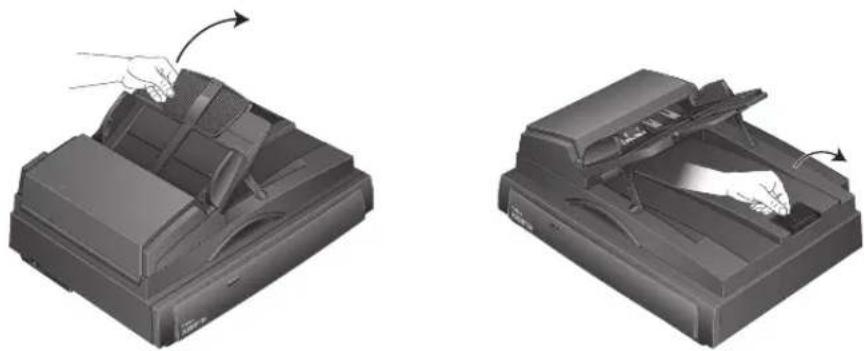
Illustration of a printer with a hand inserting a paper into the cover (no text or symbols visible)- Make sure the paper guide extension is up, and also flip up the paper stop.
natural_image
Two 3D renderings of a printer with open lid and paper roll, showing mechanical assembly (no text or symbols)- You can load the documents into the Automatic Document Feeder in either orientation—that is, with either their long sides or short sides (known as Landscape or Portrait orientation) into the ADF.
For Simplex (one-sided) scans, load the documents face up.
For Duplex (two-sided) scans, the documents can be face up or down because both sides are scanned.
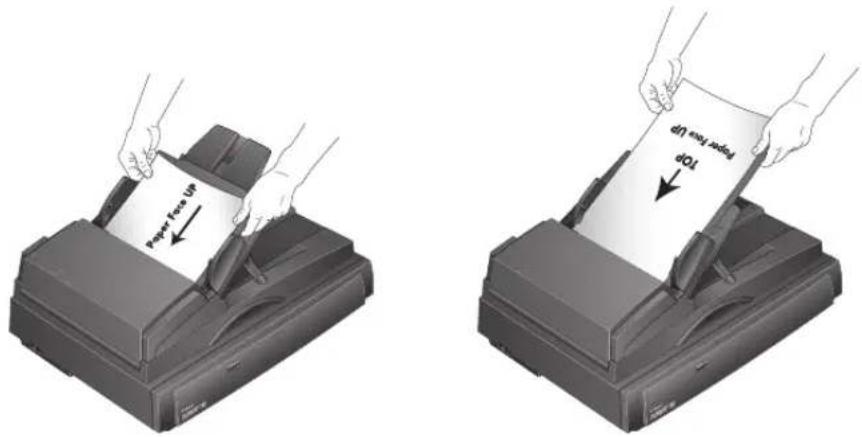
Landscape Orientation. Portrait Orientation.
- You can now scan the documents using OneTouch or one of the other scanning interfaces.
Note: Items scanned using the Automatic Document Feeder must be a minimum of 5 x 7 inches (12.7 x 17.8 cm).
SCANNING A SINGLE PAGE
Although you can use the Automatic Document Feeder to scan a single page, you can also just put the page on the glass and scan.
- Remove any paper in the Automatic Document Feeder.
The scanner automatically detects if paper is in the Automatic Document Feeder and will scan pages in it. You must remove these pages prior to scanning if you want to scan from the Flatbed.
- Lift the scanner cover and place the page on the glass.
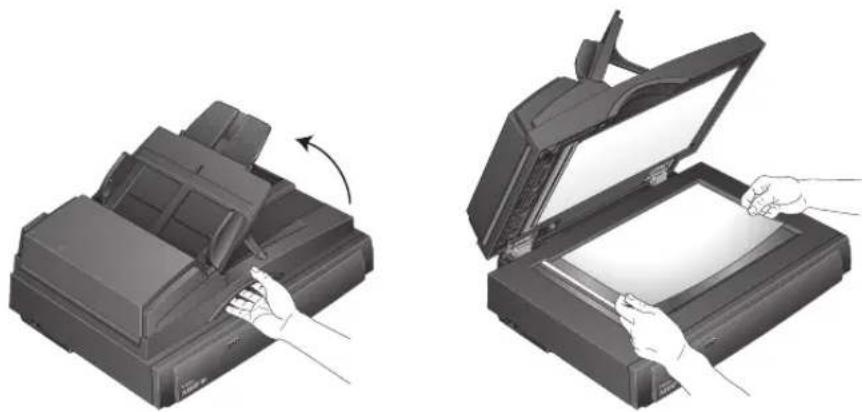
natural_image
Illustration of two different printer or scanner designs, showing a left-hand and right-hand assembly with hands inserting the paper (no text or symbols present)- Align the page with the reference marks on the corner. Close the scanner cover.
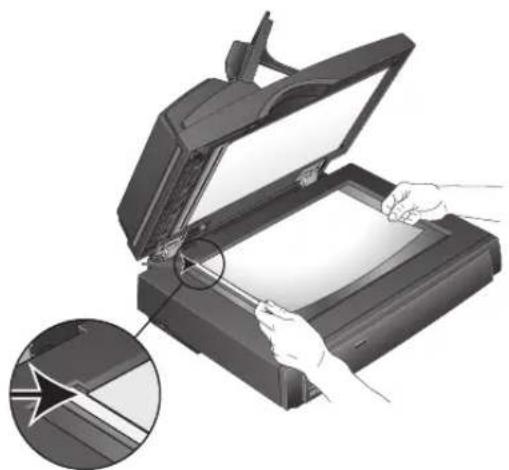
natural_image
Illustration of a hand using a scanner to open a document, with an inset showing the same device (no text or symbols visible)- You can now scan the document using OneTouch or one of the other scanning interfaces.
SCAN FROM THE ONE TOUCH BUTTON PANEL
Scanning from the OneTouch Button Panel is an easy, 1-2-3 step process.
- Load the documents into the Automatic Document Feeder, or place a single document on the Flatbed glass and close the cover.
- Click on the OneTouch icon in the Windows System Tray (at the bottom right corner of the screen).
The OneTouch Icon.

The OneTouch Panel opens.
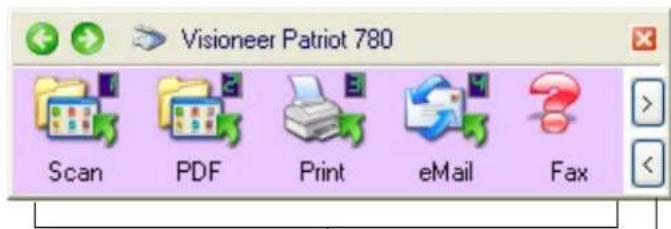
Click the button you want to use to scan.
Click these arrows to navigate through the buttons.
Important: The OneTouch Properties window must be closed before you can scan from the Button Panel.
- Click the button on the OneTouch Button Panel that you want to use to scan.
A scan progress window opens and the documents are scanned with the settings in the OneTouch utility. This example shows the scan progress window for duplex (two-sided) scanning.
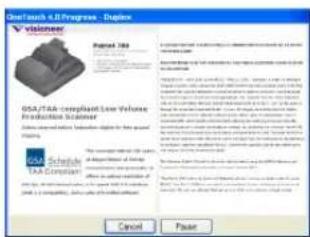
When scanning is finished, the images are sent either to the selected Destination Application from the OneTouch utility, or to a folder for storing scanned documents.
Note: To check the scan settings before you start scanning, see the next section, "Check the Scan Settings Before Scanning."
To Cancel scanning, click the Cancel button.
To pause the scanning, click the Pause button. It will change to a Continue button. Put the page back into the scanner and click Continue to resume scanning.
CHECK THE SCAN SETTINGS BEFORE SCANNING
The OneTouch Icon.

- Click on the OneTouch icon in the Windows System Tray (at the bottom right corner of the screen).
The OneTouch Button Panel opens.
- Right-click the button you want to check.
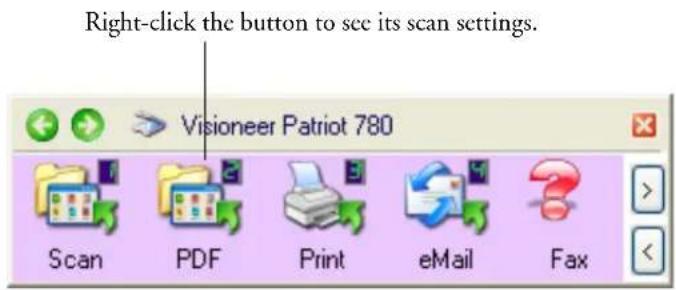
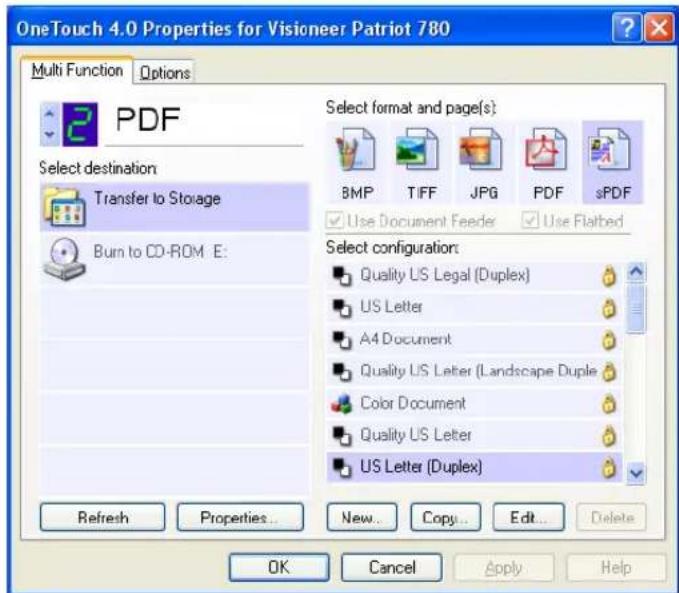
The OneTouch Properties window opens for you to view and change the settings before scanning. This sample shows the current description of Button 2.
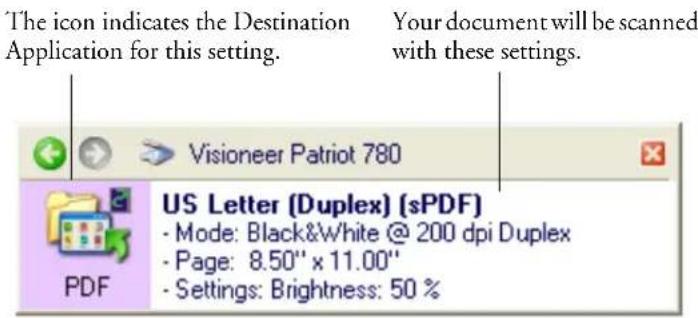
The OneTouch Button Panel also opens with the description of the selected settings.
To Refresh the OneTouch 4.0 settings, click the Refresh button.
If you make changes in the OneTouch Properties window, then click the Apply button, the information in the OneTouch panel will update to show the new settings.
- When you're ready to scan, just click (not right-click) the button.
Note: The OneTouch Properties window must be closed before you can scan from the Button Panel.
The OneTouch Panel is your on-screen control for the scanner. The OneTouch Panel also shows information about the scanner and its settings.

- To open the OneTouch Button Panel, click the OneTouch icon. It is located in the Windows Notification Area at the bottom right corner of the screen.
The OneTouch Button Panel opens at its Button View, which shows the on-screen scanning buttons.
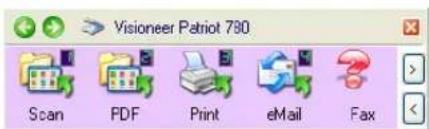
The Button View.
-
To scan from the panel, click the icon you want to use to scan.
-
To see the detailed settings for a button prior to scanning, click on the green arrows to navigate through the panel's three views.

The Button View.

The Hardware View. The Detail View.
■ The Button View is your main scanner control panel. Use it to scan or to see all nine buttons.
■The Detail View shows the current scan settings for a button.
■The Hardware View shows the current scanners connected to your computer.
-
From the Hardware View and Detail View, click the green arrow to return to the Button View. You can also click on the hardware icon to return to the Button View.
-
To cycle through the nine buttons, click the arrows on the right side of the panel.
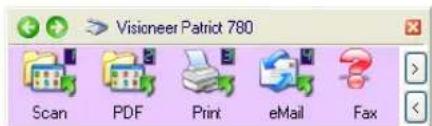
— Click these arrows to cycle through the 9 buttons.
- To close the OneTouch Button Panel, click its close button.
ABOUT THE ONE TOUCH BUTTON PANEL'S NAMES AND ICONS
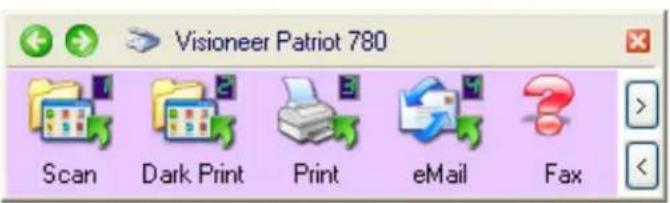
The button names, such as PDF, eMail or Fax, indicate the original factory settings for a button. For example, the eMail button is set up to scan documents then immediately attach them to a new eMail message in your default eMail program. But you can change the name, the Destination Application, and any of the other aspects of the button.

A question mark for a button means your computer does not have appropriate software for the initial factory settings (Fax software in the example above). In that case, you would probably want to change the name and Destination Application to something else. For example, if you scan a lot of documents that have faint images, such as hand-drawn sketches in light pencil, you might want to change the button's name to Sketches, and the Destination Application to Microsoft Paint®, or some other drawing program.
A folder icon for a button, such as shown for buttons 1, 2, and 7, means that the scanner sends the scanned image to the default folder at C:\Documents and Settings\
See "Selecting New Settings for a Button" on page 40 to change the settings of the buttons on the OneTouch Button Panel.
THE DEFAULT ONE TOUCH SETTINGS ON YOUR SCANNER
When you receive your scanner, its settings are preconfigured to scan items for various basic tasks, such as email or fax, then send the scanned image to an appropriate, preselected Destination Application. The following table shows these factory-default settings. You can change any of these settings.
| Button Name Destination Application Preconfigured Settings | ||
| 1 Scan Store in the folder My Documents/My OneTouch Archive/PDF Documents | Black&White @ 200dpi8.5" x 11" pageBrightness 50% | |
| 2 PDF Store in the folder My Documents/My OneTouch Archive/PDF Documents | Black&White @ 300dpi8.5" x 11" pageBrightness 50% | |
| 3 Print Printer Black&White @ 300dpi | 8.5" x 11" pageBrightness 50% | |
| 4 eMail Microsoft Outlook (attachment) Black&White @ 200dpi | 8.5" x 11" pageBrightness 50% | |
| 5 Fax | Fax Application | Black&White @ 200dpi8.5" x 11" pageBrightness 50% |
| 6 OCR | Microsoft Word | Black&White @ 300dpi8.5" x 11" pageBrightness 50% |
| 7 Archive | Store in the folder My Documents/My OneTouch Archive/PDF Documents | Black&White @ 300dpi8.5" x 11" pageBrightness 50% |
| 8 Custom | Microsoft Paint | Color @ 100dpi6" x 4" photo sizeBrightness 50% Contrast 50% |
| 9 Paint | Microsoft Paint | Color @ 300dpi8.5" x 11" pageBrightness 50% Contrast 50% |
CONFIGURING THE ONE TOUCH BUTTONS
Each OneTouch button configuration consists of a Destination Application, a Scan Configuration, and a Document Format. The OneTouch Properties window is where you select these three elements for a button.
To open the OneTouch Properties window:

-
Click the OneTouch icon. It is located in the Windows Notification Area at the bottom right corner of the screen.
-
Right-click a button on the OneTouch Button Panel.
Remember that left-clicking a button on the OneTouch Button Panel starts the scan process. Right-clicking opens the OneTouch Properties window.
The OneTouch Properties window opens for that button.
Right-click on a button (for example, button 2) and the Properties window opens for that button.
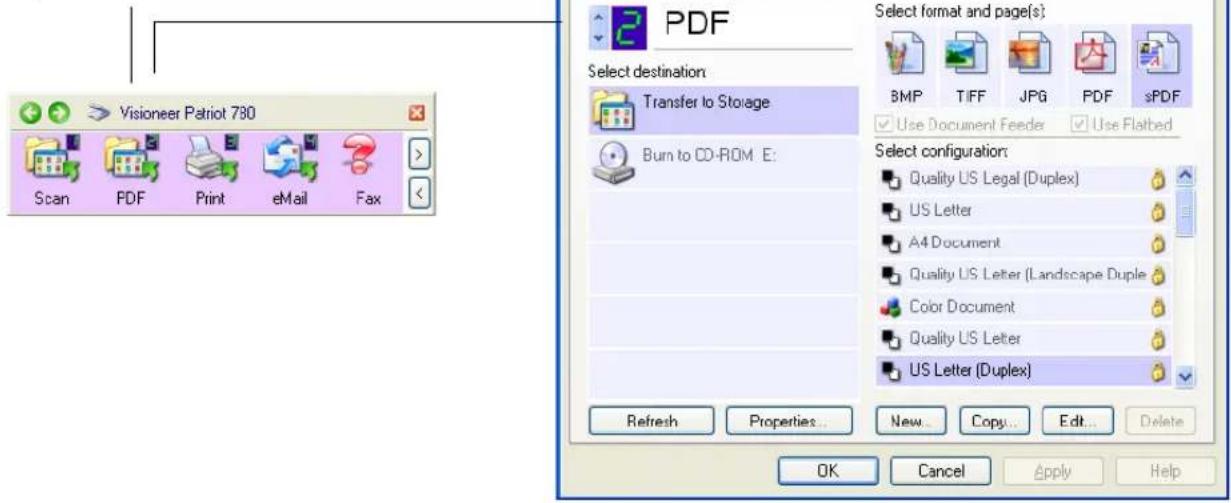
ABOUT THE ONETOUCH PROPERTIES WINDOW
The OneTouch Properties window is where you can select new settings for the buttons. The OneTouch Properties window also contains special scanning features such as scanning and burning to a CD, scanning and converting text directly into an HTML web page, and scanning with Optical Character Recognition (OCR) that turns a scanned image into text that you can edit.
The following example of the OneTouch window shows the settings for Button 6. The button is set to scan with the scan configuration named Quality US Letter (Duplex) then open Microsoft Word to display the scanned image. The Format and Page(s) option is set to scan in the RTF image format. The text on the scanned pages will be converted by the OCR process to text that you can edit in Word.
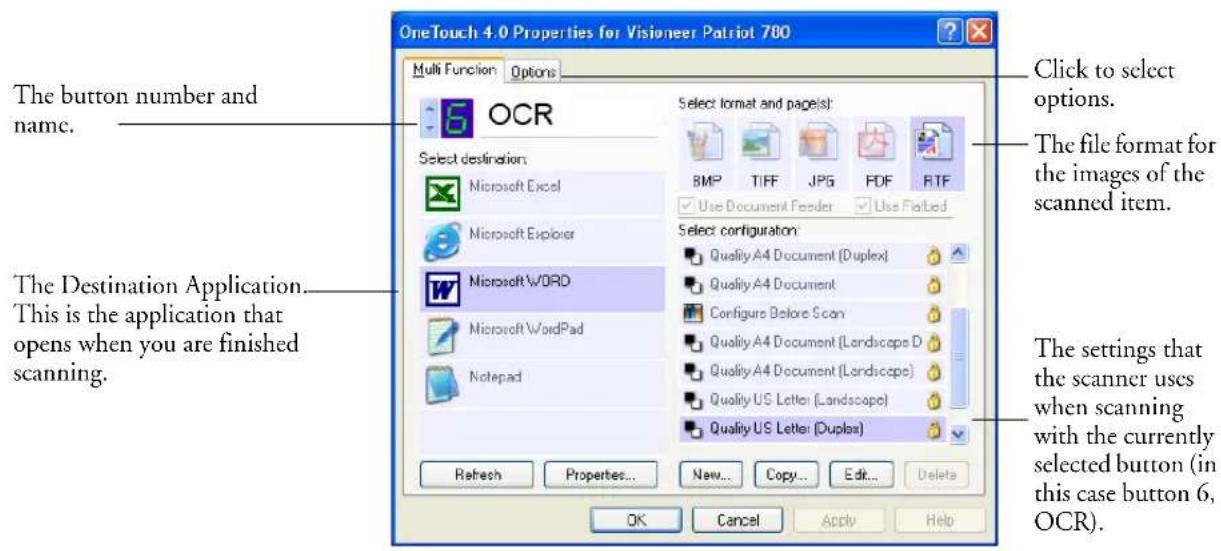
Note: Some of the options on the OneTouch Properties Window (and other OneTouch windows and dialog boxes) may be “grayed out” and are not available. Grayed out options are not appropriate for your Visioneer Patriot 780 scanner.
The settings on the OneTouch Properties window are:
Select Destination—The list of applications that can open to display the scanned image. To configure the list of available applications, click the Options tab at the top of the dialog box and select the desired options. See “Selecting Options for the OneTouch Properties Window” on page 56 for more information.
To make sure all of your computer's Destination Applications are linked to OneTouch 4.0, click the Refresh button.
Note: Later on, if you install new software that can be used as a Destination Application, click the Refresh button again to link the new software to OneTouch 4.0. Note that some software installed on your computer may be incompatible with OneTouch 4.0. Incompatible software will not be listed as a Destination Application.
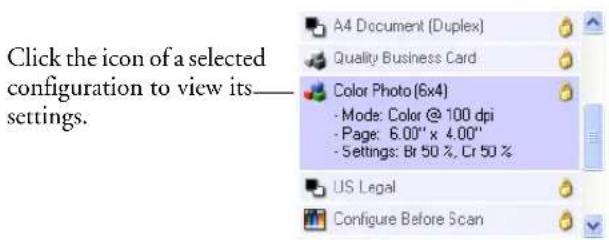
Select Configuration—The list of available scan configurations. The configuration settings include: scanning mode, resolution (dpi), page size, brightness (Br), contrast (Cr), color saturation, hue, and gamma. To see a selected scan configuration's settings, click its icon. Click the icon again to close the detailed information.
These icons next to each scan configuration indicate the scanning mode:
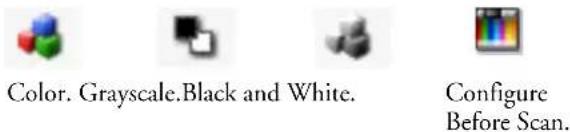
Note: Use Configure Before Scan to set the scanning mode before scanning. See "Configuring Before Scanning" on page 76.
You can also click the Edit button or double click the configuration to see more detailed information about the selected configuration.
Select Format and Page(s)—A set of file formats for the scanned image for the selected button. The formats are based on the type of Destination Application you select. This example shows the formats that apply to Microsoft Outlook.
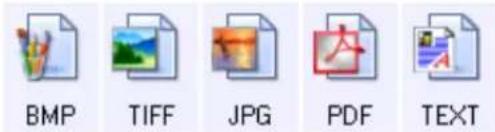
The button names indicate their file types. See “Selecting Page Format Options” on page 50 for more information about the formats.
Options tab—Displays a window for selecting options related to the selected Destination Application for the scanned image.
SELECTING NEW SETTINGS FOR A BUTTON
For each of the nine OneTouch buttons, you can select a new Destination Application, Scan Configuration, and Document Format.
Click these arrows to see the properties for the button whose settings you want to change.
Select a software application as the destination to send scanned documents.
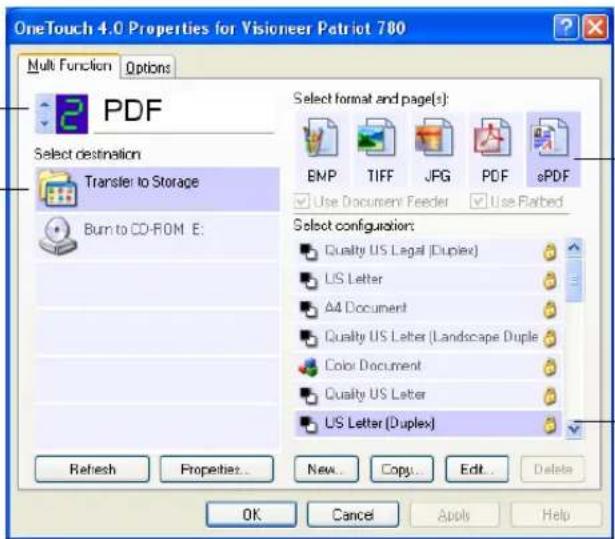
-Select a format for the scanned image.
-Select a configuration for scanning the item.
To select new settings for the scanner:
- Click the button selection arrows to select the button you want to change.
Each button has its own settings. So, as you click the arrows to cycle through the buttons, the available settings on the window change to show them for each button.
- From the Select Destination list, select the application where you want documents sent when scanning is finished.
See “Selecting Options for the OneTouch Properties Window” on page 56 to display a full list of the Destination Applications that you can use with the scanner.
Note: If you select a word processing program such as Microsoft WordPad or Microsoft Word and a page format that can be used for OCR (such as TEXT, RTF, DOC, sPDF, or nPDF) the text in scanned images is automatically converted to word processing text.
- From the Select Configuration list, select a scan configuration.
To scan in color, select one of the configurations indicated by the small color icon, such as the Color Document configuration.
The scan configuration list is preset for the application you select in the Select Destination list. If you select a different application, the configurations are for that application. However, you can create your own scan configurations as well.
- Select a Format and Page(s) option.
The available options apply to the Destination Application you select. For example, if you select Microsoft Word as the Destination Application, the available formats are for text, such as .doc, .txt, and .rtf. But if you select Microsoft Paint as the Destination Application, then the available formats are for graphics, such as .bmp, and .jpg.
- Click OK to accept any changes and close the window.
To accept changes but keep the window open to work with other features, click Apply.
Note that while the OneTouch Properties window is open, you cannot scan yet by clicking a button on the OneTouch Panel. You must click OK or close the OneTouch Properties window first.
When you are finished selecting new settings for a button and you scan with it, the document is scanned using the newly configured settings.
SETTING DESTINATION APPLICATION PROPERTIES
The different types of Destination Applications have various properties that you can select.
- On the OneTouch Properties window, click a Destination Application.
- Click the Properties button.
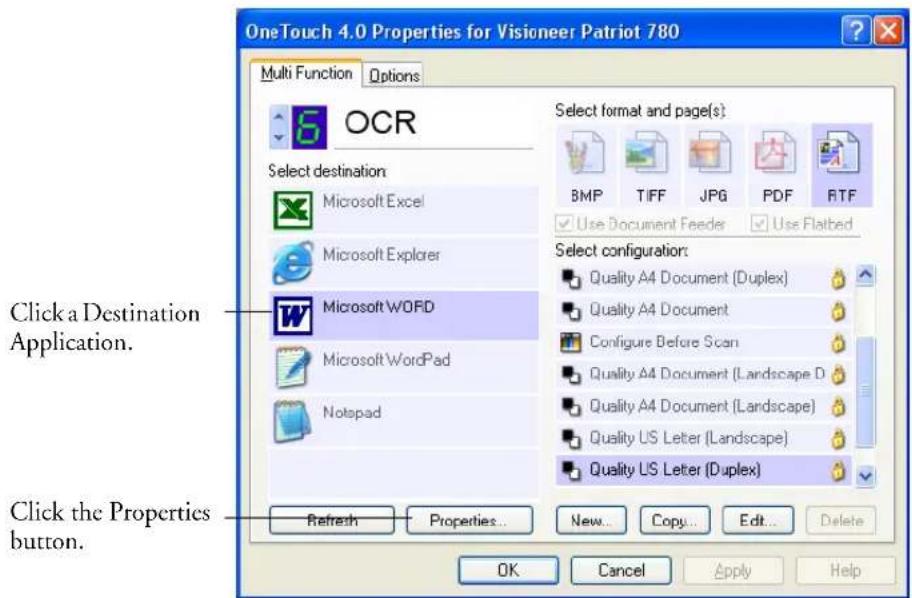
A OneTouch 4.0 Link Properties dialog box opens for the type of Destination Application you selected, and the available options are for that type of application.
TEXT DOCUMENTS PROPERTIES
These properties apply to Microsoft Word, Microsoft Excel ^® , and the other applications indicated by their icons in the list. The properties apply to the OCR settings for the applications.
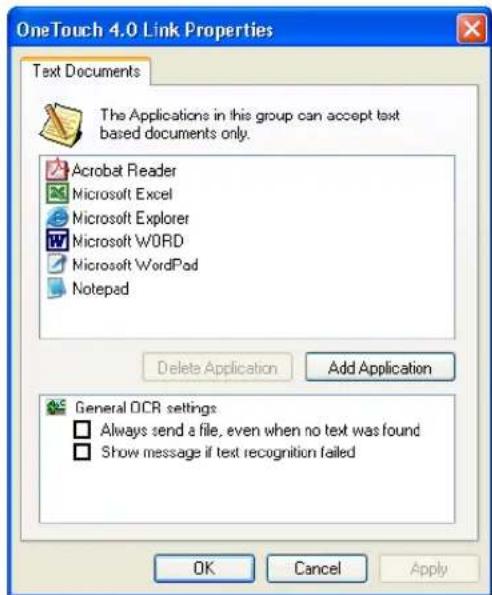
- Click in the OCR settings boxes for the options you want.
The options will apply to all the applications in the group.
Always send a file, even when no text was found—The scanned file is sent to the OCR reader even if the image does not appear to contain text. This could occur if you scanned a photograph with a OneTouch button set for text applications.
Show message if text recognition failed—A message will appear on the screen if the OCR reader does not detect text in the image.
- To add another application to the list, click the Add Application button.
The Add Text Based Link dialog box opens.
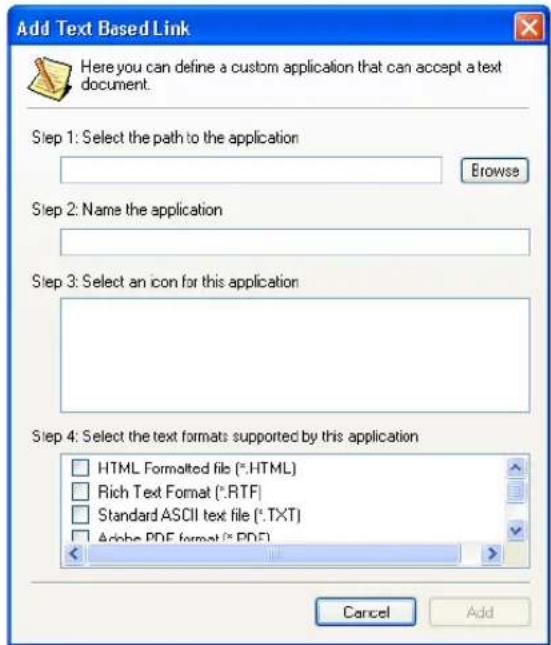
- Click Browse to find the application you want to add to the list.
When you select the application using the Browse button, steps 1 and 2 on the dialog box are automatically filled in, and the application icon appears in step 3.
-
Select the icon in Step 3 of the dialog box. That is the icon that will appear in the OneTouch Destination List.
-
In step 4 of the dialog box, select the file formats that the application will accept.
Refer to the documentation that you received with the application to see which text formats the application accepts.
The options you select at step 4 determine the page format icons in the OneTouch Properties window for that group of applications.
-
Click the Add button.
-
Click OK or Apply on the Link Properties window.
-
Click Refresh on the OneTouch Properties window.
-
Click OK or Apply on the OneTouch Properties window.
IMAGE DOCUMENTS PROPERTIES
These properties apply to the OmniPage Pro software that you received with your scanner, plus Microsoft Paint and other image processing applications.
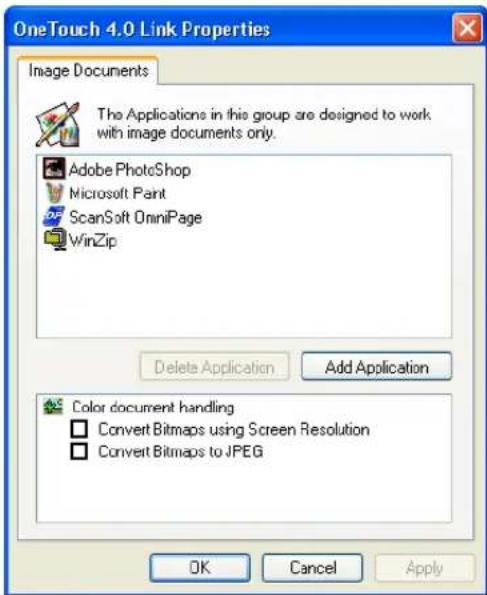
- Click in the Color document handling settings boxes for the options you want.
The options will apply to all the applications in the group.
Convert Bitmaps using Screen Resolution—Use this option to ensure that an image will fit on the computer's screen. When a computer screen is set to a lower resolution, bitmap images with a higher resolution may be too big to fit on the screen. Converting the bitmap image to match the screen resolution ensures that the image fits on the screen.
Convert Bitmaps to JPEG—JPEG files can be compressed to produce smaller file sizes and, therefore, shorter transmission times. Use this option to provide that compression capability to image files.
- To add another application to the list, click the Add Application button.
See the steps on page 43 to add an application to the list.
-
Click OK.
-
Click Refresh on the OneTouch Properties window.
-
Click OK or Apply on the OneTouch Properties window.
STORAGE PROPERTIES
These properties apply to the Destination Application named Transfer to Storage. If a CD burner is attached to your computer, and your computer is running Windows XP, you also use this dialog box to start the Burn to CD process. See the section “Scan and Burn to a CD” on page 89.
Note: If you do not have a CD burner attached to your computer, the CD options are not shown in the dialog box.
You can also set up multiple configurations to store scanned items in separate locations. See “The Storage Options Tab (Archive)” on page 68 and “Scanning to Multiple Folders” on page 70.
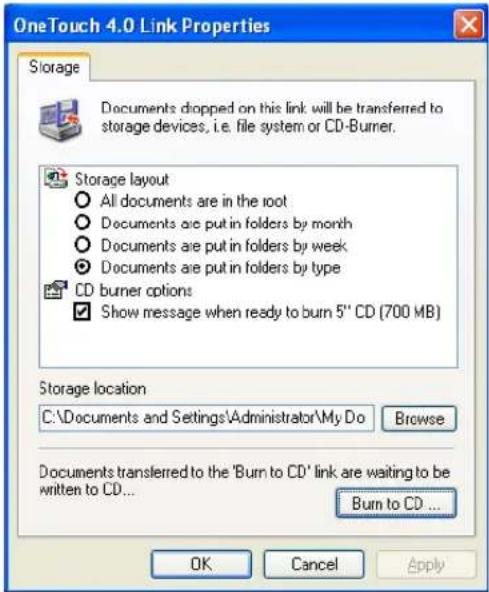
- Click the Storage Layout options you want.
All documents are in the root—The scanned documents are saved in the root of the folder specified in the Storage Location.
Documents are put into folders by month, week, or type—
Folders are created based on your selection (month, week, or type) and the scanned documents are saved in those folders. New folders are created for each month and week so you can keep track of when you scanned the documents.
- Click the Browse button to specify the location to store the scanned documents, or type a location directly into the box.
If you are scanning to a shared network drive, it must be a mapped drive. For more information about mapped drives, see your network administrator.
-
If you have a CD burner attached to your computer, the option Show message when ready to burn 5" CD (700MB), should also be selected so you will see a message when it's time to click the Burn to CD button.
-
Click OK on the Link Properties window.
EMAIL PROPERTIES
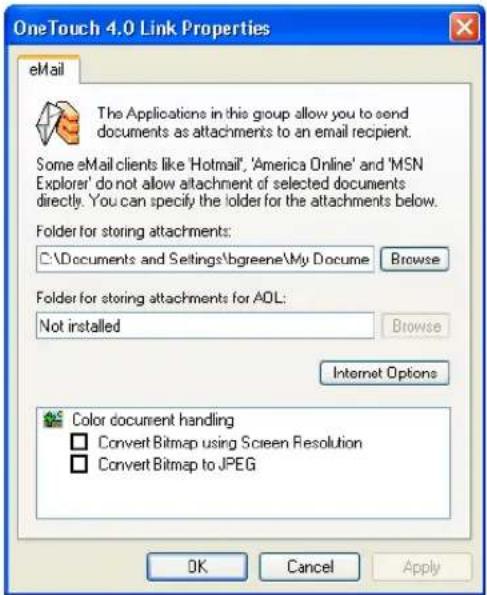
These properties apply to email applications so you can specify the folder for documents that you will attach to an email message.
Microsoft Outlook® will accept direct attachment of documents to a blank email message as soon as scanning is finished, but other email applications may not. If you're using one of those applications, such as America Online® (AOL), you need to know which folder contains the scanned documents so you can manually attach them to your email messages.
-
Click the Browse button for Folder for storing attachments and choose a folder for your eMail attachments.
-
If you are using America Online (AOL) on your computer, and the folder name for AOL is incorrect, click the Browse button and find the correct AOL folder.
For scanned images to be auto-attached to a blank email address, you must have the specific folder location AOL uses to find the attachments. Please contact AOL for more information about the folder location in which AOL stores attachments.
- If you need to change your email client, or any other internet options, click the Internet Options button.
The Windows Internet Options Control Panel opens. Click the Programs tab and choose a new email client from the Email list. These are the standard Windows Internet options. Please see your Windows documentation for more information about Internet options. If you are using AOL, please see the AOL user manual for making changes to the Internet options applicable to AOL.
- Select the options for color document handling.
Convert Bitmaps using Screen Resolution—Use this option to ensure that an image will fit on the computer's screen. When a computer screen is set to a lower resolution, bitmap images with a higher resolution may be too big to fit on the screen. Converting the bitmap image to match the screen resolution ensures that the image fits on the screen.
Convert Bitmaps to JPEG—JPEG files can be compressed to produce smaller files sizes and, therefore, shorter transmission times. Use this option to provide that compression capability to image files.
-
Click OK.
-
Click OK or Apply on the OneTouch Properties window.
SELECTING PAGE FORMAT OPTIONS
The Page Format option that you select determines the file format of the scanned document. Appropriate page format options and file types are available for the type of Destination Application selected for the button.
The available options are for images and text.
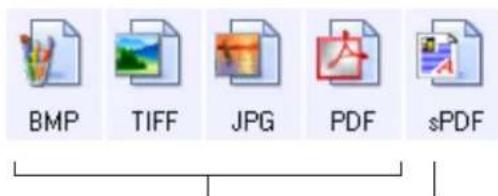
Image Formats. Text Formats; sPDF is only one of several text formats available.
The Text Formats are for text file types. The names of the formats indicate their file types. See “Text Formats” on page 52 for details.

IMAGE FORMATS
Select an image file format for photos, artwork or other documents that you want to save as images. BMP and TIFF are standard image file formats generally used if you want to do additional image processing, such as photo touch-up or color correction. Both of those file formats tend to be larger than the JPEG format.
Because JPEG image files can be reduced in size, the JPEG format is often used for images on web pages, or if file size might be a problem when electronically sending the files. JPEG files are reduced in size by lowering their image quality, and you can select the degree of quality for your scanned images from the JPEG file format icon.
The PDF format is often used to create images of text pages. You may want to select PDF as the page format when scanning text pages that do not require OCR processing or other processing. The PDF format is also used to put multi-page documents on web sites as pdf-readable files. As with the JPEG option, the PDF format can be reduced in size or quality.
Note: The two other PDF formats—nPDF and sPDF—are for scanning with OCR processing and with the ability to search the scanned text. See the next section, “Text Formats,” and also “Scanning with sPDF or nPDF and Searching for Text” on page 86 for details.
To select a JPEG or PDF file size:
- Select JPG or PDF as the page format.
- Right-click on the JPG or PDF icon.
A menu opens.
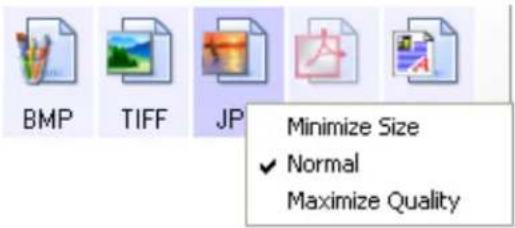
- Choose the file size/image quality option for your scanned images.
Minimize Size—Smallest file size, lowest image quality.
Normal—Medium file size, some loss of image quality.
Maximum Quality—Largest file size, no loss of image quality.
Your selection pertains only to the button currently selected on the OneTouch Properties window. Other buttons that have JPG or PDF selected as the Page Format are not affected, so you can set the JPEG or PDF file size/image quality independently for each button.
- Click OK or Apply on the OneTouch Properties window.
TEXT FORMATS
Selecting the text format option also selects OCR processing as an automatic step for scanning. Therefore, when you scan a document with the text format selected, the text portions of the document are automatically converted to editable text. See “Scanning with Optical Character Recognition (OCR)” on page 78.
Select a text format for documents with text or numbers, such as a business letter, report, or spreadsheet. The text format icon has several file formats available, depending on the Destination Application you select.
The specific file format is the file name extension on the text format icon.
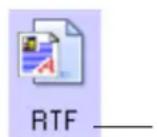
The specific text format; this example is for Microsoft Word Rich Text Format.
As you select Destination Applications that are text applications, the text format icon changes to match the file type of the application. In some cases, the Destination Application supports several file types, and you can right-click on the icon to choose the particular file type for that application.
To select a file type for the text format:
-
Select the Destination Application.
-
Right-click on the text format icon.
A menu opens. The following figure shows samples for different Destination Applications.
Example menu for the TEXT format when the Destination Application is Microsoft Word.
Example menu for the TEXT format when the Destination Application is a Storage location.
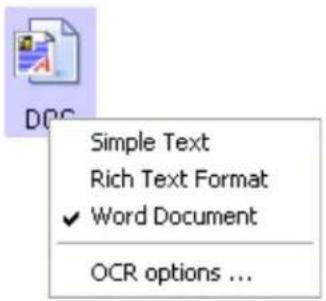
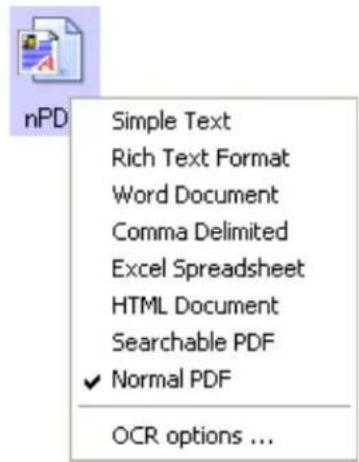
- Choose the file type that you want for the text format.
Your selection of a file type pertains only to the button currently selected on the OneTouch Properties window. Other buttons that have a text option selected as the Page Format are not affected, so you can set the text file type independently for each button.
Simple Text—The .txt file format. Text with no formatting; used by the standard Microsoft Notepad application.


Rich Text Format—The .rtf file format. Text that retains formatting when converted. Available with Microsoft Wordpad and Word.
Word Document—The .doc file format used by Microsoft Word. The .doc format is only available if you have installed OmniPage Pro on your computer.

Comma Delimited—The .csv file format; used for database or spreadsheet data with fields separated by commas. When the document is converted into editable text by the OCR software, the fields are maintained so you can copy and paste them to a database or spreadsheet application. The .csv format is only available if you have installed OmniPage Pro on your computer.

Excel Spreadsheet—The .xls file format used by Microsoft Excel.

HTML Document—The .htm file format used to create web pages.

Searchable PDF—The sPDF file format used by Adobe Acrobat and OmniPage Pro. This format converts scanned text into PDF with text search and OCR capabilities. It is only available if you have installed OmniPage Pro on your computer. See “Scanning with sPDF or nPDF and Searching for Text” on page 86 for details.

Normal PDF—The nPDF file format used by Adobe Acrobat and OmniPage Pro. This format also converts scanned text into PDF with text search and OCR capabilities, plus you can edit the text in an nPDF image if you have a PDF editing program. The nPDF format is also only available if you have installed OmniPage Pro on your computer. See “Scanning with sPDF or nPDF and Searching for Text” on page 86 for details.
- To change the OmniPage OCR settings, choose OCR Options.
The OCR Options provide a series of selections for the OCR feature when you scan text. This menu option is only available if you have installed OmniPage Pro on your computer. See “Selecting OmniPage OCR Options” on page 79 for details.
Note that the OCR Options settings apply to all buttons. If you change them for one button, those changes apply to the other buttons as well.
- Click OK or Apply on the OneTouch Properties window.
The OneTouch buttons have names that identify their pre-set functions, such as OCR and PDF, but you can edit the names.
To change the button names:
- Open the OneTouch Properties window.
- Using the arrows, choose the button that you want to rename.
- Select the name's text and type a new name.
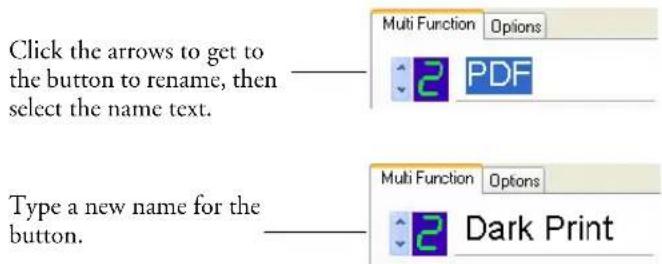
4. Click OK or Apply.
The button is now renamed.
SELECTING OPTIONS FOR THE ONE TOUCH PROPERTIES WINDOW
The OneTouch Options determine the types of Destination Applications available for a button, as well as the location of the files of your scanned items.
To select options:
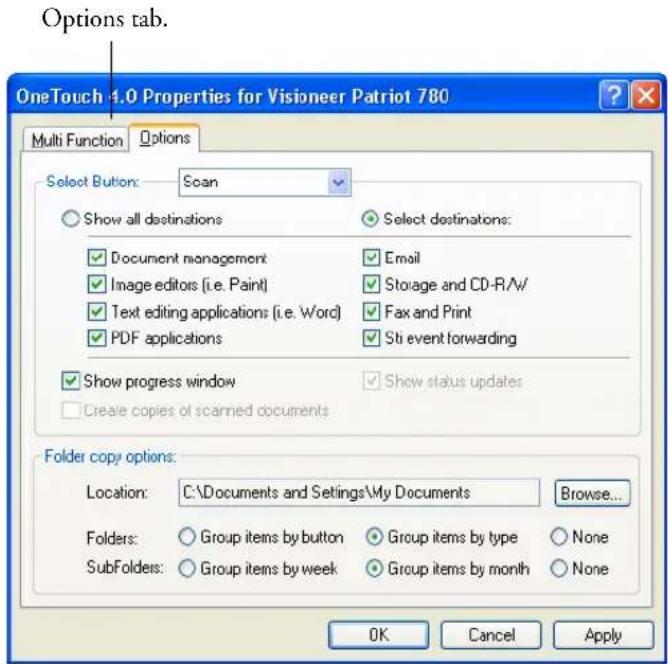
- Open the OneTouch Properties window and click the Options tab.
-
Click the menu arrow and choose the button for new options.
-
Select options as described below.
Show All Destinations—This option selects all the Destination Application categories. The list of Destination Applications available for the selected button will include all the applications on your computer that fall into these categories. This is the default selection for Button 8 (Custom). The list also includes printers and other devices connected to your computer so, for example, you can scan an item and have it printed immediately.
Select Destinations—Select this option to individually choose the types of applications to include in the list of Destination Applications. Check the boxes for the type of application to include.
■ Document Management includes applications for processing and keeping track of your scanned documents.
■ Image Editors include Microsoft Paint and other drawing and graphics applications.
■ Text Editors include Microsoft Word and WordPad, Microsoft Excel, and other word processing and spreadsheet applications. Select this option if you want OCR processing to convert your scanned documents to text that you can edit.
■ PDF applications are for documents scanned to PDF format.
- Email includes Microsoft Outlook and other email applications. See “eMail Properties” on page 48 for details about attaching scanned documents to your email messages.
■ Storage and CD-R/W is for either storing scanned documents in a folder, or sending them to a CD burner to create a CD containing the scanned documents. See “Transferring Scanned Documents to Storage” on page 96 and “Scan and Burn to a CD” on page 89 for details.
■ Fax and Print is for sending your scanned documents directly to your printer or fax software for faxing.
■ Sti event forwarding is for using another application's interface for scanning. The OneTouch Event Forwarding dialog box opens so you can select which application to use to continue scanning. See “Scanning with Event Forwarding” on page 92 for details.
- After selecting a new type of Destination Applications, click the Scan tab to see which ones are added to the list.
Show Progress Window—Select this option to display the progress window of the document(s) during scanning.
Create copies of scanned documents—Sometimes the image of a scanned document is only saved as a temporary file until its Destination Application is finished using it. In those cases you may want an additional, permanent copy saved on your hard drive.
For example, if you scan a picture to an email application, the scanned image is saved as a temporary file, then attached to the email, and the email is sent. Later, the temporary file of the scanned picture is deleted. The same situation may occur when you scan directly to a printer or scan to a fax application. After a scanned item is printed or faxed, its temporary file is deleted. However, by selecting this Create copies of scanned documents option, you can choose to save permanent copies of the scanned items on your hard drive.
The copies will be saved in the folder specified in the Folder Copy Options section (see the figure on page 59 and the description below).
This option is not available if either the Document Management or Storage and CD-R/W options are selected because, by default, file copies for those types of Destination Applications are already automatically saved in the folder for copies.
For that reason, this option is not available for the default settings of OneTouch Buttons 1, 2 and 7. Those buttons are set as Transfer to Storage with the Destination Application type set as Storage and CD-R/W.
Folder Copy Options—This section of the dialog box sets the location for copies of your scanned documents and how you want to group them.
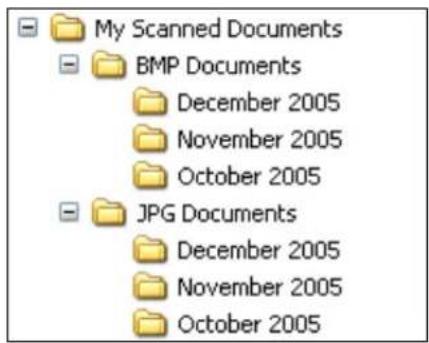
Click the Browse button and find the folder for the copies. Select the grouping option for the documents. The Group by button option groups the documents under the name of the OneTouch button. For example, if the button is named Printer, the documents are grouped under the name Printer. Group by type arranges the scanned documents by the type of file, such as .doc or .jpg. If you also want to group them by date you can choose the week and month options.
The following example shows the folders when the selections are Group items by type and Group items by month.
- Click OK to save the options for the selected button.
CREATING A NEW SCAN CONFIGURATION
The scan configurations are where you select the scanning resolution, brightness, mode (color, black&white, or grayscale), and a number of other settings.
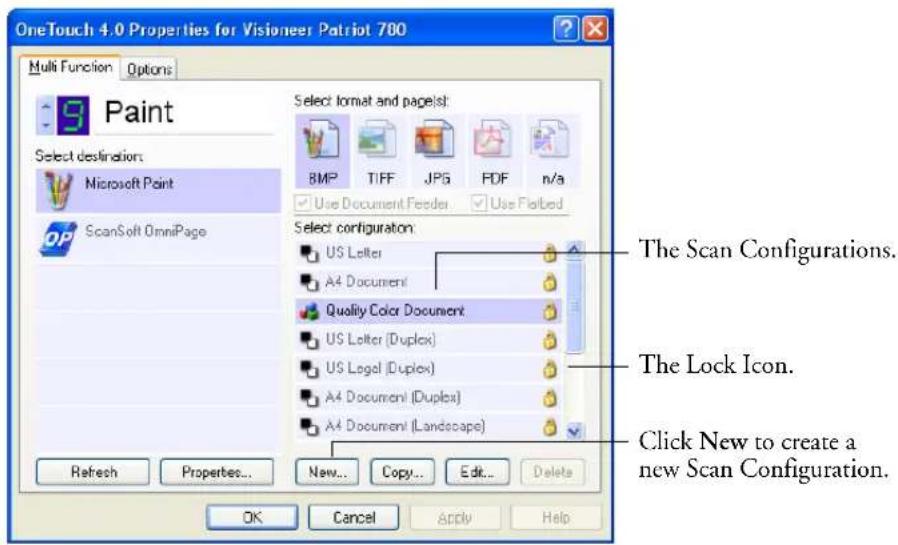
Note the lock icon on the preset configurations. Although you can unlock and edit the preset configurations, we recommend that you leave them locked, and only add new configurations. That way, you will always have the original factory-set configurations available.
To create a new configuration:
-
Open the OneTouch Properties window and make sure the Multi Function tab is selected.
-
Scroll through the applications in the Select Destination list and click the type of application for which you want to create a new scan configuration.
When you create a new scan configuration, it will be listed for the buttons that are set for the same types of Destination Applications. For example, if you create a new configuration for a button that is set to show image editor applications, that new configuration is also listed for any other buttons set for image editors, but not for
buttons set for text editing applications. Thus, you can create specific sets of scan configurations for specific functions and they are listed only when appropriate.
3. Click the New button.
If you want to start from the settings of another configuration, select the configuration, then click the Copy button.
If the Scan Settings tab is not selected, click it.
- On the Scan Configuration Properties dialog box, type a name.
Tip: If you're going to set up the new configuration to scan duplex (two-sided) or landscape, include those features in the name, such as "Scan for Dark Print (Duplex) (Landscape)," to remind you that it is a duplex landscape scan.
Type a new name for the configuration.
Select the scan mode and drag the slider to set the resolution.
Drag the sliders to set the Brightness and Contrast.
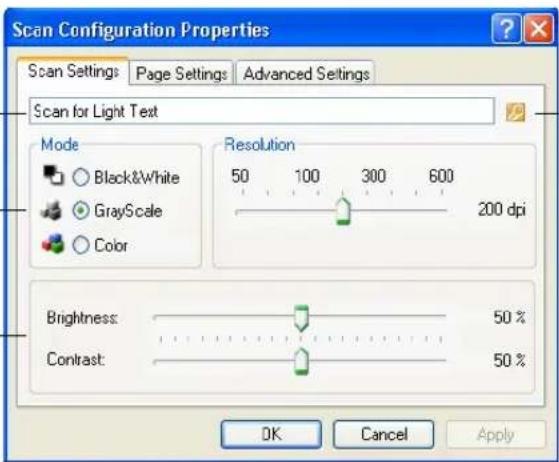
If the configuration is locked, click the lock to unlock it. The icon becomes a key as shown here.
Note: If you select a printer or other device in the Select Destinations list, the dialog box may have an additional Device Settings tab for setting specific options for the particular device.
- Select scan settings for the new scan configuration.
Mode—Select a scanning mode:
■ Black&White to scan in black and white. For example, letters and memos are usually scanned in black and white. This scan mode produces the smallest file size.
■ GrayScale to scan items such as documents containing drawings or black and white photographs. This mode produces an image of up to 256 shades of gray.
■ Color to scan color photographs and other color items. Color scans have the largest file size.
Resolution—Drag the slider to the right or left to adjust the dots per inch (dpi) of the resolution. The maximum resolution is 600 dpi; the minimum is 50 dpi. The higher the dpi setting, the sharper and clearer the scanned image. However, higher dpi settings take longer to scan and produce larger files for the scanned images.
Brightness and Contrast—Sometimes an item is scanned with the brightness and contrast set too light or too dark. For example, a note written with a light pencil may need to be scanned darker to improve legibility.
Brightness refers to the lightness or darkness of the image. Contrast is the range between the darkest and lightest portions of the image. The greater the contrast, the more difference between the lighter and darker shades in the image.
Drag the sliders to the right or left to adjust the brightness and contrast of the scanned image. The Contrast setting does not apply to the Black&White mode.
-
If you want to lock the configuration, click the Key icon to change it from a Key to a Lock.
-
Click the Page Settings tab to select page settings.
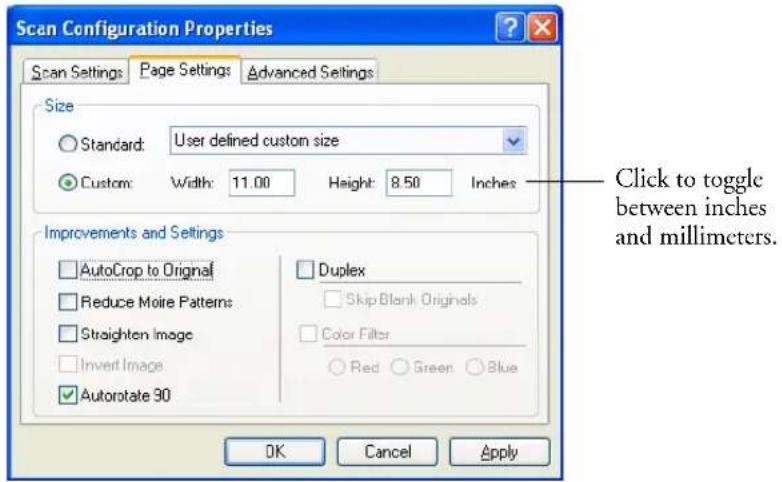
Size—Click Standard, click the menu arrow and choose a page size from the list. The list includes sizes for both portrait and landscape scanning. Note that you can also use landscape scanning for any size in the menu by clicking the Autorotate 90 option. See the description on page 65.
If you want to scan a size not listed in the Standard menu, click Custom and enter the horizontal and vertical page dimensions in the boxes. The maximum size for items scanned with the Automatic Document Feeder is 11.7" x 17". The maximum size for items scanned on the Flatbed Glass is 11.69" x 16.53" (A3 paper). The units of measurement can be inches or millimeters. Click the name of the units, inches or millimeters, to toggle between them.
Improvements and Settings—Only the options that apply to the selected Destination Application are available.
■ AutoCrop to Original—Select this option to let the scanner automatically determine the size of the item being scanned. For example, if you scan a 5"x7" photo, the scanner will determine the size of the photo.
For single-sided scans, the scan area is the size of the image. For double-sided scans, the scan area is the size of the larger of the two areas on the front and back of the page.
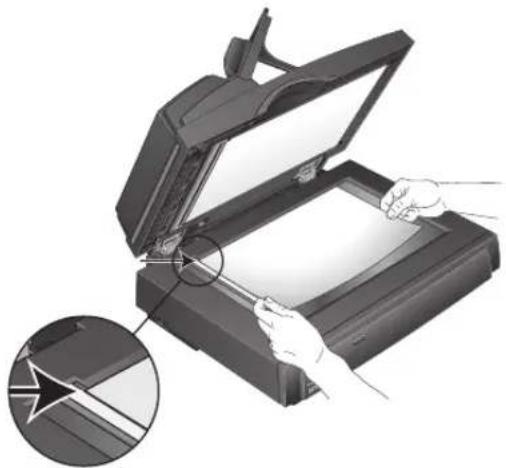
When using the AutoCrop to Original option for a single page on the Flatbed Glass, make sure to align the top left corner of the item with the arrows at the top left corner of the Flatbed Glass.
natural_image
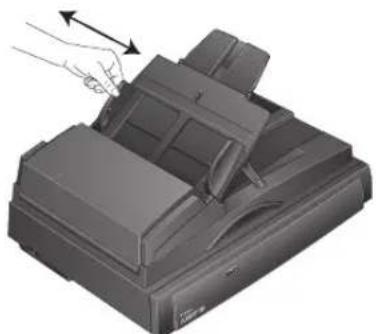
Illustration of a printer with open lid and tool, showing mechanical assembly (no text or symbols)When using the AutoCrop to Original option with the Automatic Document Feeder, make sure to adjust the paper guides on the scanner so the page is not skewed when it feeds into the scanner. Skewed pages may not crop properly.
natural_image
Illustration of a printer with a hand inserting a paper into the cover (no text or symbols visible)■ Reduce Moire Patterns—Moire patterns are wavy, rippled lines that sometimes appear on the scanned images of photographs or illustrations, particularly newspaper and magazine illustrations. Selecting Reduce Moire Patterns will limit or eliminate moire patterns in the scanned image. This option is only available for the GrayScale or Color Mode at 300dpi or less.
■ Straighten Image—Select this option to let the scanner automatically determine if a page is skewed, then straighten its image. The scanner detects page edges and can sense when the page is fed through at an angle. However, if the page is fed through at too great an angle, the image may not straighten correctly. In that case, re-scan the page using the paper guides to feed the paper in straight.
■ Autorotate 90—Select this option to rotate the scanned image 90^ clockwise when scanning is finished. Typically you use Autorotate 90 so you can select any of the page sizes from the Standard menu but scan in landscape orientation instead of portrait. Landscape scanning tends to be faster than portrait scanning.
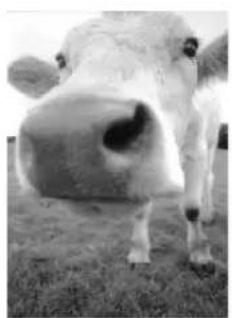
■ Invert Image—Only available for Black&White Mode, this option reverses the black and whites of an image.
Original Image. Inverted Image.
natural_image
Close-up black-and-white photo of a smiling cow's face on grass (no text or symbols visible)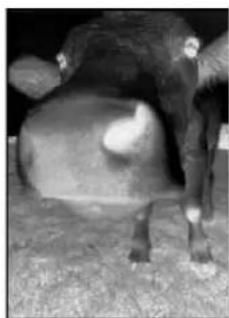
natural_image
Black-and-white photo of a cow lying down with visible horns and legs (no text or symbols)■ Duplex—Scan both sides of the page. If this option is not selected, the scanner will scan the front side of the page only.
- Skip Blank Originals—Skips pages that are completely blank. Typically you use this option when you will scan a stack of two-sided pages which have a number of blank sides. This option is only available for Duplex scanning.
■ Color Filter—Color filter is the ability of your scanner to automatically remove a color from a scanned item. For example, if you are scanning a letter with a red watermark, you can choose to filter out the red so the scanned letter just shows the text and
not the red watermark. Color filter applies to Black&White or GrayScale Mode.
The original with a red watermark over black text.
The scanned item with the red filtered out.

8. Click the Advanced Settings tab.
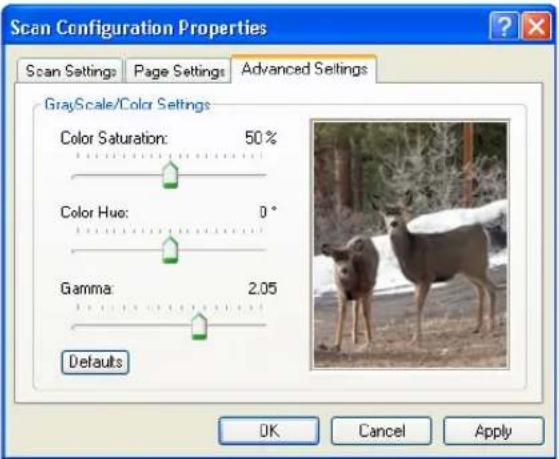
The options of the Advanced Settings tab are for the Color or GrayScale scanning mode.
Saturation is the strength or purity of a color, hue is the color your eyes see as reflected from the image, and gamma controls the brightness of the midtones of the color.
-
Drag the sliders to the left and right to change the color settings. As you do, the image changes to show the effects of the new settings.
-
Click OK to save the new configuration.
It will now appear in the list of Scan Configurations on the OneTouch Properties window for the appropriate Destination Applications.
THE DEVICE SETTINGS TAB
A Device Settings tab appears on the Scan Configurations dialog box when your selected Destination Application sends the scanned image to a printer, fax application, or other device. You use the options on the Device Settings tab to select settings for the device.
- Click on the Device Settings tab.
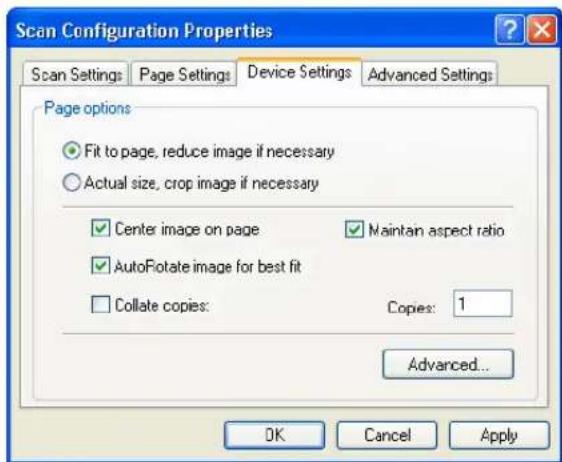
Fit to page, reduce image if necessary—If the scanned image is too big to be printed or faxed on a single page, the image will automatically be reduced to fit the page.
Actual size, crop image if necessary—If the scanned image is too big to be printed or faxed on a single page, the image will automatically be cropped around its edges to fit on the page.
Center image on page—The image will be printed in the center of the page instead of at the top right corner.
Maintain aspect ratio—The aspect ratio is the length-to-width relationship of the image's dimensions. Select this option so the image's relative proportions remain constant.
AutoRotate image for best fit—If the image is a Landscape format and the device is printing in the Portrait mode, or vice versa, rotate the image to fit on the page.
Collate copies—If you're printing more than one page, collate the copies. Enter the number of copies in the Copies box.
Advanced—Click to see additional settings for the device. The dialog that opens is specific to the device. For example, if the device is your printer, the dialog box is your printer's setup settings.
2. Click OK or Apply.
THE STORAGE OPTIONS TAB (ARCHIVE)
A Storage Options tab is on the Scan Configurations dialog box when the selected Destination Application is set as Transfer to Storage. You use the options on this tab to select where you want to save your scanned items for storage when scanning with that particular Scan Configuration. Buttons 1, 2, and 7 are set as Transfer to Storage so you can select one of those buttons to create new configurations for archiving.
Note: The selections you make using the Storage Options tab override the storage options that apply to the Storage Properties. This means that you can create separate Scan Configurations to store scanned items at various locations in addition to the main location set by the Storage Properties. See “Storage Properties” on page 46 and “Transferring Scanned Documents to Storage” on page 96 for more details.
- Click on the Storage Options tab.
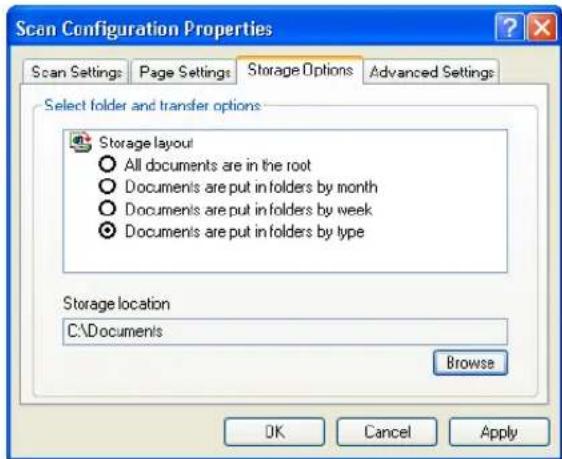
- Click the Storage Layout options you want.
All documents are in the root—The scanned documents are saved in the root of the folder specified in the Storage Location.
Documents are put into folders by month, week, or type— Folders are created based on your selection (month, week, or type) and the scanned documents are saved in those folders. New folders are created for each month and week so you can keep track of when you scanned the documents.
By default, the location of the archived documents is at C:\Documents and Settings\
-
If you want to store your archive documents in some other location, click the Browse button to specify the new location.
-
Click OK or Apply.
SCANNING TO MULTIPLE FOLDERS
When archiving documents with the Transfer to Storage option, you can scan them to multiple folders. For example, one folder might be for “Business Receipts,” a second folder might be for “Personal Receipts,” and a third folder might be for “Annual Receipts.”
To scan to multiple folders, you create multiple scan configurations with Transfer to Storage as the Destination Application, and assign each scan configuration to one of the buttons.
Setting up multiple folders for transfer to storage:
-
Using Microsoft Windows, create the folders that you want to use for storing scanned items. Note that you can also create the folders later while creating the new scan configurations.
-
Open the OneTouch Properties window.
-
Select Transfer to Storage as the Destination Application.
-
Click the New button.
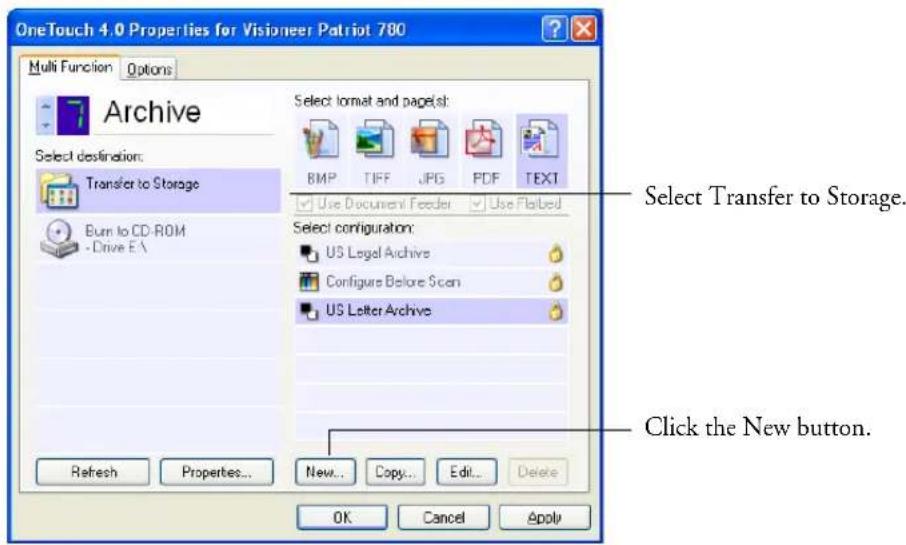
The Scan Configuration Properties dialog box opens.
-
To help you remember which folder it is, give the new configuration a name that indicates the folder name, such as "Storage for Business Receipts."
-
Click the Scan Settings, Page Settings, and Advanced Settings tabs, and select the settings you want.
-
Click the Storage Options tab.
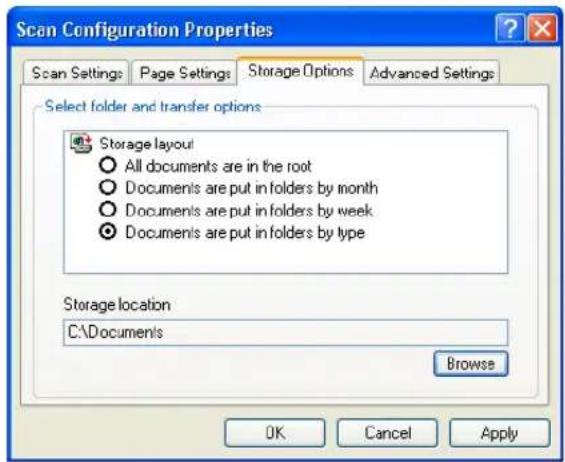
-
Click the Browse button.
-
Select the folder you created for storing the scanned documents.
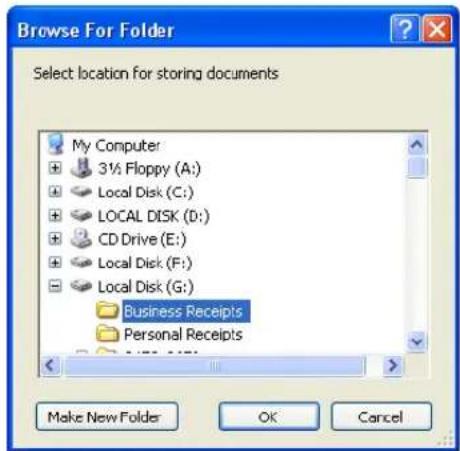
If you haven't created the folder yet, you can click the Make New Folder button and type the name for the new folder.
- Click OK. The selected folder will now be set as the Storage Location, such as "Business Receipts."
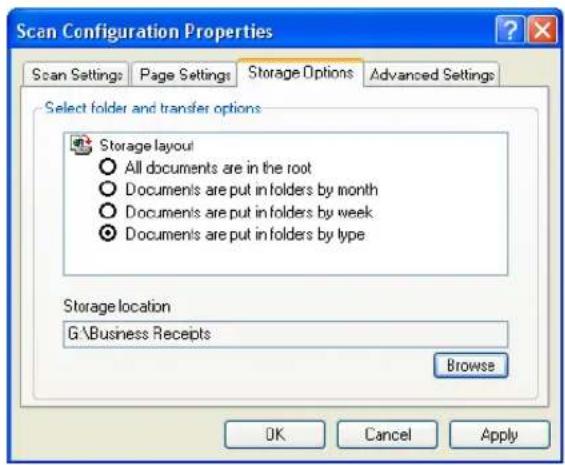
-
Click Apply. The new configuration is now listed as a Transfer to Storage configuration.
-
Repeat the process to create additional new configurations, such as one named "Storage for Personal Receipts."
-
Make sure to designate separate folders as the Storage Locations for the new configurations.
You will now have multiple configurations set up for the Transfer to Storage destination, and each configuration scans documents to separate folders.
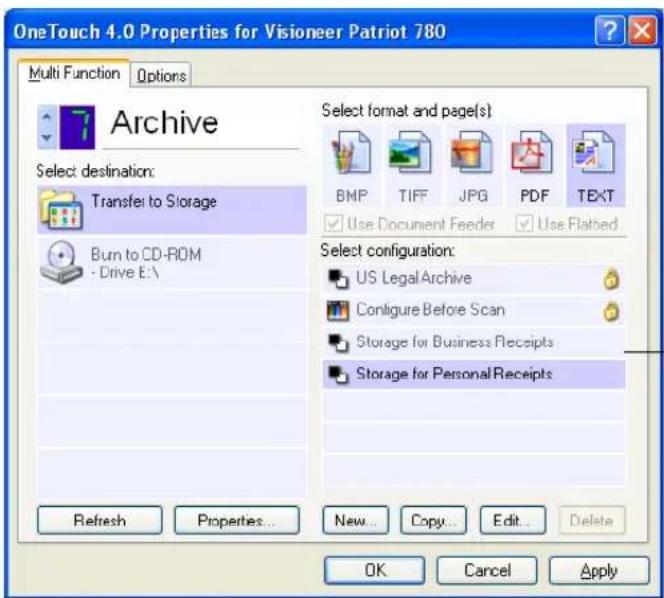
The new configurations apply to the Transfer to Storage Destination Application.
- Now click the arrow buttons to select a button for each new configuration. Click Apply to set that button for that configuration.
The following examples show that buttons 7 and 8 have been set to scan to each of the new configurations.
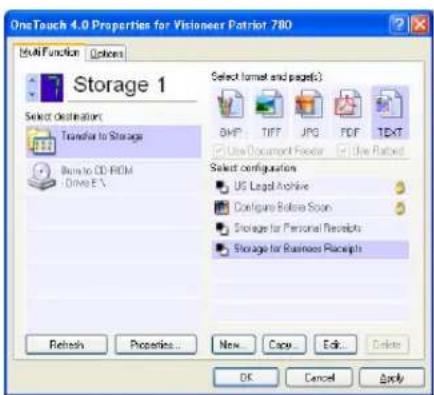
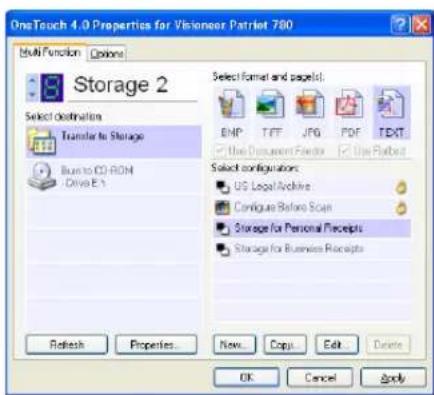
Note that the button names have also been changed to Storage 1 and Storage 2 to remind you that both send documents to storage, but to different locations. To change button names, see “Renaming a OneTouch Button” on page 55.
Scan to multiple storage folders:
- Insert the documents you want to scan to multiple storage folders.
- Open the OneTouch Panel and click the arrows to get to one of the buttons set up for scanning to storage.
- Click the button on the OneTouch Panel.
- When scanning is finished, put the next set of documents into the scanner and click the arrows on the OneTouch Panel to get to the next button you have set up for scanning to storage.
- Click that button on the OneTouch Panel.
When scanning is finished, the documents are stored in the two separate folders.
EDITING OR DELETING SCAN CONFIGURATIONS
Note: Your scanner comes with a number of configurations pre-set at the factory. We recommend that you keep those configurations locked and do not edit or delete them. That way, you will always have the factory-settings available. If you do edit or delete them, and want to get the factory pre-sets back again, you will need to uninstall then reinstall your scanner.
To edit or delete a scan configuration:
- Open the OneTouch Properties window and make sure the Scan tab is selected.
- Select the scan configuration you want to edit or delete.
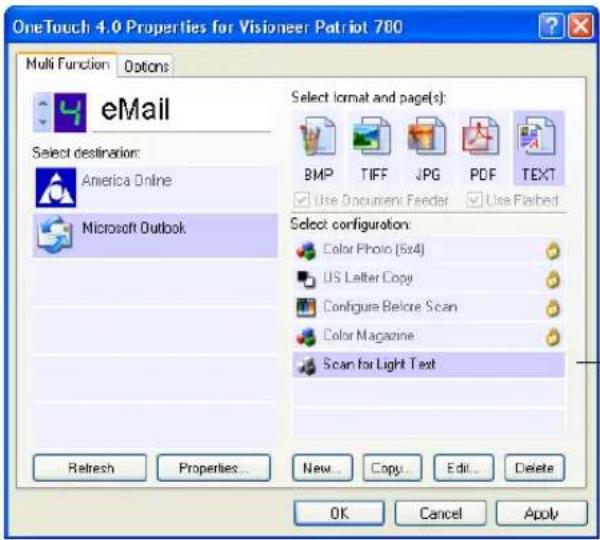
Select the scan configuration to edit or delete. It must be unlocked, as indicated by not having a lock displayed here.
- To delete the configuration, click the Delete button.
Note: If the Delete button is not available, the selected configuration is locked and cannot be deleted. You must first click the Edit button and unlock the configuration, as explained in the next steps.
- To edit the configuration, click the Edit button.
The Scan Configuration Properties dialog box opens for that configuration.
You can make changes to a configuration, but for the changes to be saved, the configuration must first be unlocked.
Click the lock icon to unlock the configuration. Clicking it toggles between locking and unlocking the configuration. The key icon indicates the configuration is unlocked.
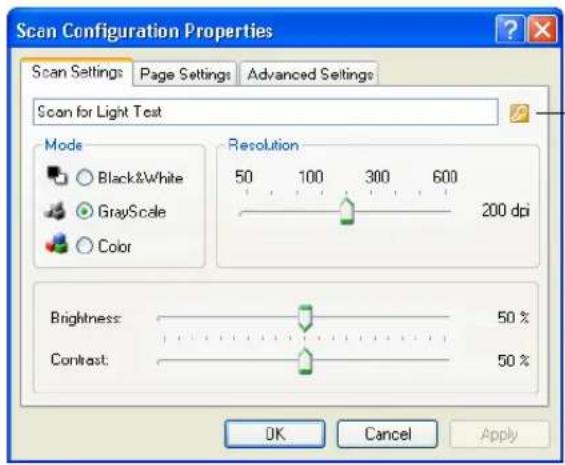
Click the Key/Lock icon to toggle between locked and unlocked.
-
Edit the settings and click OK.
-
Click OK to close the dialog box.
CONFIGURING BEFORE SCANNING
Choosing Configure Before Scan simply opens a scanning interface when you press or click a scan button. You can then use the interface to change the Resolution, Scan Mode, and other settings. When you scan, the scanned image will still be sent as the file type and to the same Destination Application already selected in the OneTouch Properties window for that button.
To configure before scanning:
- Open the OneTouch Properties window.
- Select the scan configuration Configure Before Scan.
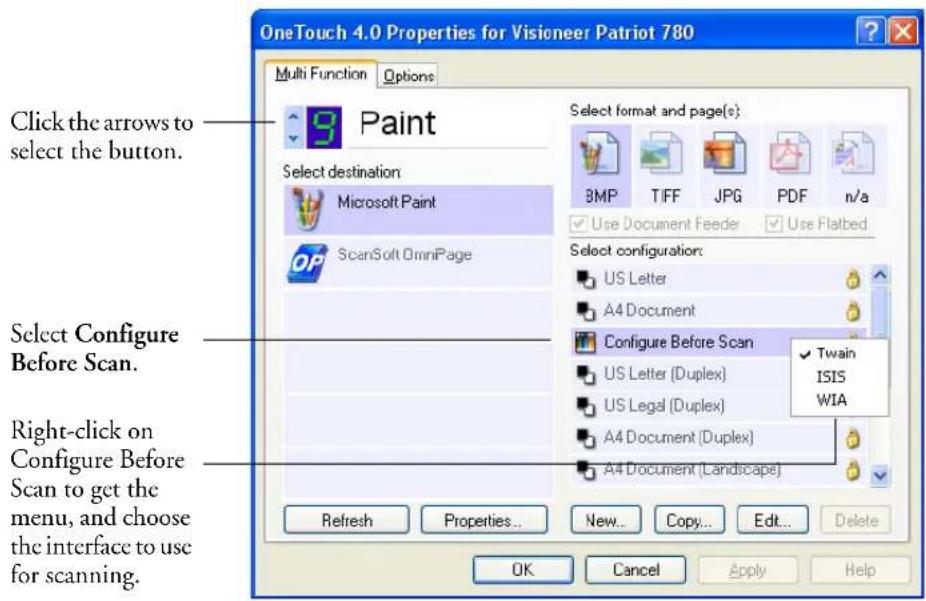
- Right-click on Configure Before Scan and choose an interface to use for configuring before scanning.
TWAIN—The TWAIN Interface opens for you to make changes prior to scanning. See “Scanning with the TWAIN Interface” on page 104.
ISIS—The ISIS Interface opens for you to make changes prior to scanning. See “Scanning with the ISIS Interface” on page 129.
WIA—The Windows Image Acquisition Interface (WIA) opens for you to make changes prior to scanning (available on Windows XP only). See “Scanning with the WIA Interface” on page 123.
- Click OK or Apply on the OneTouch Properties window.
SCANNING WITH OPTICAL CHARACTER RECOGNITION (OCR)
Optical Character Recognition (OCR) converts text and numbers on a scanned page into editable text and numbers. You can then work with the text and numbers to edit, spellcheck, change font or type size, sort, calculate, and so forth.
Note: Visioneer recommends that all OCR processing use the original factory settings for OCR scanning that came with your scanner. When scanning with other settings, use at least 300 dpi for the resolution. If the original documents are of poor quality or have a small type font, 400 dpi can be used as the maximum resolution.
You must have the OmniPage Pro software installed on your computer in order to use the OCR options with the OneTouch 4.0 software and your scanner. OmniPage Pro is on the Disc 2 CD that you received with your scanner in case you haven't installed it yet.
If OmniPage Pro is installed, the OCR process is automatic when the page format on the OneTouch Properties window is a text format, such as DOC, TEXT, XLS, HTML, and RTF.
To scan with OCR:
-
Load the pages into the scanner.
-
Open the OneTouch Button panel.
Button 6 (OCR) is preset for converting scanned documents to editable text.
- Click Button 6 (OCR), or if you've set up one of the other buttons for scanning with a text format, click it instead.
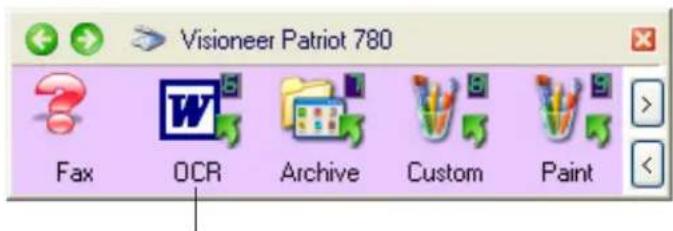
Make sure the Destination Application is set to scan with one of the text formats.
Your scanned pages appear in the Destination Application with their text ready for editing and other text processing.
Note: OCR scanning is also for spreadsheets so you can work in Microsoft Excel (or other spreadsheet applications) with the figures and text from the original spreadsheets.
SELECTING OMNIPAGE OCR OPTIONS
OneTouch 4.0 and OmniPage Pro work together to combine scanning with OCR processing into one integrated step. You can select a range of options for the OCR process.
Note: OmniPage OCR options apply globally to all the OneTouch buttons that perform OCR. For example, Button 6 is set by default to OCR text, but Button 8 is not. If you reconfigure Button 8 to also OCR text, the OCR options you select for Button 8 will also apply to Button 6.
To select OmniPage OCR options:
- Open the OneTouch Properties window.
- Using the arrows, choose a button that has Destination Applications that use the text format as their file type.
-
Select the Destination Application to get one of the text format file types as the page format.
-
Right-click on the page format icon to see the menu.
- Choose OCR Options from the menu.
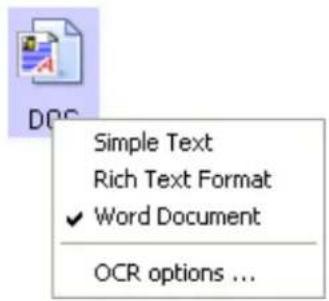
The OmniPage OCR Options window opens with the OCR tab selected.
![Options OCR | Process | Format | Languages in document: English Afrikaans Albanian Aymara Basque Bemba Blackfoot Breton Bugotu Bulgarian Byelorussian Catalan Chanorro Chechen User dictionary [none] Professional dictionaries Dutch Legal Dutch Medical English Legal Reject character ~ Font Matching... OK Cancel](/content/2026/06/1202849/images/f593d3e3a46cb2bc693982183f3b4182e65868ce672edc54dd534f9233ed8389.jpg)
- Choose the options you want from the OCR window.
Languages in Document—Select the language(s) in the documents to be scanned. These are the languages that will be recognized during the OCR process. For faster and more reliable language recognition, select only the languages in the document.
The languages at the top of the list are your recent choices. Below that the languages are in alphabetical order. Type a letter to jump to one of the languages in the list.

The dictionary icon indicates a language with dictionary support available. The dictionary is consulted to help in the OCR process. It can also offer suggestions during proofing.
User Dictionary—A user dictionary is your personal dictionary with words that you want the OCR proofreading process to recognize as legitimate words. For example, if you scan documents with highly technical terms not found in typical dictionaries, you can add them to your personal dictionary. You can also add names that you expect to be in the documents too. That way, when the OCR process proofreads the text, names will not be considered misspelled words. You can create multiple user dictionaries.
Click the menu arrow and select a user dictionary from the list. Any Microsoft Word user dictionaries detected on your computer system are also listed. A dictionary named Custom is your default Word dictionary.

To create a user dictionary, click the button next to the menu arrow. Click New, type a name for the dictionary, and click OK. Click Close and then choose your new dictionary from the list. It will be used during the OCR process. You add words to a dictionary during the proofreading process. To turn on the proofreading process for your scanned documents, see the OmniPage Pro documentation.
Professional Dictionaries—These are legal and medical dictionaries containing highly specialized words and phrases. The options are: Dutch Legal, Dutch Medical, English Legal, English Medical, French Legal, French Medical, German Legal, and German Medical. Click the checkbox next to a dictionary name to select it.
Reject Character—This is the character that the OCR process inserts for an unrecognizable text character. For example, if the OCR process cannot recognize the J in REJECT, and \~ is the reject character, the word would appear as RE-ECT in your document. The \~ is the default reject character.
Type the character you want to use in the Reject character box. Try to choose a character that will not appear in your documents.
Font Matching—Your computer system usually has a number of fonts available for the OCR process to use to recognize text.
However, not all of the fonts may be selected for the OCR process. Using Font Matching you can select the fonts on your computer that match the fonts in your documents.
Click the Font Matching button to see the Font Matching dialog box.
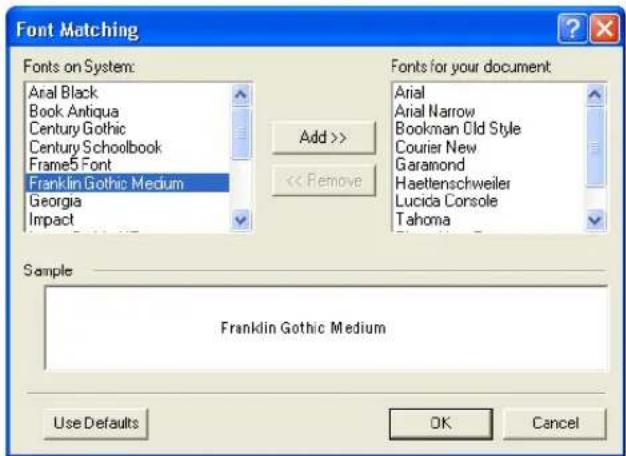
The list on the left are the fonts available on your computer system. The list on the right are the fonts that will be used by the OCR process to recognize the text in your documents. If possible, the list of Fonts for your document should include all the fonts in the documents you plan to scan. To add new fonts to that list, select a font in the Fonts on System list and click Add. Note that when you select a font, a sample appears in the text box so you can compare it with the fonts in your document to see if that's the right font. To remove a font, select it and click Remove. To return the lists to their defaults, click Use Defaults. Click OK when you're finished.
- Click the Process tab and choose the options from the Process window.
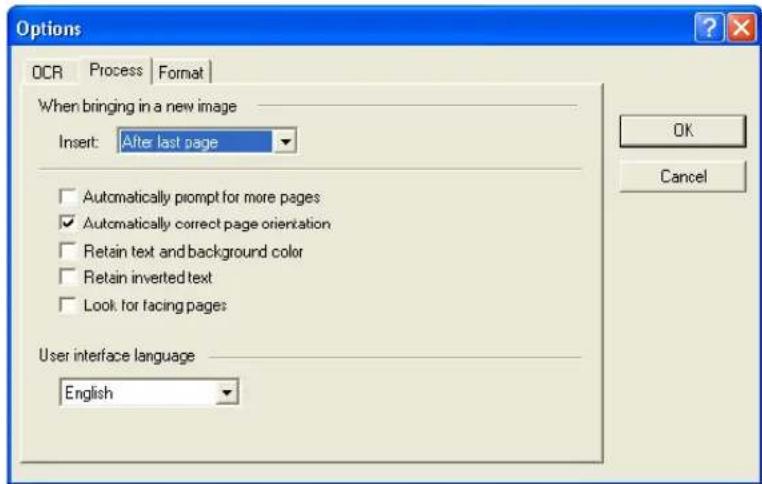
When bringing in a new image—Click the menu arrow and select where you want new pages added to your current document. The choices are After last page, After current page, Before current page, and Before first page.
Automatically prompt for more pages—Select this option if the document is too big to fit into the scanner's paper guide.
Automatically correct page orientation—Select this option to have the OCR process check orientation and automatically rotate an improperly oriented page image by 90, 180 or 270 degrees prior to recognition. All pages are automatically straightened (deskewed) if necessary.
Retain text and background color—If your document contains colored text or backgrounds, select this option to have them detected and displayed in the text editing application you have selected. The colored text and backgrounds will also be available for export. Deselect this option if you want color pictures in the document but do not want colored text and backgrounds. You can change the color of texts and backgrounds in the OmniPage Pro Text Editor.
Retain inverted text—Inverted text is white or pale letters on a black or dark background. Select this option to retain inverted text, deselect it to have inverted text transformed to normal text of black text on a white background.
Look for facing pages—Select this option if you want to scan two facing pages of an open book in one step, and then to recognize and store them as two separate pages (as if they had come from two separate scannings).
User interface language—Click the drop-down arrow and select the language to use on the OmniPage windows. The available languages may differ for different parts of the world.
- Click the Format tab and choose the options you want from the Format window.
Note that as you select formats, the image changes to represent the selection so you can see, at a glance, what the layout will look like.
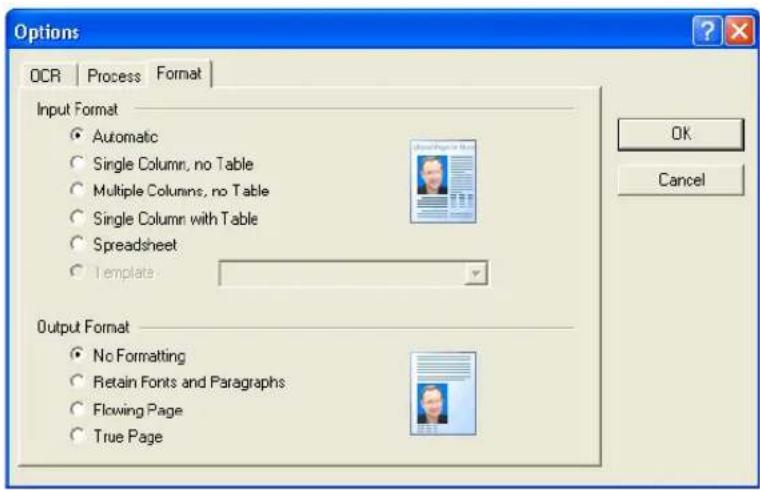
Automatic—Choose this option to let the OCR process determine the layout of the pages. It is the fastest type of format processing. Typically you select this option when the document has different or unknown types of layouts, pages with multiple columns and a table, or pages containing more than one table. The OCR process will then determine if text is in columns, an item is a graphic or text, and tables are present.
Single column no Table—Choose this option if the document contains only one column of text and no tables. Business letters are normally in this form. You can also use this option for documents with words or numbers in columns if you do not want them placed in a table or decolumnized or treated as separate columns.
Multiple columns, no Table—Choose this option if some document pages contain text in columns and you want it kept in separate columns, similar to the original layout. If table-like data is encountered, it is placed in columns, not in a gridded table.
Single column with Table—Choose this option if your document contains only one column of text and a table. The table will be placed in a grid in the text editing application you have selected. You can later specify whether to export it in a grid or as tab-separated text columns.
Spreadsheet—Choose this option if the entire document consists of a table that you want to export to a spreadsheet program, or have treated as a table. No flowing text or graphics zones will be detected.
Template—If you created a zone template in OmniPage Pro, choose a zone template file to have its background value, zones and zone properties applied to all OCR scanned pages from now on.
No Formatting (NF)—The document will be plain text, decolumnized and left-aligned in a single font and font size. You can export plain text to nearly all file types and target applications, and graphics, tables and bullets can be retained. When exporting to Text or Unicode file types, graphics and tables are not supported.
Retain Fonts and Paragraphs (RFP)—This output format retains the font and paragraph styling, including graphics and tables without columnized text. This output format is available for nearly all file types.
Flowing Page (FP)—This format keeps the original layout of the pages, including columns. This is done wherever possible with column and indent settings, but not with text boxes or frames. Text will then flow from one column to the other, which does not happen when text boxes are present.
True Page (IP)—This output format keeps the original layout of the pages, including columns. This is done with text, picture and table boxes and frames. True page is offered only for target applications capable of handling the formatting. True Page formatting is the only choice for XML export and for all PDF export, except to the file type “PDF Edited”.
- When you're finished selecting the OCR options, click OK on the Options window.
These options will now apply to the OCR processing when you select any scan button with a text format as the page format.
SCANNING WITH SPDF OR NPDF AND SEARCHING FOR TEXT
Searchable PDF (sPDF) and Normal PDF (nPDF) are special forms of an Adobe PDF file. sPDF converts scanned text into the PDF format with text search and OCR capabilities. nPDF has those same features, plus you can edit the text in an nPDF image if you have a PDF editing program. The two PDF formats can also produce images with different image quality, so you may want to experiment with them to determine which is better for your scanned documents. sPDF and nPDF are only available as page format options if you have installed OmniPage Pro on your computer.
Note: If you did not install the OmniPage Pro software as part of the scanner installation, and you choose to install it at this time, you may have to restart your computer before the sPDF and nPDF formats are available in the OneTouch software.
Note: Buttons 1, 2, and 7 are set up to scan directly to a storage location on your computer. When scanning to storage, all file types—including sPDF and nPDF—are available.
To scan with sPDF or nPDF:
- Open the OneTouch Properties window.
-
Using the arrows, choose a OneTouch button to use for the sPDF or nPDF scanning.
-
Select a Destination Application that uses a text format as the page format.
-
Right-click on the text format icon.
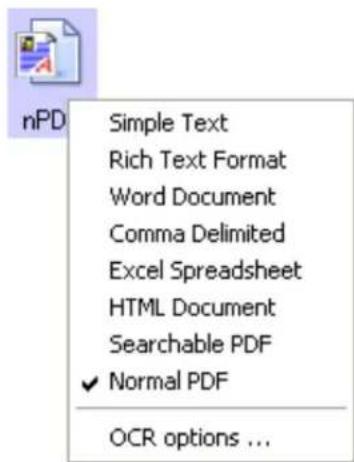
- Choose the Searchable PDF or Normal PDF option for the page format.
Note: Not all Destination Applications have the sPDF and nPDF options. Microsoft Word, for example, does not have them as scanning options.
The settings for the button (button 6 in this example) now show your page format selection.
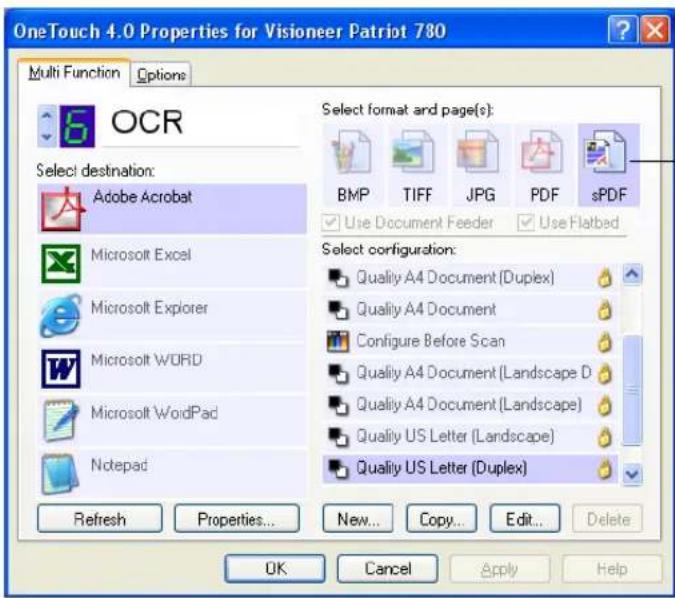
- The page format icon is now set to the selection from the menu.
-
Choose a Scan Configuration.
-
Click OK.
The OneTouch Properties window closes.
-
Now scan with that button and the scanned document will be in the sPDF or nPDF format that was selected for the button.
-
To search for the text, open Adobe Acrobat Reader or Adobe Acrobat.
-
From the Adobe Acrobat File menu choose Open. Open the file you just scanned, then from the Edit menu choose Find.
-
On the Find dialog box, enter the text to find, then click Find.
See the Adobe Acrobat user manual for more about finding text in a PDF file, or about editing PDF text.
SCAN AND BURN TO A CD
If you have a CD burner attached to your computer, you can scan directly from your scanner onto a CD. This feature is available only on computers running Windows XP.
To scan and burn to a CD:
-
Put a blank CD into your computer's CD Drive.
-
Open the OneTouch Properties window.
-
Using the arrows, choose a button to use for scanning and burning to a CD.
-
Select Burn to CD as the Destination Application.
The Burn to CD Destination Application is only available if you have a CD burner attached to your computer, but you do not need to have a CD in the burner to select the destination.
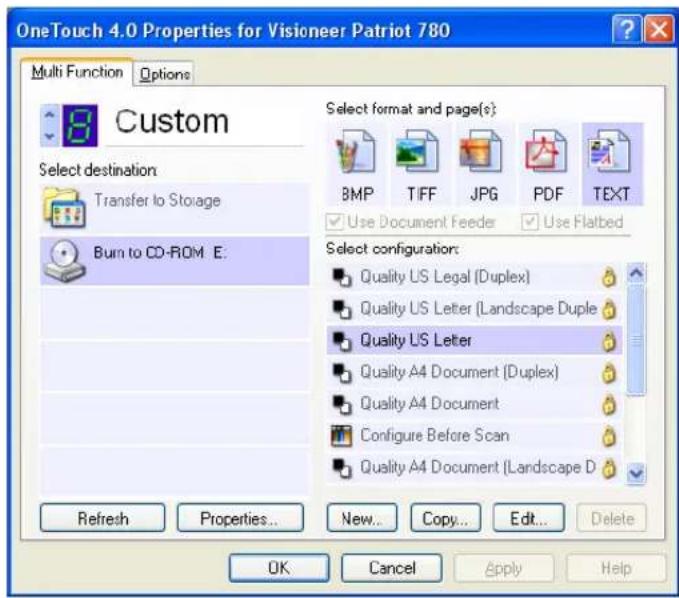
-
Choose a Page Format and a Scan Configuration.
-
Click OK.
The OneTouch Properties window closes.
- Now start scanning using the button you selected to use to scan and burn to CD.
When scanning is finished, a bubble message on the screen tells you that files are waiting to be burned to the CD.
- Open the OneTouch window and make sure that the Burn to CD Destination Application is still selected and click the Properties button.
The OneTouch 4.0 Link Properties window opens.
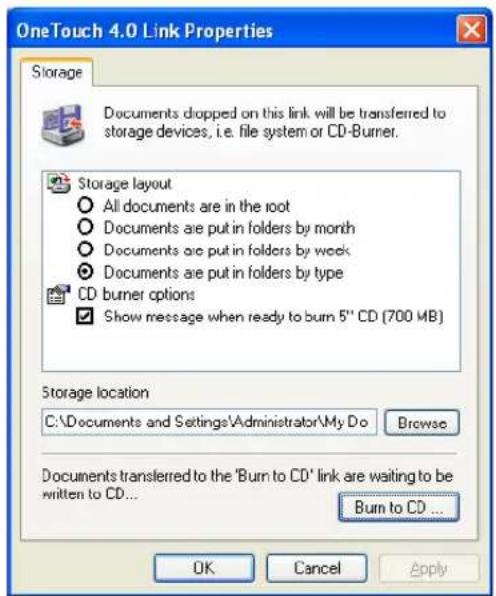
-
Make sure a CD is in the CD burner.
-
Click the Burn to CD button.
The CD burner begins and your scanned documents are written to the CD.
Note: Until you click Burn to CD these files are stored in your computer at C:\Documents and Settings\
Note: When scanning items to burn to a CD, you should always use one of the factory-set default configurations, or a custom configuration specifically set up for CD burning. The default configurations are already set up to send the scanned images to the proper storage location where the Windows XP CD writing wizard can find the files to burn to the CD. Likewise, when you create a custom configuration for CD burning, the OneTouch software will automatically make sure the storage location is correct.
To create a custom configuration for CD burning, select Burn to CD as the Destination Application, then click the New button and create the new configuration. You won't need to select a storage location because it will be correctly preset for you by the OneTouch software.
Note however, that if you have created other custom configurations with different storage locations (for example, see “Scanning to Multiple Folders” on page 70), do not use them for the Burn to CD Destination Application. Otherwise, the Windows XP CD writing wizard will not be able to find the images to burn onto the CD.
SCANNING WITH EVENT FORWARDING
If you want to specify an application to use for scanning at the start of the process, you can use event forwarding. The scanner will feed in the first page, but will then stop until you select the application to use. After you select the application, its interface will open and you can use it to continue with the scanning.
To scan with event forwarding:
-
Open the OneTouch Properties window.
-
Select Still Image Client as the Destination Application.
Note that you cannot choose a page format for this option because the actual Destination Application is not selected until after the scanner feeds in the first page of your document.
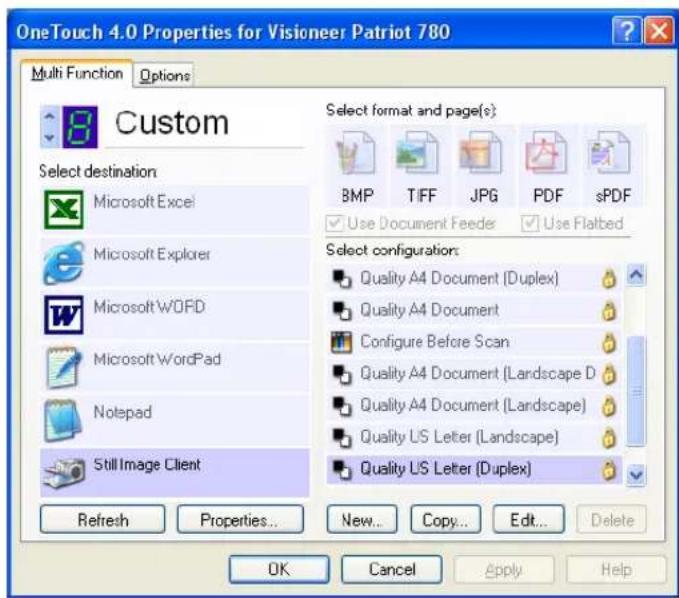
-
Choose a Scan Configuration.
-
Click OK.
The OneTouch Properties window closes.
- Start scanning using the button you selected for event forwarding.
A dialog box opens for you to select the application to use for scanning.
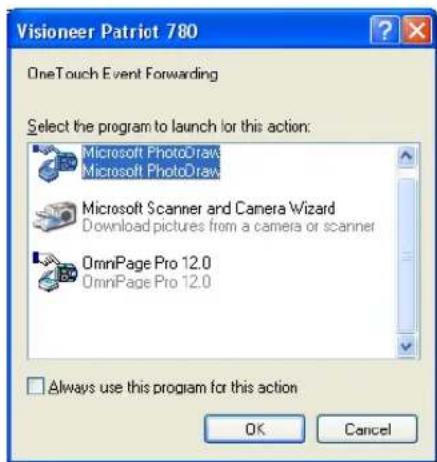
- Select the application in the box and click OK.
Now the application you selected opens and you can continue the scanning from that application's TWAIN interface.
CREATING AN HTML WEB PAGE FROM YOUR SCANNED DOCUMENTS
If you scan a document, whether a single page or multiple pages, you can have the pages converted directly to html formatted pages for posting directly to your web site. Those pages are then viewable by visitors to your web site without the need for any internet plug-ins or other special processing. This is, essentially, from your scanner to a web-ready format in one automatic step.
To scan and create an HTML web page:
- Open the OneTouch Properties window.
- Using the arrows, choose a button that has Microsoft Explorer as one of its Destination Applications, such as Button 8 (Custom).
- Select Microsoft Explorer as the Destination Application.
- Choose HTML as the Page Format.
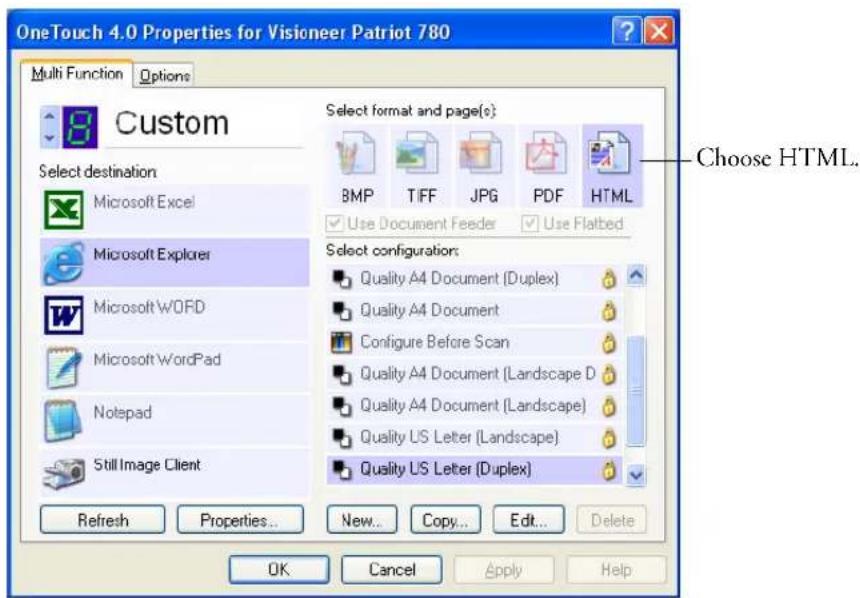
- Choose a Scan Configuration that has the settings for the image on the HTML page.
For example, if you want the image to be in color on the HTML page, choose a color configuration.
6. Click OK.
The OneTouch Properties window closes.
- Now on the OneTouch Button Panel, click Button 8 (Custom) (or if you used another button, click it).
When scanning is finished, the document is first converted to editable text using the OCR process, then is converted into an HTML format. Microsoft Internet Explorer then opens showing your converted page.
Note: Depending on the complexity of the document, its conversion to the HTML format may take a few moments.
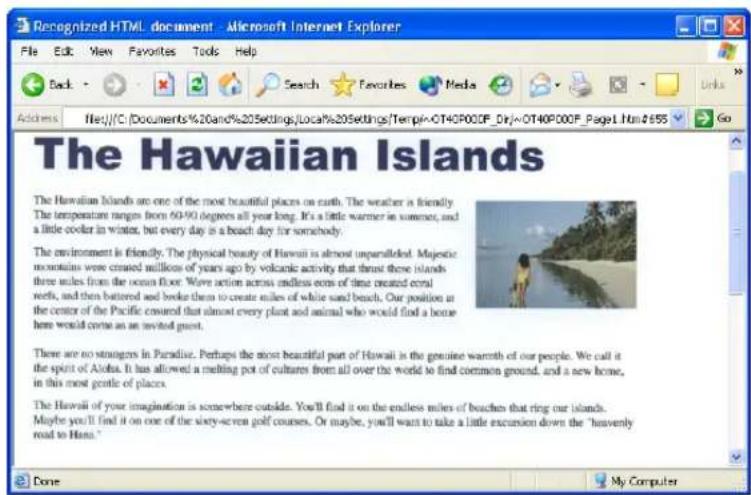
- Choose Save As from the Internet Explorer File menu, give the page a name, and save it in the location you use for your web page files.
You may also want to write down the address shown in the Address bar to make sure you'll know where to find your new HTML page later on.
- You can now use Microsoft Internet Explorer or other application to post the document to your web page as you would any other HTML page.
TRANSFERRING SCANNED DOCUMENTS TO STORAGE
With the Transfer to Storage scanning process, you can scan documents and save them in a folder in one step. The process is ideal for archiving documents without having to manually save or process them in any other way. If you choose a text format for the file format, the documents are also automatically converted by the OCR process into editable text and numbers before being stored.
Note: OneTouch Buttons 1, 2, and 7 are preset to send scanned images to a storage location on your computer. You can also set up any other button to scan a document to storage.
- On the OneTouch Panel, click the arrows to see Button 7, then click Button 7 to scan the document.
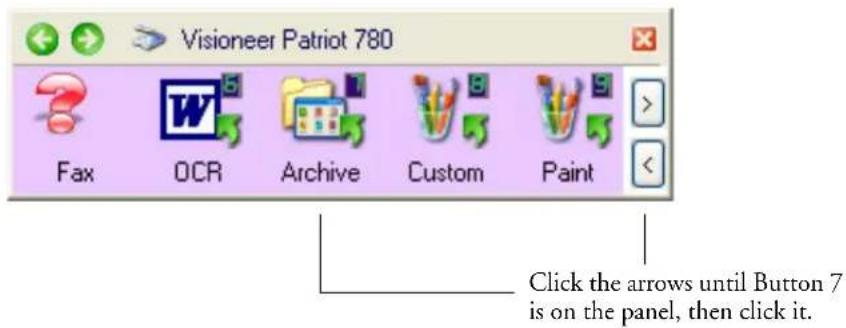
Your scanned pages are stored in the location that you specified on the OneTouch 4.0 Link Properties window.
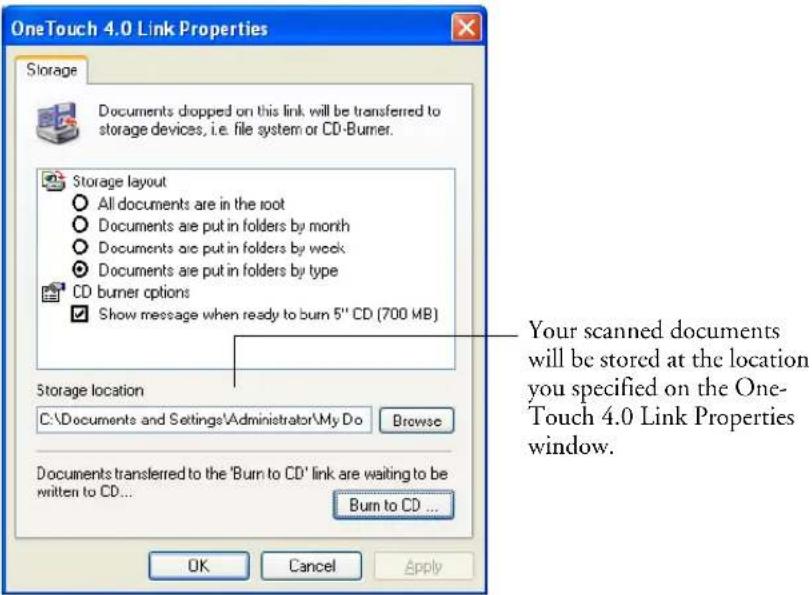
Note: The Storage Location shown in the example above is the default place where your scanned documents are stored if you haven't created any new scanning configurations or selected a new storage location. If you create a new scan configuration that has its own storage location and you use that configuration to scan, your scanned documents will be stored at the new location instead of the default. See “Scanning to Multiple Folders” on page 70.
To Use OCR Before TRANSFERRING TO STORAGE
If the documents you want to transfer to storage are text documents or spreadsheets, you can have them converted by the OCR process prior to being stored.
- Open the OneTouch Button panel.
-
Using the arrows on the right side of the panel, scroll to Button 7 (Archive) or any other scanning button set up with Transfer to Storage as one of its Destination Applications. Right-click on the scanning button to open the OneTouch Properties window.
If the OneTouch Properties window is already open, use the arrows to choose Button 7 (Archive), or any other button set up with Transfer to Storage as one of its Destination Applications. -
Choose a text format as the file format.
-
Choose a Scan Configuration.
-
Click OK.
The OneTouch Properties window closes.
- Now start scanning using Button 7 (Archive) (or other button you set up for archiving).
When scanning is finished, the documents are saved in the text file format and in the location you specified.
TO TRANSFER DOCUMENTS TO A SERVER OR MAPPED DRIVE
When selecting the storage location for scanned documents, you can select a local folder, or a folder on a server or mapped drive. You select a mapped drive using the Browse button.
- See “Scanning to Multiple Folders” on page 70 or “Transferring Scanned Documents to Storage” on page 96 for the steps to select the Transfer to Storage options.
- On either the OneTouch 4.0 Link Properties window, or from the Scan Configuration Properties window, click the Browse button.
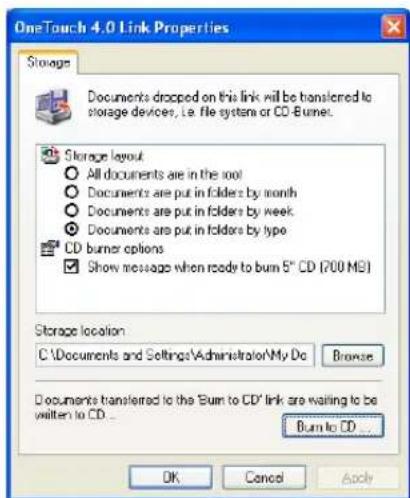
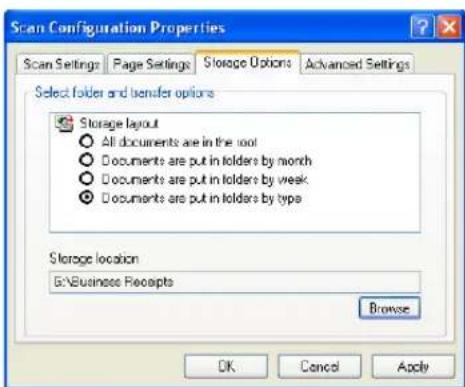
The Browse For Folder window opens.
- Select a storage location on the mapped drive or server for the scanned documents.
Servers and mapped drives are represented by an icon that indicates its network connection.
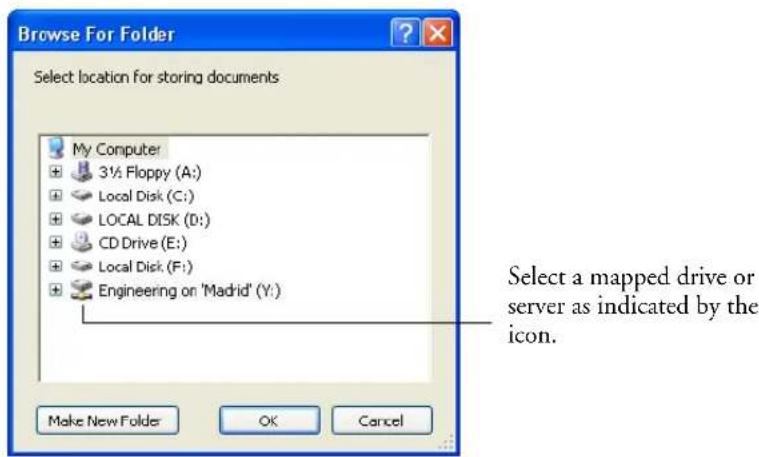
- Click OK.
Now when you scan using Transfer to Storage as the Destination Application, the documents are stored on the server or mapped drive.
CHECKING THE HARDWARE AND SETTING THE LAMP POWER SAVING
- Right-click on the OneTouch icon and choose Show Hardware from the pop-up menu.
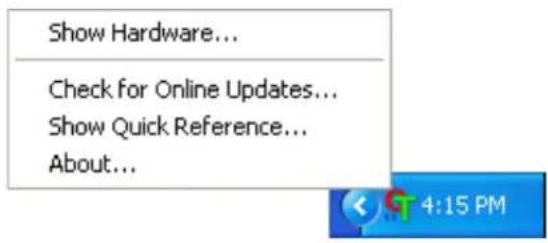
You can also click the Hardware icon at the top of the OneTouch Button Panel.
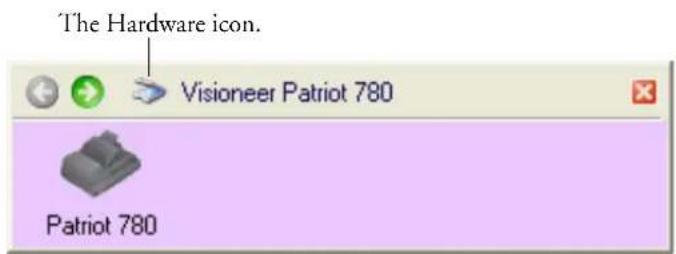
If the Hardware View of the panel is open you can also right-click on the Patriot 780 icon.
The Hardware Properties dialog box opens and shows information about your Visioneer Patriot 780 scanner.
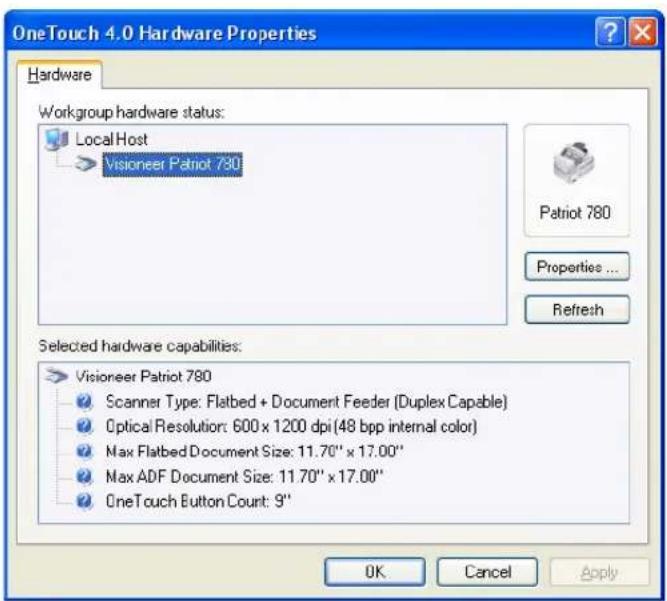
- Click the Properties button.
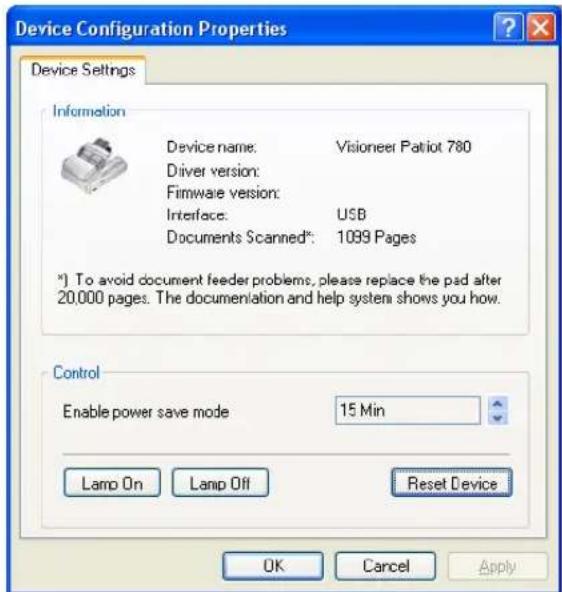
Your scanner has a built-in power saving feature that is set to power down after 15 minutes of idle time. You can change the time before the scanner powers down, from 1 minute to a maximum of 10 hours.
- Click the arrows for the Lamp timeout setting and choose a time setting.
To turn the lamp on and off manually without turning off power to the scanner, click the Lamp On or Lamp Off buttons.
To return the scanner to its factory settings, click Reset Device.
- Click OK to save the changes and close the dialog box.
Scanning with the TWAIN Interface
In addition to using the OneTouch Button Panel to scan, you can also scan using the TWAIN interface. Many applications can use TWAIN for scanning.
A Note About Your Scanner and the TWAIN standard: TWAIN is a widely recognized procedure that computers use to receive images from scanners, digital cameras, and other digital devices. Because the TWAIN interface is essentially the same regardless of the software you use to open it, you can still use the instructions in this User's Guide for scanning with your Visioner Patriot 780 scanner. The steps below show the basic process to open the TWAIN interface, but to open it in specific software applications please refer to their user's guides, then return to this User's Guide for the steps to scan.
Note: If the OneTouch configuration you are using to scan is set to Configure Before Scan, and the selected option is TWAIN, the TWAIN interface opens right away. You don't need to open it from another application as explained in the following steps.
THE BASIC STEPS TO OPEN THE TWAIN INTERFACE
Each TWAIN-compliant software application has its own specific steps to open the TWAIN interface, but the basic process is the same for most of them.
To scan with the TWAIN Interface:
- Open an application that is TWAIN-compliant.
Applications that are TWAIN-compliant include Microsoft PowerPoint and Microsoft Word, and many other graphics applications and word processing applications.
- Use the application's command that opens the TWAIN interface.
For example, in Microsoft PowerPoint, from the Insert menu, choose Picture then choose From Scanner or Camera. Click the drop-down menu and choose Visioneer Patriot 780. Then click Custom Insert. Note that your scanner may be listed twice. One listing is for choosing TWAIN Interface, the other is usually for choosing the WIA Interface. See “Scanning with the WIA Interface” on page 123 to scan from WIA.
Other applications have steps similar to PowerPoint's.
- The TWAIN Interface will open. If you've already scanned using TWAIN, the interface that opens is the one you used previously to scan.
Please refer to an application's user guide for the appropriate steps to open the TWAIN Interface for your scanner.
THE TWO TWAIN INTERFACE OPTIONS
When scanning with TWAIN, you have two interface options:
■ Basic Interface—Use the Basic Interface if you don't need to make many adjustments to the image before scanning. You can adjust brightness, contrast, resolution, page size, and picture type. You can also choose to scan from the ADF or Flatbed. See “Scanning from the TWAIN Basic Interface” on page 107.
■ Advanced Interface—The Advanced Interface includes all the settings of the Basic Interface, plus a wide range of more advanced settings, such as color saturation, gamma, and hue. See “Scanning from the TWAIN Advanced Interface” on page 109.
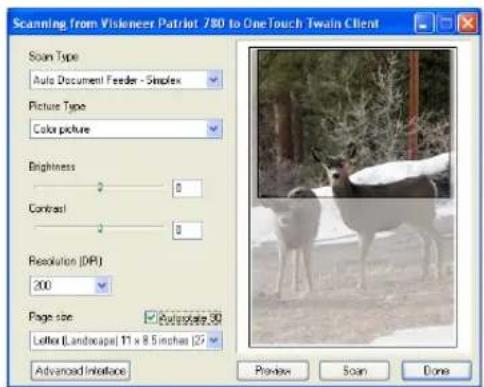
The Basic Interface has the settings for scanning typical documents.
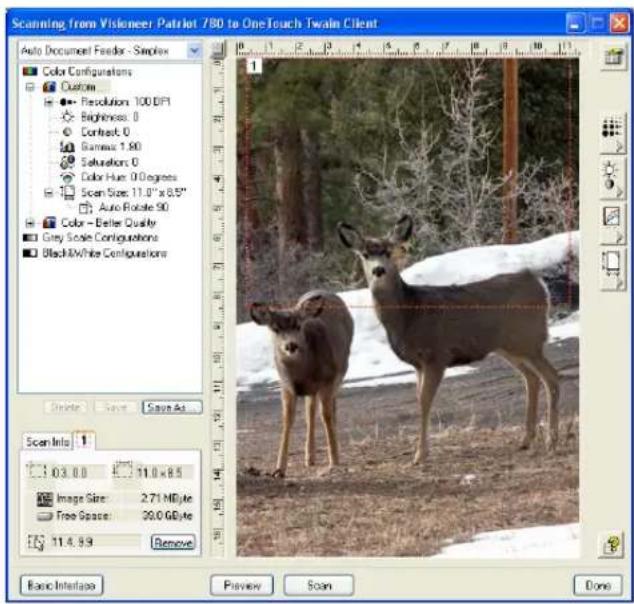
The Advanced Interface has all the scan settings of the Basic Interface, plus a range of additional settings for more advanced image adjustment.
Basic Interface
Advanced Interface
To switch between the Basic and Advanced Interfaces, click the Basic Interface or Advanced Interface button.
SCANNING FROM THE TWAIN BASIC INTERFACE
The Basic Interface can scan a preview of the image so you can adjust its appearance before scanning the final image. After adjusting the appearance, you click the Scan button on the Basic Interface to scan.
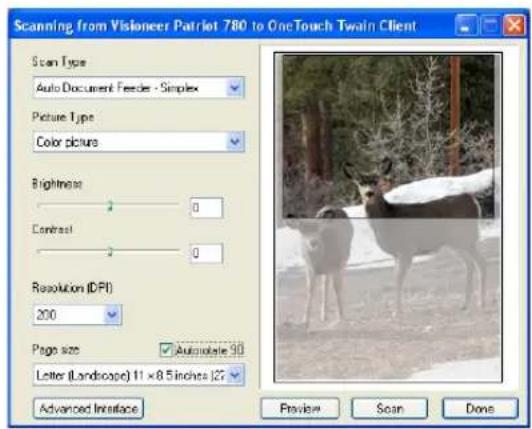
Click the Advanced Interface button if you would rather scan with the Advanced Interface.
To scan from the Basic Interface:
- From the Scan Type menu, choose the option to scan:
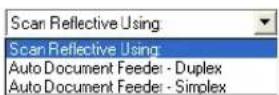
■ Auto Document Feeder-Duplex—Scans two-sided documents from the Automatic Document Feeder.
■ Auto Document Feeder-Simplex—Scans one-sided documents from the Automatic Document Feeder.
■ Scan Reflective Using—Scans the document on the Flatbed.
- Choose the color, grayscale, or black and white option from the Picture Type menu.
Note: If you want to preview the document before scanning from the ADF, make sure only one page is loaded into the scanner.
-
Choose a resolution from the Resolution menu.
-
Choose a page size from the Page Size menu. Note that the menu contains page sizes for the landscape orientation.
-
If you want the final scan to be rotated 90^ , click the Autorotate 90 option.
Typically you use Autorotate 90 so you can select any of the page sizes from the Page Size menu but scan in landscape orientation instead of portrait.
- Click the Preview button.
The scanner scans the item and displays a preview image. If you selected the Autorotate 90 option, the preview image is not rotated until the final scan is completed.
You can now use the options on the Basic Interface to adjust the image.
Note: If you want to preview a stack of pages, use one of the pages as a test page and load it into the scanner. Click the Preview button and adjust the scanner settings. Then replace the page on the stack at its original position and load the stack into the scanner. Then just click the Scan button.
- Adjust the Brightness, Contrast, and Resolution until the picture is what you want. You can also change the picture type again, for example, from color to grayscale.
- When you are satisfied with the preview image, remember to place the document into the ADF again if you're scanning a stack of pages. Click Scan.
- When you're finished scanning items, click Done to close the Basic Interface.
- The scanned images will appear in the TWAIN application you're using.
Preview
SCANNING FROM THE TWAIN ADVANCED INTERFACE
The Advanced Interface has a wide range of image adjustments for scanning.
-
Open the TWAIN Interface from a TWAIN-compliant application.
-
If the Basic Interface opens, click the Advanced Interface button. The Advanced Interface opens.
Advanced Interface
Choose from this menu to scan from the ADF Simplex (one-sided), Duplex (two-sided), or Reflective (from the Flatbed).
Click an icon to select a configuration—Color, Grey Scale, or Black&White. Clicking the “+” sign in front of Custom shows Custom’s scan settings.
Click a setting in the list to — change it. The setting's options appear on the right side of the Advanced Interface where you can make changes if necessary.
Check the Scan Info to make sure your computer has sufficient space for the image. Warning icons on this box appear if your computer does not have enough space for the scanned image's file. If you don't need all the — features of the Advanced Interface, click Basic Interface to return to it.
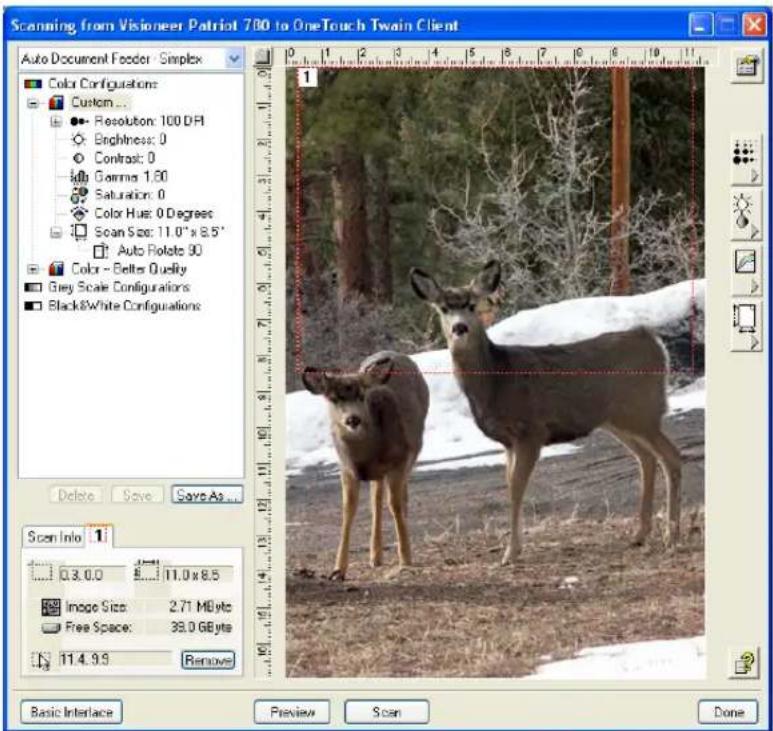
Click Preview to view the image in the window.
When you are satisfied with the scan settings, click Scan.
Click Done to close the Advanced Interface.
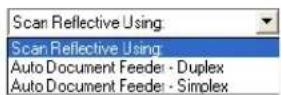
- From the Scan Type menu, choose the option to scan:
■ Auto Document Feeder-Duplex—Scans two-sided documents from the Automatic Document Feeder.
■ Auto Document Feeder-Simplex—Scans one-sided documents from the Automatic Document Feeder.
■ Scan Reflective Using—Scans the document on the Flatbed.
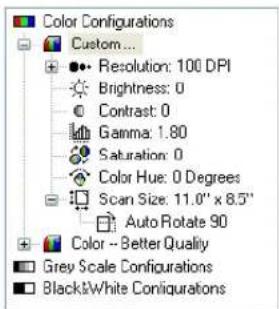
- Click one of the icons to select a configuration.
For example, select Color Configurations and then select Custom to scan a color item with the preset Custom scan settings.
The configuration settings appear as a list. Click the + (plus) sign to see the full list. Click the - (minus) sign to collapse the list.
■ Color scans the image in full color. Use this setting to scan color photographs and other color images. The file size is the largest of the image type options.
■ Grey Scale scans the image using up to 256 true shades of gray. Use this setting to scan black and white photographs and other higher quality black and white images. You can also scan a color photo with this setting to turn its colors into gray shades. The file size is about one third the size of a color scan.
■ Black&White is for letters, memos, pen and ink drawings, and other black and white material. This setting produces the smallest file size for scanned items.
- Click the Preview button to preview the image before scanning.
Note that if the Autorotate 90 option is selected, the preview image is not rotated. It will be rotated when the scan is final.
-
Review the image to determine if adjustments are needed.
-
To adjust a setting, click the setting in the list on the left below the selected configuration.
A panel opens on the right side of the Advanced Interface for the selected setting. Select new options on that panel. See “Adjusting the Image with the Advanced Interface” on page 112 for details about changing scan settings.
-
(optional) To preview the image again, put the document back into the scanner Automatic Document Feeder if you're scanning from it, and click the Preview button again. Readjust the settings if necessary.
-
When you're satisfied with the image, load all the documents into the ADF Input Tray and click the Scan button.
A scan progress window opens. To Cancel scanning while it is in progress, click the Cancel button on the progress window.
-
When you're finished scanning items, click Done to close the Advanced Interface.
-
The scanned images will appear in the TWAIN application you're using.
ADJUSTING THE IMAGE WITH THE ADVANCED INTERFACE
You can adjust the scan settings on the Advanced Interface to produce the best possible image for the documents you're scanning.
To adjust a setting:
-
On the left side of the Advanced Interface, select a configuration, for example, Color Configurations.
-
Click a setting in the list of settings, or click its corresponding button on the right side of the Advanced Interface.
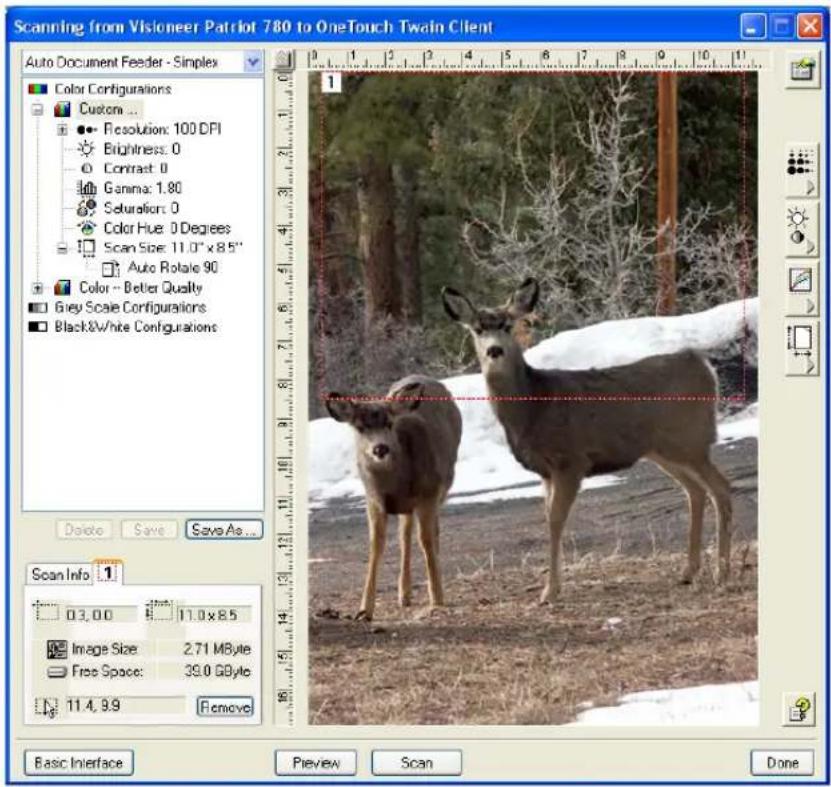
—Resolution —Brightness/Contrast —Color (Gamma, Saturation, and Hue) —Scan Size
Note: The list of scan settings for a configuration applies only to that type of configuration. For example, the Black&White Configuration does not have a setting for adjusting the Color Hue.
The following figure shows an example of the Advanced Interface if you click the Scan Size setting in the list, or click the Scan Size button.
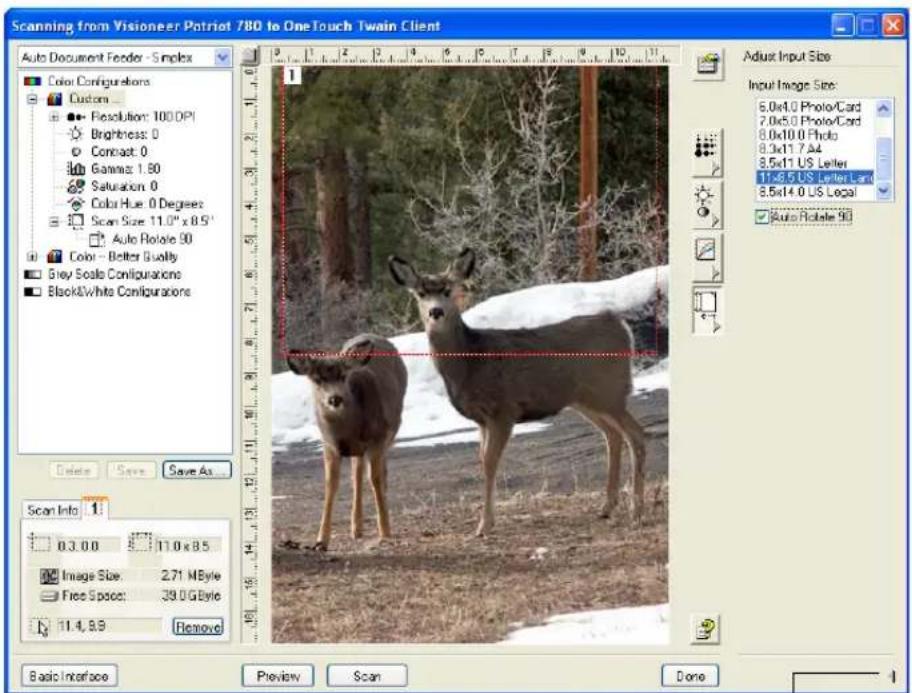
Click to close the settings panel
Note: The information in the scan settings list and the options you select on the various settings panels are interactive. As you change the settings on the panel, the numbers in the list on the left also change.
ADJUSTING THE RESOLUTION
Resolution determines the amount of detail you can see in the scanned image. The resolution setting for a scan is in dots-per-inch (dpi). The higher the resolution, the finer the details. However, higher dpi settings also take longer to scan and produce larger file sizes. Usually the higher resolution settings are used for precision work, such as photographs or fine artwork.
The following figure shows the resolution options.
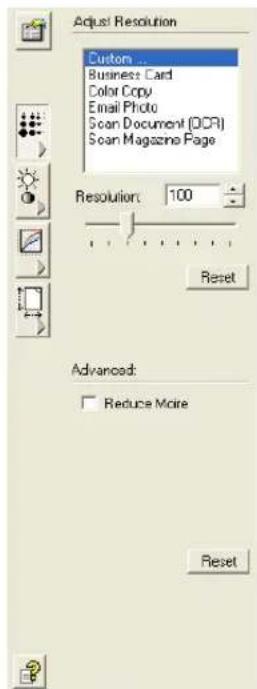
Note: The location of various buttons on the panels may be slightly different on your Advanced Interface window. The appearance of the window depends on your computer monitor's screen resolution.
To adjust the resolution:
- To use one of the preset resolutions for typical scanned items, click one of the options in the list.
For example, to set the resolution for scanning a business card, select Business Card. That setting is preset to read small print on a typical business card.
- To set the resolution manually, drag the Resolution slider to the left to decrease the resolution or to the right to increase it.
You can also type a number directly into the resolution setting box, or click the up and down arrows to increase or decrease the setting. The resolution settings on your Visioneer Patriot 780 scanner range from 50 dpi to 600 dpi.
- Click Reset to return the resolution to its original setting.
The resolution panel also includes an advanced setting for Moire patterns. Moire patterns are wavy, rippled lines that sometimes appear on the scanned images of photographs or illustrations, particularly newspaper and magazine illustrations. To scan the image and limit or eliminate moire patterns, select the Reduce Moire option. This option is only available from 50 to 300 dpi.
ADJUSTING THE BRIGHTNESS AND CONTRAST
Sometimes an item is scanned with the brightness and contrast set to be too light or too dark. For example, a note written with a light pencil may need to be scanned darker to improve legibility.
The following figure shows the brightness and contrast options. Contrast is only available for Color and Gray Scale configurations.
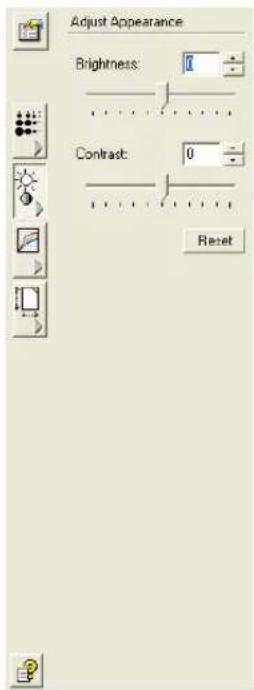
To adjust the brightness and contrast:
-
Drag the Brightness slider to the left to make the item darker or to the right to make the item lighter.
-
Drag the Contrast slider to the left to decrease the contrast or to the right to increase the contrast.
You can also type a number directly into the brightness or contrast setting boxes, or click the up and down arrows next to the box to increase or decrease the setting.
- Click Reset to return the settings to their original numbers
ADJUSTING GAMMA, SATURATION, AND COLOR HUE
If you're using the Color Configuration to scan, you can adjust a group of color settings. Gamma controls the brightness of the color midtones. Saturation is the strength or purity of a color and hue is the color your eyes see as reflected from the image.
The following figure shows the color options.
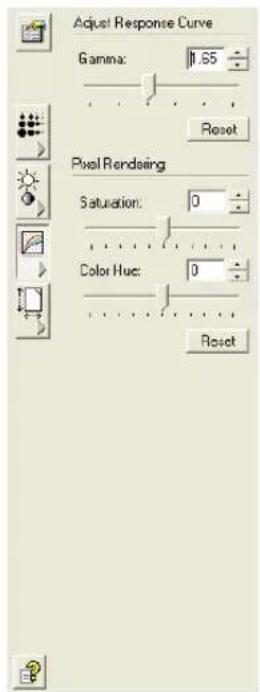
To adjust the color settings:
- Drag the Gamma, Saturation, and Color Hue sliders to the left to decrease the settings or to the right to increase the settings.
You can also type a number directly into the setting boxes, or click the up and down arrows next to the boxes.
- Click Reset to return the settings to their original numbers.
ADJUSTING INPUT SIZE
You can scan documents up to 11.7" x 17" with the Automatic Document Feeder, and up to 11.69" x 16.53" (A3 paper) on the Flatbed Glass, but you can also select other scan sizes, or adjust the input size to scan only specific sections of an image. For example, if you're scanning a photograph and want to focus on one section, adjusting the input size removes the rest of the photograph from the final scanned image.
The following figure shows the input size options.
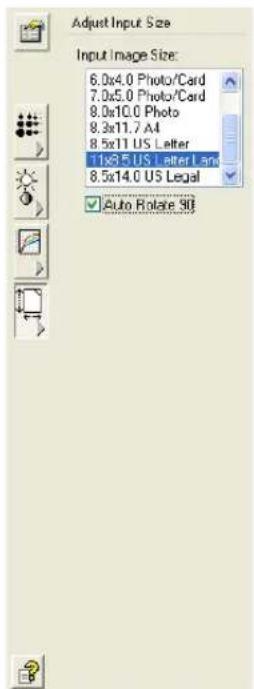
To set the image size:
- Select the image size from the Input Image Size menu.
Note that the menu has sizes for landscape orientation. Sizes not identified as landscape are portrait orientation.
- If you want the final scan to be rotated 90^ , click the Autorotate 90 option.
Typically you use Autorotate 90 so you can select any of the page sizes from the Input Image Size menu but scan in landscape orientation instead of portrait.
On the image example, a dotted outline shows the selected size.
The following figure shows an example of a manually selected area.
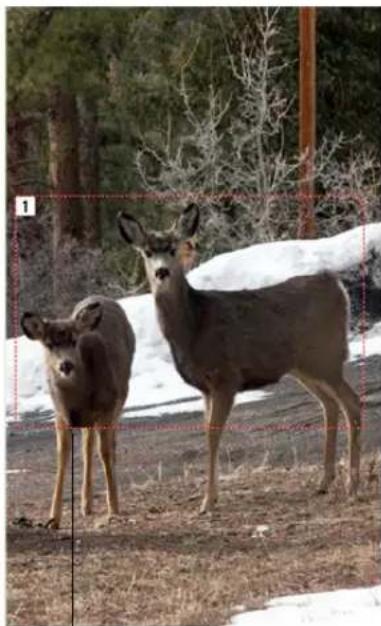
natural_image
Two deer standing in a snowy forest with bare trees and a utility pole (no visible text or symbols)This is the image that appears when scanning is finished.

natural_image
Two deer standing in a snowy forest setting (no visible text or symbols)The selected scan area.
You can now move or resize the outline to select the specific area you want to scan.
-
To move the dotted outline, put the pointer in the selected area and drag the mouse.
-
To resize the area, put the pointer on a dotted line and drag it.
As you drag a dotted line, the menu selection for the image size changes to Custom to indicate you are customizing the size.
The Scan Info box on the lower left portion of the Advanced Interface shows the information for the new area.
- If the dotted line is not exactly where you want it, put the pointer on the line and drag the mouse.
- If you want to remove the selected area and start over, click Remove on the Scan Info box.
Note: Clicking Remove causes the entire image area to be selected.
THE RULER UNITS
The ruler around the edges of the image help you precisely position a custom sized image. You can change the ruler units to suit the type of measurements you want.
To set the ruler units:
Click the Ruler Units button.
The ruler units across the top and down the side of the window cycle through centimeters, inches, and pixels.
THE SCAN INFO BOX
The following figure shows the information on the Scan Info box.
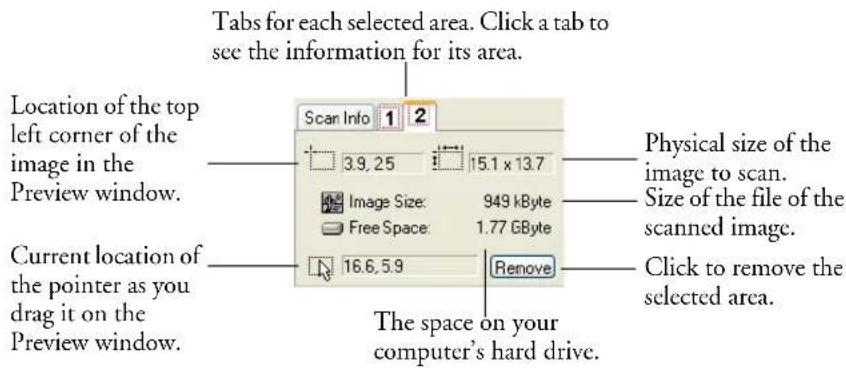
CREATING A NEW ADVANCED INTERFACE PROFILE
You cannot change the settings of the preset profiles in the Advanced Interface. However, you can create new profiles and save them for future use.
To create a new profile:
- On the Advanced Interface, select one of the preset profiles, for example, Black&White Configurations/Custom.
- Adjust the settings as required and then click the Save As button. The Save Profile dialog box opens.
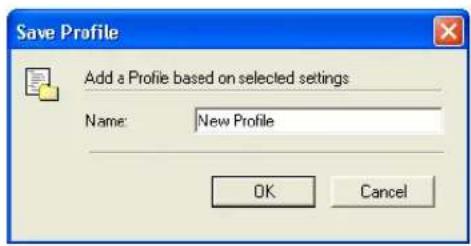
- Type a name for the new profile and click OK. The name must be at least two characters long. Your new profile is added to the configuration list.
To change or delete a profile you created:
- Select your profile from the configuration list.
- Make changes to the profile as needed, and then click Save.
- If you want to delete the selected profile, click Delete.
DISPLAY THE DEVICE CONFIGURATION

- Click the Device Configuration button on the Advanced Interface.
The Device configuration window opens and shows the information about your scanner.
See the section “Checking the Hardware and Setting the Lamp Power Saving” on page 101 for more information about the device settings.
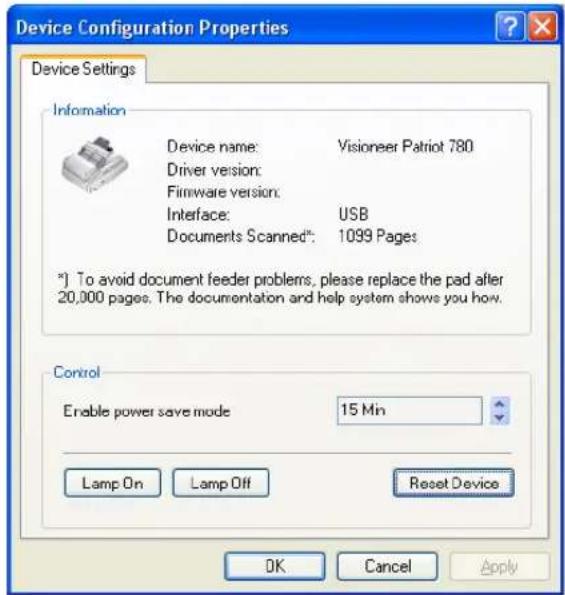
Scanning with the WIA Interface
Microsoft Windows XP includes its own scanning interface—known as Windows Image Acquisition (WIA)—for acquiring images from scanners, digital cameras, and other digital devices.
This section shows how to use Microsoft Paint to scan using the WIA interface, but you can use other Windows applications as well.
Note: Scanning with the Windows Image Acquisition (WIA) is only available if your computer is running Windows XP.
Note: Duplex (two-sided) scanning is not available from WIA.
To scan using WIA from Microsoft Paint:
- On the Windows taskbar, click Start, point to All Programs, point to Accessories, and then click Paint.
The Paint window opens.
2. From the File menu choose From Scanner or Camera.
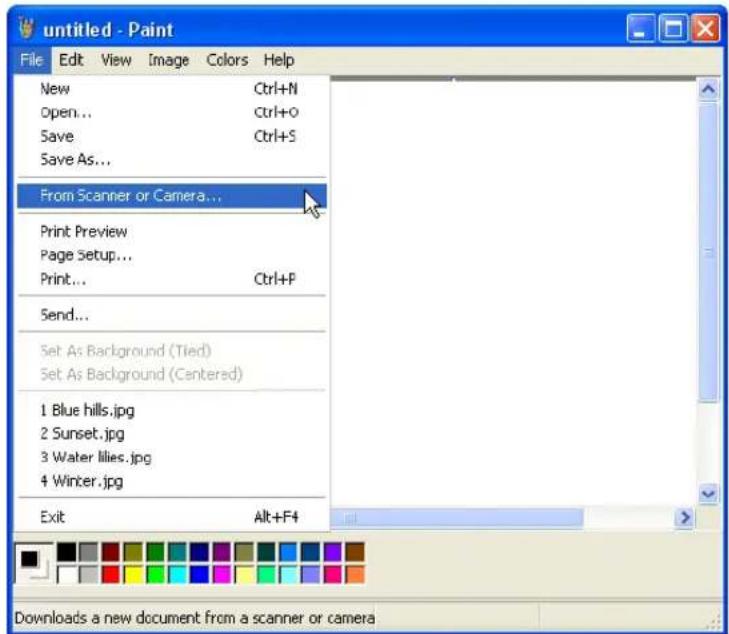
The Scan using Visioneer Patriot 780 window opens. Use this window to select scanning options and start the scan process.
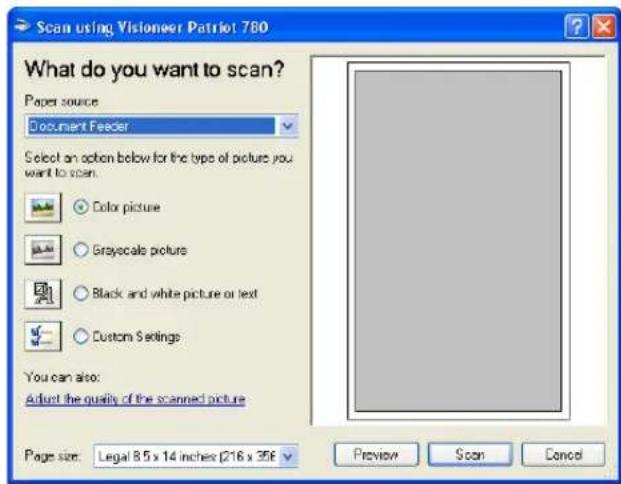
-
From the Paper Source drop-down list, choose Document Feeder to scan from the Automatic Document Feeder, or Flatbed to scan a from the Flatbed glass.
-
If you're scanning from the Automatic Document Feeder, select a paper size from the Page Size list.
If you're scanning from the Flatbed glass, you can change the size of the scanned image after seeing a preview.
- Click Preview to preview the image before scanning.
The image is displayed on the right side of the window.
Note: If you preview when scanning a stack of documents, the first page of the stack feeds through the ADF for the preview. After adjusting the scanner settings, replace that page on the stack so it is scanned with the rest of the pages.
- Adjust settings of the previewed image as desired:
■Change the button selection for the type of image.
■Adjust the custom settings; refer to the next section, “Fine Tuning Your Scans”.
If you're scanning from the Flatbed, change the size of the scanned image. To do this, click and hold the mouse pointer over one of the four sizing-boxes on the corners of the previewed image. Then drag the box to increase or decrease the size of the image.
-
Preview the image again. When you are satisfied with the image, click the Scan button.
-
The scanned images will appear in Microsoft Paint (or other WIA application you're using).
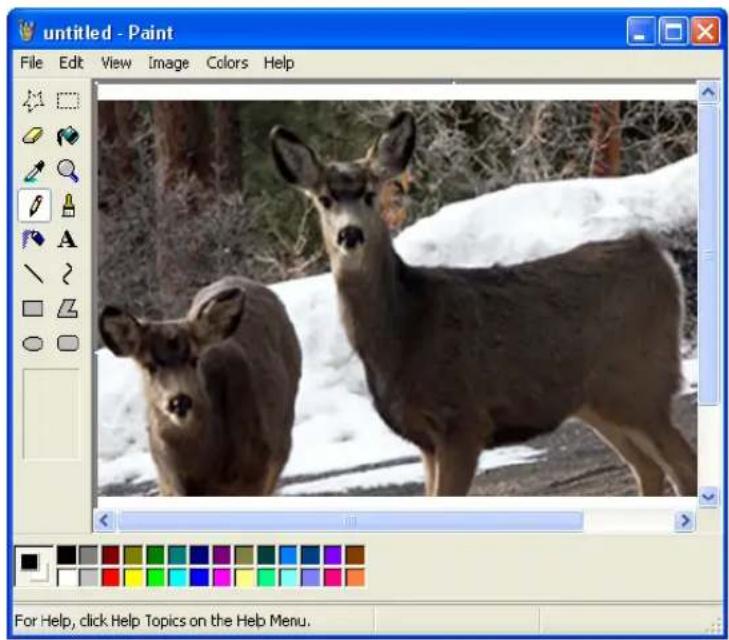
FINE TUNING YOUR SCANS
You can select new settings before you scan an item to fine tune exactly how you want to scan a particular item.
To select the scanner settings before you scan:
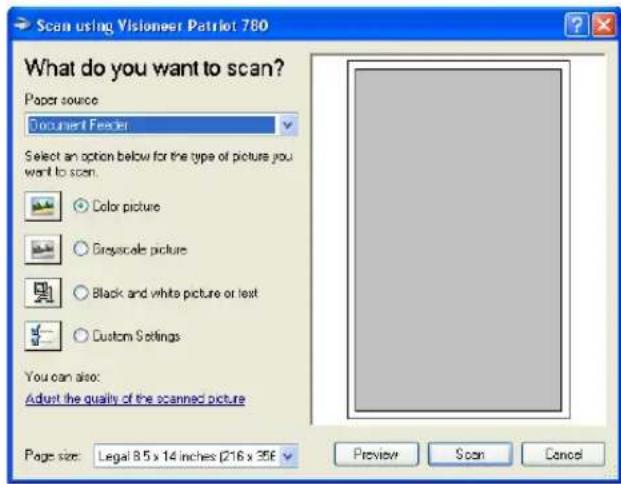
9. On the scan window, click Adjust the quality of the scanned picture.
The Advanced Properties dialog box opens.
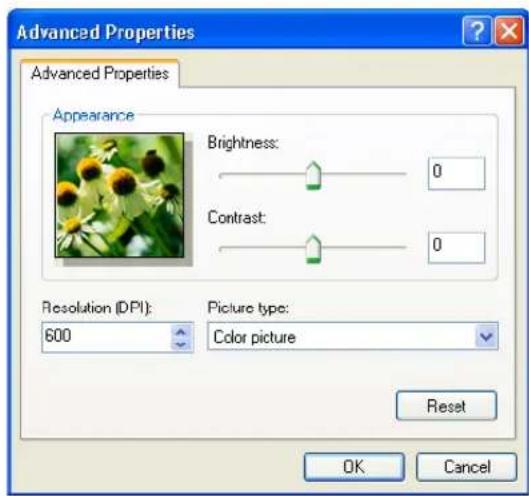
- Select the options for scanning.
Brightness and Contrast—Drag the sliders to the right or left to adjust the brightness and contrast of the scanned image. The Contrast setting does not apply to the setting Black and White picture or text.
Resolution (DPI)—Click the menu arrow and choose the dots per inch (dpi) of the resolution. The maximum resolution is 600 dpi; the minimum is 50 dpi. The higher the dpi setting, the sharper and clearer the scanned image. However, higher dpi settings take longer to scan and produce larger files for the scanned images.
Picture type—Click the menu arrow and choose the most appropriate type for the item you're scanning.
- Click OK.
The Custom Settings button is now set to scan with the options you selected.
If you want to reset the settings and start over, click Reset.
Scanning with the ISIS Interface
The ISIS interface for scanning is available from any OneTouch button that has Configure Before Scan set as the Configuration, and ISIS selected as the interface to use.
The interface is also available from ISIS scanning applications. If you are using an ISIS application to scan, please see its User's Guide for the steps to open the interface.
To open the ISIS interface from the OneTouch application, right-click on the Configure Before Scan configuration and select ISIS from the menu.
Right-click on Configure Before Scan to get the menu, and choose ISIS to use it as the interface to configure before scan.
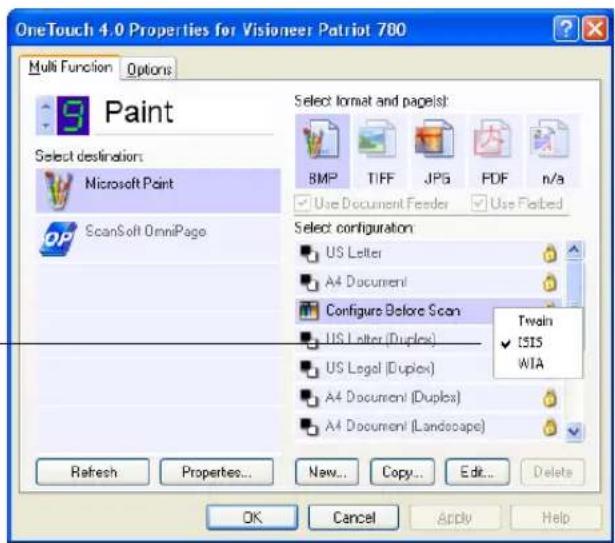
When you click the button to scan (Button 9 in this example), the OneTouch ISIS Scan window opens. Use this window to scan from either the ADF or the Flatbed, and to select scanning options then start scanning.
To scan with the Automatic Document Feeder:
- Click the Auto Feed tab at the top of the window.
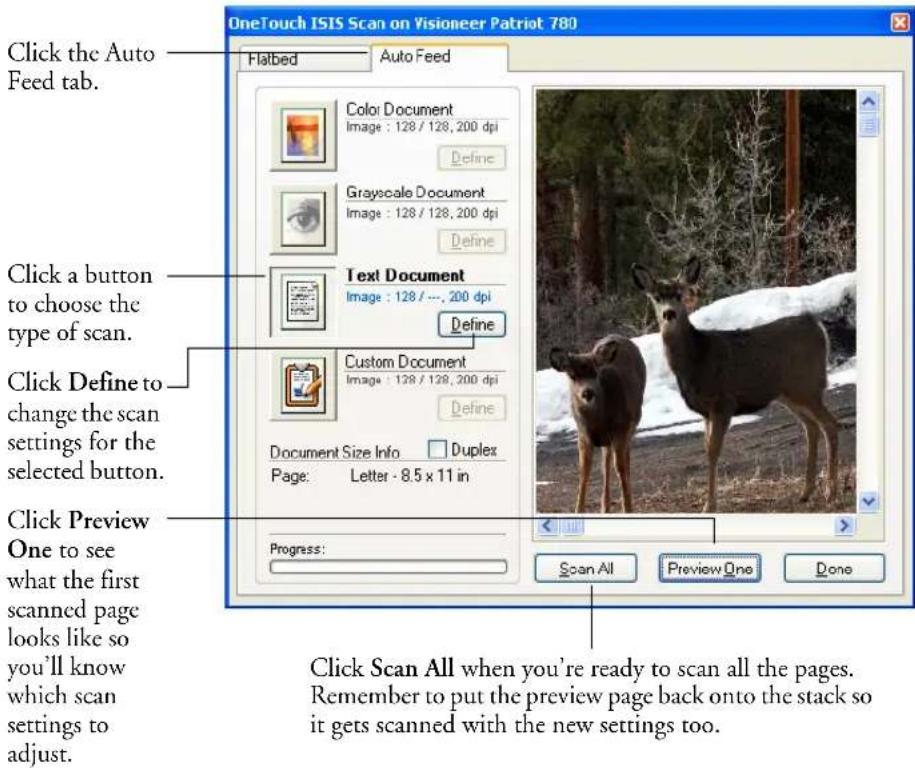
-
Click the button most appropriate for the item you're scanning.
-
Click the Duplex box to scan both sides of the documents.
-
Click Preview One to preview the image before scanning.
The image is displayed on the right side of the window.
Note: If you preview when scanning a stack of documents, the first page of the stack feeds through the ADF for the preview. After adjusting the scanner settings, replace that page on the stack so it is scanned with the rest of the pages.
- Click the Define button and adjust the scan settings, if necessary.
You can also click one of the other scan type buttons if you would rather scan with it. For example, if Color Document is selected you can click GrayScale in case you decide to scan with it instead.
- When you're ready to scan, replace the preview page in its original position in your document then click Scan All.
The document pages feed through the Automatic Document Feeder and are scanned with the new scan settings.
To scan with the Flatbed:
- Click the Flatbed tab at the top of the window.
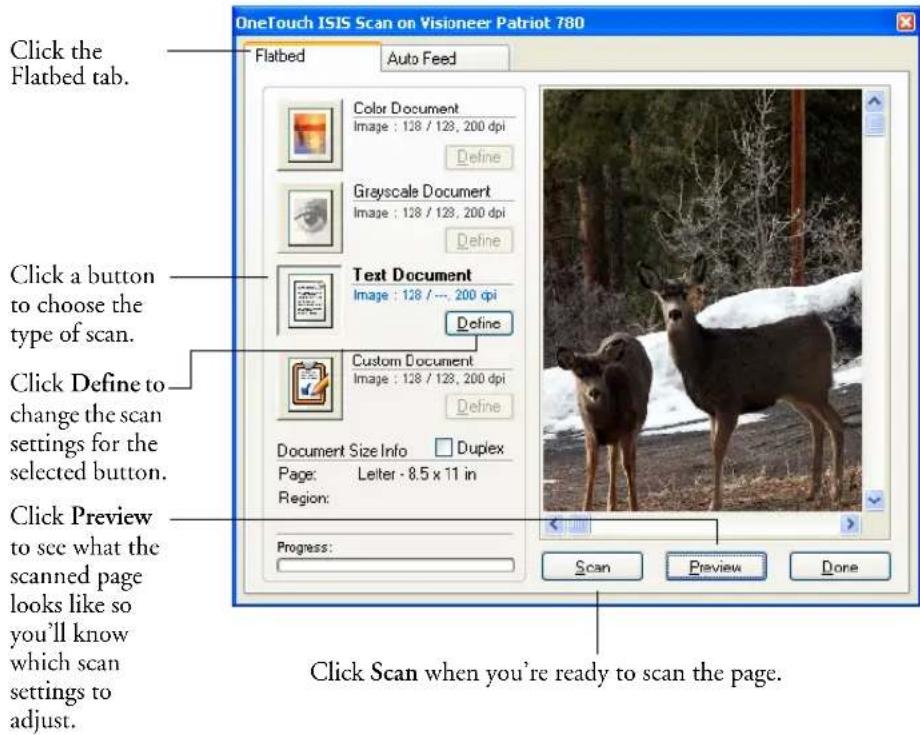
-
Click the button most appropriate for the item you're scanning.
-
Click Preview to preview the image before scanning.
The image is displayed on the right side of the window.
- Click the Define button and adjust the scan settings, if necessary.
You can also click one of the other scan type buttons if you would rather scan with it. For example, if Color Document is selected you can click GrayScale in case you decide to scan with it instead.
The Duplex option does not apply to Flatbed scanning. If you want to scan both sides of the pages, click the Auto Feed tab and scan from the ADF.
- When you're ready to scan, click Scan.
The document is scanned with the new scan settings.
ADJUSTING THE ISIS SCAN SETTINGS
You can adjust the scan settings for the selected type of scan.
Note: Options for the ISIS scan settings that are “grayed out” are not available. Grayed out options are not appropriate for your scanner.
To adjust the Color Document, GrayScale, or Text Document settings:
- Click the Color Document button, the GrayScale Document button, or the Text Document button, then click the Define button.
The dialog box on the left opens for GrayScale Document or Color Document. The dialog box on the right opens for Text Document. A Text Document scan is in Black and White.
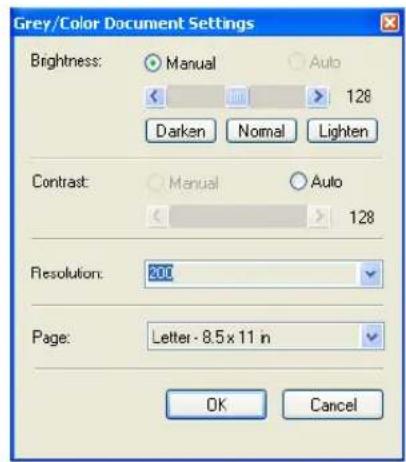
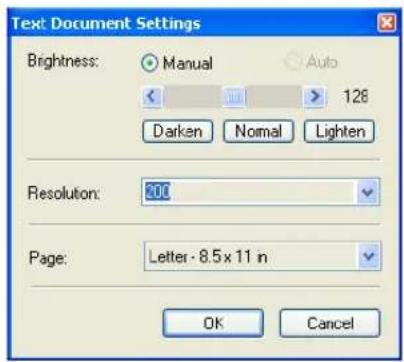
Brightness—Drag the sliders or click the arrows to the right or left to adjust the brightness one unit at a time. Click the buttons Darken, Normal, or Lighten to move the slide in larger steps.
Contrast—Contrast is set automatically for Color Document or GrayScale Document. Because the Text Document option scans in Black and White, the contrast option does not apply.
Resolution—Click the menu arrow and choose a resolution (dpi). Your scanner can scan up to 600 dpi.
Page—Click the menu arrow and choose a page size. Your scanner can scan a page up to 11.7" x 17" with the Automatic Document Feeder, and up to 11.69" x 16.53" (A3 paper) on the Flatbed Glass.
2. Click OK.
To adjust the Custom Document settings:
- Click the Custom Document button and click the Define button. The dialog box for Custom settings opens.
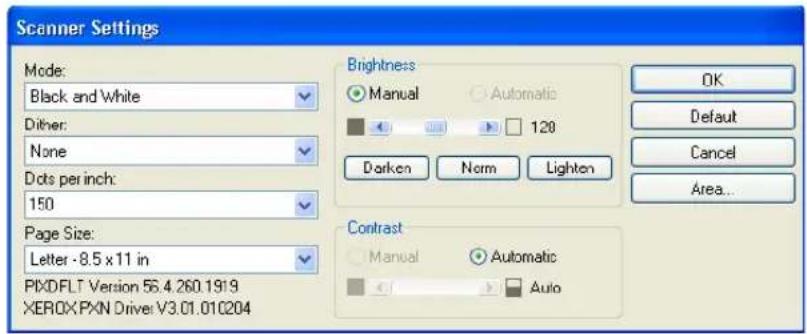
Mode—Click the arrow and choose a scan mode.
Black and White—The scanning pixels are all the same size and are either black or white. Use this setting for letters, memos, pen and ink drawings, and other black and white material. This setting produces the smallest file size for scanned items.
256-Level Gray—Scans the image using up to 256 true shades of gray. Use this setting to scan black and white photographs and other higher quality black and white images. You can also scan a color photo with this setting to turn its colors into gray shades. The file size is about one third the size of a color scan.
24-Bit Color—Scans the image in full color. Use this setting to scan color photographs and other color images. The file size is the largest of the scan mode options.
Dither—Only available if the Mode is Black and White. Click the menu arrow and choose a Halftone option or Diffusion from the list.
Halftone—Converts the image so it appears to consist of gray tones. Halftones produce simulated gray tones by using black and white pixels of different sizes and is often used to produce newspaper and magazine images. Use this setting for lower resolution black and white images. The halftone settings also produce small file sizes.
Diffusion—Also converts the image to gray tones, but diffuses the grays to nearby pixels to give the image a grainy, film-like texture. Diffusion is useful for viewing images on a black-and-white screen. The preview image shows the effect of your Dither selection so you can see which one is best for scanning.
Dots per inch—Click the menu arrow and choose a resolution (dpi). Your scanner can scan up to 600 dpi.
Page Size—Click the menu arrow and choose a page size. Your scanner can scan a page up to 11.7" x 17" with the Automatic Document Feeder, and up to 11.69" x 16.53" (A3 paper) on the Flatbed Glass.
Brightness—Drag the sliders or click the arrows to the right or left to adjust the brightness in small increments. Click the buttons Darken, Normal, or Lighten to move the slide in larger steps.
Contrast—Drag the sliders or click the arrows to the right or left to adjust the contrast. Contrast is set automatically for Black and White.
- To scan only a specific area of the image, click the Area button.
The Set Scanning Area dialog box opens.
![Set Scanning Area : [ Letter - 8.5 x 11 in ] Units in - Inches X Position: 1.706 Y Position: 3.786 Width: 5.493 Length: 3.52 Uncompressed Size: 1274K OK Cancel](/content/2026/06/1202849/images/fceba03a1e8adc573cd32e59a12bcc7c38e171c1147f6bbe86d12e6c10f6dea7.jpg)
- Click in the image and drag a rectangle around the area you want to scan.
The boxes to the left show the relative position and size of the selected area.
You can now move and resize the rectangle to adjust the specific area to scan.
- To move the rectangle, put the crosshairs cursor in it, hold down the Ctrl key and drag the mouse.
You can also type new numbers in the boxes on the left.
- To resize the rectangle, click in the Width or Length boxes and type new measurements.
To set the units of measurements, click the menu arrow for the Units box and choose the measurement units.
-
To start over with a new rectangle, click on the image and drag a new rectangle.
-
When the area is exactly what you want, click OK.
Now when you scan with the ISIS interface, only the selected area appears as an image in the Destination Application.
SCANNING FROM ISIS IN OTHER APPLICATIONS
You can also use the ISIS interface from the QuickScan software that you received with your scanner, or from other ISIS applications. Note that the ISIS interface for the other applications may vary from the descriptions provided in this User's Guide.
If you open the QuickScan software to scan directly from it, you may see the following warning message:
![Warning A driver installed on this system [C:\WINDOWS\PXTRAN\KfxScan.PXN] has not been certified by Pixel Translations. It may work, or it may cause problems including Application Errors. Click Continue to attempt to use this driver. □ Do not show this dialog for this driver again Continue](/content/2026/06/1202849/images/dd9e21aaaa9f01383d78ffe53d8efbd395207b7723b66330693f12cd18d9a31e.jpg)
- Please disregard this message and click Continue.
The ISIS drivers were installed correctly during the installation of your scanner.
The Scanner Selection dialog box will then appear.
- Select Visioneer Patriot 780 from the list of scanners and click OK.
Your scanner is then ready to work with the ISIS driver.
Maintenance
This section contains information about maintenance, troubleshooting, uninstalling, scanner specifications, and spare parts.
CLEANING THE SCANNER GLASS
Scanning items that have excessive amounts of dirt or dust may dirty the glass. To ensure the best quality scanned item, wipe the scanner glass with a soft clean cloth to rid the glass of dust or other debris.
CLEARING PAPER JAMS
If your scanner stops scanning due to a paper jam in the Automatic Document Feeder, a warning dialog box opens after a few moments.
To clear a paper jam:
-
Press the ADF cover release on the scanner body to open the Automatic Document Feeder cover.
-
Remove the jammed paper and close the cover.
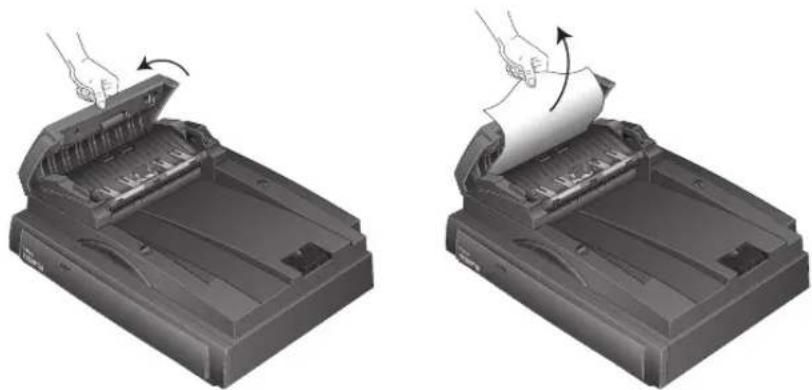
natural_image
Two-step illustration showing a hand pressing down an open drawer into a paper holder, with the other holding a sheet of paper (no text or symbols present)To reduce the number of paper jams, smooth and straighten the paper before scanning and adjust the guides to the paper size.
CARE AND MAINTENANCE
Regular maintenance of your scanner can help to ensure continual optimal performance.
CLEANING THE AUTOMATIC DOCUMENT FEEDER
You may need to clean the ADF feed mechanism if your documents do not feed easily into the ADF, or several feed in at the same time.
To clean the ADF:
- Wet a soft cloth with some Isopropyl rubbing alcohol (95%).
- Press the ADF cover release to open the ADF cover.
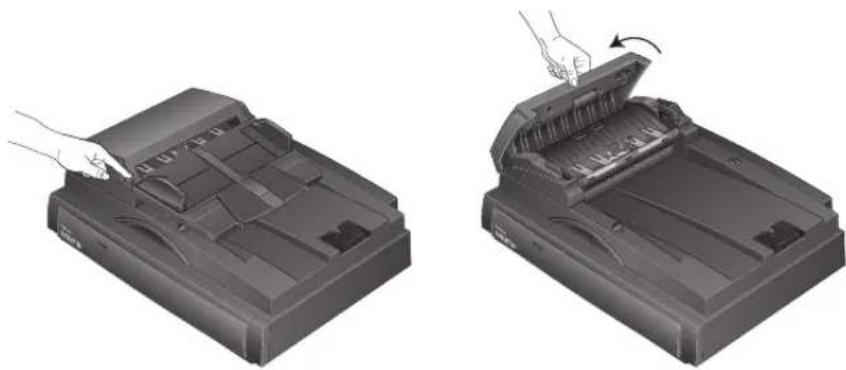
natural_image
Two 3D illustrations of a printer holder with hand gestures, showing internal structure and open lid (no text or symbols)- Wipe the feed roller from side to side. Rotate the roller to clean its entire surface.
Note: Please be careful when cleaning the roller. The roller is designed to rotate in one direction only. As you're cleaning the roller, make sure it rotates easily, and continue rotating it in that direction while wiping it clean. Do NOT force the roller to rotate in the opposite direction. Forcing the roller to rotate will damage it, and may cause the scanner to feed pages incorrectly.
- Wipe the ADF pad from top to bottom. Be careful not to snag the cloth on the springs on either side of the pad.
- Close the cover when you're finished.
REPLACING THE ADF PAD ASSEMBLY
The ADF pad will wear out and is designed to be a user-replaceable part. Problems with documents feeding into the ADF is an indication that the pad is wearing thin.
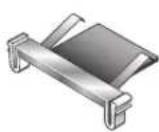
See the “Visioneer Patriot 780 Scanner Parts List” on page 148 for ordering information.
To replace the ADF Pad assembly:
- Open the ADF cover. The pad assembly is located inside the ADF.
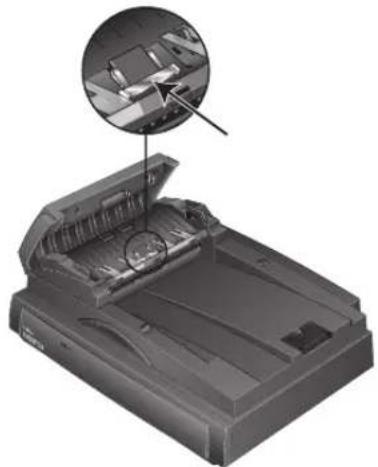
natural_image
3D rendering of a mechanical component with an inset close-up showing internal components (no text or symbols visible)- Squeeze the plastic clamps that hold the pad assembly in place and lift the pad up and out. Reverse the procedure to replace the new pad into its slots.
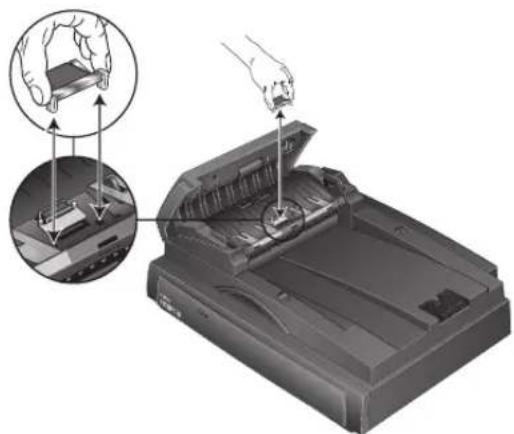
natural_image
Diagram of a printer with hand inserting a slot into the cover, showing internal components and assembly (no text or symbols)TROUBLESHOOTING
In addition to the troubleshooting information contained in this section, please see the Readme file on your installation CD. The Readme file contains additional information that may help you diagnose problems with the scanner.
If you try the troubleshooting procedures described in this section and in the Readme file, and the scanner still has problems, you may have a malfunctioning scanner. Refer to the technical support card that you received with your scanner. Also visit our web site at www.visioneer.com for additional technical information.
Problem: The scanner won't scan. What's wrong?
Check for one of these possible problems:
■ Are the cables loose or not plugged in securely? Inspect the cable connections. Make sure the cables are plugged in securely.
- Is the scanner's status light on? Turn on the scanner's power. If the status light doesn't come on, plug the power supply into another electrical outlet.
- Did you restart the computer after installing the software? If you didn't restart the computer, it may not have loaded all of the software files. Try restarting your computer.
- Did you plug the scanner into a USB hub? If you're using a USB hub to connect the scanner, the hub must have its own power supply. If the hub does not have its own power supply, plug the scanner into a USB port on the computer.
- Did you select another scanning source in the scanning application? If you use multiple devices with your computer you may have selected another source for images. Start the application and then make sure Visioneer Patriot 780 is selected as the scanner.
Problem: The installation will not complete successfully. If installation finishes, the scanner's OneTouch 4.0 options do not seem to work properly. What do I do?
A likely cause is that some driver programs are already installed on your computer for another scanner. They are interfering with the installation and OneTouch options, and you need to remove those other drivers and re-install your Visioner Patriot 780 scanner. Please see the documentation that you received with the other scanner for the steps to remove its driver programs. You can also use the basic steps in the section “Uninstalling Your Scanner” on page 145, but in Step 3, instead of uninstalling OneTouch 4.0, uninstall the other scanner’s driver programs. After uninstalling the other scanner’s driver programs, uninstall OneTouch 4.0 using the steps on page 145, then reinstall it using the steps on page 9.
Problem: The paper jams the ADF. How can I keep the paper from jamming so often?
To reduce the number of paper jams, smooth and straighten the paper before scanning, and adjust the guides to the paper size. Paper fed into the ADF at an angle can cause the feed mechanism to jam. If paper jams are occurring more frequently, try cleaning the roller with a soft cloth dampened with Isopropyl rubbing alcohol. Excessive dust on the roller can make it appear worn and will cause issues feeding paper. See “Cleaning the Automatic Document Feeder” on page 139 for cleaning instructions.
Problem: The ADF won't feed pages properly. How can I fix it?
A dirty or worn ADF pad assembly or dirt on the roller can cause documents to feed in skewed at an angle, or multiple pages to feed at the same time. Try cleaning the roller first. See “Cleaning the Automatic Document Feeder” on page 139. If that doesn’t solve the problem, the pad assembly may need to be replaced. It is user-replaceable. See “Visioneer Patriot 780 Scanner Parts List” on page 148 for the ordering number. See “Replacing the ADF Pad Assembly” on page 140 for the steps to replace the pad.
Problem: The paper jams about halfway through the scan. How can I keep this from happening?
Check the flatbed glass to make sure no items are on it when you scan from the ADF. Multiple items placed on the flatbed glass will raise the lid slightly, thus preventing the pages feeding through the ADF from touching the glass. When that occurs, the pages are unable to feed back out of the ADF and the pages can jam.
Problem: The motor runs but doesn't feed the paper. How can I fix it?
Make sure the paper is securely seated in the ADF so the paper rests on the rollers. The paper sensor that initiates the rollers to grab the paper may be engaged, but the paper may not be fully in the ADF tray so the rollers cannot grab a page to feed it through.
Problem: The scans from the ADF are always crooked. What do I need to do to get the scans straight?
Make sure to align the paper guides to the edges of the paper. If you are scanning small items that are smaller than the paper guides' minimum adjustment, scan these items on the flatbed glass instead.
Problem: If the USB cable is disconnected during a scan, the scanner does not reconnect when the USB cable is plugged back in.
Unplug the power cable from the scanner, and then plug it back in.
If the scanner does not reconnect:
- Unplug the power cable from the scanner.
- Restart your computer.
- After the restart is complete, plug the power cable back in.
ERROR LIGHT TROUBLESHOOTING CODES
NORMAL OPERATION
■ Blinking Green Ready Light: indicates the scanner is waking up from power saving and preparing to scan.
■ Steady Green Ready Light: indicates the scanner is ready to scan.
ERROR CODES
If your scanner experiences hardware problems, the green Ready Light will turn off and the amber Error Light will blink. The number of blinks indicates the type of error code.
Error Code Problem Solution
| 8, 11, or 15 | ADF Communication Error | Turn off the scanner and check the connections on the back of the scanner. Make sure the ADF Cable is securely plugged into the body of the scanner then turn the scanner back on. |
| 9 or 16 Paper Jam See “Clearing Paper Jams” on page 138. Note that after blinking the error code several times, the light then turns solid red. | ||
| 10 ADF Cover Open or ADF Communication Error | Make sure the cover is closed after clearing a paper jam. If the cover is securely closed, the ADF Cable may be loose. Turn off the scanner, make sure the ADF Cable is securely plugged into the body of the scanner, then turn the scanner back on. | |
| 12 Scanner Lock | Make sure the scanner lock is in the unlocked position before the scanner’s power is turned on. See the illustration on page 8 for the location of the lock. If the problem persists, contact Visioneer Technical Support. | |
| All Other Codes | An internal part in the scanner may have malfunctioned. | Re-boot your computer. If the problem persists, contact Visioneer Technical Support. |
UNINSTALLING YOUR SCANNER
To uninstall the Visioner Patriot 780 scanner you remove the OneTouch software.
- On the Windows taskbar, click Start, point to Settings, then click Control Panel.
- Double-click the Add or Remove Programs icon.
The Add or Remove Programs window opens.
- Select OneTouch 4.0 then click the Remove button.
- An "Add or Remove" message box opens and asks if you are sure you want to remove OneTouch 4.0 from your computer. Click Yes.
The OneTouch 4.0 software is removed from your computer.
- Unplug the scanner USB cable.
- Close all open windows and reboot (restart) your computer.
TO INSTALL ANOTHER DRIVER
Before you can install another driver for your scanner, you must remove the currently installed driver first. Then the new driver can be installed.
- Uninstall the OneTouch 4.0 driver.
a. Open the Windows Control Panel.
b. Double-click the Add or Remove Programs icon.
c. Select OneTouch 4.0 then click on the Remove button.
d. An "Add or Remove" message box opens and asks if you are sure you want to remove OneTouch 4.0 from your computer. Click Yes.
The OneTouch 4.0 software is removed from your computer.
- Unplug the scanner USB cable.
- Reboot (restart) your computer.
- Follow the instructions in "Step 2: Install the Software" on page 9 of this User Guide and follow steps for installing one of the other driver options.
VISIONEER PATRIOT 780 SCANNER SPECIFICATIONS
Optical resolution 600 x 1200 dpi
Bit depth 48-bit color (internal)
Maximum item size ADF: 11.69" x 17"; Flatbed: 11.69" x 16.53"
Minimum item size 4.0" x 6.5" (Automatic Document Feeder)
Scan method Automatic Document Feeder (ADF)
ADF specifications
Scanning Speed Up to 40 pages per minute, A4 paper
Up to 80 images per minute @ 200 dpi B&W, A4 paper
Capacity 100 sheets
Paper Thickness 16 - 28 lbs. (0.002" - 0.006")
Light source Cold cathode fluorescent lamp
Interface USB 2.0 High Speed
Scanner dimensions
Height 4.9 inches (11.5 cm)
Width 20.2 inches (51.4 cm)
Length 19.9 inches (50.5 cm)
Weight 42.4 pounds (19.2 kg)
Operating temperature 50°–104° F (5°–35° C without condensation)
Relative humidity 40%–70% (@35°C without condensation)
Power adaptor Desk-top, IEC, 3P, 100-240Vac, 2.09A, 24Vdc, 50.16W, 077-242090-I3 (YC-1050CAN1352PR), Ya Hsin Industrial Co. Ltd.; DC Cable: L=140 cm, Energy Star and RoHS compliant
Power consumption ≤ 38.3 Watts (24V/1.6A) (during operation)
≤ 27.5 Watts (24V/0.85A) (on standby, motor off, lamp on)
≤ 8.5 Watts (24V/0.38A), (power save, motor off, lamp off, after 15 minutes without scanning, can be adjusted by software)
≤ 1 Watt (power off)
Power cord AC, USA (UL/CSA), 3P, 10A/125V, L=183 cm, 3C, 18AWG, Black, RoHS compliant
USB cable 185 cm, 28AWG, with core, RoHS compliant
Safety and agency certifications UL, cUL, FCC Class A, CE, WEEE
VISIONEER PATRIOT 780 SCANNER PARTS LIST
Please use the following part names and numbers when ordering replacements for your scanner.
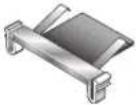 | Part Name Part Number | |
| ADF Pad assembly 57-0115-000 | ||
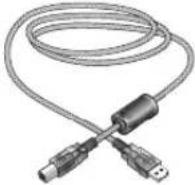 | USB cable 35-0102-000 | |
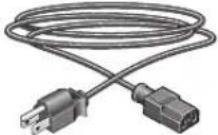 | AC power cord 35-0108-000 | |
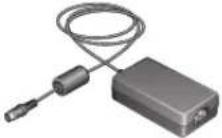 | Power supply | 37-0078-000 |
INDEX
Numerics
24-Bit Color 135
256-Level Gray 134
A
ADF
cleaning 139
ADF pad assembly
replace 140
Advanced Interface 109
adjust settings 112
new profile 121
profile 121
Advanced Properties 127
aspect ratio 67
Autocrop to Original 63
Autorotate 90 63, 65
AutoRotate image 67
B
background color 83
Basic Interface 107
bit depth 147
Black&White 62, 110, 134
blurred image 115
BMP 50
Brightness 62, 116, 128, 133
Burn to CD 46, 89
Destination Application 90
button options 56
button settings 40
C
CD-ROM drive 4
Color 62, 110
color
hue 117
options 117
Color Document 41
Color Document button 133
color filter 65
Comma Delimited 54
components 2
computer specifications 4
Configure Before Scan 76, 129
Contrast 62, 116, 128, 133
csv file format 54
D
Destination Application 36
OCR 30, 40, 79
text file format 52
Device Settings 61, 67
Diffusion 135
Disc 1 9
Dither 135
Document Format 36
Document Management 57
documentation 4
dots-per-inch 114
dpi 114, 128
E
eMail 57
eMail Properties 48
Excel Spreadsheet 54
F
Fax and Print 57
file format 53
file storage location 97
flowing page 85
Font Matching 82
Format and Page(s) 41
full feature install 12
G
gamma 66, 117
grayed out options 37, 133
GrayScale 62, 110
GrayScale Document button 133
H
Halftone 135
help 4
htm file format 54
HTML Document 54
HTML page 95
HTML Web Page 94
hue 66
|
image
blur 115
preview 111
Image Documents Properties 45
Image Editors 57
image file 50
image file format 50
image size 118
improvements and settings 63
input size 118
installation 5
invert image 65
inverted text 84
ISIS 21, 77
ISIS interface 129
J
JPG 50
JPG file size 51
K
Kofax VRS 21
L
Lamp timeout setting 103
landscape 27, 63
Languages in Document 80
Link Properties 42
locking tab 8
M
Microsoft Internet Explorer 95
Microsoft Outlook 48
Moire Patterns 64, 115
monitor 4
N
Normal PDF 54, 86
nPDF 51, 54, 86
0
OCR 11, 52
columns 85
optical character recognition 78
storage 98
tables 85
OCR Dictionary 81
OCR Options 80
OmniPage Pro 11, 45, 54, 78, 79
on/off switch 17
OneTouch Button Panel 29, 31
Button View 33
Detail View 33
Hardware View 33
initial settings 35
names 34, 55
OneTouch icon 29, 31, 33, 36
OneTouch ISIS Scan window 130
OneTouch Properties window 31, 36, 42 options 56, 60
optical character recognition 11
P
Page Format
HTML 94
page settings 63
page size 63
paper jam 138
PDF 51, 57
PDF file size 51
Picture type 128
portrait 27, 63
power saving 103
Preview button 108, 125
preview image 111
Preview One button 130, 132
R
Reject Character 81
Resolution 62, 114, 128, 133
Rich Text Format 53
rtf file format 53
ruler units 120
S
saturation 66, 117
scan
minimum size 27
Scan Configuration 36
Scan Info box 120
scan with event forwarding 92
scanner
components 2
connecting 15
locking tab 8
troubleshooting 141
Searchable PDF 54, 86
Select Configuration 38, 41
Select Destination 38, 40, 57
Select Format and Page(s) 39
setup 5
Show All Destinations 56
Show Hardware 101
Simple Text 53
size 63
skewed page 63
sPDF 11, 51, 54, 86
spreadsheet 79, 85
status light 17, 18, 141
Sti event forwarding 57
Storage and CD-R/W 57
Storage Properties 46
Straighten Image 65
system requirements 4
T
template 85
text color 83
Text Document button 133
Text Documents Properties 43
Text Editors 57
text file format 52
Text Formats 52
TIFF 50
Transfer to Storage 96
troubleshooting 141
true page 86
TWAIN 77, 93
TWAIN Interface 104
U
USB port 16
W
watermark, remove 65
WIA 77, 123
Windows Image Acquisition 123
Word Document 53
X
xls file format 54
visioneer
