
XG760A DONGLE WIFI - Wi-Fi dongle SAGEM - Free user manual and instructions
Find the device manual for free XG760A DONGLE WIFI SAGEM in PDF.


| Product Type | USB Wi-Fi Adapter (dongle) |
| Brand | SAGEM |
| Model | XG760A (SAGEM Wi-Fi 11g USB Adapter) |
| Dimensions (estimated) | 70 × 25 × 10 mm |
| Weight (estimated) | 20 g |
| Power | Via USB port (bus-powered) |
| Connectivity | Wi-Fi 802.11g, 2.4 GHz, speeds up to 54 Mbps |
| Network Modes | Infrastructure (access point) and Ad-Hoc (peer-to-peer) |
| Wireless Security | WEP 64/128 bits, WPA-PSK/TKIP |
| LED Indicator | Solid green (connected), flashing green (attempting connection) |
| Supported Operating Systems | Windows 98SE/ME/2000/XP, Mac OS X.2 and later |
| USB Interface | USB 1.1 and USB 2.0 compatible |
| Included Software | WLAN Management Utility (drivers and configuration) |
| Package Contents | USB adapter, USB cable, quick start guide, CD-ROM |
| Maintenance and Cleaning | No special maintenance. Clean with a soft, dry cloth. |
| Usage Safety | Follow connection instructions. Do not expose to moisture. |
| Spare Parts and Repairability | Not applicable (sealed product, no spare parts available). |
| General Information | Manual available for download. For support, contact the supplier. |
Frequently Asked Questions - XG760A DONGLE WIFI SAGEM
User questions about XG760A DONGLE WIFI SAGEM
0 question about this device. Answer the ones you know or ask your own.
Ask a new question about this device
Download the instructions for your Wi-Fi dongle in PDF format for free! Find your manual XG760A DONGLE WIFI - SAGEM and take your electronic device back in hand. On this page are published all the documents necessary for the use of your device. XG760A DONGLE WIFI by SAGEM.
USER MANUAL XG760A DONGLE WIFI SAGEM
This Quick Start Guide describes how to install and operate your SAGEM Wi-Fi 11g USB ADAPTER.
Please read this manual before you install the product.
Introduction
The SAGEM Wi-Fi 11g USB ADAPTER is a network adapter with a rate of 54 to 1 Mbps operating in the 2.4 GHz band implementing the IEEE 802.11g standard.
Its USB port is USB 2.0 compliant
It fully supports wireless networking under Windows 98SE/ME/2000/XP.
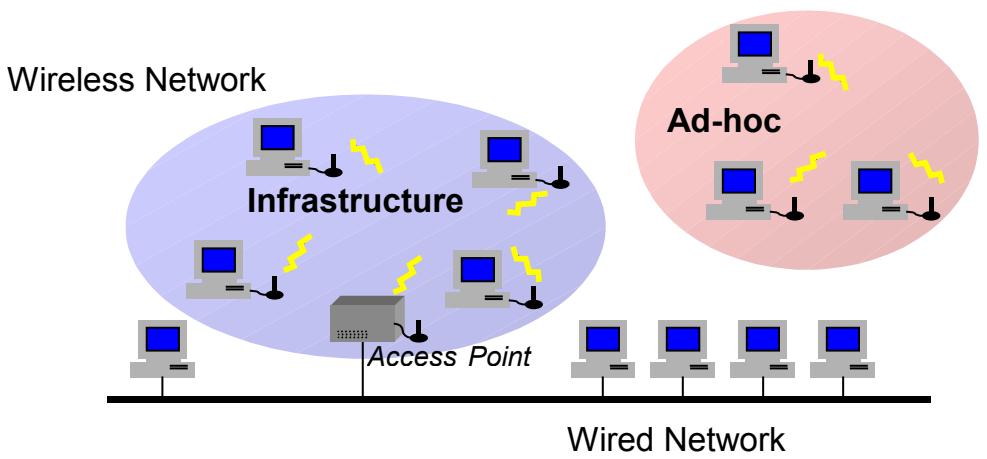
The Wireless LAN (Local Area Network) USB adapter can be operated in one of the two following networking configurations :
- Infrastructure Networking
In this mode, the radio links are coordinated by an Access Point enabling to access an existing wired network and/or enabling to access to network resources such as Internet, email, file transfer...
- Ad-hoc Networking
Also known as a peer to peer network, this mode allows wireless to wireless connection, enabling all workstations to act as servers to all others. This mode can be used to share a printer or for file transfer.
Package Content
These are the items included in the package:
One SAGEM Wi-Fi 11g USB ADAPTER
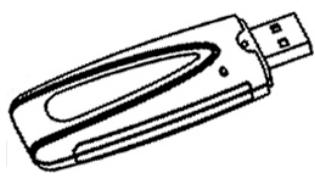
One USB Cable
One Quick Start Guide
One installation CD-ROM
Minimum System Requirements
PC or MAC Computer with an available USB port (the available USB ports on the MAC keyboard are not usable because they do not supply enough current).
Compatible with USB 1.1 port
Microsoft Windows 98 Second Edition (98SE), Windows Millennium (ME), Windows 2000 or Windows XP installed on the PC or Mac OS X.2 or higher installed on the MAC.
Installation of the Wireless LAN Software
The installation of your LAN USB adapter requires three steps:
Installation of the software
Installation of the hardware
Configuration of the wireless connection
I. Installation of your LAN USB adapter under Windows :
I.1 Installation of the software

Warning: It is necessary to install the Wireless LAN Software BEFORE to insert the USB adapter in the appropriate USB port of your computer.
The first step consists in copying on your hard disk all the necessary files for your new equipment. For that, please follow the next instructions:
-
Insert the Product CD-ROM into the CD-ROM drive of your computer.
-
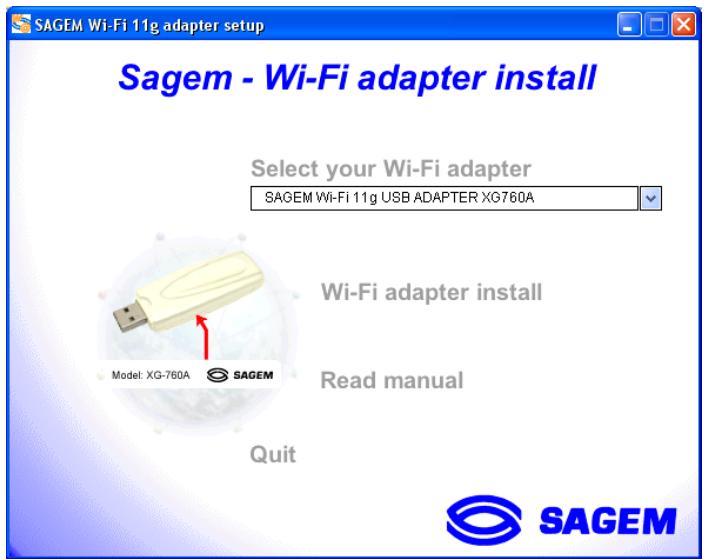
An Auto-run is automatically executed and the following screen comes up. If not, run the "Autorun.exe" on the CD-ROM
Select in the list your adapter model.
Please, read the model information directly on your equipment.
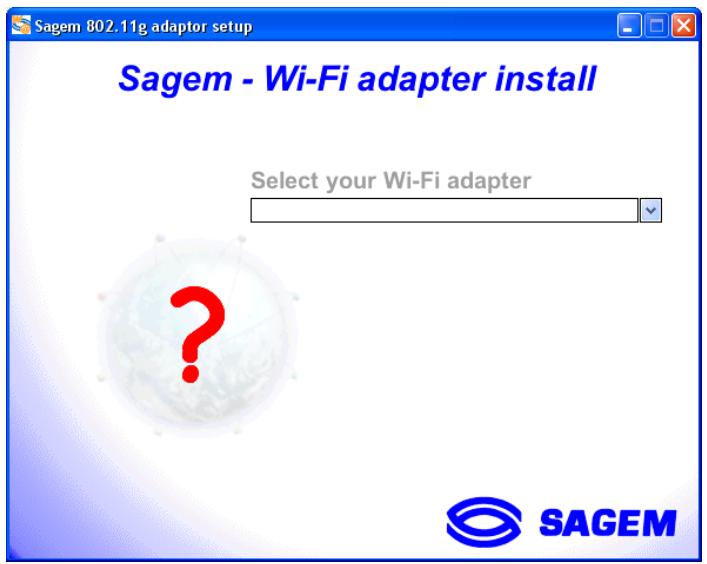
The menu offers the following choices :
Install the Wireless LAN Utility and driver
Read the present manual
To launch the installation, click "Wi-Fi adapter install"
A first screen shows up. Click "Continue" to continue. Follow the on-screen instructions to install the Wireless LAN Utility.
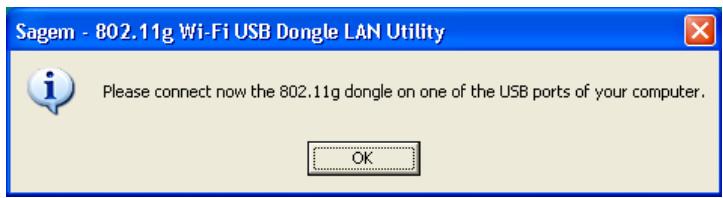
When this screen shows up, go to the next chapter to execute the hardware installation of your SAGEM Wi-Fi 11g USB ADAPTER, then click on "OK".
1.2 Hardware installation of the SAGEM Wi-Fi 11g USB ADAPTER
After having copied all necessary files in the previous step, we will now connect the Wireless LAN.
Insert the USB connector of the adapter in an USB port on your computer or use the USB cable included in your package, if it is impossible to connect the USB adapter directly on your computer.
Important remark under Windows 98SE
If the "Please insert the disk labeled "Windows 98SE/ME CD-ROM", and then click "OK" Window appears, insert your Windows CD-ROM and enter the path corresponding to the CD-ROM drive then click "OK". Click "Finish" to complete the installation, which will restart Windows.
Configuration of your Wireless LAN USB to access to Internet
After the two previous steps completion, your Wireless USB LAN adapter is now installed. You now have to configure your connection to be able to access via an access as seen below.
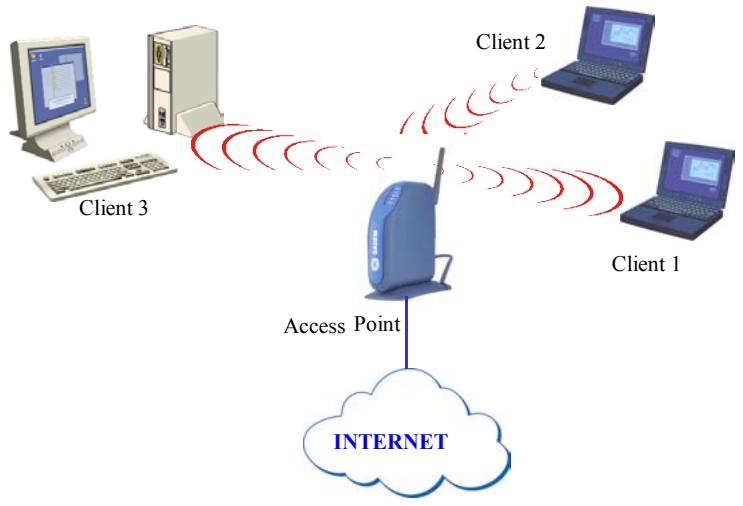
To do that, you will have to:
Launch the WLAN Utility management software
Configure your adapter in Infrastructure Mode
Set the SSID of the wireless network on which you want to attach
Configure the encryption parameters if you want to protect your wireless network
I. Configuration to access to à Internet under Windows :
At first, you must verify that the computer, where you have installed your USB adapter is configured in DHCP (dynamic address):
In the Network Connection tab of the Control Panel menu, click on the TCP/IP protocol of the Wireless network connection (SAGEM Wi-Fi 11g USB ADAPTER).
Select Obtain an IP address automatically in the IP Address tab.
Open the WLAN utility
To open the WLAN utility, you have two possible choices:
Select the "SAGEM Wi-Fi 11g USB adapter LAN Utility" from the Start Menu of Windows,
Or double-click the corresponding icon laying on the Windows

SAGEM Wi-Fi
11g USB adapter
LAN Utility
desktop :

The icon then appears in the System Tray (in the bottom right corner of your task bar).
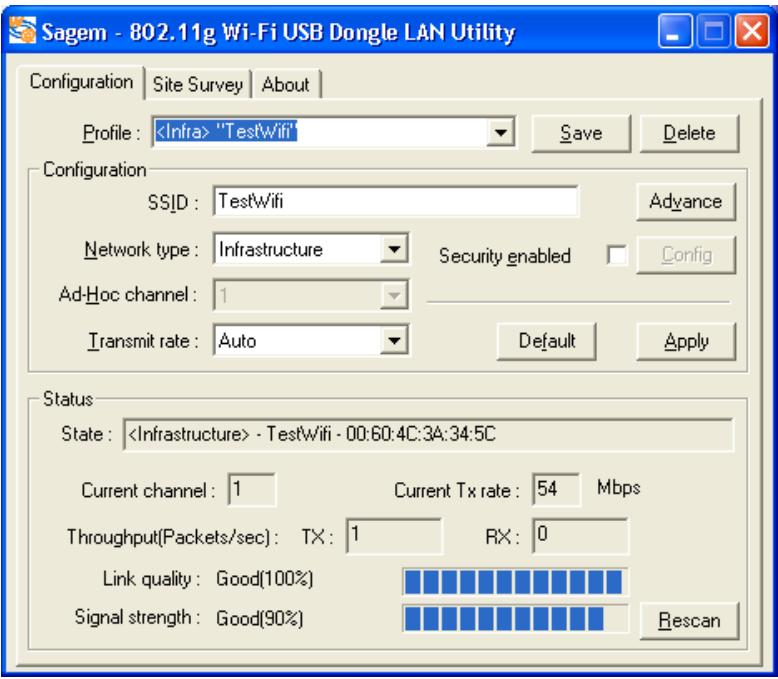
Double-click this icon and the main screen of the Utility shows up as seen opposite.
Configuration of your Wireless LAN adapter in Infrastructure Mode
To access Internet your Wireless LAN adapter must be set in Infrastructure Mode as seen below.
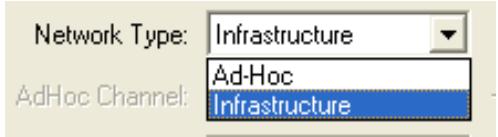
In the main screen of the Utility, click the down arrow at the right of the Network Type field and select "Infrastructure"
Selection of the SSD
The SSID is a string of characters identifying a wireless network (it is the name of this network). To belong to a same wireless network, the client stations and the access point (connected to the Internet) have to use the same SSID.
If you keep the SSID field to ANY (default value), your adapter will attach itself to the nearest access point (or to the one sending the higher radio signal).

If you know the name of the access point you want to associate with, enter this SSID in the corresponding field and then click "Apply" button to make the setting take effect.
The SSID can be set up to 32 characters. It is case sensitive (please take great attention to that).
Configuration of the Encryption parameters
To prevent unauthorized wireless station from accessing data transmitted over your network, the Wireless LAN adapter offers secure data encryption, like "open" and "shared Key" authentication with WEP (Wired Equivalent Privacy) encryption or WPA-PSK (Wi-Fi Protected Access - Pre
Shared Key) authentication with TKIP (Temporal Key Integrity Protocol) encryption. The activation or not of the security has to be set on the same way on the Access Point and on your LAN USB adapter (client station).
Your network can only be operated in the 2 following conditions:
No security activated, neither in the Access Point, neither in the client stations
Security activated (recommended for securing your data) in the Access Point and on all client stations with the same characteristics of encryption.
1) Security disabled on Access Point.
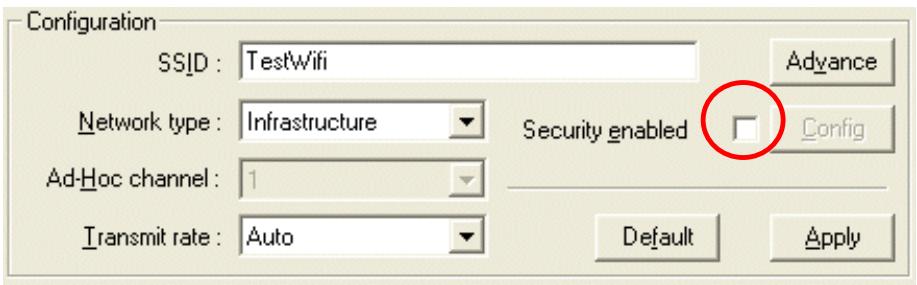
If your Access Point works without security, your wireless LAN adapter also has to be set without WEP. Check in the main screen of the Utility that the Security Enabled check box is unchecked.
2) Security enabled on Access Point.
Beware that if you enable security on your adapter, you necessarily have to enable the type of security on the Access Point side, as well, if you want your adapter to be able to associate with it. Go the Configuration tab in the main screen of the Utility and activate the Security Enabled check box.
The "Security" window then shows up.
Here we will explain how to configure open security with WEP and WPA-PSK security with TKIP.
2.1) WEP encryption :
In the window "Security", you will have to :
select authentication:Open
encryption is fix to WEP
disable IEEE 802.1X authentication mode
select the WEP type : 64 bits or 128 bits
select the index key
select the way to generate the encryption keys (from a passphrase or manually)
Length of the WEP keys
WEP protocol offers two levels of encryption: encryption based on 40 or 64 bits key length and more secure encryption based on 104 or 128 bits key length.
The 40 bits keys and the 64 bits keys are the same, if their effective length is 64 bits, only 40 bits are selected by the user, the others bits are automatically calculated. Speak about 40 bits keys or 64 bits keys is the same thing. It is identical for the 104 and 128 bits keys.
The principle of management is identical for both 64 bits and 128 bits.
The key length has to be set at the same value on the Access Point and on the client station (Wireless LAN adapter in our case).
Creation of the WEP keys
It is possible to manually enter the WEP key you want to use. However, this entry being rather tedious, especially for 128 bit keys, it is possible to have them generated automatically. To do that, you will have to enter a string of characters called "Passphrase".
Create Encryption Keys by Using a "Passphrase"
1- Select first the "64bit" or "128bit" length of the key.
2- Select in "key format": "Passphrase".
3- Select index key
4- Enter the string in "Network key" and "Confirm network key". The key is generated from your string.
5- Finally click the "Apply button" in the Configuration tab to save the configuration.
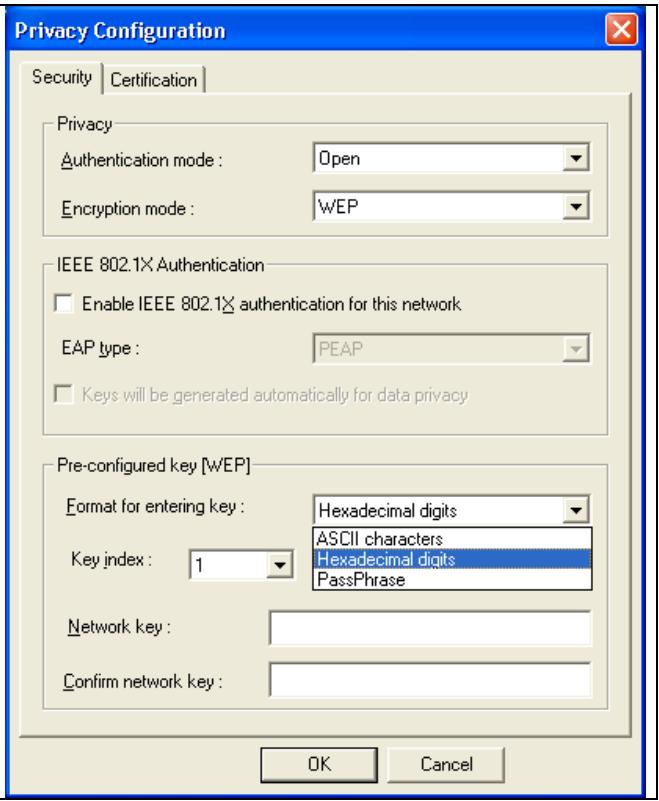
Warning: when Create Key with Passphrase is enabled, the wireless device's Key number with PassPhrase must match the Key number with PassPhrase used by the access point with which wireless devices are going to communicate.
Create Encryption Keys Manually
You can also create up a encryption key.
- Select first the "64bit" or "128bit" length of the key to generate
- Select "ASCII" or "Hexadecimal"
- Select index key
- Enter manually the key you want in the key field taking in account the remarks here after specifying the authorized characters
- Finally click the "Apply button" in the Configuration tab to save the configuration and make setting take effect.
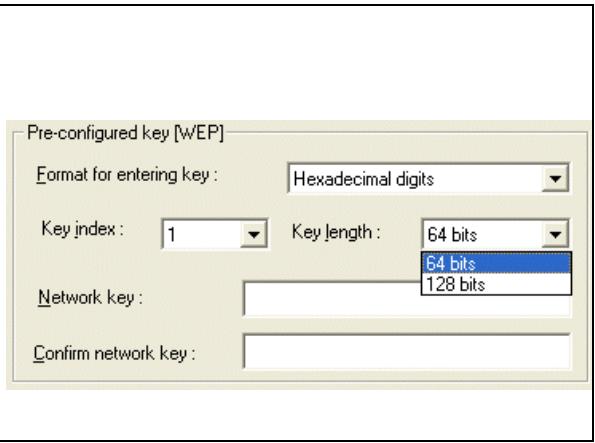
For 64bit encryption you may choose:
Alphanumeric: 5 characters (case sensitive) ranging from "a-z", "A-Z" and "0-9" (e.g. MyKey)
Hexadecimal: 10 hexadecimal digits in the range of “A-F”, “a-f” and “0-9” (e.g. 11AA22BB33)
For 128bit encryption you may choose:
Alphanumeric: 13 characters (case sensitive) ranging from “a-z”, “A-Z” and “0-9” (e.g. MyKey12345678)
Hexadecimal: 26 hexadecimal digits in the range of "A-F", "a-f" and "0-9" (e.g. 00112233445566778899AABBCC).
2.2) WPA-PSK / TKIP encryption:

For Windows only
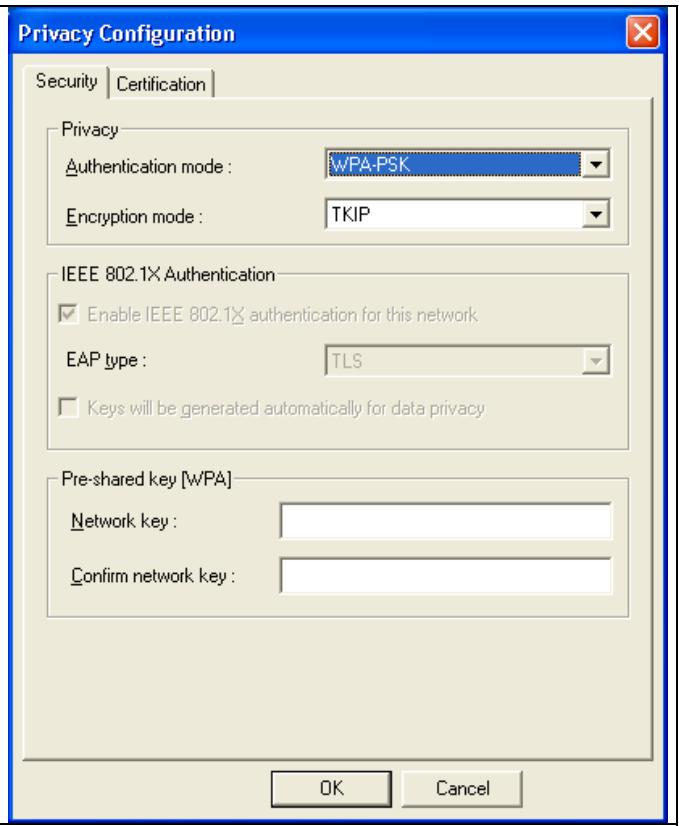
1 - Select authentication mode : WPA-PSK
2 - Select encryption mode : TKIP.
3 - Enter a string from 8 to 63 characters or a 64 hexadecimal characters key in Network key and Confirm network key.
4 - Select «OK» to close Privacy configuration.
5 - select «Apply button» in the Configuration tab to save the configuration and make setting take effect.
The configuration of your Wireless LAN adapter to access to Internet under Windows is finished
Configuration of your Wireless LAN adapter in Ad Hoc mode
Also known as a peer to peer network, this mode allows wireless to wireless connection, enabling all workstations to act as servers to all others. This mode can be used to share a printer or for file transfer.
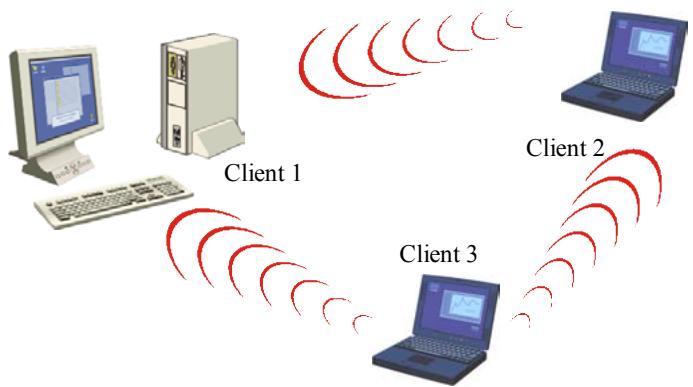
I. Configuration in Ad Hoc mode under Windows :
Configuration of Network Type
To set your Wireless LAN adapter in the Ad Hoc mode, click the down arrow at the right of the Network Type field and select "Ad Hoc" in the main screen of the WLAN utility.
Configuration of the SSID
The SSID is a string of characters identifying your wireless network (it is the name of this network). To be part of a same network, wireless clients must have the same SSID. This SSID is the name of this network.
If you want to associate to an existing Ad Hoc network, enter the SSID of this network in the corresponding field (replacing ANY) and click the “Apply” button on the Configuration tab to make the setting take effect.
SSID: ANY
If you want to create a new Wireless Ad Hoc network, enter an unused SSID (replacing ANY) to identify your own network.
Then click the "Apply" button on the Configuration tab to make the setting take effect.
Configuration of the Channel
To be part of a same network, wireless clients must use the same channel If you want to associate to an existing Ad Hoc network, select the channel of this network in the corresponding field AdHoc Channel in the main screen of the WLAN utility. Then click the “Apply” button on the Configuration tab to make the setting take effect.
If you want to create a new Wireless Ad Hoc network, select an unused channel, then click the "Apply" button on the Configuration tab to make the setting take effect.
Configuration of WEP encryption
The configuration of WEP encryption in Ad Hoc mode is similar to the one in Infrastructure Mode.
Please refer to the above explanations.
The configuration of your Wireless LAN adapter in Ad-Hoc mode is finished.
About Status Information on your Wireless LAN USB
adapter LED Indicator
The SAGEM Wi-Fi 11g USB ADAPTER has one LED indicator giving the following informations on the link status:
Solid Green:
Connected to an Access Point or Ad-Hoc wireless workstation and transmitting data.
Blinking Green:
Attempting connection to the Access Point or Ad-Hoc wireless workstation
I. On the WLAN utility under Windows :
Icon of the WLAN utility

The color behind the system tray icon indicates the link status :

Blue indicates a good or excellent link.

Yellow indicates a usable but weak link.

Red indicates no or very poor link quality.
Status field on the Configuration Menu of the WLAN utility
The Status field on the Configuration menu provides more detailed information.
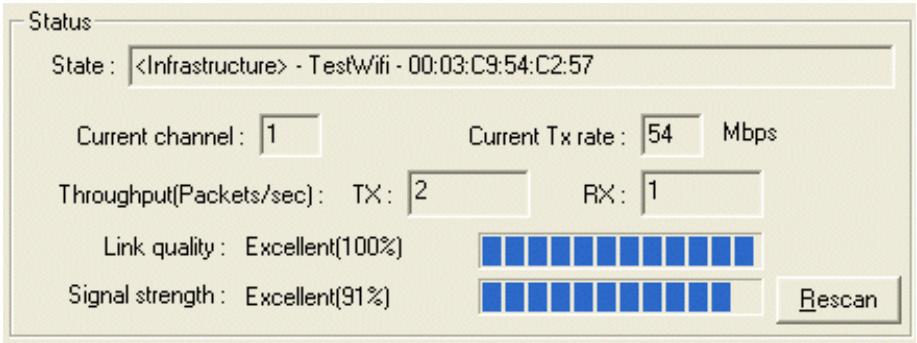
State:
When operating in Infrastructure mode, this field shows the MAC address of the Access Point with which the SAGEM Wi-Fi 11g USB ADAPTER is communicating. When operating in Ad-Hoc mode, it shows the virtual MAC address used by computers participating in the Ad-Hoc network.
Current Channel : Shows the radio channel on which the connection is made.
Current Tx Rate : Shows the highest transmit rate of the current 54 Mbps to 1 Mbps.
Throughput: Shows the short term transmit and receive throughput in packets/second, and is continuously updated.
Link Quality : Based on the quality of the received signal
There are 4 states of link quality:
Excellent
Good
Poor
no connection.
Signal Strength : Based on the received radio signal strength.
There are 4 states of signal strength:
Excellent
Good
Poor
no signal strength.
Description of all the Wireless LAN Utility features
Please refer to the User Manual for a complete description of the functions that are offered by the Wireless LAN Utilities.
Uninstall the Wireless LAN adapter
I. Uninstallation under Windows :
- To remove the Wireless LAN Utility from your computer, go to the Start menu and select "Uninstall SAGEM Wi-Fi 11g USB adapter LAN Utility".
- Follow the instructions on the different screens to uninstall the Wireless Utility then click "Finish".
- Now you can disconnect your SAGEM Wi-Fi 11g USB ADAPTER.
Troubleshooting
If you experience any difficulty resolving the problem while installing or using the SAGEM Wi-Fi 11g USB ADAPTER, please contact the supplier for support.
| Problem | Solution |
| At SAGEM Wi-Fi 11g USB ADAPTER installation, Windows was unable to locate the driver for this device. | • Restart your PC and follow the screens showed up. |
| The Wireless LAN adapter LED does not come on. | ·Check that the Wireless LAN adapter is correctly connected. ·Plug out the Wireless LAN adapter, then plug in it into the same USB port on your computer. ·Under Windows check the Wireless LAN adapter driver is correctly installed. If this is not the case uninstall then reinstall the driver. |
| The Wireless LAN adapter LED flashes and you cannot access to your Access Point or to the other client stations of your network. | ·Check that the SSID and the WEP encryption keys are the same on the computers and the access point which are on the same network. ·Check that the wireless network is operational. |
| After a restart of your computer (PC or Mac), the system cannot detected the Wireless LAN adapter plug into it. | ·Plug out the Wireless LAN adapter, then plug in it into the same USB port on your computer. |
All rights reserved © Copyright 2005 SAGEM SA PARIS France
Ed.01 Ref.252122132