
6455ENX - Vacuum Sealer DE DIETRICH - Free user manual and instructions
Find the device manual for free 6455ENX DE DIETRICH in PDF.



| Product type | Vacuum sealing device |
| Brand | DE DIETRICH |
| Model | 6455ENX |
| Dimensions (L x W x H) | 40 x 20 x 10 cm |
| Weight | 3,5 kg |
| Power supply | 220-240 V ~ 50/60 Hz |
| Power | 120 W |
| Sealing width | 30 cm |
| Sealing type | Double seal |
| Vacuum function | Automatic with stop |
| Manual mode | Yes |
| Automatic stop | Yes |
| Overheat protection | Yes |
| Bag compatibility | d>Notched and smooth bags |
| Compartment capacity | Up to 3 L |
| Noise level | < 70 dB |
| Maintenance and cleaning | Clean with a damp cloth after each use |
| Repairability index | 7,8 / 10 |
| Spare parts available | Seals, bags, sealing bar |
| Included accessories | Bag rolls, jar adapter |
Frequently Asked Questions - 6455ENX DE DIETRICH
User questions about 6455ENX DE DIETRICH
0 question about this device. Answer the ones you know or ask your own.
Ask a new question about this device
Download the instructions for your Vacuum Sealer in PDF format for free! Find your manual 6455ENX - DE DIETRICH and take your electronic device back in hand. On this page are published all the documents necessary for the use of your device. 6455ENX by DE DIETRICH.
USER MANUAL 6455ENX DE DIETRICH
General recommendations
EN
- Please read the instructions in this manual carefully before using the vacuum storage system.
- Do not use the appliance if it is partially damaged.
- Do not put the receptacle in the oven.
- We strongly advise you to avoid direct contact between the box and particularly greasy foods.
Only use the system to vacuum out the air in the receptacle.
- Do not use the appliance for any other purposes than those indicated in the manual.
- Ensure that children do not use the system.
Care instructions
- Do not use solvents to clean the receptacle.
-
The transparent receptacle can be washed in a dishwasher.
-
The lid must be washed by hand (the seal must be perfectly clean).
- Never dismantle the lid.
The vacuum conservation system
The present vacuum conservation system enables you to prolong the time you can store food. Without air, the oxidation process slows down and the usual conservation times can be multiplied by 5.
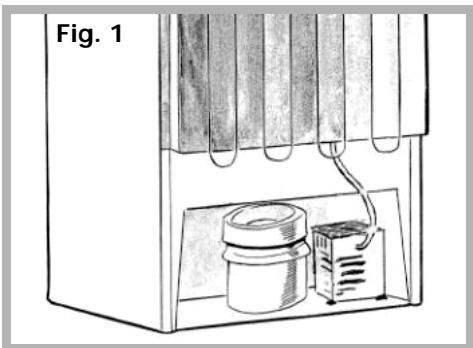
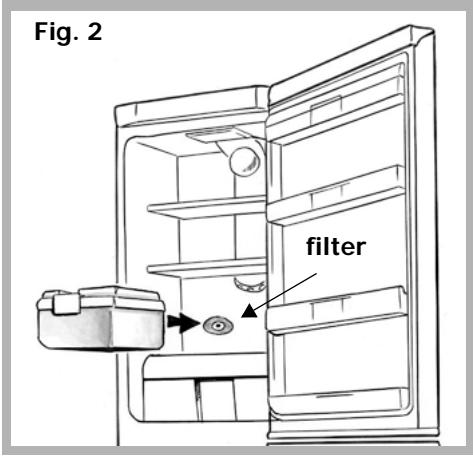
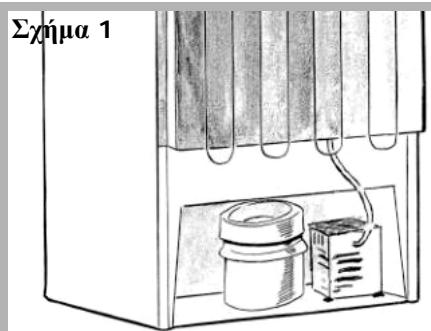
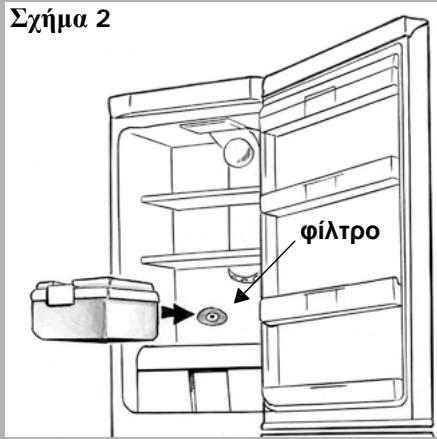
The system is incorporate into the structure of your fridge-freezer and consists of the following 3 main components:
A vacuum generator (Fig. 1)
A connection system (Fig. 2)
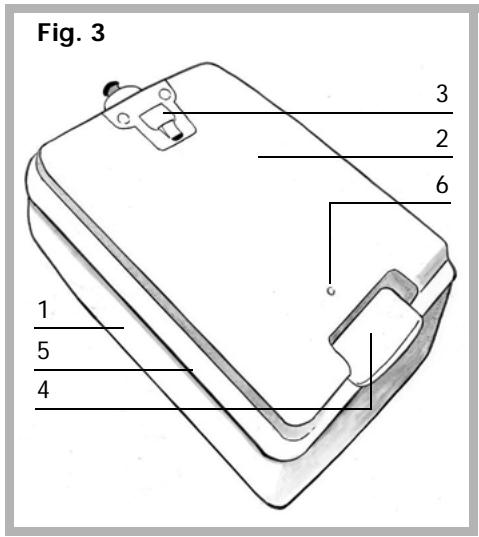
A box (Fig. 3)
The vacuum box
The box consists of:
- A transparent container in which food can be placed.
- A lid with a valve seal
The lid consists of:
- A system enabling a vacuum to be created, comprising a valve, a button to cancel the vacuum and a safety catch.
- A handle to close and lock the lid.
- A sealing joint.
- A vacuum indicator on the outside.
- Place the food in the container.
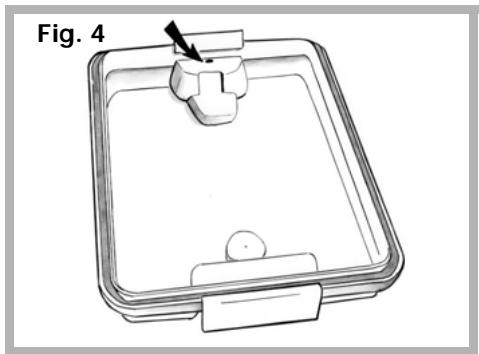
- Check that the hole inside the lid (Fig.4) is not blocked.
- Check that the lid's sealing joint (Fig. 4) is correctly positioned and that the contact surfaces between the container and the joint are perfectly dry.
It is important that the box is closed correctly.
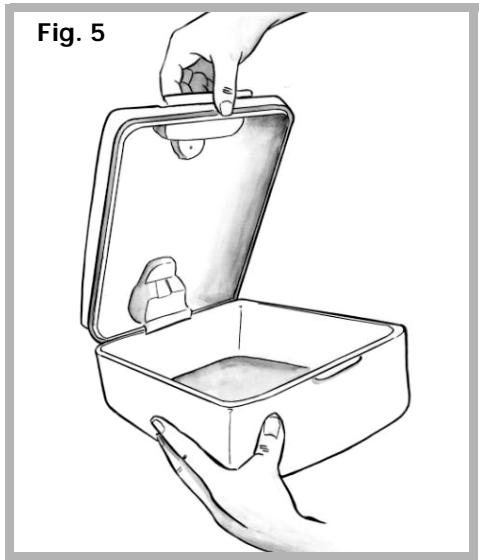
- Place the lid on the container by folding down the lid from the back (Fig.5) and locking it using the handle on the front (Fig.5).
- Then check that the lid is adjusted correctly.
Placing under vacuum
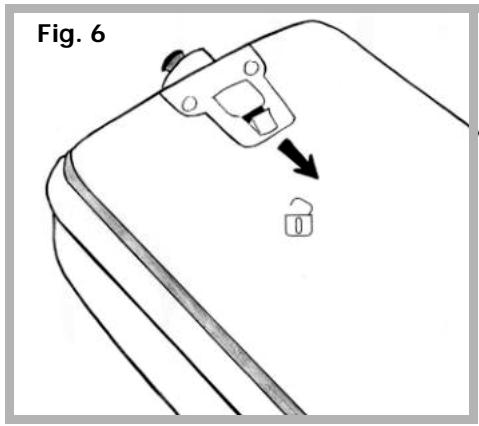
Pull the valve's safety catch (Fig.6).
- Place the box on top of the left-hand vegetable compartment and push it in fully until the receptacle's valve is in contact with the connection system.
The vacuum generator starts up automatically after a few seconds.
- Do not touch the box any longer and close the refrigerator.
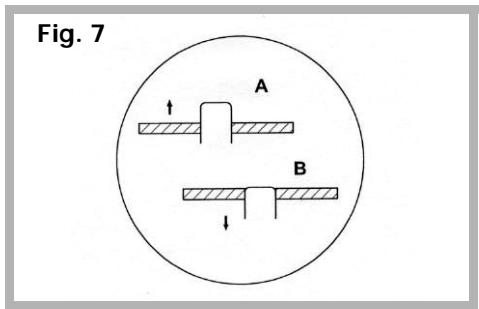
- Leave the box in this position until the vacuum has been created (the indicator at the bottom, Fig.7). The generator then stops automatically.
The time required to create the vacuum depends on the amount of food in the box. - The maximum operating time is 3 minutes and then the pump stops.
- Once the vacuum-creation process is complete, you can place the box on the refrigerator's shelves, in the drawers in the freezer compartment or even outside at ambient temperature.
- When you remove the box, you will notice some slight resistance owing to the low pressure.
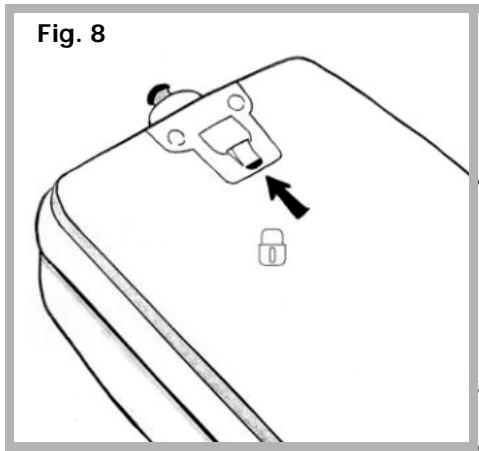
- Push the safety catch (Fig.8).
Once the vacuum as been created, the low pressure inside the box ensures that it is sealed. If the handle remains unlocked, it will not cause any loss of vacuum.
Opening the box when under vacuum
Pull the safety catch (Fig.6).
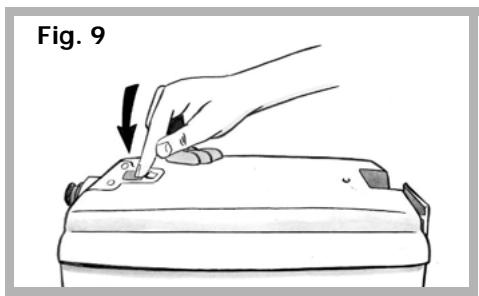
Press the air injection button (Fig.9) until the box is completely filled with air.
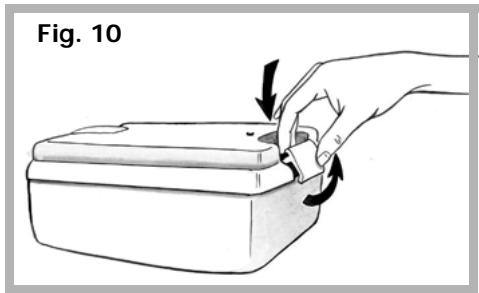
- Unlock the handle and open the lid (Fig.10).
Instructions for using the vacuum conservation system
EN
For the best results possible, it is important that the food is fresh, wholesome and in good condition.
Before putting the food under vacuum, check that it is completely frozen.
Defrosted food cannot be put under vacuum.
In the case of pre-packed food, comply with the expiry dates marked on the original packaging.
The preservation time depends on the medium in which the box is stored.
Preservation under vacuum and temperature
The proper combination for each foodstuff
In the refrigerator
- Fresh foods such as meat, fish, cheese, delicatessen meats, fresh pastry and dough, vegetables and desserts;
Cooked food and soups.
In the refrigerator, placing items under vacuum prolongs the food's freshness by several days compared to storage at low temperature.
It protects the food from oxidising, drying out, fermenting and altering in taste, while preserving its organoleptic and nutritious properties.
In the freezer
Food for long storage.
In the freezer, placing items under vacuum protects the food from drying out owing to very dry cold and prevents alteration in taste.
Certain conditions apply to preparing food for storage in the freezer:
- Fish must be cleaned, washed and wiped dry;
- Vegetables must be blanched and wiped dry.
Defrosted foodstuffs must be consumed within 24 hours of their being defrosted.
At ambient temperature
- Dry foodstuffs such as bread,flour, pastry,breadcrumbs,rice and vegetables. Placing the items under vacuum protects the foodstuffs from dampness. It enables their flavour and their smell to be kept intact.
- Foodstuffs such as jam, honey, grated cheese and vegetables preserved in oil. Placing the items under vacuum enables them to be kept longer and avoids their becoming stale.
Preservation under vacuum and temperature
EN
Food under vacuum: table indicating the foodstuff's conservation time
The length of time foodstuffs can be kept under normal / vacuum conditions
| Normal conditions | Vacuum conditions | |
| At ambient temperature (±20°/ 25°C) | ||
| Bread | 2 days | 8 days |
| Dry cakes | 4 months | 1 year |
| Pastry / Rice | 6 months | 1 year |
| Dried fruits | 4 months | 1 year |
| Flour / Tea / Coffee | 4 months | 1 year |
| Réfrigérés à +3°/ +5°C | ||
| Raw meat | 2 - 3 days | 6 - 9 days |
| Fresh fish | 1 - 3 days | 4 - 6 days |
| Delicatessen meats | 4 - 6 days | 20 - 25 days |
| Fresh cheese | 5 - 7 days | 14 - 20 days |
| Hard and refined cheese | 2 - 3 weeks | 1 - 2 months |
| Parmesan | 3 weeks | 2 months |
| Raw vegetables | 1 - 5 days | 1 - 3 weeks |
| Fresh fruits | 5 - 10 days | 2 - 3 weeks |
| Vegetable soupe / Minestrone | 2 - 3 days | 1 -2 weeks |
| Pasta / Risotto / Lasagne | 2 - 3 days | 6 - 10 days |
| Cooked meat | 3 - 5 days | 10 - 15 days |
| Cream or fruit dessert | 2 - 3 days | 6 - 10 days |
| Other desserts | 5 days | 3 weeks |
| Frozen à -18°/ -20°C | ||
| Meat | 4 months | 16 months |
| Fish | 3 months | 1 year |
| Fruits and vegetables | 10 months | 2 years |
WARNING
The maximum storage times are only given as an indication. These may vary according to the product's origin and its method of preparation.
Pre-packed foodstuffs must necessarily be consumed before the expiry date indicated on the original packaging.
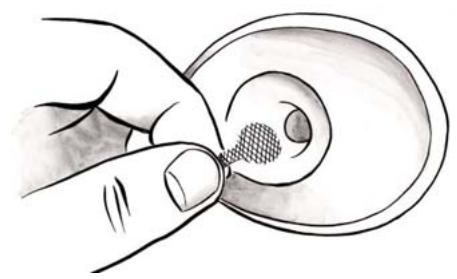
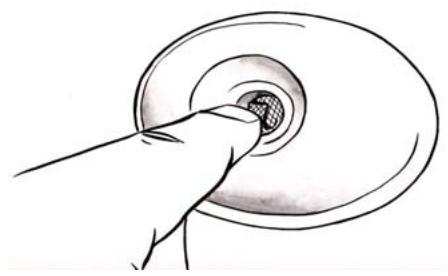
To maintain an optimum vacuum, we recommend that you carefully clean the filter at least once every two months or whenever you notice any problems with air passing through.
- Remove the filter from the connection system by pulling the little tongue with a set of small pliers.
-
Rinse the filter under the tap.
-
Re-insert the filter in its housing and check that it is correctly positioned.
- Fold up the tongue.
Operating problems
The vacuum does not form correctly:
Cause: the filter is dirty
- The filter has not been cleaned for a long time or is obstructed by a foreign body blocking the flow of air.
If the problem persists, contact the After-Sales Service.
Deformation of the box :
This is a normal occurrence: the box's lid deforms when the vacuum is created.
Γενικές συστάσεις
EL
Ipiu xpoiouoet to aepooteyec ootma diatnpno, oac kaoloue va diaaose tpooektiktu odnyiec tou npovtoc vlambdaio.
Mn xpnouoieTe to oostma av avtó exi πaθe iζmuia.
Mn to doxio sto qofo.
6ovviotoue iiaitepa va aaoepoyet e tv aueon eaapn meaio tov doxieiov kai tow nolb lanapov trooov.
Xpnoiopoioite to oostma muovo yua va aoppoate tov aepa nov npiexto doxio.
Anoepvetye oiaobnnotaannxphonn EKTOS ano EKevn yia nV oioia Ouviotatau otis odnyies xphons.
Ipoosexte to o6otma va μη χρομοποιεια πό παδι.
Oδηγίες συντήρησς
Mn npouoouite diaovtikα γia va kaθapiετo to doxεio.
To i doxio o p e i t e va to .
To kaiaki npénei va to oTo xepi (to laoTIO OTeYavonoinOg npéπi va eivai tελεiωc Kaθaρó).
Mny aonovapuoloyeitε noTe to kaia.
To aepooteyec ovotnma diatnpno
To npov aepoosteyes oostnua diatnpnons
eintpeen tnv npataon ts diatnpnons tow
tpoipuw. Xopis aepa, n diadkaosia
oedomega eippaovetau evw n
ovthioevn diapkeia diatnpnsow
tpoiow mopei va nolambdaiaosstei 5.
To oostma evomegaatovetai stn doun tou
yoyieokatayoktn sa kai neplaabavei
ta engkupia stoixia:
Mua yevvntpia kevov (xha 1)
Evosntmaovvdsosn(Exma2)
Eva doxio (Xnua 3)
To aepooteye doxieo
To doxio aonotexiat ao:
- i oroia o p e i t e va too0eTei te ta tpóφμα σaç
- eva kaaknov diathetaσoetnkaλειματομεβαβiδa
Ooyniecs xnoons Tou ouotnmaoc aepooayouc diatnpns EL
Tva πetxye ta kautepa duvata anotεoμata, eivai oμavtiko ta tpoipma va evai φρεσka, vyn kαe kaλn katασtaση.
Ipiu tropeoc sto aepootey es doxieo, i oti exov kpuosai teiaoc.
Ta tra a 8ev kavouv yia to aepoosteyecdoxio.

- General recommendations
- EN
- Care instructions
- The vacuum conservation system
- The vacuum box
- The box consists of:
- The lid consists of:
- Placing under vacuum
- Opening the box when under vacuum
- Instructions for using the vacuum conservation system
- Preservation under vacuum and temperature
- The proper combination for each foodstuff
- In the refrigerator
- In the freezer
- At ambient temperature
- Food under vacuum: table indicating the foodstuff's conservation time
- WARNING
- Operating problems
- The vacuum does not form correctly:
- Deformation of the box :
- Γενικές συστάσεις
- EL
- Oδηγίες συντήρησς
- To aepooteyec ovotnma diatnpno
- To aepooteye doxieo
- To doxio aonotexiat ao:
- Ooyniecs xnoons Tou ouotnmaoc aepooayouc diatnpns EL
Brand : DE DIETRICH
Model : 6455ENX
Category : Vacuum Sealer