
ORR 50 W - Heating Orima - Free user manual and instructions
Find the device manual for free ORR 50 W Orima in PDF.


| Product Type | Minibar Refrigerator |
| Brand | Orima |
| Model | ORR 50 W / ORR 50 B |
| Total Gross Volume | 46 L |
| Net Fridge Volume | 46 L |
| Dimensions (H x W x D) | 496 x 474 x 447 mm |
| Energy Efficiency Class | A+ |
| Annual Energy Consumption | 106 kWh/year |
| Climate Class | ST (ambient temp 16°C to 43°C) |
| Noise Level | 45 dB |
| Temperature Control | Thermostat dial (1 to 7, OFF) |
| Defrosting | Manual defrosting |
| Refrigerant | R600a (isobutane) |
| Shelf | 1 plastic shelf |
| Adjustable Feet | 2 front levelling feet |
| Cooling System | Static (no fan) |
| Power Supply | 220-240 V, 50 Hz |
| Color Options | White (ORR 50 W) or Black (ORR 50 B) |
| Usage | Indoor domestic use |
| Safety Features | Optional key lock (if fitted) |
Frequently Asked Questions - ORR 50 W Orima
User questions about ORR 50 W Orima
0 question about this device. Answer the ones you know or ask your own.
Ask a new question about this device
Download the instructions for your Heating in PDF format for free! Find your manual ORR 50 W - Orima and take your electronic device back in hand. On this page are published all the documents necessary for the use of your device. ORR 50 W by Orima.
USER MANUAL ORR 50 W Orima
natural_image
Black-and-white photo of a young girl holding a small object with a glowing smoke (no text or symbols visible)
natural_image
Black-and-white portrait of a person with short hair and a headband, no visible text or symbols
natural_image
Woman in white shirt pointing to a steaming flame (no text or symbols visible)
natural_image
Black-and-white photo of a smiling woman holding a glass, no visible text or symbols
natural_image
Black-and-white photo of a smiling person with hands near white foam bubbles (no text or symbols visible)

natural_image
Black-and-white photo of a woman meditating outdoors with wooden structures in the background (no text or symbols visible)
Orima®
electrodomésticos
MANUAL DE INSTRUÇÕES INSTRUCTION MANUAL
Minibar Minibar
natural_image
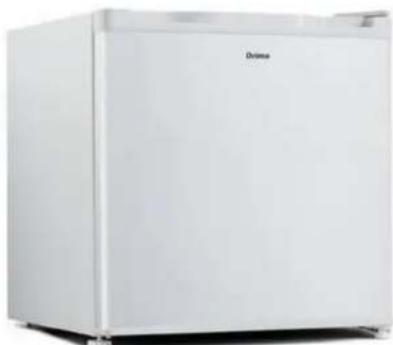
White refrigerator with 'Drama' logo on front panel (no other text or symbols visible)
natural_image
Black refrigerator with visible lid and front panel (no text or symbols)ORR 50 W/ ORR 50 B
AVISO!
natural_image
Two vertical panels with checkmarks and an 'X' symbol, no text or labels presentWARNING!
It is hazardous for anyone other than authorized service personnel to carry out servicing or repairs which involves the removal of covers. To avoid the risk of an electric shock do not attempt to repair this appliance yourself.
Safety tips
Do not use electrical appliances such as a hair dryer or heater to defrost your Minibar Orima.
Containers with flammable gases or liquids can leak at low temperatures.
Do not store any containers with flammable materials, such as spray cans, fire extinguisher refill cartridges etc. in the Minibar.
Do not place carbonated or fizzy drinks in the Freezer compartment. Ice lollies can cause "Frost/Freeze burns". If consumed straight from the Minibar.
Do not remove items from the Minibar compartment if your hands are damp/wet, as this could cause skin abrasions or "Frost/Freezer burns". Bottles and cans must not be placed in the Freezer compartment as they can burst when the contents freeze. Manufacturer's recommended storage times should be adhered to. Refer to relevant instructions.
Do not allow children to tamper with the controls or play with the Minibar. The Minibar is heavy. Care should be taken when moving it. It is dangerous to alter the specification or attempt to modify this product in any way.
Do not store inflammable gases or liquids inside you Minibar.
If the power cable is damaged, it must be replaced by the manufacturer, its service agent or similarly qualified persons in order to avoid a hazard.
This appliance can be used by children aged from 8 years and above and persons with reduced physical, sensory or mental capabilities or lack of experience and knowledge if they have been given supervision or instruction concerning use of the appliance in a safe way and understand the hazards involved. Children shall not play with the appliance. Cleaning and user maintenance shall not be made by children without supervision.
This appliance is intended to be used in household and similar applications such as
- staff kitchen areas in shops, offices and other working environments;
- farm houses and by clients in hotels, motels and other residential type environments;
- bed and breakfast type environments;
- catering and similar non-retail applications.
Keep ventilation openings, in the appliance enclosure or in the built-in structure, clear of obstruction.
Do not use mechanical devices or other means to accelerate the defrosting process, other than those recommended by the manufacturer.
Do not damage the refrigerant circuit.
Do not use electrical appliances inside the food storage compartments of the appliance, unless they are of type recommended by the manufacturer.
Do not store explosive substances such as aerosol cans with a flammable propellant in this appliance.
Disposal
Old appliances still have some residual value. An environmentally friendly method of disposal will ensure that valuable raw materials can be recovered and used again.
The refrigerant used in your appliance and insulation materials requires special disposal procedures. Ensure that none of the pipes on the back of the appliance are damaged prior to disposal. Up to date information concerning options for disposing of your old appliance and packaging from the new one can be obtained from your local council office.
Locks
If your Minibar Orima is fitted with a lock, to prevent children being entrapped keep the key out of reach and not in the vicinity of the appliance. If disposing of an old Fridge/Freezer break off any old locks or latches as a safeguard.
INTRODUCTION
Before use
Please read these instructions and the Safety guidelines on page 1 carefully before using your new Minibar Orima. The Minibar is for indoor, domestic use only.
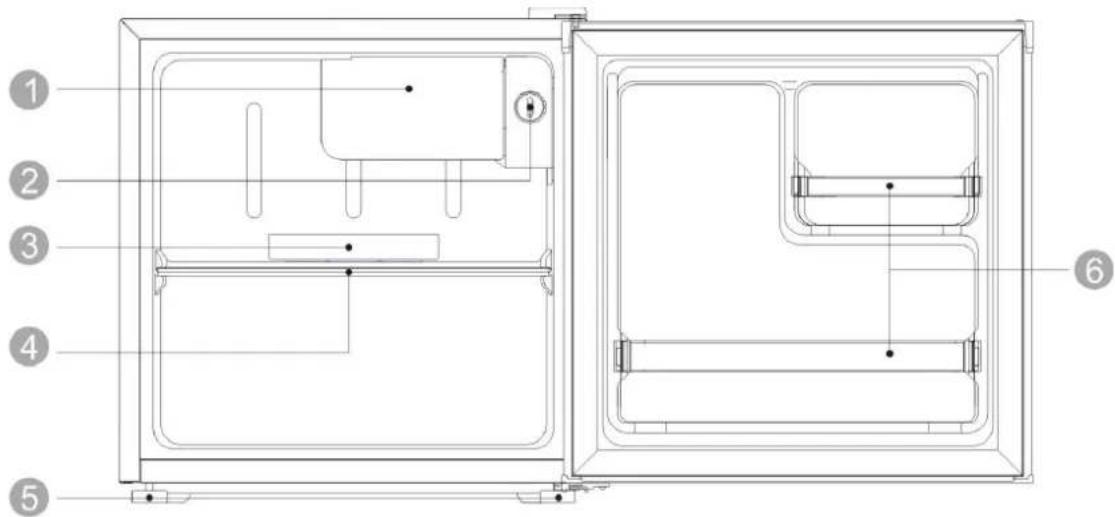
| No Description | |
| 1 Chill door | |
| 2 Thermostat | |
| 3 Drip tray | |
| 4 Plastic shelf | |
| 5 Adjustable front feet | |
| 6 Plastic retaining |
INSTALLATION
Location
When selecting a position for your Minibar you should make sure the floor is flat and firm, and the room is well ventilated with an average room temperature of between 16°C and 43°C. Avoid locating your Minibar near a heat source, eg, cooker, boiler or radiator. Also avoid direct sunlight in out-buildings or sun lounges. If you are placing your Minibar in an out-building such as a garage or annex ensure that the Minibar is placed above the damp course, otherwise condensation will occur on the Minibar cabinet. Never place the Minibar in a wall recessed or into fitted cabinets or furniture when your Minibar is working, the grille at the back may become hot and the sides warm. It must therefore be installed so that the back of the Minibar has at least 9cm (31/2") of free space and the sides have 2cm (3/4"). Do not drape the Minibar with any covering.
Leveling the Minibar
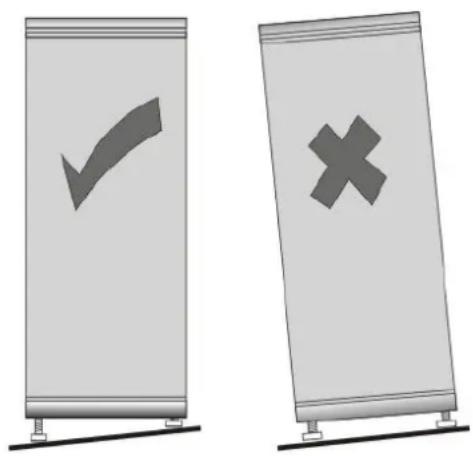
If the Minibar is not level, the door and magnetic seal alignment will be affected and may cause your Minibar to work incorrectly. Once the Minibar is placed in its final location, adjust the leveling feet at the front by turning them.
natural_image
Two vertical panels with checkmarks and a cross symbol, no text or labels presentCleaning before use
Wipe the inside of the Minibar with a weak solution of bicarbonate of soda. Then rinse with warm water using a damp sponge or cloth. Wash the baskets and shelves in warm soapy water and dry completely before replacing in the Minibar. The external parts of the Minibar can be cleaned with wax polish. See page 10 for more details on cleaning.
Before plugging in YOU MUST
Check that you have a socket which is compatible with the plug supplied with the Minibar. If not see the section called ELECTRICAL INFORMATION on page 11.
Before switching on!
DO NOT SWITCH ON UNTIL FOUR HOURS AFTER MOVING THE MINIBAR.
The coolant fluid needs time to settle. If the appliance is switched off at any time, wait 30 minutes before switching back on to allow the coolant fluid to settle.
Before filling your Minibar Orima
Before storing foods in your Minibar, turn the Minibar on and wait for 24 hours, to make sure it is working properly and to allow the Minibar to fail to the correct temperature.
START
Testing
- Clean the parts of the refrigerator with lukewarm water containing a little neutral detergent and with clear water, and wipe them dry.
Notes: Electric parts of the refrigerator can only be wiped by dry cloth.
- Turn the thermostat knob to the "4" position, turn on electricity. The compressor begin to work.
- Open the door 30 minutes later, if the temperature in the refrigerator decreased obviously, it shows that the refrigerator system works well. When the refrigerator operates for a period of time, the temperature controller will automatically set the temperature within limits it opens.
Temperature Control Dial

Temperature Control
-
The temperature in the refrigerator compartment is controlled by the temperature controller installed on the side wall of the refrigerator compartment.
-
Turn the thermostat knob to right or left, you can regulate the temperature inside the refrigerator.
-
The marks on the knob are the temperature grades, not the exact number of the degrees of temperature."OFF" shows a forced STOP and "7" shows the lowest temperature. Turn the knob from "1" position to "7" position, the temperature decreases continuously. You may set the temperature control selector to any position according to what you need.
-
Please set the selector to "4" position in normal use.
STORAGE OF FOOD
1. How to Use the Chilled Room
*Put fresh and clean food such like fish, meat into ice room ,therefore the taste and nutrient of food are preserved.
*Wrap food to be frozen in ALUMINIUM FOIL or place it in AIRTIGHT boxes.
*Do not allow already frozen food into direct contact with food to be frozen.
*If you buy deep frozen food in the shops, bring it home and place it in ice room as quickly as possible so that the time during which it kept in the air temperature is as short as possible.
2. How to Use the Refrigerator Compartment of the Minibar
*The cook dishes can be put into refrigerator to keep fresh after their temperature decreases to room temperature.
*Egg pockets and bottle pockets for eggs, butter, milk and bottle drinks, etc..
3. Placement of Food
*Proper place should be left instead of too crowded during food storage.
*Food to be stored should be wrapped with clean plastic film or fresh keeping paper, then distributed to several frames even to avoid contamination and the loss of water and smell mixture.
*Cool hot food down to the room temperature before storing or consumption of electricity will increase and would lead to frost forming inside.
*Never place vegetables and fruits into ice room in order to prevent them from being frostbitten.
Defrosting
-
When the refrigerator working for a period of time, the inner surface of the chilled room will be covered with a layer of white frost. It may raise the electricity consumption and lessen the effect of refrigeration. Then you should do frost removal at once.
-
After defrosting, clear away defrosting water in water pan as soon as possible.
Notes: Never use sharp metal tools or it will damage the refrigerator.
IN USE
Tips for keeping food perfect in the Fridge
Take extra care with meat and fish
Cooked meats should always be stored on a shelf above raw meats to avoid bacterial transfer. Keep raw meats on a plate which is large enough to collect juices and cover it with cling film or foil.
Leave space around food
This allows cold air to circulate around the Fridge, ensuring all parts of the Fridge are kept cool.
Wrap up food!
To prevent transfer of flavors and drying out, food should be separately packed or covered. Fruit and vegetables need not be wrapped.
Pre-cooked food should be cooled properly
Allow pre-cooked food to cool down before placing in the Fridge. This will help to stop the internal temperature of the Fridge from rising.
Shut the door!
To prevent cold air escaping, try to limit the number of times you open the door. When retuning from shopping, sort foods to be kept in your Fridge before opening the door. Only open the door to put food in or take it out.
Where to store your foods in the Minibar Orima
Cool area
This is where to store foods which will keep longer if they are kept cool. Milk, eggs, yogurt, fruit juices, hard cheeses eg. Cheddar. Opened jars and bottles of salad dressings, sauces and jams. Fats, eg. Butter, margarine, low-fat spreads, cooking fats and lard.
Coldest area: 0°C to 5°C
This is where foods which must be cold to keep them safe should be kept:
- Raw and uncooked foods should always be wrapped.
- Pre-cooked chilled foods, eg. Ready meals, meat pies, soft cheeses.
-Pre-cooked meats eg. Ham,
•Prepared salads(including pre-packed mixed green salads, rice, potato salad etc).
•Desserts, eg. Fromage frais, home-prepared food and leftovers or cream cakes.
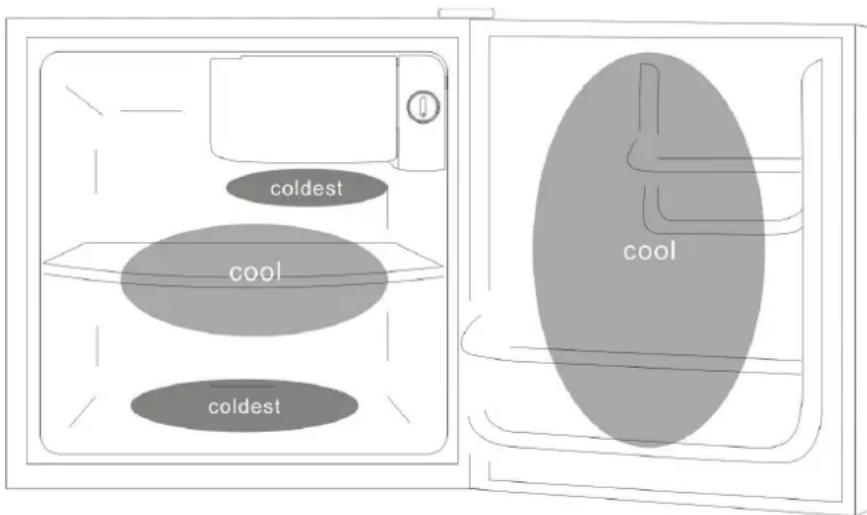
NOTE: Always wrap and store raw meat, poultry and fish on the lowest shelf at the bottom of the fridge. This will stop them dripping onto, or touching other foods. Do not store inflammable gasses or liquids in the fridge.
Recommended storage periods
For recommended food storage time, refer to the information given on your food packaging.
Cleaning inside the Minibar Orima
After defrosting you should clean the Minibar internally with a weak solution of bicarbonate of soda. Then rinse with warm water using a damp sponge or cloth and wipe dry. Wash the baskets in warm soapy water and ensure they are completely dry before replacing in the Minibar.
Cleaning outside the Minibar Orima
Use standard non-abrasive detergent diluted in warm water to clean the Minibar exterior. The grille of the condenser at the back of the Minibar and the adjacent components can be vacuumed using a soft brush attachment.
Do not use harsh cleaners, scouring pads or solvents to clean any part of the Minibar.
TROUBLE SHOOTING AND MAINTENANCE
Trouble Shooting
Power cut
Do not open the Minibar door more than necessary.
The Minibar is exceptionally cold
You may have accidentally adjusted the thermostat control dial to a higher position.
The Minibar is exceptionally warm
The compressor may not be working. Turn the thermostat control dial to the maximum
setting and wait a few minutes. If there is no humming noise, it is not working. Contact the local store where your purchase was made.
The Minibar is not working
Check it is plugged in and switched on. Check that the fuse in the plug has not blown. The Minibar should be placed in a well ventilated room with an ambient temperature of between 16^ C and 43^ C. Leave the Minibar for 30 minutes.
Condensation appears on the outside of the Minibar
This may be due to a change in the room temperature. Wipe off any residue of moisture. If the problem continues contact the local store where your purchase was made.
GURGLING, WHOOSHING
These noises are caused by the circulation of the refrigerant liquid in the cooling system. It has become more pronounced since the introduction of CFC free gases. This is not a fault and will not affect the performance of your Minibar.
HUMMING, PURRING OR PULSATING
This is the compressor motor working, as it pumps the refrigerant around the system.
Servicing
This product should be serviced by an authorized engineer and only genuine spare parts should be used.
Under no circumstances should you attempt to repair the appliance yourself.
Repairs carried out by inexperienced persons may cause injury or serious malfunctioning.
Contact the local store where your purchase was made.
When the appliance is not in use for long periods, disconnect from the electricity supply, empty all foods and clean the appliance, leaving the door ajar to prevent unpleasant smells.
ELECTRICAL INFORMATION
THIS APPLIANCE MUST BE EARTHED.
This appliance is fitted with a plug which will be suitable for use in all houses fitted with sockets to current specifications.
If the fitted plug is not suitable for your socket outlets, it should be cut off and carefully disposed of. To avoid a possible shock hazard, do not insert the discarded plug into a socket.
| Correct Disposal of this product | |
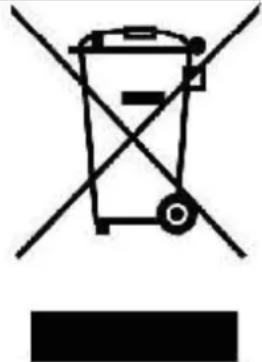 | This marking indicates that this product should not be disposed with other household wastes throughout the EU. To prevent possible harm to the environment or human health from uncontrolled waste disposal, recycle it responsibly to promote the sustainable reuse of material resources. To return your used device, please use the return and collection systems or contact the retailer where the product was purchased. They can take this product for environmental safe recycling. |
| Model | ORR 50 W ORR 50 B | |
| Total Gross Volume, L 46 46 | ||
| Net Volume Fridge, L 46 46 | ||
| Freezer net volume, L | --- | --- |
| The current consumption depends on how the appliance is used and its location | ||
| Energy efficiency class | A+ | A+ |
| Energy consumption: kWh/year | 106 | 106 |
| Climate Class | ST | ST |
| Dimensions (A x L x P), mm | 496 x 474 x 447 | |
| Noise Level, db(A) re 1 pw | 45 45 | |
| Electrical Information | Check Rating Label | |
| Note: The manufacturer reserves the right to make future changes in specifications and technical parameters | ||
- Orima®
- MANUAL DE INSTRUÇÕES INSTRUCTION MANUAL
- Minibar Minibar
- ORR 50 W/ ORR 50 B
- AVISO!
- WARNING!
- Safety tips
- Disposal
- Locks
- INTRODUCTION
- Before use
- INSTALLATION
- Location
- Leveling the Minibar
- Cleaning before use
- Before plugging in YOU MUST
- Before switching on!
- Before filling your Minibar Orima
- START
- Testing
- Temperature Control Dial
- Temperature Control
- STORAGE OF FOOD
- How to Use the Chilled Room
- How to Use the Refrigerator Compartment of the Minibar
- Placement of Food
- Defrosting
- IN USE
- Tips for keeping food perfect in the Fridge
- Take extra care with meat and fish
- Leave space around food
- Wrap up food!
- Pre-cooked food should be cooled properly
- Shut the door!
- Where to store your foods in the Minibar Orima
- Cool area
- Coldest area: 0°C to 5°C
- Recommended storage periods
- Cleaning inside the Minibar Orima
- Cleaning outside the Minibar Orima
- TROUBLE SHOOTING AND MAINTENANCE
- Trouble Shooting
- Power cut
- The Minibar is exceptionally cold
- The Minibar is exceptionally warm
- The Minibar is not working
- Condensation appears on the outside of the Minibar
- GURGLING, WHOOSHING
- HUMMING, PURRING OR PULSATING
- Servicing
- ELECTRICAL INFORMATION
- THIS APPLIANCE MUST BE EARTHED.
Brand : Orima
Model : ORR 50 W
Category : Heating