
EM3010 - Hand blender BLAUPUNKT - Free user manual and instructions
Find the device manual for free EM3010 BLAUPUNKT in PDF.


| Product Type | Hand Blender |
| Brand | Blaupunkt |
| Model | EM3010 |
| Power Consumption | 700 W |
| Voltage | 220-240 V ~ 50/60 Hz |
| Speed Settings | 2 speeds + turbo |
| Blade Material | Stainless steel |
| Shaft Material | Stainless steel |
| Dimensions (L x W x H) | 6.5 x 6.5 x 40 cm |
| Weight | 0.85 kg |
| Cord Length | 1.2 m |
| Dishwasher Safe Parts | Blending shaft and beaker |
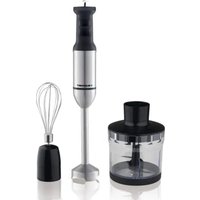
| Accessories Included | Hand blender, whisk attachment, measuring beaker (600 ml) |
| Housing Material | Plastic |
| Safety Features | Overheat protection, non-slip grip |
| Cleaning | Remove shaft and rinse under running water; base wipe with damp cloth |
| Replacement Parts Available | Yes, blending shaft and whisk can be purchased separately |
| Certification | CE, RoHS |
| Warranty | 2 years |
Frequently Asked Questions - EM3010 BLAUPUNKT
User questions about EM3010 BLAUPUNKT
0 question about this device. Answer the ones you know or ask your own.
Ask a new question about this device
Download the instructions for your Hand blender in PDF format for free! Find your manual EM3010 - BLAUPUNKT and take your electronic device back in hand. On this page are published all the documents necessary for the use of your device. EM3010 by BLAUPUNKT.
USER MANUAL EM3010 BLAUPUNKT
natural_image
Blue and gray industrial mixing tool with a coiled wire, no visible text or symbolsEnjoy it.
Φουσκωτό στρώμα
IMPORTANT INFORMATION
To achieve the highest satisfaction, enjoy the product's performance and learn about all its features and functions, please read this manual before using the product.
Before using the device, read the Operating Instructions and comply to its contents. The manufacturer shall not be liable for any damage caused by the use of the device other than for its intended purpose or by improper handling.
Keep these Operating Instructions for future reference.
Electric Mixer - safety warnings.
- This device is for domestic use only. Do not use for any other purposes.
- The device should only be connected to an socket with values corresponding to the values on the rating label.
- It is necessary to check, if total current consumption of all devices plugged into the wall outlet does not exceed the fuse in the circuit.
- If you are using an extension cord, make sure that the total power consumption of the equipment plugged into the extension cord does not exceed the extension cord power rating. Extension cords should be arranged in such a way as to avoid tripping hazards.
- Do not let cord hang over edge of counter, or touch any hot surface.
- The device is not designed to be controlled via an external timer, separate remote control, or other equipment that can turn the device on automatically.
- Before maintenance work always disconnect the unit from the power supply.
-
When unplugging the power cord from electrical outlet, hold it by the plug only and remove the plug carefully. Never pull the cable as it may cause damage to the plug or power cord. Damage to the power cord or plug can lead to an electrocution hazard.
-
Never leave the product connected to the power source without supervision.
- Never put the power cable, the plug or the whole device into the water or any other liquids.
- The device should be cleaned regularly complying with the recommendations described in the section on cleaning and maintenance.
- Do not place the device near sources of heat, flame, an electric heating element or a hot oven. Do not place on any other device.
- This equipment can be used by children aged 8 years and over under as long as supervision is provided. People with reduced physical or mental capabilities, as well as people with no previous experience of using this equipment must be supervised and made aware of the risks. The instruction manual should be used as a reference for the safe use of this equipment. Children should not play with the equipment. Children without ensured supervision should not be allowed to perform the cleaning and maintenance of equipment.
• Additional precautions should be taken when using this device in the presence of children or pets. Do not allow children to play with the device. - Never use the product close to combustibles.
- Never expose the product to atmospheric conditions such as direct sun light or rain, etc... Never use the product in humid conditions (like bathroom or camping house).
- The power cable should be periodically checked for damage. If the power cable is damaged the product should be taken to a professional service location to be fixed or replaced to prevent any hazards from arising.
- Never use the product with a damaged power cable or if it was dropped or damaged in any other way or if it does not work properly. Do not try to repair the defected product by yourself as it can lead to electric shock. Always return the damaged device to a professional service in order to repair it.
All the repairs should only be performed by authorized service professionals. Any attempted unauthorised repairs performed can be a hazard to the user.
- Only Original accessories should be used, as well as accessories recommended by the manufacturer. Using accessories which are not recommended by the manufacturer may result in damage of the device and may render the device unsafe for use.
- Keep your workplace tidy and well lit.
• Disorder and insufficient lighting lead to accidents.
- Do not use power tools in explosive atmospheres, i.e. in the presence of flammable liquids, gases or dust.
- A moment of carelessness may cause losing control of your tool.
- If it is possible to fit power tools for dust extraction or collection, check that they are fitted and working correctly. Using such power tools reduces the risk posed by the presence of dust.
- Do not lean out too far when working with your power tool. Maintain a stable posture and balance. This allows you to keep better control of your power tool in unforeseen situations.
- Avoid starting the power tool unintentionally. Make sure the power switch is in the OFF position before connecting the power tool to the mains. Carrying a power tool with your finger on its trigger or plugging in a power tool after switching it on can lead to accidents.
- Wear appropriate clothing. Do not work in loose clothing and do not wear jewellery while working. Keep your hair, clothing and gloves away from moving parts. The moving parts of a power tool can catch and pull in loose pieces of clothing, jewellery or long hair.
- Remove any spanners or tools from the power tool before starting it. A tool or spanner still connected to the rotating part of the power tool may cause personal injury.
- Be careful when working with power tools, concentrate on your work and use common sense. Do not use a power tool when tired or under the influence of drugs, alcohol or medication. Even a moment of carelessness while working with a power tool can lead to a serious accident.
- Keep children away from the work area and DO NOT allow children to pull on the power cord - this can cause serious injury.
• Always place and use the power tool on a stable, level and horizontal surface.
- Before making any adjustments, changing accessories or storing the power tool, move the switch to the off position to disconnect the power tool from the power supply. Such precautions reduce the risk of accidentally starting the power tool.
- Check the grinder housing for damage before each use.
- Ensure that the vents are free from debris.
• The device may only be used in a dry, well-lit environment.
• This tool should not be used by anyone under the age of 16.
- The device is intended for outdoor use only. Do not use for other than its intended purpose.
- The noise level during operation may exceed 85 dB (A); wear hearing protection.
- Mixer and mixing paddle are not intended for the preparation of food for human or animals. You can only mix substances and materials used in construction.
- Unit body and used tools used do not meet the hygiene standards required for food processing.
- Do not use this equipment to mix flammable or explosive substances.
- During mixer operation, electrical sparks are created in the drive motor, which can lead to ignition of vapours from mixed substances.
- Before mixing building materials, read their instructions or Material Safety Data Sheet (MSDS).
- Certain types of materials or chemicals pose risks for human health or life and the process of mixing them may require meeting specified conditions.
- When mixing materials outside the tank, keep your both hands on insulated power tool grips.
- There is always a risk that concealed live electrical cables may be encountered during works. Sharp edges of some mixers can easily damage or cut electric wires, which can lead to an electric shock.
- When mixing materials, take care to position the mixer supply line so that it is not close to the rotating working tool (mixing paddle).
- Power cable of your tool must be outside the mixer working area, which may damage or cut it, thus creating a hazard of electric shock.
- The tank in which the materials are mixed must rest on level and flat ground, so that it will not tilt or wobble while mixing.
- Uncontrolled movement of the tank during mixing can lead to dangerous situations.
- Hold your power tool firmly and securely with both hands by the insulated grips, while maintaining a stable position.
- If your power tool becomes very dirty with mixed material, e.g., after falling into the mixing tank, switch off the mixer immediately and disconnect it from the mains.
- Using a power tool into which water or mixture ingredients have entered, can lead to damage to the unit and poses a risk of electric shock.
- When mixing liquids and fluids, take care to ensure that their droplets do not enter your power tool.
- If liquids or fluids enter the power tool, there is a danger of electric shock.
- If your working tool (mixing paddle) becomes blocked during mixing, switch off the mixing machine immediately. While doing so, take caution of the resulting recoil force, which can pull out the equipment from your hands.
- Using faulty working tools, e.g., crooked mixers, or leading to overload the equipment, the operator may create dangerous situations.
- This mixer is not designed for fixing on racks, supports, etc.
• Always hold the unit securely with your both hands.
- Note that changing the speed using the gear selector (gear I or II), must only be carried out with the device switched off.
- Changing the speed while the unit is running can damage the machine.
- Specified vibration emission value was measured according to standardised procedures and may vary depending on how the power tool is used. In exceptional cases it may go beyond the specified value.
- Prolonged exposure to vibration of the operator's hands may cause injuries like frostbite. This is mainly a prickling or burning sensation in the fingers, as well as excessive paleness of the hands.
• These symptoms indicate that the power tool has been used for too long.
- To avoid the risk of adverse vibration effects on your hands, observe a few basic rules: daily working time with the power tool must include regular breaks, during which it is advisable to carry out other activities, perform hand and arm exercises during breaks to improve blood circulation, wear protective gloves to further protect against the negative effects of vibration.
- If, despite following the above advices, you feel unwell, e.g., notice finger swelling, excessive pale or loss of sensation, immediately seek medical attention.
- In addition, you should: avoid adopting an uncomfortable position (e.g., through a misaligned balance point) in which your wrists are unnaturally twisted, take regular breaks to counteract the effect of repetitive loading, if you feel any symptoms of hand and arm fatigue or pain, consult the doctor.
Recoil phenomenon:
- This is the sudden, uncontrolled, reaction of the machine to a jammed or blocked work tool. A jam or blockage leads to a sudden stop of the rotating tool, resulting in a violent jerking of the machine.
- Recoil is the result of improper or incorrect use of the unit and failure to follow safety procedures given in the operating manual.
- How to prevent the recoil effect: Hold your tool firmly and securely, while positioning of your hands and body to prevent the recoil effect from occurring, or mitigate it if it does occur, keep your hands away from rotating work tools.
- In the event of any malfunction of the unit, stop its operation immediately and disconnected it from the power source. Then, check the cause of the failure and, if necessary, return the unit to an authorised service centre.
- It is forbidden to use faulty working tools, e.g. crooked or damaged mixers, as this can lead to overloading of the machine with consequent dangerous situations. The mixer is not designed to be permanently fixed to any type of stand, support or rack.
• Always hold the device with both hands, with a firm grip on the insulated handle. - Changing the speed using the speed switch must only be done with the unit switched off when the engine is not running.
- Changing the speed while the unit is running can damage the unit.
| Before starting up, carefully read the operating manual and all safety instructions. |  | Wear protective footwear | |
| CE | The product complies with EC safety standards |  | Use ear protection |
| Do not expose the unit to rain or moisture. |  | Wear protective gloves | |
 | Dispose of the product in accordance with the WEEE directive |  | Wear protective clothing |
 | Wear safety glasses |  | Wear a protective mask |
USE PERSONAL PROTECTIVE EQUIPMENT
- Wear safety glasses according to En166
- Use protective masks in accordance with En149
- Use other precision personal protective equipment, depending on the type of work involved.
CE
Device is compliant with EU directives:
- Low voltage directive (LVD)
- Electromagnetic compatibility (EMC)
Device marked CE mark on rating label

When this crossed-out wheeled bin symbol is attached to a product it means that the product is covered by the European Directive 2012/19/EU. Please inform yourself about the local separate collection system for electrical and electronic products. Used appliance should be delivered to the dedicated collecting points due to hazardous components, which may affect the environment. Do not dispose this appliance In the common waste bin. Environmental informationAll unnecessary packaging has been omitted. We have tried to make the packaging easy to separate into three materials: cardboard (box), polystyrene foam (buffer) and poly ethylene (bags, protective foam sheet). Your system consists of material which can be recycled and reused if disassembled by a specialized company. Please observe the local regulations regarding the disposal of packaging materials, exhausted batteries and old equipment.

Your products is designed a manufactured with high quality materials and components, which can be recycled and reused.
1. Main Parts
- Mixing paddle
- Connection socket for M14 mixing paddles
-
ON/OFF switch
-
Switch lock knob
- Motor housing
- Speed control knob

2. Mixing Paddle Selection
For the unit with a single mixing tool, we supply K3 mixing paddles in standard. You can mount other mixing paddles with M14 threaded connection (K1-k10, etc.).

natural_image
Simple line drawing of a mechanical or electrical component labeled P1, with two vertical rods and a circular base (no text or symbols beyond label)
3. Cleaning and Maintenance
Proper maintenance of the machine can prolong its life; The handle switch must always function properly and must be well maintained; Mixing tools should be cleaned after pouring or not being used for a long time; Usually running water or quartz sand can clean the mixing tools well.
The mixing shaft must always be protected from contamination.
Always place a protective cap over the opening of the hexagonal socket.
Ventilation of the motor housing must not be covered when the machine is running, and there must be no flammable materials in the machine.
Clean the vent frequently.

natural_image
3D rendering of a mechanical component with a suspended rod and central shaft (no text or symbols visible)Picture.1

natural_image
Close-up of a hand inserting a plastic component into a housing (no text or symbols visible)Picture.2
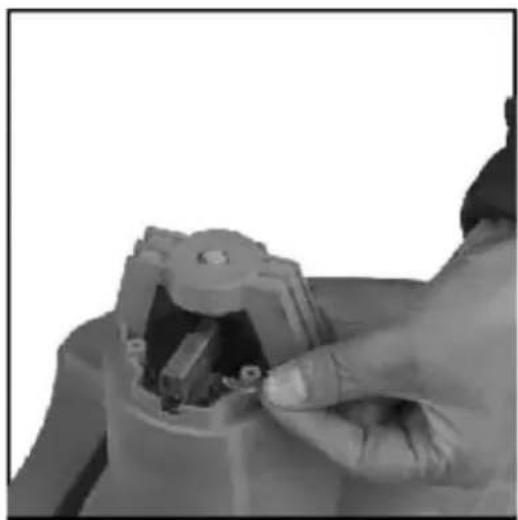
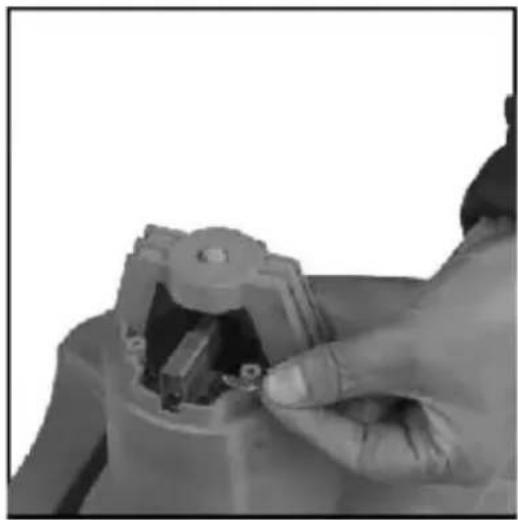
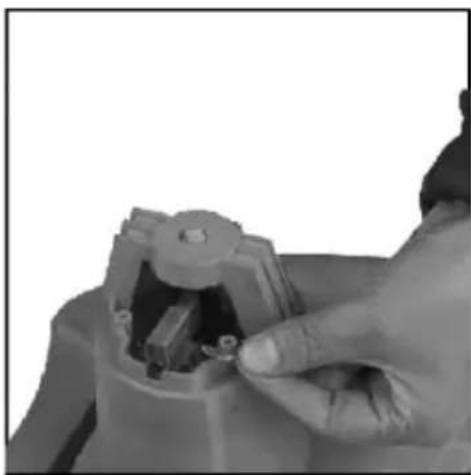
Carbon brush must be checked and maintained when the machine has been in operation for up to 60 hours, the brush must be replaced in time if worn.
(Pic.1) First disconnect the power supply, dismount the motor housing.
(Pic.2) Remove the plate and replace the carbon brush.
4. Mounting and Operation
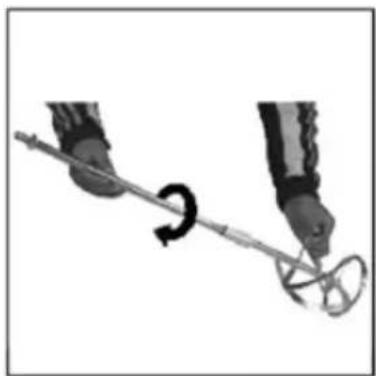
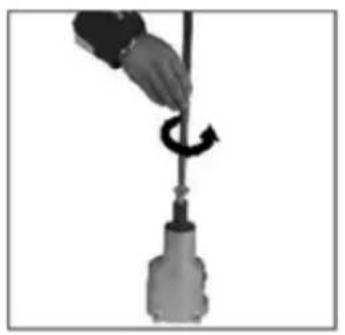
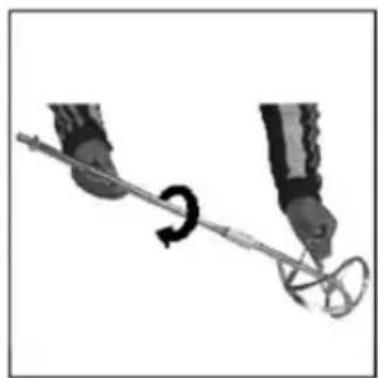
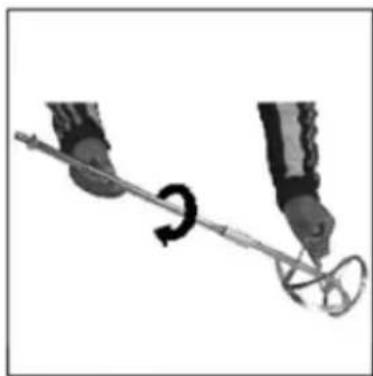
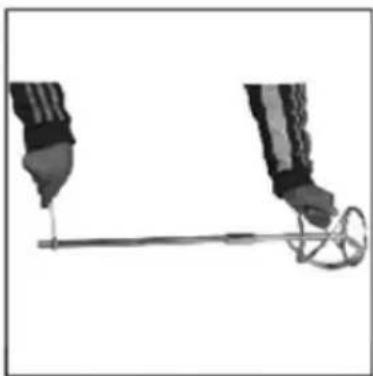
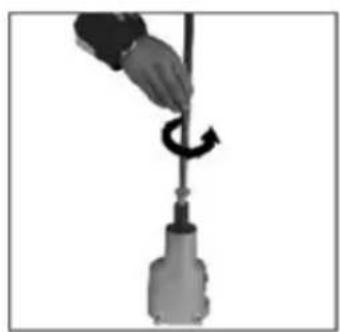
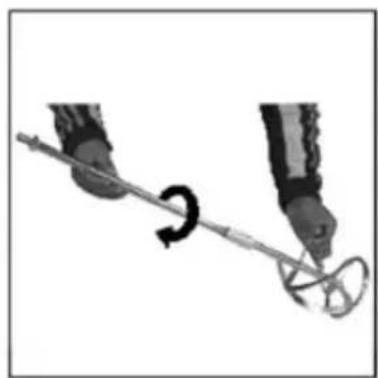
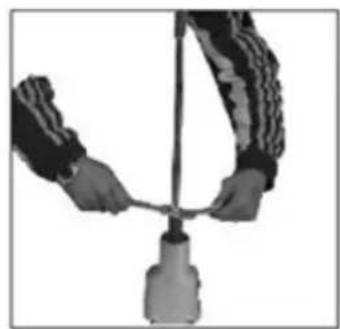
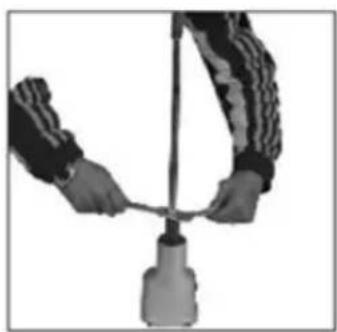
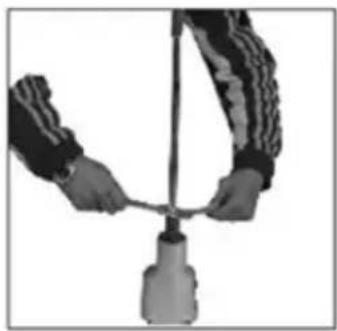
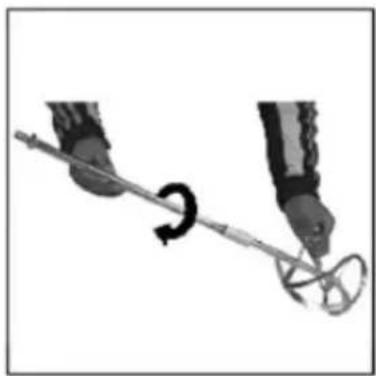
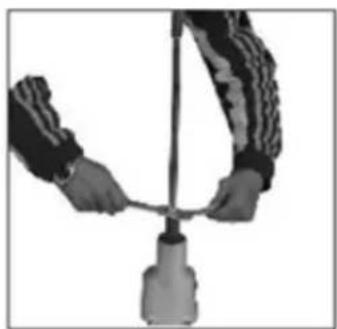
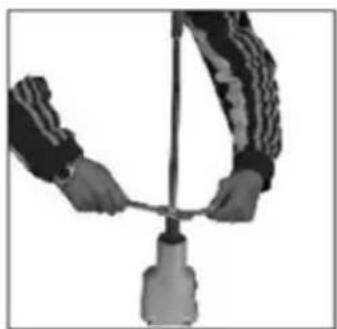
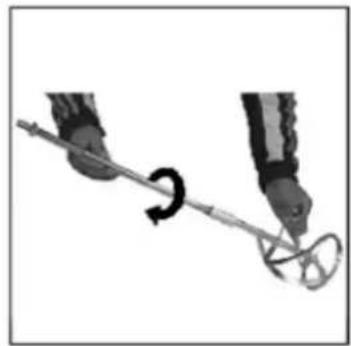
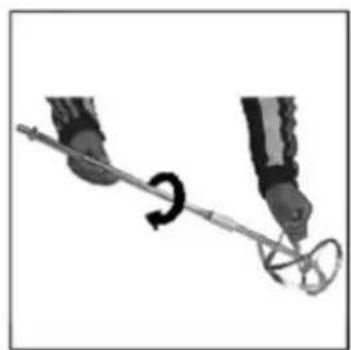
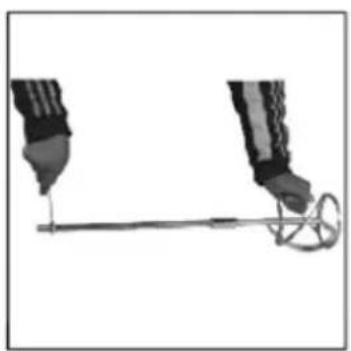
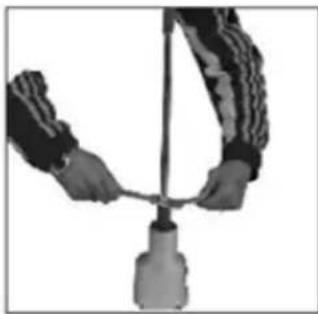
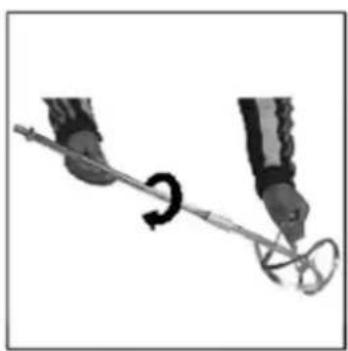
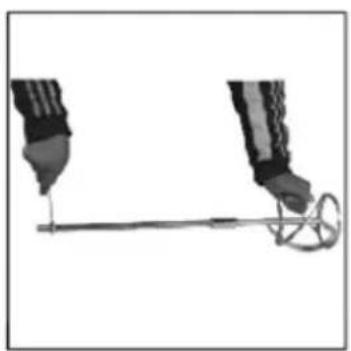
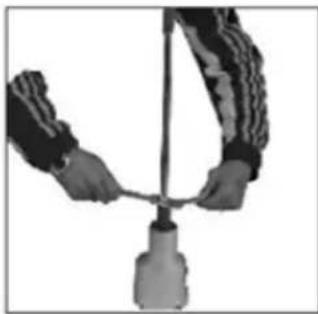
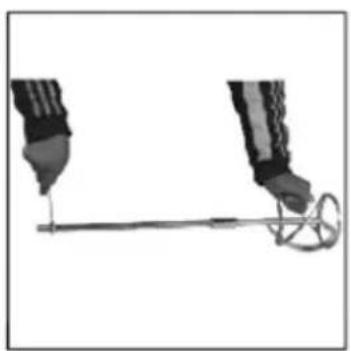
The unit must be fitted with mixing paddles with M14 male threaded connection. Mount the mixing paddle in the machine as follows:
- Disconnect the plug from the mains socket if plugged.
- Turn the unit so that there is free access to the spindle.
- Insert the end of the mixing paddle - threaded one - into the spindle hole, then tighten.
- Holding the spindle with the appropriate spanner, included, securely tighten the mixing paddle.

natural_image
Two laboratory test tubes: a vertical rod and a coiled spring-like device (no text or labels visible)Picture.1
natural_image
Close-up of a person using a metal detector to measure a circular coil (no text or symbols visible)Picture.2

natural_image
Two hands holding a metal rod with a wire, no text or symbols visiblePicture.3
natural_image
Hand holding a vertical pole with a curved arrow indicating rotational motion (no text or symbols)Picture.4

natural_image
Person holding a tool with a bulb, no visible text or symbolsPicture.5
SPEED CONTROL
Use the knob (Fig. 6) on the inside of the left grip to change the machine speed.

natural_image
Close-up of a mechanical component with a dark central section (no visible text or symbols)(Picture 6)
SWITCHING ON/OFF
ON/OFF switch (3) of the machine is located on the right grip and is designed to prevent accidental actuation.
To start your power tool, press the lock (4) and then the switch (3). The machine will switch off when the ON/OFF button (6) is released.
Do not press the switch (6) without first releasing (depressing) the lock (5), as this may damage the unit.
Noise and vibration
Sound pressure level LpA: 85 dB (A)
LpA deviation: 3 dB (A)
Measured sound power level LwA: 96 dB (A)
LwA deviation: 3 dB (A)
Wear earplugs
Noise exposure can cause hearing loss.
Arm-shoulder vibration value:
- right handle: ah = 2.272 m / s, deflection k = 1.5 m / s ^2
- left handle: ah = 1.876 m / s, deflection k = 1.5 m / s
Specifications:
| Maximum power: 1600W |
| 2 mixing paddles included |
| Speed control |
| Idle speed: 220-880 rpm |
| Stirrer diameter: 120 mm |
| Connection: M14 |
| Soft start function |
| Power supply: 220-240 V~ 50-60 Hz |
| Rated power: 1200 W |
| Cord length: 1.8 m |
| Dimensions: 33 x 21 x 81 cm |
| Weight: 3.9 kg |
WAŻNE INFORMACJE
2. Wybór mieszadła
natural_image
3D rendering of a mechanical component with a suspended rod and central shaft (no text or symbols visible)Picture.1

natural_image
Close-up of a hand inserting or adjusting a mechanical component into a housing (no visible text or symbols)Picture.2
natural_image
Two laboratory test tubes: a vertical rod and a coiled wire with a cap (no text or labels visible)Picture.1
natural_image
Close-up of a person using a metal detector to interact with a rotating tool (no text or symbols visible)Picture.2

natural_image
Two hands using a tool to measure a wire or rod, no text or symbols visiblePicture.3

natural_image
Hand holding a tool with a curved arrow indicating rotational motion (no text or symbols)Picture.4

natural_image
Person holding a tool with a small object, possibly a device or tool, in a mechanical setting (no visible text or symbols)Picture.5
REGULACJA OBROTÓW
natural_image
Close-up of a mechanical component with a small black square feature (no visible text or symbols)(Picture 6)
WŁĄCZANIE/WYŁĄCZANIE
2. výběr míchadla
natural_image
Simple line drawing of a mechanical or electrical component labeled P1, with two vertical rods and a central oval structure (no text or symbols beyond label)
3.Čištění a údržba
natural_image
Hand holding a thin wire inserted into a mechanical component (no text or symbols visible)Picture.1

natural_image
Close-up of a hand inserting a plastic component into a cylindrical housing (no text or symbols visible)Picture.2
natural_image
Two laboratory test tubes: a vertical rod and a coiled spring-like device (no text or labels visible)Picture.1
natural_image
Close-up of a person using a metal detector to measure a circular motion (no text or symbols visible)Picture.2
natural_image
Two hands operating a metal detector with a probe inserted (no text or symbols visible)Picture.3
natural_image
Hand holding a tool with a curved arrow, no visible text or symbolsPicture.4

natural_image
Person holding a small object with a rod, possibly a tool or device (no visible text or symbols)Picture.5
ŘÍZENÍ RYCHLOSTI
natural_image
Close-up of a mechanical component with a small dark object embedded in its surface (no visible text or symbols)(Picture 6)
ZAPNUTO/VYPNUTO
POUŽÍVAJTE OSOBNÉ OCHRANNÉ PROSTRIEDKY
natural_image
3D rendering of a mechanical component with a suspended rod and central shaft (no text or symbols visible)Picture.1

natural_image
Close-up of a hand inserting or adjusting a mechanical component into a housing (no visible text or symbols)Picture.2
natural_image
Two laboratory test tubes: a vertical rod and a coiled wire with a cap (no text or labels visible)Picture.1
natural_image
Close-up of a person using a metal detector to interact with a rotating tool (no text or symbols visible)Picture.2

natural_image
Two hands holding a metal rod with a wire, no visible text or symbolsPicture.3

natural_image
Hand holding a tool with a curved arrow indicating rotational motion (no text or symbols)Picture.4
natural_image
Person holding a tool with a small object, no visible text or symbolsPicture.5
REGULÁCIA OTÁČOK
natural_image
Close-up of a metallic object with a dark square hole, possibly a component or part (no visible text or symbols)(Picture 6)
Zapnutie/Vypnutie
natural_image
3D rendering of a mechanical device with a suspended rod and handle (no text or symbols visible)Picture.1
natural_image
Close-up of a hand inserting a component into a plastic housing (no visible text or symbols)Picture.2
natural_image
Two laboratory instruments: a vertical rod and a coiled spring-like device (no text or symbols visible)Picture.1

natural_image
Close-up of a person using a metal detector to interact with a rotating coil (no text or symbols visible)Picture.2

natural_image
Two hands using a tool to interact with a wire coil (no text or symbols visible)Picture.3

natural_image
Hand holding a tool with a curved arrow indicating rotational motion (no text or symbols)Picture.4
natural_image
Person holding a tool with a small object, possibly a device or tool, in a mechanical setting (no visible text or symbols)Picture.5
SEBESSÉGSZABÁLYOZÁS
natural_image
Close-up of a mechanical component with a dark central part, possibly a tool or component (no visible text or symbols)(Picture 6)
BEKAPCSOLÁS/KIKAPCSOLÁS
2. Izbira mešalca
natural_image
3D rendering of a mechanical component with a suspended rod and handle (no text or symbols visible)Picture.1

natural_image
Close-up of a hand inserting a small mechanical component into a housing (no visible text or symbols)Picture.2
natural_image
Two laboratory test tubes with different internal structures, one straight and one coiled with a loop (no text or labels visible)Picture.1

natural_image
Close-up of a hand holding a metal detector with a rotating arrow indicating motion (no text or symbols)Picture.2

natural_image
Two hands using a tool to measure a wire or rod, no text or symbols visiblePicture.3

natural_image
Hand holding a tool with a curved arrow indicating rotational motion (no text or symbols)Picture.4
natural_image
Person holding a small object with a string, possibly a tool or device (no visible text or symbols)Picture.5
PRILAGAJANJE VRTLJAJEV
natural_image
Close-up of a mechanical component with a dark central part, possibly a tool or component (no visible text or symbols)(Picture 6)
VKLOP / IZKLOP
2. Izbor miješalice
natural_image
3D rendered mechanical component with a suspended rod and central shaft (no text or symbols visible)Picture.1

natural_image
Close-up of a hand inserting a plastic component into a housing (no visible text or symbols)Picture.2
natural_image
Two laboratory test tubes: a vertical rod and a coiled test tube with a loop (no text or labels visible)Picture.1
natural_image
Close-up of a person using a metal detector to measure a circular coil (no text or symbols visible)Picture.2

natural_image
Two hands operating a metal detector with a coil, no text or symbols visiblePicture.3

natural_image
Hand holding a tool with a curved arrow indicating rotational motion (no text or symbols)Picture.4
natural_image
Person holding a tool with a small object, possibly a device or tool, in a mechanical setting (no visible text or symbols)Picture.5
PROMJENJIVE BRZINE
natural_image
Close-up of a mechanical component with a small dark square feature, possibly a part of a tool or part (no visible text or symbols)(Picture 6)
UKLJUČIVANJE/ISKLJUČIVANJE
natural_image
3D rendered mechanical component with a hand holding a wire, no visible text or symbolsPicture.1
natural_image
Close-up of a hand inserting a small mechanical component into a housing (no visible text or symbols)Picture.2
natural_image
Two laboratory test tubes with different internal structures, one straight and one coiled with a loop (no text or labels visible)Picture.1

natural_image
Close-up of a person using a metal detector to measure a circular motion (no text or symbols visible)Picture.2

natural_image
Two hands holding a metal rod with a circular wire, no text or symbols visiblePicture.3

natural_image
Hand holding a tool with a curved arrow indicating rotational motion (no text or symbols)Picture.4
natural_image
Person holding a small object with a rod, possibly a tool or device (no visible text or symbols)Picture.5
ΡΥΘΜΙΣΗ ΣΤΡΟΦΩΝ
natural_image
Close-up of a mechanical component with a small black square feature (no visible text or symbols)(Picture 6)
natural_image
Close-up of a mechanical component with a hand holding a tool above it, no visible text or symbolsPicture.1

natural_image
Close-up of a hand inserting a plastic component into a mechanical housing (no text or symbols visible)Picture.2
natural_image
Two laboratory instruments: a cylindrical rod and a coiled spring-like device (no text or symbols visible)Picture.1
natural_image
Close-up of a person using a metal detector to measure a circular object, with no visible text or symbols.Picture.2

natural_image
Two hands holding a metal rod with a wire, no text or symbols visiblePicture.3

natural_image
Hand holding a tool with a curved arrow indicating rotational motion (no text or symbols)Picture.4

natural_image
Person holding a small object with a rod, wearing a striped jacket (no visible text or symbols)Picture.5
natural_image
Close-up of a mechanical component with a small black square feature, possibly a part of a tool or part (no visible text or symbols)(Picture 6)
ПРЕВКЛЮЧВАТЕЛ ЗА ВКЛЮЧВАНЕ/ИЗКЛЮЧВАНЕ
natural_image
Close-up of a mechanical component with a hand holding a tool above it, no visible text or symbolsPicture.1
natural_image
Close-up of a hand inserting a small component into a mechanical housing (no visible text or symbols)Picture.2
natural_image
Two laboratory test tubes with different internal structures, one straight and one coiled with a loop (no text or labels visible)Picture.1
natural_image
Close-up of a person using a metal detector to interact with a tool (no text or symbols visible)Picture.2

natural_image
Two hands operating a metal detector with a rotating coil (no text or symbols visible)Picture.3

natural_image
Hand holding a tool with a curved arrow indicating rotation (no text or symbols visible)Picture.4

natural_image
Person holding a small object with a string, possibly a tool or device (no visible text or symbols)Picture.5
REGLAREA VITEZEI DE ROTATIE
natural_image
Close-up of a mechanical component with a dark square feature, possibly a part of a tool or part (no visible text or symbols)(Picture 6)
PORNIREA/OPRIREA
2. Maišiklio pasirinkimas
natural_image
Simple line drawing of a mechanical or electrical component labeled P1, with two vertical rods and a central looped structure (no text or symbols beyond label)
natural_image
Hand holding a tool above a mechanical component (no visible text or symbols)Picture.1

natural_image
Close-up of a hand inserting a mechanical component into a housing (no visible text or symbols)Picture.2
natural_image
Two laboratory instruments: a vertical rod and a coiled spring-like device (no text or symbols visible)Picture.1

natural_image
Close-up of a hand holding a metal detector with a rotating arm (no text or symbols visible)Picture.2
natural_image
Two human legs standing beside a metal detector with a wire, no text or symbols visiblePicture.3

natural_image
Hand holding a tool with a curved arrow indicating rotational motion (no text or symbols)Picture.4
natural_image
Person holding a tool with a bulb, no visible text or symbolsPicture.5
APSISUKIMU REGULIAVIMAS
natural_image
Close-up of a mechanical component with a small black square feature (no visible text or symbols)(Picture 6)
IJUNGIMAS/IŠJUNGIMAS
2. Seguri valik
natural_image
Simple line drawing of a mechanical or electrical component labeled P1, with two vertical rods and a central circular component (no text or symbols beyond label)
natural_image
Hand holding a tool above a mechanical component (no visible text or symbols)Picture.1

natural_image
Close-up of a hand inserting a mechanical component into a housing (no visible text or symbols)Picture.2
natural_image
Two laboratory instruments: a vertical rod and a coiled spring-like device (no text or symbols visible)Picture.1
natural_image
Close-up of a hand holding a metal detector with a rotating arm (no text or symbols visible)Picture.2
natural_image
Two hands using a metal detector to measure a wire (no text or symbols visible)Picture.3

natural_image
Hand holding a tool with a curved arrow indicating rotational motion (no text or symbols)Picture.4
natural_image
Person holding a tool with a bulb, no visible text or symbolsPicture.5
PÖÖRLEMISKIIRUSE REGULEERIMINE
natural_image
Close-up of a mechanical component with a small black square feature (no visible text or symbols)(Picture 6)
SISSE- JA VÄLJALÜLITAMINE
2. Maisītāja maina
natural_image
Simple line drawing of a mechanical or electrical component labeled P1, with two vertical rods and a central looped structure (no text or symbols beyond label)
3. lerices tirišana un apkope
natural_image
Hand holding a tool above a mechanical component (no visible text or symbols)Picture.1

natural_image
Close-up of a hand inserting a mechanical component into a housing (no visible text or symbols)Picture.2
natural_image
Two laboratory instruments: a vertical rod and a coiled spring-like device (no text or symbols visible)Picture.1

natural_image
Close-up of a hand holding a metal detector with a rotating arm (no text or symbols visible)Picture.2
natural_image
Two human legs standing beside a metal detector with a wire, no text or symbols visiblePicture.3

natural_image
Hand holding a tool with a curved arrow indicating rotation or motion (no text or symbols visible)Picture.4

natural_image
Person holding a small object with a string, possibly a tool or device (no visible text or symbols)Picture.5
APGRIEZIENU REGULÉŠANA
natural_image
Close-up of a mechanical component with a small black square feature (no visible text or symbols)(Picture 6)
IESLĚGŠANA/IZSLĚGŠANA
DEKLARACJA ZGODNOŚCI WE
01/2022/EM3010
PRODUCENT:
BLAUPUNKT COMPETENCE CENTER
2N-Everpol Sp. z o.o.
ul. Puławska 403A
02-801 Warszawa, Polska
EC – DECLARATION OF CONFORMITY
01/2022/EM3010
MANUFACTURER:
BLAUPUNKT COMPETENCE CENTER
2N-Everpol Sp. z o.o.
ul. Puławska 403A
02-801 Warsaw, Poland
Authorized person to prepare the technical documentation:
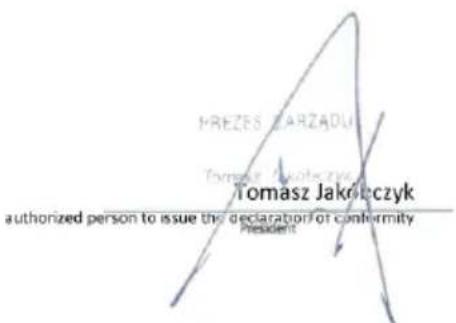
Tomasz Jakóbczyk
ul. Puławska 403A
02-801 Warsaw, Poland
We declare under our sole responsibility that our product:
Type of device:
ELECTRIC MIXER
Name:
EM3010
If used for its intended use complies with the essential protection requirements relating to the:
2014/30/EU (EMC Directive)
2014/35/EU (LVD Directive)
2006/42/EC (MD Machinery Directive)
2011/65/EU (RoHS Directive) and its Annex II amending directive 2015/863/EU
The assessment of this product has been based on the following standards:
EMC standards:
EN IEC 61000-3-2:2019 + A1:2021
EN 61000-3-3:2013+A1:2019
EN IEC 55014-1:2021
EN IEC 55014-2:2021
MD and LVD standards:
EN ISO 12100:2010
EN 62233:2008
EN 62841-1:2015
EN 62841-2-10:2017
RoHS standards:
EN IEC 63000:2018
Warsaw, 17.10.2022
BLAUPUNKT
02-801 Warsaw, Poland
Correspondence address:
Puławska 12
05-532 Baniocha, Poland
Phone +48 22 688 08 00
Competence Center
2N-Everpol Sp. z o.o.
ul. Puławska 403A
02-801 Warsaw, Poland
phone:+48226880800
e-mail: info@everpol.pl
www.blaupunkt.com
In case of questions or problems please contact our service.
Tel. 00 48 22 688 08 33
Email:tools@blaupunkt.pl
Enjoy it.
All rights reserved. All brand names are registered trademarks of their respective owners. Specifications are subject to change without prior notice.


- Enjoy it.
- IMPORTANT INFORMATION
- Electric Mixer - safety warnings.
- USE PERSONAL PROTECTIVE EQUIPMENT
- CE
- Main Parts
- Mixing Paddle Selection
- Cleaning and Maintenance
- Mounting and Operation
- SPEED CONTROL
- SWITCHING ON/OFF
- Noise and vibration
- WAŻNE INFORMACJE
- Wybór mieszadła
- REGULACJA OBROTÓW
- WŁĄCZANIE/WYŁĄCZANIE
- výběr míchadla
- 3.Čištění a údržba
- ŘÍZENÍ RYCHLOSTI
- ZAPNUTO/VYPNUTO
- POUŽÍVAJTE OSOBNÉ OCHRANNÉ PROSTRIEDKY
- REGULÁCIA OTÁČOK
- Zapnutie/Vypnutie
- SEBESSÉGSZABÁLYOZÁS
- BEKAPCSOLÁS/KIKAPCSOLÁS
- Izbira mešalca
- PRILAGAJANJE VRTLJAJEV
- VKLOP / IZKLOP
- Izbor miješalice
- PROMJENJIVE BRZINE
- UKLJUČIVANJE/ISKLJUČIVANJE
- ΡΥΘΜΙΣΗ ΣΤΡΟΦΩΝ
- ПРЕВКЛЮЧВАТЕЛ ЗА ВКЛЮЧВАНЕ/ИЗКЛЮЧВАНЕ
- REGLAREA VITEZEI DE ROTATIE
- PORNIREA/OPRIREA
- Maišiklio pasirinkimas
- APSISUKIMU REGULIAVIMAS
- IJUNGIMAS/IŠJUNGIMAS
- Seguri valik
- PÖÖRLEMISKIIRUSE REGULEERIMINE
- SISSE- JA VÄLJALÜLITAMINE
- Maisītāja maina
- lerices tirišana un apkope
- APGRIEZIENU REGULÉŠANA
- IESLĚGŠANA/IZSLĚGŠANA
- DEKLARACJA ZGODNOŚCI WE
- BLAUPUNKT COMPETENCE CENTER
- EC – DECLARATION OF CONFORMITY
- ELECTRIC MIXER
- EM3010
- BLAUPUNKT
Brand : BLAUPUNKT
Model : EM3010
Category : Hand blender