Ambassador Inbuilt - Barbecue MASPORT - Free user manual and instructions
Find the device manual for free Ambassador Inbuilt MASPORT in PDF.


User questions about Ambassador Inbuilt MASPORT
0 question about this device. Answer the ones you know or ask your own.
Ask a new question about this device
Download the instructions for your Barbecue in PDF format for free! Find your manual Ambassador Inbuilt - MASPORT and take your electronic device back in hand. On this page are published all the documents necessary for the use of your device. Ambassador Inbuilt by MASPORT.
USER MANUAL Ambassador Inbuilt MASPORT
natural_image
Exterior view of a modern outdoor grill with control knobs and a digital display (no visible text or symbols)
natural_image
Two large, translucent objects wrapped in plastic or rubber placed on a metallic surface, under blue-tinted lighting (no visible text or symbols)
natural_image
Close-up of skewers on a griddle in blue-tinted lighting (no text or symbols visible)OWNER'S MANUAL
Please read these instructions carefully before assembly, to reduce risk of fire, burn hazard or other injury.
Keep these instructions in a safe place for future use.
This manual covers a range of barbecues which include: AMBASSADOR IB and AMBASSADOR DELUXE IB.
SAFETY AND WARRANTY INFORMATION 3
PARTS DIAGRAM, PARTS LIST & FIXTURES 6
ASSEMBLY INSTRUCTIONS 10
| INSTALLATION | 14 |
NATURAL GAS CONVERSION 19
LEAK TESTING 22
| OPERATION | 23 |
| TROUBLESHOOTING | 26 |
CARE AND MAINTENANCE 27
| TECHNICAL DATA | 30 |
SAFETY AND WARRANTY INFORMATIONCONTENTS
Keep the instructions in a safe place for future use.

DO NOT OPERATE THIS BBQ BEFORE IT HAS BEEN ASSEMBLED CORRECTLY AND YOU HAVE READ AND UNDERSTOOD THESE INSTRUCTIONS.

These instructions are intended as a general guide and do not supersede national or local codes in any way. Contact local authorities for clarity of laws relating to the operation of this appliance.
SYMBOLS IN THIS OWNER'S MANUAL

Possible hazard or hazardous situation. Not observing this instruction can lead to injuries or cause damage to property.

Important information on proper handling. Not observing this instruction can lead to faults in the BBQ.

User information. This information helps you to use all the functions correctly.
Failure to follow these instructions could result in the or explosion which could cause property damage, personal injury or death. Accessible parts may be very hot. Keep young children away from the hot appliance at all times (even while cooling down). Some parts of this grill may have sharp edges especially as mentioned in this manual! Wear suitable protective gloves if necessary.
Assembled parts sealed by the manufacturer must not be altered by the user. Any modification of the appliance by unauthorised persons may be dangerous.

WARNING! FOR OUTDOOR USE ONLY

WARNING!
To reduce the risk of line, burn hazard or other injury, read the instructions carefully and to sure your appliance is properly installed and assembled.

DANGER!
If you smell gas:
-
Shut off gas to the appliance;
-
Exclusions any other items
-
Copd Id
A. If order continues, keep away from the appliance and immediately call your gas supplier or your fire department.

WARNING!
TO INSTALLER:
Last operation of the appliance and instruct the user before leaving. Ensure the appliance is commissioned correctly before handing over to the user.

WARNING!
The grill head is heavy and will require two or more people to lift, and position onto the grill cart when assembly.

WARNING!
Do not try lighting this appliance without first reading the "LIGHTING INSTRUCTION" section of the manual.

WARNING!
Conversion to natural gas only done by authorized persons.

WARNING!
Always keep the electrical components in any situation.
IMPORTANT SAFETY INFORMATION
Please read and understand this manual fully before assembly and use.
- The Manufacturer's Warranty may be voided by the incorrect use of this product.
- The Manufacturer or their Agents can accept no liability for the unsuitability of, or any damage to. food that is cooked on this appliance.
- Use the correctly specified fuel with this barbecue. Check with your dealer for the specific fuel for which this barbecue has been designed.
OWNER'S MANUAL
• The operator must understand all the safety requirements detailed in this manual before using the barbecue.
- If you have any queries regarding these instructions, contact your local dealer for clarification before you use your barbecue.
- The unit must be correctly assembled before use. Failure to follow the manual's instructions could result in serious damage or injury.
PERSONAL SAFETY
- The use of alcohol, prescription or non-prescription drugs may impair the consumer's ability to properly assemble or safely operate this barbecue.
- The barbecue should be carefully checked for operational use every time before use.
- Never try to move the barbecue when it is on, or before it has had time to cool down.
- The person operating this barbecue should pay constant attention to the food being cooked.
- Do not leave the barbecue unattended when it is slight. The person should remain at the barbecue at all times when it is aight/looking.
THIRD PARTY SAFETY
- The operator is responsible for the safety of all third parties while the barbecue is in use.
- Cnlockers should be kept a safe distance away from the barbecue when it is in use.
- Keep children and animals well away while the barbecue is in use and while it is cooling down.
LOCATION
- Do not use indoors. Barbecue units are designed for OUTDOOR USE ONLY.
- Use in a weather-protected area, preferably under shelter.
- Ensure that the barbecue is on an even and secure surface before operating. Use the castor locks if fitted to lock the wheels in place.
- Do not use within one metre of any flammable surface of structure.
BURN AWARENESS
- Parts of the barbecue do get extremely hot and could cause serious burns - touch test the surface before applying a firm g
- The hood handle can become hot. Always wear cooking gloves and long sleeves when handling hot components.
- If cooking with the hood closed, be very careful opening the hood, a sudden rush of hot air could burn an unprotected arm.
GAS AWARENESS
- Ensure all gas couplings and hoses have been correctly fitted. - Always leak test all gas lines and connections before use with scaddy water
- Use spanner to tighten all gas fittings.
- Check all gas hose and line connection for damage, cuts or cracks each time for using the appliance.
- Check all burners regularly for insect nests or webs such as spiders, ants, etc. Nests/webs are dangerous and need to be fully desired.
- Have the gas cylinder filled by an authorized gas supplier
- LSE grill at least 450mm from any wall or surface, combustible material, gasoline, flame liquids or vapors.
- Do not store flammable materials near this barbecue.
- Do not place the gas bottle underneath the barbecue directly.
- Do not store spare LPG cylinders under or near this barbecue.
- Do not place or use aerocells near this barbecue.
- Do not store or use gasoline or other flammapie vapours or liquids in the vicinity of this barbecue.
- Do not lean over appliance when lighting.
- Do not use appliance with any cover on.
- Do not use plastic or glass utensils on the appliance.
- Do not dismantle control valves.
- Do not test for gas leaks with a naked flame.
- Do not modify the constructions of the appliance or the size of any burner, injector office or any other components
- Do not obstruct any ventilation of the appliance.
- Do not allow the flexible gas supply hose or any electrical cord to come in contact with any heated surface of the appliance.
- Do not use charcoal or any other solid fuel in this appliance.
- Do not disconnect any gas fittings while the appliance is in use.
- Do not use a rusty or dented gas cylinder with a damaged gas valve.
- Do not fill the gas cylinder beyond 80% capacity.
- Ensure that the gas is turned OFF at the cylinder after use and while the barbecue is unattended.
- When turning off the barbecue, shut off the gas at the supply source before turning off all the burner controls.
- Do not store gas cylinders below ground level. ULPG is heavier than air. Should a kak occur, the gas will collect and could ignite due to presence of a flame or electric spark.
FOR YOUR SAFETY AND OTHERS
If you smell gas:
- Shut off the gas supply to the barbecue.
- Extinguish any open flame (candles, cigarettes, etc.)
- Clear the area to allow the unburned gas to dissipate.
Be aware of the reason for the gas amel, address this before continuing. Should the gas odour come from the LPG cylinder, immediately contact the fire department from an elevated safe distance.
Connecting the gas cylinder to the barbecue, refer to that section in the manual.
Look testing, refer to the section in the manual.
SAFETY EQUIPMENT
When cooking with oil/grease, the extinguishing materials should be readily accessible.
In the event of an oil/grease fire do not attempt to extinguish with water or alcohol. Use type BC dry chemical fire extinguisher or smother the fire with dirt, sand or baking soda.
RAIN HAZARD
In the event of ran while cooking with oil/grease, turn off the gas supply and all burners, cover the barbecue as soon as possible. Move people/animals away from around the barbecue. Do not attempt to move the barbecue until it has cooked and can safely be moved.
WARRANTY
Refer to the warranty supplied with this BBQ. Should any part fall due to defective workmanship or faulty materials within the specified period from the date of purchase, Maspord will replace or repair the defective part free of charge. Refer to the warranty for details. Do not use a BBQ that is unsafe.
LPG CYLINDER
The cylinder manufacturer/distributor is responsible for the safety and performance of the LPG cylinder. This is not included in the Macport DBO warranty. Do not use a cylinder that is unsafe.
DISPOSAL OF PACKAGING
Remove all protective packaging including any protective film from stainless steel surfaces.
Make sure you properly dispose of, or recycle the packaging material where possible to comply with applicable waste disposal laws in your area.
PARTS DIAGRAM, PARTS LIST & FIXTURES
4 BURNER PARTS DIAGRAM
IMAGE IS FOR ILLUSTRATION PURPOSE ONLY
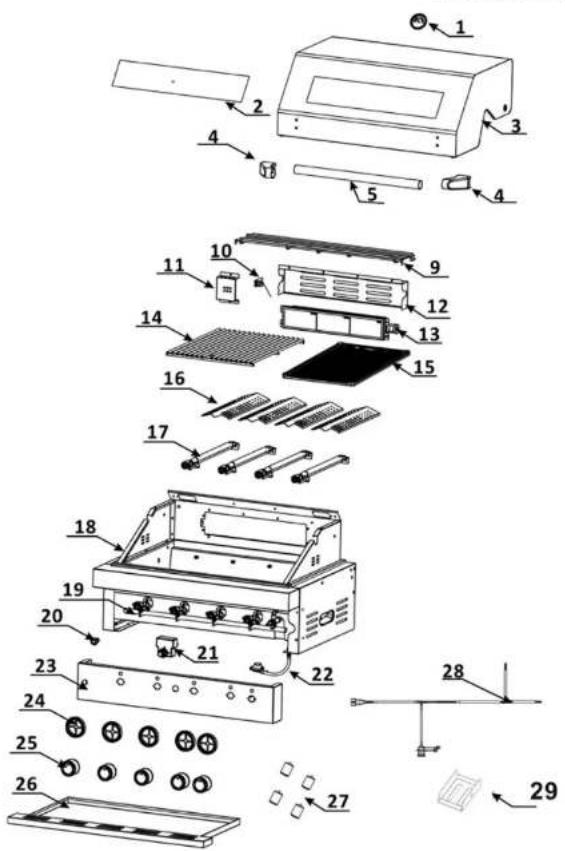
4 BURNER PARTS LIST
| Item No. | Description Qty | |
| 1 | Temperature gauge 1 | |
| 2 | Class I | |
| 3 | Hood unit 1 | |
| 4 | Hood handle seal 2 | |
| 5 | Hood handle 1 | |
| 9 | Worming rack 1 | |
| 10 | Infrared burner ignition cable 1 | |
| 11 | Infrared burner wind cover 1 | |
| 12 | Infrared burner rear cover 1 | |
| 13 | Infrared burner | 1 |
| 14 | Coping grill | 1 |
| 15 | Cash iron plate | 1 |
| 16 | Frame diffuser | 4 |
| 17 | Main burner | 4 |
| 18 | Fire box unit | 1 |
| 19 | Manifold | 1 |
| 20 | Switch (Knob LED) | 1 |
| 21 | Igniter (1 of 5) | 1 |
| 22 | Gas regulator and hose | 1 |
| 23 | Control panel | 1 |
| 24 | Knob bezzel with LED | 5 |
| 25 | Control knob | 5 |
| 26 | Greese tray | 1 |
| 27 | Feet | 4 |
| 28 | LED cable | 1 |
| 29 | Battery box | 1 |
6 BURNER - PARTS DIAGRAM
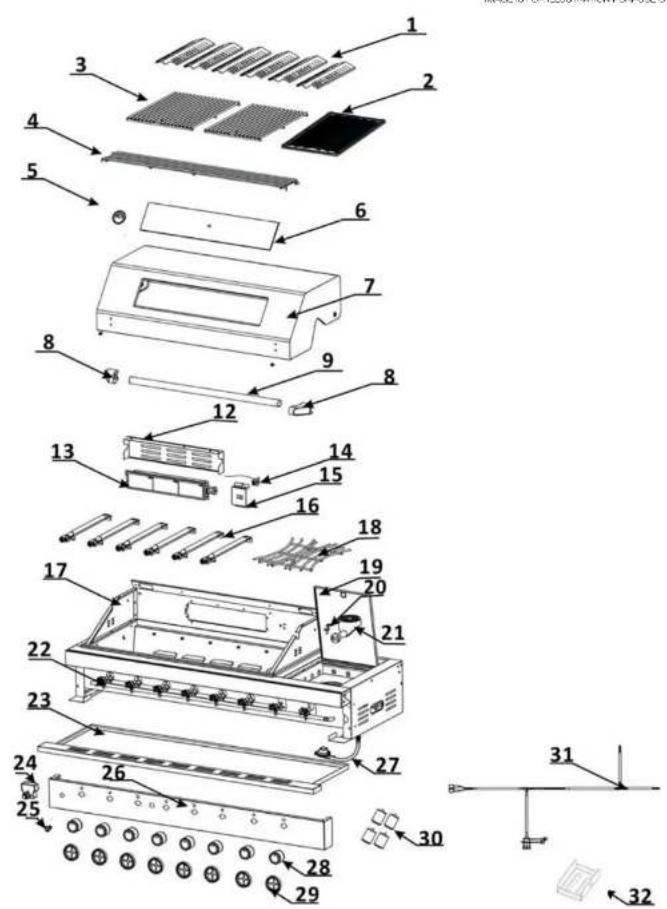
6 BURNER PARTS LIST
| Item No. | Description Qty | |
| 1 | Farni diffuser 6 | |
| 2 | Cast iron plate 1 | |
| 3 | Cooking grill 2 | |
| 4 | Worming rack 1 | |
| 5 | Temperature gauge 1 | |
| 6 | Class 1 | |
| 7 | Hood unit 1 | |
| 8 | Hood handle seat 2 | |
| 9 | Hood handle 1 | |
| 12 | Inflated rear burner rear cover | 1 |
| 13 | Inflated rear burner | 1 |
| 14 | Inflated burner ignition cable | 1 |
| 15 | Inflated rear burner wind cover | 1 |
| 16 | Main burner | 6 |
| 17 | Fire box unit 1 | |
| 18 | Side burner cooking grid | 1 |
| 19 | Side burner lid | 1 |
| 20 | Side burner ignition cable | 1 |
| 21 | Cast iron side burner | 1 |
| 22 | Manifold | 1 |
| 23 | Grease tray | 1 |
| 24 | Igniter (1 for 8) | 1 |
| 25 | Switch (Knob LED) | 1 |
| 26 | Control panel | 1 |
| 27 | LPG Gas regulator and hose | 1 |
| 28 | Control knob | 8 |
| 29 | Control knob bezel with LED | 5 |
| 30 | Foot | 4 |
| 31 | LED cable | 1 |
| 32 | LED battery box (Battery not included) | 1 |
ASSEMBLY INSTRUCTIONS
NOTE:
When assembling the barbecue, ensure it is sitting on a flat surface.
For Australian purposes a 6 Burner with Side Burner and Rear Burner is used in assembly steps shown in the next few pages.
Tools Required: Phillips Head Screwdriver and Gloves
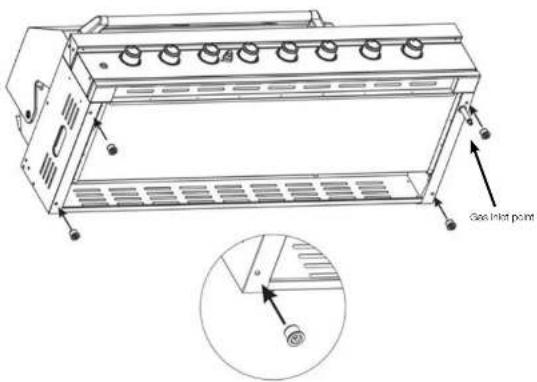
STEP 1
4 x 1 feet assembly.
STEP 2
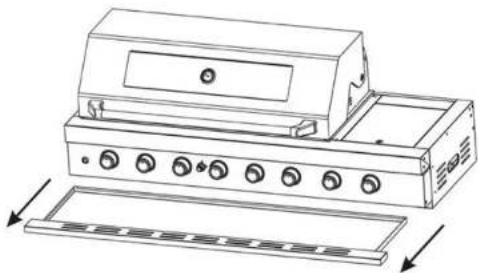
Battery assembly:
First remove the fist tray to uncrew the battery box.
natural_image
Line drawing of a portable gas stove with control panel and side-mounted tray (no text or symbols)Unscrew the battery box. Install a 9 volt battery.
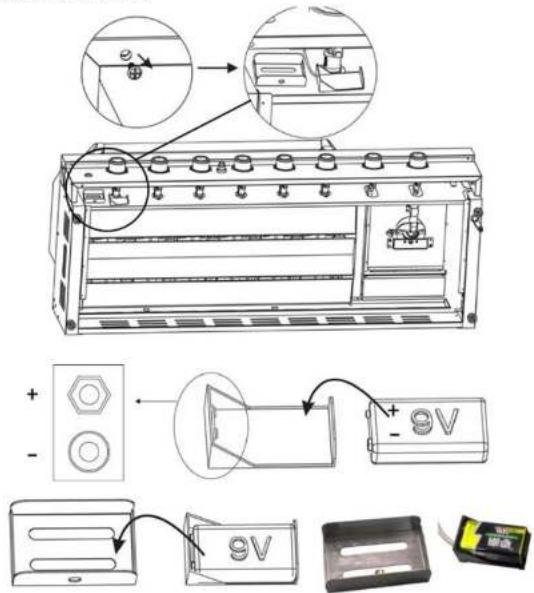
Place the battery inside then put the cover on. Screw the battery box on and reinsert the tar tray.
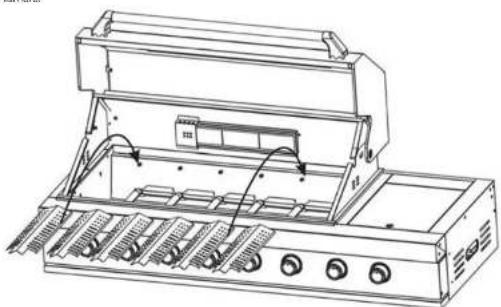
STEP 3
Assemble the flame tamers.
natural_image
Technical line drawing of an electrical enclosure with ventilation grilles and a control panel (no text or symbols)STEP 4
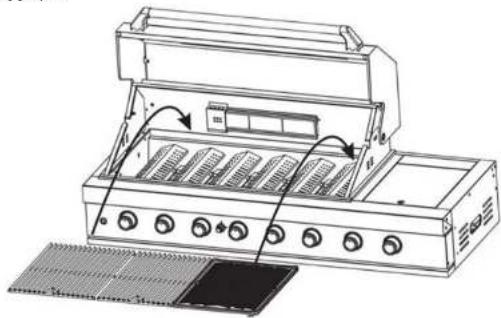
Assemble the cooking grid/plate.
natural_image
Line drawing of a portable electric grill with cooling fins and heat exchangers (no text or symbols)STEP 5
Assemble the warning rack.
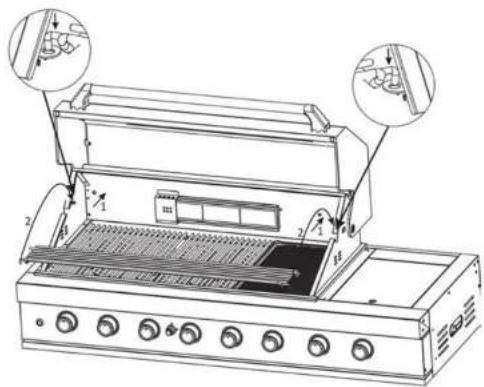
STEP 6
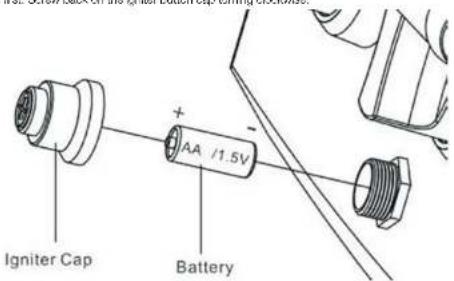
1 x 1.5V AA battery needed for ignition. Battery not included. Unscrew Igniter button cap by turning counterclockwise. Install AA battery with negative end inserted first. Screw back on the igniter button cap turning clockwise.
STEP 7
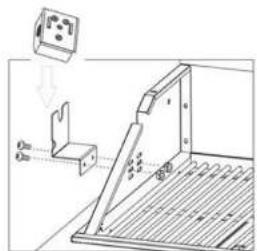
Assemble the rolisseric kit.
natural_image
Technical line drawing of a mechanical assembly with mounting bracket and base plate (no text or symbols)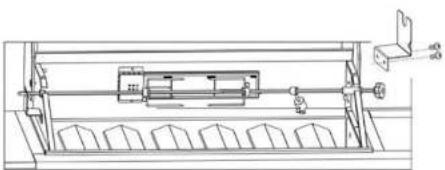
natural_image
Technical line drawing of a mechanical device with no visible text or symbolsINSTALLATION

WARNING!
FOR OUTDOOR USE ONLY
This Cooking Appliance should not be used in a building, garage or any other enclosed area. Also THIS APPLIANCE should be placed in a well-ventilated area. Take care to ensure that the minimum clearances guidelines are followed.
NOTE!
Read carefully the edges containing the parts and assembly before assembling your gas grill.
MINIMUM CLEARANCES:
- From sides: 1,000mm; From back: 1,000mm
• From above (vertical): 1500mm
Keep this barbecue away from any flammable materials! This appliance shall only be used in an above ground open-air situation with natural ventilation, without stagnant areas, where gas leakage and products of combustion are rapidly disposed by wind and natural convection. This barbecue is not designed for marine use.
ANY ENCLOSURE IN WHICH THE APPLIANCE IS USED SHALL COMPLY WITH ONE OF THE FOLLOWING:
- An enclosure with walls on all sides, but at least one permanent opening at ground level and no overhead cover.
- Within a partial enclosure that includes an overhead cover and no more than two walls.
- Within a partial enclosure that includes an overhead cover and more than two walls, the following shall apply:
6) at least 25% of the total wall area is completely open and unrestricted
bj at least 30% of the remaining wall area is open and unrestricted - In the case of balconies, at least 20% of the total of the side, back and front wall areas shall be and remain open and unrestricted.
See following diagrams for further illustration:
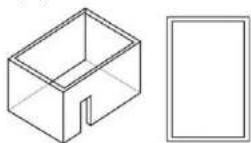
FIGURE 11-OUTDOOR AREA-CAMPLE 1
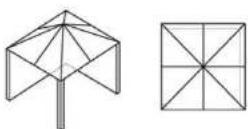
FOURF F2 OUTCOR AREA BUMP F2
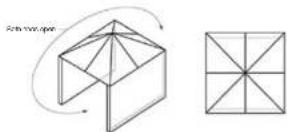
FIGURE TO OUTLOOKING EXAMPLES
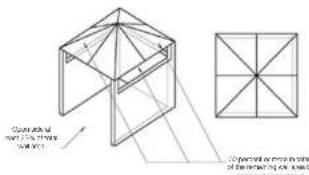
FIGURE P-OUTDOOR AREA-EXAMPLE 1
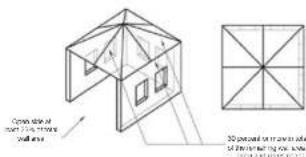
FIGURE F5-OUTDOOR AREA-EXAMPLES
Before proceeding, you need to establish the gas type which your barbecue will run on, and the style of installation you need.
NATURAL GAS OR ULPG
Before beginning installation or assembly, check that the gas type which the barbecue is designed for is correct for the gas available to you. In most countries the choices are natural gas or ULPG. You will find the gas type label on the side of your barbecue. If your barbecue uses the incorrect gas type, or if you are unsure, consult your dealer before going any further. Using the wrong type of
gas for a barbecue is extremely dangerous.
Natural Gas Conversion: This barbecue is made for ULPG. This barbecue can be converted to run on natural gas. Refer to the
section on Natural Gas Conversion on pages 18 to 22 for details.
FIXED (PIPED) INSTALLATIONS
Piped Natural Gas. Although installation costs are higher, this is typically the least expensive way to run your barbecue. Natural gas is delivered via pipeline to a gas meter near the perimeter of your home. From the gas meter, gas is taken by a further series of pipes to each appliance that uses natural gas.
Piped ULPG: Some properties do not have natural gas available to them. In these cases, the local gas supply company may be able to provide two 45 Kg (100 lb) cylinders permanently installed on the outside of your home. These are refilled for you by the gas company based on your usage patterns. Copper pipe is then run from these cylinders to each appliance that uses ULPG.
There are two methods of connecting the gas to your barbecue, both of which require the services of a licensed gas filter:
- For built in (ie non-mobile) installations, the barbecue inlet can
be connected directly to copper piping. From here the barbecue cannot be moved.
- The copper piping can terminate in a "beyonet point" on a wall or other structure. A special hose and terminator allows the barbecue to be connected and disconnected from the bayonet point safely and conveniently. This allows the barbecue to be moved if necessary.
PORTABLE ULPG CYLINDER
The most flexible arrangements is a portable LPG gas cylinder attached by a special hose and regulator to your barbecue. Although the cylinder needs to be refilled or exchanged when empty, this installation has the advantage of being more mobile, and not requiring the services of a licensed gas filter.
BUILT IN
Whatever gas option you choose, your barbecue can be permanently built-in.
GENERAL REQUIREMENTS
we recommend that this installation be done in a masonry structure and carried out by a professional tradesperson. Other non-combustible material such as Hardiplank, Villabnard with metal studs may also be used. The installer must test the appliance and instruct the user regarding the operation of the appliance.
This appliance must not be installed under or on any combustible material. Minimum clearance from combustible construction materials to all sides of the appliance is 450mm (18").
Warning: Contact your local municipality for any building codes regulating the installation of outdoor barberue appliances. Outdoor installations must conform to local codes or, in the absence of local codes, with:
• ALST: Australian Standards Code AS/N7S 5601
as well as the requirements of any local council, gas, electricity authority or other statutory regulation.
THE BARBECUE CAVITY
Your barbecue has been designed to sit into a cavity or cutout rather than be placed directly onto a flat surface. It is important that the dimensions of the cavity conform exactly to those shown (pg 16-18). This will ensure the barbecue sits correctly in the cavity, and that the barbecue has sufficient ventilation to operate efficiently and safely. It also allows room for any roasting hood to open freely; in creating the cavity, you should ensure that you have convenient access to the gas connection point and associated hardware:
- If the gas for your barbecue is supplied by a portable gas bottle, you will need access to the gas connection point, the gas hose and the gas cylinder at all times.
- If the gas for your barberne is supplied by a fixed piped gas supply (either natural gas or 45kg LPG cylinders), you will need access to the gas connection point, the piping and the shutoff valve.
OTHER PRECAUTIONS
Do not obstruct any of the ventilation openings in the barbecue body. Should you need to change the gas cylinder, confirm that the cylinder is off, and that there are no sources of ignition (eigaretres, open flame, sparks, etc.) near before proceeding. Be sure to inspect the gas hose and ensure it is free of any twisting or tension. The hose should hang freely with no bombs, folds, or kinks, which could obstruct free flow of gas. Apart from the connection point, no part of the hose should touch any hot barbecue parts. Inspect the hose before last. If the hose is damaged, it must be replaced with a hose suitable for use with ULPG and meet the national standards for the country of use. The length shall not exceed 1.5m. Should minimum clearance not be adhered to severe flare up may be experienced due to lack of airflow around the barbecue, thus voiding manufacturer's warranty.
BUILT-IN INSTALLATION

WARNING!
Prior to starting any construction, check with your local council for any building codes regulating the installation of outdoor barhouse appliances, Outdoor installations must conform to the local codes or, in the absence of local codes, refer to the Australian Gas Standard: AS 4357-2004 (Amdi2).

WARNING!
ULPG is highly explosive and can cause serious bodily injury or death if allowed to accumulate in a confined area. Adequate ventilation must be included in the design stage to allow any un-burnt gas to escape safely.

WARNING!
Should the design allow the setting of the ULPG bottle directly below the BDQ, then a permanent separation must be included between the BDQ above and the ULPG bottle.
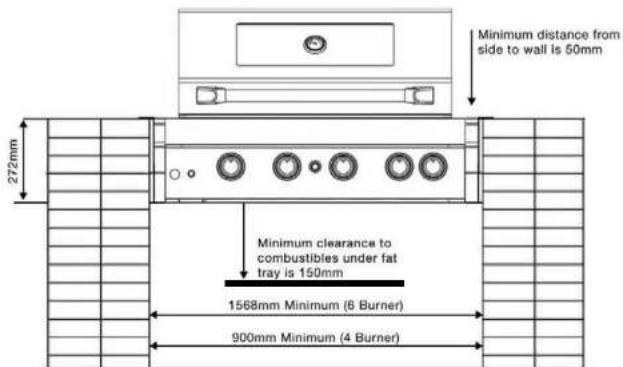
STANDARD LAYOUT DIMENSIONS
For Inbuilt installation: Islands, Masonry & other non-combustible material structures.
| Non-combustible Ambassador IB Ambassador Deluxe IB | ||
| Width (A) 900mm 1568mm | ||
| Height (B) 272mm 272mm | ||
| Depth (C) 540mm 540mm | ||
| Min Clearance to Combustible Material | 450mm 450mm | |
ILLUSTRATION OF AN INSTALLATION
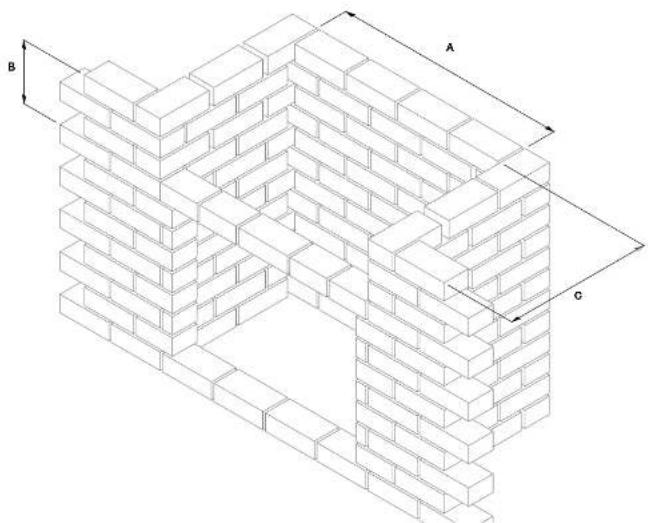
natural_image
Isometric line drawing of a brick wall structure with labeled dimensions A, B, and C (no text or symbols beyond labels)4 BURNER DIMENSIONS
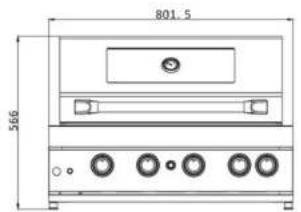
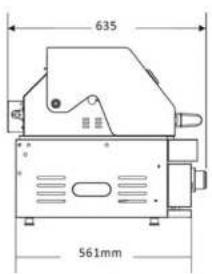
6 BURNER DIMENSIONS
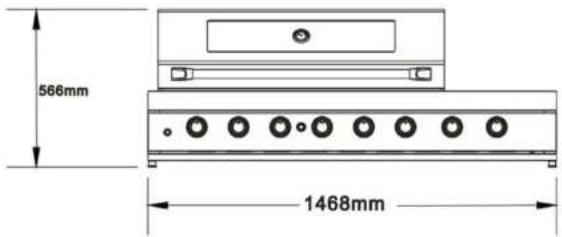
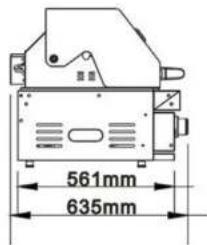

WARNING!
- Please follow to having instruction to install.
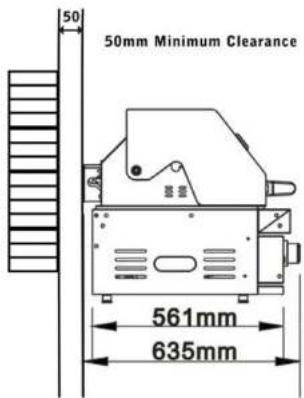
- The minimum clearance of the sides of the BBQ to walls needs to be 50mm.
- DO NOT block any ventilation of the BEQ
- The enclosure material for the output is not combustible.
- De Net glass gas cylinder underneath the battery, keep required clearance.
- Ensure floor clearance are kept and vary underrest in the larvae.
- Minimum clearance to combustibles under fat may be 100mm
"Image or 4 Warner used as an example only
This appliance is designed to be used with a gas cylinder not exceeding 9kg.
- The gas cylinder supply vava must be turned off when the appliance is not in use.
- Gas cylinders must be stored outdoors, out of reach of children and must not be stored in a building, garage or any other enclosed area.
- The gas cylinder used must incorporate a safety color to protect the value assembly.
- Never store a spare cylinder under the barbecue shelves or inside the trolley housing.
- Any I PB cylinder not attached to the appliance for use should be stored outdoors and well away from the appliance.
Gas grills are used safely by millions of people when following simple safety precautions. The items used in the fuel system are designed for operation with the grill.
(See parts list for replacement items).
This barbecue is designed for LP gas use only. Bottle sizes of 4.5kg or greater are recommended for use with this barbecue. Sunave LPG regulators must have an outlet pressure at 2.75 kPa. You must have the proper regulator and bottle in order for the barbecue to operate safely and efficiently. Please consult your local gas dealer for the most suitable gas cylinders. Please note the regulator supplied with the barbecue is of an exposure time.
with the LaDecide is an approved type.
The Manicid thread type is 5/8" x 18. For more information on pipe sizing, please refer to AS/NZS 5601 / AG601.
The gas cylinder must always be stored or used in an upright position.
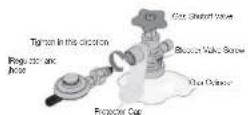
FIXING THE GAS REGULATOR TO THE CYLINDER
- Confirm all barbecue control knobs are in the off position.
-
Make sure the cylinder valve is off.
-
Remove the protective cap from the cylinder if present.
-
Leak test the connection with a scapy water solution
-
Hand-tighten the regulator upsoiled with this barbecue to the gas cylinder by screwing in an anti-clockwise direction.
-
DO NOT OVER TIGHTEN!
As the regulator is fitted with a soft nose, it should only be tightened a further 1/4 turn after resistance is first felt.
LPG CYLINDER
The cylinder manufacturer/distributor is responsible for the safety and performance of the LPG cylinder. This is not included in the Masport BBQ warranty. Do not use a cylinder that is unsafe.
When disconnecting and removing the gas cylinder for the purpose of refiling, always observe the following procedure.
- Ensure that all gas control valves on the appliance and the gas cylinder are turned off before disconnecting the regulator from the cylinder.
- Do not smoke or use a naked flame near the appliance or gas cylinder while disconnecting the gas line between the appliance and gas cylinder.
- Remove the gas cylinder from the enclosure before disconnecting the regulator from the appliance.
- Tighten all connections before placing the gas cylinder back in its enclosure.
- The gas leak testing procedure should be conducted every time the gas cylinder is retitled and reconnected to the appliance before using the appliance.
NATURAL GAS CONVERSION

WARNING! CONVERSIONS ONLY TO BE DONE BY AUTHORIZED PERSON
Tools required:
- Socket head set screw driver
• Philips Head Screw, Spanner A/F 8mm, Spanner A/F 14mm
GAS PIPING
-
A minimum pipe with diameter 15mm is required for inlet piping. A over operated shut-off valve should be installed with 1 meter of the appliance for serving the appliance.
-
Where is not practical to install solid tube AGA certified to AS/NZS 1969 class A, stainless steel braided hose could be installed. This hose assembly must comply with AS5501 Gas installations, pipe sizing tables and shall not exceed 3 meters in length. The internal diameter of the hose must not be less than 10mm.
-
All gas pipe connection must be scaled with a gas pipe compound resistant to natural gas
NOTE TO INSTALLERS (USUALLY A GAS FITTER/ PLUMBER)
-
The U-LPG injector is 0.98mm.
-
The NG injector for main burner is 1.50mm, for side and back burner is 1.65mm.
-
The grill is equipped with injector for both LPG and NC.
-
The grill is set for U-LPG by manufacturer
-
Use an AGA Certified Natural Gas hose and regulator
-
Update the information on the data plate to keep the BBQ compliant with local gas regulations
CONVERTING THE MAIN BURNERS
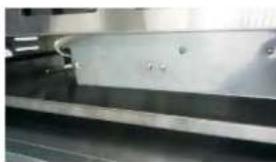
- Unscrew and remove the rear panel pictured
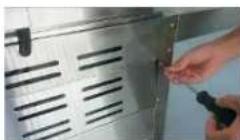
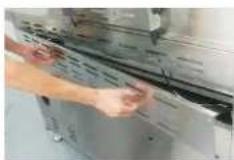
- Unscrew the main burner securing screws and remove the burner, sitting it alongside.
natural_image
Close-up of a metallic mechanical component with bolt holes and a flat surface (no visible text or symbols)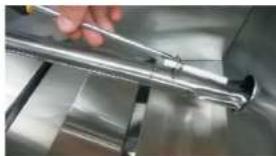
natural_image
Close-up of a hand holding a metallic tool interacting with a metal sheet (no visible text or symbols)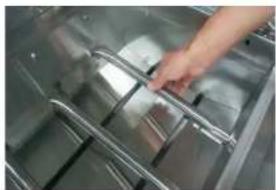
natural_image
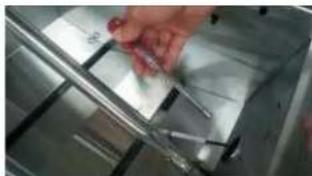
Close-up of a hand adjusting a metallic kitchen handle (no text or symbols visible)- With the burner removed, you will see the brass gas jet which is screwed into the end of the valve. Using the socket driver supplied, unscrew the end LPG jet while retaining the inner (NG) jet.
natural_image
Close-up of a hand using tweezers to clean or store items on a metal shelf (no visible text or symbols)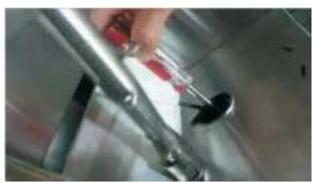
natural_image
Close-up of a hand holding a small object over a metallic surface, possibly a tool or component (no visible text or symbols)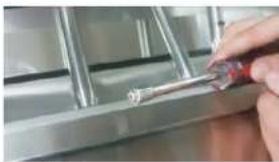
natural_image
Close-up of a hand using a tool to apply material to a metal tray (no visible text or symbols)- Desassemble the burer.
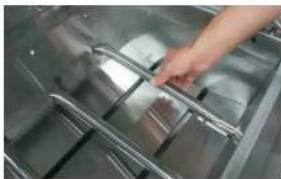
natural_image
Close-up of a hand placing a metal tray into a stainless steel storage tank (no visible text or symbols)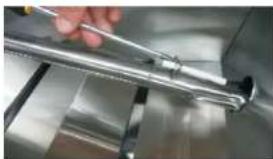
natural_image
Close-up of a hand using a metal tool to handle a metallic object (no visible text or symbols)Note: Please make sure the gas valve is located well inside the main bumer tube when re-installing the oumers.
- Repeat the above steps for the other main burners.
CONVERTING THE REAR BURNER
- Remove the Rear Burner cover.
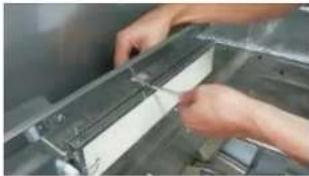
natural_image
Close-up of hands installing or adjusting a metal panel on a metal shelf (no visible text or symbols)*The removal of the jet exposes the (IVG) jet inside the valve, so no replacement jet is required. This applies to the man, side and rear-burnor jots as well.
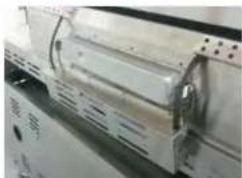
natural_image
Close-up of a metallic cylindrical device with internal components and mounting holes (no visible text or symbols)- Remove the LPG jet from the elbow shaped brass inctor assembly, leaving the NG jet in place.
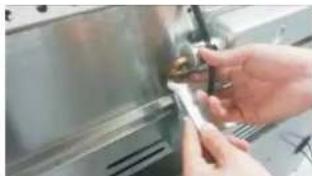
natural_image
Close-up of hands operating a stainless steel kitchen tool (no visible text or symbols)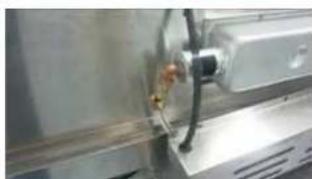
natural_image
Close-up of a mechanical device with a coiled cable and attached component (no visible text or symbols)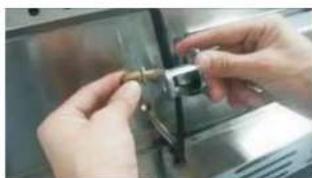
natural_image
Close-up of hands installing or adjusting a small mechanical component on a stainless steel appliance (no visible text or symbols)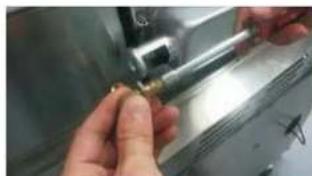
natural_image
Close-up of hands adjusting a metal tool with a brass fitting (no visible text or symbols)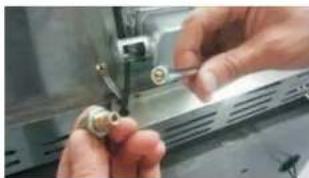
natural_image
Close-up of hands operating a sewing machine needle (no visible text or symbols)- Reassemble the elbow shaped brass injector assembly (NG) and reassemble the rear burner cover.
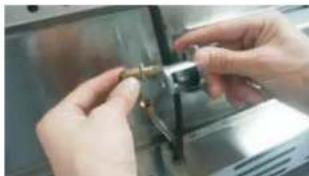
natural_image
Close-up of hands assembling a small mechanical component on a metal surface (no visible text or symbols)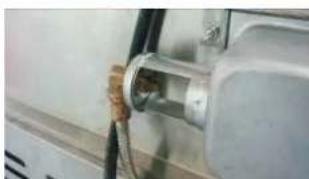
natural_image
Close-up of a mechanical component with a black cable inserted, no visible text or symbolsCONVERTING THE SIDE BURNER
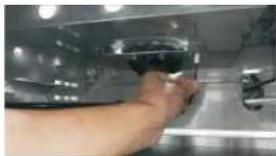
- Take away the grease tray. Remove the side burner ignition wire from the terminal.
natural_image
Close-up of a hand holding a small black object inside a metallic appliance (no visible text or symbols)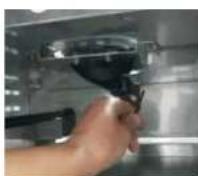
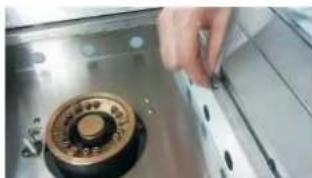
- Urscrew and take away the side burner.
natural_image
Close-up of a hand placing a small object on a metal surface next to a circular component (no visible text or symbols)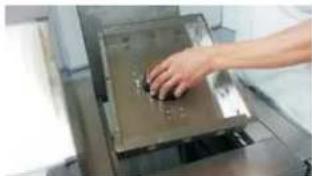
natural_image
Hand pressing down on a mechanical component (no visible text or symbols)- Using the supplied socket screwdriver, unscrew and remove the LPG gas jet, leaving the NG jet in place.
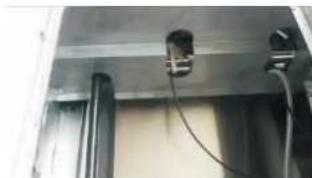
natural_image
Interior view of a mechanical or electrical enclosure with vertical supports and cables (no visible text or symbols)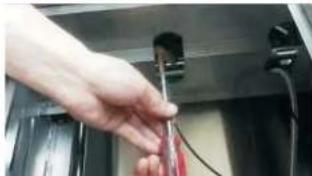
natural_image
Close-up of a hand holding a tool with wires inside a metal enclosure (no visible text or symbols)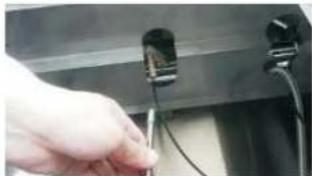
natural_image
Close-up of a hand holding a cable with wires, next to a black electrical component (no visible text or symbols)- Reassemble the side burne.
natural_image
Industrial machinery setup with a mechanical component and wiring (no visible text or symbols)LEAK TESTING

WARNING!
Never use a naked flame to check for gas leaks.
Always use the following procedure to check for gas looks:
1. In a small container, mix up a solution of water and detergent or rings.
2. Make sure that the gas supply valve on the gas cylinder is
times 01
3. Make sure that the gas control valves on the appliance are all turned off.
4. Using a brush or spray bottle apply the solution to the gas line and each join in the gas line.
a. Hushing of the solution will indicate that there is a lack of reason.
6. Re-phenol re-seal and polols that are leasorg
7. If a risk persists then contact your distributor or the manufacturer for assistance.
When to Test: The BBQ gas bottle, regulator & hose assembly should be checked for looks, using the soapy water leak test, every time you reconnect your regulator to the BBQ gas bottle. You should also test after any long period of non-use, such as at the beginning of BBQ season.
What to use: You will need a scapy water solution to check for any leaks. Mixing liquid hand soap with water will work fine (do not use any other household cleaning products).
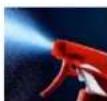
How to Test: Put some soapy water in a spray bottle or a dish. Turn on the gas bottle but do not turn on the BBQ. Next, spray the entire valve, regulator and hose assembly with the soapy water including where the hose connects to the BBQ. Alternatively, you can apply the soapy water with a paint brush, basting brush. Bubbles will form if there is a gas leak and you may also smell the gas. If you find a leak, turn off the gas bottle immediately.
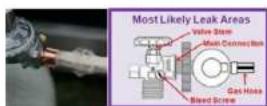
Do not turn back on or attempt to use the BBQ if a gsa leak has
been detected, contact your local BBQ Dealer for repair.
OPERATION

WARNING!
Before proceeding, he screen you understand the safety information contained in the manual.
This barbecue is not designed to be used with more than 66% of the cooking area as a solid plate. Full coverage of plates will cause excessive build-up of heat and damage the barbecue.
- Never leave burners on high for more than 10 minutes unless actually cocking. If the burner makes hissing sounds when it, it may be burning inside. Turn burner off, allow it to cool and try again.
- Close the gas cylinder valve after each use.
- Never lean heavily on the side shelves of your BBQ or attempt to transport your BBQ by bring it from the side shelves.
- Before you start cooking for the first time, clean the BBQ thoroughly with hot scaby water. This is necessary to remove resouls and solvents, oil and grease, which may have remained from the manufacturing process. The hotplate and grill should be thoroughly cleaned in the same manner.
- Clean and maintain the appliance after each use.
- "Burning off" the barbecue after every use (for approx. 15 minutes) will keep excessive food residue to a minimum.

NOTE:
Before using the barbecue for the first time, the barbecue must be it and burning for 30 minutes on the "low" setting.

IMPORTANT
The regulator supplied with this BDO may incorporate an Excess Flow Control Safety Service. The Excess Flow Control will activate to prevent gas flow should a regulator malfunction occur. It is important that the BDO operator understands that all gas valves on the BDO and closes in the OH position prior to opening the gas cylinder valve. If the BDO valves are open prior to opening the cylinder valve, the Excess Flow Control will be activated and prevent the BDO from being it. To reset, close the BDO valves and gas cylinder valve, wait for 1 minute and use correct lighting procedure as detailed below.
SAFETY PRACTICE TO AVOID INJURY
- Inspect the gas supply hose prior to turning on the gas. If there is evidence of cuts, wear, or abrasion, it must be replaced prior to use.
- Only the pressure regulator and hose assembly supplied with the appliance should be used. Never substitute regulator for those supplied with the appliance. Contact customer service for proper replacement.
- Leak check the hose and regulator connections with a soap and water solution before operating the appliance.
- DO NOT turn the gas at the LP gas cylinder unless the gas hose is properly connected to the side burner gas pipe system and all burner are in the "OFF" position.
- Keep a spray bottle of soapy water near the appliance and check the connection before each use.
When properly cared for, your appliance will provide safe, reliable service for many years. However, extreme care must be used as the appliance intense heat that can increase accident potential. When using this appliance basic safety practices must be followed, including following:
- Do not repair or replace any part of the grill unless specifically recommended in this manual. All other service should be referred to a qualified technician.
• The appliance is for outdoor use only.
- The appliance is not intended to be installed in or on recreational vericles and fore boats.
- Children should not be left alone or unattended in an area where the appliance is being used.
- DO NOT allow children to sit, stand or play on or around the appliance at any time.
- Do not store items of interest to children around or below the grill or cart. Do not allow children to crawl inside the cart.
- Never let clothing, pot holders or other favourable materials come in contact with or too close to any grate, burner or hot surface until it has cooled. the fabric could ignite, causing serious personal injury.
- For personal safety, wear proper apparel. Loose filling garments or sleeves should never been worn while using this appliance. Some synthetic fabrics are highly flammable and should be not worn while cooking.
- Only certain types of glass, ceramic carthenware, or other grazed utensils are suitable for grill use.
- Other types of material may shatter with sudden temperature changes. Use only low or medium heat settings in accordance with the manufacturer's guidelines.
- Do not best unopened food containers as a built-up of pressure may cause the containers to burst.
- Use a covered band when opening the grid lid.
- Never kan over an open grill.
When lighting a burner, always pay close attention to what you are doing. Make certain you are aware of which burner you are lighting so that your body and clothing remain clear of open flames.

WARNING!
- DO NOT touch the grill rack, burner glate or immediate surroundings as those areas become extremely hot and could cause burns. Use only dry pollholders. Most or damp pollholders on hot surfaces may cause steam burns.
- DO NOT use towel or bulky cloth in place of postholders. - Gross is fammable, if not grease cast before attempting to handle it. DO NOT allow grease deposit to collect in the grease tray. CLEAN THE SHI ASH PAY OF IT.N.
• DO NOT use aluminum foil to line the grills rack or grill bottom;
For proper lighting and performance of the burners, keep the burner pot clean. It is necessary to clean them periodically for optimum performance. The burners will only operate in one position and must be mounted correctly for safe operation.
Exercise caution when cleaning the grill. To avoid steam bums, DO NOT use a wet sponge or cloth to clean the grill while it is hot. Some cleaners produce noxious fumes or can ignite if applied to a hot surface.
NEVER USE A DENTED OR RUSTY PROPANE GAS CYLINDER. DO NOT use the grill to cook excessively fatty meats or other products which promote flare-ups.
DO NOT operate the grill under unprotected combustible constructions. USE only well ventilated areas. Do not use in buildings, garages, sheds or other such enclosed areas.
This grill is designed for optimum performance without the use of briquettes.
DO NOT place briquettes on the flame tamer as this will block the vent to the grill burners. Adding briquettes can damage ignition components.
Never use the grill in extremely windy conditions. If located in a consistently windy area, a windbreak will be required.
LIGHTING THE BBQ
Lighting the BBQ is easy, but must be done with due care.
Make sure that the gas is turned on at the cylinder, or that gas is available to the BBQ. Also, if your BBQ has a roasting hood, ensure that the hood is up.
SPARK IGNITION
Push the knob control in and turn anticlockwise to the high position. You should hear clicking as the igniter creates sparks to light the gas. Once it, releases the igniter button.
DIFFICULTY LIGHTING
If the burner doesn't light first go, check the gas controls and try a couple more times. If the burner still does not light, wait a few minutes to allow the gas to disperse before trying again. If satisfactory operation cannot be achieved, consult your retailer before proceeding.
Note: Failure to follow the lighting procedures correctly can lead to a hazardous condition.

WARNING
While giving that burner and inflated rear buffer, make sure the lid is in open situation.
Do not ignite with side burner lid closed. Do not close side burner lid when side burner is in operation.
While cooking with the hood closed and with all the burners on, makes sure at these burners are in the LOW lante position.
BURNER LIGHTING INSTRUCTIONS
-
Open the lid before lighting the barbecue.
-
Check Al the knobs are in the 'OFF' position.
-
Open the gas control valve at the gas cylinder
-
Operate each knob in combination with the electronic ignition push button.
-
From the "OFF" position, push in and then turn control knob anticlockwise to the "HIGH" or "ON" position. Keep the knob pushed in at the "HIGH" or "ON" position for 4 seconds whilst pressing the electronic ignition push button. Repeat the step 3-4 times until the burner is it.
-
For Rear Burner: Once the rear burner has ill, keep the knob pushed in at the "ON" position for a further 20 seconds until stabilized, then release the rear burner control knob.
-
If the buffer fails to igh, turn off and wait for 5 minutes, then begin from step 4.
NOTE
The Rear Burner has single nest setting unlike the main corners, it only has "OFF" and "ON" position. To light the Rear Burner push in end then turn the Rear Burner control knob from "OFF" position are blacked to "ON" post on. DO NOT more than kinds to turn further from "ON" post on. It does not reduce the heat but it will damage the knob.
FOR MANUAL LIGHTING (MAIN BURNER)

IMPORTANT
Use a match holder and long match stick or BBQ lighter for lighting the BBQ manually to avoid burning your hand.
-
Open the lid before lighting the barbecue.
-
Check All the knobs are in the 'OFF' position.
-
Open the gas control valve at the gas cylinder
-
From the "OFF" position, push in and then turn control knob anticlockwise to the "HIGH" position.
-
Hold a it match in a match holder next to one of the main burners. The burner will light from the match.
FOR MANUAL LIGHTING (REAR BURNER)
-
Open the lid before lighting the barbecue.
-
Check All the knobs are in the "OFF" position.
-
Open the gas control valve at the gas cylinder
-
From the "CH" position, push in and then turn control know anticlockwise to the "ON" position.
-
Hold a fit match (in a match holder) next to the rear burner. The burner will light from the match. For the Rear Burner, LP gas takes longer time to travel from the valve to the Rear Burner. Keep the knob pushed in at the "ON" position for smooth flow of gas once the Rear Burner has it. Keep pushed in at the "ON" position for a further 20 seconds until stabilized, then release the Rear Burner control knob. Repeat from step 4, 3-4 times until the burner is it.
-
If the burner fails to light, turn off and wait for 5 minutes, then begin from step 4.
FOR MANUAL LIGHTING (SIDE BURNER)
-
Tum all knows to "OFF" then open the LP tank valve. Always keep your face and body as far from the grill as possible when lighting.
-
Raise side burner lid.
-
Push in and then turn control knob anticlockwise to high position.
-
Use a match holder and long match stick or BBQ lighter for lighting the BBQ manually to avoid burning your hand. Place a it match near the burner until the burner lights.
-
If burner fails to light, turn off and wall 5 minutes, then begin from step 3.

IMPORTANT
Keep a spray bottle of soapy water near the gas supply valve and check the connections before each use.

WARNING!
- Do not light the grill (outour of gas is present.
- If it is important to ensure that all normal valves, including the gas cylinder, are turned all after use.
- When using the near-burner and tolessene use 1 or 2 of the high-burners at the low next setting if a little extra heat is required.
- Do not use the rear burner in combination with main burners on high heat setting over the hood is closed
- Caution / Danger: Extreme care is required when cooking with hood in closed position. Frequent checks must be undertaken for the heat and temperature to ensure safe cooking.
• Too much heat can cause fire.
TURNING OFF A BURNER
Push in then turn each burner control knob clockwise to the "OFF" position.
When you have finished using your barbecue, turn off the gas at the bottle. Push in and then turn all the control valve fully clockwise to the "OFF" position. Wait until the barbecue is sufficiently cool before replacing the barbecue lid or closing its hood. Once cooled, a protective cover should always be fitted to the barbecue to protect your investment from the ailments when not in use.
WARMING RACK
Warning racks are a convenient way to keep cooked food warm or to warm items such as bread rolls. Always check that your warning rack is properly fitted before use.
GRILL COOKING
The burners heat up the flame tammers underneath the grill, which in turn heats the food on the grill. The natural juices produced
during cooking fall onto the same lammers below and vaporise. The subsequent rising smoke bastes the food, as it travels upwards, imparting that unique barbecue flavour.
FLAT PLATE / FLAT-RIBBED PLATE
The burners heat the griddle plate directly, which then cooks the food on contact. These allow for the cooking of smaller items, such as seafood, which could fall through the space of a grill. They are also suitable for cooking items that require high-temperatures/short-duration cooking, such as vegetables and smaller cuts of fish. Similarly, these can be used in exactly the same way as a griddle in the kitchen, for seating steaks, cooking eggs, etc.
DO NOT use both the plate and deep dish at the same time. This will cause your BBQ to overheat and could cause a fire. COOKING AND USE OF HOOD
Barbecues equipped with a roasting hood give the option of cooking with hood closed to form an 'oven' for roasting food, such as joints of meat, whole chickens, etc.

WARNING!
Cooking with the head closes and hot burners on high creates a fire disk. When the head is closed, a large amount of hot is impeded inside the barbecue. Thus, it is IMPORTANT to make sure that all the burners are turned to the low position to prevent burning of the food and osmaging the barbecue. Also lifting the head unnecessarily as hot is not every time the head is opposed. Use the temperature gauge to check the heat of the barbecue.
For safety reasons, barbecue plates and grills will not cook sa hot towards the front of the barbecue.
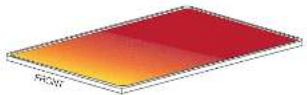
The slightly lower temperature at the front can easily be overcome by rotating the food being cooked around the barbecue plate or grill.
FLARE-UP CONTROL
Flare-ups occur when meat is barbecued, and its fats and juices fall upon the flame tamar. The smoke from some fare-up helps give cooked meat its barbecued flavour, but excessive fare-up will result in meat being burned. To control fare up, it is advisable to trim away excess fat from meat and poultry before grilling. Also, the burners should always be placed on the ow setting during cooking. Finally, extinguish fare-ups by applying baking soda or sat directly onto the flame tamar. Always protect your hands when handling anything near the cooking surface of the barbecue.
If a fat fire should occur in the drip tray, turn all knows to the off position, turn off the gas at the bottle, and wait for the fire to go out. Do not pull out the drip tray or cause with water.
COOKING USING OPTIONAL ACCESSORIES
ROTISSERIE COOKING
- Carefully remove the coat iron cooking surfaces and the warming rack from the barbecue.
- Place the flame tamers to the centre of the barbecue body. It is over this area that the meat will be pocked.
- Slice one of the spit forks only the spit rod and tighten its thumb screw to secure it into place. Insert the pointed end of the spit rod into the meat being cocked and slide the meat towards the centre of the rod. Make sure the fork is fully into
the meal. Side the other fork onto the rod, into the meal, and tighten the thumb screw once in place. For optimal rotisserie cooking, food must be placed securely onto the middle of the spit rod and balanced so that the rotisserie can rotate freely without interference from any barbecue surfaces. Any loose sections of meal should be secured so they do not hang down and interfere with the rotation of the spit rod.
- Insert the pointed end of the spit rod into the motor. Lay the other end of the spit rod onto the opposite bracket.
- Light the barbecue.
- Turn on the rotisserie motor to begin rotissere cooking. The hood has been designed so that it may be closed during rotisserie cooking.
- Always cook foods on the lowest flame setting to avoid burning or overcooking.
- DO NOT ALLOW YOUR BARBECUE TO OVERHEAT. A BARBECUE SHOULD NEVER BE LEFT UNATTENDED WHILE COOKING!
- If cooking with roteaserie using indirect heat (not using bumers directly under meat - oven style cocking), a baking dish (not supplied on some models) can be placed under the feed to catch fats and crispings.
INFRARED REAR BURNER & ROTISSERIE
Preparing your barbecue:
You will need to remove both grill plate and solid plate, also the flame tamers and warming rack. Place these in a safe place for later re-assembly. Place a baking dish (not supplied) onto the burners, the dish should be large and deep enough to capture the excess grease as it tals from the food.
Centrally secure the food with the rotisserie prongs, turning the rotisserie rod by hand to test for balance, adjust the food position if required. Insert pointed end of rod into the motor, test that everything is running correctly.
Using the Pear Bumer for roasting on a barbecue can be different depending on our preferences. A suggestion might be to use 1-3 of the main burners to cook the roast and then use the Pear Bumer towards the end of the cooking to "brown up" the roast. Using the Pear Bumer by itself to do the cooking can take a long time depending on the size of the roast.
Do not use the rear burner in combination with main burners on high heat selling when the hood is closed.

WARNING!
- Caution / Danger: Extreme care is required when cooking with hood in closed position. Frequent checks must be undertaken for the heat and temperature to ensure safe cooking.
- Too much heat can cause fire.
TROUBLESHOOTING
BEFORE CALLING FOR SERVICE
If the grill does not function properly, use the following checklist before contacting your dealer for service.
APPLIANCE APPROVED OUTDOOR USE ONLY
USE ONLY THE 5/8" x 18 GAS CONNECTION HOSE AND REGULATOR PROVIDED BY THE MANUFACTURER! It is replacement is necessary, please contact either our Masport Customer Service Department or your local dealer.
The use of unauthorised parts can create unsafe conditions and environment.
Refer to your Misport warranty card for warranty information.
STORAGE OF THE GRILL
- Clean the BBQ.
- Store the BBQ outdoors in a dry, well ventilated area and out of reach of children when LP tank is connected to the grill.
- Store the BBQ indoors ONLY after the LP tank is turned off and removed; the LP tank must be stored outdoors, out of reach of children. NI VI R store the tank in a building, garage or any other enclosed area.
- If using a cover for your barbecue, check your BBQ every few weeks.
CHECKLIST
| Problems Possible Cause Solutions | ||
| Ignition When push the knob and turn articleskess: - Warm light. On ice blocks checked Check the onice for - No spark Dry contact of the electrode and or pouse contacts Still no spark dirty / noise contacts of the battery | blankage | |
| Open | Remove the connecting wire clean and returned, family | |
| Dead / discharged Battery Replace battery | ||
| Along polarity: Check and Insert the battery correctly | ||
| - Still no spark Circuit Incomplete due Loose contacts of the ignition module | No-assemble the ignition module makes sure that assembly is tight and makes a complete circuit | |
| - Still no spark Electrode terminates are damaged | Inspect, electrode and replace it damage | |
| - Week spark | Due to moisture / food residue on the electrodes | Remove the moisture using packet towel / clean the controls |
| Spark or places other man to tip of electrode | Ignition with damages | Replace no ignition with |
| Burner can't light by match | No gas | Open the HP fans valve |
| Gas flow is not smooth | Clear bumer slices | |
| Increase assembly between bumer and valve | No assembles | |
| Yellow or orange flames, with gas odour | Incomplete combustion | Check no bumer then for obstruction such as spiders Check air shutter for correct adjustment Check no no source |
| Low heat with knob in "high" position | Gas hose, pant or kitchen | Straighten |
| Burner or ice blocks | Clear | |
| Low gas pressure | Check Cylinder/ Regulator (refer to pp. 15) | |
| Ctrl not preheated | Preheat the grill for 15 minutes | |
| Flare up | Excessive meal fat | Cut off too before gifting |
| Over high temperature | Autumn | |
| Grease deposits | Clean | |
| Flame out | Over high winds | Find a lose whoy place |
| Flame lifting | Over high gas pressure | Cut the gas sink |
| Flashback | Burner port blocked | Clean |
| Grease fire | Grease accumulated in food | Turn off knobs, LP tank valve leave lid open, let fire burn out. Clean the gilt vence end |
CARE AND MAINTENANCE
Regularly clean your barbecue between uses and especially after extended periods of storage. Ensure the barbecue and its components are sufficiently cool before cleaning. Do not leave the barbecue exposed to outside weather conditions or stored in camp, moist areas.
- Never douse the barbecue with water when its surfaces are hot. - Never handle hot pants with unprotected hands.
Whilst our products are made to the highest standards and all care is taken to make them as weather proof as possible, we cannot accept responsibility for rust occurring on exposed metal parts unless this is a result of faulty manufacture of parts.
In order to extend the life and maintain the condition of your barbecue, we strongly recommend that the unit is covered when not in use, especially during the winter months.
STAINLESS STEEL CARE AND CLEANING ADVICE
Your BDO features Stainless Steel components. All Stainless Steel grades require a level of care and protection to retain their appearance. Stainless Steels are not immune to corrosion and neither are they maintenance-free, contrary to popular public perception. Even the highest marine grades of Stainless Steel require frequent cleaning to avoid oxidation and other corrosive issues.
Modern taste ciliate that your BBQ features Stainless Steel with a brushed finish. This brushed finish is attained by running Stainless Steel sheds through an abrasive process that removes the mirror finish and leaves the brushed finish. Brushed-finish Stainless Steel requires frequent cleaning and care, to maintain its quality of appearance. Without adequate care it is realistic to expect that it will show signs of corrosion in lime.
Stainless steel is definitely not a maintenance-free material. Cleanliness and stainless steel are closely related. Stainless steel performs best when clean - cleanliness is essential for maximum resistance to corrosion and to maintain the good looks and life of your HRQ.
TYPES OF SURFACE CONTAMINANTS
Fingerprints and Stains
Fingerprints and mild stains resulting from normal use are the most common surface contaminates. They can be removed with a glass cleaner or with a soft rag. This should be followed by a thorough warm water rinse.
DIRT
Like any surface that is exposed to the environment especially in coastal areas, stainless steel can get dirty. Cleaning with warm water with or without a gentle detergent is sufficient. Next in order are mild non-scratching abrasive powders such as typical household cleaners. These can be used with warm water, nylon bristle brushes, sponges, or clean cloths. Carbon steel brushes or steel wood should be avoided as they may ease particles embedded on the surface which can lead to RUSTING. Cleaning should always be followed by rinsing in clean hot water.
GREASE
Grees may soil stainless steel surfaces in food preparation. These soils may be mildly corrosive if left or may not allow the surface to maintain passivity, and so regular removal is a necessary for the appearances.
TYPES OF CLEANERS AND METHODS
Consider the possibility of scratching and the potential for post-cleaning corrosion caused by incompletely removed cleaners. Avoid using abrasive cleaners unless absolutely necessary.
CLEAN WATER AND WIPE
A soft cloth and clean warm water should always be the first choice
for mild stains and loose dirt and soils. A final rinse with clean water and a dry wipe will complete the process and eliminate the possibility of water stains.
HOUSEHOLD CLEANERS
I household cleaners fall into two categories: detergent iron, abrasive and abrasive cleaners. Abrasive cleaners are more effective but introduced the possibility of scratching the surface. A neutral cleaner low in chord is essential. The cleaning method generally employed with those cleaners is to apply them to the stainless surface and follow by each wiping in the direction of the grain or pollen lines (not across them). The cleaned surface should be thoroughly rinsed with clean water and wiped dry with a soft oil which if water spreading is a consideration.
CAST IRON COOKING SURFACES
Before cooking with the grill, flat plate or deep dish if supplied with your BBQ clean those with hot soapy water to remove any oil or residue from the packaging or manufacturing process. Wash with ocean water and let the plates dry naturally. Prior to lighting your BBQ places them back into the BBQ, then after lighting your BBQ, let the plates warm up slowly over a period of 30 minutes, during this time increasing the heat. You will notice slight escape red from the plates, this is natural as residues are burned off. Turn off your BBQ to allow the plate to cool slightly. The plates can now be prepared with the addition of cooking oil. Take care that the plates are not at a temperature where adding the oil will cause a hazard. Flush the oil over the plate, allowing the oil to be absorbed into the surface. Allow the plate to fully cool, then remove any excess oil. The BBQ is now ready. Repeat the above to keep the plate and grill in a ready condition after each BBQ session.
PORCELAIN ENAMEL COOKING SURFACES
Porcelain Enamel surfaced items should be treated with care and should not be cleaned with an abrasive cleaner or acrostery cleaning item. Surfaces will crack or chip if hit or dropped. Porcelain Enamel surfaces should NOT be regarded as 'Non-stick', use of cooking oil is required as normal. Food will likely stick to an overheated or un-olled enamel surface. The surface will be more easily cleaned by first soaking overnight.
BURNER MAINTENANCE
Provided that they are operating correctly, in normal usage, burning off the residue after cooking will keep the burners clean. The burners should be removed and cleaned annually, or whenever heavy build-up is found, to ensure that there are no signs of blockage (clerbs, insects) in either the burner portcloses, the primary air inlet, or the neck of the stainless steel burners. Use a pipe cleaner to clear obstructions. When rettling the burners, be careful to check they are positioned as follows. The neck of the burner fills over the valve outlet, the top flaps of the gas collector mixes up over the top surfaces of the burners.
CLEANING THE BURNER ASSEMBLY
Follow these instructions to clean and/or replace parts of burner assembly or if you have trouble lighting grill.
1. Turn gas off at control knots and LPG Turk.
2. Remove cooking grates, grease tray and grosse cup.
3. Remove screw at end of burner using a screwdriver
4. Carefully lift each burner up and away from valve openings.
5. Wire brush entire outer surface of burner to remove food residue and dirt.
6. Clean any blocked ports with a stiff wire such as an open paper clip.
7. Check burner for damage, due to normal wear and corrosion some holes may become enlarged. If any large cracks or holes are found replace burner.
8. Carefully refill burners.
9. Replace screw at the end of the oamer.
10. Heptane gresse tray and packing grates.
Inspect burner for any damage (crack or holes). If damage is found, replace with a new burner. Renstall the burner, check to ensure that the Gas valve offices are correctly positioned and secured inside the burner inlet.
We suggest three ways to clean the burner tubes. Use the one easiest for you.
(A) Bend a stiff wine (a light weight coat ranger works well) into a small hook. Run the hook through each burner tube and burner several times.
(3) Use a narrow bottle brush with a flexible handle (DO NOT use a brass wire brush), run the brush through each burner tube and burner several times.
(C) Wear eye protection: use an air hose to force air into the burner tube and cut the air ports. Check each port to make sure air comes out each hole.
Abnormal Operation:
Any of the following are considered to be abnormal operation and may require service.
• Yellow tipping of the yellow flame
- Cooling up of grill plates
- Burners not igniting properly
• Burners falling to remain slight
• Burner extinguished by lrolley doors
• Gas valves which are difficult to turn
BURNER REPLACEMENT
Both the stainless steel burners and flame tamers do have a defined operating lifespan, these products are often exposed to cooking marinades and extreme heat in an area of the barbecue which can be neglected during regular cleaning.
Replacement parts are available from your local barbecue dealer.
SPIDER AND INSECT WARNING!
Spiders and insects can rest in the burners of the grill and cause the gas to flow from the front of the burner. This is a very dangerous condition, which can cause a fire to occur, thereby damaging the grill and making it unsafe to operate.
WHEN TO LOOK FOR SPIDERS
You should inspect the burners at least once a year or immediately after any of the following conditions occur:
- The smell of gas in conjunction with the burner flames appearing yellow.
• The BBQ does not reach temperature.
• The BDO heats unevenly.
• The burners make popping noises.
A WARNING!
NATURAL HAZARD SPIDERS
AC - some mles sciders and other nests climb into the grill tubes to the burners. The sciders spin webs build nests and lay eggs. The webs or nests can be very small, but they are very strong and can block the flow of gas.
Clean burners order to use after storing, at the beginning of grilling season or later a period of acreage not being used. Spider guards are on the an intakes in an effort to reduce this problem, but it will not eliminate it. An obstruction can result in a "beambook" (a free in the bumar tubes). The grill may still light, but the obstruction does not allow but gas flow to the burners.
REPLACING LED LIGHT (IF NECESSARY)
Note: The LED light is inserted into the control bezer as a whole unit, if it needs to be replaced, the whole unit needs to be replaced.
- Take off the control knob
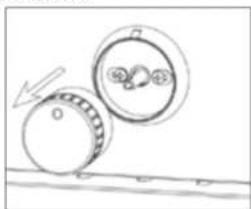
natural_image
Mechanical diagram showing two rotating gears with a directional arrow indicating motion (no text or symbols)- Unscrewa the knob bezel
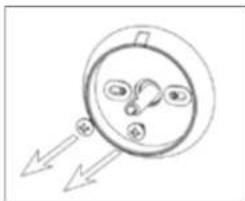
natural_image
Simple line drawing of a circular object with internal components and directional arrows (no text or symbols)- Take off the unit and loose the LED cable connection carefully.
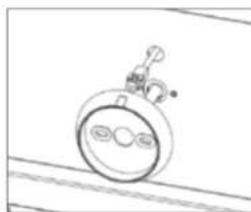
natural_image
Simple line drawing of a mechanical device with no text or symbols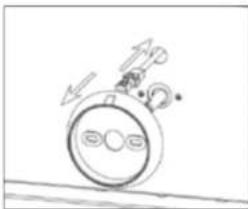
natural_image
Simple line drawing of a mechanical device with gears and arrows indicating motion (no text or symbols)- Replace the new and reassembly.
ELECTRODE SETTING
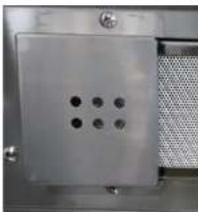
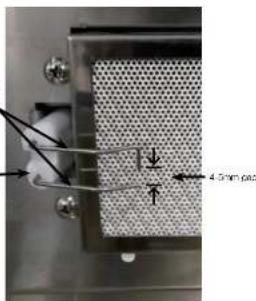
Electrode should have a sparking gap of approximately 4-6mm. The distance away from the face of the rear burner should less than 8mm.
natural_image
Metal enclosure with four circular indentations and a mesh grille (no visible text or symbols)First remove the cover
Adjust electrode with plars, having at these points only
Take control to damage the ceramic insulation around the Costa electric cable

NOTE:
Cooking with the rear humor slows the food to "soft taste" as it is turned, any excess juices will fall into the baking dish.
Your BBQ is safe to use with the hood closed however the internal temperature must be checked. Cooking with the rear burner is designed to be a slow cooking process, this allows the hood to be succulent. External temperatures and breeze will effect the internal temperature, as a guide this should be around 165°C to 180°C.
NOTE:
- Vegetables and herbs can be placed into the baking dish. These were all quick/love the root at the same time.
- When using the rear burer and toeserie use 1 or 2 of the main burers at the low heat setting if a little extra heat is required.

WARNING!
- Do not use the rear burner in combination with main burners on high heat setting when the hood is closed.
- Caution / Danger: Home safe is required when cooking with hood in closed position. Frequent checks must be undertaken for the heat and temperature to ensure safe cooking.
• Too much best can cause her.
DRIP TRAY
After every use, check the drip tray, drip pan, and toll pan for fat build-up. Failure to maintain these areas could result in a fat tire or excessive fare up. This can severely damage your barbecue and is not covered by the warranty.
BARBECUE BODY

WARNING!
Not cleaning the barbecue can pose a fire risk!
Regularly remove excess grease or fat from the barbecue body with a soft paste or wooden scraper. It is not necessary to remove all the grease from the body. If you need to clean fully, use hot soapy water and a cloth, or nylon bristled brush only. Remove cooking surfaces and burners before full cleaning. Do not immerse the gas controls or manifold in water. Check burner operation after carefully refitting into body.
FIXINGS
At screws and bolts, etc. should be checked and tightened on a regular basis.
END OF THE COOKING SESSION
After each cooking session, turn the BBQ burners to the "HIGH" position and burn off for 5 minutes. This procedure will burn off food residue, thus making cleaning easier.
STORAGE
Store your barbecue in a cool dry place. Cover the burners with aluminium foil in order to prevent insects or other deoirs from collecting in burner holes. A protective cover should always be filled to the barbecue to protect your investment from the elements when not in use. If the barbecue is to be stored indoors, the gas bottle must be disconnected and left outside. The gas bottle should always be stored outside, in a cry, well ventilated area, away from any sources of heat or ignition. Do not let children temper with the bottle.
To protect your investment it is recommended that BBCs are protected by a suitable BBQ cover. But please note that prior to using a protective cover, the BBQ should always be cool, cleaned of any surface contaminant or dirt and be thoroughly dry. Failure to follow this information can lead to a BBQ cover being a corrosion breeder rather than a protective tool.

NOTE:
If leaving your BBQ covered for long periods, occasionally check for corrosion and insect hatchation. Oil surfaces for extra protection
SERIAL NUMBER
The serial number of your barbecue is located on the side panel of the dashboard. If you do require any further assistance with your barbecue from your local dealer or Masport, please have this serial number handy as it will quickly allow us to identify the barbecue.
TECHNICAL DATA
Name Model AGA Approval Injector (mm) Pressure (kPa) Imp/Bum (Mj/h) Total (Mj/h)
| AMBASSADOR ID 401UB/W AGA 8138 G | 611UB-W AGA 8138 G | ULPO: | BBQ 0.98 R/B 0.98 | 2.75 | 4 x 13.00 1 x 13.00 | 65.00 |
| NG: | BBQ 1.50 R/B 1.65 | 2.75 | 4 x 11.00 1 x 11.00 | 55.00 | ||
| AMBASSADOR DELUXE IB | ULPG: | BBQ 0.98 S/B 0.98 R/B 0.98 | 2.75 | 6 x 13.00 1 x 12.00 1 x 12.50 | 182.50 | |
| NG: | BBQ 1.50 S/B 1.65 R/B 1.65 | 2.75 | 6 x 11.00 1 x 12.00 1 x 13.00 | 91.00 | ||
| Gas Supply Pressure, ULPG Min: 2.70KPa; Max: 3.45kPa Gas Type: NZ: Universal LPG or NG AUS: ULPG or NG | Ose Supply Pressure, NO: 1.13KPa Compicts to: Standard AS/NZS 5203.1.7-2016 | MANUFACTURED BY: ZHONGSHAN SUNCOOK HARDWARE APP | ||||
| Minimum Clearance : From Top of BBQ: 1500mm, From Sides: 1000mm, From Resr : 1000mm | ||||||
| Distributed by MASPORT LIMITED |  | Read the instructions before lang the appliance USE OUTDOOR ONLY WARNING: Parts of this appliance may be very hot, keep young children away | ||||
| MASPORT LIMITED: 320 Ti Nakai Drive, East, Tanaki, Auckland 2013, New Zealand PO Box 11549, Panmura Auckland 1471, New Zealand | ||||||
| MASPORT AUSTRALIA PTY LIMITED: 27 Commercial Drive, Dandierung Bouin, Melbourne, Victoria J17a, Australia PO Box 335, Bras de, Victoria 3195, Australia | ||||||
| For storage and cylinder exchange, disconnect hose at the cylinder only, do not disconnect hose from the appliance. | ||||||
Masport Limited New Zealand
320 Ti Rakau Drive, East Tamaki, Auckland 2013, New Zealand
PO Box 14349, Panmure Auckland 1471, New Zealand
Masport Australia Pty Limited
27 Commercial Drive, Dandenong South,
Melbourne, Victoria 3175, Australia
PO Box 533, Braeside, Victoria 3195, Australia