
IRBPDI5170 - Réfrigérateur intégrable LIEBHERR - Notice d'utilisation et mode d'emploi gratuit
Retrouvez gratuitement la notice de l'appareil IRBPDI5170 LIEBHERR au format PDF.


| Type de produit | Réfrigérateur intégrable avec compartiment BioFresh |
| Marque | Liebherr |
| Modèle | IRBPDI5170 |
| Classe climatique | SN, N, ST, T (10 °C à 43 °C) |
| Température du réfrigérateur | 3 °C à 9 °C (réglage recommandé 5 °C) |
| Température BioFresh | 0 °C à 3 °C (réglable via B-Value) |
| Fonctions principales | SuperCool, PartyMode, HolidayMode, EnergySaver, SabbathMode |
| Équipement inclus | Étagère bouteille variable, tiroirs, FlexSystem, couvercle Fruits & Légumes, bac à œufs, beurrier |
| Filtre à charbon FreshAir | Oui, remplacement tous les 6 mois |
| Éclairage intérieur | LED, classe d'efficacité énergétique F ou G |
| Affichage tactile | Oui, navigation par glissement et appui |
| Connectivité | WiFi 2,4 GHz (via SmartDevice Box en option) |
| Alarme de porte | Oui, réglable de 1 à 3 min ou désactivation |
| Dégivrage | Automatique |
| Entretien | Nettoyage avec chiffon doux et eau tiède, détergent doux |
| Sécurité | Verrouillage des touches, détection de porte ouverte, arrêt automatique en cas de défaut |
| Réparabilité | Joint de porte interchangeable, service client Liebherr, réparation uniquement par professionnel agréé |
| Alimentation | 220-240 V ~ 50 Hz (voir plaque signalétique) |
| Dimensions (approx.) | Largeur 55-70 cm, hauteur selon installation (voir guide d'installation) |
FOIRE AUX QUESTIONS - IRBPDI5170 LIEBHERR
Questions des utilisateurs sur IRBPDI5170 LIEBHERR
0 question sur cet appareil. Repondez a celles que vous connaissez ou posez la votre.
Poser une nouvelle question sur cet appareil
Téléchargez la notice de votre Réfrigérateur intégrable au format PDF gratuitement ! Retrouvez votre notice IRBPDI5170 - LIEBHERR et reprennez votre appareil électronique en main. Sur cette page sont publiés tous les documents nécessaires à l'utilisation de votre appareil IRBPDI5170 de la marque LIEBHERR.
MODE D'EMPLOI IRBPDI5170 LIEBHERR

User Guide
Quality, Design and Innovation
home.liebherr.com/fridge-manuals


LIEBHERR
Contents
1 The appliance at a glance. 3
1.1 Overview of the appliance and its equipment 3
1.2 Range of appliance use 3
1.3 Conformity 3
1.4 EPREL Database 4
2 General safety instructions. 4
3 Start-up. 5
3.1 Turning on the appliance.. 5
3.2 Insert the equipment.. 5
4 Food management. 5
4.1 Storing food.. 5
4.2 Storage times 6
5 Energy saving. 7
6 Use 7
6.1 Controls and displays.. 7
6.1.1 Status display.. 7
6.1.2 Navigation 7
6.1.3 Display symbols.. 7
6.2 Operating logic 8
6.2.1 Activating/deactivating settings 8
6.2.2 Selecting function value.. 8
6.2.3 Activating/deactivating settings 8
6.2.4 Selecting the setting value.. 8
6.2.5 Calling up the customer menu 8
6.3 Functions 9
Temperature. 9
SuperCool. 9
PartyMode. 9
HolidayMode. 9
EnergySaver. 9
6.4 Settings 10
Language. 10
Setting up the WLAN connection. 10
Entry lock. 10
Display brightness. 11
Door alarm. 11
Info.. 11
SabbathMode. 11
CleaningMode. 11
BioFresh B-Value. 11
Reminder 12
Reset. 12

Turn off appliance. 12
6.5Warnings 12
6.5.1 Message 12
6.5.2 DemoMode 12
7 Equipment 12
7.1 Variable bottle shelf 12
7.2 Drawers 13
7.3 Fruit & Vegetable-Safe cover 13
7.4 Humidity control. 14
7.5 Accessories.. 14
8 Maintenance. 16
8.1 FreshAir carbon filter.. 16
8.2 Defrosting the appliance 16
8.3 Cleaning the appliance.. 16
9 Customer support 17
9.1 Technical specifications 17
9.2 Operating noises 17
9.3 Technical faults 17
9.4 Customer service 18
9.5 Rating plate 19
10 Decommissioning. 19
11 Disposing of the appliance. 19
The manufacturer is constantly working to improve all models. Therefore please understand that we reserve the right to make design, equipment and technical modifications.
To get to know all the benefits of your new appliance, please read the information contained in these instructions carefully.
The instructions apply to several models, so there may be differences. Sections which only apply to certain appliances are indicated with an asterisk (^*) .
Instructions requiring the user to take action are marked with , the results of an action are marked with a .
This User Guide applies to:
- IRBpd 5170
- IRBPdi 5170
1 The appliance at a glance
1.1 Overview of the appliance and its equipment
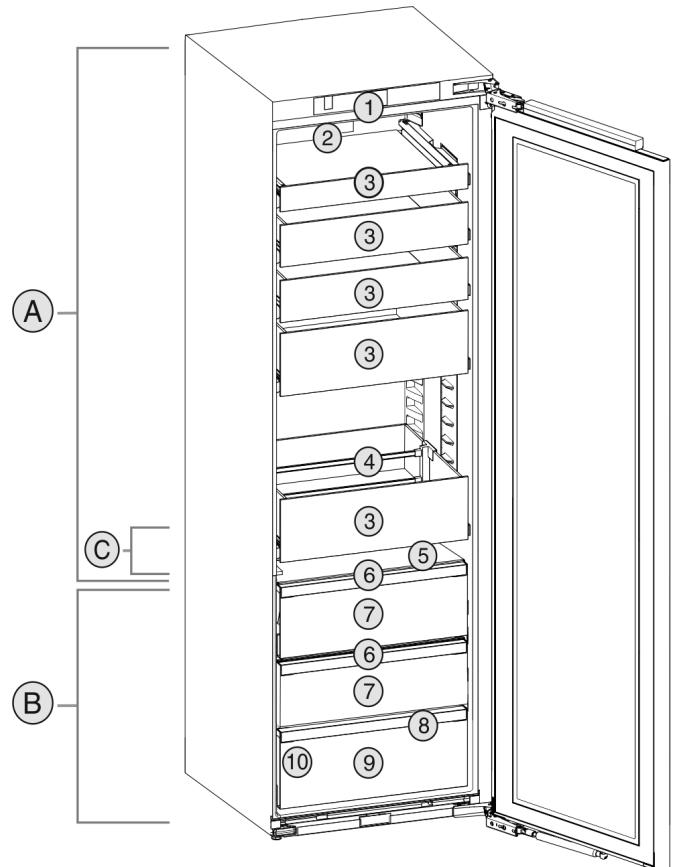
Fig. 1 Exemplary illustration
Temperature zone
(A) Fridge
(B) BioFresh
(C) Coldest zone
Equipment
(1) Controls
(6) Fruit & Vegetable-Safe cover
(2) Fan with FreshAir active carbon filter
(7) Fruit & Vegetable-Safe
(3) Glass drawer
(8) Drainage outlet
(4) Bottlerack
(9) Meat & Dairy-Safe
(5) Variable bottle shelf
(10) Rating plate
Note
The shelves, drawers, and baskets are arranged for optimal energy efficiency in the factory configuration. However, changes to the arrangement within the given insertion options – for example the arrangement of shelves in the fridge compartment – have no effect on energy consumption.
Notes on loading
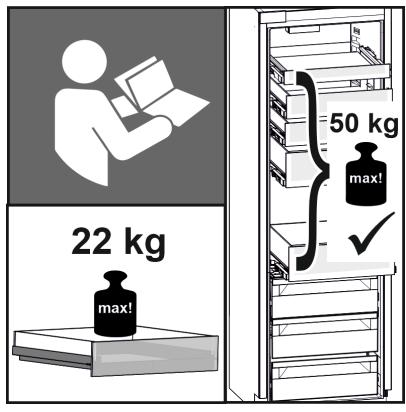
Maximum load of a single drawer, 22kg
The maximum total load must not exceed 50kg when all drawers are pulled out at the same time.
1.2 Range of appliance use
Normal use
The appliance is only suitable for cooling food for residential or other similar environments. This includes the following types of uses
- in staff kitchens, bed and breakfasts,
- by guests in country homes, hotels, motels and other types of accommodations,
- for catering and similar wholesale services.
The appliance is not suitable for freezing food;
All other types of uses are not permitted.
Foreseeable misuse
The following uses are specifically prohibited:
- Storage and cooling of medication, blood plasma, laboratory preparations or similar substances and products in accordance with the Medical Device Directive 2007/47/EC
- Use in areas at risk of explosion
Incorrect appliance use can cause damage to the stored products or cause them to spoil.
Climate ratings
The appliance is set to operate within specific ambient temperature limits according to its climate rating The climate rating for your appliance is printed on the rating plate
Note
To guarantee trouble-free operation, comply with the indicated ambient temperatures.
| Climate rating | for ambient temperatures from |
| SN | 10 °C to 32 °C |
| N | 16 °C to 32 °C |
| ST | 16 °C to 38 °C |
| T | 16 °C to 43 °C |
1.3 Conformity
The refrigerant circuit has been tested for leaks. When installed, the appliance complies with the applicable safety
regulations and with the directives 2014/35/EU, 2014/30/EU, 2009/125/EC, 2011/65/EU, 2010/30/EU and 2014/53/EU.
The full text of the EU Declaration of Conformity is available on the following website: www.Liebherr.com
The BioFresh compartment meets the requirements of a cold storage compartment as set out in DIN EN 62552:2020.
1.4 EPREL Database
Details about energy labeling and ecodesign requirements will be available on the European product database (EPREL) from March 1, 2021. You can access the product database at the following link: https://eprel.ec.europa.eu/ You will be asked to enter the model ID. You can find the model ID on the type plate.
2 General safety instructions
Dangers for the user:
-
This appliance can be operated by children as well as by persons with reduced physical, sensory or mental capabilities or lack of experience and knowledge if they are supervised or have been instructed in the safe use of the appliance and understand the associated risks. Children must not play with the appliance. Cleaning and user maintenance must not be performed by children unless they are supervised. Children between the ages of 3 and 8 may load and unload the appliance. Children under the age of 3 must be kept away from the appliance if they are not constantly supervised.
-
When disconnecting the appliance from the outlet, always take hold of the plug. Do not pull on the cable.
- Disconnect the power plug or switch off the power if a fault occurs.
- Do not damage the mains power line. Do not operate the appliance from a defective mains power line.
- Repairs and operations on the appliance may only be carried out by the customer service department or other specifically trained specialist engineers.
- Only install, connect and dispose of the appliance in accordance with the instructions.
- Only operate the appliance after it has been installed.
- Please keep the instructions and pass them on to any future owner.
Risk of fire:
-
The refrigerant contained within the appliance (specifications on the rating plate) is environmentally friendly, but flammable. Leaking refrigerant can ignite.
-
Do not damage the pipes of the refrigerant circuit.
-
Do not handle ignition sources inside the appliance.
- Do not use electrical devices inside the appliance (e.g. steam cleaners, heaters, ice cream makers, etc.).
-
If refrigerant leaks: Remove naked flames or ignition sources located near the area of the leak. Air the room well. Contact the customer service department.
-
Do not store explosive materials or spray cans with flammable propellants, such as e.g. butane, propane, pentane, etc. in the appliance. You can recognize such spray cans by the printed contents or a flame symbol. Any leaking gasses can be ignited by electrical components.
- Alcoholic beverages or other containers holding alcohol must always be tightly sealed for storage purposes. Any leaking alcohol can be ignited by electrical components
Tipover hazard:
- Do not stand or climb on the base, drawers, doors, etc. This applies in particular to children.
Risk of food poisoning:
- Do not consume food that has passed its best before date.
Danger of frostbite, feelings of numbness and pain:
- Avoid continued skin contact with cold surfaces or chilled/frozen food or adopt protective measures.
Risk of injury and damage:
- Hot steam may lead to injuries. Do not use any electrical heating or steam cleaning equipment, naked flames or defrosting sprays for defrosting
- Do not remove ice with sharp objects
Risk of crushing:
- Do not hold onto the hinge when opening and closing the door. Fingers may get caught.
Symbols on the device:

The symbol can be on the compressor. It refers to the oil in the compressor and refers to the following danger: Can be lethal if swallowed or inhaled. This notice only applies for recycling. There is no danger during normal operation.
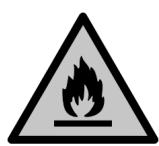
The symbol is located on the compressor and indicates the danger of inflammable materials. Do not remove the label.
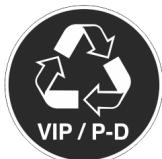
This label or a similar one can be located on the rear of the appliance. It refers to the foamed-in panels in the door and/or the housing. This notice only applies for recycling. Do not remove the label.
Follow the specific instructions in the other sections:
| ! | DANGER | indicates a hazardous situation, which if not avoided, will result in death or serious injury. |
| ! | WARNING | indicates a hazardous situation, which if not avoided, could result in death or serious injury. |
| ! | CAUTION | indicates a hazardous situation, which if not avoided, will result in minor or moderate injury. |
| NOTICE | indicates a hazardous situation, which if not avoided, could result in damage to property. | |
| Note | indicates useful advice and tips |
3 Start-up
3.1 Turning on the appliance
Make sure that the following requirements are met:
□ Appliance is installed and connected according to installation instructions.
- All adhesive strips, adhesive and protective films, as well as transport safety devices in and on the appliance are removed.
All advertising material has been removed from the drawers.
Switch on the appliance from the display.
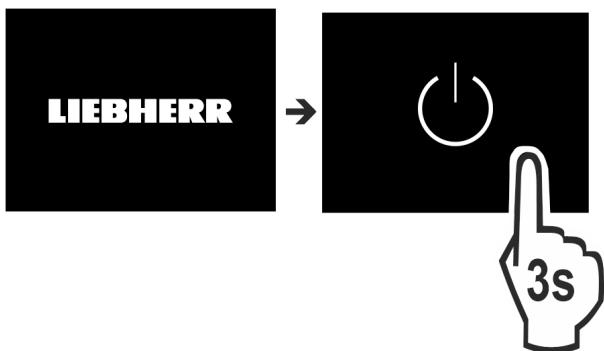
Fig. 3
After switching on the appliance, select the language.
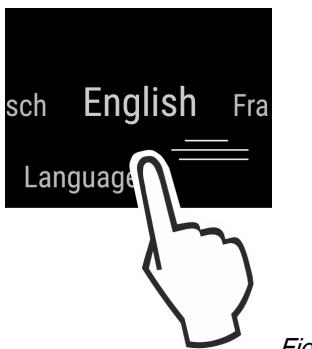
Fig. 4
The status screen appears.
If the DemoMode is displayed along with the blue screen after switching on the appliance, the DemoMode can be deactivated within the next 5 minutes.
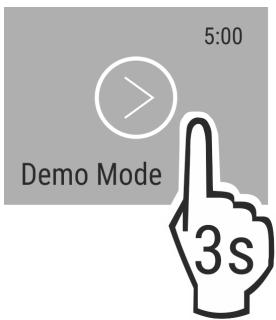
Fig. 5
Press DemoMode for 3 seconds.
DemoMode is off.
Note
The manufacturer recommends:
- Putting away groceries: Wait approx. 6 hours until the set temperature has been reached.
3.2 Insert the equipment
Insert the supplied equipment to help you make the most of the appliance.
Purchase the SmartDevice Box and insert it (see https://smartdevice.liebherr.com/install).*
Install the SmartDevice app (see https://apps.home.liebherr.com/).
Note
You can purchase accessories from the Liebherr household appliance store (home.liebherr.com).
4 Food management
4.1 Storing food

WARNING
Danger of fire
- Do not use electrical appliances inside the food storage compartments of the appliance, unless they are of the type recommended by the manufacturer.
Note
Insufficient ventilation results in an increase in energy consumption and reduction of the refrigerating performance
Always keep the air slots unobstructed.
When storing food, remember these basic rules:
Do not obstruct the air vents on the back wall.
Do not obstruct the air vents on the fan.
□ Food is well sealed.
- Food that easily absorbs or emits odor or taste, are in sealed containers or are covered.
- Raw meat or fish is in clean, sealed containers so that other food cannot be touched or drip on them.
□ Liquids are in sealed containers.
□ Food is stored spaced apart to ensure good air circulation.
Note
Failure to follow these guidelines can lead to food perishing.
4.1.1 Fridge
The natural air circulation means the temperature varies in different sections.
Arranging the food:
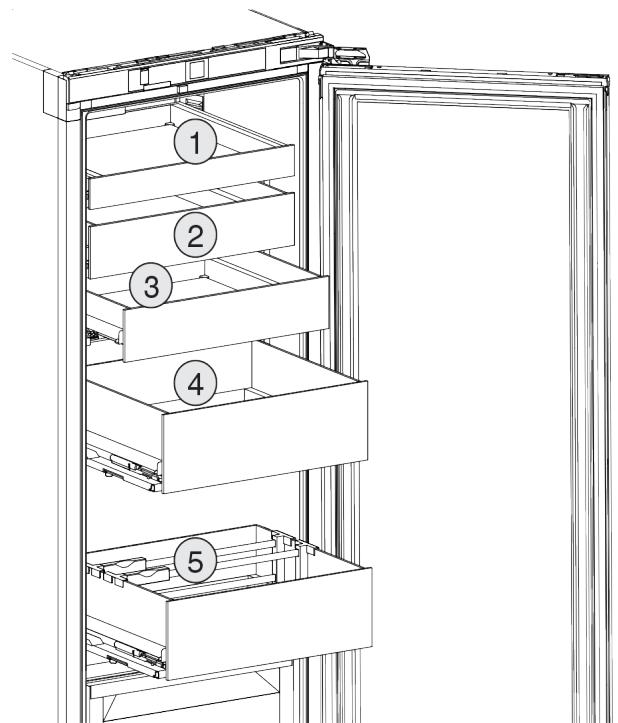
Fig. 6 Storage examples
(1)Butter, eggs
(4) Canned food, tins
(2) Yogurt, quark
(5) Bottles, Tetra Paks
(3) Foodstuffs in small jars or in small cans
Note
Max. load of a single drawer in the refrigerator compartment: 22 kg
Max. load of the refrigerator compartment when all drawers are pulled out at the same time: 50 ~kg
(see 1.1 Overview of the appliance and its equipment)
Load drawers according to the size of the groceries.
4.1.2 BioFresh
BioFresh allows some fresh food to be stored longer compared to conventional cooling.
Food with a "use by" date must still be consumed by the date indicated on the package
If the temperature drops below 0^ , food can start to freeze.
Note
Store cold-sensitive fruit and vegetables in the cooling section, such as cucumber, eggplant, zucchini, and tropical fruit.
Fruit & Vegetable-Safe

This provides a fresh storage climate with the lid closed. A moist climate is suitable for storing unsealed food with a high moisture content (e.g. salad, vegetables, fruit).
The humidity depends on the moisture content of the stored items and how frequently the door is opened. You can regulate the moisture.
Arranging the food:
Place unsealed fruit and vegetables.
Excessive moisture: Regulate the air humidity (see 7.4 Humidity control).
Meat & Dairy-Safe


The DrySafe provides a relatively dry storage environment. A dry climate is suitable for dry or sealed food (e.g. dairy products, meat, fish, sausage).
Arranging the food:
Place dry or sealed food.
4.2 Storage times
The storage times given are guidelines
Food with a "use by" date must still be consumed by the date indicated on the package
4.2.1 Fridge
The best-before date stated on the packaging applies.
4.2.2 BioFresh
Note
You can check the guideline settings in the BioFresh app https://home.liebherr.com/de/deu/service/apps/landingpage apps-emea.html.
| Guideline storage times for the Meat & Dairy-Safe | ||
| Butter | at 1 °C | up to 90 days |
| Hard cheese | at 1 °C | up to 110 days |
| Milk | at 1 °C | up to 12 days |
| Sausage, cold cuts | at 1 °C | up to 8 days |
| Poultry | at 1 °C | up to 6 days |
| Pork | at 1 °C | up to 6 days |
| Beef | at 1 °C | up to 6 days |
| Game | at 1 °C | up to 6 days |
Note
Note that higher-protein foods spoil more quickly So, shellfish and crustaceans perish faster than fish, and fish perishes faster than meat.
| Guideline storage times for the Fruit & Vegetable-Safe | ||
| Vegetables, lettuce | ||
| Artichokes | at 1 °C | up to 14 days |
| Celery | at 1 °C | up to 28 days |
| Cauliflower | at 1 °C | up to 21 days |
| Broccoli | at 1 °C | up to 13 days |
| Endives | at 1 °C | up to 27 days |
| Mâche | at 1 °C | up to 19 days |
| Peas | at 1 °C | up to 14 days |
| Kale | at 1 °C | up to 14 days |
| Carrots | at 1 °C | up to 80 days |
| Garlic | at 1 °C | up to 160 days |
| Cabbage turnip | at 1 °C | up to 14 days |
| Iceberg lettuce | at 1 °C | up to 13 days |
| Herbs | at 1 °C | up to 13 days |
| Leeks | at 1 °C | up to 29 days |
| Mushrooms | at 1 °C | up to 7 days |
| Radishes | at 1 °C | up to 10 days |
| Brussels sprouts | at 1 °C | up to 20 days |
| Asparagus | at 1 °C | up to 18 days |
| Spinach | at 1 °C | up to 13 days |
| Savoy cabbage | at 1 °C | up to 20 days |
| Fruit | ||
| Apricots | at 1 °C | up to 13 days |
| Apples | at 1 °C | up to 80 days |
| Pears | at 1 °C | up to 55 days |
| Blackberries | at 1 °C | up to 3 days |
| Dates | at 1 °C | up to 180 days |
| Strawberries | at 1 °C | up to 7 days |
| Figs | at 1 °C | up to 7 days |
| Blueberries | at 1 °C | up to 9 days |
| Raspberries | at 1 °C | up to 3 days |
| Red currants | at 1 °C | up to 7 days |
| Cherries, sweet | at 1 °C | up to 14 days |
| Kiwi | at 1 °C | up to 80 days |
| Peaches | at 1 °C | up to 13 days |
| Plums | at 1 °C | up to 20 days |
| Cranberries | at 1 °C | up to 60 days |
| Rhubarb | at 1 °C | up to 13 days |
| Gooseberries | at 1 °C | up to 13 days |
| Grapes | at 1 °C | up to 29 days |
5 Energy saving
- Always ensure good ventilation. Do not obstruct ventilation openings or grilles.
- Never block air slits in the fan.
- Do not install the appliance in direct sunlight or next to a stove, heater or similar heat source.
- Energy consumption depends on installation conditions such as the ambient temperature (see 1.2 Range of appliance use). A warmer ambient temperature can increase the energy consumption.
- Avoid opening the appliance door for any longer then necessary
- The lower the temperature is set the higher the energy consumption.
- Sort your food items: home.liebherr.com/food.
- All food stored in the appliance should be well wrapped and covered. This prevents frost buildup.
- Only take food out for as long as necessary so that it does not get too warm.
- Insertion of warm foods: first let the food cool down to room temperature.
- For longer periods of absence, use HolidayMode (see HolidayMode).
6 Use
6.1 Controls and displays
The display provides a quick overview of the temperature setting and the status of functions and settings. You can control the functions and settings either by deactivating/activating them or by selecting a value.
6.1.1 Status display
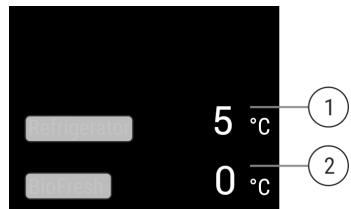
(1) Fridge compartment temperature display
Fig. 7
(2) Temperature display BioFresh
The Status display shows the set temperatures and is the home display. From there, you can navigate to the options and settings.
6.1.2 Navigation
Navigate in the menu to see the individual functions. An audible signal sounds after confirming a function or setting. If no selection is made after 10 s, the display switches to the Status screen.
The appliance is operated by swiping and confirming in the display:

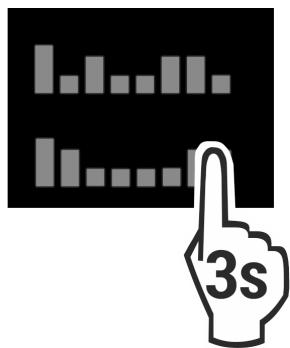
Fig. 8
Back:
- Confirm your selection in the submenu. The display returns to the menu.
The display returns to the function/setting.
Back to Status display:
- Close and open the door.
- Wait 10 s. The display switches to the Status display.
6.1.3 Display symbols
The display symbols provide information about the current appliance status.
Symbol
Appliance status

Standby
The appliance or temperature zone is turned off.
Symbol
Appliance status

Flashing number
Appliance is working. Temperature flashes until the set temperature is reached.

Flashing symbol
Appliance is working. Setting is made.


6.2 Operating logic
6.2.1 Activating/deactivating settings
You can activate/deactivate the following functions:
Symbol
Function

SuperCoolx

PartyModex

HolidayMode

EnergySaver
- When a function is on, the appliance works harder. This means the appliance could make louder noises and consume more energy.
Swipe left in the display until the function appears.
Confirm selected function with a short tap.
You hear the confirmation tone.
Status appears in the menu.
Function is on/off.
6.2.2 Selecting function value
With the following functions you can set a value in the submenu:
Symbol
Function

Setting the temperature
Turn on/off the temperature zone
Swipe left in the display until the function appears.
Confirm selected function with a short tap.
Select the setting value by swiping the display.
Setting the temperature
Confirm selected value with a short tap.
You hear the confirmation tone.
The display changes to blue when active.
Display switches back to the menu.
Switching the temperature zone on/off
Press Confirm for 3 seconds.
You hear the confirmation tone.
Display returns to the status screen.
6.2.3 Activating/deactivating settings
You can activate/deactivate the following settings:
Symbol
Setting

WiFi1

Entry lock2

SabbathMode2

Cleaning Mode2

Reminders

Reset2

Switch off 2
- Swipe left in the display until Settings appears.
Confirm settings by tapping.
Swipe until you can see the setting you want.
1 Activate setting (short press)
Tap briefly to confirm.
You hear the confirmation tone.
Status appears in the menu.
Setting is activated/deactivated.
2 Activate setting (long press)
Press selection for 3 seconds to confirm.
You hear the confirmation tone.
Status appears in the menu.
Display changes.
6.2.4 Selecting the setting value
With the following settings you can set a value in the submenu:
Symbol
Settings

Brightness

Door alarm

Language
- Swipe the display to the left until the settings are displayed.
Confirm the settings by tapping.
Swipe until you can see the setting you want.
Tap briefly to confirm.
Select the desired setting value by swiping the display.
Tap briefly to confirm.
You hear the confirmation tone.
Status appears briefly in the menu.
Display switches back to the menu.
6.2.5 Calling up the customer menu
The customer menu provides the following settings:
Symbol
Function

BioFresh B-Value

Software
Swipe left in the display until Settings appears.
Confirm the settings by tapping.
Swipe until About Appliance appears.
Tap briefly to confirm.
Call up the customer menu: Enter the code 151.
- Swipe in the customer menu until you can see the setting you want.
1 Select the setting value
Tap briefly to confirm.
You hear the confirmation tone.
Status appears briefly in the display.
The display switches back to the menu.
2 Activate setting
To confirm, press the display for 3 seconds.
You hear the confirmation tone.
Status appears in the display.
The symbol flashes as long as the appliance is working.
6.3 Functions

Temperature
The temperature depends on the following factors:
- the number of times the door is opened
- The duration the door is opened
- the room temperature of the installation location
- the type, temperature and amount of food
Temperature zone
Recommended setting

Fridge
5℃

BioFresh
(see BioFresh B-Value)
Setting the temperature in the refrigerator compartment
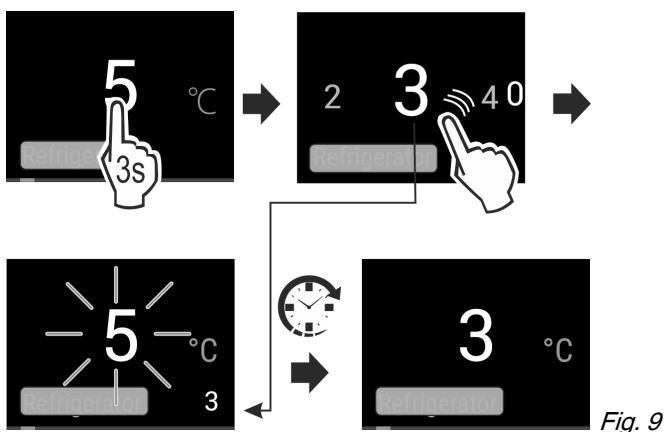
Set the value. (see 6.2 Operating logic).
The set temperature is shown on the bottom right of the display.
Setting the temperature in the BioFresh
You can set the temperature using the BioFresh B-Value in the customer menu. (see BioFresh B-Value)

SuperCool
Select this function for the maximum cooling setting, to reach lower cooling temperatures.
This function is relevant to the fridge section Fig. 1 (A)
Use:
- Cool large amounts of food quickly.
Activating/deactivating settings
Using the fridge section: activate the function when you add the goods.
Activating/deactivating (see 6.2 Operating logic).
-or-
Activating/deactivating in the Liebherr SmartDevice-App.*
The function automatically turns off. The appliance goes back to normal mode. The temperature adjusts itself to the set level.

PartyMode
This option offers an assortment of special functions and settings that are useful if you are having a party.
The following functions are activated:
SuperCool
You can set any functions you like. Your changes are lost when the option is switched off.
Activating/deactivating settings
Activating/deactivating (see 6.2 Operating logic).
On: All functions are activated at the same time.
Deactivated: Previously set temperatures are restored.
The function is automatically switched off after 24 hours.

HolidayMode
This function minimizes the energy consumption during an extended absence. The temperature of the refrigerator compartment is set to 15^ and this is displayed on the status screen when the temperature has been reached.
Use:
- Save energy if you plan to be away for a while.
- Avoid coming home to bad smells and mold.
Activating/deactivating settings
Empty everything from the fridge section.
Activating/deactivating (see 6.2 Operating logic).
On: Fridge temperature is raised.
Off: The previously set temperature is restored.

EnergySaver
This function reduces energy consumption. If you activate this function, the cooling temperature increases.
| Temperature zone | Recommended setting | Temperature when EnergySaverated |
| 5 °Fridge compa-ment | 5 °C | 7 °C |
Use:
- Save energy.
Activating/deactivating settings
Activating/deactivating (see 6.2 Operating logic).
Activated: Higher temperatures are set in all temperature zones.
Deactivated: Previously set temperatures are restored.
6.4 Settings

Language
This setting lets you choose the language of the display.
Choose from the following languages:
- German
- English
- French
- Spanish
Italian - Dutch
- Czech
- Polish
- Portuguese
- Russian
- Chinese
Activating/deactivating settings
Activating/deactivating (see 6.2 Operating logic).

Setting up the WLAN connection
This setting connects the appliance to the internet. The connection is managed in the SmartDevice Box. You can use the SmartDevice-App to add your appliance to a SmartHomeSystem. Use the SmartDevice-App or other compatible partner networks to enjoy advanced options and settings.
Note
The SmartDevice Box is available from the Liebherr Residential Appliances Store (https://home.liebherr.com/shop/de/deu/smartdevicebox.html).
More information about the availability, prerequisites and individual options can be found on the Internet at https://smartdevice.liebherr.com/install.
Use:
- Manage the appliance with the SmartDevice-App or a compatible partner network.
- Enjoy advanced functions and settings.
- Check the appliance status on the SmartDevice-App.
Purchase the SmartDevice Box and insert it (see https://smartdevice.liebherr.com/install).*
Install the SmartDevice app (see https://apps.home.liebherr.com/).
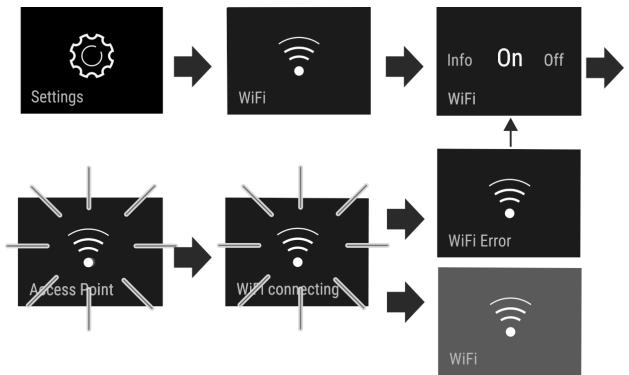
Setting up the WLAN connection
Fig. 10
Activate (see 6.2 Operating logic).
The connection is set up: Connecting appears. The symbol flashes.
The connection is set up: WiFi appears, the display turns blue.
The connection failed: WiFi Error appears.
Disconnecting
Deactivate the setting (see 6.2 Operating logic).

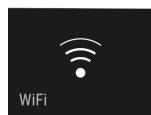
Fig. 11
There is no connection: The symbol is displayed constantly.
Restoring the connection
Restore settings (see 6.2 Operating logic).

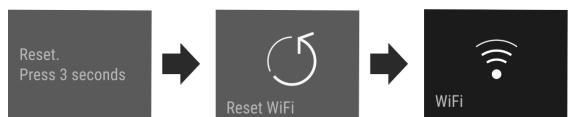
Fig. 12
Connection and other settings are restored to factory settings.

Entry lock
This setting avoids accidental operation of the appliance, e.g. by children.
Use:
- Avoid unintentional changing of settings and functions.
- Avoid unintentional switching off of the appliance.
- Avoid unintentional temperature adjustments.
Activating/deactivating settings
- Activating/deactivating (see 6.2 Operating logic).
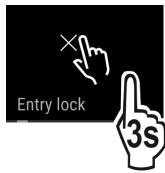

Display brightness
With this setting, you can choose a brightness level for the display.
You can set the following brightness levels:
- 40%
- 60%
- 80%
- 100%
Choosing the setting
Set the level (see 6.2 Operating logic).

Door alarm
Set the time before the door alarm (see Close door) sounds.
Options are as follows:
-1min
- 2 min
-3min
- Off
Choosing the setting
Set the level (see 6.5Warnings).

Info
This setting allows the appliance information to be read out as well as access to the customer menu.
It provides the following information:
- Model name
- Index
- Serial number
Service number
View appliance data
Swipe in the display until Settings appears.
Confirm the display.
Swipe in the display until About appears.
Read the appliance data.

SabbathMode
This setting meets the religious requirements on the Sabbath and Jewish festivals. Turn on SabbathMode to switch off certain controls. This means you can use the appliance without anyone changing any settings.
You can find a list of Star-K-certified appliances at www.stark.org/appliances.

WARNING
Danger of food poisoning!
If there is a power outage when SabbathMode is on, this message is not saved. When the power is restored, the appliance continues in SabbathMode. Afterwards, the temperature display does not show a message about the power outage.
If there was a power outage during SabbathMode:
Check the quality of the food. Do not consume spoiled food!
What happens on the appliance when in SabbathMode:
- The Status display permanently shows SabbathMode.
- The display is locked for all functions apart from turning off SabbathMode.
- Any functions/settings that are already on, remain active.
- The display stays bright when the door is closed.
- Reminders are disabled. The set timer interval is also stopped. The function is no longer executed in SabbathMode.
- Reminders and warnings are not displayed. No acoustic signals are emitted and the display does not show warnings / settings such as temperature alarm or door alarm.
- The internal light is off.
- The defrost cycle only works for the specified time without taking account of fridge use.
- After a power cut the appliance automatically returns to SabbathMode.
Activating/deactivating SabbathMode
To activate this function, swipe the display until you reach Settings and press for 1 second. The menu shows the available settings.
- Swipe the display until the symbol for SabbathMode (Menora) appears. Press the symbol for 3 seconds.
The display changes color.
SabbathMode has been activated.
To deactivate the function, press the display for 3 seconds.
SabbathMode has been deactivated.

CleaningMode
This setting makes it easy to clean the appliance.
This setting is relevant to the fridge section Fig. 1 (A).
Use:
- Clean the fridge section manually.
What happens with the appliance when this setting is on:
- The display shows CleaningMode permanently.
- The refrigerator compartment is switched off.
- The internal light is on.
- Reminders and warnings are not shown. There is no acoustic signal.
Activating/deactivating settings
Activate/deactivate setting (see 6.2 Operating logic).
On: Fridge compartment is switched off. Light stays on.
Off: preset temperature is restored.
The setting is automatically deactivated after 60 minutes. Then the appliance continues operation in normal mode.

BioFresh B-Value
In the delivery condition of the appliance, the value is set to B5. The status indicator on the display shows the appropriate target temperature in the BioFresh.
You can change this value slightly if a higher or lower ambient temperature makes it necessary. When setting the value, note:
| Value | Description |
| B1 | Lowest temperature |
| B1-B4 | The temperature can drop to below 0 °C, so food can freeze easily. |
| B5 | Default temperature |
| B9 | Highest temperature |
BioFresh B-Value
Choosing the setting
Make your settings in the Customer menu (see 6.2 Operating logic).
The D -Value is preset for your appliance and may not be changed.

Reminder
Reminders are displayed acoustically by a beep and visually by a symbol in the display. The signal gets louder until the alert stops.

Replace the FreshAir active carbon filter
This message appears when the air filter needs replacing.
Replace the air filter every six months.
Confirm the message with OK.
The service interval resets.
The air filter guarantees the air quality in the fridge.
Activate setting
Activating/deactivating (see 6.2 Operating logic).

Reset
This function resets all settings to the factory settings. All settings that you have made thus far will be reset to their original values.
Activate the setting
Activating (see 6.2 Operating logic).

Turn off appliance
This setting turns off the whole appliance.
Switch off whole appliance
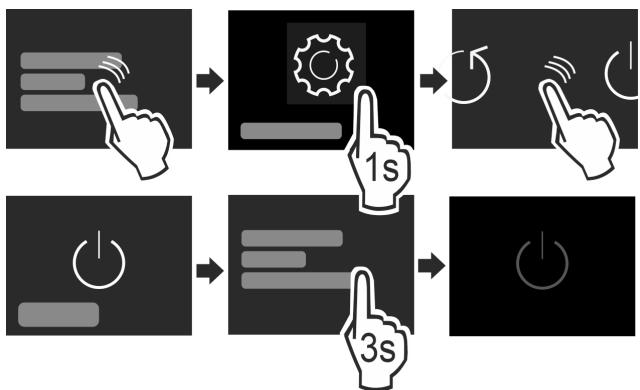
Fig. 13
Activating/deactivating (see 6.2 Operating logic).
Off: Display turns black.
6.5Warnings
Warnings are issued with an acoustic signal and visually with a symbol on the display. The signal gets louder until the alert stops.
6.5.1 Message

Close door
This message appears if the door is open too long.
You can set the time before this message appears.
Stop alarm: Confirm the message.
-or-
Close the door.

Error
This message appears when there is a fault with the appliance. An appliance component has an error.
Open the door.
Take note of the error code.
Confirm the message.
The acoustic warning ceases
The display changes to the Status screen.
Close the door.
Contact Customer Service (see 9.4 Customer service).
6.5.2 DemoMode
If "D" appears in the display, demo mode is on. This feature is designed for retailers. The cooling features are disabled.
Switching off DemoMode
When you see a time counting down:
Confirm within the countdown.
DemoMode is off.
If there is no countdown:
Disconnect the power plug.
Reconnect the power plug.
DemoMode is off.
7 Equipment
7.1 Variable bottle shelf
7.1.1 Using the bottle shelf
Use the variable bottle shelf or the glass panel placed on the fridge floor.
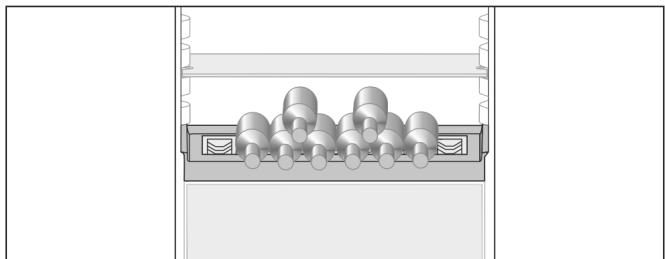
Fig. 14
Remove the glass shelf and store separately.
Place the bottles with the base pointing backwards facing the rear wall
Note
If the bottles protrude over the front of the bottle shelf:
Move the bottom door rack higher up.
7.1.2 Removing the bottle shelf
You can remove the bottle shelf for cleaning.
Remove the glass panel above the bottle shelf.
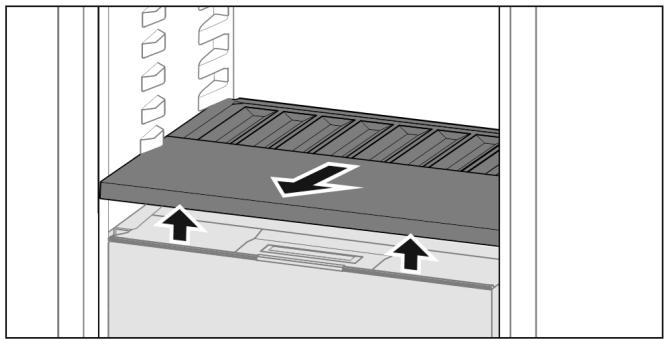
Fig. 15
Lift the bottle shelf at the front and pull out.
Note
Lieberherr recommends the following:
Do not place any goods on the drawer cover below.
7.1.3 Inserting the bottle shelf
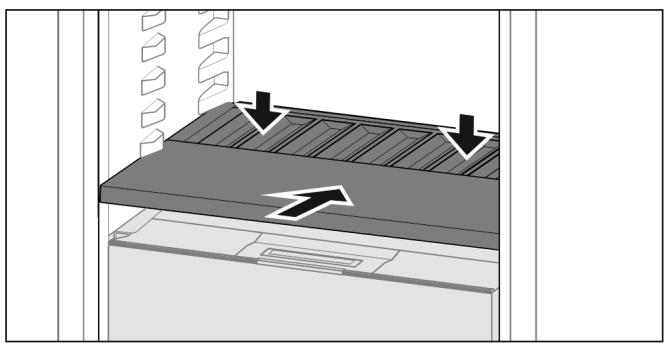
Fig. 16
▶ Slide in the bottle shelf until it engages and push down.
The lugs at the back of the bottle shelf are connected automatically.
LED lights up.
7.2 Drawers
You can remove the drawers for cleaning.
How the drawers are removed and inserted differs depending on the pull-out system. Your appliance can include a variety of pull-out systems.
Note
Insufficient ventilation results in an increase in energy consumption and reduction of the refrigerating performance.
Never obstruct the vents on the interior rear wall!
7.2.1 Remove the drawer
Drawer on telescopic rails
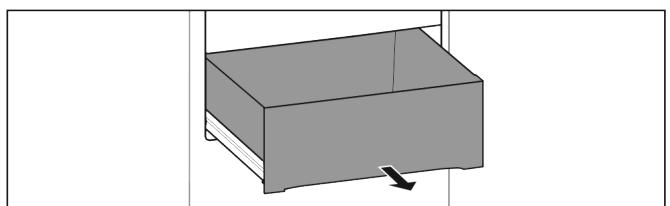
Fig. 17
Make sure that the following requirements are fulfilled:
□Drawer is completely pulled out (see Fig. 1349).
Full extension:*
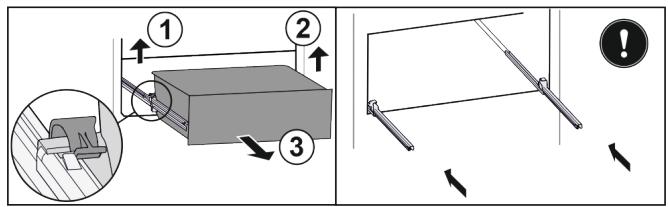
Fig. 18*
Lift the left clamp and simultaneously pull the drawer on the left to the front Fig. 18 (1).
Lift the right clamp and simultaneously pull the drawer on the right to the front Fig. 18 (2).
Remove the drawer to the front Fig. 18 (3).
▶ Slide the rails in.
Fully extendible glass drawer:
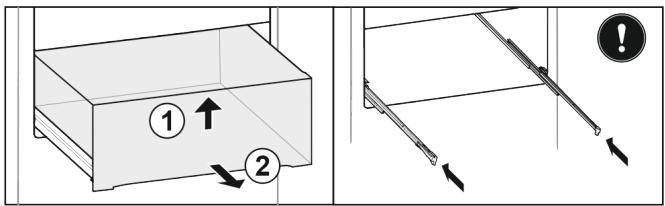
Fig. 19
Lift up the drawer at the front Fig. 19 (1).
Take off to the front Fig. 19 (2).
▶ Slide the rails in.
7.2.2 Inserting the drawer
Drawer on telescopic rails
Full extension:
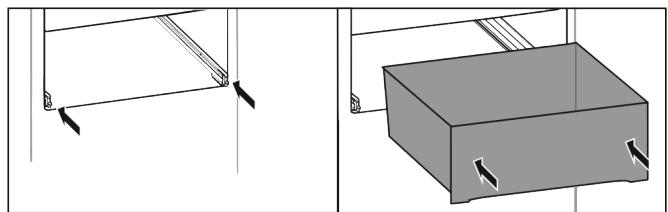
Fig. 20
▶ Slide the rails in.
Place the drawer on the rails.
Push all the way back.
Full extension: Latches audibly in place at the back.*
Fully extendible glass drawer: Latches into place.*
7.3 Fruit & Vegetable-Safe cover
The compartment lid can be removed for cleaning.
7.3.1 Removing the compartment lid
Make sure that the following requirements are fulfilled
□ Bottle shelf is removed (see 7.1 Variable bottle shelf).
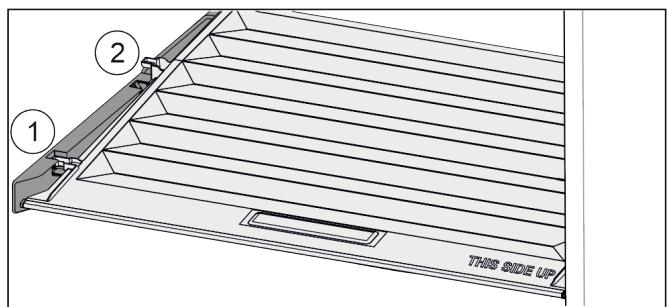
Fig. 21
If the drawers are removed:
Pull the lid up at the front in the retaining parts to the opening Fig. 21 (1).
Lift from the back and pull it up and out Fig. 21 (2).
7.3.2 Inserting the compartment lid
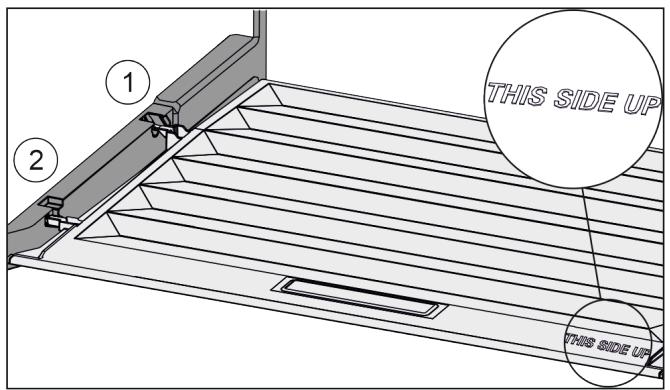
Fig. 22 If the text THIS SIDE UP is on top:
Insert the lip of the cover over the opening of the rear bracket Fig. 22 (1) and click into place Fig. 22 (2).
Position the cover where you want it (see 7.4 Humidity control).
7.4 Humidity control
You can regulate the moisture in the drawer yourself by adjusting the compartment cover.
The compartment cover is on the drawer itself and can be covered with shelves or additional drawers.
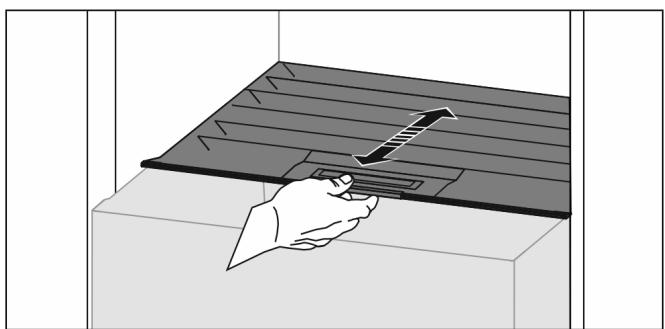
Fig. 23
Low air humidity
Open the drawer.
Pull the drawer cover to the front.
If the drawer is closed: Gap between lid and compartment.
Moisture levels lower in the Safe.
High air moisture:
Open the drawer.
▶ Slide the compartment cover to the back.
If the drawer is closed: The cover seals the compartment.
Moisture levels rise in the Safe.
If there is too much moisture in the compartment:
Choose a "low moisture setting".
-or-
Remove the moisture with a cloth.
Note
With the "low humidity" setting, the Fruit & Vegetable-Safe can also be used as a Meat & Dairy-Safe.
Choose a "low moisture" setting.
7.5 Accessories
7.5.1 Butter dish
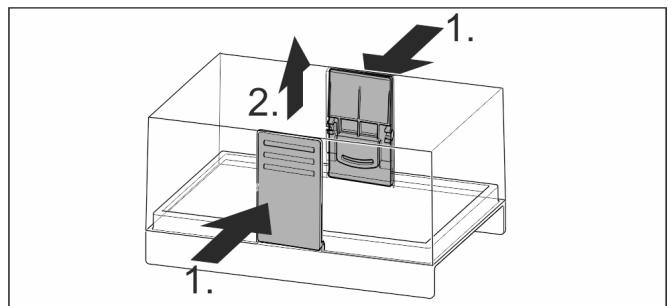
Opening/closing the butter dish
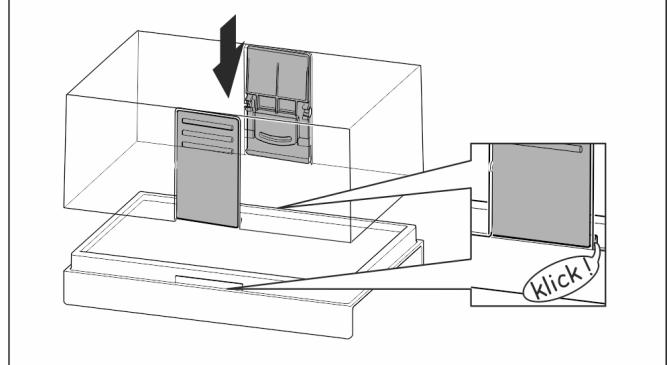
Fig. 24
Dismantling the butter dish
You can disassemble the butter dish for cleaning.
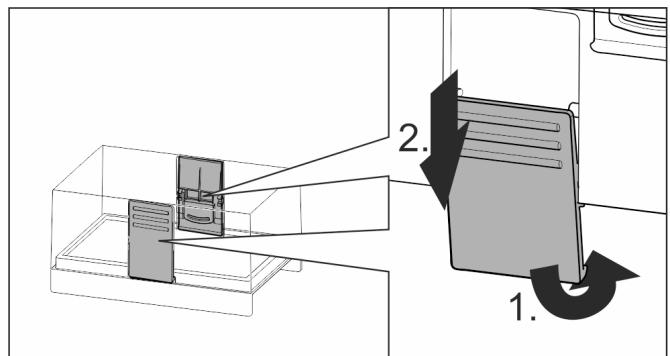
Fig. 25
Disassemble the butter dish.
7.5.2 Egg rack
You can pull out and turn the egg rack. You can use both sides of the egg rack so you can label specifics like the purchase date.
Using the egg rack
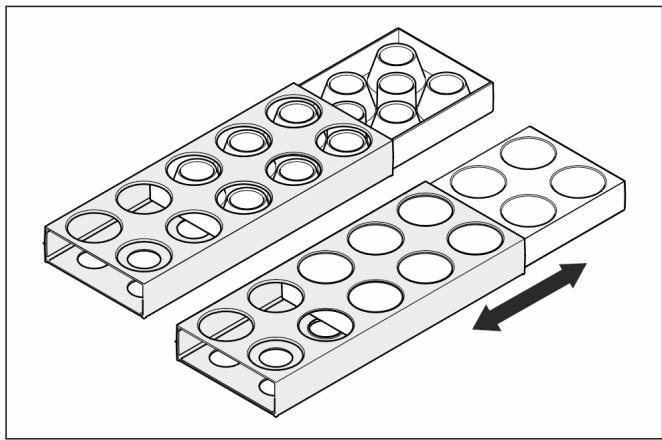
Fig. 26
Top section: store hen eggs.
Bottom section: store quail eggs.
7.5.3 Bottle rack
Using the bottle rack
Store open bottles in the bottle rack.
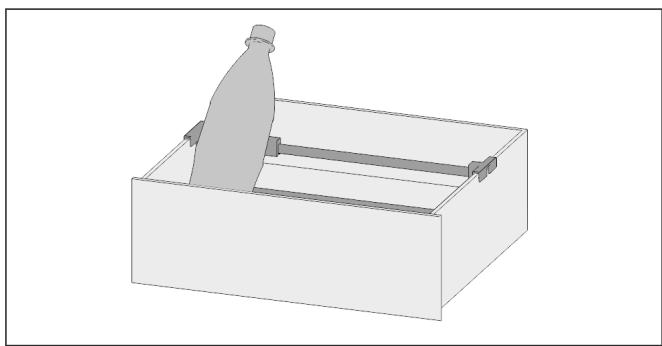
Fig. 27
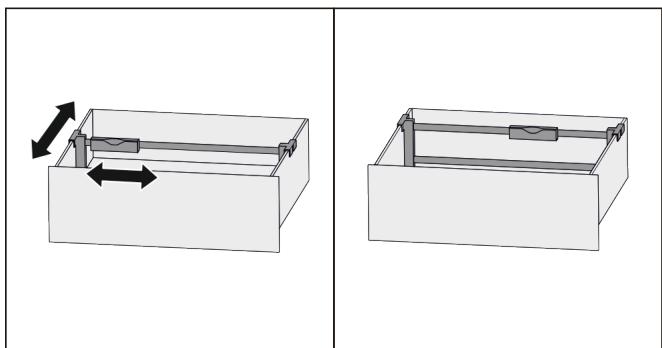
Fig. 28
Place bottles in the slots of the bottle rack.
> Stops bottles from tipping over.
Removing the bottle rack
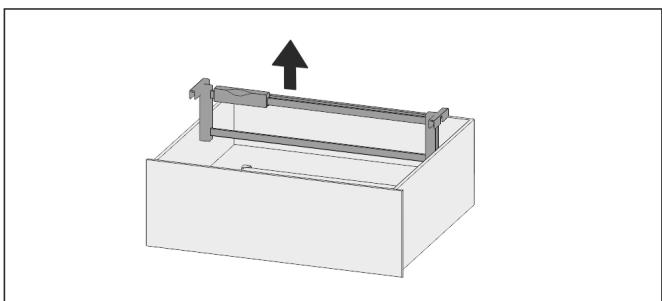
Fig. 29
Lift the bottle rack up and out to remove.
7.5.4 FlexSystem
Using the FlexSystem
The FlexSystem helps you store and arrange food clearly and in the way you want. It lets you clearly divide your food into fruit, vegetables or by use-by dates, for example.
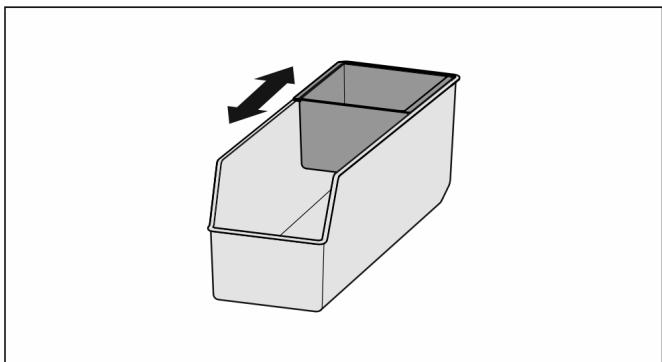
Fig. 30
Move the inside tray.
Removing the FlexSystem
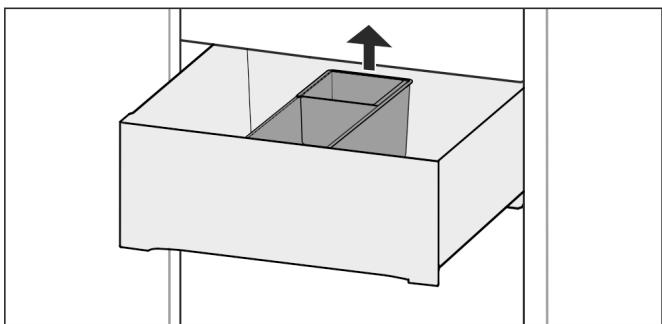
Fig. 31
Lift the FlexSystem at the back.
Pull up and out.
Inserting the FlexSystem

Fig. 32
Insert front of the FlexSystem first.
Lower the back part.
Disassembling the FlexSystem
The FlexSystem can be dismantled for cleaning.
Fig. 33
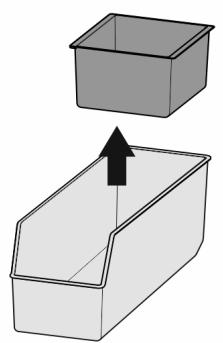
Dismantling the FlexSystem.
8 Maintenance
8.1 FreshAir carbon filter
The FreshAir carbon filter is located in the compartment above the fan.
It guarantees the best air quality.
Change the carbon filter every 6 months.
With an active Reminder, a change prompt appears in the display.
- You can dispose of the carbon filter with the regular household waste.
Note
The FreshAir carbon filter is available for purchase from the Liebherr home appliance store (home.liebherr.com).
8.1.1 Removing the FreshAir carbon filter
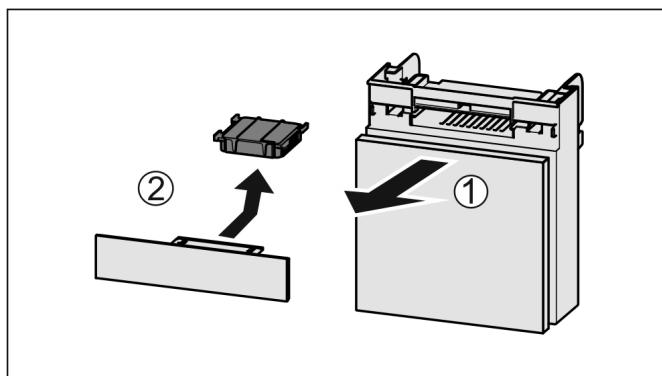
Fig. 34
Pull out the compartment Fig. 34 (1).
Remove the carbon filter Fig. 34 (2).
8.1.2 Inserting the FreshAir carbon filter
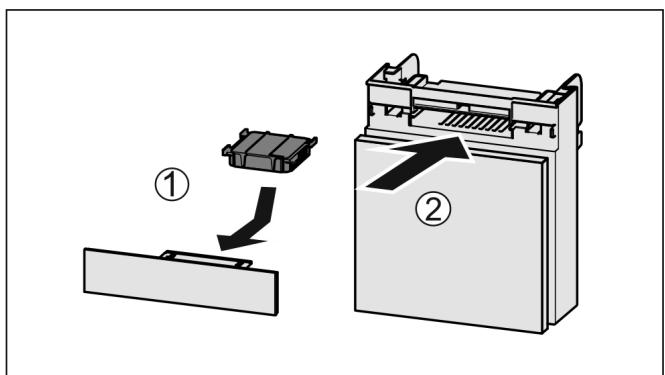
Fig. 35
Insert the carbon filter as shown in the diagram Fig. 35 (1).
The carbon filter clicks into place. If the carbon filter is pointing downwards:
Push the compartment in Fig. 35 (2).
The carbon filter is now ready for use.
8.2 Defrosting the appliance

WARNING
Appliance incorrectly defrosted! Injuries and damage.
Do not use mechanical devices or other means to accelerate the defrosting process, other than those recommended by the manufacturer.
- Do not use any electrical heating or steam cleaning equipment, naked flames or defrosting sprays.
Do not remove ice with sharp objects.
Defrosting is performed automatically. The water from the thawing process runs out via the drain opening and is evaporated.
Water droplets or a thin layer of frost or ice can form on the rear wall; this is a completely normal part of the appliance's function. You do not have to remove them.
Clean the drain opening regularly (see 8.3 Cleaning the appliance).
8.3 Cleaning the appliance
8.3.1 Preparation

WARNING
Danger of electric shock.
Unplug refrigerator or disconnect power.

WARNING
Danger of fire
Do not damage the refrigerant circuit.
Empty appliance.
8.3.2 Cleaning the interior
NOTICE
Improper cleaning!
Damage to the appliance.
Only use soft cleaning cloths and ph-neutral all-purpose cleaners.
- Plastic surfaces: clean by hand with a soft clean cloth, lukewarm water and a little detergent.
Metal surfaces: clean by hand with a soft clean cloth, lukewarm water and a little detergent.
Drain outlet Fig. 1 (8): Remove any deposits with a thin item such as a cotton bud.
8.3.3 Cleaning the equipment
NOTICE
Improper cleaning!
Damage to the appliance.
Only use soft cleaning cloths and ph-neutral all-purpose cleaners.
Clean with a soft, clean cloth, lukewarm water and a little washing up liquid:
-
Fruit & Vegetable-Safe cover
-Drawer -
Bottle rack
- Variable bottle shelf
- FlexSystem
Clean with a damp cloth:*
- Retracting rails
Please note: the grease in the tracks is there for lubrication purposes and must not be removed!
Clean in the dishwasher up to 60^ C :
- Egg rack
Butter dish
Disassemble the equipment: see the relevant section.
Clean the equipment.
8.3.4 After cleaning
Wipe dry the appliance and items of equipment
Connect and switch on the appliance.
When the temperature is sufficiently cold
Place the food inside.
Repeat cleaning regularly.
9 Customer support
9.1 Technical specifications
| Temperature zone | |
| Cool: | 3 °C to 9 °C |
| BioFresh | 0 °C to 3 °C |
| Max. equipment capacity | |||
| Equipment | Appliance width 55 cm (see Installation Guide, Appliance Dimen-sions) | Appliance width 60 cm (see Installation Guide, Appliance Dimen-sions) | Appliance width 70 cm (see Installation Guide, Appliance Dimen-sions) |
| Glass drawer, height 59 mm | 15 kg | -- | -- |
| Glass drawer, height 100 mm | 15 kg | -- | -- |
| Glass drawer, height 150 mm | 20 kg | -- | -- |
| Lighting | |
| Energy efficiency class¹ | Light source |
| This product contains an energy efficiency class F light source* | LED* |
| This product contains an energy efficiency class G light source* | LED* |
1 The appliance may contain light sources with different energy efficiency classes. The lowest energy efficiency class is indicated.
For appliances with a WiFi connection:*
| Frequency specification* | |
| Frequency band | 2.4 GHz |
| Maximum radiated power | <100 mW |
| Frequency specification* | |
| Purpose of the wire-less equipment | Integration in the local WiFi network for data communication |
9.2 Operating noises
The appliance makes noises while in operation.
- At less cooling output the appliance saves energy but takes longer to cool items. The volume is lower.
- At a higher cooling output the food cools more quickly. The volume is higher.
Examples:
- Activated functions (see 6.3 Functions)
Running fan - Freshly sorted food
High ambient temperature - Door opened for long periods
| Noise | Possible cause | Type of noise |
| Bubbling and splashing | Coolant is flowing into the cooling circuit. | Normal noise |
| Spitting and hissing | Coolant is spraying into the cooling circuit. | Normal noise |
| Humming | The appliance cools. The volume depends on the cooling output. | Normal noise |
| Sipping noises | The self-closing door is being opened and closed. | Normal noise |
| Whirring and murmuring | The fan is running. | Normal operating noise |
| Clicking | Components are being switched on/off | Normal switching noise |
| Rattling or humming | Valves are active. | Normal switching noise |
| Noise | Possible cause | Type of noise | How to resolve |
| Vibration | Unsuitable installation. | Error noise | Check installation. Set up the appliance. |
| Clattering | Equipment, Objects inside the appliance | Error noise | Secure equipment parts. Leave a gap between items. |
9.3 Technical faults
Your appliance is designed and manufactured for reliable operation and a long service life. If a malfunction nonetheless occurs during operation, please check whether the malfunction is due to an operating error. In this case, you will have to be charged for the costs incurred, even during the warranty period. You may be able to rectify the following faults yourself.
9.3.1 Appliance function
| Defect | Cause | Remedy |
| The appliance does not work. | → The appliance is not switched on. | → Switch on the appliance. |
| → The power plug is not properly inserted in the wall socket. | → Check the power plug. | |
| → The powerfuse in the wall socket is not OK. | → Check the fuse. | |
| → Power failure. | → Keep the appliance closed. → Protect your food: Lay freezer packs on top of the food or use another freezer if the power is off for a prolonged period. → Do not re-freeze defrosted food. | |
| → The appliance connector is not correctly inserted in the appliance. | → Check the appliance connector. | |
| The temperature is not cold enough | → This means that the door of the appliance is not closed properly | → Close the appliance door |
| → Insufficient ventilation | → Clear and clean the ventilation grille. | |
| → The ambient temperature is too high | → Solution: (see 1.2 Range of appliance use) . | |
| → The appliance was opened too frequently or for too long | → Wait to see whether the required temperature resets itself by itself. If not, contact Customer Service (see 9.4 Customer service) . | |
| → The temperature is incorrectly set | → Set to a colder temperature and check after 24 hours. | |
| → The appliance is too near to a heat source (stove, heater etc). | → Change location of appliance or the heat source. | |
| → The appliance was not properly installed in the recess. | → Make sure the appliance was installed correctly and the door closes properly. | |
| The door seal is defective or should be replaced for other reasons. | → The door seal is interchangeable. You can replace it without the use of any special tools. | → Contact Customer Service (see 9.4 Customer service) . |
| The appliance is iced up or condensation is building. | → The door seal may have slipped out of its groove. | → Check the door seal is well placed in the groove. |
9.3.2 Equipment
| Defect | Cause | Remedy |
| The interior light does not turn on. | → The appliance is not switched on. | ▶ Switch on the appliance. |
| → The door was open for longer than 15 min. | ▶ The interior light automatically switches itself off if the door stays open for approx. 15 min. | |
| → The LED interior light is faulty or the cover is damaged: | WARNING Risk of injury from electrical shock. Live parts are under the cover. ▶ The LED interior light should only be replaced or repaired by the Customer Service department or by engineers trained to do so. |
9.4 Customer service
First check if you can fix the error yourself (see 9 Customer support). If this is not the case, please contact customer service.
Please refer to the enclosed "Liebherr Service" brochure for the address.

WARNING
Unprofessional repair! Injuries.
Repairs and work on the appliance and the power supply cable not described in the Manual (see 8 Maintenance) should only be carried out by a qualified service provider.
A damaged power cable may only be replaced by the manufacturer, the manufacturer's Customer Service or a similarly qualified person.
For appliances with an IEC connector, the change can be made by the customer.
9.4.1 Contact Customer Service
Make sure to have the following appliance information to hand:
□ Appliance name (model and index)
Service no. (service)
Serial no. (S no.)
-Showing appliance info on the display (see Info). -or-
Referring to appliance info on the nameplate (see 9.5 Rating plate).
Take note of the appliance information.
Inform Customer Service: Tell us the problem and the appliance details.
This will help us give you fast and accurate support.
Further instructions from customer service will follow.
9.5 Rating plate
The nameplate is located behind the drawers on the inside of the appliance.

Fig. 36
(1) Appliance name
(3) Serial no.
(2) Service no.
Information from the nameplate.
10 Decommissioning
Empty appliance.
Switch off the appliance (see 6.4 Settings).
Pull out the power plug.
Remove the appliance connector if necessary: Pull it out and, at the same time, move it from the left to the right.
Clean the appliance (see 8.3 Cleaning the appliance).
Leave the door open to prevent bad smells
11 Disposing of the appliance

WARNING
Risk of child entrapment!
Before you throw away your old refrigerator or freezer:
Take off the doors.
Leave the shelves in place so that children may not easily climb inside.
The device still contains valuable materials and must be collected separately from unsorted municipal waste so it can be recycled. Disused devices must be disposed of in a proper and professional manner according to the locally applicable regulations and laws.

WARNING
Leaking refrigerant and oil!
Fire. The refrigerant contained within the appliance is environmentally friendly, but flammable. The oil contained within the appliance is flammable. Escaping refrigerant and oil can ignite if they are of high enough concentration and are exposed to an external heat source.
- Do not damage the pipelines of the coolant circuit and the compressor.
Do not damage the refrigerant circuit of the old appliance during transport. This ensures that the refrigerant (see type plate for details (see 9.5 Rating plate)) and the oil cannot leak out uncontrollably.
For Germany:
The appliance can be disposed of free of charge in Class 1 collection containers at your local recycling center. When purchasing a new fridge/freezer and if your sales area is >400 m^2 , the retailer with also take back the old appliance free of charge.
Decommission the appliance:
Disconnect the power plug.
Remove the connection cable from the appliance.
home.liebherr.com/fridge-manuals
EN Built-in refrigerator with BioFresh
Issue date: 20220118
Part number index: 7088264-01