TP1020 - Appareil de mesure topographique LEICA - Notice d'utilisation et mode d'emploi gratuit
Retrouvez gratuitement la notice de l'appareil TP1020 LEICA au format PDF.


| Type de produit | Processeur automatique de tissus pour laboratoire d'histologie |
| Marque | Leica |
| Modèle | TP1020 |
| Configuration | Basique, avec fonction vide, avec système de contrôle des vapeurs, ou avec vide et contrôle des vapeurs |
| Type de carrousel | Carrousel à 12 stations |
| Nombre de bains de paraffine | 2 (3 en option) |
| Capacité des bains de paraffine | 1,8 L chacun |
| Plage de température des bains de paraffine | 45 °C à 65 °C |
| Nombre de récipients réactifs | 10 (9 en option) |
| Capacité des récipients réactifs | 1,8 L chacun |
| Nombre de paniers tissu standard | 1 (2 en option) |
| Capacité du panier tissu | Jusqu'à 100 cassettes |
| Nombre de programmes | 9, librement sélectionnables |
| Temps d'infiltration programmable par station | Jusqu'à 99 h 59 min |
| Départ différé | Jusqu'à 9 jours |
| Fonction vide | Applicable à toutes les stations en mode manuel et automatique ; différence de pression max. 500 hPa |
| Système de contrôle des vapeurs | Filtres à charbon actif (formol et alcool/xylène) ou tube d'évacuation |
| Écran | LCD facile à lire |
| Clavier | Panneau de commande ergonomique avec touches protégées par film |
| Alimentation électrique | 100 / 120 / 230 / 240 V AC ±10 %, 50/60 Hz |
| Dimensions (diamètre carrousel) | 820 mm |
| Hauteur | 595 - 780 mm |
| Diamètre des roulettes | 610 mm |
| Poids à sec (accessoires inclus) | 60 kg |
| Sécurité | Immersion automatique des paniers en cas de panne, reprise du programme, coupure thermique de la paraffine à 75 °C, alarmes et messages d'erreur |
FOIRE AUX QUESTIONS - TP1020 LEICA
Questions des utilisateurs sur TP1020 LEICA
0 question sur cet appareil. Repondez a celles que vous connaissez ou posez la votre.
Poser une nouvelle question sur cet appareil
Téléchargez la notice de votre Appareil de mesure topographique au format PDF gratuitement ! Retrouvez votre notice TP1020 - LEICA et reprennez votre appareil électronique en main. Sur cette page sont publiés tous les documents nécessaires à l'utilisation de votre appareil TP1020 de la marque LEICA.
MODE D'EMPLOI TP1020 LEICA
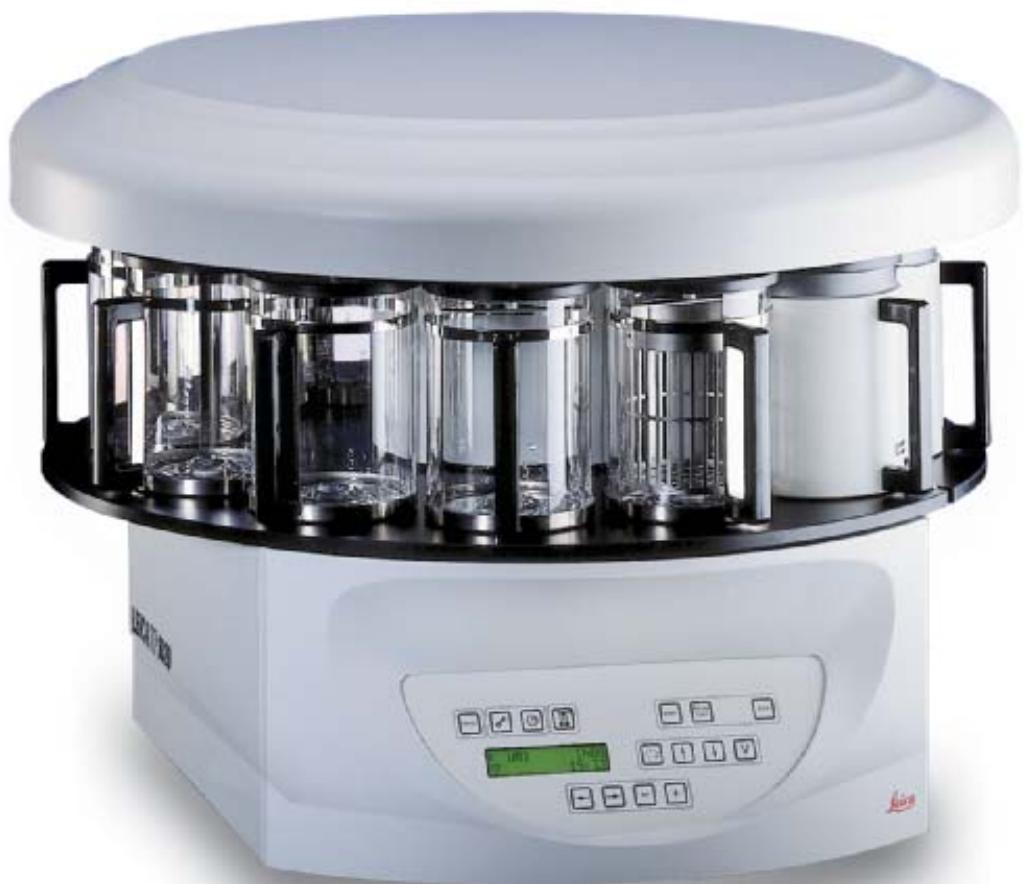
Leica TP1020
Processeur de tissus automatique pour laboratoire d'histologie
Living up to Life
Technologie fiable, sécurité maximale des échantillons
Leica établit de nouvelles normes dans de nombreux domaines d'application grâce à des instruments technologiquement innovants pour la préparation des échantillons. Le Leica TP1020 est un processeur de tissus automatique qui combine parfaitement une technologie éprouvée avec un design moderne et convivial.
Traitement délicat des échantillons et sécurité maximale des tissus à toutes les étapes du processus, conception technique robuste basée sur une mécanique de précision innovante associée à une interface utilisateur moderne – ce sont les caractéristiques convaincantes du Leica TP1020. Facile à programmer, cet instrument offre à l'utilisateur une flexibilité maximale pour répondre aux besoins individuels de tout laboratoire.
Infiltration des tissus sous vide
Le vide peut être appliqué à n'importe laquelle des stations, en mode manuel ou automatique. L'avantage : une infiltration nettement améliorée des tissus en un temps plus court. Les instruments dotés de la fonction vide sont équipés de récipients en aluminium anodisé.
design. Traitement délicat des échantillons et sécurité maximale des tissus à toutes les étapes de
la séquence de traitement, conception technique robuste basée sur une mécanique de précision innovante
associée à une interface utilisateur moderne – ce sont là des arguments convaincants
Caractéristiques du Leica TP1020. Facile à programmer, cet instrument offre à l'utilisateur une
flexibilité maximale pour répondre aux besoins individuels de tout laboratoire.
Infiltration tissulaire sous vide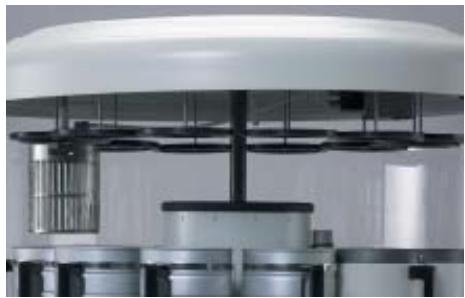
Le vide peut être appliqué à n'importe laquelle des stations, aussi bien en fonctionnement manuel qu'automatique. L'avantage : une infiltration nettement améliorée des tissus en un temps plus court. Les instruments dotés de la fonction vide sont équipés de récipients en aluminium anodisé.
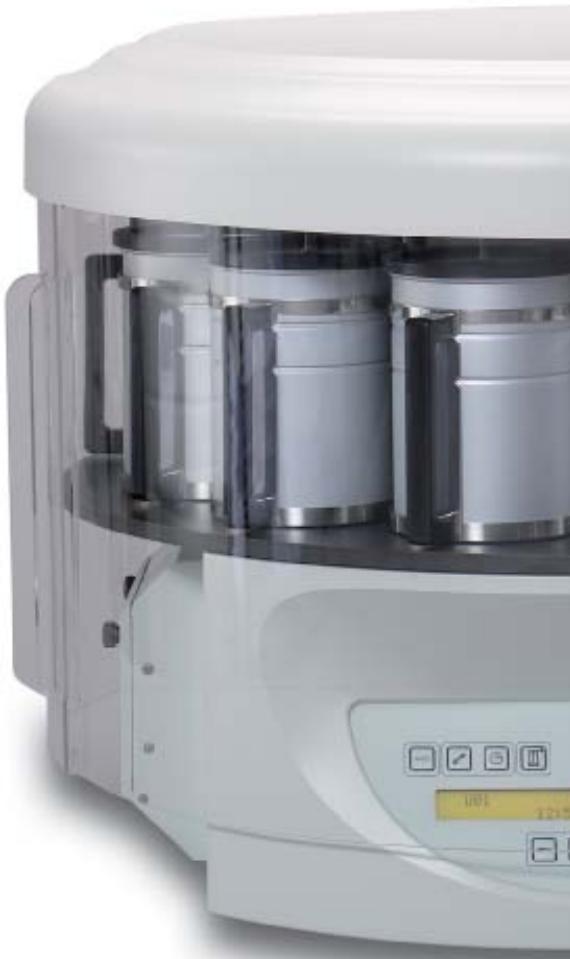
Exposition réduite aux fumées dangereuses
La variante de l'instrument avec système de contrôle des fumées offre deux options pour éliminer les fumées de solution :
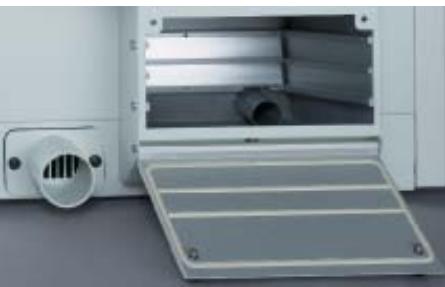
L'efficacité du système est encore améliorée par un bouclier de confinement en plexiglas en deux parties entourant la plateforme des conteneurs de réactifs.
- L'utilisation de deux filtres à charbon actif différents (pour le formol et l'alcool/xylène) libère l'air évacué des fumées de solution et rejette l'air purifié dans l'atmosphère ambiante.
- Un tube d'évacuation d'air dirige les fumées de solution vers une sortie.
Sécurité maximale pour les tissus
Les échantillons de tissus sont protégés du dessèchement même en cas de panne de courant, car les paniers à tissus sont automatiquement immergés dans une station. Le programme reprend là où il a été interrompu une fois le courant rétabli. Après une panne de courant prolongée, la paraffine sera liquéfiée.
Si le temps d'infiltration programmé pour l'une des stations est dépassé, un message d'avertissement s'affiche indiquant le numéro de la station et le temps de dépassement du programme.
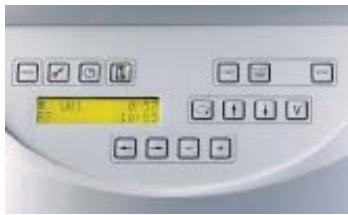
Panneau de commande convivial et facile à utiliser
Les boutons du panneau de commande sont regroupés par fonctions. L'écran LCD facile à lire indique les paramètres de la station tels que le nombre de paniers à tissus, la fonction de vide et le temps d'infiltration restant, l'heure réelle, l'heure de début (départ différé), la durée totale et l'heure de fin. Chacun des neuf programmes peut être exécuté avec un démarrage immédiat ou différé.
Détails pratiques
Le débit d'échantillons peut être doublé en utilisant un deuxième panier à tissus pour une meilleure productivité dans les laboratoires de routine et de recherche. Le panier à tissus est déplacé de haut en bas dans le liquide à intervalles de trois secondes pour assurer un mélange complet et uniforme des réactifs et une infiltration optimale des tissus. Les joints d'étanchéité sur les couvercles des conteneurs réduisent la perte de solution et donc également l'émission dans l'atmosphère ambiante au minimum.
Toutes les stations de réactifs sont facilement accessibles car l'instrument peut être
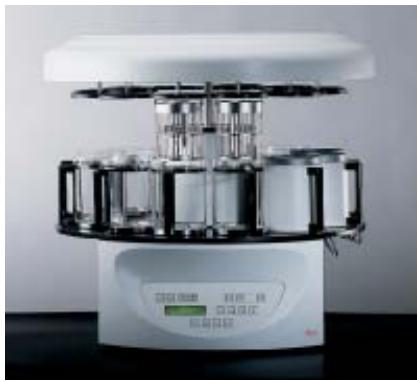
pivoté presque immédiatement et sans difficulté grâce aux roulettes intégrées et réglables.
Quatre configurations sont disponibles : instrument de base ; instrument de base avec vide ; instrument de base avec système de contrôle des fumées ; et instrument de base avec vide et contrôle des fumées.
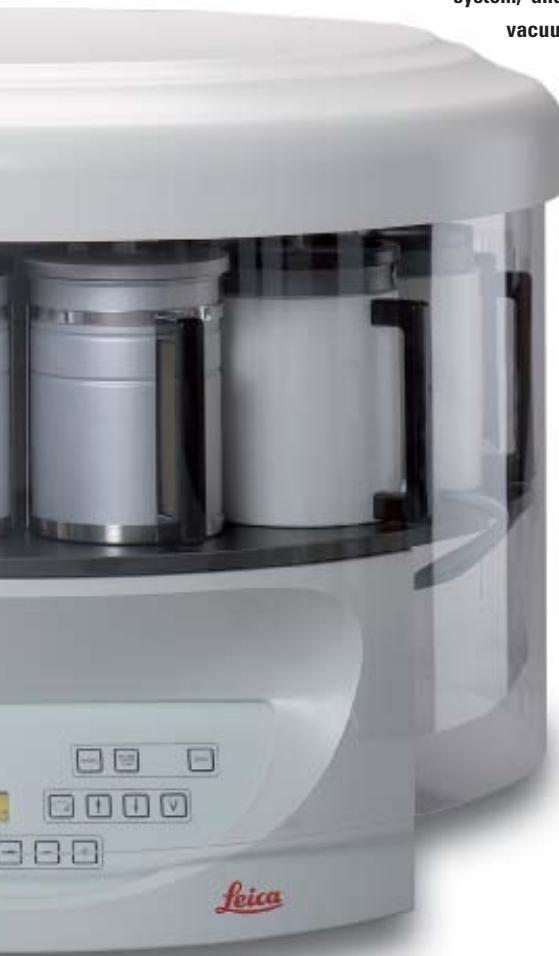
Large gamme d'accessoires :
Béchers en verre avec supports de béchers, conteneur en aluminium anodisé avec supports de béchers, bain de paraffine revêtu de téflon
- Panier à tissus en trois parties avec couvercle (pour chargement organisé des cassettes)
- Paniers à tissus standard
- Dispositif de retrait de panier avec égouttoir
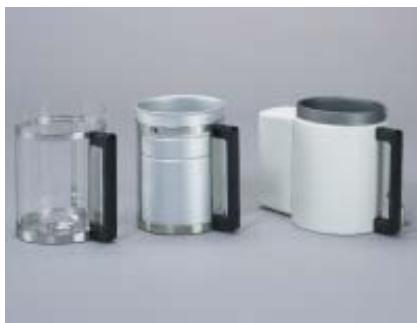
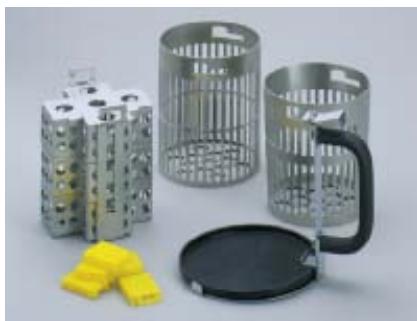
Leica TP1020 – Caractéristiques exceptionnelles du produit
- Type carrousel avec 12 stations
- Configurations : - Instrument de base
- Fonction vide -Système de contrôle des fumées
- Fonction vide avec système de contrôle des fumées
- Option : chargement de deux paniers
- Paniers à tissus en métal avec des capacités variables allant jusqu'à 100 cassettes
- Panneau de commande ergonomique avec clavier protégé par une membrane et écran LCD
- Temps d'infiltration programmable séparément pour chaque station
- Fonction de démarrage différé jusqu'à 9 jours
- Possibilité d'interrompre un processus automatique pour recharger ou retirer des cassettes pour des applications spéciales avant la fin d'un cycle
- Édition et modification faciles des programmes, même pendant un cycle de traitement
- Alarmes sonores, messages d'erreur et codes d'avertissement
- Concept de sécurité avancé
- Large gamme d'accessoires
Leica TP1020 - Spécifications techniques
Spécifications électriques :
Tension nominale : 100 / 120 / 230 / 240 V AC ±10%
Fréquence nominale : 50/60 Hz
Dimensions :
Couvercle du carrousel : 820 mm de diamètre
Hauteur : 595 - 780 mm
Diamètre des rouleaux : 610 mm
Poids :
Poids à sec (accessoires inclus) : 60 kg
Bains de paraffine :
Nombre : 2 (3 en option)
Capacité : 1,8 L
Plage de température : 45 °C - 65 °C
Disjoncteur de surchauffe : 75 °C ± 4 °C
Conteneurs de réactifs :
Nombre : 10 (9) Capacité : 1,8 L
Panier à tissus standard :
Nombre : 1 (2 en option) Capacité : max. 100 cassettes
Programmes :
Nombre : 9, librement sélectionnables
Temps d'infiltration programmable
par station : 99 h 59 min
Départ différé : 9 jours Temps de vidange : 60 s
Dispositif à vide (selon la configuration) :
Différence de pression : max. 500 hPa (environ 0,5 bar)
Des procédures de développement, de production et de contrôle qualité à jour, certifiées selon DIN EN ISO 9001, garantissent une qualité et une fiabilité maximales.
Présent dans le monde entier
Australie : North Ryde Tél. +61 2 8870 3500 Autriche : Vienne Tél. +43 1 486 80 50 0 Belgique : Groot Bijgaarden Tél. +32 2 790 98 50 Canada : Richmond Hill/Ontario Tél. +1 905 762 2000 Danemark : Herlev Tél. +45 4454 0101 France : Nanterre Cedex Tél. +33 811 000 664 Allemagne : Wetzlar Tél. +49 64 41 29 40 00 Italie : Milan Tél. +39 02 574 861 Japon : Tokyo Tél. +81 3 5421 2800 Corée : Séoul Tél. +82 2 514 65 43 Pays-Bas : Rijswijk Tél. +31 70 4132 100 République populaire de Chine : Hong Kong Tél. +852 25646699 Portugal : Lisbonne Tél. +351 21 388 9112 Singapour Tél. +65 6779 7823 Espagne : Barcelone Tél. +34 93 494 95 30 Suède : Kista Tél. +46 8 625 45 45 Suisse : Heerbrugg Tél. +41 71 726 34 34 Royaume-Uni : Milton Keynes Tél. +44 1908 246 246 États-Unis : Bannockburn/Illinois Tél. +1 847 405 0123
Fax +61 29878 1055 Fax +43 1486805030 Fax +32 27909868 Fax +1 905 762 8937 Fax +45 44540111 Fax +33 156052323 Fax +49 6441294155 Fax +39 02 574 03392 Fax +81 354212896 Fax +82 25146548 Fax +31 70 4132 109 Fax +852 25644163 Fax +351 213854668 Fax +65 6773 0628 Fax +34 934949532 Fax +46 8 625 45 10 Fax +41 717263444 Fax +44 1908 609 992 Fax +1 847 405 0164
et des représentants dans plus de 100 pays


- LEICA TP
- TECHNOLOGIE FIABLE, SÉCURITÉ MAXIMALE DES ÉCHANTILLONS
- LEICA ÉTABLIT DE NOUVELLES NORMES DANS DE NOMBREUX DOMAINES D'APPLICATION GRÂCE À DES INSTRUMENTS TECHNOLOGIQUEMENT INNOVANTS POUR LA PRÉPARATION DES ÉCHANTILLONS. LE LEICA TP1020 EST UN PROCESSEUR DE TISSUS AUTOMATIQUE QUI COMBINE PARFAITEMENT UNE TECHNOLOGIE ÉPROUVÉE AVEC UN DESIGN MODERNE ET CONVIVIAL
- EXPOSITION RÉDUITE AUX FUMÉES DANGEREUSES
- SÉCURITÉ MAXIMALE POUR LES TISSUS
- PANNEAU DE COMMANDE CONVIVIAL ET FACILE À UTILISER
- DÉTAILS PRATIQUES
- LARGE GAMME D'ACCESSOIRES
- LEICA TP1020 – CARACTÉRISTIQUES EXCEPTIONNELLES DU PRODUIT
- LEICA TP1020 - SPÉCIFICATIONS TECHNIQUES
- SPÉCIFICATIONS ÉLECTRIQUES
- DIMENSIONS
- POIDS
- BAINS DE PARAFFINE
- CONTENEURS DE RÉACTIFS
- PANIER À TISSUS STANDARD
- PROGRAMMES
- DISPOSITIF À VIDE (SELON LA CONFIGURATION)
- PRÉSENT DANS LE MONDE ENTIER
Marque : LEICA
Modèle : TP1020
Catégorie : Appareil de mesure topographique