
ZA32S - Réfrigérateur-congélateur ZANUSSI - Notice d'utilisation et mode d'emploi gratuit
Retrouvez gratuitement la notice de l'appareil ZA32S ZANUSSI au format PDF.


| Type de produit | Réfrigérateur-congélateur |
| Marque | Zanussi |
| Modèle | ZA32S |
| Classe climatique | T (tropical) : +18°C à +43°C |
| Alimentation | 220-240 V, 50 Hz |
| Fonctions principales | Réglage de température, congélation de produits frais, production de glaçons, éclairage intérieur, étagères mobiles, réversibilité des portes |
| Interrupteur ambiant | À enclencher pour température ambiante < 16°C |
| Étagères | Mobiles, demi-étagères ajustables |
| Balconnets de porte | Réglables en hauteur |
| Éclairage intérieur | Ampoule à remplacer (voir notice) |
| Dégivrage | Automatique pour le réfrigérateur ; manuel pour le congélateur (utiliser le racloir en plastique fourni) |
| Nettoyage | Eau tiède et bicarbonate de soude, ne pas utiliser de détergents abrasifs |
| Sécurité | Ne pas utiliser d'instruments tranchants pour enlever le givre ; ne pas congeler de boissons gazeuses ; ne pas consommer de glaçons immédiatement (brûlure par le froid) |
| Pièces détachées | Utiliser uniquement des pièces d'origine, contacter un centre de service agréé |
| Installation | Éloigner des sources de chaleur, assurer une ventilation adéquate, cales arrière à fixer, mise à niveau avec pieds réglables |
| Réversibilité des portes | Possible, suivre les instructions de la notice |
| Capacité de congélation | Voir plaque signalétique (non spécifié dans la notice) |
FOIRE AUX QUESTIONS - ZA32S ZANUSSI
Questions des utilisateurs sur ZA32S ZANUSSI
0 question sur cet appareil. Repondez a celles que vous connaissez ou posez la votre.
Poser une nouvelle question sur cet appareil
Téléchargez la notice de votre Réfrigérateur-congélateur au format PDF gratuitement ! Retrouvez votre notice ZA32S - ZANUSSI et reprennez votre appareil électronique en main. Sur cette page sont publiés tous les documents nécessaires à l'utilisation de votre appareil ZA32S de la marque ZANUSSI.
MODE D'EMPLOI ZA32S ZANUSSI
ZANUSSI
RÉFRIGÉRATEUR CONGÉLATEUR RÉFRIGÉRATEUR CONGÉLATEUR FRIDGE-FREEZER FRIGORIFICO E CONGELADOR ZA 32 S ZA 32 Y ZA 32 N ZA 32 W
NOTICE D'UTILISATION LIBRO DE INSTRUCCIONES INSTRUCTION BOOKLET MANUAL DE INSTRUÇÕES
AVERTISSEMENTS
Il est très important de conserver cette notice avec l'appareil pour toute référence future. Si l'appareil est vendu ou transféré à un autre propriétaire, ou si vous déménagez et laissez l'appareil, assurez-vous toujours que la notice est fournie avec l'appareil afin que le nouveau propriétaire puisse prendre connaissance du fonctionnement de l'appareil et des avertissements pertinents.
Si cet appareil avec des joints de porte magnétiques remplace un ancien appareil avec une serrure à ressort (loquet) sur la porte ou le couvercle, assurez-vous de rendre cette serrure à ressort inutilisable avant de jeter l'ancien appareil. Cela évitera qu'il ne devienne un piège mortel pour un enfant.
Ces avertissements sont fournis dans un souci de sécurité. Vous devez les lire attentivement avant d'installer ou d'utiliser l'appareil.
Sécurité générale
- Cet appareil est conçu pour être utilisé par des adultes. Les enfants ne doivent pas être autorisés à toucher aux commandes ou à jouer avec le produit.
- Il est dangereux de modifier les spécifications ou de modifier ce produit de quelque manière que ce soit.
- Avant tout nettoyage ou entretien, assurez-vous d'éteindre et de débrancher l'appareil.
- Cet appareil est lourd. Il faut faire attention lors de son déplacement.
- Les sucettes glacées peuvent provoquer des brûlures de froid si elles sont consommées directement sorties de l'appareil.
Service / Réparation
- Tout travail électrique nécessaire à l'installation de cet appareil doit être effectué par un électricien qualifié ou une personne compétente.
- Cet appareil doit être réparé par un centre de service agréé, et seules des pièces de rechange d'origine doivent être utilisées.
- Ne tentez en aucun cas de réparer l'appareil vous-même. Des réparations effectuées par des personnes inexpérimentées peuvent causer des blessures ou un dysfonctionnement plus grave. Adressez-vous à votre centre de service local, et suivez toujours
Utilisation
- Les réfrigérateurs et congélateurs domestiques sont conçus spécifiquement pour le stockage de denrées alimentaires comestibles uniquement.
- Les performances optimales sont obtenues avec une température ambiante comprise entre +18°C et +43°C (classe T) ; +18°C et +38°C (classe ST) ; +16°C et +32°C (classe N) ; +10°C et +32°C (classe SN). La classe de votre appareil est indiquée sur sa plaque signalétique.
Avertissement : lorsque la température ambiante n'est pas comprise dans la plage indiquée pour la classe de cet appareil, les instructions suivantes doivent être respectées : lorsque la température ambiante descend en dessous du niveau minimal, la température de
stockage dans le compartiment congélateur ne peut pas être garantie ; il est donc conseillé d'utiliser les aliments stockés dès que possible.
- Les aliments congelés ne doivent pas être recongelés une fois décongelés.
- Les recommandations de stockage du fabricant doivent être strictement respectées. Reportez-vous aux instructions correspondantes.
- La paroi intérieure de l'appareil est constituée de canaux dans lesquels circule le réfrigérant. Si ceux-ci étaient percés, cela endommagerait l'appareil de manière irréparable et entraînerait une perte de nourriture. N'UTILISEZ PAS D'INSTRUMENTS POINTUS pour gratter le givre ou la glace. Le givre peut être enlevé à l'aide du grattoir fourni. En aucun cas, la glace solide ne doit être forcée pour être retirée de la paroi. La glace solide doit être laissée à dégeler lors du dégivrage de l'appareil. Voir les instructions de dégivrage.
- Ne placez pas de boissons gazeuses ou pétillantes dans le congélateur, car cela crée une pression sur le récipient, ce qui peut le faire exploser, entraînant des dommages à l'appareil.
Installation
- Cet appareil contient des pièces en fonctionnement qui chauffent. Assurez-vous toujours d'une ventilation adéquate, car un défaut de ventilation entraînera une défaillance des composants et une éventuelle perte de nourriture. Voir les instructions d'installation.
- Veillez à ce que l'appareil ne repose pas sur le câble d'alimentation électrique. Important : si le cordon d'alimentation est endommagé, il doit être remplacé par un cordon spécial ou un ensemble disponible auprès du fabricant ou de son agent de service.
- Les pièces qui chauffent ne doivent pas être exposées. Dans la mesure du possible, l'arrière du produit doit être contre un mur.
- Si l'appareil a été transporté horizontalement, il est possible que l'huile contenue dans le compresseur s'écoule dans le circuit frigorifique. Il est conseillé d'attendre au moins deux heures avant de brancher l'appareil pour permettre à l'huile de refluer dans le compresseur.

Protection de l'environnement
Cet appareil ne contient pas de gaz qui pourraient endommager la couche d'ozone, ni dans son circuit frigorifique ni dans ses matériaux d'isolation. L'appareil ne doit pas être jeté avec les ordures ménagères et les déchets urbains. Évitez d'endommager le groupe de refroidissement, en particulier à l'arrière près de l'échangeur de chaleur. Des informations sur les sites de dépôt locaux peuvent être obtenues auprès des autorités municipales. Les matériaux utilisés sur cet appareil marqués par le symbole 🙏 sont recyclables.

SOMMAIRE
Avertissements 36
Utilisation 38
Nettoyage de l'intérieur 38
Fonctionnement 38
Réglage de la température 38
Congélation des aliments frais 38
Conservation des aliments congelés 38
Décongélation 39
Production de glaçons 39
Réfrigération des aliments frais 39
Interrupteur ambiant 40
Étagères mobiles 40
Positionnement des clayettes de porte 40
Conseils 41
Conseils pour la réfrigération 41
Conseils pour la congélation 41
Conseils pour la conservation des aliments congelés 41
Entretien 42
Nettoyage périodique 42
Périodes d'arrêt 42
Éclairage intérieur 42
Dégivrage 42
Service après-vente et pièces de rechange 43
Installation 44
Emplacement 44
Branchement électrique 44
Entretoises arrière 45
Réversibilité de la porte 45
UTILISATION
Nettoyage de l'intérieur
Avant la première utilisation de l'appareil, lavez l'intérieur et tous les accessoires internes avec de l'eau tiède et un peu de savon neutre afin d'éliminer l'odeur typique d'un produit neuf, puis séchez soigneusement.

N'utilisez pas de détergents ni de poudres abrasives, car ils endommageraient la finition.
Fonctionnement
Branchez la fiche dans la prise murale.
Ouvrez la porte du réfrigérateur et tournez le bouton du thermostat dans le sens des aiguilles d'une montre, au-delà de la position «O» (STOP). L'appareil se mettra en marche.
Pour arrêter le fonctionnement, il suffit de tourner le bouton du thermostat sur la position «O».
Réglage de la température
La température est réglée automatiquement et peut être augmentée pour obtenir une température plus élevée (plus chaude) en tournant le bouton du thermostat vers les réglages inférieurs, ou réduite (plus froide) en tournant le bouton vers les réglages supérieurs.
Cependant, le réglage exact doit être choisi en gardant à l'esprit que la température à l'intérieur du réfrigérateur dépend de :
• la température ambiante ; • la fréquence d'ouverture de la porte ; • la quantité d'aliments stockés ; - l'emplacement de l'appareil.
Un réglage moyen est généralement le plus approprié.

Important
Si la température ambiante est élevée ou si l'appareil est entièrement chargé, et si l'appareil est réglé sur les températures les plus basses, il peut fonctionner en continu, ce qui provoque la formation de givre sur la paroi arrière. Dans ce cas, le bouton doit être réglé sur une température plus élevée pour permettre un dégivrage automatique et donc une consommation d'énergie réduite.
Congélation d'aliments frais
Le compartiment 4 étoiles ✦××× convient à la conservation à long terme des aliments surgelés du commerce et à la congélation d'aliments frais. Ne dépassez pas les durées de conservation indiquées par le fabricant sur les emballages des aliments surgelés du commerce.
Si le congélateur a déjà fonctionné pendant un certain temps, appuyez sur l'interrupteur ambiant au moins 12 heures avant d'introduire les aliments dans le congélateur afin d'obtenir de meilleurs résultats de congélation.
Placez les aliments à congeler dans le compartiment supérieur.

Important
Ne mettez pas de liquides gazeux (boissons pétillantes, etc.) dans le compartiment de congélation, car ils pourraient éclater.
Les glaces à l'eau, si elles sont consommées immédiatement après leur sortie du compartiment de congélation, peuvent provoquer des brûlures de froid sur la peau.
N'oubliez pas qu'une fois décongelés, les aliments surgelés se détériorent rapidement.
Conservation des aliments surgelés
Lors de la première mise en service ou après une période d'inutilisation, avant de placer les produits dans le compartiment, appuyez sur l'interrupteur ambiant au moins 12 heures avant.
Pour obtenir les meilleures performances de cet appareil, vous devez :
si de grandes quantités d'aliments doivent être stockées, retirez tous les tiroirs et paniers de l'appareil et placez les aliments sur les clayettes de refroidissement.
Veillez à ne pas dépasser la limite de charge indiquée sur le côté de la partie supérieure (le cas échéant).

Important
En cas de coupure de courant lorsque des aliments se trouvent dans le congélateur, ne pas ouvrir la porte du compartiment congélateur. Les aliments congelés ne seront pas affectés si la coupure est de courte durée (jusqu'à 6 à 8 heures) et si le compartiment congélateur est plein ; sinon, il est recommandé de consommer les aliments dans un court délai (une augmentation de la température des aliments congelés réduit leur durée de conservation sûre).
Décongélation
Les aliments surgelés ou congelés, avant d'être utilisés, peuvent être décongelés dans le compartiment réfrigérateur ou à température ambiante, selon le temps disponible pour cette opération.
Les petits morceaux peuvent même être cuits encore congelés, directement sortis du congélateur ; dans ce cas, la cuisson sera plus longue.
Production de glaçons
Cet appareil est équipé d'un ou plusieurs bacs pour la production de glaçons. Remplissez ces bacs d'eau, puis placez-les dans le compartiment congélateur.
N'utilisez pas d'instruments métalliques pour retirer les bacs du congélateur.
Réfrigération des aliments frais
Pour obtenir les meilleures performances :
- ne pas conserver d'aliments chauds ou de liquides évaporants dans le réfrigérateur ;
- couvrir ou emballer les aliments, surtout s'ils ont une forte odeur.
- Positionnez les aliments de manière à ce que l'air puisse circuler librement autour d'eux.
Interrupteur ambiant
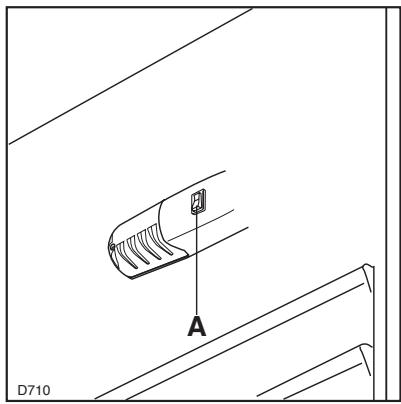
Lorsque la température ambiante est inférieure à +16°C, l'interrupteur ambiant doit être enfoncé. Le voyant (A) s'allume.
Clayettes amovibles
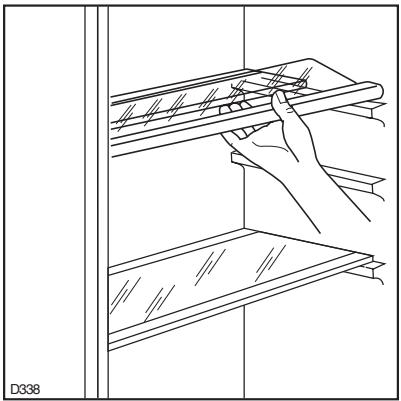
Les parois du réfrigérateur sont équipées d'une série de glissières permettant de positionner les clayettes comme vous le souhaitez.
Pour une meilleure utilisation de l'espace, les demi-étagères avant peuvent se superposer aux arrières.
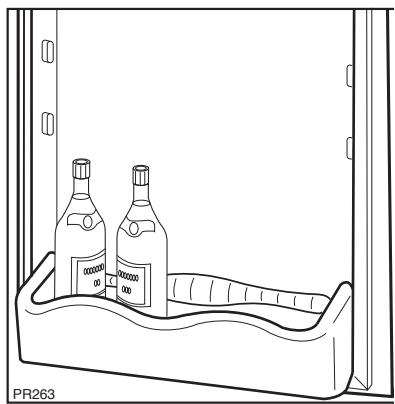
Positionnement des clayettes de porte
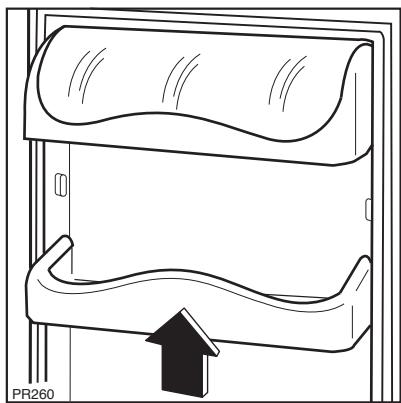
Pour permettre le stockage de denrées de différentes tailles, les clayettes de porte sont réglables en hauteur.
Pour effectuer ces réglages, procédez comme suit :
Tirez progressivement la clayette dans le sens des flèches jusqu'à ce qu'elle se dégage, puis repositionnez-la comme souhaité.
i CONSEILS
Conseils pour la réfrigération
Conseils utiles :
Viande (tous types) : enveloppez-la dans des sacs en polyéthylène et placez-la sur la clayette en verre au-dessus du bac à légumes.
Par sécurité, ne la conservez ainsi qu'un ou deux jours au maximum.
Plats cuisinés, plats froids, etc. : couvrez-les et placez-les sur n'importe quelle clayette.
Fruits et légumes : nettoyez-les soigneusement et placez-les dans le(s) bac(s) prévu(s) à cet effet.
Beurre et fromage : placez-les dans des récipients hermétiques spéciaux ou enveloppez-les dans du papier d'aluminium ou des sacs en polyéthylène pour exclure autant d'air que possible.
Bouteilles de lait : elles doivent être munies d'un bouchon et rangées dans le casier à bouteilles de la porte.
Bananes, pommes de terre, oignons et ail, s'ils ne sont pas emballés, ne doivent pas être conservés au réfrigérateur.
Conseils pour la congélation
Pour vous aider à tirer le meilleur parti du processus de congélation, voici quelques conseils importants :
- la quantité maximale d'aliments pouvant être congelée en 24 heures est indiquée sur la plaque signalétique ;
- le processus de congélation dure 24 heures. Aucun autre aliment à congeler ne doit être ajouté pendant cette période ;
- ne congelez que des aliments de première qualité, frais et soigneusement nettoyés ;
- préparez les aliments en petites portions pour qu'ils puissent être congelés rapidement et complètement, et pour pouvoir ensuite décongeler uniquement la quantité nécessaire ;
- enveloppez les aliments dans du papier d'aluminium ou du polyéthylène et assurez-vous que les emballages sont hermétiques ;
- ne laissez pas les aliments frais non congelés toucher des aliments déjà congelés, afin d'éviter une augmentation de la température de ces derniers ;
- les aliments maigres se conservent mieux et plus longtemps que les aliments gras ; le sel réduit la durée de conservation des aliments ;
- les glaces à l'eau, si elles sont consommées immédiatement après leur sortie du compartiment congélateur, peuvent provoquer des brûlures de la peau ;
- il est conseillé d'indiquer la date de congélation sur chaque emballage individuel afin de pouvoir suivre
la durée de conservation ;
- sur la porte intérieure ou sur une carte spéciale (si fournie), vous trouverez des croquis de divers animaux et types d'aliments avec la durée de conservation recommandée (en mois) à partir du moment de la congélation ;
- Ne placez pas de liquides gazeux (boissons pétillantes, etc.) dans le compartiment congélateur, car ils pourraient éclater.
Conseils pour la conservation des aliments surgelés
Pour obtenir les meilleures performances de cet appareil, vous devez :
• vous assurer que les aliments surgelés achetés dans le commerce ont été correctement stockés par le détaillant ; - veiller à ce que les aliments surgelés soient transférés du magasin au congélateur dans les plus brefs délais ; - ne pas ouvrir la porte fréquemment ni la laisser ouverte plus longtemps que nécessaire. - Une fois décongelés, les aliments se détériorent rapidement et ne peuvent pas être recongelés. - Ne dépassez pas la durée de conservation indiquée par le fabricant.
ENTRETIEN

Débranchez l'appareil avant toute opération d'entretien.
Nettoyage périodique
Nettoyez l'intérieur avec de l'eau tiède et du bicarbonate de soude.
Rincez et séchez soigneusement.
Éclairage intérieur
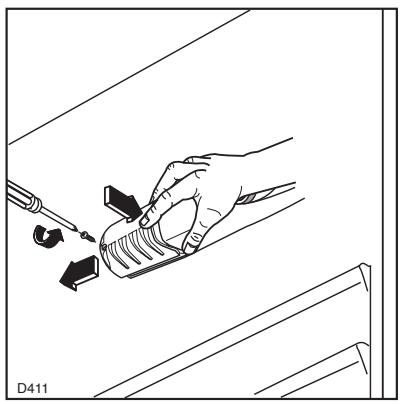
L'ampoule à l'intérieur du compartiment réfrigérateur est accessible comme suit :
- dévissez la vis de fixation du cache de l'éclairage.
- décrochez la partie mobile comme indiqué sur la figure.
Si la lumière ne s'allume pas lorsque la porte est ouverte, vérifiez qu'elle est correctement vissée. Si elle ne s'allume toujours pas, remplacez l'ampoule.
La puissance nominale est indiquée sur le cache de l'ampoule.
Dégivrage
Le givre est automatiquement éliminé de l'évaporateur du compartiment réfrigérateur à chaque arrêt du compresseur, en usage normal.
L'eau de dégivrage s'écoule par une goulotte dans un récipient spécial situé à l'arrière de l'appareil, au-dessus du compresseur, où elle s'évapore.
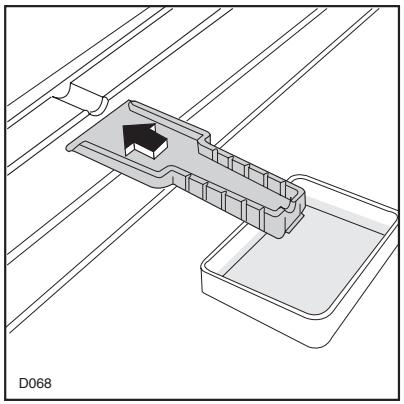
Le compartiment congélateur, en revanche, se couvrira progressivement de givre. Celui-ci doit être enlevé avec la raclette en plastique spéciale fournie, dès que l'épaisseur du givre dépasse 4 mm. Pendant cette opération, il n'est pas nécessaire de couper l'alimentation électrique ni de retirer les aliments.
Cependant, lorsque la glace devient très épaisse sur la paroi intérieure, un dégivrage complet doit être effectué, et il est conseillé de le faire lorsque l'appareil est vide.
Pour effectuer un dégivrage complet du compartiment congélateur, procédez comme suit :
- retirez les aliments stockés, enveloppez-les dans plusieurs couches de papier journal et placez-les dans un endroit frais ;
- débranchez la fiche de la prise murale ou tournez le bouton du thermostat sur la position « O ».
- laissez la porte ouverte ;
- introduisez la raclette en plastique dans le logement prévu en bas au centre, comme indiqué sur la figure.
Périodes de non-utilisation
Lorsque l'appareil n'est pas utilisé pendant de longues périodes, prenez les précautions suivantes :
débranchez la fiche de la prise murale ;
retirez tous les aliments ;
dégivrez et nettoyez l'intérieur et tous les accessoires.
Laissez la porte entrouverte pour permettre à l'air de circuler et éviter les mauvaises odeurs.
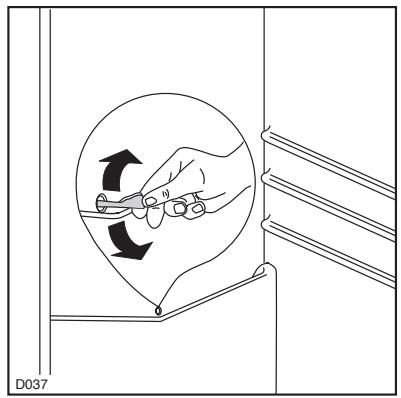
Placez un bac en dessous pour recueillir l'eau de dégivrage ;
- Lorsque le dégivrage est terminé, séchez soigneusement l'intérieur ;
- Conservez le grattoir pour une utilisation future ;
- Rebranchez la fiche dans la prise et, après avoir laissé l'appareil fonctionner pendant au moins une demi-heure, replacez les aliments précédemment retirés dans le compartiment.

Important
Une augmentation de la température des aliments congelés pendant le dégivrage peut réduire leur durée de conservation. N'utilisez jamais d'outils métalliques tranchants pour gratter le givre de l'évaporateur, car vous pourriez l'endommager.
N'utilisez pas de dispositif mécanique ou tout autre moyen artificiel pour accélérer le processus de décongélation, sauf ceux recommandés par le fabricant.
SERVICE APRÈS-VENTE ET PIÈCES DE RECHANGE
Si l'appareil ne fonctionne pas correctement, vérifiez que :
- la fiche est bien enfoncée dans la prise murale et que l'interrupteur principal est allumé ;
- l'alimentation électrique est disponible (vérifiez en branchant un autre appareil) ; • le bouton du thermostat est dans la bonne position.
- Si des gouttes d'eau se trouvent au fond de l'armoire, vérifiez que l'orifice d'évacuation de l'eau de dégivrage n'est pas obstrué (voir la section « Dégivrage »).
- Si votre appareil ne fonctionne toujours pas correctement après avoir effectué les vérifications ci-dessus, contactez le centre de service le plus proche.
Pour obtenir un service rapide, il est essentiel que vous précisiez le modèle et le numéro de série de votre appareil, qui se trouvent sur le certificat de garantie ou sur la plaque signalétique située à l'intérieur de l'appareil, en bas à gauche.
INSTALLATION
Emplacement
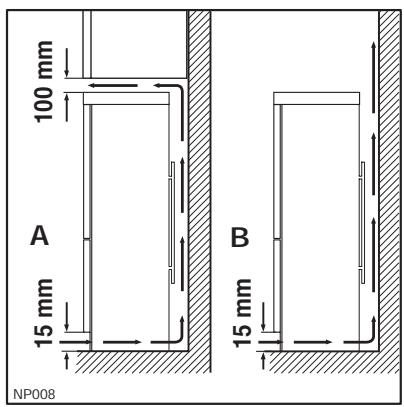
L'appareil doit être installé loin des sources de chaleur telles que radiateurs, chaudières, lumière directe du soleil, etc.
Pour des raisons de sécurité, la ventilation minimale doit être conforme à la Fig.
Appareil positionné sous des éléments de cuisine suspendus (voir Fig. A).
Appareil positionné sans éléments de cuisine suspendus (voir Fig. B).
Attention : maintenir les ouvertures de ventilation dégagées.
Deux pieds réglables à la base de l'armoire permettent un nivellement précis de l'appareil.
Connexion électrique
Avant de brancher, assurez-vous que la tension et la fréquence indiquées sur la plaque signalétique correspondent à votre alimentation électrique domestique. La tension peut varier de ±6 % de la tension nominale.
Pour un fonctionnement avec des tensions différentes, un autotransformateur de taille appropriée doit être utilisé.
L'appareil doit être mis à la terre.
La fiche du câble d'alimentation est munie d'un contact à cet effet.
Si la prise de courant domestique n'est pas mise à la terre, connectez l'appareil à une terre séparée conformément aux réglementations en vigueur, en consultant un technicien spécialisé.
Le fabricant décline toute responsabilité si les précautions de sécurité ci-dessus ne sont pas respectées.

Cet appareil est conforme aux directives C.E.E. suivantes :
- 87/308 CEE du 2/6/87 relative à la suppression des interférences radio.
- 73/23 CEE du 19.2.73 (Directive basse tension) et modifications ultérieures ;
- 89/336 CEE du 3.5.89 (Directive compatibilité électromagnétique) et modifications ultérieures.
Entretoises arrière
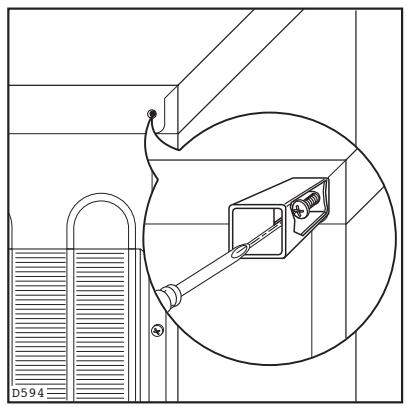
Dans le sachet contenant la documentation, il y a deux entretoises qui doivent être fixées dans les deux coins supérieurs.
Desserrer les vis et insérer l'entretoise sous la tête de vis, puis resserrer les vis.
Changement du sens d'ouverture des portes
Avant toute opération, débrancher la fiche de la prise de courant.
Pour changer le sens d'ouverture de la porte, procéder comme suit :
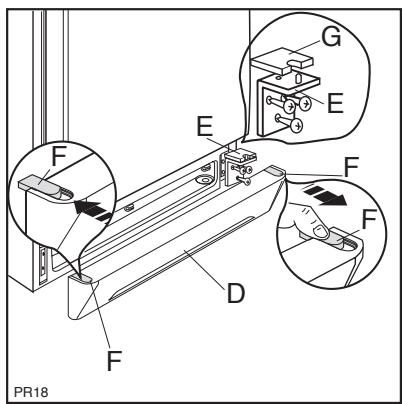
- retirer la grille de ventilation (D) qui est clipsée en place ;
- retirer le cache-trou (G) et la charnière inférieure (E) en dévissant ses trois vis de fixation ;
- retirer la porte inférieure en la faisant glisser hors de la charnière centrale ;
- dévisser la charnière centrale (H) ;
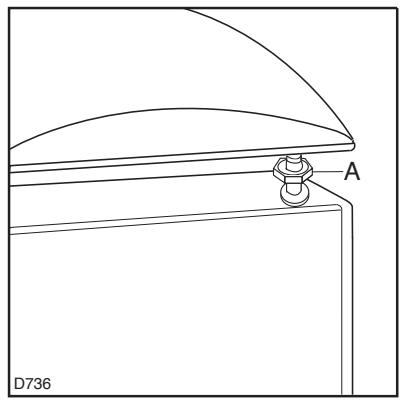
- retirer la porte supérieure en la dégageant de la goupille supérieure (A) ;
- dévisser la goupille supérieure (A) et la remonter du côté opposé ;
- retirer les deux caches de la porte (si présents), découvrant les trous pour les goupilles de charnière, les assembler du côté opposé et remonter la porte supérieure ;
- remonter la charnière intermédiaire du côté opposé ;
- à l'aide d'une clé de 10 mm, dévisser la goupille de charnière (E) et la remonter du côté opposé de la charnière ;
- remonter la charnière inférieure (E) du côté opposé, en utilisant les vis précédemment retirées ; insérer le cache de trou (G) sur la charnière inférieure. Faire glisser le cache de trou (F) hors de la grille de ventilation (D) en le poussant dans le sens de la flèche et le remonter du côté opposé ;
- remonter la porte inférieure ;
- remonter la grille de ventilation (D) en l'encliquetant en place.
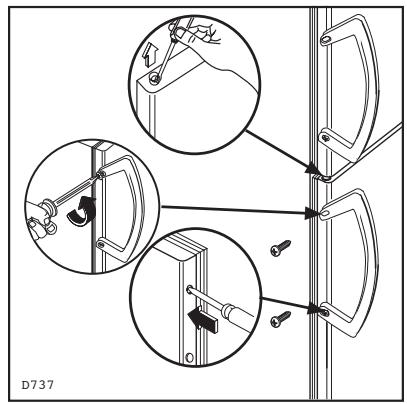
- Dévissez les poignées. Remontez-les du côté opposé après avoir percé les bouchons avec un poinçon. Bouchez les trous laissés ouverts avec les bouchons fournis dans la pochette de documentation.
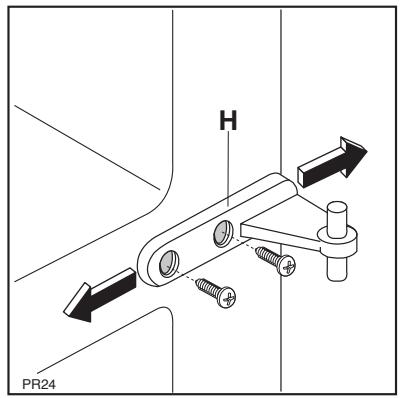
Pour aligner les portes, il est possible de régler la charnière centrale (H) horizontalement à l'aide d'un outil, après avoir desserré les deux vis (voir figure).
Avertissement :
Après avoir inversé le sens d'ouverture des portes, vérifiez que toutes les vis sont correctement serrées et que le joint magnétique adhère à l'armoire. Si la température ambiante est froide (par exemple en hiver), le joint peut ne pas s'adapter parfaitement à l'armoire. Dans ce cas, attendez que le joint s'adapte naturellement ou accélérez ce processus en chauffant la partie concernée avec un sèche-cheveux ordinaire.

- ZANUSSI
- AVERTISSEMENTS
- SÉCURITÉ GÉNÉRALE
- SERVICE / RÉPARATION
- UTILISATION
- INSTALLATION
- PROTECTION DE L'ENVIRONNEMENT
- SOMMAIRE
- CONSEILS
- ENTRETIEN
- NETTOYAGE DE L'INTÉRIEUR
- FONCTIONNEMENT
- RÉGLAGE DE LA TEMPÉRATURE
- IMPORTANT
- CONGÉLATION D'ALIMENTS FRAIS
- CONSERVATION DES ALIMENTS SURGELÉS
- DÉCONGÉLATION
- PRODUCTION DE GLAÇONS
- RÉFRIGÉRATION DES ALIMENTS FRAIS
- INTERRUPTEUR AMBIANT
- CLAYETTES AMOVIBLES
- POSITIONNEMENT DES CLAYETTES DE PORTE
- I CONSEILS
- CONSEILS POUR LA RÉFRIGÉRATION
- CONSEILS POUR LA CONGÉLATION
- CONSEILS POUR LA CONSERVATION DES ALIMENTS SURGELÉS
- NETTOYAGE PÉRIODIQUE
- ÉCLAIRAGE INTÉRIEUR
- DÉGIVRAGE
- PÉRIODES DE NON-UTILISATION
- SERVICE APRÈS-VENTE ET PIÈCES DE RECHANGE
- EMPLACEMENT
- ATTENTION : MAINTENIR LES OUVERTURES DE VENTILATION DÉGAGÉES
- CONNEXION ÉLECTRIQUE
- L'APPAREIL DOIT ÊTRE MIS À LA TERRE
- LE FABRICANT DÉCLINE TOUTE RESPONSABILITÉ SI LES PRÉCAUTIONS DE SÉCURITÉ CI-DESSUS NE SONT PAS RESPECTÉES
- ENTRETOISES ARRIÈRE
- CHANGEMENT DU SENS D'OUVERTURE DES PORTES
Marque : ZANUSSI
Modèle : ZA32S
Catégorie : Réfrigérateur-congélateur