
BRCIS 3180E - Refrigerator BAUMATIC - Free user manual and instructions
Find the device manual for free BRCIS 3180E BAUMATIC in PDF.


| Product type | Refrigerator |
| Brand | Baumatic |
| Model | BRCIS 3180E |
| Energy class | E (estimate) |
| Total net capacity | 310 L (estimate) |
| Refrigerator capacity | 220 L (estimate) |
| Freezer capacity | 90 L (estimate) |
| Dimensions (H x W x D) | 180 x 60 x 65 cm (estimate) |
| Net weight | 65 kg (estimate) |
| Power supply | 220-240 V, 50 Hz |
| Climate class | N-ST (temperate to subtropical) |
| Noise level | 42 dB (estimate) |
| Defrost | Automatic (refrigerator), manual (freezer) |
| Interior lighting | LED |
| Shelves | 3 adjustable glass shelves |
| Vegetable crisper | 1 drawer with lid |
| Door balconies | 3 height-adjustable balconies |
| Door reversibility | Yes |
| Thermostat | Electronic control |
| Maintenance and cleaning | Clean with warm water and mild soap |
| Safety | Self-closing door, surge protection |
| Spare parts | Available via Baumatic after-sales service |
| Repairability | Repairability index not communicated |
Frequently Asked Questions - BRCIS 3180E BAUMATIC
User questions about BRCIS 3180E BAUMATIC
0 question about this device. Answer the ones you know or ask your own.
Ask a new question about this device
Download the instructions for your Refrigerator in PDF format for free! Find your manual BRCIS 3180E - BAUMATIC and take your electronic device back in hand. On this page are published all the documents necessary for the use of your device. BRCIS 3180E by BAUMATIC.
USER MANUAL BRCIS 3180E BAUMATIC
ad es. Bed and Breakfast (B&B),
- bed and breakfast e simili,
natural_image
Illustration showing three different techniques for using a tool, with no visible text or symbols.
natural_image
Cartoon illustration of a charging plug with an angry face and lightning bolt (no text or symbols)natural_image
Cartoon illustration of a character with arms and legs emerging from a door (no text or symbols)

natural_image
Simple line drawing of two bottles and a container with an arrow indicating motion (no text or symbols)
natural_image
Simple line drawing of a smiling face on a square and a hand holding a ball (no text or symbols)natural_image
Technical line drawing of a door frame with vent slots and door, showing internal structure and measurement annotations (no text or symbols)Protezione lampada
Manopola termostato
natural_image
Technical line drawings of four different plastic storage compartments with one bottle, shown from different angles (no text or symbols)natural_image
Cartoon illustration of a smiling refrigerator with sunglasses and a bowl of food (no text or symbols)natural_image
Cartoon illustration of a smiling refrigerator with two baby silhouettes nearby (no text or symbols)natural_image
Pure diagram of a coiled heating element with no text or symbolsnatural_image
Simple line drawing of a structural beam or support with a notch (no text or symbols)
natural_image
Diagram showing a hand pressing down on a mechanical component with an arrow indicating direction (no text or symbols present)natural_image
Illustration of a hand cleaning a textured surface inside a metal enclosure (no text or symbols)flowchart
graph TD
    A["Step 1: Display with ↑ arrows"] --> B["Step 2: Rotation with curved arrow"]
    B --> C["Step 3: Insert or Remove component"]
    C --> D["Step 4: Close-up with rotational arrow"]
natural_image
Simple line drawing of two children playing a long bar, no text or symbols presentPRIMA DI CHIAMARE L'ASSISTENZA
natural_image
Three labeled diagrams of laboratory pipettes or test tubes, showing different shapes (no text or symbols present)natural_image
Symbol of a trash bin with no text or labelsGeneral warnings ......29
Old and out-of-order fridges ....33
Safety warnings 33
Installing and operating your fridge 34
Before using your fridge 35
HOW TO OPERATE THE APPLIANCE....35
Thermostat setting....35
Warnings about temperature adjustments....35
Accessories 36
Ice tray 36
Bottle holder 36
FOOD STORAGE IN THE APPLIANCE....37
Refrigerator compartment....37
Freezer compartment 37
CLEANING AND MAINTENANCE 39
Defrosting the refrigerator compartment....39
Defrosting the freezer compartment 39
Replacing the light bulb 40
SHIPMENT AND REPOSITIONING....41
BEFORE CALLING FOR AFTER SALES SERVICE 41
Energy Saving 42
PARTS OF THE APPLIANCE AND THE COMPARTMENTS ...... 43
Dimensions....44
TECHNICAL DATA 45
INFORMATION FOR TEST INSTITUTES....45
CUSTOMER CARE AND SERVICE 45
GUARANTEE 45
PART - 1. PRECAUTIONS
Thank you for purchasing this product.
Before using your refrigerator, please carefully read this instruction manual in order to maximize its performance. Store all documentation for subsequent use or for other owners. This product is intended solely for household use or similar applications such as:
- the kitchen area for personnel in shops, offices and other working environments
- on farms, by clientele of hotels, motels and other environments of a residential type at bed and breakfasts (B & B)
- for catering services and similar applications not for retail sale.
This appliance must be used only for purposes of storage of food, any other use is considered dangerous and the manufacturer will not be responsible for any omissions. Also, it is recommended that you take note of the warranty conditions.
General warnings
WARNING: Keep ventilation openings, in the appliance enclosure or in the built-in structure, clear of obstruction.
WARNING: Do not use mechanical devices or other means to accelerate the defrosting process, other than those recommended by the manufacturer.
WARNING: Do not use electrical appliances inside the food storage compartments of the appliance, unless they are of the type recommended by the manufacturer.
WARNING: Do not damage the refrigerant circuit.
WARNING: To avoid a hazard due to the instability of the appliance, it must be fixed in accordance with the instructions.
- If your appliance uses R600a as a refrigerant – you can learn this information from the label on the cooler- you should be careful during shipment and installation to prevent your appliance's cooler elements from being damaged. Although R600a is an environmentally friendly and natural gas. As it is explosive, in the event of a leak due to damage to the cooler elements, move your fridge from open flame or heat sources and ventilate the room where the appliance is located for a few minutes.
- While carrying and positioning the fridge, do not damage the cooler gas circuit.
- Do not store explosive substances such as aerosol cans with a flammable propellant in this appliance.
- This appliance is intended to be used in household and similar applications such as;
- staff kitchen areas in shops, offices and other working environments
- farm houses and by clients in hotels, motels and other residential type environments
- bed and breakfast type environments;
- catering and similar non-retail applications
- If the socket does not match the refrigerator plug, it must be replaced by the manufacturer, its' service agent or similarly qualified persons in order to avoid a hazard.
- This appliance is not intended for use by persons (including children) with reduced physical, sensory or mental capabilities, or lack of experience and knowledge, unless they have been given supervision or instruction concerning use of the appliance by a person responsible for their safety. Children should be supervised to ensure that they do not play with the appliance.
- A specially grounded plug has been connected to the power cable of your refrigerator. This plug should be used with a specially grounded socket of 16 amperes. If there is no such socket in your house, please have it installed by an authorized electrician.
- This appliance can be used by children aged from 8 years and above and persons with reduced physical, sensory or mental capabilities or lack of experience and knowledge if they have been given supervision or instruction concerning use of the appliance in a safe way and understand the hazard involved. Children shall not play with the appliance. Cleaning and user maintenance, shall not be made by children without supervision.
- If the supply cord is damaged, it must be replaced by the manufacturer, its service agent or similar qualified persons in order to avoid a hazard.
- This appliance is not intended for use at altitudes exceeding 2000 m.
- The refrigerator contains a refrigerant gas (R600a: isobutane) and insulating gas (cyclo/isopentane), with high compatibility with the environment, that are, however, infl ammable.
• We recommend that you follow the following regulations so as to avoid situations dangerous to you:
- Before performing any operation, unplug the power cord from the power socket.
- The refrigeration system positioned behind and inside the Wine Coolers contains refrigerant. Therefore, avoid damaging the tubes.
- If in the refrigeration system a leak is noted, do not touch the wall outlet and do not use open flames. Open the window and let air into the room. Then call a service centre to ask for repair.
- Do not scrape with a knife or sharp object to remove frost or ice that occurs. With these, the refrigerant circuit can be damaged, the spill from which can cause a fire or damage your eyes.
- Do not install the appliance in humid, oily or dusty places, nor expose it to direct sunlight and to water.
- Do not install the appliance near heaters or inflammable materials.
- Do not use extension cords or adapters.
- Do not excessively pull or fold the power cord or touch the plug with wet hands.
- Do not damage the plug and/or the power cord; this could cause electrical shocks or fires.
- It is recommended to keep the plug clean, any excessive dust residues on the plug can be the cause fire.
- Absolutely avoid the use of open flame or electrical equipment, such as heaters, steam cleaners, candles, oil lamps and the like in order to speed up the defrosting phase.
- Do not store medicine or research materials in the Wine Coolers. When the material that requires a strict control of storage temperatures is to be stored, it is possible that it will
deteriorate or an uncontrolled reaction may occur that can cause risks.
- Maintain the ventilation openings in the appliance enclosure or in the built-in structure, free of obstruction.
- Do not place objects and/or containers filled with water on the top of the appliance.
- Do not perform repairs on this Wine Coolers. All interventions must be performed solely by qualified personnel.
Old and out-of-order fridges
- If your old fridge has a lock, break or remove the lock before discarding it, because children may get trapped inside it.
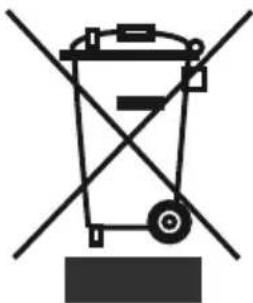
- Old fridges and freezers contain isolation material and refrigerant with CFC. Therefore, take care not to harm environment when you are discarding your old fridges.
natural_image
Pure mechanical diagram showing a binocular device with no text or symbolsPlease ask your local authority about the disposal of the WEEE for the reuse, recycle and recovery purposes.
Notes:
- Please read the instruction manual carefully before installing and using your appliance. We are not responsible for damage due to misuse.
- Follow all instructions on your appliance and instruction manual, and keep this manual in a safe place to resolve problems that may occur in the future.
- This appliance is produced to be used in homes and it can only be used in domestic environments and for the specified purposes. It is not suitable for commercial or common use. Such use will cause the guarantee of the appliance to be cancelled and our company will not be responsible for the losses to be occurred.
- This appliance is produced to be used in houses and it is only suitable for cooling / storing foods. It is not suitable for commercial or common use and/or for storing substances except for food. Our company is not responsible for the losses to be occurred in the contrary case.
Safety warnings
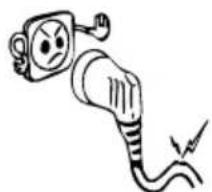
- Do not use multiple sockets or extension cords.
- Do not plug in damaged, torn or old plugs.
- Do not pull, bend or damage the cord.
- Do not twist and bend the cables, and keep them away from hot surfaces.

natural_image
Illustration of three hands performing a manual cable manipulation technique (no text or symbols present)• After installation make sure that the power cable is not trapped underneath appliance.
- This appliance is designed for use by adults, do not allow children to play with the appliance or let them hang off the door.
- Do not plug-in or un-plug from the socket with wet hands to prevent electrocution!
natural_image
Cartoon illustration of a plug with an angry face and a lightning bolt, no text or symbols present
natural_image
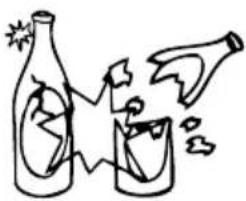
Cartoon illustration of a smiling door with arms and legs, accompanied by a crossed-out hand holding a smiling face and a prohibition symbol (no text or labels)- Do not place glass bottles or beverage cans in the freezer department. Bottles or cans may explode.
- Do not place explosive or flammable material in your fridge for your safety. Place drinks with higher alcohol amount vertically and by closing their necks tightly in the fridge department.
- When taking ice made in the freezer department, do not touch it, ice may cause ice burns and/or cuts.
- Do not touch frozen goods with wet hands! Do not eat ice-cream and ice cubes immediately after you have taken them out of the freezer department!
- Do not re-freeze frozen goods after they have melted. This may cause health issues like food poisoning.
- Do not cover the body or top of fridge with lace. This affects the performance of your fridge.
- Do not operate any electrical appliances inside the refrigerator or freezer.
• Fix the accessories in the fridge during transportation to prevent damage to accessories.
- Do not use plug adapter.
Installing and operating your fridge
Before starting to use your fridge, you should pay attention to the following points:
- Operating voltage for your fridge is 220-240 V at 50Hz.
- The plug must be accessible after installation.
- There can be an odour when you first switch on the appliance. It will disappear after the appliance starts to cool.
- Before making the connection to the power supply, ensure that the voltage on the nameplate corresponds to the voltage of electrical system in your home.
- Insert the plug into a socket with an efficient ground connection. If the socket has no ground contact or the plug does not match, we suggest you to call an authorized electrician for assistance.
- The appliance must be connected with a properly installed fused socket. Power supply (AC) and voltage at the operating point must correspond with the details on the name plate of the appliance (name plate is located on the inside left of the appliance).
• We do not take responsibility for damages that occur due to ungrounded usage.
- Place your fridge in a place where it won't be exposed to direct sunlight.
- Your fridge should never be used outdoors or left under the rain.
- Your appliance should be at least 50 cm away from stoves, Gas ovens and heaters, and should be at least 5 cm away from electrical ovens.
- When your fridge is placed next to a deep freezer, there should be at least 2 cm between them to prevent humidity on the outer surface.
- Do not place heavy items on the appliance.
- Clean the appliance thoroughly, especially in the interior, before use (See Cleaning and Maintenance).
• Installation procedure into the kitchen unit is given in the installation manual. This product is intended to be used in proper kitchen units only.
natural_image
Simple line drawing of two bottles and a glass with explosion effects (no text or symbols)

natural_image
Cartoon illustration of a distressed container with arms and legs, holding a box labeled 'KG' (no text or symbols beyond the label)- The adjustable front legs should be adjusted to make sure your appliance is level and stable. You can adjust the legs by turning them clockwise (or in the opposite direction). This should be done before placing food in the fridge.
- Before using your fridge, wipe all parts back with warm water added with a tea spoonful of sodium bicarbonate, and then rinse with clean water and dry. Replace all parts after cleaning.
Before using your fridge
- When it is operated for the first time or after transportation, keep your fridge in the upright position for 3 hours and plug it on to allow efficient operation. Otherwise, you may damage the compressor.
- Your fridge may have a smell when it is operated for the first time; the smell will fade away when your fridge starts to cool.
natural_image
Simple line drawing of a smiling emoji on a rounded square and a hand holding the letter (no text or symbols)PART - 2.
HOW TO OPERATE THE APPLIANCE
Thermostat setting
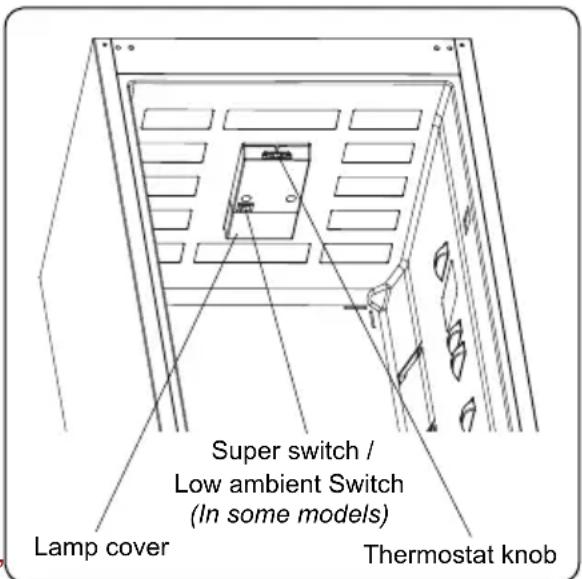
The freezer thermostat automatically regulates the inside temperature of the compartments. By rotating the knob from position 1 to 5, colder temperatures can be obtained.
Important note: Do not try to rotate knob beyond 1 position it will stop your appliance.
Freezer & Refrigerator thermostat setting;
1 - 2 : For short-term storage of food in the freezer compartment, you can set the knob between minimum and medium position.
3 - 4 : For long-term storage of food in the freezer compartment, you can set knob to medium position.
5: For freezing the fresh food. The appliance will run for colder temperatures.
Super freezing: This switch shall be used as superfreeze switch. For maximum freezing capacity please turn on this switch before placing fresh food.
After placing fresh food in the freezer, 24 hours ON position is generally sufficient. In order to save energy, please turn off this switch after 24 hours from placingfresh food.
Winter Switch: If ambient temperature is below 16 °C , this switch shall be used as winter switch and it keeps your fridge above 0 °C while freezer is below -18 °C in low ambiants.
Warnings about temperature adjustments
- It is not recommended that you operate your fridge in environments colder than 10^ C in terms of its efficiency.
- Temperature adjustments should be made according to the frequency of door openings and the quantity of food kept inside the fridge.
- Your fridge should be operated up to 24 hours according to the ambient temperature without interruption after being plugged in to be completely cooled. Do not open doors of your fridge frequently and do not place much food inside it in this period.
- A 5 minute delaying function is applied to prevent damage to the compressor of your fridge, when you take the plug out and then plug it in again to operate it or when an energy breakdown occurs. Your fridge will start to operate normally after 5 minutes.
- Your fridge is designed to operate in the ambient temperature intervals stated in the standards, according to the climate class stated in the information label. We do not recommend operating your fridge out of stated temperatures value limits in terms of cooling effectiveness.
- This appliance is designed for use at an ambient temperature within the 16^ - 43^ range.
Climate class and meaning:
extended temperate: 'this refrigerating appliance is intended to be used at ambient temperatures ranging from 10 °C to 32 °C';
temperate: 'this refrigerating appliance is intended to be used at ambient temperatures ranging from 16 °C to 32 °C';
subtropical: 'this refrigerating appliance is intended to be used at ambient temperatures ranging from 16 °C to 38 °C';
tropical: 'this refrigerating appliance is intended to be used at ambient temperatures ranging from 16 °C to 43 °C';
Accessories
Ice tray
- Fill the ice tray with water and place in freezer compartment.
• After the water completely turned into ice, you can twist the tray as shown below to get the ice cube.


natural_image
Illustration of hands holding a woven mat with curved arrows indicating rotation (no text or symbols)
Bottle holder
In order to prevent the bottles slipping or falling over you can use the bottle holder.

natural_image
Technical line drawings of four plastic container enclosures with one bottle, showing different internal structures (no text or symbols)All written and visual descriptions in the accessories may vary according to the appliance model.
FOOD STORAGE IN THE APPLIANCE
Refrigerator compartment
The refrigerator compartment is used for storing fresh food for a few days.
- Do not place food in direct contact with the rear wall of the refrigerator compartment. Leave some space around food to allow circulation of air.
- Do not place hot food or evaporating liquid in the refrigerator.
• Always store food in closed containers or wrapped. - To reduce humidity and avoid formation of frost, never place liquids in unsealed containers in the refrigerator.
- Meat of all types, wrapped in packages, is recommended to be placed on the glass shelf just above the vegetable bin, where the air is colder.
- You can put fruit and vegetables into the crisper without packaging.
- To avoid cold air escaping, try not to open the door too often, and not leave the door open for a long time.
- For normal working conditions, it will be sufficient to adjust the temperature setting of your refrigerator to +4 °C.
- The temperature of the fridge compartment should be in the range of 0-8 °C, fresh foods below 0 °C are iced and rotted, bacterial load increases above 8 °C, and spoils.
- Do not put hot food in the refrigerator immediately, wait for the temperature to pass outside. Hot foods increase the degree of your refrigerator and cause food poisoning and unnecessary spoiling of the food.
- Meat, fish, etc. should be store in the chiller compartment of the food, and the vegetable compartment is preferred for vegetables. (if available)
- To prevent cross contamination, meat products and fruit vegetables are not stored together.
- Foods should be placed in the refrigerator in closed containers or covered to prevent moisture and odors.
Freezer compartment
The freezer compartment is used for freezing fresh foods and for storing frozen foods for the period of time indicated on packaging, and for making ice cubes.
- For freezing fresh food; wrap and seal fresh food properly, that is the packaging should be air tight and shouldn't leak. Special freezer bags, aluminum foil polythene bags and plastic containers are ideal.
- Do not allow the fresh food to be frozen to come into contact with the already frozen food.
- Always mark the date and the content on the pack and do not exceed the stated storage time.
- In case of a power failure or malfunction, the freezer compartment will maintain a sufficiently low temperature for food storage. However, avoid opening the freezer door to slow down the temperature rise within the freezer compartment.
- The maximum amount of fresh foods that can be loaded in the freezer within 24 hours is indicated on the name plate (see Freezing Capacity).
- Never place warm food in the freezer compartment.
- When purchasing and storing frozen food products; ensure that the packaging is not damaged.
- The storage time and the recommended temperature for storing frozen foods are indicated on the packaging. For storing and using, follow the manufacturer's instructions. If no information is provided, food should not be stored for more than 3 months.
- Place frozen food in the freezer compartment as soon as possible after buying it.
- Once the food is thawed, it must not be refrozen; you must cook it as quickly as possible in order to consume or to freeze once again.
- Storage: If you want to use the maximum net capacity, you can remove the drawers and store the items directly on the cooling tubes. This will enable you to make use of the entire volume of the compartment.
• Suggestion for Food Storage:
- It's suggested to set the temperature at 4^ in the fridge compartment, and, whether possible, at -18^ in the freezer compartment.
- For most food categories, the longest storage time in the fridge compartment is achieved with colder temperatures. Since some particular products (as fresh fruits and vegetables) may be damaged with colder temperatures, it is suggested to keep them in the crisper drawers, whenever present. If not present, maintain an average setting of the thermostat.
- For frozen food, refer to the storage time written on the food packaging. This storage time is achieved whenever the setting respects the reference temperatures of the compartment (one-star -6°C, two stars -12°C, three stars -18°C
- Set the knob to a low/medium position, up to 3, for short term stroge of food in the appliance.
- Set the knob to a medium position, 3, or 4 for lpng-term storage of food in the appliance.
- Set the knob to 5 position for freezing the fresh food. The appliance will run for colder temperatures.
Position different food in different compartments according to be below table
| Refrigerator compartment Type of food | |
| Door or balconies of fridge compartment | ·Foods with natural preservatives, such as jams, juices, drinks, condiments.·Do not store perishable foods |
| Crisper drawers (salad drawer) | ·Fruits, herbs and vegetables should be placed separately in the crisper bin·Do not store bananas, onions, potatoes, garlic in the refrigerator |
| Fridge shelf – middle • Dairy products | , eggs |
| Fridge shelf – top | ·Foods that do no need coocking, such as ready-to-eat foods, deli meats, leftovers. |
| Freezer drawer(s)/tray | ·Foods for long-term storage·Bottom drawer for raw meet, poultry, fish·Middle drawer for frozen vegetables, chips.·Top tray for ice cream, frozen fruit, frozen baked goods. |
CLEANING AND MAINTENANCE
- Disconnect the appliance from the power supply before cleaning.
- Do not pour water over the appliance.

- The refrigerator compartment should be cleaned periodically using a solution of bicarbonate of soda and lukewarm water.
- Clean the accessories separately with soap and water. Do not put them in the dishwasher.
- Do not use abrasive products, detergents or soaps. After washing, rinse with clean water and dry carefully. When the cleaning operations have been completed, reconnect the plug with dry hands.

natural_image
Illustration of five different household items: a hand holding a phone, a smiling refrigerator with arms, a pair of shoes, a smiling refrigerator with a cup, and a door with a smiling face (no text or symbols)Defrosting the refrigerator compartment

natural_image
Simple line drawing of a structural beam or support with a small hole at one end (no text or symbols)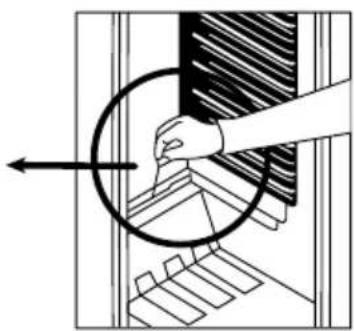
natural_image
Diagram showing a hand pressing down on a mechanical component with an arrow indicating direction (no text or symbols present)- Defrosting occurs automatically in refrigerator compartment during operation; the defrost water is collected by the evaporating tray and evaporates automatically.
- The evaporating tray and the defrost water drain hole should be cleaned periodically with defrost drain plug to prevent the water from collecting on the bottom of the refrigerator instead of flowing out.
- You can also pour 12 glass of the water to drain hole to clean inside.
Defrosting the freezer compartment
- The frost, which covers the shelves of the freezer compartment, should be removed periodically.
- Do not use sharp metal objects for this operation. They could puncture the refrigerator circuit and cause irreparable damage to the unit. Use the plastic scraper provided.
- When there is more than 5 mm of frost on the shelves, defrosting must be done.
- Before defrosting operation, place the frozen food in a cool place after wrapping them in sheets of newspaper in order to obtain its temperature steady for long time.
• To accelerate the defrosting process place one or more basins of warm water in the freezer compartment.
- Dry the inside of the compartment with a sponge or a clean cloth.
- Once the unit has been defrosted, place the food into the freezer and remember to consume them in a short period of time.

natural_image
Line drawing of a hand cleaning a textured object inside a technical enclosure (no text or symbols)Replacing the light bulb
To replace the bulb in the fridge compartments;
-
Unplug your fridge freezer.
-
Using a screwdriver, carefully remove the light cover from the top panel. (a)
-
Replace with a 15 watt bulb. (b)
-
Reinstall the light cover. (c)
-
Wait for 5 minutes before re-plugging the fridge in and restore the thermostat to its original position.
Replacing LED lighting
If your refrigerator has LED lighting contact the help desk as this should be changed by authorized personnel only.

flowchart
graph TD
    A["Step 1: Input with ↑ arrows"] --> B["Step 2: Internal component with curved arrow"]
    B --> C["Step 3: Internal component with downward arrow"]
    C --> D["Step 4: Internal component with curved arrow"]
    D --> E["End"]
SHIPMENT AND REPOSITIONING
- The original packaging and foam may be kept for re-transportation (optionally).
- You should fasten your fridge with thick packaging, bands or strong cords and follow the instructions for transportation on the package for re-transportation.
- Remove movable parts (shelves, accessories, vegetable bins etc.) or fix them into the fridge against shocks using bands during re-positioning and transportation.
- Carry your fridge in the upright position.

natural_image
Simple line drawing of two children playing a game with a long bar (no text or symbols)PART - 6. BEFORE CALLING FOR AFTER SALES SERVICE
If your refrigerator is not working properly, it may be a minor problem, therefore check the following.
The appliance does not operate,
Check if;
• There is a power failure,
- The mains plug is not properly plugged in, or is loose
- The thermostat setting is on position “•”,
- The socket is defective. To check this, plug in another appliance that you know which is working into the same socket.
The appliance performs poorly;
Check if;
- You have overloaded the appliance,
- The doors are not closed perfectly,
- There are not enough ventilation ducts on the kitchen unit as mentioned in the Installation Manual.
If there is noise;
The cooling gas which circulates in the refrigerator circuit may make a slight noise (bubbling sound) even when the compressor is not running. Do not worry, this is quite normal. If these sounds are different check if;
- The appliance is installed firmly as described in the installation manual.
- The objects on the appliance are vibrating.
If there is water in the lower part of the refrigerator;
Check if;
The drain hole for defrost water is not clogged (use defrost drain plug to clean the drain hole).
IMPORTANT NOTES:
- In case of a sudden power loss or disconnecting and reconnecting of the plug to the electrical socket, the compressor protective thermal element will be opened as the pressure of the gas in the cooling system of your refrigerator has not yet been balanced. 4 or 5 minutes later, your refrigerator will start to operate; this is normal.
- If you won't be using your refrigerator for a long time (such as on summer holidays), please disconnect the plug from the socket. Clean your refrigerator as per Part 4 of this document and leave the door open to prevent any humidification or odor formation.
- If there is still a problem with your refrigerator although you have followed the instructions in this book, please consult your nearest authorized service center.
Energy Saving
- For better energy saving we suggest :
- Installing tge appliance away from heat sources and not exposed to direct sunlight and in a well ventilated roo.
- Avoid putting hot food into the refrigerator to avoid increasing the internal temperature and therefore causing continuos functionaliting of the compressor.
- Do not excessively stuff foods so as to ensure proper air circulation.
- Defrost the appliance in case there is ice to facilitate the transfer of cold.
- In case of absence of electrical energy, it is advisable to keep the refrigerator door closed.
- Open or keep the doors of the appliance open as little as possible
- Avoid adjusting the setting to temperatures too cold.
PART - 7. PARTS OF THE APPLIANCE AND THE COMPARTMENTS


natural_image
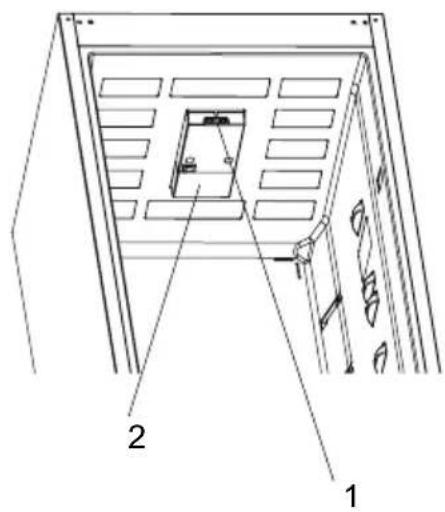
Three technical illustrations of laboratory test tubes with labeled parts (no text or symbols on tubes)This presentation is only for information about the parts of the appliance. Parts may vary according to the appliance model.
A) Refrigerator compartment
B) Freezer compartment
1) Thermostat knob
2) Refrigerator lamp & cover
3) Refrigerator shelves
4) Crispers cover
5) Crisper
6) Freezer room cover
7) Freezer comp. drawers
8) Bottle shelf
9) Door shelves
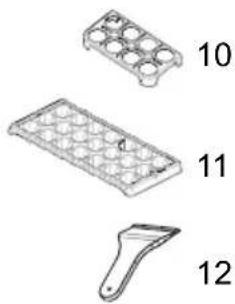
10) Egg holder
11) Ice tray
12) Plastic ice blade *
* In some models
General notes:
Fresh Food Compartment (Fridge): Most efficient use of energy is ensured in the configuration with the drawers in the bottom part of the appliance, and shelves evenly distributed, position of door bins does not affect energy consumption.
Freezer Compartment (Freezer): Most Efficient use of energy is ensured in the configuration with the drawers and bins are on stock position.
Dimensions

other
| Dimension | Value | | ----------------- | ------------ | | Total Width | max 2100 mm | | Total Height | 1770 - 1790 mm | | Total Width (Reference) | min 200 cm² | | Total Width (Reference) | min 40 mm | | Total Width (Reference) | min 40 mm | | Total Width (Reference) | min 40 mm | | Total Width (Reference) | min 40 mm | | Total Width (Reference) | min 40 mm | | Total Width (Reference) | min 40 mm | | Total Width (Reference) | min 40 mm | | Total Width (Reference) | min 40 mm | | | Total Width (Reference) | min 40 mm | | Total Width (Reference) | min 40 mm | | Total Width (Reference) | min 40 mm | | Total Width (Reference) | min 40 mm | | Total Width (Reference) | min 40 mm | | Total Width (Reference) | min 40 mm | | Total Width (Reference) | min 40 mm | | Minimum Width | 660.3 mm | | Minimum Width | 1770 mm | | Minimum Width | 540 mm | | Minimum Width | 545 mm | | Minimum Width | 62 mm | | Minimum Width | 995.5 mm | | Minimum Width | 623.5 mm | * 1770 - 1778 for metal top coverTECHNICAL DATA
The technical information is situated in the rating plate on the internal side of the appliance and on the energy label.
The QR code on the energy label supplied with the appliance provides a web link to the information related to the performance of the appliance in the EU EPREL database.
Keep the energy label for reference together with the user manual and all other documents provided with this appliance.
It is also possible to find the same information in EPREL using the link https://eprel.ec.europa.eu and the model name and product number that you find on the rating plate of the appliance.
See the link www.theenergylabel.eu for detailed information about the energy label.
INFORMATION FOR TEST INSTITUTES
Installation and preparation of the appliance for any EcoDesign verification shall be compliant with EN 62552. Ventilation requirements, recess dimensions and minimum rear clearances shall be as stated in this User Manual at PART 1. Please contact the manufacturer for any other further information, including loading plans.
CUSTOMER CARE AND SERVICE
AVAILABILITY OF SPARE PARTS
"Thermostats, temperature sensors, printed circuit boards and light sources are available for a minimum period of seven years after placing the last unit of the model on the market. Door handles, door hinges, trays and baskets for a minimum period of seven years and door gaskets for a minimum period of 10 year, after placing the last unit of the model on the market".
To contact the technical assistance, visit our website: https://corporate.haier-europe.com/en/
Under the section “website”, choose the brand of your product and your country. You will be redirected to the specific website where you can find the telephone number and form to contact the technical assistance
GUARANTEE
Minimum guarantee is: 2 years for EU Countries, 3 years for Turkey, 1 year for UK, 1 year for Russia, 3 years for Sweden, 2 years for Serbia, 5 years for Norway, 1 year for Morocco, 6 months for Algeria, Tunisia no legal warranty required.
SCRAPPING OLD APPLIANCES
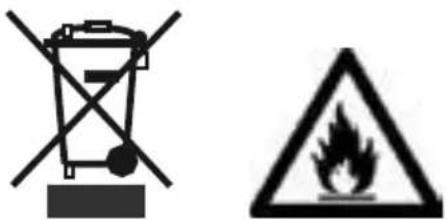
This appliance is marked according to the European directive 2012/19/EU on Waste Electrical and Electronic Equipment (WEEE).
WEEE contains both polluting substances (which can cause negative consequences for the environment) and basic components (which can be re-used). It is important to have WEEE subjected to specific treatments, in order to remove and dispose properly all pollutants, and recover and recycle all materials.
Individuals can play an important role in ensuring that WEEE does not become an environmental issue; it is essential to follow some basic rules:
- WEEE should not be treated as household waste;
- WEEE should be handed over to the relevant collection points managed by the municipality or by registered companies. In many countries, for large WEEE, home collection could be present.
In many countries, when you buy a new appliance, the old one may be returned to the retailer who has to collect it free of charge on a one-to-one basis, as long as the equipment is of equivalent type and has the same functions as the supplied equipment.
Conformity
By placing the CE mark on this product, we are confirming compliance to all relevant European safety, health and environmental requirements which are applicable in legislation for this product.
Sommaire
AVANT D'UTILISER L'APPAREIL 49
INFORMATIONS SUR LA SÉCURITÉ ....51
AVERTISSEMENT! 52
SÉCURITÉ DES ENFANTS ! ....56
natural_image
Pure mechanical diagram showing a bin with diagonal lines and no text or symbolsnatural_image
Illustration showing three different techniques for using a tool to interact with a wire, no text or symbols present.natural_image
Cartoon illustration of a plug with an angry face and a lightning bolt, no text or symbols present
natural_image
Cartoon illustration of a person peeking out of a door, with arms and legs bent (no text or symbols)
natural_image
Simple line drawing of a bottle and glass with explosion effects (no text or symbols)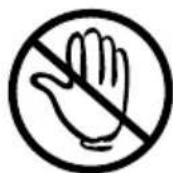
natural_image
Cartoon illustration of a distressed container with arms and legs, holding a label labeled 'KG' (no text or symbols on the container itself)natural_image
Simple line drawing of a smiling face on a square and a hand holding the right (no text or symbols)natural_image
Line drawing of a container being poured into a rack (no text or symbols)
natural_image
Illustration of two hands holding a grid-patterned object with curved arrows indicating rotation (no text or symbols)
natural_image
Illustration of two hands crossed out of a tooth, no text or symbols presentnatural_image
Simple line drawing of a bottle mounted on a base (no text or symbols)
natural_image
Line drawing of a rectangular electronic component with internal slots (no text or symbols)
natural_image
Simple line drawing of a rectangular object with a curved top and side profile (no text or symbols)
natural_image
Line drawing of a plastic bottle placed on a rectangular tray (no text or symbols)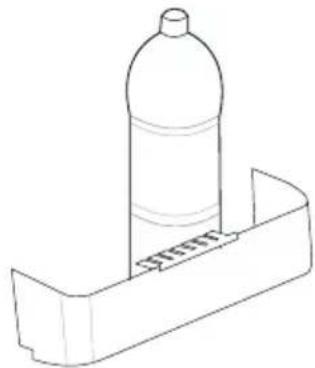
natural_image
Line drawing of a bottle placed on a tray with a side panel (no text or symbols)natural_image
Cartoon illustration of a hand using a tool to interact with a device (no text or symbols present)natural_image
Cartoon illustration of a smiling refrigerator with hands cleaning it, accompanied by a small bottle and cup (no text or symbols)
natural_image
Cartoon illustration of a smiling rectangular box character giving thumbs up, next to a mortar and pestle (no text or symbols)natural_image
Simple line drawing of a refrigerator with a red X symbol crossed out, no text or symbols present.natural_image
Cartoon illustration of a smiling refrigerator with two pears beside it (no text or symbols)natural_image
Pure diagram of a coiled spring or heat exchanger without any text, labels, or symbolsLE CORDON D'ALIMENTATION DOIT ETRE DEBRANCHE.
Dégivrage
natural_image
Simple line drawing of a mechanical component or bracket (no text or symbols)
natural_image
Diagram showing a hand pressing down on a mechanical component with an arrow indicating direction (no text or symbols present)natural_image
Illustration of a hand cleaning a wall with a cloth, no text or symbols presentEXPÉDITION ET REPOSITIONNEMENT
natural_image
Simple line drawing of two children playing a board game (no text or symbols)
natural_image
Three technical illustrations of laboratory pipettes with numbered labels (10, 11, 12), no text or symbols present.natural_image
Pure electrical circuit lines without any symbolsnatural_image
Illustration showing three different techniques for using a tool, with no visible text or symbols.natural_image
Cartoon illustration of a plug with an angry face and a lightning bolt (no text or symbols)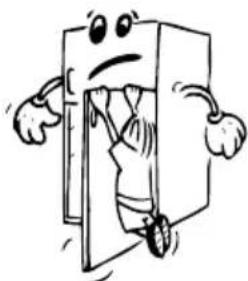
natural_image
Cartoon illustration of a character inside a door, showing arms and legs (no text or symbols)natural_image
Simple line drawing of two bottles and a container with explosion effects (no text or symbols)
natural_image
Cartoon illustration of a distressed container character holding a box labeled 'KG', with arms and facial expressions (no text or symbols beyond the label)natural_image
Technical line drawing of a door frame with internal compartments and mounting holes (no text or symbols)natural_image
Illustration showing three steps of a robotic arm: moving an abacus, rotating a tray with beads, and removing a tool (no text or symbols present)natural_image
Cartoon illustration of a hand cleaning a refrigerator with a magnifying glass (no text or symbols)
natural_image
Simple line drawing of a hand holding a smiley face next to a smiling square (no text or symbols)
natural_image
Cartoon illustration of a smiling refrigerator with sunglasses and a mortar, no text or symbols presentnatural_image
Cartoon illustration of a smiling rectangular character with arms raised, accompanied by two small syringes (no text or symbols)
natural_image
Illustration of a kitchen appliance with a red X symbol crossed out, no text or symbols present
natural_image
Cartoon illustration of a smiling refrigerator with a hand holding a spoon, accompanied by a small bottle and a cup (no text or symbols)natural_image
Pure diagram of a coiled heating element without any text, numbers, or symbolsKühlschrank abtauen
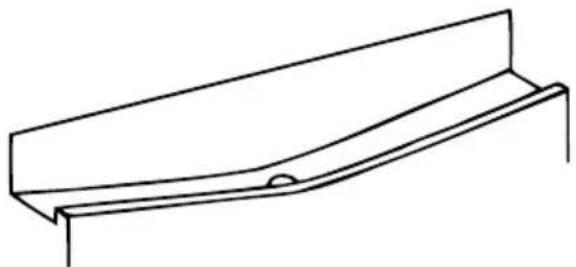
natural_image
Simple line drawing of a structural beam or support with a notch (no text or symbols)
natural_image
Diagram showing a hand holding a circular object over a mechanical component, with no visible text or symbols.natural_image
Illustration of a hand cleaning a textured surface inside a 3D printer (no text or symbols)flowchart
graph TD
    A["Step 1: Left side with ↑ arrows"] --> B["Step 2: Rotation arrow"]
    B --> C["Step 3: Right side with ↓ arrows"]
    C --> D["Step 4: Downward rotation arrow"]
    D --> E["Step 5: Downward rotation arrow"]
natural_image
Simple line drawing of two children playing a game with a long bar (no text or symbols)BEVOR SIE DEN KUNDENDIENST RUFEN

natural_image
Three technical illustrations of plastic components with numbered labels (10, 11, 12), no readable text or symbols beyond labels.natural_image
Symbol of a trash bin with crossed lines indicating no waste or discharge (no text or labels)
OUDE APPARATEN SLOPEN....124
DEEL 1. VOORDAT U HET APPARAAT GAAT GEBRUIKEN
natural_image
Symbol of a trash bin with crossed lines indicating no waste or discharge (no text or labels)natural_image
Illustration of three hands performing a knot break operation (no text or symbols present)natural_image
Illustration of three cartoon characters: a plug, a door with angry expression, and a hand holding a crossed-out fist (no text or symbols)natural_image
Simple line drawing of a hand holding a smiling square emoji (no text or symbols)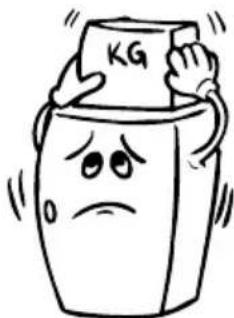
natural_image
Cartoon illustration of a distressed container character holding a box labeled 'KG', with no readable text or symbols beyond the label.natural_image
Three-step illustration showing a hand holding a keyboard, moving a mouse, and removing a black 'X' symbol (no text or labels)natural_image
Cartoon illustration of a smiling character with sunglasses standing next to a door, holding a pencil and a bowl (no text or symbols)natural_image
Illustration of a computer with a red X symbol crossed out, indicating no text or symbols present.natural_image
Cartoon illustration of a refrigerator with a surprised face and two smaller figures nearby (no text or symbols)natural_image
Pure diagram of a coiled heating element with no text or symbolsOntdooien
Koelingscompartiment

natural_image
Simple line drawing of a structural beam or support with a small circular hole at one end (no text or symbols)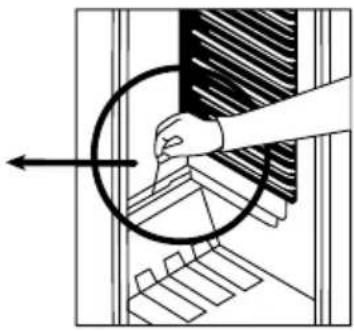
natural_image
Diagram showing a hand pressing down on a mechanical component with an arrow indicating direction (no text or symbols present)natural_image
Line drawing of a hand cleaning a textured surface inside a 3D printer or scanner (no text or symbols)flowchart
graph TD
    A["Step 1: Initial device with ↑ arrows"] --> B["Step 2: Rotation arrow"]
    B --> C["Step 3: Internal component with ↓ arrows"]
    C --> D["Step 4: Rotation arrow with ↓ arrows"]
    D --> E["End"]
DEEL 5. TRANSPORT EN WIJZIGING VAN DE INSTALLATIEPOSITIE
natural_image
Simple line drawing of two children playing a game with a large block (no text or symbols)DEEL 6. VOORDAT U EEN BEROEP DOET OP DE KLANTENSERVICE

natural_image
Three technical diagrams of a microfluidic device with labeled parts (no text or symbols beyond numbers)other
| Dimension | Value | | ----------------- | ----------- | | Width | max 2100 mm | | Height | 1770 - 1790 mm | | Top Section Width | 560 mm | | Top Section Width | 550 mm | | Top Section Width | 540 mm | | Bottom Section Width | 660.3 mm | | Bottom Section Width | 1770 mm | | Bottom Section Width | 540 mm | | Bottom Section Width | 62 mm | | Bottom Section Width | 995.5 mm | | Bottom Section Width | 623.5 mm | | Top Section Width | min 200 cm² | | Top Section Width | min 40 mm | | Top Section Width | min 200 cm² | | Top Section Width | min 40 cm² | | Top Section Width | min 200 cm² | | Top Section Width | min 200 cm² | | Top Section Width | min 200 cm² | | Top Section Width | min 200 cm² | | Top Section Width | min 200 cm² | | Top Section Width | min 200 cm² | | Top Section Width | min 200 cm² | | Top Section Width | min 200 cm² | | | Top Section Width | min 200 cm² | | Top Section Width | min 200 cm² | | Top Section Width | min 200 cm² | | Top Section Width | min 200 cm² | | Top Section Width | min 200 cm² | | Top Section Width | min 200 cm² | | Top Section Width | min 200 cm² | | Bottom Section Width | 660.3 mm | | Bottom Section Width | 1770 mm | | Bottom Section Width | 540 mm | | Bottom Section Width | 545 mm | | Bottom Section Width | 62 mm | | Bottom Section Width | 995.5 mm | | Bottom Section Width | 623.5 mm | | Bottom Section Width | 623.5 mm | | Bottom Section Width | 623.5 mm | | Bottom Section Width | 623.5 mm | | Bottom Section Width | 623.5 mm | | Bottom Section Width | 623.5 mm | | Bottom Section Width | 623.5 mm | | Bottom Section Width | 623.8 mm | | Bottom Section Width | 623.8 mm | | Bottom Section Width | 623.8 mm | | Bottom Section Width | 623.8 mm | | Bottom Section Width | 623.8 mm | | Bottom Section Width | 623.8 mm | | Bottom Section Width | 623.8 mm | | Bottom Section Width | 623.8 mmTECHNISCHE GEGEVENS
natural_image
Symbol of a trash bin with crossed lines indicating no waste or discharge (no text or labels)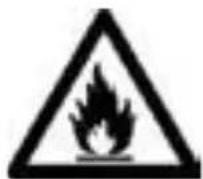


- PRIMA DI CHIAMARE L'ASSISTENZA
- HOW TO OPERATE THE APPLIANCE....35
- FOOD STORAGE IN THE APPLIANCE....37
- CLEANING AND MAINTENANCE 39
- SHIPMENT AND REPOSITIONING....41
- BEFORE CALLING FOR AFTER SALES SERVICE 41
- PARTS OF THE APPLIANCE AND THE COMPARTMENTS ...... 43
- TECHNICAL DATA 45
- INFORMATION FOR TEST INSTITUTES....45
- CUSTOMER CARE AND SERVICE 45
- GUARANTEE 45
- PART - 1. PRECAUTIONS
- Thank you for purchasing this product.
- General warnings
- Old and out-of-order fridges
- Notes:
- Safety warnings
- Installing and operating your fridge
- Before using your fridge
- PART - 2.
- HOW TO OPERATE THE APPLIANCE
- Thermostat setting
- Freezer & Refrigerator thermostat setting;
- Warnings about temperature adjustments
- Climate class and meaning:
- Accessories
- Ice tray
- Bottle holder
- FOOD STORAGE IN THE APPLIANCE
- Refrigerator compartment
- Freezer compartment
- • Suggestion for Food Storage:
- CLEANING AND MAINTENANCE
- Defrosting the refrigerator compartment
- Defrosting the freezer compartment
- Replacing the light bulb
- Replacing LED lighting
- SHIPMENT AND REPOSITIONING
- PART - 6. BEFORE CALLING FOR AFTER SALES SERVICE
- The appliance does not operate,
- Check if;
- The appliance performs poorly;
- If there is noise;
- If there is water in the lower part of the refrigerator;
- IMPORTANT NOTES:
- Energy Saving
- PART - 7. PARTS OF THE APPLIANCE AND THE COMPARTMENTS
- General notes:
- TECHNICAL DATA
- INFORMATION FOR TEST INSTITUTES
- CUSTOMER CARE AND SERVICE
- AVAILABILITY OF SPARE PARTS
- GUARANTEE
- SCRAPPING OLD APPLIANCES
- Conformity
- Sommaire
- AVANT D'UTILISER L'APPAREIL 49
- LE CORDON D'ALIMENTATION DOIT ETRE DEBRANCHE.
- Dégivrage
- EXPÉDITION ET REPOSITIONNEMENT
- Kühlschrank abtauen
- BEVOR SIE DEN KUNDENDIENST RUFEN
- DEEL 1. VOORDAT U HET APPARAAT GAAT GEBRUIKEN
- Ontdooien
- Koelingscompartiment
- DEEL 5. TRANSPORT EN WIJZIGING VAN DE INSTALLATIEPOSITIE
- DEEL 6. VOORDAT U EEN BEROEP DOET OP DE KLANTENSERVICE
- TECHNISCHE GEGEVENS
Brand : BAUMATIC
Model : BRCIS 3180E
Category : Refrigerator