004842 - Leaf blower Meec Tools - Free user manual and instructions
Find the device manual for free 004842 Meec Tools in PDF.


| Product Type | Leaf Blower |
| Brand | Meec Tools |
| Model | 004842 |
| Power Source | Corded Electric |
| Power Rating | 600 W |
| Air Volume | 500 CFM (approx.) |
| Air Speed | 200 km/h (approx.) |
| Weight | 2.5 kg |
| Dimensions (L x W x H) | 80 x 20 x 30 cm (approx.) |
| Power Cord Length | 10 m (approx.) |
| Noise Level | 95 dB(A) (approx.) |
| Speed Settings | Variable speed trigger |
| Collection Bag | Not included |
| Vibration Level | 5 m/s² (approx.) |
| Safety Features | Overload protection, double insulation |
| Maintenance | Clean air vents regularly, check cord for damage |
| Spare Parts Availability | Replacement switches, cords, and impellers available |
| Repairability | Modular design for easy part replacement |
| Warranty | 2 years (subject to terms) |
| Application | Clearing leaves and debris from lawns and driveways |
Frequently Asked Questions - 004842 Meec Tools
User questions about 004842 Meec Tools
0 question about this device. Answer the ones you know or ask your own.
Ask a new question about this device
Download the instructions for your Leaf blower in PDF format for free! Find your manual 004842 - Meec Tools and take your electronic device back in hand. On this page are published all the documents necessary for the use of your device. 004842 by Meec Tools.
USER MANUAL 004842 Meec Tools
004842
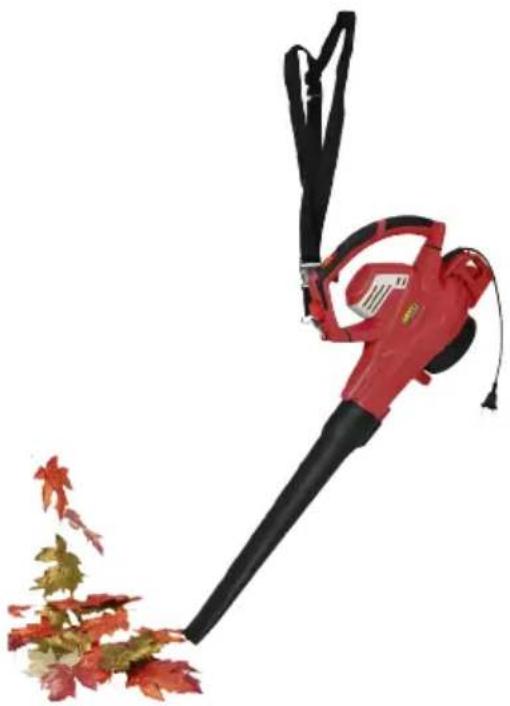
natural_image
Red and black hairless plant with a long-handled tool, no visible text or symbols
SE LÖVBLÅS/-SUG
Operating instructions (Translation of the original instructions) Important! Read the user instructions carefully before use. Save them for future reference.
Värna om miljön!
Care for the environment!
Must not be discarded with household waste! This product contains electrical or electronic components that should be recycled. Leave the product for recycling at the designated station e.g. the local authority's recycling station.
Jula reserves the right to make changes. In the event of problems, please contact our customer service.
www.jula.com
Tillverkare/ Produsent/ Producenci/ Manufacturer
Jula AB, Box 363, 532 24 SKARA
Distributör/ Distributør/ Dystrybutor/ Distributor
Jula Poland Sp. z o.o., ul.
EC DECLARATION OF CONFORMITY
EG FÖRSÄKRAN OM ÖVERENSSTÄMMELSE
EF SAMSVARSERKLÆRING
DEKLARACJA ZGODNOŚCI WE

Jula AB, Box 363, SE-532 24 SKARA, SWEDEN
certify that the design and manufacturing of this product
Machinery Directive 2006/42/EC
EN 60335-1:2012+A11, EN 50636-2-100:2014
Electromagnetic Compatibility Directive 2014/30/EU
EN 55014-1:2006+A1+A2, EN 55014-2:2015
EN 61000-3-2:2014, EN 61000-3-3:2013
Outdoor Noise Directive 2000/14/EC, amended by 2005/88/EC
EN ISO 3744:1995
RoHS Directive 2011/65/EU
EN 50581:2012
This product was CE marked in year -17
Name and address of the person authorised to compile the technical file:
natural_image
Diagram of a mechanical device with an arrow indicating direction, no text or symbols present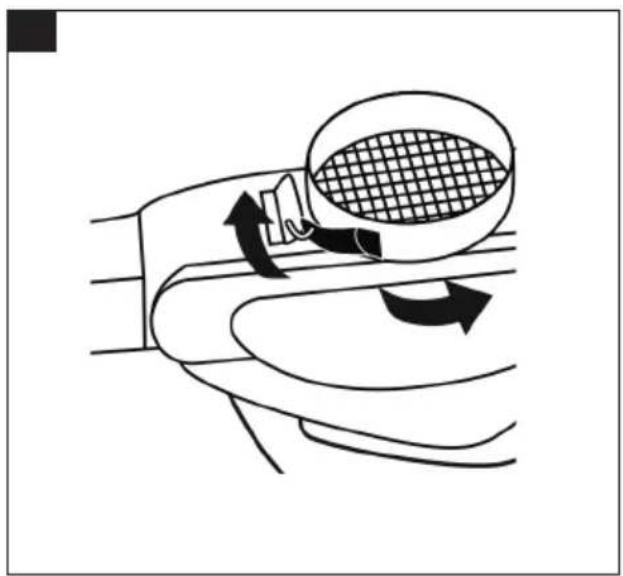
natural_image
Diagram of a car interior showing airflow direction and a magnified circular area with grid pattern (no text or symbols)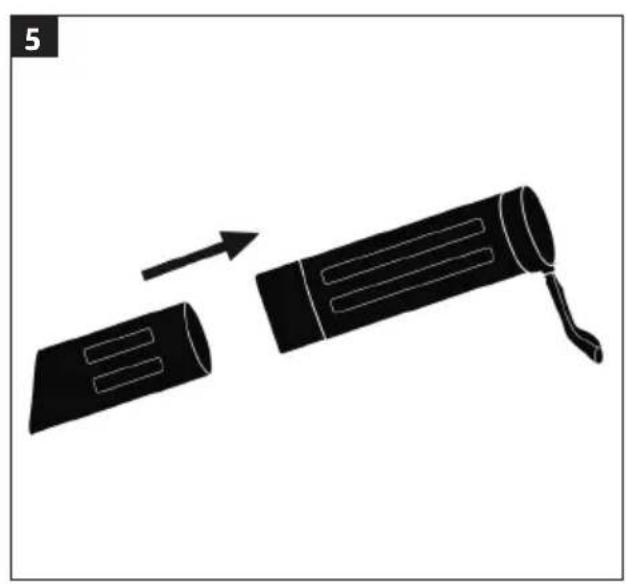
natural_image
Illustration of a flashlight being inserted into a device, showing the process with an arrow indicating direction (no text or symbols)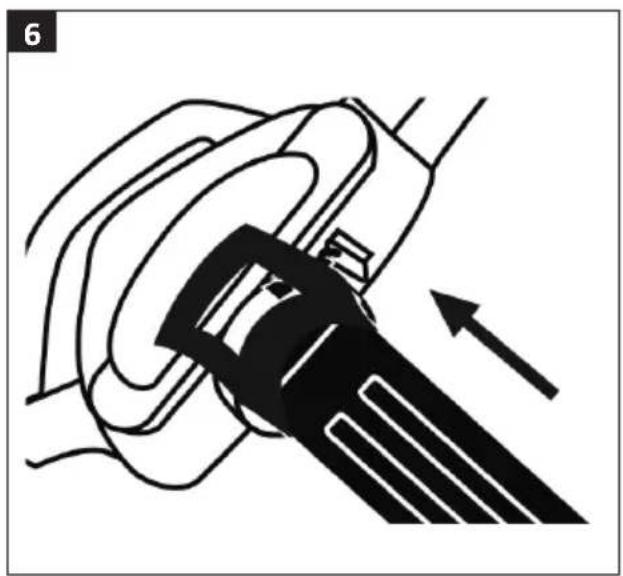
natural_image
Diagram of a mechanical device with a lever and directional arrow (no text or symbols)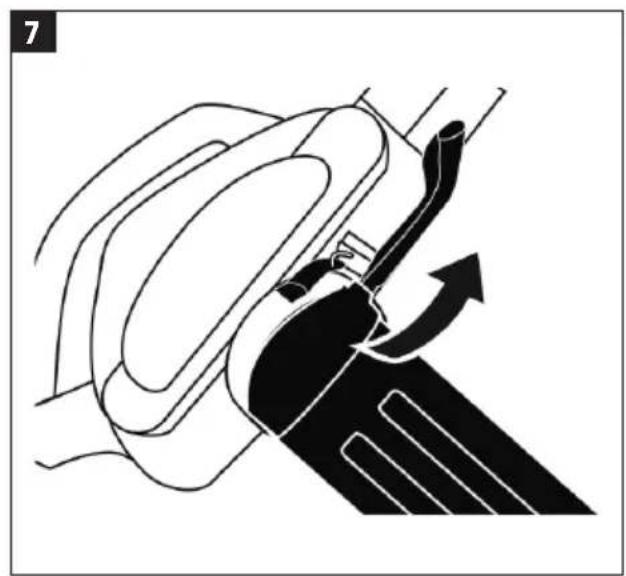
natural_image
Diagram of a mechanical device with a curved arrow indicating motion or force (no text or symbols present)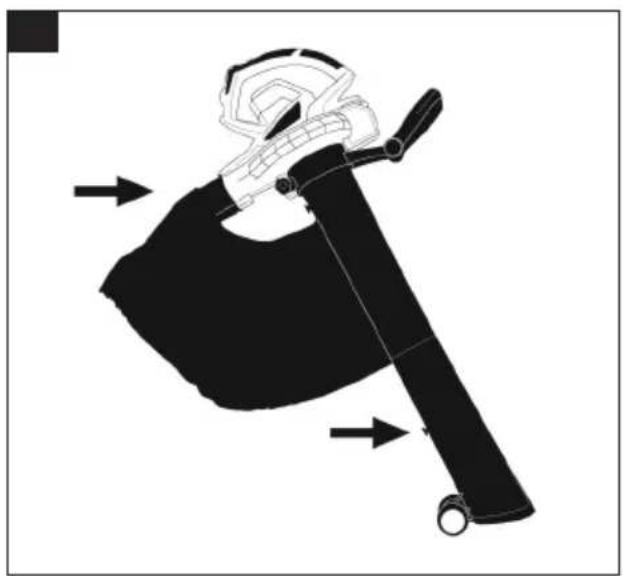
natural_image
Diagram of a mechanical device with directional arrows indicating motion or force (no text or symbols)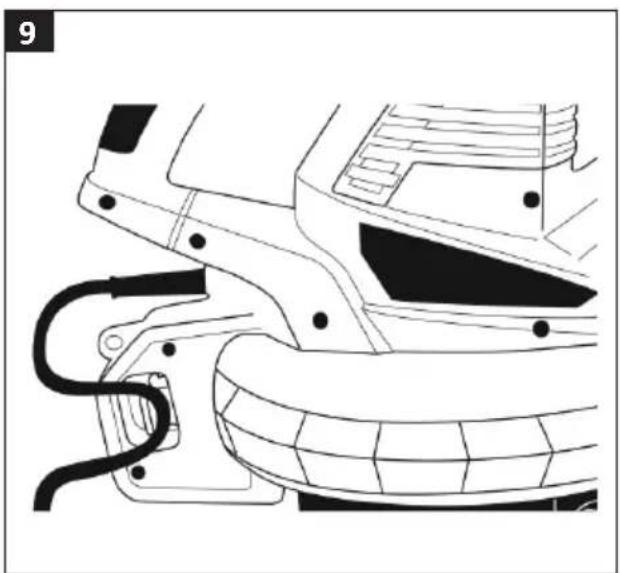
natural_image
Technical line drawing of a mechanical component with no visible text or symbolsSÄKERHETSANVISNINGAR
Arbetsområde
T∅MMING AV OPPSAMLER
- Keep the work area clean and well lit. Dark and cluttered work areas increase the risk of accidents and injuries.
- Do not use power tools in explosive environments, such as in the vicinity of flammable liquids, gases or dust. Power tools produce sparks that can ignite dust and fumes.
- Keep children and onlookers at a safe distance when using power tools. A moment of inattention can cause you to lose control of the tool.
- Always take basic safety precautions when using electrical appliances to reduce the risk of fire, electric shock and/or personal injury. Carefully read all the safety instructions before use.
• Always wear suitable personal safety equipment. - Wear safety glasses, ear protection, safety gloves, non-slip safety shoes and heavy-duty long trousers. Do not use the machine if you are barefoot or wearing open shoes. Wear a dust filter mask if the work produces a lot of dust.
- Do not wear loose-fitting clothing or jewellery which can be drawn into the air intake. Wear a hair net if you have long hair.
- Check at regular intervals that the machine is working properly and that all parts are correctly fitted and undamaged.
- Never allow children, or anyone who is unfamiliar with the machine and these instructions, to use it. There may be local regulations for the minimum age of persons allowed to use the machine.
- The machine is not intended to be used by persons (children or adults) with any form of functional disorders, or by persons who do not have sufficient experience or knowledge on how to use it, unless they have received instructions concerning the use of the machine from someone who is
responsible for their safety. Keep children under supervision to make sure they do not play with the machine.
- The user is responsible for any accidents or risks to other persons or property.
- Do not let anyone touch the machine or its power cable. Keep other people, especially children, and pets at a safe distance from the work area.
- Pay attention to children, pets and open windows etc. and do not point the machine at them. Keep children and onlookers at a safe distance (at least 5 metres) when using the machine.
- Do not start the machine if it is upside down, or not ready to be used.
- Avoid accidental starting. Make sure the power switch is in the OFF position before plugging in the plug or lifting/carrying the machine. Carrying the machine with your finger on the switch or connecting appliances to the mains supply when the switch is in the ON position increases the risk of accidents and injuries.
- Never point the machine at other people or animals. Do not point the air flow at eyes or ears.
• Pay attention to the surroundings - Do not overreach. Always maintain a firm footing and good balance. Always be careful when working on slopes. Hold the machine firmly with both hands when working. Do not use the machine without a shoulder strap.
- Carefully inspect the area where the machine is to be used and remove any stones, wires, bones or other foreign objects.
• Always use both parts of the blower tube, so that the air flow acts close to the ground. - In dusty conditions, dampen the surface slightly to bind the dust.
-
Keep your hands and feet away from the intake opening and moving parts – risk of personal injury.
-
Never use the machine if you are tired or under the influence of drugs, alcohol or medication. Take regular breaks. Move slowly, never run with the machine.
- During prolonged use the vibrations can cause circulation problems in the hands. Wear safety gloves and take regular pauses.
- Do not expose the machine to rain or moisture. Only use the machine in daylight, or in good artificial lighting.
- Do not use the machine if it is damaged or not working properly, if it cannot be switched off with the power switch, or if the power cord or plug are damaged.
- Do not use the machine if it not fully assembled.
- Do not use the machine in vacuum mode with the bag. Check the bag at regular intervals for wear or damage.
- Do not use the machine to clean up burning or glowing objects such as matches, cigarettes or hot ash, or flammable, toxic, explosive substances.
- Only use spare parts recommended by the manufacturer.
- Pull out the plug:
– when the machine is not is use.
– before transporting the machine.
– before leaving the machine unattended.
– before checking or cleaning the machine and before removing blockages.
– before cleaning and maintenance, and before replacing accessories. - if the power cord or extension cord are damaged, of the machine knocks against a foreign object, or during abnormal vibration.
- Do not dismantle the machine, or attempt to modify or repair it. Repairs should be carried out by qualified personnel. Maintenance and repairs not described in these instructions should be carried out by an authorised service centre or other qualified personnel.
- Do not suck up liquid or moist/wet material.
- Do not run the machine in enclosed areas. Do not use the machine in explosive environments, such as in the vicinity of flammable liquids, gases or dust – risk of explosion and/or fire.
- Store the machine in a dry place out of the reach of children.
- Handle the machine with care. Always keep the ventilation openings clean. Follow the maintenance instructions for best functionality and useful life.
- Switch off the machine immediately and pull out the plug if there is a problem during the work. Contact the dealer if the problem can not be rectified with the help of the troubleshooting chart.
- Check that the bag and both parts of the vacuum tube are correctly fitted before starting the machine.
- Do not use the machine near toxic dust.
- Do not vacuum moist material.
Electrical safety
- Check that the mains voltage corresponds to the rated voltage on the type plate.
- The machine must be connected to the mains with a residual current device with a maximum tripping current of 30 mA.
- Always check before use that the power cord and plug are undamaged. Do not use the machine if the power cord or plug are damaged. A damaged cord or plug must be replaced by an authorised service centre or qualified personnel to ensure safe use. Avoid body contact with earthed objects such as fences or metal poles.
- If an extension cord is used the connection must have an adequate protection rating and must not be immersed in water or any other liquid. Only use an extension cord approved for outdoor use. Extension cords should have a minimum wire cross-sectional area of at least 2.5 mm ^2 . If using a cord winder as an extension cord,
make sure to reel out the full length of cord. Check the power cord for damage.
- Keep the power cord away from the work area. Always keep the power cord behind you.
- Hook the extension cord onto the strain reliever.
- Do not carry or pull the machine by the power cord. Do not pull the power cord to unplug the plug. Keep the power cord away from heat, oil and sharp edges.
- Never use the machine if the cord, plug or connections are damaged, or do not comply with the applicable regulations. Switch off the machine immediately and pull out the plug if the power cord gets damaged. Do not touch the power cord before it is unplugged – risk of electric shock.
- A damaged cord or plug must be replaced by an authorised service centre or qualified personnel to ensure safe use.
- Do not use the machine if it cannot be switched on and off with the power switch. A damaged power switch must be replaced at an authorised service centre or by other qualified personnel.
- Do not overload the machine. Only use the machine in the specified conditions. Do not use low-powered machines for heavy work. Do not use the machine for any other purpose than the one it is designed for.
- Always check the power cord and extension cord for damage, wear and ageing before use. Do not use the machine if the power cord is damaged or worn.
- The plug on the power tool must match the power point. Never modify the plug in any way. Never use an adapter with earthed power tools. Unmodified plugs and matching outlets reduce the risk of electric shock.
-
Avoid body contact with earthed surfaces such as pipes, radiators, cookers and refrigerators. There is an increased risk of electric shock if your body is earthed.
-
Do not expose power tools to rain or moisture. There is a greater risk of electric shock if water gets into a power tool.
- Never use the power cord to carry or pull the machine, or to pull out the plug from the power point. Keep the power cord away from heat, oil, sharp edges and moving parts. Damaged or tangled power cords increase the risk of electric shock.
- Only use an extension cord approved for outdoor use. Cords intended for outdoor use reduce the risk of electric shock.
- If it is absolutely necessary to use power tools in damp conditions, use a power point protected by a residual current device (RDC). Using an RCD reduces the risk of electric shock.
Personal safety
- Stay alert. Pay attention to what you are doing, and use your common sense when working with power tools. Never use power tools if you are tired or under the influence of drugs, alcohol or medication. A moment of inattention when using a power tool can result in serious personal injury.
- Use personal safety equipment.
- Wear safety glasses.
- Depending on the type of power tool and how it is used, safety equipment such as dust masks, non-slip safety shoes, safety helmets and ear protection reduce the risk of personal injury.
- Avoid accidental starting. Check that the power tool is switched off before connecting the power cord and/or battery, or lifting/carrying the tool. Carrying a power tool with your finger on the switch, or connecting a tool to the mains when the switch is in the ON position, increases the risk of accidents and injuries.
-
Remove Allan keys/spanners etc. before starting the tool. Allen keys, or the like, left in a rotating part of a power tool can cause personal injury.
-
Do not overreach. Always maintain a firm footing and good balance. This ensures better control over the power tool in unexpected situations.
- Wear suitable clothing.
- Do not wear loose-fitting clothing or jewellery. Keep your hair, clothing and gloves away from moving parts. Loose-fitting clothing, jewellery and long hair can get caught in moving parts.
- If dust extraction and dust collection equipment is available, this should be connected and used correctly. The use of such devices can reduce the risk of dust-related problems.
Use and care
- Do not force the power tool.
- Use the correct power tool for the planned work. The tool does the job better and safer when used at the rate for which it was designed.
- Do not use the tool if it cannot be switched on and off with the power switch. Power tools that cannot be controlled with the power switch are dangerous and must be repaired.
- Pull out the plug and/or remove the battery before making any adjustments, changing accessories or putting the power tool away. These safety precautions reduce the risk of accidentally starting the tool.
- This power tool can be used by children from eight years and upwards and by persons with physical, sensorial or mental disabilities, or persons who lack experience or knowledge, if they are supervised or receive instructions concerning it function and use.
- Cleaning and maintenance may only be carried out by children less than eight years old if this takes place under the supervision of an adult.
- Keep the product and its power cord out of the reach of children under eight years of
age.
- Store power tools out of the reach of children when not in use. Never allow children, or anyone who is unfamiliar with the power tool and these instructions, to use the tool. Power tools are dangerous if used by inexperienced people.
- Keep the power tool properly maintained. Check that moving parts are properly adjusted and do not jam, and that no parts are incorrectly fitted or damaged. Check for other factors that could affect functionality. If the power tool is damaged, it must be repaired before being used again. Many accidents are caused by poorly maintained power tools.
- Hand in the tool and the battery to an authorised service centre for inspection and repair if it is damaged.
- Use power tools, accessories, and bits etc. in accordance with these instructions, with due consideration to the actual working conditions and the work that is to be done. It can be dangerous to use power tools for purposes other than those they are intended to be used for.
Service
- The power tool must only be serviced by qualified service personnel using identical spare parts. This will ensure that the tool remains safe to use.
- Keep children and onlookers at a safe distance when using power tools. Avoid accidental starting.
- Pull out the plug and/or remove the battery before making any adjustments, changing accessories or putting the power tool away.
• These safety precautions reduce the risk of accidentally starting the power tool. - Switch off the tool and wait until all moving parts have completely stopped before putting the tool away.
- Switch off the tool immediately if it starts to vibrate abnormally. Abnormal vibrations
indicate mechanical problems that can cause personal injury and/or material damage.
Remaining risks
Even if the tool is used in accordance with the instructions it is impossible to rule out all risk factors. The following potential risks are related to the design and functionality of the tool:
– damage to lungs if dust filter mask is not used
- hearing impairment if ear protection is not used
– eye injuries if safety glasses are not used
- vibration injuries if the tool is used for long periods, or is not used or maintained properly.
Vibration
- Declared total vibration values are measured in accordance with a standard test method, and can be used for comparisons between tools.
- The declared values can also be used for a preliminary assessment of exposure.
- Vibration levels can deviate from the declared value, depending on how the tool is used.
- Try as far as possible to reduce exposure to vibrations by, for example, wearing gloves and taking suitable breaks at regular intervals in the work.
- The tool produces an electromagnetic field when in use. This field can in some circumstances affect active or passive medical implants. If you have a medical implant you should consult your doctor and/or the manufacturer of the medical implant before using the tool to reduce the risk of serious or fatal personal injury.
Reduction of noise and vibrations
- Plan the work so that exposure to heavy vibrations is spread over a longer period.
-
To reduce noise and vibrations when in use, limit the time the tool is in use, and use low-power/vibration mode and suitable safety equipment.
• Take the following precautions to minimise the risks of exposure to vibrations and/or noise: -
Only use the tool in accordance with these instructions.
- Check that the tool is in good condition.
- Use accessories in good condition and suitable for the purpose.
- Keep a firm grip on the handles/grips.
- Maintain and lubricate the tool in accordance with these instructions.
Symbols
 | WARNING: |
 | Read the instructions. |
 | Wear safety glasses.Wear ear protection. |
 | Wear a breathing mask. |
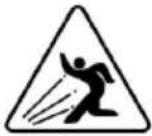 | Risk as a result of ejected object. |
 | Keep onlookers,especially children, at asafe distance from thework area. |
 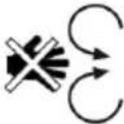 | Rotating parts.Be careful withyour hands. |
 | Do not expose themachine to rain ormoisture. |
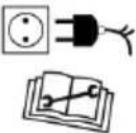 | Switch off the machineimmediately and pullout the plug if the powercord gets damaged. |
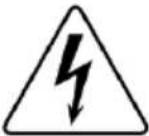 | Risk of electric shock. |
 | Safety class II. |
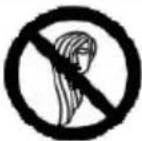 | Wear a hair net if youhave long hair. |
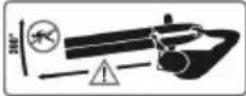 | The user must have fullcontrol over the workarea. |
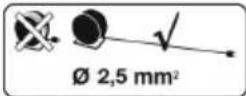 | The extension cord musthave a cross-sectionalarea of at least 2.5 mm^2 and not be longer than25 m. The extensioncord must be fullyunreeled when in use. |
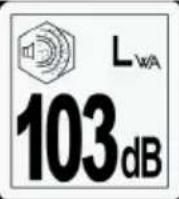 | Guaranteed sound power level |
 | Approved as per applicable directives. |
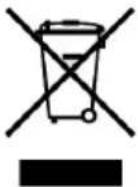 | Recycle discarded product as electrical waste. |
TECHNICAL DATA
| Rated voltage 230 V ~ 50 Hz |
| Output 3 kW |
| Safety class II |
| Blowing speed 280 km/h |
| Suction power 14 m3/min |
| Catcher 45 l |
| Sound pressure level, LpA 88.7 dB(A), K = 3 dB |
| Measured sound power level, LwA 100.5 dB(A), K = 3 dB |
| Guaranteed sound power level, LwA 103 dB(A), K = 3 dB |
| Vibration level Back handle: 2.702 m/s2, K = 1.5 m/s2 |
| Front handle: 2.685 m/s2, K = 1.5 m/s2 |
| Weight 4.1 kg |
Always wear ear protection.
The declared vibration value, which has been measured by a standardised test method, can be used to compare different tools with each other and for a preliminary assessment of exposure. The measurement values have been determined in accordance with EN 50636-2-100:2014.
WARNING: The actual vibration level when using power tools may differ from the specified maximum value, depending on how the tool is used. It is therefore necessary to determine which safety precautions are required to protect the user, based on an estimate of exposure in actual operating conditions (taking into account all stages of the work cycle, e.g. the time when the tool is switched off and when it is idling, in addition to the start-up time).
DESCRIPTION
- Handle
- Catcher
- Suction tube
- Handle
- Power switch
- Speed control
- Shoulder strap fastener
- Blowpipe
- Stress reliever
FIG. 1
FIG. 2
ASSEMBLYFITTING/REMOVING BLOWPIPE
IMPORTANT:
Never use the leaf blower with only one part of the blowpipe fitted – risk of personal injury.
- Fit the two-piece blowpipe. The parts lock in place with an audible click.
- Check that the tap on the top part of the blowpipe engages in the opening on the bottom part of the blowpipe.
- Press the blowpipe on the exhaust opening on the motor unit so that it locks in place.
FIG. 3
- Put the guard over the intake opening on
the underside of the motor unit. Turn the guard all the way clockwise.
- Lock the guard in place by pulling the knob on the holder. Pull the knob by hand all the way, otherwise the machine will not start.
- Remove the blowpipe by releasing the catch and pulling the blowpipe forwards to release.
FITTING/REMOVING SUCTION TUBE
IMPORTANT:
- Never use the leaf blower with only one part of the suction tube fitted – risk of personal injury.
-
When the two parts of the suction tube are fitted together they cannot be taken apart again.
-
Remove the guard over the intake opening by releasing the knob and turning the guard anticlockwise to release.
FIG. 4
- Fit the two-piece suction tube. The parts lock in place with an audible click. Check that the tap on the top part of the suction tube engages in the opening on the bottom part.
FIG. 5
-
Fit the wheels by putting the axle through the wheel holder and screwing on the other wheel clockwise on the axle.
-
Put the suction tube over the intake opening on the underside of the motor unit. Turn the suction tube all the way clockwise.
FIG. 6
- Lock the suction tube in place by pulling the knob on the holder.
FIG. 7
-
Pull the knob by hand all the way, otherwise the machine will not start.
-
Remove the suction tube by releasing the knob and turning the tube anticlockwise.
FITTING/REMOVING THE CATCHER
NOTE:
The leaf blower will not start in vacuum mode unless the catcher is fitted.
- If necessary, remove the blowpipe according to the instructions.
- Press the catcher on the exhaust opening on the motor unit so that it locks in place.
FIG. 8
-
Hook the hook on the catcher onto the fastener on the suction tube.
-
Put the support handle in the required position. To move the handle, release the knob, move handle and tighten the knob.
USE
INTENDED USE
- In blower mode the leaf blower is used to quickly blow dry leaves and other similar items away from inaccessible places.
- In vacuum mode it is used to pick up dry leaves etc. In vacuum mode there is a mulching function that reduces the volume of the material and simplifies composting. The mulching capacity depends on the size and moistness of the particles.
BEFORE USING FOR THE FIRST TIME
Follow the instructions below before first use:
- Fit the blowpipe or suction tube.
- Fit the catcher for vacuum mode.
- Fit the guard over the intake opening for blower mode.
WARNING!
- Risk of personal injury.
- Switch off the leaf blower, pull out the plug and wait until all moving parts have completely stopped before fitting the blowpipe and guard for the intake opening, or the suction tube and catcher.
FUNCTIONS
The machine has a blower and vacuum function. In blower mode the leaf blower is used to quickly blow dry leaves and other similar items away from inaccessible places. In vacuum mode there is a mulching function that reduces the volume of the material and collects it in the catcher.
STARTING/SWITCHING OFF
NOTE:
- Check that the leaf blower is not touching the ground or any objects when starting.
-
Always maintain a firm footing and good balance.
-
Make a loop on the power cord, and hang it on the strain reliever.
FIG. 9
-
Plug the plug into the power point.
-
Start the leaf blower by pressing the power switch:
-
To the right for blower mode.
-
To the left for vacuum mode.
-
Adjust to the required air flow with the air flow control.
-
Switch off the leaf blower by pressing the power switch:
- To the left in blower mode.
- To the right in vacuum mode.
BLOWER MODE
- Release leaves that have got stuck with a broom or rake before blowing.
- Check that the guard is fitted on the intake opening.
- Hold the opening of the blowpipe 5–10 cm over the ground for best results.
- Start with maximum air flow to quickly blow dispersed leaves together. Use a reduced air flow to gather the leaves into more compact piles.
- The wheels on the bottom of the pipe simplify manoeuvrability.
VACUUM MODE
Check that the catcher and both parts of the vacuum tube are correctly fitted before starting the leaf blower.
- Hold the leaf blower firmly with both hands. Use the handle and the support handle.
- Do not vacuum too much material, this can block the suction tube and/or block the impeller.
- Do not allow the catcher to drag over the ground when working, this will expose it to unnecessary wear and tear.
Overload protection
- The motor switches off immediately if overloaded.
- Pull out the plug and check if the impeller is blocked, or if the catcher is blocked. Remove any obstructions.
- The leaf blower will not start again until it has completely cooled.
EMPTYING THE CATCHER
-
Switch off the leaf blower and wait until all moving parts have completely stopped.
-
Pull out the plug.
- Undo the catcher from the fasteners. Release the catcher by pressing the lock button.
- Unzip the catcher and empty. Compost garden waste – do not discard with household waste.
- Replace the catcher on the leaf blower.
NOTE:
The suction power diminishes when the catcher is full.
MAINTENANCE
NOTE:
- Clean the leaf blow after use.
- Dry embedded scraps can be impossible to remove without dismantling the motor unit. This sort of cleaning is not covered by the warranty.
CLEANING
- Do not spray water on the leaf blower or immerse it water or any other liquid – risk of electric shock.
- Keep the ventilation openings, motor unit and handle clean.
- Clean the leaf blower with a brush or damp cloth. Do not use strong detergents or solvents, this can damage it.
CLEANING THE IMPELLER
Leaves and green plants can block the leaf blower in vacuum mode.
- Switch off the leaf blower, pull out the plug and wait until all moving parts have completely stopped.
- Remove the suction tube or the guard for the intake opening.
- Carefully remove the material blocking the
EN
impeller.
- Check that the impeller rotates freely and is undamaged.
- A damaged impeller must be replaced at an authorised service centre or by other qualified personnel.
- Replace the suction tube or the guard for the intake opening.
NOTE:
It is not possible to start the leaf blower unless the suction tube or guard for the intake opening are correctly in place.
STORAGE
- Before putting into storage the blowpipe/suction tube and catcher must be removed from the motor unit according to the instructions.
- Store the leaf blower in a dry place out of the reach of children.
TROUBLESHOOTING
| PROBLEM POSSIBLE CAUSE ACTION | ||
| The leaf blower will not start. No | power. Check the power cord, plug, power point and fuse. Replace the fuse, or try another power point. If the power cord or plug get damaged they must be replaced by an authorised service centre. | |
| Worn carbon brushes. Contact an authorised service centre. | ||
| Defective motor. Contact an authorised service centre. | ||
| Defective power switch. Contact an authorised service centre. | ||
| The suction tube and catcher, or the blowpipe and guard are not correctly fitted. | Fit correctly according to the instructions. | |
| Loose contact in power supply. Loose connection. Check the connection. | ||
| Poor or no suction capacity. The catcher is full. Empty the catcher. | ||
| The impeller does not move. | The impeller is blocked by foreign object. | See Maintenance section. |
- SE LÖVBLÅS/-SUG
- EC DECLARATION OF CONFORMITY
- EG FÖRSÄKRAN OM ÖVERENSSTÄMMELSE
- EF SAMSVARSERKLÆRING
- DEKLARACJA ZGODNOŚCI WE
- SÄKERHETSANVISNINGAR
- Arbetsområde
- T∅MMING AV OPPSAMLER
- Electrical safety
- Personal safety
- Use and care
- Service
- Remaining risks
- Vibration
- Reduction of noise and vibrations
- Always wear ear protection.
- DESCRIPTION
- ASSEMBLYFITTING/REMOVING BLOWPIPE
- IMPORTANT:
- Never use the leaf blower with only one part of the blowpipe fitted – risk of personal injury.
- FITTING/REMOVING SUCTION TUBE
- FITTING/REMOVING THE CATCHER
- NOTE:
- The leaf blower will not start in vacuum mode unless the catcher is fitted.
- 8
- USE
- INTENDED USE
- BEFORE USING FOR THE FIRST TIME
- WARNING!
- FUNCTIONS
- STARTING/SWITCHING OFF
- 9
- BLOWER MODE
- VACUUM MODE
- Overload protection
- EMPTYING THE CATCHER
- MAINTENANCE
- CLEANING
- CLEANING THE IMPELLER
- EN
- STORAGE
Brand : Meec Tools
Model : 004842
Category : Leaf blower