
AVT20X - Guitar amplifier MARSHALL - Free user manual and instructions
Find the device manual for free AVT20X MARSHALL in PDF.


| Product Type | Guitar Amplifier Combo |
| Brand | Marshall |
| Model | AVT20X |
| Power Output | 20W RMS into 8Ω |
| Speaker | 1 x 10" Custom Celestion, 30W, 8Ω |
| Valves | 1 x ECC83 (12AX7) Dual Triode |
| Input Impedance | 1MΩ |
| Emulated Output Level | -10dBV |
| Reverb | Internal spring reverb with depth control |
| Channels | Clean and Overdrive (switchable) |
| Controls | Gain, Volume, Bass, Middle, Treble, Reverb Depth |
| Input | 1/4" Jack |
| Outputs | Emulated DI Out, Headphone, External Speaker (8/16Ω) |
| Dimensions (mm) | 480 x 465 x 270 |
| Weight | 14.2 kg |
| Power Supply | Detachable mains lead, voltage per rear panel |
| Technology | Advanced Valvestate Technology (AVT) |
| Cleaning | Use a dry cloth; avoid moisture and solvents |
| Safety Precautions | Ensure voltage compatibility; do not expose to rain or moisture |
| Accessories Included | Mains lead, user manual |
Frequently Asked Questions - AVT20X MARSHALL
User questions about AVT20X MARSHALL
0 question about this device. Answer the ones you know or ask your own.
Ask a new question about this device
Download the instructions for your Guitar amplifier in PDF format for free! Find your manual AVT20X - MARSHALL and take your electronic device back in hand. On this page are published all the documents necessary for the use of your device. AVT20X by MARSHALL.
USER MANUAL AVT20X MARSHALL
natural_image
Close-up of a glowing, illuminated cylindrical device with internal components (no visible text or symbols)AdvancedValvestateTechnology
From Jim Marshall
I would like to thank you personally for selecting one of our Valvestate AVT amplifiers.
Ever since its initial launch in the early 1990's, the original Marshall Valvestate technology received worldwide acclaim and set a new standard in affordable quality amplification. However, my dedicated team of designers are constantly looking for methods to make our amplifiers sound even better. As they are all guitar players themselves this process has become a passion within the design department.
As the name Advanced Valvestate Technology (AVT) suggests, your new amplifier benefits from their research and utilises their latest circuit innovations, all of which are totally unique to Marshall. By emulating the feel and response of an all-valve amplifier even more closely, the AVT range perform brilliantly and represent yet another major step forward in guitar sound technology.
Since I first began making amplifiers in 1962, one of the key factors in our success has been reliability. Therefore, many hours of exhaustive testing have been carried out in the development of AVT to ensure that this remains so.
I suggest that you read this manual thoroughly before operating your new amplifier and keep it in a safe place for future reference. This will help you to derive maximum enjoyment from our Advanced Valvestate Technology.
Wishing you every success.
Yours Sincerely,

natural_image
Portrait of an older man in a suit and tie, smiling (no text or symbols visible)ENGLISH
9in Masshoel
Welcome to the third and most recent generation of Marshall Valvestate guitar amplifiers - AVT.
The History
We first started making the critically acclaimed Valvestate amplifiers in the early 90s and then updated the original range to the best-selling VS II line in 1996. Our original intention with Valvestate was simple: to capture the special sound and feel of a Marshall valve amplifier by using solid state technology. By so doing we knew we could make our unique and highly desirable tones more affordable and thus more available to many more guitar players. The first two generations of Valvestate both achieved these goals and have become firm favourites with players and critics alike, the world over. Now, we have once again redefined what guitarists can expect from affordable backline amplification. Utilising all the knowledge and experience gained over the years, we proudly bring you - AVT Series.
Addictive Tone
In this latest generation, not only will you find more, guitarist-friendly features, but more (much more!) valve-like tone and feel. As with all our amplifiers, we started designing with a clean slate - relying totally on our experience, skill and tonal history. As all our designers are guitarists in addition to being exceptional engineers, the aforementioned feel and tone were an absolute priority from the beginning. In short our goal was to make these amps so enjoyable to play, they are addictive!
Pre-amp Valve Power
In each of the Valvestate range, all the preamp stages are equipped with an ECC83 (a.k.a. 12AX7) Dual Triode valve. Drawing on our vast experience in this field, we have gone to great lengths to ensure that this precious device delivers maximum sonic benefit at all settings and volume levels. As a result, even the AVT clean sounds ring with the bell like harmonics that only a valve pre-amp can deliver. On the Overdrive channels the ECC83's dual triodes are saturated to their limit, providing the dynamics and feel worthy of a place in the Marshall hall of fame. The same sort of toneful care and attention was focused on the all-important power stage of each amp too. Once again we wanted to ensure that they delivered the warm, musical feel and 3-dimensional sounds that have made our all-valve power-amps world-renowned. We are so proud of the end results of our labour that we felt we had to coin a new name for the technology used. So, we christened it AVT - Advanced Valvestate Technology.
Fire-breathing Babies
This manual covers the AVT20X and AVT50X combos plus the AVT50HX head. Even though these are the 'babies' of the range, they go far beyond the realms of traditional, lower powered amps. These are all real, fire-breathing Marshall amps in their own right, and, as such, are bestowed with all the technology, tone, and feel of their higher-powered brethren. As is the case with the entire AVT range, the loudspeakers used are all custom built by Celestion and have been specifically designed to fully complement and augment the myriad of sounds generated by our Advanced Valvestate Technology.
AVT20X Combo Front Panel FeaturesIntroduction
1. Input Jack Socket
This is where you plug your guitar into the amp. In case you are not aware, you must always use a screened guitar cable, never use an unscreened speaker lead. Also, for the best performance this cable should be one of high quality. If you are in any doubt regarding this, your Marshall dealer will be more than happy to help and advise you further.
2. Clean/Overdrive selection switch
Your AVT20X has two selectable modes - Clean and Overdrive. When the switch is 'out' Clean is selected, when it is pushed 'in' Overdrive mode is activated.
The Clean mode of the AVT20X has the warm, responsive action normally associated with a valve amp, rather than the relatively sterile, one-dimensional sound that is typical of many solid-state type guitar amps. At lower Gain settings this mode remains very clean but will evolve into a bluesy/rock type crunch at higher Gain settings.
When Overdrive is selected it will take you from mild crunch to aggressive 'modern' distortions and all-points in between. The many sonic palettes available are dependent on the exact settings of the front panel controls for Gain, Volume, Treble, Middle and Bass.
3. Gain Control
This rotary control can best be described as the sonic 'brains' of the amp. At lower settings, with the Clean/Overdrive switch set to Clean, the AVT20X will give you a wide range of well-defined clean tones. At higher Gain settings, the amp will start to 'crunch up' into the aforementioned blues/rock' type sounds. This 'crunching up' is often referred to as 'break-up'. When Overdrive mode is selected lower Gain settings will give you a vintage sounding, valve distortion while higher settings will produce more modern, high-gain tones.
4. Volume Control
own, desirable distortion mode - just like an all-valve Marshall amp. When this occurs, the AVT20X's power amp will start to add musical harmonics, compression and 'break-up' into your sound.
5. Tone Controls
The AVT20X is equipped with rotary Bass, Middle, and Treble controls, all of which work on both the Clean and Overdrive modes. These three passive EQ controls are designed to achieve maximum tonal variation from your AVT20X and, just like our famous all-valve amps, are highly inter-dependent on each other. As a result, the way each one functions depends on the exact position of the other two controls. This is especially true of the Bass and Treble controls in relation to the Middle control. The lower the Middle control, the more reaction can be obtained from the others. As tone is very much down to personal taste, experimentation and experience is probably the best way of learning how these three controls will affect your sound. Some suggested settings are shown later.
\* Points to remember are:
A) The tone and output level coming out of the guitar is as widely variable as there are guitars themselves, all guitars are not designed (nor intended) to be equal. Therefore, amp settings will vary to suit your guitar and playing style, and by necessity, are at your discretion. Again, if in doubt, consult your Marshall dealer for advice.
B) The tone of your sound is also dependent on the settings of the "tone" controls, and adjusting them to taste will further enhance the sonic textures of your AVT20X. The best way to achieve your desired settings is to experiment.
6. Reverb Depth Control
Your AVT20X is fitted with an internal spring Reverb unit. This control affects the mix of the direct (dry) and Reverb signals - the higher this control is set, the greater the Reverb depth.
- AB brand, Inc. Product
8. Emulated DI Out Jack Socket
This jack socket carries a specially treated output signal from your AVT20X which accurately emulates the sonic signature of a guitar loudspeaker. This output can be used in both live performance and recording situations to achieve authentic guitar amp tones without having to use a microphone. Furthermore, if you wish to mute the loudspeaker, for 'silent' recording, then merely insert an unused jack plug (a short patch cable will do fine) or a set of headphones into the Headphone socket.
9. Headphone Jack Socket
In addition to providing a specially filtered output signal for a set of headphones, this jack also disconnects the main loudspeaker, enabling you to practice in 'silence'.
10. External Speaker Jack Socket
This socket allows you to connect your AVT20X into an external loudspeaker system, provided it has an impedance of 8 or 16 ohms. By using any one of our comprehensive range of extension cabinets, you will be able to unleash the massive amount of tonal options that extra loudspeakers will provide.
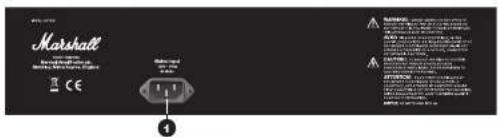
AVT20X Combo Rear Panel Features
1. Mains Input Connector
Your AVT20X is provided with a detachable mains (power) lead which is connected here. The specific mains input voltage rating that your amplifier has been built for is shown on the back panel. Before connecting for the first time,
please ensure that your electricity supply is compatible with your amplifier. If you have any doubt, please get advice from a qualified person. Your Marshall dealer will help in this respect.
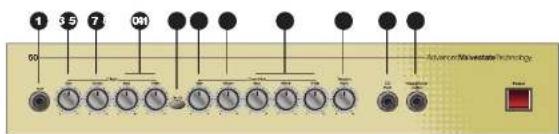
AVT50X Combo & AVT50HX Head Front Panel Features
1. Input Jack Socket
This is where you plug your guitar into the amp. In case you are not aware, you must always use a screened guitar cable, never use an unscreened speaker lead. Also, for the best performance this cable should be one of high quality. If you are in any doubt regarding this, your Marshall dealer will be more than happy to help and advise you further.
2. Clean Gain Control
When the Clean channel is selected, this rotary control can best be described as the sonic 'brains' of said channel. At lower settings, this control will give you a wide range of well defined clean tones. At higher settings, this control will start to 'crunch up' the sound of the channel in a 'blues/rock' type fashion. This 'crunching up' is often referred to as 'break-up'.
The actual volume settings will be dependent on how loud you want the channel to be, and also what type of sound you have selected on the pre-amp. Due to the remarkable realism of our Advanced Valvestate Technology, once the Volume control is turned-up past a certain point, the preamp will start to push the power amp section into creating its own, desirable distortion mode - just like an all-valve Marshall amp. When this occurs, the AVTS0X's power amp will start to add musical harmonics, compression and 'break-up' into your sound.
4. Clean Tone Controls
The AVT50X Clean Channel is equipped with rotary Bass and Treble controls, with a pre-set mid 'scoop'. As is the case with our all valve amps, these two passive controls are very interdependent on each other. As tone is very much down to personal taste, experimentation and
- Clean Volume Control
5. Channel Push-switch
Your AVT50X has two channels - Clean and Overdrive. This switch selects the channel you desire - 'out' for Clean and 'in' for Overdrive. When using the supplied footswitch, the channel push-switch must be left in the 'in' position for the footswitch to operate.
The Clean channel of the AVT50X has the warm, responsive action normally associated with a valve amp, rather than the relatively sterile, one-dimensional sound that is typical of many solid-state type guitar amps. At lower Gain settings this channel remains very clean but will evolve into bluesy/rock type crunch at higher Gain settings.
When the Overdrive channel is selected it will take you from mild crunch to aggressive 'modern' distortions and all-points in between.
The many sonic palettes available from both channels are dependent on the exact settings you choose on the front panel controls for Gain, Volume and EQ.
6. Overdrive Gain Control
When the Overdrive channel is selected, this rotary control acts as it's sonic 'brain'. Lower Gain settings will give you a vintage sounding, valve distortion while higher settings will produce more modern, high-gain tones.
7. Overdrive Volume Control
As its name suggests, this control determines how loud your AVTS0X's Overdrive channel will be. The volume setting you choose will be dependant on both how loud you actually want to be, and also what type of sound you have set up on the preamp. i.e. high overdrive settings will be generating much more preamp output level than lower, cleaner settings. Due to the remarkable realism of our Advanced Valvestale Technology, once the Volume control is turned-up past a certain point, the preamp will start to push the power amp section into creating its own, desirable distortion mode - just like an all-valve Marshall amp. When this occurs, the AVTS0X's power amp will start to add musical harmonics, compressing and breakup into your
designed to achieve maximum tonal variation from your AVT50X and, just like our famous al-valve amps, are highly inter-dependent on each other. As a result, the way each one functions depends on the exact position of the other two controls. This is especially true of the Bass and Treble controls in relation to the Middle control. The lower the Middle control, the more reaction can be obtained from the others. As tone is very much down to personal taste, experimentation and experience is probably the best way of learning how these three controls will affect your sound. Some suggested settings are shown later.
\* Points to remember are:
A) The tone and output level coming out of the guitar is as widely variable as there are guitars themselves, guitars are not designed (nor intended) to be equal. Therefore, amp settings will vary to suit your guitar and playing style, and, by necessity, are at your discretion. Again, if in doubt, consult your Marshall dealer for advice.
B) The tone of your sound is also dependent on the settings of the 'tone' controls, and adjusting them to taste will further enhance the sonic textures of your AVT50X.
9. Reverb Depth Control
The AVT50X is fitted with an internal spring Reverb unit. This control affects the mix of the direct (dry) and Reverb signals - the higher the control is set, the greater the depth of the Reverb.
10. CD Input Jack Socket
The CD input will take a stereo signal from an external source, such as a CD or tape player, and mix it into a mono format. This will allow you to play along with a pre-recorded signal. Because this input is after the preamp stages, its volume has to be controlled from your CD or tape player.
11. Headphone Jack Socket
In addition to providing a specially filtered output signal for a set of headphones, this jack also disconnects the main loudspeaker, enabling you
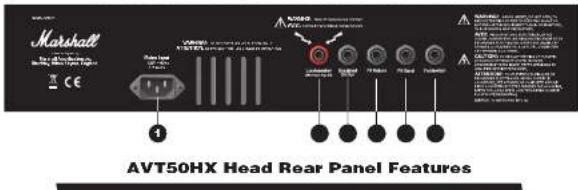
AVT50X Combo & AVT50HX Head Rear Panel Features
1. Mains Input Connector
Your AVT50X is provided with a detachable mains (power) lead which is connected here. The specific mains input voltage rating that your amplifier has been built for is shown on the back panel. Before connecting for the first time, please ensure that your electricity supply is compatible with your amplifier. If you have any doubt, please get advice from a qualified person. Your Marshall dealer will help in this respect.
2.Loudspeaker Jack Socket
i. Combo Version (AVT50X)
This socket allows you to connect your AVT50X into an external loudspeaker system, provided it has an impedance of 8 or 16 ohms. By using any one of our comprehensive range of extension cabinets, you will be able to unleash the massive amount of tonal options that extra loudspeakers will provide.
II. Head Version (AVT50HX)
This is where you connect your AVTS0X Head to external loudspeaker cabinets in order to deliver the extraordinary power that only a Marshall head can provide.
The AVT50HX is specifically voiced to run into the AVT412XA / AVT412XB 4x12* compact cabinet combination. Having said this the AVT50HX is equally at home driving any one of our other loudspeaker options, such as the legendary 1960A/B 4x12* full size cabinets for example.

WARNING:
Always provide the AVT50HX with a load equal to, or greater than, 4 Ohms. Using the two loudspeaker outputs, with cabinets rated at 8 Ohms each, the full 50W of the specially designed AVT power amplifier will be unleashed.
3. Emulated DI Out Jack Socket
This jack socket caries a specially treated output signal from your AVT50X which accurately emulates the sonic signature of a guitar loudspeaker. This output can be used in both live performance and recording situations to achieve authentic guitar amp tones without having to use a microphone. Furthermore, if you wish to mute the loudspeaker, for 'silent' recording, then merely insert an unused jack plug (a short patch cable will do fine) or a set of headphones into the Headphone socket.
4. FX Return Jack Socket
Use a high quality shielded lead to connect the output of your effects unit to the effects return jack of the AVT50HX.
5. FX Send Jack Socket
The AVT50X is fully equipped with a Series effects loop in order to allow you to connect external effects units to the amplifier. As always, we recommend you use high quality leads to ensure you lose none of the tone of the AVT50X's direct signal. Connect this output to the input of your effects unit. Adjust the input gain of your effects unit so as not to overdrive its circuitry. Set the effects unit output level to achieve the same 'affected volume' as in bypass.
6. Footswitch Input Jack Socket
Supplied with your new AVT50X is a Marshall Channel select footswitch (PEDL-10001). This plugs into the Footswitch Input Jack Socket.
Suggested Settings
On all the following suggested settings you will immediately notice how rich and authentic the sounds are. As you will hear, even on clean settings AVT adds those subtle harmonics and that desirable compression which only a classic all-valve amp can normally deliver.
Funky Clean
A really bright clean which still maintains Mid definition. This is best used in conjunction with a single-coil neck pick-up or the neck / bridge combination on a humbucker-equipped guitar. Keeping the Gain control low ensures a clean preamp signal and also helps feed extra treble through to the power amplifier for additional brightness and cut.
Blues Clean
Here the preamp Gain is increased and what you start to hear is pure, harmonically rich break-up and compression from the internal Marshall ECC83. Again the neck pick up on a single coil guitar or the neck / bridge combination on a humbucker-loaded guitar will deliver the warmest tones.
Brit Crunch
Here the advantage of the separate Gain and Volume controls really come into play. Notice how the Gain is quite low but the Volume is quite high. This is the way the old Marshall crunch sounds of the late 60's and 70's were created - namely by keeping the preamp pretty clean and creating the desired distortion by driving the power stage hard. With such a setting, when you back off the guitar's Volume or pick less heavily, you will feel and hear how the rich, clear tone of the clean sound remains.
MV Crunch
This crunch is reminiscent of the first Marshall Master Volume amplifiers of the much heralded JCM800 series. The Valve Drive Preamp is driven into mild saturation, creating a big, open overdrive using the bridge position pick-up, whether single-coil or humbucker.
Screaming Lead
Here the Gain is cranked to the max and the Mids are brought up to fatten the tone of the single notes. With these settings the rich, natural harmonic overtones that the valve introduces will be very apparent. Best with the bridge pickup.
Heavy, Modern Crunch
Cutting the Mids while heavily boosting the Gain, Treble and Bass gives an aggressive, modern 'lear-yer-face-off', scooped sound. The bridge humbucker is the one to use here if you truly wanna ride the lightning... definitely not for the faint-hearted!
AVT20X Suggested Settings AVT50X Suggested Settings
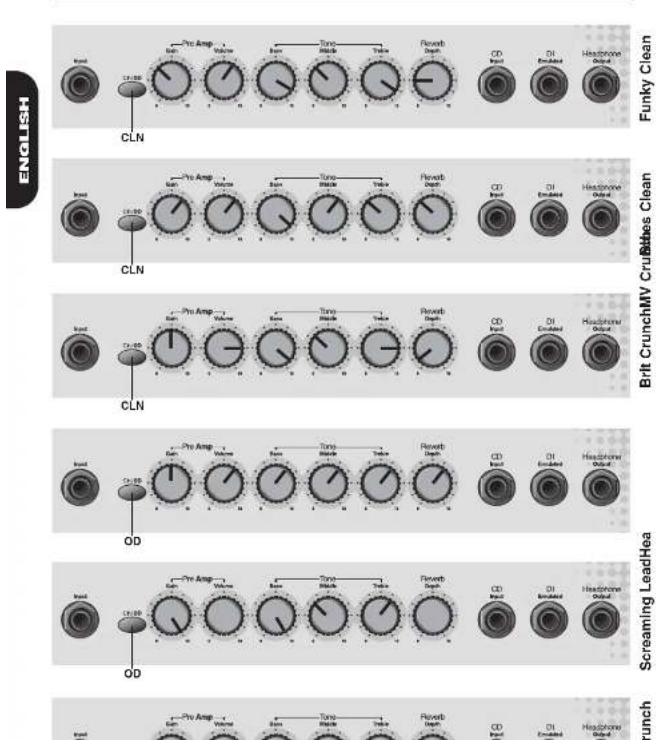
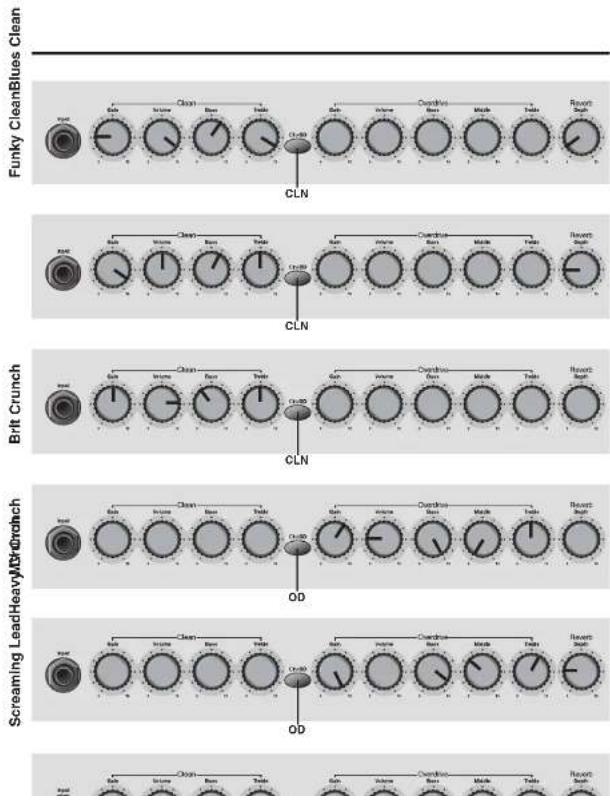
AVT20X
AVT50X & AVT50HX
| Power Output | 20W RMS into 8Ω | 50W RMS into 4Ω | |
| Potencia de salidaAusgangsleistungPuissance de sortieパワー出力Main Guitar• Input impedance | 20W RMS soore 8Ω20W RMS on 8Ω20W RMS sous 8 ohms20W RMS/8Ω接続 | 50W RMS soore 4Ω50W RMS on 4Ω50W RMS sous 4 ohms50W RMS/4Ω接続 | |
| Impedancia de entrada principal de gutarraGuitar• Input EingangsimpedanzImpédance d'entréeメインギター・入力インピーダンスCD Input • Input impedance | 1MΩ1MΩ1MΩ1MΩ | 1MΩ1MΩ1MΩ1MΩ47KΩ | |
| 10KΩ10KΩ10KΩ | 47KΩ | ||
| Emulated Output • LevelNivel de salida de lines simuladeEmulated Output • AusgangspegelNiveau de sortieエミュレート出力・レベルFX Send • LevelNivel de envio FXFX Send • AusgangspegelNiveau de sortie d'efetエフェクトセンド・レベル | -10dBV * see note 1-10dBV * ver nota 1-10dBV * siehe Hinweis 110dBV voir note 1-10dBV *注1参照-10dBV *注1参照-+4dBV * see note 2+4dBV * ver nota 2+4dBV * siehe Hinweis 2+4dBV * voir note 2+4dBV *注2参照 | ||
| -10dBV * 注1参照-10dBV * 注1参照-+4dBV * 注1参照 | |||
| 14.2kg | 18.6kg | 12.4kg | |
| PesoGewontPords重量Size (mm)Tamafo (mm)Melle (mm)Taille (mm)サイズInternal Speaker • Custom CelestionAllovay intorno • Celestation customIntermer • Custom Celestation LaubaprocherHaut-parteur interne (custom Celestation)内閣スピーカー:カスタムCelestion | 14.2kg14.2kg14.2kg14.2kg14.2kg480,465,270480,465,270480,465,270480,465,27030W/10" (8Ω)30W/10" (8Ω)30W/10" (8Ω)30W/10" (8Ω)30W/10" (8Ω) | 18.6kg18.6kg18.6kg18.6kg18.6kg515,554,259515,554,259515,554,259515,554,259515,554,25950W/12" (4Ω)50W/12" (4Ω)50W/12" (4Ω)50W/12" (4Ω)50W/12" (4Ω)50W/12" (4Ω) | 12.4kg12.4kg12.4kg12.4kg12.4kg12.4kg12.4kg |
| 1 x ECC83 (Dual Trilode) 1 x ECC83 (Dual Trilode)1 x ECC83 (Triode doble) 1 x ECC83 (Triode doble)1 x ECC83 (Dual Trilode) 1 x ECC83 (Dual Trilode)1 x ECC83 (double trilde) 1 x ECC83 (double trilde)1 x ECC83 (デュアルトライオード) 1 x ECC83 (デュアルトライオード) | |||
AVT20X 1x10" Combo Front Panel Features
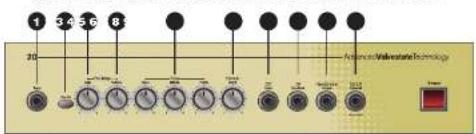
AVT20X 1x10" Combo Rear Panel Features
AVT50X 1x12" Combo & AVT50HX Head Front Panel Features
AVT50X 1x12" Combo Rear Panel Features
- From Jim Marshall
- The History
- Addictive Tone
- Pre-amp Valve Power
- Fire-breathing Babies
- AVT20X Combo Front Panel FeaturesIntroduction
- Input Jack Socket
- Clean/Overdrive selection switch
- Gain Control
- Volume Control
- Tone Controls
- \* Points to remember are:
- Reverb Depth Control
- Emulated DI Out Jack Socket
- Headphone Jack Socket
- External Speaker Jack Socket
- AVT20X Combo Rear Panel Features
- Mains Input Connector
- AVT50X Combo & AVT50HX Head Front Panel Features
- Clean Gain Control
- Clean Tone Controls
- Channel Push-switch
- Overdrive Gain Control
- Overdrive Volume Control
- Reverb Depth Control
- CD Input Jack Socket
- Headphone Jack Socket
- AVT50X Combo & AVT50HX Head Rear Panel Features
- 2.Loudspeaker Jack Socket
- i. Combo Version (AVT50X)
- Head Version (AVT50HX)
- WARNING:
- Emulated DI Out Jack Socket
- FX Return Jack Socket
- FX Send Jack Socket
- Footswitch Input Jack Socket
- Suggested Settings
- Funky Clean
- Blues Clean
- Brit Crunch
- MV Crunch
- Screaming Lead
- Heavy, Modern Crunch
Brand : MARSHALL
Model : AVT20X
Category : Guitar amplifier