61-PX-77 - Range hood MPM - Free user manual and instructions
Find the device manual for free 61-PX-77 MPM in PDF.


| Product Type | Range hood |
| Brand | MPM |
| Model | 61-PX-77 |
| Width | 60 cm |
| Installation Type | Under-cabinet / Wall-mounted |
| Extraction Capacity | Approx. 600 m³/h |
| Noise Level | Approx. 55 dB (max speed) |
| Controls | Mechanical push buttons |
| Lighting | LED (2 x 1.5 W) |
| Grease Filter | Aluminum mesh, washable |
| Air Discharge | 150 mm duct (recirculation possible with charcoal filter) |
| Energy Class | B (typical) |
| Power Supply | 220-240 V ~ 50 Hz |
| Power Consumption | Approx. 150 W |
| Dimensions (W x D x H) | 60 x 50 x 15 cm (approx.) |
| Weight | Approx. 8 kg |
| Manual Languages | EN, DE, NL, PL, and many more |
| Maintenance | Clean grease filters monthly; replace charcoal filter every 3-6 months |
| Safety Features | Auto shut-off? Not specified; motor thermal protection |
| Spare Parts Availability | Contact MPM support or authorized dealers |
Frequently Asked Questions - 61-PX-77 MPM
User questions about 61-PX-77 MPM
0 question about this device. Answer the ones you know or ask your own.
Ask a new question about this device
Download the instructions for your Range hood in PDF format for free! Find your manual 61-PX-77 - MPM and take your electronic device back in hand. On this page are published all the documents necessary for the use of your device. 61-PX-77 by MPM.
USER MANUAL 61-PX-77 MPM
natural_image
Exterior view of a black industrial kitchen fan with ventilation grilles and control panel (no visible text or symbols)Okap podszafkowy
MPM-61-PX-75, MPM-61-PX-76, MPM-61-PX-77
PL
INSTRUKCJA OBSŁUGI 3
DE
INSTRUKCJA OBSŁUGI 12
NL
INSTRUKCJA OBSŁUGI 19
OPERATING MANUAL 25
natural_image
Diagram showing a mechanical or structural component with an upward arrow and labeled point C, enclosed in a circle (no readable text or symbols)USTAWIENIE TRYBU PRACY
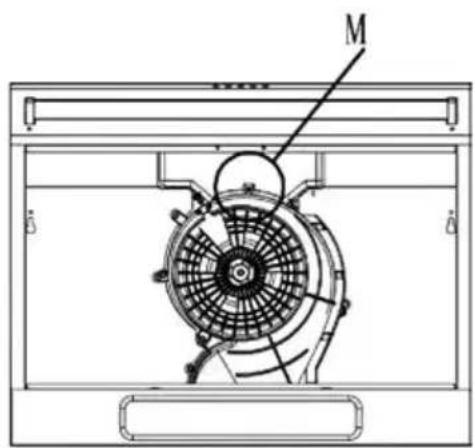
natural_image
Technical line drawing of a mechanical fan or impeller assembly with labeled component M (no text or symbols beyond label)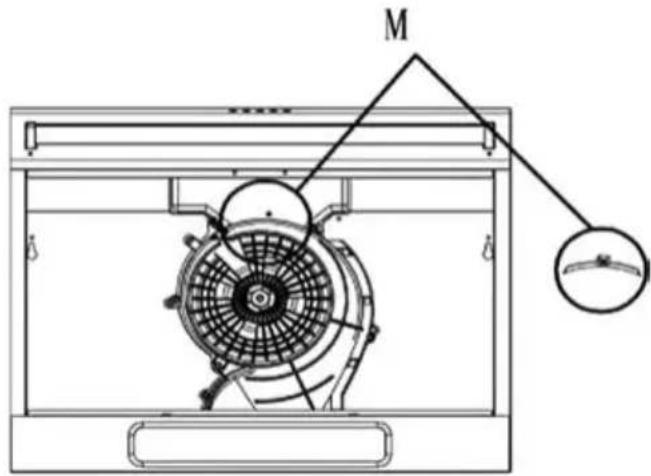
rys. 1 rys. 2
natural_image
Technical line drawing of a mechanical device with a central fan and wheels (no text or symbols)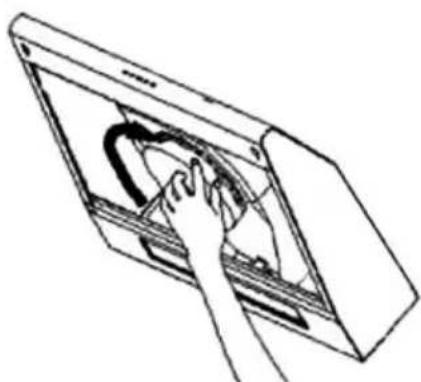
natural_image
Line drawing of a hand inserting a cable into a device (no text or symbols)ON/OFF verlichting
The recommendation specified in this operating manual must be closely followed when installing the device. The manufacturer waives any liability for damage resulting from installation that fails to follow this operating manual. The hood has been designed for home use only. The hood may differ from the hood shown in the drawing in the operating manual, but the recommendations for operation, maintenance and installation remain the same.
- Keep the operating manual for future reference. If the device is sold or moved to another place, make sure the operating manual is delivered with it.
- Read and understand the operating manual, as it contains detailed information about the installation, operation and maintenance of the device.
- Do not make any electrical or mechanical modifications to the device or its exhaust ducts.
CAUTION! The elements marked as “(*)” only come with selected models and should be purchased separately in other cases.
WARNINGS
-Do not connect the device to the electric mains before the installation is complete.
-Disconnect the hood from the mains by unplugging the power cord or deactivating the main switch, before performing any cleaning or maintenance operations.
-All installation and maintenance operations must be done wearing gloves.
-This equipment may be used by children of at least 8 years of age and by persons of diminished physical, mental capacity and lack of experience and knowledge of the equipment if supervision or instruction is provided regarding the safe use of the equipment so that the hazards involved are understood.
-The device is not a toy and should not be used as such by children.
-Unsupervised children should not perform cleaning and maintenance of the equipment.
- Never use the hood without correctly installed filters!
- Never use the hood as a resting surface, unless this is explicitly allowed. Adequate ventilation must be installed in the room where the hood is used together with other devices that burn gas or other types of fuel.
- The air must not be evacuated to a duct that is also used as an exhaust for fumes generated by other devices that use gas or other types of fuel. It is strictly forbidden to flambé meals on open flame under the hood.
-Using open flames for cooking is dangerous for the filters and creates a risk of fire - it must not be done under any circumstanc-
es. When frying with oil, make sure the oil is not overheated and does not self-ignite. The device's accessible parts may heat up considerably if used together with cooking utensils.
-The regulations issued by competent, local authorities must be observed with regard to the application of necessary technical and safety measures concerning the evacuation of fumes.
-The hood must be frequently cleaned inside and outside (AT LEAST ONCE A MONTH), while observing the maintenance recommendations listed herein.
-Failure to observe the principles of cleaning the hood and the replacement and cleaning of the filters may lead to a risk of fire.
- In order to avoid electrical shock, do not use or leave the hood without properly installed light bulbs. The manufacturer shall not be responsible for any damage or fires caused by the device, which result from the failure to observe the recommendations listed herein.
- Do not pull the power cord to remove the plug from the mains.
- Do not activate the device if the power cord is damaged.
- Take special care when children are near the device!
- Do not use the device for purposes other than those for which it was intended.
- Do not leave the device unattended during operation.
-Never use a damaged device, including one with a damaged cord or plug, in which case have it repaired at an authorised service centre.
- Do not use the device outdoors.
- Always ensure that all parts of the appliance are correctly fitted before starting work.
- The use of accessories not recommended by the manufacturer may cause damage to the device, fire or personal injury.
-Keep the device and its cord out of reach of children under 8 years of age.
- The equipment is not designed to operate using external timers or a separate remote control.
- Do not connect the plug to the power socket with wet hands.
- The power cord must not be in contact with hot surfaces.
-For the safety of children, please do not leave freely accessible parts of the packaging (plastic bags, cardboard boxes, polystyrene, etc.).
-WARNING! Do not allow children to play with the film. Danger of suffocation!
-CAUTION! The parts accessible during the hood's operation may be hot.
This device has been marked according to the 2012/19/EU Waste Electrical and Electronic Equipment Directive.
By ensuring the proper disposal of this device, you are limiting the risk of the product's negative impact on the environment and human health that would otherwise take place, if the device is not disposed of in a proper manner.
The symbol on the device or its packaging means that it cannot be treated like other communal waste. The device should be taken to a relevant point of collection and recycling of electrical and electronic waste.
Proper disposal and scrapping helps eliminate the adverse effect of the scrapped devices on the environment and health. To obtain detailed information about recycling of this device, please contact the local municipal office, the municipal waste service or the vendor of the device.
The device has been designed, tested and manufactured according to the following conditions:
- Safety: EN/IEC 60335-1; EN/IEC 60335-2-31, EN/IEC 62233.
- Performance: EN/IEC 61591; ISO 5167-1; ISO 5167-3; ISO 5168; EN/IEC 60704-1; EN/IEC 60704-2-13; ISO 3741; EN 50564; IEC 62301.
- EMC: EN 55014-1; CISPR 14-1; EN 55014-2; CISPR 14-2; EN/IEC 61000-3-2; EN/IEC 61000-3-3.
Recommendations for proper usage leading to reduced impact on the environment:
Activate the hood at minimal setting when cooking starts. Keep it operating several minutes after cooking is over. Only use the higher performance setting if a lot of steam of vapours are generated and only use the highest setting in extreme conditions. If needed, replace the carbon filter(s) to ensure good efficiency of reducing unpleasant odours. If needed, clean the grease filter(s) to ensure their good efficiency. To optimise efficiency and reduce noise, use maximal diameter exhaust ventilation system.
OPERATION
The device may operate as exhaust ventilation (the fumes are evacuated outside) or as an extraction system (the fumes are filtered and returned back to the room). Hoods without exhaust fans can only operate as exhaust ventilation and must be connected to an exhaust device (pur-chased separately).
Recommendations for making connections are delivered with the external exhaust device.
HOOD OPERATING IN EXHAUST MODE
The fumes are evacuated to the outside via a pipe connected to the flange.
The pipe's diameter must match the diameter of the flange.
CAUTION! The exhaust pipe is not a part of the delivery and must be purchased separately.
In its horizontal section, the pipe must be inclined slightly upwards (around 10^ ) to facilitate the evacuation of air. If the hood is equipped with carbon filters, they must be removed.
Connect the hood to the exhaust ventilation with a pipe whose diameter matches the diameter of the hood's exhaust (flange).
The use of lower diameter pipes will reduce the performance and dramatically increase the hood's operating noise.
The manufacturer shall not be responsible for this.
The pipe for evacuating fumes must be as short as possible.
- The pipe should have as few bends as possible (max. bend angle: 90°).
- The pipe's diameter must not vary radically.
- The pipe's internal surface must be as smooth as possible.
- The pipe's material must conform to the standards in force.
A carbon filter must be installed to be able to use the hood in extraction mode. Carbon filters are available from our vendors.
The drawn air is purified from grease and odours before being returned to the room via the grate in the stack's upper cover.
HOOD INSTALLATION
The minimal distance between the surface on which vessels are placed on the heating device and the hood's lowest part should not be less than 55 cm for electrical stoves and not less than 65 cm for gas or dual-type stoves.
If the gas stove manual prescribes a bigger distance, this value must be observed.
The hood is equipped with installation screws suitable for most types of walls and ceilings. However, it is still necessary to consult a qualified technician to make sure the materials of the wall or ceiling are adequate to use with such screws. The wall or the ceiling must be sufficiently strong to support the hood's weight.
CAUTION! Failure to tighten the screws and installation devices according to the instruction may lead to electrical risks.
ELECTRICAL CONNECTIONS
The mains voltage must match the voltage indicated on the plate inside the hood. The hood is equipped with a plug that must be connected to a socket satisfying the relevant standards and placed in a location that is easy to access, even after the installation.
CAUTION! Before reconnecting the hood to the mains and verifying that it operates correctly, make sure the power cord is properly connected. The hood is equipped with a special power cord.
If this cord is damaged, a new one should be purchased from the manufacturer or the vendor.
HOOD OPERATION
If the air in the kitchen is particularly impure, the hood should be operating at its maximal speed setting. It is recommended to activate the hood 5 minutes prior to cooking a meal and to leave it operating for around 15 minutes after cooking is finished.
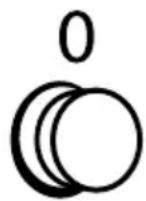
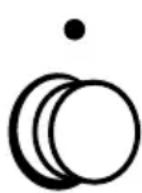
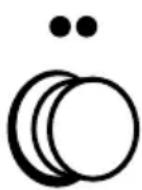
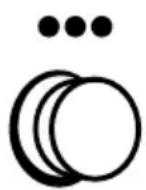
ON/OFF lighting
• Na. Low engine speed.
0 Engine off.
switched.. Na. Average engine speed.
… Na. High motor speed.
MAINTENANCE
CAUTION! Disconnect the hood from the mains by unplugging the power cord or deactivating the main switch, before performing any cleaning or maintenance operations.
CLEANING THE HOOD
Clean the hood frequently, both inside and outside (at least with the same frequency as cleaning the grease filters), using a cloth and gentle cleaning agents. Do not use abrasive cleaning agents.
DO NOT USE ALCOHOL FOR CLEANING!
CAUTION! Failure to observe the principles of cleaning the hood and the replacement of the filters may lead to a risk of fire. Follow the recommendations for best results.
The manufacturer shall not be responsible for any damage to the motor or fires resulting from the failure to observe maintenance and operating recommendations.
GREASE FILTER
For collecting grease particles generated while cooking.
The grease filter must be cleaned at least once a month (or if the filter purity indicator, optionally installed in the hood, indicates it is necessary to replace it), with a non-aggressive cleaning agent, manually or in a dishwashing machine at low temperature and short cycle setting. The filter may become discoloured when cleaning in a dishwashing machine, but its filtering properties will remain the same.
Pull the spring-loaded tab to release the grease filter.
CARBON FILTER (ONLY FOR THE FILTER VERSION)
For neutralizing unpleasant odour when cooking.
The filter becomes saturated after a shorter or longer time, depending on the type of cuisine and the intervals at which the filter is cleaned. In any case, the filter's cartridge should be replaced no later than after four months of operation.
LIGHT REPLACEMENT
Disconnect the hood from the main, before commencing any maintenance operations.
CAUTION! Do not touch the LEDs until they cool down.
Replace a damaged LED with a new one of the same type, matching the specification in the catalogue sheet or on a sticker near the LED's socket. The hood is equipped with LED light sources.
LEDs generate optimal light, are 10 times more durable than traditional bulbs and consume 90% less energy.
Proper disposal of the product (waste electrical and electronic equipment)
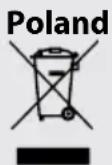
Marking on the product indicates that after the service-life of the product expires, it should not be disposed with other type of municipal waste. Used equipment may have a negative impact on the environment and health of people due to potentially containing hazardous substances, mixtures and components. Mixing electric waste with other types of waste or disassembling those in an unprofessional manner may cause a release of substances that are hazardous to the environment and health. Used equipment should be handed-over to a point for collection of electric waste. In order to obtain detailed information regarding the electric waste collection points, the user should contact the municipal point of electric waste collection or used equipment processing department.
Szanowny Kliencie!
- Okap podszafkowy
- PL
- DE
- NL
- USTAWIENIE TRYBU PRACY
- WARNINGS
- OPERATION
- HOOD OPERATING IN EXHAUST MODE
- HOOD INSTALLATION
- ELECTRICAL CONNECTIONS
- HOOD OPERATION
- MAINTENANCE
- CLEANING THE HOOD
- DO NOT USE ALCOHOL FOR CLEANING!
- GREASE FILTER
- CARBON FILTER (ONLY FOR THE FILTER VERSION)
- LIGHT REPLACEMENT
- CAUTION! Do not touch the LEDs until they cool down.
- Proper disposal of the product (waste electrical and electronic equipment)
- Szanowny Kliencie!
Brand : MPM
Model : 61-PX-77
Category : Range hood