
CKTOS 606W - Refrigerator CANDY - Free user manual and instructions
Find the device manual for free CKTOS 606W CANDY in PDF.


| Brand | Candy |
| Model | CKTOS 606W |
| Product type | Refrigerator |
| Total gross volume | 138 L |
| Energy consumption | 145 kWh/year |
| Rated voltage | 220-240 V ~ |
| Rated frequency | 50 Hz |
| Recommended fuse | 10 A |
| Refrigerant gas | R600a (isobutane) |
| Insulating gas | Cyclopentane |
| Interior light bulb power | Max 15 W |
| Temperature control | Rotary thermostat from OFF to 6 |
| Defrosting | Manual |
| Door opening direction reversal | Possible |
| Climatic class | Not specified |
| Leveling feet | Yes, adjustable |
| Cleaning | Warm water and baking soda |
| Safety | Earth connection mandatory, do not use an extension cord |
Frequently Asked Questions - CKTOS 606W CANDY
User questions about CKTOS 606W CANDY
0 question about this device. Answer the ones you know or ask your own.
Ask a new question about this device
Download the instructions for your Refrigerator in PDF format for free! Find your manual CKTOS 606W - CANDY and take your electronic device back in hand. On this page are published all the documents necessary for the use of your device. CKTOS 606W by CANDY.
USER MANUAL CKTOS 606W CANDY
LANGUAGES
Italiano....5
English....15
Français....24
Español 34
Deutsch....44
Portuguese....54
Nederlands....64
Ελληνικά 74
Dansk 85
Svenska....94
Suomi....103
Norsk....112
Hrvatski....120
Srpski 129
Czech 138
Polish....147
Slovenian 157
Slovak 166
Romanian....176
Bulgarian....185
Hungarian....195
Russian....204
SUMMARY
e.g., Bed and Breakfast (B&B),


Make sure that
Thank you for purchasing this product.
Before using your refrigerator, please carefully read this instruction manual in order to maximize its performance. Store all documentation for subsequent use or for other owners. This product is intended solely for household use or similar applications such as:
the kitchen area for personnel in shops, offices and other working environments on farms, by clientele of hotels, motels and other environments of a residential type at bed and breakfasts (B & B)
for catering services and similar applications not for retail sale.
This appliance must be used only for the purpose of storing food. Any other use is considered dangerous, and the manufacturer will not be responsible for any omissions. It is also recommended that you take note of the warranty conditions. To obtain the best possible performance and trouble-free operation from your appliance, it is very important to carefully read these instructions. Failure to observe these instructions may invalidate your right to free service during the guarantee period.
SAFETY INFORMATION
This guide contains many important safety information. We suggest you keep these instructions in a safe place for easy reference and a
good experience with the appliance.
The refrigerator contains a refrigerant gas (R600a: isobutane) and insulating gas (cyclopentane), which are highly compatible with the environment but are flammable.

Caution: risk of fire
If the refrigerant circuit should be damaged:
- Avoid open flames and sources of ignition.
Thoroughly ventilate the room in which the appliance is situated.
WARNING!
- Care must be taken while cleaning or carrying the appliance to avoid touching the condenser metal wires at the back of the appliance, as you might injure your fingers and hands or damage your product.
- This appliance is not designed for stacking with any other appliance. Do not attempt to sit or stand on top of your appliance as it is not
designed for such use.
You could injure yourself or damage the appliance.
- Make sure that the mains cable is not caught under the appliance during and after carrying or moving the appliance, to avoid the mains cable becoming cut or damaged.
- When positioning your appliance, take care not to damage your flooring, pipes, wall coverings, etc. Do not move the appliance by pulling it by the lid or handle. Do not allow children to play with the appliance or tamper with the controls. Our company declines to accept any liability should the instructions not be followed.
- Do not install the appliance in humid, oily, or dusty places, nor expose it to direct sunlight or water.
- Do not install the appliance near heaters or inflammable materials.
- If there is a power failure, do not open the lid. Frozen food should not be affected if the failure lasts for less than 20 hours. If the failure is longer, then the food should be checked and eaten immediately or cooked and then refrozen.
- If you find that the lid of the chest freezer is difficult to open just after you have closed it, don't worry. This is due to the pressure difference which will equalize and allow the lid to be opened normally after a few minutes.
- Do not connect the appliance to the electricity supply until all packing and transit protectors have been removed.
- Leave to stand for at least 4 hours before switching on to allow compressor oil to settle if transported horizontally.
- This freezer must only be used for its intended
purpose (i.e., storing and freezing of edible foodstuff).
- Do not store medicine or research materials in the Wine Coolers. When the material that requires a strict control of storage temperatures is to be stored, it is possible that it will deteriorate or an uncontrolled reaction may occur that can cause risks.
- Before performing any operation, unplug the power cord from the power socket.
- On delivery, check to make sure that the product is not damaged and that all the parts and accessories are in perfect condition.
- If in the refrigeration system a leak is noted, do not touch the wall outlet and do not use open flames. Open the window and let air into the room. Then call a service center to ask for repair.
- Do not use extension cords or adapters.
- Do not excessively pull or fold the power cord or touch the plug with wet hands.
- Do not damage the plug and/or the power cord; this could cause electrical shocks or fires.
- If the supply cord is damaged, it must be replaced by the manufacturer, its service agent or similarly qualified person in order to avoid a hazard.
- Do not place or store inflammable and highly volatile materials such as ether, petrol, LPG, propane gas, aerosol spray cans, adhesives, pure alcohol, etc. These materials may cause an explosion.
- Do not use or store inflammable sprays, such as spray paint, near the Wine Coolers. It could cause an explosion or fire.
- Do not place objects and/or containers filled with water on the top of the appliance.
- We do not recommend
the use of extension leads and multi-way adapters.
- Do not dispose of the appliance on a fire. Take care not to damage the cooling circuit/pipes of the appliance in transportation and in use. In case of damage do not expose the appliance to fire, potential ignition source and immediately ventilate the room where the appliance is situated.
- The refrigeration system positioned behind and inside the Wine Coolers contains refrigerant. Therefore, avoid damaging the tubes.
- Do not use electrical appliances inside the food storage compartments of the appliance, unless they are of the type recommended by the manufacturer.
- Do not damage the refrigerant circuit.
- Do not use mechanical devices or other means
to accelerate the defrosting process, other than those recommended by the manufacturer.
- Do not use electrical appliances inside the food storage compartments, unless they are of the type recommended by the manufacturer.
- Do not touch internal cooling elements, especially with wet hands, to avoid cracks or injuries.
- Maintain the ventilation openings in the appliance enclosure or in the built-in structure, free of obstruction.
- Do not use pointed or sharp-edged objects such as knives or forks to remove the frost.
- Never use hairdryers, electrical heaters or other such electrical appliances for defrosting.
- Do not scrape with a knife or sharp object to remove frost or ice that occurs. With these, the
refrigerant circuit can be damaged, the spill from which can cause a fire or damage your eyes.
- Do not use mechanical devices or other equipment to hasten the defrosting process.
- Absolutely avoid the use of open flame or electrical equipment, such as heaters, steam cleaners, candles, oil lamps and the like in order to speed up the defrosting phase.
- Never use water wash the compressor position, wipe it with a dry cloth thoroughly after cleaning to prevent rust.
- It is recommended to keep the plug clean, any excessive dust residues on the plug can be the cause fire.
- The product is designed and built for domestic household use only.
- The guarantee will be void if the product is installed or used in commercial or non-residential domestic household premises.
- The product must be correctly installed, located and operated in accordance with the instructions contained in the User Instructions Booklet provided.
- The guarantee is applicable only to new products and is not transferable if the product is resold.
- Our company disclaims any liability for incidental or consequential damages.
- The guarantee does not in any way diminish your statutory or legal rights.
- Do not perform repairs on this wine cooler. All interventions must be performed solely by qualified personnel.
- If you are discarding an old product with a lock or latch fitted to the door, ensure that it is left in a safe condition to prevent the entrapment of children.
- This appliance can be used by children aged from 8 years and above and by persons with
reduced physical, sensory or mental capabilities or with a lack of experience and knowledge, provided that they have been given adequate supervision or instruction concerning how to use the appliance in a safe way and understand the hazards involved.
- Children should not play with the appliance. Cleaning and user maintenance should not be made by children without supervision.
- Locks: If your fridge/freezer is fitted with a lock, to prevent children being entrapped keep the key out of reach and not in the vicinity of the appliance. If disposing of an old fridge/freezer, break off any old locks or latches as a safeguard.
LEVELLING
If the refrigerator is not leveled during installation, the doors may not close or seal properly, which causes cooling, frost, or moisture problems. It is very important for the refrigerator to be leveled in order to function properly. To level your refrigerator, you may either turn the level leg clockwise to raise that side of the refrigerator or turn counter-clockwise to lower that
side. To ensure proper ventilation for your refrigerator, allow for 200mm space on each side between walls, 200mm space between the back of your refrigerator and the wall, and 300mm space between counter top and the top of the appliance. If you are installing your refrigerator next to a fixed wall, leave sufficient space on the hinge side to allow for the door to swing open. Never install your refrigerator near a heat source or in direct sunlight.
STARTING TO USE
Before you start to use the freezer, please check that:
- The interior is dry and air can circulate freely at the rear.
- Clean the interior as recommended under "TAKE CARE" section (electric parts of the refrigerator can only be wiped by dry cloth).
- Do not switch on until 2 hours after moving the fridge/freezer. This will reduce the possibility of a malfunction in the cooling system from handling during transportation.
- Before connecting the refrigerator to the mains supply, position the thermostat control dial. The thermostat control dial is located inside the fridge compartment.
ELECTRICAL REQUIREMENT
WARNING!
DO NOT REMOVE EARTH CABLE
DO NOT USE AN ADAPTOR
DO NOT USE EXTENSION CORD
Failure to follow these instructions can result in death, fire or electrical shock. Before you move your refrigerator into its final location, it is important to make sure you have the proper electrical connection. Recommended Earthing Method
A 220~240 Volt/50 Hz AC only 10 ampere fused and properly earthed electrical supply is required. It is recommended that a separate circuit serving only this appliance be provided. Use a socket which ideally cannot be turned off with a switch or pull chain. Do not use an extension cord.
NOTE: Before performing any type of installation, disconnect the refrigerator from the electrical source. When you are finished, connect the refrigerator to the electrical source and reset the control to the desired setting.
APPLIANCE OPERATION
Your unit has only one control for regulating the temperature in the compartment. The temperature control is located on the upper right hand side of the compartment.
The first time you turn the unit on, set the temperature control to "6".
The range of the temperature control is from

position "OFF" to "6". After 24 to 48 hours, adjust the temperature control to the setting that best suits your needs. The setting of "4" should be appropriate for home or office use.
To turn the appliance off, turn the temperature control to "OFF".
NOTE: Turning the temperature control to "OFF" position stops the cooling cycle but does not shut off the power to the unit.
If the unit is unplugged, has lost power, or is turned off, you must wait 3 to 5 minutes before restarting the unit. If you attempt to restart before this time delay, the unit will not start.
PROLONGED OFF PERIODS
If the refrigerator is not used for a long period of time, proceed as follows:
Disconnect the refrigerator from the main supply by removing the plug from the wall socket. Clean and dry the inside as instructed under the heading of 'Before Using Your Refrigerator'. Leave the door open to prevent any unpleasant smells from building up while the refrigerator is not in use.
ENERGY SAVING
For better energy saving we suggest:
- Installing the appliance away from heat sources and not exposed to direct sunlight and in a well-ventilated room.
- Avoid putting hot food into the refrigerator to avoid increasing the internal temperature and therefore causing continuous functionalizing of the compressor.
- Do not excessively stuff foods so as to ensure proper air circulation.
- Defrost the appliance in case there is ice to facilitate the transfer of cold.
- In case of absence of electrical energy, it is advisable to keep the refrigerator door closed.
- Open or keep the doors of the appliance open as little as possible.
- Avoid adjusting the setting to temperatures too cold.
- Remove dust present on the rear of the appliance.
TAKE CARE
Defrosting
Defrost twice a year or when a frost layer of around 5 mm has formed.
Alternatively, you may switch off the freezer at the socket outlet and pull out the mains plug. Extract the water conduit and put it in a water container.
As a temporary measure, this frost should be scraped away using a plastic scraper. NEVER use a metal or sharp instrument. This should be carried out if the frost build-up cannot be scraped away, or if it begins to interfere with the food storage. Choose a time
when the stock of frozen food is low and proceed as follows:
- Take out the frozen food, turn the refrigerator off at the mains supply and leave the doors open. Ideally, the frozen food should be put into another fridge/freezer or refrigerator. If this is not possible, wrap the food, firstly in several sheets of newspaper or large towels and then in a thick rug or blanket and keep it in a cool place.
- Scrape away as much frost build-up as possible using the plastic scraper. To accelerate the thawing process, place bowls of hot water inside the fridge/freezer cabinet. As the solid frost loosens, prize it away with the plastic scraper and remove.
- When defrosting is completed, clean your fridge/freezer as described.
Cleaning and Care
After defrosting, you should clean the fridge/freezer internally with a weak solution of bicarbonate of soda. Then rinse with warm water using a damp sponge or cloth and wipe dry. Wash the baskets in warm soapy water and ensure they are completely dry before replacing them in the fridge/freezer.
Condensation will form on the back wall of the fridge; however, it will normally run down the back wall and into the drain hole behind the salad bin. The drain hole will have a “cleaning spike” inserted into it. This ensures that small pieces of food cannot enter the drain. After you have cleaned the inside of your fridge and removed any food residues from around the hole, use the “cleaning spike” to make sure that there are no blockages. Use standard furniture polish to clean the fridge/freezer exterior. Make sure that the doors are closed to prevent polish getting on the magnetic door seal or inside. The grille of the condenser at the back of the fridge/freezer and the adjacent components can be vacuumed using a soft brush attachment.
Do not use harsh cleaners, scouring pads, or solvents to clean any part of the fridge/freezer.
CHANGING THE INTERNAL LIGHT
- Pull out the plug, cutting off the power supply.
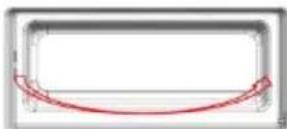
- Remove lamp cover (Figure 1).
- Rotate to remove the light bulb, then turn in the opposite direction to fit the new light bulb (Figure 2).
- Replace cover, connect power supply.
NOTE: Do not use a bulb with wattage greater than 15 W.
TROUBLESHOOTING
In case of malfunction, you can solve many common problems easily.
Your refrigerator will not operate, check if:
-The power supply cord is unplugged.
-The thermostat knob is set to OFF position.
The light doesn't work, check if:
-The power supply cord is unplugged.
-A household fuse or circuit breaker has tripped.
-A light bulb is loose in the socket.
-A light bulb has burned out.
Food in the refrigerator compartment freezing, check if:
-The thermostat knob is set too cold
-The position of food stored touches the refrigerator back wall.
Food in the refrigerator compartment is not cold, check if:
-The door is opened too often or not closed properly.
-A large amount of food has just been added to the refrigerator or refrigerator compartment.
-The position of the thermostat knob is adjusted too low.
Melted frost leak inside compartment or on floor, check if:
-The drain pipe is blocked.
-Water tray is in the correct place
The refrigerator seems to make unusual noise, check if:
-The refrigerator is leveled on the floor.
-The cabinet of the refrigerator touches the wall.
-The water tray is in the correct place.
There is interior moisture build-up, check if:
-The air vents are blocked in the refrigerator.
-The door is opened too often
-The room is humid.
-The food is not packaged correctly
-The control is not set correctly according to the surrounding conditions.
The doors will not close completely, check if:
-The shelves are out of position
-The gaskets are dirty
-The fridge is not level
REVERSING THE DOOR SWING
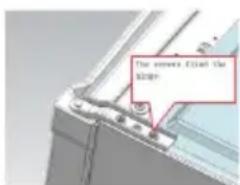
1- Disassemble the screws behind the fixed roof with cross-slot screwdriver and remove the cover from the refrigerator.


2- Remove the screws fixed the hinge with cross-slot screwdriver.
3- Move the top hinge to the opposite side.


4- Move the block to the opposite side.
5- Disassemble the screws on the bottom hinge and fix it on the opposite side.

note: the refrigerator incline angle less 45°

6- Remove the screws fixed the hinge with cross-slot screwdriver, take off the door, the sleeve and the hinge.
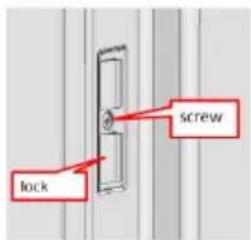
7- Remove the screws fixing the hinge with a cross-slot screwdriver, and move the lock to the opposite side.

8- Turn the door 180 degrees, and move the sleeve and the hinge to the opposite side.

9- Set the door in the correct position, fix the hinge, and then the roof cover.

Ensure the appliance is unplugged and empty.
Adjust the two leveling feet to their highest position.
We recommend you have someone to assist you.
NOTE:
To take the door off, it is necessary to tilt the appliance backward.
You should rest the appliance on something solid, e.g., a chair, just below the top panel.
Do not lay the appliance completely flat, as this may damage the coolant system.
TECHNICAL DATA
| Rated Voltage 220-240V~ | |
| Rated Frequency 50Hz | |
| Total Gross Volume 138L | |
| Energy Consumption 145kWh/annum | |
SCRAPPING OLD APPLIANCES


This appliance is marked according to the European directive 2012/19/EU on Waste Electrical and Electronic Equipment (WEEE).
WEEE contains both polluting substances (which can cause negative consequences for the environment) and basic components (which can be re-used). It is important to have WEEE subjected to specific treatments, in order to remove and dispose properly all pollutants, and recover and recycle all materials. Individuals can play an important role in ensuring that WEEE does not become an environmental issue; it is essential to follow some basic rules:
WEEE should not be treated as household waste.
WEEE should be handed over to the relevant collection points managed by the municipality or by registered companies. In many countries, for large WEEE, home collection could be present.
In many countries, when you buy a new appliance, the old one may be returned to the retailer who has to collect it free of charge on a one-to-one basis, as long as the equipment is of equivalent type and has the same functions as the supplied equipment.
Conformity
By placing the mark on this product, we are confirming compliance to all relevant European safety, health and environmental requirements which are applicable in legislation for this product.
TABLE OF CONTENTS
SAFETY INFORMATION
LEVELLING
STARTING TO USE





2 - Remove the screws that fix the upper hinge with the cross-head screwdriver.
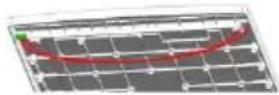


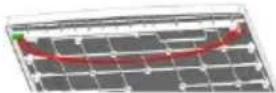


4 - Move the block to the opposite side.

DISPOSAL OF OLD APPLIANCES


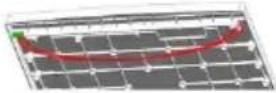


2 - Using a cross-head screwdriver, remove the screws that secure the hinge.
3 - Move the upper hinge to the opposite side.


4 - Move the block to the opposite side.
5 - Remove the screws on the lower hinge and secure it on the opposite side.

Note: the tilt angle of the cooler is less than 45°

6- Using a Phillips screwdriver, remove the screws securing the bracket, then remove the door, cover, and bracket.
7- Using a Phillips screwdriver, remove the screws securing the bracket, move the lock to the opposite side.


8- Rotate the door 180 degrees, then move the cover and bracket to the opposite side.
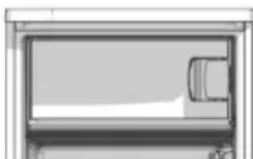
9- Place the door in the correct position, secure the bracket, and then the top cover.
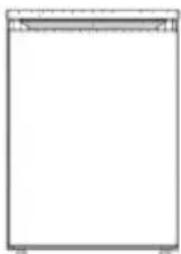
DO NOT USE AN EXTENSION CORD
Failure to follow these instructions may result in death, fire, or electric shock.
The temperature control has a range from "OFF" to "6". After 24 to 48 hours, adjust the temperature control to the setting that best suits your needs.
A dial set to "4" should be suitable for home and office use.
To turn off the appliance, turn the temperature control to "OFF".

2 Using a Phillips screwdriver, remove the screws securing the hinge.
3- Move the upper hinge to the opposite side.

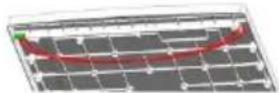
4- Move the lock to the opposite side.
5- Unscrew the screws on the lower hinge and attach them on the opposite side.

Note: the tilt angle of the freezer is less than 45°

6 - Using a Phillips screwdriver, unscrew the screws securing the hinge, then remove the door, cover, and hinge.
7 - Using a Phillips screwdriver, unscrew the screws securing the hinge, then move the lock to the opposite side.


8 - Rotate the door 180° and move the cover and hinge to the opposite side.
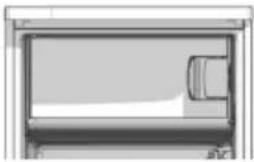
9 - Adjust the door to the correct position, secure the hinge, and then the appliance cover.

Check that the appliance is unplugged and empty.


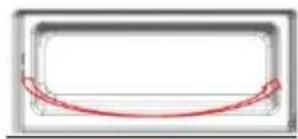


LONG PERIOD OF NON-USE


6 - Remove the hinge screws with a Phillips screwdriver and remove the door, cover, and hinge.
7 - Remove the hinge screws with a Phillips screwdriver and move the lock to the opposite side.

8 - Rotate the door 180 degrees and move the cover and hinge to the opposite side.
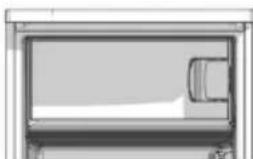
9 - Install the door in the correct position and secure the hinge and the top cover.


8 - Rotate the door 180 degrees and move the bracket and hinge to the opposite side.





- LANGUAGES
- SUMMARY
- SAFETY INFORMATION
- CAUTION: RISK OF FIRE
- WARNING
- LEVELLING
- STARTING TO USE
- ELECTRICAL REQUIREMENT
- APPLIANCE OPERATION
- PROLONGED OFF PERIODS
- ENERGY SAVING
- TAKE CARE
- DEFROSTING
- CLEANING AND CARE
- CHANGING THE INTERNAL LIGHT
- TROUBLESHOOTING
- REVERSING THE DOOR SWING
- NOTE
- SCRAPPING OLD APPLIANCES
- CONFORMITY
- TABLE OF CONTENTS
- DISPOSAL OF OLD APPLIANCES
- DO NOT USE AN EXTENSION CORD
- LONG PERIOD OF NON-USE
Brand : CANDY
Model : CKTOS 606W
Category : Refrigerator